After having a travel-ful 2018 with atleast one long travel a month, I have decided to have a more relaxed new year. Hence, I have my theme for travel in 2019 tweaked a bit. I have no major long distance travel goals for the year and would like to settle down exploring the surrounding places at Bangalore and my hometown and spend little more time on writing, something that was overlooked in the past couple of years.
So, to start off the year, my January of 2019 had me traveling to my hometown almost every weekend due to several personal commitments. And, amidst all the mayhem that life had for me at Madikeri, I found time to sit back once in a while and travel down the memory lane. Having born and spending my childhood almost entirely in my hometown, there are scores of undocumented memories associated with almost every corner of this hill town. So, would be the case with thousands of those other kids from the 90’s who lived there at some point too… Don’t we all have memories from our growing up days associated with those small places and things? Often in the rat race, we tend to forget to cherish and be thankful for those golden memories from childhood. Here are five things that I re-lived during my last visit to Madikeri and I’m sure all who grew up in this quaint town will reminisce with me.
1. Government hospital– The year started with doing the dutiful rounds at this hospital with a family member who was sick. It was the exact place where this big grown up body came into existence; This hospital is the exact place where I was born. While a lot of things have changed about the hospital as it has been upgraded from being a district hospital to a specialty hospital & medical college, yet there are a few things that are still left unchanged. Like the labor ward where I was born for instance…! Two generations of my family members and the whole line-up of models (Brother & all my cousins summing up to a dozen of them😉) were born there and we all look forward to having our future generations born there as well 😛 There I was, traveling back in time to the earliest of memories…
2. Paris Hotel– The internet has spoken enough about the mutton cutlets of the ‘East end hotel’, masala dosas of the ‘Hill top hotel’ or even a meal with a view at the ‘Valley view hotel’. There is yet another hotel that is older than me which is located right in the heart of the town, the M.G.road of Madikeri. Ooops, read it college road! It is now called the ‘New Paris hotel’ after its renovation. I make sure to grab their signature dishes- Palam pori (Banana fritters) and Masala vada every time I’m in town. These popular snacks of kerala are so good that they run out of the shelves in less than a couple of hours of being stacked. Complimenting it with a nice cup of Malabar tea is a mandate for me and I try my luck to find some stock to pack for Bangalore.
3. Kuppu’s beauty parlour: With almost the third generation of professional barbers of this family that I know, I have very fond memories of getting my regular hair-cuts at this gent’s salon. Today when I go back there for a haircut, I feel like ‘Yeah… times have changed. I have graduated from the baby’s seat to a push-back adult’s seat. And the cost has gone up ten-fold, from Rs.10 to Rs.100 for a lady’s hair-style. The shop too has moved from the ground floor 10 seat something to a single seat salon on the first floor. But somethings never change! There is a bunch of loyal customers (Both Men & women) who travel down from other cities/towns to Kuppu’s just for their haircuts. Such is the popularity of his services. But, reducing the salon size was inevitable says Mr.Ganesh, the present owner and main-man at this popular salon. With age, managing such a big place was getting hard and he prefers the next generation to run nuclear business.
4. Basappa theatre and Kaveri Mahal: The lifeline to all the movie buffs of Madikeri, for not just the 90’s kids but several generations, how can we not give credits to these two single screen cinema halls? From playing the latest Kannada movies and English movies once in a while, these were (probably still are!) the favourite haunt for most native residents of Madikeri and the nearby villages who seek some kind of entertainment after the sun goes down in this silent hill-station. I remember standing in long queues to get the tickets when a movie in the local languages (Kodava Thakk or Are Bashe) are showed. Or do you recollect memories of being taken in batches from school to watch a mandatory documentary at these cinema halls? Weren’t those fond memories? When was the last time you watched a documentary in a big screen? When was the last time you watched a feature film in a single screen movie hall? Was it a Gandhi class or a balcony ticket?
5. Madikeri fort– We had days of marching in the Independence day parade at the fort courtyard and standing through the pouring rain until the chief guest was done with his address. What were we thinking while doing a peek-a-boo down, to the former district jail from above the parapet? Were we hoping to see the inmates..? or did we expect to get back some waves and ‘Hai’s from them? May be! Or even for some of those who would climb up the narrow ladder to get a view from the big bell near the court hall.. Does any of these ring a bell???
Which is your favourite memory of growing up in Madikeri? Share them with me…
Clockwise from top: 1.Madikeri government hospital; 2.Snacks at Paris hotel; 3.A nameplate outside Kuppu’s salon
India has intrigued the world with its history, geography and culture- each individually dating back to several ages ago. I have been no different from the rest of the world. The LostLander has begun to embrace her landings after getting lost at random places in her incredible country. The more she is exploring her country, the more she has been discovering about its descendance and getting mind blown with new discoveries each time.
“The history of India’s physical geography is older than that of its civilization or even that of the human race. The subcontinent has been a distinct geological entity for millions of years. Therefore, to understand India, we must go back to the very beginning.”
-Sanjeev Sanyal
The fact that it is called as a subcontinent is associated to a larger theory of it being separated out of a supercontinent called ‘Rodinia’ and drifting apart from Africa, Antarctica and then Madagascar before it struck with the Asian continent. No, I’m not time traveling that far for now! It was just to put an exclamation to how amazing this country’s geography has evolved to be and what the natural bounty as we called it, has to offer in this beautiful country to an explorer… To take my article forward and with no biases, I divide the geography of this subcontinent into North and the South, just by drawing an imaginary line passing through its center, Seoni in Madhya Pradesh. Here is a humble attempt to take my readers through some of the beautiful destinations I have been to enjoy the natural marvels of Southern India. They are in random order and listed as and when I recollected them. For more details, you need to read my individual posts on them by clicking on their respective tags!
1. Kurusudai islands: Nestled off the coast of Rameswaram in the Gulf of Mannar, it is the only place in the world where the oldest and the last surviving living fossil is found in the world.
2. The table tops of Maharashtra: Be it the beautifully painted pink valleys of the Khas plateau, valleys of Matheran, Mahabaleshwar or any place thought of for a scenic drive for the Mumbaikars- have all formed out of large volcanic eruptions as the subcontinent merged with Asia. Not just that, these geographical features were strategically used by Shivaji to stop the invasion by the Mughals and hence called the Deccan traps.
3. Limestone caves of Andhra Pradesh: Belum caves, a part of a larger cave complex in the Erramalai region is the largest and longest cave system that is open to public. Similarly, the Borra caves is the deepest in the country. The speleothem formations are worth a visit which have formed due to continuous flowing of water over a thousand years, easily dating back to the Archaean age.
4. Gandikota: People call it as the ‘Grand Canyon of India. It is a beautiful gorge formed by the Pennar river as it squeezes from between the rock formation that has played witness to several kingdoms in history.
5. Eastern Ghats: Although I use a very generic term that specifies an entire region, they are older and mineral rich than their popular counterparts on the western side. All, again a resultant of several tectonic activities in the event of formation of the Indian mass.
6. Dhanushkodi: This abandoned town has more than just history of a cyclone. The revered ‘RamaSethu’ or the Adam’s bridge was formerly considered to be the largest Tombolo in the world and is believed to have formed due to the drifting of India and the Lankan land masses several thousand years ago..
Well… If all these have been the outcomes of several tectonic activities of the earth over a million years, there are yet several other amazing things that nature has to offer in the Southern peninsula.
7. Have you been to Wayanad in Northern Kerala? There is a heart shaped lake after a good climb up the Chembra peak in the western Ghats. It’s the nature’s way of telling ‘I Love You’!
8. Heard of the Barren island? It is the only active volcano in India, with the most recent eruption being in 2017. The sea area around it is considered to be one of the best dive sites in the world!
9. And then there is Baratang islands- It is the only mud volcano in India, situated in the Andaman group of islands.
10. Have you seen the Purple hills? Where do you think the Nilgiri hills in the western Ghats derive their name from? They’re so called because these green verdant hills are painted blue/purple (Neela in Hindi) by the Neelakurinji flowers, something that blooms only once in twelve years. The latest mass-blossoming being in 2018.
11. Cruised through the canals of Kuttanad? Mostly popular among the honeymooners and families alike for its backwaters and houseboats, what many don’t know about this region is that it is the only region in the world where paddy farming is done below sea level.
12. How about a boat ride in the Mangrove forests of the Bay of Bengal? The Sundarbans and Pichavaram forests are the first and the second largest mangrove marshlands in the world. A world heritage site that they are, an extremely important part of the ecology.
13. What happens when a meteor hits the earth? A massive crater is formed giving form to Lonar lake in Maharashtra. This Geo-heritage monument saline soda lake is the only high velocity impact crater lake on earth.
14. Seen the waterfalls of the Deccan plateau? Be it the Chitrakoot falls in Chhattisgarh, Gokak falls in Karnataka, Athirapally in Kerala or Hogeynakal in Tamil Nadu… They’re all so good they can give a good competition to the Niagara!
15. Heard of the Sentinelese tribesmen in the Andaman sea? They’ve long avoided contact with the outside world and their gene pool is believed to be one of the crucial links to early man and the evolution of mankind on the planet.
What India has to offer is abundant! And these are only a few places that I have been to in the southern India. Do you have any recommendations? Have I missed out on anything? I would LOVE to know… Please drop n your suggestions, recommendations, feedback in the comments section below 😊
I wasn’t sure if solo-traveling would be safe in Chhattisgarh, the campsite wasn’t ready yet for a Gujarat trip, Rajasthan had the election around the corner albeit having the perfect weather, the public transportation system wasn’t convenient in Arunachal, Uttarakhand had unpredictable weather of late, Jammu was done just last year, Dharamshala stretch would be too mainstream, Lakshadweep was too short a trip for the time I had. Maybe I should just settle down with the Sahyadris in Maharashtra or sign up for a fortnight long yoga session at Rishikesh or a Yakshagana course at Mangalore perhaps! I had tele-travelled almost the whole of India to decide where I wanted to go. And then, this happened! Just 4 days before departure, the mountains beckoned and I had finally decided to visit the Kinnaur valley in Himachal Pradesh.
Click here to read the complete story, on Amazon
Nothing was clear to me apart from the to & fro flights to Delhi. People around me were busy and my vacations couldn’t wait, lest they be lapsed without pay or without use. Although not very keen on solo travelling, I think that’s how life threw itself upon me when I longed to go to the mountains! The mountains have always been kind to me and have had me meeting them regularly over the last 4 years. I don’t know the reason for this special bond I share with the mountains. May be because I come from a nature worshipping community, that my connection with them is so instant and strong. The mountains had me amidst them yet again. From being a shy kid at ice breaking in public gatherings to having done a complete solo backpacking in an off-season, to meeting and hanging out with strangers and making new friends from travels, my journeys have brought me a long way! The mountains have been kind and have protected me all the way…
Given that I would be alone and I get muscle cramps when the temperature drops, the one thing I had to make sure while planning my trip was to not push myself too hard to see too many places or do anything that could drain me out. Hence, I decided to do it one place at a time, plan my next destination only after reaching a place and move only when I felt like I had sunk in well in the current place. So that said and Kinnaur had me there! After I had reached Himachal, there was absolutely no fear of being a solo-women traveller and no worries over safety concerns at any point of time. The people were amazing who derive their strength from their deep values… From being stopped by random locals on the road and being offered the juiciest apples from the valley to eating local food and getting invited to houses for coffees, from befriending the locals and then to being invited to attend a traditional Kinnauri wedding, from waiting for the day’s only public bus or hitch a ride to having stuck in a place for 3 days without any electricity or transportation due to snowfall, from meditating in the millennium old monastery to confronting a mummified Llama in the mountains, from driving past a valley of green-rock-and-sand onward to having returned through the same valley painted white in snow, from being seen-off by a close friend at the trip start to I seeing-off a stranger at the end of the trip: Whoa! What a journey it was!
So, the route taken by me was: Delhi- Kalka- Shimla- Sangla- Rakcham- Chitkul- Sangla- Reckong Peo- Kalpa- Nako- Geu- Tabo- Rampur- Sarahan- Shimla- Delhi. Some of the key destinations enroute and things I did were:
• The hustle of the desi music blasting at full volume had filled the atmosphere as the HPSRTC bus I boarded at Shimla cruised through thickets of sweet smelling Juniper and deodar. A solo snow laden peak emerged from amidst the green mountains. Call it layers of dew laden and mist covered hills, they sparkled as the sun’s early rays found their way forming several vibrant spectrums as the morning ride gave me the first glimpse of a horizon that had a never-ending line of snow-capped mountains.
• When the bus alighted at Sangla after making its way through steep gradient, blind corners and breath-takingly scary heights of the snaking roads, the sun was calling it a day. It had cast a golden red glow to the entire range of Kinnaur Kailash mountains. I couldn’t have asked for more as I stood there to be welcomed by this magnificent view right in front of the bus stand. The hike up the Kamru fort to catch the golden peaks up close was a cherry on the icing.
• The next day was an exhilarating bus ride through the Sangla valley, overlooked by the Kailash mountains on one side and the beloved untamed Baspa river flowing below. The ride was adventurous with waterfall and river crossing, cliff-hangers, landslides and occasional sightings of mountain goats or yaks. Quick stop-over at Batseri village painted in shades of crimson, chrome to ochre with the trees of apples, apricots and walnuts was a feast to the eyes. A walk down to the river at Rackcham helped me to connect with the Kinnauris with very warm conversations. They offered me a ride through apple orchards and buck wheat farms before meeting the sole Indian tricolour waving at Chitkul, a village bordering China & Tibet.
• The following morning, I started early to Kalpa- a quaint tiny village with old traditional houses amid the Kinnaur apple farms. A solo hike through the suicidal roads to Roughi village turned out to be special when a random dog decided to accompany me all the way. Again, the setting crimson sun cast its magical spell over the manifestations of Shiva and Parvathi seated conveniently in the Kinnaur Kailash mountains overlooking the village. With the chants from the Buddhist monastery next door and swaying prayer flags as I looked out of my window the next morning, I couldn’t have asked for a better start for my day.
• That day, I did a bit of shopping and grooving to traditional Kinnauri music with the locals at Reckong Peo, the ‘Gateway to Kinnaur valley’. It was the annual fair where people from all over the state had congregated to buy and sell local Agri-products and handicrafts apart from sipping the local apple brew. Packets of pine-nuts, dried apples and apricots along with the traditional Kinnauri hats were perfect souvenirs to take back before boarding the bus to my next destination.
• Although the weather had gotten more colder, it was one of the finest mornings so far. A walk around the village of Nako, with mud-smeared walls of houses built of wood and clay is one of the highlights of my entire trip. While strolling through those narrow walkways of the village, I felt as if I was exploring a maze. With the early morning vibes of a typical village with cattle roaming around, children walking down to schools, chants and incense from the ancient monastery rising in the dew laden air, it was an altogether different world there. The view of the distant snow-capped mountains and the barren winding landscape around had me spellbound for the rest of the day.
• I woke up in the biting cold next morning to hike up the hill and pay a visit to the mummy of a Buddhist monk, believed to be over a 500yrs old. Strangely, it has been there in open atmosphere without any chemicals and among the only few mummies available in India. Quick breakfast at the wedding house and I was good to head out by hitching another ride until Hurling.
• The weather had gotten worse that day with a forecast of precipitation by day end. As I waited at Hurling for my next ride, the guy making rotis at a hotel offered me a cup of free chai and got me a free drive with his customer to my next destination. With a loaded car and a person with a broken leg hanging out of the rear seat, the people who agreed to drop me were more than sweet to accommodate me in the front seat and they carry my backpack on their lap all the way in the rear seat.
• The morning when I woke up, the mountains had moved closer to me with a heavy overnight snowfall. This was a sight to which the heart of a snow-deprived-south-Indian-city girl in me had skipped a beat. I had to extend my stay at this monastery due to heavy snowfall for next 2 days and with no electricity, phone connectivity and no plumbing that worked whatsoever, it was ‘THE” time! Amid all this, I had the rare opportunity to relish the Tabo apples (one of the best in the world) every day of what was being offered to the deity at the monastery.
• Finally, after getting my drive back to Shimla- I had plans to stop by at Rampur Bussahr to see the erstwhile palace and stay at Sarahan, one of the Shakthi peethas in the foothills of the Himalayas. But, the mountains had an altogether different itinerary for me for the last 3 days! So, thus was my sojourn in the Himalayas, the mighty incredible Himalayas!
Since Rohtang pass had closed by end of monsoon, I did only Kinnaur and half Spiti and returned the same way back (Although a little hectic with 3 days required only for travel, on the same route). If you are traveling in the summers, then you can start from Shimla and complete Spiti & Lahaul via Kaza and exit from Manali, thereby not repeating your route.
Summary: With the changing landscape throwing surprises at the wink of an eye, each mile was magic. The valleys were overwhelmingly beautiful! When the mountains beckon, just pack your junk and head out! The destination doesn’t count, the journey is worthwhile!
Toyota is a brand that the world recognizes for high quality standards. The Toyota Way of doing things is something that the rest of the world still fails to match. These 7+ years of my incredible journey with Toyota may have helped me grow personally and professionally, but here are four key things that I always associate my travel sojourns with.
4. Nemawashi: is the process of discussing problems and consensus building on potential solutions. This will allow to collect ideas of those involved in the event and get agreement on a way forward. I don’t mean that you need to get consensus from many people on your travel plan, but what I mean to say is- Discuss, Talk more to real people! Instead of depending on internet for information(Which are many a times paid articles for promotions), Talk to different people. While you are planning- talk to people who have been there before and take their experience based opinions; while you are on the road- talk to the localites and take their suggestions. You will eventually end up doing, eating, exploring something new and that’s unknown to most people. This way, you can create your own experience based stories.
3. Yokoten: This is something I have been hearing day-in and day-out. Toyota believes in documentation and standardisation of best practices so that these can be used as references by others. Yokoten means to copy/implement good practices from one process to all other similar processes. Also, I guess talking to other travelers let’s you pick and decide what’s good and bad for you during your travel. So I guess, that’s what I have been doing through documentation of my travel stories in my blogs.
2. KeshiGomi: It literally translates to ‘Eraser’ in Japanese. But what they use this for is quite relatable for a traveler. Japanese are strong followers of the PDCA (Plan Do Check Act) in all things that they do. As an important part of their planning, they always make a ‘KeshiGomi sheet’ which is a simple ‘things-to-do list’. Keshi here refers to striking off the activity after it is completed for better visualization of activity status. So, how is this related to a traveler, you may ask??? So that’s where I call it a ‘Bucket List’. Its always good to have a bucket list of places you want to see and things you want to do. Whether it is accomplished or not comes second, but it is a great motivation to chase those things!
1. GenchiGembutsu: Literally translates to ‘Go & see’. One of the most important rules that the Japanese follow is to go to the place and understand the case by self rather than depending on facts narrated by others. The facts may be moderated or altered when it is passed from one person to another and is usually based on somebody else’s perception. So stop imagining about how a place could look and get your bums out of that couch, go travel and experience it all firsthand!
Do you have any such weird places from where you derive inspirations? Let me know through the comments below.
Being one of the first hotspots of the elusive black panthers and a place known as the ‘Rishikesh of the South’ for its river rafting in the waters of River Kali weren’t reasons enough for me to grab-in when opportunity struck! A Solo trip that was long due, finally happened one weekend. I packed my backpack and hit the road in an overnight bus to reach Dandeli. This trip was part of an invitation to review a resort and a homestay at Dandeli, arranged by www.dandeli.com However, the reviews of the places are in separate posts and this one is something else, worth your reading time. Or so, I believe.
Apart from the cool and wonderful green cover that Dandeli has, I had a surprise awaiting me on the second day of my trip. It added yet another perspective to my travels- “Bird-watching”. If you have been following my blogs for a while, then you must already be aware that I have always been interested in wildlife and its conservation. But I neither did I have an opportunity to meet someone closely involved in such form of travel nor did I have any close acquaintances who was good at bird or animal tracking. Here, at Dandeli I met a person who has dedicated time and money in tracking and documenting the birds of the region. The entire experience of birdwatching with this person is something that I will cherish for long time.
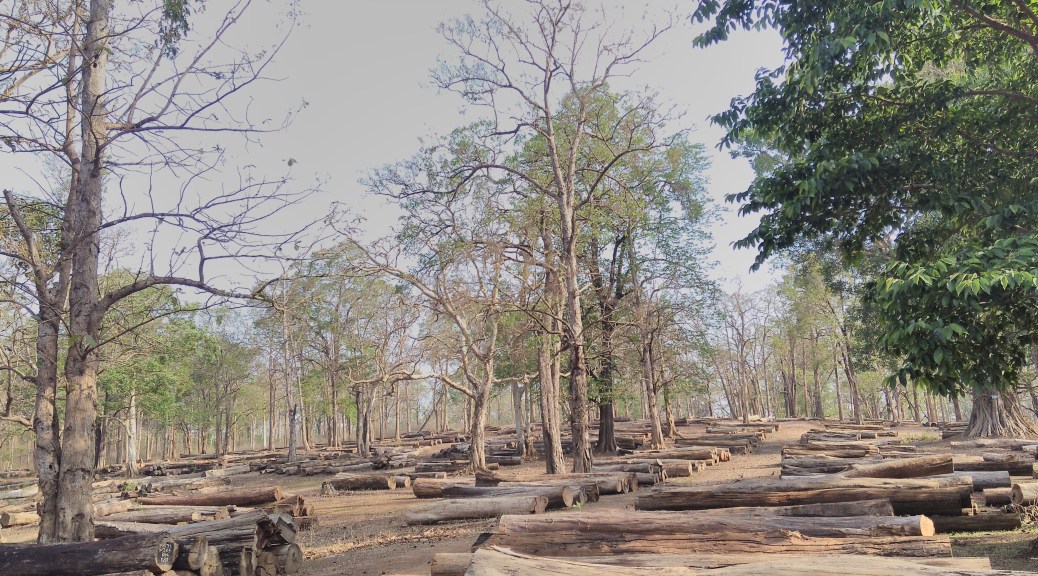
As a part of the trip package by the homestay, I was asked to be ready by 6.00.a.m. and was taken to the Dandeli timber depot. I was introduced to Ms. Rajani, a government schoolteacher by profession and an avid nature keeper by passion. She was assigned to take me on a bird watching tour around the depot where over 150 bird species could be spotted on any given day- A true haven for the bird watchers!
Dandeli timber depot
Among several species that she went on showing me around and shedding light on facts about them, the one that opened my eyes to an all new perspective of seeing avian life were the ‘Hornbills’. The hornbill is one species that is referred to Lord Ram and Sita for the couple bonding that they share. These birds have a very unique way of finding their mates and if ever happened that one bird dies anytime, the other remains single all life without finding another mate which is unique to hornbills. The reproduction cycle of these birds is once in 5 years and hence, the male bird is extremely protective about the female and the chick. The male bestows his beloved with berries of her choice from faraway places during this period. While it carries around 40-50 berries in its beak to feed its family, a few fruits may fall down during its flight, thus contributing to afforestation- The hornbills are the farmers of the forests in true sense and live a life of awe and inspiration to mankind. Another interesting fact is among the 54 species of hornbill across the world, 9 are found in India. Out of these, the world’s largest species- The great Indian hornbill and world’s smallest- the Malabar Grey hornbill with Malabar pied and Indian Grey, 4 species can be found in Dandeli alone. And I was fortunate to see all 4 of these during my 3 days of stay at Dandeli, an experience that cannot be explained but only be felt.
Another unique sighting was of the jungle babbler or the ‘seven sister birds’. With enormous untold stories, the tour ended rather quickly as we both lost track of time.
My enthusiastic guide visits this place every morning and evening which she describes as her day being incomplete without talking to the woods and strengthening her nature connect. She ensures she talks about them to her pupils at school as well. That’s a novel way to inculcate the habit and awareness about nature conservation among children from a very young age itself. I gave her a tight hug for the wonderful ways of teaching her students in school about conservation of natural resources and I bid farewell.
Bonus tip for birdwatching at Dandeli: Watch the hornbills mud-bathing on the riverbank near Ganeshgudi (sometime around winter)
It is needless to elaborate on the names Tirumala and Tirupathi! Famous as the richest temple in the world, the seat of Swamy Venkateshwara- the lord of seven hills. What goes beyond just this RICH temple is its geographical location. For someone who has been there and used the 11km long stairs to get to the top, I’m sure he must have enjoyed the multiple pit stops and deviations off the course to see the ‘Papavinasanam’ and ‘Akasha Ganga’ waterfalls enroute. And then there is the magnificent Silathoranam, the natural arch bridge formed due to volcanic erosions several million years ago… As if these pit stops weren’t enough, one is bound to get enchanted by the stunning view of the entire range of hills surrounding the temple with the Nagari quartzite formations… Ever since I had been there, exploring these hills has always been on my bucket-list… And when I chanced upon an opportunity to do it over a weekend, I jumped in with excitement. Taking cue from a random couch-surfing meet-up, we had decided to hit the roads to explore the hill ranges of Eastern Ghats. So on a Saturday morning, we started from Bangalore before sunrise to see the highest waterfall in the state of Andhra Pradesh, nestled in the Venkateshwara National Park. While I slept for most of the way, I was awakened to a blurred view of a fiery-red sunrise seen through the dew-laden window glass of our car, cruising through misty roads with hazy paddy fields around. We stopped by at one of the several restaurants on the way for a nice south-Indian breakfast and coffee.
With good asphalted road all the way, we arrived at the forest check-post at Talakona. While our friend was getting the required permits / entry tickets into the national park, we got chatting with a fruit vendor who let us try the variety of fruits in his cane basket which all tasted as sweet as nectar. He then told us that he could be our guide (at a small cost) and show us some offbeat corners of the forest. We agreed upon the idea and promised to buy more fruits from him on our return to make up for his business. We then reached the eco-lodge, managed by the forest department and ordered for food which would be kept ready by the time we returned from our trek from the woods. We then drove up, till the Siddeshwara Swamy temple and parked our vehicle near the foothills of the waterfalls. Our guide took us off the course from there on through stone-laid stairs that seemed like we were walking into oblivion in the jungle that is notoriously famous for red-sandalwood smugglers and the elusive beasts- the Royal Bengal tigers. Our first stop was at this view point from where most of the green and brown stretch of alternating forest and quartzite was seen. After a short climb thereon, our guide made us cross a stream of water and took us to the edge of the rocky path. The stream now seemed like it was jumping down in a mad rush from the cliff we were standing upon, and we could hear the screaming of several tourists down beneath. That’s when our guide burst the bubble for us- We were standing right on top of the highest waterfall of the state. It was a nerve wracking experience to stand atop there and watch the water gush down under our feet and have a post-monsoon gorgeous view of the green ranges.
The view of the ranges atop the waterfall
We were then guided through a canopy of lush green trees and hanging branches along the flowing water, at the end of where our feet stopped! Stopped in amusement… Amusement at what our eyes were seeing… A thick moss laden semi-circular rocky wall due to the flowing water over ages across whom several creepers hung and the water dropped down with all grace. This entire set-up of nature reflected in the mirror-like crystal clear water of the pond formed beneath where the golden fishes were enjoying their undisturbed swim. The rocks inside the pool made it appear rather shallow and was enticing us for a quick swim! With absolutely nobody else in the place- No exaggeration, it felt like we had found our long lost connection with nature right there! All unprepared for a swim, we put our legs into the freezing cold water to get a nice fish pedicure that de-stressed the city souls in us!
The pool atop the Talakona waterfall
After getting our natural fish pedicure done, we headed back towards the base of the Talakona waterfall. But, it was a different route this time… It was a beautiful path with a canopy of trees, a deep gorge to our left and the massive rocky caves to our right accompanied by an eerie silence of the jungle… At the end was another waterfall. It was one of the levels of this multi-tiered waterfall which we had to cross through. For a look from the distance, we could not gauge the level of difficulty until we actually got on the rocky path to cross it. While each one of us mocked and took fun in laughing at why the other person couldn’t cross it with ease, we dreaded our own feat of the waterfall-crossing when we slipped, slid and even glided across the super slippery rock over which the algae had settled making it an armed to the teeth adventure. We had a friend who slid and landed right at the edge of the cliff, just an inch further would have taken him rolling down the multiple tiers of the highest waterfall of the state 😛 All said and done, with we being drenched to our bones, our jaws chattering with cold and an unexplainable feeling of accomplishment, we had reached the last part of our hike.
The path across the caves
We then walked down to get a good look of the mighty Talakona waterfall from its base right-up, to understand where we had just arrived from… We then drove to the eco-lodge to dry ourselves, get some food and to call it a wrap for an eventful day that we concluded at twilight!
Although the places that I choose to write about may not stand a chance to be compared with the Sundarbans or the Pichavaram forests… None the less- The Arabian seacoast has its own share of beautiful places in terms of its mangrove creeks. And while Kerala is synonymous with its enchanting backwaters, Karnataka too has its fair share of backwater system which is still untouched and yet to be explored… Through my innumerous journeys in this coastal stretch, I don’t remember a time when I did not put my neck out to be tantalized by the view of the backwaters as I passed on those bridges that fall in between Mangalore and Udupi. So, this time I had set aside one weekend exclusively to explore these lesser known places of the west coast and mark myself in those remote places on the map-of-India.
My itinerary: Friday: Start from Bangalore – Overnight bus journey to Udupi Saturday: Kemmannu (Explore the backwaters in a traditional boat ride), Kodi bengre (explore the village and an estuary), Malpe beach (water sports), Krishna temple and the seven Mathas, Sunday: Chill at Sasihitlu beach and estuary, Kapu beach & lighthouse, return to Bangalore by bus (You can alternate this with a day visit to St. Mary’s island)
The details:
First things first- Having good connectivity, taking the public transport to reach these places has its own experience, the way I enjoyed my trip. But I strongly recommend having your own vehicle to these places. Given the hassle of waiting for a ride, the remoteness of the place and the joy of riding through such a beautiful stretch of road be best enjoyed on a two-wheeler only. That said, my mother and I had reached Udupi by an overnight bus and stayed at a hotel close to the Krishna temple. We freshened up and headed to the service bus stand located at a walkable distance to the hotel.
street leading to Kemmannu
The entire district of Udupi is dotted by innumerous temples and churches and hence, I prefer not to make a mention of them in this post. There is no dearth of local buses to any place within the coastal belt of Karnataka and hence, I relied totally on public transportation for my commutation. All set to explore Thonse, we boarded a bus that passed through Kallianpur village (This was once, a part of the Vijayanagara empire). The ruins of an old laterite fort stand testimony to that era.
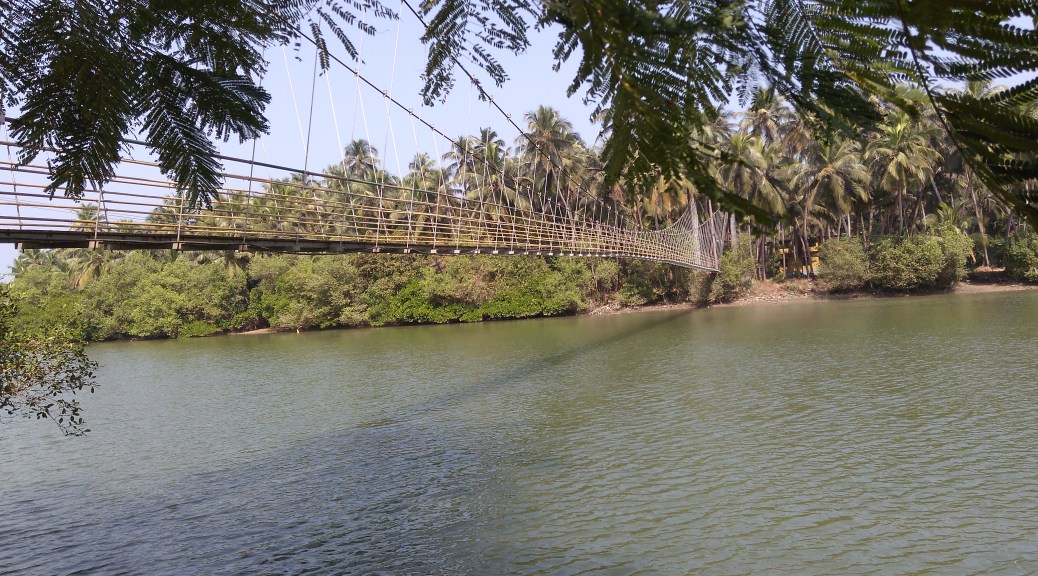
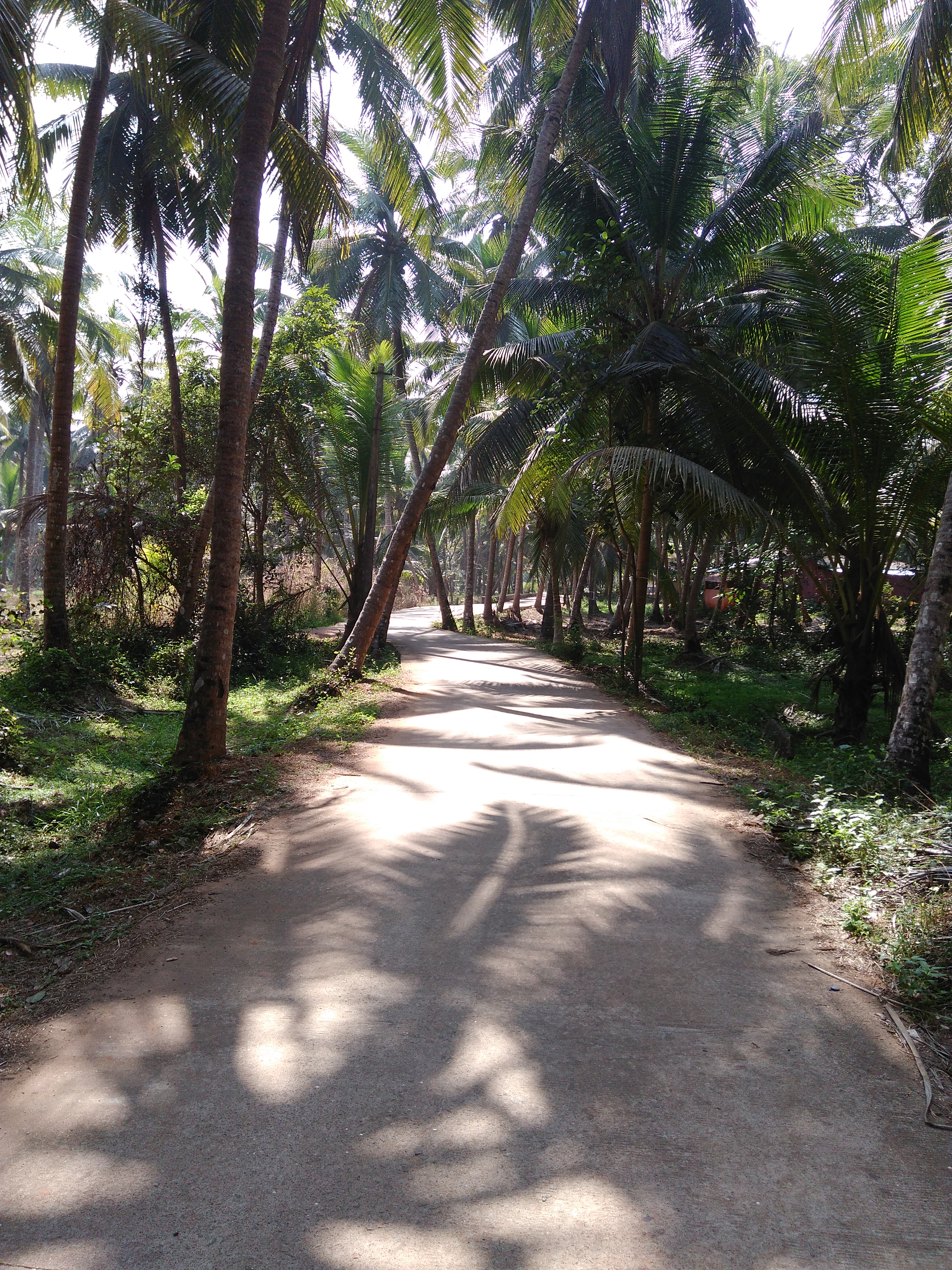
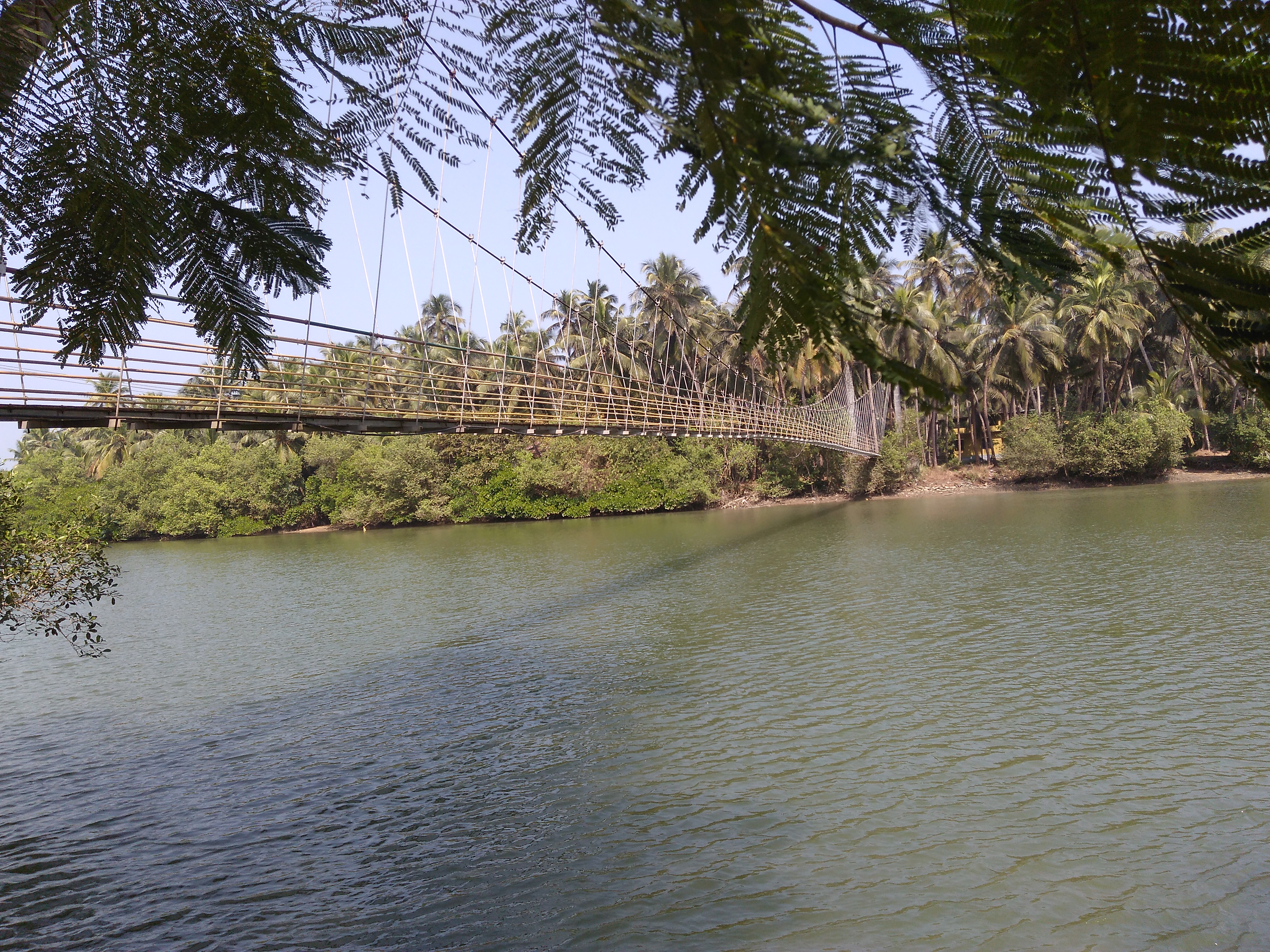
My first stop was at Kemmannu. A short walk on a meandering road through coconut plantations took me to a serene system of backwater canals connected to river Swarna. A suspension bridge has been laid across the river and set in an idyllic location of mangrove creeks. There was a boatman and his family living in a small house on the riverbank. When we enquired with the, they agreed to take us on a ride into the river for a fee. As our country boat set sail in the river, the oarsman suggested us to take a boat ride in the high tides either for sunrise or sunset. According to him, the delta beach would look brilliant at that time. He took us around several islets in the backwaters of river Swarna that gave us good sighting of rare birds. It was a very pleasant experience of sailing in the lap of nature, after having landed from the madness of the metropolis.
The suspension bridge at Kemmannu
From there, we walked back to the main road to get a vehicle to our next destination. While we walked beside a broken bridge, something caught my attention near the harbored boats. There was something amusing happening down there at the canals. I felt as if I was witnessing a bioluminescent spectacle in daylight. The sight was something I had never seen before. On a closer look, I realized that the canal was filled endlessly with jelly fishes of various colors and sizes. After spending some time there video graphing the sight, we boarded the bus to our next destination- Kodi bengre.
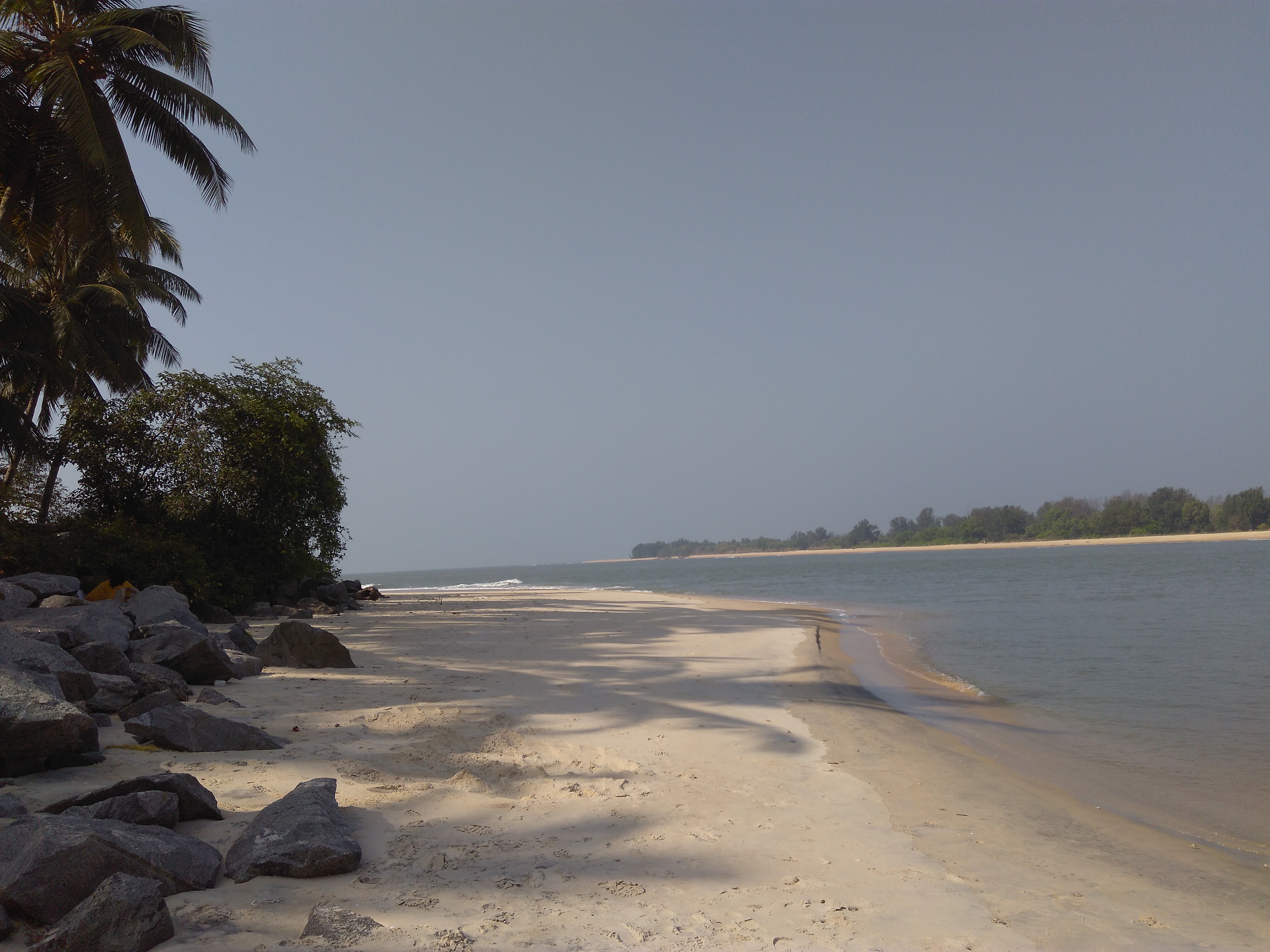
This small fishing hamlet is located on a narrow strip of land mass, placed geographically between river Swarna and the Arabian sea. While your heart will surely skip a beat at the first sight of the vastness of the sea at Hoodi beach, a deviation to the right is what we took. This road narrows into the village and gave us an experiential ride, right until the estuary at Bengre beach. The ‘tip of land’ is a great place for sunset viewing and enjoying the silence with the waves. The several shacks in the hamlet serves freshly caught sea food served spicy hot which is something not to be missed while you’re there!
The Kodi Bengre beach
From there, we took a bus to the coast, on the other side of the junction (Hoodi beach) where we had taken a right deviation from. With a quick ride through country roads flanked with traditional sea facing mansions, we reached Malpe beach. This being a popular tourist place, it was bustling with activities including various water sports. We walked down to the fish market / port area, away from the crowd- and got a good sight of the setting sun. There is a dedicated ferry service from the jetty to the Saint Mary’s Island for those seeking for a day trip which I personally recommend for anyone who is visiting this coastal town. It’s a great place and there is enough information available all over the net to get there… If you are driving your own vehicle, then I recommend you take the Pithrody route to reach back the Udupi town. This will complete your coastal stretch of Udupi giving you an experience of driving through yet another estuary and delta- that’s formed by river Udyavara and the Arabian sea.
You can complement your beach trip with a visit to the Krishna temple and the seven Mathas that are associated with the temple administration. Top it up with delectable Udupi chaats and the famous Gadbad ice-cream that saw its origin in this coastal town.
The monsoon has caused the mighty Brahmaputra to take a toll on the North-eastern part of India causing innumerable and irreplaceable losses. I saw this one particular photo of a floating carcass of the striped beast, the National animal of India in the newspaper this morning and I was taken back in time when I visited Kaziranga last year, post monsoon.
This post is part of my fortnight long road trip across North-east India, specifically covering parts of Meghalaya – Assam – Arunachal Pradesh I had tagged along with two other travelers and drove around the places in a self-drive car hired at Guwahati. Our visit to Kaziranga had just one agenda, a safari in the Kaziranga National park and get a glimpse of at least one rhinocerous! Kazhiranga National Park is counted in the list of UNESCO’s world Heritage sites.
My Itinerary:
Day 1: Evening drive from Guwahati to Kaziranga (Kohora forest range) Day 2: Early morning elephant safari & jeep safari in Kaziranga national park, Orchid research centre. Continue the journey onward to Jorhat.
The Details:
After a wonderful drive through the National highway from Guwahati, we reached Kaziranga on a night lit with Diwali lamps all around. Kaziranga national park is divided into four main areas: The Central range at Kohora, Western range at Bagori, Eastern range at Agaratoli and the Burapahar range at Ghorakhati. Here, the tourists can enjoy the elephant and jeep rides into the forest that are organized by either government or private parties. The park is closed during monsoon and we were lucky that the central zone at Kohora had opened just around our visit time. We had a nice meal and settled down at one of the numerous resorts that exist on the boundary of the National park in the Kohora range. Meanwhile, our resort guys helped us to get tickets for a safari ride scheduled for early next morning.
We woke up the next morning and headed towards the forest gates where the elephant ride was supposed to commence. The drive from the resort until the forest gate was so refreshing in itself. With the addictive smell of wet ground, kaccha roads passing through green paddy fields dotted with bamboo huts here and there, thick mist slowly clearing up with dew drops reflecting the rising sun: It was just wonderful all the way.
Enroute to the forest gates
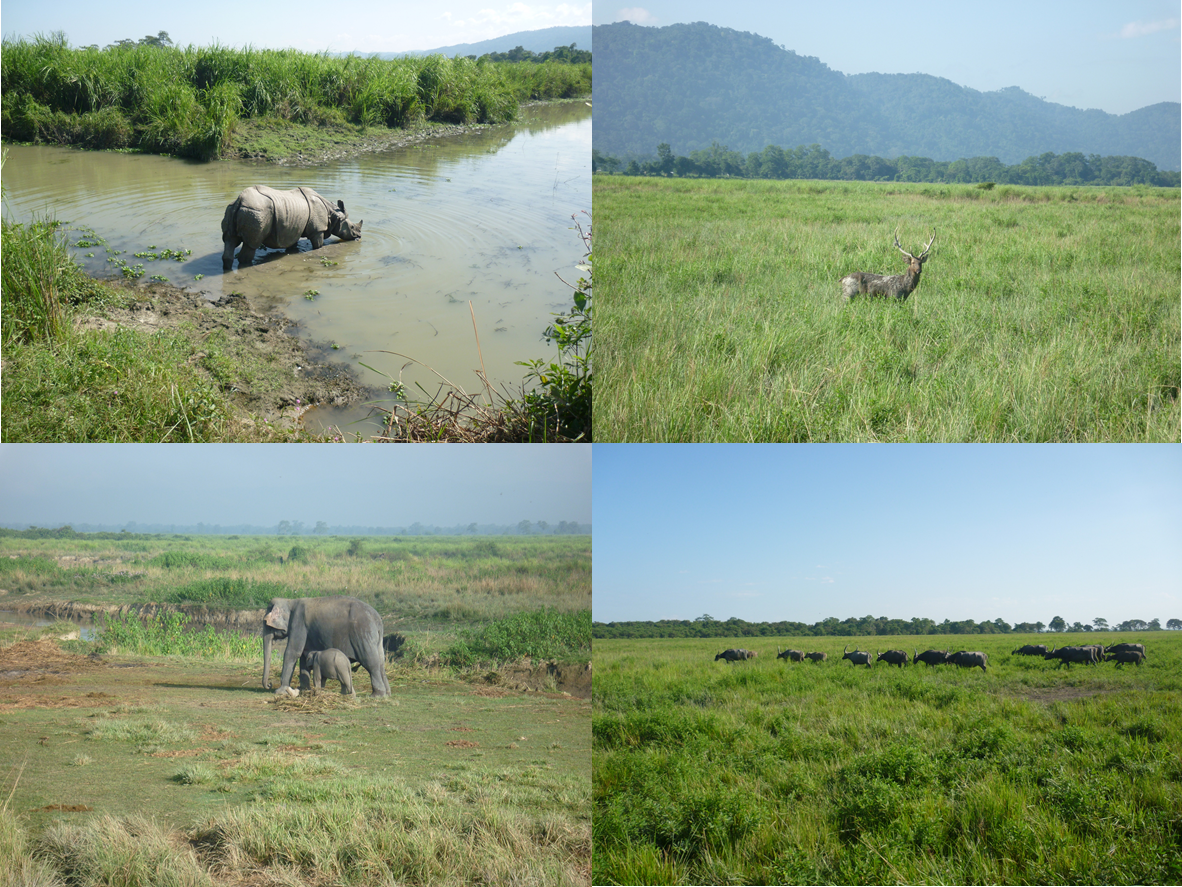
Kaziranga is synonymous with the one-horned rhinoceros. With about 2/3rd of the world’s population of these beauties found in just this area, it was no surprise that we began to spot them one after the other. Even before we started our ride, we spotted rhino families all around the watch tower we were standing at. We even found a few of them grazing in the fields on the sides of the highway. With that we realized, that Kaziranga was beyond rhinos. There are some other wild animals that are exclusive to the park and are collectively called as the ‘Big Five’, a must on the list of every wildlife enthusiast visiting the state of Assam.
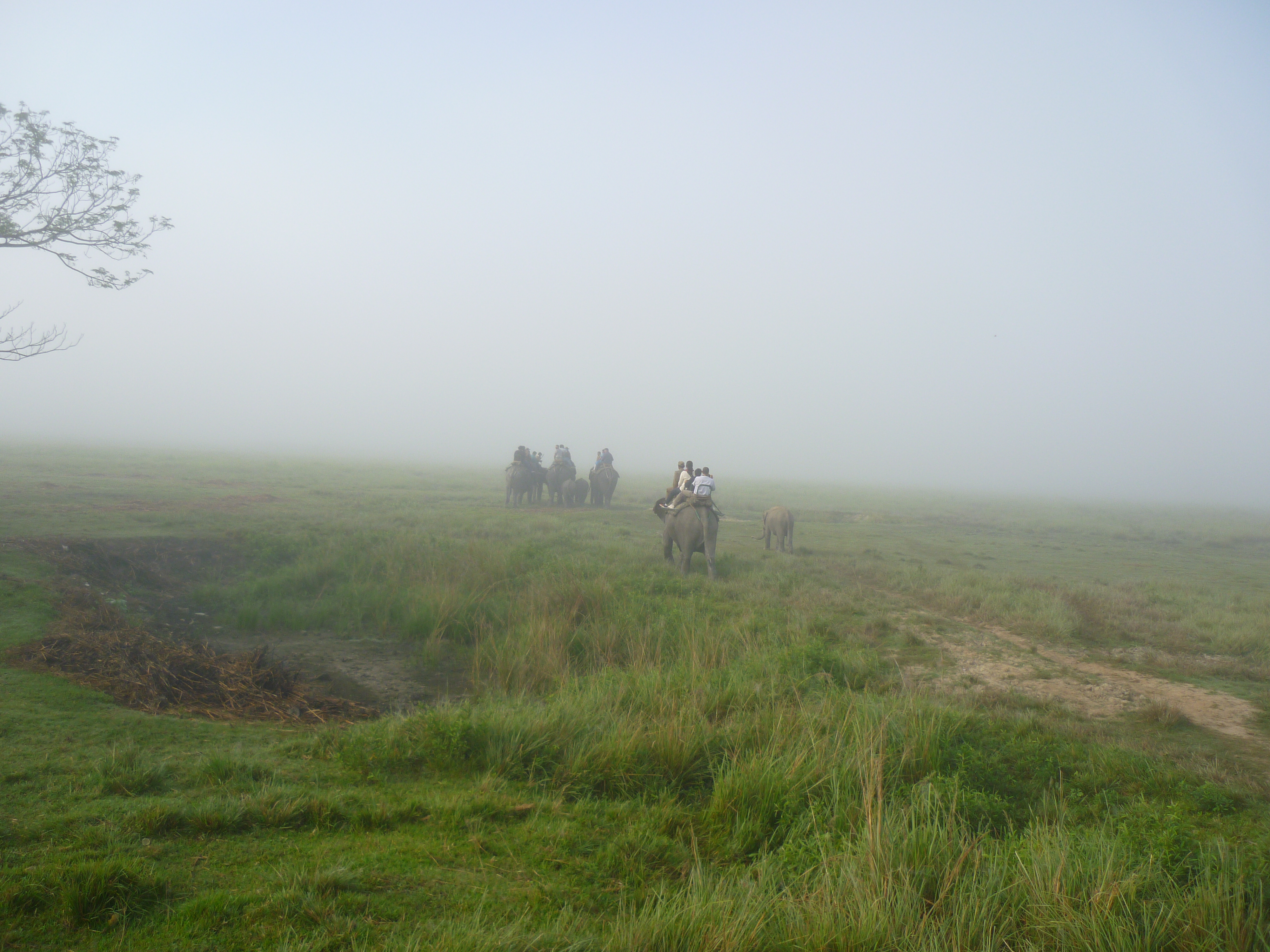
Our elephant had arrived in a bit. We sat atop and started our ride into the haze of the misty green grasslands of Kazhiranga to track the ‘Big Five’ of the this land. The elephants that we were seated on, were walking through dense thickets of elephant grass: the grass that was taller even for elephants to walk through. Slowly, the mahout started to point out and show us the animal at far distance.
The elephants marching into the forest
First, it was a wild elephant with its calf. We were told that rhino and elephant conflicts were common and that mother elephant was wounded just that morning in a bid to protect its new born calf. So, that meant we were not safe sitting on one either! We slowly moved out of tall grass to another area where a couple of rhinos were finishing their morning chores. It was very surprising for us to know that large rhino groups identify space where each rhino marks its own spot (making a private toilet space for itself) and does not let any other rhino enter the area.
Wow! We slowly passed that place and spotted herds of swamp deer. World’s largest population of these herbivores too is concentrated in these forests. Swamp deer are handsome animals.
Just as we were photographing them, we saw a herd of Asiatic wild water buffaloes marching out of a slush pool. Until our guide told us, we had no idea that over 57% of the world’s water buffaloes too were accommodated in the woods here!
Clockwise: The Single horned Rhino, Swamp deer, Wild water buffaloes and the Asiatic elephants
Another surprise information awaited us: Kazhiranga national park has the highest density of the Royal Bengal tigers in the world!!! Whoa!!!! That’s like……..something that was unknown to me, a person who hails from the land of Nagarhole, Bandipur & Bannerghatta. But as always, no luck with spotting the elusive beast. Seeing a tiger in the wild is a LONG dream, awaiting to be realised. (So much adventure to see a wild tiger, Click here to read more!)
So, we had checked off 4 out of the big 5 of the Kazhiranga before heading towards the exit gates- The One horned rhinos, Asiatic elephants, swamp deer and wild water buffaloes. Meanwhile, we realized that we still had time to make it for the morning batch of jeep ride. So, after enquiry and booking at the counter, we had a gypsy to take us into the forest again. Needless to mention, we were greeted by herds and herds of rhinos all along our path. Wild boars, barking deer etc. too were spotted in abundance. The highlight was however, the innumerable species of migratory birds that were spotted. Our driver cum guide mentioned several bird names, out of which only pelicans and spoon-billed storks were the ones that I have managed to remember.
On the other end of our drive into the forest, we were taken to a watch tower from where we could catch a very good view of hundreds of animals that had come to drink water from the flowing river. It was a very calm and a serene place to spend a while with nature. What caught our curiosity was some random years mentioned on the wall of the watch tower. So, here is a picture that may give an idea of the monsoon fury and severity of floods that affect this area year after year.
The tower itself is located at an elevation from the river. My friend in the below picture is a 6-footer. The water level of 2016 is marked above him… Can you imagine how impossible it is for the animals to escape out of the area??? It’s insane to think of and the image of the floating tiger’s carcass hovers around in my thoughts.
Record of the flood water level of the Bramhaputra
The drive back to the resort, on the highway was an extremely nice one which had gone unnoticed during the hurried drive through misty roads in the morning. Tea plantations flanked the roads on both sides. The famous Assam tea grows in flat lands and under shade, totally contrary to what I had seen and grown up seeing in the hills in down South. We stopped by to sip on some hot brew and bought some processed tea leaves for our caffeine addicts back home. A quick visit to the Orchid research centre was an interesting place to drop by too.
The Assam tea estate
Overall, our day was eventful at Kazhiranga with warm memories from the woods before heading to our next destination- Jorhat. Although a little disappointed for not being able to spot a tiger by the end of our safari ride, we were feeling content for having our long pending wish of visiting this heritage site come true!
Concluding remarks:For those of you planning to visit Kaziranga, I strongly recommend to try both ways of exploring the woods, on elephant back and by a four-wheel drive. Both are different experiences and the type of terrain and sightings are different. While an elephant will be able to take you through the tall grass, a 4-wheel automobile will be able to enter deeper areas of the forest. If you wish to spend more time with nature, I recommend you all to explore all the 4 ranges of the national park. Don’t go by recommendations of people of which range to go in… Each area is distinct with different types of vegetation, landscape, flora and fauna concentrations.
There’s a proverb in Kannada, “Hitlu gida maddalla” meaning ‘We don’t recognize the medicinal value of plant that’s lying in our backyard’. True to this, I have been traveling and writing about beautiful places from across the country.. And suddenly I felt that I had left out to explore places in my home state itself..!! We just wanted to have a rough theme before we hit the road. What was fitting well in the time available was the coffee tour!
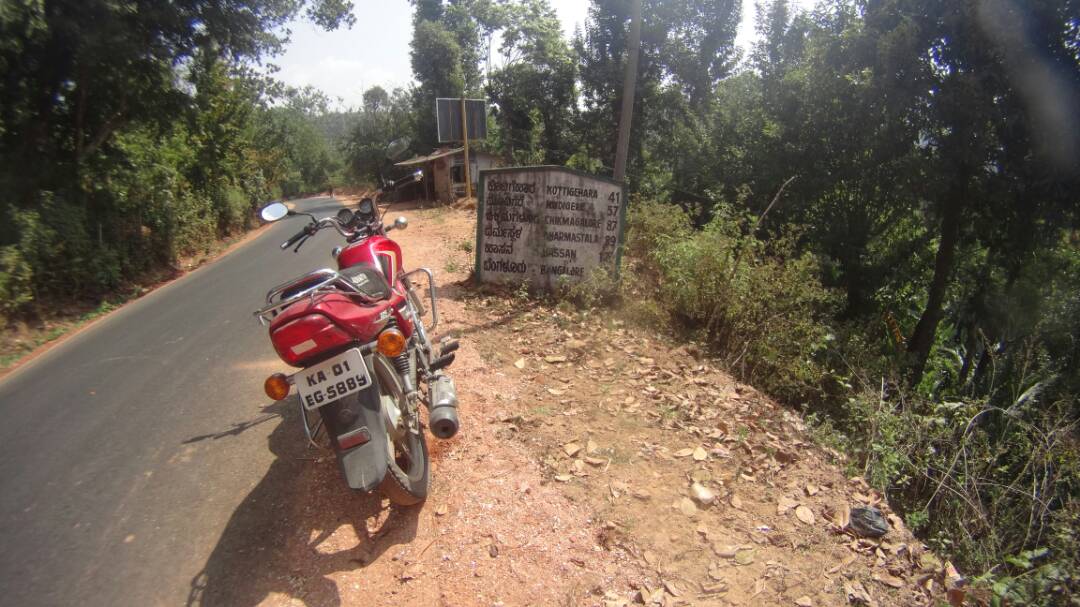
Karnataka produces about 51% of India’s coffee and it is all on the southern stretch of the Malnad region. The coffee grown here is highly priced in the international market owing to its better flavor as it is grown under the shade. That’s it, my brother and I pulled out dad’s bike from our cellar and decided to hit the road for a long weekend covering the entire stretch of coffee belt in Karnataka. Unlike cars, we won’t have the luxury of having a spare wheel in a 2-wheeler. Inorder to get our 125CC, 4-stoke, single cylinder, 10 year old boy running smoothly, it was necessary to give him a fine pair of CEAT tyres that could sustain our long ride on different terrain. So finally, here we go.. Our road trip along the coffee belt on the western ghats.
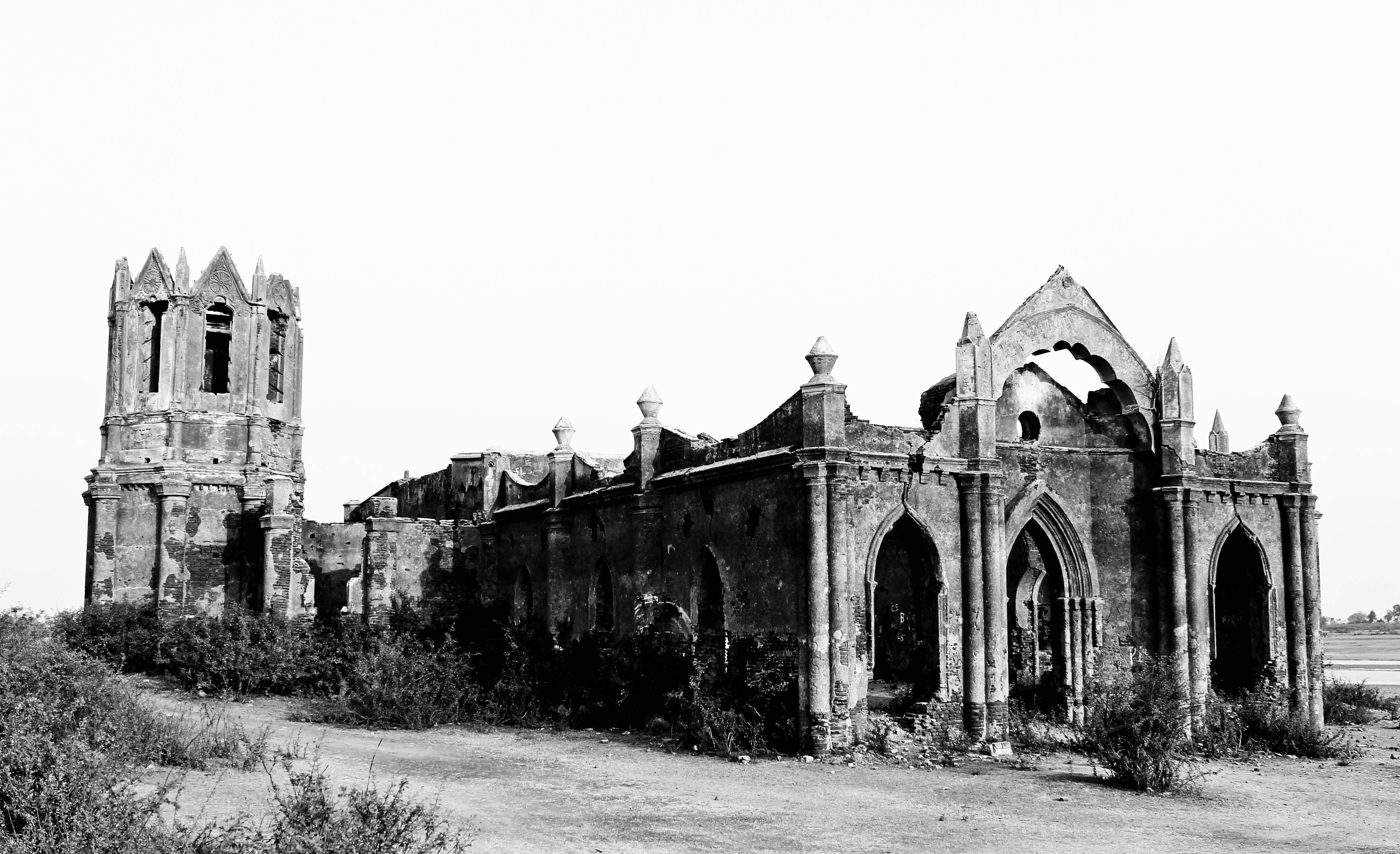
On a January weekend, we rode through the finely maintained NH- through Nelmangala and Kunigal. Our first coffee stop was to sip on some caffeine from the Hassan plantations. A simple hot cuppa at a petty shop before a deviation to Shettyhalli was all that we wanted. At a distance of about 20kms from Hassan, the Rosary church at Shettyhalli stood testimony to time and silently narrated a story of a painful past. This church emerges out when the water levels in river Hemavathi recede as if playing a game of hide and seek. We spent some time admiring this architectural beauty and trying to reconstruct it’s glorious past through our imagination. We left Hassan after a sumptuous lunch at a friend’s house located in the middle of a coffee estate.
The Rosary church at Shettyhalli. Clicking credits: Samson Joseph
As we passed through the winding roads of Chickmagalur, we were reminded that the hillstation is the birthplace of Indian coffee. Bababudangiri range is the place where coffee was first brought to India and the plantations flourished. Mullayangiri, the highest peak in Karnataka is a hotspot among trekkers. Also, being the native of the famous chain- Café Coffee day, we couldn’t help but stop over for a cup of cappuccino.. After having our dose of caffeine, we continued on the road for our night’s stay at Sringeri.
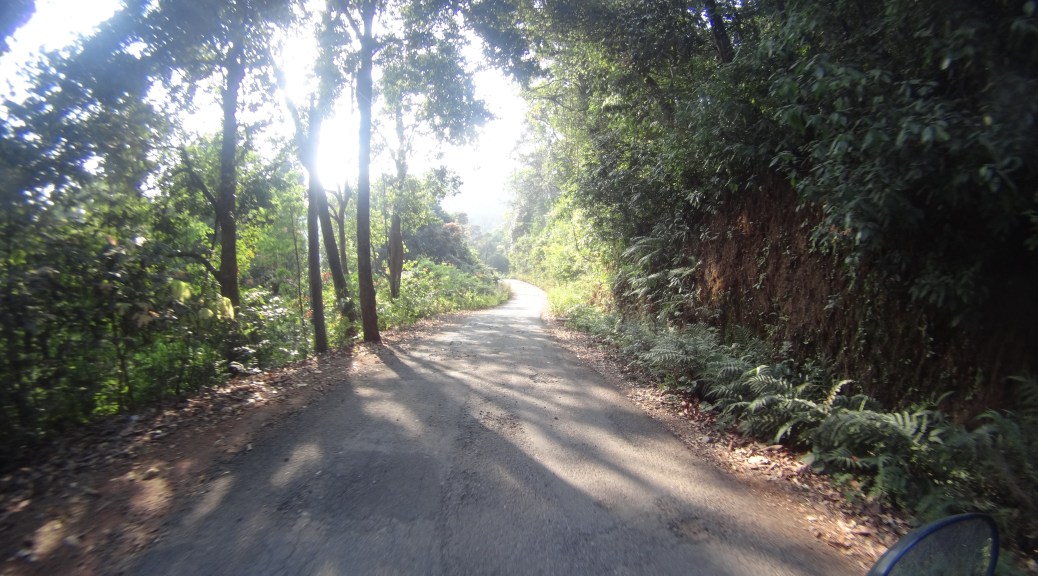
Enroute to Chickmagalur
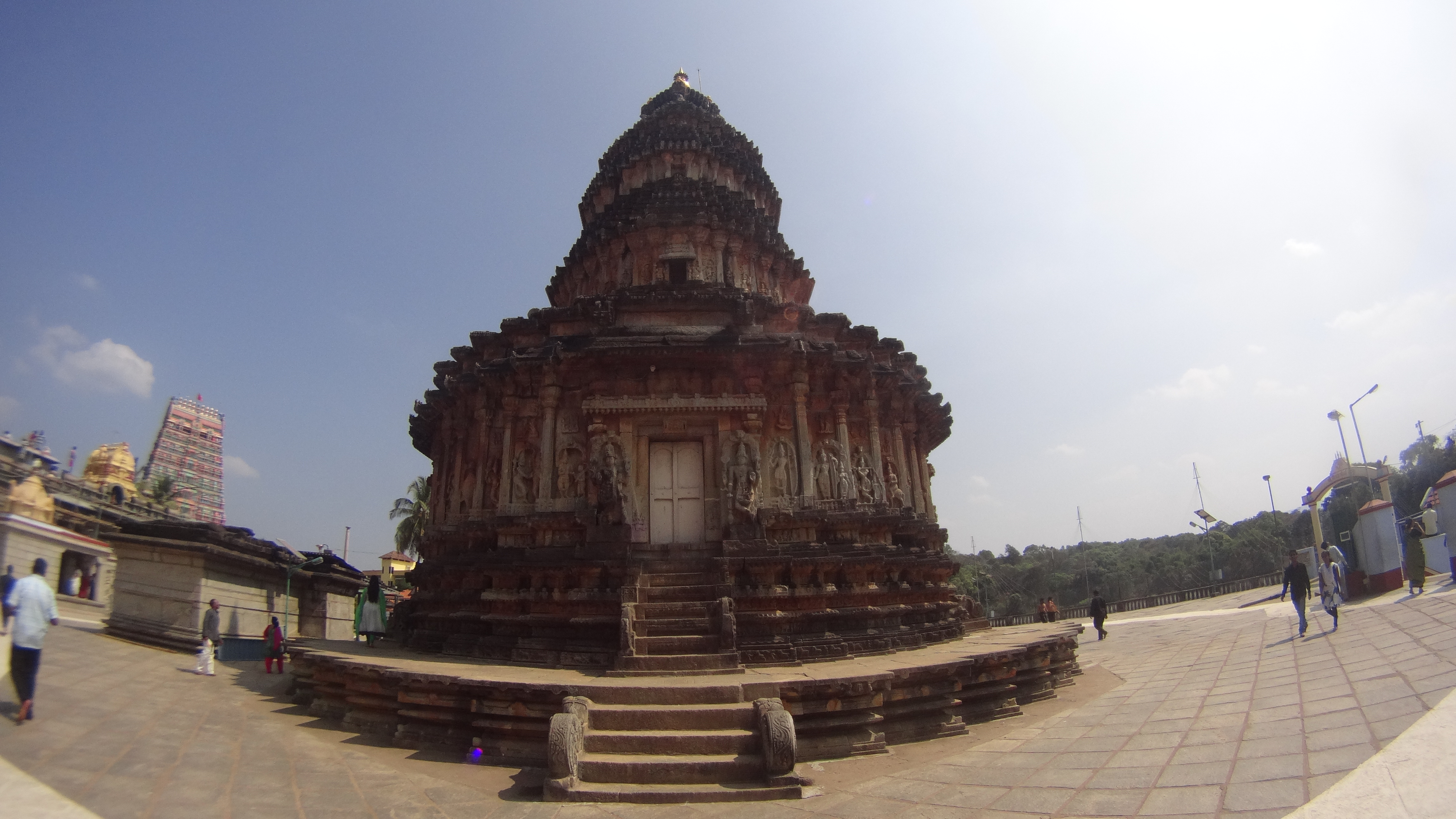
Next day, we set out to explore the pilgrim town of Sringeri. The Sharadamba temple is one among the 4 main Mutts established by Sri.Adi Shankaracharya. The Vidhyashankara temple on the same premises is a beautiful structure built in a combination of Hoysala and Vijayanagara style of architecture. After a small ride, we stopped by at Sri Rushyashrungeshwara swamy temple in Kigga, locally called as the God of rains. The route to our next destination- Sirimane waterfalls was a pleasant one passing through thick jungle on either sides, once notoriously famous as a haven of dacoits. Narasimha Parvata and Meghebaile waterfalls are other places of interest for the forest bums. However, we decided to spend the remaining time whiling away on the banks of river Thunga feeding the school of fishes with puffed rice.
The Vidhyashankara temple at Sringeri
We started early the following day as we had a long route to cover and the BEST stretch of our roadtrip. We arrived early at the Kalaseshwara temple and enjoyed the serenity and oneness with nature that Kalasa town had to offer. The Breakfast served at the Annapurna temple happens to be one of the best prasadams and there was no way we were going to miss it. So we had to speed our way towards Horanadu, before the food counter closed. We then had to do a small off-roading which took us to a place of Ultra Calm- Javali in Mudigere Taluk, the birthplace of river Hemavathi.
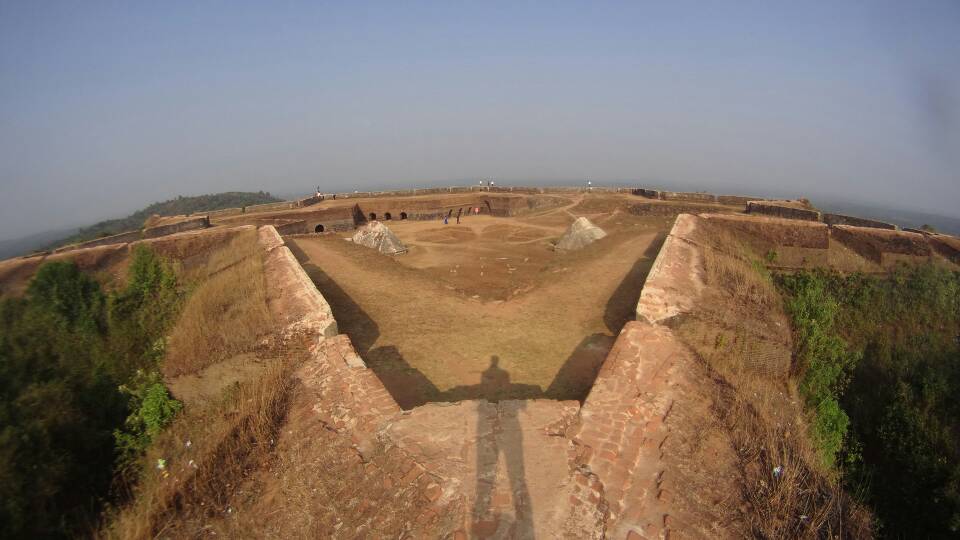
After a refreshing break, we headed towards the next coffee hotspot. It had been an awesome ride so far and time to get our caffeine fix. We parked our bike at one of the stalls put up with a bare table and a stove serving banana fritters and our dose of Sakleshpur coffee. We then climbed up the stairs to reach the beautifully located and strategically built Armory of Tipu Sultan- Manjarabad fort. It is a multi-walled star shaped fortress and worth photographing for an aerial view. Having Shiradi ghat and Bisle ghat in the vicinity, the view from the fort is amazing!
The Manjarabad fort
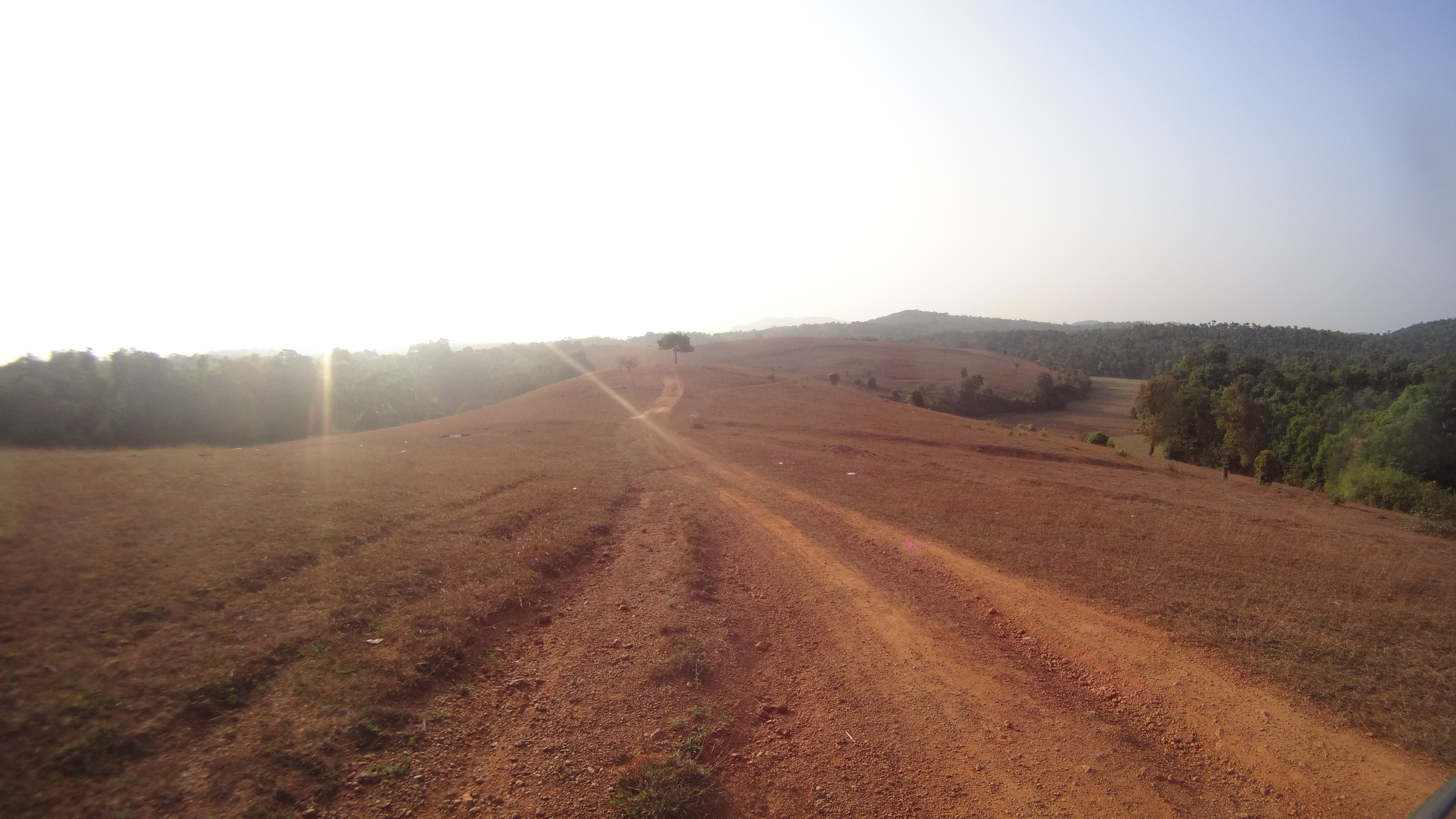
The ride has been brilliant so far and we stopped by for a picture of this solo tree standing in a serene place.
As we continued to enjoy our ride further, god decided to add in a tinge of adventure. We lost our way and we missed a deviation.. So that’s when our CEAT tyres were put into real test. We were scared of having lost our way and running on low battery on our mobile phones during our off-roading tryst. However, we were fortunate to reach the main road that ran parallel to our wrong road. Astonishingly, we later got to know that the official name of that road was ‘Kundu-Rasthe’ which literally means ‘Pot-hole road’ in Kannada.
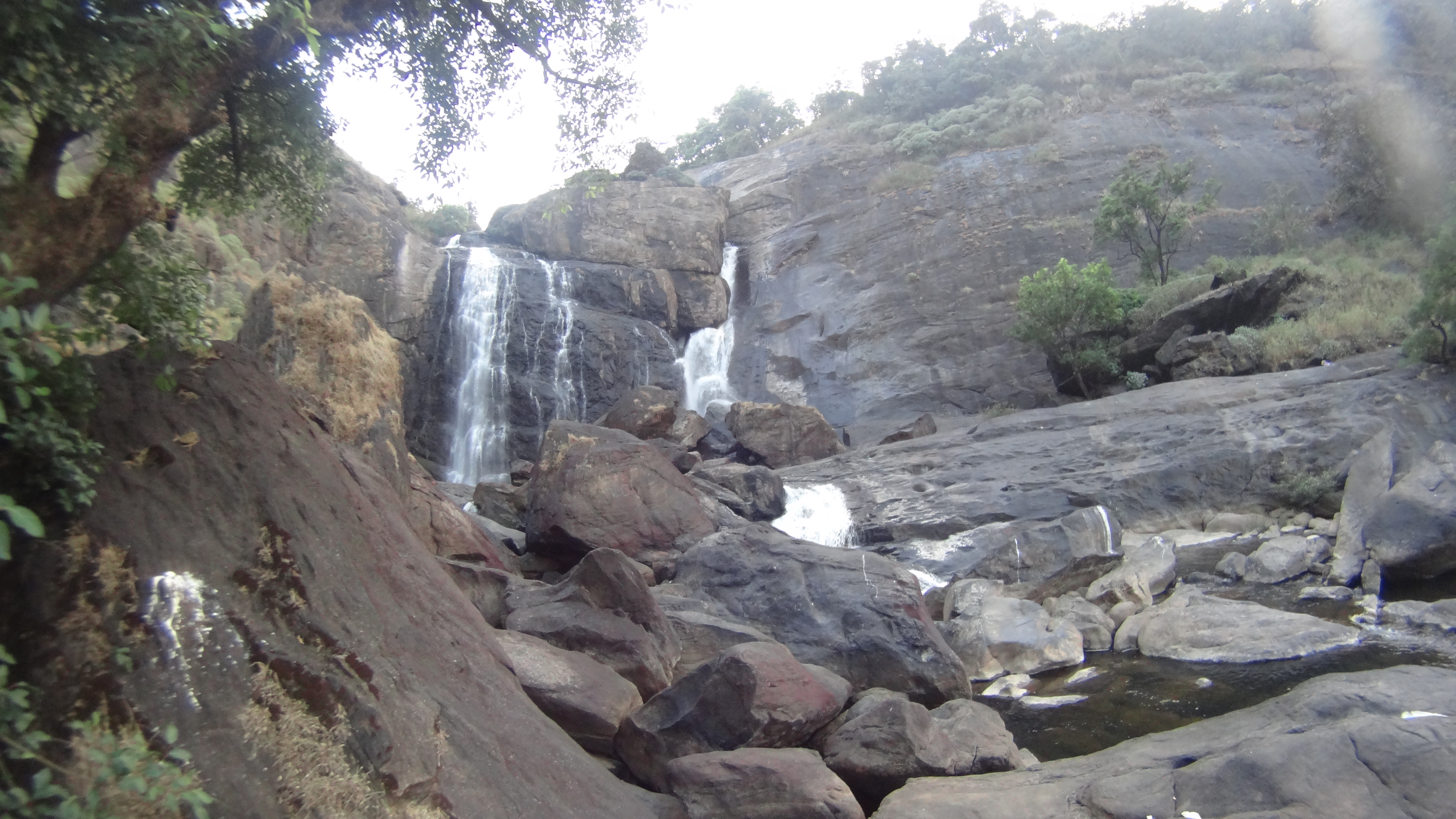
The sun was already setting and we were the last and the only people in the middle of no-where, walking down the stairs towards Mallalli waterfalls. The place was drop-dead deserted by the time we reached there. We hurriedly clicked some photographs and rode for a short coffee break at the last part of our coffee trip, entrance to Coorg or Kodagu district. Interestingly, we passed through several small towns named after the days of the week when the weekly shandy is held. Shukravarapete, ShanivaraSanthe and Somwarpet were among them.
The Mallalli falls
So it was past 07.00.p.m. when we finally reached our ancestral home at Madikeri town. And there was no better way to be greeted at home and end the long trip than having a sinful brew of Bella kaapi of Coorg. That said, our ride on the coffee belt had come to an end.. We rode on excellent national highways, state highways and stretches with no roads.. I must mention that coffee kept us awake and the tyres kept us on track and it was a wonderful experience.
Summary:
It is not an expensive car / bike you need for a wonderful trip. An efficient engine and a pair of reliable tyres is all that is required if you have a zeal to conquer the roads.. Bring it on and enjoy the ride!
Request to all riding & driving enthusiasts:
I myself work for an automobile manufacturer and my roles include attending to quality issues of seats & airbags. I have seen tests performed on dummys for evaluation. Trust me, it is insane to imagine the impact of not wearing seat belts.
Seat belts alone can reduces the risk by 60% in case of a collision. In most cars, the airbags don’t deploy unless the seatbelts are worn as they are inter-connected for the electrical system to identify the seat occupancy. So buckle up and ensure all your co-passengers too have!
Helmets on the other hand reduce fatal accidents by up to 60% avoiding severe head injuries. So, please invest on a quality assured helmet and strap it properly for your own safety and DO NOT look out for any cash savings by picking the one’s sold on roadside.
You may be a safe rider/driver. But you don’t know that stranger on the road.. Remember, someone is waiting back at home for your return. Please follow safety rules for their happiness. This is the least you can do!
The long list of places I’ve travelled to and stayed at have given me a new insight to life and a new outlook at seeing life through.. The journeys have been enriching and the stays have added a new dimension to the travel. From five-star luxury to shoe-string budget hostels- I’ve stayed there all. While the pleasant ones were many, there is its own share of hopelessly aweful places. So here are a few ghastly and horrendous stays I have opted for during the course of my Indian discovery.
1. It being a pleasant season in the holy town of Rameshwaram, we had checked into a decent non-AC lodge at noon. After freshening up, we went out for sightseeing and returned to our room post dinner. We unpacked all our girly goods and let most of our wet lingerie strewn out for drying. It was around mid-night and I was just about to fall asleep and my friend Madhu screamed out loud. HECK! I jumped out asking what had happened. She switched the light on and started to pick up 1,2,3.. Bedbugs! She was allergic to them and the rashes had spread across her body. We spoke to the hotel manager and he arranged for an alternate room which he claimed would be good due to A/C facility. While we moved in our luggage and shut the doors, my friend lifted the bed to just reconfirm that everything was alright. Alas! More bedbugs were partying around the hemline.. We ran to the reception and asked them to give a permanent solution. They somehow managed to arrange a room in a nearby hotel after having themselves confirmed the room quality. So the next thing we were found doing was- Two girls walking the empty streets of Rameshwaram at well past midnight with half zipped backpacks, untied shoes in our feet, wet lingerie hanging out of the luggage, random plastic bags on both hands and anxious faces searching for a place to spend the night.. It was almost dawn by the time we settled down in the alternate accommodation provided.
2. We can’t blame anyone for this one- there was nothing else for us to expect while being stranded in the middle of a winter trek and the night temperature at 25 below zero!! We were at Leh town in Ladakh. No plumbing would work in that part of the world in that season for obvious reasons. We found ourselves in a homestay where we had to fetch water to do our daily chores. We had to break through the frozen layer of ice just so, that we could get half a bucket of hot (warm) water from the bottom of the same drum placed on fire. The bathroom waste was collected in containers which would overflow now and then making us want to throw-up very often.
3. The overly broken plumbing of the Chidambaram lodge is something that tops the list. It was a place that changed my mind to cutting-short my week long trip on just the 2nd day and making me want to go back home ASAP.. As if the stench from the nearby gutter, the smell of alcohol from the adjacent rooms and the super dirty bed covers weren’t enough, the washroom was moss covered and the faucet rusted as if it would break if operated… And to top it all, We stepped on someone’s barf that was spewed up on the stairs.. YUCK!! This has really given me strong reasons to have apprehensions towards online hotel booking based on guest reviews..
4. This one was a highly recommended budget stay option at Panchgani. It used to be a school hostel until being converted to a hotel which has hosted several movie shoots in the past. After hearing positive reviews, we two girls were surprised to find that the property seemed rather deserted when we arrived there. We were the only guests and that too on a weekend.. Although the room seemed decent for the tariff quoted, we still had some apprehensions for being the only people and our safety.. Just when we were in the process of decision making, both our eyes were caught by some strange thing just a little outside our hostel room.. Some white fur like stuff hung out of a large boiler sort of an equipment. We kind of panicked and asked the warden what that was. He told us it was a water boiler and the hard water had deposited along with some insulating material on the top. It definitely looked strange and scary. We did feel that it was a dog inside the boiler and it was their long furry tail hanging out of the barrel.. If it was our imagination, it is so not possible that both of us had the same thought.. We stared at each other and rushed out of the place without any further discussion..
5. So after a nightmare-ish pursuit of an accommodation, we finally checked into a hotel that evening at Panchgani. Everything was fine until my friend came out running from the bathroom. When asked what happened, she anxiously pointed out at the bucket placed under a running tap with a blood red liquid! The bucket was half full already with what seemed like blood.. I ran down to the reception and they came upstairs to check for facts from our bathroom :p They realized that it was rust particles from the overhead metal tank and pipes due to hardwater being constantly heated. We were somehow convinced with the explanation given, but I had no courage to continue to bathe in that water. However, to our rescue the water from other taps seemed to have a normal colour and we completed our basic chores…!!
Summary:
Do not suggest hotels, places and dishes/food to anybody. The choices and preferences vary from each person based on their character, mood, budget etc. Avoid being blamed later!














 The Lost Lander