Category Archives: Bangalore day trips

A Weekend Adventure: Hiking to Ankushagiri Fort

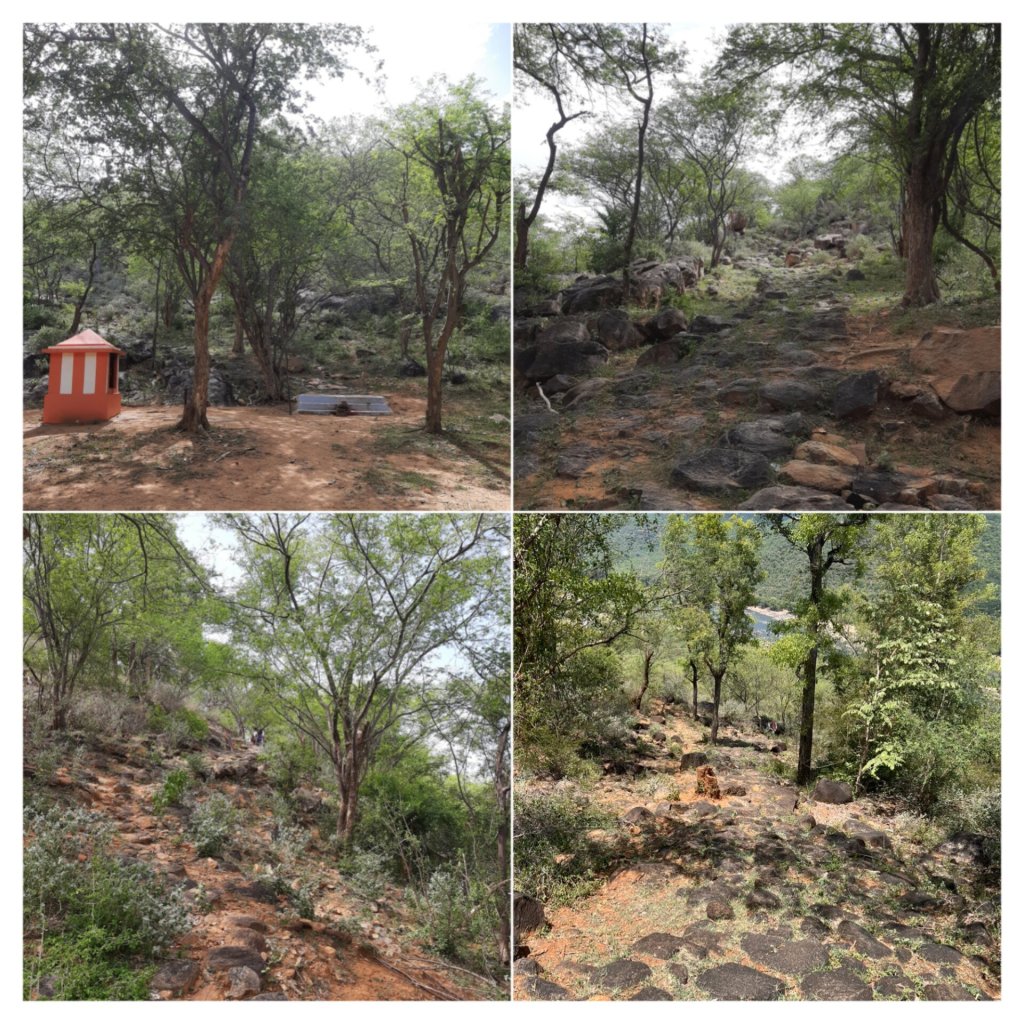
On yet another weekend, we were off on yet another hiking expedition. This time, we went to a lesser-known trail on Hosur-Krishnagiri road. The initial plan was to hike to ‘Aiyur Sami Lake’, a day hike organized by the Eco-tourism wing of the Tamil-Nadu tourism department. However, their site was not accepting registrations due to unknown reasons, and hence, we decided to randomly pick a hill around the region on Google Maps and hike it up. That’s when we came across the Ankushagiri fort.

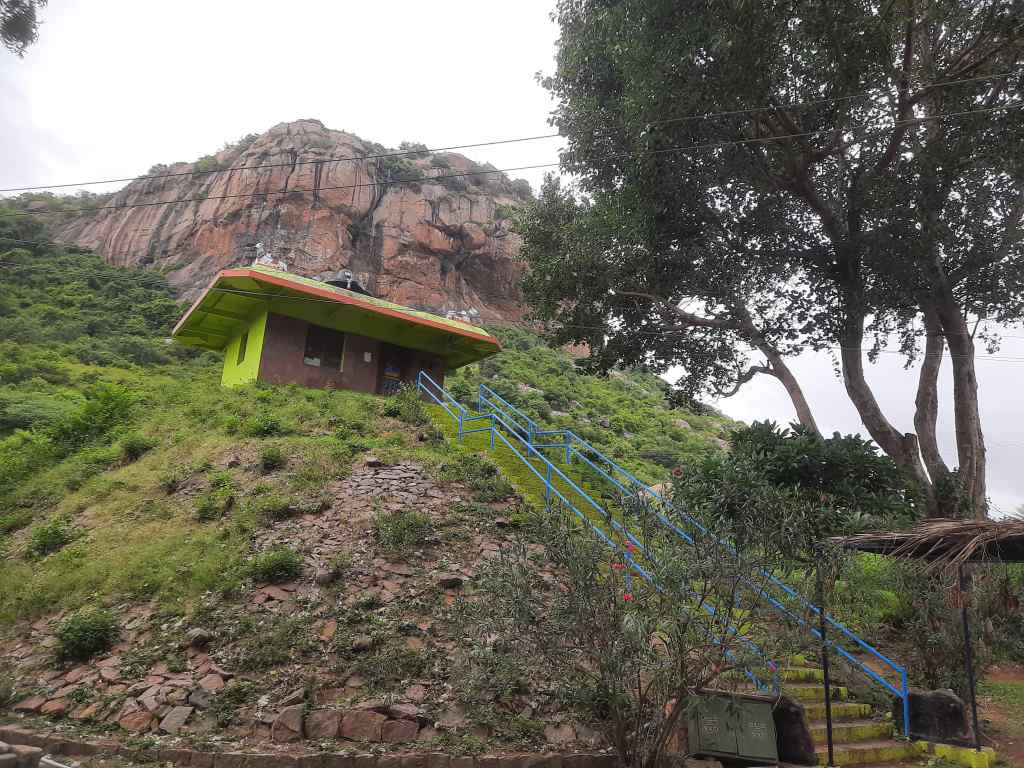
Following the route indicated on Google Maps, we arrived at the base of the start point of the ascent to Ankushagiri. There is a Perumal temple and, hence, a proper space for vehicle parking. Since we arrived on a Saturday morning in the winter months, some pilgrims had already arrived to worship the chief deity here. However, we skipped the temple visit and began our hike toward the fort that was located (once upon a time) on the hilltop.

Ankushagiri Fort and Perumal Temple at Tamil Nadu
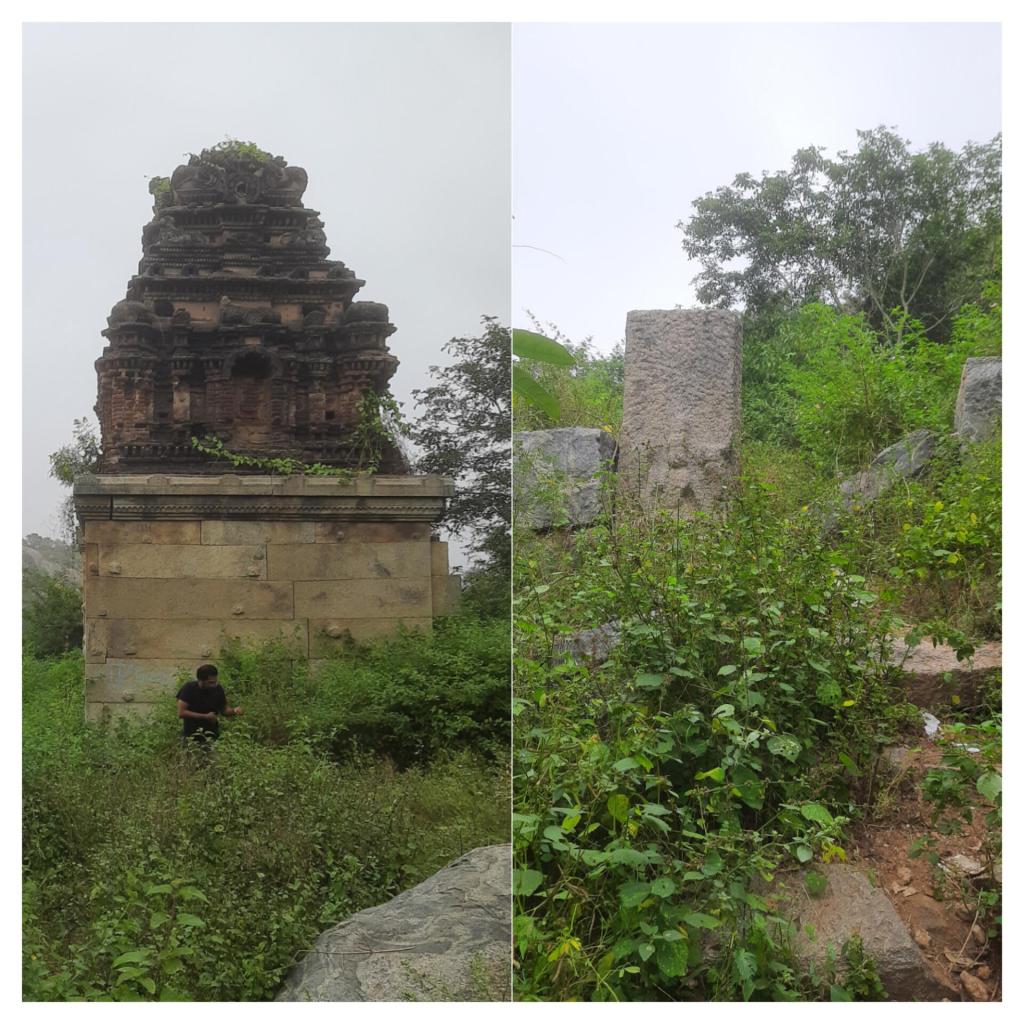
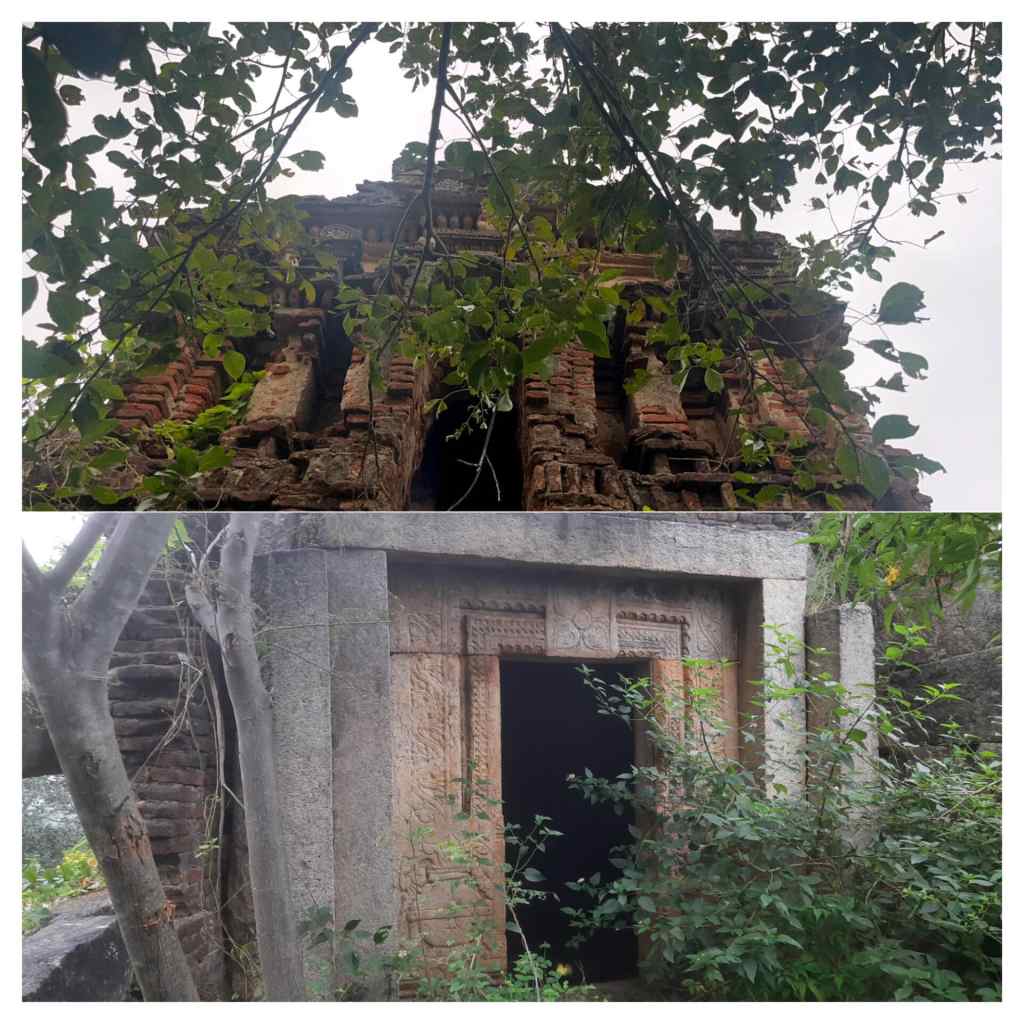
The ruins of the ancient temple at the base of Ankushagiri Hike

At the beginning of the hike route, there is an ancient structure, now in a dilapidated condition. Today, the Sanctorum lay empty with wild bushes and creepers taking over what once must have been a grand temple. The motifs on the walls of the two adjacent temple structures indicated both Perumal and Shiva.

Ankushagiri Fort and Perumal Temple at Tamil Nadu
The ruins of the ancient temple at the base of Ankushagiri Hike

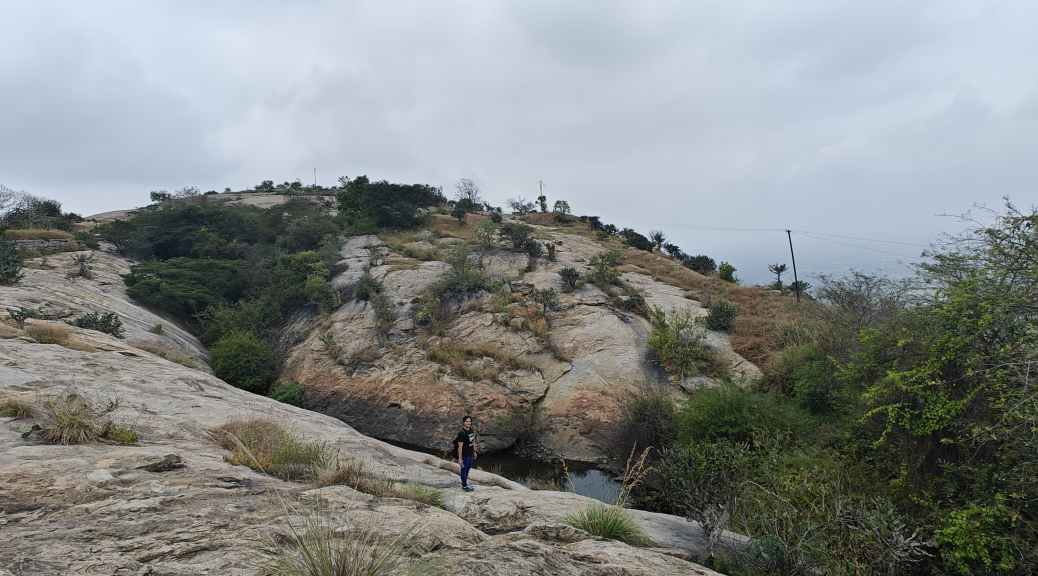
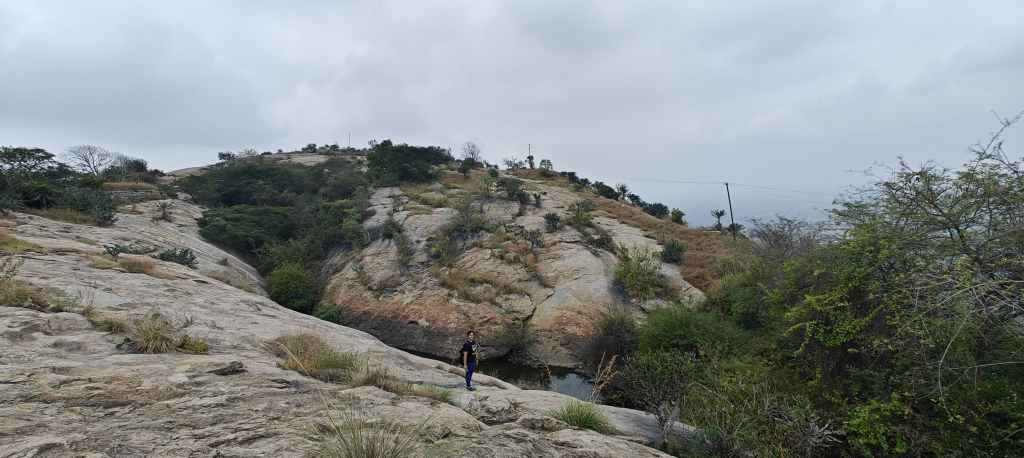
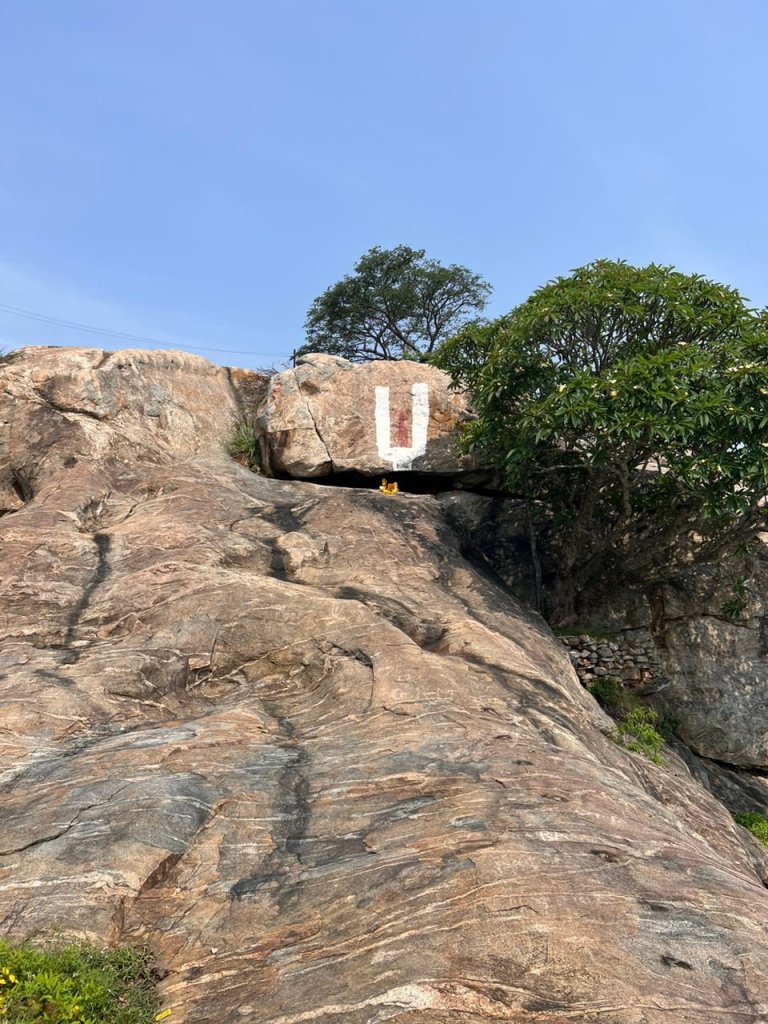
We went ahead from there and stopped after a brief walk. We were confused about the correct trail which seemed to split at a point from where either of them needed some more wear. We casually picked a path and continued to walk on the trail where the thorny bushes then opened to a rocky terrain. The rock looked interesting with varying patterns all over.

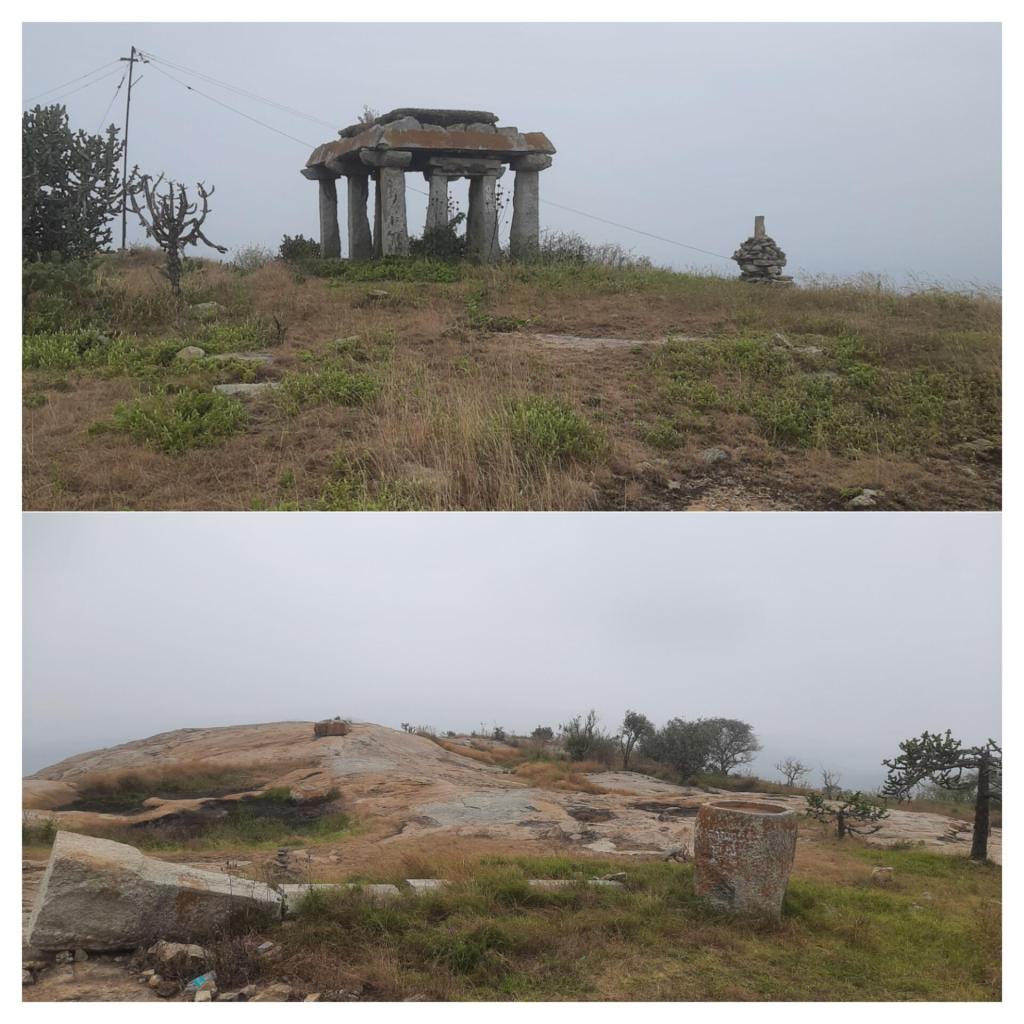
At the top, there were massive cacti plants dotting the area around an abandoned ancient temple structure. Only the pillars remained with the tall Garuda stambha lying down on the side and a stoneware that appeared to be an urn or a waterpot. Some previous visitors to this place had written ‘Someshwara Swamy Temple’ on the stoneware pot for our reference. We rested beside the temple on the large open rock bed overlooking the landscape. The gentle wind caressed our faces while we watched the hills appear one by one at a distance amid the clearing fog.

Ankushagiri Fort and Perumal Temple at Tamil Nadu
The ruins of Someshwara Swamy temple at the peak of Ankushagiri fort

After relaxing for a while and munching on some fruits and nuts that we had carried with us, we proceeded toward the next part of the hill. The trail was beautiful with a rocky gorge on one side and huge cacti lining the path on the other. There, we arrived at a single electric pole that stood in the middle of a heap of ruins of what appeared to be an old fort. Although a circular marking can still be seen to date, only a few large pillars, a few hero-stones like inscriptions, and a couple of kolam designs engraved on the floor were all that existed for us to decipher what might have been the real grandeur, expanse and the purpose of the structure there. Almost little to no history is available to us about who or how this place had served.

Ankushagiri Fort and Perumal Temple at Tamil Nadu
Ankushagiri Hike

Anyway, it was a very interesting outing for us to explore a place so lost in an area where we were the only humans in kilometers around us. We spent ample time there before descending back to the base. We photographed several other patterns on the rocks before arriving at the same bushy junction where we had chosen to take the random path for our ascent.

Upon our return, we paid a quick visit to the Perumal temple before heading back to the city.

Three immersive cultural experiences in Bengaluru

Despite being a cosmopolitan hub, Bengaluru is a metropolis that still firmly holds onto its cultural essence. There may be several festivals being celebrated year-round and across the city but a few of them transcend beyond any religion and community and are rather synonymous with the city’s name. Through this post, I would like to enumerate three such festivals that must be on any Bengaluru resident or tourist’s list of experiences whilst in the city.

    This nine-day festival is a reverence to Adishakti Draupadi and a celebration of her annual homecoming to earth from heaven, on the day of Chaitra Poornami as per the Hindu calendar. Although a main festival of the Thigala community living across Karnataka, people of all castes and religions participate in it. The Karaga bearer (the chief person in the festivities) carries the Karaga (the deity) bedecked with jasmine flowers and begins the procession from Shri Dharmaraya Swamy temple in Nagarathpete, in old Bengaluru. The Karaga bearer is accompanied by the gante dhaari (bell bearer) and hundreds of veerakumaras who together traverse across the streets of the Bengaluru Pete area. The Karaga visits all the temples and the Mastan Saheba Dargah that come along the route until they return to the Shri Dharmaraya Swamy temple before dawn break the following morning.

    Though the festival is observed for nine days, the rituals involving the Karaga bearer spans over several months prior to it. One part of the ritual involves the Karaga bearer undergoing his strength and weight training at one of the several Garadi mane (traditional gyms). Hence, these Garadi manes are considered holy places where replicas of the Karaga and placed and worshipped during the festival. Also, several temples located in the Pete area take out floral palanquins of their deities on procession across the streets of Pete. All these things make Bengaluru Karaga, a special experience.

    Similar Karaga festivals are observed in outskirts of Bengaluru like Hoskote, Kolar, Malur etc. But Bengaluru Karaga is one of its kind and experiences.

    Bangalore’s reputation as a garden city finds a reflection in various traditional festivities of the city. Just as flowers are integral to Karaga, there is another famous festival that has flowers in its very name. The ‘Poo Pallakki Utsava’ is an annual car festival celebrated as part of the Someshwara temple festival in the old locality of Ulsoor. Albeit being a temple festival, it is rather better known as an annual competition between gods and goddesses from temples in and around Ulsoor over which one arrives in the best flower-bedecked palanquin. The car festival is believed to be the wedding day of Someshwara with Kamakshi, and flowers are the theme of all decorations.

    There will be over 80 poo pallakkis from the surrounding temples who attend the wedding celebration of Sri Someshwara Temple with Goddess Kamakshi. The grandest Poo Pallaki is one of the bride, Goddess Kamakshi. Celebrated annually during the Hindu month of Chaitra (around April/May), it is a night long event.

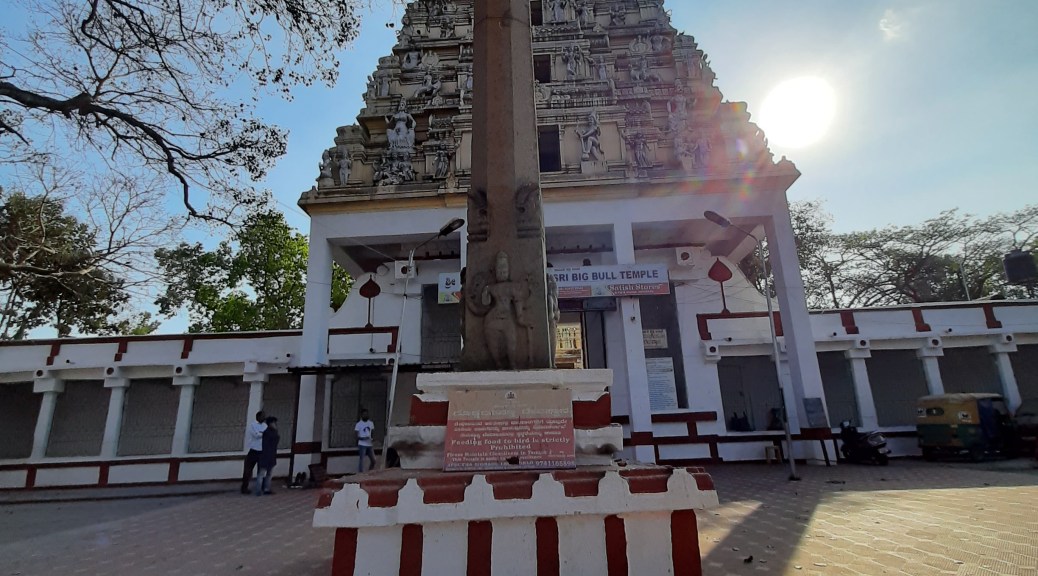
    ‘Kadlekai Parishe’ translating to ‘groundnut fair’ in Kannada is an annual coming together of farmers on the last Monday of Karthika Masa (month in Hindu calendar) celebrated since the 16th century. Legend has it that a raging bull used to damage the groundnut crops that were ready for harvest. The farmers prayed to Basava (bull in Kannada) to protect their harvest, by setting up an idol of a Nandi (Basava / Bull) and a temple at that place and offered their first crop to the Lord. This temple is called Basavanagudi (Bull temple) and the area surrounding it eventually came to be known by the name of the temple.

    Although the groundnut farms made way to residential and commercial structures, the tradition of the groundnut fair is celebrated with great fervor and enthusiasm even today. Farmers from across the state bring their first yield of ground nuts to offer to the temple and to sell them to others during this festival.

    More recently, a similar event is being organized in Malleswaram, around the Kadu Malleswara temple as well.

      A weekend hike from Bengaluru- Akkayammana Betta

      On a random day, we decided to drive towards Kempegowda International Airport with a basic idea to catch the sunset from a nice vantage point. We have explored the Devanahalli fort area on one of our previous day trips and wanted to explore some new places around there. But this time, we had a new family member along with us whose comfort was also meant to be kept in mind while choosing the destination- Our pet dog.

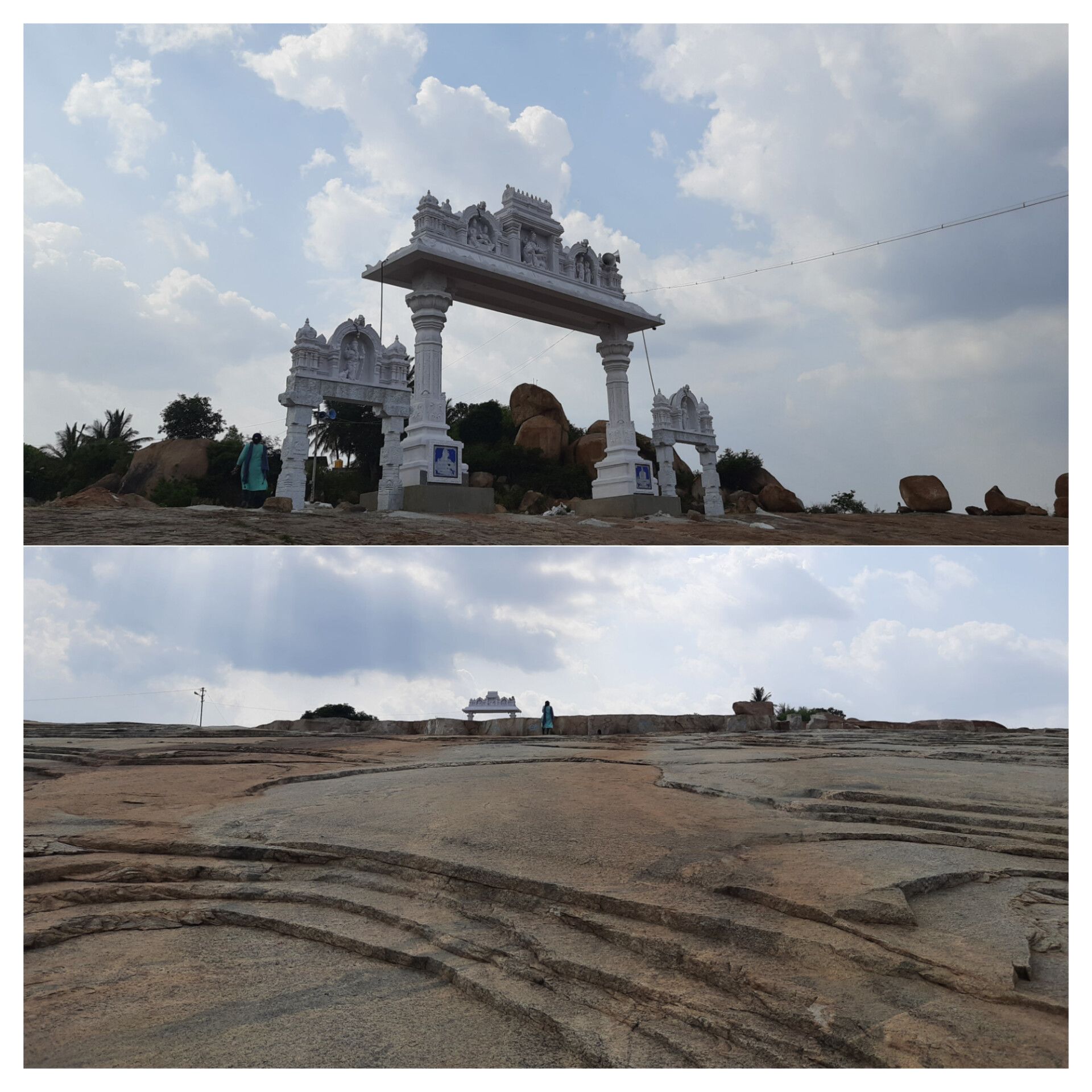
      By looking up a little on google, we came across the sunset point from ‘Akkayammana Betta’. We drove up right until its base where we parked our car and unleashed our dog to freely walk up the small hillock with us. The climb up was easy, leading to a welcome arch of the hilltop temple.

      Akkayammana Betta
      The climb and the welcome arch to Akkayammana Betta

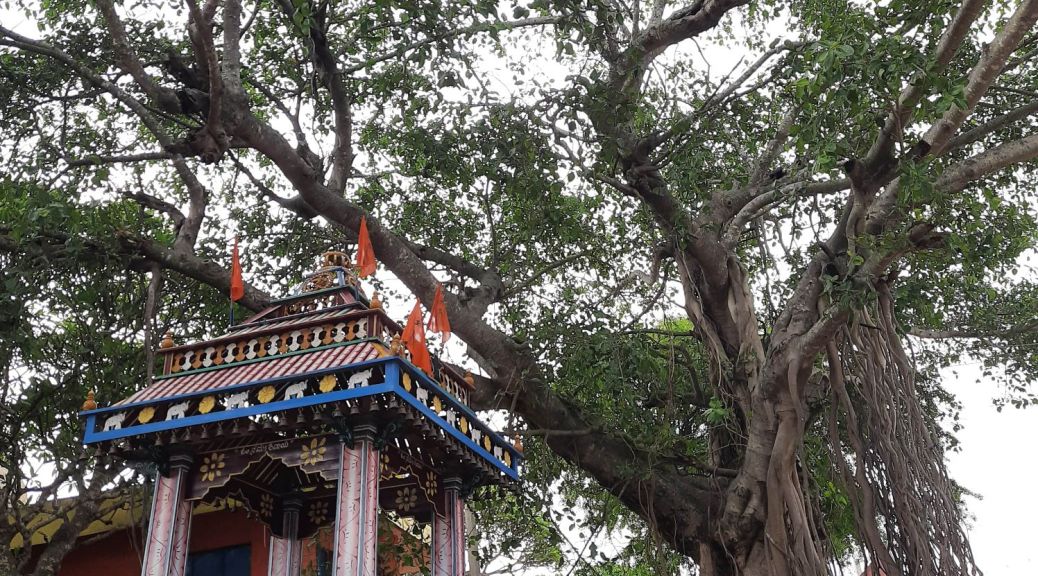
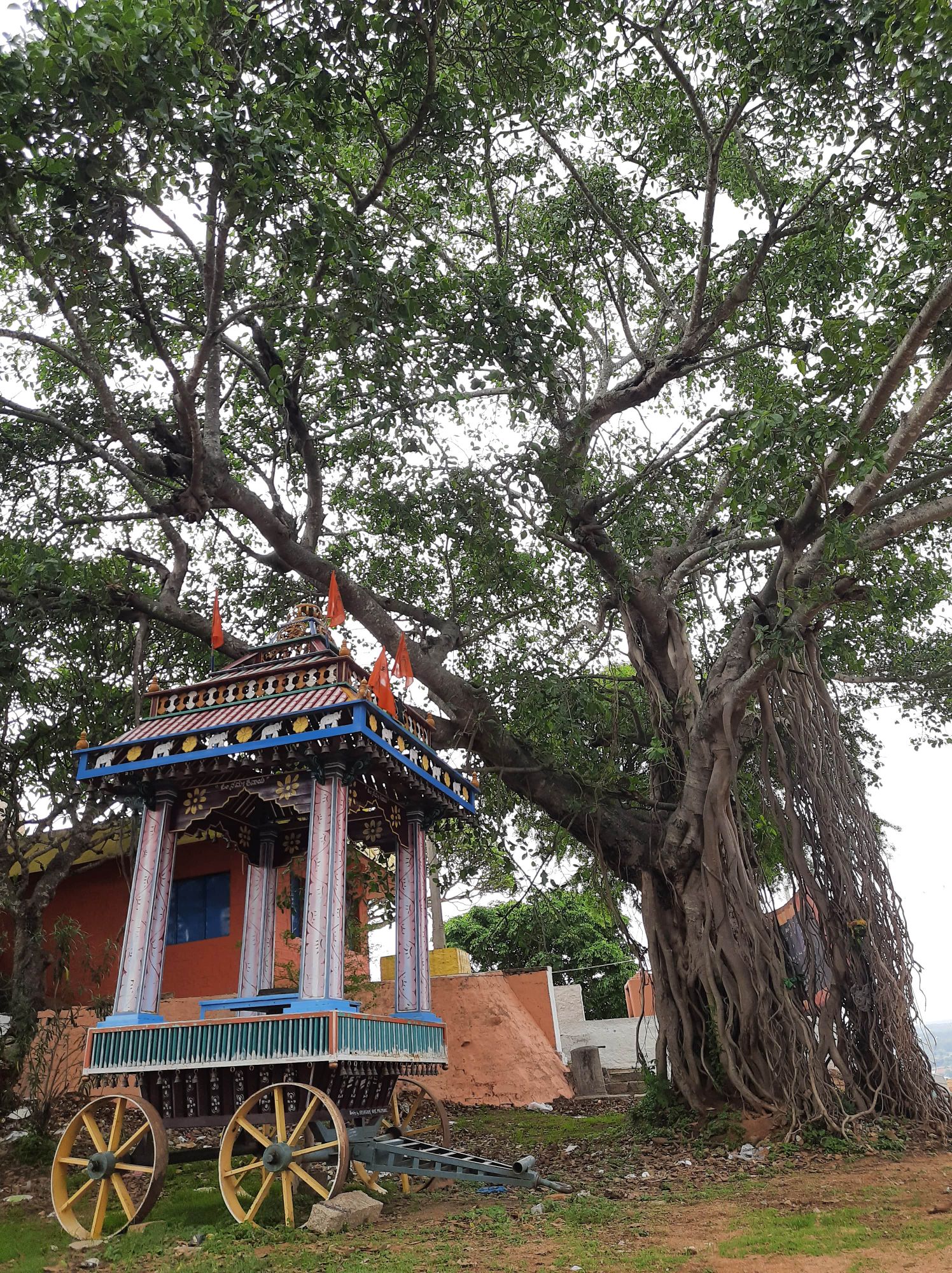
      We walked further and reached a small temple under a large peepal tree that remained closed at the time of our visit. Beyond that was a large rocky tabletop hill offering a view of the surrounding villages and farms.

      Akkayammana Betta
      The temple and the wooden cart at Akkayammana Betta

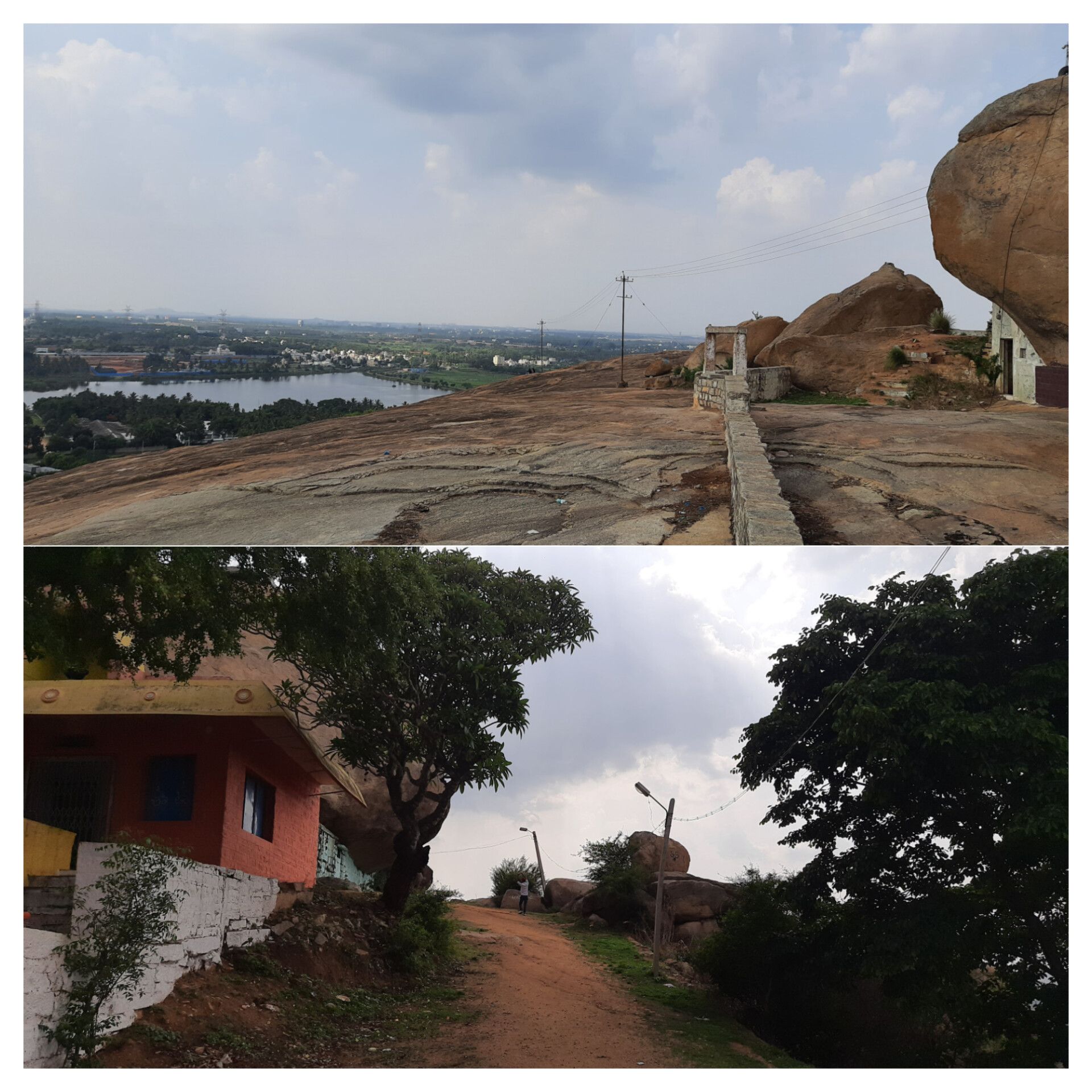
      While our dog got busy enjoying his time in a puddle of rainwater, we comforted ourselves on the rocky ground watching him enjoy his dip as the sky was prepping itself to see-off the setting sun for the day. Until sunset, the airplanes landing and taking-off at the KempeGowda International airport kept us accompanied. It was a beautiful sunset.

      Akkayammana Betta
      The route from the temple to the hilltop view point at Akkayammana Betta

      After that, we took a walk from across the hill and passed by a few other smaller shrines at the top before descending towards our car. As we approached the temple arch, I noticed a petty shop that sold some eatables and soft drinks. We took a small snack break and fed biscuits to the stray dogs that had followed us. We reached back to the car before it got dark and headed back towards the city, thus ending a short day-out.

      A daytrip from Bengaluru- Adi Chunchanagiri

      Adi-Chunchanagiri mutt is the spiritual headquarters of the Natha Parampara and Jogi Cult of Hindus of Karnataka. My dad, who had earlier visited this place with his friends, happened to insist on going there again with his family. His intention was not to take us on the spiritual path but rather to introduce us to a hiking path which he found picturesque after having ascended.

      One Saturday morning, our family set forth to enjoy this day trip towards Adi-Chunchanagiri. We drove towards Hassan, along an excellent highway until Bellur cross from where we had to take a deviation towards Adi-Chunchanagiri betta (hill) as indicated on google-maps. There on, we enjoyed our drive through the countryside, with traditional homes scattered between vegetable farms, coconut groves, and forest patches of brown boulders and green trees. Google is not always right and that’s why we deviated from the course a little more than necessary until we found the correct track again. But it was the deviation which we enjoyed. We realized that the region is declared as Adi-Chunchanagiri peacock sanctuary. It was no surprise that dozens of peacocks were grazing freely on every other farm, moving around at every turn of the road and everywhere else along our way right until we reached the parking lot at the base of the Adi-Chunchanagiri hill.

      Adichunchanagiri
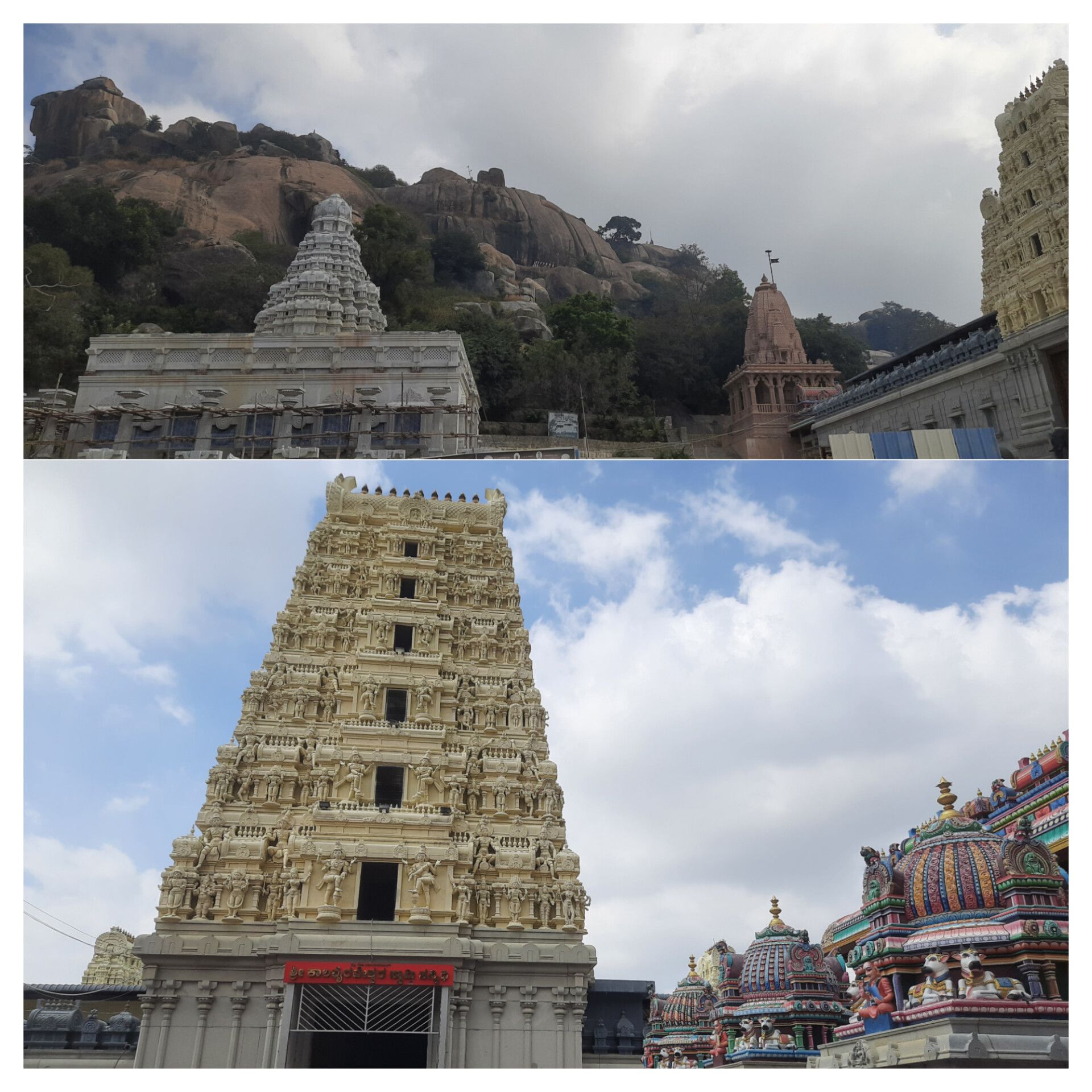
      Top: The first glimpse of the Adichunchanagiri premises; Below: The entrance tower of the main temple

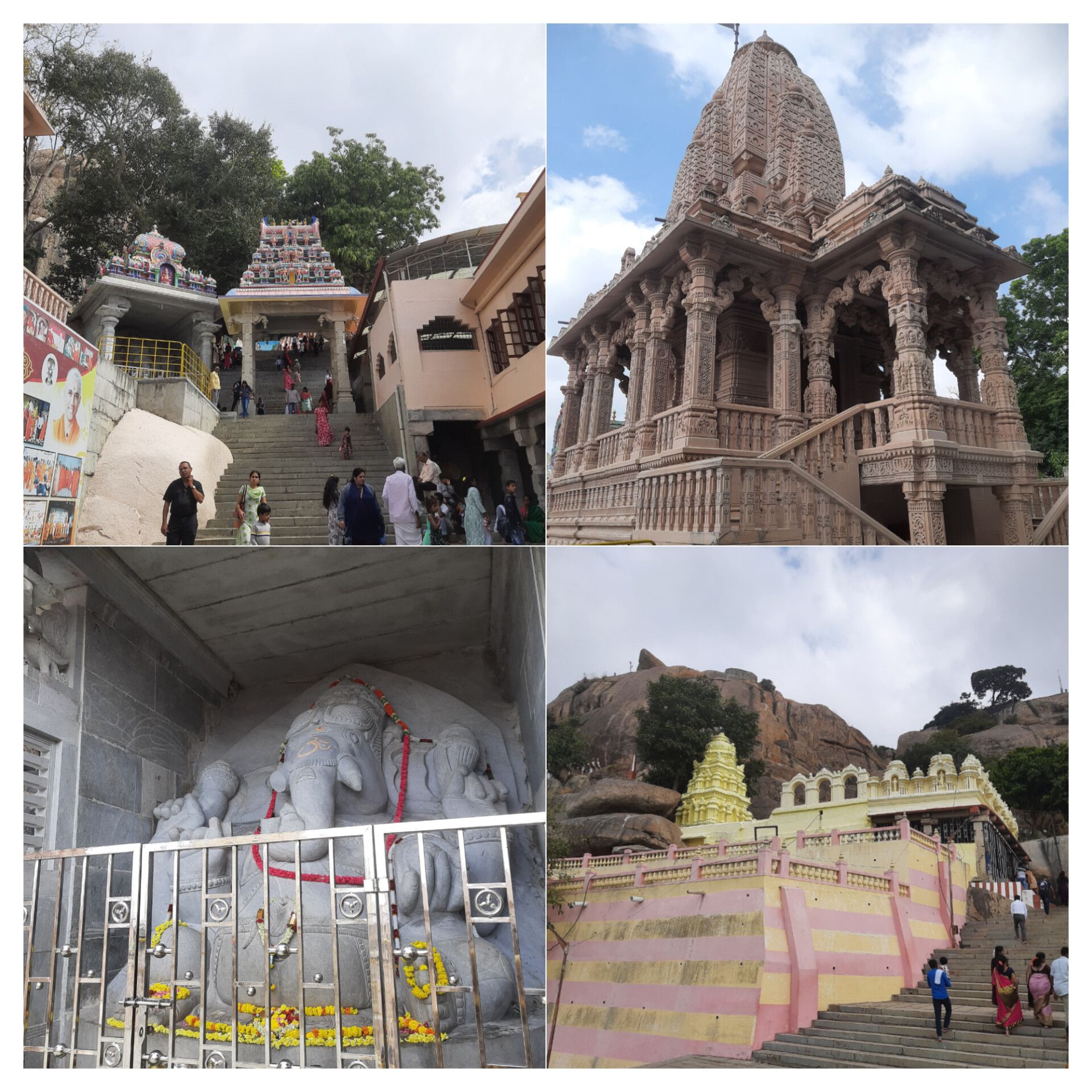
      The initial approach towards the mutt premises starts with an ascent of about 100 steps leading to the welcome gate/ arch giving a visitor the first glimpse of the main temple. The large doors of the main temple opened into an ambience that felt divine and calm. It is entirely built with stones, and it gives a feeling of being in one of the ancient Dravidian temples though this one was built in modern times. The deities believed to be residing inside and revered highly by the pilgrims here are Sri Kalabhairaveshwara Swamy and Sri Stambhambika (Kambadamma).

      After sitting there for some time, we began our ascent towards the peak of the hill. Just after coming out of the main temple, there is a large Ganesha idol sculpted out of the rocky wall of the surrounding. We continued our climb by passing by some smaller temples with a look around offering beautiful views of the green cover.

      Adichunchanagiri
      The temples and shrines at the Adichunchanagiri hill

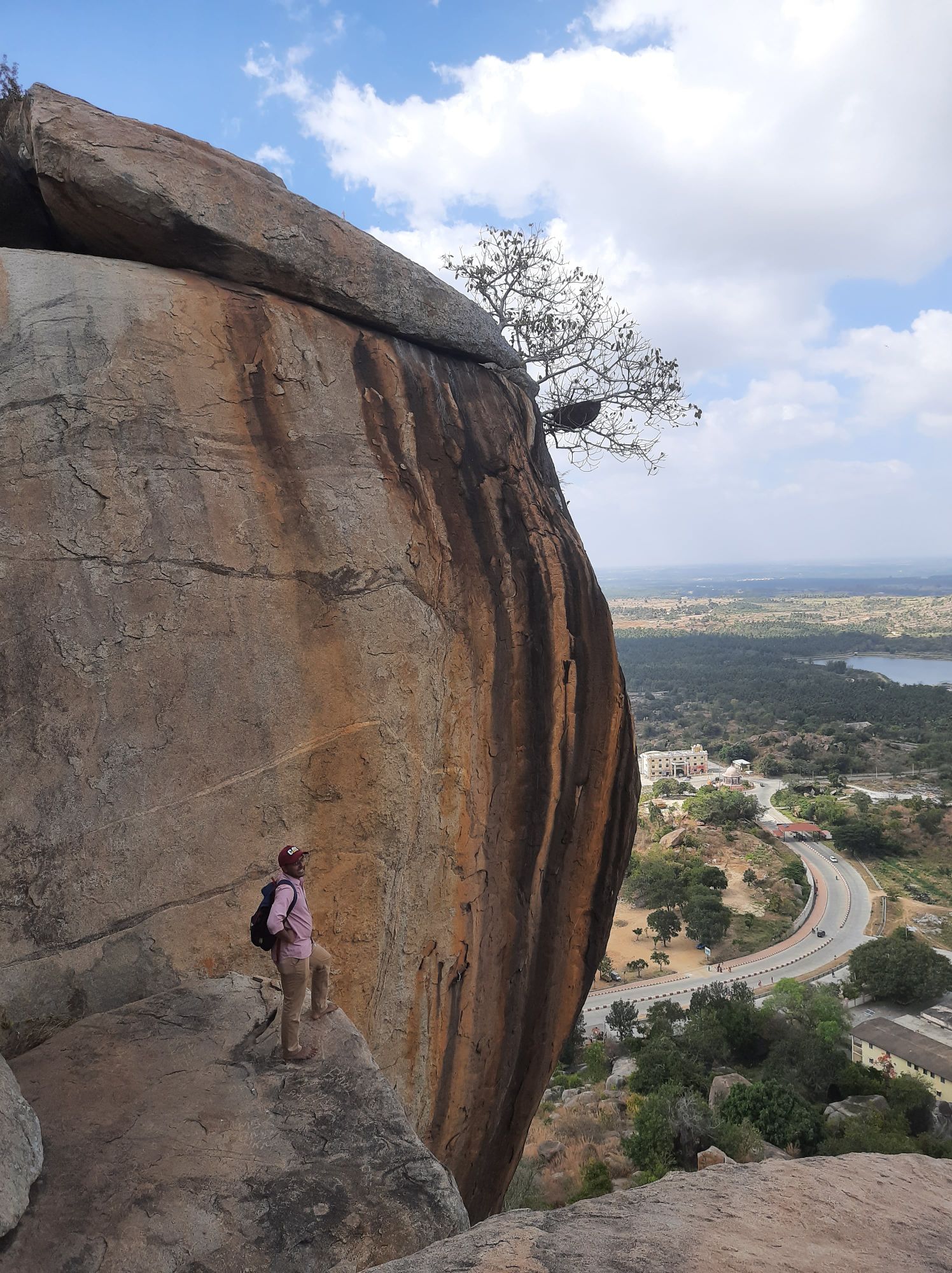
      Scores of people were seen climbing up and down for pilgrimage purposes. The climb to the hilltop is done to see the Panchalingas comprising Gangadhareshwara, Malleshwara, Katthale Someshwara, Gavisiddeshwara and Chandramouleshwara, whose temples or shrines are scattered along the trail leading to the summit. But we were there to hike that hill as a recreational activity for the weekend. We climbed up the steep stairs right up to the top with the trail splitting at random places. My family ended up getting lost from each other’s’ sight and then picked whatever trail lied ahead of us and met each other again at the top. Well, not the peak exactly, but just beneath it.

      That’s where I gave up any further climb. The peak point of the hillock is known as Akasha Bhairava. It can be reached by climbing the last bit of the rocky hill which had no stairs but only with the aid of a big, suspended metal chain. It was a straight climb (almost 90 deg. gradient) which included a small jump from one rock to an another. I doubted my ability to descend safely even if I were able to reach the peak. My brother, on the other hand, climbed it up and down with so much ease (and grace) demonstrating that he still possessed his ancestors’ (apes) strongest traits.

      Adichunchanagiri hill
      The view from the top where I was standing beneath the last rock which leads to the peak

      After he returned, we all came down towards the main temple where we were guided towards the dining hall. We devoured the delicious temple food before heading back towards Bangalore.

      We started back just after lunch to avoid the weekend traffic at Bangalore. But, if you are interested to cover more places in this day, you can google for some of the Hoysala temples along your way and add it into your itinerary.

      A day hike from Bengaluru- Kunagalu Betta

      My friends and I picked yet another hill-top around Bengaluru for a day hike. ‘Kunagalu Betta’ on Kanakapura road, it was. We reached there early in the morning before the rest of the world discovered it (for that day). The car could go on to most stretch of the steep road until we parked it beside a small structure built for lord Hanuman by the roadside, under a large rock.

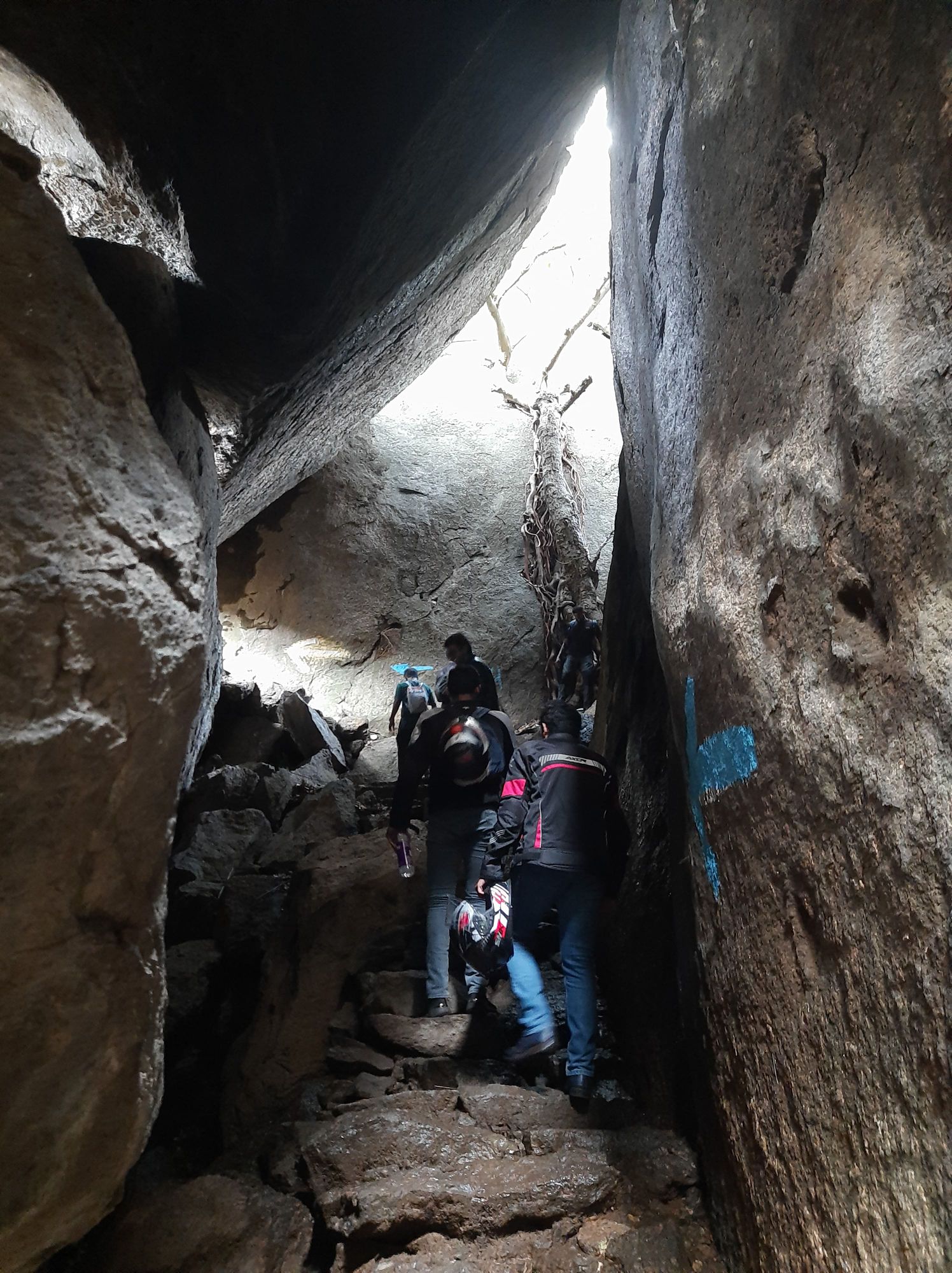
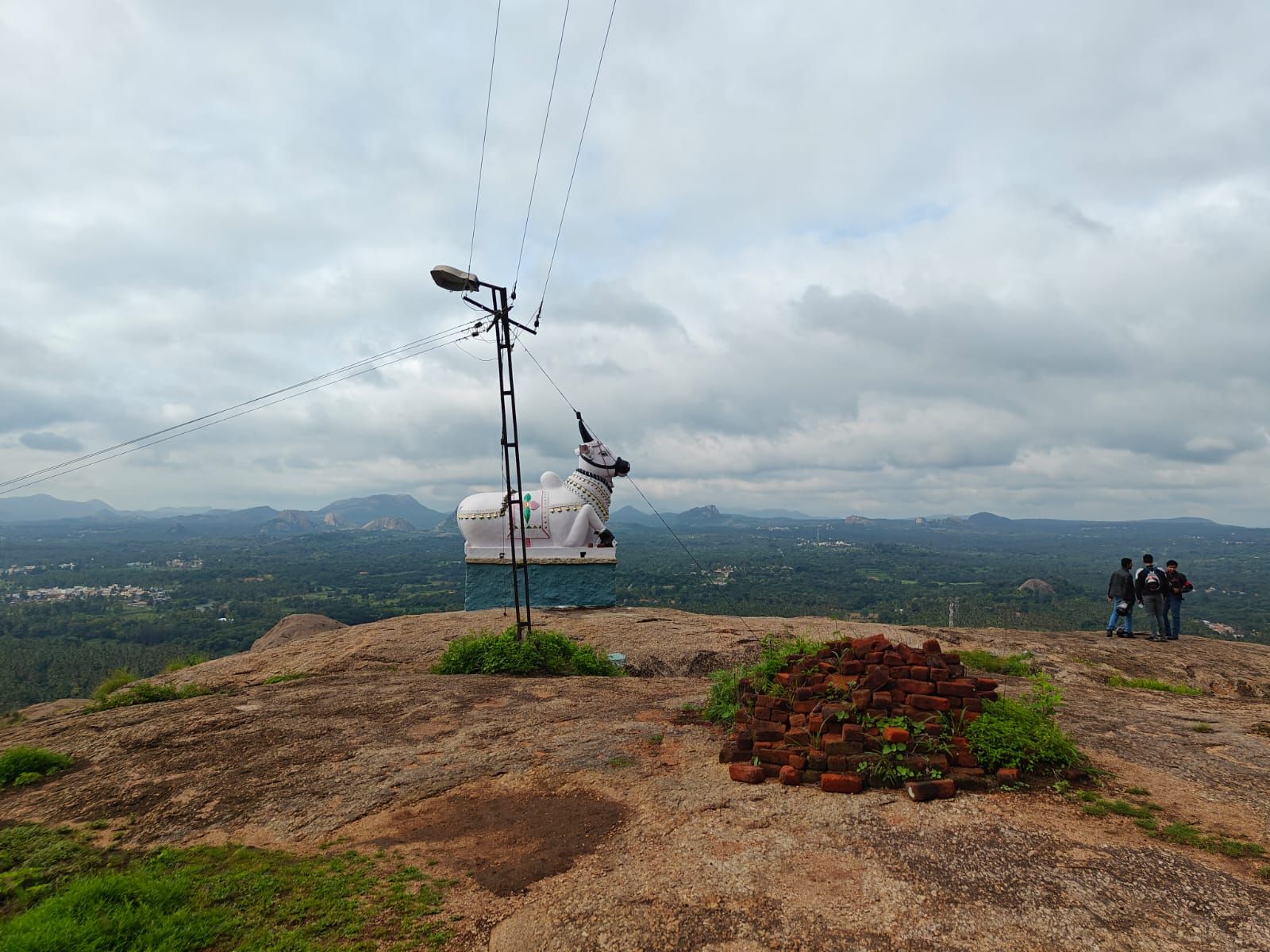
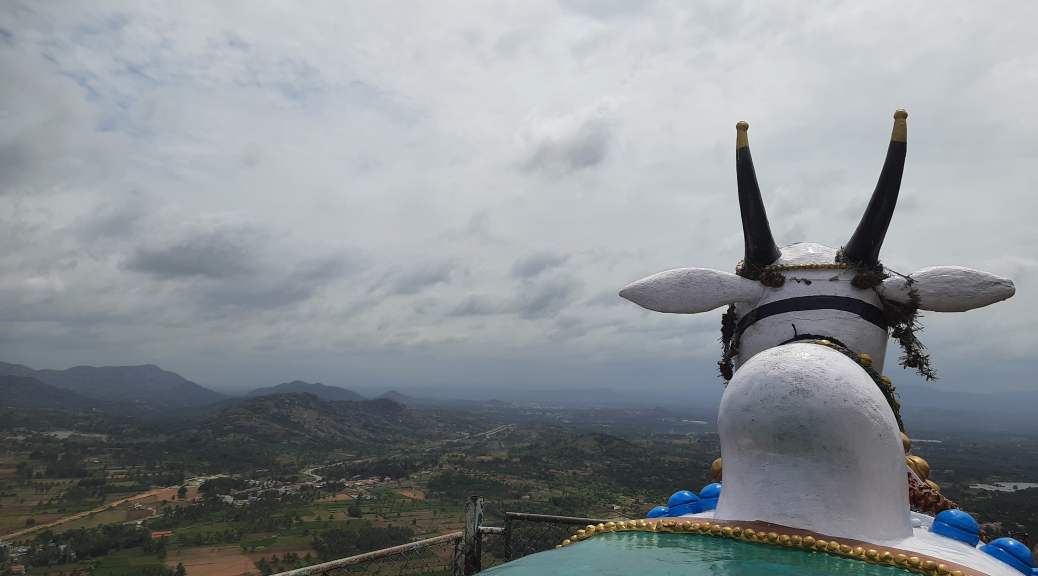
      We started our hike uphill where the route was lined with several trees of custard apples for most stretch. After a kilometer of so, we came across a large rock that formed a cave-arch-like structure that kept the atmosphere inside very cool. After climbing out of the arch, it opened into the sky above a flat hill-top that offered a beautiful view of the other hills around. Do you remember my hike to Acchalu betta, where we went to find a statue of a Nandi on the hill-top? (you can read that story here). A similar Nandi was erected on this hilltop also, which was then overlooked by an ancient temple further atop a rocky outcrop from there.

      The Cave like formation at Kunagalu Betta

      To reach there, we crossed a small wooden brook formed out of a tree branch and then climbed to the peak where the temple stood. We sought the almighty’s blessings which mark the end of the ascent of the hike for most people. We had barely climbed a kilometer and half, and it didn’t feel like a hike yet considering we had done longer trails even on day trips. The breeze was cool, strong and yet soothing and hence, we decided to sit there and spend some time feeling the wind in our hair.

      Kunagalu betta
      The Nandi Statue atop Kunagalu betta

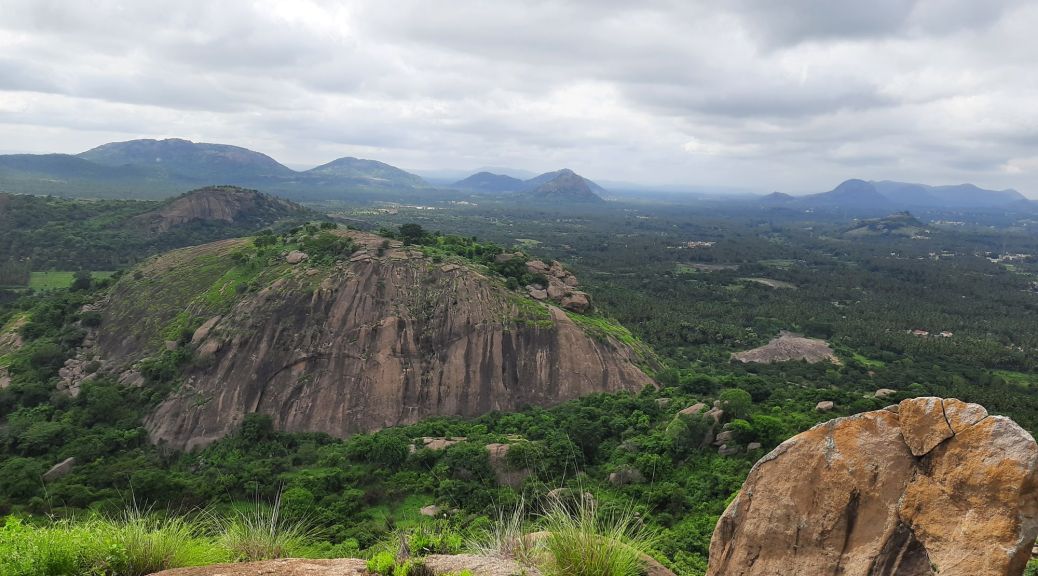
      We then looked around and decided to find our own way to the adjacent hill from there. We climbed down the temple hill and climbed up the adjacent one. We again climbed it down and navigated our way through thick bushes and thorns to ascend yet another small peak. On that peak, we got a sense of getting lost if we tried to explore more hills because at that point, we were the only people and there was no trail that had worn out to lead us anywhere if we were lost. We descended that hill and were trying to find the direction that would lead us back to the temple.

      Kunagalu Betta Peak
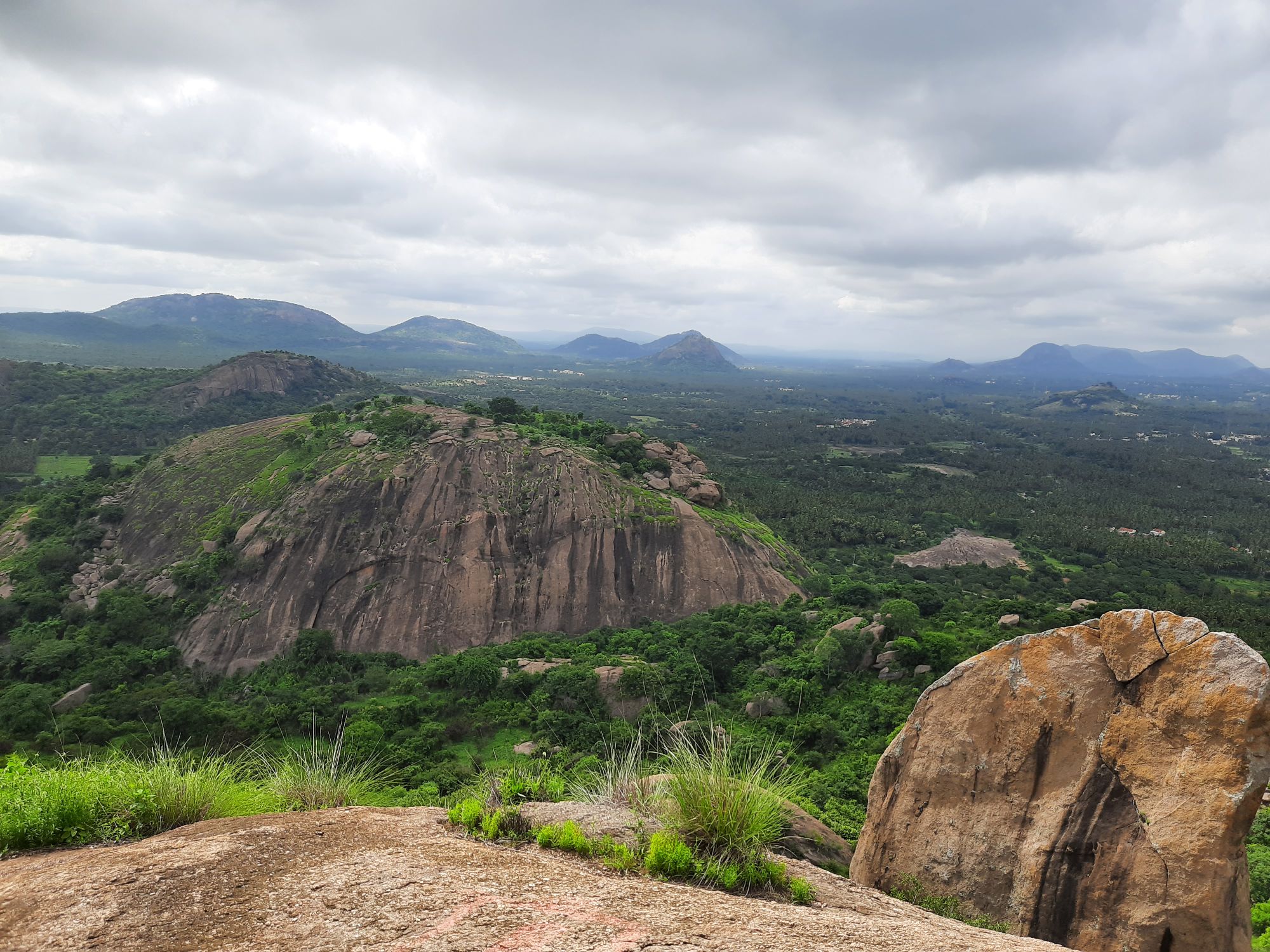
      The view from Kunagalu Betta peak

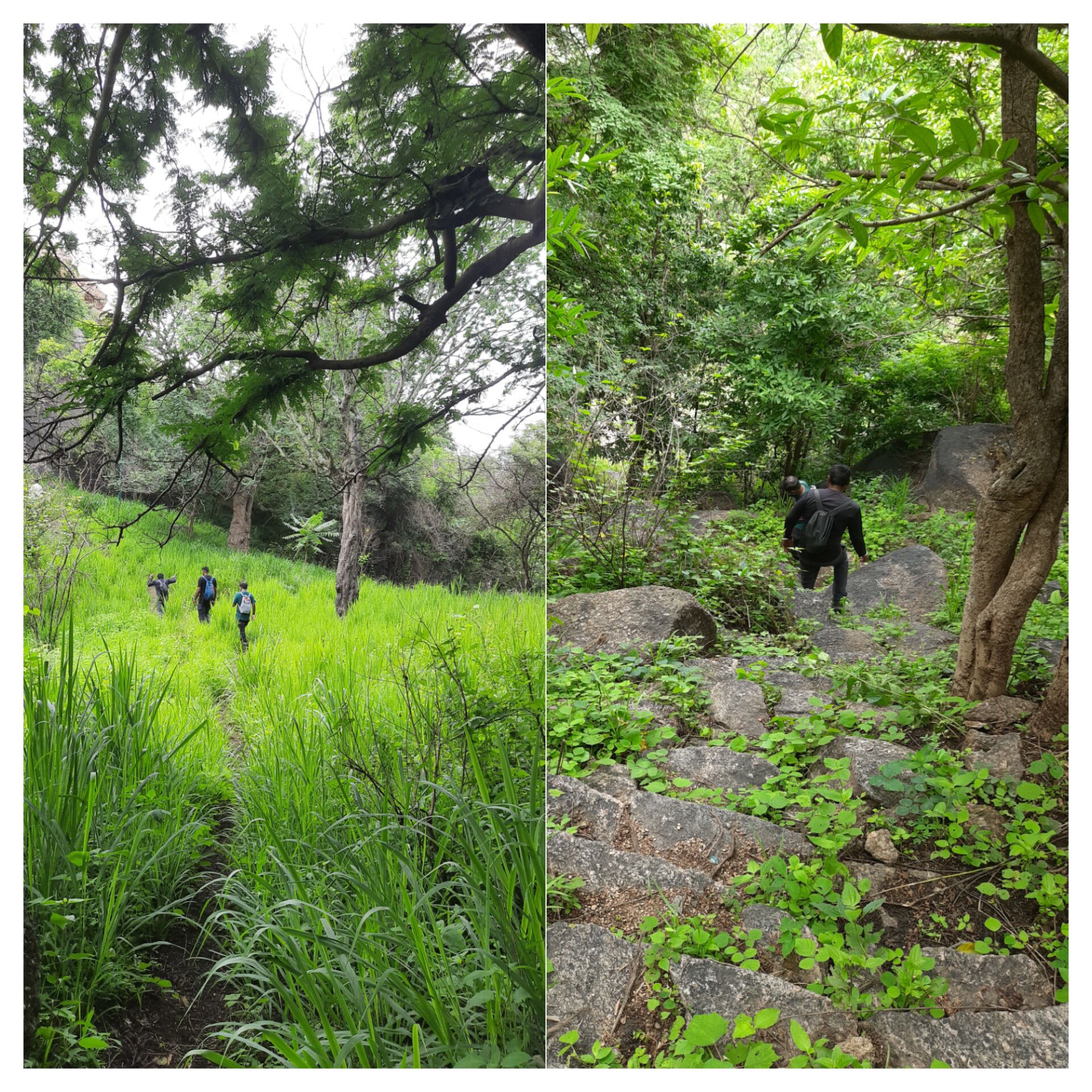
      Just then, our eyes caught a small slope in a random direction and all of us decided to explore one last random trail before heading back. We walked in that direction where the tall grass seemed to need some wear. We walked down further and suddenly out of nowhere; we were in for a surprise. There was a flight of stairs chiseled out of the rocks which was leading downwards. Finding stairs out of nowhere was a surprise, but what assured us was that the stairs would lead us somewhere interesting. Perhaps an abandoned piece of history? We thought as we headed in that direction.

      Kunagalu Betta
      In quest to explore the lost history at Kunagalu Betta

      The grass laden stairs quickly cleared up to the view of a dozen motorbikes all parked side-by-side. That’s when we realized that we had already reached the parking lot. We had found a shortcut on our quest to explore random trails in random directions. Thus ended our quick hike to Kunagalu Betta. I picked up a bag from the car and tried to pluck as many custard apples as possible before heading back.

      In conclusion, it was a short and easy hike. You can combine it with Acchalu betta or any other hike on Kanakapura road and make it a full-day activity.

      Day hike from Bengaluru- Acchalu betta

      My friend had learnt about a hill in Kanakapura Taluk through a YouTube documentary. ‘A large statue of Nandi, the sacred bull of Lord Shiva has been installed at the peak of the hill which can be reached by foot, through a hike,’ he told me. A hike plan was charted, and a few common friends joined us over a weekend to see this ‘statue of the Nandi’ located at the peak of ‘Acchalu Betta.’

      We started from Bengaluru quite early that morning and had our breakfast at a popular location at Kanakapura. From there, we followed google maps to Acchalu village and arrived at a small village temple located on the foothills of a large monolithic hillock. Based on what we had read online, we knew this hill was what we were supposed to summit. We parked our car beside the temple, but we were not sure of the hiking trail that would lead us to the top.

      The temple at the foothills of Acchalu Betta

      Beyond the temple was a mud-road which we planned to walk further. We walked about a kilometer and realized that vehicles could have been driven until that point. There was yet another temple with an open field around which provided ample space for parking. Anyway, we did not mind the additional kilometer we had walked. From there began the actual hike to Acchalu betta.

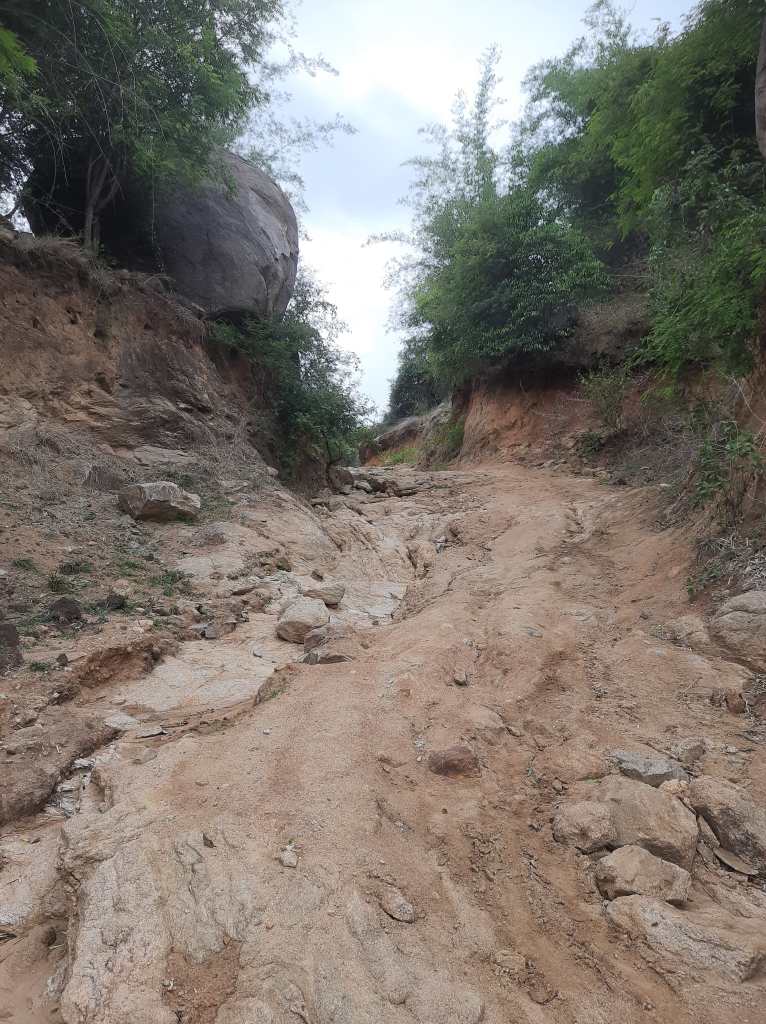
      The entire trail is nicely made with the kaccha roads cleared off all rocks, boulders, and grass, making it easy to walk and good to drive with a 4W-drive vehicle. However, the initial stretch had been washed down by the recent rain, so there was no way a vehicle could drive past that. After this stretch was over, it was an effortless walk to the peak, but through a thick canopy of bamboo forests. It is frequented by elephants which was evident with freshly dropped dungs enroute.

      The initial trail of Acchalu betta hike

      The canopy then opened to a rocky outcrop offering a panoramic view of Bengaluru cityscape at the horizon. There was an old guesthouse that is abandoned and used by nighthawkers as a place to have a bonfire party.
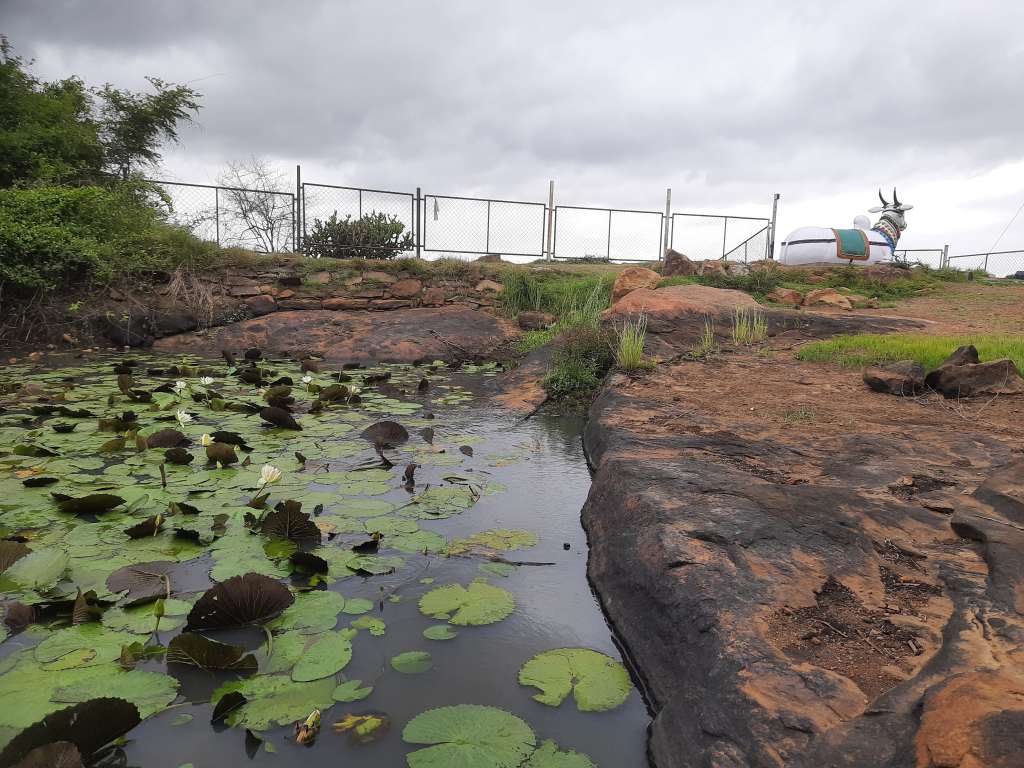
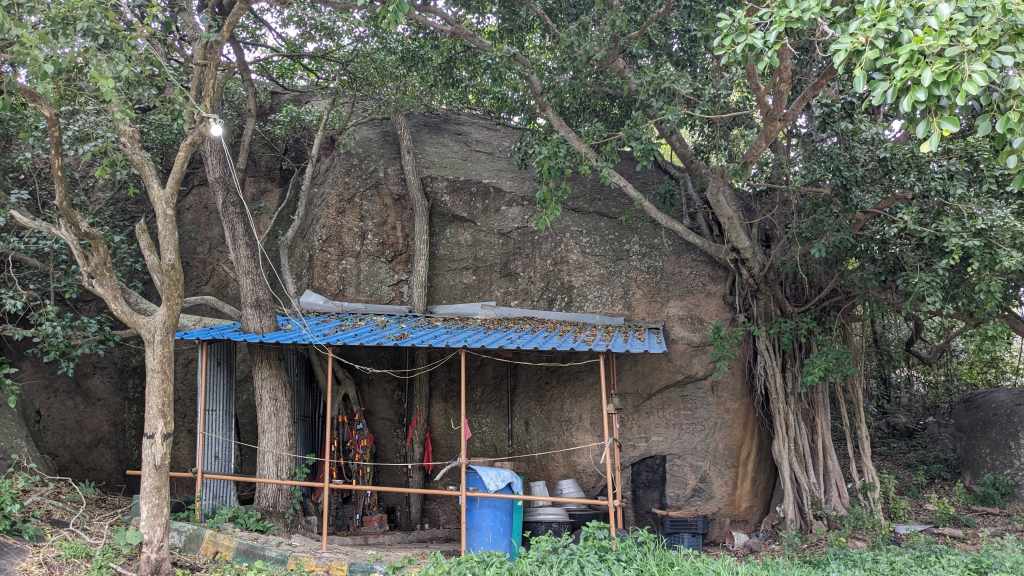
      A short, paved pathway from there leads to a small pond filled with white lilies. We sat there for a while before proceeding towards the statue that we had motivated us to ascend this hill. The statue of a lone bull (the Holy Nandi) sat gracefully overlooking the cityscape beneath. We too sat there at his foot soaking in the calmness that was swept in by the strong wind that was blowing there. Nandi is the mythological vehicle of Lord Shiva. Hence, a small shrine dedicated to Shiva exists opposite to the statue. It is in fact, a small rocky outcrop under a large tree which is worshipped as the presiding deity. We bowed our heads down to seek his blessings before commencing our return hike.

      The lilly pond at the peak of Acchalu betta with the Nandi statue in the backdrop

      On our way back, we wanted to explore a shortcut to the base and hence, decided to follow an electric line that connected to pole at the place where we had parked our cars. This route was indeed beautiful and interesting as compared to our ascent. This descent was more open to the skies, with lot of green bamboo patches scattered amidst large brown boulders with a constant company of the blowing winds. It was no doubt shorter but was steeper and harder for amateur hikers.

      A day hike to Acchalu betta, weekend plan near Bengaluru
      The shrine dedicated to Shiva, facing the Nandi statue at Acchalu betta peak

      The good decision to explore a new trail came with its own set-of challenges, especially in the last stretch. As the path was unused for ages, thick thorny bushes had taken over the trail. We did not carry any tools with us that would help us to clear our path as we walked ahead. Hence, we tried all methods to navigate our way through the last few meters of our hike. But in the pursuit, we slid a few slopes, our clothes and hair got entangled in the bushes and we came out with bruises all over our limbs, bums and back. We rolled down the hill and got out on an open farm on whose side stood our car.

      The bruises did not bother us as we returned with the content that we had conquered another hill around Bengaluru.

      Watch the Acchalu betta hiking trail here

      Weekend Drive- Biligundlu Ranganatha Swamy Temple

      Another weekend and another offbeat destination. This time, we found a temple on a small hillock in Dharmapuri district of Tamil Nadu. In my earlier post about Hogeynakal waterfalls, I have elaborated on how river Kaveri marks the boundary between the two states of Karnataka and Tamil Nadu. This post is somewhat related to the same connection. Because the history of the temple that we were planning to visit this weekend is rooted on the other side of the river, on the fertile plains of Karnataka.

      The original Ranganatha swamy temple dating to the Cholas or the Vijayanagara era (as described by the locals) was on the Karnataka side. The stone structure of the temple is present even today (we hope to visit the structure on another weekend trip). The idol of the deity was destroyed by the British (which needs fact checking) and then, a new idol was reinstated on the Tamil Nadu side of the land where it stands today. The Ranganatha Swamy temple that we were heading to is in Biligundlu village and hence the name. The idol of the deity is carved out of a rock which is part of the hill overlooking the river.

      On a summer day, when the water levels in the river are low, one can walk across to the other bank. Whereas, when the river is flowing full, the roads leading to both the old and the new temples are long ones. The old location is reachable via MM. hills in Chamarajanagar district of Karnataka, and the new temple is reachable via Anchetty forests in Dharmapuri district in Tamil Nadu.

      The trail to Biligundlu Ranganatha swamy temple
      The trail to Biligundlu Ranganatha swamy temple

      Anyway, coming back to this weekend, we started early on a weekend morning along the Anchetty forest leading to Hogeynakal waterfalls. We skipped the highway restaurants and stopped by a small local restaurant in Anchetty town for breakfast. It was a good decision as the experience was good with local food and the local atmosphere.

      A few kilometers after the Biligundlu cemetery and few kilometers before Hogeynakal waterfalls, we stopped by at a location where river Kaveri flowed onto our right and a tiny structure of brick and mortar was built onto our left… We parked our vehicle there and started our short hike up from there. A properly laid stone path is there all the way to the hilltop which took us around half an hour to hike. The views of the river and hills around were just amazing all the way.

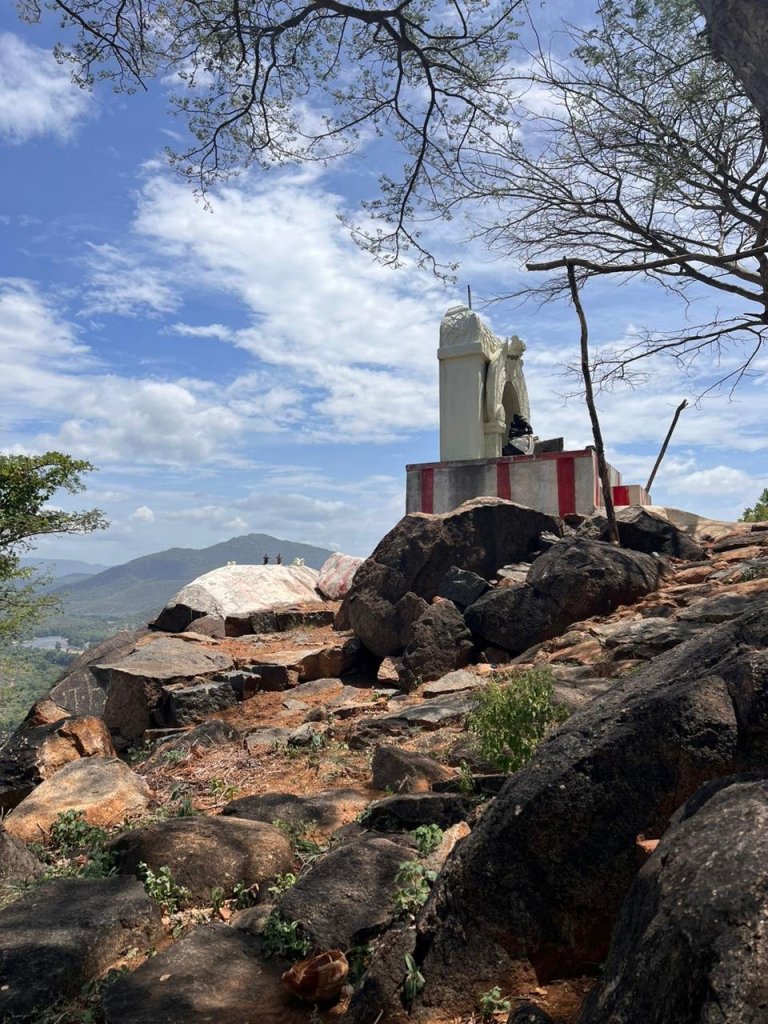
      The Ganesha idol at the peak of Biligundlu Ranganatha swamy temple hill
      The Ganesha idol at the peak of Biligundlu Ranganatha swamy temple hill

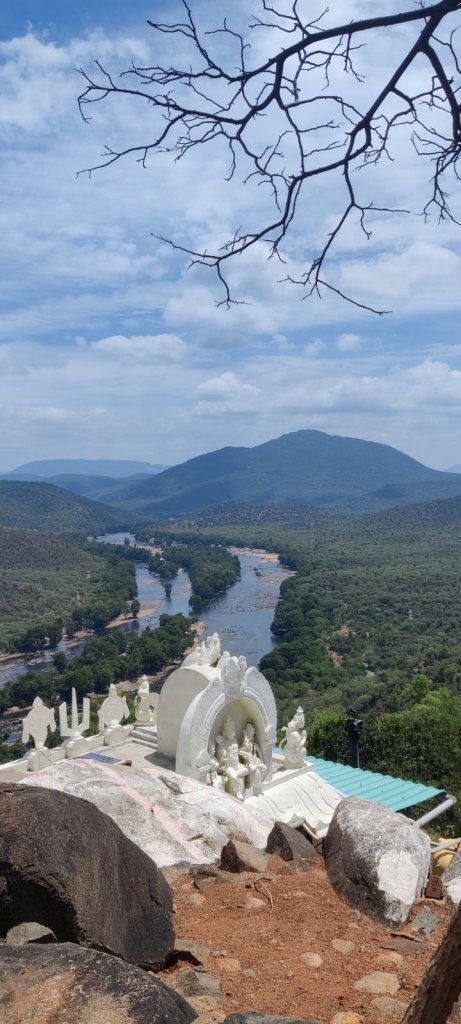
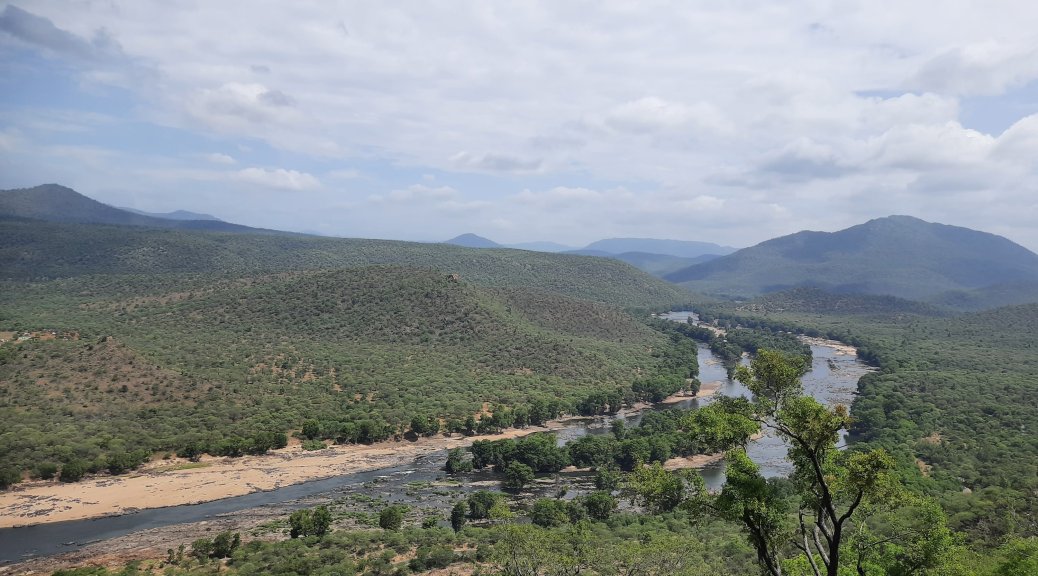
      First, we were greeted by an idol of Ganesha sitting under the tree at the peak. This spot gave a splendid view of the river and the hills beyond. We sought Ganesha’s blessings and proceeded to the Ranganatha temple located below, connected by a short flight of stairs. The temple was closed by the time we arrived. However, we could see the idol through the meshed gate. After offering our prayers, we found a spot adjacent to the temple wall and sat there to soak in the beauty of the place. The view of river Kaveri flowing with a backdrop of green rolling hills looked amazing even as the winds caressed our faces. It was a beautiful place, indeed!

      View from Biligundlu Ranganatha swamy temple
      View from Biligundlu Ranganatha swamy temple; Photo Credits: Sugan @ TheBuffalorider

      We headed back after a while and decided to take a dip in the shallow waters of the river to beat the summer sun. A word of caution if you plan to get into the river, that there will be a sudden drop in the depth at many spots and it is believed to have whirlpools as well. We stayed by the shores before calling it a day after a while.

      Other nearby places to visit:

      Weekend Hike- Bala Kodandaraya Swamy Temple

      Although this destination is a recommendation for weekend and day hikers of Bengaluru, it is in Krishnagiri, a district bordering the two states of Karnataka and Tamil Nadu.

      The views from an ancient temple had caught the attention of my friend and me, who are always in the look out for less crowded and less explored landscapes and places with cultural and historical importance. One such place was the ‘BalaKodandaraya Swamy temple’ whose history dates to the Vijayanagara era. Based on our online research, we found out that getting to the temple involved a short hike.

      We started early on a Saturday morning by car. We had our breakfast along the way, in one of the several restaurants on the Hosur highway. From there, we followed the route on Google maps to reach our destination. A steep deviation to the left of the highway led us through villages. There were asphalted roads and good views of the surrounding hillocks for as long as the road passed through villages. The last couple of kilometers were through unpaved muddy roads passing through a slight forest stretch. We finally arrived at a small open space where we parked our car, at the base of the temple hill.

      The forest trail
      The trail through the forest cover, starting from the base to the temple arch

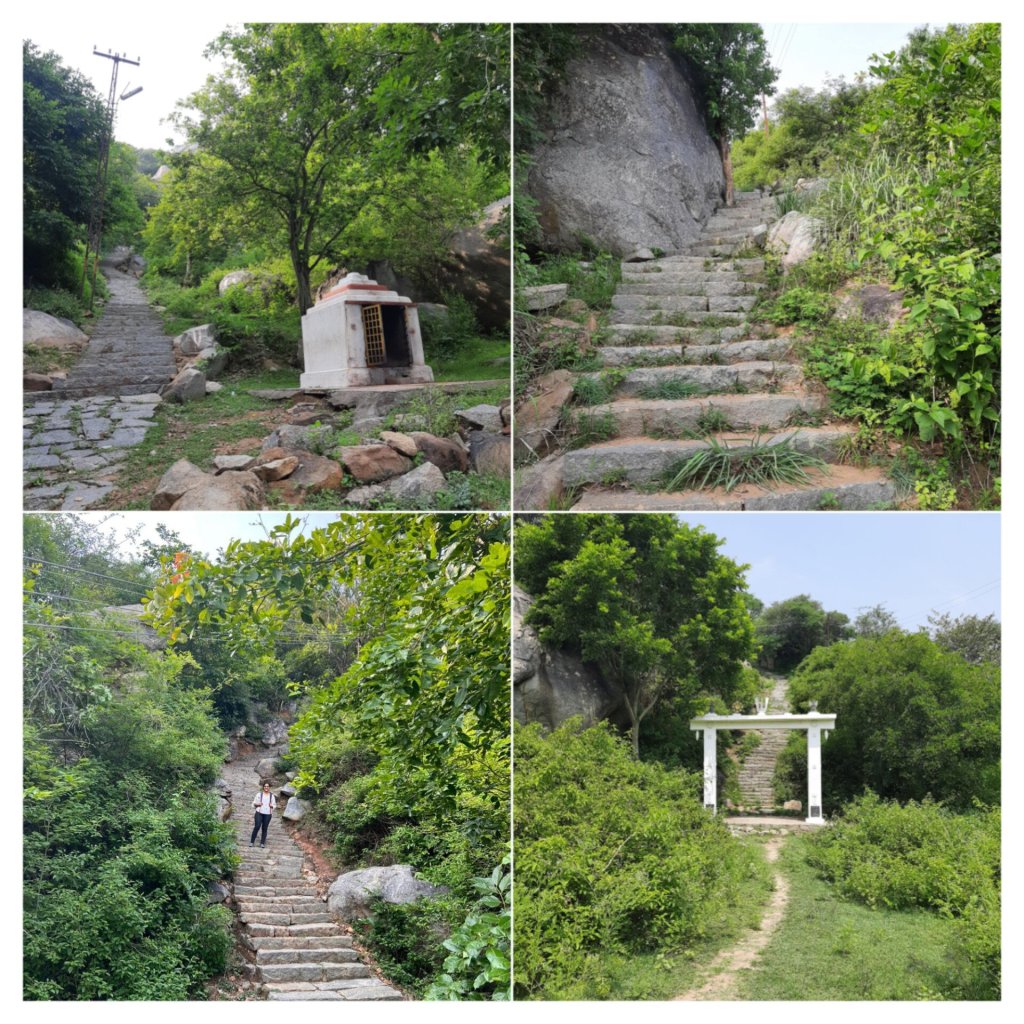
      There was a small structure of brick and mortar (gudi) at the base, from where a flight of stairs led to the hilltop. People lit lamps, agarbattis and camphor here before starting their ascent. It took us about half an hour’s climb along properly laid stone steps leading to the top. These stone slabs bear the names of the devotees who have donated them and the count of their donations on each step. The ascent curved around at multiple places and offered amazing views of the valley below at every turn. The first half of the climb had a forest cover and large boulders on both sides, until we arrived at the welcome arch of the temple.

      The path towards the left of the trail, towards the temple
      The path towards the left of the trail, towards the temple

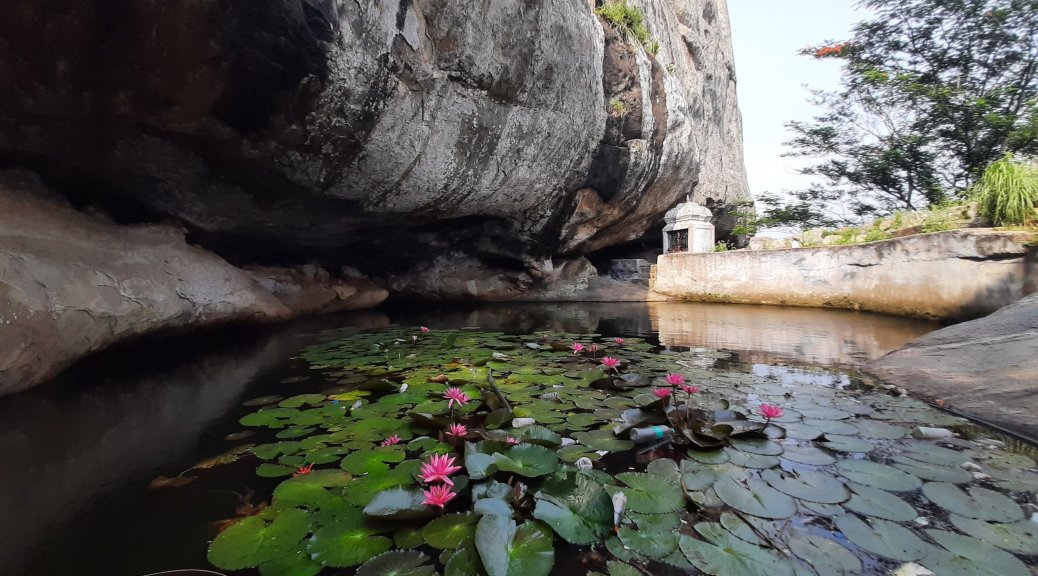
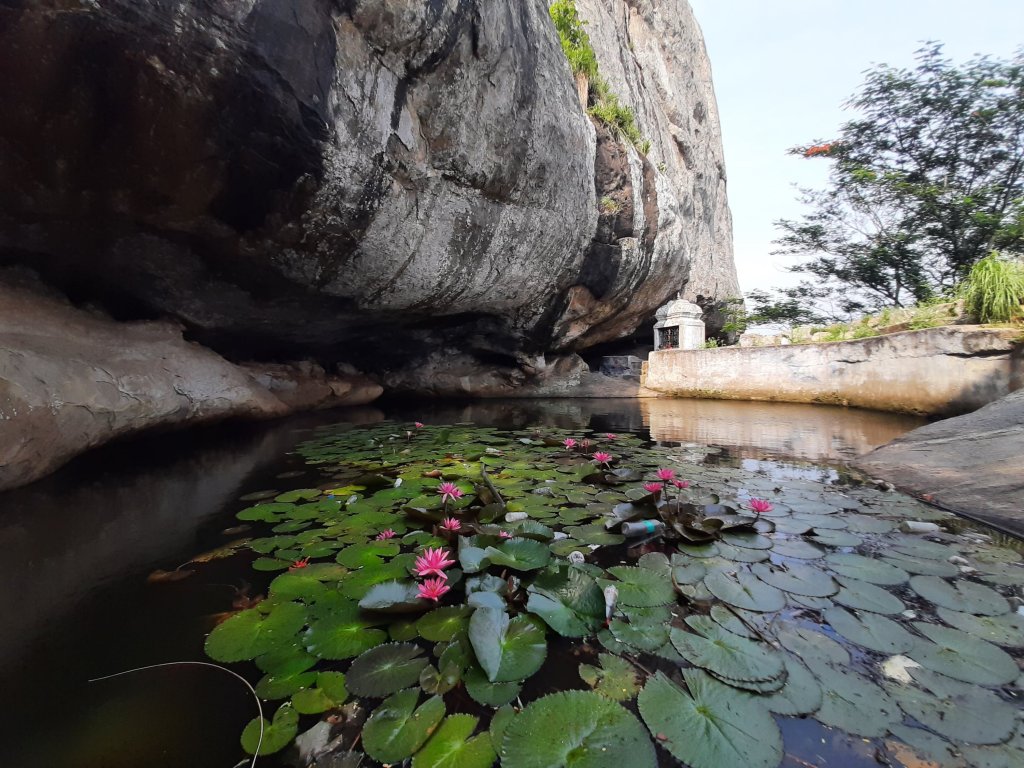
      The forest cover ended after a few steps further from there and opened to a panoramic view of the valley of the villages and farms below. As one stands on a large rocky outgrowth, you will find the trail split into two paths. One, straight down through some Gulmohur trees. Second, up towards the temple. We decided to first walk the trail going straight. A few yards from there, the trees made way to a beautiful pond of pink lilies, dug right beneath a large rocky monolith. We later realized that devotees take a dip in this pond before proceeding towards the temple.
      The path towards the right of the trail, leading to the temple pond
      The path towards the right of the trail, leading to the temple pond

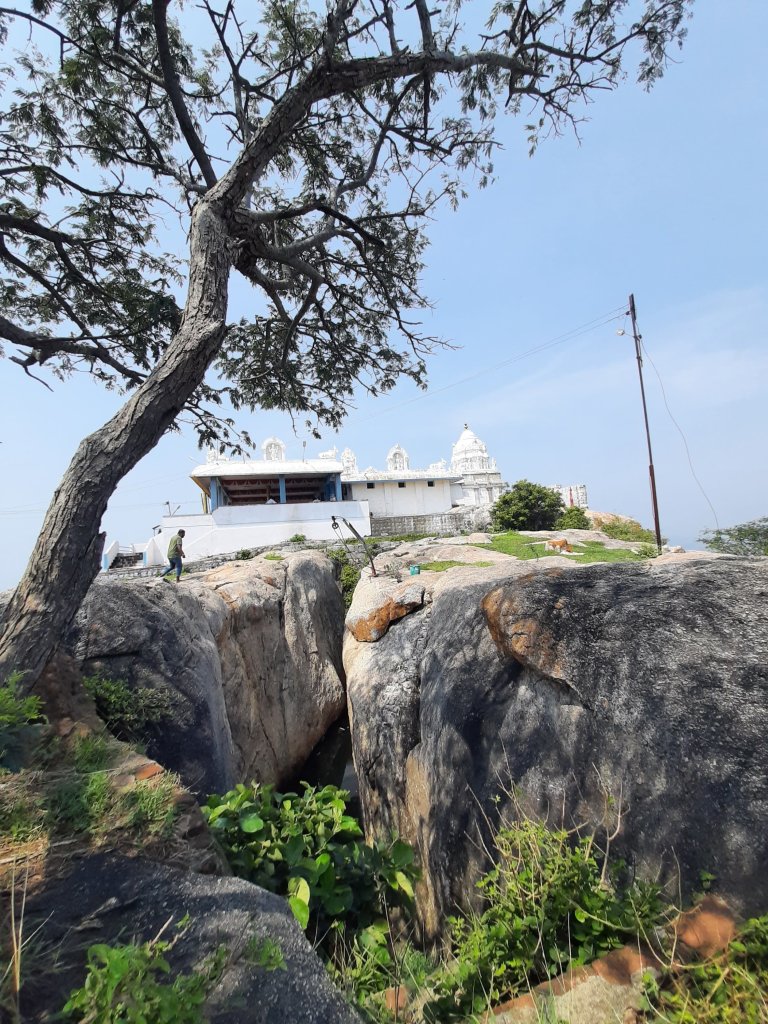
      The view of the valley from there and the magical vibe of sitting by this pond of lilies could not let us go easily from there. My friend settled on the banks, with a book to read. Although the water was heavily littered with plastics, it was still a super calm spot to soak in some good energy. After spending a while, we then headed towards the temple, located on the peak of the hill, a short walk away. There was a panoramic 360 degrees view of Hosur and Krishnagiri from the temple, the green cover around, Krishnagiri dam and the Then Pennai river. The temple priest arrived much later at around 10.00.a.m. for the daily prayers.

      Balakodandaraya swamy temple, Krishnagiri
      Balakodandaraya swamy temple and the cleft for drawing water

      Surprisingly, a small cleft in the rocky hill serves as a perennial source of potable water for temple use. The people who had gathered there by then, helped the priest in drawing water from this cleft and clean the temple premises before offering the day’s prayers. We sat there for a while and decided to head back to the base before the sun took over the skies and heated the rocks around. Overall, it was an incredibly beautiful place for a short trip from the city.

      Other nearby places:

      If you are looking at making it a full day trip, then you can explore the nearby places that include:

      The Hoysala Trail 2- Belavadi

      In my wish list to visit as many Hoysala temples as possible in this lifetime, this is the second documentation. I started this series with the temples of Belur and Halebidu, as these were the erstwhile capital cities of the Hoysala. I will move on from there.

      Continued from The Hoysala Trail 1- Belur & Halebidu

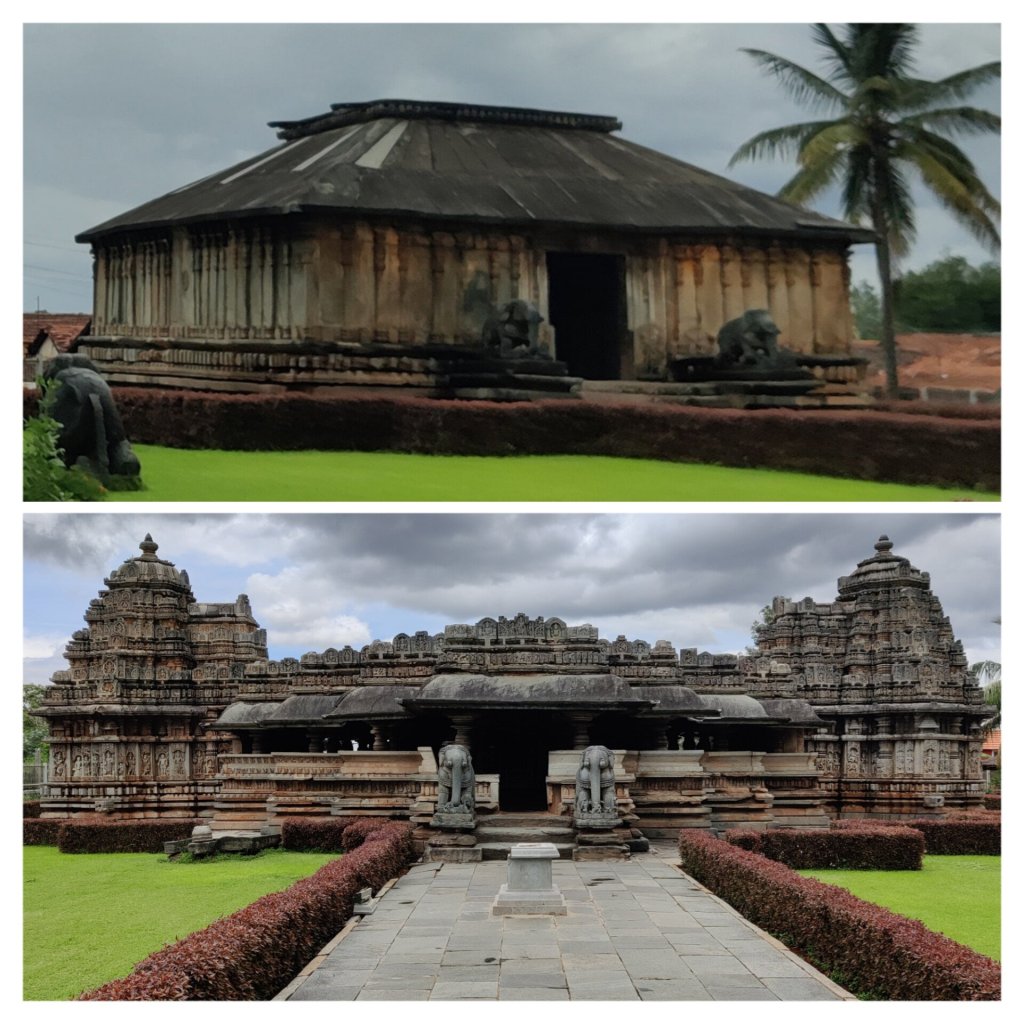
      Belavadi is a quaint little village located approximately an hour away from the Hoysala capital town, Belur. The Veera Narayana swamy temple of Belavadi is one of those where the main idol of the presiding deity is still intact and regular prayers continue to be offered. The intricacy of the artwork on stone is very similar to that of the temples at Belur and Halebidu.

      Veeranarayanaswamy temple, Belavadi
      Images: Veeranarayanaswamy temple, Belavadi Top: Outer entrance gate to the temple Below: Inner entrance to main shrine at Veeranarayanaswamy temple, Belavadi

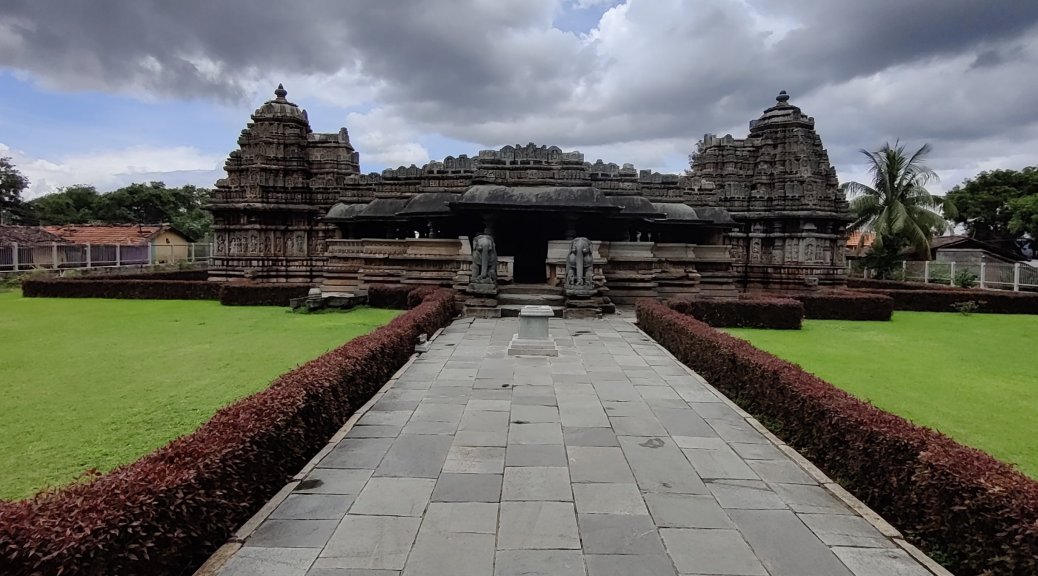
      Unlike the main Gopuram (temple tower) at Belur, the entrance gate at the Belavadi temple is small. There are two ornate statues of two elephants that greets you inside. The sculpture on the outer wall is simple and minimalistic. as you enter, you notice that the inner walls are plain. It is possible that these were stolen, vandalized, or lost over the course of time, only historians can tell me better.

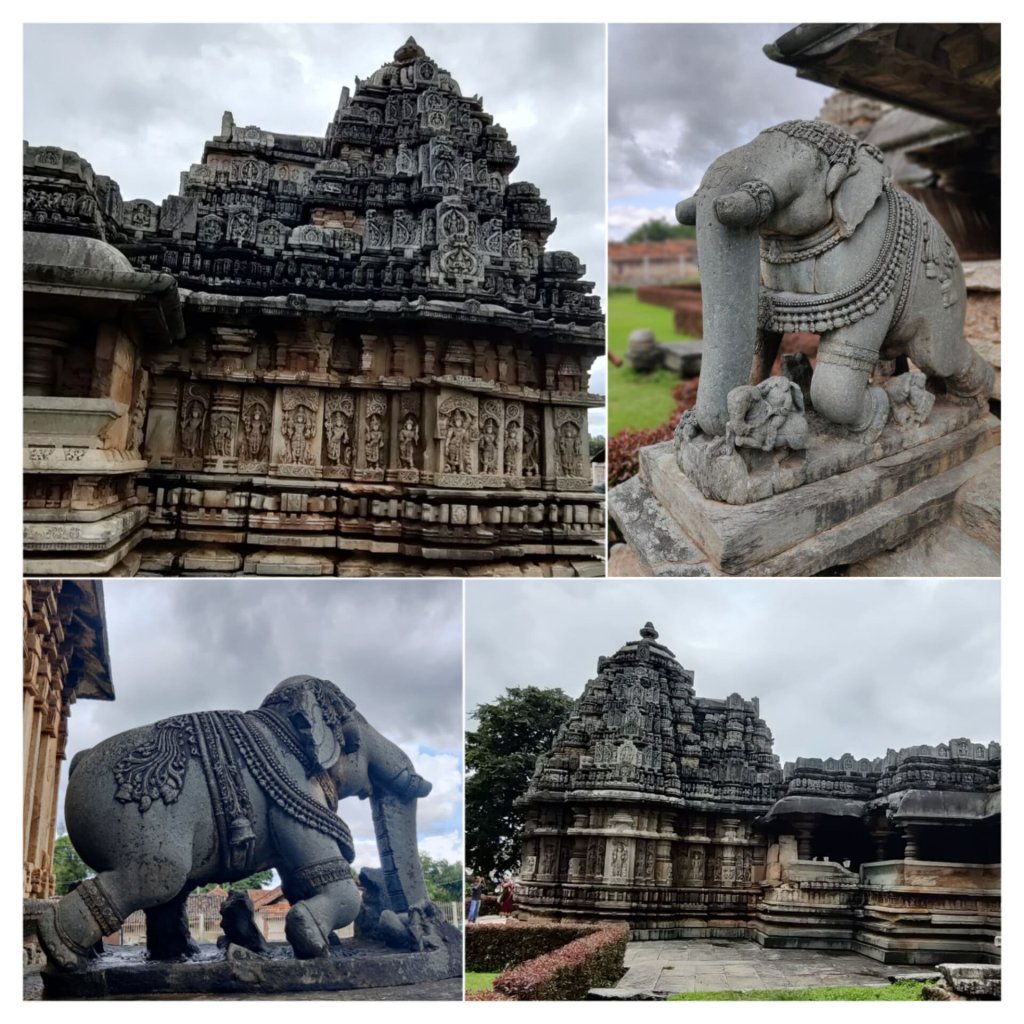
      Veeranarayana swamy temple, Belavadi
      The sculptures on the exterior of Veeranarayana swamy temple, Belavadi

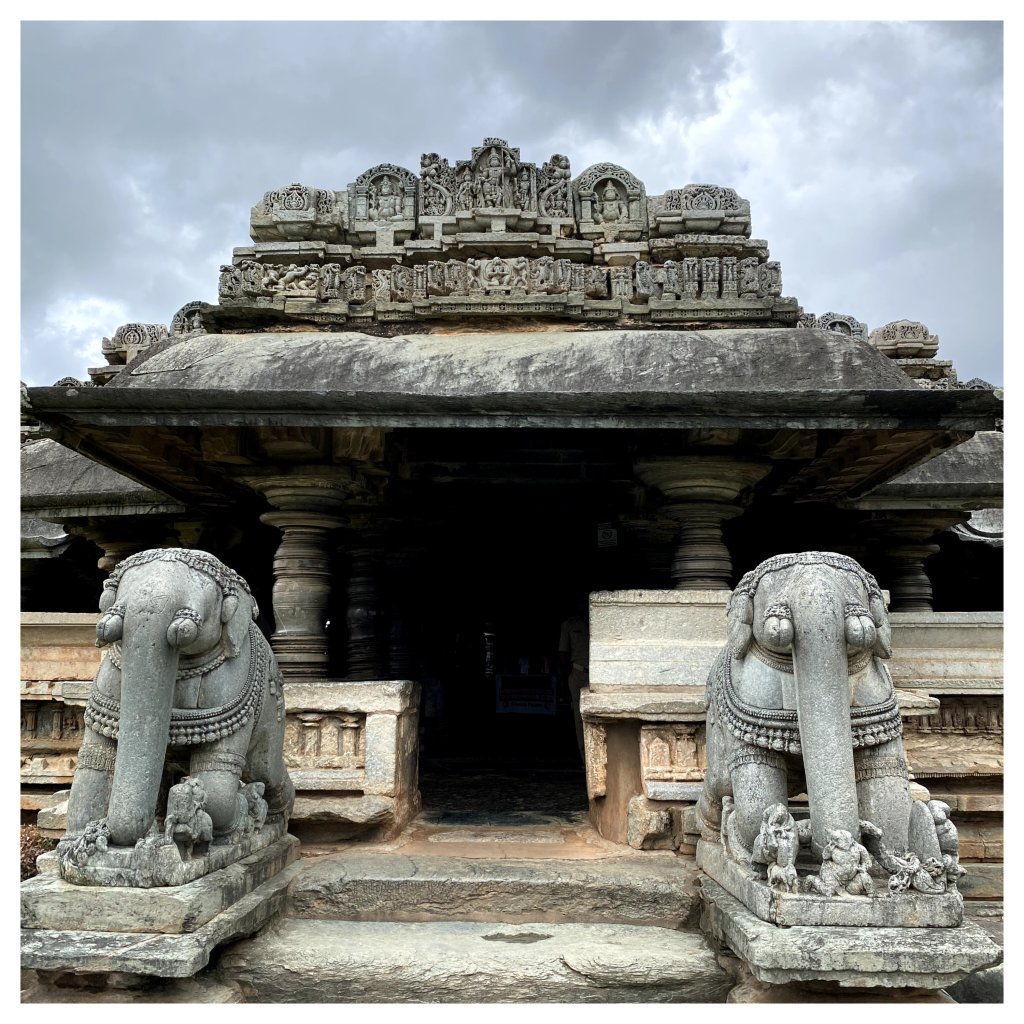
      As you walk past this entrance gate, arch you pass the courtyard and are greeted again by a pair of standing elephant statues into the main temple that encompasses the shrines in the trikuta style of temple architecture. The three shrines inside houses idols of Lord Vishnu in three different forms. Huge lathe turned stone pillars and walls bearing fine and intricately carved figurines adorn the inner walls of the temple where photography is prohibited at the time of my visit (in July-2022).

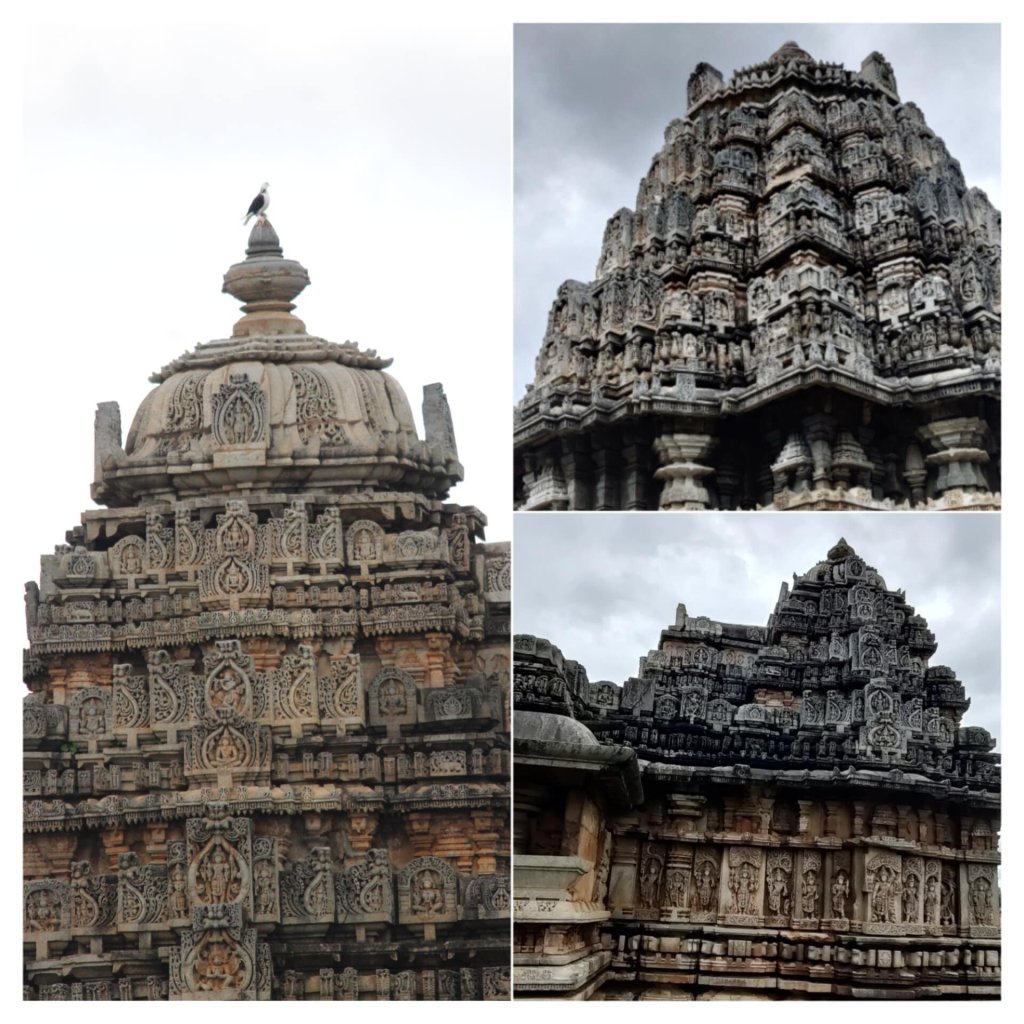
      Veeranarayana swamy temple, Belavadi
      The Trikuta temple towers at Veeranarayana swamy temple, Belavadi

      The outer walls are equally gorgeous too with intrinsic stone carvings and embossings all over. Due to limited permissions for photography, my photo story here consists only of photos of the exterior of the temple, but more than sufficient to give an idea of this marvel.

      Veeranarayana swamy temple, Belavadi
      The inner and the main entrance of Veeranarayana swamy temple, Belavadi

      Also, a walk around the tiny hamlet of Belavadi is highly recommended. I loved the unique design of these traditional houses that emanated a vibe of an old world.

      To be continued as Hoysala Trail 3

      Bannerghatta beyond zoo- Bilikal Ranganathaswamy betta

      Initially, when a friend mentioned the destination for an impromptu drive on a Saturday morning, I hoped to correct him by telling it was ‘Biligiri Ranganathaswamy Betta’. “No, it is Bili-Kal’, he specified. ‘Bili’ translates to ‘white’ in Kannada. ‘Giri’ means ‘hill’. ‘Kallu’ means ’stone/ rock’. In this context, we were both talking about two different destinations. Although the presiding deity at the temples located atop both these hills are common, Biligiri is more popular than its counterpart at Bilikal. While Biligiri forms the core of Biligiri Ranganathaswamy Temple (BRT) tiger reserve, Bilikal is in the heart of a reserve forest that comes under Kodihalli wildlife division of Bannerghatta National Park. So, this time, we were heading to ‘Bilikal Ranganathaswamy Betta’, the closest of the two to Bangalore city limits, reachable through Kanakapura road.

      We stopped by Halagur town for breakfast which has several old and popular eateries that serve unique types and authentic recipes of idlis for breakfast. (Comment below if you need hotel recommendations). Post this break, we followed google maps to reach our destination.

      There is a forest check post enroute where one needs to make an entry to continue the journey ahead. The temple hill can be summited via two routes, one is a trek route with stairs, and another is through an unpaved road that is clearly marked till the end. Although four-wheel drive is not mandatory for those opting to drive up, it is recommended to have a vehicle with good ground clearance.

      Bilikal ranganathaswamy temple
      Bilikal ranganathaswamy temple, Rear view of the Monolithic rock

      Upon reaching the peak, it was a large open area which came as quite a surprise. While one side of the hill had the temple pond dug into the edge of the rocky hill, the main temple of Ranganathaswamy is located on another side of the hill, overseeing a magnificent view of the surrounding hills. The main deity is carved out of a large monolithic rocky outcrop on the hill, which makes this place unique among all that I had visited thus far. There is a small sculpture on this rock which we were told is the original figurine of worship until it was damaged many years ago. Since then, an alternate idol has been carved out of the larger rock and a simple temple has been built outside leading into the prayer chamber within the monolithic rock.

      Next to the temple rock, is another old and small room like stone structure. A few localites who were present there told us that it was the house of an old lady Kamalamma, who lived there and had dedicated her life in the service of Lord Ranganatha. Amid the wilderness of the thick jungle, she lived all alone in the belief that Ranga was her caretaker. She was accompanied by a few cattle that lived there whose milk was used to distribute buttermilk to pilgrims who arrived there every Saturday after a tiring ascent by foot (before the drivable route was laid out). She is no more, and her tomb is now housed inside the structure where she lived.

      Bilikal ranganathaswamy temple, front view of the rock temple

      A short climb from this structure is another viewpoint, where one can sit on the rocky outcrop under the shade of the surrounding trees and take in some good views of the valley around. We returned after spending some time there. Overall, this was a pleasant and an offbeat outing from the city.

      Things to note:

      • The temple and the forest check-post are open for public access only on Saturdays. Only one Pooja is offered to the deity, once per week.
      • The annual temple fair is held here in January when a wooden temple car is assembled and taken around the rock-temple.
      • All along our way, we observed a lot of fresh elephant dung. Hence, we are certain that the trail is frequented by elephants and other wild animals at all times of the day. As both the routes pass through dense forest, it is recommended to comply with all guidelines laid by the forest department.

      Other nearby places that you can combine your visit with:

      • Shri Govinakallu Anjaneya swami temple (an offroad drive in the same forest limits)
      • Mekedaatu and Sangama
      • Muthathi riverbank
      • Galibore fishing camp
      • Bheemeshwari adventure and nature camp
      Bilikal Ranganatha swamy temple