From a tourist’s perspective, Hampi can be broadly divided into two parts, separated by the Tungabhadra River. The heritage site of historical ruins is in the Vijayanagar district, whilst places of mythological importance and most homestays offering local experiences are concentrated in the Koppal district side (This is popular as the Hippie island). So, if one is planning a trip to Hampi for the first time, this geographical classification should provide you with a brief idea before you arrive there.
Everybody knows Hampi and there is enough content widely available on places to explore in this historical town. But here are some lesser-known experiences that I loved during my repeated visit to this UNESCO heritage site.
A. Vijayanagar Side:
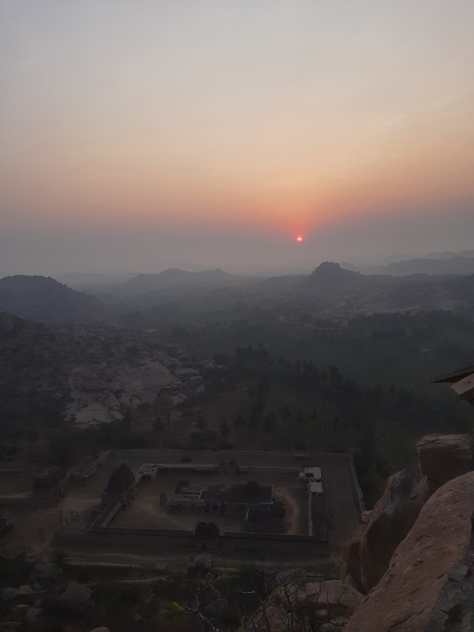
1. Sunrise at Matanga hills: How much amazement can your voracious vision hold? “Boundless” defines the view from the top of the Matanga hills. It was a dreamy view of the entire historical town in its ruined form scattered across the river flowing from one end to the other. And adding to the already picture-perfect frame was a bloody red rising sun in the backdrop. This is by far the BEST sunrise of my life. The early morning climb up the hill and the wait in the cold winds was so worth it that I had goosebumps watching the magic unfold.
Sunrise at Matanga hills
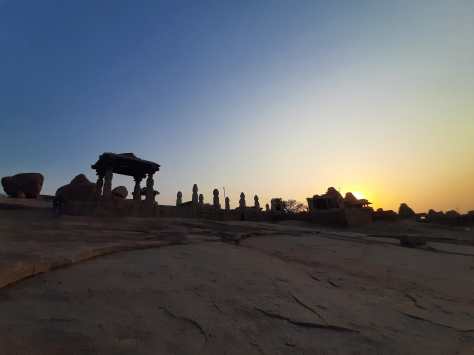
2. Sunset at Hemkuta hills: A short ascent to the rocky hill by the side of the Virupaksa temple leads you to this best spot to catch the sunset at Hampi. Comfortable benches or the grainy-pebbly ground, you can choose the surface to just lose yourself in experiencing the glorious horizons of Hampi turn from Indigo to blue to misty to bright to rosy to a star-studded sky.
Sunset at Hemkuta hills
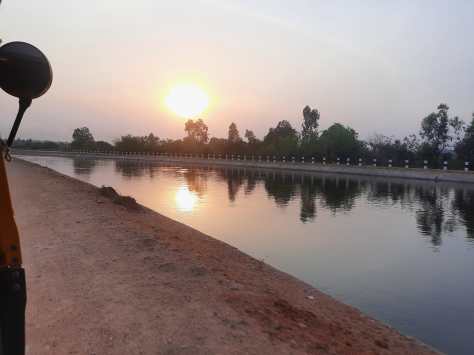
3. Bathing in the canal water: This is a closely guarded secret. There are irrigation canals passing through the villages in which you want to enjoy a quick dip, only if you befriend a local. If you do not get to enter the water, no worries, simply sitting by its side and seeing the time go by itself would be so comforting.
Water canals of Hampi
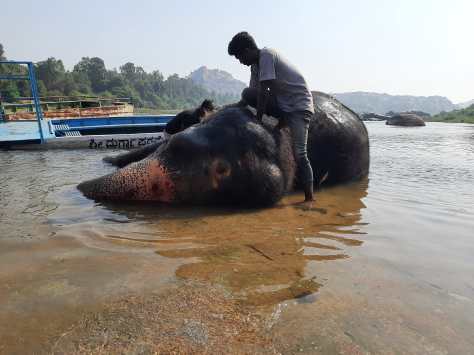
4. Coracle riding & elephant bathing: The river flows right behind the Virupaksa temple, and the temple elephant has a daily schedule of taking a shower in the river. Time your visit right and you can lend your helping hand too. A small ticket can help you cross the river on a coracle-a traditional round flat-bottomed boat built by knitting seasoned bamboo or cane. You can also see locals transporting their bicycles and motorcycles across the river through these boats.
Elephant bathing in Tunga river at Hampi
5. Cycle tour around the historical monuments: Several shops rent out bicycles to tourists. If you have a tourist map in hand and the luxury of time, trust me, it is one of the highly recommended ways to explore Hampi. For a little more comfort on a sunny day, you can opt for an autorickshaw with a good driver dueling as your tour guide.
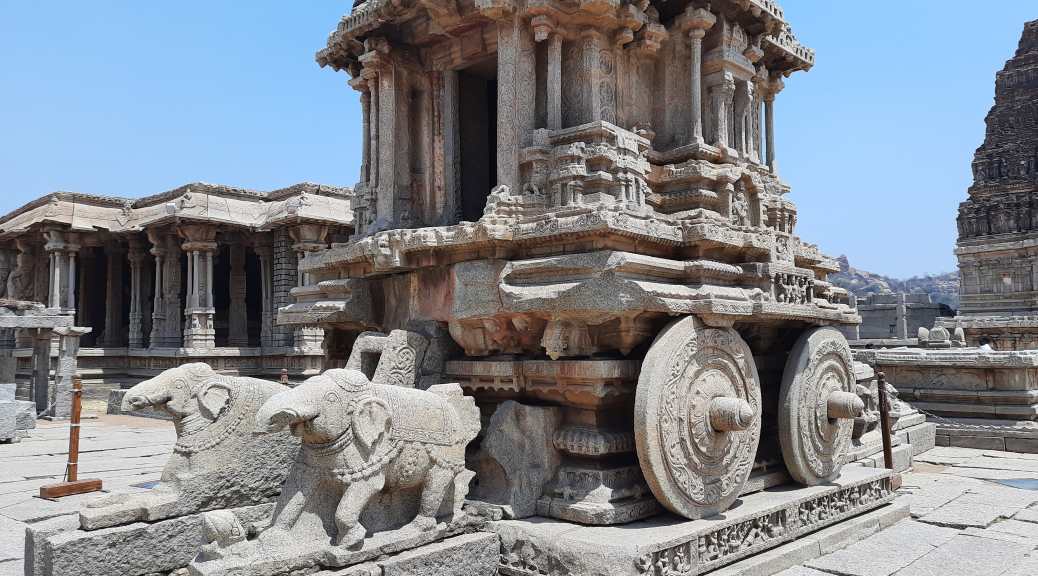
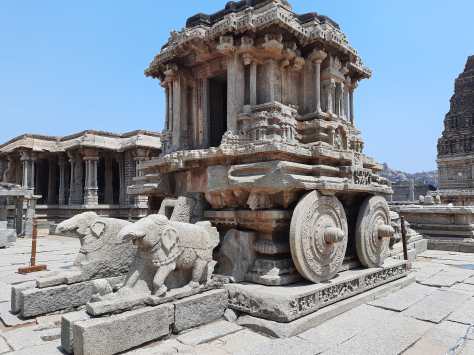
Stone Chariot- Hampi
B. Koppala side:
6. Sunrise at Anjanadri Betta: Believed to be the birthplace of Lord Hanuman, it is frequented by pilgrims which tends to receive higher footfalls as the day progresses. So, if you make it to the peak of this hill as early for sunrise, you can enjoy the view of the surroundings in peace and calm.
7. Sunset at Bala Anjaneya Betta: Another popular spot in the hippie island, it is best when visited during sunset.
8. Bouldering: This area is part of the larger Deccan plateau, and the rocky boulder terrain forms its core geographical feature. Short workshops in free hand bouldering is a great way to either learn a new skill or simply let the inner monkey in you to hang around in the land of the monkey kingdom (it is the birthplace of Lord Hanuman after all).
9. Bike riding in the paddy fields of Gangavathi: Gangavathi is called the rice bowl of Karnataka, and this is where you can see infinite stretches of green paddy fields. Now imagine large boulders and bare old trees standing scattered across these green fields as if they had witnessed all the stories of the past. And then you cut across on a moped or a motorbike casually soaking up this view. Trust me the views will linger in your mind long after you leave Hampi.
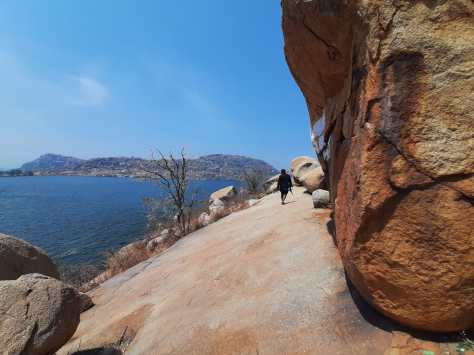
10. Cliff jumping & Coracle riding at Sanapur lake: This is not really a lake but the backwaters of a reservoir. It offers amazing activities to get your adrenaline rushing while you jump off a cliff to the depths and a crazy coracle ride along the rapid of the waterbody. A must do while you are on a trip to Hampi.
Sanapur lake
Are you going to try these experiences on your next trip to Hampi? Or what else have I missed out in this list? Tell me in the comments below.
We had taken help from a local person, Sunny, to make a last-minute hotel booking at Banaras. Sunny was a young lad who freelanced as a local guide, and was referred to us by one of my friends who had availed his services earlier. My friend and I checked into the hotel booked on the main road of Banaras, slept without dinner as were tired.
Meeting the Nagas
It was around 02:00 a.m. when I was woken up. “Wake up, Hitha. There is something happening on the road, I can hear people shouting slogans.”, my friend sounded very anxious.
“It is Shivaratri. People maybe chanting Har Har Mahadev, as many were doing so when we arrived here.” I said.
“No, wake up! I have been hearing this from quite some time, and it is getting louder now.” She barged outside the room to check what was going on.
“Hitha, hurry up and come outside! All the Naga Sadhus are right here!” she shouted, while running towards my bed, huffing and puffing in the next couple of minutes. Then, we both ran out to the reception area.
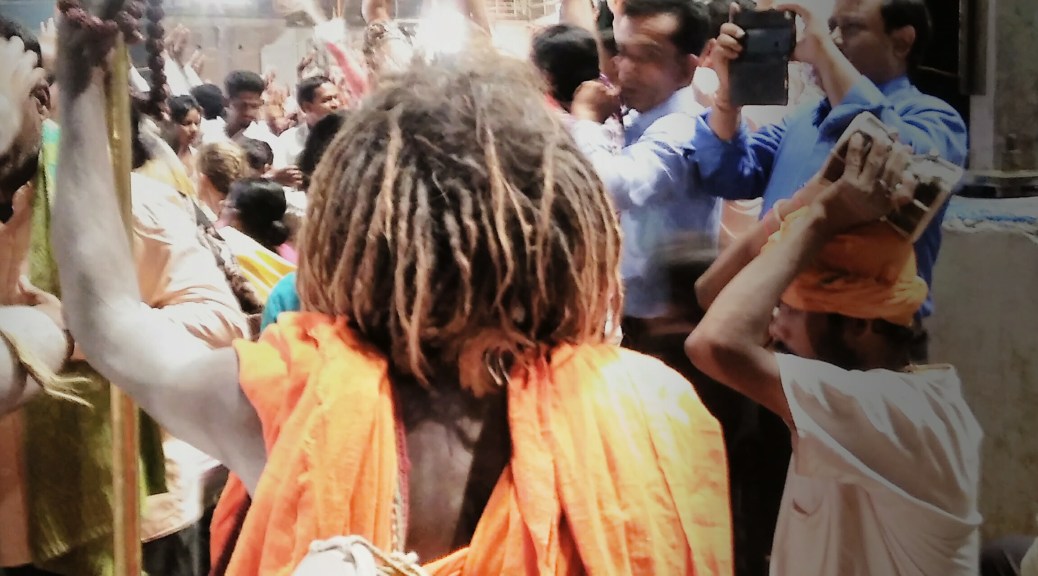
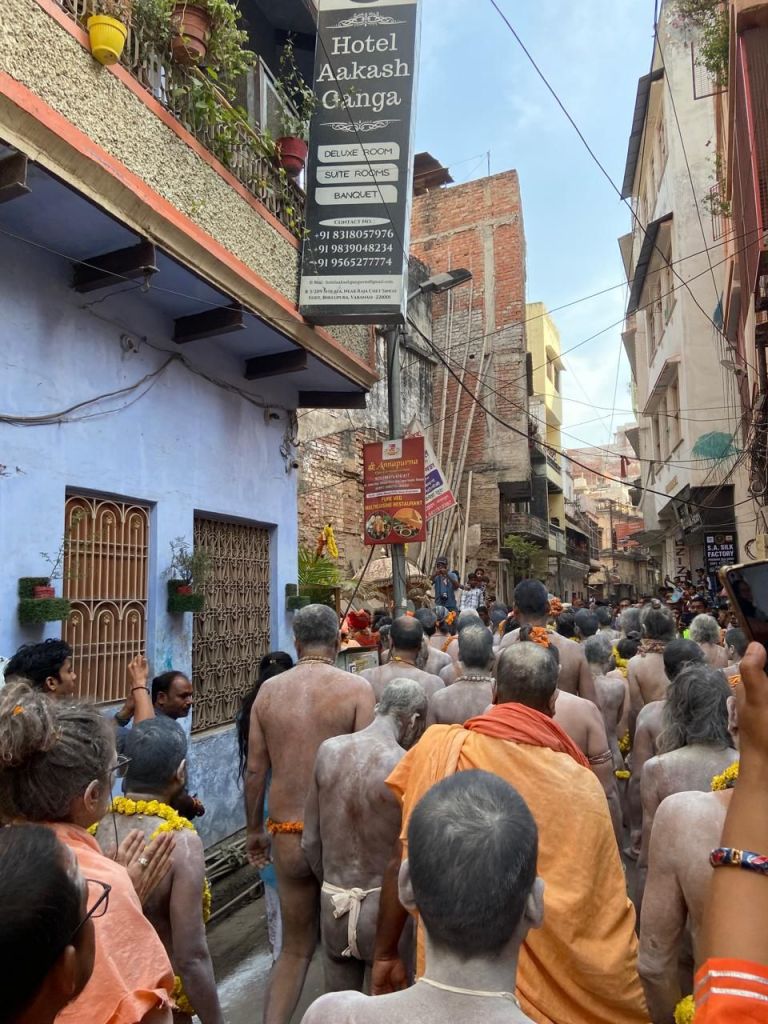
We were spellbound with what we saw there. With ash smeared bare bodies, matted locks, strings of Rudrakshas around their necks, trident and damrgo in hands, there were hundreds, or perhaps thousands of Naga Sadhus and Sadhwis representing every known Akhada with their respective Tableaux, had all assembled right in front of us. Calls of ‘Har Har Mahadev’ reverberated not just on this road but across the city as their convoy began with all the Nagas throwing ashes up in the air. Tight security with the CRPF barricading the streets on both sides ensured the convoy reached the ‘Kashi Vishweshwar Mandir’ thereby the Nagas got the first glimpse of their Adi Guru on the day of Maha Shivaratri before the rest of the public were allowed. A sight that seemed like a dream that I had just woken up from, one that I will cherish as one of the TOP memories of my life which I would have missed in a matter of seconds hadn’t my friend woken me up at the right time. The crowd then dispersed and we returned to our room to freshen up before starting our day.
In a couple of hours, Sunny updated us to stay at the entrance of the hotel for the procession was to return along the same path, with the Akhadas returning from the temple, back to their camps set along the Ghats from where they would all packup to head towards their respective abodes scattered across parts of India. When they all did arrive, I stood on the side of the road to capture a few shots for memory of this amazing day. Despite the security, my friend and I had unknowingly become a part of the parade. The parade of the Nagas. We were walking beside and amid the Nagas from Godowlia street, right until the Juna Akhada office before someone realized that we were outsiders and politely asked us to step aside. WOW! It was indeed an experience that gives us goosebumps just by imagining even today.
Naga Sadhus returning to their akhadas
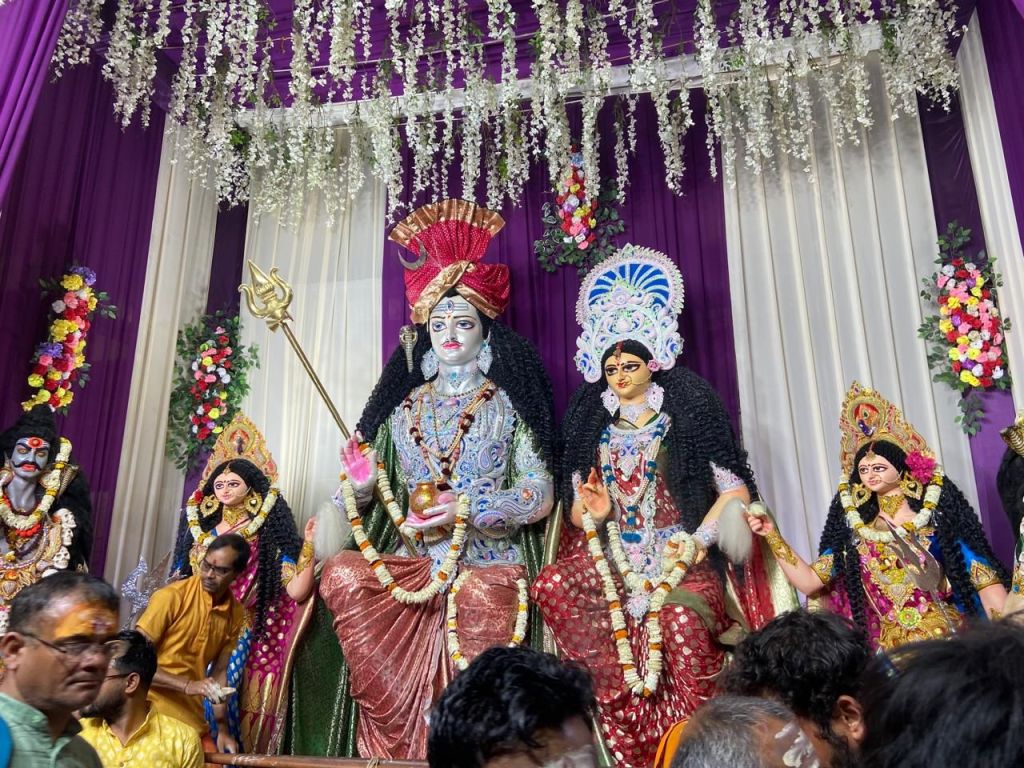
Shiv-ji ka Baraat
Meanwhile, Sunny had us racing towards, yet another ceremony scheduled to happen on the parallel streets. The grand Shiv Baraat procession was on its way from Shri Tilbhandeshwar Mahadev temple towards the Gauri Kedareshwar temple, where the idols of Shiv and Parvati are set up the day before the main event. Sunny placed us both on strategic spots on the street from where we could watch the arrival of the Baraat clearly.
First, the camels arrived. Then the elephants. Then, all the Baraatis from the groom’s side accompanied by various orchestra/Band sets and tableaux from across the city arrived on different vehicles, chariots etc. (Children and young adults dressed in masks and costumes depicting various gods and Goddesses from Hindu Mythology) and Finally the groom made his appearance on horseback (yet, another young boy dressed like Lord Shiva), travelling across various lanes, streets and main roads of Banaras and finally reaching Gauri kund located at Kedar Ghat where the divine union of Lord Shiva and Goddess Parvati was to take place later that night.
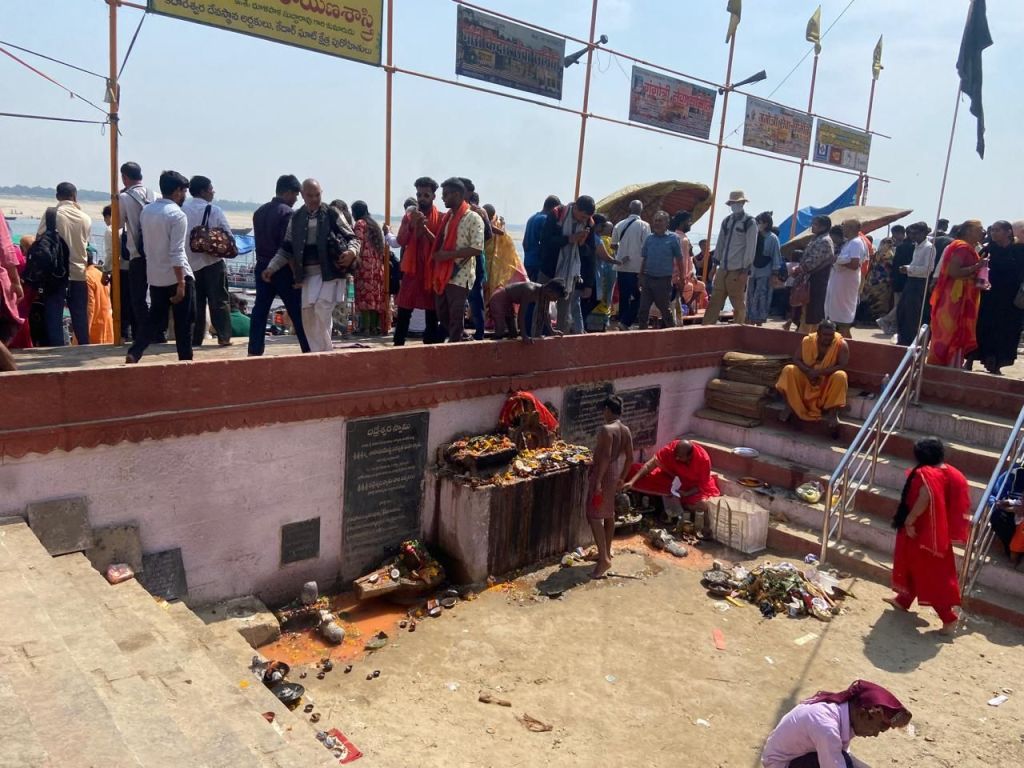
Gauri kund before the wedding prep
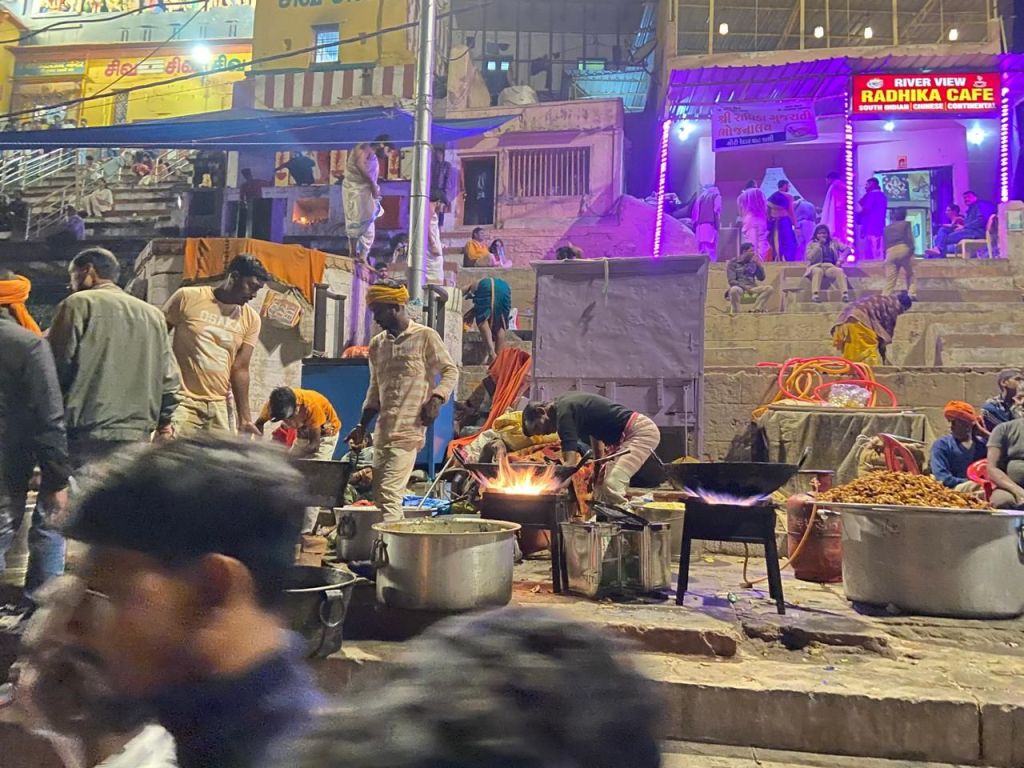
We found a strategic spot on the stairs of the Kedar Ghat to witness the grandest wedding that was supposed to take place all night with all the devotees staying up on night vigil as witnesses to the wedding on the banks of River Ganga. Ofcourse, any Indian wedding is incomplete without a grand feast for its attendees. How could it not be so when it is the wedding of their dear Lord himself? There was free and unlimited supply of potato sabzi and Thandai throughout the night to all devotees (guests) in attendance at Kedar Ghat, witnessing the wedding by participating in rituals and discourse of vedic chants.
Feast being prepared for the wedding
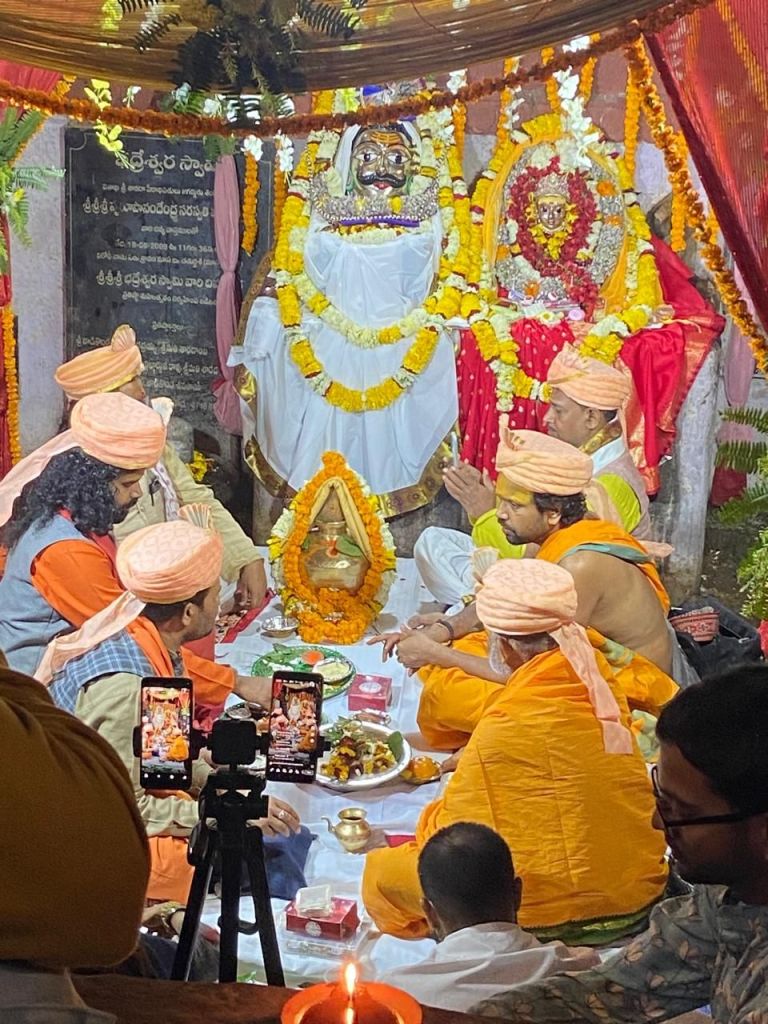
The common man seated hundreds in numbers occupying the riverfront stairs played witness to the divine marriage ceremony conducted in a style typical to the Uttar Pradesh region. My friend was on top of the world when she was randomly picked from the gallery of people to make her offerings to the newlyweds (perform abhisheka with milk on small lingas moulded out of fine soft sand from the Ganges on a decorated silver plate). The contents in each plate was offered back to the river as a part of the culmination of the marriage rituals. The chants and offerings went on until the break of dawn post which the audiences and witnesses dispersed.
The celestial wedding in progress at Gauri kund
Date with the Lord and his consort
If this was about witnessing the celestial wedding, wait. Our visit to Banaras was incomplete without this: Greetings to Lord Kashi Vishweshwara. We had decided to skip the temple visit on the day of Shivaratri to avoid the crowd and try our luck on the following day. So that day was about resting and catching up on the sleep deprived from the last night.
Come the following day, there were no signs of any less crowd. Rather it looked like the entire crowd from Prayag had alighted at Banaras after closing the Kumbha Mela. The queue to enter the temple extended several kilometers. But we are Indians with local contacts. Be it getting access to a no-entry spot or to wave a quick ‘Hai’ to our favourite god, why wouldn’t we utilize our privileges to bypass rules? We will! We found a legal way (Oh, that’s a secret!) to cut the longer queue and reduce our wait time to just an hour. Amid chants of ‘Har Har Mahadev’ we had finally arrived at the Lord’s doorstep, a window from where we were blessed with a view of a beautiful Pushpa alankar or the floral decoration. Despite wanting to stay there for a little longer, we had to move away making way for the lakhs of devotees waiting behind us.
A visit to any Shiva temple is incomplete without taking the blessings from his consort, Shakthi. In Kashi, Lord Vishweshwara’s consort is Goddess Vishalakshi. We expected another long line but as surprising as we were, we had just another 10 to 15 people along with us, all standing and praying inside the temple without any pressure to move out. It was such divine energy felt in peace. So, after coming out of there, the next important thing to do on our list was to eat food, food at the Annapurna temple, the home of the goddess of food and abundance. Let me not add more paragraphs into my story describing how symbolic this temple is from a religious and mythological context; Google Mata is just a click away with all the details. So, we had to satiate our fasting stomachs by finding our way to the temple of Annapurna (actually, to the dining hall!).
Upon enquiry of the route, we understood that we had to navigate through the same long queue of the Vishwanath temple before arriving at a small deviation that led to the temple that we were looking for. The same local contact who had helped us to jump the previous line provided us with some tips to skip the queue all together because we were not going to Vishwanath temple this time. We followed his hacks, paid a deaf ear to dozens of abuses that were being hurled at us by frustrated people who had been standing for hours in the long queue before joining a crowd that seemed unusual to an Annapurna temple (since we had not encountered it on our way to the Vishalakshi temple) or rather familiar (with the structure and chants around us were similar to that of Vishwanatha temple). It didn’t take us too long to realize that we had indeed arrived at the window of Lord Vishwanatha again, by entering from a different gate. This time, his darshana was without any of his adornments, a blessed moment briefly happening before he is completely covered up by his next alankaara and the offerings made by the devotees. It felt surreal. How lucky could one get to have a second chance on such a cringe day?
Anyway, moving on from there, we had to talk to few security personnel to help us find our way to the Annapurna temple. It was a short walk away with a maddening density of people pulling and pushing their way through a small temple verandah to enter the dining hall. Once there, we both had goosebumps thanking our fortunes for having us the opportunity to devour that meal! It was simple and comforting yet felt luxurious!
The reception of Lord Shiva and Goddess Parvathi
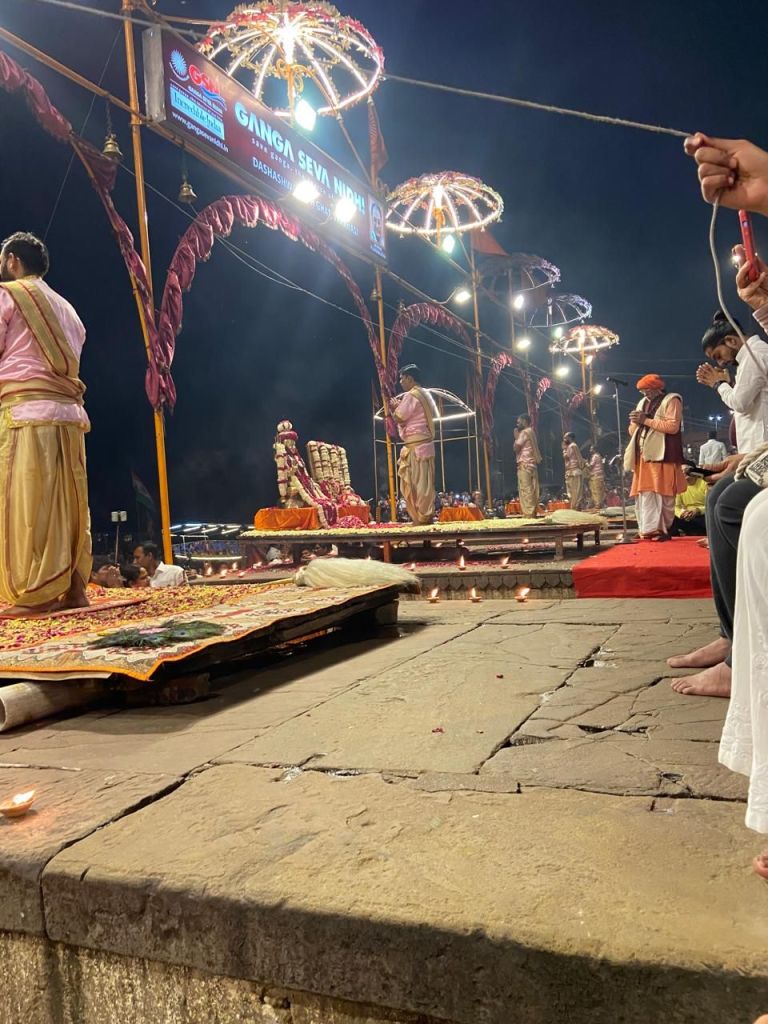
Lighting the Diyas at the Ganga Aarti
The famous Ganga Aarti performed twice daily on the ghats of the Ganga had been halted over the last couple of weeks, ever since the stampede had happened at Prayag. It was while having our lunch at the Annapurna temple, Sunny had dropped us as SMS informing us to arrive early at the Dashashwamedh Ghat as the evening aarti would be restarted from that evening. Even as we arrived at the ghat at 04:00 p.m., let alone sitting, it seemed impossible to find space to even keep our feet firmly on ground. The crowd had assembled on the ghats, on boats, atop all surrounding buildings, poles and structures to witness the Ganga Aarti that was scheduled to begin post-sunset. We both barely managed to find space just enough to cling on a supporting wall in front of the anchored boats.
It was finally time for the aarti and the all the priests who had to perform the Ganga aarti had assembled on the podiums. Call it our luck or divine intervention, the head priest who overlooked the preparedness of the dais before commencing the sacred ceremony pointed at the two of us from the massive crowd that had gathered. He asked us to come over and light up all the clay lamps arranged around the podiums. After that, he offered us to sit on a red-carpeted arena, right behind the performing priests that provided us the best possible comfort and view that evening! We couldn’t help but pinch each other to convince ourselves that the way our day had unfolded was indeed real.
Parvati ki Bidaai
On the third day, we stayed back to play witness to the Bidaai ceremony of the daughter, Goddess Parvathi with her husband: Shiva. With the entire Banaras gathering on the streets, the pomp and grandeur of the send-off was even larger than the Baraat which finally culminated on the outskirts of Banaras. With that, it was also time for us to return to our hotel and pack our bags to head back to Bangalore.
There are five temples located across Southern Indian states representing the five elements of life or the Panchabhutas. They are built in such a way that the are all aligned in a single latitude and longitude with respect to each other. Through this article, I would like to share a summary of my stories of visiting each of these temples.
1. Jambukeshwara Temple, Tiruvannaikaval representing Water
It all started with a family trip, way back in 2014 to Trichy. I had made a long list of places to visit in and around the temple town, and we happened to visit this temple by chance. It was a beautiful temple where the main Linga is believed to have been created by Goddess Parvathi with water from the nearby river. Today, the Linga is surrounded by a perennial stream of water. (Click here to read about my trip to Trichy)
On a casual day trip with my mother to buy some sarees at Kanchipuram, I also made a list of temples to visit in this town which is also known as a ‘City of 100 temples’. Among the long list of sacred places we visited in Kanchipuram, the Ekambareshwara temple was also one. Here, the main Linga is made out of sand and is believed to have been installed by Goddess Parvati. Shiva is a lover of Abhisheka, however due to the nature of the porous & loose sand of the Linga, there is no abhishekam offered here. Instead, offered to another small bronze idol kept beneath it. (Click here to read about my trip to Kanchipuram)
The Sthala Vrushka inside the Ekambareshwara temple
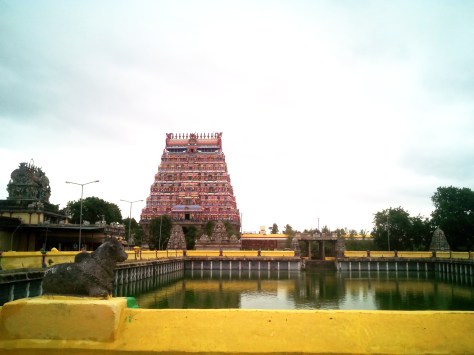
My brother and I happened to explore Chidambaram town during a backpacking trip along the East-coast of Tamil Nadu. We arrived at the temple on time for the first aarti when the doors opened in the evening. We were in the front line when the curtains were raised, and we had a stunning view of the main idol. I instantly felt a compelling energy from the idol in which Lord Shiva is depicted to be performing the Ananda Tandava dance. (Click here to read about my trip to Chidambaram)
One of the temple gopurams and the holy Sivaganga tank at Thillai Natarajar temple
4. Kalahasteeshwara temple, Srikalahasthi representing Air
We halted in this temple town on our way to Sriharikota to watch a rocket launch in 2019. We stood in a long queue to finally get a magical darshana of the Linga here which is made of a massive sized Camphor. Since the camphor is susceptible to fire, there is no direct aarti performed to this Linga. However, an eternal lamp / light is lit behind forming the silhouette of the Linga which indicates that there is continuous flow of air allowing the fire to burn. (Click here to read about my trip to Srikalahasthi)
5. Arunachaleshwara temple, Tiruvannamalai representing Fire
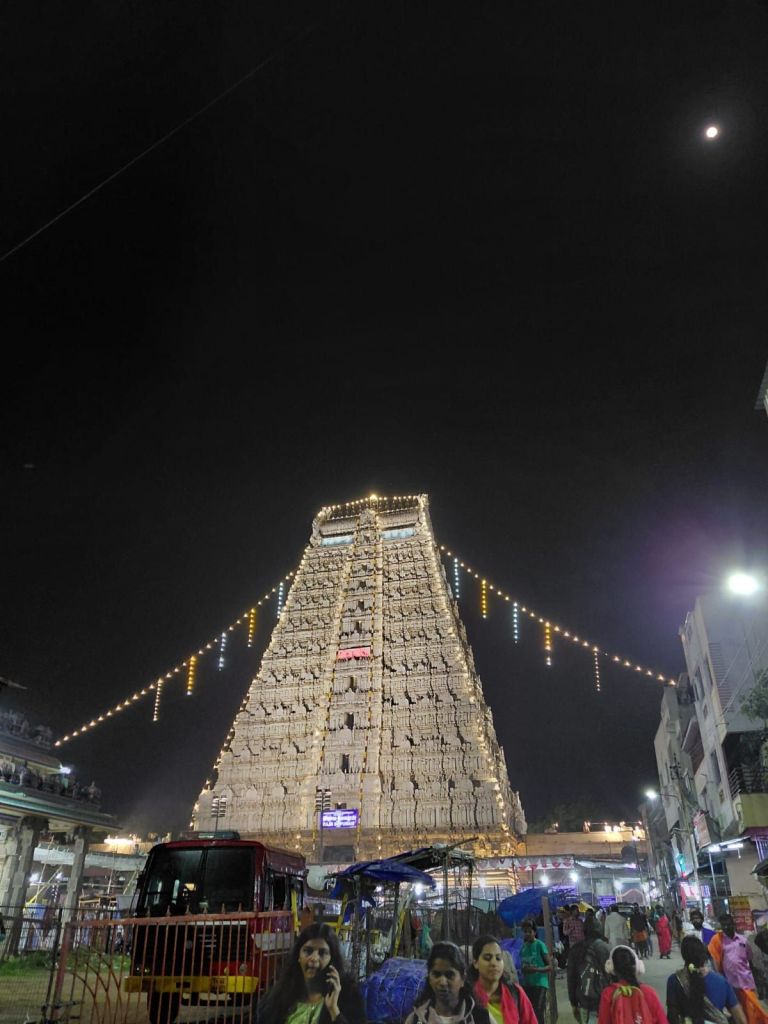
It was indeed a long wait until 2025 when my wish to visit this temple manifested. I got extremely lucky as my visit also coincided with the auspicious Karthika Deepam. I performed the Girivalam before I got the darshan of the Linga, illuminated by oil lamps around inside the sanctorum. The hill itself is believed to be a manifestation of Lord Shiva and the Karthika Deepam, a representation of cosmic fire (Click here to know more about my Girivalam trip)
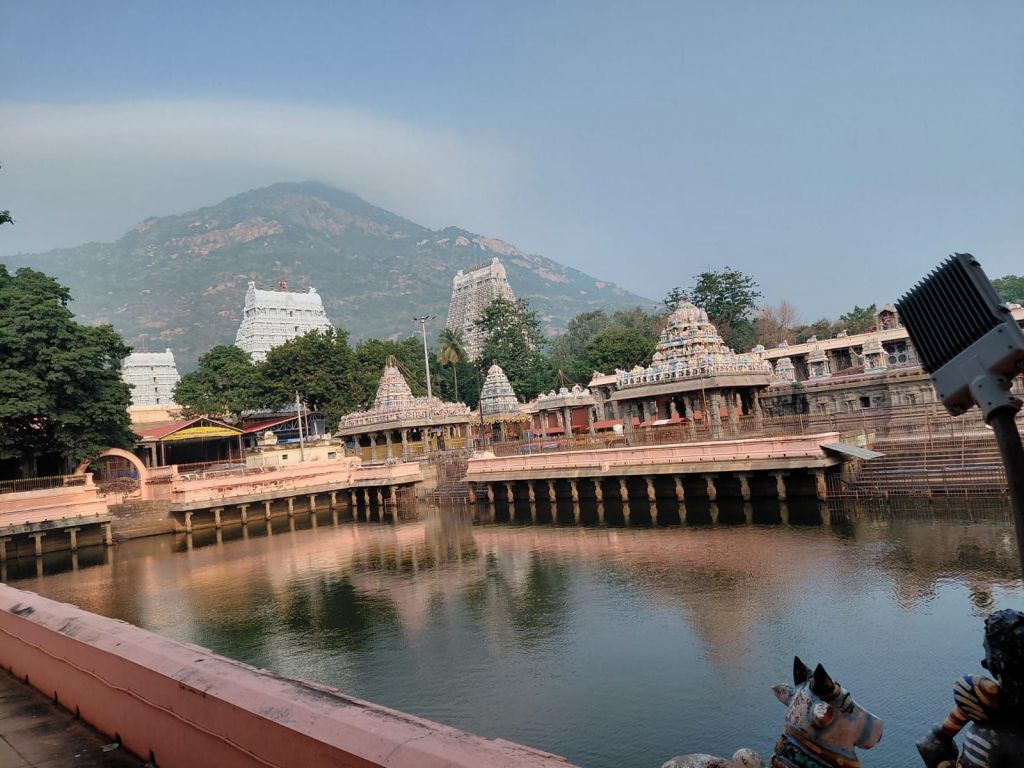
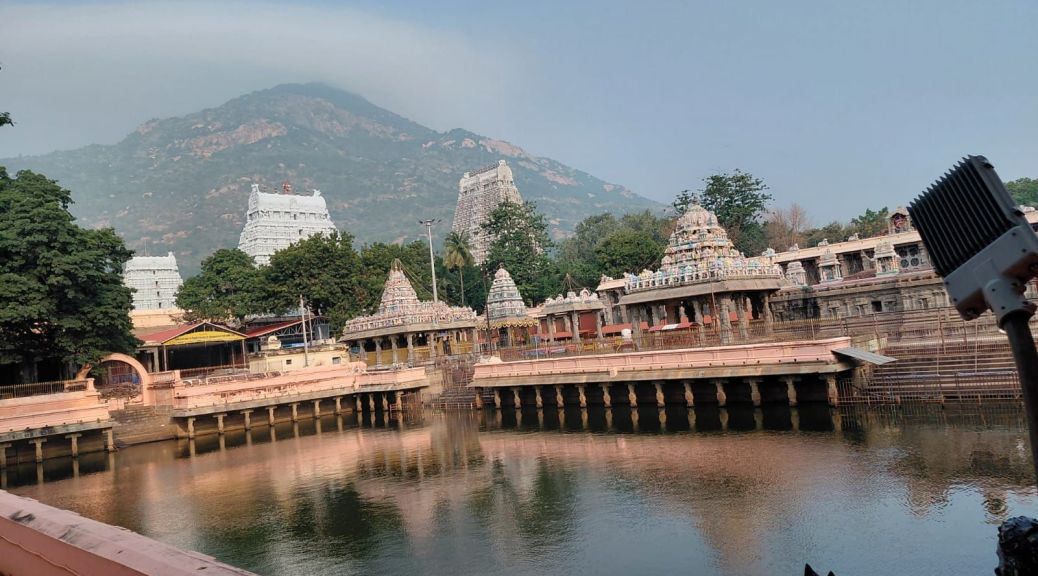
The Tiru-Annamalai hill in the background of the Arunachaleshwara temple pond
Mythology has it that Brahma and Vishnu got into an argument over their supremacies and finally sought Shiva’s help to resolve the issue. Shiva then created a cosmic column of fire and asked Brahma and Vishnu to find the end of the fire. Whoever found its end would be declared as the supreme god. Bramha went towards Akaasha and Vishnu went towards Pathaala to find the top and bottom ends respectively. However, both returned unsuccessful, thus renouncing Shiva to be supreme. This place came to be called Arunachala hill or Tiruvannamalai. The name of the hill is derived by combining three Tamil words, Thiru- meaning sacred, Vann meaning fire, and Malai meaning mountain, thus meaning “the holy fire mountain”.
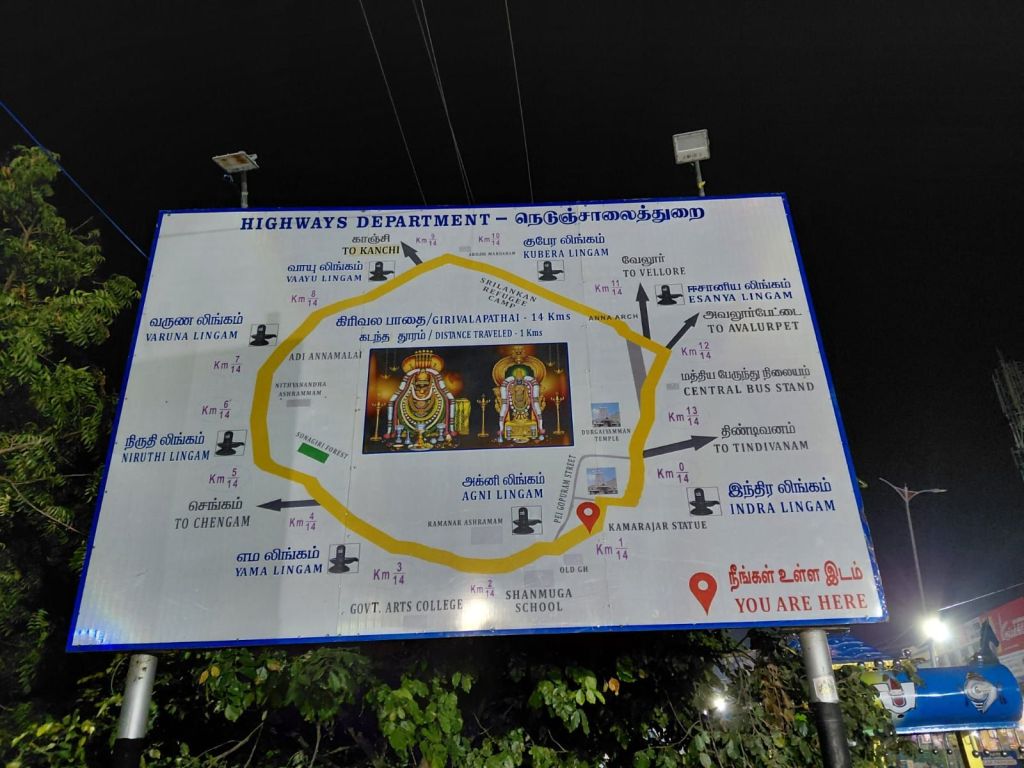
Girivalam, also called as Giri Pradakshina is a combination of two words, ‘Giri’ meaning mountain and ‘Valam’ meaning circumambulation. It is a sacred walk covering an approximate distance of 14-kilometer in the clockwise direction around the Arunachala Hill in Tiruvannamalai town of Tamil Nadu. Since the hill is considered a physical manifestation of Lord Shiva, conducting the Giri Pradakshina is believed to offer spiritual purification and liberation.
To commemorate the day of establishing Shiva’s supremacy, a large bonfire is lit atop the hill during the Karthika month of the Tamil calendar. This Karthigai Deepam lit on the previous night of the full moon symbolizes Shiva’s cosmic fire and burns continuously for the next eleven days attracting millions of devotees from all over for this annual festival.
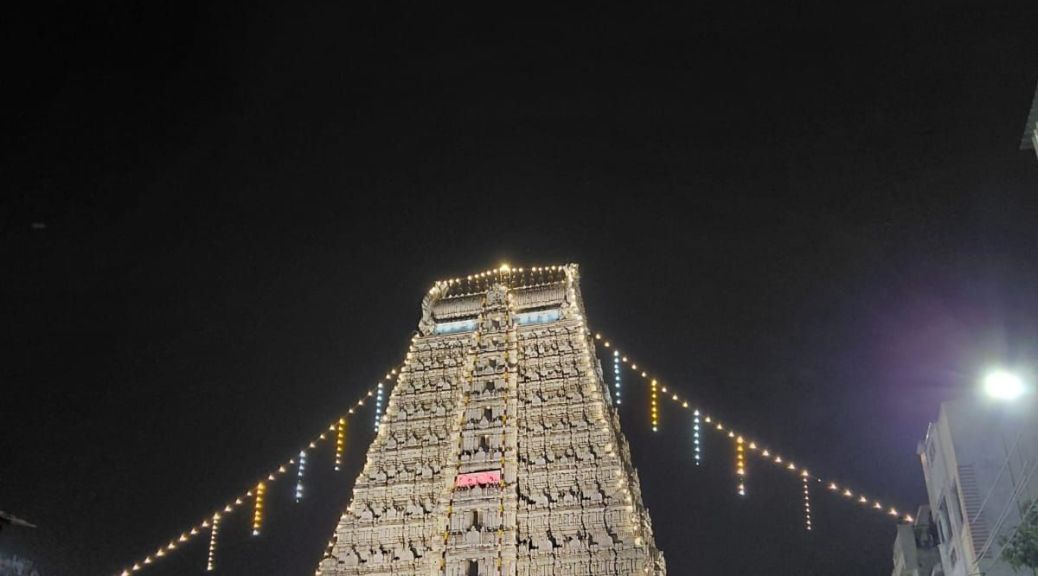
The Rajagopuram on a full moon night of Karthika month
How to do Girivalam?
The Pradakshina must start and end at the same spot, usually at the east entrance tower of the Arunachaleshwara temple located at the foothills.
Start the Pradakshina by visiting the Kalabhairava and Ganesha shrines, followed by breaking a coconut in front of the east Gopuram of the Arunachaleshwara temple.
Traditionally done barefoot, it is not wrong if one opts to wear just socks or footwear during the walk and removed before entering the temples passing along the path.
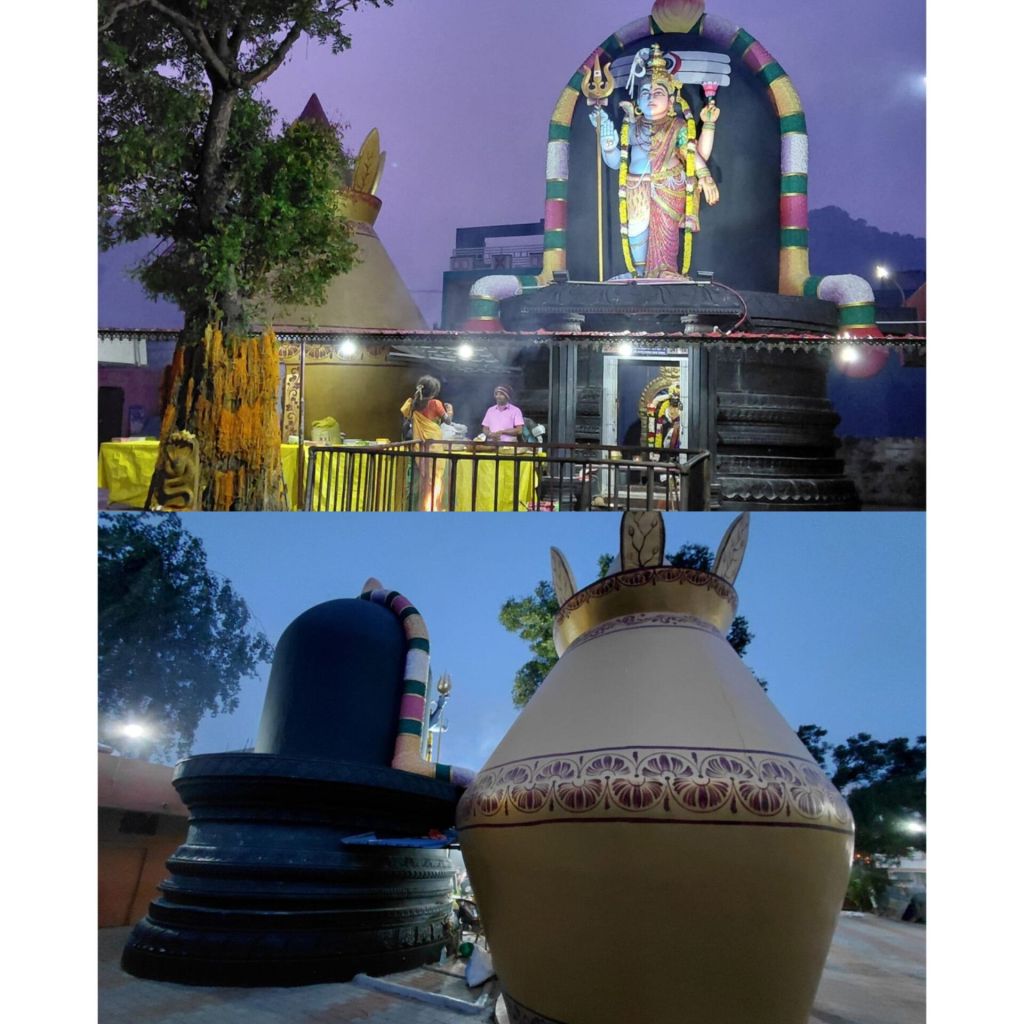
A visit to the Ashta Lingam shrines and other significant temples along the way is believed to enhance the benefits.
Girivalam can be conducted on any day and time of the year. However, offering it on full-moon days is considered more auspicious.
The Girivalam route map
When did I go?
Since my friend and I had been contemplating doing Girivalam for a very long time, it was a spontaneous decision to perform it as the last full-moon day of the 2025 calendar year, and a weekend had arrived together. Coincidentally, it also happened to be the Karthika Month and hence, the Karthika deepam would be lit over the eleven-day period.
We chose to go there on a Friday, which was a day after the full moon, assuming that the crowd of the full moon day would have subsided and the weekend crowd wouldn’t have poured in yet. It turned out to be a smart decision.
We also got lucky that we saw the flames deepam atop the Arunachalar hill, all the décor of the town and all the decoration inside the temple that had been done for the annual festival.
How did I go?
There are plenty and frequent public buses run by Karnataka and Tamil-Nadu Road transportation services. We boarded a TNSRTC bus onwards to Tiruvannamalai and KSRTC bus for our return to Bangalore, both without prior bookings.
We arrived at Tiruvannamalai at around 07.00.p.m. had a filling dinner and retired early at a hotel we had pre-booked close to the east tower of the temple.
We started our pradakshina by around 03.45.a.m. and finished it by 08.00.am.
We stood in the ticketed queue for Darshana and were done by noon we ate temple prasada (more like brunch).
We then checked out of our hotel and reached Bangalore by night.
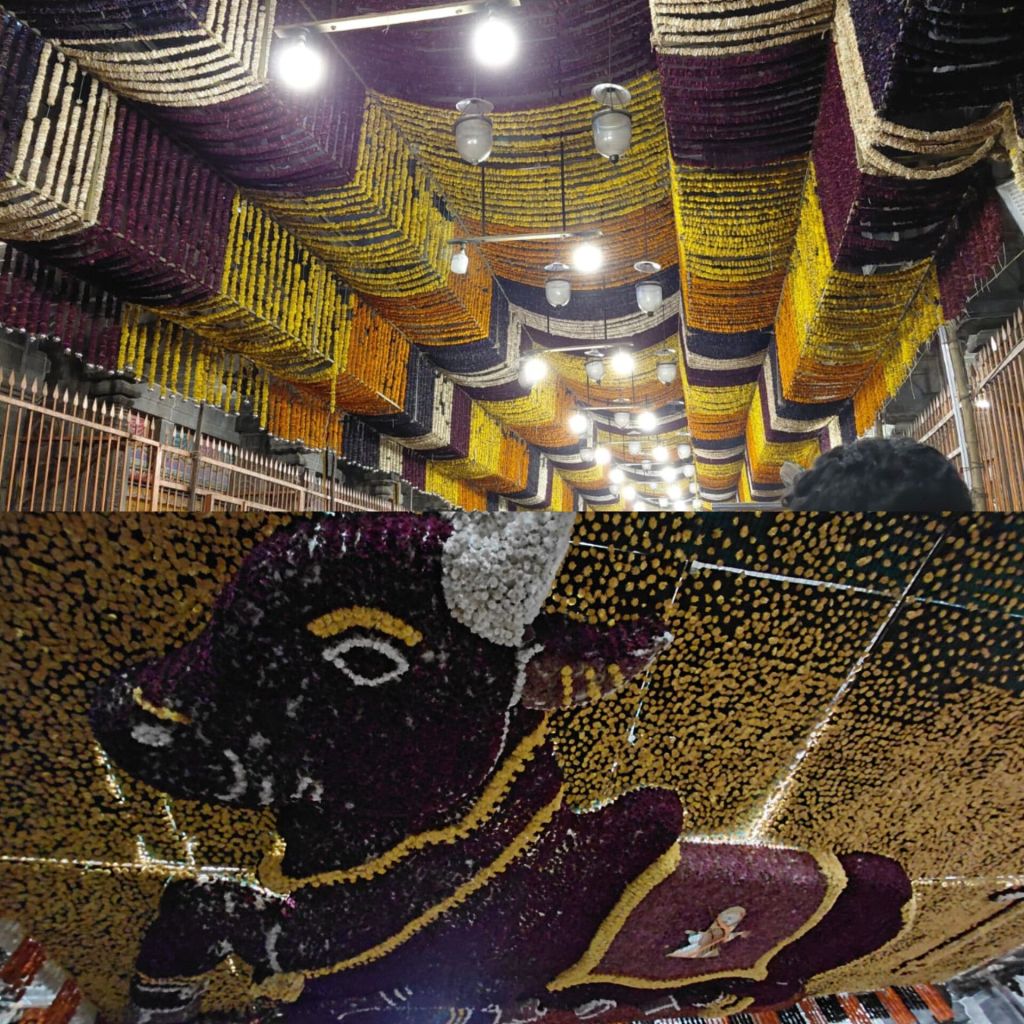
The flower decoration on the inside of the Arunachaleshwara temple on occasion of Karthika deepam
Some tips from my first Girivalam experience
The temple closes at night and opens by 06:00. a.m. and there will be a long queue for the Darshan. Hence, it is best advised to reach the temple gate as early as possible to get the earliest darshan with the shortest queue.
It is best to do the Pradakshina after sunset and finish it before sunrise to avoid the blazing sun- but also time it well to be able to visit the Ashta Lingams while they too are open.
I highly recommend buying the 50Rs. special entry ticket to reduce the walking distance in the queue and thus a faster Darshana.
Book a stay as closer to the East Gopuram as possible. This will help to reduce the overall walking distance and ease the accessibility to the Girivalam path.
I chose to skip going through the Moksha dwara, a small structure along the path. The queue was extremely long.
If possible, offer small donations to as many sanyasis and beggars sitting along the path. It will enhance the benefits of your prayers.
There are ample food stalls, water stations and clean public toilets all along the way to keep you going. However, we chose to break our fast only with the temple Prasada after the Darshana was completed.
The entire walk will be on an asphalted road / paved footpath. So, expect littering to be normal.
Other noteworthy things to do and places to see during Girivalam
Do not miss eating the Pongal and Puliyogare (Tamarind rice) at the paid prasada counter at the exit of the temple. It tastes delicious.
Check the timings of the free meals served at the Ramanashram, or simply pay a visit there to experience calmness.
You can walk a small distance from the Skandashram to reach a viewpoint where you can see the entire temple premise and Gopurams from.
Do not miss the Rudraksha beads distributed for free by volunteers anywhere along the Girivalam path.
The deity and the structure of the Ardhanareeshwara temple were unique.
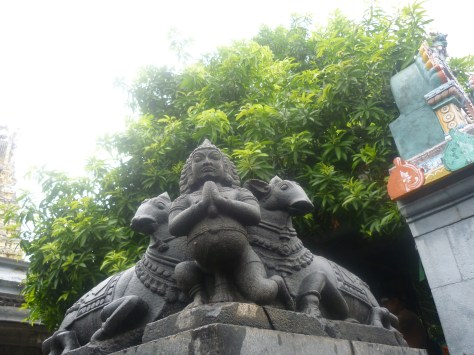
Observe how the direction of the Nandi changes in each temple depending on the direction of the holy hill with respect to the location of the Nandi, it always faces the mountain: The Arunachalar.
If you’re visiting Tiruvannamalai anytime after ‘Arudra Darshana’ (next full moon after Karthika Deepam, Do not miss collecting the holy Arudra Kajal / Kohl from the temple. It is made from the soot formed by the ‘Karthika deepam’ itself and will be distributed until stocks are available each year.
The front and back view of the Ardhanareeshwara temple
Do you have anything to share or ask about Girivalam? Comment below.
When a friend mentioned taking a road trip to a fair at Anthiyur village, neither of us had many expectations. What can one expect at a village festival in India, after all? All that we had learnt before commencing our road trip was that it was a cattle fair, which was held as part of the annual festival of the Gurunathaswamy temple at Anthiyur village. Supplemented by a handful of YouTube videos in Tamil, we decided to take the long drive from Bangalore to spend a weekend.
We started from Bangalore before dawn to reach Anthiyur at the earliest and get sufficient time to see all the cattle stalls before returning. But only to our surprise, the scale of this temple village fair was anything beyond our imagination. Neither of us had seen or heard of a small village festival to be of such a large scale and spread.
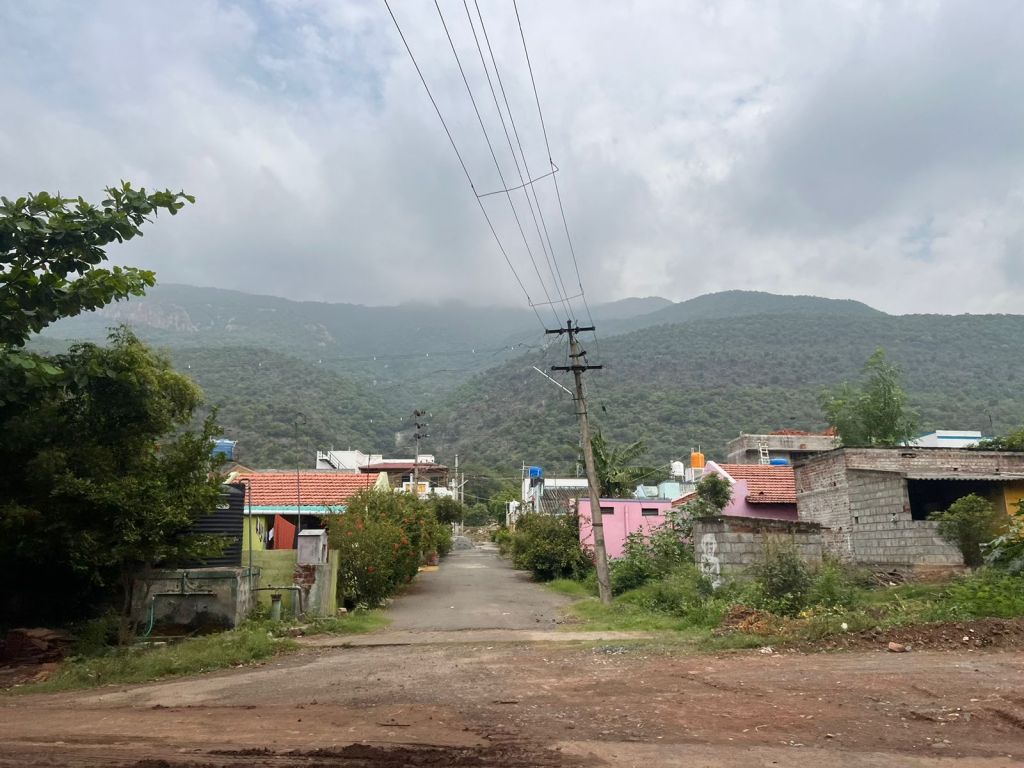
The beautiful hills around Anthiyur village
Mythology of Anthiyur Gurunathar temple:
The story dates to around 600 years, when there lived a clan near Pichavaram forest, that worshipped three stones known as ‘Kutty Aandavar’ (translates to ‘Small God’, in Tamil). The local ruler wanted to marry the priest’s daughter. However, the priest’s family was against the marriage proposal. Meanwhile, one of the members of the priest’s clan gets possessed by their deity’s spirit, and the family is told to abandon the village along with the three prayer stones to avoid the outrage of the ruler’s anger. Following this, the family started to move north until they found a safe place to settle down. At some point, the family felt that their survival was going to be difficult and that the stones being carried by them were an additional burden. Hence, they continued their journey by throwing the stones into a nearby pond. They halted at Anthiyur for the night.
On the following morning, Santhakumaran (one of the family members) was surprised to find the same three stones back in his bag. They realized the powers of their deity and resumed worship of the stones by giving them three different names. The first stone was called Kamatchi, the second one was Perumal (Vishnu), and the last one was Gurunatha Swamy (a combination of Shiva and Kantha).
During the festival, three deities are taken on a procession from the main shrine at Anthiyur village to a temple in the nearby forest. As per mythology, a demon is believed to have occupied the forest in which Goddess Kamatchiamman wanted to reside. A fierce war was then fought between Veerabhadra (the warrior assistant of the Lord, protector of Kamatchi-amman) and the demon, in which the demon eventually surrendered. It is said that instead of leaving the forest, the demon requested lord Gurunathar to allow him to stay there on a condition that Kamatchiamman came there once a year to visit him. However, Veerabhadra agreed to this on the condition that he, too, was allowed to stay in the same forest. This temple is today called Vanakovil (translates to ‘Temple in the forest’ in Tamil), where Kamatchiamman is brought in a palanquin from the main temple.
The history of the Anthiyur temple festival
The current temple structure is believed to have been built by the Pandya kings. The Gurunathar temple houses an 11*11*11 feet kulukai. A kulukai is a large earthen storage container mainly used for storing food grains, with a large opening at the top (to fill the container) and a small vent at the bottom (to take the grains out for consumption). It is believed that the kulukai in this temple is used to store the jewels and other items related to worship, and is guarded by snakes. Only the head priest is allowed to enter the container and access the stored things, and is unharmed by the guarding snakes. Therefore, this kulukai is worshipped by the local people and it is believed to keep them safe from reptiles, scorpions, etc.
The month-long temple festival held during the Aadi month of the Tamil calendar hosts a range of unique rituals and celebrations during this time. Temple cars built for each deity are prepared and managed by the respective caste of people. Two large, towering, nicely decorated temple cars (the largest is of Gurunathaswamy and the smaller is of Perumal Swamy) are pulled by thousands of devotees who gather from across the nearby villages, from the main Gurunathaswamy temple to the Vanakovil and back. Today, animal sacrifice is practiced in Vanakovil.
The history of the Anthiyur cattle fair
A four-day-long cattle fair is, however, the highlight of the festival for which people come from across the districts of Tamil Nadu and the states of India. There are only two cattle fairs held at this scale in India. First, at Anthiyur (more popular for the horse fair) and second, at Pushkar in Rajasthan (Primarily a Camel fair). The history of the ‘Kudurai Santhai’ (the Horse fair) dates to the times when Tipu Sultan was the ruler of Mysore. He visited this cattle market to buy the best horses for his cavalry and sold his horses that were no longer fit for battles.
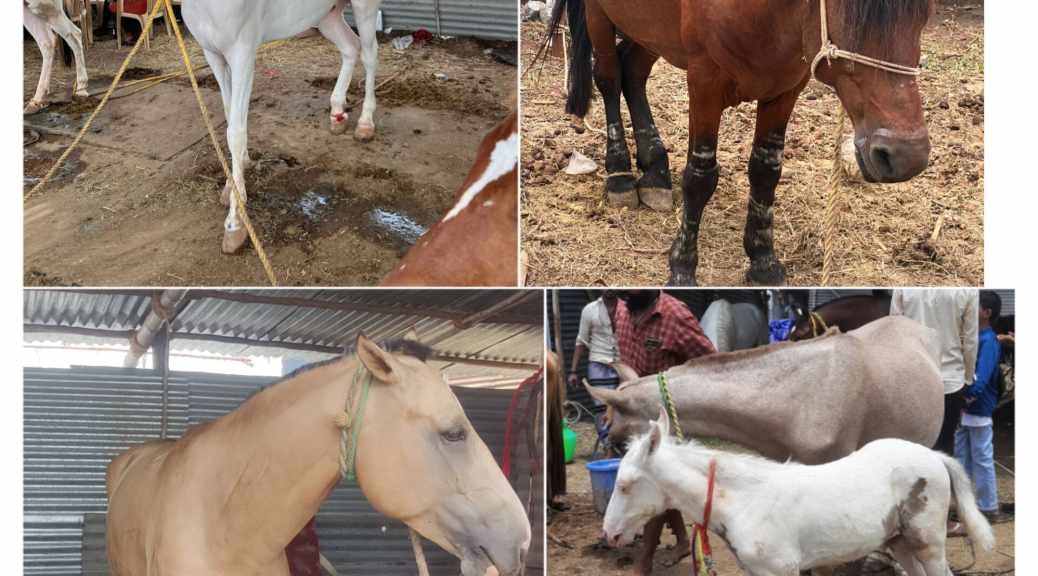
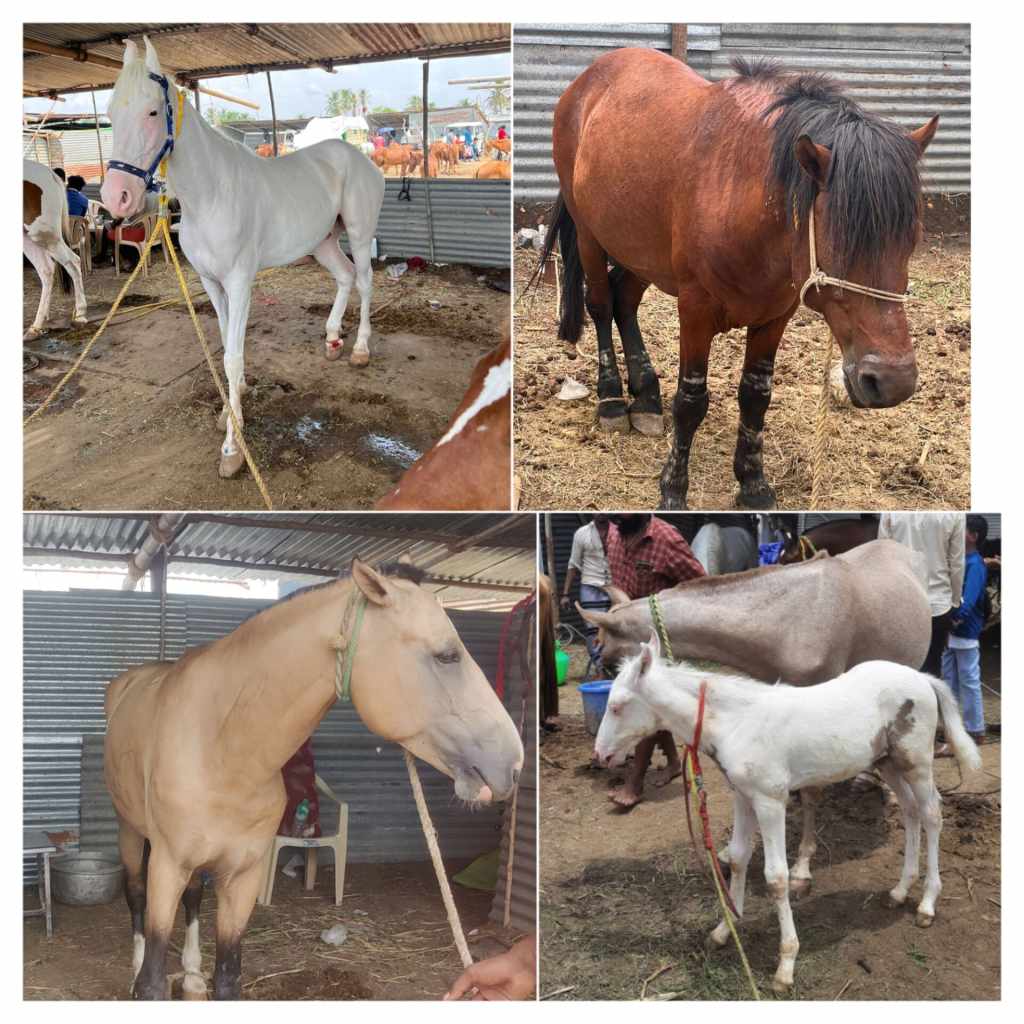
It has, over time, gained popularity among horse enthusiasts across the country who consider buying horses from this market as a matter of pride and prestige. The cost of each horse can range anywhere between 50 thousand to 50 lakhs rupees. Today, apart from buying and selling horses at the ‘Kudurai Santhai’, many horse owners come here to simply display their prized possessions. One gets to see stallions, mares, sires, and ponies of various native indigenous and pure breeds here. Some horses are made to perform to drumbeats and kept on exhibition. On the last day of the four-day-long ‘horse fair’, Geegees are judged based on their structure, build, and looks, and finally, awards are given away. On the day we visited in 2023, there were over 1000 horses at the fair brought in for various purposes.
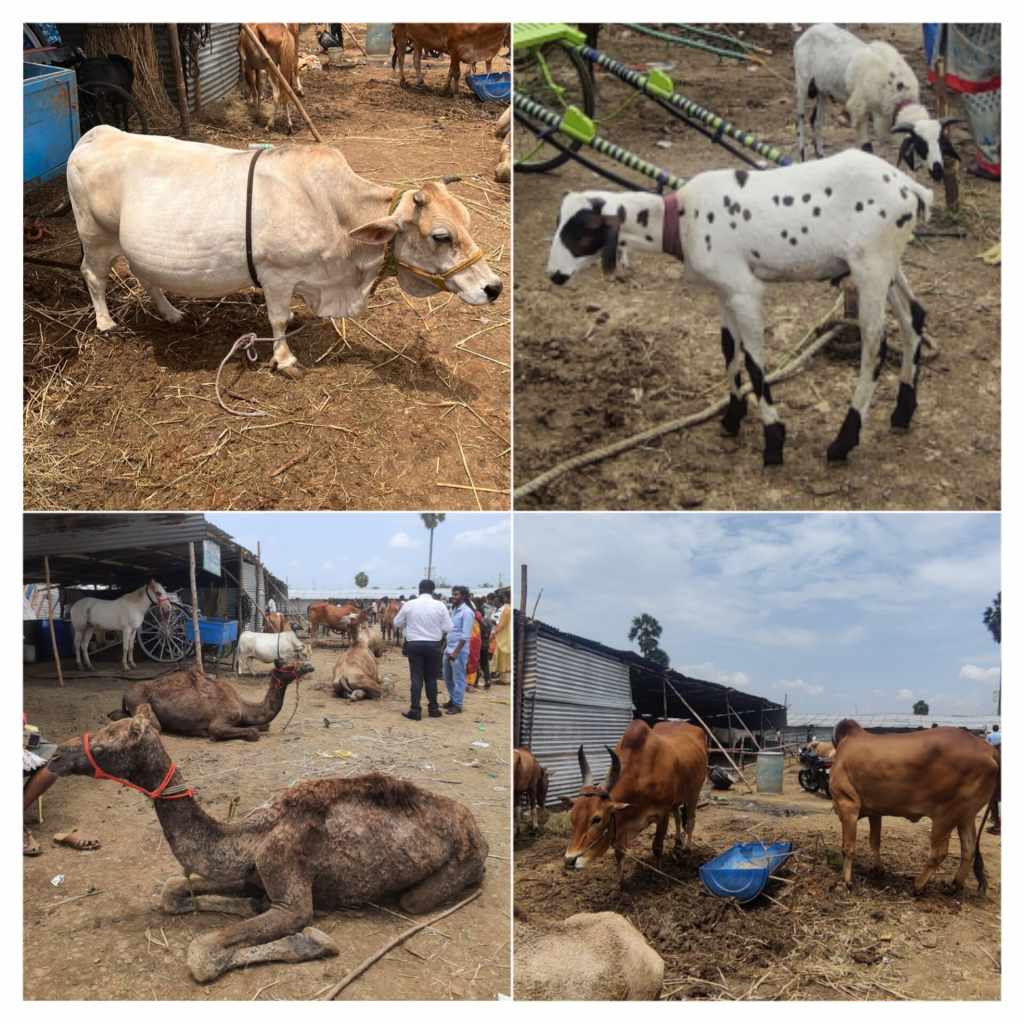
All accessories, equipment, and other things that are associated with horse-keeping and equestrian training can be found and are sold here. Apart from horses, this fair is also the largest marketplace in India for other breeds of cattle and livestock like cows, goats, sheep, camels, rabbits, dogs, and birds. With encouragement given to native breeds, it is a great experience to see cattle across the 34+ acres of land.
Largest Makeshift Amusement Park:
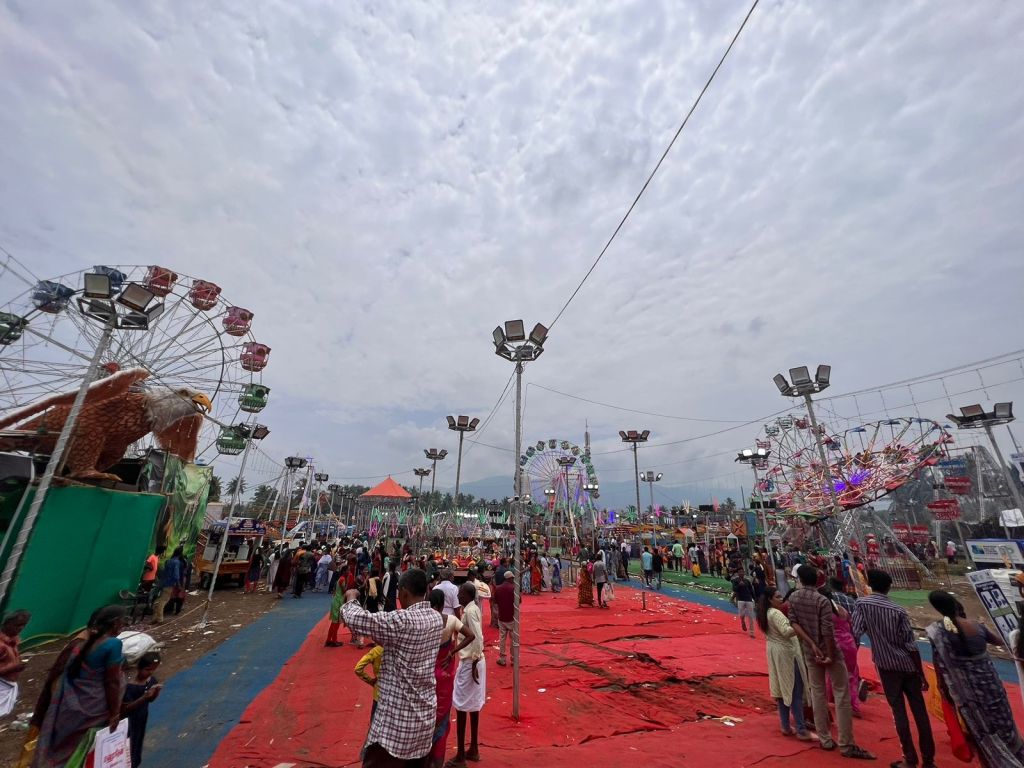
To supplement the cattle markets, there is a makeshift amusement park set up, which is also by far the largest makeshift amusement park I have ever seen. Over ten giant wheels, rollercoasters, circus tents, and at least three globes of death are set up among several other types of amusement rides. The energy and ecstasy of this fair is all together only to be witnessed rather than to be read about.
The makeshift amusement park at Anthiyur festival
Souvenirs bought:
Bamboo staff- You will find people buying them, as it is considered auspicious to keep this weapon of Gurunathar Swamy at home.
Colorful horse whips
Horseshoes- this is believed to absorb negative energy if hung at the entrance of houses.
Disclaimer: This article is posted to document folklore and lesser-known festivals of India. If any mistakes are found, it could be based on what was heard as stories. Kindly comment below or message directly for any corrections required.
Although this destination is a recommendation for weekend and day hikers of Bengaluru, it is in Krishnagiri, a district bordering the two states of Karnataka and Tamil Nadu.
The views from an ancient temple had caught the attention of my friend and me, who are always in the look out for less crowded and less explored landscapes and places with cultural and historical importance. One such place was the ‘BalaKodandaraya Swamy temple’ whose history dates to the Vijayanagara era. Based on our online research, we found out that getting to the temple involved a short hike.
We started early on a Saturday morning by car. We had our breakfast along the way, in one of the several restaurants on the Hosur highway. From there, we followed the route on Google maps to reach our destination. A steep deviation to the left of the highway led us through villages. There were asphalted roads and good views of the surrounding hillocks for as long as the road passed through villages. The last couple of kilometers were through unpaved muddy roads passing through a slight forest stretch. We finally arrived at a small open space where we parked our car, at the base of the temple hill.
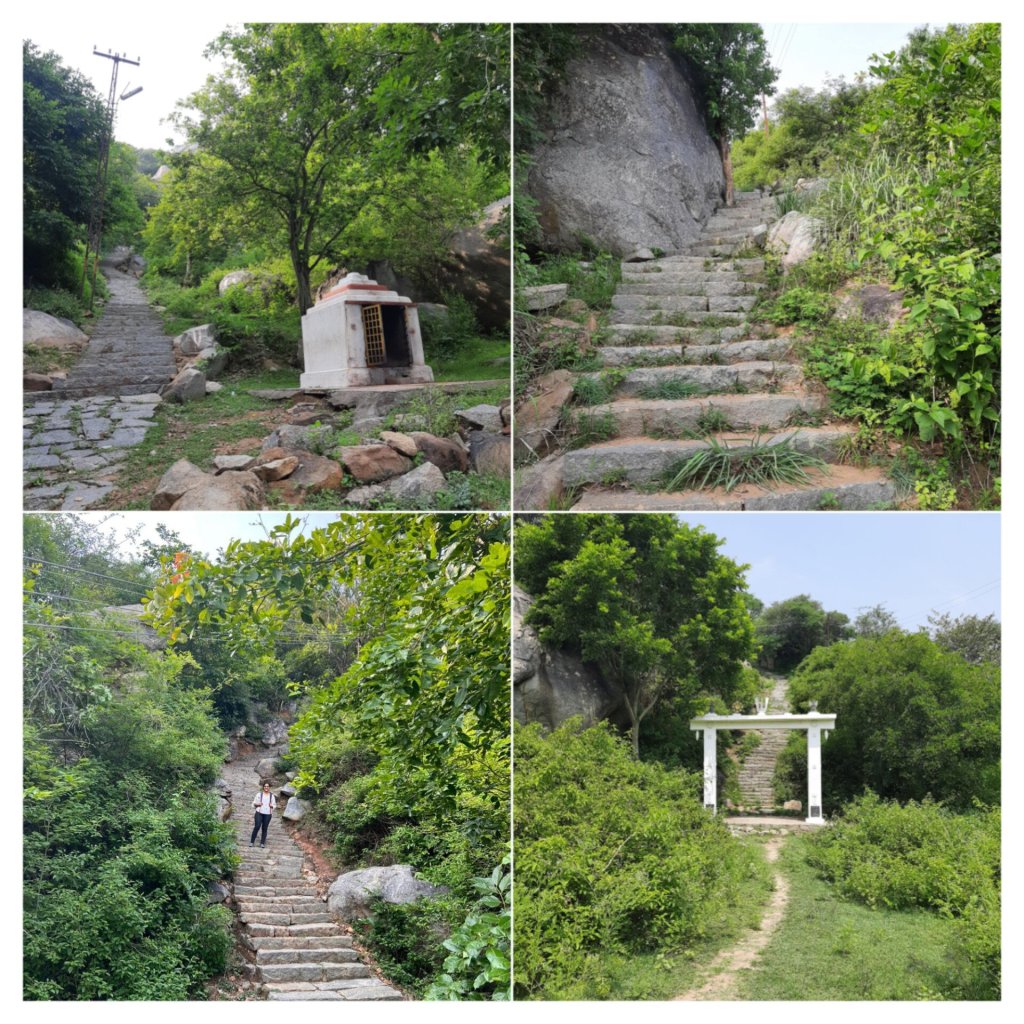
The trail through the forest cover, starting from the base to the temple arch
There was a small structure of brick and mortar (gudi) at the base, from where a flight of stairs led to the hilltop. People lit lamps, agarbattis and camphor here before starting their ascent. It took us about half an hour’s climb along properly laid stone steps leading to the top. These stone slabs bear the names of the devotees who have donated them and the count of their donations on each step. The ascent curved around at multiple places and offered amazing views of the valley below at every turn. The first half of the climb had a forest cover and large boulders on both sides, until we arrived at the welcome arch of the temple.
The path towards the left of the trail, towards the temple
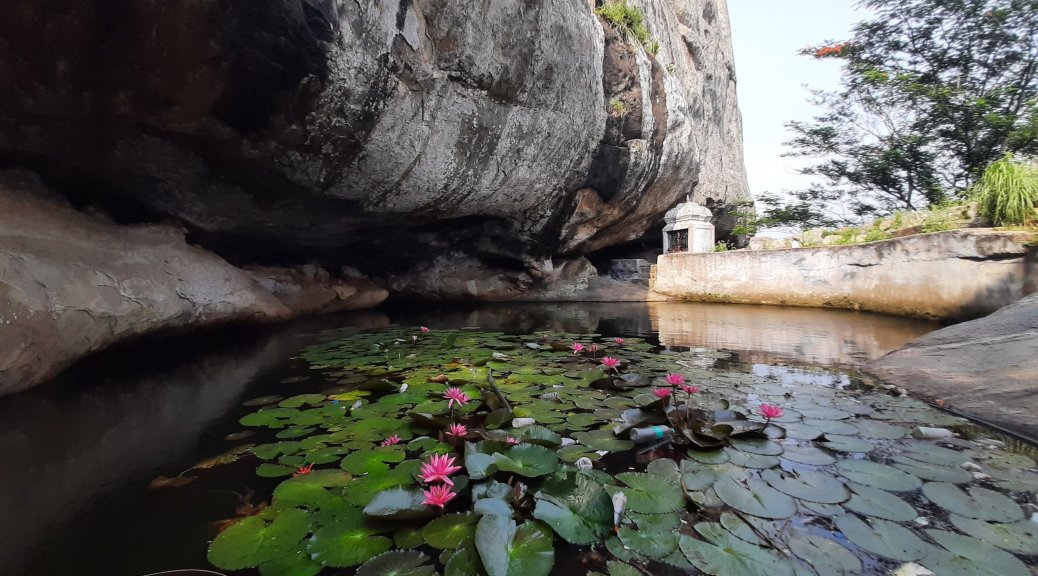
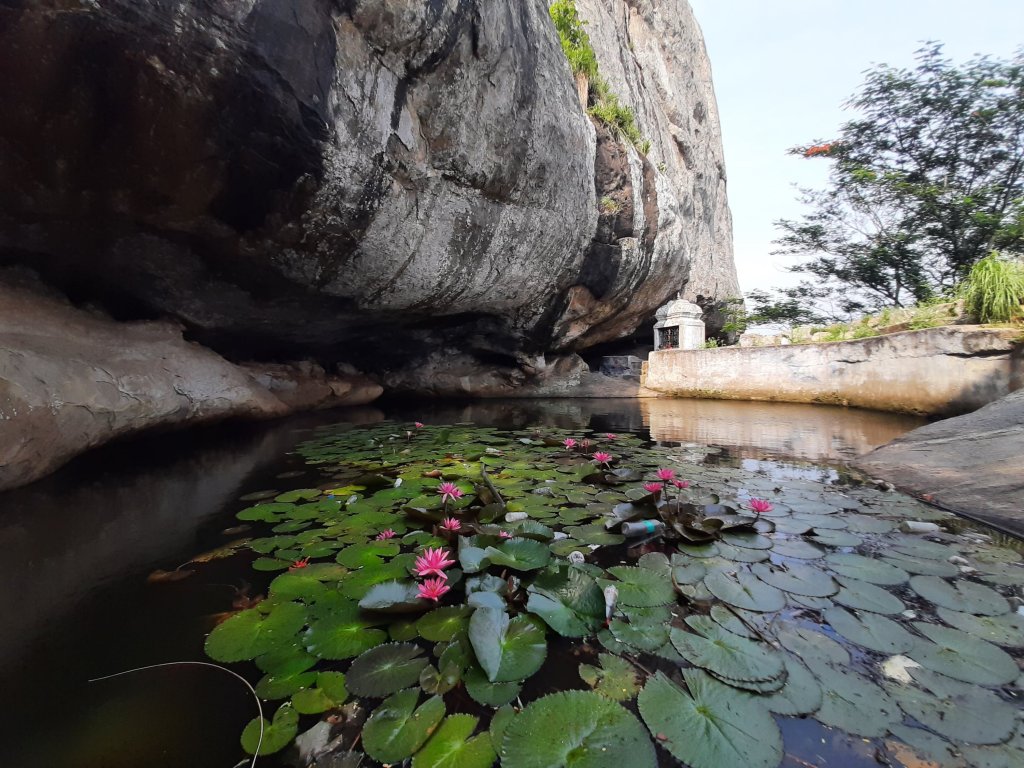
The forest cover ended after a few steps further from there and opened to a panoramic view of the valley of the villages and farms below. As one stands on a large rocky outgrowth, you will find the trail split into two paths. One, straight down through some Gulmohur trees. Second, up towards the temple. We decided to first walk the trail going straight. A few yards from there, the trees made way to a beautiful pond of pink lilies, dug right beneath a large rocky monolith. We later realized that devotees take a dip in this pond before proceeding towards the temple.
The path towards the right of the trail, leading to the temple pond
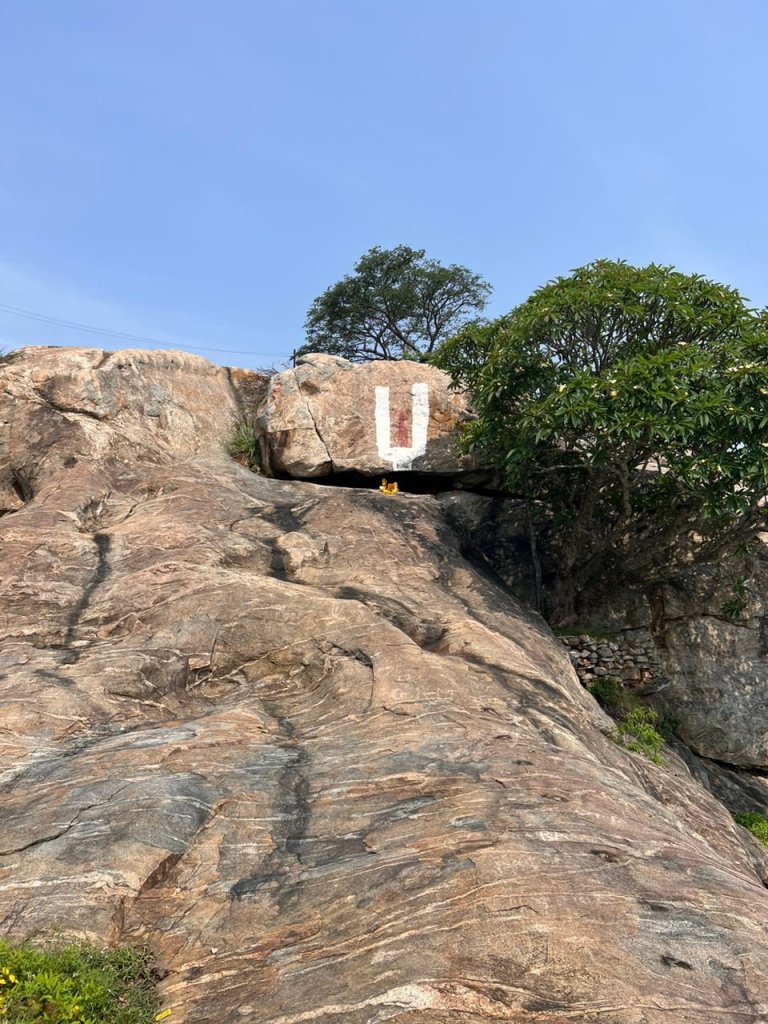
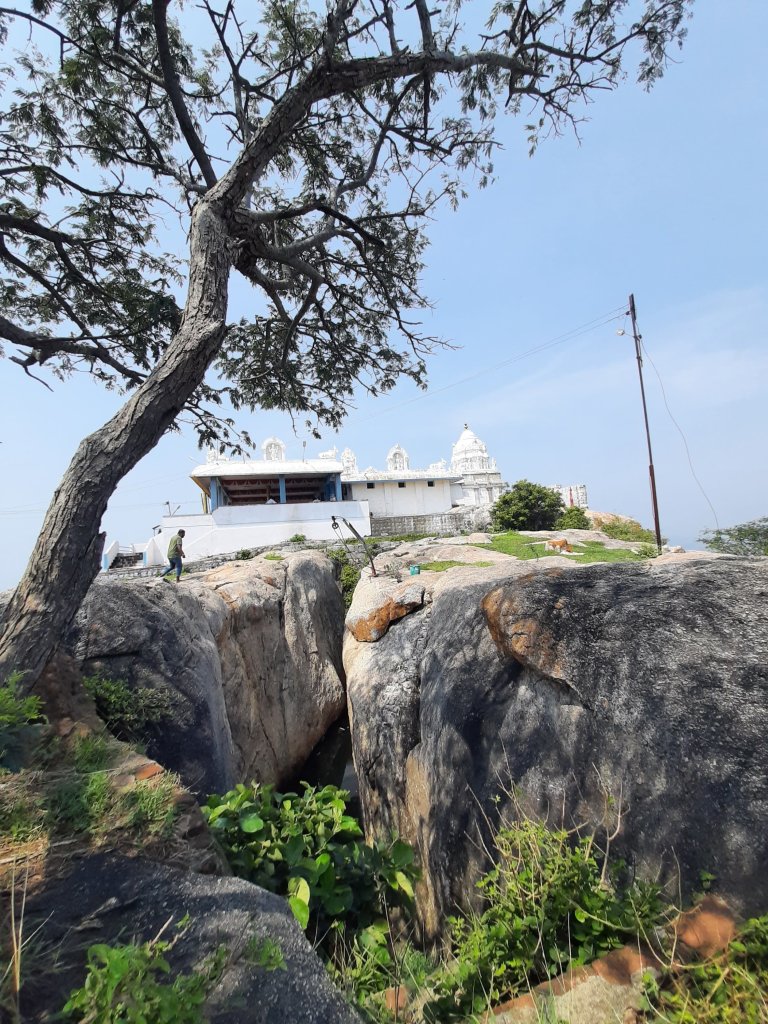
The view of the valley from there and the magical vibe of sitting by this pond of lilies could not let us go easily from there. My friend settled on the banks, with a book to read. Although the water was heavily littered with plastics, it was still a super calm spot to soak in some good energy. After spending a while, we then headed towards the temple, located on the peak of the hill, a short walk away. There was a panoramic 360 degrees view of Hosur and Krishnagiri from the temple, the green cover around, Krishnagiri dam and the Then Pennai river. The temple priest arrived much later at around 10.00.a.m. for the daily prayers.
Balakodandaraya swamy temple and the cleft for drawing water
Surprisingly, a small cleft in the rocky hill serves as a perennial source of potable water for temple use. The people who had gathered there by then, helped the priest in drawing water from this cleft and clean the temple premises before offering the day’s prayers. We sat there for a while and decided to head back to the base before the sun took over the skies and heated the rocks around. Overall, it was an incredibly beautiful place for a short trip from the city.
Other nearby places:
If you are looking at making it a full day trip, then you can explore the nearby places that include:
In my wish list to visit as many Hoysala temples as possible in this lifetime, this is the second documentation. I started this series with the temples of Belur and Halebidu, as these were the erstwhile capital cities of the Hoysala. I will move on from there.
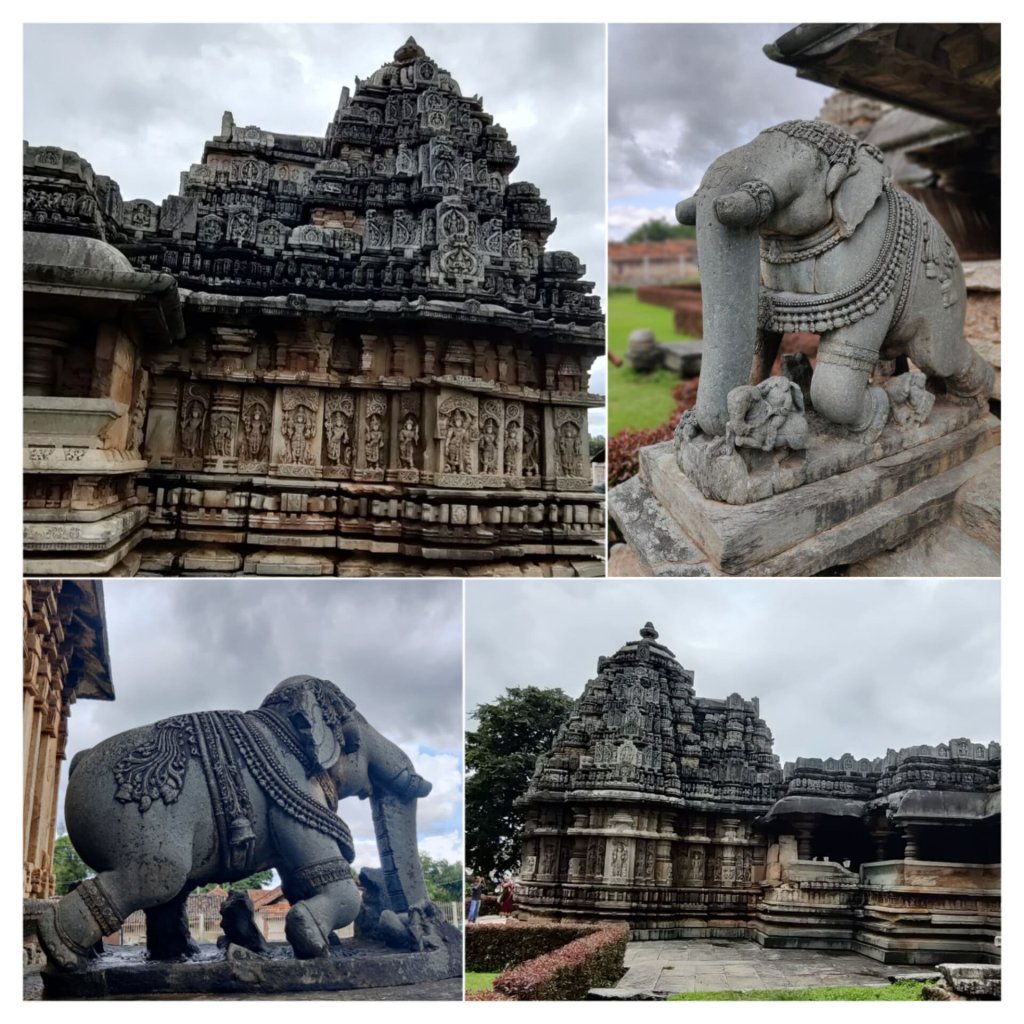
Belavadi is a quaint little village located approximately an hour away from the Hoysala capital town, Belur. The Veera Narayana swamy temple of Belavadi is one of those where the main idol of the presiding deity is still intact and regular prayers continue to be offered. The intricacy of the artwork on stone is very similar to that of the temples at Belur and Halebidu.
Images: Veeranarayanaswamy temple, Belavadi
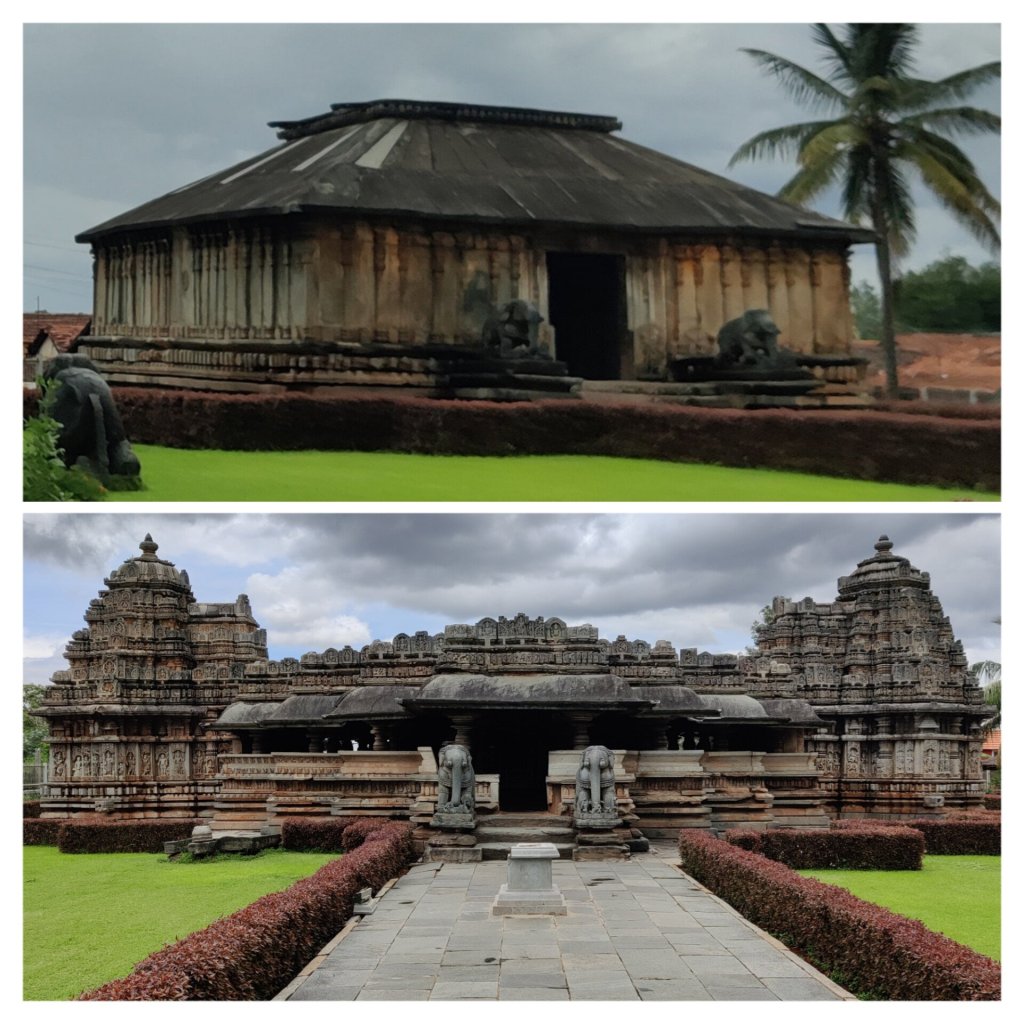
Top: Outer entrance gate to the temple
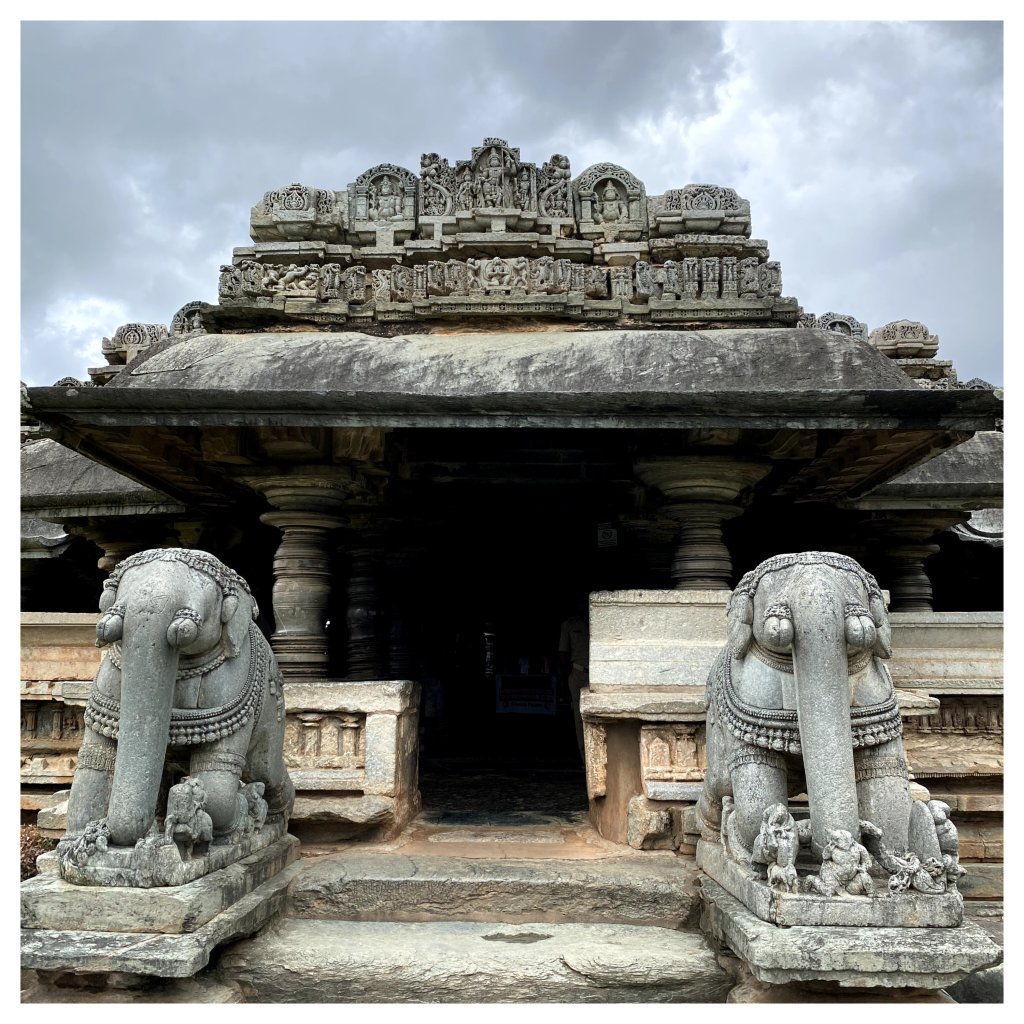
Below: Inner entrance to main shrine at Veeranarayanaswamy temple, Belavadi
Unlike the main Gopuram (temple tower) at Belur, the entrance gate at the Belavadi temple is small. There are two ornate statues of two elephants that greets you inside. The sculpture on the outer wall is simple and minimalistic. as you enter, you notice that the inner walls are plain. It is possible that these were stolen, vandalized, or lost over the course of time, only historians can tell me better.
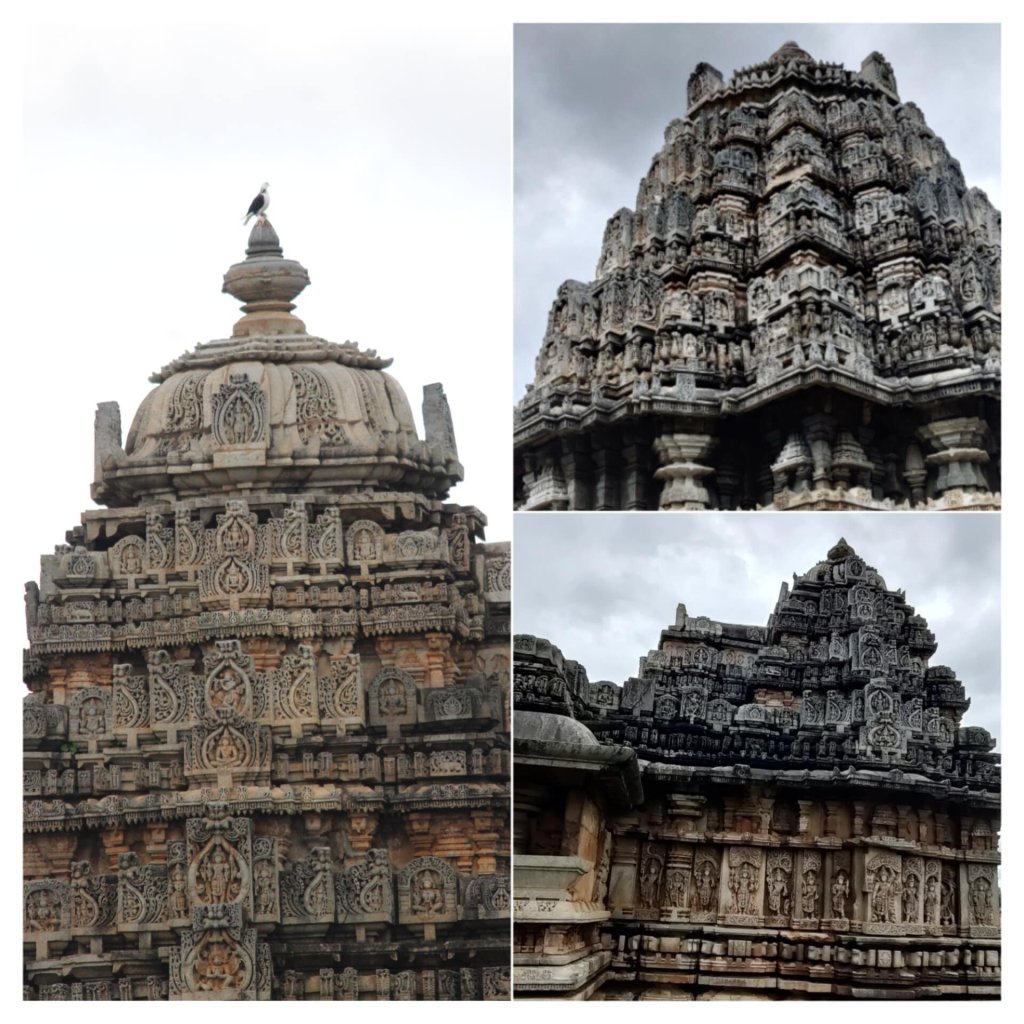
The sculptures on the exterior of Veeranarayana swamy temple, Belavadi
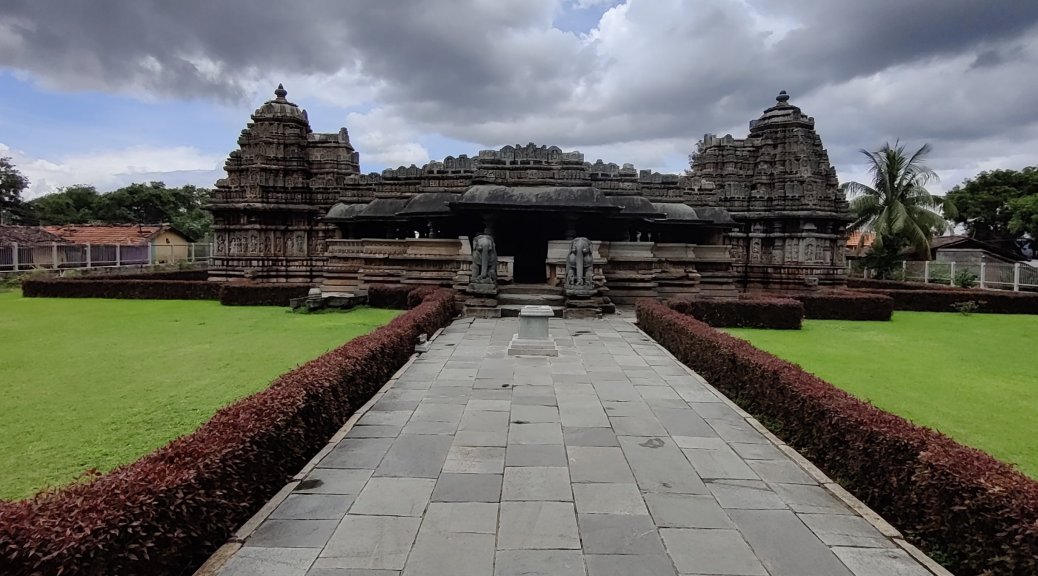
As you walk past this entrance gate, arch you pass the courtyard and are greeted again by a pair of standing elephant statues into the main temple that encompasses the shrines in the trikuta style of temple architecture. The three shrines inside houses idols of Lord Vishnu in three different forms. Huge lathe turned stone pillars and walls bearing fine and intricately carved figurines adorn the inner walls of the temple where photography is prohibited at the time of my visit (in July-2022).
The Trikuta temple towers at Veeranarayana swamy temple, Belavadi
The outer walls are equally gorgeous too with intrinsic stone carvings and embossings all over. Due to limited permissions for photography, my photo story here consists only of photos of the exterior of the temple, but more than sufficient to give an idea of this marvel.
The inner and the main entrance of Veeranarayana swamy temple, Belavadi
Also, a walk around the tiny hamlet of Belavadi is highly recommended. I loved the unique design of these traditional houses that emanated a vibe of an old world.
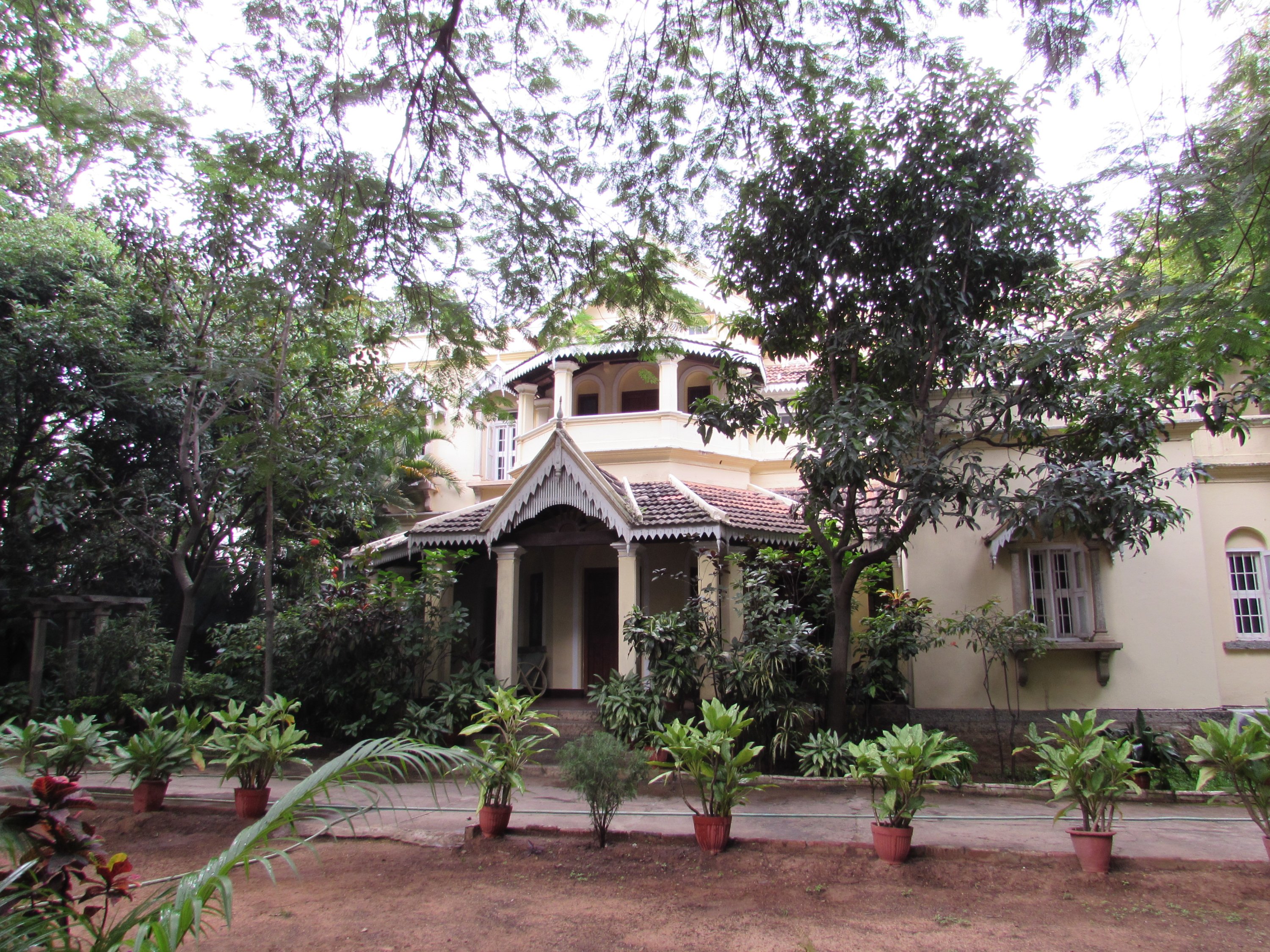
‘Uttarahalli’ translates to ‘Northern Village’ in Kannada. The irony is, it is located in the southern-most part of Bangalore. This is the current place of residence of my family and is also the last post in this series. This home seems like a perfect retirement plan for a family that seeks a little bit of nature in the midst of a bustling metropolitan city.
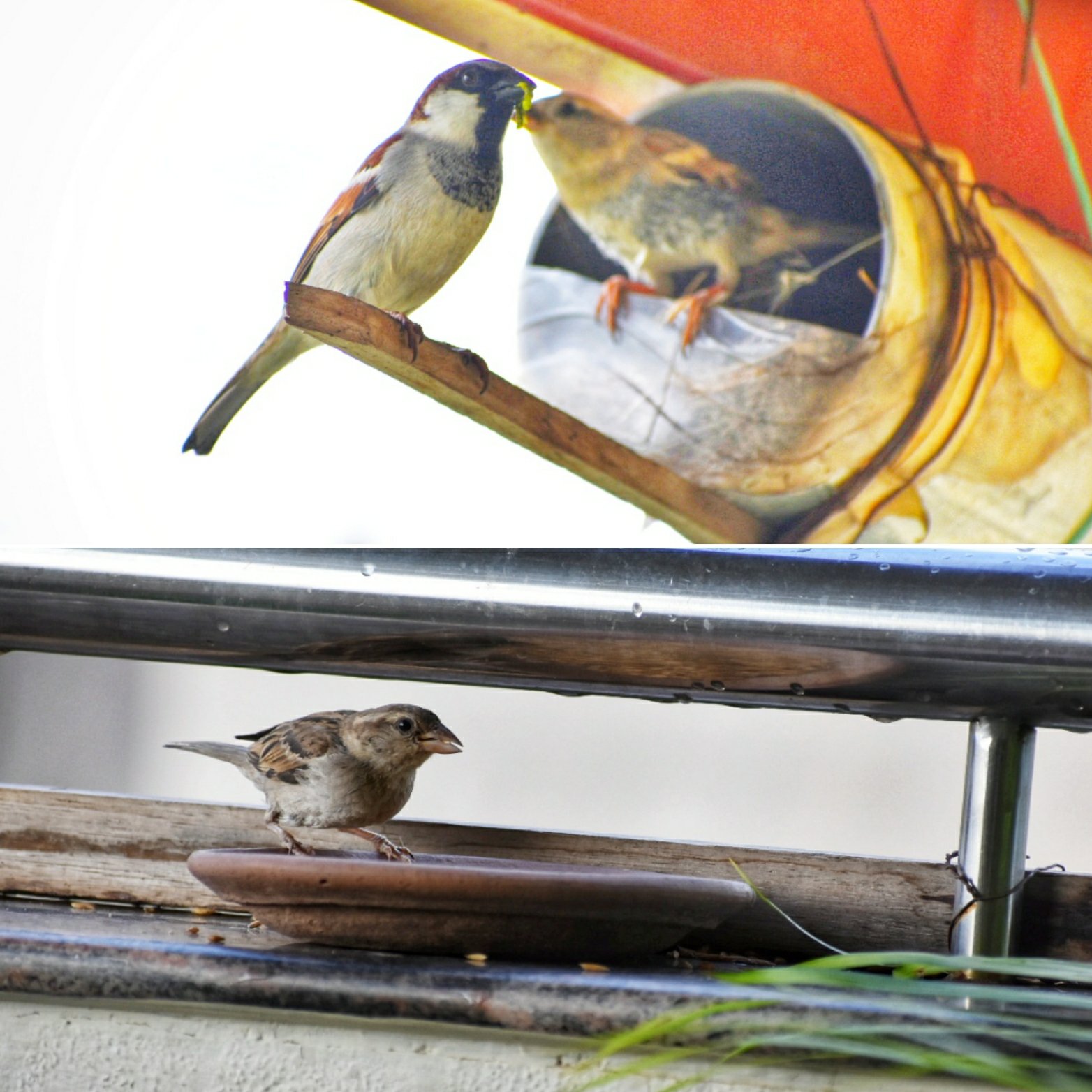
With very little vacant space available, my parents try to grow their own vegetables and fruits, welcome birds and squirrels to have meals with them and sip their ‘kaapi’ while watching the sun go down. These are some among many other things they do to keep themselves running through the day.
The sparrows in my portico
The area is soaked in rich history as well.. While the ‘Vasantha Vallabharaya swamy temple’ dates back to the Chola era, an adjacent cave is believed to be the place where Rishi Mandavya had meditated.
The Turahalli forest is a small patch of lung space nearby, that joggers, cyclists, conservationists and the realtors all seem to have an eye on!
The latest addition to the landmarks is ISKCON’s ‘Krishna Leela theme park’ located on the Vaikunta hill. The sunrises and rainbows on cloudy days are mesmerizing, adding a backdrop to the view of this temple from my doorstep.
Annual fair of Vasanthavallabha temple, Vasanthapura, Bangalore
This is the last post of this series: “I Belong to Everywhere“. I hope you all have enjoyed time travelling with me hopping on- and off from Bangalore to Kodagu. Which place did you like the most? What place would you want to go after reading my posts? What more do you want to know about, from these places?
In the rapidly expanding Bengaluru city, Malleswaram and Chamarajpet are like two lungs that breathe out air of cultural relevance and nostalgia of Old Bengaluru. Malleswaram in the North and Chamarajpet in the South have always stood equal in their heritage of what the real Bangalore once represented. Although one might disagree with my personal viewpoint, Malleswaram represents the face of Bengaluru that boasts of intellects in the science and academics fields whereas Chamarajpet represents a city that is filled with scholars from the creatives like literature, art and commerce. In the proximity to premium research institutes like IISC, ISRO, C.V. Raman institute, the Wood institute and organizations like BEL, HMT, Mysore lamps, Sandal Soap factory etc. Malleswaram was the closest residential area. Meanwhile, Chamarajpet was an extension of the Pete area and is also the home to the Karnataka Sahitya Parishad. So, those in trade, literary luminaries and Pandits naturally moved in here. Anyway, my intention is not to explain those details and get into a debate, but to come to the point on how and why I believe that I belong to Malleswaram. (More on Chamarajpet in the next post)
Kaadu Malleshwara temple at Malleswaram
Talking about Malleswaram, where do I start from? 18th cross, maybe? I often entered into the premises of Sankey tank from Sadashivanagar and I exited from the other end to Malleswaram. For the first two years of living in Sadashivanagar, I played Basketball. I was trained at the ‘Beagles Basketball Club’ and envisioned to make it big in this sport over the coming years (Destiny had different plans and that’s for another story). Mind you, I had been an ardent follower of Kobe Bryant and the Lakers since school!
Finishing the day’s training usually meant savoring a honey cake for Rs.7 and a biscuit sandwich ice-cream for Rs.5 at the lyengar’s bakery at 16th cross. The aroma of filter coffee in the darshini hotels and a walk in the old Malleswaram market are sensory experiences that cannot be taken away from me. The CTR dosey is an inseparable part for my taste buds (I take the metro train from my current residence in South Bengaluru to Malleswaram even to date, just to eat CTR dosa).
Villa Pottipatti- a heritage hotel in Malleswaram, Bangalore
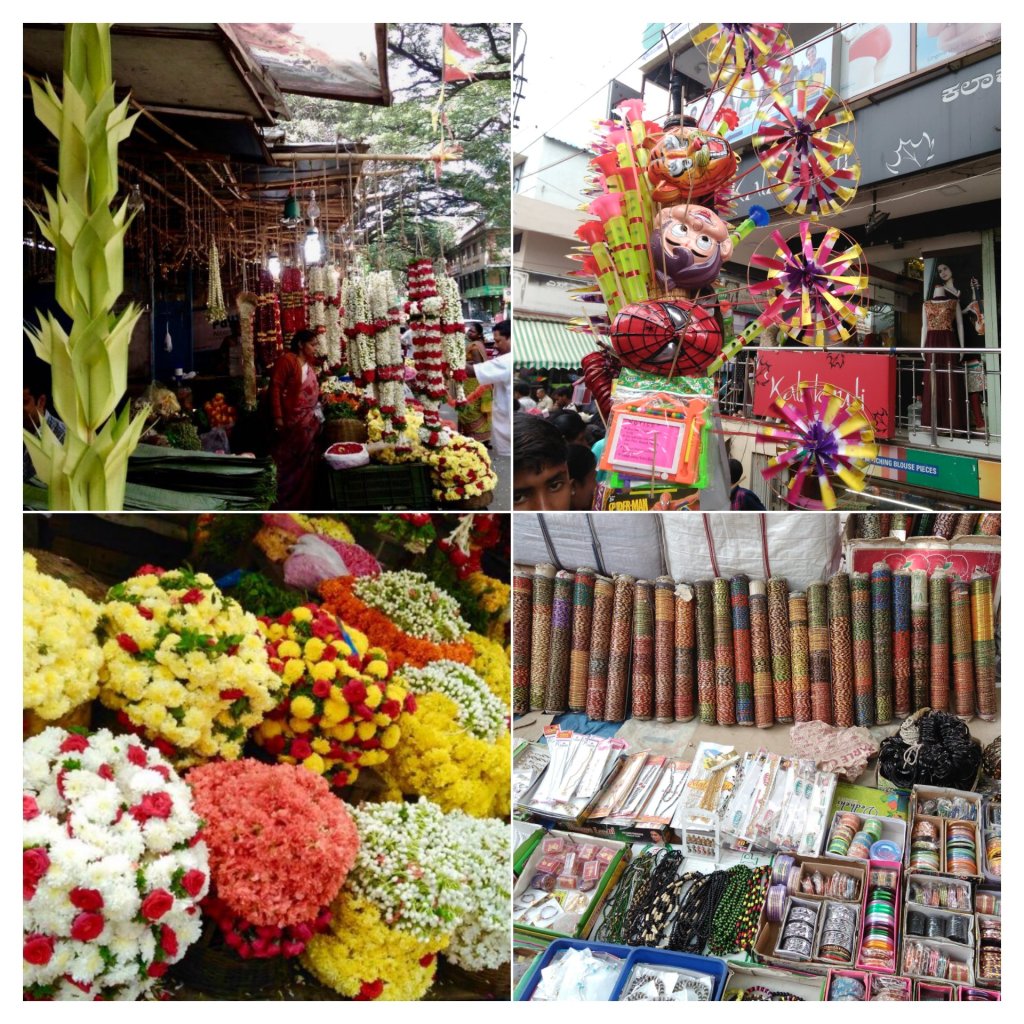
The atmosphere of festivities brought in by scores of vendors on the 8th cross road were the days that were much awaited by me to see what each festival was about and what the key items associated with a specific festival were (decorations, food and other knick-knacks). I had even made up an entire itinerary on my own and applied for a part time job of a tour guide who wanted to walk the interested people through the lanes of this heritage area.
Malleswaram market
Since I had only then moved into Bangalore after finishing my schooling in Madikeri, for me Malleswaram served as an open school to open my mind to cultures that I was totally unaware until then. The cuisine, the festivals, the spoken Kannada, the traditions and the mindset of people in general, everything seemed new to me in Bangalore from what I had been exposed to until then. I was quick to adopt and adapt and this is where I became a true blue Bangalorean.
With the premium research institutes of India being around, Malleswaram sort of sparked my urge to keep learning/exploring something constantly and inclined me towards pursuing research in general.
The original plan for this short family outing was to make an early morning visit to Sanjeevaraya Swamy temple in Channapatna Taluk of Ramanagara district and return. But, since my workplace is located along the same route, I expressed my disinterest in traveling that way. I pitched in the idea to have a change of route at least for one-way. Hence, I added a couple of other landmarks, picked up an offbeat village road and created a circuit with aid from google maps.
For those of you who are not familiar with the geography of Karnataka, Ramanagara is popularly known for its Sholay hills that was featured as the village- ‘Ramgarh’ in the Bollywood movie Sholay. Channapatna is popular for its cottage industries of wooden toys. I am not going to write about any of these places, the search engines are already flooded enough! I am going to take you around some lesser known places in Channapatna, for a half a day’s trip from Bengaluru.
We set out on a Saturday morning and decided to have our breakfast on the way. Sri.Renukamba tatte idly (translates to ‘Plate idli’ in Kannada) needs no introduction for the Bengalureans. So, after a filling plate of tatte idly at Bidadi, we proceeded towards our intended destination for the day. To reach there, we had to pass through Kengal, a village popular for yet another Hanuman temple. Moving ahead from there along a small deviation, we arrived at our first major destination: Sanjeevaraya Swamy temple at Devarahosahalli village. This is a small stone structure dedicated to Lord Hanuman and dates back to the Vijayanagar era. The deity is believed to be powerful and hence, we were there to offer or prayers following the recommendations of some well-wishers.
After spending some time there, we continued onward to our next destination, a little cave temple located atop of a hill. The drive, the scenery, the canopy of the majestic trees along the highway was a pleasant one. We stopped by to do some bird watching at the Neelasandra lake as well. We could see Pelicans flocking in large numbers.
Our next major stop came as a rather surprise to us. Gavi Ranganatha Swamy temple was a random destination included in our day based on an internet search result. The drive, the location of the temple, the valley, the village view from the temple porch and the overall scenery was just so stunning and unexpected. There was just no one else in the temple apart from our family and a few local kids playing in the hill, atop which this temple is located. You can watch the video of our visit to Gavi Ranganatha Swamy temple below:
Drive to Gavirangana betta
By this time, the sun was already up and beaming bright. So, we decided to drive back, of course through a different route. We descended the Gavi Ranganatha Swamy hill and took the route that connected to Kanakapura. On the way, we stopped at this beautiful location where the highway passes through green farms on one side, a large lake on the other side and the entire scenery was being overlooked by the temple hill.
Vittalenahalli highway and lake
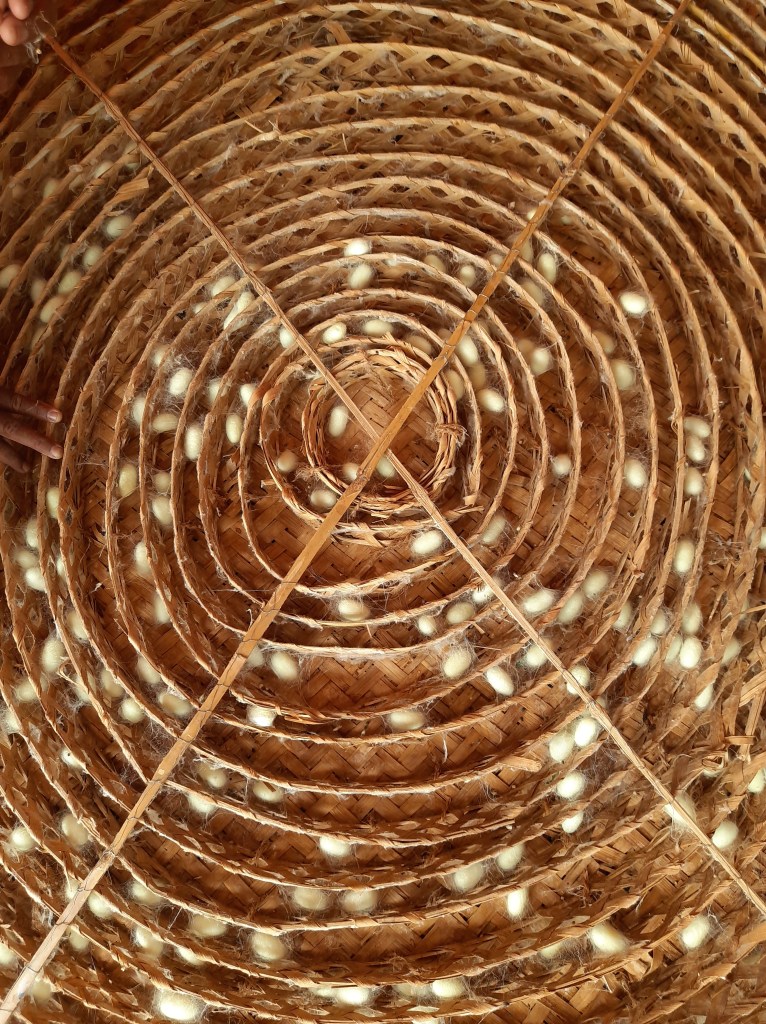
Our drive from there continued through large stretches of rocky hillocks, mango orchards, paddy fields, coconut groves and mulberry farms. Ramanagara is also known for sericulture. Several households in the villages here are involved in silkworm rearing. As we passed through, we noticed that families were sitting out in the verandahs of their traditional houses and collecting the fully grown cocoons from the bamboo trays. We stopped by and walked over to one of the houses on our way and learnt a thing or two about sericulture from them.
Silk Cocoon trays
In a short while, we reached the Kanakapura main road where we had our lunch. Well, it was a late evening lunch before continuing towards home and thus ending a quick trip to the Bengaluru outskirts.












 The Lost Lander