Tag Archives: India

Exploring Ramnami Community: A Journey into Tradition

Over recent years, my travels across India ignited my fascination with how tattoos hold cultural significance among different Indian communities. In many areas, tattoos serve as symbols tied to tribal customs. One community that particularly intrigued me was the Ramnami of Central India. When I shared this with a friend, she too showed interest in delving deeper into this culture. We eventually connected with a community member who graciously allowed us to visit his village, even inviting us to stay with his family. We happily arranged our visit.

We initially flew from Bangalore to Raipur. From there, we caught a local bus to the GPM district. Subsequently, we explored GPM by taxi, which dropped us off at Chandlidih, the Ramnami village. It was raining heavily as we navigated the damaged, flooded roads and finally arrived at the location indicated by Google Maps. We carried our backpacks while crossing a small reservoir wall built over a stream swollen by the monsoon. On the other side was our host’s house. By the time we reached the front yard of the Ramnami family’s modest home, we were covered in mud from puddles stretching from the parking lot to the house.

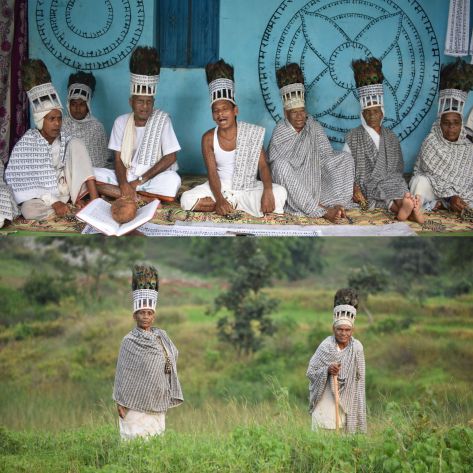
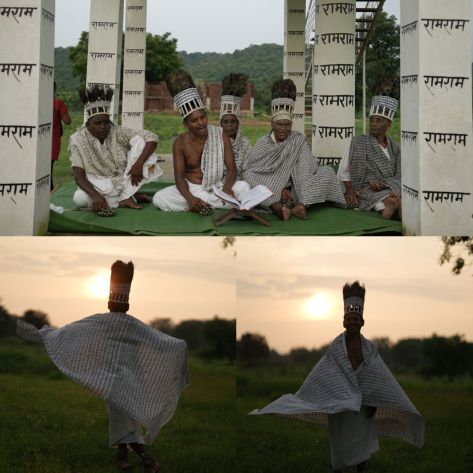
Portraits of the Ramnamis

Our host welcomed us upon arrival and directed us to the guest room to drop off our luggage. The room, an extension of the main house, was built with cob and wood, offering basic amenities such as two beds for resting and a light bulb for illumination at night. We relied on mobile internet throughout our stay. According to tradition, anyone visiting from outside must bathe and cleanse themselves before entering a Ramnami home. The next experience was something my friend and I will both remember for a long time: the bathroom!

It was a simple enclosure with two and a half walls and a roof. Half of the third wall was intentionally built to shoulder height, making it easy to bring in water from outside either with buckets or through a gravity pipe connected to a nearby perennial stream that filled a concrete tank inside the bathroom. The fourth side was left open for easy access, featuring a modest saree stitched into a sliding blind that could be moved to open or close. There was no running water; hot water had to be fetched from an outdoor firewood oven, or one had to make do with the chilly water stored in the tank inside. Our city dwelling bodies were used to a sturdy lockable door for bathing with unlimited hot water from a tap or shower. While the cold-water setup was tolerable for my outdoor spirit, I could not imagine standing unclothed inside a doorless bathroom.

The Ramnami Community

If I were hiking, I could go days without bathing, but here, it was crucial to start our trip by experiencing the Ramnami culture. Hesitantly, I took off my clothes and poured a couple of mugs of water, just as I heard giggles outside. I paused to check if I was imagining things or if it was real. Soon, I saw the shadows of a few kids moving behind the curtain. As I began applying soap, I saw two toddler heads peeking in from the sides of the curtain, giggling again. I panicked, yelled my friend’s name, and hoped she would come to help. She got scared and ran over to see what was wrong. I told her about the curious kids, and she decided to stay at the bathroom entrance until I finished. Later, I returned the favor.

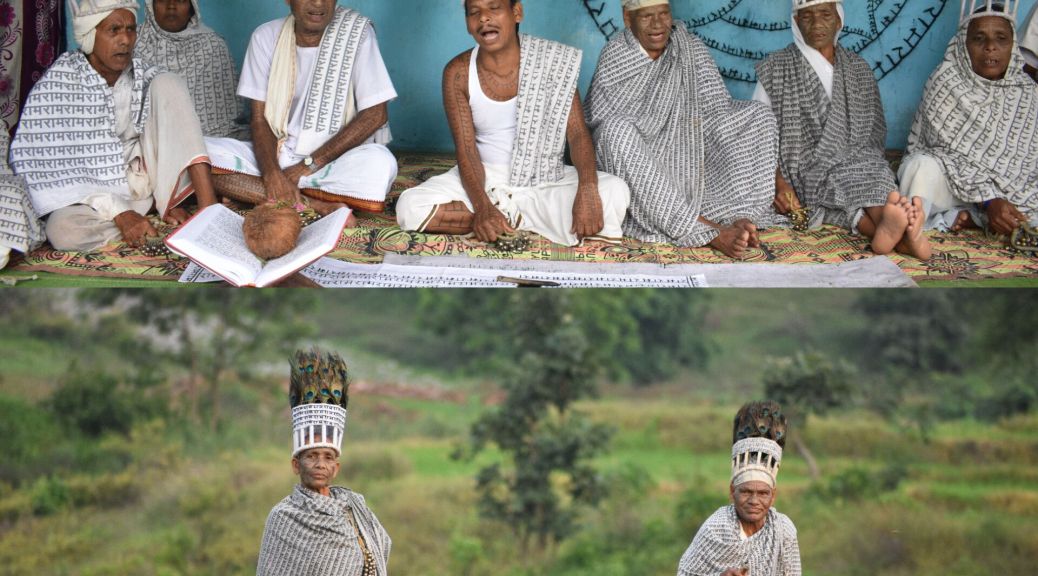
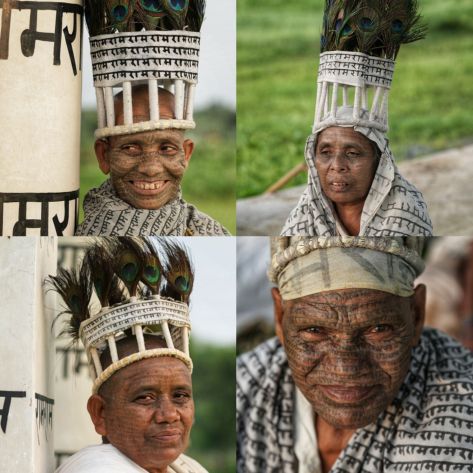
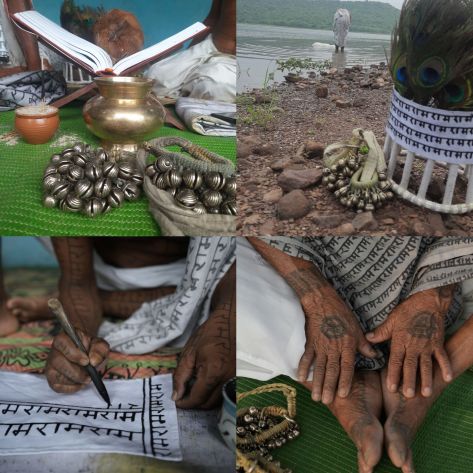
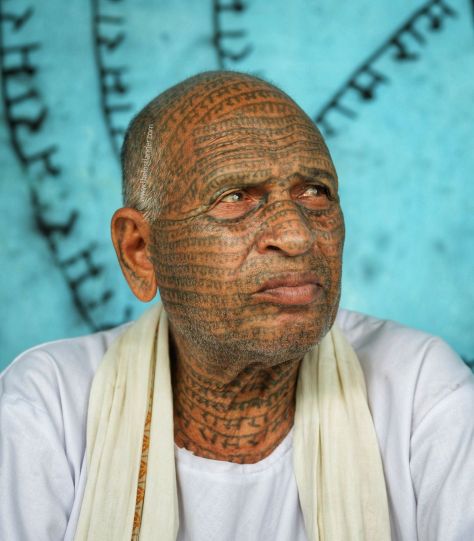
After changing into fresh clothes, my friend and I headed to the porch of their house, where the entire family had been singing hymns of Lord Ram since sunrise, even before we arrived. We greeted them with a coconut and some fresh flowers, which we were asked to bring as part of their tradition of introducing a new guest to the family. Most adults had tattoos reading ‘Ram-Ram’ in Hindi covering their bodies. Some had full-body tattoos, while others had only face, arm, or forehead patches. They all wore pure white clothes handwritten with ‘Ram-Ram’ patterns. Their Dhotis, shawls, and headgear featured the same ‘Ram’ writing in a consistent style. The handmade headgear, unique to the Ramnami, was decorated with peacock feathers. All participants in the Ram bhajan carried strings of small jingling metal bells, each stamped with ‘Ram’ during casting.

We introduced ourselves and joined their Bhajan until lunch was served. I savored a simple Satvik meal made with ingredients from their farm. The faint aroma of firewood used in cooking enhanced the local flavors with a divine touch.

Daily utility items and life of the Ramnamis

We traveled without a fixed schedule, aiming for a slow, immersive experience of this community’s daily life. After lunch, my friend and I joined members singing Ram Bhajans on the porch to understand what defines the Ramnami. We were transported back to the 1890s to learn about their history. Like the rest of India at that time, casteism barred lower castes from entering shared places of worship. Some rebelled by declaring their bodies as temples dedicated to Ram, tattooing the Ram-Nam (Lord’s Name) with a locally made ink derived from herbs. They formed the Ramnami community. A senior member leads events, whether a baby’s birth or a funeral. Their greetings and farewells are solely marked by singing Ram-Bhajans, even during major life events like marriages. They do not conduct any Brahminical rituals, poojas, or havans as part of their practices.

A portrait of a Ramnami community member

With the rain gods commanding the skies and earth, we saw them prepare their shawls, made from woven, stitched white cloth they crafted themselves. These shawls were then covered with Ram-Nam. After carefully observing them write with their native ink for a while, we joined in to write on some of the other pieces. Once finished, they set them aside to dry, initiating a series of procedures to prevent the white cloth from bleeding black.

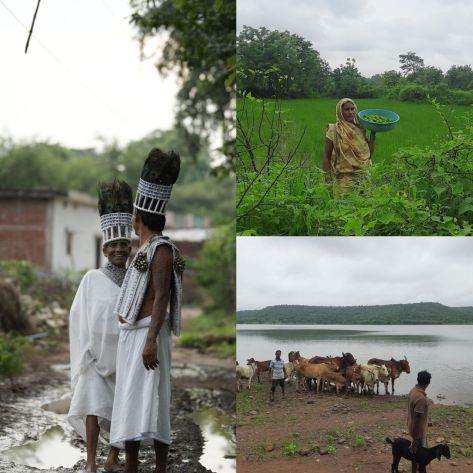
A walk through Ramnami village

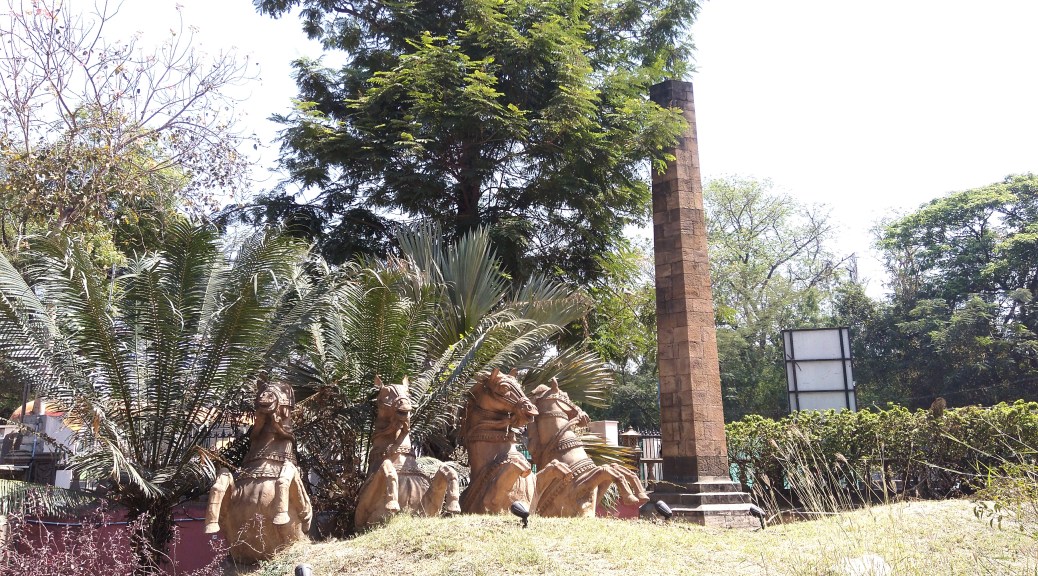
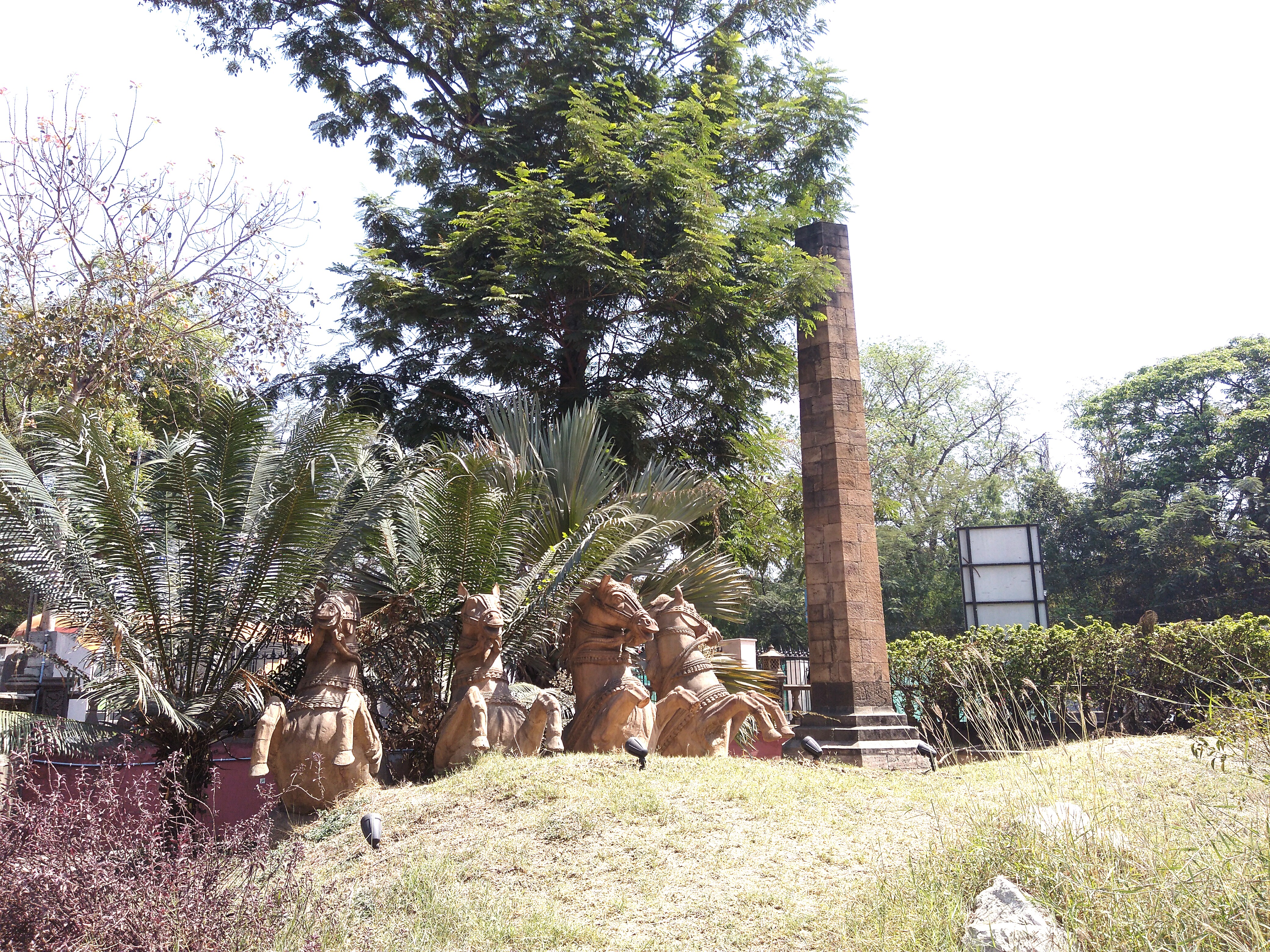
When the rains stopped, our host guided us through their village. We crossed a stream, carefully walked along the paddy field edges, and eventually made our way along muddy, winding roads. We met several members of the Ramnami community, mostly relatives or neighbors from the same village. We greeted women working in the fields and enjoyed coffee at welcoming houses. Later, we visited JayaStambh, a small monument commemorating the annual Ramnami mela held here a few years prior. Some older community members joined us there at sunset, singing Ram bhajans as a tribute to the setting sun. Afterwards, we visited a small reservoir across the lake. The Ram Bhajans, sung warmly around a bonfire, echoed over the calm water, with the sky changing colors dramatically until nightfall.

The evening prayers at the Ramnami Jayastambh

We walked home carefully through the night darkness to avoid slipping on the slush. After a satisfying dinner, we drifted into a peaceful, childlike sleep, concluding a long and exhausting day.

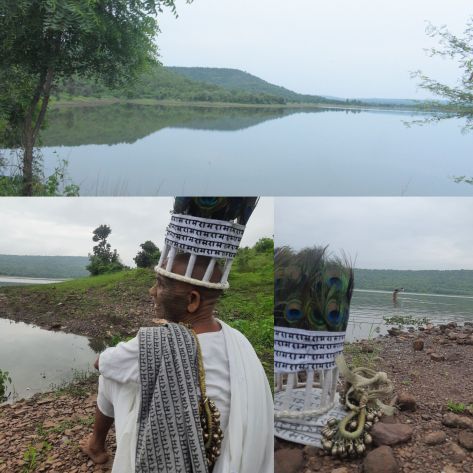
The following morning, we rose early to witness a normal day in the life of the Ramnami. We went to the reservoir with the elder members of our host family, who offered prayers to the sun god and recited blessings before their water dip. After changing into clean clothes, they went back home to continue household tasks such as cleaning, preparing food, and having breakfast.

The morning at the Chandlidih reservoir

Spending time at a Ramnami home offered a genuine glimpse into a culture that is remarkably different from the rest of India. The younger Ramnami generation might not be eager to follow the traditional paths laid out by their elders. However, this community exemplifies how faith in God can help us overcome great challenges. They defied the odds, forging their path, which they believe will lead them to a divine connection.

After a simple breakfast and Ram Bhajans, we packed our bags for our next destination in Chhattisgarh. Our host assisted us with pillion rides on two motorbikes, skimming over the slushy village roads before reaching the highway, where we caught a local bus to continue our journey.

Top Things to Do in Spiti Valley in 2025

Things to Do in Spiti Valley: Adventure Awaits in the Himalayas

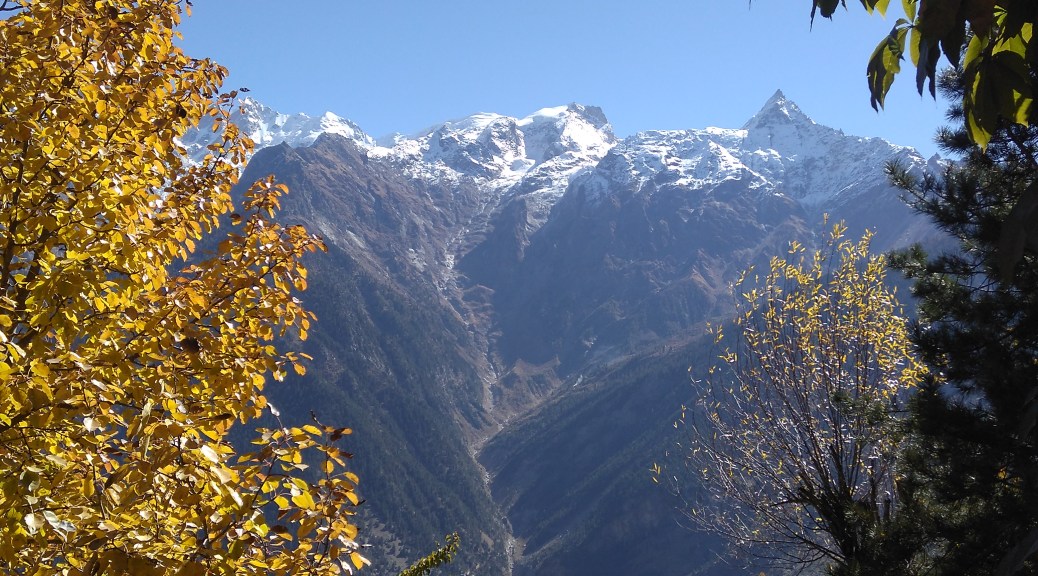
Have you ever dreamed of visiting a place filled with towering mountains, tranquil villages, and clear blue skies? Spiti Valley is an enchanting destination in Himachal Pradesh. Visitors can discover a variety of wondrous things to do in Spiti Valley, such as exploring monasteries, searching for fossils, and stargazing. A thrilling bike trip is one of the best ways to uncover this magnificent region, unveiling breathtaking vistas at every turn. Alternatively, if you prefer a more relaxed experience, you can choose a Spiti Valley tour package for a smooth and organised journey. Spiti welcomes every traveller with open arms and unforgettable experiences.

Best Things to Do in Spiti Valley

Here, you will find some of the best activities in to enjoy on a Spiti Valley bike trip that create unforgettable travel memories. From serene monasteries to thrilling adventures, everyone will find something to cherish in this destination.

1. Visit Key Monastery

Visiting the ancient Key Monastery, named Kye Gompa, ranks among the top things to do in Spiti Valley. Proudly resting on a hilltop for 1000 years, this ancient Tibetan Buddhist monastery appears like it is a carving of a fairy tale. The monastery consists of peaceful prayer halls where visitors can meet friendly monks and even choose to stay at night. The panorama from the high location becomes truly exceptional during sunrise. A visit to this venue offers educational experiences, and visitors can find both peace and photography opportunities.

2. Explore Chandratal Lake

Among all things to do in Spiti Valley, camping next to Chandratal Lake ranks as one of the most ethereal activities. Under the moonlit sky, the shimmering water creates the illusion of a mirror. During the daytime, the lake exhibits a visible transition from blue to green. The complete surround of snowy peaks and total silence transforms this place into the ultimate spot for observing stars. The destination is accessible after a brief walking trek from the parking area. Stay overnight in camps near the lake for a once-in-a-lifetime experience that feels nothing less than magical.

3. Experience Life in Kaza

Kaza stands as the leading town, which serves as the starting point for every adventure in Spiti Valley. It’s a blend of old-world charm and modern comforts. Visitors can roam through Kaza’s markets, where they can try momos and thukpa alongside opportunities to interact with locals and even rent bikes. Warm food and lovely views await visitors at The Himalayan Café and Sol Café. People planning a road trip or needing basic supplies should make Kaza their first stop because it provides all the necessities.

4. Fossil Hunting in Langza

Fossil hunting in Langza stands as one of the most exciting things to do in Spiti Valley for those who love mysteries. Millions of years ago, this area was under the sea. Now, the mountains hide ancient marine fossils like ammonites and shells. Hire a local guide who will accompany you on hill walks and help you to find genuine fossils sticking out from the rock surfaces. You can choose to purchase ancient fossils from residents, which serve as unique souvenir options.

5. See the Mummy at Gue Village

One of the most unique things to do in Spiti Valley is visiting Gue Village, where you’ll find a real 500-year-old mummy! You can witness a genuine monk mummy that naturally protects itself and is displayed in an enclosed glass case. Some believe that meditation enabled the monk to become self-mummified. The journey to Gue village provides beautiful natural scenery, and the place remains less crowded, making it a hidden destination. This mystical and spiritual site reveals a distinct side of Spiti that stays in your memory forever.

6. Trek to Dhankar Lake

Trekking to Dhankar Lake stands as the supreme peaceful outdoor experience within Spiti Valley. Starting at Dhankar Monastery, you can reach the destination in 1.5 hours by trekking. The lake exists deep within mountain territory, untouched by humans. Very few tourists visit these locations, which means you could become one with the surroundings. You can find the entire area to be an ideal location for a picnic because it allows quiet contemplation of nature. When visiting this site, remember to bring water, snacks, and wear comfortable footwear because the terrain contains stone pathways.

7. Spot Wildlife in Kibber

Looking for adventurous things to do in Spiti Valley? Try spotting snow leopards in Kibber Wildlife Sanctuary. Kibber maintains its position as the world’s highest permanently settled village and simultaneously serves as a habitat for ibex, blue sheep, and Himalayan wolves. One can observe snow leopards during winter months, and summer offers suitable conditions for hiking. Local guides organise wildlife tours, and even if you don’t spot a leopard, the mountain views and fresh air are worth it.

8. Take a Thrilling Bike Trip

A bike trip rates as one of the most exhilarating things to do in Spiti Valley. Riding through twisting paths while crossing rivers and visiting traditional settlements under the protective gaze of mountains becomes an unforgettable experience. You can stop at monasteries, lakes, and local cafes during your journey.  Riding on two wheels will create a memory you will never forget.

Conclusion

This region of Spiti Valley holds various stunning surprises, along with tranquillity and remarkable scenic views. Whether you are riding through its high mountain roads, walking through quiet villages, or sitting under a sky full of stars, every moment here feels special. Numerous things to do in Spiti Valley welcome all types of travellers seeking adventure, experiencing natural beauty, local culture, and enjoying tranquillity. It’s a place where time slows down, and your heart feels full. So pack your bags, take the road less travelled, and let Spiti Valley fill your heart with unforgettable memories.

Frequently Asked Questions

1.     What is Spiti Valley famous for?

Spiti Valley is famous for its natural surroundings, ancient monasteries, and soaring peaks.

2.     How many days are enough for Spiti Valley?

A trip of 5 to 7 days is ideal for exploring Spiti Valley, which includes acclimatisation, exploration, and travel across challenging terrain.

3.     Is oxygen low in Spiti Valley?

Yes, Spiti Valley has low oxygen levels because it is located at a height of 4,270 meters (14,010 ft).

4.     Can we see the Milky Way in Spiti Valley?

Yes, the Milky Way is visible to the naked eye throughout Spiti Valley from September to February.

A Weekend Adventure: Hiking to Ankushagiri Fort

On yet another weekend, we were off on yet another hiking expedition. This time, we went to a lesser-known trail on Hosur-Krishnagiri road. The initial plan was to hike to ‘Aiyur Sami Lake’, a day hike organized by the Eco-tourism wing of the Tamil-Nadu tourism department. However, their site was not accepting registrations due to unknown reasons, and hence, we decided to randomly pick a hill around the region on Google Maps and hike it up. That’s when we came across the Ankushagiri fort.

Following the route indicated on Google Maps, we arrived at the base of the start point of the ascent to Ankushagiri. There is a Perumal temple and, hence, a proper space for vehicle parking. Since we arrived on a Saturday morning in the winter months, some pilgrims had already arrived to worship the chief deity here. However, we skipped the temple visit and began our hike toward the fort that was located (once upon a time) on the hilltop.

Ankushagiri Fort and Perumal Temple at Tamil Nadu
The ruins of the ancient temple at the base of Ankushagiri Hike

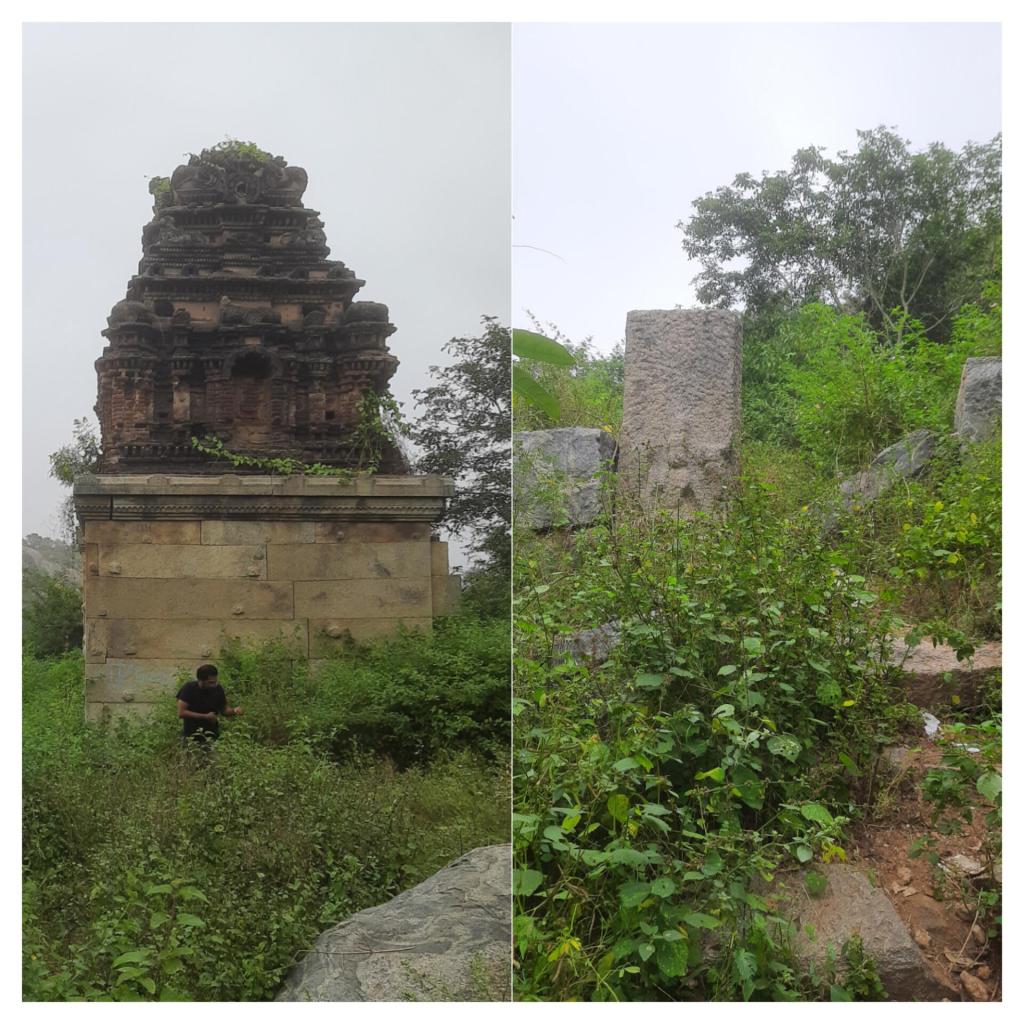
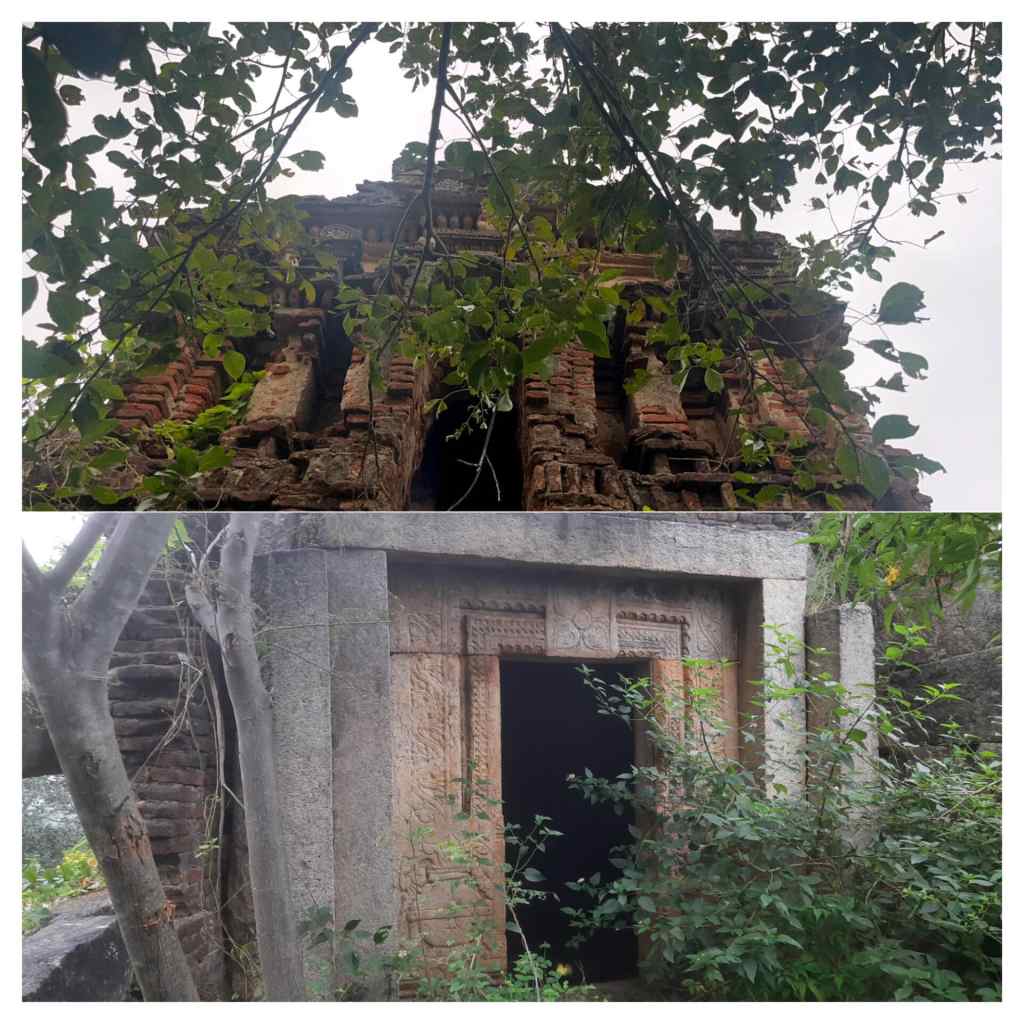
At the beginning of the hike route, there is an ancient structure, now in a dilapidated condition. Today, the Sanctorum lay empty with wild bushes and creepers taking over what once must have been a grand temple. The motifs on the walls of the two adjacent temple structures indicated both Perumal and Shiva.

Ankushagiri Fort and Perumal Temple at Tamil Nadu
The ruins of the ancient temple at the base of Ankushagiri Hike

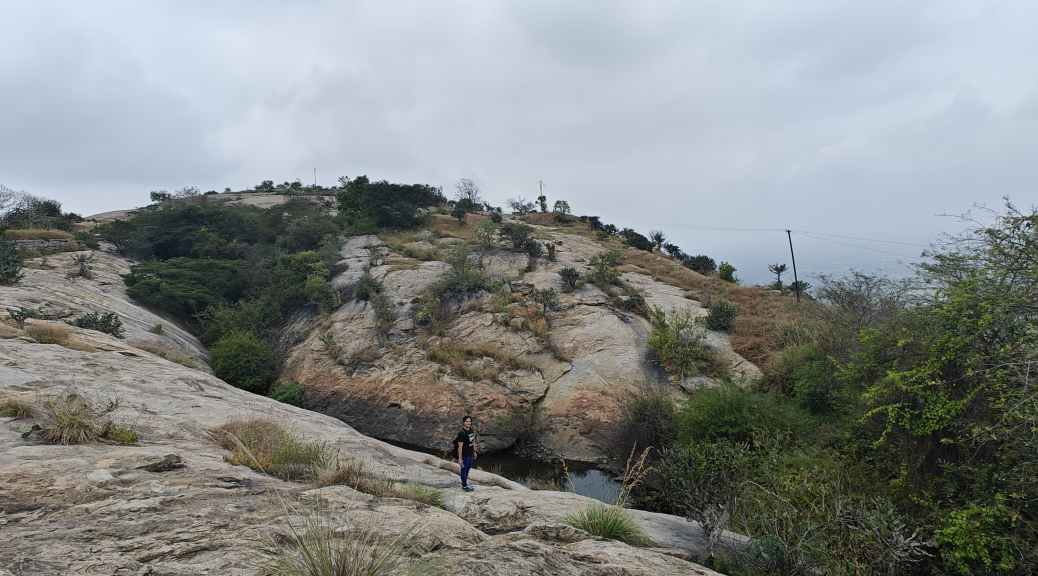
We went ahead from there and stopped after a brief walk. We were confused about the correct trail which seemed to split at a point from where either of them needed some more wear. We casually picked a path and continued to walk on the trail where the thorny bushes then opened to a rocky terrain. The rock looked interesting with varying patterns all over.

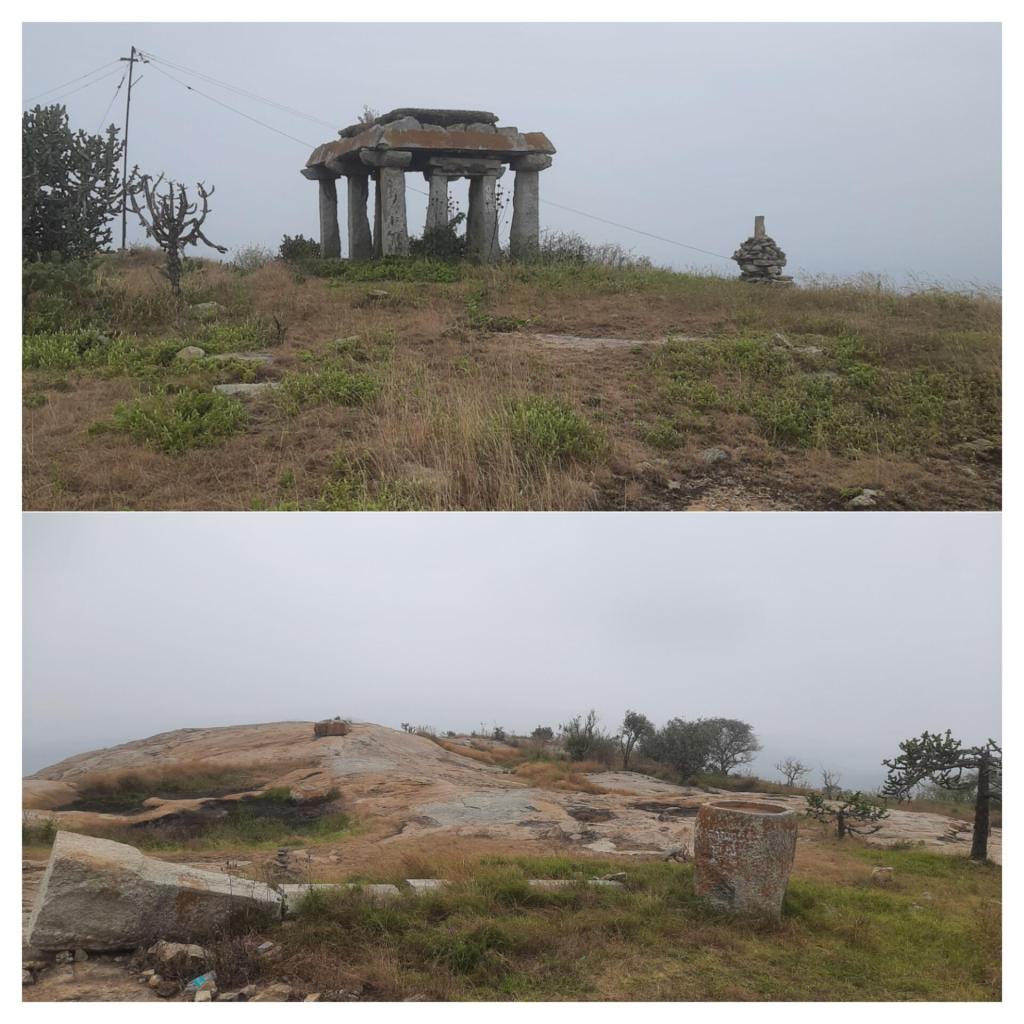
At the top, there were massive cacti plants dotting the area around an abandoned ancient temple structure. Only the pillars remained with the tall Garuda stambha lying down on the side and a stoneware that appeared to be an urn or a waterpot. Some previous visitors to this place had written ‘Someshwara Swamy Temple’ on the stoneware pot for our reference. We rested beside the temple on the large open rock bed overlooking the landscape. The gentle wind caressed our faces while we watched the hills appear one by one at a distance amid the clearing fog.

Ankushagiri Fort and Perumal Temple at Tamil Nadu
The ruins of Someshwara Swamy temple at the peak of Ankushagiri fort

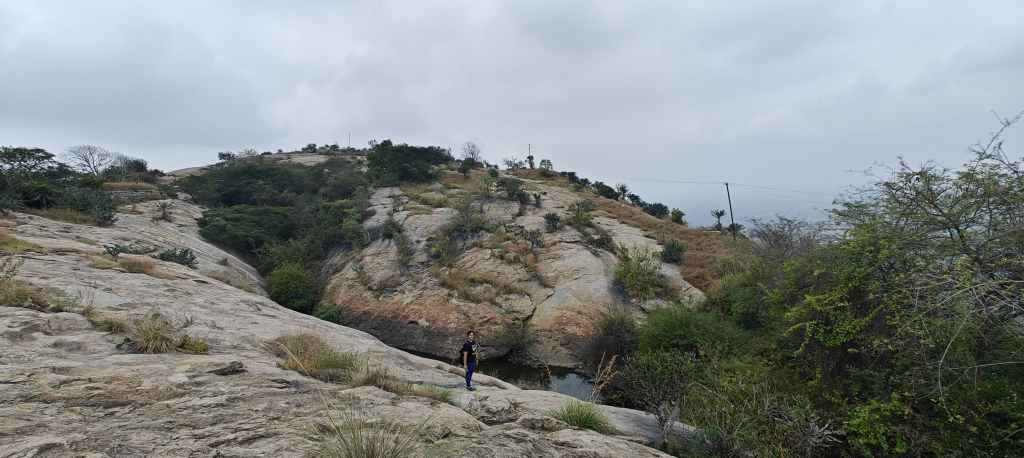
After relaxing for a while and munching on some fruits and nuts that we had carried with us, we proceeded toward the next part of the hill. The trail was beautiful with a rocky gorge on one side and huge cacti lining the path on the other. There, we arrived at a single electric pole that stood in the middle of a heap of ruins of what appeared to be an old fort. Although a circular marking can still be seen to date, only a few large pillars, a few hero-stones like inscriptions, and a couple of kolam designs engraved on the floor were all that existed for us to decipher what might have been the real grandeur, expanse and the purpose of the structure there. Almost little to no history is available to us about who or how this place had served.

Ankushagiri Fort and Perumal Temple at Tamil Nadu
Ankushagiri Hike

Anyway, it was a very interesting outing for us to explore a place so lost in an area where we were the only humans in kilometers around us. We spent ample time there before descending back to the base. We photographed several other patterns on the rocks before arriving at the same bushy junction where we had chosen to take the random path for our ascent.

Upon our return, we paid a quick visit to the Perumal temple before heading back to the city.

Are you rich?

You know what rich people do?

They make their money earn for them. A series of wise and sensible investments in form of real estate, development of existing real estate, deposits, shareholdings in companies, etc. People who were born with money or born rich enough are made known that it takes an effort to stay rich. Rich people have a strong enough financial backup if things go awry. It’s okay to lose a little money in the name of learning because they can afford not to repeat it.

What do people who become rich in a short duration do?

Spend their money on things and experiences they might not have had previously. They spend it like water without a thought for saving up for contingency, because they are blinded by the glitz and glamour the short fortune is showing them. They become used to the artificial sense of being rich and try to fit among the actually rich people, regardless of their personal financial background. So one fine day, when the income stops or rather their luxuries surpass their income, hell breaks loose, because they weren’t prepared for the struggle of remaining rich without a strong financial backing.

Salaried people without any strong financial background are more prone to the above scenario, when they start earning more than they what they expected in a short period of time. Not necessarily salaried people, there are lots of other people who can be like this. They fall into fake reality of being rich wherein, they are living their life on a month to month basis, solely dependent on their salary.

If you ask me which one I belong to, I honestly don’t know. I am a citizen of Bangalore born to working parents (pure middleclass upbringing). I never have money, yet I’ll have a little.

Natural wonders of South India – My favourites

India has intrigued the world with its history, geography and culture- each individually dating back to several ages ago. I have been no different from the rest of the world. The LostLander has begun to embrace her landings after getting lost at random places in her incredible country. The more she is exploring her country, the more she has been discovering about its descendance and getting mind blown with new discoveries each time.

“The history of India’s physical geography is older than that of its civilization or even that of the human race. The subcontinent has been a distinct geological entity for millions of years. Therefore, to understand India, we must go back to the very beginning.”

-Sanjeev Sanyal

The fact that it is called as a subcontinent is associated to a larger theory of it being separated out of a supercontinent called ‘Rodinia’ and drifting apart from Africa, Antarctica and then Madagascar before it struck with the Asian continent. No, I’m not time traveling that far for now! It was just to put an exclamation to how amazing this country’s geography has evolved to be and what the natural bounty as we called it, has to offer in this beautiful country to an explorer… To take my article forward and with no biases, I divide the geography of this subcontinent into North and the South, just by drawing an imaginary line passing through its center, Seoni in Madhya Pradesh. Here is a humble attempt to take my readers through some of the beautiful destinations I have been to enjoy the natural marvels of Southern India. They are in random order and listed as and when I recollected them. For more details, you need to read my individual posts on them by clicking on their respective tags!

1. Kurusudai islands: Nestled off the coast of Rameswaram in the Gulf of Mannar, it is the only place in the world where the oldest and the last surviving living fossil is found in the world.

2. The table tops of Maharashtra: Be it the beautifully painted pink valleys of the Khas plateau, valleys of Matheran, Mahabaleshwar or any place thought of for a scenic drive for the Mumbaikars- have all formed out of large volcanic eruptions as the subcontinent merged with Asia. Not just that, these geographical features were strategically used by Shivaji to stop the invasion by the Mughals and hence called the Deccan traps.

3. Limestone caves of Andhra Pradesh: Belum caves, a part of a larger cave complex in the Erramalai region is the largest and longest cave system that is open to public. Similarly, the Borra caves is the deepest in the country. The speleothem formations are worth a visit which have formed due to continuous flowing of water over a thousand years, easily dating back to the Archaean age.

4. Gandikota: People call it as the ‘Grand Canyon of India. It is a beautiful gorge formed by the Pennar river as it squeezes from between the rock formation that has played witness to several kingdoms in history.

5. Eastern Ghats: Although I use a very generic term that specifies an entire region, they are older and mineral rich than their popular counterparts on the western side. All, again a resultant of several tectonic activities in the event of formation of the Indian mass.

6. Dhanushkodi: This abandoned town has more than just history of a cyclone. The revered ‘RamaSethu’ or the Adam’s bridge was formerly considered to be the largest Tombolo in the world and is believed to have formed due to the drifting of India and the Lankan land masses several thousand years ago..

Well… If all these have been the outcomes of several tectonic activities of the earth over a million years, there are yet several other amazing things that nature has to offer in the Southern peninsula.

7. Have you been to Wayanad in Northern Kerala? There is a heart shaped lake after a good climb up the Chembra peak in the western Ghats. It’s the nature’s way of telling ‘I Love You’!

8. Heard of the Barren island? It is the only active volcano in India, with the most recent eruption being in 2017. The sea area around it is considered to be one of the best dive sites in the world!

9. And then there is Baratang islands- It is the only mud volcano in India, situated in the Andaman group of islands.

10. Have you seen the Purple hills? Where do you think the Nilgiri hills in the western Ghats derive their name from? They’re so called because these green verdant hills are painted blue/purple (Neela in Hindi) by the Neelakurinji flowers, something that blooms only once in twelve years. The latest mass-blossoming being in 2018.

11. Cruised through the canals of Kuttanad? Mostly popular among the honeymooners and families alike for its backwaters and houseboats, what many don’t know about this region is that it is the only region in the world where paddy farming is done below sea level.

12. How about a boat ride in the Mangrove forests of the Bay of Bengal? The Sundarbans and Pichavaram forests are the first and the second largest mangrove marshlands in the world. A world heritage site that they are, an extremely important part of the ecology.

13. What happens when a meteor hits the earth? A massive crater is formed giving form to Lonar lake in Maharashtra. This Geo-heritage monument saline soda lake is the only high velocity impact crater lake on earth.

14. Seen the waterfalls of the Deccan plateau? Be it the Chitrakoot falls in Chhattisgarh, Gokak falls in Karnataka, Athirapally in Kerala or Hogeynakal in Tamil Nadu… They’re all so good they can give a good competition to the Niagara!

15. Heard of the Sentinelese tribesmen in the Andaman sea? They’ve long avoided contact with the outside world and their gene pool is believed to be one of the crucial links to early man and the evolution of mankind on the planet.

What India has to offer is abundant! And these are only a few places that I have been to in the southern India. Do you have any recommendations? Have I missed out on anything? I would LOVE to know… Please drop n your suggestions, recommendations, feedback in the comments section below 😊

The Mountains beckon in the Apple valley of India- Kinnaur

I wasn’t sure if solo-traveling would be safe in Chhattisgarh, the campsite wasn’t ready yet for a Gujarat trip, Rajasthan had the election around the corner albeit having the perfect weather, the public transportation system wasn’t convenient in Arunachal, Uttarakhand had unpredictable weather of late, Jammu was done just last year, Dharamshala stretch would be too mainstream, Lakshadweep was too short a trip for the time I had. Maybe I should just settle down with the Sahyadris in Maharashtra or sign up for a fortnight long yoga session at Rishikesh or a Yakshagana course at Mangalore perhaps! I had tele-travelled almost the whole of India to decide where I wanted to go. And then, this happened! Just 4 days before departure, the mountains beckoned and I had finally decided to visit the Kinnaur valley in Himachal Pradesh.

Click here to read the complete story, on Amazon

Nothing was clear to me apart from the to & fro flights to Delhi. People around me were busy and my vacations couldn’t wait, lest they be lapsed without pay or without use. Although not very keen on solo travelling, I think that’s how life threw itself upon me when I longed to go to the mountains! The mountains have always been kind to me and have had me meeting them regularly over the last 4 years. I don’t know the reason for this special bond I share with the mountains. May be because I come from a nature worshipping community, that my connection with them is so instant and strong. The mountains had me amidst them yet again. From being a shy kid at ice breaking in public gatherings to having done a complete solo backpacking in an off-season, to meeting and hanging out with strangers and making new friends from travels, my journeys have brought me a long way! The mountains have been kind and have protected me all the way…

Given that I would be alone and I get muscle cramps when the temperature drops, the one thing I had to make sure while planning my trip was to not push myself too hard to see too many places or do anything that could drain me out. Hence, I decided to do it one place at a time, plan my next destination only after reaching a place and move only when I felt like I had sunk in well in the current place. So that said and Kinnaur had me there! After I had reached Himachal, there was absolutely no fear of being a solo-women traveller and no worries over safety concerns at any point of time. The people were amazing who derive their strength from their deep values… From being stopped by random locals on the road and being offered the juiciest apples from the valley to eating local food and getting invited to houses for coffees, from befriending the locals and then to being invited to attend a traditional Kinnauri wedding, from waiting for the day’s only public bus or hitch a ride to having stuck in a place for 3 days without any electricity or transportation due to snowfall, from meditating in the millennium old monastery to confronting a mummified Llama in the mountains, from driving past a valley of green-rock-and-sand onward to having returned through the same valley painted white in snow, from being seen-off by a close friend at the trip start to I seeing-off a stranger at the end of the trip: Whoa! What a journey it was!

So, the route taken by me was: Delhi- Kalka- Shimla- Sangla- Rakcham- Chitkul- Sangla-  Reckong Peo- Kalpa- Nako- Geu- Tabo- Rampur- Sarahan- Shimla- Delhi. Some of the key destinations enroute and things I did were:

• The trip started with the ‘Himalayan queen’ train from Delhi and then I connected to the mountain railways from Kalka to Shimla, a part of the UNESCO World heritage. Stopping at several stations enroute, a ride in the loco thugging along the narrow-gauge through in-numerous tunnels and winding pathways in between the green pine laden cliffs and verdant hills was worth an experience.

• The hustle of the desi music blasting at full volume had filled the atmosphere as the HPSRTC bus I boarded at Shimla cruised through thickets of sweet smelling Juniper and deodar. A solo snow laden peak emerged from amidst the green mountains. Call it layers of dew laden and mist covered hills, they sparkled as the sun’s early rays found their way forming several vibrant spectrums as the morning ride gave me the first glimpse of a horizon that had a never-ending line of snow-capped mountains.

• When the bus alighted at Sangla after making its way through steep gradient, blind corners and breath-takingly scary heights of the snaking roads, the sun was calling it a day. It had cast a golden red glow to the entire range of Kinnaur Kailash mountains. I couldn’t have asked for more as I stood there to be welcomed by this magnificent view right in front of the bus stand. The hike up the Kamru fort to catch the golden peaks up close was a cherry on the icing.

• The next day was an exhilarating bus ride through the Sangla valley, overlooked by the Kailash mountains on one side and the beloved untamed Baspa river flowing below. The ride was adventurous with waterfall and river crossing, cliff-hangers, landslides and occasional sightings of mountain goats or yaks. Quick stop-over at Batseri village painted in shades of crimson, chrome to ochre with the trees of apples, apricots and walnuts was a feast to the eyes. A walk down to the river at Rackcham helped me to connect with the Kinnauris with very warm conversations. They offered me a ride through apple orchards and buck wheat farms before meeting the sole Indian tricolour waving at Chitkul, a village bordering China & Tibet.

• The following morning, I started early to Kalpa- a quaint tiny village with old traditional houses amid the Kinnaur apple farms. A solo hike through the suicidal roads to Roughi village turned out to be special when a random dog decided to accompany me all the way. Again, the setting crimson sun cast its magical spell over the manifestations of Shiva and Parvathi seated conveniently in the Kinnaur Kailash mountains overlooking the village. With the chants from the Buddhist monastery next door and swaying prayer flags as I looked out of my window the next morning, I couldn’t have asked for a better start for my day.

• That day, I did a bit of shopping and grooving to traditional Kinnauri music with the locals at Reckong Peo, the ‘Gateway to Kinnaur valley’. It was the annual fair where people from all over the state had congregated to buy and sell local Agri-products and handicrafts apart from sipping the local apple brew. Packets of pine-nuts, dried apples and apricots along with the traditional Kinnauri hats were perfect souvenirs to take back before boarding the bus to my next destination.

• This road is when the landscape starts to surprise you. The green canopies make way to steep rocky cliff-hangers. The on-going construction of the Karcham Wangtoo dam only warns you to be aware of shooting stones where landslides are as common as confronting vehicles from the opposite direction on the single-track road. And then, the Rocky mountains disappears suddenly making way for barren landscapes with sand and loose rock laden cliffs. The blue Sutlej river snaked between the valley and the view of the treacherous roads winding around the steep gradient hills was indeed a sight to behold! It was pitch dark and biting cold when I alighted at Nako, to check into a homestay under the clearest star-studded night’s sky.

• Although the weather had gotten more colder, it was one of the finest mornings so far. A walk around the village of Nako, with mud-smeared walls of houses built of wood and clay is one of the highlights of my entire trip. While strolling through those narrow walkways of the village, I felt as if I was exploring a maze. With the early morning vibes of a typical village with cattle roaming around, children walking down to schools, chants and incense from the ancient monastery rising in the dew laden air, it was an altogether different world there. The view of the distant snow-capped mountains and the barren winding landscape around had me spellbound for the rest of the day.

Next destination was Geu, a village that can be reached only if luck be by one’s side. Having no direct connectivity through public transportation, I waited on the highway hoping to hitch a ride to a place that is often cut-off due to landslides. It was wedding bells chiming in this tiny hamlet that day… I was fortunate, to say the least! A large family heading towards Geu not only obliged to offer me a ride in the trailer of their crowded goods carrier, they also invited me to be part of the celebrations. From being treated with the finest Kinnauri delicacies to dancing with the baraathies in a traditional mountain wedding, I could not ask for more. It was an all day and all night affair!

• I woke up in the biting cold next morning to hike up the hill and pay a visit to the mummy of a Buddhist monk, believed to be over a 500yrs old. Strangely, it has been there in open atmosphere without any chemicals and among the only few mummies available in India. Quick breakfast at the wedding house and I was good to head out by hitching another ride until Hurling.

• The weather had gotten worse that day with a forecast of precipitation by day end. As I waited at Hurling for my next ride, the guy making rotis at a hotel offered me a cup of free chai and got me a free drive with his customer to my next destination. With a loaded car and a person with a broken leg hanging out of the rear seat, the people who agreed to drop me were more than sweet to accommodate me in the front seat and they carry my backpack on their lap all the way in the rear seat.

• So then… Tabo happened! This was the place I had been looking forward to all the way. Considered to be one of the holiest places for the Tibetan Buddhists, I sunk into meditation mode for good few hours with the soothing fragrance of the Juniper interiors of this millennium old monastery constructed out of clay. It was BLISS and I can’t explain it further. The millennium old paintings all over its inner walls and roofs, the golden manuscripts were something incredible. Since artificial light sources are believed to damage the organic colours, I eagerly waited for specific time of the day for the sun to light up specific rooms to see this wonder. It is called the ‘Ajanta of the Himalayas’ for a reason, you see!

• The morning when I woke up, the mountains had moved closer to me with a heavy overnight snowfall. This was a sight to which the heart of a snow-deprived-south-Indian-city girl in me had skipped a beat. I had to extend my stay at this monastery due to heavy snowfall for next 2 days and with no electricity, phone connectivity and no plumbing that worked whatsoever, it was ‘THE” time! Amid all this, I had the rare opportunity to relish the Tabo apples (one of the best in the world) every day of what was being offered to the deity at the monastery.

• Finally, after getting my drive back to Shimla- I had plans to stop by at Rampur Bussahr to see the erstwhile palace and stay at Sarahan, one of the Shakthi peethas in the foothills of the Himalayas. But, the mountains had an altogether different itinerary for me for the last 3 days! So, thus was my sojourn in the Himalayas, the mighty incredible Himalayas!

Since Rohtang pass had closed by end of monsoon, I did only Kinnaur and half Spiti and returned the same way back (Although a little hectic with 3 days required only for travel, on the same route). If you are traveling in the summers, then you can start from Shimla and complete Spiti & Lahaul via Kaza and exit from Manali, thereby not repeating your route.

Summary: With the changing landscape throwing surprises at the wink of an eye, each mile was magic. The valleys were overwhelmingly beautiful! When the mountains beckon, just pack your junk and head out! The destination doesn’t count, the journey is worthwhile!

This article is featured in Deccan Herald’s Travel supplement: ‘DH Travel’ on 25-May-2019

Exploring Vidarbha on a Long Weekend

Vidarbha- the region consisting of Nagpur and Amravati derives its name from the epic city of Mahabharata. With several references made in Ramayana and Mahabharatha, it is not just historically important, but is also economically important as it is a mineral rich region in Central India. Vidarbha is a cultural melting pot with its strong influence in culture, history and geography of the country.

When opportunity knocks at your door, grab it! That’s what I did.. A friend was getting hitched at Amravati and the nearest airport for me to fly down was at Nagpur. So this time, it was an opportunity to explore the Vidarbha region. But that came with its set of challenges. It is one of the hottest places in India and the ceremonies were scheduled during the peak of the summer season. So, my colleagues and I decided to hire a self-drive car to ease the travel hassles of local transport. We wanted to visit the prominent landmarks around the region. There are a plenty of them. Hence, the itinerary was planned such that all major landmarks around Nagpur were covered on a single stretch before hitting the highway for the night’s stay at Amravati. Along with that, the region offers its own delectable cuisine. We wanted to include some of the popular dishes/snacks on our list as well.

So, I present my visit to Vidarbha in two parts. One, listing the landmarks visited and second, with a list of food to try in the region.

Part 1: Places to see in Nagpur and Amravati

  1. The geographical centre of India before partition: The ‘zero’ milestone is from where all distances were measured and highways originated in India, before Pakistan was formed. For all the hype around this place on social media, I was surmised to see that it was poorly maintained and is located in a corner of a busy main road. I had imagined it to be centrally located at some kind of a junction on a busy road.
IMG_20180324_190242
The zero milestone of undivided India

2. The DeekshaBhoomi meditation centre: This is where Dr.B.R.Ambedkar, the father of the Indian constitution is said to have given his first sermon after he converted to Buddhism.

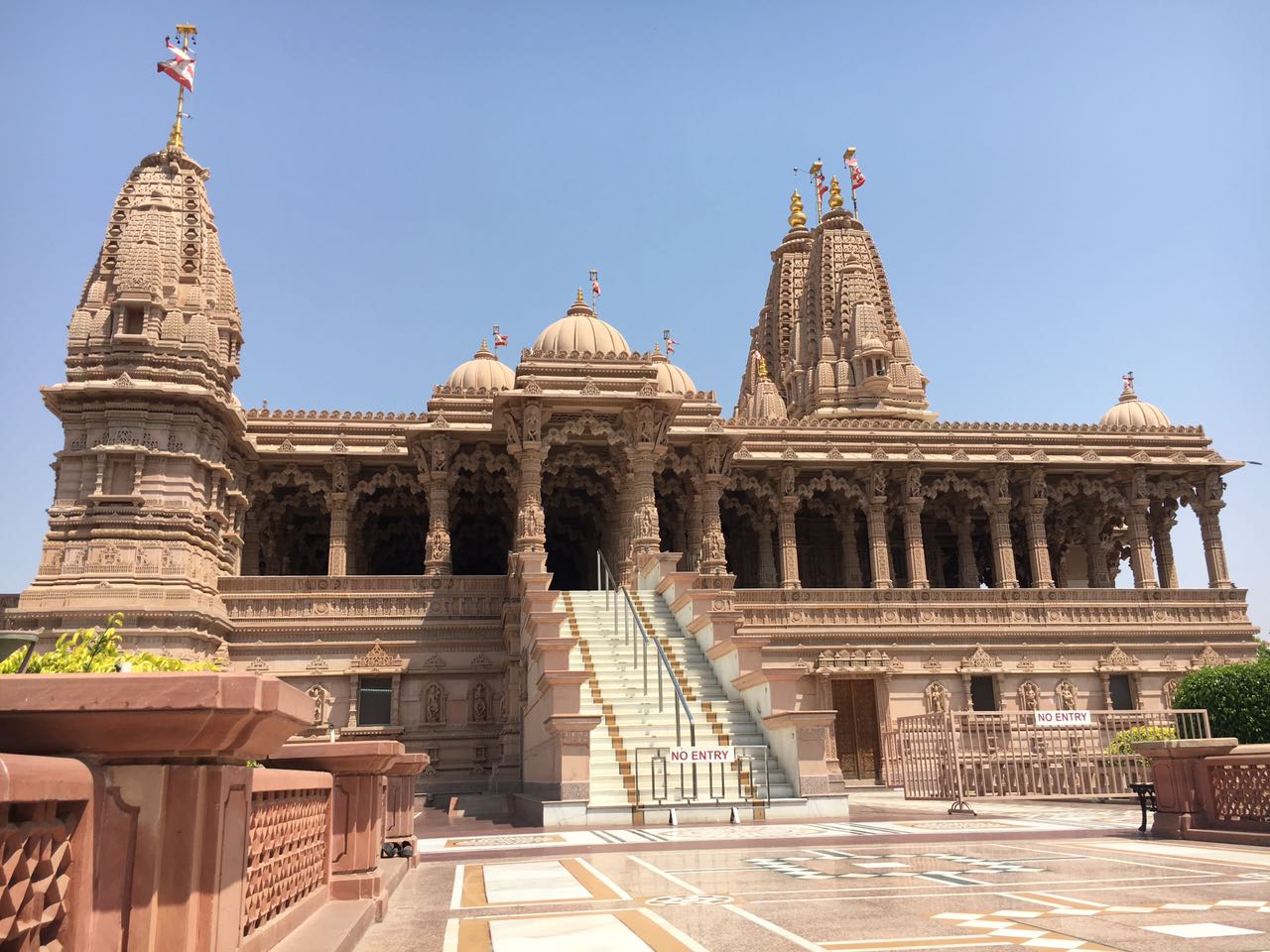
3. The Swaminarayan temple was a beautiful place located within Nagpur city. The Dragon palace temple and Ramdham Park are some other places located within the city if you have more time in leisure. The lakes in the city can easily be given a miss. However, some heritage structures like churches, schools and the railway station lend an old-world charm to the city.

IMG-20180324-WA0062
Swaminarayan Mandir

4. Adasa Ganesh temple: This visit can be done by taking a small deviation before hitting back the same highway.

5. Mansar: This is an archaeologically important site, believed to be of Pravarapura, an erstwhile capital of the Vakataka kingdom that ruled the Vidarbha region.

6. Ramtek: Located at about 5kms from Mansar, this is considered to be a holy hill to people of all faiths. ‘Gad Mandir’, an old beautiful temple dedicated to Lord Ram is situated atop a hillock. Solitude is available in abundance here with a great view of the entire area. The Ramtek hills is also believed to be a place where the mythological King, Kalidas wrote his epic poem- ‘Meghdoot’. There are several places that are significant among the Jains and Buddhists too that are located in the vicinity.

7. The Ambala Lake: The ghats of the lake located at the base of the Ramtek hills are lined with beautiful ancient structures and was my favourite place of the trip.

8. Khindsi Lake: Get yourself cooled with some water sports (recommended if you have leisure time at your disposal.)

9. Nagerdhan fort: Soak in history at the erstwhile capital town of the Vakataka dynasty. (Recommended only if you have some more time for leisure.) It is a further 10kms drive from Ramtek.

10. Pench National park: Don’t miss an opportunity to stay over and do some tiger sighting in the land of ‘The Jungle Book’. It is the same forest where the story of Mowgli and Bhageera is based at, that we have all grown up watching and listening to.

There are a lot of scenic places around Pench that I can help you with if you are planning to stay over at one of the jungle lodges. We did not have the luxury of time as we had to drive back all the way as our stay was booked at Amravati. The Amravati region is home to several wildlife sanctuaries and temples that can be accommodated if you’re traveling on a luxury of time and an own vehicle, which we had to give a miss.

11. Chikaldhara: The highest point of Vidarbha region and the only hill station is located in Amravati. For a person like me hailing from the coffee hills, it was quite exciting to know that Amravati is the only coffee growing region in Maharashtra state.

Part 2: Food and Sweets to try in Nagpur

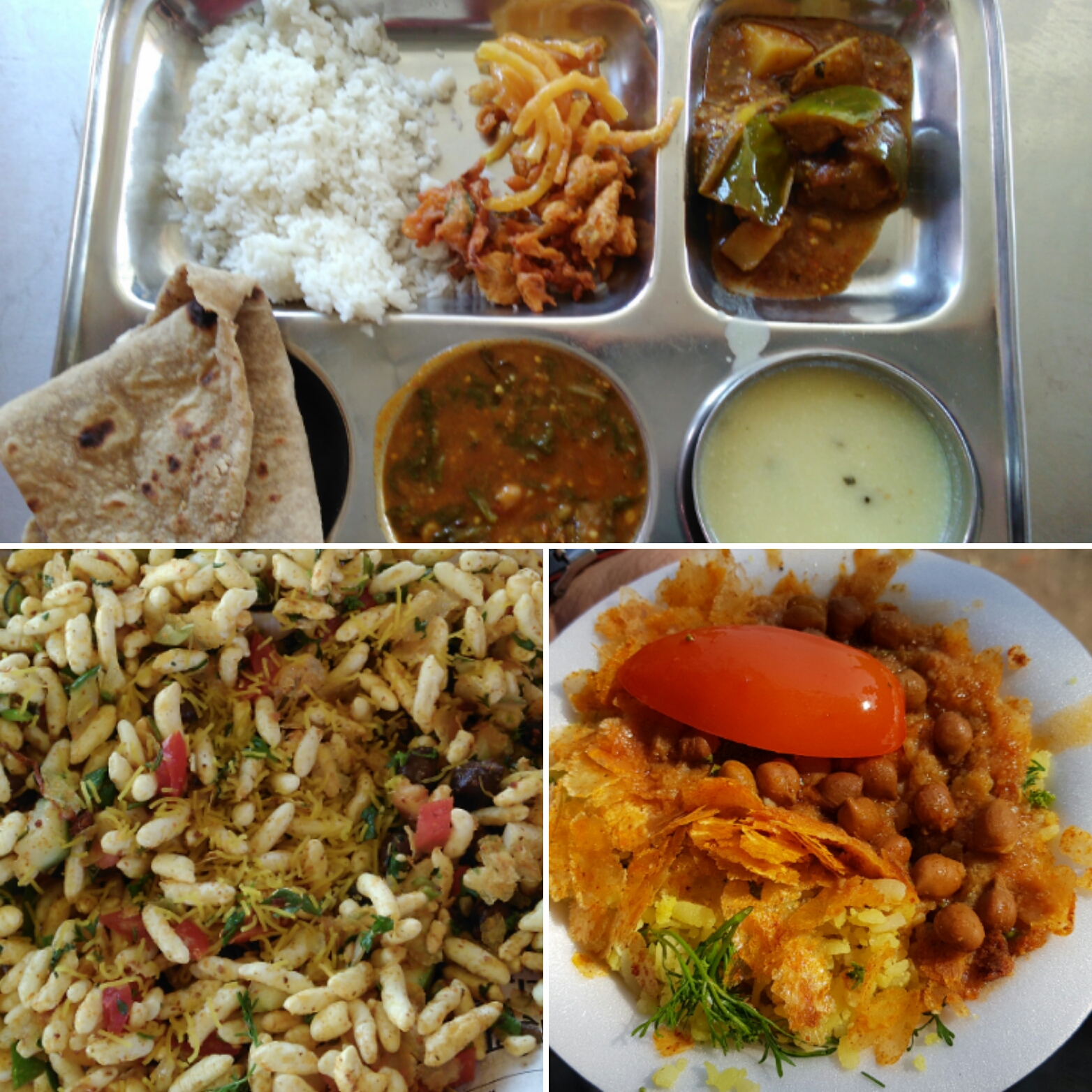
Talking about the highlight of this trip, it was definitely the FOOD!! The Varadi and Saoji are the two popular cuisines of the Vidarbha region. So, it was a culinary treat for our taste buds to experiment on something fiercely spicy and so rustic in taste. While our day started with delicious plates of ‘Poha with Tarri’ and ‘Samosa Tarri’ for breakfast at one of the several roadside tapris, lunch was a simple delectable Varadi thali at the ‘Gad Mandir Bhojanalay’. We managed to find space in our tummies for street food with several pit stops along the way that tasted heavenly and ended our day with a grand non-veg varadi menu for supper at a star hotel where we were put up for the night.

IMG_20180401_143553
The Varadi food that kept us going!

Nagpur is synonymous with oranges and the brand ‘Haldirams’. So, the visit would have been incomplete without trying the ‘Orange Burfi’ at one of the Haldirams outlets spread across the city. Do pick up a box of ‘Mango soan rolls’ from Heera sweets to please your sweet tooth along your return trip!

With the short time of a weekend that we had, this was the best we could accommodate in our schedule. Tell me what other things would you recommend to do, see and experience in Nagpur and Amravathi?

A Visit to the Mecca of India- Ajmer

This was the first time I was stepping into the state of Rajasthan. Time has been kind on me yet again bringing me to the right place when the time was right! And this time it was to Ajmer during the holy month of Ramadan. Ajmer-Marwar region was a separate state until it was merged with Rajasthan. At a distance of 130kms by road from Jaipur, it is believed to be the second holiest place in Islam after Mecca. Apart from exploring Ajmer town, if you are a traveler, you can also include Pushkar in your itinerary, which is located less than 25kms from Ajmer. Apart from being a holy place for the Hindus, Pushkar is a popular haunt for the hippies from world-over. You can use the below itinerary if you have a weekend in hand. However, I could only explore Ajmer on this trip.

A weekend Itinerary:

Day 1: Bangalore to Jaipur (Flight); Jaipur to Ajmer (Hired car); Visit Ajmer dargah, explore Taragarh hill, Adhai-Din-Ka-Jhonpra, Akbar Palace & museum, Soniji-ki-Nasiyan Jain temple, Mayo college campus. (Night’s stay at Taj- Ajmer gateway)
Day 2: Visit Pushkar lake for sunrise, explore Pushkar town (and the annual camel fair, if you time your visit right); return to Jaipur (by road), Jaipur to Bangalore (flight)

The Details:

I was visiting Ajmer on a business trip with three of my colleagues (Click here to read about my job as a car doctor). Hence, I somehow managed to squeeze in sufficient time into my trip so that I could venture out in this city and explore most of whatever it has to offer for the traveller in me. Needless to say, no visit to this holy city is complete without heading to the Ajmer Sharif Dargah dedicated to the Sufi Saint Khwaja Moinuddin Chishti.

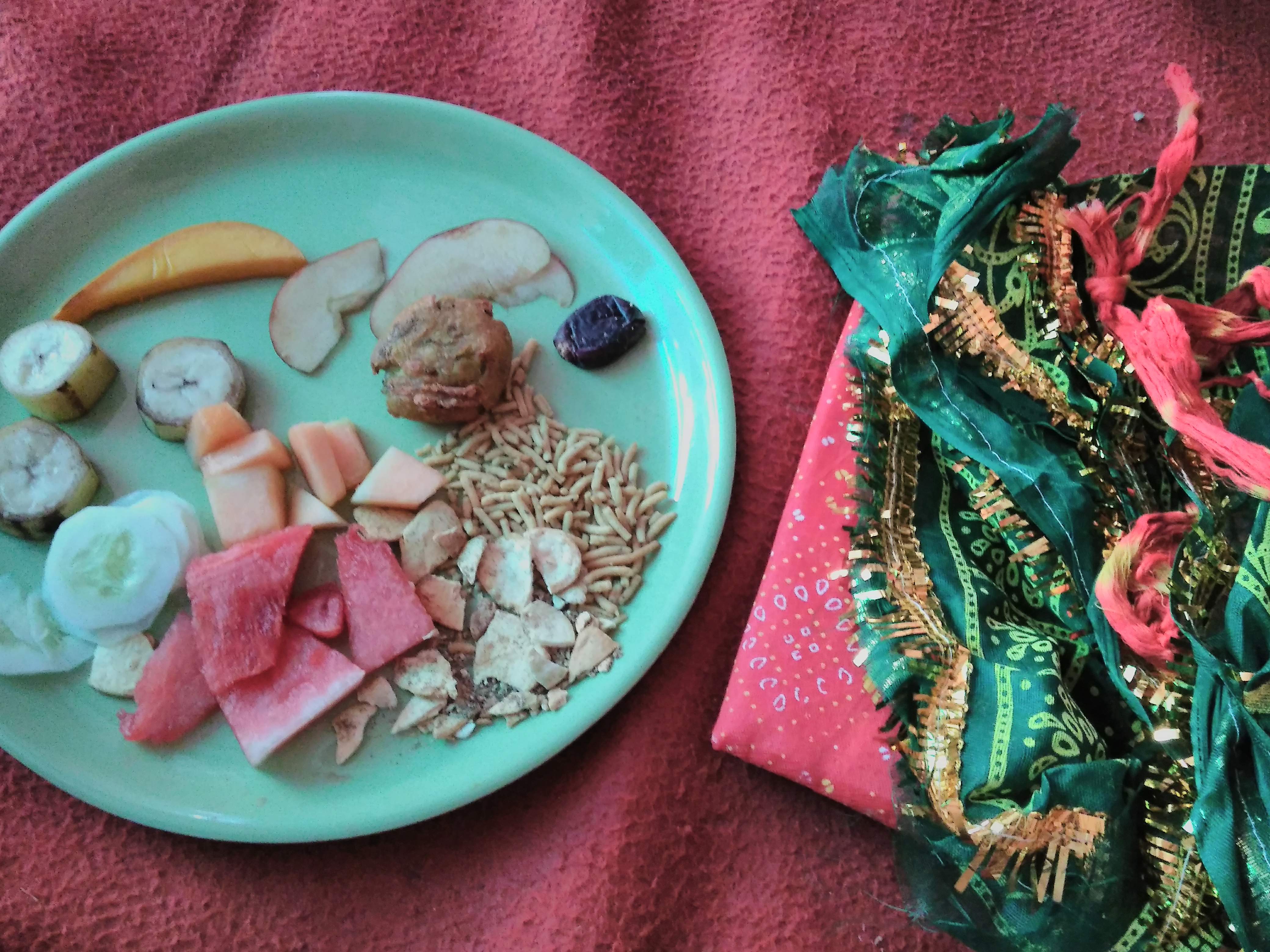
Apart from it being the holiest and the busiest of the times on the Dargah’s calendar, our visit also coincided with the 27th day of the holy month: revered as the ‘Night of Destiny’ in the Islam faith. This is a place where most people struggle to get past the crowds even on normal days. We were fortunate to have contacted one of the trustees of the Dargah who managed our entire visit and made it effortless. It was evening time and we had just finished offering our prayers by donating a Chadar to the diety. What we hadn’t realized was that we were there on the premises of this holy place at the time of breaking the day’s fast. We were offered some fruits, nuts and food by the trustees and other devotees who were distributing food there. I was overwhelmed with the thought of having had such an opportunity, at such a time!

IMG_20180612_183519
Breaking the fast at Ajmer dargah Sharif

The Dargah is located at the base of the Taragarh hill, atop of which a fort is situated. The view of the entire hill overlooking the Dargarh is so beautiful with a township constructed on the steep slopes of the hill. Since, photography is prohibited inside the Dargarh premises, I wasn’t able to capture most of the things. It’s a welcome move in some places like these and respect the sanctity of the place. Enough is said and written about this place on the internet. So, I wish to cover about the other things this historic town has to offer.

After our visit, we walked the by lanes around the Dargah to explore the best of Ajmer. Not in terms of places but in terms of its lip-smacking street food. With a lot of Mughalai and Nawabi influence and it being the Ramadan season, the best of the spread was available. Needless to say, Ajmer is a haven for food lovers. By the time the last ray of the day’s sun had vanished, we were stuffed until our glottis.

If you are a history buff and want to find something to feed your wanderlust, you can take a walk to Adhai-Din-Ka-Jhonpra and the Akbar Palace and museum that are located closer to the Dargah. Soniji-ki-Nasiyan is a nice two-storeyed wooden Jain temple that can be visited enroute to Dargah Sharif. If you are at the luxury of time, a quick ride to quick ride to the Mayo college campus can be ended with some peaceful sunset time spent by the banks of the Ana Sagar Lake. But, for me- something else was awaiting!

IMG_20180623_140401
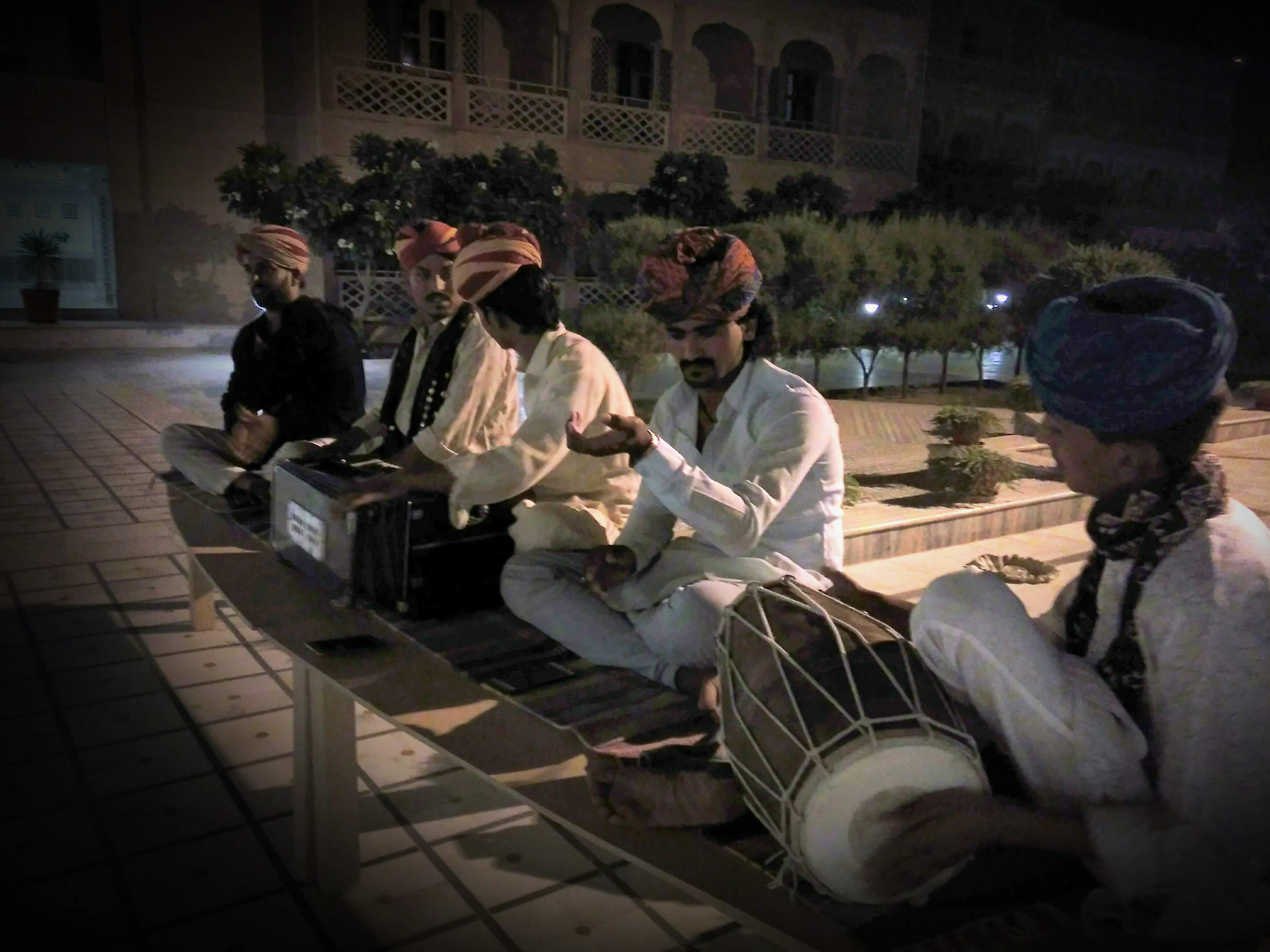
The folk singers performing live in the courtyard of the Taj

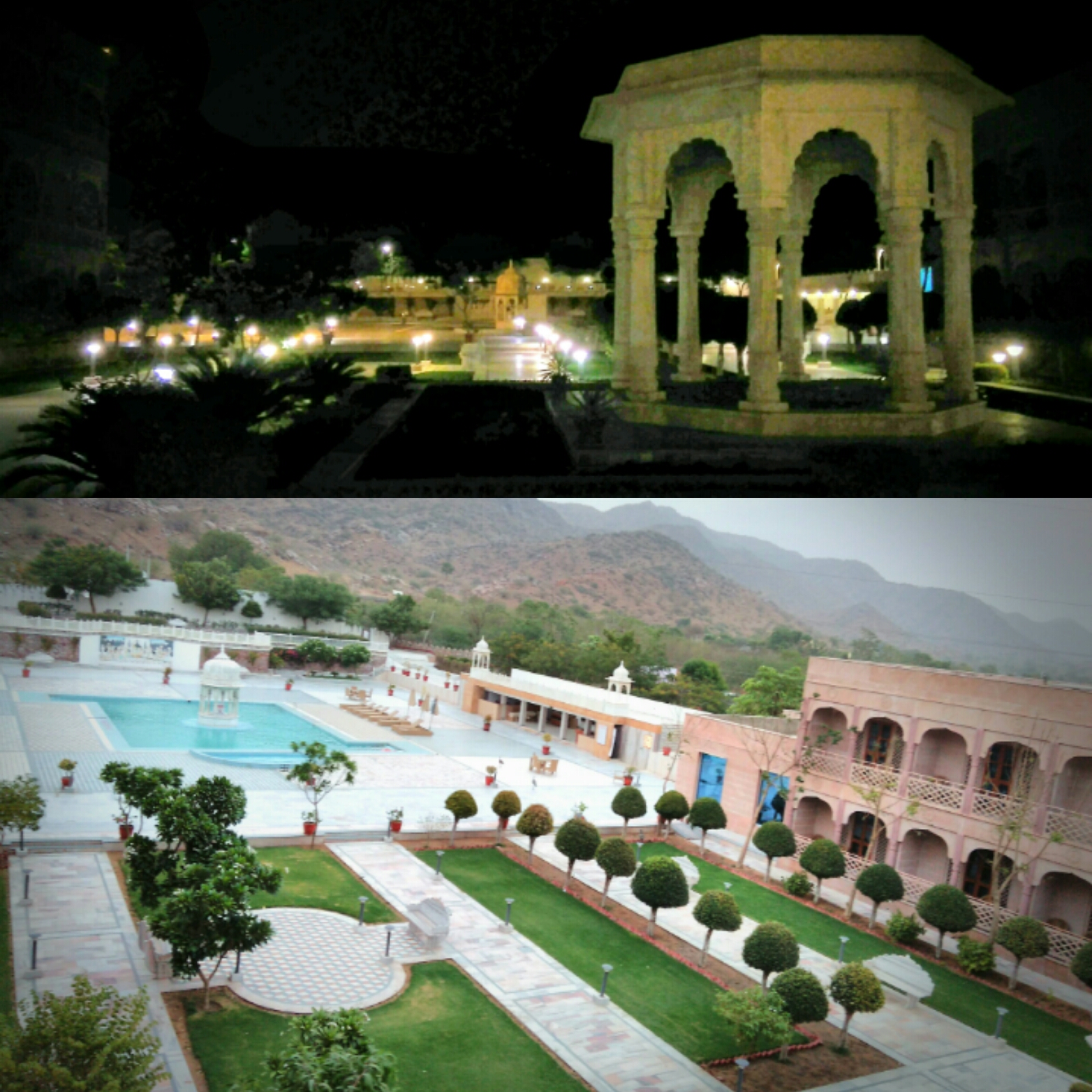
I had my stay booked at the Taj- Ajmer gateway for the night, a world in itself to visit and hang around. The drive from Ajmer city towards it outskirts on Pushkar road, through winding roads with the backdrop of the setting golden sun was a picturesque treat after a tiring day of work and toil. All this seemed like only a grand welcome to the beautiful Taj property that’s nestled in the midst of nowhere in the lap of the Aravalis. The sky was dark, when we arrived at this palatial hotel. The entire driveway was lit with dim sodium lamps from the gate through the lounge. A faint outline of the Aravalli hills standing calmly on the backdrop only enhanced its grandeur. It was a warm welcome as the live Rajasthani folk music with the timbre of the Morchang and Khartal resonated from the courtyard. The host personally lead me to the room while explaining the delicately chosen wall murals and paintings as we walked through the elegant corridor. Though my stomach was stuffed with Ajmer’s street food, I did manage to make some space for the delectable dinner that I was hosted at the restaurant. With all items seasoned and cooked to perfection, each dish seemed better than the other. With a refreshing dip in the pool, a day was called!

IMG_20180708_013657.jpg
Top: The courtyard at night Below: the morning view from my balcony

I looked forward for the morning as much as I did for the previous evening! I had set the alarm for sunrise but was woken up rather early by the calls of dozens of feral peacocks that had come from the forest/hills just behind the pool. I opened my balcony doors and voila! It was a magical morning with peacocks dancing in the courtyard and a modestly calm sun peeping out of shadowy grey clouds with the glorious green Aravalis forming a backdrop… I soaked in this special moment as much as I could from my balcony before I realised that it was time for me to pack-up. Finishing up the morning chores and ending my stay with the Taj with a wonderful breakfast spread, it was time for me to say good bye to this beautiful city of Ajmer and this beautiful Taj property- the Ajmer gateway!

Fact file:

Must-do: Make a wish by offering the Chadar or the decorated shawl to the deity/tomb at the Dargah Sharif.
Must eats: while the street food and the never-ending list of non-veg dishes are to die for in the month of Ramadan, Kadi Kachori and Soan-Halwa are an all-season recommendations.
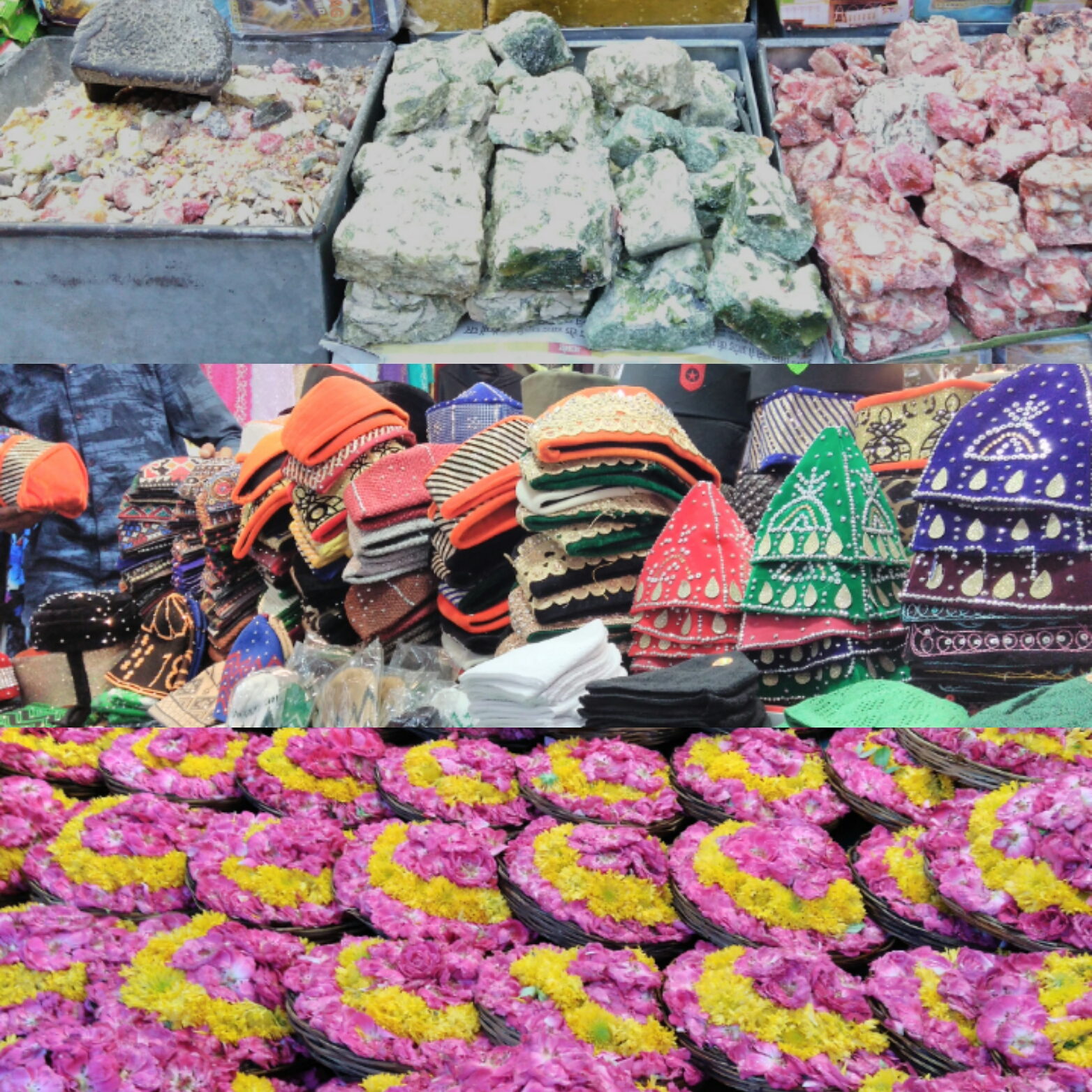
Must buys: variety of prayer caps and incense.

IMG_20180708_013329.jpg
The Street shopping at Ajmer

Meeting the farmers of the forests at Dandeli

Being one of the first hotspots of the elusive black panthers and a place known as the ‘Rishikesh of the South’ for its river rafting in the waters of River Kali weren’t reasons enough for me to grab-in when opportunity struck! A Solo trip that was long due, finally happened one weekend. I packed my backpack and hit the road in an overnight bus to reach Dandeli. This trip was part of an invitation to review a resort and a homestay at Dandeli, arranged by www.dandeli.com However, the reviews of the places are in separate posts and this one is something else, worth your reading time. Or so, I believe.

Apart from the cool and wonderful green cover that Dandeli has, I had a surprise awaiting me on the second day of my trip. It added yet another perspective to my travels- “Bird-watching”. If you have been following my blogs for a while, then you must already be aware that I have always been interested in wildlife and its conservation. But I neither did I have an opportunity to meet someone closely involved in such form of travel nor did I have any close acquaintances who was good at bird or animal tracking. Here, at Dandeli I met a person who has dedicated time and money in tracking and documenting the birds of the region. The entire experience of birdwatching with this person is something that I will cherish for long time.

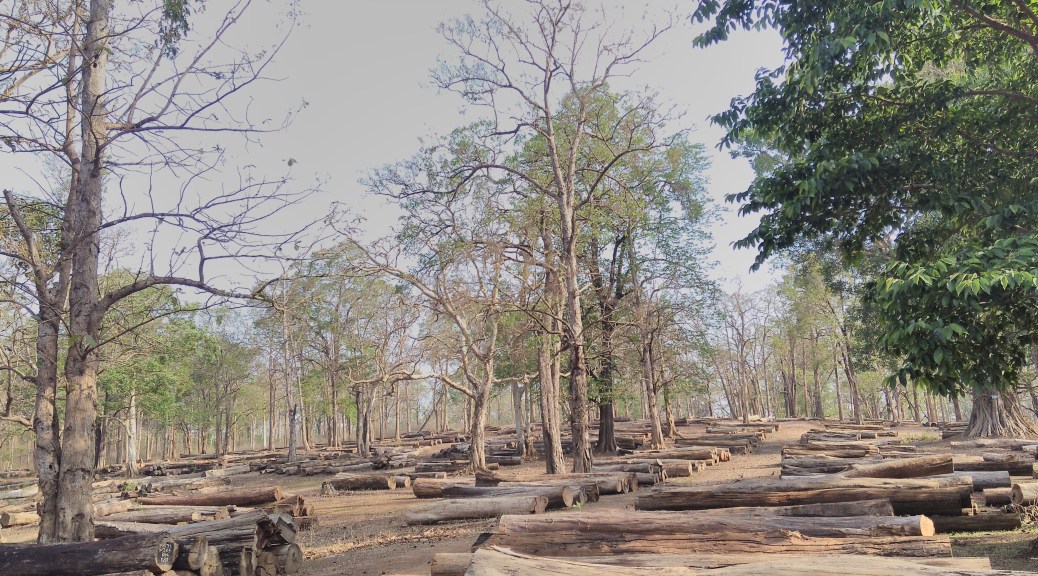
As a part of the trip package by the homestay, I was asked to be ready by 6.00.a.m. and was taken to the Dandeli timber depot. I was introduced to Ms. Rajani, a government schoolteacher by profession and an avid nature keeper by passion. She was assigned to take me on a bird watching tour around the depot where over 150 bird species could be spotted on any given day- A true haven for the bird watchers!

Dandeli timber depot

Among several species that she went on showing me around and shedding light on facts about them, the one that opened my eyes to an all new perspective of seeing avian life were the ‘Hornbills’. The hornbill is one species that is referred to Lord Ram and Sita for the couple bonding that they share. These birds have a very unique way of finding their mates and if ever happened that one bird dies anytime, the other remains single all life without finding another mate which is unique to hornbills. The reproduction cycle of these birds is once in 5 years and hence, the male bird is extremely protective about the female and the chick. The male bestows his beloved with berries of her choice from faraway places during this period. While it carries around 40-50 berries in its beak to feed its family, a few fruits may fall down during its flight, thus contributing to afforestation- The hornbills are the farmers of the forests in true sense and live a life of awe and inspiration to mankind. Another interesting fact is among the 54 species of hornbill across the world, 9 are found in India. Out of these, the world’s largest species- The great Indian hornbill and world’s smallest- the Malabar Grey hornbill with Malabar pied and Indian Grey, 4 species can be found in Dandeli alone. And I was fortunate to see all 4 of these during my 3 days of stay at Dandeli, an experience that cannot be explained but only be felt.

Another unique sighting was of the jungle babbler or the ‘seven sister birds’. With enormous untold stories, the tour ended rather quickly as we both lost track of time.

My enthusiastic guide visits this place every morning and evening which she describes as her day being incomplete without talking to the woods and strengthening her nature connect. She ensures she talks about them to her pupils at school as well. That’s a novel way to inculcate the habit and awareness about nature conservation among children from a very young age itself. I gave her a tight hug for the wonderful ways of teaching her students in school about conservation of natural resources and I bid farewell.

Bonus tip for birdwatching at Dandeli: Watch the hornbills mud-bathing on the riverbank near Ganeshgudi (sometime around winter)

Visit my detailed posts below, for itineraries if you are planning your trip to Dandeli.
Option 1: With sightseeing and stay at ‘Old Magazine House’, a Jungle Lodges venture
Option 2: With sightseeing and stay at ‘Dandeli jungle camp’, an offbeat homestay.

What has the spiritual capital taught me at Banaras?

Kashi for the pilgrims, Banaras for the historians and Varanasi for the modern… How it is religiously important, culturally vital, historically notable… There is enough said and done about this city through literature that is available as early as mythology, history and the modern contemporary. If I had to write about the same stuffs here, then this post would be just another summary with my perspective in it. However, I still use this one sentence to re-iterate the common belief: ‘No time is long enough to be at Banaras’.

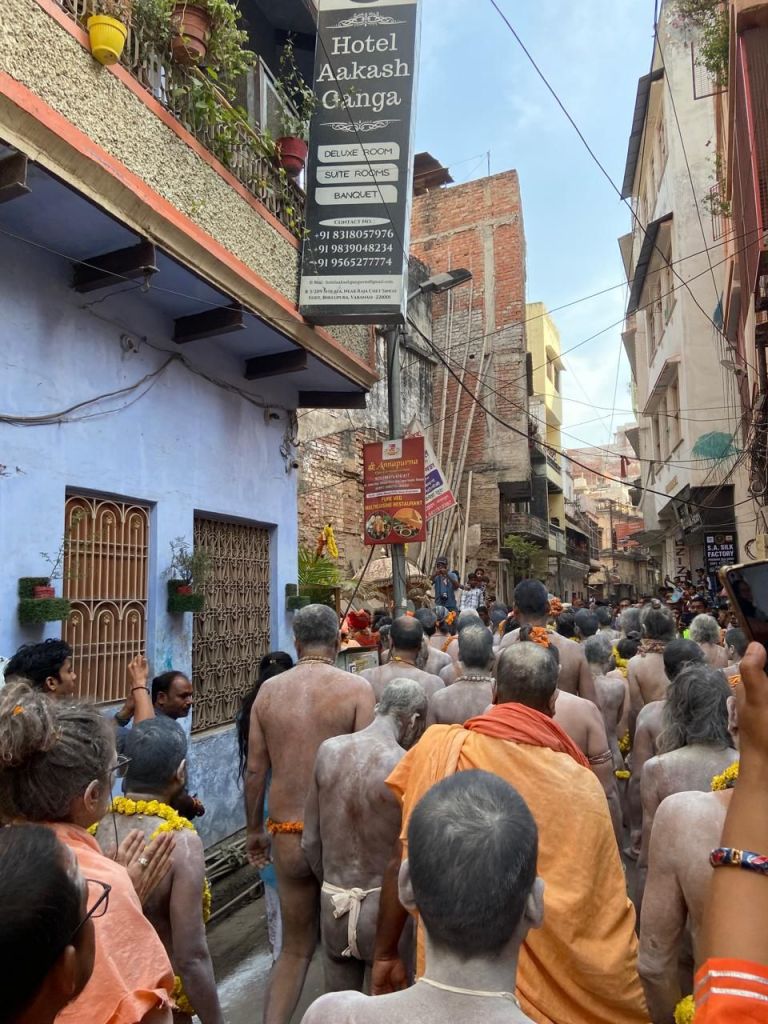
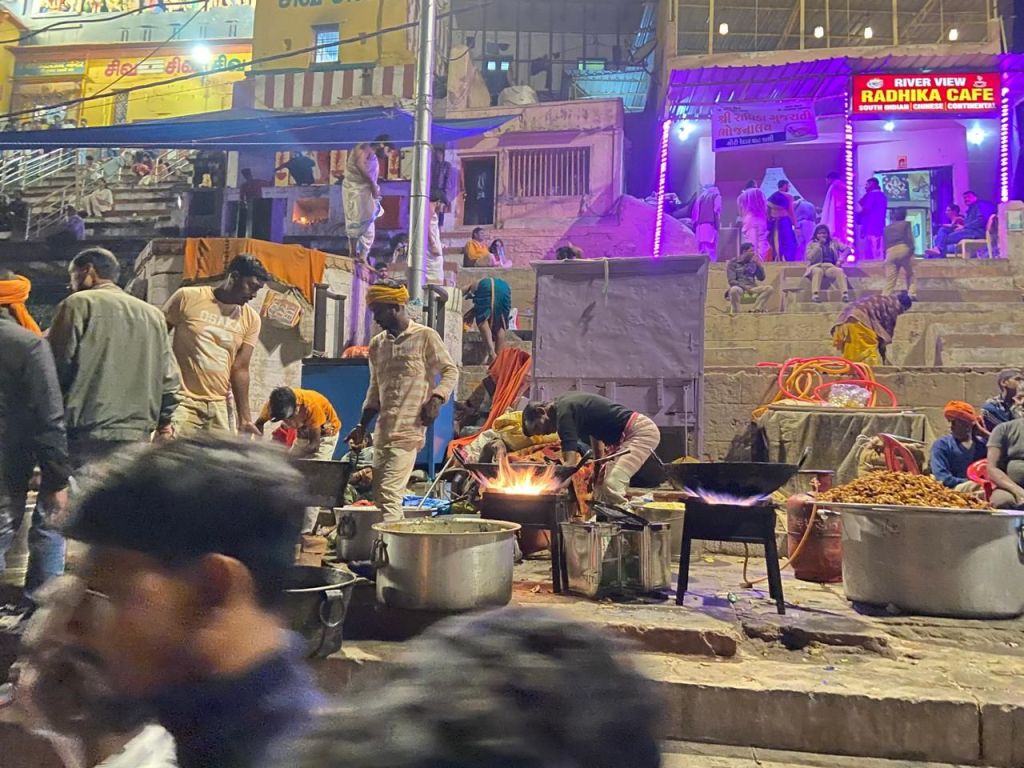
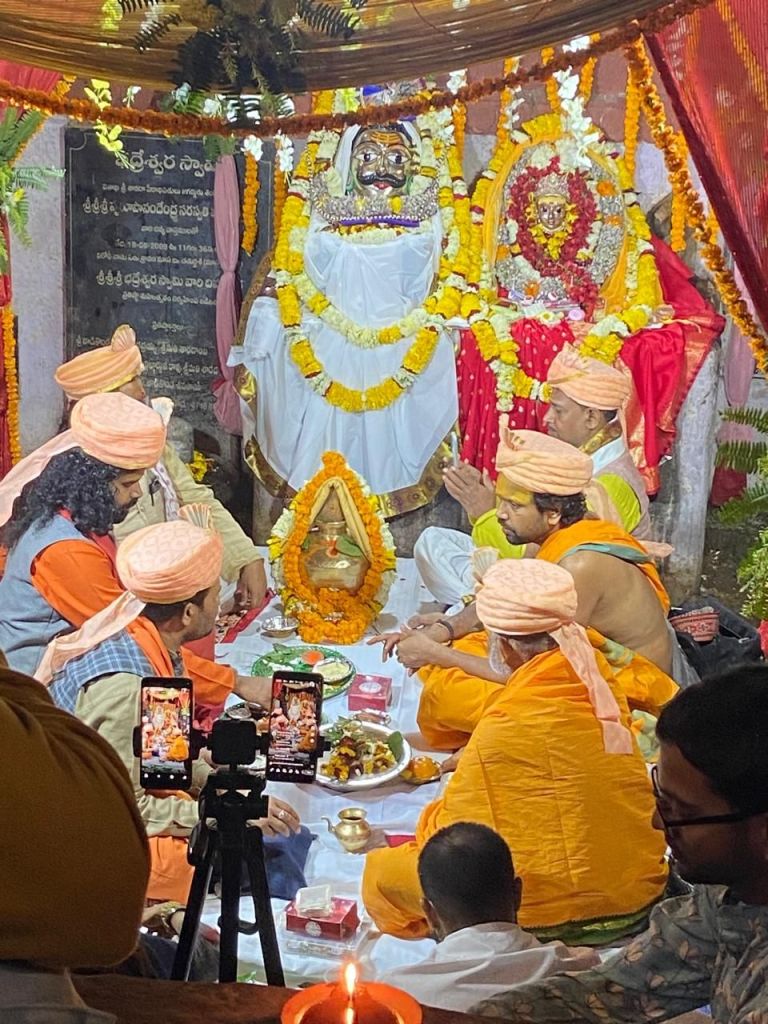
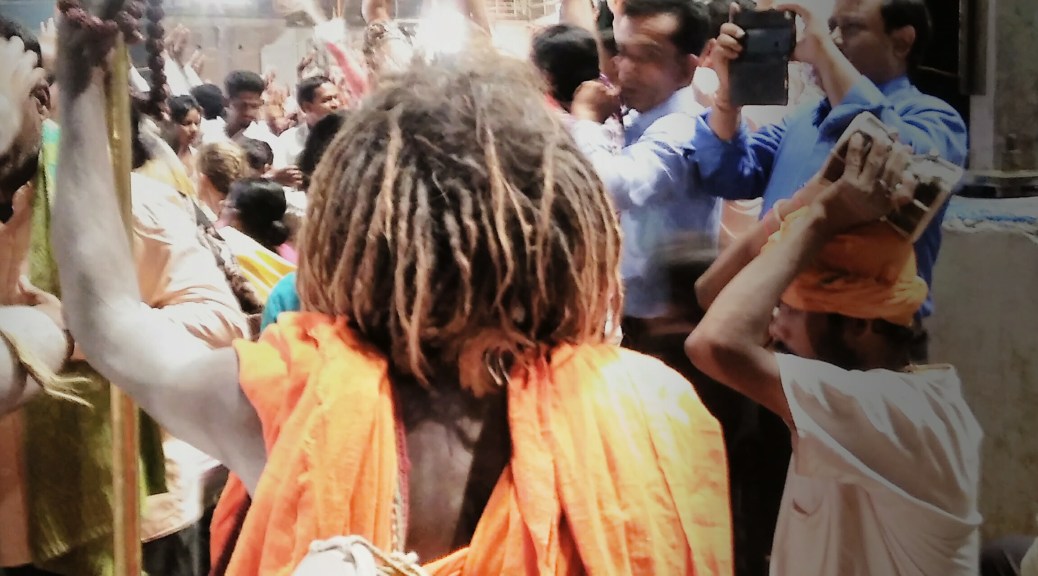
The immovable faith of the people, the ever crowded streets, delectable street food, the elusive power of the Naga Babas, the hippie culture of the westerners, the rich history, the mythological importance, the intriguing cultural heritage, dance, music, poetry, handloom, education, art, architecture- The list goes on endlessly that holds so much significance. Hence, keeping it all aside, I wish to make a list of what this city offered to teach me-

1. Work is Worship: This old man agreed to pedal us around for a rickshaw tour of the heritage campus of the Banaras Hindu University. The humility in his speech, the five-o’clock shadow in grey on his weather beaten face and the sinewy legs spoke volumes of his wisdom and hard work for this 60+ someone. He has seen those innumerous people come and go to this sacred land. At the end of the tour, he stopped at the Bharat Kala Bhavan museum complex on the university premises. We told him that we wouldn’t need much time there and would be back in half-an-hour. We failed with our words, and the quickest we could come out is after one-and-half hours. There was no sight of this old man for as long as our vision could stretch. The man did not carry a cellphone and we didn’t know his name to enquire with the people around. We had waited for another 30minutes now. We were uncertain whether to wait for some more time or leave without paying his fees. In just then, we heard the tinkle of his cycle bell as it screeched to a halt in front of us with a little girl in the rear seat. He explained, “I was getting late to go pick up the kids from school and drop them home, they would panic or else”. This man did not worry if he lost the money that we owed him, there was something else he considered more important. As we sat on the rear with the little girl on my lap, I was reminded how for this man ‘Work was Worship’. One has to stay committed to what has been assigned.

2. Solo travel helps in self-discovery but having a travel mate provides security: While we finished the Ganga Aarti, savoured some delectable street food and returned to the hostel at around 10.00.p.m. we found that 3 of our roommates were fallen motionless. We checked with them to know what had happened. While one held on to her stomach and started to cry of pain, the other 2 ran to the restrooms… Having barely any strength to talk or stand, one of them managed to say that they had food poisoning. On being requested for help, the men running the hostel conveniently pushed the responsibility of nursing the girls on us. Since 2 of them were burning with high fever, we rushed them to the hospital (supposedly the best in town) for medication. On arrival, the hospital authorities refused to provide first aid without submitting their passport and paying an advance of Rs.30000. Forget being able to talk, these girls barely had any conscious to tell us where they had kept their belongings. And we ourselves being strangers in the place, it wasn’t going to be easy helping those girls. It was well past 12.00.a.m. while we were running around the dark, rainy streets of Varanasi for the required documentations so that the girls could get their first aid ASAP. With the physical condition they were in, with a no-electricity night, cocky/horny street hawkers who were hovering around and adamant auto-rickshaw drivers trying to make quick bucks out of the helpless situation, it would have been rather impossible for the expats hadn’t they found us! While the attitude of the guys running the hostel, the hospital and one of the girls among the patients itself is a story to write about, this whole episode taught me one thing- The importance of having company while travelling or at least having an acquaintance in the place one wishes to travel.

3. Serving food is divine, do it from your heart: There are eateries in every nook and corner of Varanasi that serve authentic cuisines from almost all parts of the world to cater to the international tourists who throng in large numbers. Any food that is offered with a true heart gets its added flavours… We had found our favourite hangout at the Phulwari restaurant, conveniently sharing the premises of the Godowlia Kaali mata temple. With a traditional ornate welcome gate opening into a casual shack like place with basic cushions and bamboo chairs and a mud-smeared kiln for making their wood fried pizzas, it offered a very warm ambience. And having personal attention from the waiter was overwhelming. He made sure we got precisely what we wanted while we were confused running through the long menu. He even went to the extent of getting some herbal drink from the next street to help me with my headache. He offered us with the best thandai of Varanasi, chilled to perfection and served in clay bowls to retain its authentic flavour; delivered at our hostel on the last day of our visit! There is so much more about providing customer service and hospitality- this man was at his best!

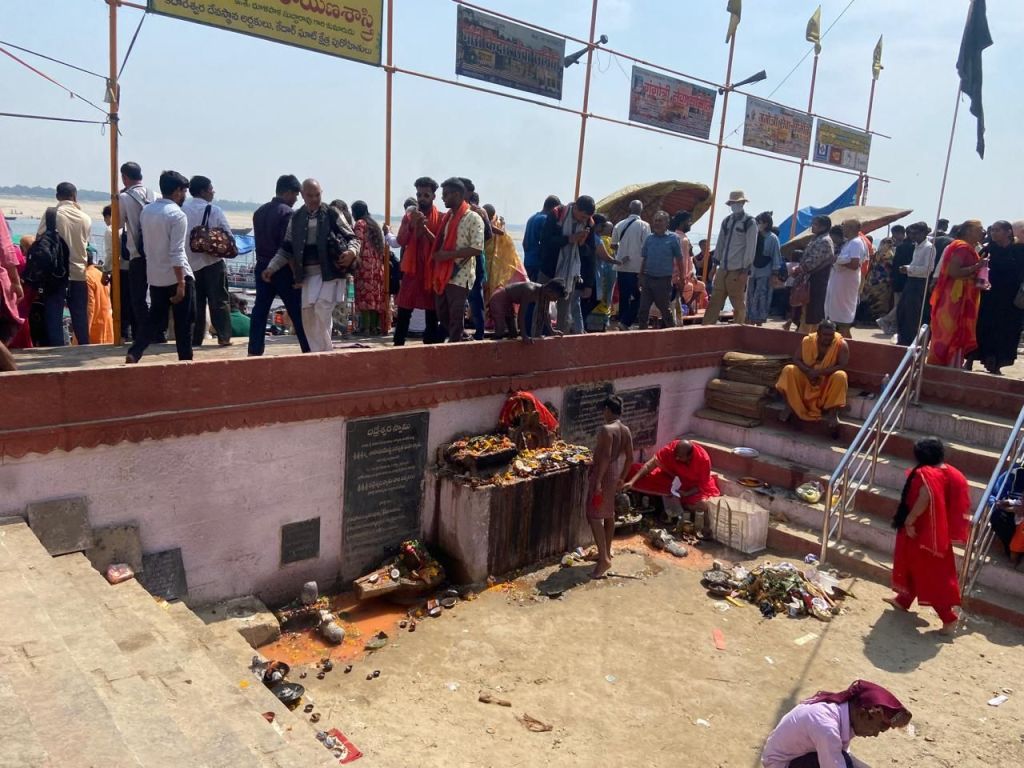
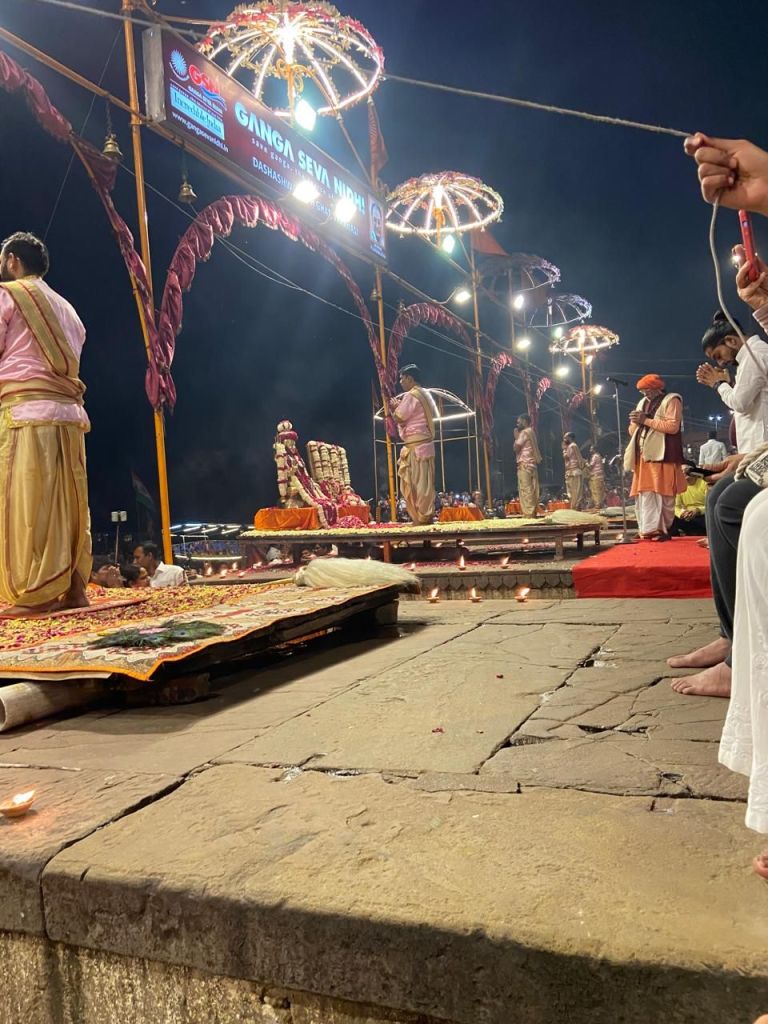
4. Do not question the untold: The Ganges is a powerhouse of inspiration. She’s holy, pure, sacred and selfless. While we took a ride along the shores of the holy river, the veteran boat man patiently answered all our questions about the holy city. While umpteen things can be discussed in lines of communalism, history and science, Not to be debated about: the Ganga at Banaras is a lifeline. It’s a way of life. Irrespective of religion, caste and creed, faith is the only thing that has kept the people going here… Every baby born in this land imbibes it in the genes… It’s at times important to understand the significance and let things be. Do not be overwhelmed to exhibit your education by venturing into a zone to only be littled by the magnificence of the faith.

5. There is no escape from the cycle of life and death: While we were sitting on the steps of the Manikarnika Ghat and watching the flames engulf the body of the deceased on the banks of the holy river, a volunteer sat next to us to proffer his knowledge about the significance of every ritual in Hinduism starting from the birth of a person until he bites the dust. He goes on to explain why Hindu culture does not encourage women from performing the last rites. Women being emotionally weak, tend to cry at funerals. This makes it difficult for the soul to break the attachment and leave the body. With soot from the fumes rising from the burning ghat settling all over us, it was a good long 2 hours of narration of the rituals associated with life and afterwards. At the end of which, I was left wondering with a continuously running stream of questions about life and finding its worth. They were thousands of unanswered questions which I hope to go back to the ghats someday, to find all my answers!