Tag Archives: Offbeat Bangalore

Day tripping in Nature- the Mysore Circuit

The initial plan was to leave before sunrise so that we could see the birds at the Ranganathittu Bird sanctuary before they left their homes for the day’s chores. However, a flat tyre and multiple pit stops added up to late arrival at the Srirangapatna-Yelwala bypass. This led to a few additions and deletions in the original plan so that we could see the birds when they returned to their nests late in the evening.

List of places covered:
Gaganachukki and Bharachukki waterfalls
Talakadu
Kaaranji kere in Mysore
Ranganathittu Bird sanctuary

Details of the trip:

As per the new plan, we headed to Gaganachukki and Bharachukki waterfalls. After a nice long drive through the green paddy fields and rusty countryside, we reached Shivanasamudra. This is one of the island towns formed by river Kaveri through its course. This is where Asia’s first hydel-power project was set up, commissioned by the then Diwan of Mysore- K. Seshadri Iyer; in order to supply electricity for mining at Kolar Gold Fields. River Kaveri plummets down at two places, a couple of kilometers away from each other and then merging together again. The beauty of the twin waterfalls is truly mesmerizing. If you’re seeking for some thrill, coracle rides are available that takes you closer to the spot where the water drops. But we did not want to take the risk of venturing into the water without a life jacket. At least, not after we heard someone say that the water was 1000 feet deep at some point. We weren’t not sure of the exact depth of the river, but certainly did not want to take a chance!
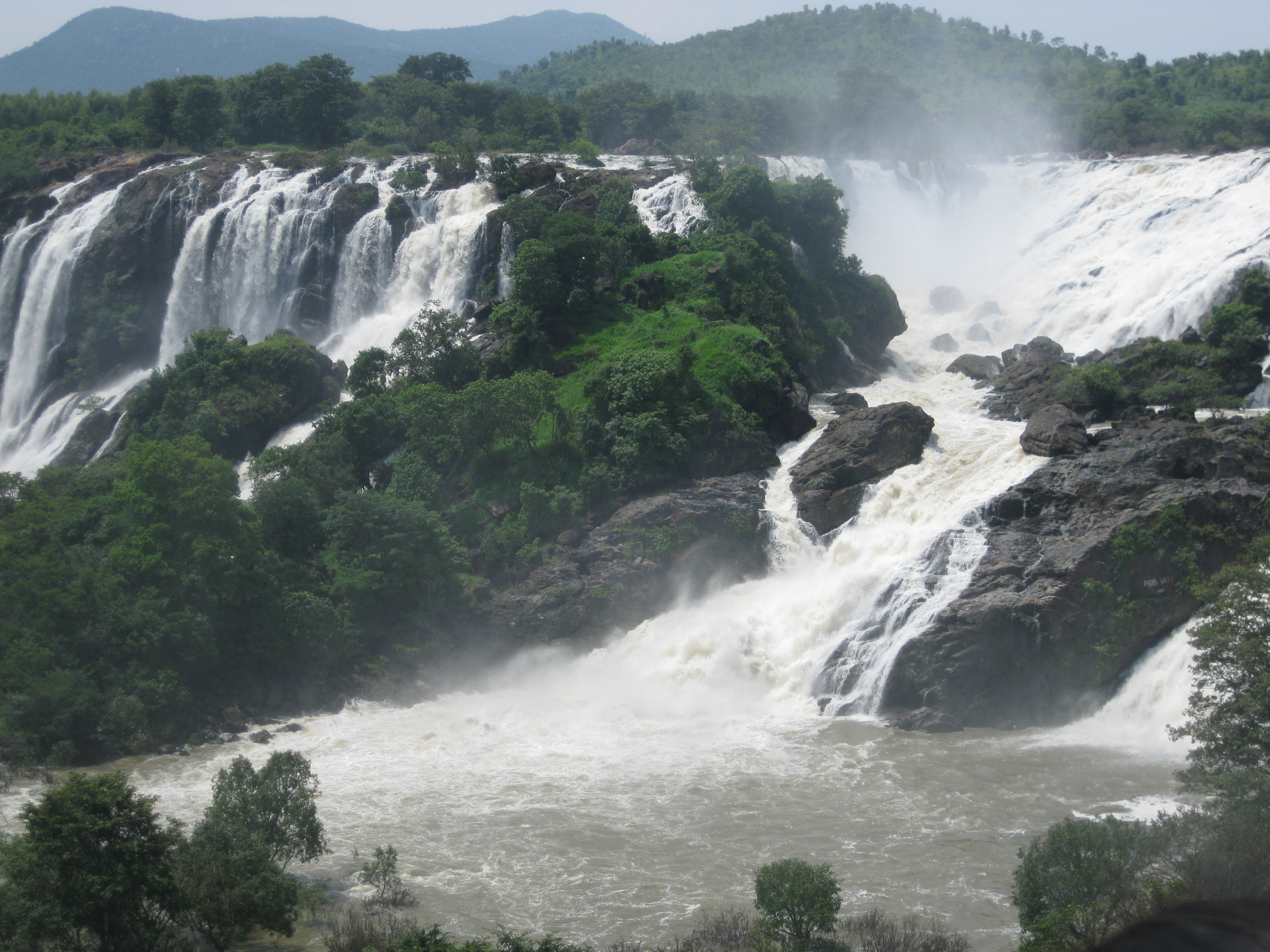
Gaganachukki- The western branch of river Kaveri

The sun was approaching his highest point by this time, and hence we decided that we should be heading towards our next destination- Talakadu. Kannadigas have all grown up listening to the story of the curse of Alamelamma. It is believed that her spell turned this once prosperous town to a sand desert. As a student reading history in school, I had always been intrigued to visit this place and see the romance between the sand and the temples during different seasons. However, the excitement that we had when we started to this place soon died when we arrived there (in fact, it got buried deep under its sands). Given the poor rainfall, less waters and hordes of tourists over the weekend, the place was had gathered so much filth and poop everywhere. There was an unbearable stench that had spread around. The river was shallow and looked stagnant and unappealing. Yet, we did manage to go for a coracle ride which was definitely not worth the buck. The place was a total turn off…!! We lost our interest to explore the famed temples of Talakadu and left the place (I did visit the historically important temples on a later date though).
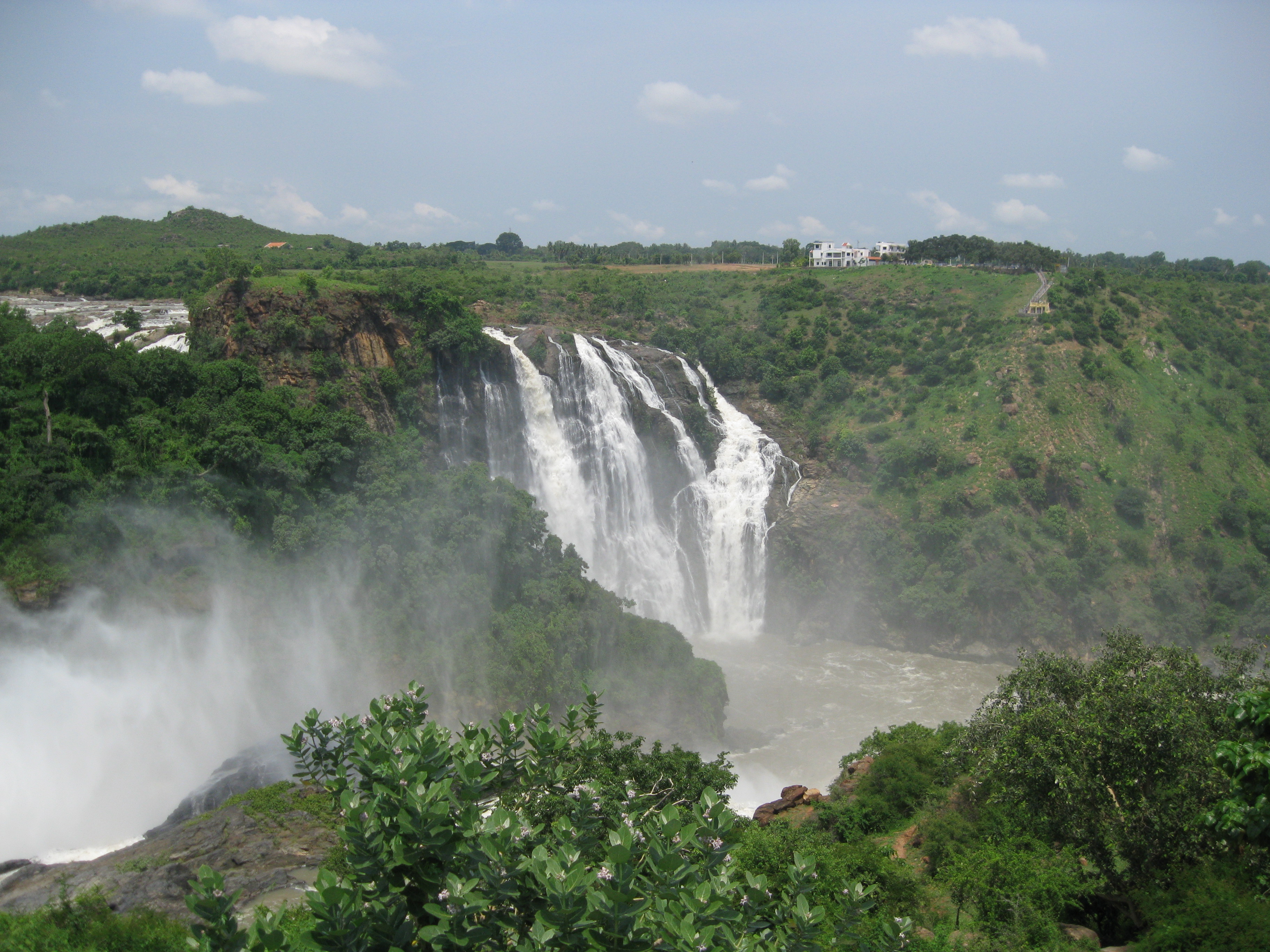
Bharachukki- The eastern branch of river Kaveri

We wanted to reach the highway back again but lost our way at some point. Without being able to connect to the highway, we just kept driving on some narrow road through the countryside. After the frayed trip to Talakadu, this drive through the rustic countryside was somewhat a deal breaker and a feast to our city bred souls. After a bit of driving around and just when we thought we had reached the highway, we realized that we had in fact reached Mysore…!! Mysore city was never on our itinerary when we left home that morning. We were extremely hungry and hence decided to feast at a nice restaurant in the city itself.

Some friend suggested us to visit Kaaranji kere in Mysore where we could do some birding. Around 3.00.p.m, we headed there- This was in fact the highlight of the trip- though unplanned, it came as a treat to us. We took a boat ride around the lake where we spotted several migratory birds. Not in large numbers, but many in varieties. It surely is a haven for the bird lovers. I pitied myself for not being able to identify what birds most of them were. I’m not an enthusiast of zoos as these places are where animals and birds are kept in enclosures. But, if you are around with kids, this place is good as there is an enclosure here as well that hosts many native birds, a few animals and reptiles.

The birds at Karanji kere

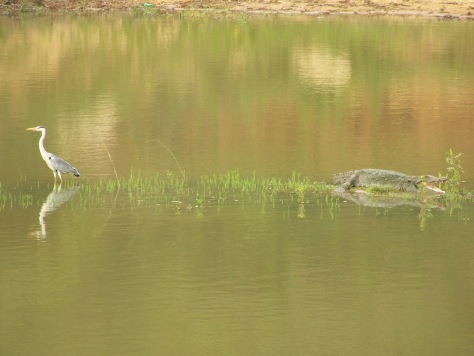
So, finally by 5.00.p.m, we headed out for what we had come all the way– Ranganathittu Bird sanctuary. It was the time when all the birds returned to their nests… We were there for sunset. We then took a boat ride around the small islets where thousands of birds have made their homes. The trees looked amazing with the birds and the water looked equally dangerous- with crocodiles swimming right past us… Again, we spotted a lot of different birds since it was the peak of the migratory season.

The winged hosts on the islet

With a pleasant sunset ride in the river, a long day tripping in the Mysore circuit came to an end. Although most part of the day was unplanned, it was a weekend well deserved.

Love in the air- The Aero-India show

<10-Feb-13>

I have been tad busy at work with less time to post a thought.. February being a month of love, inspite of my hectic schedule at work, I’ve managed to make the most of my weekends spending quality time with my 1st love- “Traveling”. Every weekend will be posted separately in the days to come.. But, before the ‘month of love’ ends.. I wanted to ensure that the chronicle for the month ends with a love note on my 2nd crush – ‘The Aeroplanes’ 🙂

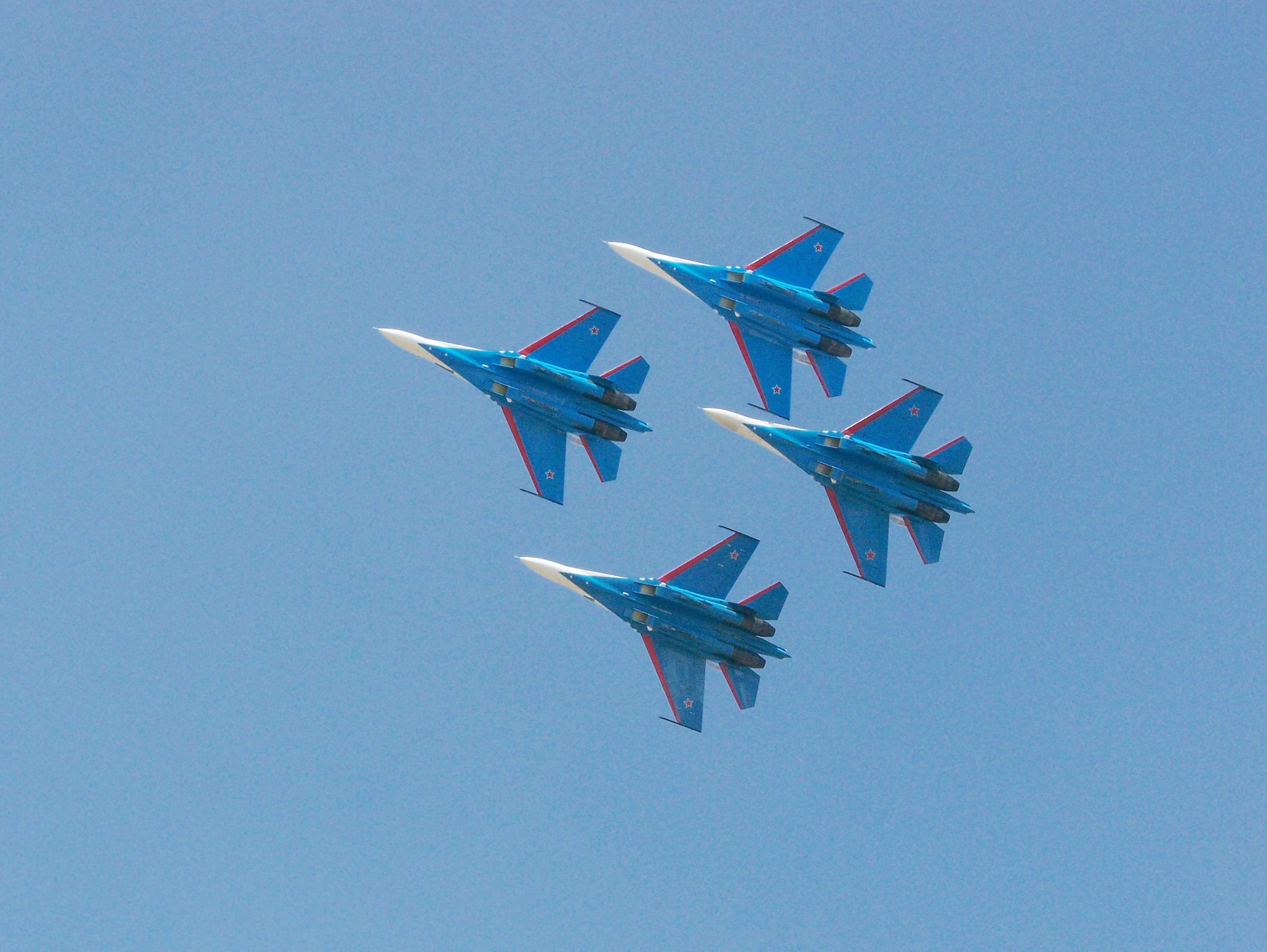
“Aero India” is a biennial event that happens only in Bangalore and is something that I have been religiously visiting since it’s inception.. I was there this year too.. But, compared to the previous years, it wasn’t a great show.. Unfortunately, the expectations set for the aero-enthusiasts by ‘The Russian Knights’ were too high to be met.!!

The 'Mirror Image' formation by the Flying Bulls
The ‘Mirror Image’ formation by the Flying Bulls

The Suryakirans were missed greatly, due to the passing away of 2 pilots in mid-air crashes 😥 The ‘Flying bulls’ and the Desi-team ‘Sarang’ were clearly the show stoppers.

The Russian Knights
The Russian Knights

<14-Feb-2009>

This takes me back to the show of 2009 – When there were too many participants with almost all the biggies in this business from around the world who had set up stalls. India was on a look out for 126 fighters for its mighty air-force. The F-16, F-18, Eurofighters, Rafael, Sukhoi etc etc. India’s LCA- Tejas made her 1st debut. There were many other contenders among the LCH-Choppers like Dhruv, Cheetah, Cobra; Cargo carriers like the C-130: Super Hercules, Omega tankers; Missiles and UAVs.

It was a day of dreams to several other aero-enthusiasts like me. Hopping from one stall to another understanding the latest technological developments in the industry, defence and warfare from across the world can happen only at one-stop-shows like these and not everytime or everyone gets such opportunities to learn.

Here, knowledge is accompanied with entertainment. Aerobatics by various teams from India and abroad, individual competitions that are related to flying or making scaled-down models, display of some vintage aircrafts, flight simulators, interactions with the personnel from major aviation companies are opportunities that every enthusiast looks forward for show after show. Aero-India 2009, being its biggest show ever, it was an amazing day… especially when it falls on 14-Feb..!!!

The 'Tango' formation by the Suryakirans
The ‘Tango’ formation by the Suryakirans

A great show put up by the SuryaKirans and the Sarang team..!!

The Sarang team
The Sarang team

It is a feeling of contentment that fills my heart when I come here for each show and a sense of sadness to think about waiting for 2 years for the next show.. It gives us a sense of pride when we say we are Bangaloreans and the Air show happens only here..

If you want me to write further, I can go on.. About every show and every machine there.. But i’d like to save some for the coming shows too.. So, I end it here with a ‘Love Note’ in the month of love and let the love spread in the world 😛

Re-visiting the Happy Valley – Makalidurga

I had already been there before.. I knew what to expect (Click here to read more) and so had declined repeated requests for my participation in the trip.

Even then, the second visit to Makalidurga happened. I was forcibly dragged out of bed on a cozy Sunday morning. I was supposed to be the guide to the first timers so that they could hike up the hill.

I knew the way to reach Makalidurga- but could not guide them any further to the exact spot from where they could get the photo of the train crossing which they wanted.. Considering it was around 11.00.a.m, the sun had already reached a good position to suck the fluid in us..

Alighting @ the Happy valley : Makalidurga railway station

We had left home without breakfast hoping that we could have something on our way and pick up some water bottles.. Hard luck..!! We could find neither!!

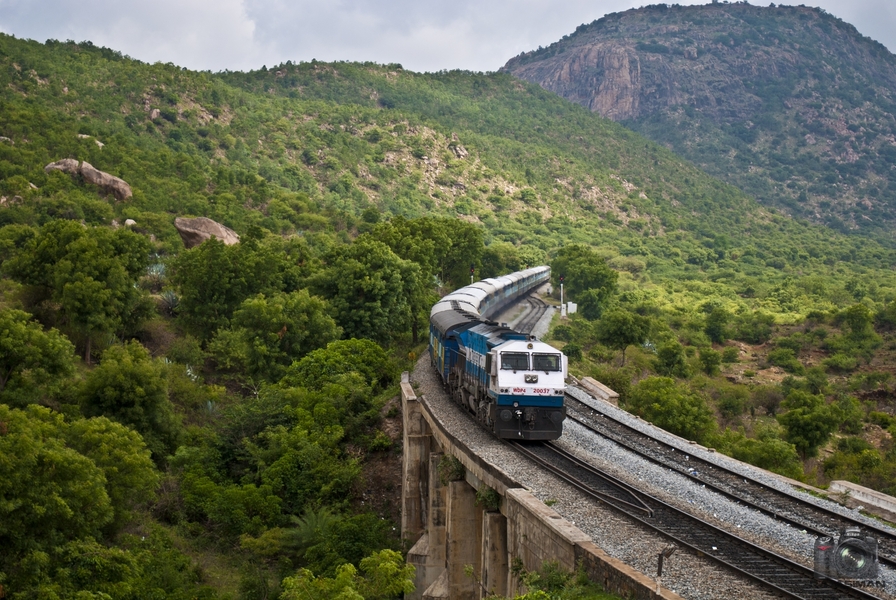
The Makalidurga railway crossing

All of us reached a railway track finally.. And randomly climbed a hillock, climbed further up.. We continued to climb hoping to find some shade to sit and wait till our catch of the day appeared… But again, no luck- no water, no food, no shade. We randomly stopped on a considerably flat area without being able to proceed further under the ruthlessly shining sun and waited for the train..

After about half an hour, the smoke from the engine chimney appeared near the horizon.. We all got excited.. As it neared, the engine emerged from behind a bush, then a bogie.. Before our cameras reached their position, we saw the end of the train 😥 It was a small train with just 1 engine and 4 bogies…

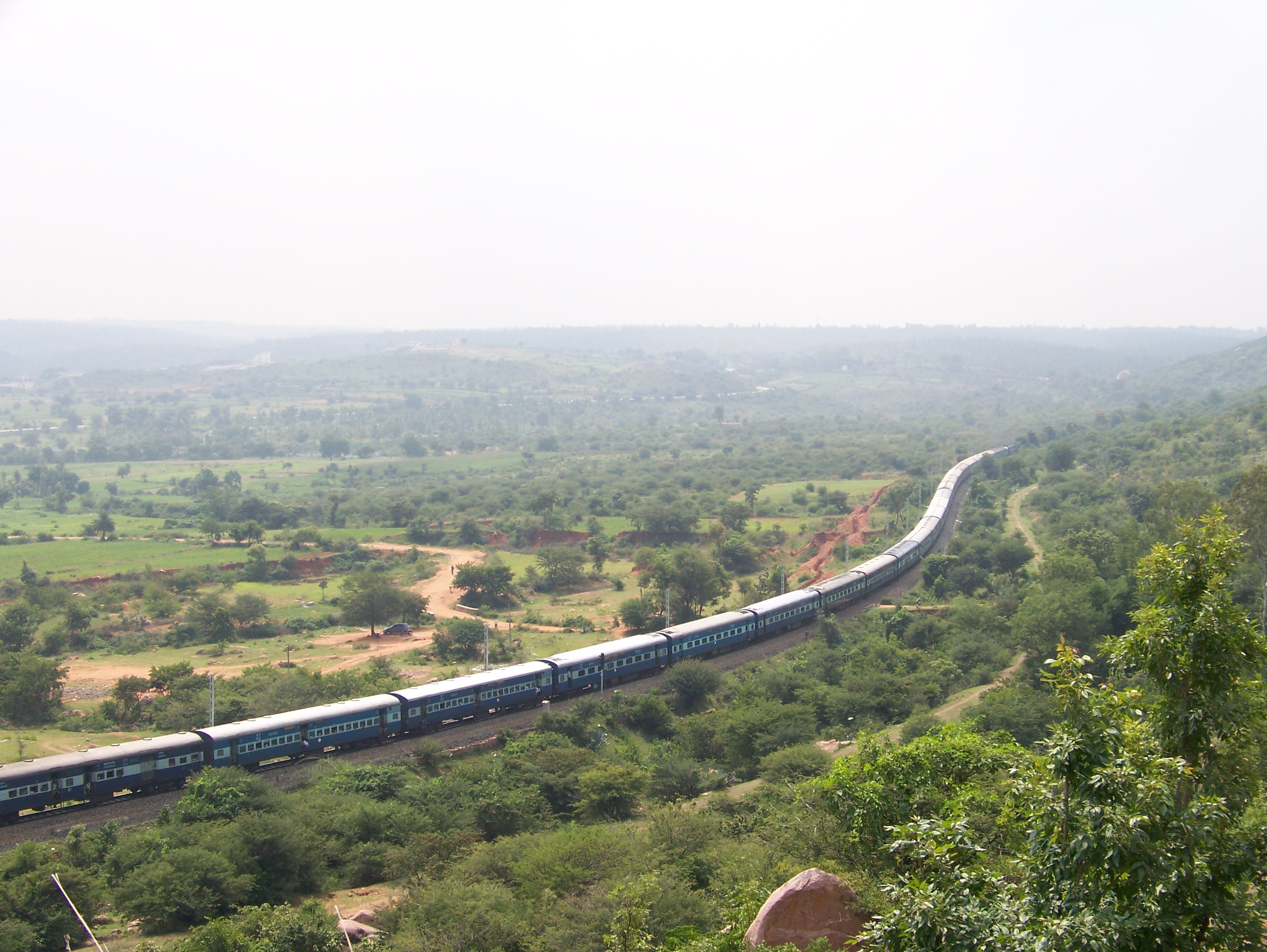
So, we continued our wait.. After a while again we found some smoke at the horizon. So, this time we hoped that our tiring wait would end soon and we could get that perfect internet photo of a blue passenger train passing across the frame… Hard luck once again- It was indeed a super long train with over 55 bogies: But, it was a goods loco and not the one that we had waited for and moreover its colour did not match the background 😥

This meant that we still had to wait. We were restless… We decided to walk further up hoping to find some shade atleast..!! And we did find a small tree (or rather a bush). Something that was better than nothing, we thought. All the five of us squeezed into that small patch of shade and continued to wait….

After a while, we heard the hooting of a train at a distance… This time, we couldn’t see any smoke rising up… The sound became louder and louder but still- there were no signs of the train. But, we knew for sure that the source was somewhere closeby. And suddenly, a Nizamuddin-Yeswantpur bound passenger train came buzzing into our visibility. We all took our cameras out and started clicking… The train was really long and it stretched beyond the 2 ends of the frame. Yet, this was not the photo we wanted. The train was actually in the opposite direction. So, even if the engine is very much in the frame, it appears like it is gone beyond 😥 But, anyway it seemed like we could not hope for anything further because we were all dehydrated.. So, we had to be contended with what we got and return back to pavilion 😦

The Nizammuddin-Yeswantpur passenger
Our prized catch- The Nizammuddin-Yeswantpur passenger

Makalidurga Ghats- Inspiring the Indian Railways

This one was totally unplanned…!!

My family decided to visit the Ghati Subramanya temple on Ganesh Chaturthi day considering that there would be less crowd in a Subramanya temple. A short drive into the Bangalore outskirts, Ghati welcomed us with a mesmerizing view of the hills, ponds scattered in the meadow and a lot of greenery around… The boundary of the meadow was lined by a railway track- It looked beautiful.!!

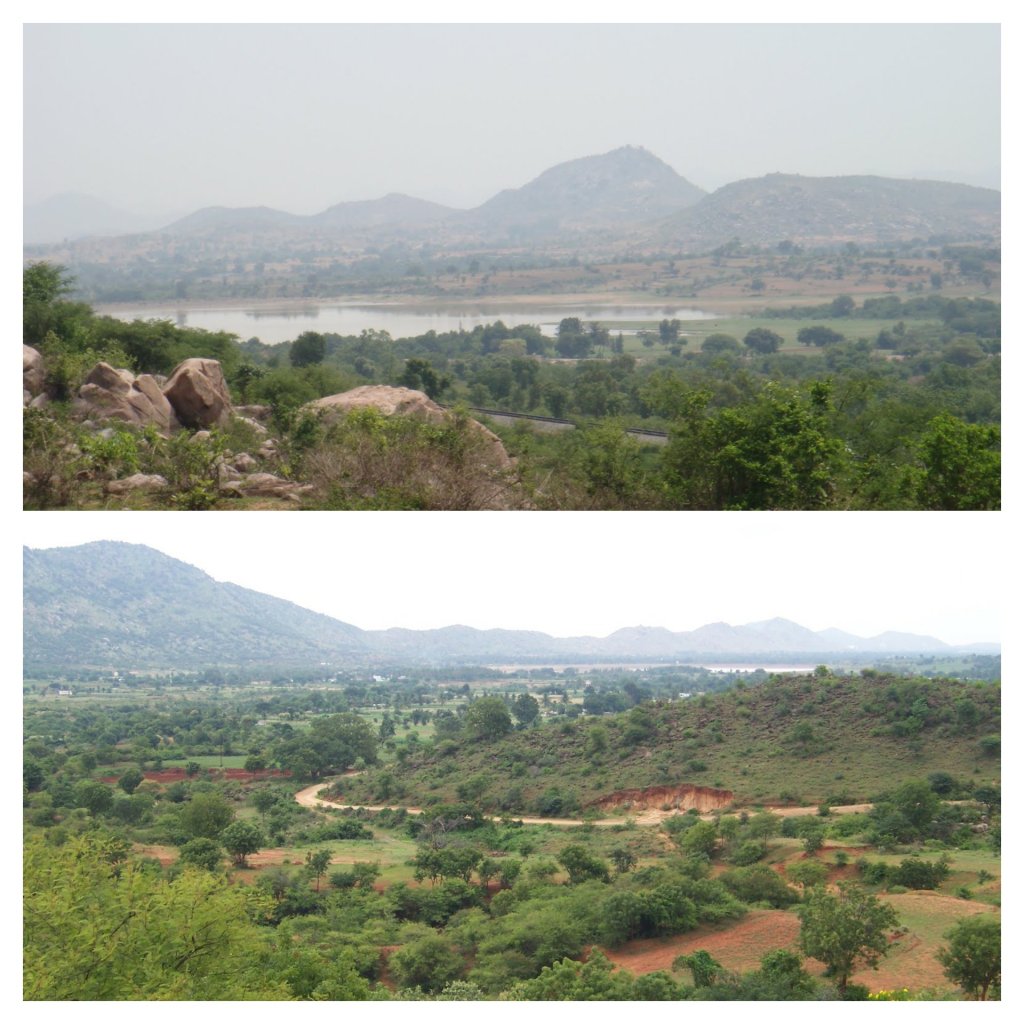
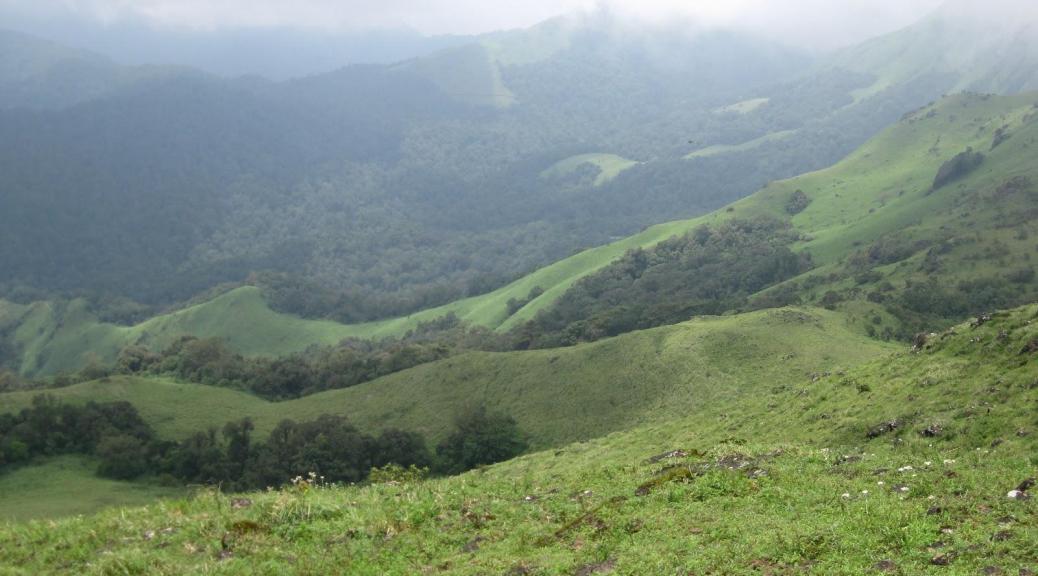
Some views of the Makalidurga valley

And just as we slowed down to appreciate the view, a freight loco came zipping along the line- and now it looked picture perfect…!! And just as I thought that this scene was familiar- my mind wandered to recollect where I had seen it. Soon I knew the answer: it was the “Makalidurga Ghats” that I had seen in an IRCTC hoarding of the South Western railways at Cantonment station. Back then, I remember that I had gone back home and googled about Makalidurga but had soon forgotten. So, this felt great today!!

We then proceeded to the temple and finished the darshan early (considering less crowd). And we then straight away followed the milestones to Makalidurga. I was back from a railway trek to Dudhsagar just two days ago and here, I was with a view that inspired for another railway trek. We stopped our car close to the railway station and walked 3-4kms along the railway track to reach the bridge that I had seen in the hoarding. But sadly, there was no train that would pass at that time…

Top: The Subramanya temple at Ghati; Below: The naga pratishtapana installations outside the temple

We then explored the place around by foot. One of the hills offered an amazing view of the surrounding villages. There are ruins of an old fort atop the hill which makes it a great place for some exploration. I later learnt that the place is crowded with trekkers on weekends who usually come here for adventure sports and camping. It is a nice place if you are looking for a quick and a random drive just around the city.

We had guest dropping by at home and hence, headed back home early.

The IRCTC photo that I couldnt capture :'(Picture courtesy: IRCTC hoarding at Cantonment station
The IRCTC photo that I couldnt capture 😥
Picture courtesy: IRCTC hoarding at Cantonment station

I visited this place again with friends on a later date. That time, exclusively to do train spotting. Click here to read further.

Breakfast on my plate: Bath- o- Baat..!!

<01-Dec-12>

Its 1st of December.. At 10a.m.; an e-mail was delivered to my inbox from the canteen department. “Monthly menu”- the subject head read. My immediate action was to click on the trash button which straight away dumped the unread mail in the trash bin. This action was not unique to me alone.. At least ten others in my office would have done the same.. And another ten would have just opened the mail to simply trash it without really reading it.. Nobody usually expects anything unusual in the menu. But just incase, some fresher bumps into you with a humble intension to strike a conversation and brings up the topic of breakfast menu:

“Hey ! You know what’s for breakfast for this month?”

The poor fellow is bound to get an equivalent reaction: “Aiyya…!! Looks like you have not had enough of a bath in the canteen..!!”

The oldies all know the menu by-heart. So what’s in a bath?? Read on…

  • Tuesday: Green- bath (Methi bath)
  • Wednesday: Red- bath (Vaangi bath)
  • Thursday: Deadly-oil bath (Darshini Pulav)
  • Friday: Mixed colour- bath (Chow-Chow bath)
  • Saturday: Brown- bath (bisi-bele bath)
  • Sunday: Yellow- bath (rice bath)

If I missed out on Monday in the list: that’s the 1st working day of the week; So the company tries to give us some motivation to enter the company gates.. That’s the “Have no Bath”-day. It is the only day when Idly-Vada-Sambar-Chutney is served.

Now: How do the employees identify what is for breakfast without actually entering the canteen or reading the menu? It comes with experience. Just a month’s time is enough..!!

Well, a Monday’s menu barely changes; so you know what is there. You go or don’t go depends on how bored or excited you are to get away with the Monday morning blues..!!

And the other days.. Usually standing at a distance and a small peep into someone’s plate from the canteen door is enough. By the colour on the plate, you know what it is.. and then, do an about turn and walk towards office.!!

But, a special mention needs to be made about Wednesdays.. The day being the mid-week and one would already have lost the motivation to work; the day greets you by serving a deadly bath on your platter. This is the original “Darshini Pulav”. I prefer to call it the deadly bath. It is because you don’t need to walk till the canteen door on that day. The strong smell of fried bread cubes doused in dalda oil and mixed with a weird coloured masala hits your nostrils instantly at the time you alight at the bus bay. So, you directly walk away to your office without wanting to even get closer to the source of smell.

Friday’s are special because not one, but two baths are given on a single platter. Chow-Chow-bath: as the name suggests, it is a combo of Rava bath and Kesari bath…!!

Oh.. Are you wondering why we even go near the canteen door every morning, huh? It is just out of curiosity and nothing else.. The curiosity to know how a bath can be had in different forms and in different colours- and every time, smell similar and taste the same even with different names..!!

Occasionally, Pongal, lemon rice, puliyogare, khara bath, tomato bath, curry leaves bath, vegetable bath, green peas bath are served too.. But considering these are still different colour forms of the same rice dish: it is an array of Bath-o-baat..!!

I agree that we are South Indians who are mainly rice eaters and fond of our daily showers. But nowhere in the peninsular India, would you find a Southie eat so much rice a day.. We have other better forms: dosa, poori, chapathi, akki-rotti, ragi-rotti, jola rotti, puttu, appam etc. etc… Why the hell on earth are we forced to have this bath every morning..!!

This is a serious allegation coming from a deeply disturbed rice hater who has stopped taking a bath just because of the traumatising “bath-o-phobia”..! Time the management does something about this one..!

Devanahalli- The town within a Fort

On a casual weekday off, dad and I decided to take a train trip to some random place on the fringes of Bangalore. So, with tickets that costed us Rs.4 per head, we headed towards the platform. We boarded the Yeswantapur-Devanahalli Passenger train. What surprised us what this train with 5 bogies had just 5 passengers, for a round trip. That makes it 1 passenger per bogie 😛

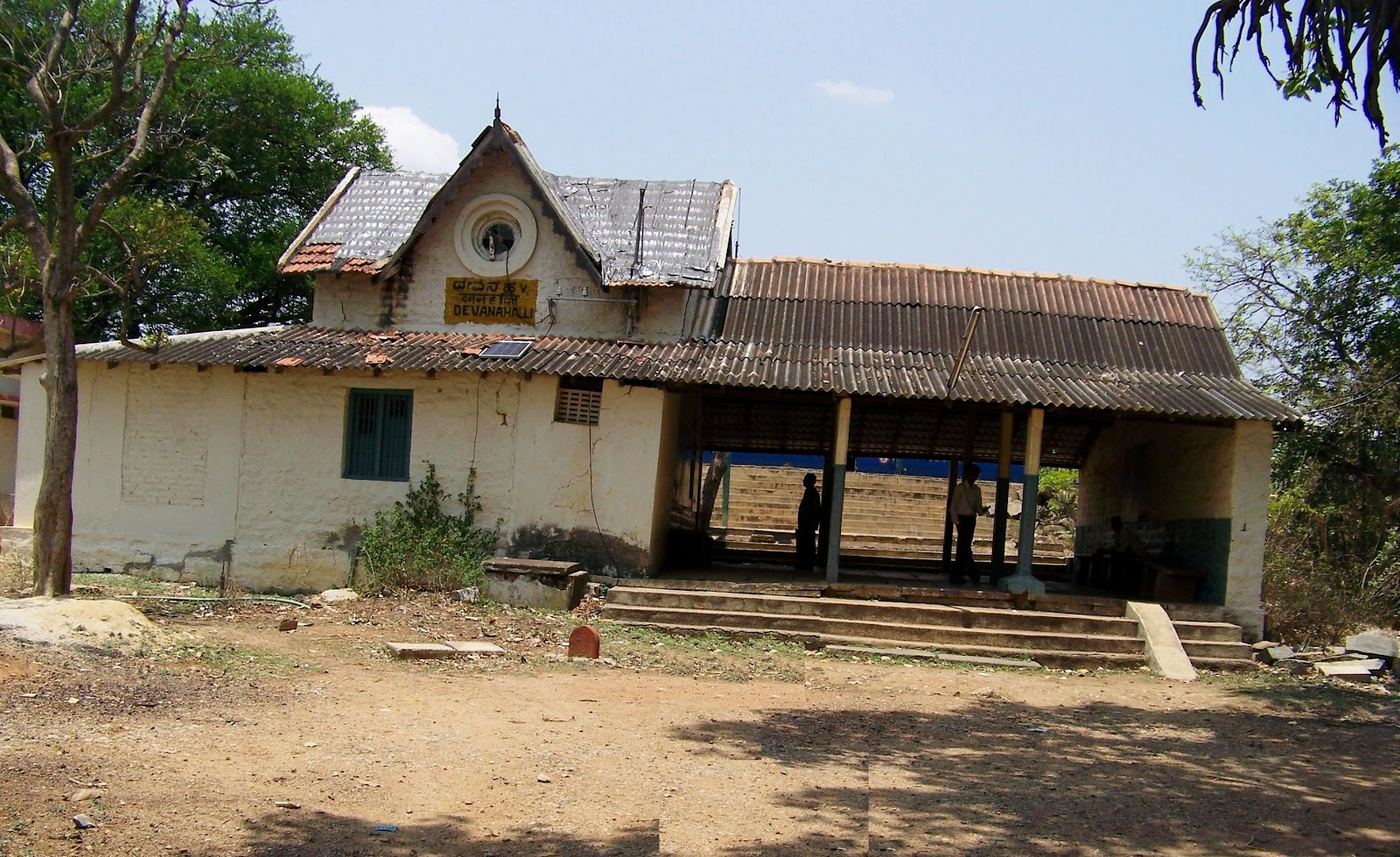
Anyway, the journey towards Devanahalli began and considering that the train still plied well within Bangalore, it felt like we were riding through some unknown green route. We alighted at Devanahalli Railway Station, a small structure from the colonial era (Updated as on Yr.2019, the structure doesn’t exist any longer. It has been demolished making way for a newer station that now welcomes modern passengers who alight here to go to the Bengaluru International Airport) We decided to undertake some exploration and started to walk towards the main town area of Devanahalli.

Places of interest:

Birthplace of Tipu Sultan, Fort Devanahalli, a few ancient temples located within the fortress.

Devanahalli railway station

The Details:

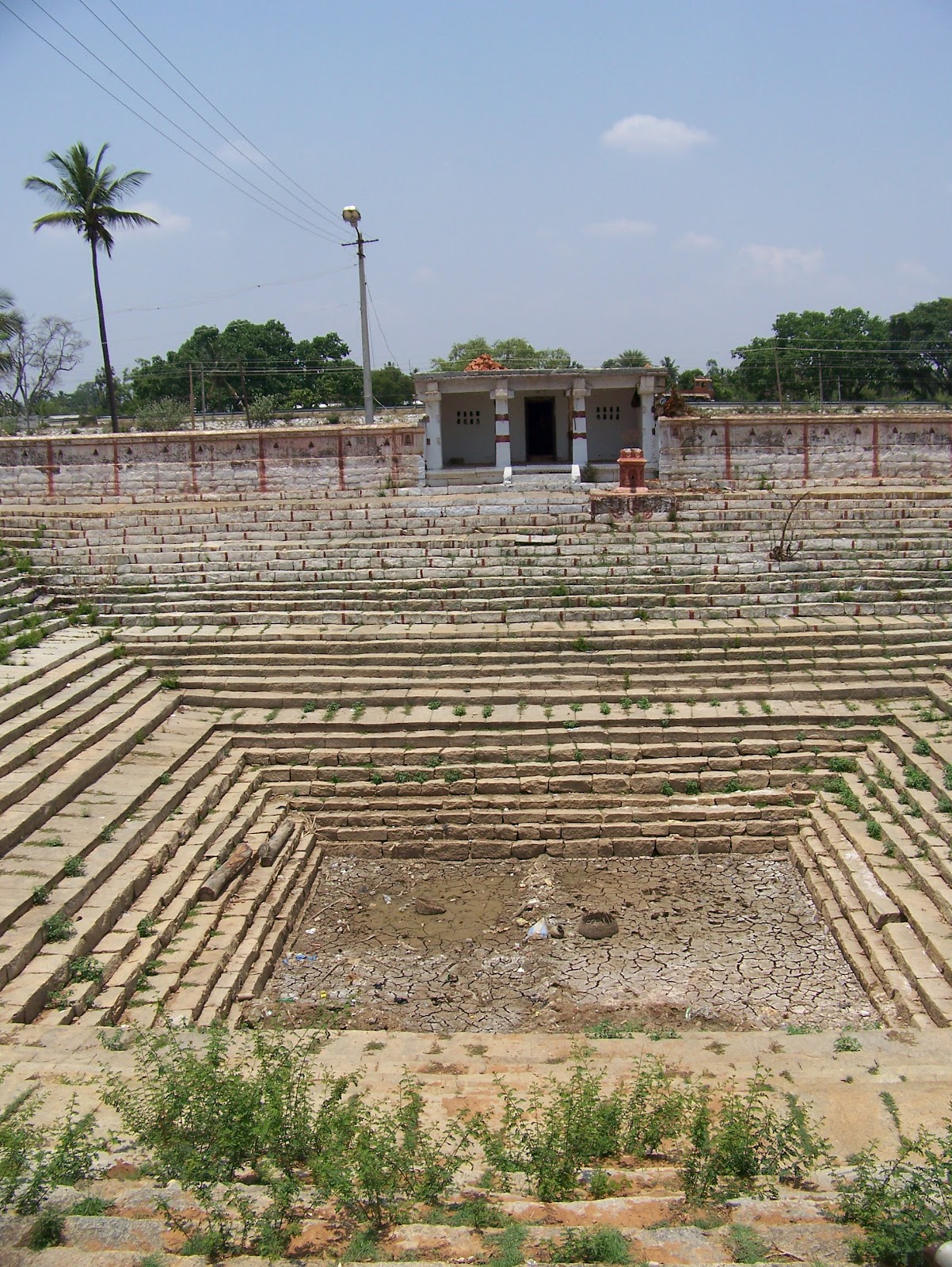
Enroute, we came across a large stepwell (the only memoir of an once existent temple) which was all dried up now. As we continued to walk further from there, we came across several ancient temples along our way.

Things to see in Devanahalli
An Old temple pond

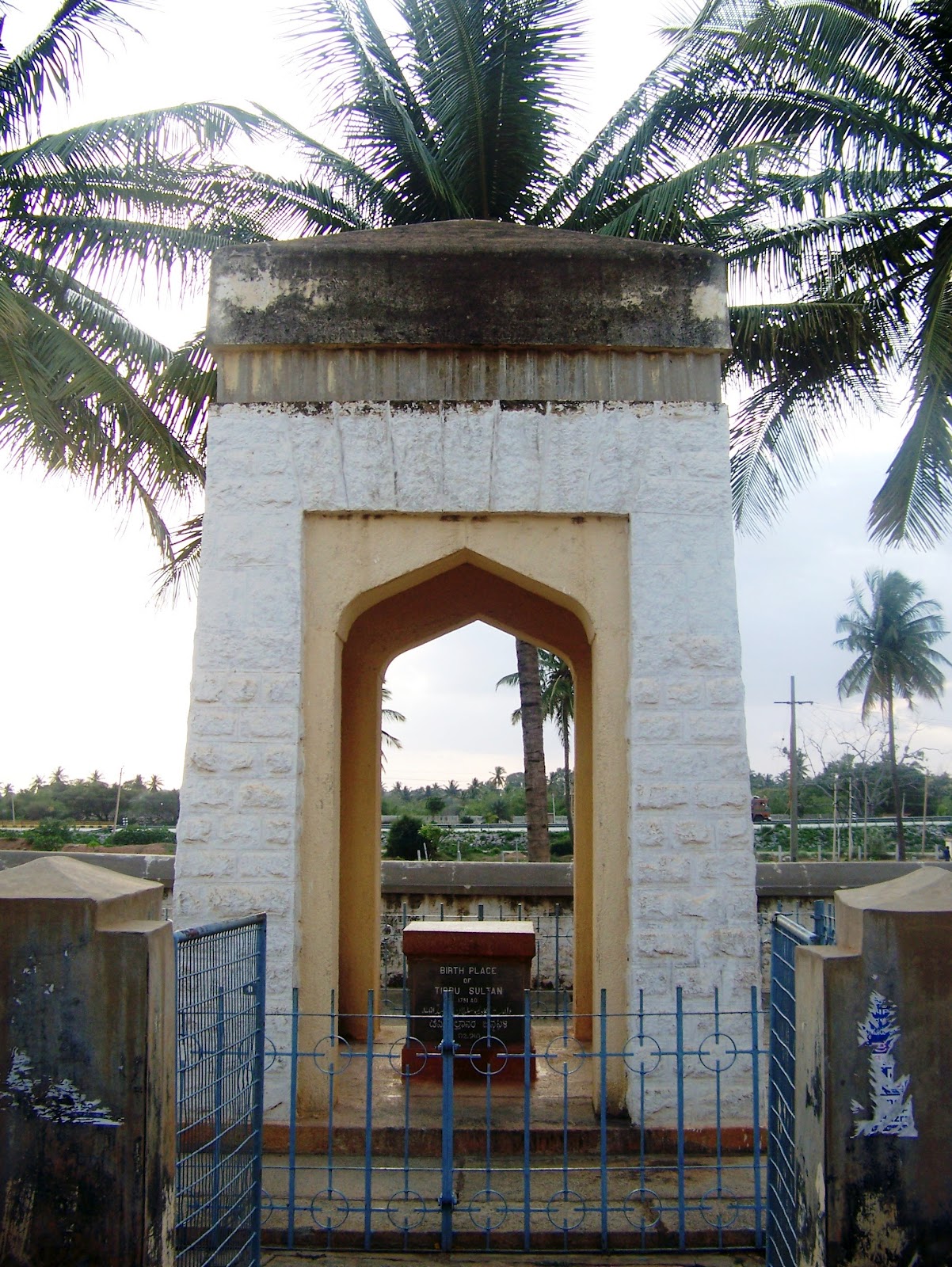
Before the Bengaluru Airport was shifted to the neighbourhood of this little village, Devanahalli was already popular as the hometown of Tippu Sultan, often referred as the ‘Tiger of Mysore’. We arrived at a small mantap like structure which has an engraved stone that mentions it as the Birth place of this controversial ruler in South India. With this structure lying right by the side of the main road, it didn’t seem very exciting to me to think of whether this famous ruler was born by the road side (or so it seemed).

Tippu's Birth place
Tippu’s Birth place

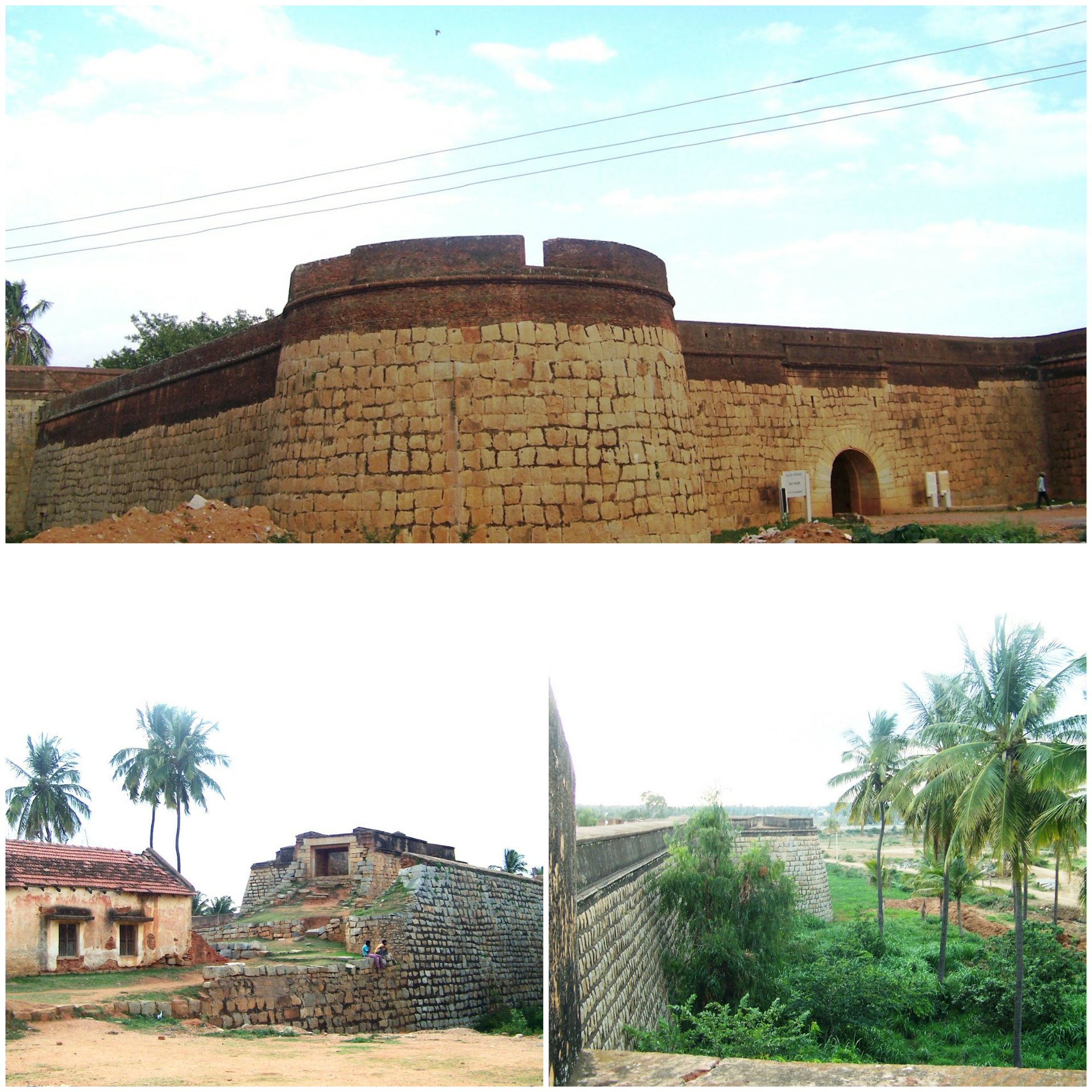
As we continued to walk further, we came across a large walled structure. With rain water stagnating by its side, excavation waste from the city dumped at the entrance, unpaved dusty roads and all that, it seemed to me like it was a neglected piece of history with a first glance. As we passed through the super narrow doorway in this wall, we realized that we were entering a fortress.

After entering it, we decided to walk on a raised platform along the inner side of the fortress wall. It was a walk longer than we expected it to be and we soon realized that it is one whole town that actually exists within the walls of the fort. The actual ‘Devanahalli’ from the history books existed within the walls and what one knows around the highway is just an extension of the town that overgrew the walls due to the boom in real estate that followed the commencement of the airport.

Things to see in Devanahalli

But after walking so much around this place, it felt like there was nothing much in this place that spoke about Tippu’s valour that is often spoken about in history books.Talking about back in the time in history and with my experience of visiting Srirangapatna (a stronghold of Tippu & his father), Devanahalli as a town lacked development.We walked around the place till evening and were able to cover one half of the Fort. But, with that we had already exited from the other end of the town. We boarded a BMTC bus back to the city from there.

Closing Remarks:
• A good day for a jobless person like me seeking for offbeat places around the city
• It isn’t an exclusive place, but if someone has couple of hours of transit at the airport and don’t know what to do, this is an option. It is the nearest place to venture out in a taxi from the airport as Bengaluru city is too far to reach.

Gold Market to Gold Fields in a Railbus

One Saturday off in a month and the crunch for exploration was at its peak… Dad and I decided to board the train to sit in a bus that runs on rails.. I mean.. We wanted to travel in the “RailBus”. There are only 2 railbuses still running in the country, one runs on narrow guage and the other runs on broad gauge. While the former is a part of the Kalka-Shimla mountain railways, the latter is operated by the South western railways. And we were interested in the one closer to home i.e. in South India. It plies between Bangarpet (literally translates to Gold Market in Kannada) and KGF a.k.a. Kolar Gold Fields.

Bangalore Cantonment Railway Station

It leaves Bangarpet at 9.00.a.m and returns by noon. Again leaves Bangarpet by 5.30.p.m and returns before its dark. So, technically we wanted to reach Bangarpet before 9.00.a.m. But the laziness that had set in because of a hectic work week, we woke up late and boarded the Bangarpet-Bangalore express at 9.45.a.m from Cantonment railway station. So the entire idea of railbus travel flopped even before it happened. Jeez..!!!
Once at Bangarpet, we walked from the railway junction to the dusty town and boarded a private bus that took us to KGF which had passengers 2.5XFOS (2.5 times the Factor of Safety) the bus was designed for..!! And our arrival at the destination was rather fast considering the time we had before we died of suffocation due to the availability of very little air to breathe(forget Oxygen) in the completely choked up bus 😛 (I seriously don’t know how to put our plight in words..!!)

The Cyanide Dumps
The Cyanide Dumps

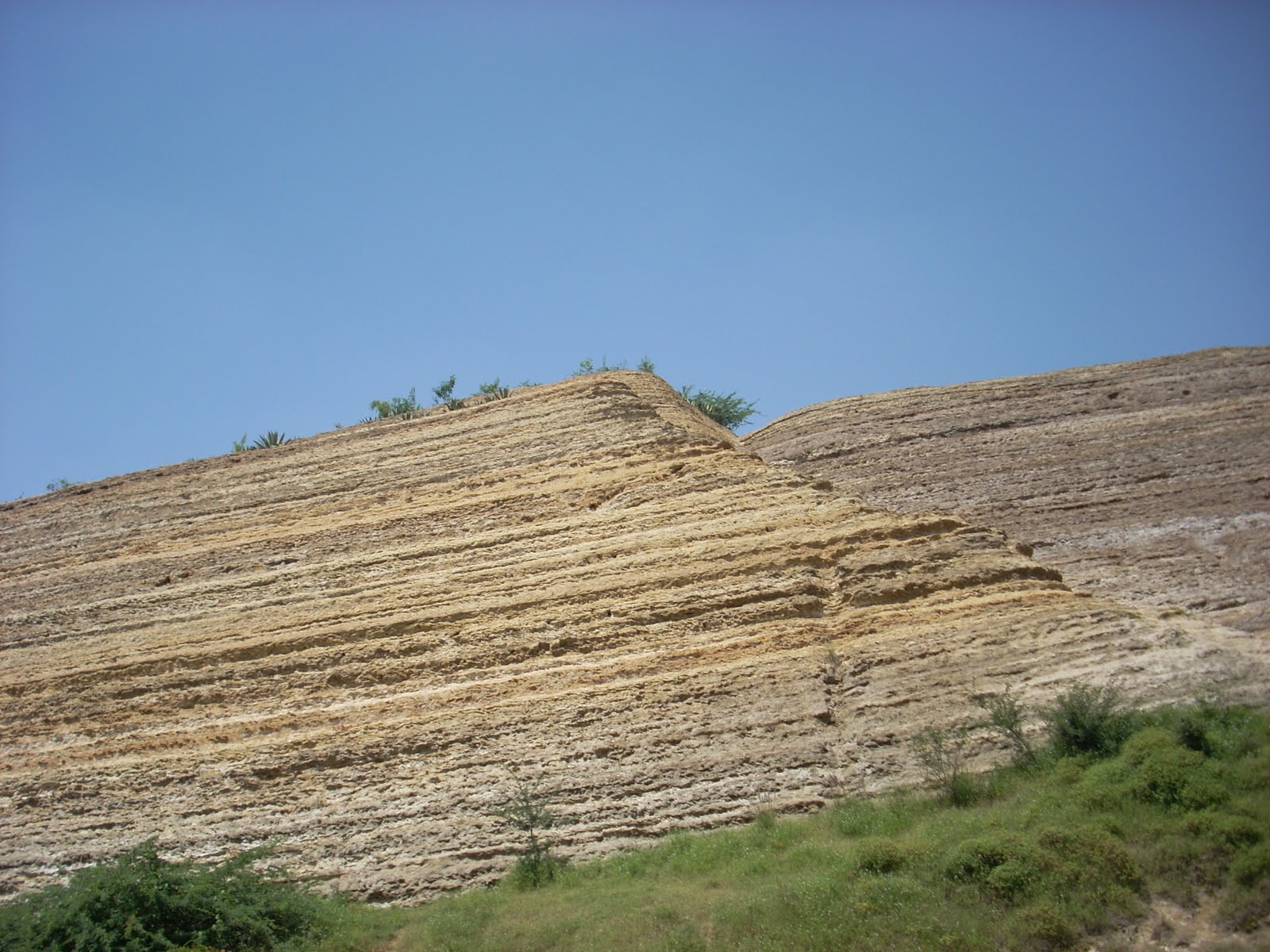
KGF.. The road welcomes you with a continuous stretch of this really awesome looking hill on one side and an old dusty town on the other side. It is dusty because it is a mining hub and it has a hill because of the same reason.. These hills are called cyanide dumps- the slurry left over after gold extraction from the mines using Cyanide based alkalis are dumped here and this has hardened over time making it look like a hill. It reminded me of the formations in the Grand Canyon for some reason.

Kotilingeshwara Temple

From here, we again boarded a bus to reach the “Kotilingeshwara temple”. This place is said to have more than 1 crore Shivalingas, all donated by people. Though I’m not a very religious person, I wanted to visit the place for the history it unfolded. It was soon pack-up time for us as the scorching sun had sucked out most of our energy. But, most importantly, we had to return to Bangarpet before we could miss a glance of the sole reason of our trip..!! And.. We were back at BWT junction as per schedule.

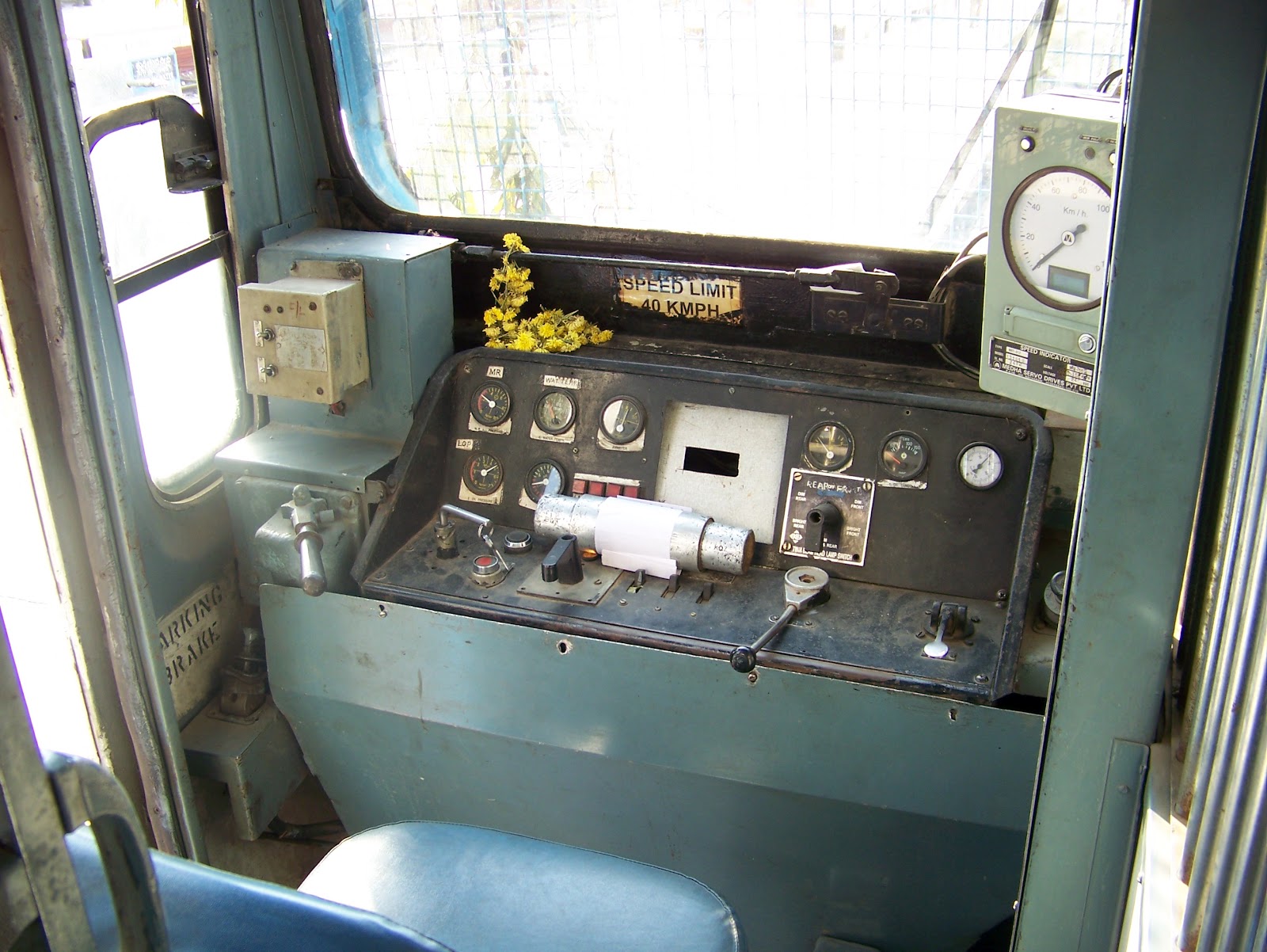
The loner was resting in the shade of a tree. And the loco pilot obliged to open the door and let us have a look inside of the train. It felt nice to see the last one left in the country but the trip ended soon. Ofcourse, it was with a heavy heart that we could not travel in it 😥

The RailBus in Karnataka
The RailBus
The RailBus in Karnataka

Have you been in a bus that travels on railway lines???? Do share your experiences below. I’d love to hear them!

A Green University Campus in the City – GKVK

This is quite an old story. But, nevertheless worth writing about, especially if you are looking for a quick outing in Bangalore within a short driving distance…

GKVK is the short form for Gandhi Krishi Vignana Kendra a.k.a. University of Agricultural Sciences (UAS). It is a research institute funded and managed by the Karnataka state government. With several sub-campuses located across the state, their main campus is located near Jakkur in Bangalore. If one travelling to Bengaluru airport is alert, he may find it on his way.

My cousin who was studying her undergraduate course in Agricultural science at that time, informed us about the “Agri-Mela” happening in her campus. It is an annual event organized sometime in November. Hailing from a farmer background, our family has the natural instincts to learn more about various crops, research and related advancement in technology. With that curiosity, my dad and I went for a bike ride to the venue. The bike ride was intended with two basic ideas. One, of getting some fresh air from their vast campus and the other was of course to look out for any suitable technology that we could implement in our farm back in my hometown. This is an excellent place for bird watching too.

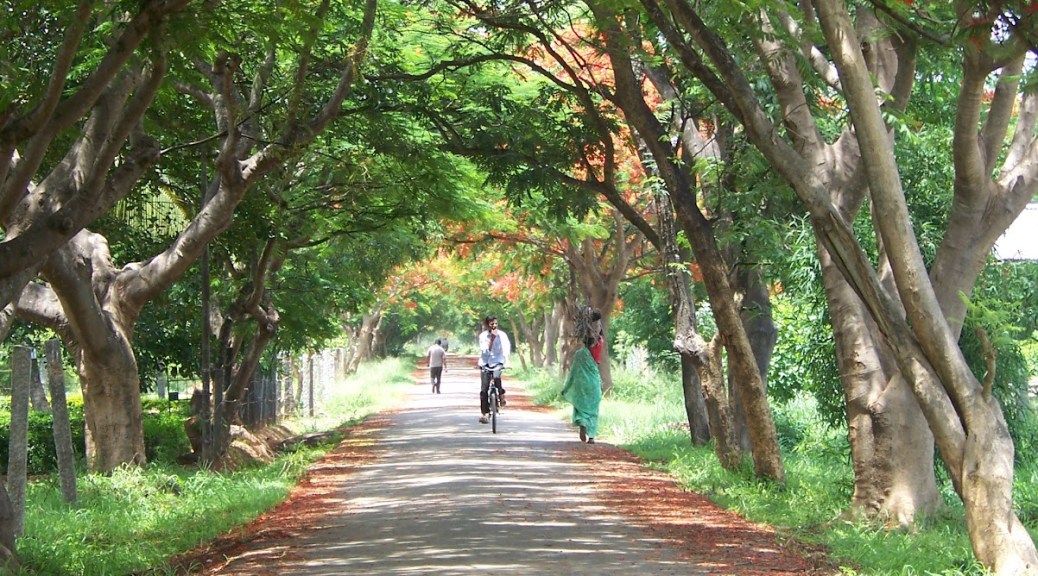
The Gulmohur trees inside the GKVK campus
The best stretch in the city- The Gulmohur Avenue

Although this 1000 odd acres university campus serves as a good lung space in the overburdened concrete city at any given time of the year, this is a season when it beams with extra life. The various plants across the campus will be bearing fruits and flowers in full bloom. Since the research in agriculture covers a range of topics, you could walk or ride around different patches of land with different types of crop, all mostly grown and managed by the students as part of their curriculum.

There are stalls covering range of topics like horticulture, sericulture, apiculture, cattle farming, poultry, food processing, storage, logistics, marketing, irrigation etc. covering almost all areas of agriculture and provides a platform for farmers from the state to share and learn newer developments in this field.

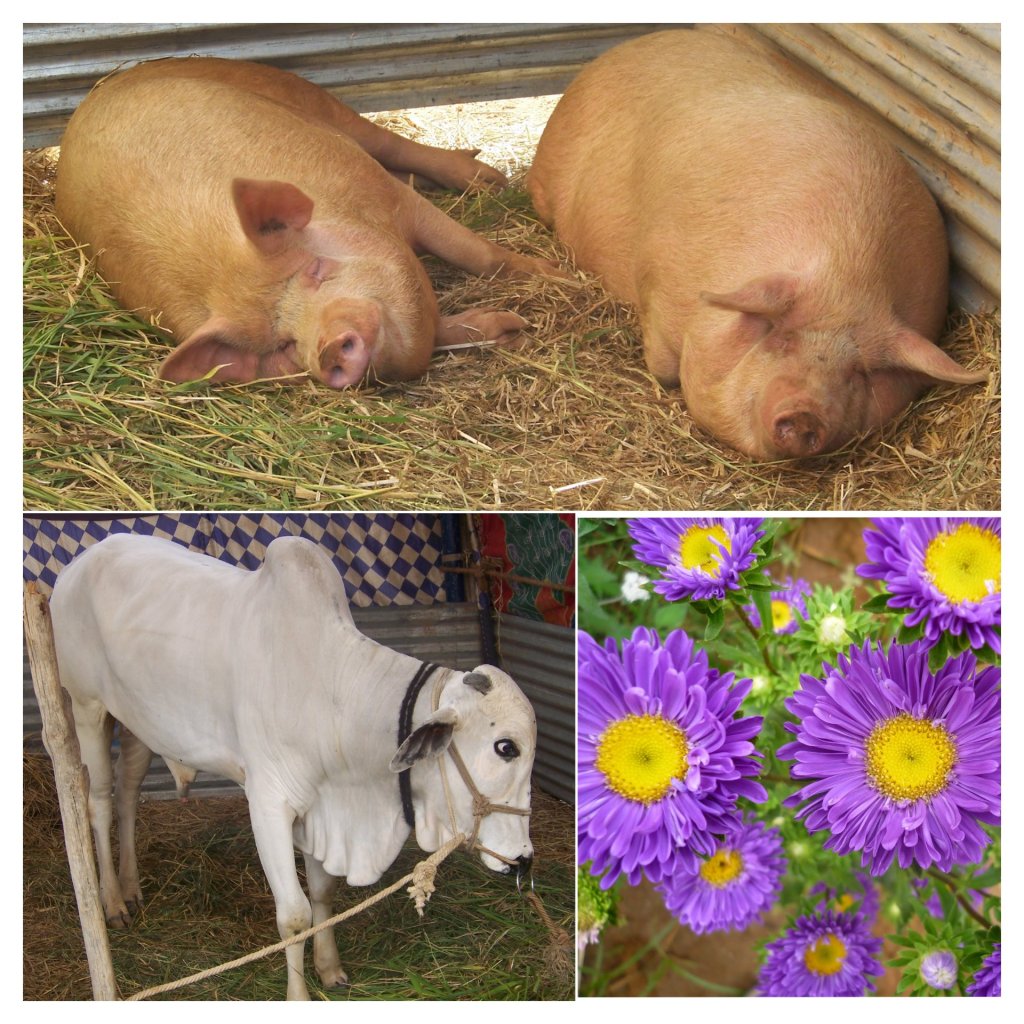
Images from Animal husbandry and horticulture stalls during the annual Krishi mela at GKVK
The exhibits at the agricultural stalls at GKVK

It was well over afternoon by the time we finished roaming around just a portion of the campus and exhausted. We bought a few homemade & processed foods from the stalls with an excitement to try newer flavors and decided to head back home. All in all, it was an afternoon well spent.

Things to do (on any day of the year):
• Take a drive if you want some fresh air without going too far from the city on a lazy evening.
• Spend a day bird watching here, there are often bird watching workshops conducted by hobbyists.
• You can buy fresh fruits and vegetables at their outlet on campus, many a times organic and sold at relatively cheaper prices as compared to the city.
• Sign up for one of the several training workshops conducted on campus, throughout the year.
• Visit the annual ‘Krishi-Mela’ and interact with farmers from across the state and the country.

The Western Ghats- To Save or Not ?

There is much ado about the Western Ghats getting tagged as a World heritage site by the UNESCO.

So, like everyone around me here, I too am excited about sharing my views on it.

Firstly the stronger points for consideration:

  1. The western Ghats is home to very rare species of flora & fauna- many snakes, frogs, birds etc. are critically endangered and also unique only to these Ghats.
  2. These ghats stop the wind from the east and bring rainfall to the south.
  3. The major rivers of the South are rain fed and originate here.
  4. I being an ardent nature lover would definitely support to save the ever lush green ghats.

Now, the points not to consider:

  1. There are a no. of tribes living in these Ghats like the Soligas, Kurubas, Maleya-kudiyas etc who will all be forced to vacate the forests and will be disturbed from their natural habitat though the government may promise them of providing alternate homes.
  2. The Coorgs (Kodavas)- by themselves are a very small community fighting hard against the “Jamma Bane” issue and now have yet another blow. Many localites holding lands in the identified areas will be forced to vacate and this will inturn force them out of Coorg.
  3. Myself being a hardcore Kodavathi, I would never be able to take this by my stride.

And now, the strongest of them all:

  1. The Ghats are a rich source for mining, timber and a major hub for tourism leading to severe deforestation in the name of building resorts, nature sports and the likes.
  2. It is important to consider that our beloved elected representatives are frequently in the limelight for the mining scams. The major share of resorts in this region are owned by big names and are tucked away deep in the core area of the jungles which compete for providing the best tiger spotting, elephant spotting, wild hunting, etc. etc, activities for their guests. So there is a valid point for these scamsters to fight against the prestigious tag.
  3. The heritage tag limits the human entry to most regions. Let alone restrictions on activities like trekking, hiking etc. just walking around this place without knowledge would lead to high penalty.

But, what if this has an impact on a Coorg’s lifestyle: the tag has come as a much needed  respite for a nature lover like me. We are Coorgs at the end of the day. We have lived our way through thick jungles, heavy downpours, deep dark nights, wild animals in our porticos. And that’s the way we enjoy our life at it’s best. So we can definitely live strong with thick jungles. We want our Green cover to be saved…!!

I am frustrated of being helpless and just a mute spectator watching the depletion of green cover in the name of development. I can hardly see any development in my area other than the fact that big names (let me say powerful people) are buying properties by offering good money and settling down in Coorg, becoming stake-holders in resorts etc and turning all their black money white.

I used to eagerly wait for the rainy season to start so that I would get my monsoon holidays while I was in school. And now, I am even more anxious that this rainy season may pass by without even seeing a “rainfall”. Yes, only conservation of these ghats can bring us the rains that we need.

I am frustrated with the fact that the place where is grew up catching little fishes and crabs with my cousins as a little girl beneath big boulders is now nothing but a fully concrete platform for the tourists to rest on.

What I once knew as a beautiful waterfall and a place where my grandpa gave me my swimming lessons is now nothing but a pool of sewage flowing from the town littered by ruthless tourists. The stench of this mess gets tears streaming down my eyes everytime I stand on the very same concrete platform and try to recollect the good old greener and cleaner grandpa days…

The Bramhagiri hills

And here I sum up (with lines from a famous song of a Bollywood movie):

Give me some sunshine, give me some rain
Give me another chance, I want to grow up once again…

– 3 Idiots

Up, close and personal with wildlife at Bannerghatta

I believe that we develop interests based on the environment and the social circles that we are exposed to. Born in a small hill-dwelling community whose lineage takes pride in hunting games, it once got me to think where my interests towards nature and wildlife conservation came from. Although I couldn’t join too many dots, one significant period was my high-school days where I would have long conversations with a friend, about animals’ health, their behavior, their habitat etc. Her father worked in the Karnataka forest department. I thus chanced upon once, to stay for a couple of days along with her, in the official quarters located inside the Bannerghatta Biological park.

A stay dating back to June 2007: Five friends and I embarked on this memorable trip (yeah, I can call it life changing too.. It probably changed my perspective about zoo keeping and keeping animals in captivity).

Day 1:
After bracing through long traffic jams and burping on our pre-booked lunch at the Jungle resorts within the park, it was Safari time for us. Even though I’ve been to Bannerghatta innumerous number of times in the past, this was a nice experience. On my previous visits as a normal visitor in the zoo, I would have to buy separate passes for each section. But this time, I was exploring the place with special privileges. The herbivores safari, tiger safari, lion safari, bear safari all done by sunset time and we unwound at the quarters.. You have 6 chatter-box girls in one house and what do you expect? A lot of gossip 😛 The evening thus passed by. The cook served our dinner and post that, we all geared up for one of the most memorable nights of our lives.

Photos of wildlife taken at Bannerghatta National park
Deep inside the jungle

We were all set for “The Night Safari”. The forest guards would go on their regular night beats in the forest and this time, we would accompany them. Apart from being the first experience for all of us out at night in deep jungle, what was more exciting was that we were going in an open pick-up vehicle. As the eeriness of the deep dark wild started to excite us more and more, we got a better understanding of such places at night. While we were being attentive and soaking in all the sensuousness of mother nature, we spotted some wild animal that crossed our path.. and then came back and stood infront of our vehicle. I thought it was some sort of a wild cat and my jaws dropped in awe. I shouted in excitement, “Cat, Cat!”. Then noticing the weird glances I received and the silence of others, I realized I had to shut up. A friend was quick to realise what it was. She shouted “Leopard, Leopard!”. Imagine a LEOPARD, totally untamed and WILD.. right infront of us…!!! The driver halted the vehicle. Another friend yelled out, “Don’t stop, don’t stop.. Move move..”. But the driver took the jeep in reverse and closer to the cat. The leopard had now walked past our jeep and come to the rear side. At a distance of less than 10meters or so.. Instead of pouncing on us and grabbing one of us, strangely the leopard ran away within a few seconds. PHEWWW… still feels like I just woke up from a dream..!!

We were then told that the leopard had littered cubs somewhere in the vicinity and hence, ran away. The forest guards know their forests and its inhabitants. The leopard was frightened about a threat to its babies and hence ran away to protect them. They are usually in defensive mode during these time unless attacking is an absolute necessary. The Safari continued.. We spotted bisons, antelopes, spotted deers, neelghais, wild cat, black bucks, mongoose, rabbits, so on and so forth… The nigh safari was indeed an experience in itself!

Day 2:
Next morning we all woke up before sunrise and again, headed towards the jungle. This time, it was a morning ride with a hope of spotting a few wild elephants. As we travelled deep, deeper and deepest into the forest, the terrain got more bumpier and rocky. The painful ride however, did not yield any good sightings apart from fresh elephant dung everywhere. But, some wonders of the jungles that we had missed in the darkness of the previous night, made up for the disappointment of our morning ride. Picture these little scenes: hundreds of butterflies flying out of a bush, all at once; the glittering clear waters of the lakes lost in the deep jungle; many more.

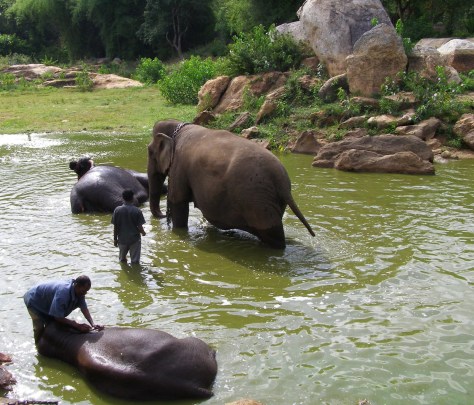
After reaching back to the quarters, we immediately headed to a pond located behind the quarters. It was bathing time for the pachyderms at the zoo… Two majestic sweethearts walked past us, with a calf: Vanaraja, Darshan & Baby Nisarga (Those are the names of the elephants at Bannerghatta). We too stretched ourselves to give them a scrub and in the process, got all wet with the ever playfull little Nisarga.

Photos of elephants taken at Bannerghatta National park

It was our zoo time post breakfast. In a separate area, an elephant calf named Geetha was in deep slumber. The calf who was barely as old as a month-and-a-half was guarded by her mother. We accompanied the mahout to feed them and spent. During this, the little one woke up and we got lucky to spend some time playing around with her. She would nod her head and playfully chase us. We would run around the tree until both of us got tired, and then start the cycle again. While at this, the vetinerary doctors of the zoo welcomed us to the backyard of the Vet-hospital. Under their supervision, we got an opportunity to touch, carry and care for wounded or sick animals that were being treated there. Among them were an alligator, civet cat, guinea pigs, rabbits etc.

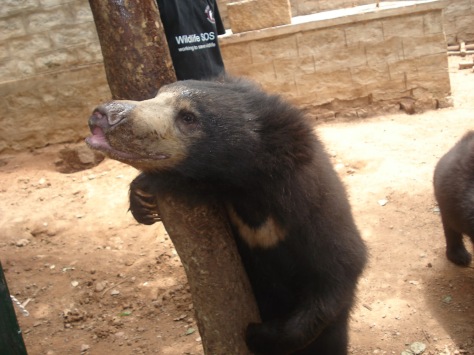
Later in the afternoon, we visted the SOS centre. I didn’t even know such a place existed within the premises despite coming to the zoo several times in the past Special privileges! This is a rehabilitation center for wounded lions, tigers, bears etc. These animals are mostly rescued from circuses, bear charmers etc. treated here before letting them into the actual zoo area. This is a public prohibited zone. The handsome Siberian tigers were my favourite.

Sloth bears at the SOS center in Bannerghatta National Park
At the SOS centre

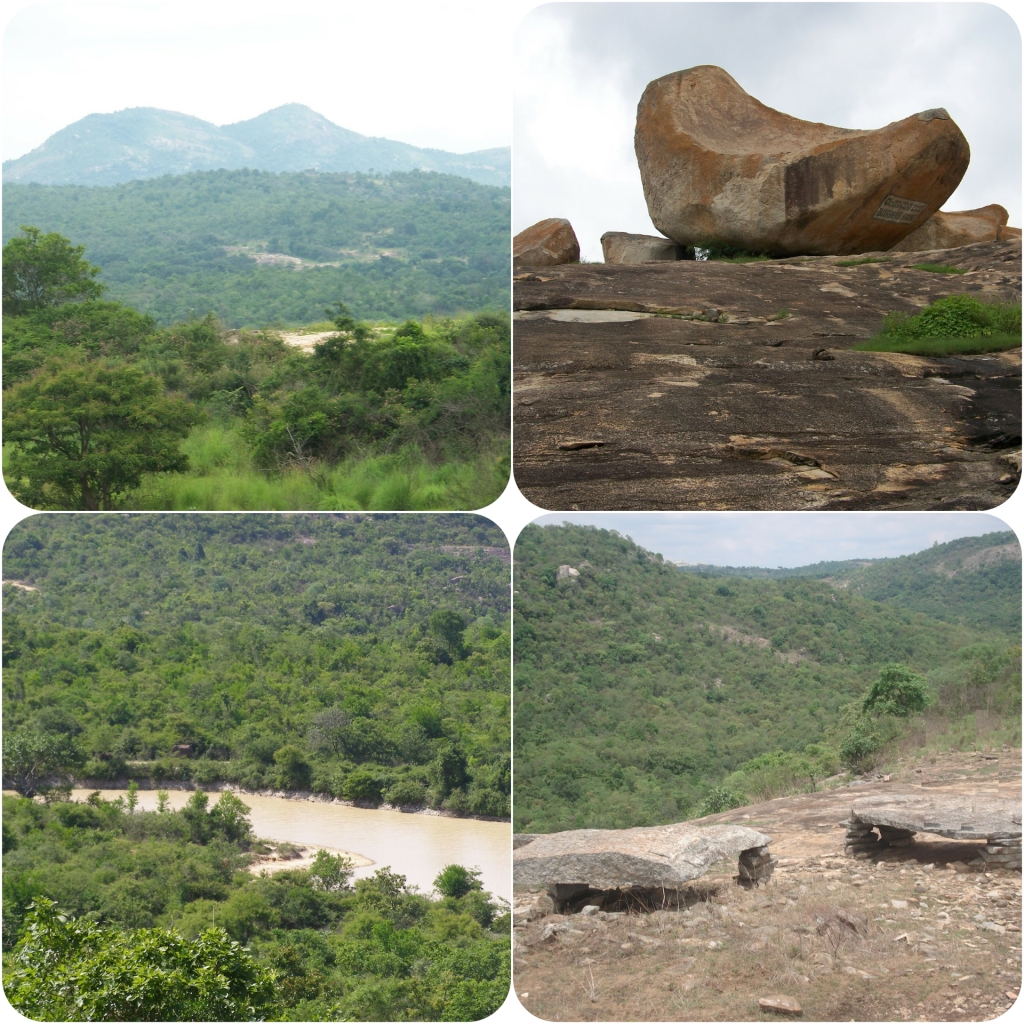
Next was the drive uphill- to Udige bande. We got a nice view of the ‘Bannerghatta National Park’ from here. You can find innumerous dolmens here, believed to be the place where the local tribes once laid their dead ancestors to sleep. There is also another large rock, called as the Barber’s stone which is believed to have been featured in Dr.Rajkumar’s ‘Gandhada Gudi’ movie.

Views of the forest cover at Bannerghatta National park
From Top left: 1.The view from Udige Bande, 2. The Barber’s stone, 3.The Dolmens atop Udige Bande, 4.View of a small check dam constructed by the forest department as a watering hole for the wild animals.

Day 3:
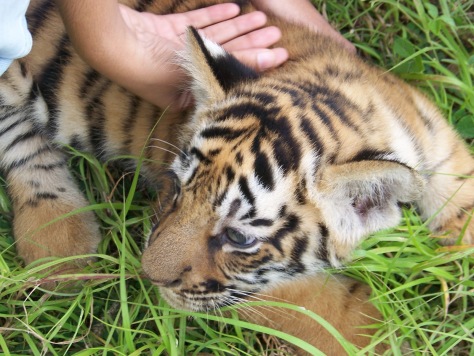
We were taken to the tiger and lion conservation area. The pictures taken here are something that I would be flaunting for the rest of my life. Not all get a chance to touch and play around with tiger cubs 😉 The big cats that are ready for their breeding / mating are brought here. After the cubs are born, the parents and the cubs are nurtured here until the cubs are of a suitable age to go back to the wild. Here, there is no wild as such. They are let in the safari area to mingle with the other cats in a controlled space, which is also another form of captivity.

A tiger cub at the animal breeding center at Bannerghatta National park
Playing with a tiger cub at Bannerghatta lion and tiger conservation area

We took a walk around the museum and got a few insights into preservation and conservation of our natural heritage. We then headed to the last part of our long weekend. The butterfly park was newly set back then and it was a good crowd puller among the public.

To my experiences of going on wildlife safaris and what I had watched on discovery & Nat-geo, I guess this trip gave me a new insight into wildlife conservation. Until now I had only been hearing and watching it. This trip gave me an opportunity to EXPERIENCE it. You cannot connect with nature unless, you get up, close and personal with wildlife.