My First City Beat

Everyone has their own experiences of travelling to a new place for the first time, especially if he/she is an unseasoned traveler and is alone. This is a guest post by Mr.S.M.Nanjappa. Through this post, he reminiscises his first experience from back in the time. He narrates his story of travelling to SOMEWHERE outside his little village for the first time. Over 5 decades ago, his first time outside his little village was to a metropolitan city of Bangalore.

A brief background:
Kodagu (or Coorg as the British called it) is one of the smallest districts in Karnataka state in India. ‘Kodavas’ form the majority of the native communities that is endemic to this region with a total community population of around 1.5 lakhs. In spite of their small community size, the Kodavas take pride in maximum number of its people having served in the British & the Indian army. They say that the forces and hockey runs in their blood. Mr.S.M.Nanjappa is from a generation that has seen at least one son from every Kodava household serving in the forces and the times when recruitment officers periodically visited every Kodava household looking out to induct the boys into service.

The Story:
I had just graduated from Secondary School, in a small town in Kodagu district. Since I couldn’t join college in the same year due to some reasons, I decided to join the Indian army like most other people from my district did. Accordingly, I planned to attend one of the army recruitments that were scheduled in Bangalore. That was my first journey to a city from the remote village and also the first time that I was seeing trains, auto rickshaws, and double-decker buses among many other things. I found myself having stepped into a New World and everything around me appeared to be strange. On the following day of my arrival at Bangalore, I visited the army recruitment office near Mayo hall. However, I was rejected after my medical examination due to poor eyesight, which I didn’t know until then. I came out of the recruitment office with much disappointment.

Just while I was crossing the gate of the center, a stranger asked me, “What happened young man, are you selected?”. He was tall, well built and smartly dressed and spoke English.
No, I am rejected due to my eye sight”, I replied to him in my broken English.
What are you planning to do now?” he asked.
I will return to my native place”, I told him.
Which is your hometown?” he asked.
Coorg”, I replied.
To my utter surprise, this stranger started to speak Kodava language.
I am from Kokeri village. I am currently working in the Indian Air force as a sergeant. I have come here, to the recruitment office to enroll one of my friend’s sons”, he introduced himself in the only language that I was most comfortable to speak in.

He then thought for a moment and after a pause, offered to help me if I didn’t mind.
I know a Kodava who works as a Major in the army. He will definitely be able to help you with my army job!” he suggested.

I was so glad that I had met a person from my own community and thereon, believed him with my stay in the city. After I nodded an agreement to his suggestion, the two of us started our walk down the boulevard of M.G.Road. I was taken into a small hotel and offered a cup of coffee. From there, we proceeded towards sub-area office, where the Kodava Major worked.

I live in a big bungalow provided by the air force. I have two servants, a jeep and a driver at my service. You can stay in my house for as many days as you like.” he informed me as we continued our walk.

People of Kodagu, especially me, have always been awed by the fancy lifestyle of the army men. The soldiers who came on home leave were always well dressed and smoked expensive cigarettes. It was hard to say the soldiers with their behavior as compared to from the officers of higher ranks in the army. I always wondered if even a soldier in the army lived a classy life. So, when this person told me about the benefits he was provided by the forces, it wasn’t hard for me to believe his story.

Politely rejecting the offer to stay at his house, I informed him of my plan to return to my native by that night’s bus. He asked me to stay back and told me that he would certainly be able to get me enrolled in the army. Even as we continued to walk, I was taken to a big shop that sold fabrics. There, he enquired about certain materials that he needed to refurbish his bungalow. “The air force wants every house to look modern.” he said. Sadly, he couldn’t find anything that matched his taste.

Since this is your first visit to the city, I will show you around. It will be convenient to travel if the jeep is available.” He said, before walking across to a telephone booth to call his driver. He returned to where I was standing and expressed his irritation. “These bloody phones don’t work when necessary!

We arrived at the sub-area office in a bit. He told me to wait outside the gate and that he alone would meet the Major and talk about me. As this man walked inside the office, he was greeted with a smart salute from a sentry standing guard there.

The sergeant returned in ten minutes. If my memory is right, it must have been around 11:00.a.m. that day.
The major is enjoying drinks right now and I too was offered a glass of rum. But, I refused the drink and informed him about your job matter. The major has asked us to get a medical certificate from a competent doctor in Bangalore.” I was informed about his meeting with the army officer.
Do you know any doctor in Bangalore?” I was asked.

After getting a negative reply from me, he thought for a few minutes and told me about his acquaintance of a doctor who worked in Bowring hospital. As per the suggestion of this god-sent man, I agreed and continued to walk with him towards the hospital. On our way, I was taken to a market from where this man wanted to purchase a few things for the interiors of his house. After enquiring the rates of a few things in the market, he came out from there informing the vendors that he would return on his way back. However, as we walked out, he told me about the things being expensive in that market as it was frequented mostly by the officers.

As we were passing the market, this man’s eyes fell on a vendor who was selling puppies. “Seven rupees per puppy”, the vendor informed upon the sergeant’s enquiry of the price. Although he intended to buy two for the company of his Alsatian dog in his bungalow, he expressed his unhappiness over the quality of the canines and left the place.

He again went into a telephone booth and tried to call his driver to get the jeep, but returned blaming the phones that were out of order.

We finally arrived at Bowring hospital. I was again made to stand outside, where the sergeant went in alone to the cabin of one of the doctors and returned in about 10 minutes. “There is good news. The doctor has agreed to give you the required medical certificate. But, he has demanded an amount of Rs.100/- for the same.” he informed me.
Give me Rs.100/- so that I can get your medical certificate.” he asked me politely after a pause of a few seconds, with his palms stretched in front of me.

It was that moment, in which I was struck by my sixth sense. “I have only Rs.5/- with me.” I informed him.
“It is a matter of getting a job. Don’t lose the opportunity. Check again if you have at least Rs.50/- I will adjust the remaining amount.” he told me.
I have kept all the money I had in the hotel room itself. I now have only Rs.5/- “, I expressed my helplessness by showing him my wallet.

After hearing this, the sergeant grew furious. He forcibly searched the pockets in my trousers and my shirt. After finding no other amount, he took that Rs.5/- and walked away. I was trembling with fear while I was helplessly watching this man walk away with my money.

In my head, I was thanking all the gods that I knew of, in my prayers. God had saved me that day from a conman. In villages, we had grown up listening to stories conmen and thieves in big cities. Because of that, I had hidden all the money that I had inside my socks. I had lost only Rs.5 out of the 300 rupees that I had carried with me from my native.

The skyline of Bengaluru, that I now spend my retired life at.

Later in time, I learnt that this gentleman was a professional cheater. He often robbed people on the Mysore and Bangalore train route. Army soldiers who were coming to Kodagu on home leave and Kodava ladies were his prime targets at bus stands and railway stations.

This article was featured in ‘Coffeeland News’ Sunday, January 26th 2003 edition.

What is your memory of travelling alone? or out of your home for the first time? have you ever been conned or mugged? Share your thoughts in the comment below.

A hidden gem of Wayanad- Aranamala waterfalls

I have discussed with you all why I volunteered to become a ‘Trek leader on weekends’ and how much I enjoy doing it with ‘Plan the Unplanned’ (PTU). With Covid19 lockdowns and safety precautions that followed, break from my weekends with PTU has been longer than I had thought. Although I have been travelling with a closed group of friends and family since few months now, the fear of socializing with a bunch of unknown people had kept me away from PTU. Finally, this January, I decided to get out and lead a group of trekkers. The destination assigned for this weekend was Sultan Bathery in Wayanad district of Kerala. And the task was to find a hidden gem in the Aranamala hills. We were going to hike along a stream to see a waterfall.

Itinerary:

Day 0: Leave Bangalore by night
Day 1: Day hike to Aranamala waterfall, Visit sunset-point and night camping at Ambukutti hills
Day 2: Watch sunrise, visit Edakkal caves and explore Wayanad. Return to Bangalore by night.

The Aranmala waterfall trek

The Details:

It is a very hazy memory from the cold dark January morning of sitting inside our bus at the Wayanad wildlife sanctuary’s Sultan Bathery check post. We had arrived much before 06.00.a.m., when the forest gates would open for public entry. Since we were not allowed to make any noise or get out of the bus in the forest area, we all decided to get some sleep until the gates opened. At first, I was woken up by the cries of peacocks that seemed to be somewhere very near to the bus and some distant elephant trumpet. But then, the darkness around and the exhaustion from the previous workday got me back to fall asleep. I was woken up again in a while, by a sound that was very contrasting and disturbing as compared to what I had heard before falling asleep the last time. This time, the loud deafening sounds were of honking buses and trucks that had congregated at the check post. I opened my eyes to see the dawn of the day with a red sun rising over a mist laden green paddy field from my window. The fresh dung just outside the bus gave me a momentary fright at the thought of having had an elephant walk right past us, in the dark. All said and done, the entry formalities at the inter-state border was sorted and we were at a hotel in a bit. We freshened up, had a nice Kerala breakfast and got ready for the long day ahead.

The start of the hike, Thollayiram kandi in the backdrop

After arriving at Meppadi town, we met our local guide and shifted from our minibus to 4WD Jeeps. The initial stretch deceived me in thinking why a 4WD was needed to drive on a properly laid concrete road. Just then, the roads disappeared, and the real ride started… Although I was sitting in the rear end of the vehicle, I preferred not to sit on the seat and chose to hang on to the roof lest have all my joints and bones displaced. The long drive through the thick canopied forest trail culminated at the start point of our hike. We descended through the path that deviated from the main road towards a river. That’s the ‘Thollayiram Kandi’, our guide pointed out at a peak topped by the rolling clouds. “Kandi is a local unit of measurement”, he elaborated as we continued to walk. We walked through cardamom plantations and jumped over a few fallen tree trunks and creeping roots until we reached a stream.

The stream and the hiking trail at Aranamala

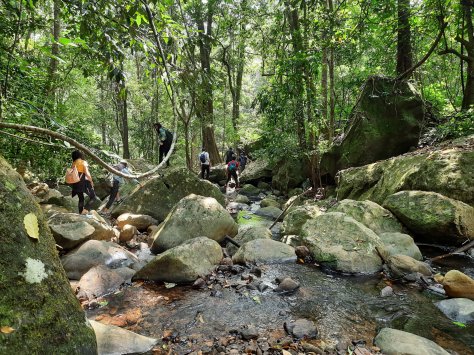
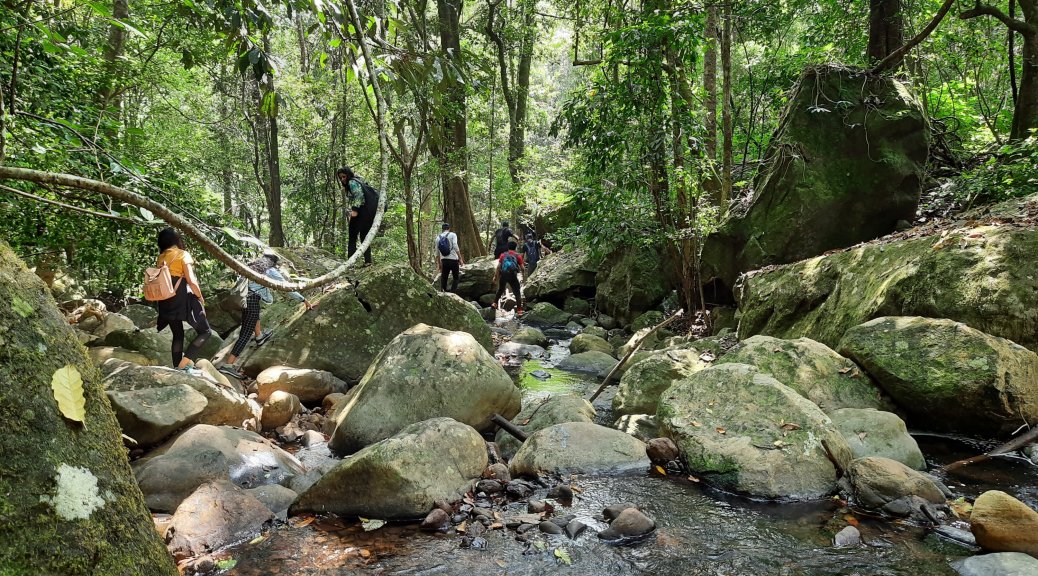
From there onwards, the hike was mainly upstream. While enjoying the absolute music of the gurgling waters of the stream, the croaking frogs and the shrilling cicadas, we slipped down a few large rocks and fell into the shallow waters a couple of times. In spite of trying hard not to get our shoes wet, we ended up soaking them up and picking out occasional leeches from our feet. We realized that given our pace of hiking up, we would not be able to return on time with sufficient daylight. Hence from there onwards, our guide made his own path, through the thick forest. He walked ahead by cutting the thick bushes that came across, all by keeping the stream in sight. We did slip and tumble down the steep a couple of times though. But the hanging vines and lianas came to our rescue. And suddenly, our first view of the waterfall emerged. It was beautiful and the water pool looked crystal clear, tempting to step inside. Apart from our group, there was no one else.

The first waterfall enroute

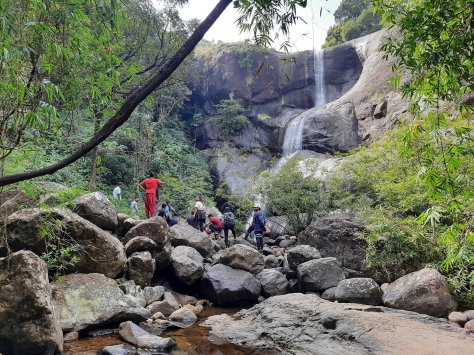
As we got ready to step into the pool, “This is not the main waterfall. We need to walk further ahead”, said our guide. If this waterfall was so calm and beautiful, we wondered how the main waterfall would be like. We were excited! But our excitement sought energy 😛 We had to climb up the same rock, on one end of which the water plunged down. Quite a tricky climb but worth every inch of it! A short walk further from there waaaaasssss the hidden gem that we had come in search of. Now, don’t ask me the name of the waterfall, it is completely off the map and mobile network. So, there is NO way you will find it on google. To make it simple, you can call it the Aranamala waterfall, the waterfall in the Aranamala hills.

The Aranamala waterfalls

That’s all folks, we’re off into the pool to enjoy our dip! But hey, it was not so easy…. The water was bloody cold, and I had cramps in my feet for the first few minutes. I meanwhile enjoyed my free fish-pedicure too, it sort of eased the cramps for me. And then with a dip, I was all set! A waterfall so secluded, a pool so clear and a feeling so divine, I couldn’t have asked for any better to make up for all the travels missed in nearly a year now. After spending some good time under the waterfall and with our soaking wet clothes on, we decided to return. It was already 03.30.p.m and hence decided to take an easy path instead of walking back through the same terrain of forest and the rocks. So, we were taken through a shorter but a beautiful path through cardamom plantation for our descent.

After a nice filling lunch at a campsite enroute, we boarded the jeeps back towards Meppadi. The original itinerary did include a short sunset ride, but the clouds didn’t seem to part for the entire day. From Meppadi, we reached the base of Ambukutti hills for the night. It took us yet another jeep ride to a homestay where we had our chai and conversations. And a fun time around the bonfire until dinner was served.

Post dinner, we carried our tents and sleeping bags up the hill and managed to pitch them atop. The winds were strong, and the rocky ground was tough. With the thick mist blinding all around and the instructions from our guide to not venture away from the tents, all that we could envisage was a deep valley below. The bonus of holding up in the cold until morning, u ask? ‘The view from the tent, of the sun rising above the clouds at 06.00a.m.’ But come morning, we had a surprise awaiting. There was so many clouds until 09.00.a.m that we got a glimpse of the sun for barely a few seconds. We walked up the hill a little further from our campsite, took in some clean air and good views of the range around. We then returned to pack our tents and freshen up for the day. Our breakfast and our ride back to Meppadi was awaiting us at the homestay.

Ambukutti hills as seen from our campsite

That was my story about offbeat Wayanad with ‘Plan the Unplanned’, of leading a group of weekenders and enjoying my weekend, both at the same time.

Other Travel recommendations:

  • Edakkal caves are located at a walkable distance from the campsite at Ambukutti hills
  • You can visit Tirunelli temple and Irupu waterfalls by driving through Wayanad Wildlife Sanctuary (Tholpetta) and Nagarhole National park.
  • Alternately, you can explore Sultan Bathery, visit the ancient Jain temple and Banasura sagar dam that offers a good view of the surrounding hills.

Offbeat Things to do in Vishakhapatnam

My interest in pursuing a career related to the oceans goes a long way back into history. I intended to study oceanography while in school. Then, in spite of studying at an elite college in Bengaluru that offered the army wing of NCC (National Cadet Corps), I wanted to move out to get a ‘B & C’ certification in the Naval wing. After completing my graduation in mechanical engineering, I thought I could do well with a career in a refinery or a shipping harbor or something. A career in ‘Merchant navy’ never had an approval from my family! I did try to get into the ‘Indian Navy’ through the SSB as well. Anyways, all have been futile attempts as life always had other plans for me. But all the above interests have a deep connection with the port city of Visakhapatnam.

Apart from its strategically important port, Vizag had intrigued me as this city is geographically located between a sprawling beachfront and the eastern Ghats. I have been wanting to tick off Vizag, also called as Vishakhapatnam from my ‘to visit list’ from a really long time. Finally, my stint with Vizag materialized in January’2021. This visit is a part of my family’s road trip through Bengaluru– Telangana – Chhattisgarh – Odisha – Andhra Pradesh – Bengaluru.

I had heard a lot of my acquaintances tell me how beautiful this city is. Also, blame it on me for being spoilt by what my home state has offered me in my upbringing. The beaches of karavali, the hills of western Ghats, the coffee plantations of my native district and the sumptuous spread of regional cuisines, similar things were spoken about at Vizag as well. But all the people who had suggested Vizag on my bucket list were the urban tourists who visited this place to either chill by the beachside or relax and rejuvenate at a resort. For those who know me well, I have always enjoyed the exploratory kind of travel. So, I did manage to find such places and things at Vizag to satiate the explorer in me. Here are my favorites:

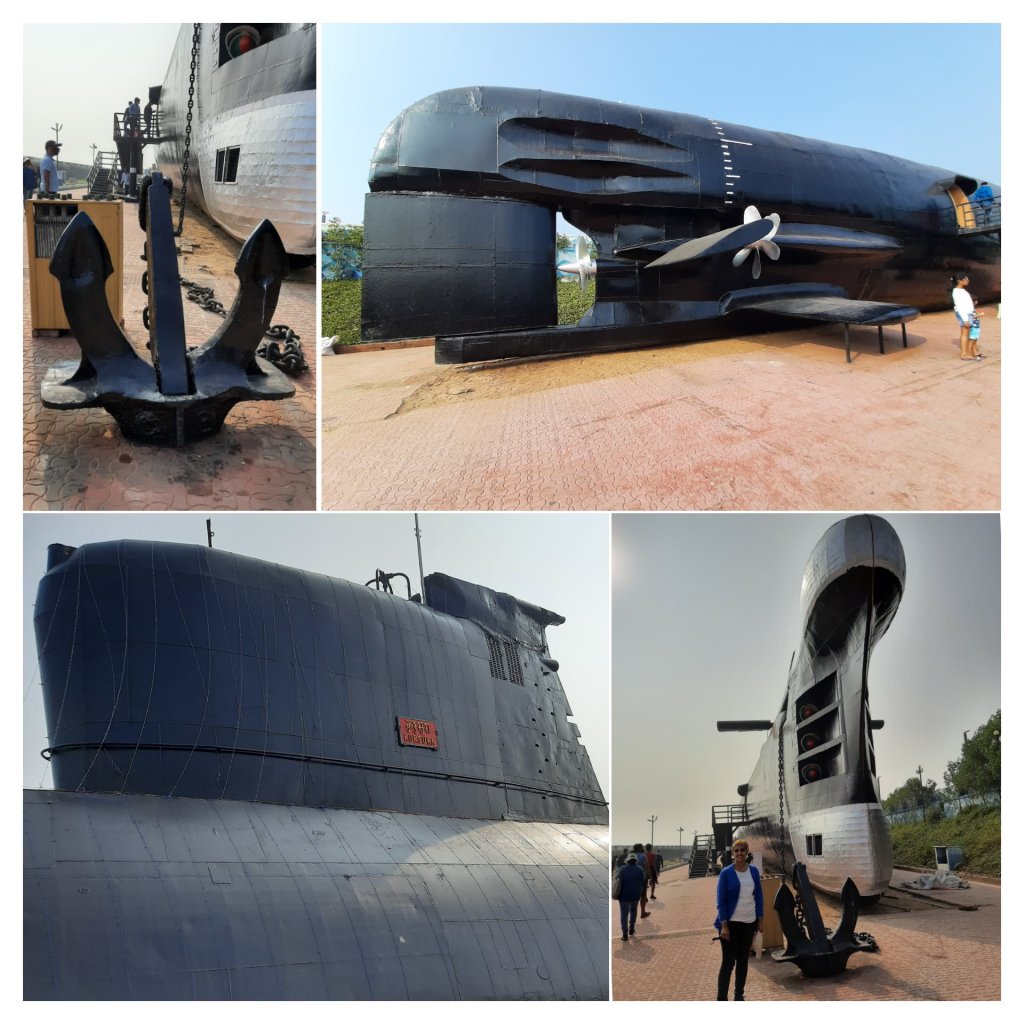
The INS Kursura submarine museum: This is like “THE” thing that brought me to Vizag at the first place. The experience of the guided tour inside of this de-commissioned submarine is something that is priceless and cannot be quantified with a price of an entry ticket.

INS Kursura- Submarine museum

The TupoLev142M aircraft museum: This is one of its kind of what I have been before. The experience of walking through a real aircraft that once served in the ‘Indian Navy’ is a million-dollar worth if you are someone who has deep interest in the uniforms, technology, and scientific history.

Tupolev 142m at the aircraft museum at Vizag

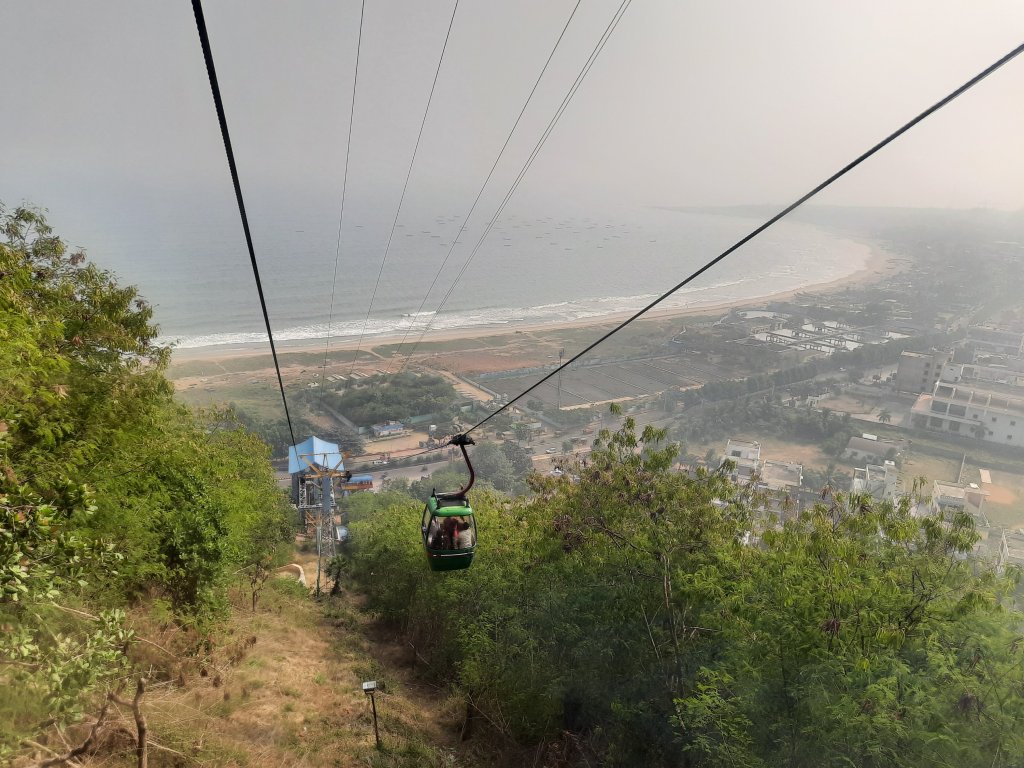
The cable car ride: Kailasagiri hill is a favorite hangout among the locals. They choose to drive up there, walk around the park and hangout at the eateries there. But for me, this was an interesting place because I reached the top of this hill through a cable-car. For all the people drooling over the Singapore tourism’s photos, Vizag is your nearest bet. Once you reach the peak, another recommendation from me is to take a ride on the toy train that goes around the hill. The 360deg view of the city and its enchanting coastline is indeed worth a visit, while you are in Vizag.

View of the coastline from the Cable car in Kailasagiri

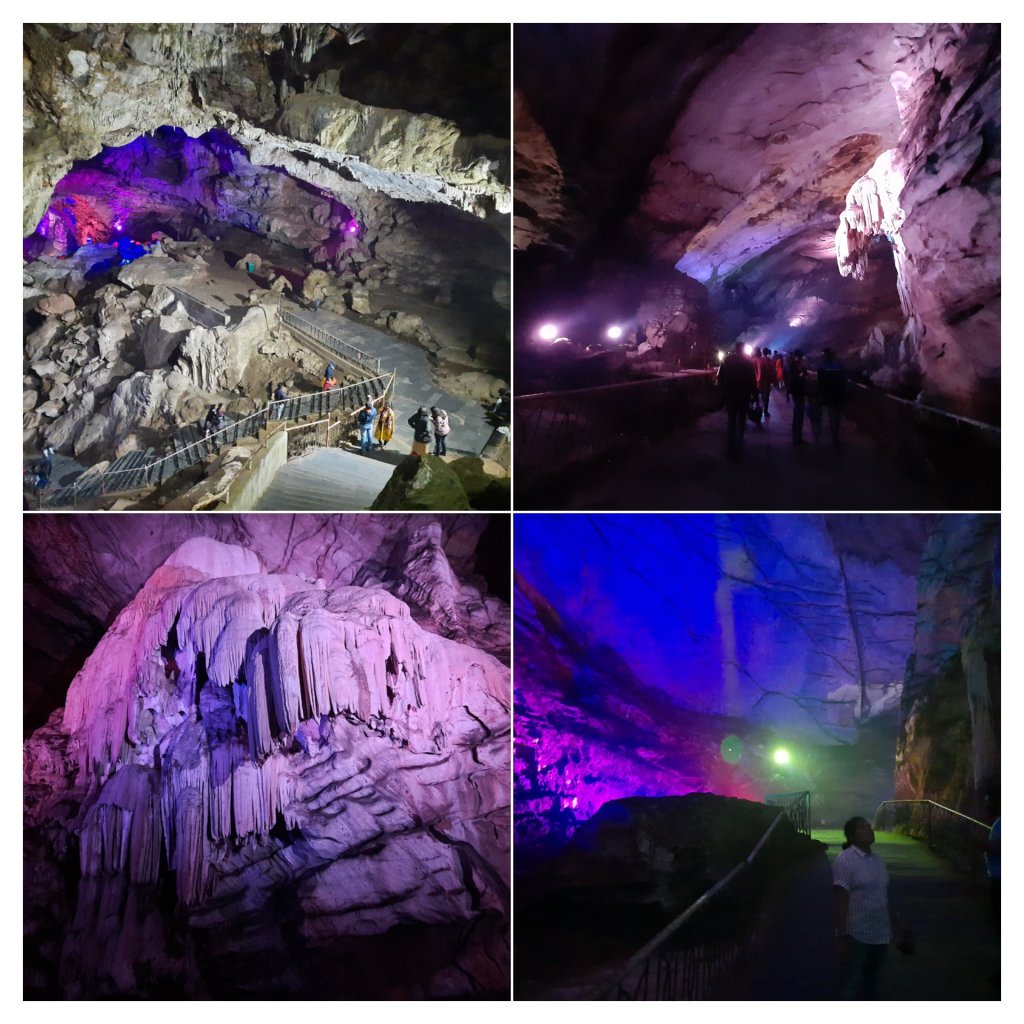
Borra caves: Situated amidst lush greenery, these caves are known to be the widest cave complex in the Indian sub-continent. If possible, time your visit into the caves when a train passes over the land above, you can experience the tremors inside. It is located on the outskirts of Vizag and can be combined as a day trip to Araku valley.

Glimpses of Borra caves

Araku valley: For someone hailing from a place that is called as the ‘Coffee land’ of India (Kodagu district in Karnataka), I found the small patches of the famed ‘Araku valley’ coffee estates overhyped. But still, a meal of ‘bamboo-chicken’ with the valley in the backdrop, a hundred small dotting waterfalls and the beautiful scenery all along the way that made me want to stop for a photo at every turn of the road, all score a definite recommendation from me for a day trip to this valley.

At Araku entrance (From Koraput side)

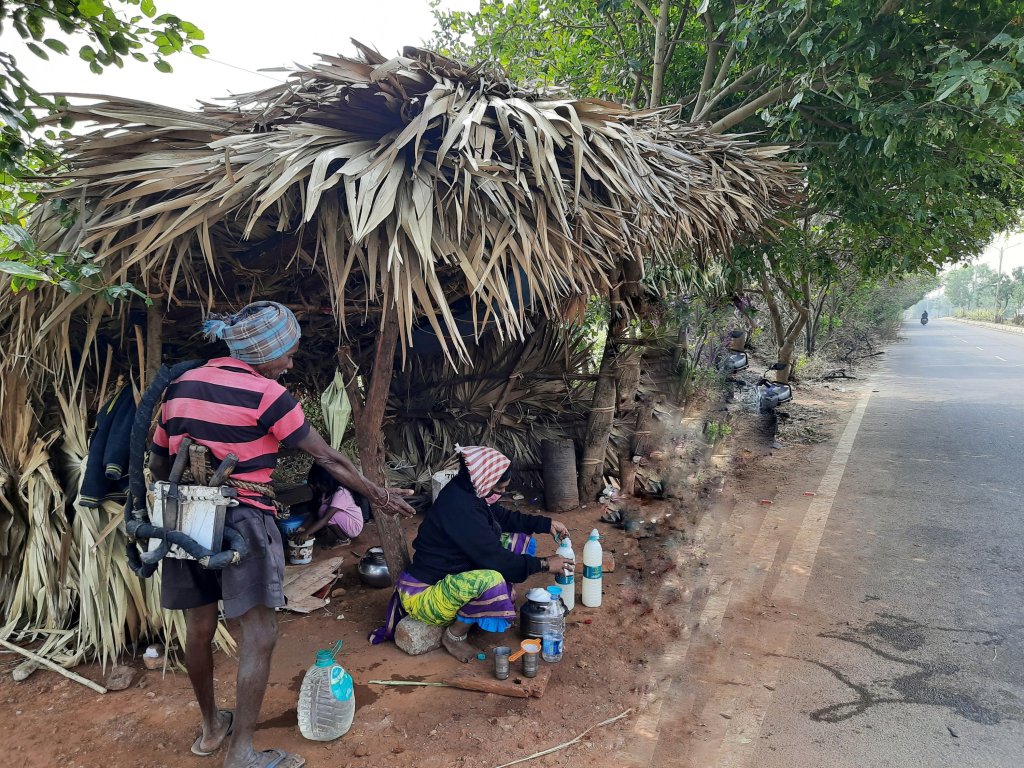
Sip some kallu by the beach: With its buzzing coastline and palm trees growing in abundance, it is highly likely that you will spot some toddy or Kallu tappers (palm sap collectors) walking past you near the beaches. You can buy the fresh Kallu and enjoy while you are chilling by the beach.

A toddy/ Kallu tapper selling Kallu at one of the shacks

Beach hopping & Ship spotting: Being a major port city on the east coast, it is very likely that you can see some mad-ass big ships that dock at the Tennessee park Beach from across the world. However, there’s ‘MV Maa’, a Bangladeshi cargo ship that’s abandoned after it got beached during the covid-19 lockdown. If you’ve never been so close to a ship before, this is your opportunity to literally walk over, touch and feel a ship. Bonus: News is that if everything goes well, the ship will be converted to a floating restaurant soon 😍

MV Maa- the beached cargo ship of Bangladesh

Have you been to Vishakhapatnam before? What did you like the most?

An offbeat drive from Bengaluru to Gulakamale lake

If you are someone who has been following my blogs for some time now, you would know that most of our family trips are on weekends and to random destinations located around the Bangalore outskirts. We leave home with random reasons to drive out and then pick up equally random roads and follow-it till the road reaches a dead-end. We have thus far explored several villages like this. This weekend too was a similar one. And the reason to drive out, you may be curious to know, right?

My dad had long heard of a pig farm located somewhere around Kanakapura road. We had first stopped for lunch at a hotel on Kanakapura road. There, my dad enquired with the hotelier if they knew of any pig-farm around. They informed us that the kitchen waste from their hotel too was collected by someone who runs a pig farm but was unsure of its location. He gave us the possible location of the place with rough directions. After lunch, we headed out in that direction, a deviation before Kaggalipura.

Our drive to Gulakamale lake

With just the deviation, there was a sudden and a contrasting change in the scenery to drive through as compared to the super congested Kanakapura highway. For a moment I felt as if I were driving through some remote lanes of Coastal Karnataka or the Malnad region. There were stretches of areca and banana plantations on either side creating abundant greenery and change in the ambience. Since there were barely any people on the road, we continued to drive till we found some village ahead. By this time, we had covered a good distance and passed through several types of fruit and vegetable farms.

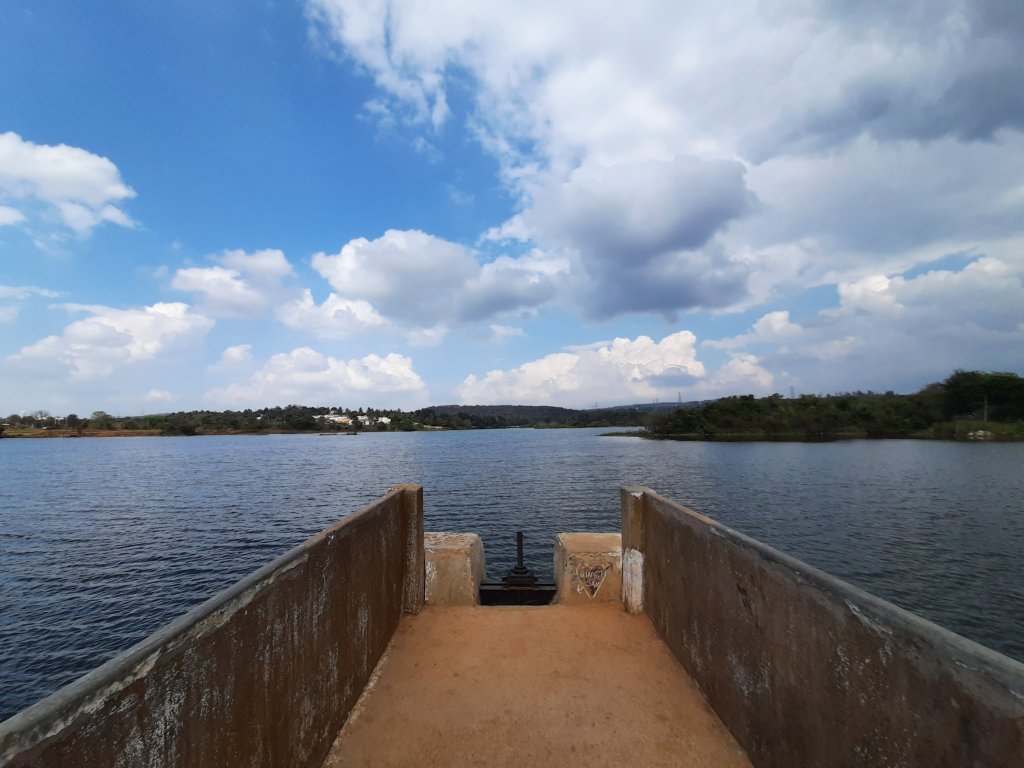
After reaching the village, we stopped by to enquire a villager on the roadside about the farm, he guided us to a pig-farm located next to his farm. But after reaching there, we realized that it was a different one that my dad had heard of and we had no entry into the place where we had now reached. So, we continued our drive further and reached a junction where we had to pick a direction to turn, the left or the right. Instead, we chose to stop the car in a side and walk up a large wall in front of us that looked like a high-rise wall of a reservoir or something. Indeed, it was a lake up there and surrounded by farms and distant hills of Bannerghatta on the other side. A flock of migratory birds too seemed to be resting in a small islet in the middle of the lake. I checked the location on google maps and I learnt that the place was called as ‘Gulakamale lake’.

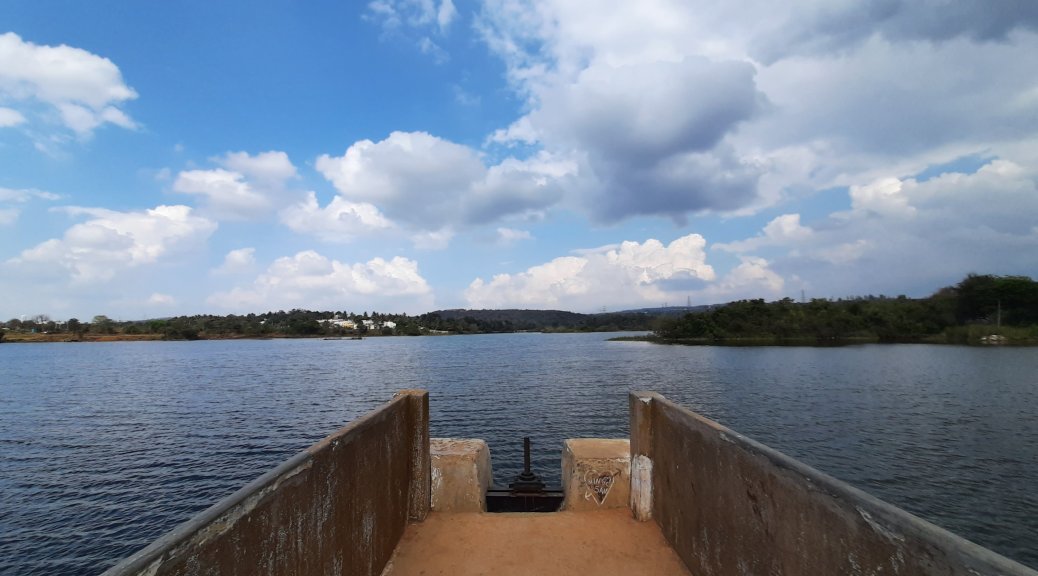
Gulakamale lake

The water looked so good and we sat there for some time, enjoying the cool breeze even on a hot and humid afternoon. It was just my family in the entire place until we noticed some local kids who arrived there. They removed their clothes and jumped into the lake one after the other, enjoying their fair share of fun time. They took all of us back to our childhood days and it was a pleasure to watch them enjoy it that way.

After a while, we decided to move further on the road. This time, we chose to take the road to our left and continued at it. We passed through millet farms, taking a round about of the same lake, papaya farms and other vegetable farms before arriving at a village called ‘Nallakkanadoddi’. It was a small settlement with nothing noteworthy to see or do. Hence, we went ahead as we saw that the road was newly laid and in good condition.

The road reached a dead-end and that was the parking lot of ‘Tottikallu falls’ commonly known as TK falls among the urban crowd of Bangalore. This was the second time for me that I had reached the entrance of TK falls, both times an unplanned drive had taken me there. Again, I decided not to go there on both occassions given the large crowd that had come down over the weekend. More so, given the Covid-19 situation and the crazy crowd this time, we didn’t even dare to step out of our car. So, TK falls has to wait until next time. From here, we decided to head back home and not stop anywhere on the way. Thanks to the weekend rush on Kanakapura road, we would need good number of hours to make our way back through the traffic.

Art and Crafts of Bastar

Bastar is an area soaked in rich culture. And art is an integral and unique part of this indigenous culture. It is safe to say that Kondagaon district is the art hub where there are entire villages dedicated to each of these handicrafts, with households registered with the ministry of culture & art. Several of these artisans are National award winners and visiting faculty at universities across the world. During my week long stay at Bastar, I managed to find time to visit some of these villages and interact with the artisans.

Blame it on me being an experienced professional in materials, manufacturing and heat-treatment processes, I have this weird fancy for everything that involves these aspects. One would not want to seize a travel opportunity from me when there is an element of art and engineering in it…. On similar lines, is the first part of this post.

The major and famous handicrafts of Bastar can be listed as below:

Wrought iron artefacts:

Chhattisgarh is a state blessed with a mineral rich geography. Until a few decades ago, the tribes inhabiting the region used to collect raw iron ore from the naturally available soil or portions of earth, heat it in a furnace and separate the molten iron to make wrought iron. Today, wrought iron is directly purchased from the market. This is then melted and beaten into sheets. The sheets are then formed into various patterns and welded into beautiful artefacts. Although the traditional designs are based on the local tribal culture and represent aspects of daily life in Bastar like animals, hunting, the tribal folk, tribal deities, etc., modern adaptations have been inspired by the Indian epics among many other things. But still, each piece is handmade and unique with no two pieces being exactly the same.

Demonstration of making wrought iron craft by an artisan

Dokra art:

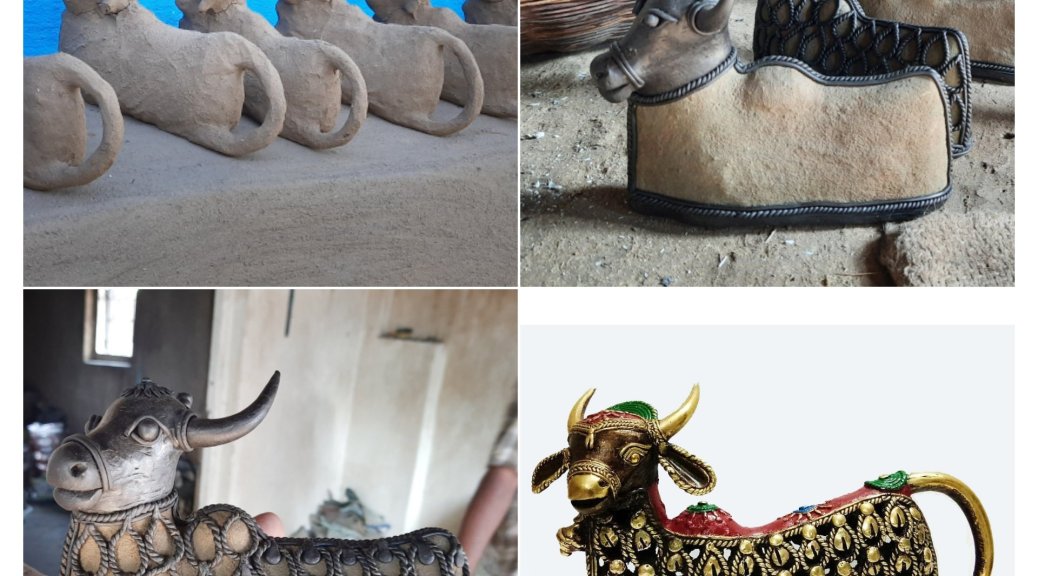
Bell-metal is an alloy prepared locally and cast into various patterns through a technique called as ‘lost-wax technique’ of metal casting. Although this technique was primarily used by the indigenous tribes to mold their traditional jewelry back in the time, it has slowly evolved into making idols and other home décor items. These indigenous metal cast items are collectively called as Dokra art.

Dhokra art at various stages of metal casting

Terracotta pottery:

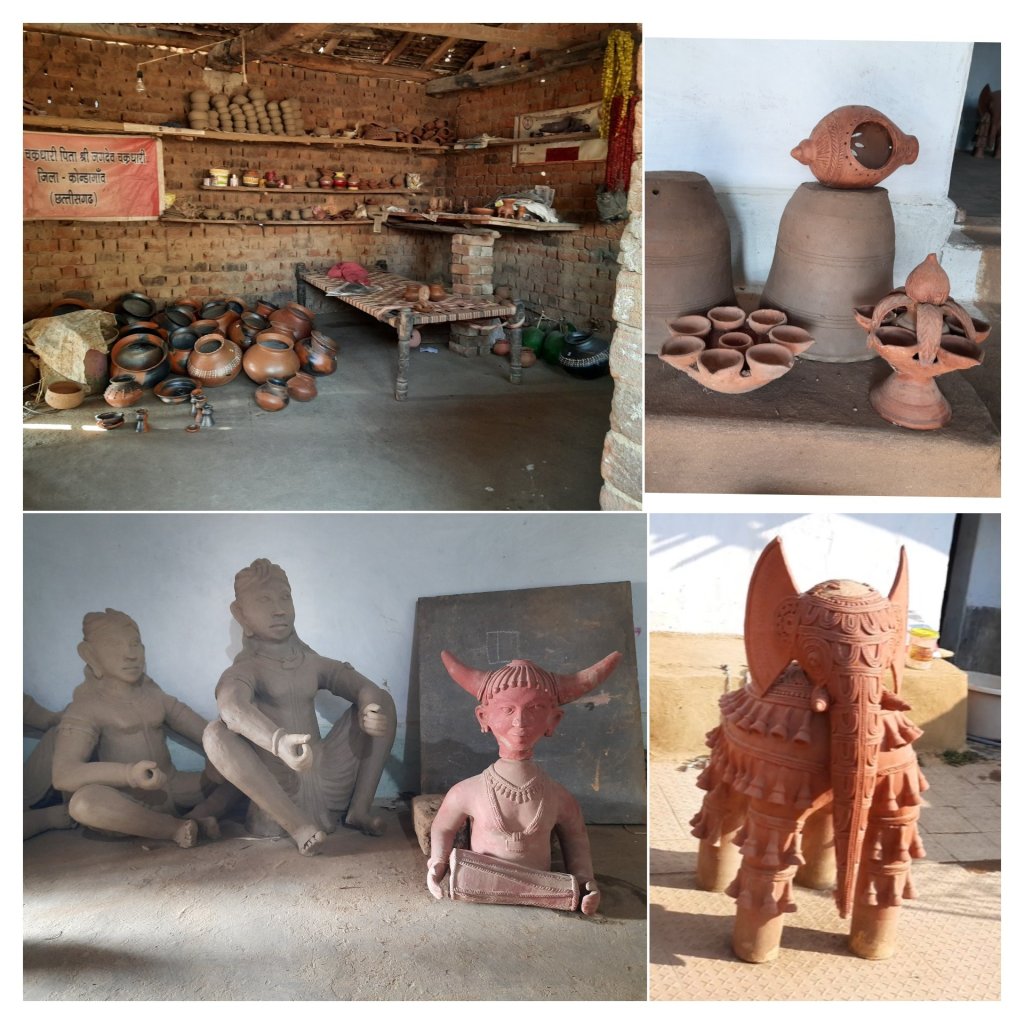
A special type of clay is dug from the vast paddy farms and is then crafted into various artefacts. The specialty of the art here in Bastar is that very large and real-life sized objects are crafted completely with clay. After the potter assembles the product piece by piece, he then burns it as a whole unit to give it the required strength and rigidity. Well, there’s an entire village of potters / Terracotta artisans in Kondagaon.

Terracotta art at Bastar’s pottery village

Wooden carvings & Carpentry:

With the abundance of forest cover and timber availability, wood craft is a major part of the handicraft culture here. Large tree trunks and roots are given the form of beautiful figurines, animals, etc. by very skilled artisans. This can also be seen in the rich carvings on doors and friezes of various old and traditional structures across the region.

Stone sculpture:

With the mineral rich earth of the region, various types of soil and stone are available. Several of these earthy materials are used to make beautiful sculptures.

Mural Paintings:

With a somewhat influence of the Patachitra art from the neighboring state of Odisha, the local Gondi artform and several other influences, the indigenous wall and fabric painting has evolved. Beautiful pictures of tribal deities, everyday life etc. can be seen being depicted through these paintings.

Handloom:

A small portion of the local tribes are involved in collection of the naturally available cotton and Kosa silk from the forests and weaving them into traditional textiles.

Jewelry:

Each of the tribes who inhabit the remote jungles of Chhattisgarh have their own unique pieces of jewelry. Anything that ranges from silver, fabric, plant fiber, shells or animal bones, the locally available materials from the wild are adapted into their culture in the form of traditional jewelry.

The Heritage bridges of Rajahmundry

River Godavari is the longest river in South India that travels over 1000 kilometers. My first glimpse of this beauty was at Rajahmundry, where the ritualistic ‘Godavari Arati’ is offered to this mighty river every evening. The sunset and a boat ride from the Godavari ghat are experiences in themselves. Among the umpteen dams, reservoirs, bridges that are a built across her, the most noteworthy bridges are located in Rajahmundry. Here is a quick look at these heritage structures.

The heritage bridges in Rajahmundry
  1. Old Godavari bridge – This is the oldest of the three major bridges built across Godavari here. It was originally called as ‘Havelock bridge’ since it was named after Sir Arthur Elibank Havelock, the then governor of Madras. This is a Stone masonry & Steel girder bridge whose construction started in 1897 and commissioned in 1900. After completing 100 years, this railway bridge was decommissioned in 1997.
  2. Godavari bridge – Also called as the ‘Kovvur-Rajahmundry bridge’, was commissioned in 1974. This truss bridge has a two-way road deck over a single-track rail deck making it Asia’s second longest railroad bridge with a length of 4.1kms.
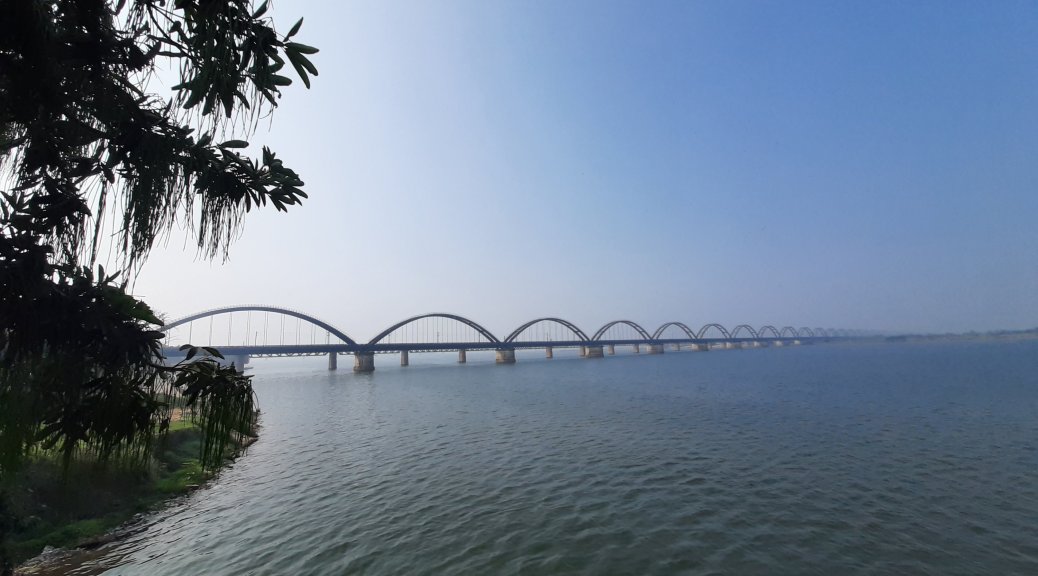
  3. Godavari Arch bridge – Commissioned in 1997, this single line railway bridge is the latest of the three major bridges in Rajahmundry and was constructed as a replacement for the Havelock bridge. This concrete- Bowstring-girder bridge is built parallel to the Havelock bridge with a distance of 200mts.
The arch Bridge at Rajamundry

Apart from the above bridges, there is another road bridge that connects Rajahmundry city with the islands of Konaseema. But what makes this bridge special is that it runs parallel to another heritage structure built across the mighty river. Dowleshwaran Barrage is an irrigation structure built in 1850 by a British engineer, Sir Arthur Thomas Cotton. Earlier to the construction of the barrage, the place used to be constantly flooded and unworthy of anything. This 3.5kms long barrage then allowed the floods to pass through and enriched the place making the unused land worthy of cultivation. It was rebuilt in 1970 and renamed as Sir Arthur Cotton Barrage or Godavari Barrage.

Visiting a Gotul- A Bastar experience

For someone visiting Chhattisgarh, experiencing the tribal culture and enjoying the rawness of the natural landscape in Bastar would undeniably be the priority. If you are lucky, then you might get the opportunity to visit a tribal Ghotul. A Ghotul is a structure that accommodates people. It is either an open arena with earthen floors, without walls and with roofs laid with wood and hay or it is a completely closed structure built with earthen walls decorated with various murals. ‘But what is so ho about it?’, one may ask.

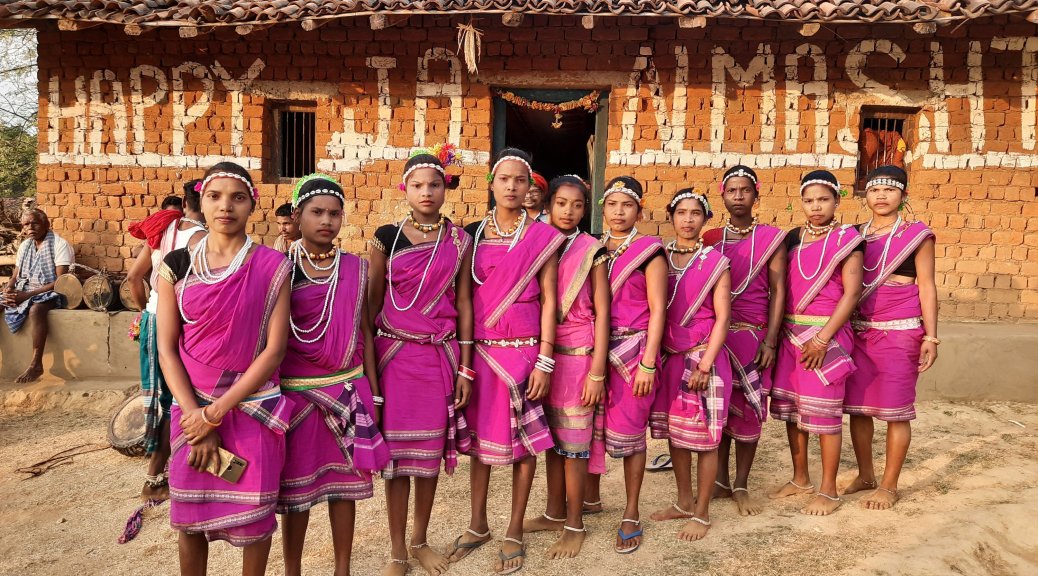
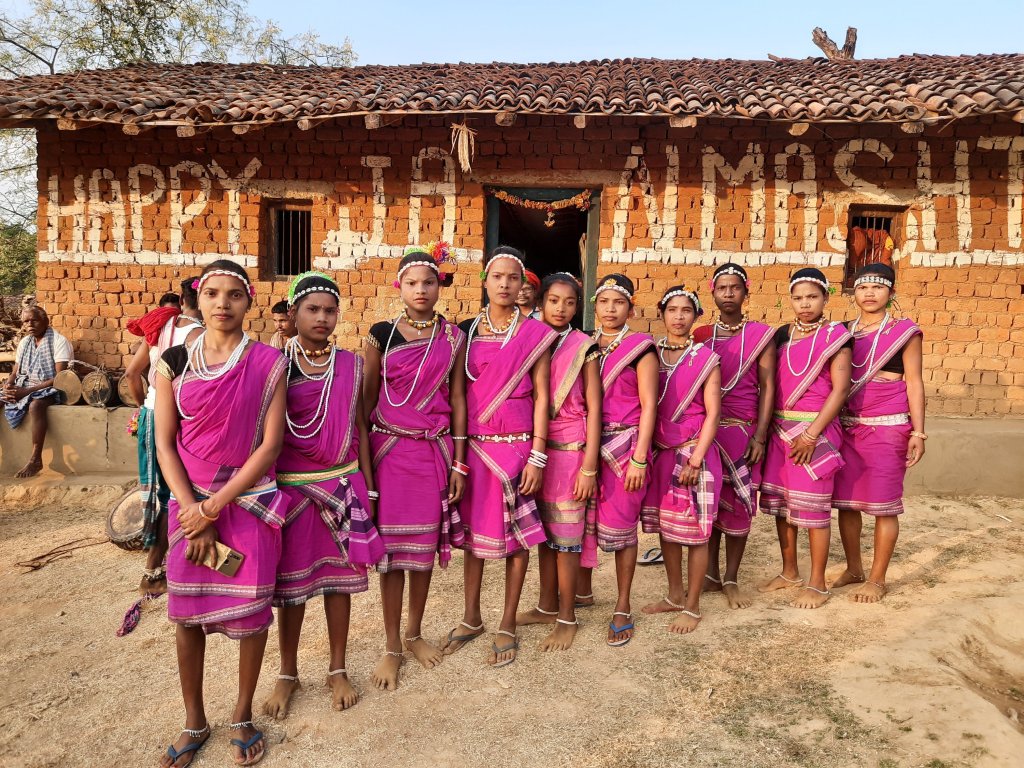
The Muriya girls with a Ghotul in the backdrop

The primary purpose of a Ghotul is what makes it important in the regional culture of Bastar in Chhattisgarh. It is a socializing club for the unmarried youth of the Muriya and the Gond tribes which also in some parts, serve as a dormitory for the registered members. Young boys and girls register themselves with a Ghotul of a particular village or area when they hit adolescence and the functioning of this traditional club is presided over by a head boy and a head girl from the respective tribe. Here, every evening, the members gather and learn the essentials of taking up a new life ahead of them. Reaching adolescence means that they have become eligible to get married and take upon the responsibilities of running a family. So, they are taught all the required life skills like managing a house and a family, folk traditions, music, cooking, religion, cleanliness, discipline, sympathy and everything else. The whole idea is to pass on and contain the traditions within the tribe.

The celebration dance by the Muriya tribes for hunting a game

This also promotes inter-tribe or inter-Ghotul weddings so that a member of a particular tribe doesn’t leave the community and the strength of the community is sustained. While pre-marital sex is considered as a taboo elsewhere in India, this culture encourages the youth to indulge in sexual activities to find the most compatible life partner. It is said that if a member of a Ghotul gets pregnant and doesn’t know who the father of the baby is, the village will adopt the baby and nurtures it as everyone’s own child.

Due to the rich ideology of conservation of the culture, people from across the globe come to study and understand the functioning of these Ghotuls. The Muriyas indulge in celebration of the little things from their daily lives. For example, after a successful hunt in the wild, a birth in the community, a betrothal, etc. They have about 12-15 different types of dances that they perform to celebrate these everyday joys. There are rituals and a sequential procedure on how the members need to conduct themselves in the course of visiting a Ghotul like getting ready, dressing up, assembly and starting the evening at the Ghotul.

I got an opportunity to visit one such Ghotul and here is a video of a dance they performed for us.

the Muriyas celebrating a game hunt at a Ghotul

As a small introduction to the video above: In this dance, you can see two hunters dancing around and in between the other members, while musicians are standing in the middle and playing the traditional instruments. There are also a couple of men wearing head gears that look like chital / spotted-deer which indicates that this celebration is after a game was shot-down by the hunters and brought to the Ghotul for a feast.

What are your thoughts and views about the Ghotul system? Share them with me through the comments below.

Happy Ten, TheLostLander

There is no big leap, only baby steps. TheLostLander celebrates a decade on the cloud!

‘The Lost Lander’ celebrates her birthday in February, virtually and literally! 10 years ago, I hosted my first blog on the world-wide web a.k.a. the cloud. And a few decades prior to this, I came kicking to this badass world… Both in February!

It all started with a concept of having a scrapbook. I would write about special moments and save all the memories from pleasant trips by pasting the tickets in a book. As the book started to get filled and weigh bulky, I eventually learnt about a thing called “blogging”. All I knew about this fancy terminology was that people wrote what they wanted and posted it in a space called internet cloud. So, that’s how I opened my account on a platform called ‘Blogspot’. Honestly, I don’t remember the timeline and this screenshot from the now de-func ‘BlogSpot’ page is what reminded me that it was way back in 2011.C.E. that I first created a page for myself on BlogSpot and posted personal content for two years.

My first blog page on blogspot

I was somehow not happy with the aesthetics of my page when I saw other bloggers creating content on fancy looking websites. While browsing, one of the earliest websites on this space, a site called as www.thelightbaggage.com is something that really triggered a new direction for my content. Mr. Arun is one of the earliest travel bloggers whom I followed and continue to admire for his dedication to explore and document offbeat and lesser-known places till date. Meanwhile, a friend suggested that I change my platform to ‘WordPress’ to host my website. That’s when I exported my existing content to a new platform (WordPress), built my feature rich website from scratch and picked a random (fancy-sounding) blog-name for myself. Back then, I had no idea what and why people wrote blogs. That’s perhaps the reason for choosing my blog name as well… ‘The Lost Lander’ on a clueless mission to explore the web and the world.

Not even in my wildest dreams had I thought that I would come this long. For me, what started as a transition from a paper-back scrapbook to a virtual book-keeping of special memories, has today evolved and grown into a full-fledged web space to discuss travel.

With a focus on travel writing, the need to create content for my site encouraged me to embark on newer travels and that in turn led me to writing more. Yes, with so much content and less readership, I make no denial that there has been a low phase too. The website went into a year or two with absolutely no content. ‘A phase of self-discovery’, they call it in philosophy. But that’s when a few friends at my workplace discovered ‘The Lost Lander’ and motivated the innate writer in me to create more content. With that, I started to write again and tried to improve its structuring with continuous feedback from well-wishers who read it.

Parallelly, each travel gave me a newer perspective on things. Wildlife tourism, heritage walks, architectural tourism, cultural tourism, Agri-tourism, Industrial tourism, art-study tours, tribal tours, eco-tours, biking, trekking, spiritual tours, culinary tours, ancestral tourism- I hadn’t imagined that I would learn so many forms of travel existed and that I would enjoy EACH of it in wholesome! With that, my travel preferences and style too evolved. From being one who crammed up a trip schedule with as many places as possible on the itinerary to slow travel, from family vacations to road trips with friends, from solo travel to leading a group of people on treks, from being a quick one to post a trip itinerary to being mindful of responsible travel, I have grown!

Noting the consistency and the honesty in my content, I got lucky that brands started to approach me with opportunities to collaborate. A few were paid and a few were barter. And the urge to vent out my travel stories paved way to a few publications in National and local newspapers along with some magazines as well. Although I don’t consider myself a good photographer, a few photos from my website saw the light of the day by getting featured on prominent sites as well. While at this, the sustenance on the cloud too, started to become extremely competitive. From the basic need of setting up a website to maintaining it so that my website shows up somewhere there, Blogging has thrown open an entire universe to me. I learnt tools and terms like SEO, Analytics, Traffic, Keywords, backlink generation and so many other things.

Since the last decade, ‘The Lost Lander’ has only been on a continuous journey of learning, growing and evolving. And without the constant support of YOU wonderful readers, this wouldn’t have been possible. Positive feedback has been taken with humility and criticism is welcomed with equal respect. Constructive criticism is what motivates me to learn more. While I try to take this journey forward, I request you all to shower me with your support and blessings!

Lots of Love,
The Lost Lander

Strange structures you will find in Bastar

If you have your own vehicle and planning to do a bit of rural and tribal tourism in Bastar, then you might come across several structures that are endemic to the region. Some are integral to the local culture and a few are modern additions but unique to Bastar. Here are a few such structures that may spike the curiosity of any new person noticing them around.

  • Mata Mandir: One might be surprised to see random wooden structures lying around by the roadsides or in the middle of some farmlands. No two are similar in appearance. Some maybe fixed structures and some may have wheels like pushcarts. These are temples or places of worship are usually dedicated to Bheema Dev & Godandi Dev, deities of the Muriya Tribes. A godman from the tribe is believed to possess the spirits of the deities and walks with these wooden tools or push carts. If you have a closer look at one of these structures, you will notice that it has been designed to place his legs and walk with it. You will however, come across concrete structures that are influenced by modern construction materials.
Various Mata-Mandirs in Bastar
  • Gudi: These are the lesser known wonders of India, also called as the ‘deceased pillars or column of the dead’ in modern terminologies. The dead persons from the Maria and Muriya tribes believe on sending a person happily after his death. Hence, the tradition is that they bury the body in a vertical/ standing position and erect a flat stone slab or a wide pillar at the grave site. These stones are then painted with artistic patterns and nice verses are written about the deceased on these slabs (This is something similar to the of placing a headstone in the burial of some mainstream religious culture).
Muriya Gudi enroute Barsoor
  • Gotul: These are traditional centers of socializing and learning for the youth of the Madiya and Muriya tribes. These are spaces either with mud walls or open wooden floored spaces with wood and hay roofs. Unmarried girls and boys congregate every evening at a Gotul where they socialize, indulge in various celebrations and merry making, learn the basic skills of leading a life and managing a family. This is also where they indulge in choosing their own life partners. The basic ideology of a Gotul system is teaching the youth of life and cultural lessons and building and containing the traditions within the community.
  • Termite hill: If you ever take a drive around the villages of Bastar, you will notice that their houses are unique. They have mud walls, hay roofs and floor and a large front yard neatly smeared with cow dung. I got an opportunity to go inside and take a look at the interiors. That’s when I realized that these tribal houses may even have large termite-hills inside their houses or perhaps in their bedrooms. These tribes are nature worshippers and believe that these termites are gods that have chosen their homes to take shelter. Hence, termite hills are auspicious and cannot be destroyed. Further, after worshipping this anthill all year, there is a specific day in a year when the family prays the almighty, seeks his permission and then removes these dwellings and releases the mud/ clay into a nearby water source. Same is the case before any tree is cut in a Bastar village. The tribes invoke their deities to get permission before axing them.
  • Gau-Mata chowk: This is a modern addition with a cultural significance that can be found at the entrance of every village in Bastar. ‘Kamdhenu’ the holy cow feeding a calf is a popular representation in Indian culture. Similarly, this image has been a large part of the Bastar culture. You can see it even in their art and crafts. Coming to the Gau-Mata chowk, these are concrete structures around which the cattle of the entire village is assembled together, twice a day. From here, one person or one household from the village takes the responsibility each day to take the assembly of cattle out for grazing and return to the Gau-Mata chowk. From here, the cattle assembly disperses every evening and are then taken back to their respective sheds.
  • Atal chowk: This is another modern structure named after the former prime-Minister of India, Sri.Atal Bihari Vajpayee. This is just a concrete pillar erected at the entrance of every village in the Kondagaon / Bastar region.

Do you know any other unique structures from Bastar that you think that I have missed out? Do drop in your comments and share the information with me.

Folk Musical Instruments of Bastar

Ever since I chose to do ‘Slow travel, it has given me ample opportunities to understand newer cultures and traditions. Since slow travel allows me to interact with more local people, I also get exposed to a lot of local music and art. One such knowledge gained during my interactions with the various tribes of Bastar is the various musical instruments made and used by them for various purposes.

  1. Khut/ Khoot: This percussion instrument is a hollow trapezoidal shaped wooden block. It is hung around the neck of the person playing it and is struck with two wooden sticks to create a unique sound.
  2. Maandaar: This is a small size drum that resembles a dholak. It has a hollow wooden body and wound with leather strips from end to end. The two sides used to create the sound are made using specially chose animal hide. It is tied around the waist and struck either with bare hands or using very thin wooden sticks to create the sound.
  3. Gadha Baja: This is another percussion instrument with a resemblance to the (Bayan) Tabla. It has a hollow wooden body with a wide playing surface firmed with leather. It is used either individually by hanging on to the neck of the player during a celebration or used in pairs at temples and religious gatherings. Sticks are used for generating the sound here as well.
  4. Taal: This instrument is a pair of metallic hand cymbals that are common to the rest of India’s folk music scenes as well.
Clockwise from top left: Khut, Maandaar, gadha baaja, Taal,

I got an opportunity to witness the indigenous music of the Muriya Gonds during my visit to a Gotul. All the above-mentioned instruments can be seen in their performance. Click below to watch the Muriya tribal performance with all these instruments.

Tribal ceremony at a Gotul in Bastar, Chattisgarh

The other musical instruments used by the tribes of Bastar are as below:

5. Sulur: This is a wind flute handcrafted out of a specific bamboo. The sound is generated by swinging the flute in the air (unlike the normal flutes that needs air to be blown into it). The bamboo tube is decorated with very fine and artistic designs engraved on to it. This flute is used for two purposes. Firstly, it is sounded while grazing their cattle and secondly, it is used in festivals and similar ceremonies. Click on the below video to watch how a wind flute is played.

Playing Sulur, the flute of Bastar

6. Mohiri: This is a wind instrument made using bell metal. There are two types. The ‘Bada mohiri’ is used in festive occasions and the ‘Chota Mohiri’ is used during all other ceremonial and social gatherings.

7. Tribal trumpet: Another common feature of the popular ‘Dokra bell metal craft’ in the region is the tribal trumpet. I couldn’t certainly tell which tribe uses this in particular, but this wind instrument is a popular souvenir picked by the tourists and art enthusiasts who flock the region in large numbers.

getting lost in traveling through places and time…