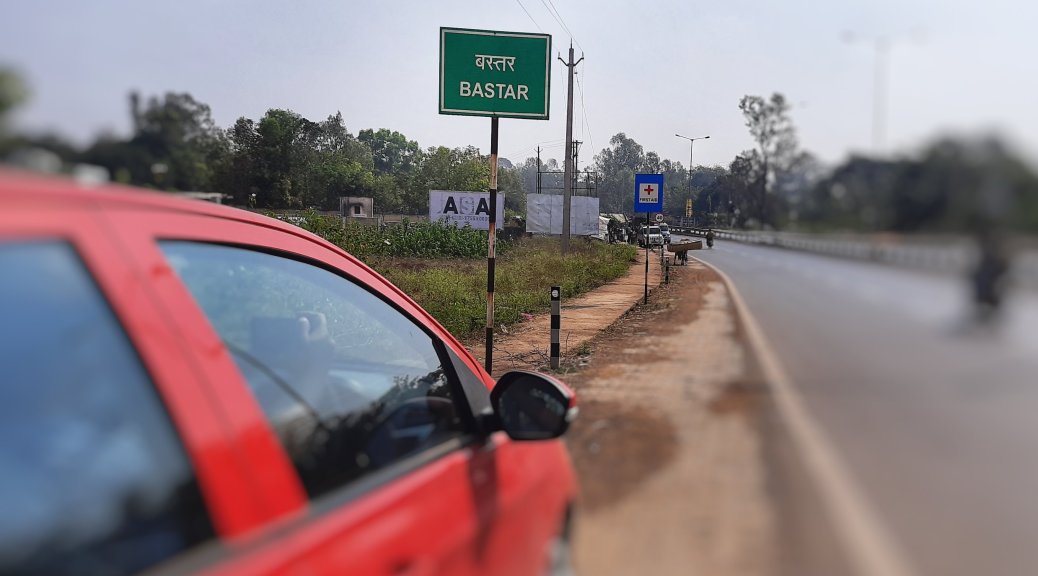
A roadtrip into the Naxal heartland- Bastar

There were many iterations in the initial plan and the destination was changed multiple times, but my family and I finally decided to visit and explore Bastar. Holistically, Bastar is a region spread across multiple states and was primarily ruled by the Kakatiya dynasty. But with changing administrations and new state formations, the Bastar region is now split into seven districts in the state of Chhattisgarh with Bastar itself being the name of a district. The region is one of the richest in India in terms of tribal culture and reserves of natural resources. Taking Covid safety precautions into consideration, we decided to drive our own vehicle instead of taking a flight or public transportation to avoid coming in touch with random people.

When people in our immediate acquaintance got to know about our choice of destination, a few thought that we were crazy. And then, a few concluded that we had lost it when we told them that we were doing a road trip right through the red-corridor area. But it was a combination of inquisitiveness, curiosity, adventure and assurance of safety from a local friend that finally got my family and myself on a road trip to what is infamously called the Naxal heartland- Bastar. To add a little bit of spark to this wild road trip, was our new ‘Flame-red’ colored car that was delivered to us just a couple of days ago. We did not have a number plate on it and were going to cross five state borders with a ‘Temporary Registration’ sticker.

With all that background, let us discuss the crux of every traveler’s doubt- Is Bastar safe for travelers?

First things first, about Bastar-

  • The public transportation or connectivity in the Bastar region is almost non-existent. So, if you are a budget traveler or a backpacker, then this trip will not work out for you. Hire a self-drive vehicle either from Raipur or Vishakhapatnam (The nearest major cities with airports) or get one from home.
  • For stay at this point in time, there are ‘zero’ places listed on Airbnb. Limited hotels are available only at Jagadalpur which you can make your center point of travel. Alternatively, there are some resorts run by the Chhattisgarh Tourism Board (CTB) scattered in good locations across the region that you can manage to find online or through local contacts.
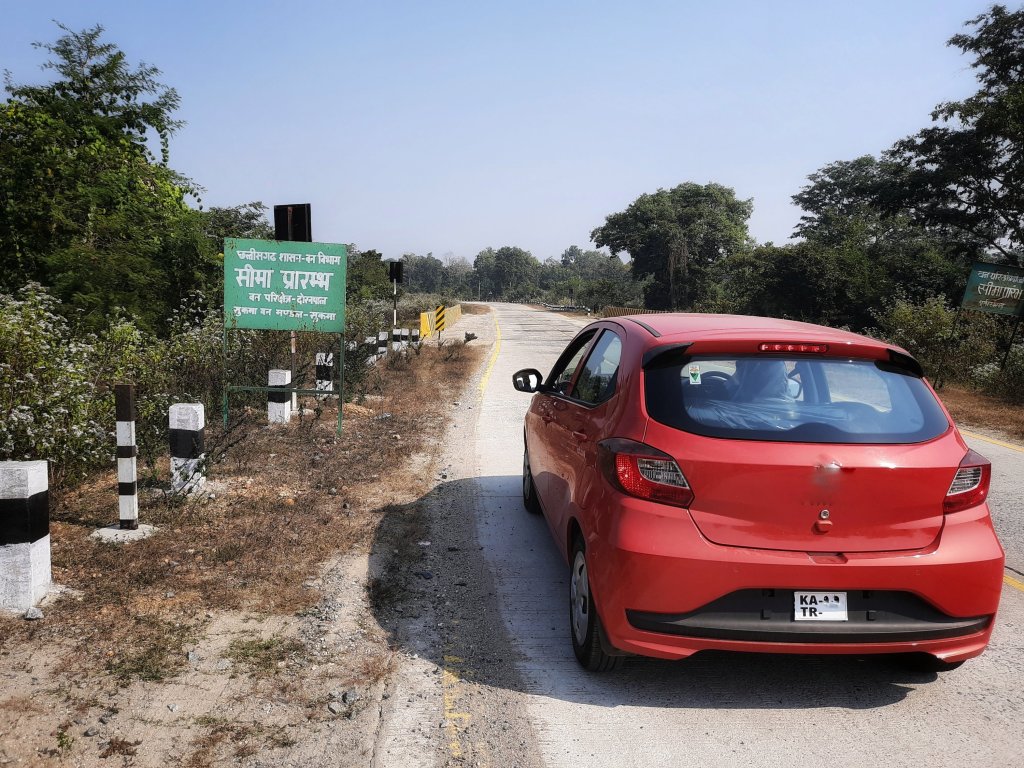
Entering Sukma, forest area begins

The Details of our visit to Bastar.

We started this trip from Hyderabad on the morning of Christmas-2020. As our journey proceeded from the plains towards the forests, the changing terrain was an indication that the red-color (of the red-corridor map) was getting more significant. We strictly adhered to two conditions laid by our friend/ local guide who was based out of Bastar. One, to stay connected from the time we started from Hyderabad and update him frequently (based on the mobile network). Two, do not drive after sunset. We had planned the entire route and our halts in consultation with him. With Kothagudem, we had officially entered the ancient ‘Dandakaranya forest’ region, the modern ‘Naxal heartland’. Only difference is Ravana had kidnapped Sita from the region back then, one could possibly be kidnapped or shot at by a Maoist in modern day. The day’s drive was mostly un-exciting with a good wide National highway passing through Sal tree forests alternating with cotton fields till Badrachalam, where we stayed for that night.

The following day, when we took a deviation towards Konta at Chatti junction is when we started to notice the actual change in terrain and demography. Civilizations suddenly disappeared and the roads became emptier. For most stretch it was just us, driving either through thick forested areas or large open grasslands. No man-made concrete structures, whatsoever. Even if it felt like we reached a tribal settlement after driving for a few kilometers, the settlement was limited to just one or two huts with their set of cattle and poultry. It was a little eerie to think of, but that did not stop us from halting our car and taking a few photographs.

A cattle shed in a village around Konta

After reaching Konta (The Andhra-Chhattisgarh state border) is when we started to sense the heavy air around us. Every village that came thereafter was spread across 1 to 2 kilometers along the highway. And every village had a CRPF camp with an armored MPV (Mine Protected Vehicle) at their gates, ready to be driven out at any given point. All camps had hero stones erected near the gates with names of the martyrs from the respective camps who had died during service. We were heading towards Sukma, possibly the brightest red spot one would find on the map. With extremely unreliable mobile connectivity to reach out to our guide, we had started to reconsider if we had made the right decision to take the road less travelled! Anyway, there was no way we could undo our plans since we were already there now. Instead, we decided to go ahead by thinking about the adventure and excitement that may come ahead to us.

Meanwhile, I got a message delivered on my phone from our guide. It had the contact name and number of a volunteer (Person X) based out of Sukma. We were told to meet Person X and have a cup of tea with him at Sukma before continuing our journey towards Jagadalpur. After reaching the Sukma bus stand, we called Person X and waited for him to arrive. In a bit, a young boy came to us on a bike and asked us to follow him. Even before we could complete our words of enquiring his name, he said: “Haan, haan, follow my bike” and we trailed him through narrow residential lanes to a big mansion. Another man (Person Y) welcomed us warmly and we were kind of overwhelmed and at the same time, wondering whom and why we had to meet someone in Sukma.

Person Y asked us, “Weren’t you supposed to be a big group of people?”

“No, it was just our family travelling”, we clarified.

“But Person Z told me that five of you will be arriving here for the meeting”, he said.

“Person Z? But we were supposed to meet Person X!”, we told him with a perplexed look on our faces.

We realized that there was some confusion. We were at a wrong place… in Sukma! I immediately called up Person X and told him about the situation. I then handed over my phone to Person Y and we were fortunate that both X & Y knew each other. Both of them were local leaders and represented the same political party. X came to Y’s house and it followed with some chai served to us. Our basic introduction and conversation were limited to local politics, our journey so far and our trip to Chhattisgarh. About half an hour later and as discussed with our guide from Bastar, we decided to continue our journey further.

A short while later, when we were ascending the Ghats, a bunch of CRPF men who were on their random patrol stopped us and enquired the details of our trip. Without much drama, they let us go after knowing that we were random tourists, heading to Jagadalpur from Bangalore.

Somewhere near Konta

Our guide arrived at Dorba with his family and escorted our car for the rest of the day. We reached Jagadalpur for the night’s stay. Over the next few days of our stay in Chhattisgarh, we explored several settlements and hamlets located in areas where no roads exist. Through our extensive drive through vast expanses of paddy fields and coal, iron and other mineral rich mountainous and forest terrain, we got a better sense of geography and geo-politics of the area.

So, come to the point! Was it safe?

I would like to explain this with multiple incidents and my viewpoints. PLEASE NOTE that these opinions are purely based on my personal experience. This may differ for each person visiting there.

  1. As per our guide, our visit to the local’s house in Sukma was to acquaint us with a localite in that region so that, if we were being tracked by someone, they would know that we were harmless tourists and not associated with any other intention. But my viewpoint is that, apart from Sukma, we explored the districts of Dantewada, Bastar, Kondagaon, Kanker, Narayanpur, Gariaband and Dhamtari during the course of our stay in this region. All considered to be core areas of Naxalism/ LWE in the state. We drove our number less car with a ‘KA-TR’ sticker all around –> Not a single day did anyone stop us, ask us or threaten us. It felt like we were travelling in any other Hindi speaking place in India.
  2. When we entered the villages, we had a local person accompanying us almost always. We were told that a lot of villagers worked as informants to the Naxals. (starting from children as young as 8-10 years to grown adults, across gender). So, if a localite familiar in a particular village that we were visiting accompanied us, we would be safe –> My viewpoint on this is, when we moved to the interior parts, the villagers could speak only the local dialects of either Halbi or Gondi. Why that, when we visited the Gotul on one of the days, I even understood a portion of a conversation between two villagers standing next to me. They were discussing that I was a foreigner, who had come there to see their dance. Like really? I look so INDIAN in color, features, dress and in every other sense. Even then, the exposure of these tribals to the world outside their villages is so limited that any visitor would look alien. In such a scenario, communication would’ve been a task for us if we wanted to understand their culture better. A translator helped us to bridge the gap in communication.
  3. We were told that the Naxalites come out after sunset and bother the villagers for rice and other needs. We had heard of stories of how people/visitors/ guests were kidnapped from houses at night. We met so many villagers from various tribes, visited their houses and ate their food. They were excited to host us and shy to talk to urbanites. Never at any point did I feel like we were going to be harmed. We even stayed for a night at Dantewada and most other nights at Kondagaon. The villagers didn’t seem to talk about anything to me like kidnap or murder.
  4. There are several tribal communities that are still primitive in their culture and do not come out in contact of normal civilization. Barter still exists in this part of the world. Permits are required for entry of many villages, especially for those visiting the Abujmadh area. To think of, it is unfortunate that inspite of conscious efforts by governments to empower the tribes, it is still falling short.
  5. Somewhere near Kanker, we were by ourselves on a night journey towards Raipur. While we were told that the highways were safe, there is one point where we were asked to stop and wait for about 2 hours. With us, there were hundreds of other vehicles also who had stopped and spent the hours getting a nap during the waiting time. Daily, the ITBP policemen do combing in this area. Inspite of several positive experiences like those above, things like these present the intensity of the underlying danger and threat.

By having all these presumptions, it cannot be ruled out that naxalism is REAL. And it is in abundance in these areas. The underlying thought cannot be ignored that I must have gotten lucky!

Bastar district, Chattisgarh

My verdict on safety for travelers:

I went to Chhattisgarh and returned safe. Every place across the WORLD has its own threat, but in different ways. When you are in Rome, be a Roman. So, whichever place you choose to travel, keep the local customs and sentiments in mind. If possible, get in touch with a localite and take them into confidence. Travel to build connections and build connections to travel.

Travel, stay safe and enjoy your journey!

An unexpected New-year Destination- Jeypore

This place happened as part of my family’s road trip through Bengaluru– Telangana – Chhattisgarh – Odisha – Andhra Pradesh – Bengaluru.

Not in my wildest dreams had I imagined that I would be waking up for a new year in a place so new! Never had I imagined that I would be waking in Odisha for a new year. I did not have an idea even until the evening of 31-Dec-2020. It was a spontaneous decision to proceed with our journey from Bastar, Chhattisgarh that late evening. We decided to cut the driving time to reach Vishakhapatnam, by covering the distance by night. We chose to stop at any good hotel that we would come across along the highway for the night’s halt. It being the New Year’s Eve, we were okay to catch some sleep in the car itself in any eventuality of not being able to find a good hotel.

Anyway, the National highway was patchy for most of the way and the night driving kind of got annoying with several trucks and enormous amounts of dust in the atmosphere. Hence, we decided to halt and settle down after finding accommodation at a highway side hotel in Jeypore. With the Covid-19 related curfews around, there was no pomp, no party or toast for the night of the new year and we all surrendered to the sleep gods for the night! However, before falling asleep, my brother and I did a bit of google search for things to do for the next morning at Jeypore before proceeding on our journey ahead.

After waking up on the next morning, we realized that the inhouse restaurant at the hotel was going to open late that day. Even at 08.00.a.m., the rest of the city too seemed to be still sleeping. We couldn’t find any place to have our breakfast and the most important meal for us to keep us going for the whole day. While we were randomly driving around the city in search of food, we could not spot a single shop that was open for anything else apart from farm fresh vegetables and fish being sold by the tribal folk from the surrounding villages on the roadside. Someone suggested us to visit the Jagannath Mandir to serve dual purpose. One, it would be good to visit a temple on the first day of the year and secondly the ‘Bhog’ could be bought at the temple and complement as our breakfast.

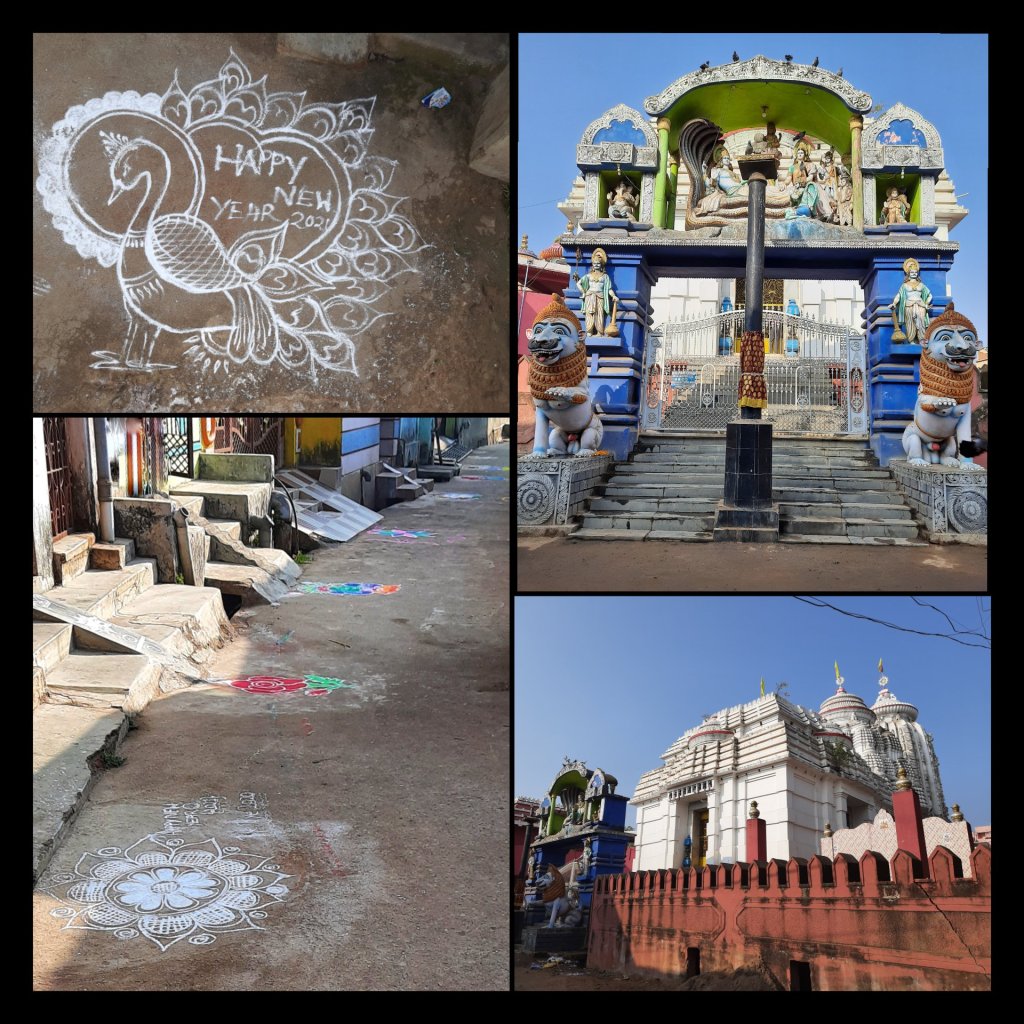
Jagannath temple and the colorful Rangoli at streets around the temple

The suggestion seemed good to us and so we parked our car around some space and walked the streets towards the temple. It was quite surprising and interesting to see that almost all households had their front yards or doorsteps cleaned with water and decorated with rangoli designs drawn in front of their houses. And all rangolis had the wishes for a ‘happy new year-2021’ written in them. To think of, it was a traditional but a modern approach to conveying new year wishes without meeting people in times of Covid-19. But to our dismay, even the temple was shut. I’m not sure if this was closed only now to avoid people from gathering due to Covid or it was normally shut on all new years’ days. But it did seem a little weird from what I have been used to seeing- people thronging to religious places on the first day of a new year. Also, that meant we had to wait to find food or satiate our hunger with the raw veggies and fish from the streets. Anyway, that was unthinkable for us and we decided to head out of Jeypore. Although the Jeypore palace was just around, that too was closed due to some renovation work. With nothing much in particular to do in the city, we decided to proceed on the highway towards our next destination.

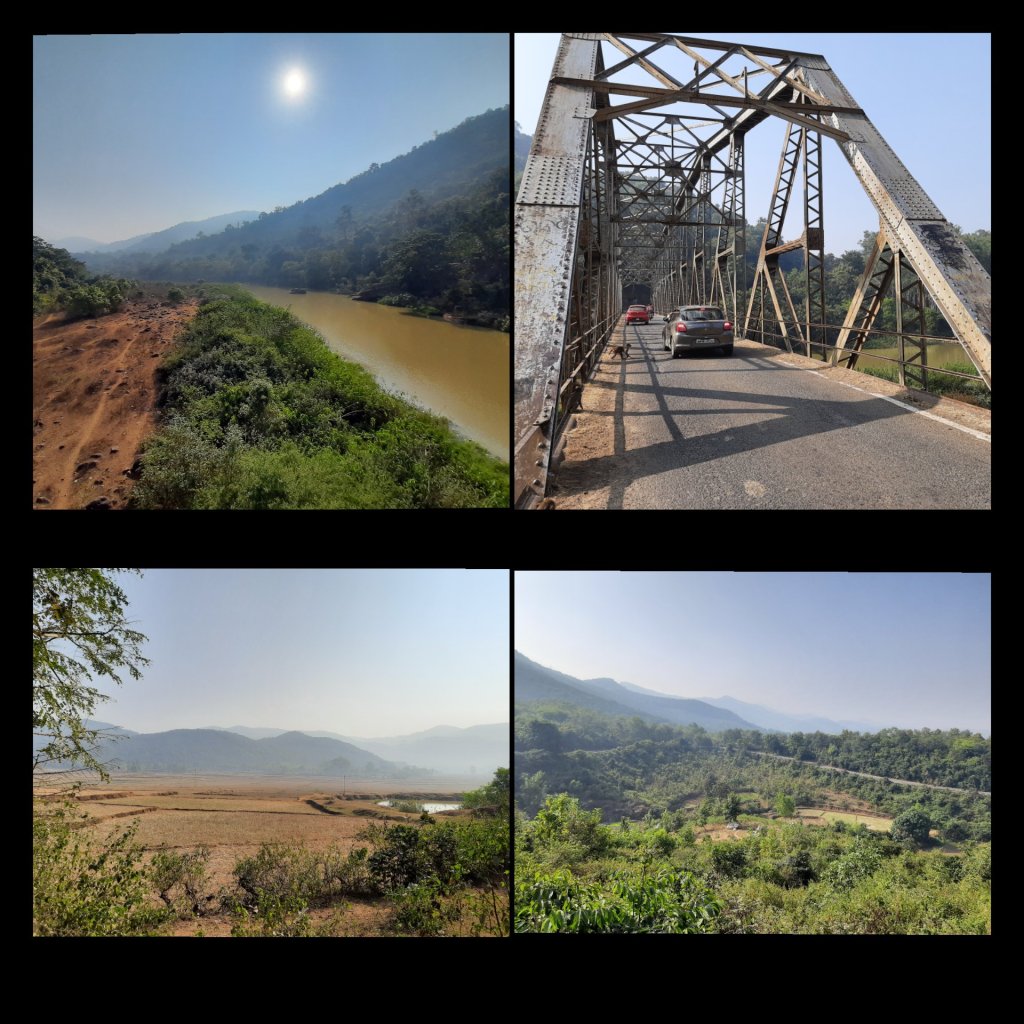
We stopped at least two dozen times to take photos of our car set in the empty highway and in the middle of the panoramic green scenery around. We reached Araku, our next major stop by noon for lunch. Having said that, though there is nothing much to do here, Koraput district as a whole is huge and has great potential for nature tourism in future. My first and small stint in Odisha has been a pleasant one. This trip has been an enriching one in-terms of the knowledge, experience, perspectives I have gained with respect to geo-political scenario in central India, culture and demography. Indeed, a happy new year to me!

Various views from our drive out of Jeypore, towards Araku valley

However, I found it challenging to find good food. Firstly, the towns wake up late. Secondly, large population is comfortable with street food. I found it a little uncomfortable and unhygienic. Idly and Dosa are the most common breakfast items. But for being someone who hails from the heartland of these dishes, the flavors of the Sambar and chutney was unfathomable. So, unlike all my other travel where I look out to try new and local culinary specialties, I mostly survived on fruits and biscuits for my meals during this trip.

When we reached Koraput town, we ate some fruits for our breakfast. I found a small shop selling milk and some local sweets. I bought a small portion of ‘Chenna poda’ and ‘Rasbara’, that were quite heavy for the small quantity that we ate.

For those of you who might be interested to know what landmarks are there to explore in Jeypore:
* The Jagannath temple & the Jeypore palace are the two things in the heart of the city.
* There are several waterfalls as you move towards the periphery of the town.
* Gupteshwar is a cave temple and an important pilgrimage site at a short drive towards the Chhattisgarh border.
* We stopped by at the ‘Subai group pf Jain temples’, a lesser known place with rich heritage.
* We also happened to get a little intrigued with large throttling sounds of aircrafts while we were driving on the highway, only to realize that they were the sounds of aircrafts being tested at the distant hills. HAL has its engine assembly plant around there and you can see it on your way.

The Subai group of Jain temples

Apart from these places, it is mostly the drive and the scenery that pleases you all along your way.
* There are several tribal communities inhabiting the hamlets around Jeypore, whole of Koraput and the surrounding places that may be of one’s interest in tribal culture.
* As we drove towards Araku valley, we stopped multiple times to just stand and enjoy the views, the mountain range and innumerous large lakes all along our way.

* There is also the upper and lower Kolab dams for a short getaway or a picnic.

If you are travelling with the right company, then drive slowly and enjoy the journey.

Making the journey count- to Kodachadri

For the weekend hikers, the ‘K’ in Karnataka represents the must-do three ‘K’ peaks in the state: Kumara Parvata, Kudremukha and Kodachadri. I was heading to the last of the three, for the second time. The first time I went to Kodachadri was over a decade ago, as a part of an industrial tour from college 😀 This time, I was leading a group of weekenders who had signed up for the trek with PTU- ‘Plan the Unplanned’.

The standard itinerary with PTU:
Day 1: Depart from Bangalore (Leave HSR layout) by 08.00.p.m.
Day 2: Reach homestay by 06.00.a.m., freshen up and start the hike by 09.00.a.m.; Return to the homestay by evening
Day 3: Visit Nagara fort enroute home, reach Bengaluru by evening.

The story of my weekend:
A total of 16 people including two trek leaders were supposed to board the bus at various pickup points across Bangalore. While HSR layout was the first pickup point, the last and the biggest bunch of people were supposed to board at Mekhri circle. When the driver cranked the engine to leave HSR, the last member boarding the bus noticed that a rear tyre had a flat. So, it needed to be changed and the punctured tyre required to be fixed before proceeding for the long journey. After about an hour, the stepney was replaced and the bus arrived at the second stop.

People boarded and the Bus… did not start. This time, the battery had drained, completely! A mechanic arrived in a while and told that it could not be topped up and needed a replacement. Well, it was another good couple of hours until the bus finally left…. With an assurance from the ‘travels company’ assuring that there won’t be any more breakdowns.
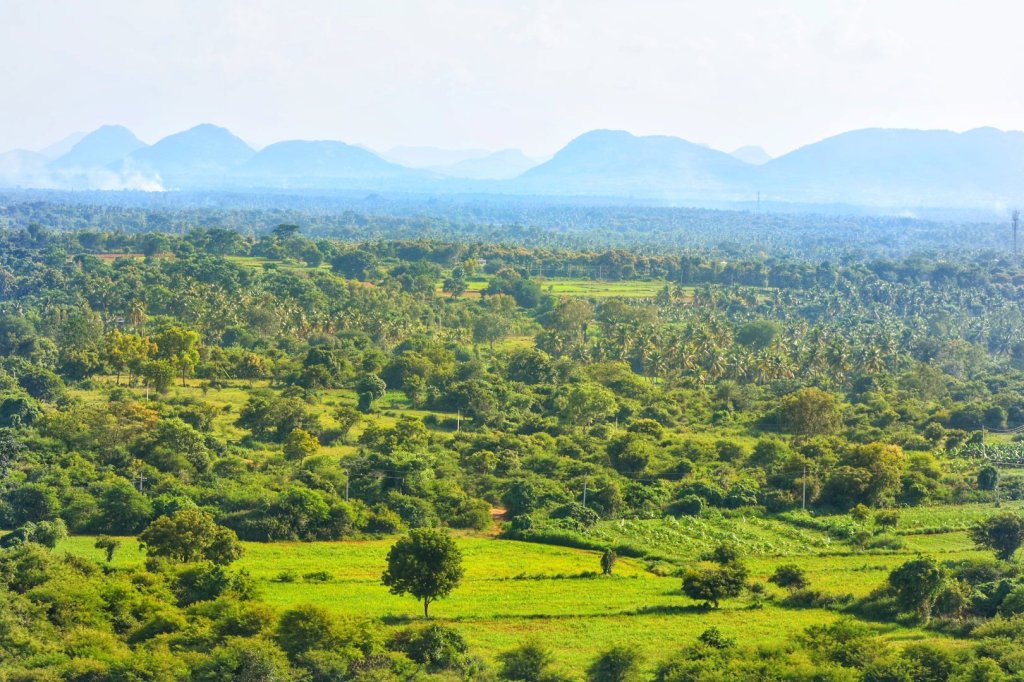
Meanwhile, I had taken an autorickshaw to reach Mekhri circle to hold up all the people who had arrived there. The co-leader managed the people who had already boarded the PTU bus. Most of them being first timers on their solo travel, their growing anxiety with the extending delay in the tour was quite a challenge to clarify all their doubts and questions. It was 00.30.a.m. by the time the bus finally arrived at Mekhri circle instead of the scheduled 09.30.p.m. We quickly wrapped up the initial welcome and introduction that usually takes a while on normal trips. Everyone needed some sleep before climbing up the Kodachadri trail.

It was approximately 01.30~02.00. a.m. and the bus had reached somewhere around Sira town. Then suddenly, everyone in the bus woke up for a LOUUUD thud noise. The driver stopped the bus. I walked to his cabin and got down with the driver with a torch light to check what the issue was. The driver found a broken bolt under the bus, near the engine room. The radiator had started to leak profusely, and the engine belt had ripped off. The driver informed me that there was no way that the bus could move. Trying to find a mechanic in the middle of the night would only be futile. The options we had was to find one back in Nelamangala (this would take a good few hours) or wait in the bus until morning, find a mechanic in Sira, find spares, get the bus fixed and then proceed. Proceed further to Kodachadri or return to Bangalore. In either case, Saturday would be gone. We pushed the bus to the side of the highway and decided to take time to figure out the next POA (Plan of Action).

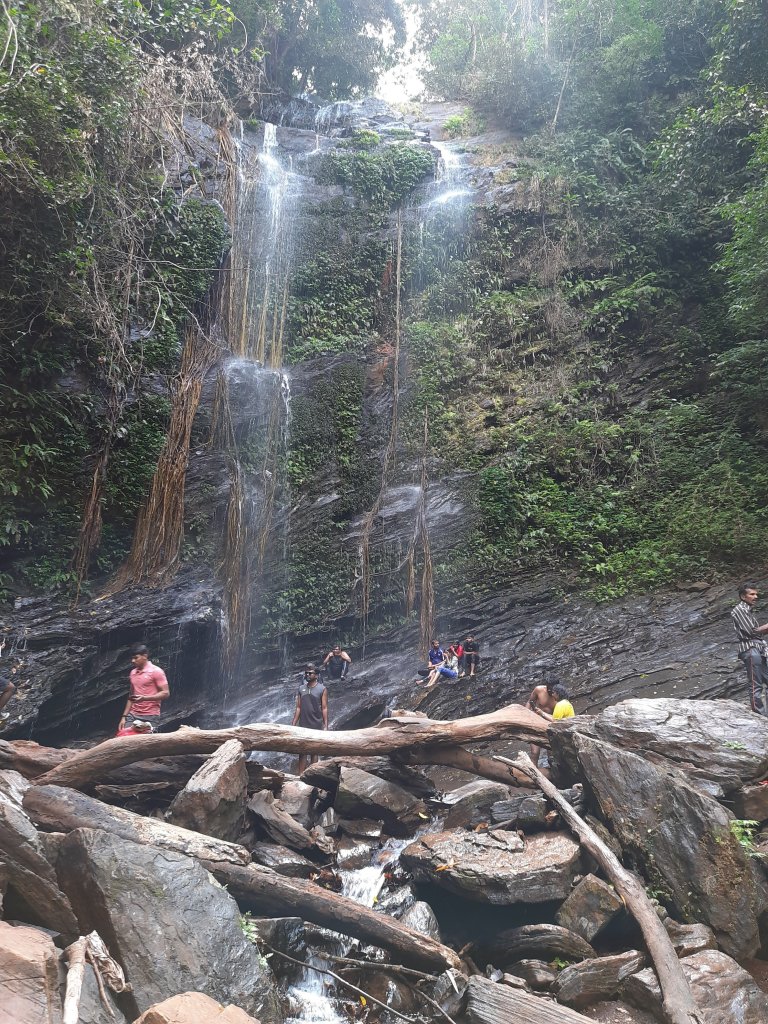
Hidlumane falls

I called up the PTU organizers and informed them of the situation. We were fortunate to find a chaiwala (petty Angadi), the ONLY place with light and people movement in the drop-dead night. The people in the bus got down and occupied themselves with their dose of mid-night chai and smokes until we figured out an alternative. None of them would settle for a full refund and wanted PTU to ensure that they got what they had signed up for.

It was a weekend. It wasn’t going to be easy to find an alternate bus or a TT (Tempo Traveler). While my co-lead was waving at every other bus that came on the highway (both KSRTC and private buses) to check if there were empty seats, I was calling up every random travel company listed on google and checking for availability of buses. Either they were all booked for the weekend or people would just abuse me for waking them up in the middle of the night and hang up. To add to it, I was the ONLY person in the entire bus who could speak Kannada. So yeah, I literally had to manage the show and all the translations, communications and co-ordinations.
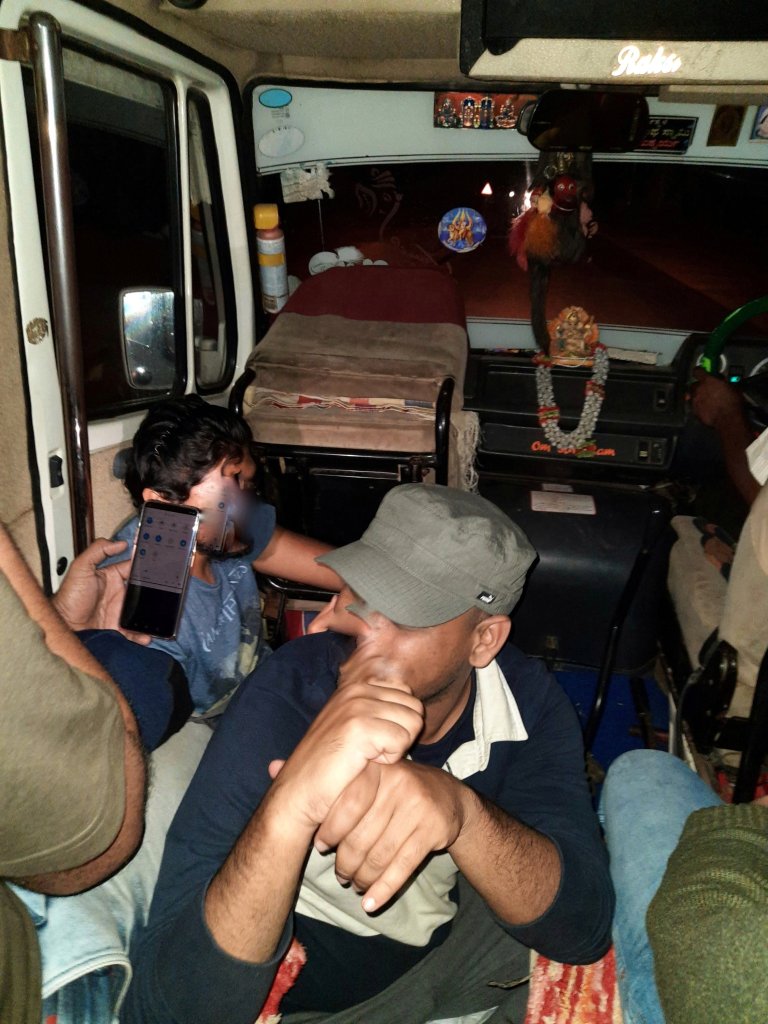
Finally, one KSRTC bus stopped! They had sufficient seats to accommodate all of us as well. But we had a new challenge. The travellers with us had ganged up and would not agree to board a red bus (Karnataka Sarige bus). All requests to convince seemed futile and we let go off the KSRTC bus. After a total of about an hour, the chaiwala managed to find us a localite who had agreed to come with us for a per kilometer charge that was double the normal price. PTU organizers agreed. The TT arrived. Next challenge? It was a 12-seater TT, we were 16 in total. We, the leaders convinced ourselves to sit on the floor of the ramp between the two rows of seats and another 2 travelers volunteered to fill the already crammed space. Ensuring that everyone else got a comfortable space, the journey continued. Fortunately, we had no more surprises and we reached the homestay by 09.30.a.m.

That’s how we rolled, in our TT (Faces intentionally blurred)

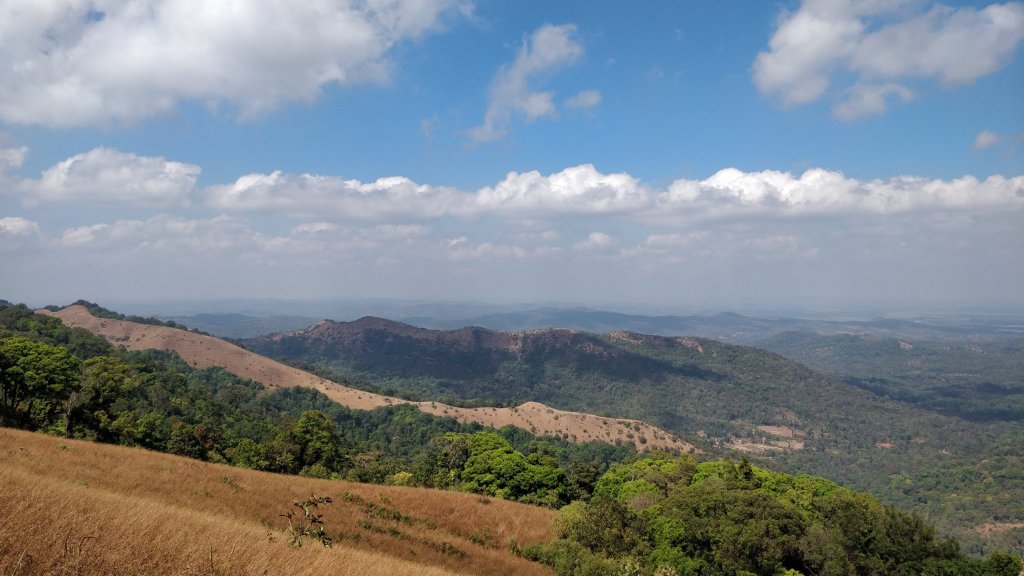
We took time to freshen up, have breakfast, get the forest permits for the trek and finally started our ascend by 11.00.a.m. All went fine, by god’s grace. This was my first PROPER trek in Kodachadri, the previous one was another adventure worth a read. We climbed up the Hidlumane waterfall, arrived at a local house enroute to have a surprise Majjige (buttermilk) stop, crossed paddy fields, areca and banana plantations, Mookambika temple and finally arrived at the peak marked by the Shankaracharya Mantapa. The landscape and the entire path were unrecognizable for me from what I had seen on my previous visit. It was now exploited and overdone by tourists. There were a few hikers who felt exhausted and wanted to give-up halfway. But as a trek leader, it was my personal obligation to ensure that EVERYONE completed what they had signed up for and no one stayed back without some safe company. Finally, everyone made it to the peak, and it was now mission accomplished. Well, only partially!

The real deal was in the descend. We had a 4×4 ride awaiting us for our return. It is one that is BEYOND explanation and you only hold on to the roof bars hoping that you don’t have a few broken bones or dislocated joints by the time it ends. There is NO road, only a slide down a ditchy/bumpy gradient path. This 4×4 jeep ride alone supports the livelihood of several people around the area. Hence, the localites aren’t letting a road happen even if the government wants to develop this important site of tourism (we were told so by one of them). So, if this ride is considered as an adventure and a source of employment, then you can imagine how memorable this experience must be, right?

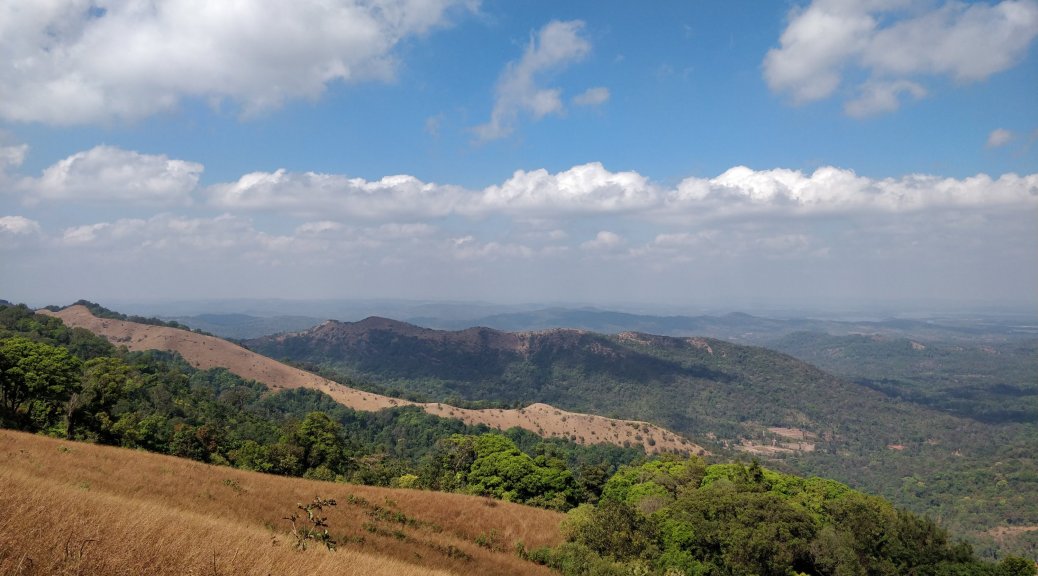
The view after reaching the keep trail

Well, in spite of all the delays and breakdowns, it gave me a sense of achievement by the end of the day for having met the itinerary. Though we paid late exit fine at the gates, this was a PTU experience in its true sense. More adventures to come, until then- Keep tripping…. Plan the Unplanned!

A personal chronology of Deepawali celebration

The list starts from 2015, a religious celebration of the festival of love and lights- Deepawali. Well, I’m not a religious person who would indulge in ritualistic prayers and pooja on any festival. But what started as travelling during this season to utilise my unused leaves combined with maintenance shutdown period at my workplace, has somehow religiously stuck on as a ritual of travelling to a new place, every year.

Circa 2015- Tamil Nadu:
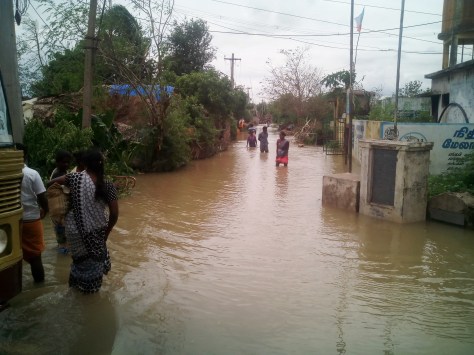
My brother and I ventured out on our backpacking roadtrip to Tamil Nadu, Kumbakonam to Pondicherry. Well, this was an adventurous start I guess, we had to cut short our trip due to a cyclone that had battered the east coast. Result: Crazy floods and crazy drive through the flooded areas. On the main festival day, we had reached Chidambaram- a must read post about our experience. A bad one then, a memorable one now.

A flooded village near the Indian east coast after a cyclone
The flooded villages enroute to Chidambaram

Circa 2016- Assam:
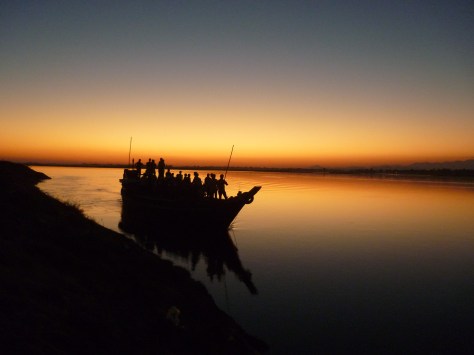
This was my first solo trip ever and the first time in the north-eastern part of India. After exploring Meghalaya, I had tagged along with a couple of other fellow travellers. We happened to experience one of the most beautiful Deepawali sights. First, the drive through the lamp lit national highway, then watching the best sunset over river Brahmaputra onboard a ferry to Majuli and the crazy ass lamp lit welcome on the Majuli island.

An image of the daily life in Majuli shot during sunset
Sunset at Majuli

Circa 2017- Karnataka:
After a crazy long year of travelling across India, my friends and I decided to have a simple deepawali roadtrip, closer home in the western ghats. We drove to the famous Agumbe ghats and the places around.

Circa 2018- Himachal Pradesh:
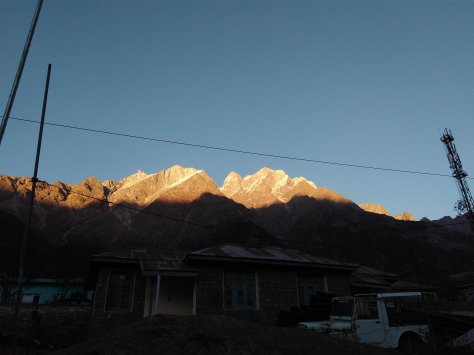
One of THE best solo trips of my life, where I couldn’t find a single traveller to tag along through the entire trip. This thus, became a thorough personal and local experience in the Spiti valley. On the day of Deepawali, I was on my way back with a brief stopover at Shimla. A trip that made an impact on me, perhaps forever.

the view of the Kinnaur Kailash mountains at Sangla
Sunset view from Sangla bus stand

Circa 2019- Kerala:
A solo weekend exploring Varkala, it was a short one but yet overwhelming. It was a happy-hippy trip, in a true sense.

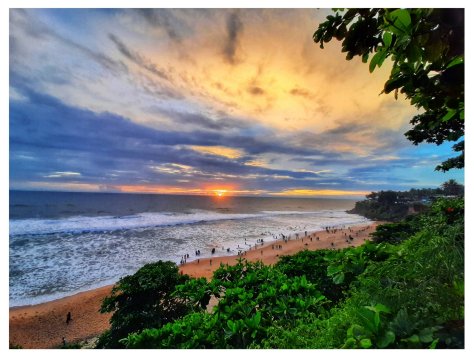
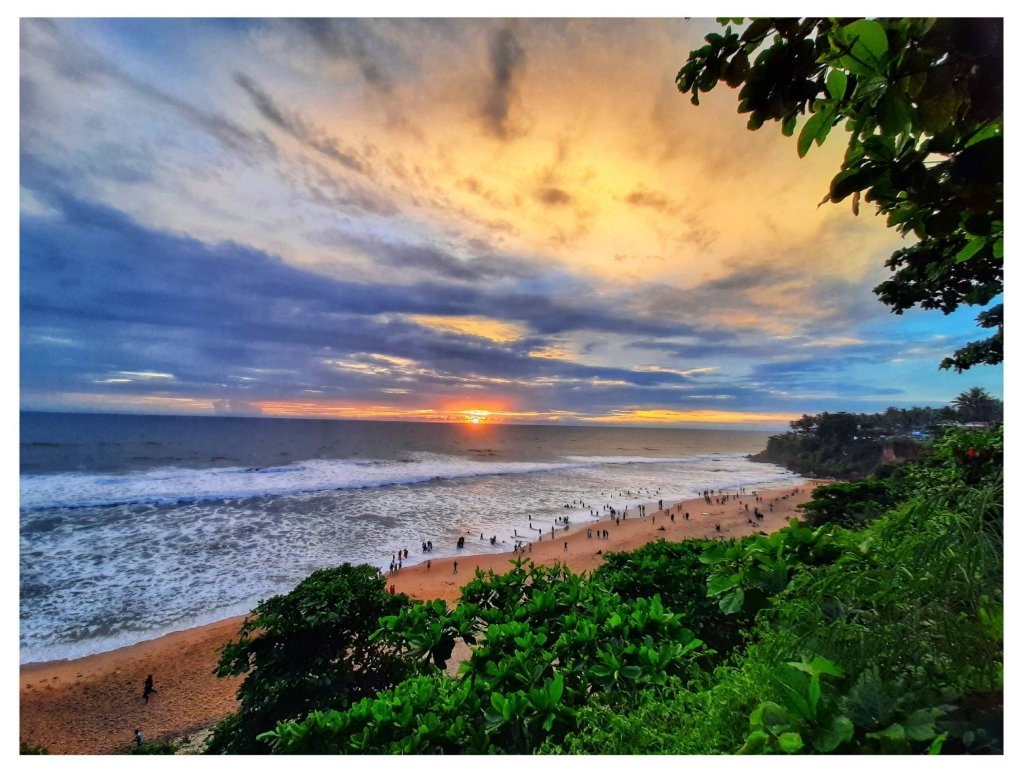
Sunset from Varkala Cliff
The sunset from Varkala cliff on Deepavali 2019

Circa 2020- Karnataka:
Fears of travelling afar due to Covid-19, personal commitments and taking advantage of working from home, this was the longest duration I spent in my hometown in the last 15 years. Quite unlikely to mention the highlights, but the Deepawali of 2020 indeed tops all the above from the list.

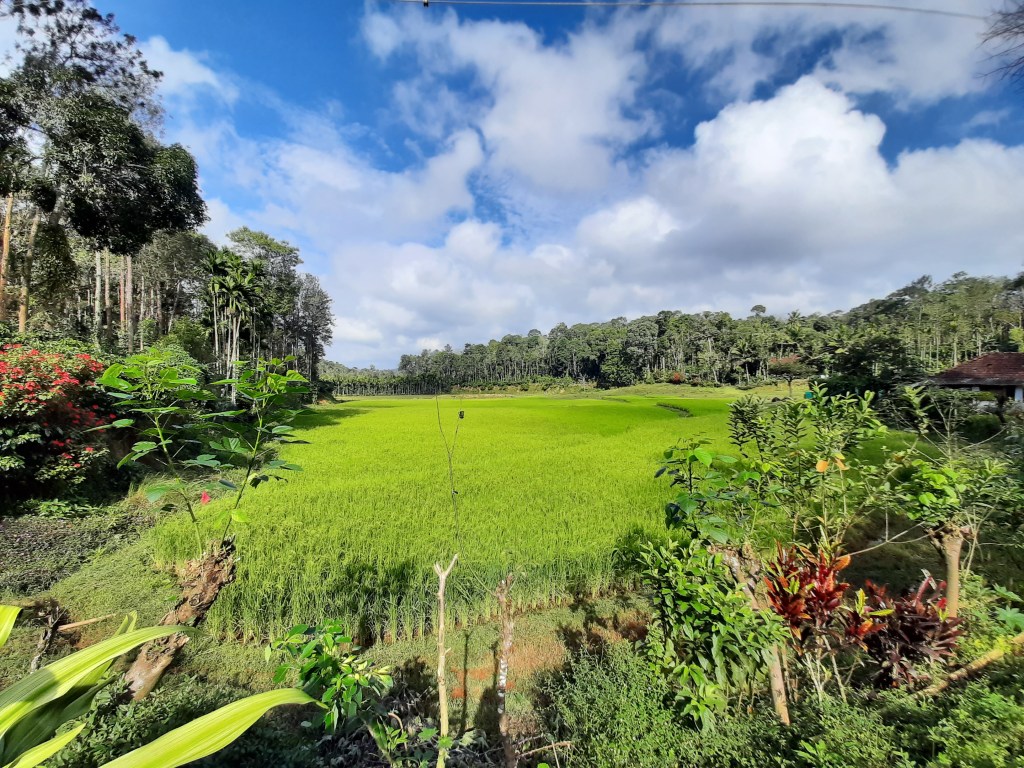
Paddy and coffee plantation in Kodagu
The view of the farm, from our ancestral home in Kodagu

Circa 2021 – West Bengal: This was a trip that was planned on a whim by 2 of my friends and me, where my brother joined in at the last minute. It was a completely new kind of Deepawali celebration which we experienced during trip. Large pandals setup at every 100meters to celebrate Kali Pooja was something unknown to us about Siliguri in the state of West Bengal. That night, we reached ‘Manebhanjang’ a small town located at the entrance of the Sandakphu trek to the Singalila ridge, the highest point of West Bengal. It was yet another experience to witness an amalgamation of Gurkha, Buddhist, and Hindu culture in the way this town celebrates its festival of lights. Much like the carol singers during Christmas, people form into small teams and go from door to door singing, dancing, and spreading joy and blessings.

Circa 2022- Saudi Arabia: It’s a first time for me to spend Deepawali out of my home country but still in accordance to my tradition of visiting a new place during the festival. This time, work brought me here. Although there wasn’t much we could do like in India, some shopping for sweets at Indian sweet meat shops was a little bit of home we brought for ourselves while staying away from homeland. But, I feel grateful for this opportunity and experience life has brought to me during this Deepawali that has helped me to grow into a little stronger person I was when left India.

What are your stories about celebrating Deepawali / Diwali? What do you do normally?

Celebrating the festival of Love and lights at Varkala

Solo tripping during Deepavali has somehow been a ritual that has caught on to me since 2015. In 2019, I was out in Kerala. I was going to spend three days at a place considered somewhat to be a hippie destination. Train tickets were sold out and hence, I boarded an evening bus from Bengaluru. After a long journey, I alighted at Kollam on the following morning, from where I got a passenger train ride to my destination: Varkala Sivagiri.

The itinerary for three days is as follows:
Day 1: Janardhan Swamy temple visit, Lazing and hippying around the cliff and the Varkala Promenade
Day 2: Golden island, Sivagiri Mutt, Ajengo Fort, Varkala Light house and Munroe island
Day 3: Kappil beach

The Story:
It was a pleasant train journey along a scenic route. I had a nice Kerala breakfast at a restaurant across the railway station and then followed google maps to the hostel that I had booked online. I did not mind the long walk to the hostel that was located close to the famous ‘Cliff point’. I always consider walking as an opportunity to explore the streets and get acquainted with any place that I visit. After checking in at the hostel and freshening up, I headed out to visit the ancient Janardhan Swamy temple. After offering my prayers, I walked back to spend the rest of the day at the beach.

While I was walking along the beach and silently enjoying the romance of my feet with the waves, I noticed a woman (in her sixties, which she later mentioned during our conversation) walking on the beach too. With a smile on her face, she was enjoying her lone time. But at the same time, she seemed to be struggling with something. I felt as if she wanted to mingle with the people around there, she wanted to get herself photographed, but something was holding her back. I smiled at her and she smiled in return. I offered to take her photo and she was glad. Eventually as I spoke to her, I realized that she wanted to socialize with the locals but was struggling with the language. She was French and couldn’t speak neither the local language nor English.

As I spoke slowly, she translated it on her phone and communicated back with me through the mobile phone translator. we had become good friends by the next hour. She mentioned to me that she was in India to help herself with the loss of her husband and was accompanied by a friend who had traveled all the way only to be by her side. She was in Varkala since a month and was staying at her cousin’s house who was married to a localite. She was learning Yoga and aromatherapy and was keen on buying good incense sticks from India. She walked me along the entire beach and showed me around the marketplace. She then sought my help to negotiate with a local vendor to buy her a ‘Hapi pan’, a musical instrument that she had been eyeing since the past month that she had been living there.

A demonstration of playing the hand pan/ Hapi pan by the vendor

I managed to get it for her at almost half the price that he had quoted to this ‘Foreigner’ and I can’t explain how happy she was with her new possession. She then walked me down the cliff, laid down her shawl on the ground and sat me down. She started to play her musical instrument and it was a sight to see the sparkle of happiness in her eyes. Sometimes, these little things of bringing joy in others’ life means EVERYTHING!

My friend enjoying her time with the happy pan (Image blurred intentionally)

Post sunset, she walked me till my hostel and bid goodbye with a REALLY tight hug! She said she was extremely glad that she had met me and asked me to join her at the Yoga classes on the following morning if I had time. “The morning recitation of the Shlokas by the beach is my favorite time of the day” she said. I informed her of my plans of exploring other places around Varkala and that I wouldn’t be able to meet her. I gave her my phone number to get in touch if she needed any help and we both parted.

It was a night of celebration at the hostel. The hostel had people from various corners of India and the world and were all dressed up in traditional Indian wear. The premises were decorated with diyas and rangolis. It was a special Diwali, for sure 😊

My visit to the Golden island

The following morning, I hired an auto rickshaw and did a quick visit to the Sivagiri Mutt and the fort before heading towards Ponnumthuruttu. Fondly called as the Golden Island, it is a protected forest area reachable only by boat. It has a few ancient temples and it reminds me much in line of ‘Devarakaadu’ or sacred groves in my hometown. It was indeed a pleasant ride. Apart from the auto driver and the boatman, I was the only other person in the boat, in the island and hence had the blissful time with nature. Although I had plans of taking a boat ride in the nearby Munroe island at Sunset, I later decided to stay back in Varkala itself. By evening, I returned to the cliff again at sunset time. Believe me when I say, the BEST Diwali of my life was in that day’s evening sky. It was a riot of colours.

The sunset from Varkala cliff on Deepavali 2019

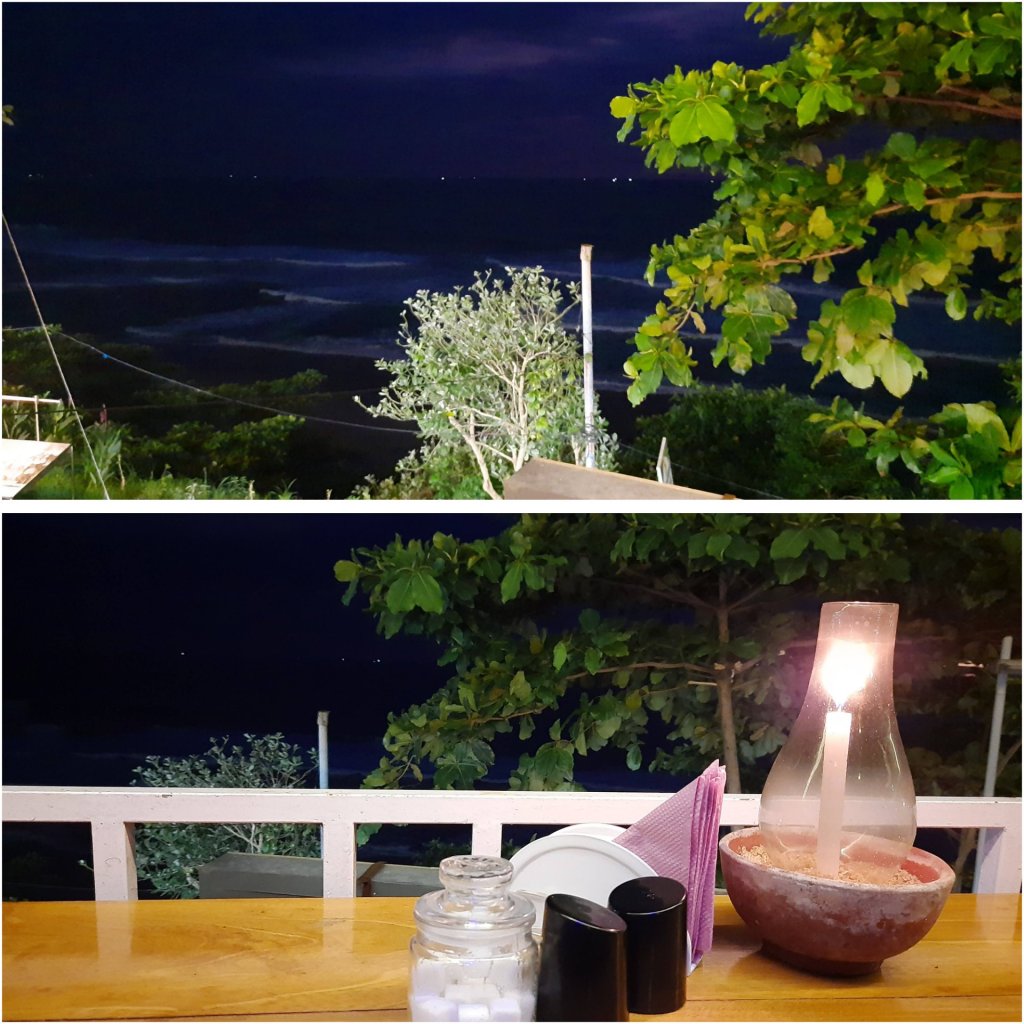
After the sun sank into the horizon completely, I decided to treat myself with some nice sea food. It is one of those strange moments when you are made to feel at home in an unknown land. As I was strolling along the promenade, undecisive of which restaurant to go, I heard someone say: “Akkayya, ninga Kodagu-l elli?” in a male voice. In my mother tongue, that translates to: “Sister, which part of Kodagu do you belong to?” I was astonished and surprised for a moment. We got talking and he said he belonged to a native tribe from Kodagu, settled in Varkala. He had been working at a restaurant there since several years. On being asked how he recognized me to be a Kodavati, he pointed out at my unique Kodava facial features. That was SOMETHING for me to hear now! He volunteered to choose the lobsters and the crab for me from the aquarium, got me a beach-facing-candle-lit table and served the best sea platter I had tasted in a while. It is one of those overwhelming evenings of my life. All time for myself on a Solo-date-dinner night and still made to feel at home by a random person.

My sea view dinner table at Varkala

The next morning, I headed to the beach to grab some English breakfast. I was pleasantly surprised when my French friend and her friend, both arrived at the same restaurant. We three conversed on a multitude of topics and spent good long time together. While the two of them later dispersed, I stayed back at the restaurant waiting for a friend who was riding down from Kochi to meet me. On his arrival, I walked up to settle my restaurant bill at the counter. The cashier said: “No madam, your bill is already settled.” I was amused and told him that I had been eating until now and hadn’t left my table. So, he informed me that a foreigner lady had paid for my orders. There I was, in yet another overwhelming situation. My French friend had paid for my share of the bill too.

Kappil beach

My friend and I then commenced our ride towards Kappil beach, situated on the outskirts of Varkala. It is one of the finest beach side roads I have been to. Somehow, I drew parallels with Maravanthe beach in coastal Karnataka. But moving away from the highway, my friend took me to some deep hidden jewel of locations. I guess it would be fair to call this as my 4th best part of the same trip. Some amazing places can be explored only by hanging out with the locals. He is a Malayali and knowing the offbeat locations enable me to experience one of the craziest bike rides of my life. We drove several kilometers LITERALLY along the edge of the world; like the EDGE! Even if the moist soil under our wheel slipped or the rider went slightly off balance, we both would’ve gone along with the sea, beyond the cliff. All this, while riding through poor visibility due to wild shrubs that were standing taller than us. And then, the shrubs opened into yet another beautiful sunset.

Upon return to Varkala, I picked up some incense sticks with essential oils and dropped them off as souvenirs to my French friend at the Yoga center (A surprise that she would receive only the following morning, after I was gone). Then, I did a quick check out from the hostel and boarded the night train back to Bengaluru. The train route is for yet another post, someday!

My Deepawali of 2019 was all about spreading love and feeling loved. How often have you got lucky and overwhelmed with warm experiences during travel? And how often has it been multiple times on the same trip?

Tiger Census Part 2- The Aftermath

If you have not yet read my story of chasing a tiger trail, Please do! Because this story is the continuation of it. To give you a jist of Part 1: I was on a search mission to find tigers as part of a nationwide ‘Tiger Census’ activity. Another two of my friends too, had been allotted the same National park as me and hence, they were with me for company after the daily beat rounds and at the campsite. While at it, I was chased by wild elephants on three consecutive days, I climbed a tree, I got entangled between creepers and escaped a near miss casualty as I ran for life in the unknown territories of the elusive jungle. But even as a single tiger wasn’t spotted at the end of all the adventure, I was leaving the forest with a sense of accomplishment. But well.. the forest didn’t want to leave me, I guess! It followed me, home.. All the way to Bangalore.

Coming to the point, the forests had started to stick to me since one day before our departure from the forest. That evening, we were sitting at the portico of the guard’s kitchen and looking at the hundred lights glowing at a distance. They were the eyes of a hundred spotted deers glowing in moonlight, that congregate around the forest guest house every evening. We had gotten used to them during our stay, by now. It was nearing a week since we were living and walking in their habitat and we hadn’t been lucky to catch a glimpse of the Big-cat yet. Hence at times, my friends and I hoped that those eyes were of the tiger. While engrossed in our conversation, I had not realised that I had been subconsciously scratching various parts of my body. On noticing this, my friend asked me why I looked so uncomfortable.

Only after that, I realized that I had scratches and marks of my nails on almost every inch of my hands and legs. The irritation had gotten to the extent that my hands had to now reach into my shirt and trousers. I wondered if there was an allergic reaction due to some caterpillar or some plants that I had unknowingly touched. I borrowed a small bowl of oil from the kitchen and went inside our shelter to smear it all over (That’s the first self-medication / home remedy I use whenever I have an allergic reaction in my skin). But this time, it seemed to be getting worse. I had large rashes popping up on almost every inch of my skin. My body had turned red. Apart from a tribal family of Chikkanna who lived across the kitchen door and the cook himself, there was really no one else in the forest for my aid anyway. I assumed that I would be alright by morning and went to sleep that night.

The next morning was our last possible opportunity in the forest, to catch a glimpse of the striped beast. With all anxiety and excitement, I had woken up forgetting about the allergy. Anyway, even that day ended with a fruitless search for the big cat with no sighting. By late afternoon, my friends and I started our drive back, towards Bangalore. Half way through, I came to my real senses. My body was itching bad and it was itching everywhere. I was scratching my body uncontrollably. Initially, my friends found it weird and cracked crazy jokes at me. I too enjoyed their sense of humour and laughed along with them. There was a point when I was literally crying. Crying for two reasons: One, because the jokes were SO funny and I was laughing; two, because I couldn’t stop scratching myself so hard. It was insane. Only I knew what I was going through!

But why only Me..? God must have taken pity at my plight. The other friend in the car too slowly started to scratch herself. By the time we crossed Mysore, both of us were scratching ourselves. It was unbearably itchy! That’s when my friends realised the seriousness of the situation. For most of the road, we prayed that we reached home asap and got a good shower, hoping that would help us to get fresh and feel alright. But as we entered Bangalore borders, we saw the first clinic in our entire drive. we got desperate to do something about our situation and went inside this clinic at Kengeri Upanagara. The doctor took note of the backstory and injected both of us with anti-allergen shots. He assured us that we would be alright by next morning.

We reached our respective homes, took the best shower we had seen in the last 1 week, freshened up, applied some known home remedies and went to bed. The next day, the day after that, the week after that passed. Although the redness in the body had gone, the itching hadn’t stopped. At times, I felt like the itching had subsided. But yet again, I felt that it didn’t subside and I was getting used to it. I had scars all over my body due to the incessant scratching. Fifteen days later, my dad felt irritated at what I was going through and took me to a physician. He gave me a prescription with 4 different types of tablets and assured us that I would be alright within the next three days.

Three days exceeded a fortnight since the that visit to the doctor. It had been more than a month in total since I returned from the Tiger census and I was still scratching my body. That’s when my mom suggested me to go to a dermatology specialist at the KIMS hospital (Kempegowda Institute of Medical Sciences). I was ready to do ANYTHING, to get myself DONE with this. It had started to get embarrassing to go to office and public places by now. I had started to feel like people around me were distancing themselves because this seemed like a dirty habit to them!

I went inside the doctor’s cabin. He asked me what the problem was. No backstory, I only showed my hand and said that I had similar rashes all over my body. Straight to the point, he asked me: “Did you go to any beach?”. “No, I had been to a forest for a trek.”, I replied. He nodded (god knows what and why!) He handed over a prescription with tablets for two days and an ointment. Without really any hope if it would work this time around atleast, I walked out with yet another list of medicine in my hand.

I went home and popped the first pill from the latest prescription. It took me half an hour, THAT’S ALL….. I was relieved of all the mind-blowing (like LITERALLY!) struggle I was going through, since over a month. The itching STOPPED… like to ZERO! Like CRAZY…… Why hadn’t I gone to this doctor earlier!!! Why oh, WHY?? Anyway, I completed my medicine course and the ointment helped me to lighten the scars on my skin over the next 1 month. I suggested the same medicine to my friend as well and she too recovered.

Well apparently, My friend and I were bitten by tiny mites that live in the forests. These mites enter the blood stream through the skin and lay eggs inside the dermis. The doctor at KIMS got this absolutely right and hence, we were cured of our embarrassing situation.

Lesson: Always go to a doctor who is specialized in the related subject unless and until you are unaware of what is the source of the problem.

The Mis-adventurous trip to Haflong

As I had mentioned in one of my previous stories about my first solo trip, I had tagged along with two Bengaluru boys whom I met at Shillong. After covering Meghalaya, we took delivery of a brand new ‘Maruti Swift’ from a showroom in Guwahati and set out on a random road trip across the North-east. (click here to read the complete story). We finished exploring the Ziro valley and were left with 4 more days before our return flight to Bangalore. We worked out many options to best utilize the available time (4 days were too little to go ahead to Mechuka and return to Guwahati, we would be on a tight time if we did Tawang and had no backup in the eventuality of a car breakdown on those bad roads, Sandakphu was doable but we weren’t equipped with sufficient gears).

The National Highway at Ziro

That’s when I popped the option of visiting Jatinga. An unheard place for the other two with me, I explained: “It is a place where mass suicide of migratory birds takes place due to an unknown phenomenon. And this is THE season to witness it!”. There was enough curiosity inside the car but no clue on how to get there. We browsed quite a bit, scrolled through several web pages of the forest department and landed on a random contact list of IFS officers in Assam. We picked a random name (it sounded very South Indian, hence we wanted to try our luck). We got lucky and the call got through. A little perplexed at why random tourists may be interested in visiting this place, the IFS officer asked us to call him a day later as he was travelling. We were ok to wait for confirmation, as we were anyway going to reach Itanagar only on the following noon. That’s where we had to pick our route, whichever worked out- Guwahati or Jatinga.

On the following day, we called on the same number again when we had reached a good network zone. The IFS officer got us connected to another forest officer, posted in Haflong. We got in touch with that officer, who then guided us to reach his office in Haflong. He warned us against stopping ANYWHERE along our way and keep updating him every now and then about our location. We relied heavily on Google maps and were driving through Asian Highway no.1. PS: We would be heading towards Dima Hasao district and the entire route was notoriously infested with anti-social elements.

We commenced our drive on a road that would lead us to Thailand (only if we extended our holidays by a fortnight more), guided by Google maps. But for now, it was destination: Haflong, the only hill station in Assam. The under-construction road was patchy every few kilometers, alternating with smooth asphalt and bumpy gravel. At one point, the road with endless stretch of forest cover was so beautiful and intimidating for a photo stop but we were scared for even a pee-stop. We were however, at the mercy of google-Mata’s directions!

The Asian Highway through Dima Hasao

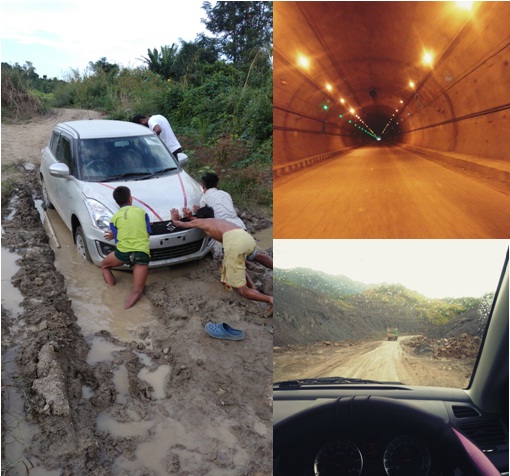
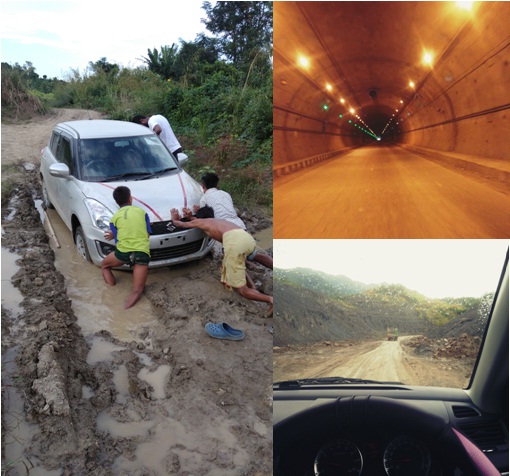
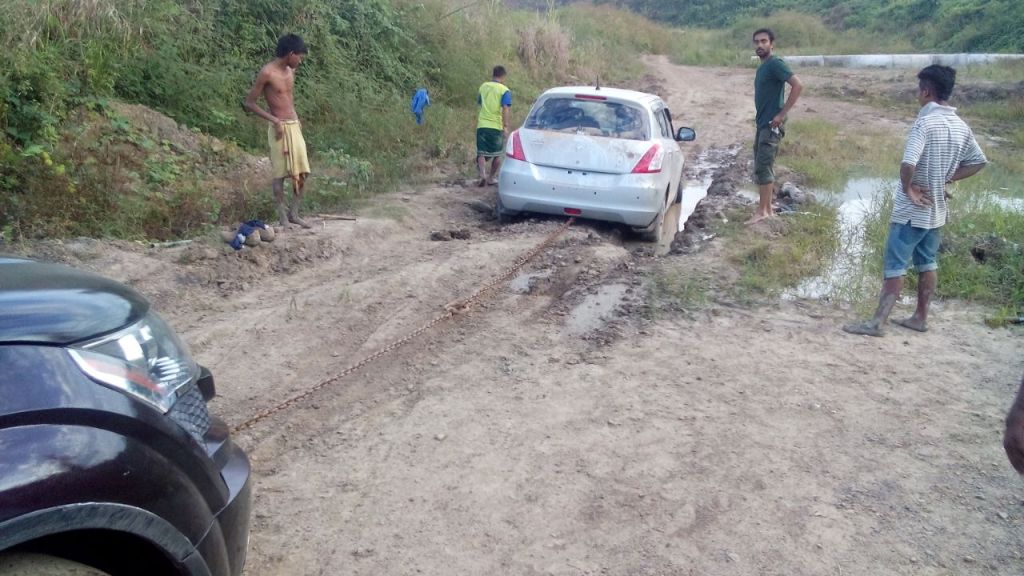
So, the scene what happened after we passed the Mahur cross is documented in another post for you to read. Long story short: we missed a diversion in the under-construction road, continued on AH1 as per google maps and our car got stuck in a deep ditch, in the middle of a forest reserve. We were stranded without help almost until sunset. Finally help and the forest officer’s army, all arrived together to get us out to safe haven. We waited at the officer’s makeshift container workspace until he finished his day’s work and took us to Nothao lodge, a place where our stay in Haflong was arranged at. It was a nice resort (good for a less touristy place like Haflong) but most of all, the owner was a resourceful person who was going to take care of our travel activities for the next couple of days.

Our car being towed by RSA

“Not all who plan and come here get lucky, as the weather plays a crucial role in being able to see it, even after reaching here. The wind direction tonight is very favorable. You are here at the RIGHT time to witness the mass-suicide of the birds. Be ready by around 12.00.a.m., the jeep will come here to pick you all. The officer and I will join you at my house and then we shall proceed to Jatinga.” The Hotelier said before leaving us. We were all excited! After freshening up, we placed an order for a hearty Dimasa meal for supper. ‘Try Local cuisines, wherever you are’ was a mantra all three of us religiously followed. The must try-dishes were recommended by the friendly chef at the lodge.

The poor car had gone through so much abuse on its very first road trip that it deserved a good shower. While the boys drove out to the town to find a good spa for the car, I decided to stay back at the lodge. The wooden furniture in an open dining space with mellow music playing in the background and cold misty breeze from the green trees around, blowing on my face was enough reason for me soak up some inspiration to write my next story. As a couple of hours passed, the boys returned. I don’t know if the car found a spa, but the boys for sure found a bar 😛 They returned with a few liters of judima, the local brew of rice beer.

We were the lucky few who were to witness nature’s phenomena, one so rare that it is unexplainable by science. We had braved quite an adventurous drive to make it thus far… But the weather was such, that I can’t blame them. The two drank up the stock ignoring all my alerts, warnings and requests! It was now nearing 9.00.p.m. and so, blame it on the ambience of the dining area. While the meal was being arranged on the table, the two were dozing away. Jatinga and the birds were all flying away from me now, faintly to the elusive distance 😛 I tried to keep the two up, at least to finish up the meal and not waste it. The two walked up to their room and had passed out within the next few moments. “See you Jatinga, next time!”, I silently spoke while breaking the roti in my hand.

It did not feel right for me to drive into a forest alone with someone whom I barely knew. Hence, I decided to make ‘Nothao’ my destination for the night.
I requested the hotel staff to serve the same food on the following morning (there was SO MUCH food, that neither of us would want to throw it off), informed the hotel owner and the forest officer of my situation and silently slid into the comforting warmth of the rugs in my room.

Anyway, the miss was made up for, by the two boys who had been my travel partners for the last 2 weeks (well… partially). We explored a little bit 9f Haflong. The duo spoke to the officer and a hike to the highest peak of Assam- Hapeo peak was organized. That’s yet another story you might want to read here. Thus, happened our misadventure to Jatinga and the last bit on my fortnight in the north-east.

Hiking to a massive natural arch- Bheemanakindi

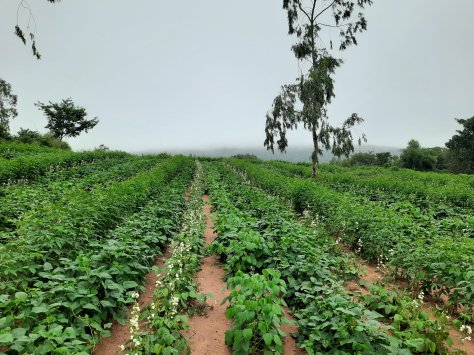
With a closed group of family and friends, about 10 of us planned this weekend trek to this lesser known hill, a little away from Bangalore. We started from Bangalore at 05.00.a.m. with an intention to finish the hike back down before the sun goes up. It was dawn by the time we drove towards Kanakapura and reached a village called Kanchanahalli, in Malavalli Taluk of Ramanagara district. The Kaccha road thereafter till the base of the hike, passes through fine landscape and traditional village of ‘Mysore Karnataka’ region. The hill is a part of the ‘Kabbala Forest reserve’ area. The early morning rays added extra charm to the cloud kissed peak of the ‘BheemanaKindi hill’ at the distant end and the fog covered coconut groves and vibrant green farms on either side of the road. What else? Picture this: A dozen peacocks dancing in the middle of the road! Well, a pleasant welcome; I must say 😊

The Drive and trek to Bheemanakindi

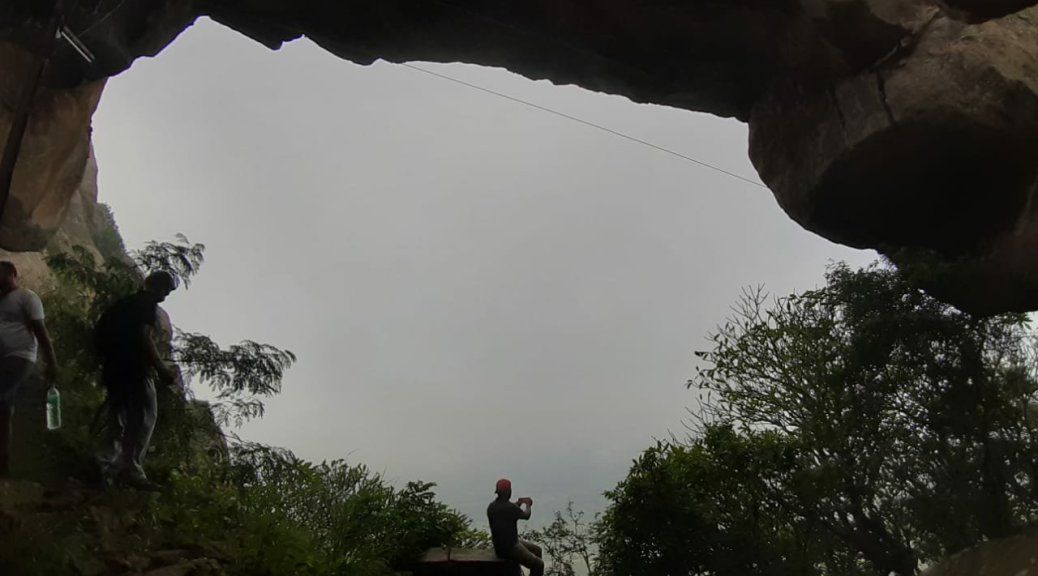
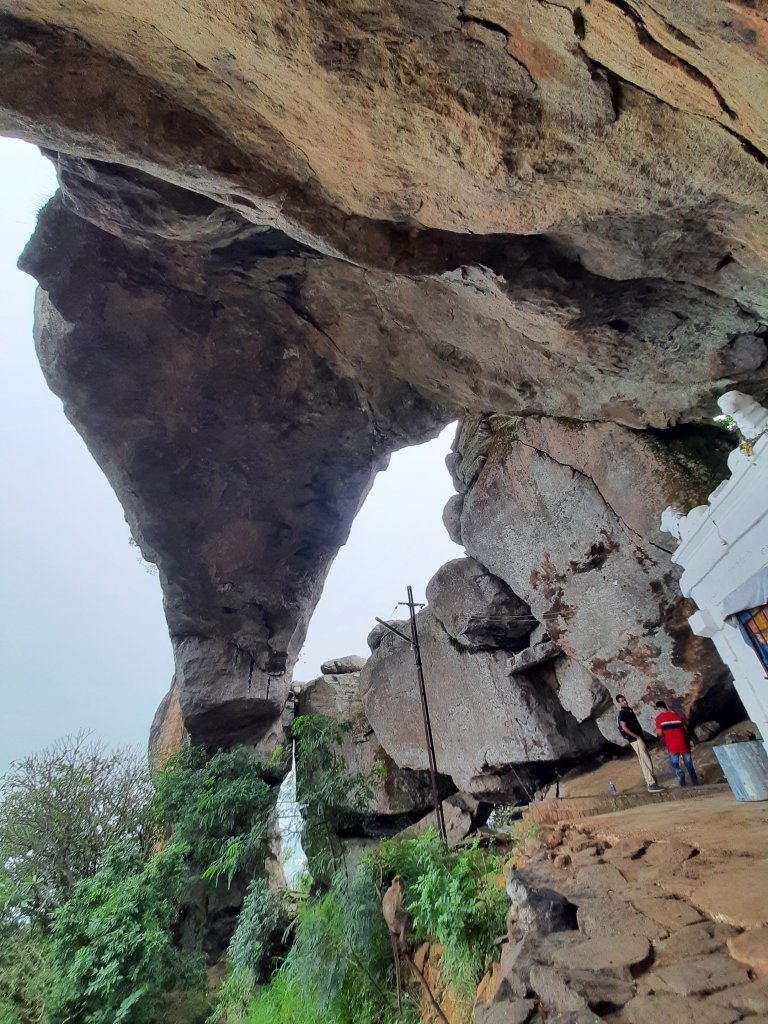
We finally arrived at the base of the hill, parked our cars and started the ascend. It starts at a small godown sort of a structure from where, is a well laid out stone path through the forest, right till the destination. Well, let me clarify that unlike most of the common treks around the city that promise you a breathtaking view after a good climb, this one has a MASSIVE stone arch at the end. With this large arch, goes the legend from Ramayana. ‘Bheema’ hit the large rocky monolith with his ‘Gadhe’ and thus resulted this Natural arch, locally called as ‘Kindi’. The smaller pieces scattered are believed to be the ones which appear to have been arranged one on-top-of the other in the adjoining smaller hillocks by the consecutive civilizations, over a period of time.

The difficulty level of the climb is moderate, but the gradient is steep. Since I hadn’t eaten anything since the previous afternoon, acidity was taking a toll on me. I was feeling nauseous and tired and trailing everyone on this trek. (That’s also the reason I didn’t take many photos of our ascent and the video attached below includes more visuals from the descent). I somehow made it to the top, all worthwhile the effort. A small temple dedicated to Nandi sits in a corner underneath the massive rock arch overlooking the dense forest cover below. Apart from a few squawking peacocks and chirping birds, we thought we were the earliest mammals to arrive there. But not until we saw some freshly laid elephant poop at the peak…!

A portion of the Stone arch and temple at Bheemanakindi

I had some biscuits and relaxed there for a bit until I felt fine. From a few known localites, we had heard that there exists a perennial pond somewhere close by. We walked behind the boulders that overlooks the millet farms beneath. We climbed up the hill further and we ventured out in pursuit of the pond. Mind you, the trek path ends at the temple and we were venturing out beyond, into the forest (Do not try this adventure). The sloppy path didn’t have a proper trail and we followed each other and stayed together so that we wouldn’t get lost. We walked further, a few broken trees (Bamboo, Indian Gooseberry, hog-plums etc.) perhaps warned us from going further, the pachyderms had just crossed the path. From there, we arrived at a small opening in the green cover- a large boulder. As the mist had engulfed the entire view, we sat there for a while hoping for it to clear out and get some good view of the valley below. But no luck and we decided to walk back.

Our stomachs were grumbling for food by the time we reached back to the base by 10.00.a.m. One of the members in our group had a relative in Kanchanahalli and hence, we were invited for brunch at their house. We drove to their house, passing through my FAVOURITE views of Karnataka: The rural hamlets of ‘Mysore Karnataka’ region. Traditional houses with wide porticos on raised platforms, red-oxide floors, clay tiled roofs supported by wooden pillars are a delight, I tell you!! Sometimes, cattle sheds on one side and a bicycle on the porch too is a common sight, so very typical to this region and so warm and old world. I have always gaped at those tiny streets in awe. So, today was my first opportunity to see the interiors of one such house, all that I had only seen in Kannada movies till date. Picture this: they are locally called ‘Thotti mane’ and the central living room has a central area which opens to the sky. Talk about natural ventilation and lighting, it has been part of our ancestral architecture from time immemorial. It also serves as an area to wash our feet and hands when we enter home, before we touch anything else. (Connect it with self-sanitizing during Covid times, after you come home from outside??)

A street at Kanchanahalli, overlooking the Bheemanakindi hill

Well, a pleasant happy day for me and a nice, happy, simple, warm meal for the tummy 😊 We head back to the city…. Hoping for another warm weekend to arrive soon….

From three directions to one destination- Ragihalli Betta

This post is of my family’s random “target destination-less” drive during the Covid unlock period. We set out in three different directions on three separate weekends but reached a place from where we got the view of the same hill, every time. By the shape of the solo hill, we would know that it was the ‘Ragihalli Betta’, located on the fringes of Bannerghatta National park. So, here are the details.

Direction 1: Kanakapura road; Destination explored: Gullahatti Kaval; View: Ragihalli Betta
The aimless drive culminated at a beautiful spot at the backwaters of the Muninagara reservoir in a village called as Gullahatti Kaval (Click here to read the detailed post). The route was mainly through millet and Banana farms dotted by small hamlets.

The road leading to Yogavana Betta, from Kanakapura road

Direction 2: Bannerghatta road; Destination explored: Koratagere Doddi; View: Ragihalli Betta
An offroading drive through Ragihalli state forest, stream crossing, forest trail and then culminating at a viewpoint- was a very welcome drive (Click here to read the detailed post).

View from Yogavana Betta

Direction 3: Mysore road; Destination explored: Yogavana Betta; View: Ragihalli Betta
After passing through small hamlets, an art school and a road with a foresty canopy leading to an ashram called as ‘Yogavana Betta’. We skipped the ashram visit and walked up the hill and climbed up a meditation hall, apparently called ‘Anubhav Mantapa’ to get a 360deg view of the surrounding. One of the views from atop was the Ragihalli Betta. Apart from a casual walk in the green neighborhood, there was nothing specific to do here. But it is a DEFINITE recommendation for those seeking a good ‘Sunset View’ point. Watch the below video of this place and the view surrounding this place.

Yogavana Betta

Nestled in the oblivion of Bannerghatta- Koratagere Doddi

This is yet another of my family’s random drive day, thanks to Corona unlock weekends… This time, our random pick was in the direction of Bannerghatta forest. We drove past Jigani marble market towards Ragihalli state forest. We drove around randomly and stopped wherever we thought we had a good vantage point. The place being around the fringes of a national park and in the fertile stretch of countryside, there was lots and lots of greenery all along. We stopped by at the IIM-B new campus plot near Mahanthalingapura from where we got a distant view of the ‘Ragihalli Betta’. (Remember our drive to Gullahatti Kaval? We had the view of the hill from a different direction- Click here to read the complete article) The cloudy and cool weather here made everything perfectly amazing, with a great combination of bright green and dull grey. With permission of a millet farm owner present there, we sat in his farm overlooking the green valley for a while, with some packed food and water.

After resuming our drive and on recommendation of a friend, we deviated from the main road leading to the Ragihalli state forest. It was quite an offbeat surprise for our ageing hatchback, but he performed smoothly compared to any youthful 4×4 SUV. A random deviation got our hatchback into an overflowing stream (with water level almost up to the doors). We didn’t know the way ahead, but our driver(my brother) didn’t switch off in the middle of the stream. Another car in the opposite direction directed us to the correct road from where, it was an unpaved gravel laid forest path for a few more kilometers, before passing through a couple of laidback villages. After the tree laden trail was over, small rocky hillocks appeared to our left and a vast stretch of farmland flanked the valley to our right. Apart from a few villagers transporting their goods on two wheelers, we were the only people in this stretch for most distance. We continued an uphill drive until there appeared a junction with a temple at the top. Watch the video of our drive below:

The drive to Koratagere Doddi

A milestone at the junction read that it was ‘Koratagere Doddi’. Thanks to the lockdown and social distancing norms, it had been several months since I had been to a temple and I was excited at the sight of it. From the architecture of it, the structure seemed to be a Sun temple. But google says it is a ‘Paanchala Kshetra’ that was closed at that time. However, the place seemed to be beautiful and we decided to park our car and take a stroll. We walked a few yards to our right and believe me when I say, it looked BEAUTIFUL! We were at a flat rocky tabletop cliff from where we could see a good stretch of the city outskirts. We decided to sit there for an hour at least and enjoy the strong breeze that kissed our faces hard. But yeah, the time was cut short by the rain gods who manifested themselves from the distant dark clouds to a sudden pounding of rain.

The misty Ragihalli forest viewed from a farm

We had no choice but run to our car for shelter. But wow, what a wonderful setting it was: Green grass, grey sky, hill on one side, valley on the other and a lonely temple ahead of us. We saw no signs of the rain stopping as we waited in our car and decided to continue our drive, back home but in the direction of the road ahead of us. Thanks to the rain, we did nothing specific to stop-by and take note of. But yeah, the Ragihalli Betta now appeared closer and COMPLETELY mist / cloud laden, a view not everyone gets lucky with.

Overall, a wonderful day out with family to a place where I belong: to Nature 😊

getting lost in traveling through places and time…