Tag Archives: Backpacking in India

Exploring Ramnami Community: A Journey into Tradition

Over recent years, my travels across India ignited my fascination with how tattoos hold cultural significance among different Indian communities. In many areas, tattoos serve as symbols tied to tribal customs. One community that particularly intrigued me was the Ramnami of Central India. When I shared this with a friend, she too showed interest in delving deeper into this culture. We eventually connected with a community member who graciously allowed us to visit his village, even inviting us to stay with his family. We happily arranged our visit.

We initially flew from Bangalore to Raipur. From there, we caught a local bus to the GPM district. Subsequently, we explored GPM by taxi, which dropped us off at Chandlidih, the Ramnami village. It was raining heavily as we navigated the damaged, flooded roads and finally arrived at the location indicated by Google Maps. We carried our backpacks while crossing a small reservoir wall built over a stream swollen by the monsoon. On the other side was our host’s house. By the time we reached the front yard of the Ramnami family’s modest home, we were covered in mud from puddles stretching from the parking lot to the house.

Portraits of the Ramnamis

Our host welcomed us upon arrival and directed us to the guest room to drop off our luggage. The room, an extension of the main house, was built with cob and wood, offering basic amenities such as two beds for resting and a light bulb for illumination at night. We relied on mobile internet throughout our stay. According to tradition, anyone visiting from outside must bathe and cleanse themselves before entering a Ramnami home. The next experience was something my friend and I will both remember for a long time: the bathroom!

It was a simple enclosure with two and a half walls and a roof. Half of the third wall was intentionally built to shoulder height, making it easy to bring in water from outside either with buckets or through a gravity pipe connected to a nearby perennial stream that filled a concrete tank inside the bathroom. The fourth side was left open for easy access, featuring a modest saree stitched into a sliding blind that could be moved to open or close. There was no running water; hot water had to be fetched from an outdoor firewood oven, or one had to make do with the chilly water stored in the tank inside. Our city dwelling bodies were used to a sturdy lockable door for bathing with unlimited hot water from a tap or shower. While the cold-water setup was tolerable for my outdoor spirit, I could not imagine standing unclothed inside a doorless bathroom.

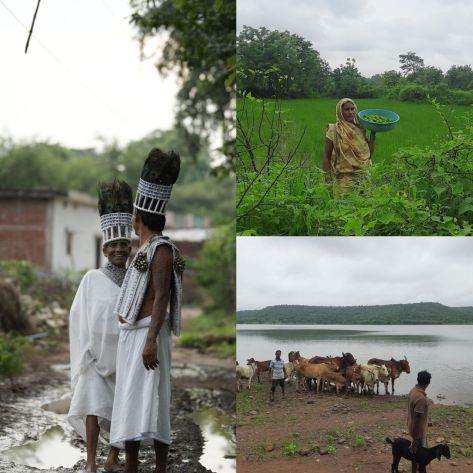
The Ramnami Community

If I were hiking, I could go days without bathing, but here, it was crucial to start our trip by experiencing the Ramnami culture. Hesitantly, I took off my clothes and poured a couple of mugs of water, just as I heard giggles outside. I paused to check if I was imagining things or if it was real. Soon, I saw the shadows of a few kids moving behind the curtain. As I began applying soap, I saw two toddler heads peeking in from the sides of the curtain, giggling again. I panicked, yelled my friend’s name, and hoped she would come to help. She got scared and ran over to see what was wrong. I told her about the curious kids, and she decided to stay at the bathroom entrance until I finished. Later, I returned the favor.

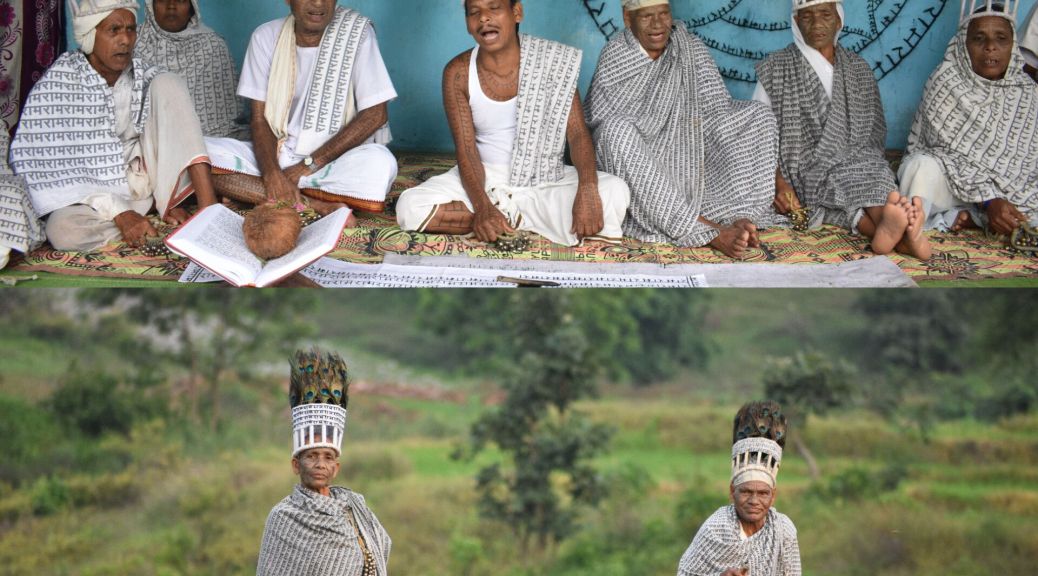
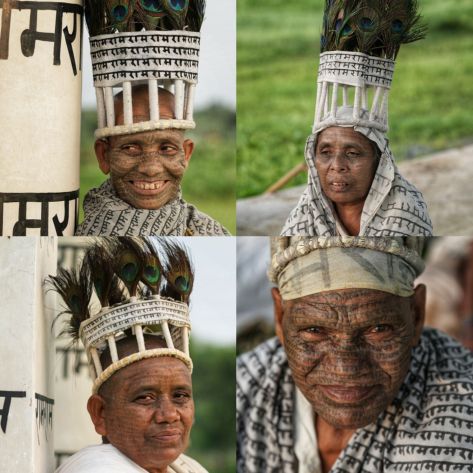
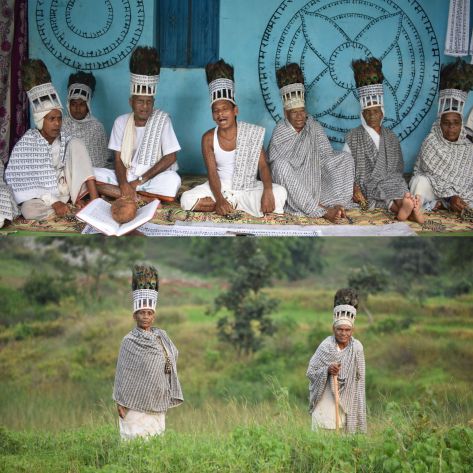
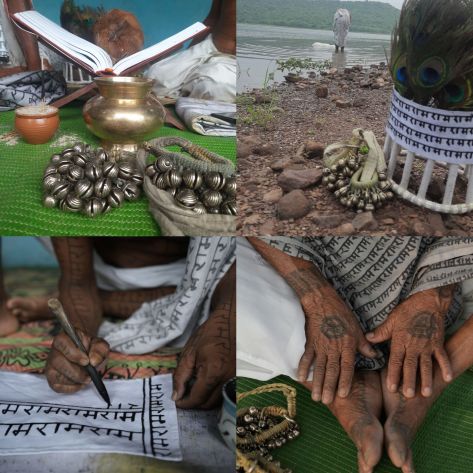
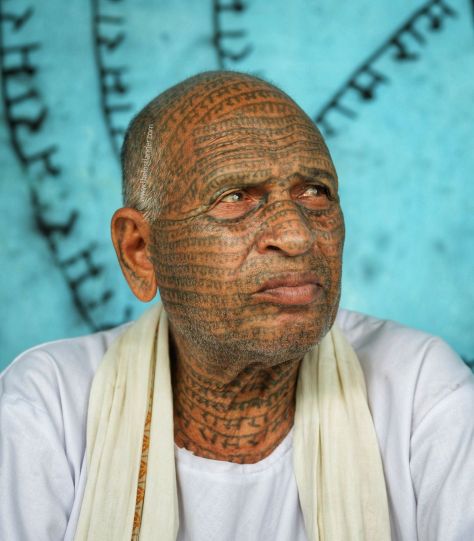
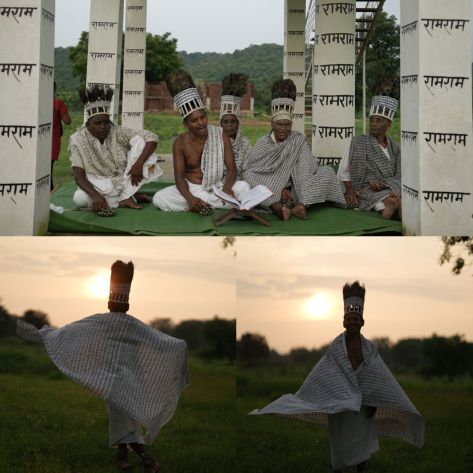
After changing into fresh clothes, my friend and I headed to the porch of their house, where the entire family had been singing hymns of Lord Ram since sunrise, even before we arrived. We greeted them with a coconut and some fresh flowers, which we were asked to bring as part of their tradition of introducing a new guest to the family. Most adults had tattoos reading ‘Ram-Ram’ in Hindi covering their bodies. Some had full-body tattoos, while others had only face, arm, or forehead patches. They all wore pure white clothes handwritten with ‘Ram-Ram’ patterns. Their Dhotis, shawls, and headgear featured the same ‘Ram’ writing in a consistent style. The handmade headgear, unique to the Ramnami, was decorated with peacock feathers. All participants in the Ram bhajan carried strings of small jingling metal bells, each stamped with ‘Ram’ during casting.

We introduced ourselves and joined their Bhajan until lunch was served. I savored a simple Satvik meal made with ingredients from their farm. The faint aroma of firewood used in cooking enhanced the local flavors with a divine touch.

Daily utility items and life of the Ramnamis

We traveled without a fixed schedule, aiming for a slow, immersive experience of this community’s daily life. After lunch, my friend and I joined members singing Ram Bhajans on the porch to understand what defines the Ramnami. We were transported back to the 1890s to learn about their history. Like the rest of India at that time, casteism barred lower castes from entering shared places of worship. Some rebelled by declaring their bodies as temples dedicated to Ram, tattooing the Ram-Nam (Lord’s Name) with a locally made ink derived from herbs. They formed the Ramnami community. A senior member leads events, whether a baby’s birth or a funeral. Their greetings and farewells are solely marked by singing Ram-Bhajans, even during major life events like marriages. They do not conduct any Brahminical rituals, poojas, or havans as part of their practices.

A portrait of a Ramnami community member

With the rain gods commanding the skies and earth, we saw them prepare their shawls, made from woven, stitched white cloth they crafted themselves. These shawls were then covered with Ram-Nam. After carefully observing them write with their native ink for a while, we joined in to write on some of the other pieces. Once finished, they set them aside to dry, initiating a series of procedures to prevent the white cloth from bleeding black.

A walk through Ramnami village

When the rains stopped, our host guided us through their village. We crossed a stream, carefully walked along the paddy field edges, and eventually made our way along muddy, winding roads. We met several members of the Ramnami community, mostly relatives or neighbors from the same village. We greeted women working in the fields and enjoyed coffee at welcoming houses. Later, we visited JayaStambh, a small monument commemorating the annual Ramnami mela held here a few years prior. Some older community members joined us there at sunset, singing Ram bhajans as a tribute to the setting sun. Afterwards, we visited a small reservoir across the lake. The Ram Bhajans, sung warmly around a bonfire, echoed over the calm water, with the sky changing colors dramatically until nightfall.

The evening prayers at the Ramnami Jayastambh

We walked home carefully through the night darkness to avoid slipping on the slush. After a satisfying dinner, we drifted into a peaceful, childlike sleep, concluding a long and exhausting day.

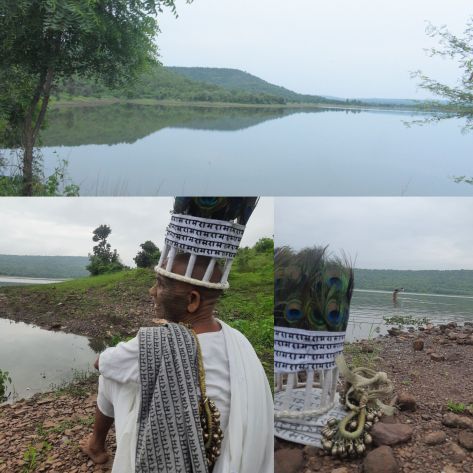
The following morning, we rose early to witness a normal day in the life of the Ramnami. We went to the reservoir with the elder members of our host family, who offered prayers to the sun god and recited blessings before their water dip. After changing into clean clothes, they went back home to continue household tasks such as cleaning, preparing food, and having breakfast.

The morning at the Chandlidih reservoir

Spending time at a Ramnami home offered a genuine glimpse into a culture that is remarkably different from the rest of India. The younger Ramnami generation might not be eager to follow the traditional paths laid out by their elders. However, this community exemplifies how faith in God can help us overcome great challenges. They defied the odds, forging their path, which they believe will lead them to a divine connection.

After a simple breakfast and Ram Bhajans, we packed our bags for our next destination in Chhattisgarh. Our host assisted us with pillion rides on two motorbikes, skimming over the slushy village roads before reaching the highway, where we caught a local bus to continue our journey.

Purple Farms of the Saffron Flowers- Kashmir Story

Long ago, I watched a visual documentary about the farmers of Kashmir who woke up early on freezing cold mornings to gather fresh flowers from their fields. They all rose with the sun to harvest saffron, the most expensive spice in the world. Ever since, these romanticized visuals had me imagining myself walking on those farms someday.

For close to a year, I had been trying to reach out to people to know when the exact time of the year was to witness these inflorescences. I got in touch with a local person from Srinagar who would take me around the farms. I learnt that the flowers would bloom around late October when autumn sets in. As the season approached, I was getting too anxious to not miss the season. Thus, booked a last-minute flight ticket from Bengaluru, for a long weekend at Srinagar. After a missed connecting flight and spending almost an entire day at the Delhi airport, I had finally arrived at Srinagar on a late Friday evening.

‘Be ready early in the morning, we will be heading towards Pampore’, my local guide said to me before dropping me off at a homestay in the city.

On the following morning, the Chinar leaves of autumn had started to paint my entire journey in gold. The sun rising over the overlooking mountains that surrounded us all around only enhanced my excitement to reach my destination. The saffron grown in the Jammu and Kashmir region has gained a GI tag in the year 2020 with Pulwama, Budgam and Kishtwar districts being key saffron producing areas.

Welcome to the Saffron town of India’, a board stood at the entrance of Pampore in Pulwama. The wide stretch of land on both sides of the highway looked bare and dry, without sight of a single flower or even plants of saffron that I had come to see from 2000 kilometers away. I looked at the person accompanying me, enough for him to understand the meaning of the perplexing look on my face. “Haven’t the farmers cultivated saffron this year?”, I asked him.

He walked me down to one of the farms on the roadside and explained to me that even yield ready plants aren’t prominently visible, with barely one or two grass-like looking leaves emerging from each root (bulb). Only the flowers come out from the root that are extremely sensitive to the environmental temperature. “This stretch of the farms has no shade and the heat due to the highway traffic delays the blossom. We will go to the interior villages of Pampore which have more shade because of orchards like apples, almonds, apricots, etc. The blossom season begins in the shaded-cooler areas and ends with the open-warmer areas”, he said giving me some relief.

We then met a farmer at Pulwama town who then drove us through the interior village of Pulwama, which is otherwise untouched by tourists. Finding our way through the misty morning while being greeted by endless orchards on either side, my guide on the steering stopped at a point. “Madam, here you go!”, he said.

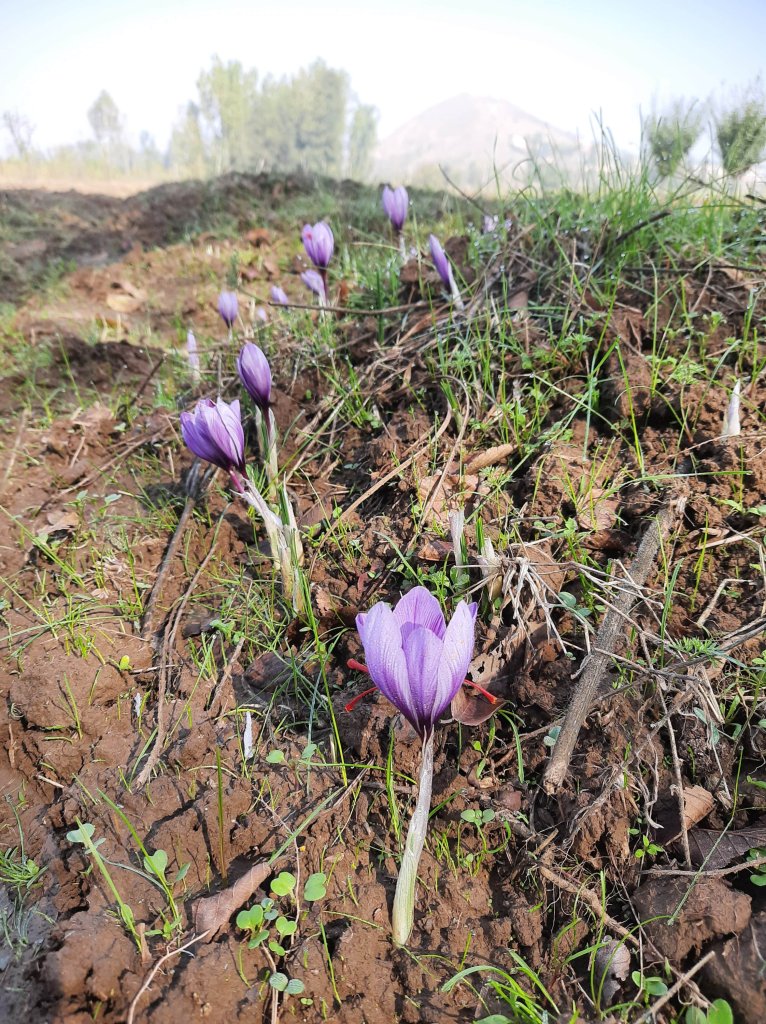
Saffron flowers in Kashmir farms
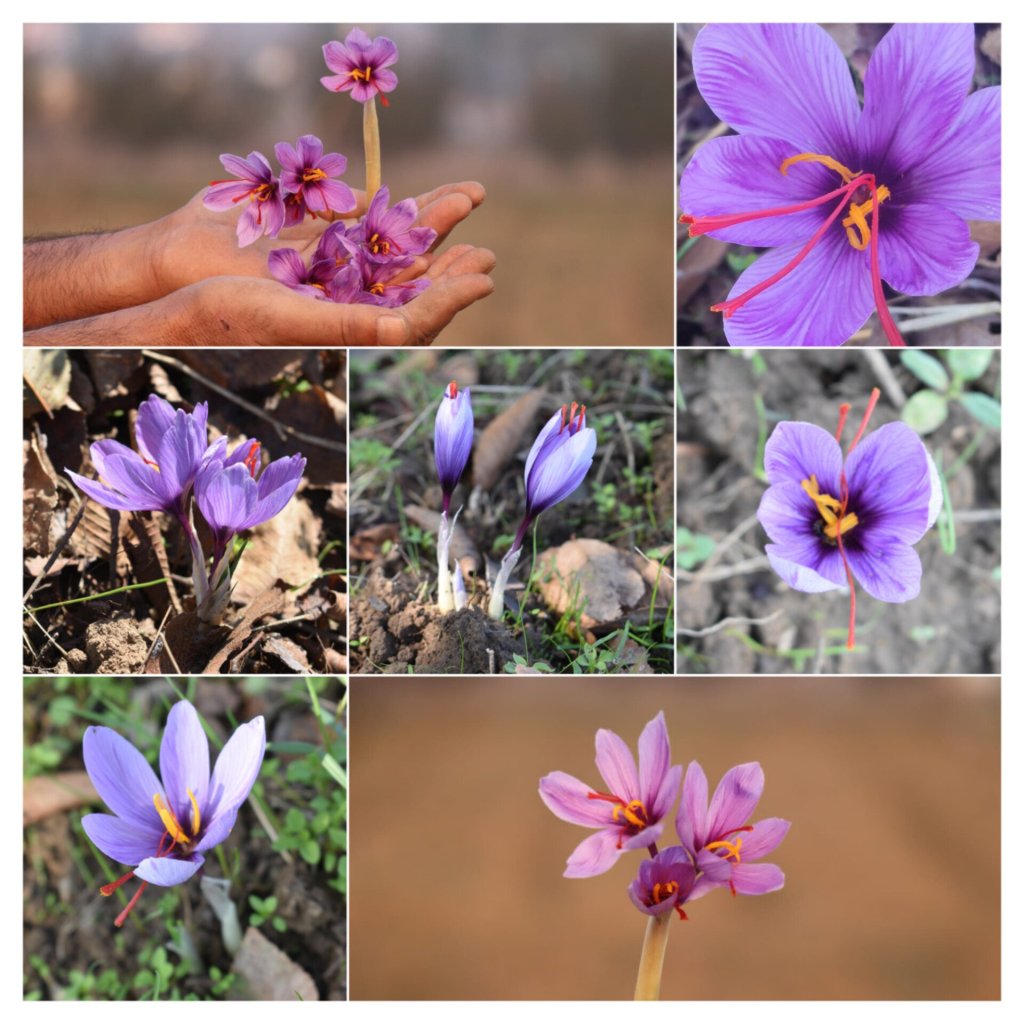
The purple flowers of saffron in Kashmir

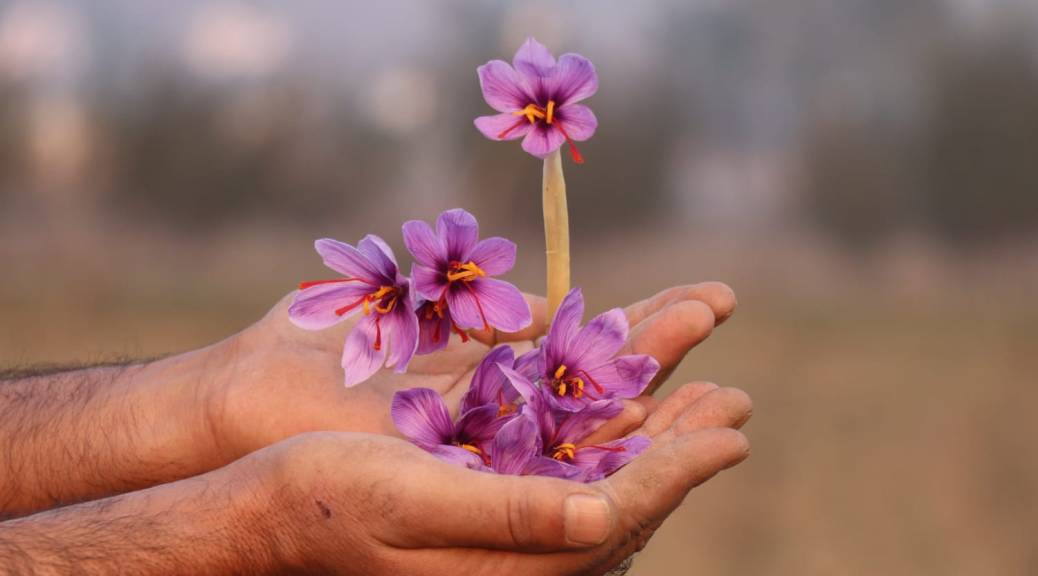
I ran out of the car and watched the sight in awe. It seemed like a faint purple carpet of flowers had been laid on a hazy morning, with the apple orchards writing testimony to my presence and the snowy mountains standing guard against this beautiful view. I had a tear rolling down my cheek, which I am still unsure if was because of sheer joy or in disbelief that I had made it there. I spent hours that morning walking between the purple blossoms, caressing the tender, dewy and moist flowers of saffron, taking pictures of the flowers while enjoying the crisp autumn air. The people accompanying me for sure must have thought that I was a psychopath wandering and meandering all alone, who had travelled from so far just to see these flowers. A few flowers made it to my books, pressed carefully between the pages and getting to go home with me.

Saffron flowers in Kashmir farms

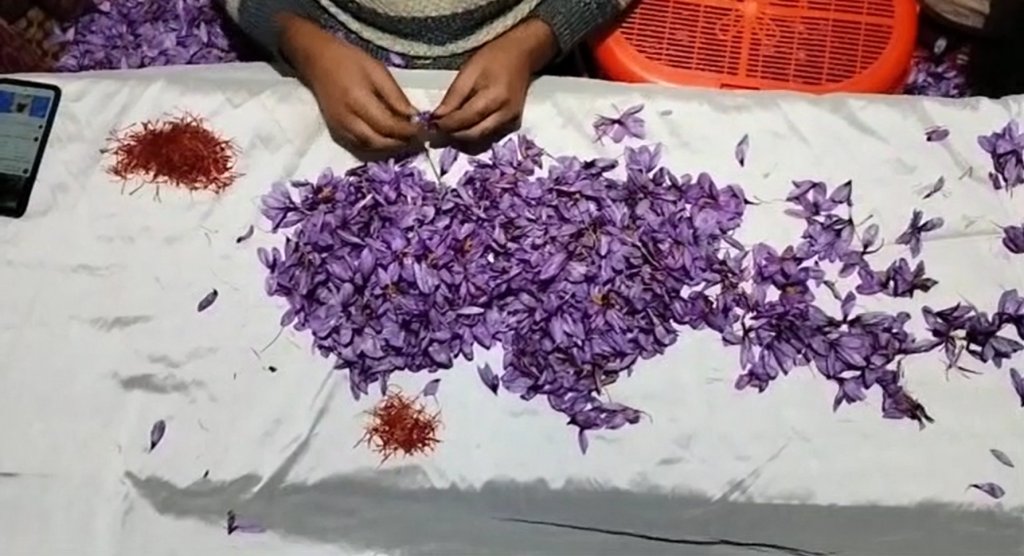
He picked the tender flowers and rested a bunch on my hands while pulling out the saffron strands from one, for me to eat. My tongue had turned yellow upon consumption which he explained was an indication of the authenticity of the spice. I was then invited to his work area where his family had gathered around a table and were separating the different parts of the flowers that would be used for different purposes. He explained the entire process of separation of the saffron strands (the stigma or the female part of the flower), the drying and the packaging. Sipping on hot brew of Kahwa served with the same strands of the saffron that I was holding a few moments ago was overwhelming.

Saffron flowers in Kashmir
Saffron flowers Separation

Of course, my visit would have been incomplete without picking up stashes of saffron from their shop as souvenirs for friends and family. In this short visit to the land of saffron, I had witnessed the world’s richest spice travel from farm to market. Sigh, it was a dream come true, to experience these fully blown saffron fields!

Fact file:

  • It is recommended to get in touch with proper sources and book taxis in advance who could take you on such guided tours of the saffron fields.
  • Pampore and Budgam can be reached on day trips from Srinagar. J&K tourism runs guests houses in Kishtwar as well, which can be reached via taxis hired from Jammu city.

List of the Widest Waterfalls of India

We all know that the widest waterfall in the world is the Niagara, and it is in America! So, we take it for convenience to use Niagara as a synonym to refer to every other wide waterfall in our region. But how many of us have really seen the widest waterfall in India? Or for that matter, how many of us have seen the widest waterfall of our own states within India? Irony is we surely know Niagara, but we might have not even heard of the one in our own backyard.

So, here’s my attempt at listing some of the widest waterfalls in the Indian states that we love to call the Niagara of our country! (Note: These are by width of the waterfalls and not by their height)

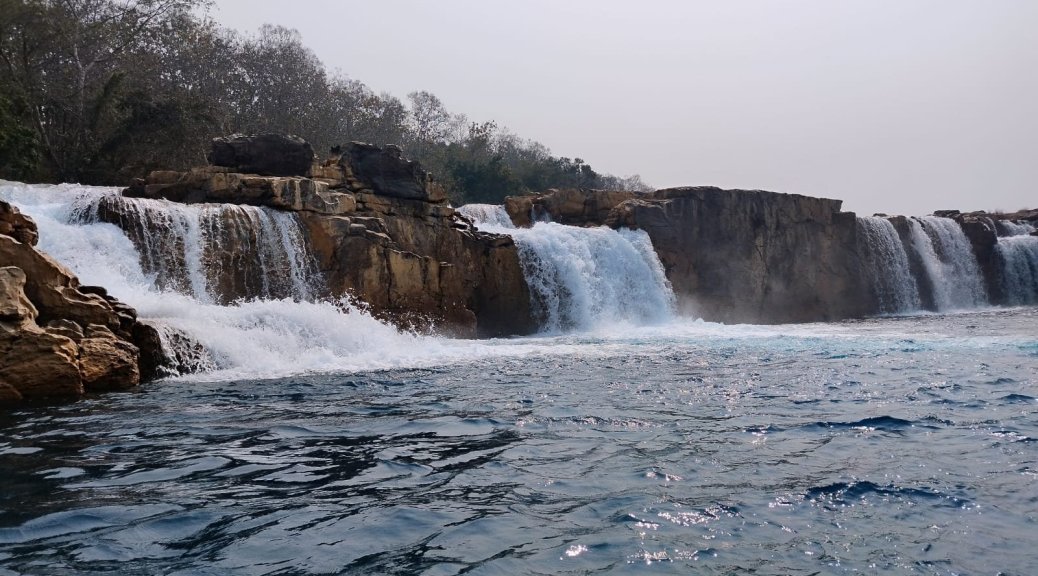
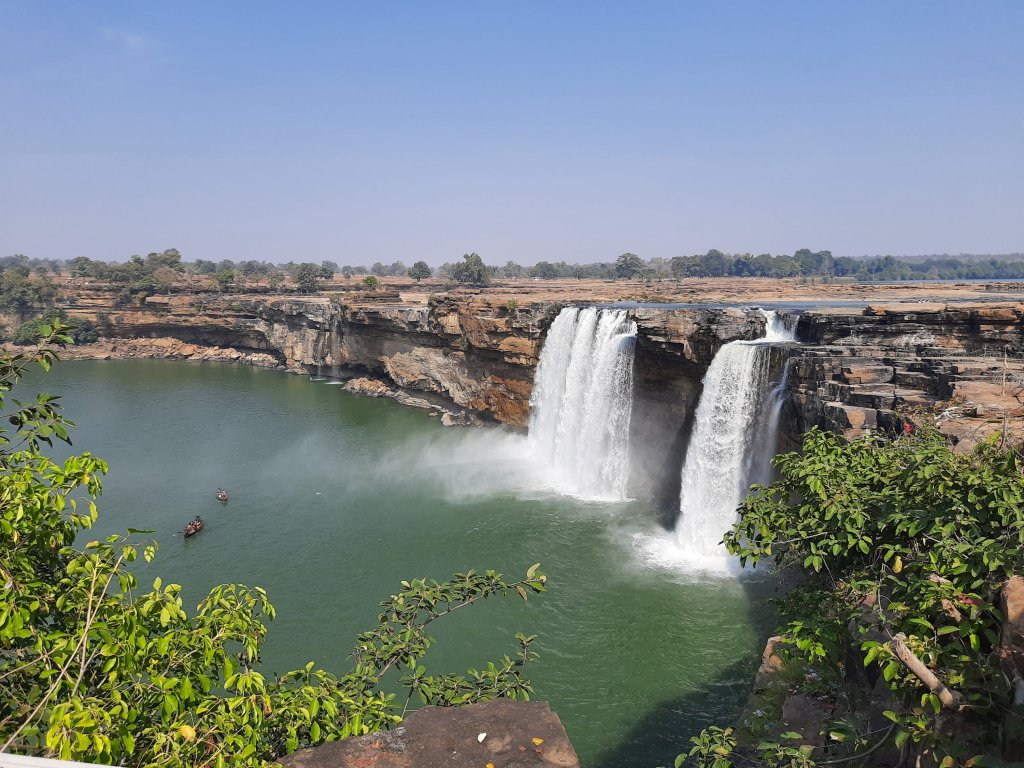
1. Chitrakote waterfalls, Chhattisgarh:

The WIDEST waterfall in India is this, where river Indravati plummets down a horse-shoe shaped gorge. A beauty to behold in all true senses, a ride in a country boat to right under the waterfall is a spell-binding experience.

Chitrakote waterfalls during summer season

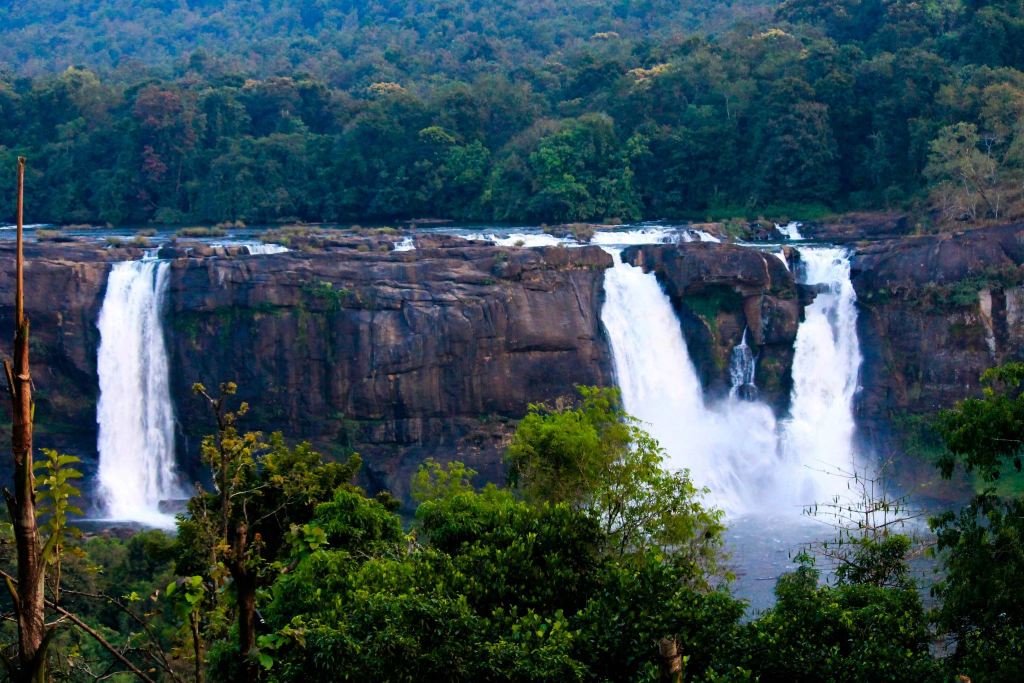
2. Athirappilly waterfalls, Kerala:

Chalakudy river cascades down a rocky gorge forming this spectacular waterfall is something that one would not want to miss on their next haunt to Kerala to explore its backwaters and canals.

Athirapilly waterfalls, Thrissur district Kerala

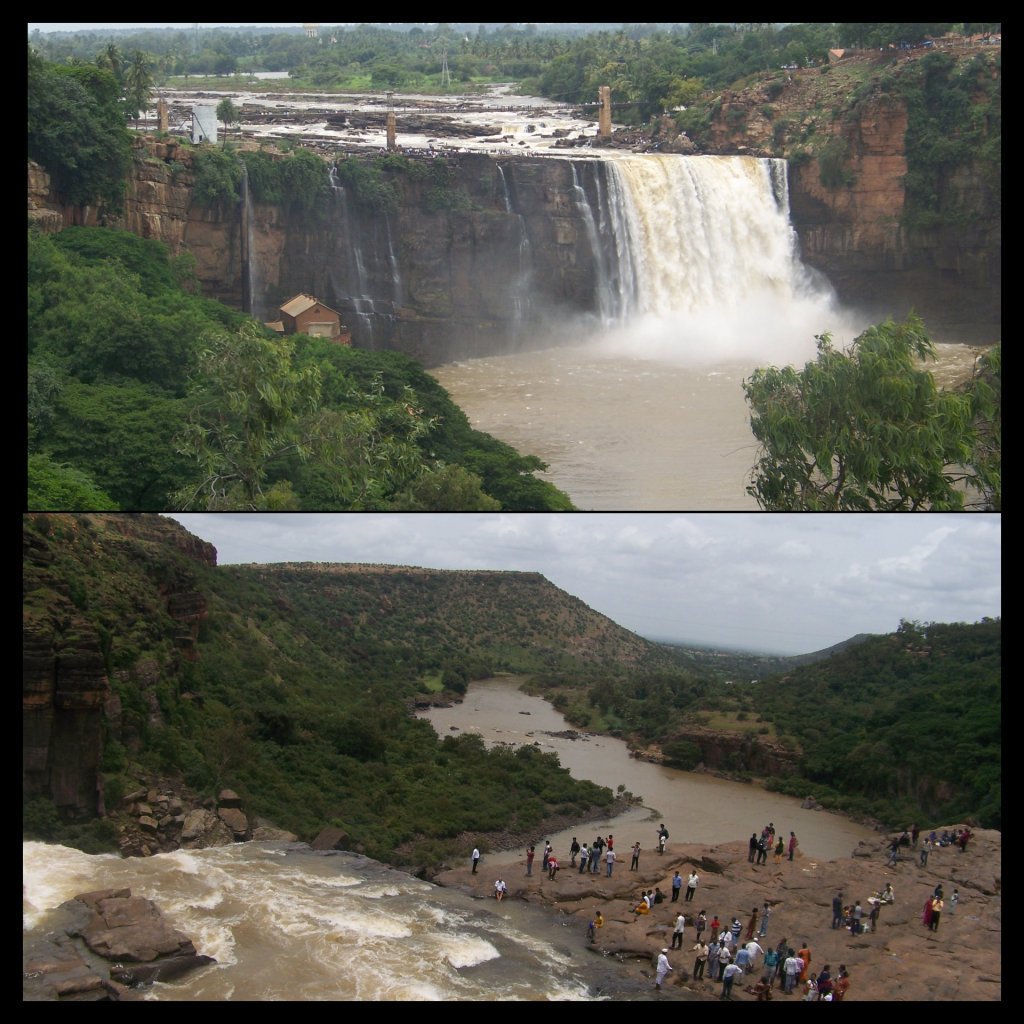
3. Gokak waterfalls, Karnataka:

Formed by the Ghataprabha river, Gokak falls is Karnataka’s best kept secret. A walk on the hanging-bridge laid right across the waterfall when it is flowing full, is an experience worth considering.

Gokak waterfalls
Above: The front view of Gokak falls from the Volkart rock view point; Below: A view from the Hanging bridge.

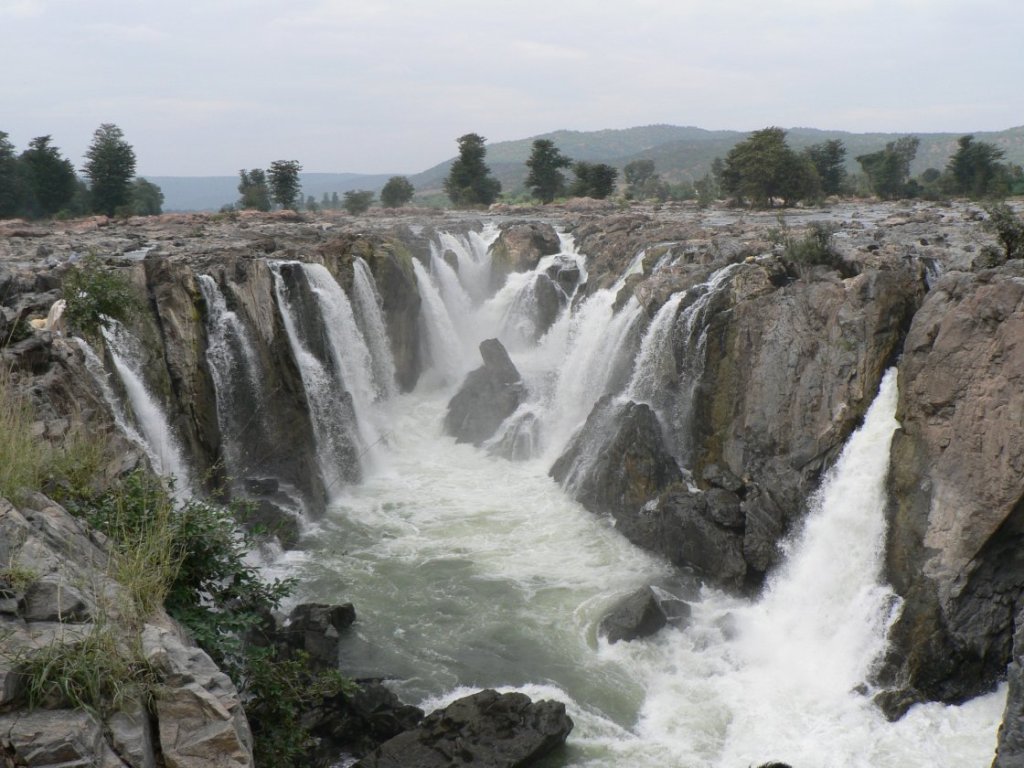
4. Hogeynakal waterfalls, Tamil Nadu:

As river Kaveri enters Tamil-Nadu, she plummets down forming this beautiful waterfall where a coracle ride is highly recommended.

Hogeynakal waterfalls
The breathtaking view of the Hogeynakal waterfalls from the watch tower

5. Bogatha waterfalls, Telangana:

An unexplored beauty, the Cheekupally stream cascades down forming this waterfall that has still been off the radar of mass-tourism.

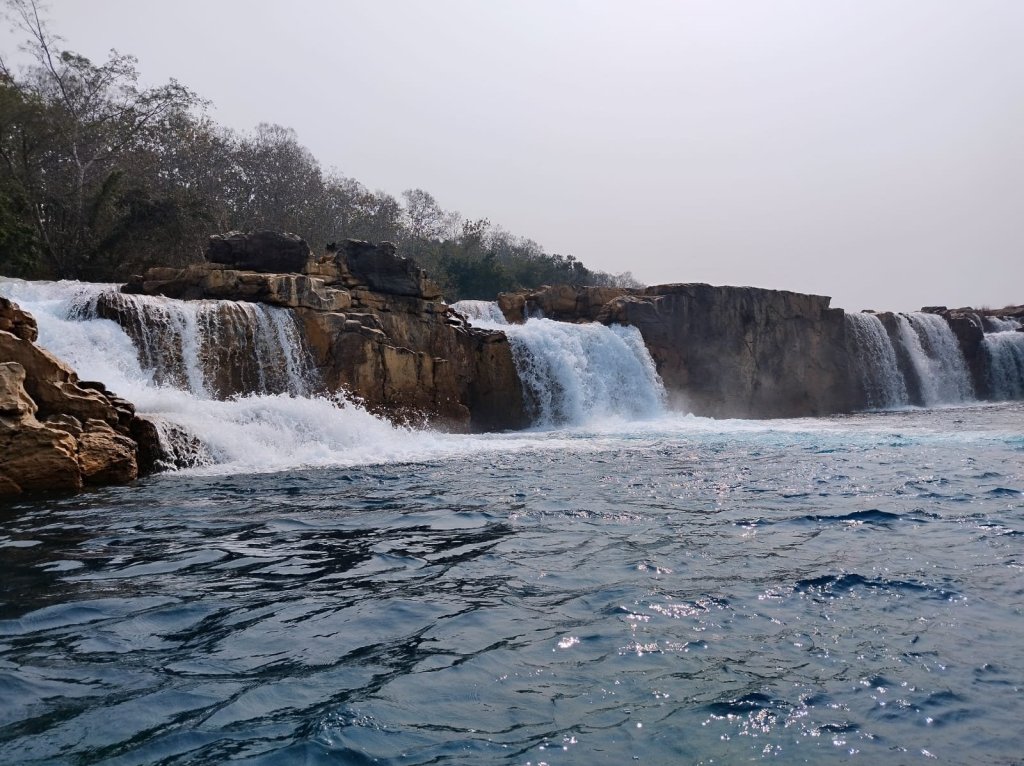
6. Panimur waterfalls, Assam:

Assam is mainly a low-land / plain area with Dima Hasao district being its only hill-station. The high altitude of the region holds some of the best waterfalls of the state as well, among which Panimur waterfalls formed by the Kopili river is its best-kept secret.

Panimur waterfalls at Dima Hasao district, Assam

7. Bahuti waterfalls, Madhya Pradesh:

Some may revere it to be the highest in Madhya Pradesh state, but I couldn’t find an equivalent in width to match this place of natural beauty which is formed by Sellar river in Rewa district.

8. Seven sister waterfalls, Meghalaya:

Thanks to its year-round rainfall, Meghalaya is a land of waterfalls, each being spectacular on its own. Talking about wide waterfalls, this set of seven-segmented waterfalls drops down a limestone cliff at Cherrapunjee which looks spectacularly wide when it is full during the monsoon-season.

9. Gira waterfalls, Gujarat:

Formed by the river Ambika, a jeep ride through a nice green landscape to reach this waterfall is what the locals recommend to enjoy this visit better.

This is my humble attempt to enlist some of the widest waterfalls, picking one from each state in India. Let me know what is the widest waterfall at where you are?

Boat ride at Chitrakote waterfalls, Chhattisgarh

A Rare Connection of Hockey Between Karnataka and Tamil Nadu

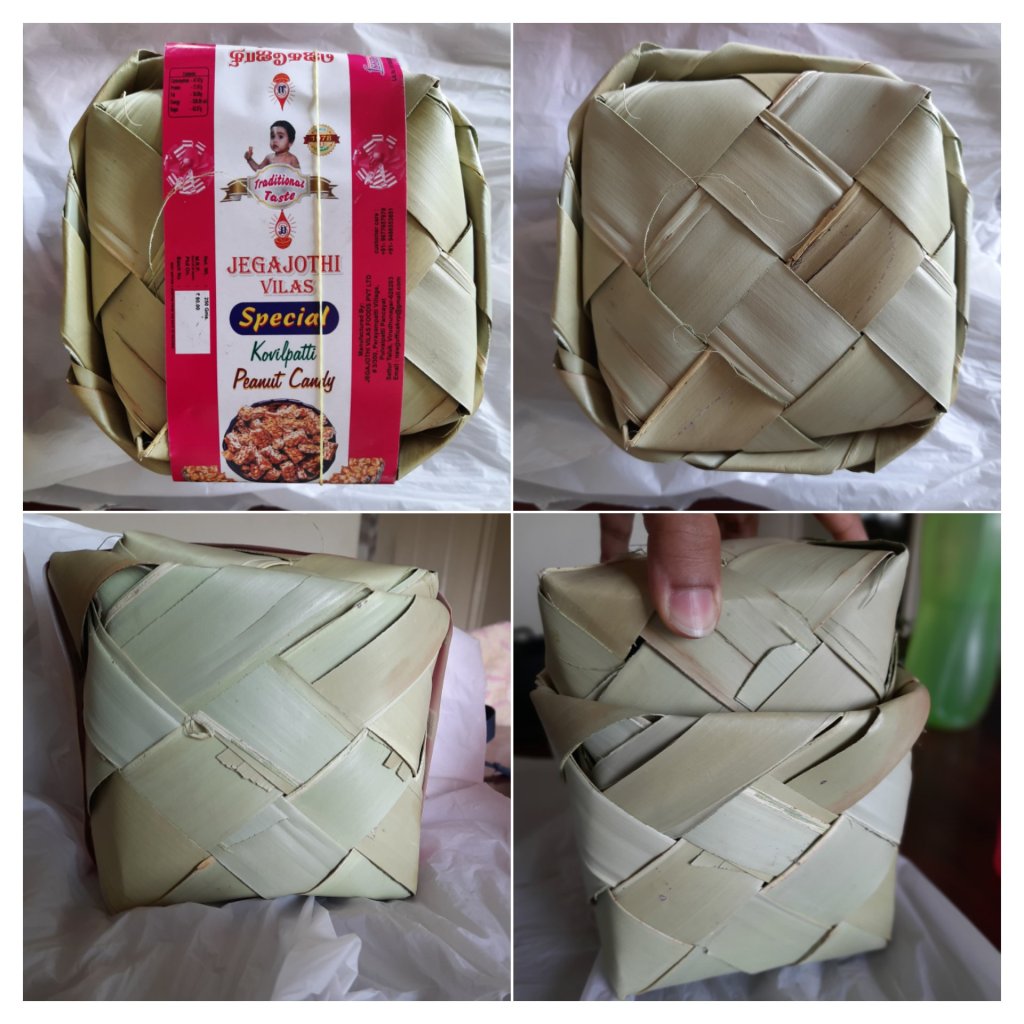
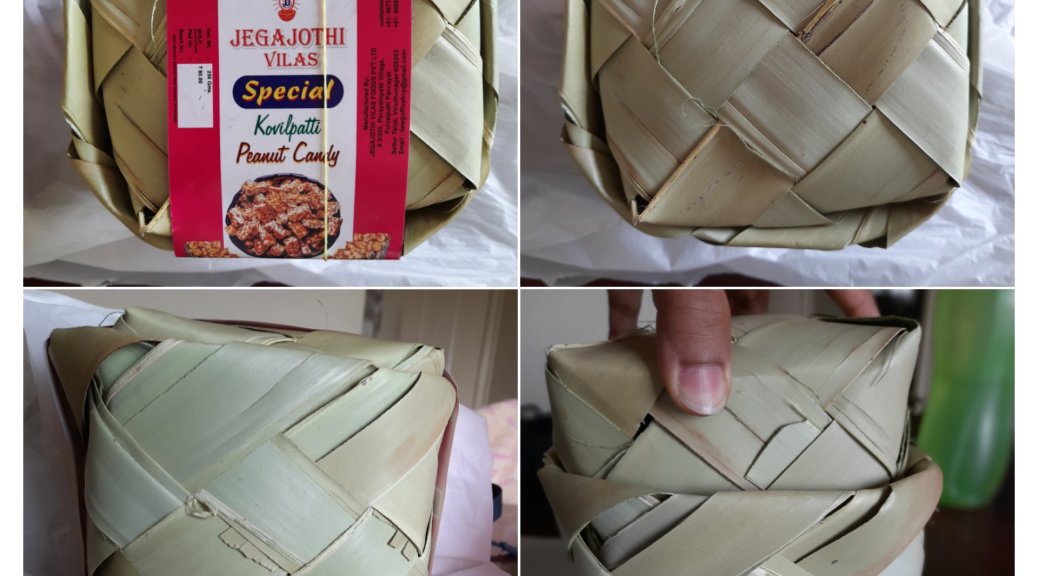
I have been fortunate to meet many like-minded people online, through travel blogging. Recently, I happened to meet one of such friends offline, during his visit to Bangalore. He greeted me with a souvenir, a nice palm leaf box containing chikkis. He explained that it was the ‘panai olai petti’ containing the famous candies from his hometown. After I returned home, a little bit of online browsing about this souvenir unfolded some interesting facts for me.

The palm leaf box containing the Kovilpatti chikki

Talking about the southern states of India, two neighbours have a lot in common. What triggered this thought were the names of places starting with the letter ‘K’, one from each state. Kodagu and Kovilpatti from Karnataka and Tamil Nadu respectively. Meanwhile, the ‘C’ is what makes these two ‘K’ places famous. ‘Cauvery’, the holy river originates in Kodagu and ‘Chikkis’, the peanut candies of Kovilpatti has earned a GI tag for itself. Enough is written and done on the internet about either of the places.

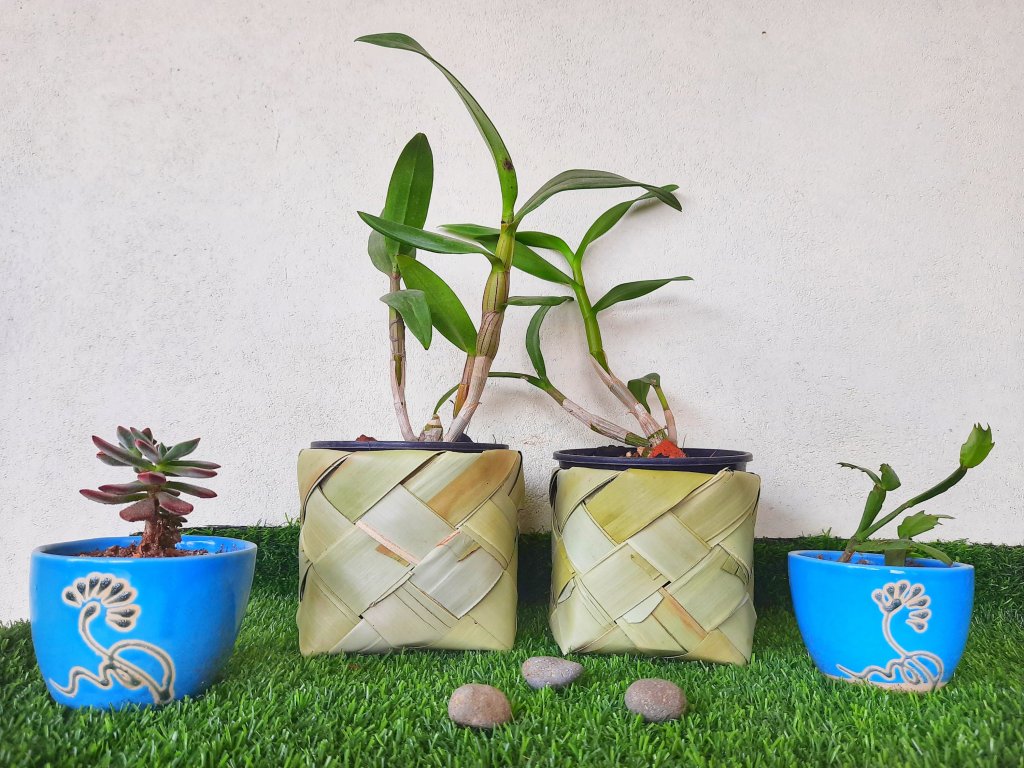
Palm leaf boxes of Kovilpatti mithai being Repurposed as planters

But what turned out to be more surprising and a rather rare connection between the two ‘K’ places of these states is their common love for the National sport of India- Hockey. In my earlier post, I have mentioned how the largest festival in the world dedicated for any sport (hockey) is celebrated in Kodagu. But what I learn now is that Kovilpatti too, shares its history with Indian military and the influences of the British to have a strong hockey culture. With at least a dozen hockey clubs and several players making it to the Indian national team over time, the people of Kovilpatti have an unabated enthusiasm for the national sport.

What I do know is, that there are several other lesser-known places in India where people celebrate sports other than cricket. Only initiatives by governments, support from sponsors and adequate media publicity can encourage and motivate more people to nurture a sporting culture in our country, anything other than cricket.

The Story of my Solo trip is an e-book now

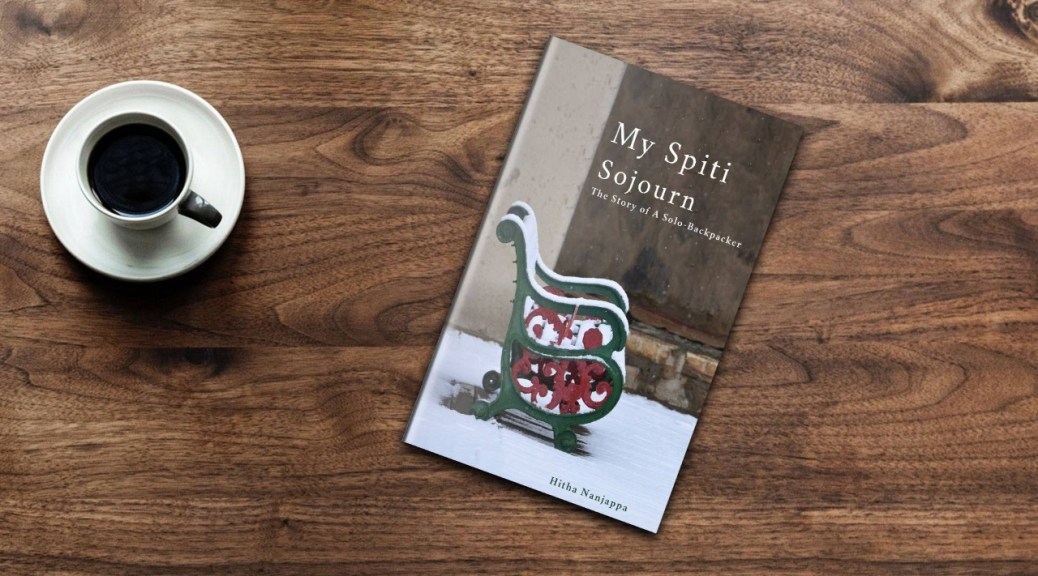
My visit to the arid land of Spiti was my first solo trip in all sense. I have previously spoken about its beautiful landscape and the wonderful people through my blog posts. But, on a personal note this travel has been one of the most impactful trips of my lifetime. So, here is the entire story in the form of an e-book.

Through this book, I seek your company while I backpack alone on a trip to the mountains. I want you to join me when I gate crash a mountain wedding and dance to the first snow. I want company when I confront a mummy and when I visit a vault full of millennium old paintings. Stay with me as I return home with an unsettling chaos running in my tummy. As you read through the pages of this book, you can bite into the juicy apples of Kinnaur all along, walk with me meeting people and go on a virtual trip to the Spiti valley and back.

You can get your copy of the e-book on Amazon by clicking on the image or the link below:

Click on image to buy the copy of ‘My Spiti Sojourn’

Yes, I know the language could have been tuned a little more and the English, could sound a little more polished. But, due to reading the same story over and over again, a few mistakes have outflown, my humble apologies! This book had been compiled in the first covid lockdown (Apr 20) and I have been procrastinating to publish it for over a year now, even post 2nd lockdown I (Apr 21). So, finally it had to be done….. But, I promise that my intention of sharing my story and experiences from the road has been compiled to the best of my abilities. I wish you all read, enjoy your virtual trip to Spiti and share your honest thoughts about it…

A weekend Backpacking trip to Satara

This was a post monsoon, weekend trip I had planned with two other friends who had joined me from Bangalore to Mahabaleshwar. The main agenda of this trip was to visit the ‘Khas plateau’ in its bloom season, but it was just for a day (Click here to read more about my visit). Since we were travelling all the way, we decided to extend the weekend for a little longer by adding a few other places and make it a backpacking trip around Satara district.

Our Itinerary:

Day 0: Leave from Bengaluru to Satara (overnight private bus)
Day 1: Satara to Wai (MSRTC bus), Visit to Menavali village & Dhom Dam; Wai to Panchgani (Local bus), Local sightseeing and night’s stay at Panchgani (Walk and shared taxi for local transportation)
Day 2: Panchgani to Mahabaleshwar & local sightseeing at Mahabaleshwar (hired taxi for full day); Mahabaleshwar to Satara (MSRTC bus) and night’s stay at Satara.
Day 3: Visit to Khas plateau & local sightseeing at Satara town (hired taxi); Return from Satara to Bengaluru (overnight KSRTC bus)

The details:

Day 1: Wai and Panchgani.

Since we required to start our Khas plateau visit from Satara, we decided to visit the places around the town later (on day 3). So, we moved ahead on the day of our arrival at Satara.

After alighting at Satara bypass on NH4 that morning, we hired an autorickshaw to reach the bus stand located in the town. From there, we boarded a MSRTC bus to our first major destination of the day: Wai.

Part 1: Places to see in Wai

I had come across the name of this place in a newspaper supplement. I had read that a large part of Shahrukh Khan’s “Swades’ movie was shot in and around Wai. Since we had to anyway pass through this place to reach our intended destination of the trip, I thought it was a good idea to add Wai it our itinerary. However, we had no idea of what to see and things to expect in Wai. We decided to just go there and explore the place by ourselves. Upon our arrival at Wai, we enquired with a few locals who guided us to the banks of the Krishna river.

A. Menavali village: A walk of good couple of miles from the Wai bus stand, we arrived at this village located on the banks of river Krishna. The locals call this as the Wai ghat as well. Apart from being a prominent setting for several Bollywood movies, the Wai ghat is also an important destination for history and archeological buffs. It holds great treasures from the times of the Marathas and the Peshwas. It is especially known for the contributions by the 18th century Maratha stateman- Nana Phadnavis.

Phadnavis Wada: Wada is a local name for a residential mansion with an inner courtyard. Residential complexes leading to river banks on one end and housing temples is a signature architectural style of the Peshwa era. The Phadnavis Wada located on the Wai ghat is one of the handful of such structures that still remains intact.

We did a quick visit to the Dholya Ganapathi mandir & Sri Kashi Vishweshwar Mandir (This temple is called as the Kashi of Maharashtra), both situated on the river bank.

Wai ghat on the banks of river Krishna at Menavali village

As we took a stroll along the ghat, I realized that reality was far from the destination on reel. The real Wai looked very laid back and rustic. However, we decided to sit by the riverside and spend some time by photographing the local kids enjoying their time by diving and swimming in the polluted waters of the ghat.

B. Dhom dam: This waterbody is a good place for water sports with a nice view of the surrounding mountains. Located at about 10kms from Wai and connected by frequenting local shared jeeps, it is a nice place for catching a sunset. But, we gave this is a miss since we hadn’t booked our accommodation and has to reach our next destination ASAP. The bus left Wai and travelled around the curvy road of the mountain. The entire journey was beautiful with great views of the Dhom dam whose waters reflected the clear blue sky.

Part 2: Places to see in Panchgani

We had alighted at our next major destination: Panchgani. Although Panchgani is a small hill town that doesn’t extend beyond a stretch of 2 kilometers, surprisingly, it is an educational hub of Maharashtra. Around 42 international schools are located here. Given its small area, all the popular tourist places in Panchgani are located close by. So, we decided to get off with our backpacks at the entrance of the hill station, explore the landmarks and then find a place for our stay. The details of our time in Panchgani is as given below:

a. Harrison’s Foley view point: This is the first major landmark you come across, even before you actually enter the town. However, we thought of giving it a miss because our next stop was going to give us a view of this Foley as well.

b. Sydney point: We got breathtaking view of the Dhom dam from here. After a long day travelling and walking with our backpacks, we thought this was just a perfect place for us sit down and soak in some relaxing views. We sat down right there on the footpath, facing the dam and spent some peaceful time amid nature. After spending some good time and having all our limbs relaxed, we walked back towards the main road.

c. Table land: Our actual plan was to check-in to a hotel and sleep early that evening. However, we changed our minds and decided to visit the table land to use up our time in the remaining daylight. Sometimes, even with no plans, god really wants you to be at the right place at the right time. That’s how this evening turned out to be. As we went up the road leading to this place, it looked like quite a mela up there. There were so many makeshift shops set up and the place had been littered all around with plastic bottles and wrappers. But, as we walked past the maddening crowds, we saw that the table land was a vast stretch than expected. We decided to walk the entire land before dark. The grassland was naturally gifted with vast stretches of native flowers: all white, purple and yellow. It was a magical place that got us busy photographing the silhouettes of the grazing cattle, the horse riders etc. against a beautiful backdrop of the setting sun. An artificial lake amid the grassland added romance to this place. The sky was painted in all hues with a beaming full moon reflecting in the lake’s water, adding to the spectacle. It felt like as if the sun had gone down sooner that day. With that, we had to scoot out of the place as area suddenly started to feel deserted and had no guiding lamps to the main road.

d. Rajapuri caves: This place falls on the way up to the table land. We were told that the cave has a temple dedicated to lord Ayyappan and hence, women of menstruating age are not allowed inside. With that, we headed back to the town and checked-in to a hotel.

We wanted to have some food that are a must try in Panchgani. So, we dumped all our luggage in the hotel room and set-out to walk around the town, yet again.

  • Panchgani is famous for channa, chikki and fudge: the shops say this all over the place. So. we picked up some of these to carry back home.
  • What caught our attention was a bottle of strawberry wine at a wine store.
  • The day’s events concluded with a sumptuous spicy hot ‘veg Kolhapuri with roti‘ for dinner.

On the following morning, the idea was to be at the table-top for sunrise. However, we snoozed the alarm for a little longer and we woke up only when the hotel staff rang the doorbell. We then started our day with a yummy plate of Poha for breakfast and hired a taxi to our next destination: Mahabaleshwar.

Day 2: One day at Mahabaleshwar

The hill station is a favorite haunt of tourists from the nearby metropolis and afar. Mahabaleshwar can be broadly classified into two parts, the New and the Old. Both have been explained in detail in a separate post as the list of things to see and do in Mahabaleshwar is going to be long.

Kate's point and the elephant head view point at Mahabaleshwar
Kate’s point and the elephant head view point at Mahabaleshwar

Day 3: Satara and Khas Plateau

This day was the sole reason that had got us to plan this entire trip. We woke up early to reach Khas plateau for sunrise and get some wonderful photographs. Being early gave us the benefit of avoiding the scorching sun and also to escape the crowds that would normally pour in at a later time.

Apart from my visit to Khas plateau that requires a separate post, I am listing the places of interest around Satara town for those wishing to explore this region:

a. Around Khas plateau: If you have sometime in hand, you can drive further from the Khas lake to reach the boating village of Bamnoli and take a boat tour to Vasota fort or Tapola.
b. Vajrai and Thoseghar waterfalls: These picturesque places were a disappointment when we arrived there as these are mainly rainfed cascades.
c. Chalkewadi windmill station: Considering that we had visited a windmill station earlier, back in our home state and to save time, we gave this place a miss.
d. Forts for the history buffs: Sajjangad, Ajinkyatara, Pratapgad, Kalyangad are places that can all be covered, but only with the convenience of having own transport. We skipped our visits since we were largely dependent on public transportation and taxi service that was expensive.
e. Natraj temple: This ancient structure located in the center of Satara town, is worth visiting

The Pink balsam carpet at Khas valley

Food to try in Satara:

  • Kandi peda: This is a specialty sweet of this region
  • Zunka baakri: This is roti made of a locally available variety of maize, we had it for a late lunch that kept us filled throughout our return journey.
  • Fresh strawberry with cream in Mahabaleshwar.

We boarded a bus back to Bengaluru and thus, ending a long weekend in Satara.

The papersweet of Athreyapuram

This was a part of our family’s five state road trip covering Chhattisgarh – Odisha – Andhra – Telangana – Karnataka in Dec’20.

The visit to the place described in this post was impromptu. While I had just woken up at Rajahmundry and was scrolling through the watsapp status updates of some of my contacts, I happened to see a post with green paddy fields that was captioned as ‘Andhra’s best kept secret- Konaseema’. The videos of my friend driving around those green paddy fields and through the roads lined with coconut trees had me hooked instantly. For a moment, I was reminded of the Kuttanad or Karavali regions of the neighboring states. I looked up on Google and realized that I was just around. As per the original plan, we were supposed to leave for Bengaluru by Afternoon. The drive to Konaseema was in the opposite direction. But, noting a few special things to do in this region, I managed to convince my family to allow me to drive for about 30 additional kilometers before returning to Bengaluru.

Firstly, we drove through the Dowleshwaran barrage. It is one of the chief sources for water based agriculture to the several villages in the surrounding. This heritage barrage passes over the group of islands created by river Godavari. The lush greenery and sandy beaches of these islands seemed to me like they were gleaming in joy from the nourishment of mother Godavari. We were told that boat rides to these islands can be availed during early mornings by talking to the local villagers. For now, we couldn’t afford it on our schedule and hence, proceeded by adding it to our to-visit list. The destination that I wished to visit in Konaseema on this trip was a tiny village called Athreyapuram.

The serene roads of Konaseema

After crossing the Dowleshwaran barrage, the roads suddenly transformed from noisy and dusty to a serene and scenic stretch with lagoons, banana plantations, paddy fields and palm fringed canals. With number of tiny shops suddenly lining the road, we did notice that we had entered Athreyapuram. But the drive and the scenery was so serene that we lost track and drove past the village and gone ahead. We came into our senses only when we realized that there was no sight of any more shops on the road. What shops? These are shops that sell a traditional sweet of Andhra Pradesh called Putharekulu. What’s so special about this Andhra sweet one may ask. This is a snack that looks like paper and tastes like sweet.

It was several years ago that I had tasted this peculiar looking paper at one of the events hosted by the department of Khadi & cottage industries. But it was long forgotten and the memories were rekindled by the early morning watsapp post. It had gotten me all drooling until I reached Athreyapuram. This tiny village is where this sweet paper was invented! For an unassuming person, it looks like lot of ghee, nuts and jiggery is rolled into a super thin white tissue paper before eating. But it is not just the ghee and the jaggery that gives it its flavors, making of this paper is in itself a labour intensive job.

We returned back looking out for a shop and we stopped at a small family run establishment. The excited family demonstrated the steps of making a perfect roll of this traditional Andhra sweet. Boxes of authentic Putharekulu were the souvenirs we bought for our friends and family. Here, is a small video on our drive around Athreyapuram and the demonstration of making Putharekulu.

A tour of Athreyapuram

This is my humble attempt to promote local tourism and help small businesses in these trying times. Please try to reach out to them and order your favorite local products from around India.

What is that one favourite souvenir you have bought from your travels? Please do share your thoughts on this post with me. I would love to hear them.

Happy Ten, TheLostLander

There is no big leap, only baby steps. TheLostLander celebrates a decade on the cloud!

‘The Lost Lander’ celebrates her birthday in February, virtually and literally! 10 years ago, I hosted my first blog on the world-wide web a.k.a. the cloud. And a few decades prior to this, I came kicking to this badass world… Both in February!

It all started with a concept of having a scrapbook. I would write about special moments and save all the memories from pleasant trips by pasting the tickets in a book. As the book started to get filled and weigh bulky, I eventually learnt about a thing called “blogging”. All I knew about this fancy terminology was that people wrote what they wanted and posted it in a space called internet cloud. So, that’s how I opened my account on a platform called ‘Blogspot’. Honestly, I don’t remember the timeline and this screenshot from the now de-func ‘BlogSpot’ page is what reminded me that it was way back in 2011.C.E. that I first created a page for myself on BlogSpot and posted personal content for two years.

My first blog page on blogspot

I was somehow not happy with the aesthetics of my page when I saw other bloggers creating content on fancy looking websites. While browsing, one of the earliest websites on this space, a site called as www.thelightbaggage.com is something that really triggered a new direction for my content. Mr. Arun is one of the earliest travel bloggers whom I followed and continue to admire for his dedication to explore and document offbeat and lesser-known places till date. Meanwhile, a friend suggested that I change my platform to ‘WordPress’ to host my website. That’s when I exported my existing content to a new platform (WordPress), built my feature rich website from scratch and picked a random (fancy-sounding) blog-name for myself. Back then, I had no idea what and why people wrote blogs. That’s perhaps the reason for choosing my blog name as well… ‘The Lost Lander’ on a clueless mission to explore the web and the world.

Not even in my wildest dreams had I thought that I would come this long. For me, what started as a transition from a paper-back scrapbook to a virtual book-keeping of special memories, has today evolved and grown into a full-fledged web space to discuss travel.

With a focus on travel writing, the need to create content for my site encouraged me to embark on newer travels and that in turn led me to writing more. Yes, with so much content and less readership, I make no denial that there has been a low phase too. The website went into a year or two with absolutely no content. ‘A phase of self-discovery’, they call it in philosophy. But that’s when a few friends at my workplace discovered ‘The Lost Lander’ and motivated the innate writer in me to create more content. With that, I started to write again and tried to improve its structuring with continuous feedback from well-wishers who read it.

Parallelly, each travel gave me a newer perspective on things. Wildlife tourism, heritage walks, architectural tourism, cultural tourism, Agri-tourism, Industrial tourism, art-study tours, tribal tours, eco-tours, biking, trekking, spiritual tours, culinary tours, ancestral tourism- I hadn’t imagined that I would learn so many forms of travel existed and that I would enjoy EACH of it in wholesome! With that, my travel preferences and style too evolved. From being one who crammed up a trip schedule with as many places as possible on the itinerary to slow travel, from family vacations to road trips with friends, from solo travel to leading a group of people on treks, from being a quick one to post a trip itinerary to being mindful of responsible travel, I have grown!

Noting the consistency and the honesty in my content, I got lucky that brands started to approach me with opportunities to collaborate. A few were paid and a few were barter. And the urge to vent out my travel stories paved way to a few publications in National and local newspapers along with some magazines as well. Although I don’t consider myself a good photographer, a few photos from my website saw the light of the day by getting featured on prominent sites as well. While at this, the sustenance on the cloud too, started to become extremely competitive. From the basic need of setting up a website to maintaining it so that my website shows up somewhere there, Blogging has thrown open an entire universe to me. I learnt tools and terms like SEO, Analytics, Traffic, Keywords, backlink generation and so many other things.

Since the last decade, ‘The Lost Lander’ has only been on a continuous journey of learning, growing and evolving. And without the constant support of YOU wonderful readers, this wouldn’t have been possible. Positive feedback has been taken with humility and criticism is welcomed with equal respect. Constructive criticism is what motivates me to learn more. While I try to take this journey forward, I request you all to shower me with your support and blessings!

Lots of Love,
The Lost Lander

A personal chronology of Deepawali celebration

The list starts from 2015, a religious celebration of the festival of love and lights- Deepawali. Well, I’m not a religious person who would indulge in ritualistic prayers and pooja on any festival. But what started as travelling during this season to utilise my unused leaves combined with maintenance shutdown period at my workplace, has somehow religiously stuck on as a ritual of travelling to a new place, every year.

Circa 2015- Tamil Nadu:
My brother and I ventured out on our backpacking roadtrip to Tamil Nadu, Kumbakonam to Pondicherry. Well, this was an adventurous start I guess, we had to cut short our trip due to a cyclone that had battered the east coast. Result: Crazy floods and crazy drive through the flooded areas. On the main festival day, we had reached Chidambaram- a must read post about our experience. A bad one then, a memorable one now.

A flooded village near the Indian east coast after a cyclone
The flooded villages enroute to Chidambaram

Circa 2016- Assam:
This was my first solo trip ever and the first time in the north-eastern part of India. After exploring Meghalaya, I had tagged along with a couple of other fellow travellers. We happened to experience one of the most beautiful Deepawali sights. First, the drive through the lamp lit national highway, then watching the best sunset over river Brahmaputra onboard a ferry to Majuli and the crazy ass lamp lit welcome on the Majuli island.

An image of the daily life in Majuli shot during sunset
Sunset at Majuli

Circa 2017- Karnataka:
After a crazy long year of travelling across India, my friends and I decided to have a simple deepawali roadtrip, closer home in the western ghats. We drove to the famous Agumbe ghats and the places around.

Circa 2018- Himachal Pradesh:
One of THE best solo trips of my life, where I couldn’t find a single traveller to tag along through the entire trip. This thus, became a thorough personal and local experience in the Spiti valley. On the day of Deepawali, I was on my way back with a brief stopover at Shimla. A trip that made an impact on me, perhaps forever.

the view of the Kinnaur Kailash mountains at Sangla
Sunset view from Sangla bus stand

Circa 2019- Kerala:
A solo weekend exploring Varkala, it was a short one but yet overwhelming. It was a happy-hippy trip, in a true sense.

Sunset from Varkala Cliff
The sunset from Varkala cliff on Deepavali 2019

Circa 2020- Karnataka:
Fears of travelling afar due to Covid-19, personal commitments and taking advantage of working from home, this was the longest duration I spent in my hometown in the last 15 years. Quite unlikely to mention the highlights, but the Deepawali of 2020 indeed tops all the above from the list.

Paddy and coffee plantation in Kodagu
The view of the farm, from our ancestral home in Kodagu

Circa 2021 – West Bengal: This was a trip that was planned on a whim by 2 of my friends and me, where my brother joined in at the last minute. It was a completely new kind of Deepawali celebration which we experienced during trip. Large pandals setup at every 100meters to celebrate Kali Pooja was something unknown to us about Siliguri in the state of West Bengal. That night, we reached ‘Manebhanjang’ a small town located at the entrance of the Sandakphu trek to the Singalila ridge, the highest point of West Bengal. It was yet another experience to witness an amalgamation of Gurkha, Buddhist, and Hindu culture in the way this town celebrates its festival of lights. Much like the carol singers during Christmas, people form into small teams and go from door to door singing, dancing, and spreading joy and blessings.

Circa 2022- Saudi Arabia: It’s a first time for me to spend Deepawali out of my home country but still in accordance to my tradition of visiting a new place during the festival. This time, work brought me here. Although there wasn’t much we could do like in India, some shopping for sweets at Indian sweet meat shops was a little bit of home we brought for ourselves while staying away from homeland. But, I feel grateful for this opportunity and experience life has brought to me during this Deepawali that has helped me to grow into a little stronger person I was when left India.

What are your stories about celebrating Deepawali / Diwali? What do you do normally?

Celebrating the festival of Love and lights at Varkala

Solo tripping during Deepavali has somehow been a ritual that has caught on to me since 2015. In 2019, I was out in Kerala. I was going to spend three days at a place considered somewhat to be a hippie destination. Train tickets were sold out and hence, I boarded an evening bus from Bengaluru. After a long journey, I alighted at Kollam on the following morning, from where I got a passenger train ride to my destination: Varkala Sivagiri.

The itinerary for three days is as follows:
Day 1: Janardhan Swamy temple visit, Lazing and hippying around the cliff and the Varkala Promenade
Day 2: Golden island, Sivagiri Mutt, Ajengo Fort, Varkala Light house and Munroe island
Day 3: Kappil beach

The Story:
It was a pleasant train journey along a scenic route. I had a nice Kerala breakfast at a restaurant across the railway station and then followed google maps to the hostel that I had booked online. I did not mind the long walk to the hostel that was located close to the famous ‘Cliff point’. I always consider walking as an opportunity to explore the streets and get acquainted with any place that I visit. After checking in at the hostel and freshening up, I headed out to visit the ancient Janardhan Swamy temple. After offering my prayers, I walked back to spend the rest of the day at the beach.

While I was walking along the beach and silently enjoying the romance of my feet with the waves, I noticed a woman (in her sixties, which she later mentioned during our conversation) walking on the beach too. With a smile on her face, she was enjoying her lone time. But at the same time, she seemed to be struggling with something. I felt as if she wanted to mingle with the people around there, she wanted to get herself photographed, but something was holding her back. I smiled at her and she smiled in return. I offered to take her photo and she was glad. Eventually as I spoke to her, I realized that she wanted to socialize with the locals but was struggling with the language. She was French and couldn’t speak neither the local language nor English.
As I spoke slowly, she translated it on her phone and communicated back with me through the mobile phone translator. we had become good friends by the next hour. She mentioned to me that she was in India to help herself with the loss of her husband and was accompanied by a friend who had traveled all the way only to be by her side. She was in Varkala since a month and was staying at her cousin’s house who was married to a localite. She was learning Yoga and aromatherapy and was keen on buying good incense sticks from India. She walked me along the entire beach and showed me around the marketplace. She then sought my help to negotiate with a local vendor to buy her a ‘Hapi pan’, a musical instrument that she had been eyeing since the past month that she had been living there.

A demonstration of playing the hand pan/ Hapi pan by the vendor

I managed to get it for her at almost half the price that he had quoted to this ‘Foreigner’ and I can’t explain how happy she was with her new possession. She then walked me down the cliff, laid down her shawl on the ground and sat me down. She started to play her musical instrument and it was a sight to see the sparkle of happiness in her eyes. Sometimes, these little things of bringing joy in others’ life means EVERYTHING!

My friend enjoying her time with the happy pan (Image blurred intentionally)

Post sunset, she walked me till my hostel and bid goodbye with a REALLY tight hug! She said she was extremely glad that she had met me and asked me to join her at the Yoga classes on the following morning if I had time. “The morning recitation of the Shlokas by the beach is my favorite time of the day” she said. I informed her of my plans of exploring other places around Varkala and that I wouldn’t be able to meet her. I gave her my phone number to get in touch if she needed any help and we both parted.

It was a night of celebration at the hostel. The hostel had people from various corners of India and the world and were all dressed up in traditional Indian wear. The premises were decorated with diyas and rangolis. It was a special Diwali, for sure 😊

My visit to the Golden island

The following morning, I hired an auto rickshaw and did a quick visit to the Sivagiri Mutt and the fort before heading towards Ponnumthuruttu. Fondly called as the Golden Island, it is a protected forest area reachable only by boat. It has a few ancient temples and it reminds me much in line of ‘Devarakaadu’ or sacred groves in my hometown. It was indeed a pleasant ride. Apart from the auto driver and the boatman, I was the only other person in the boat, in the island and hence had the blissful time with nature. Although I had plans of taking a boat ride in the nearby Munroe island at Sunset, I later decided to stay back in Varkala itself. By evening, I returned to the cliff again at sunset time. Believe me when I say, the BEST Diwali of my life was in that day’s evening sky. It was a riot of colours.

The sunset from Varkala cliff on Deepavali 2019

After the sun sank into the horizon completely, I decided to treat myself with some nice sea food. It is one of those strange moments when you are made to feel at home in an unknown land. As I was strolling along the promenade, undecisive of which restaurant to go, I heard someone say: “Akkayya, ninga Kodagu-l elli?” in a male voice. In my mother tongue, that translates to: “Sister, which part of Kodagu do you belong to?” I was astonished and surprised for a moment. We got talking and he said he belonged to a native tribe from Kodagu, settled in Varkala. He had been working at a restaurant there since several years. On being asked how he recognized me to be a Kodavati, he pointed out at my unique Kodava facial features. That was SOMETHING for me to hear now! He volunteered to choose the lobsters and the crab for me from the aquarium, got me a beach-facing-candle-lit table and served the best sea platter I had tasted in a while. It is one of those overwhelming evenings of my life. All time for myself on a Solo-date-dinner night and still made to feel at home by a random person.

My sea view dinner table at Varkala

The next morning, I headed to the beach to grab some English breakfast. I was pleasantly surprised when my French friend and her friend, both arrived at the same restaurant. We three conversed on a multitude of topics and spent good long time together. While the two of them later dispersed, I stayed back at the restaurant waiting for a friend who was riding down from Kochi to meet me. On his arrival, I walked up to settle my restaurant bill at the counter. The cashier said: “No madam, your bill is already settled.” I was amused and told him that I had been eating until now and hadn’t left my table. So, he informed me that a foreigner lady had paid for my orders. There I was, in yet another overwhelming situation. My French friend had paid for my share of the bill too.

Kappil beach

My friend and I then commenced our ride towards Kappil beach, situated on the outskirts of Varkala. It is one of the finest beach side roads I have been to. Somehow, I drew parallels with Maravanthe beach in coastal Karnataka. But moving away from the highway, my friend took me to some deep hidden jewel of locations. I guess it would be fair to call this as my 4th best part of the same trip. Some amazing places can be explored only by hanging out with the locals. He is a Malayali and knowing the offbeat locations enable me to experience one of the craziest bike rides of my life. We drove several kilometers LITERALLY along the edge of the world; like the EDGE! Even if the moist soil under our wheel slipped or the rider went slightly off balance, we both would’ve gone along with the sea, beyond the cliff. All this, while riding through poor visibility due to wild shrubs that were standing taller than us. And then, the shrubs opened into yet another beautiful sunset.

Upon return to Varkala, I picked up some incense sticks with essential oils and dropped them off as souvenirs to my French friend at the Yoga center (A surprise that she would receive only the following morning, after I was gone). Then, I did a quick check out from the hostel and boarded the night train back to Bengaluru. The train route is for yet another post, someday!

My Deepawali of 2019 was all about spreading love and feeling loved. How often have you got lucky and overwhelmed with warm experiences during travel? And how often has it been multiple times on the same trip?