As the lockdown is easing out and the Covid positive cases in India are on a rise, many people are opting DIY (Do it Yourself) day trips and hikes over organized group trips. Either with just family members or a closed knit of friends is what seems to be an option for some time more to come. Quite a few of them have been asking me to give them suggestions of where they can go for short drives or hikes. One such suggestion is ‘Kunti Betta’. Although I had done this hike with an organized itinerary by ‘Plan the Unplanned’, one can try this by themselves. However, a hike in daylight is suggested over our pre-dawn adventure.
We started from Bangalore at midnight as we wanted to reach the peak before sunrise. It was still dark, cold and windy when our minibus reached the parking lot of ‘Sri Shankarananda Bharati Vidyapeeth’ school at Kachenahalli village in Mandya district. We climbed a small flight of stairs, walked past a temple pond (we couldn’t see but only were told by our guide) and continued to walk in a single line following each other’s torchlights. While a couple of them tripped over small stones on their path, a few others got their shoes wet by stepping into water puddles in the dark. With torchlight, our guide navigated the path through thick shrubs, tall grasses and large boulders enroute. We reached the peak in a couple of hours.
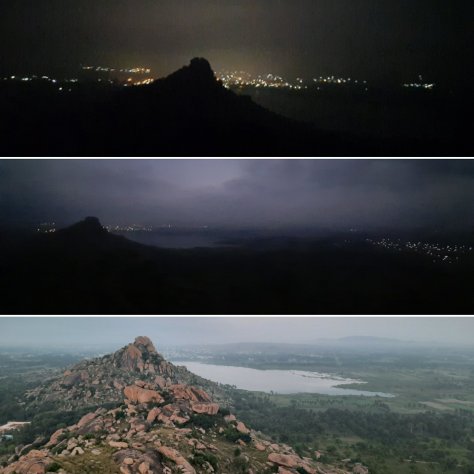
The view from the Kunti Betta peak: Before dawn, at dawn break and after sunrise
It was dark when we reached the top and it was unexpectedly cold. I hadn’t gone with enough warmers but that didn’t stop me from sleeping on the cold rock until dawn. I watched the stars in the clear sky and didn’t realise that I had surrendered to the sleep gods. I was awakened by a fellow hiker at dawn. The view of the distant lake and sugarcane farms looked nice from the top. Also, several other rocky hillocks dotted our view. The one we were standing at was named after Kunti, the mother of the Pandavas. History has it that the hill was earlier called as the ‘French Rocks’, named by the French army in the pre-independence era. Although it was partially cloudy by the time the dawn broke, we still got lucky to get a glimpse of the sun that morning. After taking enough photos, we started our descent.
The Kunti Betta hike route
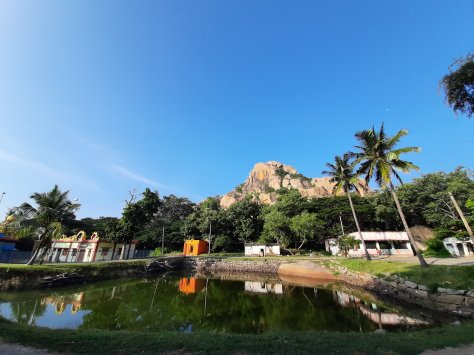
Since there are lot of loose rocks, there were possibilities of slip. Only during descent, we got a sense of the terrain and the view which we had missed while climbing up. We soon reached the temple pond at the base beside which there is a large monolithic rock. The localites use this as a giant slide. I too climbed up this rock and the kid in me had fun sliding down from this version of the desi slide.
The temple pond at the base of Kunti betta
Our stomachs were grumbling by that time and there was no food around. With permission, we could use the washroom at the school. We then commenced our return to Bangalore with a breakfast stop at ‘Maddur Tiffanys’ for their signature dish- Maddur vadas with Masala dosa and filter coffee. The landscape was beautiful with green sugarcane farms extending on both sides of the countryside roads before we hit the highway.
A word of advice though:
Since there are too many hillocks in a cluster, having a guide would be better to find the right peak.
Since we hiked before dawn, there was also the fear of confronting wild animals like bears and leopards. Although, we didn’t see any, this was told by someone in the group.
Although we did only the early morning hike, you can make it a full day activity. These are a few things you can include in your itinerary:
Since Mandya is the ‘Sugar Bowl’ of Karnataka, you can visit any of the small sugar/jaggery making setups on the farms enroute and savor freshly made jaggery.
A lot of people visit the Tonnur lake (about 10kms away) from Kunti Betta and take a dip there. Alternatively, you can visit Manchinabele dam or Kanva reservoir. We skipped it as we were told that the soil on the banks was marshy at the time we visited.
You can visit Ranganathittu Birds sanctuary and take a ferry ride in the river.
You can also visit ‘Janapada Loka’ to get an overview of the folk-culture from across Karnataka.
Lockdown 5.0. simply put, was just another normal day in Karnataka, except that the educational institutions were still under lockdown. So, unwinding on a weekend after a long work week was normal too. With friends, I chose to hike on a Sunday morning to Madhugiri betta, the second highest monolithic hill in Asia. We started from Bangalore at 04.30.am. hoping to start the hike as soon as the gates were opened. While KSTDC has been abundantly promoting post-Covid tourism in the state, we had a surprise awaiting us at the trek base. Since Madhugiri fort comes under ASI’s protected monuments (controlled by the central government), we were told that trekking wasn’t permitted by the Central government. Hence, we were left with two options. Either return home or find another hill nearby where we could hike.
We chose the latter. So instant suggestions that came from someone in the group was Devarayanadurga and Siddarabetta. Then, we decided to give Devarayanadurga a miss as we all favoured a hike over a flight of stairs. We arrived at the base of Siddarabetta where we noticed a board that said, ‘climbing the hill with footwear was a sin’. Since many people use this path to visit a temple situated halfway, we didn’t want to hurt the local sentiments by wearing our shoes. Thinking that ‘a barefoot hike was definitely going to be an experience’ in our heads, we left our shoes back in our car.
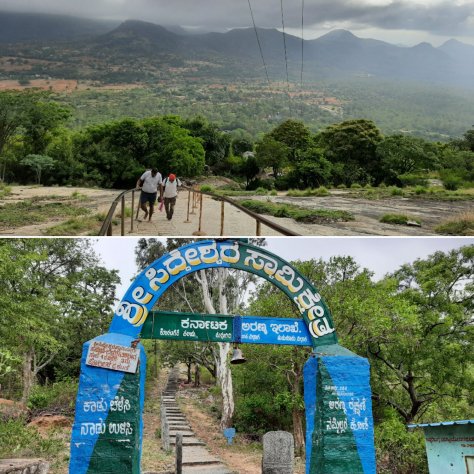
Below: The welcome arch at the base; Top: The initial climb
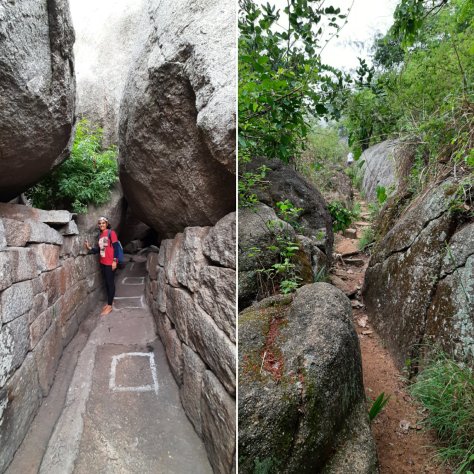
The initial part of the climb, until the Siddeshwara Swamy temple was steep but easy with well laid out steps and iron rods to hold onto. When we reached a small temple kind of a spot, the path split into two. The Siddeshwara Swamy temple was to the left, where too many people seemed to be as if there was no pandemic going on and there exists no concept called ‘Social distancing’. We decided to distance ourselves from the gathering and took the path to the right. With having to pass between too many boulders, it did seem a little confusing initially. The distant passing clouds now seemed as if they had come to meet and greet us. But after walking a little ahead, we reached an area that was a transition from dry rocky mountain to rain soaked green forests. The real challenge of walking barefoot started there, with unassumed ground with gravel and possible thorns from the shrubs.
Left: The rocky path to the temple; Right: The forest path to the view point
A little further, we reached an open rocky area where the view in front of us was playing hide and seek with each passing cloud. Apart from the drizzle and gusty winds that made it difficult for us to stand, we were mind-blown by the view we saw each time the clouds cleared out. There exists a small rain fed pond, a couple of meditating chambers that house Shiva Lingas (history unknown) and dilapidated remains of an old fortress. There was nobody else other than us in this entire stretch. We walked further and crossed two more hills before deciding to return, or else we would lose our way back.
Top: The dilapidated fortress wall; Bottom left: A large rock; Bottom right: One of the meditating chambers
It started to rain on our return, and we were quite drenched by the time we made it to the car that was parked just at the base point. The small eateries and stalls were slowly opening by that time which we chose not to visit, in order to avoid any social contacts with anyone else outside the group that we had gone in. We ate a few biscuits as a substitute for breakfast that we had carried from home and decided to stop the car next, only at home. It was a much-needed break and a pleasant little hike.
The view at from the peak
Summary:
It is an easy hike and very good for beginners.
Be careful to carry all snacks only in a closed backpack as there are too many monkeys on the way.
The unfortunate lockdown that the pandemic has brought has sure got the netizens busy. I’m not a TV person but sitting in a spot for video conferences all day (for work) gets me worked up sometimes. My terrace is too hot to go out in this hot summer month. This has given me some time to indulge in watching some series online. Not to fall into the fancy of the latest trending series on OTT platforms, I preferred to catch up on some old classics that were a hit on Doordarshan, back in the days of my childhood. That’s why I chose to start with Malgudi days.
While some claim that Agumbe was the ‘Malgudi town’ and there exists a ‘Malgudi house’, nobody really knows where the entire ‘Malgudi days’ serial was shot. However, since most of the episodes were predominantly shot in and around Shimoga, the present-day railway station at Arasalu (near Shimoga) is named as the ‘Malgudi station’ in honour of the famous serial. One of the trains too is named as the ‘Malgudi Express’ by the Southern railways. The popular serial telecast in the late 1980s comprised of 39 episodes shot and directed by Late.Shankarnag. Banking in on its popularity, the other 15 episodes were later directed by Kavita Lankesh in 2016. From what established a cult in Indian cinema, I am keen on taking a trip down the streets of Shankar Nag’s Malgudi because that is what I grew up watching.
Based entirely out of Karnataka, the rural setting, the culture and top-of-the-notch actors were totally relatable for me as I watched it. As I continued to watch the episodes, what started to intrigue me were the familiarity with several places featured in the episodes. I also started to take note that all were not in Shimoga. ‘Armchair travelling’ is a fancy outcome of being locked down by the pandemic and that got me to travel through my home-state Karnataka and map some of the heritage structures that have been featured in the classic ‘Malgudi days’. So, here are my relative screenshots from the serial and photos of the landmarks, as they stand today. You too can contribute your findings and let us unravel the mysterious locations of the old-timer 😊
1. Episode name: Oldman of the temple- Mandir ka budda
The episode opens with the author R.K.Narayanan himself telling that Malgudi is a fictitious town. It being located in Southern India is only half truth. The truth is, it is applicable to anyone anywhere across the world. Here, starts my quest to map the locations of Malgudi, spread across the state of Karnataka.
a. Ofcourse, Sheshadri and his friends are seen sitting on a platform of a tree that is present even today, at the town centre of Agumbe.
b. The old dilapidated temple that the Old man- Krishna Bhattar’s spirit lived in the episode is the ‘Thimmarayaswamy temple at Bettadadasanapura’ on the outskirts of Bangalore.
2. Episode (serial) name: Swami and his friends.
a. This is an 8-episode long story and is one of the most iconic part of the series. The ‘Doddamane’ in Agumbe perhaps is what was Swami’s house. We still need to look at several other structures that have been featured in the serial.
b. Although I am unable to locate the structure that housed ‘Albert Mission School’ in the series, I sure know where the School logo ‘Fide Et Labore’ featured in it came from. It was easy for me to point it out as my brother happens to be an alumnus of the 150+ years old ‘St. Joseph’s European High school’. Given the setting of pre-independence days in the serial, it was obvious for a Bangalore based director to be inspired to borrow the school logo from here.
c. Swami’s Friend- Rajam lived in a huge bungalow. This is the Thippagondanahalli IB (Inspection Bungalow)
d. Yes, most part of the series was shot at Agumbe. But when the team had packed up and Director Shankar Nag felt that a few scenes needed a re-take, the entire street of Malgudi was setup at a street adjacent to Yediyur lake in Bangalore.
Top- The map of Malgudi as conceptualized by Shri.R.K.Narayanan; Below- The present day Arasalu railway station
3. Episode name: A Hero
With some actors replacing the characters of ‘Swami and his friends’, it somewhat is a continuation of the 8-episode series. Though the house indicated as Swami’s house in this episode may not be wholly same as the 8-episode series, it is true that a large part of this episode (The attic of Swami’s house and the riverbank) are common.
4. Episode name: The hoard- Maha Kanjus
This too has been shot in the ‘Doddamane’. The main road facing entrance, the sit-out on either side at the entrance with wooden pillars and doors and the central courtyard indeed are from the ‘Doddamane’ of Agumbe.
Episode: The Hoard; Location: Doddamane, Agumbe
5. Episode (serial) name: Mithai Wala- The vendor of sweets.
All I have heard is that ‘Malgudi’ itself is a fictional town created for the serial. The name was derived as a combination of two prominent townships of Old Bengaluru: Malleswaram and Basavanagudi. The story of its origin can’t go away from its offspring, right? What has always been popular as the ‘Shooting house in Basavanagudi’ is in fact the house where the Mithai Wala lives in this 8-episode long series.
Series: The vendor of sweets; Location: The shooting house of Basavanagudi
6. Episode name: Nitya
Nitya, the protagonist is taken to a distant hill-temple where his parents had a prayer to be offered. The entire setting of the hill-temple is the present-day popular trekking destination- Devarayanadurga’ in Tumkur district, on the outskirts of Bangalore.
Episode: Nitya; Location: Devarayandurga
7. Episode name: The seventh house- Saathvan ghar
This episode has been shot across multiple locations. However, there were a couple of them I could identify.
The scene where the couple and their families go to offer pooja in a temple is Devarayanadurga, same as the one in the episode Nitya.
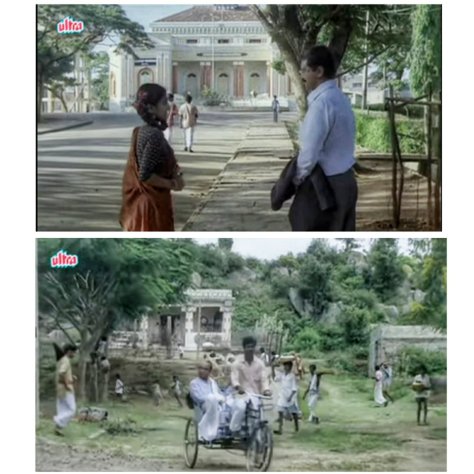
a. The scene where the couple meet after college has the Town hall building of Mysore in the backdrop.
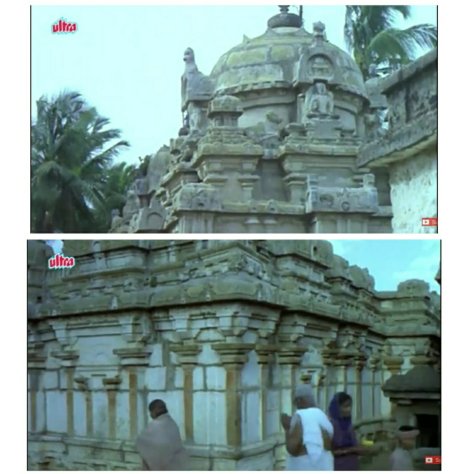
b. The scene where the protagonist rides to see an astrologer is the temple at Kaiwara. It has largely been renovated as on today. But the Narayanappa temple in the background, the rocky hillock on one side and a motorable road seen in a glimpse indicate it is indeed Kaiwara.
Episode: The seventh house; Location: Top- , Below- Kaiwara
8. Episode name: Iswaran
a. The college or the senate hall with its Gothic style of architecture featured in the episode is the ‘Central College of Bangalore University’ located in the heart of Bangalore.
b. The Protagonist, Iswaran watches a movie at a cinema. The palace featured in the movie is the ‘Bangalore Palace’.
c. Time and again, Sarayu river has been mentioned in the episode. Given the typical setting of Karnataka and the writer’s hometown of Mysore, the lifeline of this region is river Kaveri. I believe that the river where the protagonist drowns in at Sangama, near Srirangapatna.
Episode: Iswaran; Location: Top- Central college, Below- Bangalore palace
9. Episode name: The performing child- Abhinetri
Given the fact that it is still one of the iconic lung space of Bengaluru and there runs a toy-train amid a lot of greenery, the train journey featured in the child’s dream is in Cubbon park.
10. Episode name: Roman image- Rome ka Murthi
a. The stone temple that Sheshadri and Professor walk around after climbing up a rocky hillock that overlooks green meadows is the ‘Mantapa’ located at the peak point of Kodachadri.
b. The red structure where professor Bandopadhyay is indicated to be working on a renovation of a Jaipuri palace- is the Shivappa Nayaka’s Palace located near Shimoga.
Episode: The Roman idol; Location: Top- Kodachadri, Below: Shivappa Nayaka’s palace, Shimoga
11. Episode name: The watchman- Chowkidar
Although the structure and the surroundings seems to be in a dilapidated condition in this episode, it has been largely renovated and restored as on date. The entire episode has been shot in the ‘Thimmaraya swamy temple complex at Bettadadasanapura’ in Bangalore. The large trees in the premises, the temple pond, the entrance stone pillars and the fortress like wall encompassing the temple premises on a rocky hillock are the things that stand testimony to the famous episode.
Episode: The watchman; Location: Bettadasanapura temple
12. Episode name: A horse and two goats- Muni
Given the rural setting of the protagonist’s house and the fact that he eats Ragi mudde, it is a story from the Mysore region. The place where he goes to graze his goats daily in a eucalyptus grove and the slopy terrain of the hills where the road passes, could it be the road that leads to Chamundi betta? Or could it be Nandi hills? (as guessed by ‘The light baggage)
13. Episode name: Trail of the green blazer – Pocket maar
The temple where the protagonist offers his prayers with a coconut before heading for stealing is the Panchalingeshwara temple at Begur, located in the outskirts of Bangalore. (Information contributed by ‘The Light Baggage‘)
The Panchalingeshwara temple at Begur
Are there any familiar locations that you could identify in the serial? Let me know..
Here are the remaining episodes 🙂
14. Episode name: Leela’s friend- Siddha
15. Episode name: The missing mail- Dhakia
16. Episode name: Engine trouble- Engine Ki kahani
17. Episode name: Forty-five a month- 45 rupiya
18. Episode name: The career- Ramji Ki Leela
19. Episode (series name)- Naga
20. Episode name: Sweets for angels- Kaali
21. Episode name: A willing slave- Aaya
22. Episode name: Cat within- Paap ka gada
23. Episode name: The gateman’s gift- Govind Singh Ki Bhent
You have probably read my earlier post on exploring the offbeat landmarks of Old Bengaluru. Here is another one. This time, it was a culinary trip of Old Bengaluru to a friend who had flown down to this southern metropolis, from the so-called Northern part of India. I had been asked to take him on a gastronomic tour of my city. For someone who has a penchant for everything old school, I thought Old Bengaluru would be perfect to call it a day. ‘From vintage automobiles, architecture, iconic restaurants serving traditional recipes to by lanes and alleys that narrate their own individual story of the city, this section of Bengaluru has everything that would tickle a bone or two of this mad man’, I thought.
Having largely spent my teenage in North Bengaluru and given my familiarity with the area, Malleswaram was my first choice. However, given the convenience of commutation from my current place of stay, I chose to show him around South Bengaluru. But when one says South Bengaluru, it is a world in itself and the geographical area is large to fit all in one day. Hence, I took time to mark a quick map of restaurants to cover, along with giving a peak into the cultural heart of the city. This part of the metro lays in stark contrast to the Bengaluru, that the millennials from Whitefield and Marathahalli know of.
The obvious choice was a walk tour of Basavanagudi and the Pete area. These are the two most important clusters of true Bengaluru that have held onto the roots, despite the rapid and traumatic transition this city has seen in the last decade in the name of urbanization and modernization. Under the canopy of massive native trees, the aroma of the by-two filter kaapis shared at the numerous Shanti Sagar and darshini food joints, the air here feels different from anywhere else. With almost every street dotted with Classical dance and music schools and happy nonagenarian couples whizzing in their Padminis and Ambassadors, it has a different vibe here. One can find some of the traditional old houses and landmark restaurants only in these localities to really experience old Bengaluru. Each of these iconic eateries have a near century old history and their old school ambience is still intact inside the heritage structures that house them. With a small appetite for food and a big quest for exploration, the portions of food were limited only to the signature dishes of each restaurant, to accommodate more places. So, here is my itinerary of a gastronomic tour of Bangalore of yore.
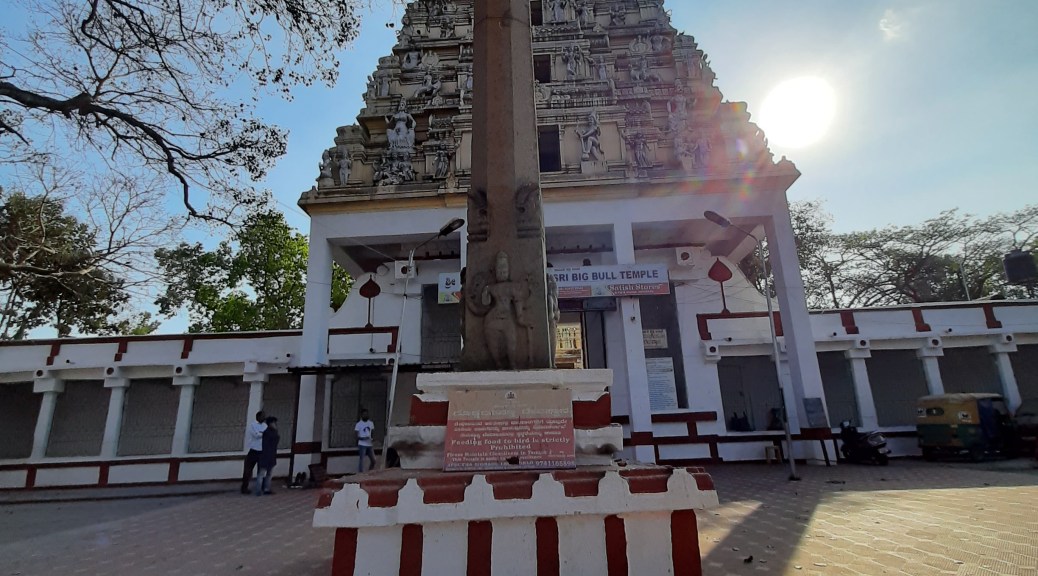
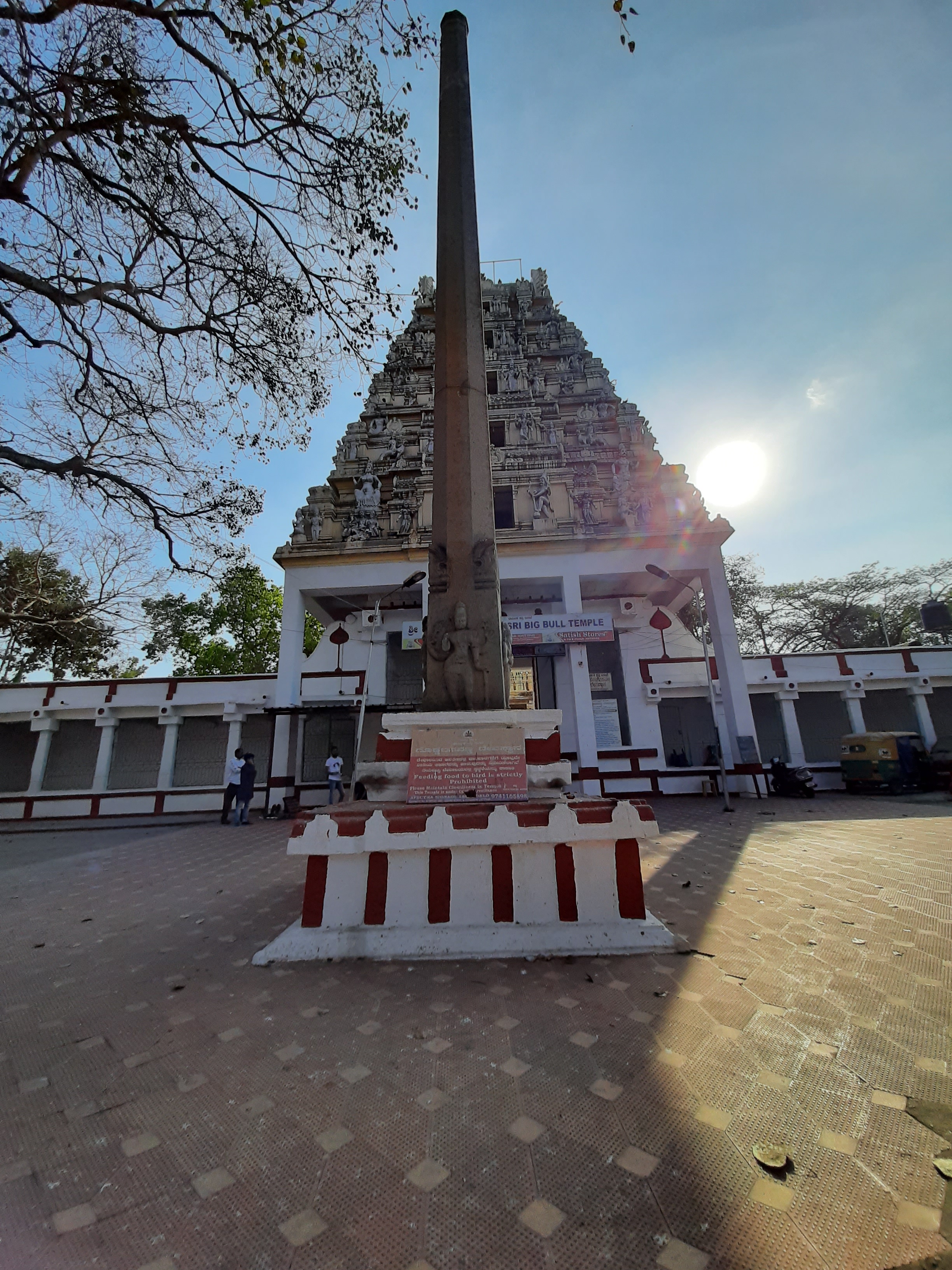
The Big bull temple, Basavanagudi
Meet-up point: Basavanagudi is the name of a temple (It translates to ‘Bull- Temple’). Basavanagudi is the name of a locality in South Bangalore, named after the temple. It is an extension of the Pete area, which was specifically created to accommodate the upper class, and more-specifically the Brahmin community. No trip to South Bengaluru is complete without a visit to this landmark temple built by Kempegowda, the founder of Bengaluru. Apart from the Big Bull temple, the Dodda Ganapathi and the Bugle rock (a small watch tower from the Kempegowda era) are a must visit on the same premises. If you time it up well, you can part-take in the annual groundnut fair in the locality. (Read here to know more about the history of the Kadlekai Parishe). After meeting my friend here, we started our gastronomic tour to our first food stop.
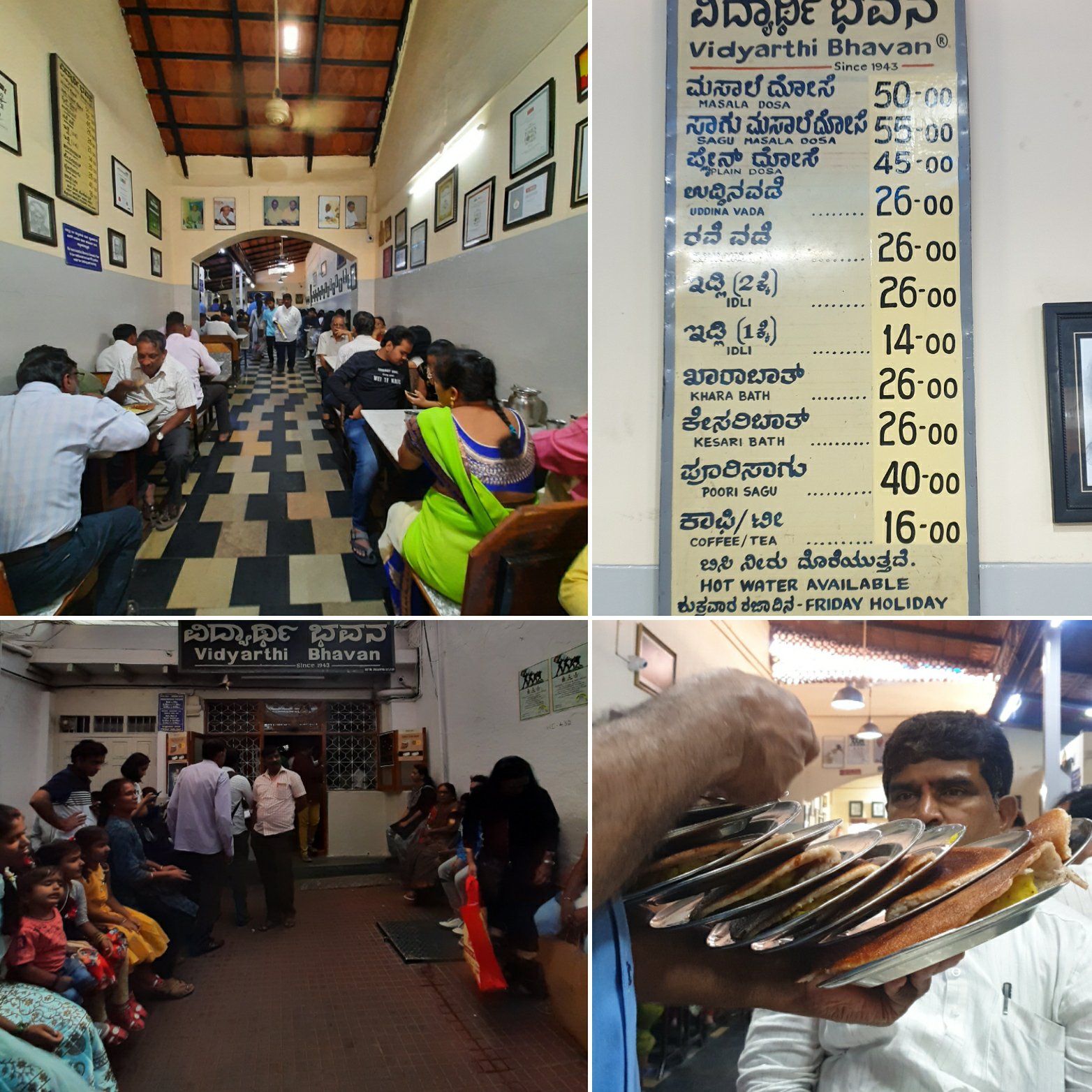
Food stop 1 (Breakfast): As synonymous as Dosa is with South India, Vidyarthi Bhavan is with South Bengaluru. Ask anyone for the best Dosa in the city and this place scores on top unanimously. It is a restaurant started initially to cater to the student community of the area which started a new culture of a hangout place for friends in those days. On most days, the queue can extend well up to a kilometer. My friend and I wiped off our plates of their signature Masala dosa for breakfast. (Click here to read further about the history of Vidyarthi Bhavan)
Vidyarthi bhavan, Basavanagudi
Food stop 2 (Light eats): No foodie who visits Bangalore is satisfied without taking an evening walk on the Eat street at VV-Puram. However, I decided to go here in the morning, in order to avoid the maddening rush. Honey cake and Congress bun at the iconic VB Bakery was what we needed. This is the first Iyengar bakery to be established in Karnataka which has paved a new culture in baking (Read here for more about V.B.Bakery). Avarebele (Val bean) is a favorite ingredient of the Bengalureans, who have a dedicated annual fair to celebrate this pulse (Click here to read further about Avarekai mela). Hence, picking up a packet of avarebele mixture for home from one of the stores there was an obvious choice.
Food stop 3 (11 o clock, coffee): It is an important break time for the employed section of the society. Brahmin’s Coffee bar is a household name for their filter coffee and the delectable chutney served with idly on their very limited menu. This tiny eatery is in a corner of Shankarapuram, which is also famed for the Shankaramatha, a learning center of the advaitha philosophy. We had a quick stopover for a hot cuppa this little place is known for, before heading to Pete. (Read further about Brahmin’s coffee bar here)
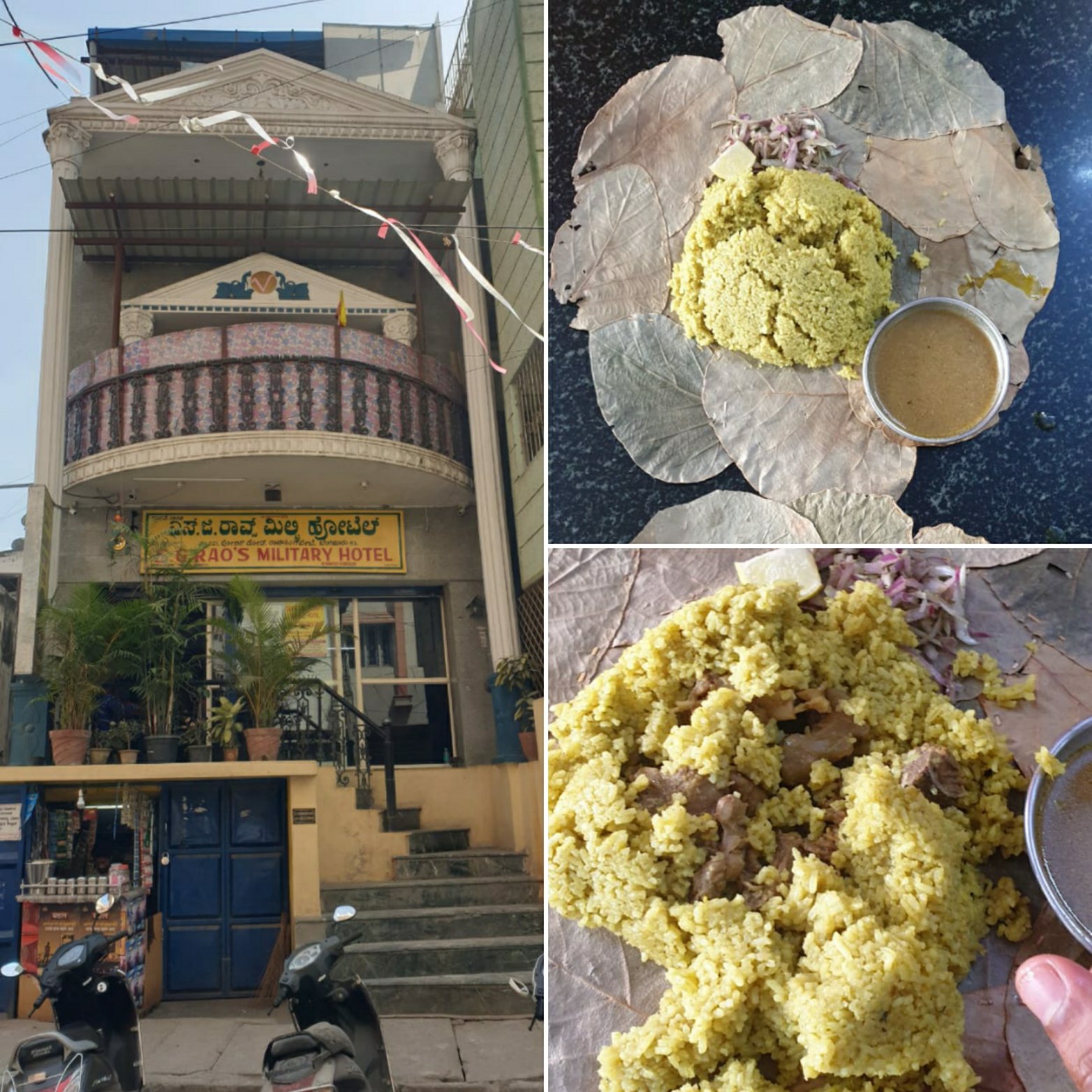
Food stop 4 (Lunch): To satiate the hunger pangs, I planned to treat my friend with an authentic Bangalorean affair. With multiple theories surrounding the origin of the military hotel culture, the history of these restaurants dotting across the southern part of Karnataka is unclear. Bangalore is home to some of the best in the state. I don’t think there would be any better meal than ‘Ragi Mudde oota’ savored at a military hotel to get a peek into the local flavor, including the ambience. Hence, we were lunching that afternoon at S.G. Rao’s military hotel, located in the cotton Pete area. A typical military hotel meal includes Kaal soup, Ragi Mudde and Mutton biriyani. (Click here to read further about S.G. Rao’s military hotel)
S.G.Rao’s military hotel, cottonpete
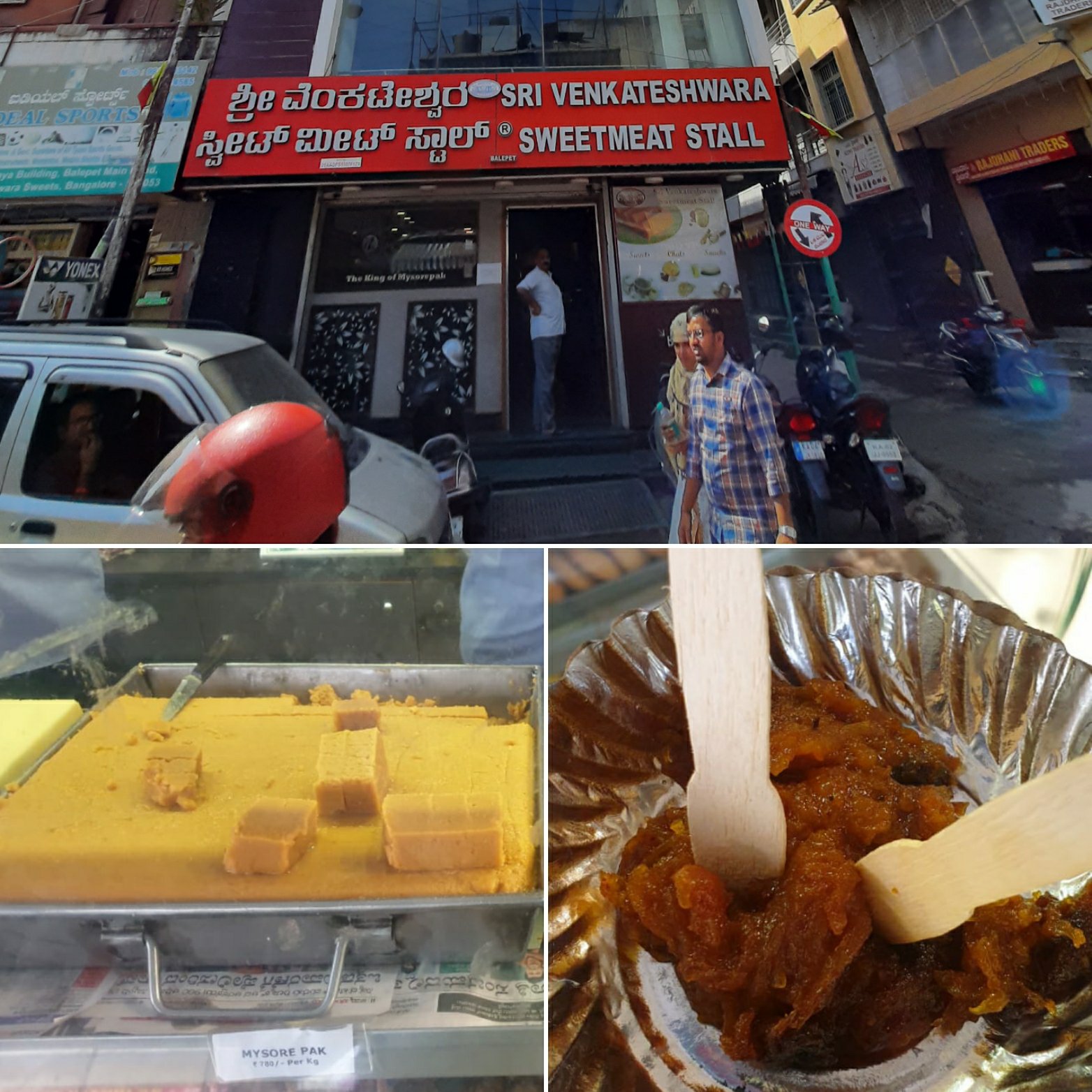
Food stop 5 (dessert): A meal is complete only with a nice dessert. If there is one sweet meat that is synonymous with Karnataka (Mysore state), it is Mysore pak. Since I couldn’t take my guest to Mysore for that, the closest I could get is at Sri Venkateshwara sweet meat stall located at Bale Pete, a short walk away from cotton Pete. Their Mysore pak and dumroot are the sweets my friend packed for his roommates back in his hometown. (Click here to read about Sri Venkateshwara sweet meat stall).
Sri Venkateshwara sweet meat stall, Balepete
The Pete walk: An old Bengaluru exploration is nothing without a walk along the narrow snaking lanes of the Pete area, the true business epicenter of both New and Old Bengaluru. This area is segmented into various sections and named according to the commodity sold and the communities that resided there in the yester years. From green groceries, handloom, steel, plastic to precious metal, everything is available in this locality. An early morning walk in the famed flower market is an experience in itself. We limited ourselves to just the mainstream sections while exploring some of the ancient temples, mosques and heritage houses of the Kempegowda era. In the meanwhile, we kept munching on numerous snacks from several popular stalls on our way. Although these eateries are old, the flavors are largely north Indian, owing to the Marwari and Baniya community that reside here in majority.
The heritage structures of the Victoria hospital, Bangalore fort and Tippu Sultan’s summer palace all lay on the side of the road for the history and architecture buffs who have a little more time in hand. But this is all we could fit in our day. Thus, ended a gastronomic tour of South Bengaluru.
I hope you enjoyed this virtual tour with me too… did you? Or did you not? Share your thoughts with me…
There are many other iconic restaurants in Basavanagudi if you have a larger appetite. These are a few other places that you must check out when you are here: The new modern hotel, Mahalakshmi Tiffin room, Janata Tiffin rooms are a few among many others.
Souvenirs to buy:
Coffee filter and freshly roasted coffee powder: The best filter coffee is available only in South Bengaluru, and hence my friend thought this was a more significant thing to buy from here.
Channapatna wooden toys: These are GI tagged handicrafts made with organic colors and largely popular in the western market, it comprises a large collection of traditional toys.
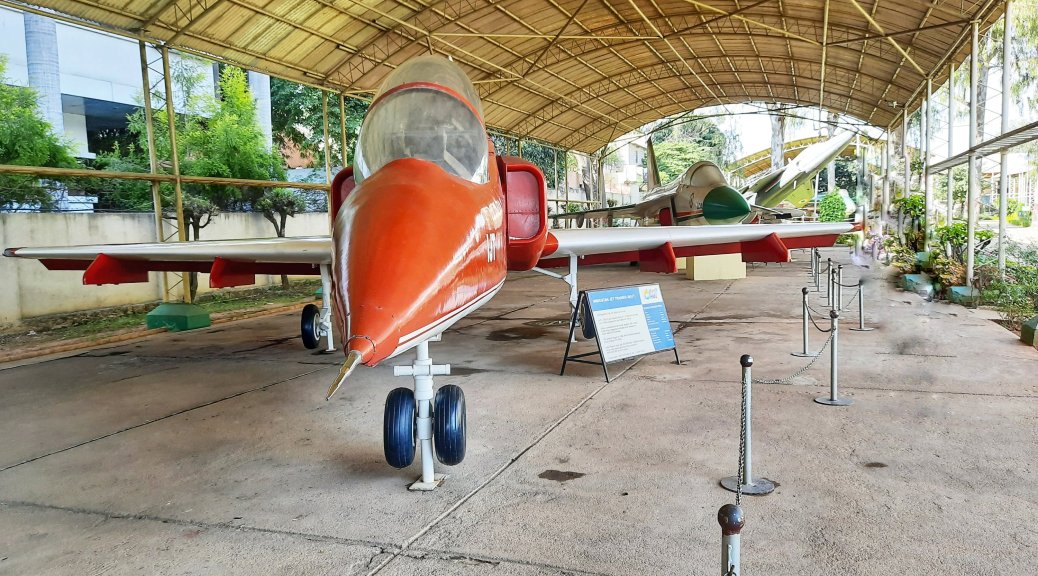
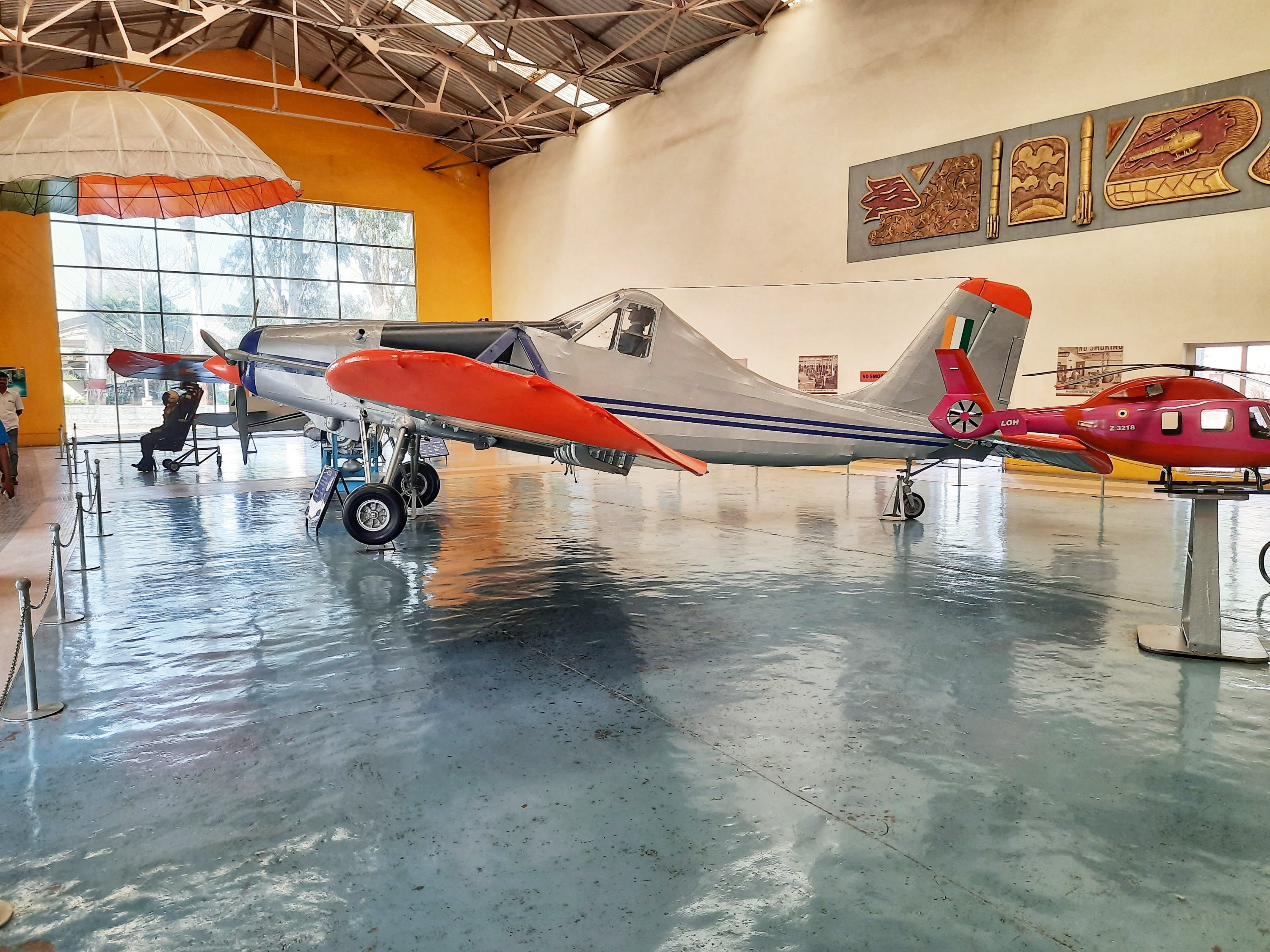
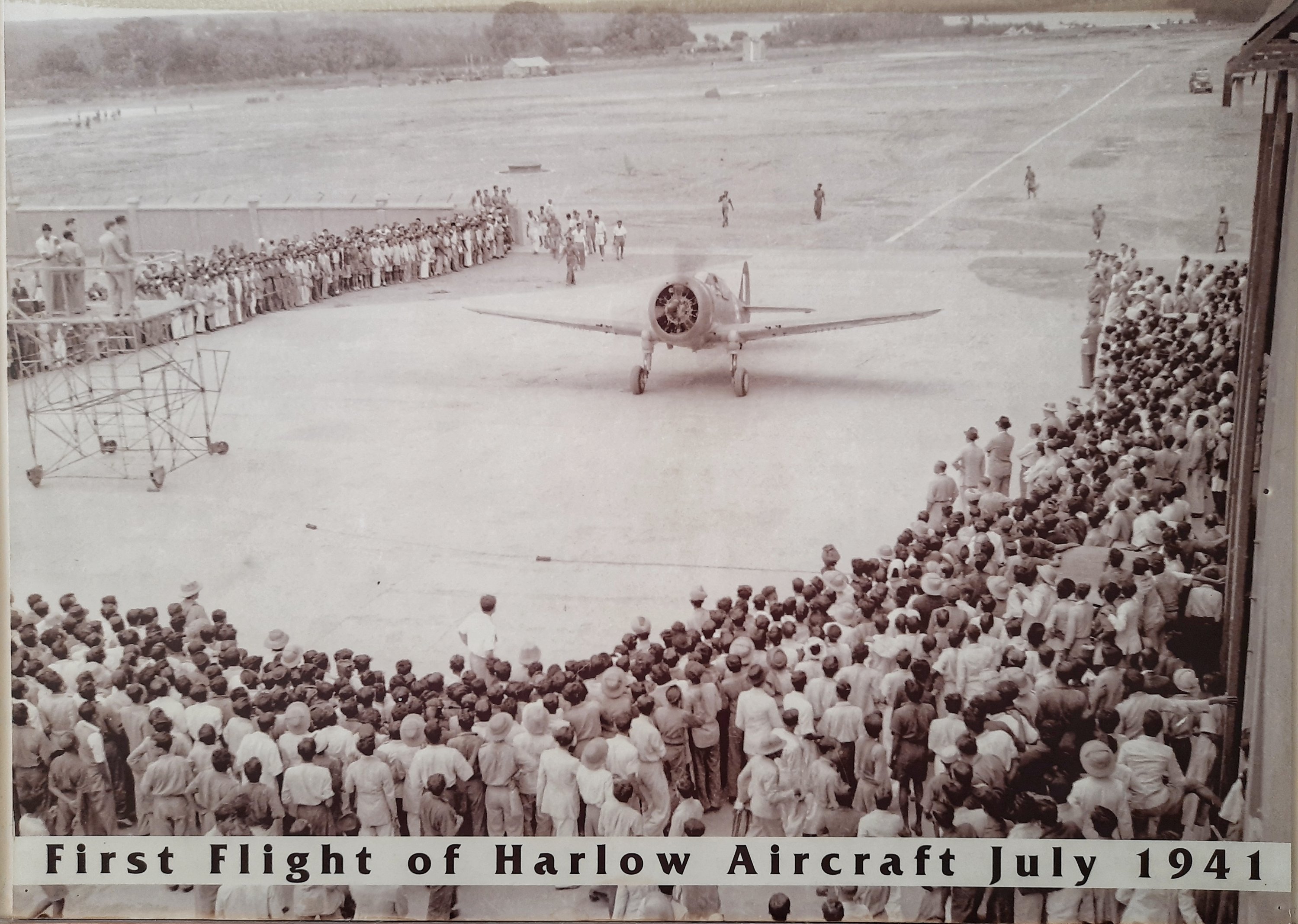
HAL (Hindustan Aeronautics Limited), Asia’s largest and India’s first aerospace establishment was founded and is headquartered in Bangalore. If you want to walk down this journey of how aviation industry has evolved in India, a visit to the HAL Aerospace Museum, India’s first aviation museum located at the HAL premises is highly recommended. From the first aircraft, Harlow PC to be assembled at its stables to manufacturing the most modern helicopters, planes and equipment for present day requirements of the Indian airfare, navy, railways and space research, HAL’s journey has been a long one. One is bound to get amused in another world by taking a walk between vintage planes, flight simulators, mock ATC and all things associated in this subject of fantasy at the museum hall. Now, this place leads me to my next destination: The IISc (Indian Institute of Science).
An exhibit of the Pushpak aircraft at HAL
That morning, I had ordered a plate of idlis at this little restaurant on the IISc campus. Just like any other day at that restaurant, the environment was abuzz with the chitter chatter of the people I was surrounded by. A typical scene on any given day includes the best scientists of India and abroad discussing new experiments over a plate of food in what is one of the premier research institutes in the country! Irony has it that similar discussions happened under the same roof, sometime in history. But back then, the discussions were about something more strategic and destructive. It was right here that a bunch of people discussed a war plot. What is now the top-of-the-notch science and technology institution in India, served as a hub for maintenance and repairs of the aircrafts during World-War II.
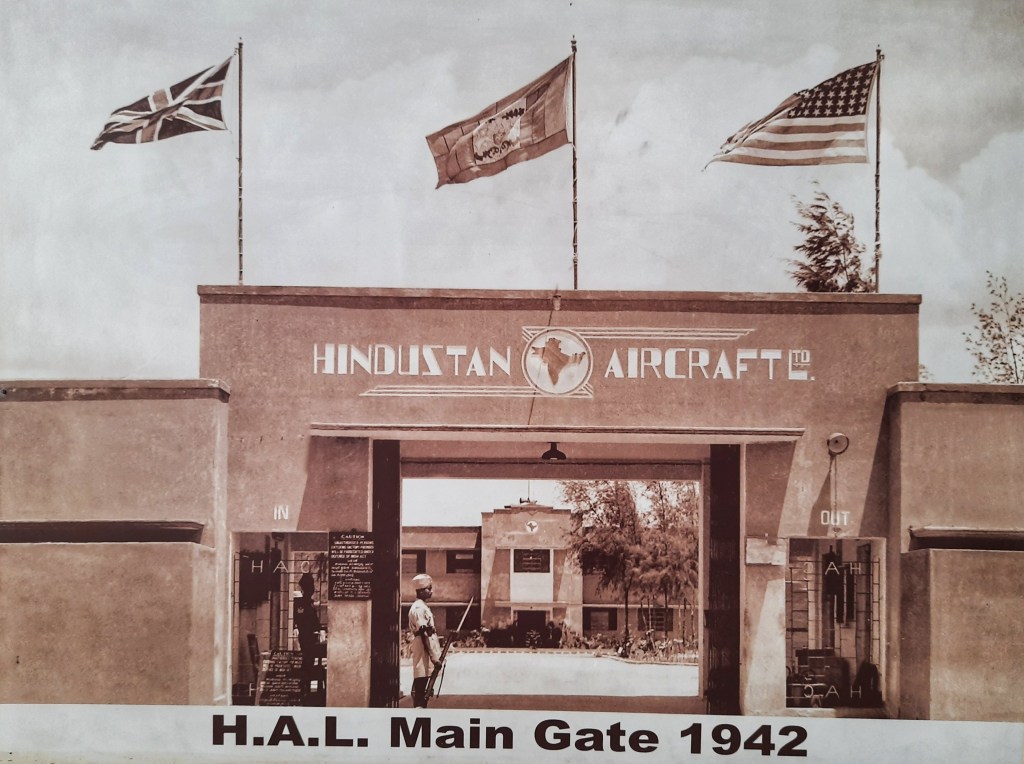
In the late 1930s, a factory meant for automobile maintenance was setup by an industrialist named Walchand Hirachand in the present day IISc campus. History has it that on his way to China, Hirachand chanced upon a meeting with William D. Pawley who was attached to the Intercontinental Aircraft Corporation of New York, an American aircraft exporter. This connection lead to the procurement of the necessary tools and equipment from the US to setup an aircraft production line in India. It was in December 1940, with funds from the Mysore state, the Hindustan Aircraft Private Limited came into being. The plan was to manufacture the Harlow trainer, Hawk fighter and the Vultee attack bombers at this factory. However, this required huge manpower that was trained in Aeronautics which lead to the establishment of the department of Aeronautical engineering.
A 1942 file photo of the HAL main gate.
Photo courtesy: HAL museum gallery
The structure that housed the aeronautical engineering department was designed by German architect Otto Koenigsberger. Otto Koenigsberger was a young Jew who had fled his country during the Nazi regime and was later in time, employed as the government architect of the erstwhile Mysore state. His architectural design is an amalgamation of European and traditional Indian styles and can also be seen in the present-day metallurgical department and the hostel office on the IISc campus along with many structures across India. Talking about the aeronautical engineering building- it is an oblong structure with high ceilings and narrow corridors that integrated natural climate control. He has also designed the closed-circuit wind Tunnel, the first of its kind in India and hydrogen plant among other things that are associated with aircrafts. With all the technical back up from IISc, it was in 1941 that Hindustan Aircraft Limited (HAL) assembled the first aircraft in India: A Harlow PC-5.
Meanwhile, the threat posed by Imperial Japan loomed large in the on-going World War II because of which there was a need by the British Royal Air Force to boost its military hardware supplies in Asia. With all likelihood, HAL was most suitable as a base for the South East Asia Command of the allied forces for servicing their aircrafts. Hence, all the aircraft manufacturing plans in India were abandoned to support the repair and overhaul services of the American aircrafts and the factory was eventually taken over by the US Army Air Forces in 1943. This led to rapid expansion in the facilities and became the 84th Air depot for overhaul and repair of American aircrafts during WWII. The very same hydrogen plant on the IISc premises was used as a loading dock to supply hydrogen for the American aircrafts. Later in 1964, the factory was taken over by the Government of India and has morphed into the modern-day Hindustan Aeronautics Limited (HAL) in its present-day location. However, the original Aeronautical engineering department continues to contribute enormously towards research and has its own little airstrip on the present day IISc campus.
As I finished my plate of idlis, I wondered how unassuming I was. This deceptively functional place had just served my meal that had just been cooked inside a hydrogen plant that powered the military aircrafts during WWII.
When you feel things are not going right, life has its own ways to heal its kids, you see? While I was feeling morally weak, an unexpected trip to Gokarna was awaiting my way. This time, I was going to lead a group of people, or at least assist a leader with ‘Plan The Unplanned’. With many firsts of experiences in its kitty, I was looking forward for this weekend trip.
So, after braving the outbound traffic on a Friday evening, the group of 25 of us left Bangalore and alighted at Gokarna the next morning. Blame it on the bus driver or the roads, 11.30.a.m. was late by all standards to reach Gokarna for the team that left GGpalya at 11.00.p.m. on the previous night. Anyway, that’s where the leadership aspects began to be tested. Considering that we were 3+hrs behind schedule and all 25 in the group were first time hikers, controlling the overall time to cover all that was mentioned in the itinerary was crucial.
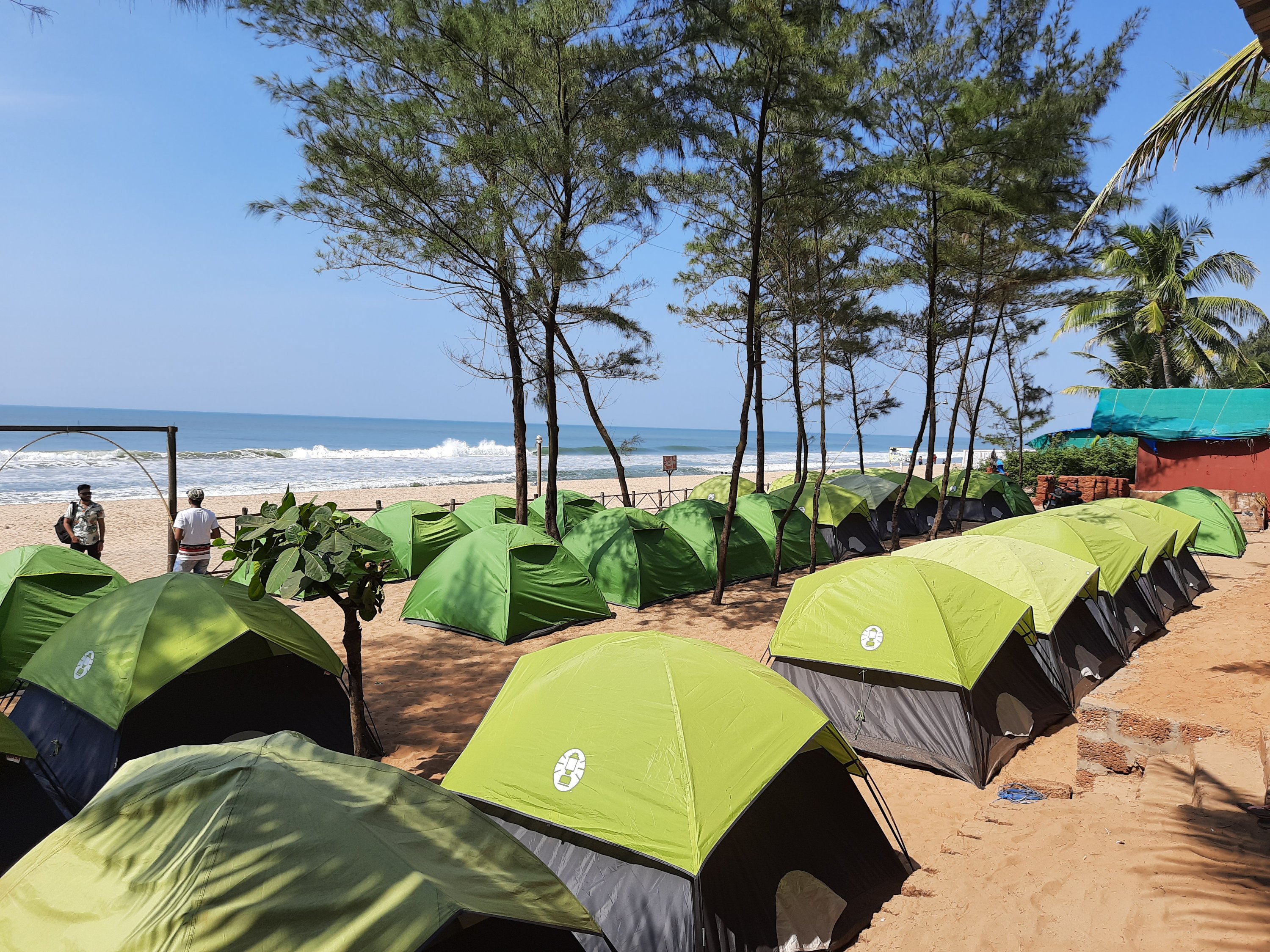
That said, we checked-in to the campsite where our tents were pitched by the seashore. Without wasting much time, the team freshened up and started the hike quickly after a filling breakfast. A minibus took us to the start point of our hike- the Belekan beach. From there, the actual weekend started to unfold. Since the internet is filled with itineraries for a Gokarna trip, I will not add another one to them. Unlike my usual style of writing long detailed posts, I’d like to keep this short and to the point.
The beachfront campsite at Gokarna
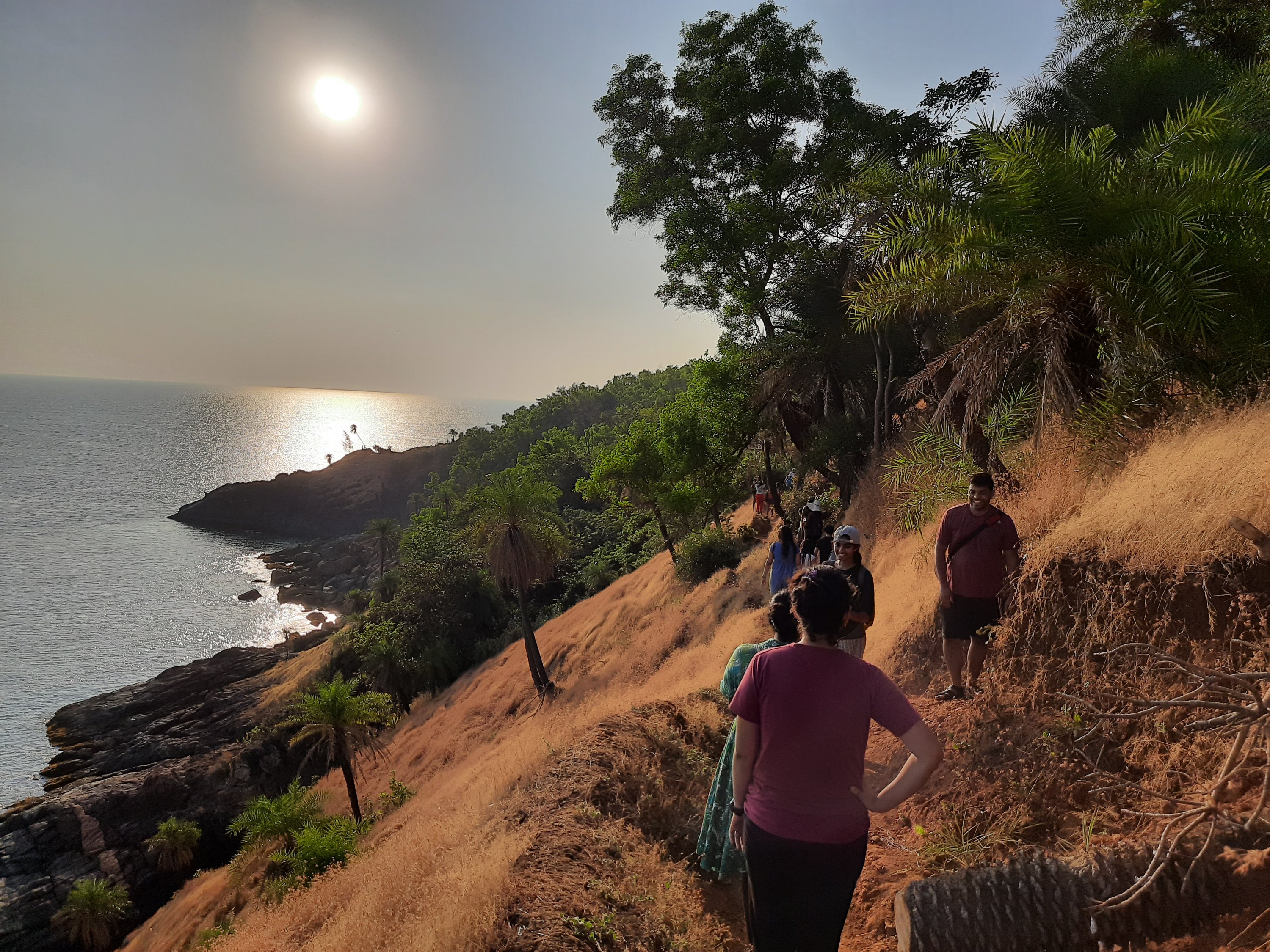
For the experienced trekkers, this was merely a walk along the coastline. But even for them, the small stretches of forests opening to amazing views of the blue sea now and then made the walk worthwhile.
Despite being late, we caught up with the schedule and spent ample time to take a swim in each of the beaches along the trail. Paradise beach for a snack break (fresh tender-coconut water and cut-pineapple with masala are a mandate on any Indian beach), Half-moon beach for a filling lunch (The beachside shacks serve an array of cuisines catering to its large visitors’ base from across the globe), Om beach for chasing the most mesmerizing sunset of the year, Kudle beach for a sumptuous dinner and finally walking along the Gokarna main beach to reach our campsite on a moonlit night… We spotted dolphins from the rock of peace, something that I had been wanting to see for the longest time. And then, I got that long pending hair braid done by a beachside vendor (Click here to read about it in detail). These were the highlights of my beach walk. Until then, I thought my day was GREAT!
The hiking trail between paradise and Om beach
But wait, my co-leads took it up a notch higher. It was late into the night by the time the team had settled down in their tents. And I too was settling down to call it a day. By that time, my co-leads asked me to ditch my tent for the night and join them with my sleeping bag on the beach. The beaches of Gokarna are infamously known only next to Goa for having some badass drunken hippies strolling around. I did not want any misadventures on my first assignment as a lead. Although I was a little hesitant to do something wacky, I soon hit the sands with my co-leads and a fellow traveler.
Just in a bit and even before I realized it, I was sleeping under a clear sky, watching the stars. Well… watching a meteor shower! It was that night when the Geminids meteor shower was at its peak. We laid on the beach counting the number of shooting stars. When only one of us saw the meteor, the others would pull her leg telling that she was hallucinating. When all of us saw it together, we would shout in unison scaring away a few drunken people loitering around the beach. They would wonder who was drunk 😀
Eight… Nine… Ten… We counted the number of stars until we fell asleep to the lullaby sound of the waves. When I opened my eyes again, I was lying on the beach and seeing the white lights from the distant ships disappear into the light of the breaking dawn. This beach experience is something that killed it for the mountain girl in me!!! Only because I could strike a similar chord of interests with an awesome pair of co-leads and I can’t thank them enough for the night!
Yeah, managing a large group comes with its own set of challenges. Managing medical emergencies in the middle of the trail, accommodating quick changes in the itineraries and finding alternate destinations when abnormality struck were the unexpected things which I believe we handled with diligence. All said and done, the trip has been a memorable one in more than one way and a thumbs up to my new journey with Plan The Unplanned 😊
Aren’t honeybees good inspirers to travel? In a lifespan that’s as short as just a few days, they find a new place every day, explore a new flower every minute and taste new nectars on every flight! All this while still performing their assigned duties without having any complaints. Living a sweet life while being as busy as a bee!
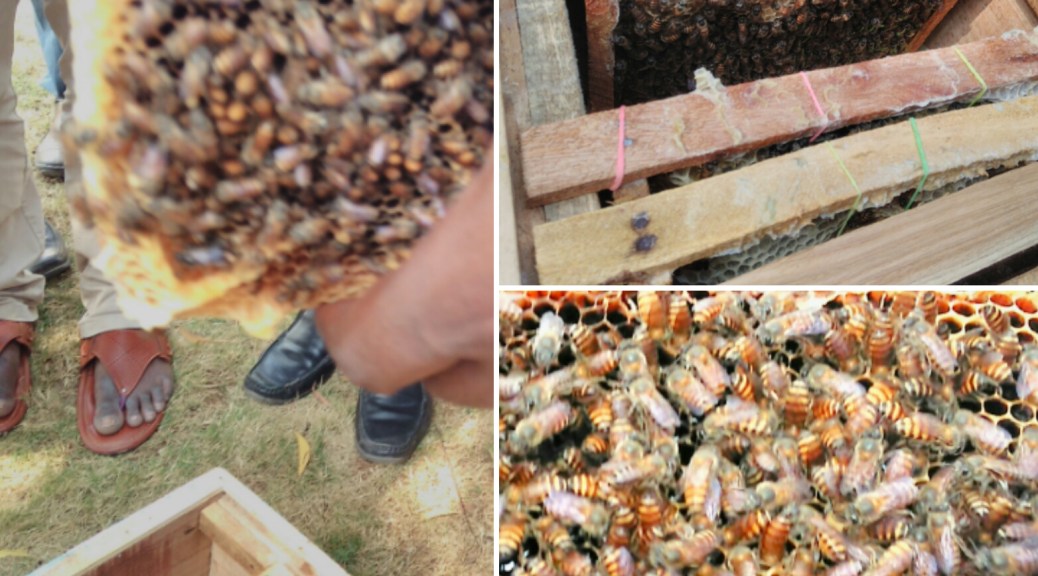
It was curiosity that led me to learning about bee-keeping. This curiosity was a summation of multiple experiences accumulated through the years of childhood. I have been raised by my grandparents where honey has been an essential part of my life. We used it as a dip for breakfast and as a rice-mix for lunch, as an energy drink with hot water or even as a medicine with brandy or pepper corn. And yeah, stashes of several bottles went packed as souvenirs to guests who visited home and to friends who lived far away. You can call this honey with adjectives like pure, organic, handpicked, homemade, etc. ‘Coorg honey’ it was, after all!
Grandpa was personally enthusiastic about this particular hobby of his. I was often smitten with curiosity when he returned home with either a swollen face or with swollen hands. When I went nearer to him to check for his condition, he would only greet me with a warm smile and a piece of honeycomb dripping with fresh nectar. While at home, he would be busy with his bees in 75+ boxes that were kept around the house. It used to be a festival day for the family when drums of honey used to be extracted from his boxes all by himself. While at his favourite place- the Abbi estate, it was customary for him to have a daily look at this massive ‘Honey Tree’ as we called it, the single large tree where bee hives were formed annually. It was the family night out, an annual event that we all looked forward for. Honey tappers from a specific tribe called ‘Jenu Kurubas’ used to be called in, to climb the tree in pitch darkness on a no-moon night. The family camped in the darkness at midnight on the damp ground of the coffee estate with the rustling sound of the waterfalls in the background. While as a kid, I was amused with the spectacle of blue lights falling down from that tree, only as a grown up adult I realize the lights were indeed bees that were falling down after being smoked up in the process of honey tapping. And not to forget some odd days when he would pick out snakes from mud crevices that he had put his hands to collect honey from. And then there were days, when we made friends over a bottle of honey. These were customers who came to grandpa’s makeshift shop at Abbi falls with their unique ways of testing the quality of the honey sold there! Each customer, a unique character and every conversation, a story in itself.
For me, adding this new dimension to my travel stories was more of an emotional journey.. With the passing away of Granpa, the charm and life that his favourite place held too passed. The ‘Honey Tree’ eventually saw the ground leaving our family to buy honey from the market. Having relished the finest nectars from high tree trunks, deep mud crevices and those handpicked from the several bee boxes kept around the house, our family like all others are really not sure of the quality of those available in the market. That’s when this thought of setting up my own bee box struck me along with traveling in pursuit of knowledge sharing. These things led to me developing an interest about learning about honey bees and eventually respecting these tiny creatures more and more. I think being born in a community of nature worshippers gives me an instant connect with things that are natural and essential for our existence. Home is where primary and the most essential education starts and for me, Grandpa has been the main reason for one of the finest childhood lessons and home education I have picked up.
Albert Einstein said, “The Earth will come to an end in just 4 days if there be NO honeybees on this planet.” Honeybees are such an important part of our very own existence on this planet, Save them! Get in touch with an expert before you get that beehive removed from your concrete dwelling. Alternatively, get in touch with me for I would be more than willing to give a talk for awareness in your community. I signed up for a workshop to learn this art of bee-farming, and a certification came as a bonus. I did my course with ‘HoneyDay Bee farms’ who are thorough professionals and extremely knowledgeable in the field. They work with farmers right from the installation to extraction to marketing thus assuring you a 100% purity in their products. Go try them out!
Being one of the first hotspots of the elusive black panthers and a place known as the ‘Rishikesh of the South’ for its river rafting in the waters of River Kali weren’t reasons enough for me to grab-in when opportunity struck! A Solo trip that was long due, finally happened one weekend. I packed my backpack and hit the road in an overnight bus to reach Dandeli. This trip was part of an invitation to review a resort and a homestay at Dandeli, arranged by www.dandeli.com However, the reviews of the places are in separate posts and this one is something else, worth your reading time. Or so, I believe.
Apart from the cool and wonderful green cover that Dandeli has, I had a surprise awaiting me on the second day of my trip. It added yet another perspective to my travels- “Bird-watching”. If you have been following my blogs for a while, then you must already be aware that I have always been interested in wildlife and its conservation. But I neither did I have an opportunity to meet someone closely involved in such form of travel nor did I have any close acquaintances who was good at bird or animal tracking. Here, at Dandeli I met a person who has dedicated time and money in tracking and documenting the birds of the region. The entire experience of birdwatching with this person is something that I will cherish for long time.
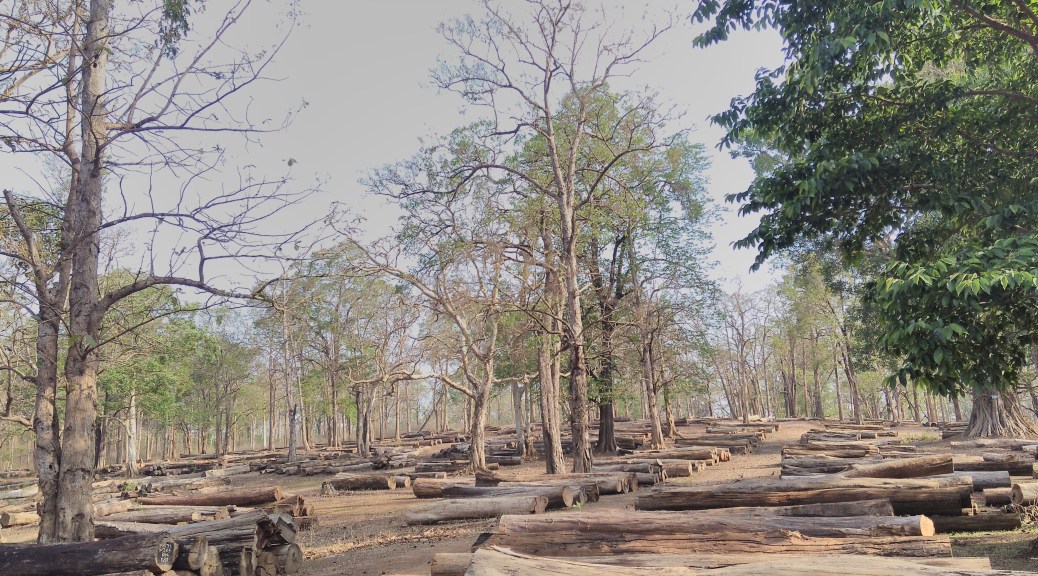
As a part of the trip package by the homestay, I was asked to be ready by 6.00.a.m. and was taken to the Dandeli timber depot. I was introduced to Ms. Rajani, a government schoolteacher by profession and an avid nature keeper by passion. She was assigned to take me on a bird watching tour around the depot where over 150 bird species could be spotted on any given day- A true haven for the bird watchers!
Dandeli timber depot
Among several species that she went on showing me around and shedding light on facts about them, the one that opened my eyes to an all new perspective of seeing avian life were the ‘Hornbills’. The hornbill is one species that is referred to Lord Ram and Sita for the couple bonding that they share. These birds have a very unique way of finding their mates and if ever happened that one bird dies anytime, the other remains single all life without finding another mate which is unique to hornbills. The reproduction cycle of these birds is once in 5 years and hence, the male bird is extremely protective about the female and the chick. The male bestows his beloved with berries of her choice from faraway places during this period. While it carries around 40-50 berries in its beak to feed its family, a few fruits may fall down during its flight, thus contributing to afforestation- The hornbills are the farmers of the forests in true sense and live a life of awe and inspiration to mankind. Another interesting fact is among the 54 species of hornbill across the world, 9 are found in India. Out of these, the world’s largest species- The great Indian hornbill and world’s smallest- the Malabar Grey hornbill with Malabar pied and Indian Grey, 4 species can be found in Dandeli alone. And I was fortunate to see all 4 of these during my 3 days of stay at Dandeli, an experience that cannot be explained but only be felt.
Another unique sighting was of the jungle babbler or the ‘seven sister birds’. With enormous untold stories, the tour ended rather quickly as we both lost track of time.
My enthusiastic guide visits this place every morning and evening which she describes as her day being incomplete without talking to the woods and strengthening her nature connect. She ensures she talks about them to her pupils at school as well. That’s a novel way to inculcate the habit and awareness about nature conservation among children from a very young age itself. I gave her a tight hug for the wonderful ways of teaching her students in school about conservation of natural resources and I bid farewell.
Bonus tip for birdwatching at Dandeli: Watch the hornbills mud-bathing on the riverbank near Ganeshgudi (sometime around winter)
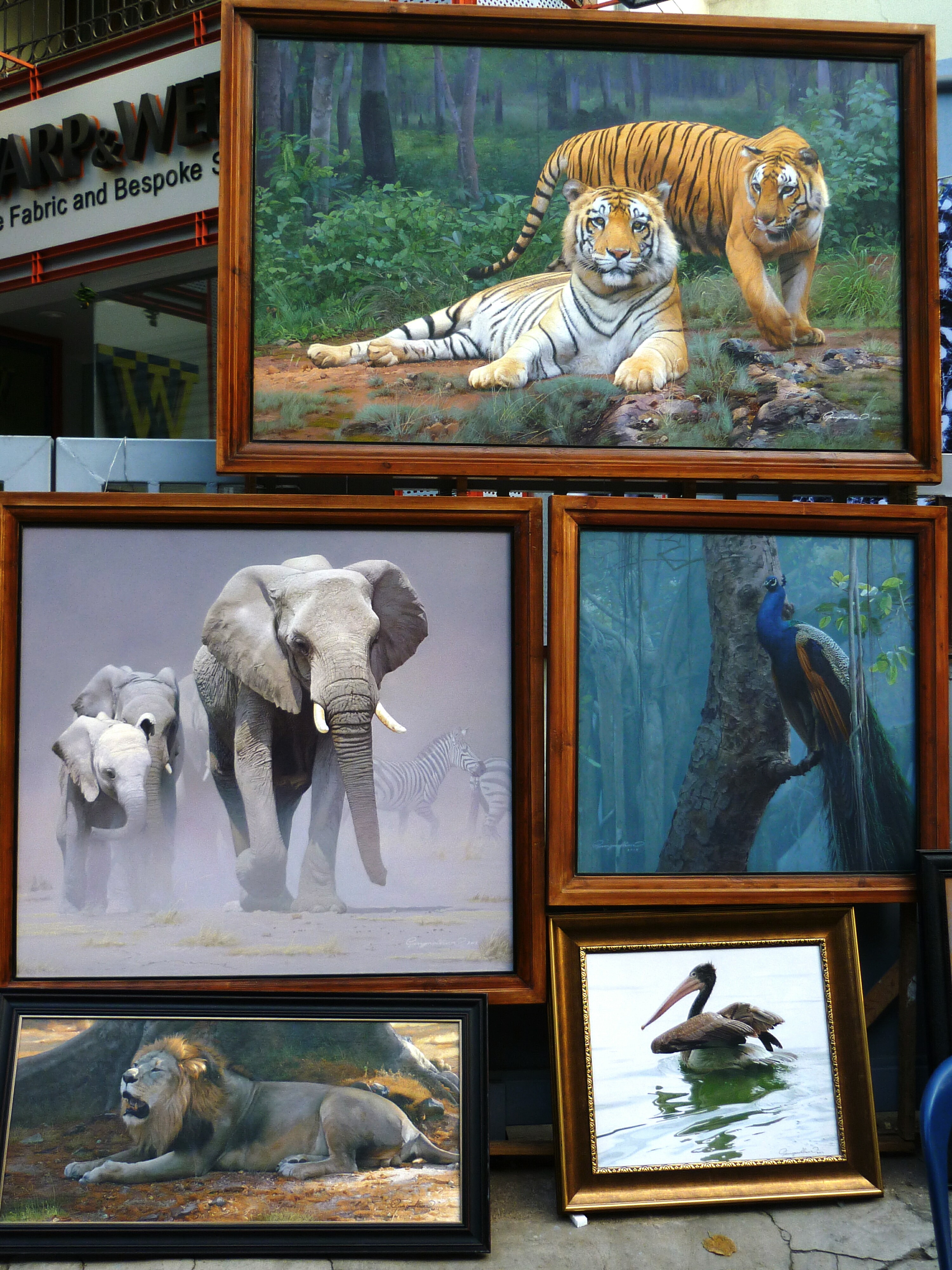
It has been a while since I did the local rounds as I have been tad busy on weekends with lot of get-togethers with family and friends. So to start the year 2017, I did not think twice to go solo shopping in the market. Typically, the one stop campo where all villagers come-together to trade grains, vegetables, cattle, clothes etc. is called a ‘Santhe’ in Kannada. But this was a unique market that sold only paintings (Chithra) of various artists who gather from around the country.
It is an annual event organized by the Karnataka Chitrakala Parishath on the first Sunday of January every year and is all about art in the form of paintings. Canvas, glass, paper, fabric, wood, plastic, beer bottles- you name them and you can find beautiful paintings on them being sold at this fair with products strewn on both sides of an entire road. KumaraKrupa main road and it’s cross roads would be choc-o-block from dawn to dusk with art enthusiasts pouring in large numbers.
From very modern styles of mass-media art to traditional Madurai and Mysore royal paintings, artwork of school going kids to Octogenarians to handicapped artists, celebrity portraits, wildlife, architecture, conceptual paintings- art lovers will be spoilt for choices. Although the artistic skill cannot be gauged with a price tag, things range from 50Rs. to 1lakh Rs. Per painting depending on the material used and time spent.
Wildlife paintings
This is not an event for the trippers who want to take a selfie and post on social media but a wonderful event for talented artists to get some genuine investors. A must go for the artist in you…
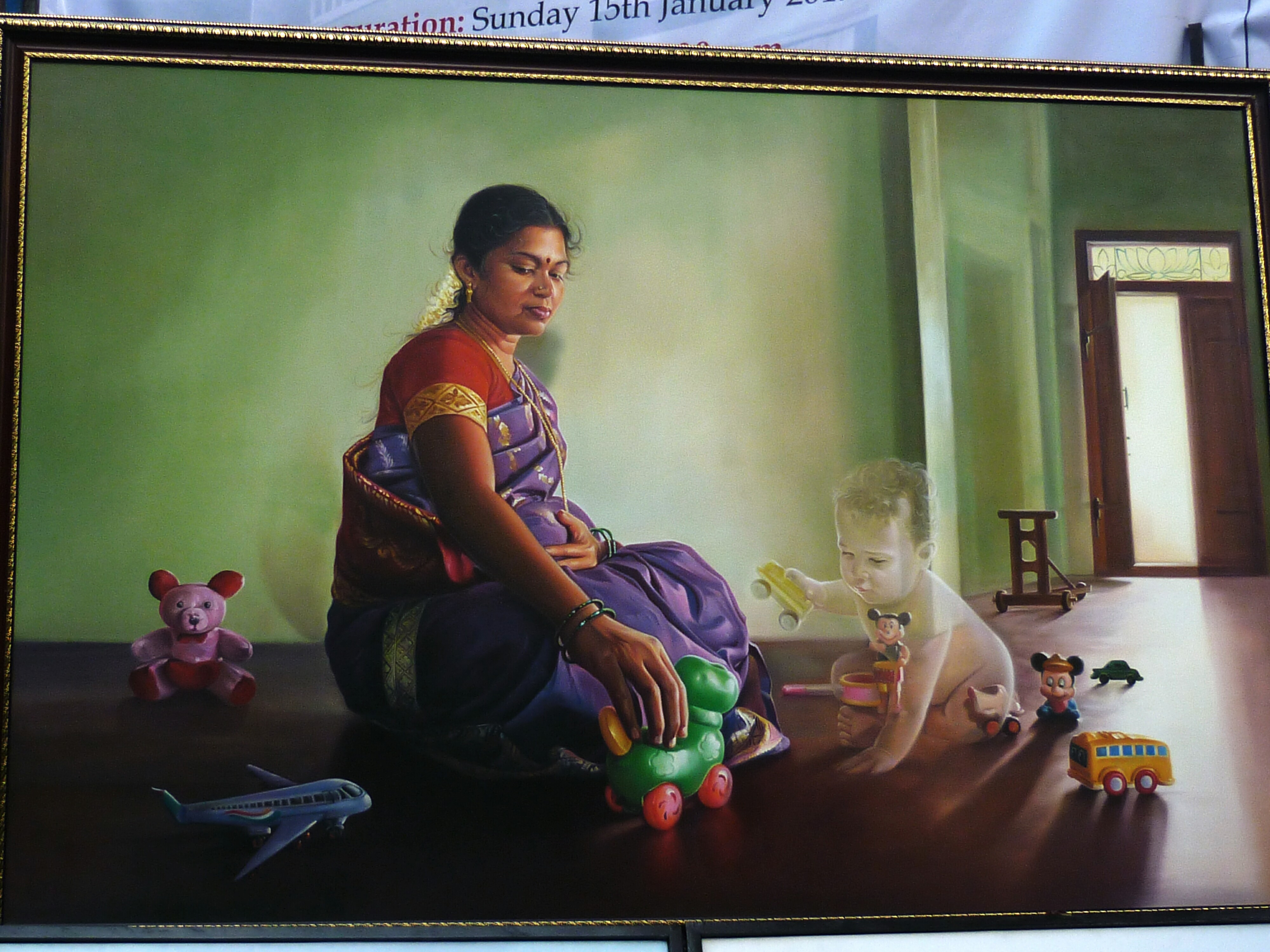
Finally, here is a life sized painting that I loved the most- An expecting mother playing with her unborn baby in the real world. Everything in the real world- the mother, the door and the toys have their shadow except the imaginary baby. The clarity in the artist’s thoughts about his subject has been represented with every detail in this picture looking so real.
PS: Do not reproduce any images as there is a lot of effort that has gone into every piece of art. #Respect
Have you been to ChitraSanthe? What kind of art do you like? What other art festival have you been to? Do let me know what was your favourite part of the visit to this annual market of art in the comments below.
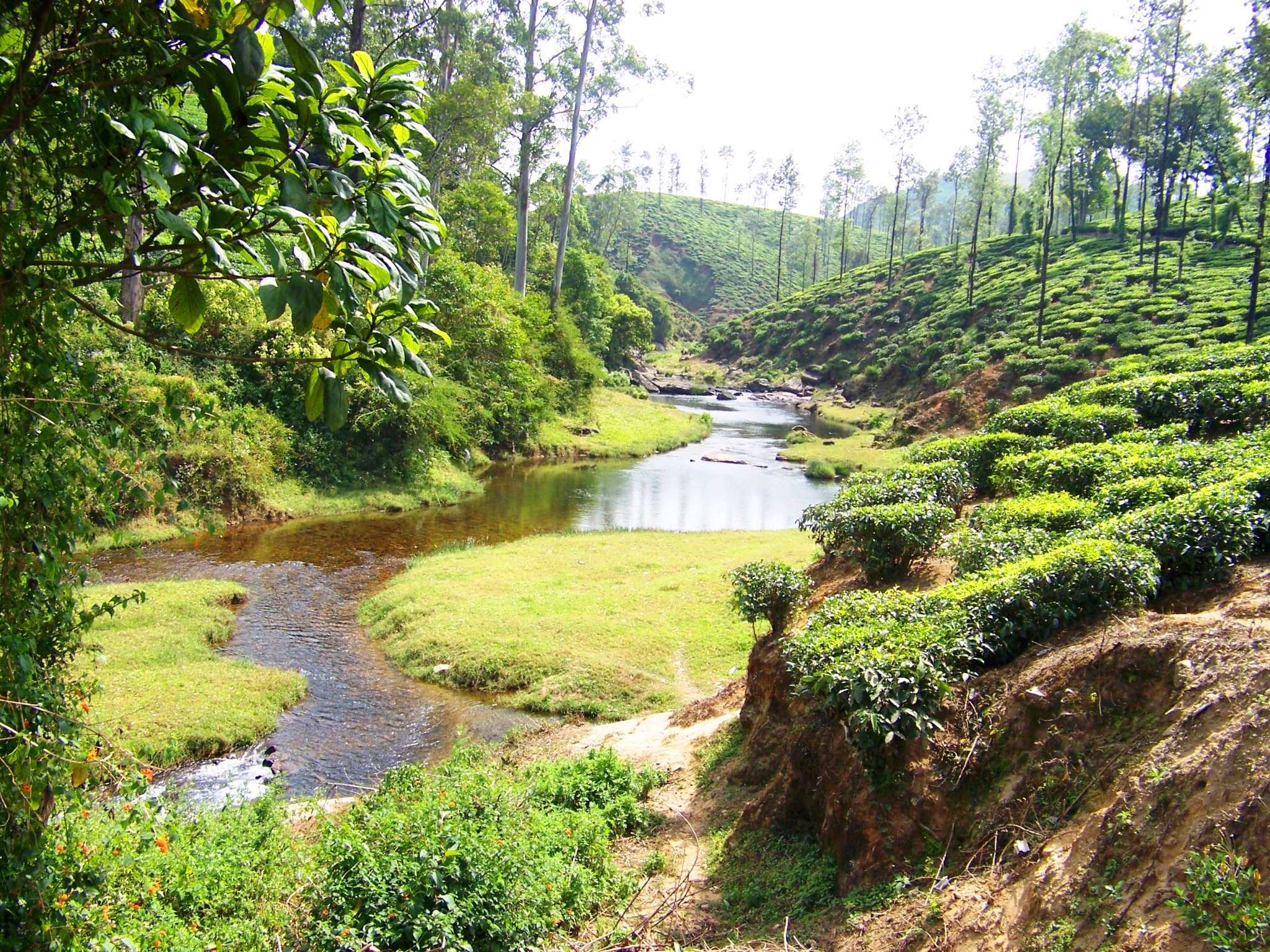
My friends and I had heard sufficiently about the rich wildlife of the region surrounding Pollachi, its beautiful sceneries and perfectly trimmed tea estates. Valparai is a lesser known hill station in the Indira Gandhi Wildlife Sanctuary (earlier known as Annamalai Wildlife Sanctuary). Kollywood stars and burnt out urbanites frequent this place to de-stress themselves and savor a slice of nature. Here, as one ambles past mud walled, thatched roof dwellings, granaries of farmers and tea estates fringed plateau, don’t be surprised if you happen to hear someone screaming ‘start camera’, ‘action’. This is a hot spot for movie makers with over 1500 movies and commercials having been shot here. And we too got lucky when we happened to visit the sets and share our homestay with the crew of the movie- ‘Madras cafe’ during this trip of ours.
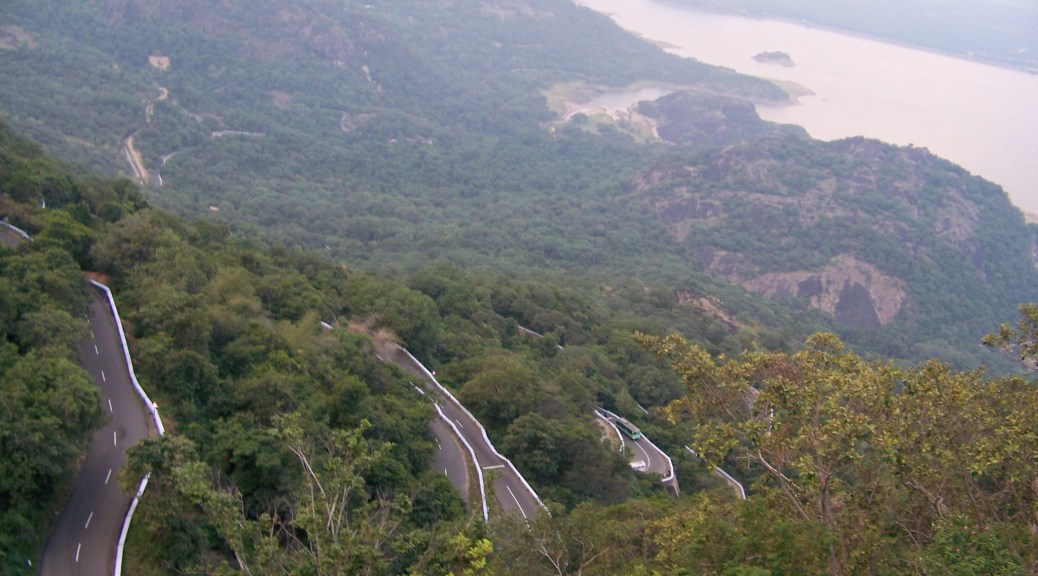
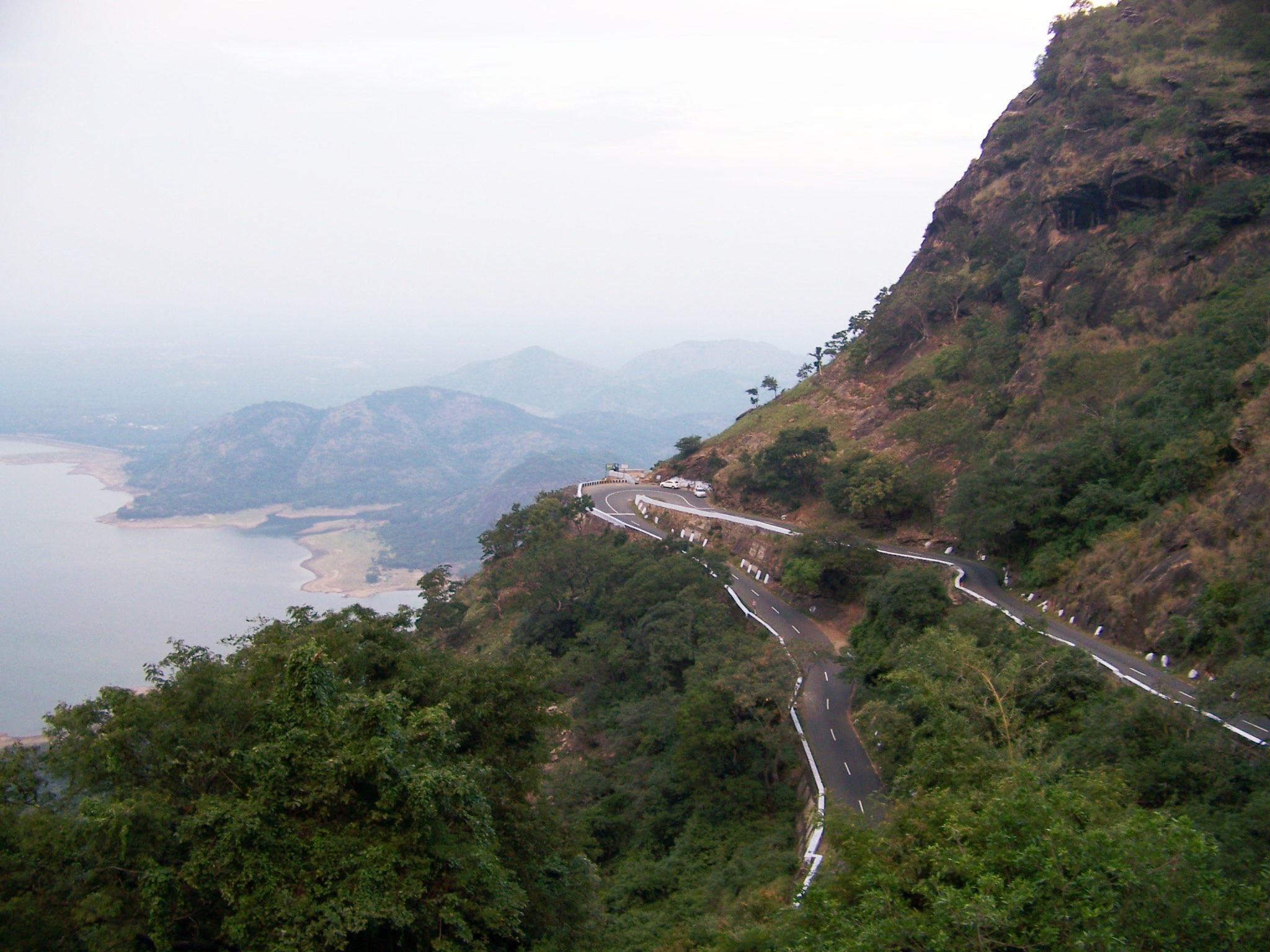
A weekend itinerary was primarily planned by one of my friends and a few must-see items were pushed into the plan by me. Since this place falls on the border of Kerala and Tamil Nadu, we decided to make it a three states’ drive including Karnataka. Accordingly, five of us started from Bangalore on a Friday night. Since it is also a bio-diversity hotspot, I had listed 5 animals on my ‘to-spot’ list while at Valparai. Valparai is the end destination after driving through 32 hairpin bends. Being a hill station, Valparai weather is specifically delightful with a cool climate throughout the year. It is usually the road leading to Valparai that is enjoyable with scenic vistas and photo-points. I had enlisted them with day 1 in the Tamil Nadu side of the sanctuary and then spending the second day on the Kerala side of the forested land.
Itinerary:
Day 0: Leave from Bangalore by night (Own car) Day 1: Reach Pollachi before sunrise. Backwaters of the Aliyar dam, monkey falls, Loam’s viewpoint, Carver Marsh viewpoint, Congreve falls, Vinayagar temple, Birla falls, Balaji temple, Iraichalparai falls, Nallamudi Pooncholai viewpoint, ChinnarKallar hanging bridge trek, Sholaiyar backwaters (night stay at a homestay in Chalakudy) Day 2: Athirapally falls, Vazachal falls and return to Bengaluru via Ooty.
The details:
Part 1: Tamil Nadu
During the night journey, I had dozed away on the rear seat of the car. When I opened my eyes to the misty morning dawn, our car was greeted by beautiful countryside with tree-lined roads, emerald fields of paddy, whispering palms and coconut plantations in the backdrop of the towering Western Ghats. We had reached Pollachi in Tamil Nadu. We waited near Aliyar park until 06.00.a.m. for the forest check post to open.
a. We registered our entry into the wildlife sanctuary there and proceeded on our journey. Our drive further towards Valparai, was an ascent along the winding road by the backwaters of the Aliyar irrigation dam.
View of the Aliyar backwaters
b. Four kilometers further from the forest check post, we reached the monkey falls. The waterfall is aptly named due to the many troublesome monkeys here. One even entered our car and happily carried away a bag full of fruits from the rear seat. Our drive continued…
c. Just as we approached the 9th curve (the Loam’s viewpoint), we were greeted by this gentleman who was calmly grazing on the edge of the steep rocks. We scored off the first member on our list of top 5 wildlife to see- ‘The Nilgiri Tahr’.
Nilgiri Tahr – Photo credits: Samson Joseph
d. Continuing our drive, we stopped at Carver Marsh viewpoint adjoining the Kavarkal estate. On a clear day, we were told that one can see the Sholayar reservoir (2nd deepest dam in Asia) from there.
e. We then cruised past the Tiger valley from where we caught a good view of the upper Aliyar reservoir.
At the entrance to Sholayar / Kallyar estates
f. We covered Congreve falls (located in the Nadumalai estate), Vinayagar temple (Jayashree estate) & Birla falls along the way up. We got good view of the Manopally forest and the grass hills of the sanctuary.
g. Ox-bow lakes situated inside the protected area is supposedly the highlight of this region for those who can manage to get permission from the forest authorities. We failed at it since we didn’t have insufficient information on the channels for the permits.
h. We visited the Balaji temple and the nearby Iraichalparai falls along way.
Just along our way, it was time to score off no.2: groups of ‘Lion tailed Macaque’ were walking all over the road and around. Even before we realized, we had reached the hilltop.
Lion Tailed Macaque- Valparai
i. We stopped by and trekked through the tea estates to reach the ‘Seen god shrine’ at the Nallamudi Pooncholai viewpoint. An old man, who claims to have seen god, blessed us with some prayers and turned out to be an encyclopedia of knowledge about the local culture and history. He explained to us about the various tribal settlements in these hills… pointing out at colonies, he would tell- Kadars, Muthuvars and Malai Malasars. They are estimated to have 190 households in 8 settlements in the sanctuary.
While we walked towards our car, the women picking tea shoots warned us not to proceed further. She pointed at a herd of 8-9 elephants feasting around at a distance, thus scoring off no.3 on my list.
j. We then drove to ChinnarKallar for the hanging bridge trek. In spite of driving all the way, we refrained from shelling out 250 Rs. per head just for the entry which sounded to us more like a bribe at the forest check post. This place is among the highest rainfall receiving areas in India. No doubt that the Valparai weather is pleasant all through the year and is an upcoming weekend destination among the urban crowd of the nearby metro cities.
We put our car in reverse and just then… no.4: Thegiant flying squirrel (a young one and wasn’t flying though) crossed our road. We were excited…!!
k. After covering places in the Tamil Nadu part of the sanctuary, we headed towards the Kerala border. We saw a calm stretch of the Koolangal river and decided to spend some time there. We could not compel ourselves from not taking a sip of its crystal-clear waters.
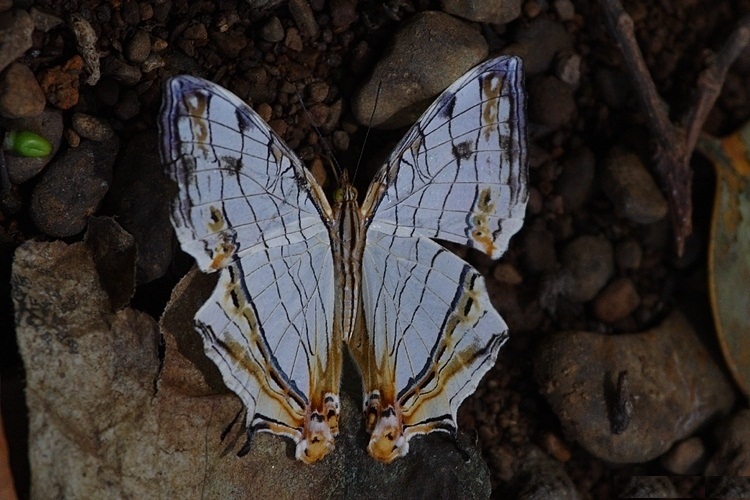
And right there. we saw this little creature on no.5: ‘The common map butterfly’
The Common map butterfly
Part 2: Kerala
We registered at the border check post and prepared to enter the Kerala land. Thick rainforests on both sides accompanied us all the way till our destination. We happened to drive through what I think is one of the dangerous roads I have been through. With the Sholaiyar backwaters on one side and a valley on the other side, only one vehicle can pass at a time. Beautiful views for most of the stretch kept us in an awe. Tunnels have been bored through the mountains to supply water to Parambikulam reserve from the Nirar dam.
We reached Athirapally reserve just after sunset. We got a quick glance of the beautiful waters cascading down to join the Chalakudy river. It was soon dark, and we checked into Maria cottage (a local homestay) where we were made us feel at home and served some sumptuous Mallu food.
Next morning, we walked past the palm plantations to reach the Chalakudy river to freshen up. This place is frequented by elephants at all times, but we did not care. We enjoyed the clear but rapids of the water there. We took a refreshing dip before returning to our homestay. We checked out of the place after having a good filling Malayalee breakfast.
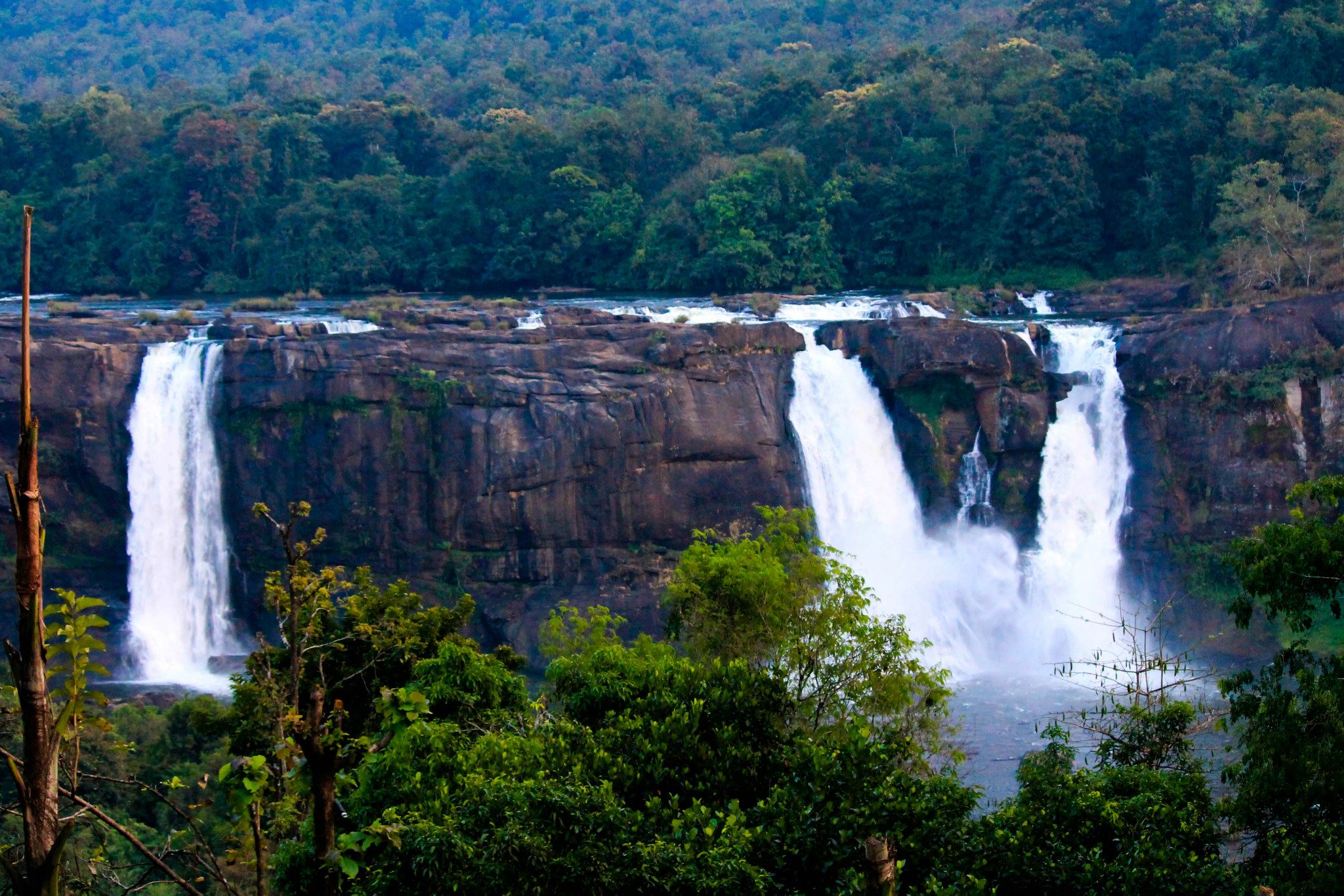
Post this, we went back to the Athirapally waterfalls. We walked down to the base of the waterfalls and spent good time there. We had to then continue our drive, as our target was to reach Bangalore by night. After a quick stop at the Vazachal waterfalls (it is more like water flowing down a steep rock than a waterfall), we decided to say goodbye to Kerala.
Athirapally waterfalls
Part 3: Karnataka
The original plan was to drive through the route covering Ooty-Bandipur-Mysore to reach Bangalore. But, since we were behind schedule, we could not reach Bandipur before the forest gates closed (the forest gates are open only between 06.00a.m. to 06.p.m.). So, we decided to drive back through the curvy stretch of Pollachi road again.
We further drove through Udumalpet which happens to be one of the windiest places in Southern India. Thousands of windmills dot the stretch on either side which is a sight to behold. It was dark in no time and we had to zip ASAP to reach our offices on the following morning.



















 The Lost Lander