All posts by thelostlander

Experiences from the Indian roads

A Weekend at the Land of Ramayana- Ayodhya

This visit to Ayodhya is a part of my fortnight long backpacking in the typical pilgrimage circuit of Uttar Pradesh covering Lucknow- Ayodhya- Faizabad- Varanasi- Saranath– Allahabad- Agra- Mathura-Brindavan– Fathehpur Sikri– Delhi

We were scheduled to arrive at the land of Ramayana- The Epic of Indian Mythology! Ayodhya is believed to be built by Manu, the first man on earth as per the Vedas. This land was the capital of Ikshvaku dynasty of Suryavamsha- lineage of the Sun, of which Lord Ram was the most popular ruler. Lord Ram has been revered as a symbol of a perfect man. Irrespective of religion, every child born in India grows up listening to stories from the Ramayana. Young girls grow with dreams of having a husband similar to Lord Ram. That said, it was no less a dream to travel all the way to the land where the greatest empire of all times existed, at Ayodhya.

Our Itinerary:

  • Day 1: Arrive at Ayodhya, Lakshman ghat & Saryu Aarti during sunset, boat ride in river Saryu
  • Day 2: Saryu Aarti during sunrise, Treta Ke Thakur, Ram ki Paidi, Nageshwarnath temple, Hanuman Garhi, Dashrath Mahal, Kaikeyi Mahal, Baal Ram Mandir, Dant Dhawan kund, Kanak Bhawan, Ram janmabhoomi, return to Faizabad.

The Details:

A small platform which ended even before the train made its 1 minute long stop, very laid back village scene and just 2 tracks with a yellow ‘AYODHYA’ railway board welcomed us as we arrived there by an afternoon train. An old man and his cycle rickshaw awaited us on the other side of the tracks. We told him our hotel’s name and he said 50 Rs. We hopped on to the cycle and our dream journey kickstarted!

It was as if the rickshaw was our time machine that took us back in time as it slowly inched through the main commercial area.. A typical rural setup. Dusty roads were flanked by old tenements on both sides from end to end. The rich embossings on the facades of each house was unique and gave us a sense of an era bygone. Each house enclosed a shrine from where the smell of incense had filled the environment. The main street had everything being sold in the stalls from colourful plastic ware, brass souvenirs, religious beads, clay articles et all. The Chai-wallas were busy serving their brew in clay cups and the Jalebi-wallas were spiraling the batter into hot oil. Fruit vendors did brisk business on carts.. Amid all this, the prayer chants of ‘Ram Siya Ram, Siya Ram Jai Jai Ram’ from the temples in the bylanes echoed in the air giving us the sense of a heavy atmosphere. There was so much character in this small stretch! Just as if we were woken up from a dream, our rickshaw halted and our driver broke the silence- “Madam, your hotel.” he said pointing out at a very modern building which looked very sophisticated for an otherwise laid back country side.

We freshened up and had a rather sumptuous meal at their inhouse restaurant. It was already sunset time and upon enquiring about the nearest sightseeing places, our hotel caretaker told us to head towards the ghats to catch the Saryu Aarti. We had to rush as the sun was nearing the horizon. While we were asking for directions and running towards the Lakshman Ghat, my friend and I stopped abruptly at a sight.. The first glance of the Ayodhya that we had heard about, as kids. A visual treat that looked straight out of a fairy tale. ‘This is AYODHYA, Man!” we both blurted in unison. The oblique rays of the setting sun added a glorious gold to this Royal beauty. Although the structure is relatively new from the 19th century or so and not the original Kingdom that Ram had spent his days at, we stood there dumbfounded for a couple of minutes. After taking an eyeful of it, we walked towards the Lakshman Ghat where the Aarti was about to begin. We hitched a boat ride across river Saryu and back, from where we watched the aarti. Upon return to the river bank, we took a rickshaw to the Hanuman garhi main road to get our dose of kulladwala chai before calling it a day.

IMG_20170307_070712
Our “The AYODHYA view” at Lakshman ghat

Next day, we woke up early to reach the ghats for the aarti during sunrise. Post that, we took a walk along the chawl photographing the artistic friezes. We explored the inside streets and the several temples inside those ancient tenements. Treta Ke Thakur, Ram ki Paidi, Nageshwarnath temple are all in this surrounding. We got talking to several residents both Muslims and Hindus and they all seemed excited to share what Ram meant to them. For some Lord Ram was a brother, for some a father and a son for some.. A curious family from the chawl even invited us over to their house for breakfast and took us across the fortress to introduce us to their relatives.. We were deeply moved by the innocence and simplicity of these people. We then bid a warm goodbye and headed towards the heart of the town..

From there, we reached the Hanuman Garhi, an important temple built on a fortified walled structure high above the ground level. Lord Hanuman is believed to have had kept a vigil on Lord Ram as a kid. A man offered to guide us around other important temples around the place. Some being Dashrath Mahal, Kaikeyi Mahal, Baal Ram Mandir, Dant Dhawan kund among the important places out of the 7500+ temples that are believed to exist in Ayodhya. Some of these places accepted donation towards the construction of the Ram temple. One’s name would be then sculpted out on a tile or a block of stone which would be used in the construction of the temple, that the localites were hopeful would be built someday, soon.

Kanak Bhawan was the highlight of the places with its architectural beauty. This structure is said to have been entirely plated with gold (Kanak) back when Kaikeyi had gifted it to Sita during Ramayana. A board on the wall explains the evolution and modifications done over different periods and by different rulers who ruled Ayodhya. We attended the aarti at noon before heading towards THE PLACE!! “Ram Janmabhoomi”.

Being one of the MOST controversial areas in India, we had to deposit all the things in a safety locker including watches, water bottles, cameras- basically everything before entering the premises of the birth place of Ram! Rifle armed commandos guarded the entire area. We had a long queue and four rounds of frisking to really get there. Women guards frisked us in really uncomfortable places and it was a strange experience to go through, inside our own country. I was made to throw away even the vermillion I had kept in my pocket from the Hanuman Garhi temple because they couldn’t trust me on carrying random powder.

With all the embarrassment, uncomfort, tiredness in the scorching sun- when we finally made it there: I did not realize that it was Lord Ram’s birth place. The King of Ayodhya!!! Small idols of Ram, Sita and Lakshman were placed inside a Swiss tent as if the trio were still continuing their vanavas in the Kaliyug. Off-beat camping in a deforested jungle. I had still not come into belief that this is how India’s mythological hero was treated in his own house. I burst into tears and I didn’t have a reaction. I went berserk for a while until my friend calmed me down.

We couldn’t visit the Ayodhya research centre which has lot of information collected from across the world about Ramayana and the holy land of Ayodhya. Mani Parvat on the outskirts is another place I would suggest if you have time which gives a good view of Ayodhya. Although a 20Rs. per head ride in a tempo can take you to Faizabad, the district headquarters; I would recommend you to take a 1000Rs. boat ride along the Saryu which will take you to Ram Ghat at Faizabad for the evening aarti.

Summary:

My entire stay here has been a great one with both Hindus and Muslims coexisting and helping me get around the place. Never did I feel the communal rife. It is one BIG political ticket for easy votes and in interest of no social harmony. Like really!! When there is Ali in Diwali and Ram in Ramzan, do we really need to fight in the name of God??? The question needs to be pondered over…

Fact file:

Must buys: Chillums (clay pipes), handmade religious cotton carry bags.
Must dos: Get a glance of the Ramayana trail on the India map at the Ayodhya research centre, boat ride from Lakshman ghat(Ayodhya) to the Ram ghat (Faizabad)

The not so Holi- Festival of Braj Bhoomi

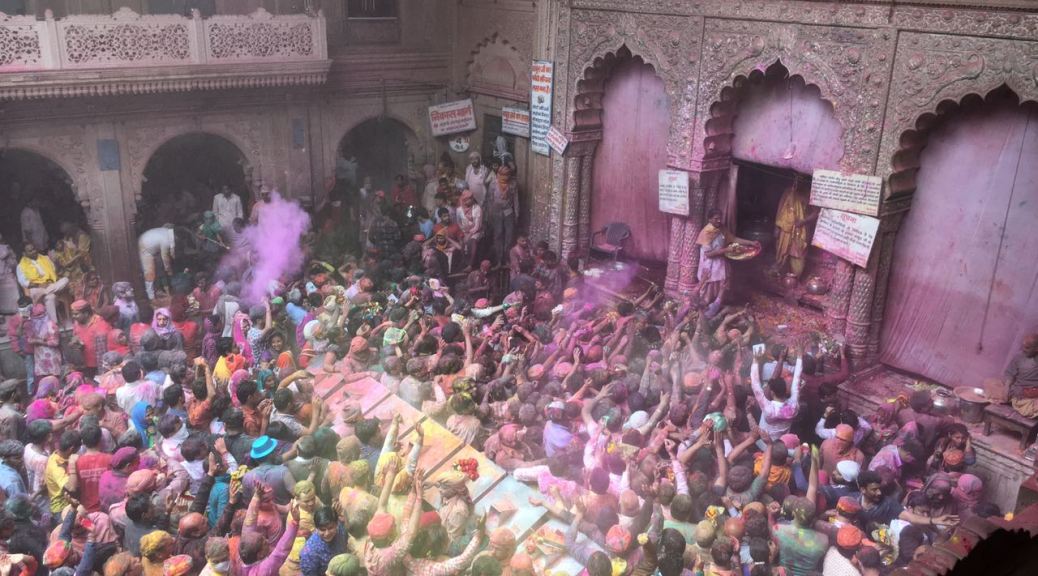
Holi is Big in Northern India and the most beautiful in the Braj Bhoomi- the Land of Lord Krishna. Festivities start a week in advance with Lath-mar Holi in Barsana and Nandgaon, phoolonwali Holi (Holi played with flowers) and Widow’s Holi in Vrindavan, Huranga at Baldeo and Holika dahan and Rangowali Holi at Mathura and Vrindavan are some of the major parts of the festival. Articles, blogs and photos are all over the internet about how beautiful this celebration is and the fun of participating in the festival of colours. Deeply inspired, a two week trip was planned through the state of Uttar Pradesh whole-ly, to soak in the festive fervor of Holi.

This visit to Mathura is a part of my fortnight long backpacking in the typical pilgrimage circuit of Uttar Pradesh covering Lucknow- Ayodhya- Faizabad– Varanasi- Saranath– Allahabad- Agra- Mathura-Brindavan- Fathehpur Sikri– Delhi

As per plan, we reached Vrindavan to spend the last two days of Holi- the main days and get coloured in different hues of Gulal. The plan was to reach the hotel, change to clothes that we had kept aside specifically for Holi and then go out to the areas where the colours were being thrown at. However, the entire town was already painted with colours by the time we arrived in our delayed train. A samaritan helped us get an e-rickshaw so that we could reach our hotel. The rickshaw had to squeeze its way through the crowd that had already gathered out on all roads. By the time we reached the hotel, we started to feel miserable about having wasted our leaves and having travelled all the way to Mathura from Bangalore was a big mistake. It was very unfortunate that our experience of the famous Vrindavan Holi was no-where close to fun. Although we were inside the rickshaw, we felt more vulnerable to getting coloured than the rickshaw itself. Goon like mobs would specially target people who were new to this kind of celebration. I had atleast 4-5 men together hold me by my head inside the rickshaw and colour my face. Few others even pulled my scarf and shawl to ensure that every inch of skin was coloured. No! It was not a pleasant way to welcome guests to a new place!

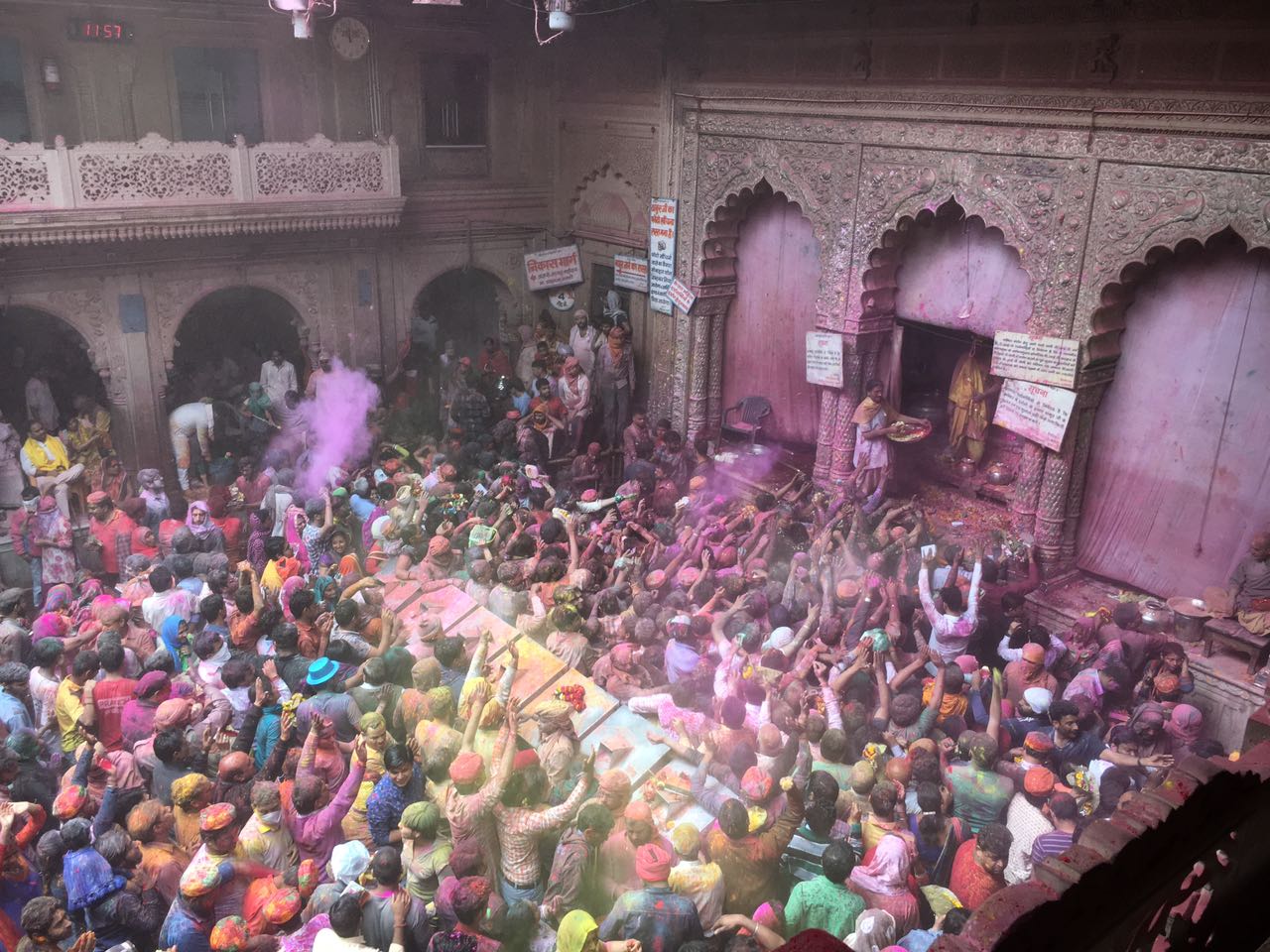
Banke Bihari temple in Vrindavan is where Holi is best celebrated with the priests throwing colours at everyone. On the day of Choti Holi, although we managed to go to the temple, we were drenched in wet colours. Leave that, our faces, hands and every bit of skin was chapped because we were smeared either with coloured cement or sand. This mixture is a norm and hurts like hell when it is being thrown at. We somehow managed to catch glimpses of Holika that were being burnt in some interior corners of the town. Women folk had gathered around effigies placed in the middle of firewood, food grains, vegetables and all other important things required for burning the pyre. We were colour soaked till the bone by the time we braved the task of reaching the safe confines of our hotel doorstep amid all the cemented colours and sand. Taking pity at our plight, our hotel incharge asked us to stay indoors the following day, as the last day could get wilder.

Finally, the main day of our fortnight long trip had arrived. But, we could barely think of venturing out on the streets on the day of Rangowali holi. Since our hotel was located in the main city area, we set our chairs out in the balcony of our room on the 3rd floor and watched the frenzy on the streets. It was disappointing to watch the Rangowali Holi turn into an event of Kheechadwali Holi (Holi played with water from the drainage). This kind of celebration can give the worst memories especially for girls and foreigners while goons attempt with ruthless amount of coloured glass powder. It can affect your eyes, skin, blood vessels anything! On top of it all, people are sloshed in Bhang and one cannot be sure of what’s gonna happen next!

Really, I’m not exaggerating the displeasure; the festival of colours is exaggerated through good photography by the photo enthusiasts who are all mostly male. I’d bet you not to plan your Holi trip to Braj with a bunch of girlfriends or with anyone who is new to this area. I strongly recommend you either plan on the day of Phoolon wali Holi or be a part of a private Holi celebration at a friend’s place amidst known crowd. This trip to Mathura has left scars of ir-repairable displeasure and sadness!

IMG-20170311-WA0001
The Banke Bihari temple Clicking credits: Gowtham Shastry

A roadtrip in the coffee land- Karnataka

There’s a proverb in Kannada, “Hitlu gida maddalla” meaning ‘We don’t recognize the medicinal value of plant that’s lying in our backyard’. True to this, I have been traveling and writing about beautiful places from across the country.. And suddenly I felt that I had left out to explore places in my home state itself..!! We just wanted to have a rough theme before we hit the road. What was fitting well in the time available was the coffee tour!

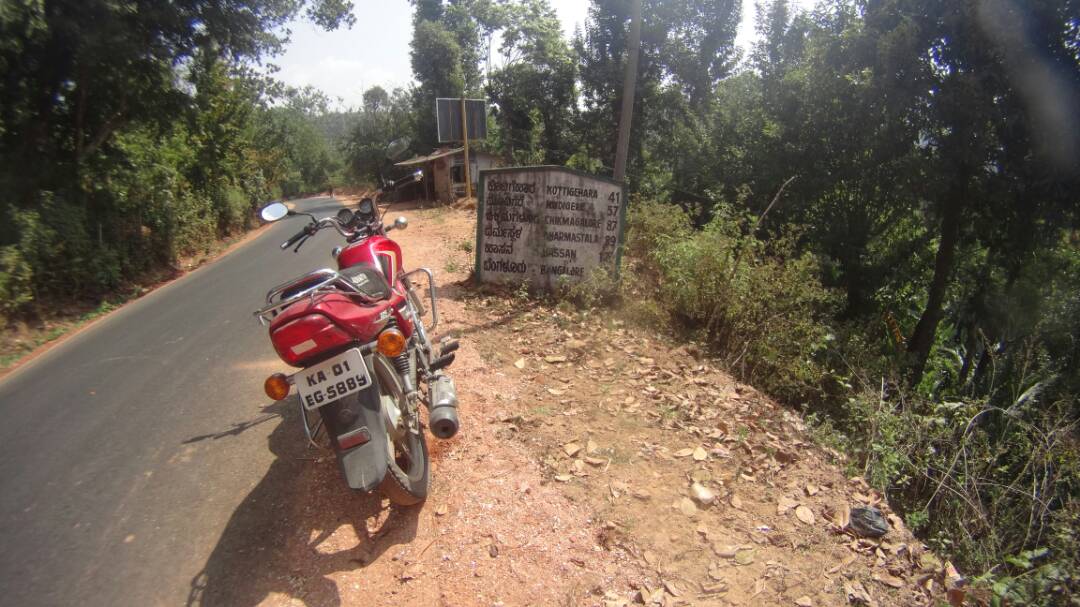
Karnataka produces about 51% of India’s coffee and it is all on the southern stretch of the Malnad region. The coffee grown here is highly priced in the international market owing to its better flavor as it is grown under the shade. That’s it, my brother and I pulled out dad’s bike from our cellar and decided to hit the road for a long weekend covering the entire stretch of coffee belt in Karnataka. Unlike cars, we won’t have the luxury of having a spare wheel in a 2-wheeler. Inorder to get our 125CC, 4-stoke, single cylinder, 10 year old boy running smoothly, it was necessary to give him a fine pair of CEAT tyres that could sustain our long ride on different terrain. So finally, here we go.. Our road trip along the coffee belt on the western ghats.

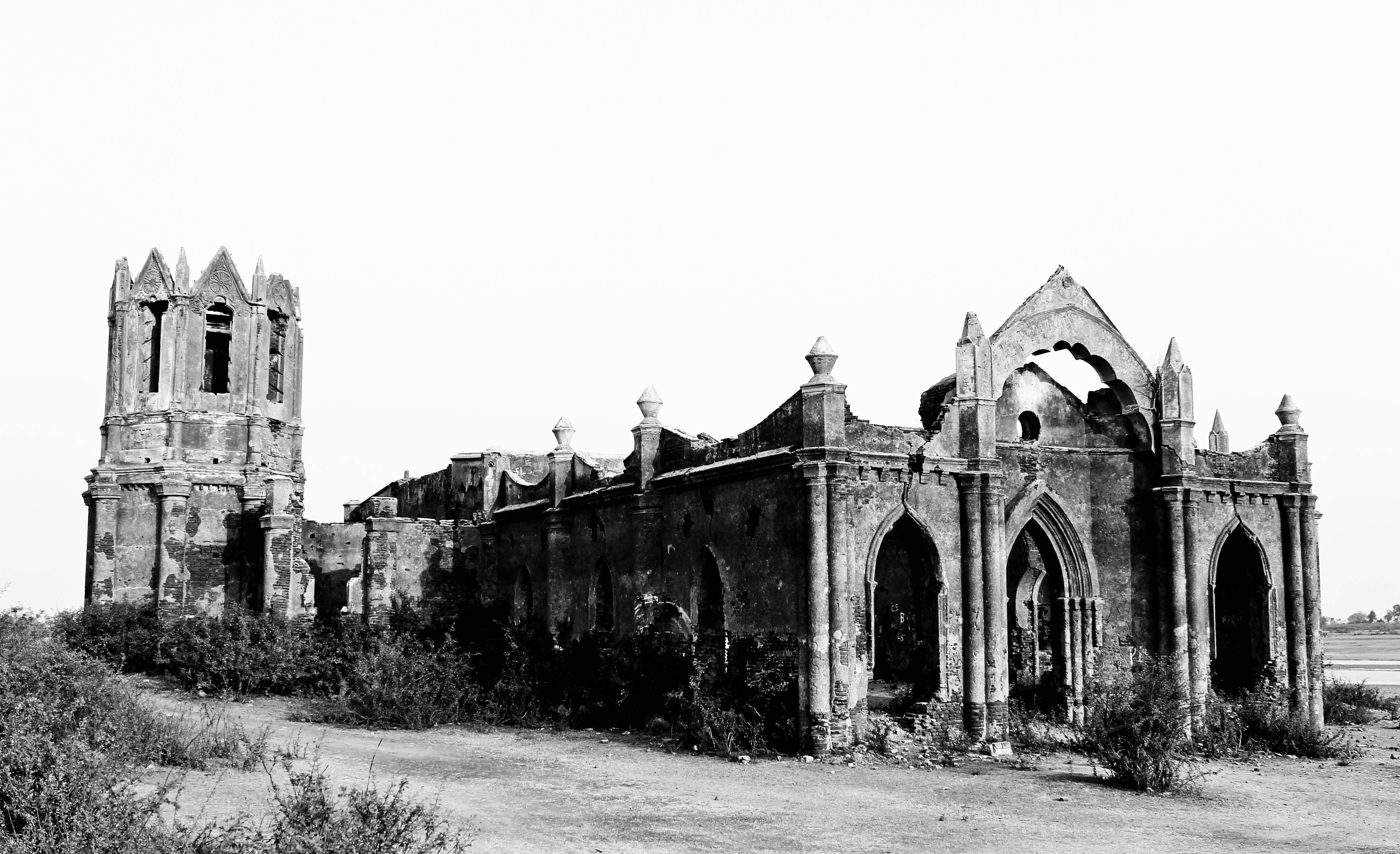
On a January weekend, we rode through the finely maintained NH- through Nelmangala and Kunigal. Our first coffee stop was to sip on some caffeine from the Hassan plantations. A simple hot cuppa at a petty shop before a deviation to Shettyhalli was all that we wanted. At a distance of about 20kms from Hassan, the Rosary church at Shettyhalli stood testimony to time and silently narrated a story of a painful past. This church emerges out when the water levels in river Hemavathi recede as if playing a game of hide and seek. We spent some time admiring this architectural beauty and trying to reconstruct it’s glorious past through our imagination. We left Hassan after a sumptuous lunch at a friend’s house located in the middle of a coffee estate.

IMG_0087-2
The Rosary church at Shettyhalli. Clicking credits: Samson Joseph

As we passed through the winding roads of Chickmagalur, we were reminded that the hillstation is the birthplace of Indian coffee. Bababudangiri range is the place where coffee was first brought to India and the plantations flourished. Mullayangiri, the highest peak in Karnataka is a hotspot among trekkers. Also, being the native of the famous chain- Café Coffee day, we couldn’t help but stop over for a cup of cappuccino.. After having our dose of caffeine, we continued on the road for our night’s stay at Sringeri.

IMG-20170424-WA0010
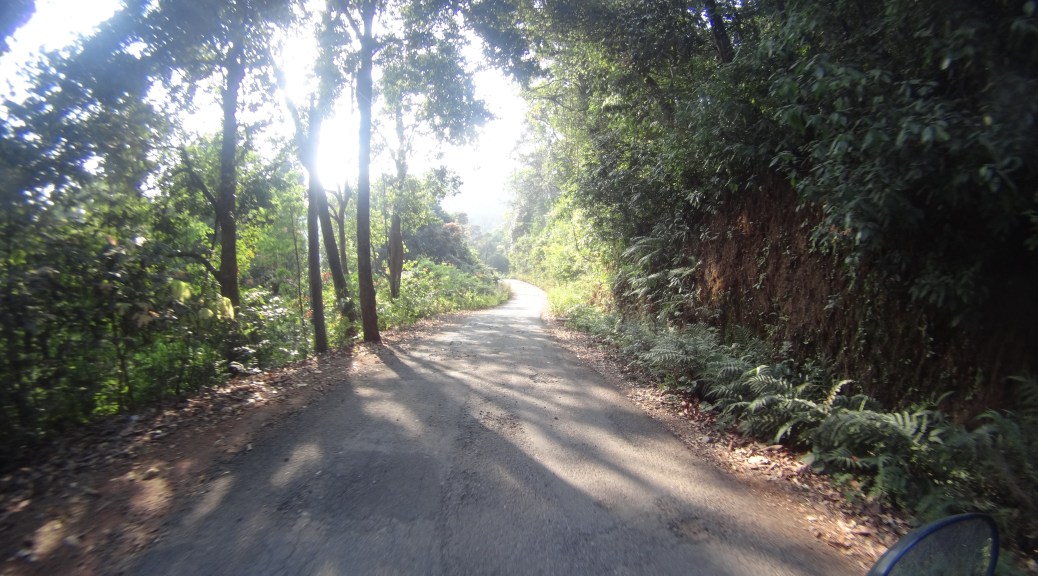
Enroute to Chickmagalur

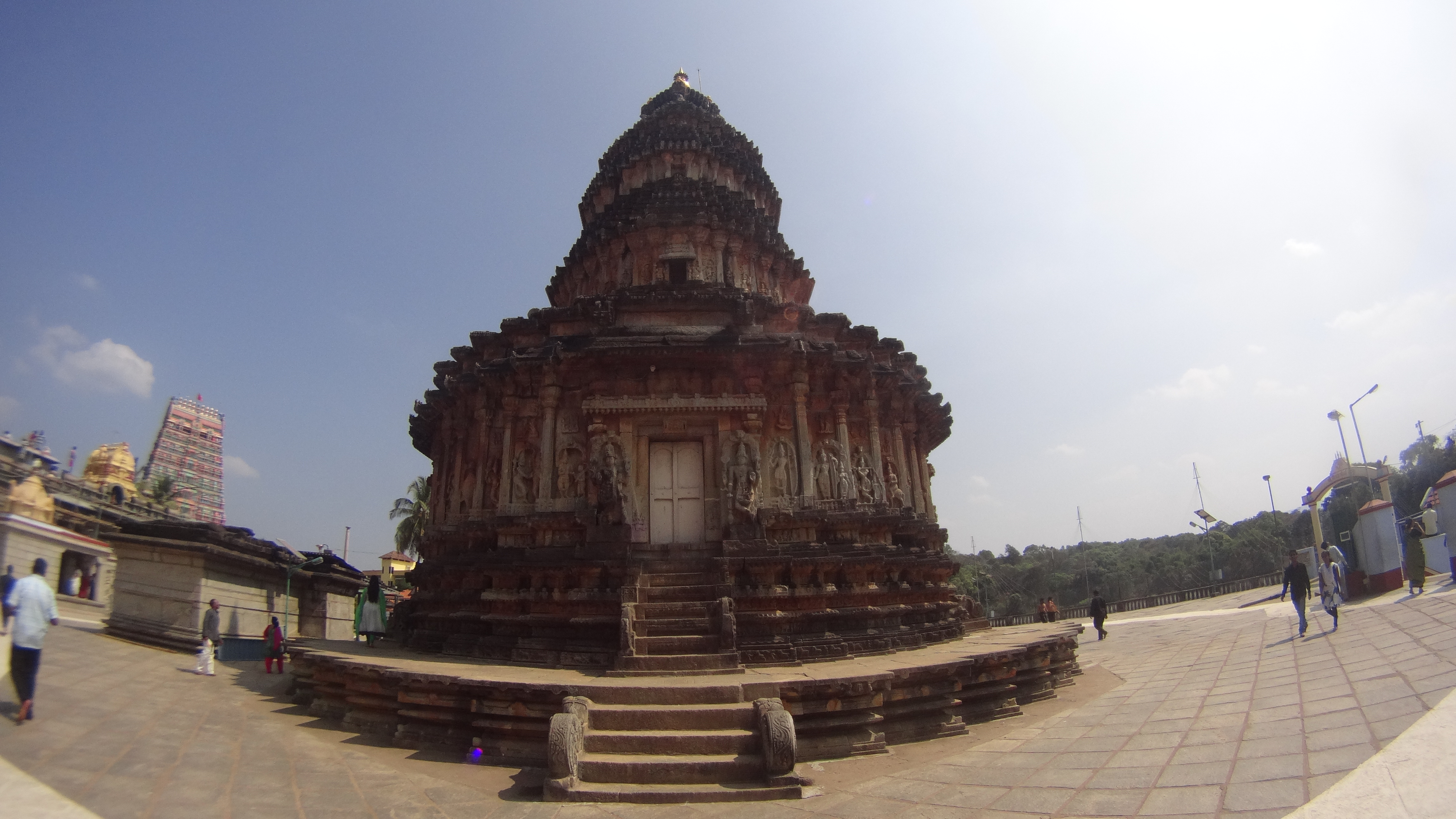
Next day, we set out to explore the pilgrim town of Sringeri. The Sharadamba temple is one among the 4 main Mutts established by Sri.Adi Shankaracharya. The Vidhyashankara temple on the same premises is a beautiful structure built in a combination of Hoysala and Vijayanagara style of architecture. After a small ride, we stopped by at Sri Rushyashrungeshwara swamy temple in Kigga, locally called as the God of rains. The route to our next destination- Sirimane waterfalls was a pleasant one passing through thick jungle on either sides, once notoriously famous as a haven of dacoits. Narasimha Parvata and Meghebaile waterfalls are other places of interest for the forest bums. However, we decided to spend the remaining time whiling away on the banks of river Thunga feeding the school of fishes with puffed rice.

210
The Vidhyashankara temple at Sringeri

We started early the following day as we had a long route to cover and the BEST stretch of our roadtrip. We arrived early at the Kalaseshwara temple and enjoyed the serenity and oneness with nature that Kalasa town had to offer. The Breakfast served at the Annapurna temple happens to be one of the best prasadams and there was no way we were going to miss it. So we had to speed our way towards Horanadu, before the food counter closed. We then had to do a small off-roading which took us to a place of Ultra Calm- Javali in Mudigere Taluk, the birthplace of river Hemavathi.

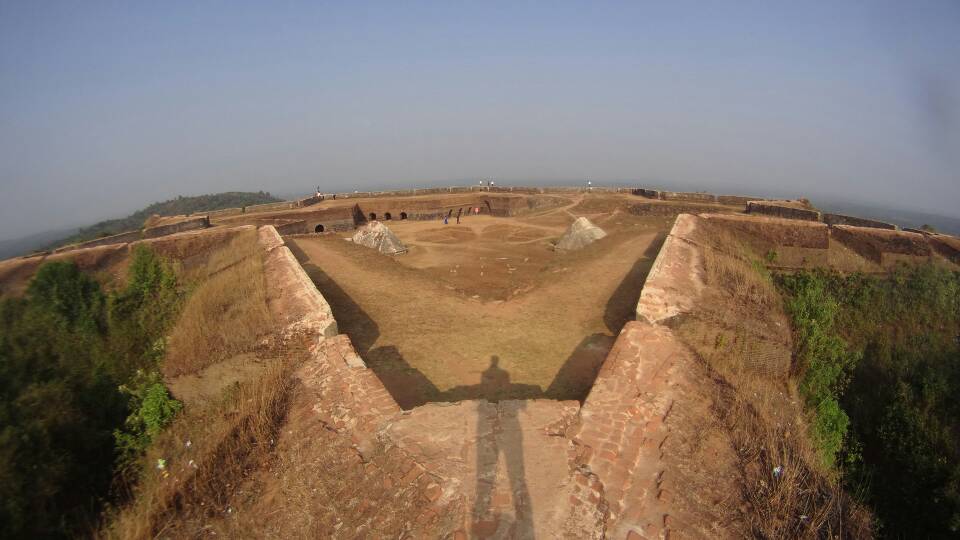
After a refreshing break, we headed towards the next coffee hotspot. It had been an awesome ride so far and time to get our caffeine fix. We parked our bike at one of the stalls put up with a bare table and a stove serving banana fritters and our dose of Sakleshpur coffee. We then climbed up the stairs to reach the beautifully located and strategically built Armory of Tipu Sultan- Manjarabad fort. It is a multi-walled star shaped fortress and worth photographing for an aerial view. Having Shiradi ghat and Bisle ghat in the vicinity, the view from the fort is amazing!

IMG-20170424-WA0005
The Manjarabad fort

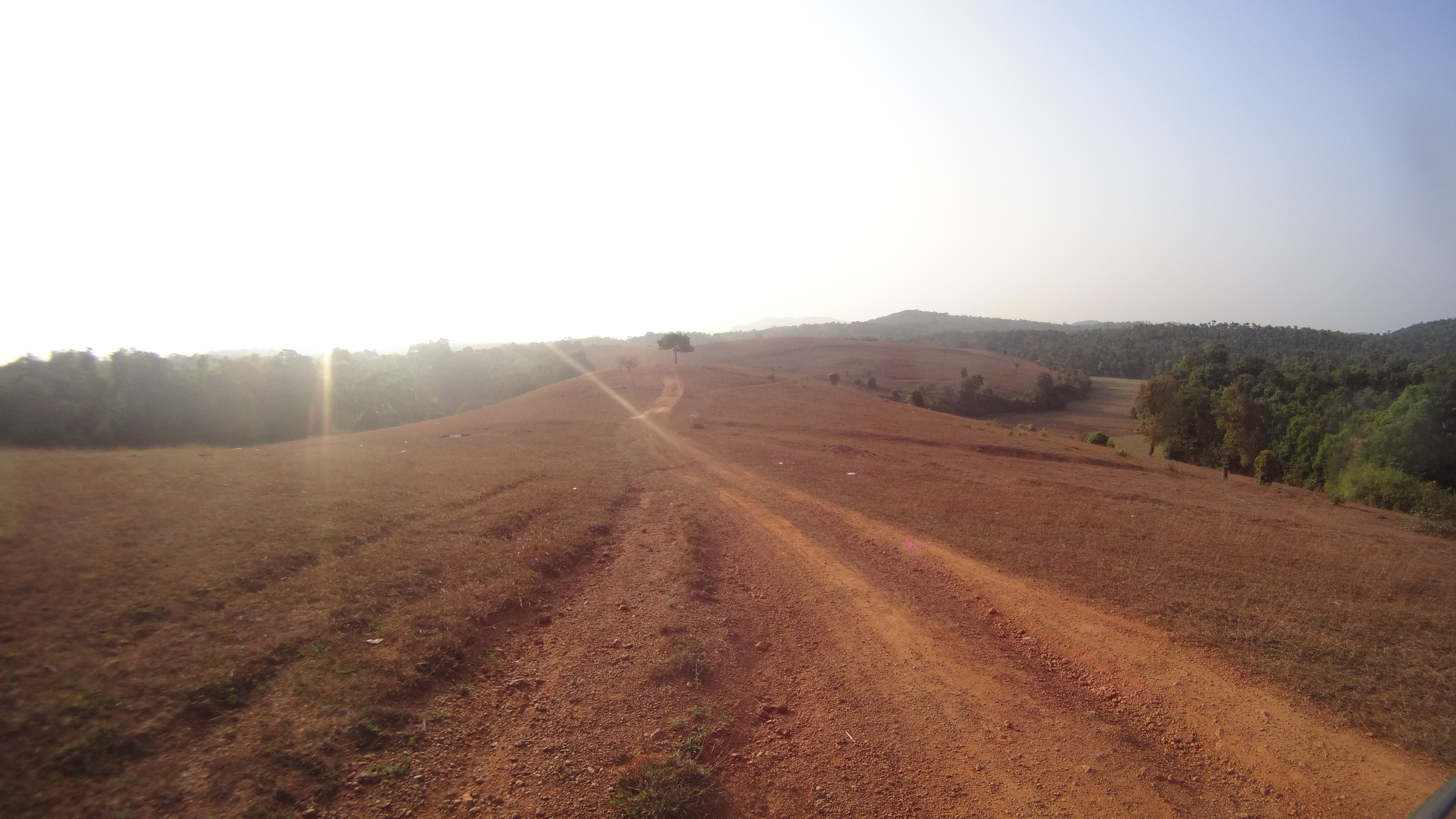
The ride has been brilliant so far and we stopped by for a picture of this solo tree standing in a serene place.

671

As we continued to enjoy our ride further, god decided to add in a tinge of adventure. We lost our way and we missed a deviation.. So that’s when our CEAT tyres were put into real test. We were scared of having lost our way and running on low battery on our mobile phones during our off-roading tryst. However, we were fortunate to reach the main road that ran parallel to our wrong road. Astonishingly, we later got to know that the official name of that road was ‘Kundu-Rasthe’ which literally means ‘Pot-hole road’ in Kannada.

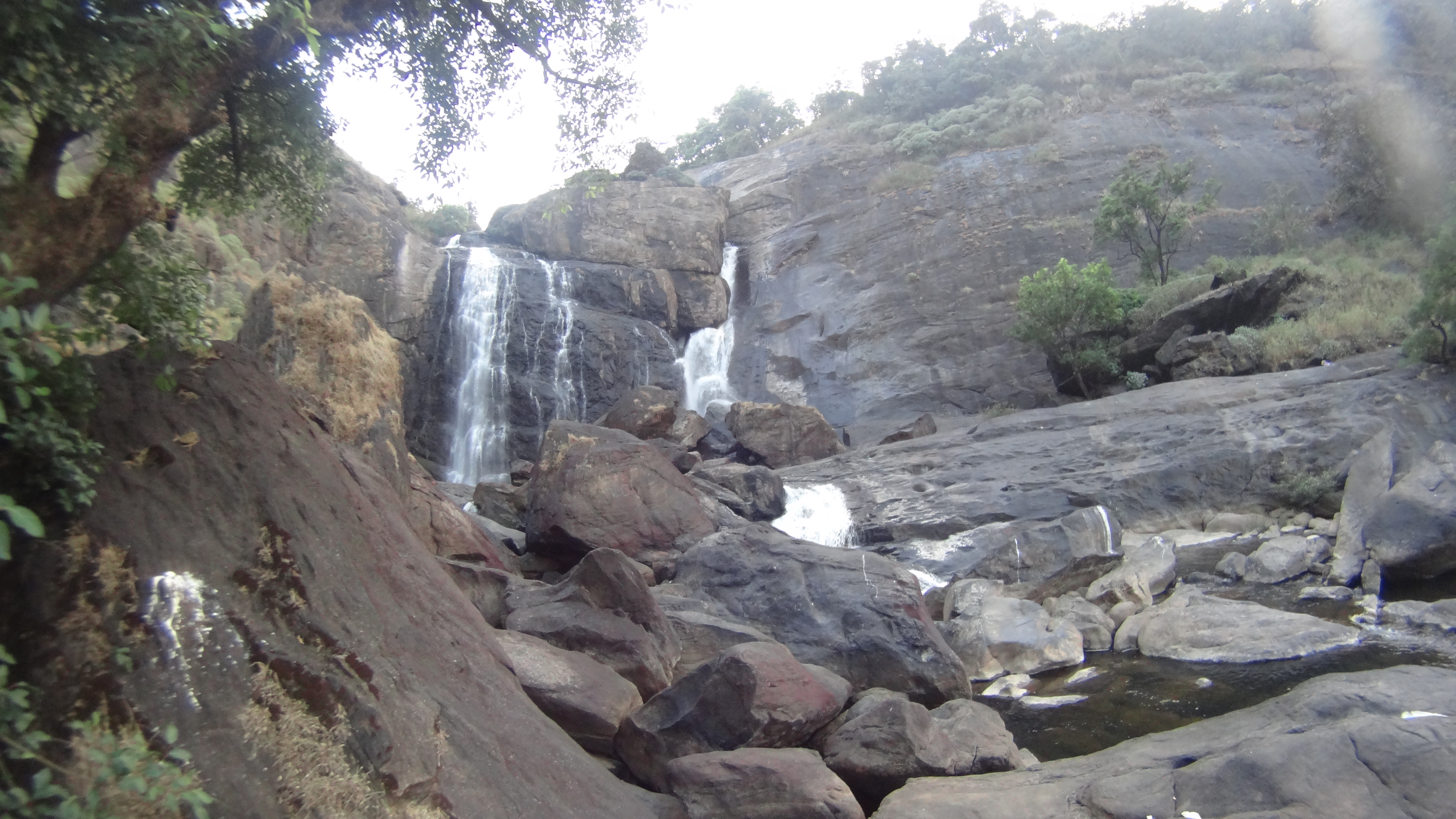
The sun was already setting and we were the last and the only people in the middle of no-where, walking down the stairs towards Mallalli waterfalls. The place was drop-dead deserted by the time we reached there. We hurriedly clicked some photographs and rode for a short coffee break at the last part of our coffee trip, entrance to Coorg or Kodagu district. Interestingly, we passed through several small towns named after the days of the week when the weekly shandy is held. Shukravarapete, ShanivaraSanthe and Somwarpet were among them.

706
The Mallalli falls

So it was past 07.00.p.m. when we finally reached our ancestral home at Madikeri town. And there was no better way to be greeted at home and end the long trip than having a sinful brew of Bella kaapi of Coorg. That said, our ride on the coffee belt had come to an end.. We rode on excellent national highways, state highways and stretches with no roads.. I must mention that coffee kept us awake and the tyres kept us on track and it was a wonderful experience.

Summary:

It is not an expensive car / bike you need for a wonderful trip. An efficient engine and a pair of reliable tyres is all that is required if you have a zeal to conquer the roads.. Bring it on and enjoy the ride!

Request to all riding & driving enthusiasts:

I myself work for an automobile manufacturer and my roles include attending to quality issues of seats & airbags. I have seen tests performed on dummys for evaluation. Trust me, it is insane to imagine the impact of not wearing seat belts.

  1. Seat belts alone can reduces the risk by 60% in case of a collision. In most cars, the airbags don’t deploy unless the seatbelts are worn as they are inter-connected for the electrical system to identify the seat occupancy. So buckle up and ensure all your co-passengers too have!
  2. Helmets on the other hand reduce fatal accidents by up to 60% avoiding severe head injuries. So, please invest on a quality assured helmet and strap it properly for your own safety and DO NOT look out for any cash savings by picking the one’s sold on roadside.

You may be a safe rider/driver. But you don’t know that stranger on the road.. Remember, someone is waiting back at home for your return. Please follow safety rules for their happiness. This is the least you can do!

The journey through Uttar Pradesh State Elections- 2017

This post is part of my fortnight long backpacking in the typical pilgrimage circuit of Uttar Pradesh covering Lucknow- Ayodhya-Faizabad- Varanasi – Saranath- Allahabad- Agra- Mathura- Brindavan– Fathehpur Sikri– Delhi

I’m not a political person and I don’t prefer blogging about something that can spark a political row with my writings.. But, this one goes here because I want to narrate the election campaign as seen through my eyes as a traveler traversing through a state where the election fever had hit hard! One of the most awaited elections of the country and an important one for the current ruling party of the state to prove their influence.. Uttar Pradesh State assembly elections!

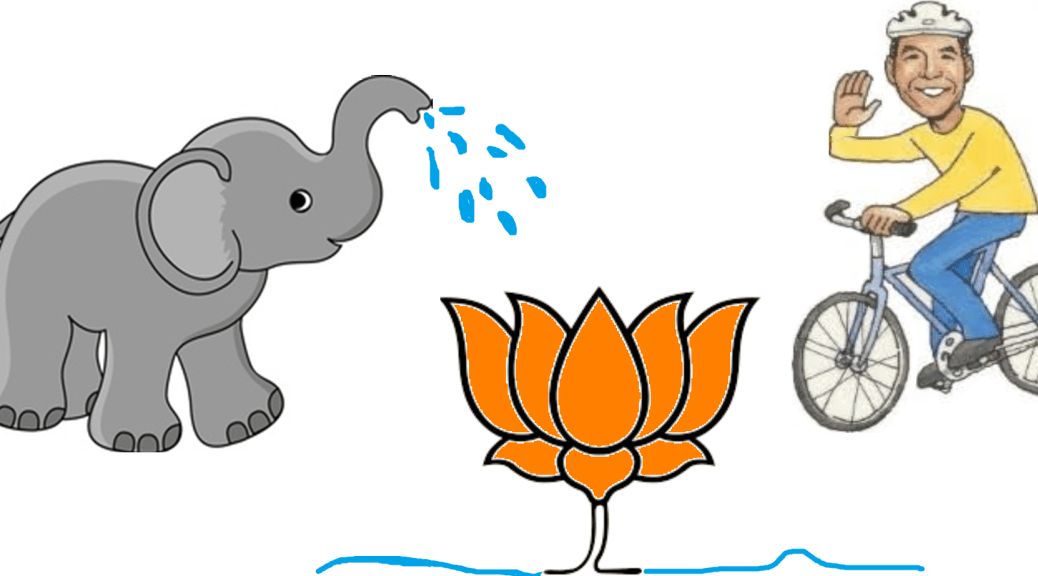
Firstly, we were roaming the streets of the state capital- Lucknow. One fellow told us, “There were elephants standing at all corners and across all streets, then the cycle lanes were laid. Neither the elephants nor the cycles did any good to the city. Unemployment is an evil left over by the previous governments. Ours kids are struggling in the slush. Let us give a chance for the lotus to bloom.”

Moving ahead, we were temple hopping at Ayodhya. A local boy offered to be our guide. We were amused with the stringent security checks and the big political drama directed by man in the name of God. Just as we were talking among ourselves, our guide blatantly told- “Don’t worry, you will not have to go through all this when you are here next time. ModiJi aayenge tho sab theek hojayega! (ModiJi will resolve everything)”

The following day we were at Varanasi, the Lok Sabha constituency of Modiji himself! It was election day when we arrived there. The security was tight and with very less traffic, the spiritual city was a sight. That said, we went for a boat ride along the Ghats of the Ganges.. Explaining the history and significance of each ghat, our boatman rowed the vessel forward. In between he said- “Do you see that structure up there? Modiji aayenge tho uss Masjid ka samasya ka hal mil jayega (The issue around that mosque will be solved if Modiji wins), pointing at a mosque that is a subject of historical controversy.

It was 11th March: The D-day.. We were travelling to our next destination- Allahabad. The counting of votes was in progress and the poll trend was being aired by all news channels.. The customers in shops and hotels were glued to their TV screens.. Our fellow passengers were lost with news updates on their smartphones.. The driver and conductor of our bus caught up every now and then to get updates on the running poll trend.. Clearly, curiosity and anxiety were the only things in the air.. Everybody was discussing about who or which party would win the elections. We caught up with a conversation with our oarsman while being rowed to the confluence. He was casually talking about how he had left home to find a better job but later returned back to his family with the grace of mother Ganges et all.. And in the event, he told us that, “Mother Ganges gets more polluted on her journey forward through Banaras. But, Let us give a chance to Modiji, Ganga Zaroor Saaf hojaayegi! (Ganga will definitely become clean)”.

It is a very tough deal to commit for something as big as this, given the various religious, cultural and sentimental dimensions linked to everything that requires a change. These were not just hopes, It was an assurance given by the BJP.. It made me realize how just one man has changed the way common man looks at politics.. At any situation, we must stick to the basic morals of being an Indian- Secularism is the beauty of India! Exhibit ‘Unity in Diversity’ because the nation needs us.

And in between all the frenzy, we were waiting at Faizabad junction for our night train to Varanasi.. A train with no display board thugged slowly on Platform no.1. In the next few minutes, we were amused by looking at the platform. It was crowded with the men in uniform till as far as our eyes could reach on both ends. We saw arms and ammunitions being stacked up on the pavement and dedicated men with rifles guarding them. In a time where the entire nation was celebrating Holi, it was a strange but an overwhelming event to watch so many personnel from the armed forces who were there on duty. I hold very high regard for the defence personnel who guard us regardless of time and place. I had goose-bumps for having been in the midst of all this action. I couldn’t contain my anxiety and spoke to one of the men, while a couple of others joined in. We were told that they were from the Border Security Force (BSF) and had travelled down from Srinagar for security reasons during the state elections. That gave us an idea of how massive and sensitive the event of elections in UP is for whom, things are a lot peaceful and easy back in our home state- Karnataka.

Coming back to politics, declaring the party leader / Ministerial candidate before elections is a normal way to attract votes from the public based on various other parameters. In contrary to this style, having fielded no chief ministerial candidate; the BJP (Bharatiya Janata Party) has managed to win the great battle with just the name of one man- ModiJi! A sweeping victory of 325 /403 votes that has pushed the entire nation into amazement. Now, that the lotus has bloomed, whether the fragrance of the flower or the stench of the drainage would spread is left for the citizen to watch..

My hotel nightmares in India.

The long list of places I’ve travelled to and stayed at have given me a new insight to life and a new outlook at seeing life through.. The journeys have been enriching and the stays have added a new dimension to the travel. From five-star luxury to shoe-string budget hostels- I’ve stayed there all. While the pleasant ones were many, there is its own share of hopelessly aweful places. So here are a few ghastly and horrendous stays I have opted for during the course of my Indian discovery.

1. It being a pleasant season in the holy town of Rameshwaram, we had checked into a decent non-AC lodge at noon. After freshening up, we went out for sightseeing and returned to our room post dinner. We unpacked all our girly goods and let most of our wet lingerie strewn out for drying. It was around mid-night and I was just about to fall asleep and my friend Madhu screamed out loud. HECK! I jumped out asking what had happened. She switched the light on and started to pick up 1,2,3.. Bedbugs! She was allergic to them and the rashes had spread across her body. We spoke to the hotel manager and he arranged for an alternate room which he claimed would be good due to A/C facility. While we moved in our luggage and shut the doors, my friend lifted the bed to just reconfirm that everything was alright. Alas! More bedbugs were partying around the hemline.. We ran to the reception and asked them to give a permanent solution. They somehow managed to arrange a room in a nearby hotel after having themselves confirmed the room quality. So the next thing we were found doing was- Two girls walking the empty streets of Rameshwaram at well past midnight with half zipped backpacks, untied shoes in our feet, wet lingerie hanging out of the luggage, random plastic bags on both hands and anxious faces searching for a place to spend the night.. It was almost dawn by the time we settled down in the alternate accommodation provided.

2. We can’t blame anyone for this one- there was nothing else for us to expect while being stranded in the middle of a winter trek and the night temperature at 25 below zero!! We were at Leh town in Ladakh. No plumbing would work in that part of the world in that season for obvious reasons. We found ourselves in a homestay where we had to fetch water to do our daily chores. We had to break through the frozen layer of ice just so, that we could get half a bucket of hot (warm) water from the bottom of the same drum placed on fire. The bathroom waste was collected in containers which would overflow now and then making us want to throw-up very often.

3. The overly broken plumbing of the Chidambaram lodge is something that tops the list. It was a place that changed my mind to cutting-short my week long trip on just the 2nd day and making me want to go back home ASAP.. As if the stench from the nearby gutter, the smell of alcohol from the adjacent rooms and the super dirty bed covers weren’t enough, the washroom was moss covered and the faucet rusted as if it would break if operated… And to top it all, We stepped on someone’s barf that was spewed up on the stairs.. YUCK!! This has really given me strong reasons to have apprehensions towards online hotel booking based on guest reviews..

4. This one was a highly recommended budget stay option at Panchgani. It used to be a school hostel until being converted to a hotel which has hosted several movie shoots in the past. After hearing positive reviews, we two girls were surprised to find that the property seemed rather deserted when we arrived there. We were the only guests and that too on a weekend.. Although the room seemed decent for the tariff quoted, we still had some apprehensions for being the only people and our safety.. Just when we were in the process of decision making, both our eyes were caught by some strange thing just a little outside our hostel room.. Some white fur like stuff hung out of a large boiler sort of an equipment. We kind of panicked and asked the warden what that was. He told us it was a water boiler and the hard water had deposited along with some insulating material on the top. It definitely looked strange and scary. We did feel that it was a dog inside the boiler and it was their long furry tail hanging out of the barrel.. If it was our imagination, it is so not possible that both of us had the same thought.. We stared at each other and rushed out of the place without any further discussion..

5. So after a nightmare-ish pursuit of an accommodation, we finally checked into a hotel that evening at Panchgani. Everything was fine until my friend came out running from the bathroom. When asked what happened, she anxiously pointed out at the bucket placed under a running tap with a blood red liquid! The bucket was half full already with what seemed like blood.. I ran down to the reception and they came upstairs to check for facts from our bathroom :p They realized that it was rust particles from the overhead metal tank and pipes due to hardwater being constantly heated. We were somehow convinced with the explanation given, but I had no courage to continue to bathe in that water. However, to our rescue the water from other taps seemed to have a normal colour and we completed our basic chores…!!

Summary:

Do not suggest hotels, places and dishes/food to anybody. The choices and preferences vary from each person based on their character, mood, budget etc. Avoid being blamed later!

The last Indian village on the Meghalaya border- Dawki

We were bowled over by the beautiful plains of Bangladesh, the view of our neighbouring country from the rest of Meghalaya! So, the thought of driving over to actually see another country from close quarters made us very excited. The innumerous blogs about the crystal clear waters of the Umngot river and the boat ride with the emerald green backdrop kept us on toes until we were finally there.. Dawki is the last village on the Indian border and Tamabil on the Bangladesh end. This is a friendly stretch and an important trade route between the two countries with limestone being majorly exported across borders. We were driving there from Cherrapunjee. Dawki is located in the Jaintia hill district of Meghalaya. During our interactions with the locals, the cultural difference of the Jaintia tribes was clearly felt by us who had spent many days in the Khasi hills previously.

This post is part of my fortnight long road trip across North-east India, specifically covering parts of Meghalaya – Assam – Arunachal Pradesh I had tagged along with two other travelers and drove around the state of Meghalaya in a self-drive car hired at Shillong. The places visited in Meghalaya include Shillong – Smit – Cherrapunjee – Mawlynnong – Dawki – Ribhoi- Shillong.

The details of our trip:

A mesmerising stretch of green mountains on one side and a deep valley with thick fog settled hills, accompanied us all the way till our destination. Based on a friend’s recommendation, we stopped by on the way to find a small board that guided us to Byrdaw falls. The road got narrower and isolated as we drove further. After passing through very thick forest, the road ended abruptly. Although we were a little apprehensive of the route ahead, I forced my friends to walk down. We continued to walk through what looked like some poorly maintained plantations and seemed more like a forest infested with some bandits where we could be held for a ransom. There were no signs of any water source or a stream that would eventually lead to a waterfall. But, I insisted to continue to follow a flight of well laid stairs that finally led us to a view that has us awestruck. It was a magical view, to define nature’s beauty that was infront of us! There stood a 3-tiered waterfalls, through which we could walk through enjoying the serene location from the waterfall’s point of view, quite literally! My friends thanked me for having them got there!

p1140144
Byrdaw waterfall

We then drove over to where we were destined to reach for the day.. It was a slow route thereon, with several loaded trucks heading towards Tamabil. Suddenly, the blue waters of the Umngot river appeared from amid the trees with the rays of the setting sun reflecting back at us. We were overjoyed at the sight! To get to the other side of the river, we had to cross the narrow steel bridge, that is declared weak and over which only one vehicle is allowed at a time. There were at least 50 trucks ahead of us in the queue and so, we patiently awaited for our turn.

It was dark by the time we met our guide ‘Mr.Bright Star’ at Dawki town and followed him to where we were supposed to camp for the night. Bright Star drove his car ahead of us and guided us through the eerie looking terrain carved though mountainous limestone. There was no asphalt and no streetlights, with only thick creepers hanging down the high rise limestone walls. It was more like an offbeat off-civilisation drive for over 5kilometers into nowhere, until we braked at our destination: Shnongpdeng.

With our backpacks and camping essentials, we walked down a small valley with torchlights. We then pitched our tents which we were told was on the river bank. The night was spent in absolute peace under the clear starry sky and some burning wood by the side that kept us warm through the night. Apart from the three of us, it was just the rustle of the flowing water and our guide’s dog for our company.

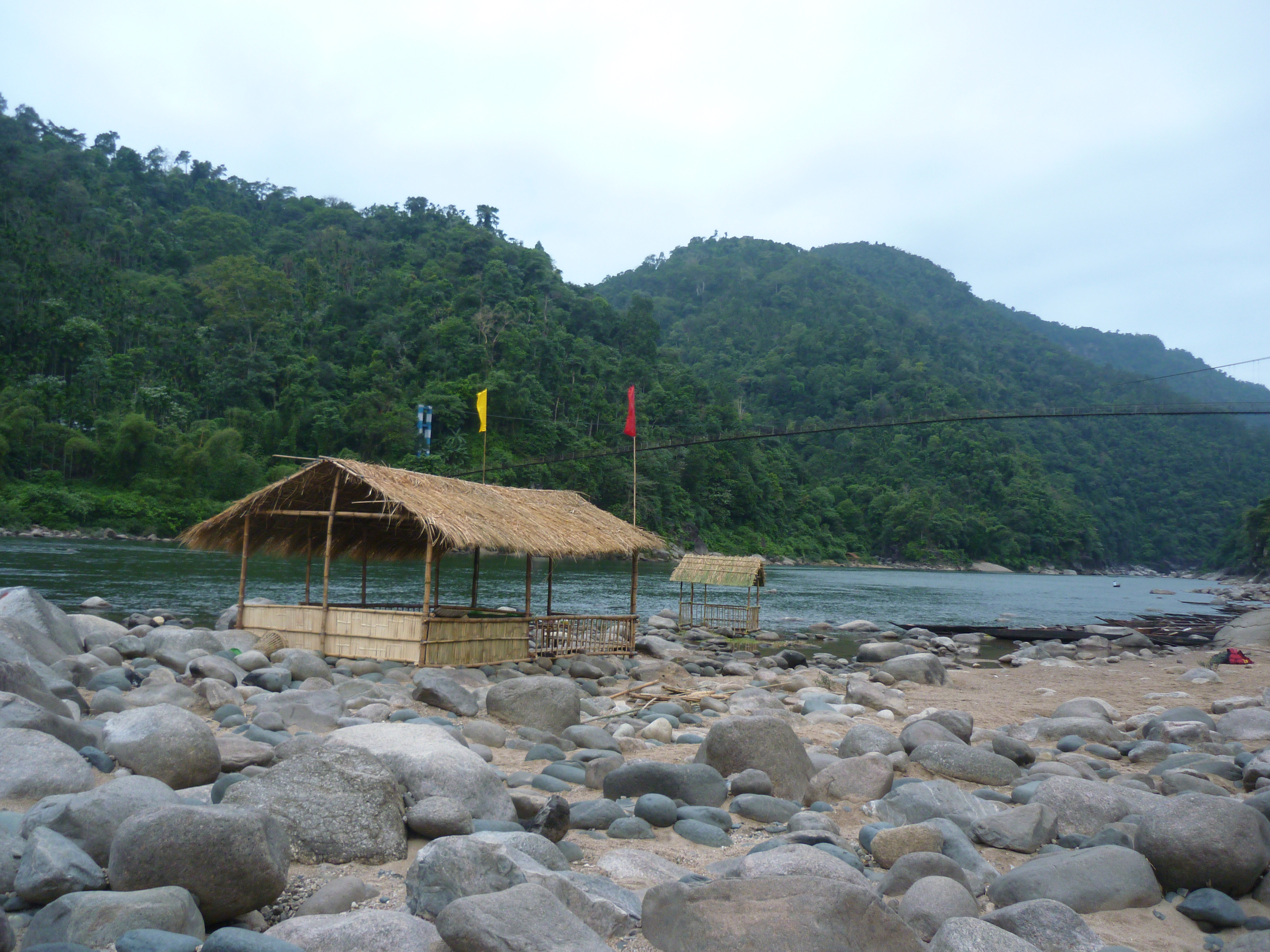
I was awakened early on the following morning and I unzipped my tent with the first ray of the breaking dawn. That’s where my heart skipped a beat with what I was seeing! That’s when I actually realized that we had stayed on the river bed all night. The swiftly flowing river, the rich never-ending stretch of green forest cover, rounded rocks of different colours strewn all over the place seemed to have put up a piece of heaven right infront of our tents. A couple of bamboo shacks and a long suspension bridge added to the beauty of the setup.. We then met Mr.Mickey, our oarsman who rowed the boat along the rapids of the river. We wanted to catch the sunrise from the popular view point and get back to our camp before the tourist crowd poured in.

p1140153
The view from my tent

Although the beautiful landscape kept us motivated, the ride was rather taxing. We would board the boat and sail in it along the calmer stretch and then get off the boat and walk when we there were rapids. This on-and-off continued in multiple cycles. But then, it was all worth it at the end.. We could enjoy the pristine beauty of the place right up, close and personal.

Momentous 100%
Our boat being pulled in the rapids

After a filling breakfast, we packed our stuffs and continued to travel towards Jowai with a stop-over at the Tamabil checkpost.

Concluding remarks: Dawki is a very laidback place blessed with natural beauty. It is very disheartening to see tourists flocking in thousands everyday which will not surprise me if in just five years down the line, Umngot river would be nothing more than a stinking slushy pool of water left back as a memory of abusive tourism.

A piazza of paintings- ChitraSanthe

It has been a while since I did the local rounds as I have been tad busy on weekends with lot of get-togethers with family and friends. So to start the year 2017, I did not think twice to go solo shopping in the market. Typically, the one stop campo where all villagers come-together to trade grains, vegetables, cattle, clothes etc. is called a ‘Santhe’ in Kannada. But this was a unique market that sold only paintings (Chithra) of various artists who gather from around the country.

It is an annual event organized by the Karnataka Chitrakala Parishath on the first Sunday of January every year and is all about art in the form of paintings. Canvas, glass, paper, fabric, wood, plastic, beer bottles- you name them and you can find beautiful paintings on them being sold at this fair with products strewn on both sides of an entire road. KumaraKrupa main road and it’s cross roads would be choc-o-block from dawn to dusk with art enthusiasts pouring in large numbers.

From very modern styles of mass-media art to traditional Madurai and Mysore royal paintings, artwork of school going kids to Octogenarians to handicapped artists, celebrity portraits, wildlife, architecture, conceptual paintings- art lovers will be spoilt for choices. Although the artistic skill cannot be gauged with a price tag, things range from 50Rs. to 1lakh Rs. Per painting depending on the material used and time spent.

img_20170125_111012
Wildlife paintings

This is not an event for the trippers who want to take a selfie and post on social media but a wonderful event for talented artists to get some genuine investors. A must go for the artist in you…

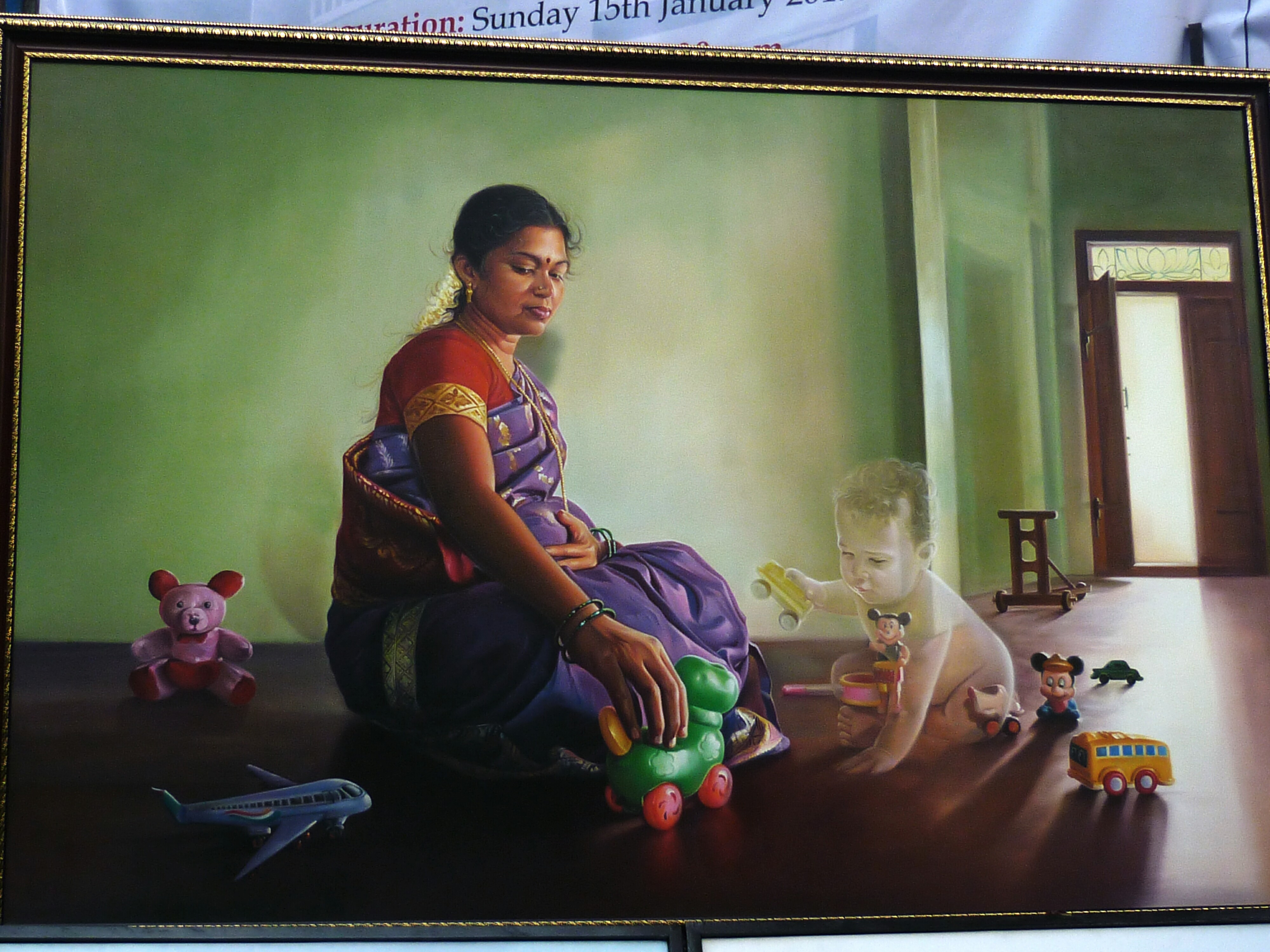
Finally, here is a life sized painting that I loved the most- An expecting mother playing with her unborn baby in the real world. Everything in the real world- the mother, the door and the toys have their shadow except the imaginary baby. The clarity in the artist’s thoughts about his subject has been represented with every detail in this picture looking so real.

img_20170125_111109

PS: Do not reproduce any images as there is a lot of effort that has gone into every piece of art. #Respect

Have you been to ChitraSanthe? What kind of art do you like? What other art festival have you been to? Do let me know what was your favourite part of the visit to this annual market of art in the comments below.

Experiencing the warmth of Khasi hospitality in Cherrapunjee

I could not express better than these lines picked up from a website, “If the Raindrops elevate your mood, clouds stir your senses and rainbow brings out childlike pleasure in you, then don’t hold yourself back. We are taking you to the abode of clouds-Meghalaya; where rain weaves a magical spell, spellbinding beauty haunts your senses and you witness nature at its best. Witness the monsoon magic, majestic waterfalls, live root bridges and more…” and one can go to no better place than Sohra fondly called Cherrapunjee to experience all of that Meghalaya has to offer in a small place.

This post is part of my fortnight long road trip across North-east India, specifically covering parts of Meghalaya – Assam – Arunachal Pradesh I had tagged along with two other travelers and drove around the state of Meghalaya in a self-drive car hired at Shillong. The places visited in Meghalaya include Shillong – Smit – Cherrapunjee – Mawlynnong – Dawki – Ribhoi- Shillong.

Our Itinerary:

Day 1: Arrive from Shillong / Smit; Wahkabah waterfall, Arwah or Lumshynna caves, Nohkalikai waterfalls, seven sister / Nongsthiang falls (Night’s stay at a local homestay)
Day 2: Tyrna village, Nongriat trek (Double decker rootbridge & Rainbow falls), Mawsmai cave/Krem Phyllut, Ummunoi root bridge at Laitkynsew village (Night camping at Nohkalikai)
Day 3: Dianthlen waterfall trek, Sohra market, Ramakrishna mission, Mawkdok valley, Thangkharang park, Moktrop rock; journey towards Mawlynnong.

The Details:

Like most tourists, we started our day early from Shillong via Smit. To differ from the rest, we had a self-drive car at our disposal so that we had the liberty to stop whenever and wherever we wanted. The drive route was mostly untouched and its rustic charm kept us excited all through as this route is less treaden by the tourists. Pine plantations, lesser explored waterfalls nestled away from the main road, well groomed vegetable farms, hay shacks were a common thing for us while we had stopped atleast 100 times for photos.

p1130875
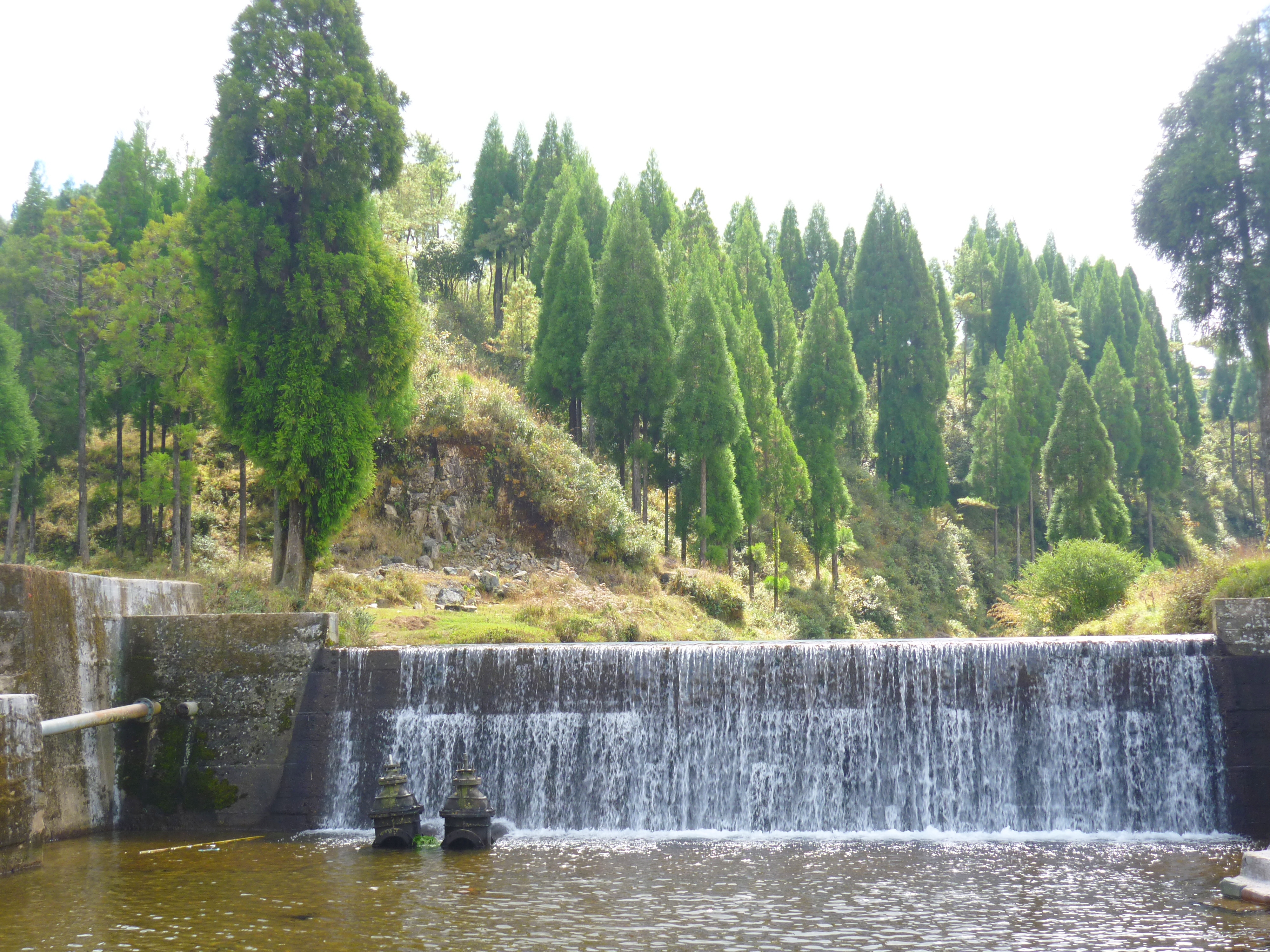
A reservoir enroute to Cherrapunjee

As we approached Sohra, we stopped at several view points, Wahkabah waterfall being one among them. India’s longest cave and the most numbers of limestone caves in one place happens to be in Meghalaya and hence Meghalaya is a haven for cave explorers. Our first stop at Sohra was at the Arwah or Lumshynna caves. Relatively smaller compared to the other caves in the viscinity, but is tucked away in a gorgeous location overlooking the deep valley with the Nongsthiang waterfalls.

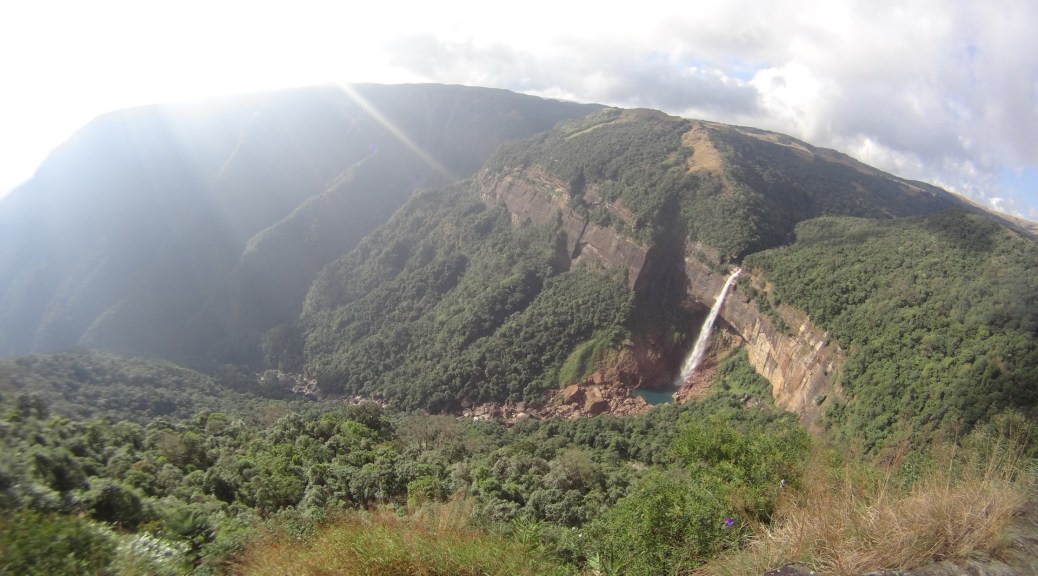
After a brief visit, we headed towards our next stop: Plunging down from a height of over 1100 feet, Nohkalikai is the highest waterfall in India. We trekked down the steps and a little beyond into the bushes and enjoyed the rare views of the waterfall away from the reaches of normal tourist. There is an option to camp at the Eco park, over the seven sister / Nongsthiang falls. But we decided against it as the place is filled with backpackers and would’ve been too clumsy for us, we were someone who wanted a peaceful place away from the crowd.

dsc02827
The Nohkalikai falls

Pitching a tent in Sohra requires prior permission from 4 different authorities: the land owner, the Siam of the village, the local government body and the police. In search of a nice place to pitch our tents, we took help of one of a local Khasi friend. With the local connect, our quest to find a piece of land to pitch a tent ended up more like an exploration of Sohra. We could go to some of the untouched places and sunset views that was completely out-of-reach from typical travellers. We were taken to remote places like banks of a small river, a cliff off-a-small hillock, plains overlooking massive gorges, cement factory backyards among other places. With the sun-going down early in this part of the world, we had very little time in hand and insufficient preparation for the night’s camping.

We finally ended up staying with a Khasi family in a local homestay located amid a serene location. The stay however was the highlight of our day: the warm hospitality of the Khasis is something that will never let one regret their choice of stay. Our host at the homestay, accompanied us for dinner and for a drink as we got discussing everything from Khasi culture, ceremonies, politics, sports, tourism et all under the sky, a clear night’s sky. With no pollution in the atmosphere, my friend helped me to identify several constellations from the place that was brilliant for star gazing. It was an unforgettable night for us with the Khasi family.

p1130943
The village settlements around our homestay

Next day, we drove to places around Cherrapunjee including the villages of Tyrna, Nongriat, Mawsmai cave/Krem Phyllut, Laitsynkew to explore the living root bridges which was an activity from dawn to dusk! We got in touch with a local guide ‘Mr.Paradise’, who then arranged for our camping in the Nohkalikai village for the night. It was yet another wonderful night spent with new Khasi friends, as we enjoyed Khasi music, the enriching conversation with Paradise and his friends about the Khasi culture. We gained insights about their customs, religious practices, respect for people, nature’s love among many other things. It was a long night under the starry sky with only my friends, Paradise’s friends, myself and the campfire! Suddenly, while the last bit of the firewood was being lit and just before the night broke into dawn, the skies of Meghalaya had shown their power. It poured cats and dogs for the rest of the night, with thunder storm and lightning. We sheltered ourselves inside our tents while I continued to shiver with cold.

At dawn’s break on the following morning, the skies had seemed to have mellowed down and we stepped out of our tents only to be awed by the beautiful sun rising over India’s highest waterfall! Yeah, Meghalaya has been wonderful to us all this while and this was another new day in this ‘land of clouds’. While we had planned a short trek across the Dianthlen falls, the rain gods continued to lash throughout the day.
Cherrapunjee is the wettest part of the world. So, what’s the whole point if one doesn’t experience the rains here, right? We walked in the places around Dianthlen falls and enjoyed the rains for some wild fun but getting drenched till our bones.

Momentous 100%
One of the suspension bridges on the way to Dianthlen falls

It was already noon and we couldn’t cover the other few places as planned in Cherrapunjee because of the poor visibility due to heavy rains. Anyway, speculating no possibilities for any improvement in the weather conditions, we decided to drive to our next destination- the Jaintia hills district.

Shine 100%
The rain fed roads of Cherrapunjee

While the warmth of the very hospitable Khasis has still left me in awe and amusement, I’d like to end this note here with these lines:

Even then, goodbye dear Cherra, and your rain goodbye.
For my life is yonder, though my love is here.”

-Karavan, Stokholm, Sweden

Hiking up Assam’s highest point- Hapeo peak

This post is part of my fortnight long road trip across North-east India, specifically covering parts of Meghalaya – Assam – Arunachal Pradesh I had tagged along with two other travelers and drove around the places in a self-drive car hired at Guwahati. We had arrived at Haflong, the only hill station in the state of Assam following a mis-adventurous trip. (Click here to know the details)

This trek to the highest point in Assam happened by chance, as a backup after the original plan for the day had failed. We were told that the hill isn’t yet popular in a typical tourist’s circuit. Apart from the local tribal folk who like to party atop the hill, hardly 4 to 5 trekkers come here from outside the district and the state to climb this hill each year. Having said that, we wanted to reach Hapeo peak, the highest point in the state of Assam for sunrise. However, due to the clouds that had hovered that morning, we decided to snooze for a little longer before going ahead with the plan.

There are totally 13 native tribes in Dima Hasao district of Assam state and each tribe has its own village. A local NGO called spectrum is working towards the empowerment of the local tribal communities through promotion of tourism in the district. They helped us in getting this event organized. We were driven in their 4WD vehicle from Haflong to a village called N.Liekung. N.Liekung village belonged to the Kuki tribes and the required permits from the village head was arranged by Spectrum. A local guide was assigned to take us through this off-beat wilderness to scale the highest point in Assam. I would like to present my trek in essentially three parts.

Part 1: The Ascent

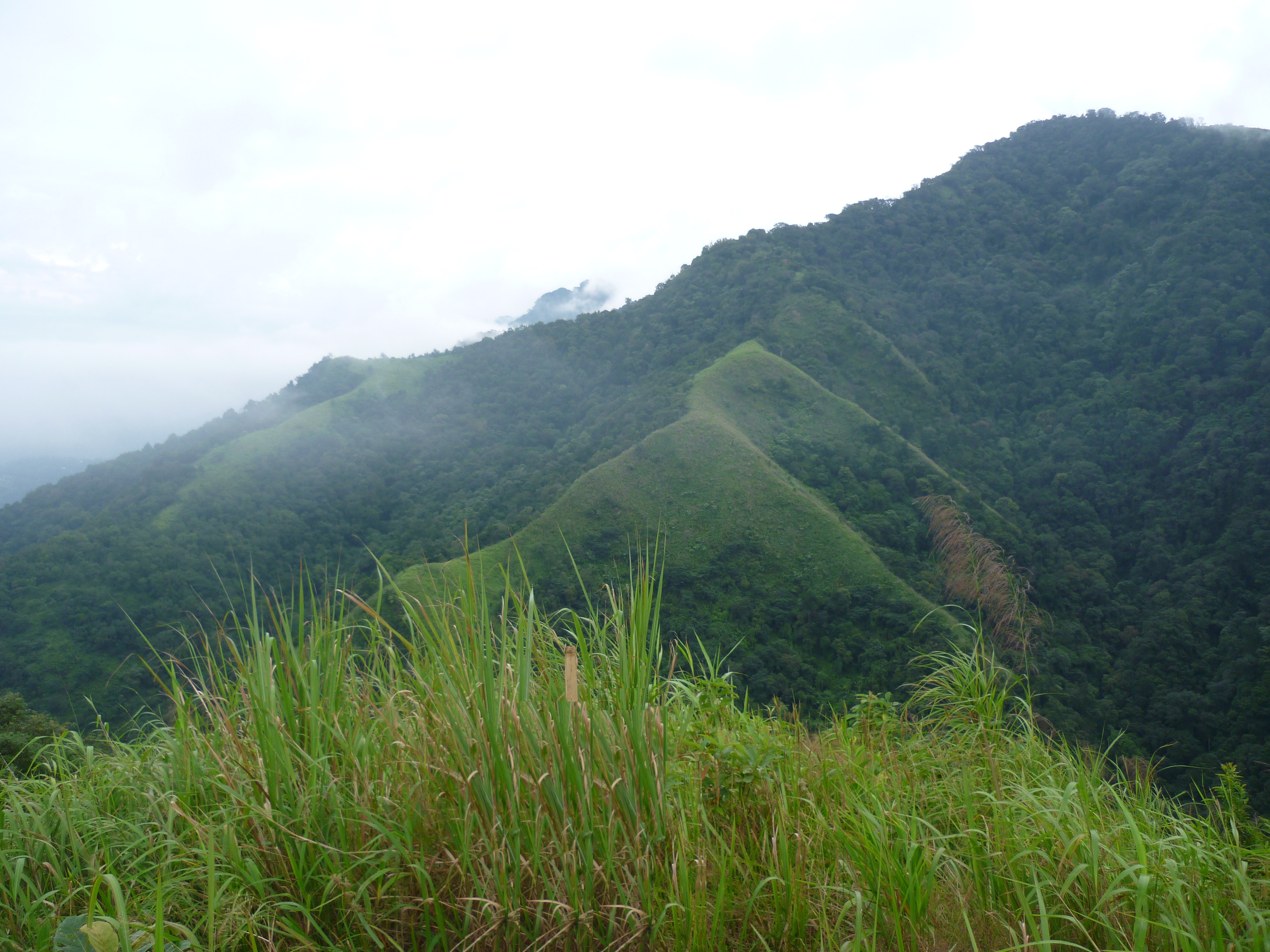
After a small stop in front of the holy Cross at the prayer area of the Kukis, we began our ascent towards the peak. For the three of us, all seasoned trekkers doing this trip together, the climb to Hapeo peak wasn’t a very difficult one as compared to what we had done back in the Southern India. But what made it seem difficult was the high grass that had grown tall enough to cover the entire stretch. Since the trek is not frequented with people, the grass on the path is not worn out as much as in the popular trekking trails. Hence, the way up was something through which we had to FIND the trekking trail. Based on the ease of finding the trail, I would split the trail into three portions:

  • A well traceable path with steps laid. However, at some places, the stairs have been lost amid the thickets. We had to cut the grass and bushes in order to find our way. The stretch was full of high grass with occasionally placed animal traps which our guide who walked ahead, would carefully move aside and make way for us.
  • This was the only flat area with some grassland vegetation for a stretch of around 500mts.This was the only place apart from the highway, from where we could actually see the peak that we were apparently scaling up!
  • The last part passes through thick jungle, with a canopy of trees that allowed very less sunlight to penetrate. Varieties of innocent looking wild mushrooms had bloomed at several patches, but we were warned not to pick any of them as they could actually be lethal with allergens or venom. We were accompanied by strange sounds and cries of migratory birds around.
p1140545
The only grassland in Hapeo trek

As we climbed up while chatting up with our Kuki guide, he enlightened us with their tribal customs, culture and showed us a few videos on his phone of their traditional dances, festivals ceremonies and the like. Our guide jokingly told us how his fellow folks are named in the tribe. The names may not mean anything and just anything random that sounds nice goes as a name. He was thus randomly called after a ‘Song that was Sung’ (I’m sorry, I don’t want to give out his name). But the tradition is, that the maternal grandfather selects a name for the granddaughter and the paternal grandmother picks a name for the grandson and vice-versa. It is a patrilineal system of inheritance.

Part 2: Reaching the Top

Suddenly, the darkness of the jungle had turned into snow white of the clouds. Before we could realise, we had reached the top already and we had barely taken us two hours. We were told that one could see the entire district of Dima Hasao from up there. But, we were greeted with thick fog and clouds upon arrival. We spent some time soaking in nature’s beauty and waited for the clouds to clear so that we could catch a glimpse of the beautiful view.

For the benefit of potential trekkers, there is just one small shelter with a bench atop the hill and nothing apart from yourself there! Our guide mentioned to us about a patch of land measuring about 2×2 feet, right behind the bench where a natural and strong magnetic force is believed to exist, due to which none of the mobile phones work in that spot. Yes, we tested the phenomenon too. Although all our phones had FULL network, we were unable to place any calls. But none of us had any scientific reasoning for what he told.

p1140551
A view of Dima Hasao district from Hapeo peak

In the next fifteen minutes, the clouds had slowly started to clear. We spotted the railway bridge at Lumding onto the right side of the horizon. This rail line is the longest and highest in the Silchar route. Our guide pointed towards another hill onto our left, through which the longest railway tunnel (around 3.5kms long) in the North-east passes. The Silchar-Lumding railway route has been featured in several tourism websites and has been one of the scenic stretches in the country. As the weather slowly worsened and began to drizzle, we decided to start our descent.

Part 3: The Descent

When we had just started to climb down and we received a call from the NGO. We were told to return to the base of the hill ASAP as an alert for a cyclone had been issued by the meterological department and heavy rains were expected in this region in the next few hours. But, it had started to pour cats and dogs within no time. The fastest pace we could catch was by rolling down the hill. With all the rain, thick grass covered path and steep gradient, just a steady walk itself was a struggle as we descended on the slippery trail. There was nothing enroute to take shelter from the rain. But, waiting at any place made no sense because the pounding rains would continue for the entire day or even two. It made more sense to simply continue to walk down as we were already drenched till our bones.

We were back at the base by 11.00.a.m. and thus ended our trek to the highest point in the state of Assam. We were invited over to our guide’s house to dry ourselves up and have a cup of hot tea. We thanked him much and bid adieu with a warm heart to this lesser known corner of the world!

A walk in God’s own garden- Mawlynnong

“The Soul of India is in its villages”.

-Gandhiji

Sometimes, it is not about the place.. It is about the people that brings you closer.. And that’s precisely my take on this little quaint village called Mawlynnong.. After a refreshing drive through some breathtaking views and best roads of India, we had alighted at ‘God’s Own garden’ nestled deep in the East Khasi hills of Meghalaya. Although it is being largely promoted by the Meghalaya Tourism Department(MTD) as Asia’s cleanest village after being awarded so by the ‘Discover India Magazine’ in 2003, I feel it holds a different charm in it with the warmest people I have met so far!

This post is part of my fortnight long road trip across North-east India, specifically covering parts of Meghalaya – Assam – Arunachal Pradesh I had tagged along with two other travelers and drove around the state of Meghalaya visiting Shillong – Smit – Cherrapunjee – Mawlynnong – Dawki – Ribhoi- Shillong.

Tourists flock to this place in large numbers just because they have heard about it in MTD handouts. These senseless creatures litter the place extensively with chocolate wrappers, chips sachets etc. all strewn around this supposedly cleanest village they have come to see.. But, the humble villagers watch on with a smile and pick up these wastes themselves and put them in the cane trash bins places visibly infront of every household in the village, thus keeping up to its reputation of being clean!

Things to see in Mawlynnong:

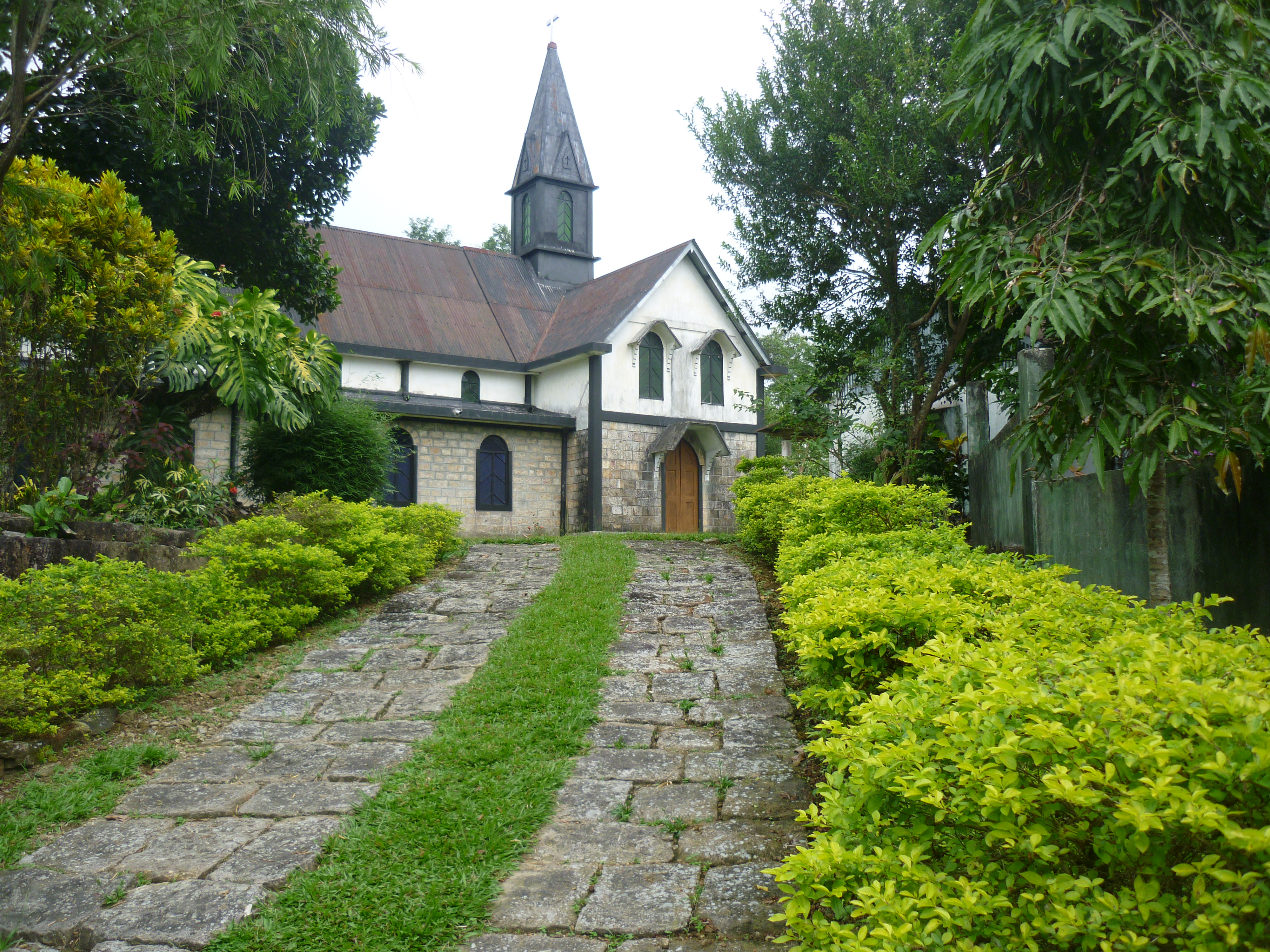
• Inside Mawlynnong village: The old church, floating stone, the water shed and the Bangladesh view point.
• 1 kilometer away: Riwai village (Living root-bridge)

The Details:

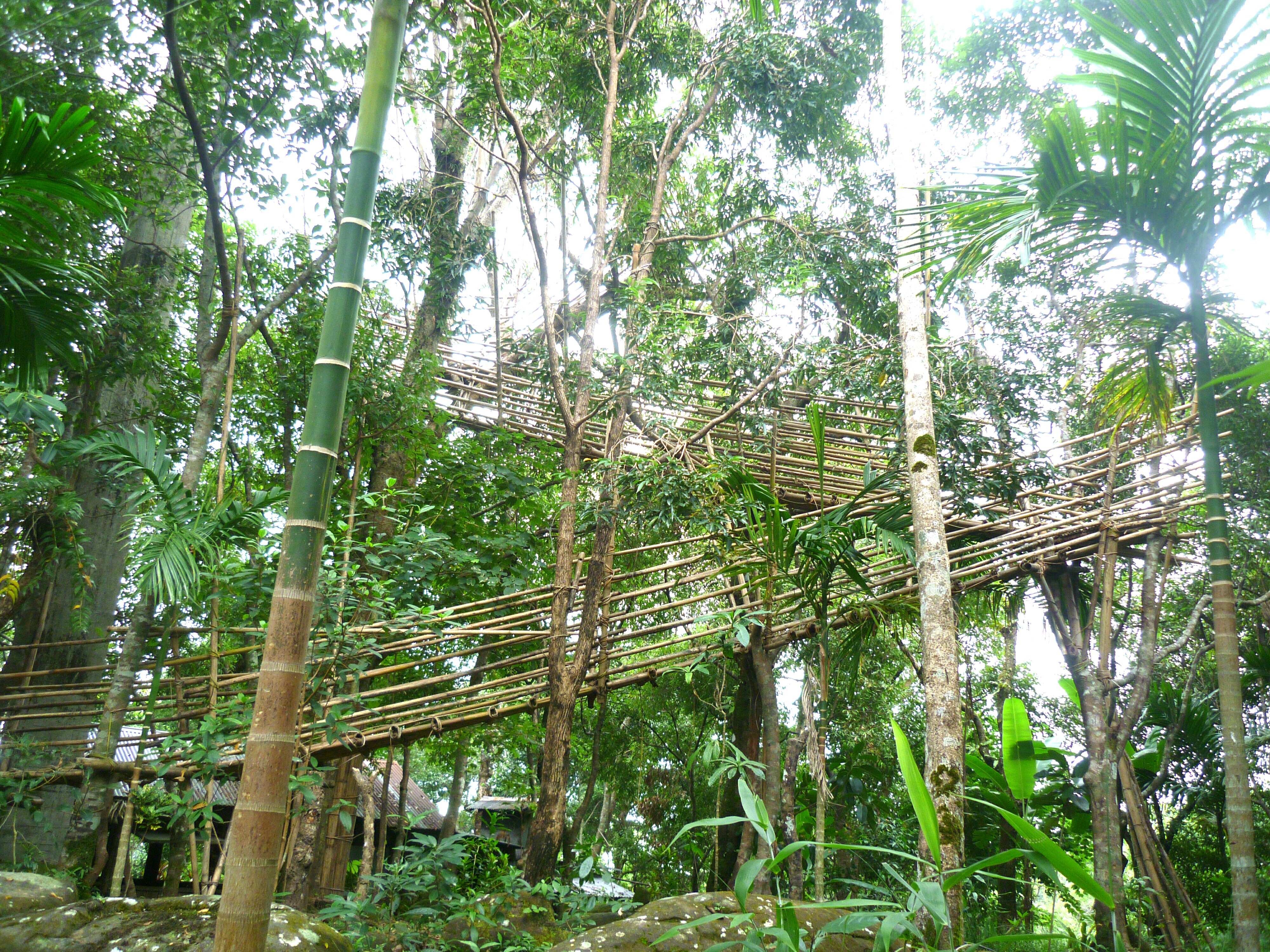
I walked around the laid back lanes of the village exploring the old church, the floating stone and the water shed maintained by the villagers. The flowers lining the fences of each household added myriad hues to the green village and grey of the cloudy sky.. I climbed up the skywalk laid up with bamboo and cane that threw up a nice view overlooking the plains of Bangladesh.

The Bangladesh view point at Mawlynnong
The Skyview bridge at Mawlynnong

Finally, I settled down at a locally run restaurant for a cup of chai to beat the chills of the cloudy weather. I caught up on a conversation with a pretty Khasi lady draped in her Asiangyake (the traditional dress of the Khasi women also called Dhara). While she helped me to memorise a few words in her dialect, I learnt about the Khasi culture and customs. Being a matrilineal society, women are respected and are given the preference to choose her husband-to-be. It is considered a bad omen, if a man proposes to a woman.

While she was attending to other customers at the restaurant, I called out for ‘Oikong’ (Khasi alternative for addressing ‘Didi’ in other parts of northern India) to help me with some Soh (Khasi for fruit). “Ohhhh” A voice filled with humility came in response… She then sat down with me and prepared a plate of pineapple seasoned with salt and flakes of the ‘Bhut Jholokias’ (the spiciest chilli in the world). It was one of the best snack I had in years!

I then walked down to the playground where some local kids were playing. They seemed excited to meet me, talk in English and pose for a few candid photos. It was a warm and a very pleasant evening for me. There is nothing in particular in this village to see or do.. Yet, the nomad in me strongly intended to stay there for an extra day. There are homestays that are available where the warmth of the Khasi hospitality can be experienced.

Kids playing on the lanes of Mawlynnong

I would recommend an early morning walk to Riwai village that helps you avoid the chaotic tourists who flock in later during the day. At a distance of about 1km before Mawlynnong, is the most easily accessible living root bridge and hence, a lot of visitors throng down. So after a nice walk, savouring a nice Khasi breakfast and lemon tea, it was time to pack bags to head out to my next destination- Dawki: the last village of Meghalaya on the Indian border!

The church at Mawlynnong

Request to tourists:

Please remember that the sole reason that you are at Mawlynnong is to see how ‘Asia’s cleanest village’ looks like. How on earth will you ever feel like littering such a place? Do you want to see if you can take off the ‘Cleanest’ tag from the place? Or do you want to just prove that you are only an uncultured educated rich person who could afford enough money to tour the North-east India? Ask yourself… Be sensible and responsible!