All posts by thelostlander

Experiences from the Indian roads

Backpacking in the Coromandel Coast

The Coromandel coast on the south-eastern shoreline of India extends from Nellore till Kanyakumari. I have tried to traverse the entire length of this coast and explore it to the best of my abilities. Although not all at once, I have managed to do it in parts as explained below.

Part 1:

The topmost point of this region starts with lake Pulicat. The fondest memory I have of this place is witnessing a rocket-launch at Sriharikota. Apart from that, lake Pulicat is the second largest brackish water lake that is home to several avian species. I couldn’t help but take a boat ride with the help of a fisherman to see the greater flamingoes that come here annually during their breeding season. My family and I just went into the middle of this large waterbody and decided to lose ourselves in the moment. It was a moment of sitting in front of a million flamingoes and enjoying the vastness of the planet.

The Rocket Garden at Sriharikota

Part 2:

I have explored Chennai during multiple visits for business and leisure. One of the most memorable of them all was my visit to this city with my friends, volunteering for ‘Turtle walk- A sea turtle conservation event’. That was sometime back when I had just graduated from college. We had seen the beaches of Chennai coupled with a visit to Mahabalipuram. Thus, touching the northernmost tip of ECR (East Coast Road) in Tamil Nadu during this trip.

Turtle walk- a sea turtle conservation walk in the beaches of Chennai
The Baby turtle- Our prized catch for the day

Part 3:

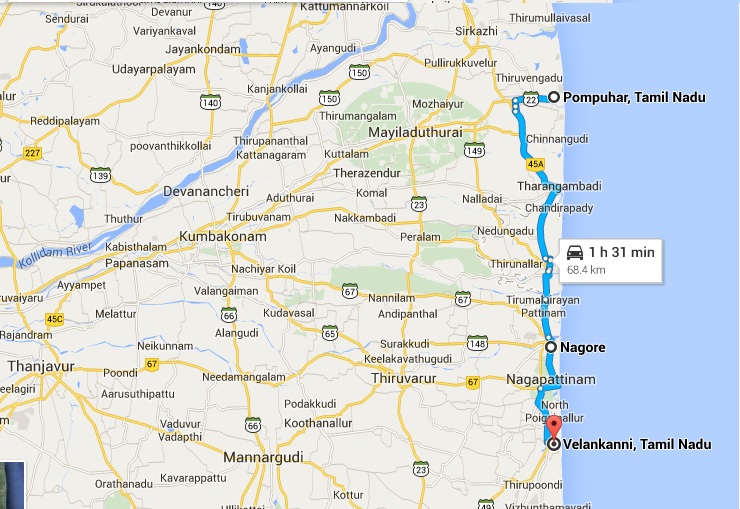
This was a family backpacking trip, mainly conceptualized by my dad and one that had been long due on his bucket list. He wanted to see how the end of River Kaveri; our family deity looks like. Our family of four planned to cover a portion of the Coromandel coast during this trip. Our itinerary for this trip was Bangalore – Mayiladuthurai – Poompuhar – Tarangambadi – Karaikal – Nagapattinam – Velankanni – Tanjavur – Trichy – Bangalore.

This remains to be one of the BEST family trips, even to date. We travelled by train, local transport and public buses during the entire trip and hotels/ lodges were booked after reaching the planned destination. Since this itinerary was mostly planned by my father, we were able to more-or-less stick to it without any surprises.

Part 4:

This was an offbeat backpacking embarked on by my friend and me to mark the 100th anniversary of an engineering marvel. We took a train ride over the iconic ‘Pamban bridge’ that connects mainland India to the island of Rameswaram. Our itinerary was: Bangalore – Madurai – Ramanathapuram – Rameswaram – Dhanushkodi – Kurusudai island – Rameswaram – Madurai – Bangalore
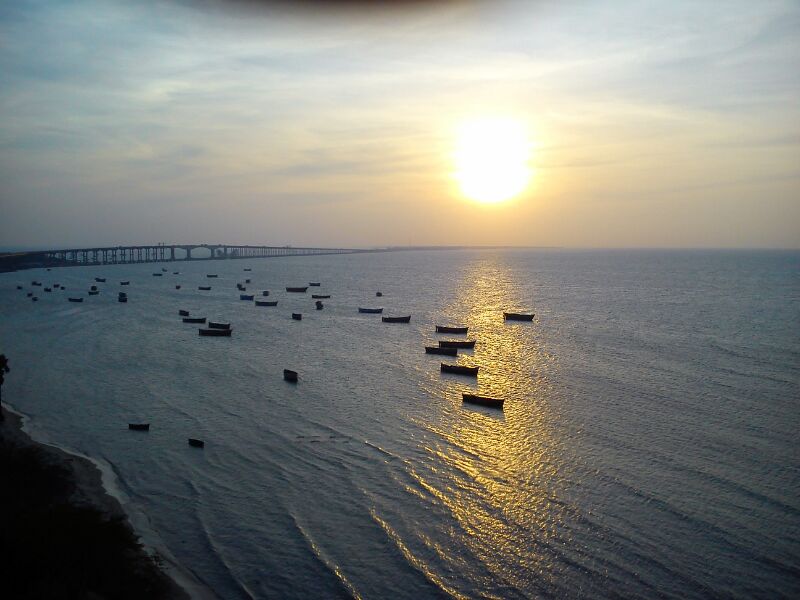
View of Pamban Bridge in Rameswaram from the lighthouse
The sunset and Pamban bridge view from a fishing hamlet

The holy town of Rameswaram needs no introduction (Click here if you want to know more about our trip). From there, we explored the ghost town of Dhanushkodi and caught a glimpse of Ramasetu and managed to gain access to a protected island and get mind blown with the natural treasure of the gulf of Mannar. (Click here to read more in detail).

Part 5:

This time, I decided to use my week-long plant shutdown for Diwali at my workplace, to cover the remaining of the Coromandel coast in this south Indian state. For this to happen, my brother and I had embarked on a backpacking trip with the itinerary in which we originally planned to cover Bangalore- Kumbakonam – Gangaikondacholapuram – Chidambaram – Pichavaram – Pondicherry – Tiruvannamalai – Bangalore

Although the main intention was to cover ECR, we couldn’t make it as the weather ruined our vacation and we had to return home mid-way, only to visit those places at a later date. The best part of this trip: Seeing the grandeur of two of the greatest living Chola temples in an off-tourist season. (Click here to read the detailed itinerary) But, what’s the highlight? Finding a place on the globe that I wouldn’t want to visit again (Click here to read my nightmarish travel experience).

Airavateshwara temple at Darasuram, partially submerged during the rain
Airavateshwara temple at Darasuram

Part 6:

Kanyakumari- the last stretch of the coromandel coast and the last bit remaining on my shoreline itinerary. This too was part of a family trip to the edge of Indian mainland. However, unlike all my previous family vacations along the ECR, this was a well-planned itinerary with all bookings sorted (Click here for the complete story). The whole intention of this trip was to see the famous sunset and sunrise at the edge of Indian sub-continent but that, however, continues to remain undone!
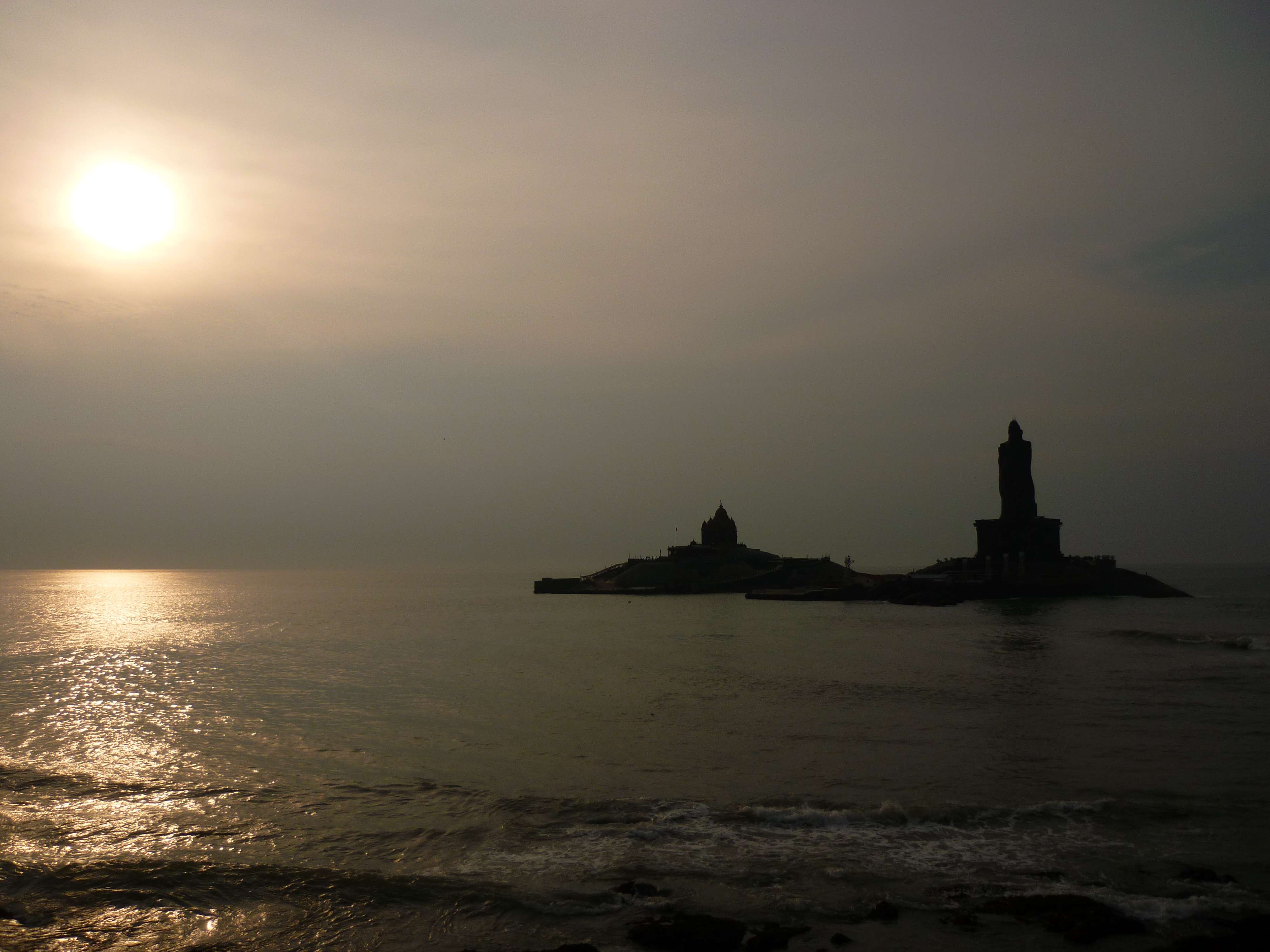
A post sunrise view of Thiruvalluvar statue at Kanyakumari
View of Thiruvalluvar statue, post Sunrise at Kanyakumari

Have you done a road trip in East-Coast road of India? Which is your favorite destination? Let me know in the comments below.

5 Pet-Friendly Resorts near Mumbai

Planning your vacation in Mumbai but worried about leaving your little pet behind? Do not worry I’ve got your back. Mumbai is a home to some luxurious and pet-friendly resorts which allows you to not only experience a comfortable stay but also allow you to bring along your little munchkin and play along.

Enjoy your long-drive from Mumbai to reach these locations with the lush green landscape views. The sound of waterfalls flowing during monsoon, panoramic view of valleys, mountains and greenery of these resorts will leave you mesmerized. The resort here is known to offer best-in-class services and amenities and offer a pet-friendly environment so that you can chill and relax while your pet also has something to do. These pet-friendly properties have various facilities to enjoy your holiday that allows you to experience the feel of Home, away from Home.

Manas Resort Nashik

Located in the expanse of the Western Ghats of Igatpuri, Manas Resort Nashik is the first Indian resort with Petting Zoo, hosting human-friendly animals and walk-in aviaries. If you are a true nature lover and love animals, this resort might be the best place for you. Located at just a distance of 2 hours from Mumbai, Manas Resort Nashik allows you to enjoy fun-filled activities in the lap of nature.

This resort has exclusively offered Petting Zoo and Organic farming which is a very different experience to the travellers while they enjoy and take a weekend break from daily life. The resort gives you the privilege to interact with wildlife, The lavish villas with personal pools and modern facilities are ready to give you a warm welcome and with the soothing massages and relaxing sessions, you can enjoy a rejuvenating spa during the stay. The resort has luxurious rooms of various designs and categories, keeping the view of multiple family needs. The Facilities in this resort include an All Day Dining Restaurant, Highway Café, Lawns, Swimming Pool, Spa, Kids Zone, Games Room and Car Park as well. You will also have options to choose from outdoor activities like tours, treks, nature walks etc and make you truly stay fun-filled.

Also Read:Treading the Living Root Bridges- Nongriat

Rippling Edge Gadhok Cottage

Nestled in a river bank and surrounded by the verdant forest, this thrilling resort offers you a memorable & luxurious stay with modern amenities and gives you a chance to live with nature as you step in this beautiful and relaxing oasis. This beautiful resort is a perfect getaway to spend a weekend with your furry friends. Huge lawns surrounding greenery give you freshness, chill and natural vibes. This is a beautiful property that is highly recommended for those who love a mix of adventure and nature. Head to this exotic bungalow by the river in Karjat and enjoy unwinding in the midst of nature with your furry friends. Huge lawns, gazebos, mind-blowing views of greenery all around with fresh air make it a beautiful place to stay, You will also be offered the cycles to explore the surroundings.

Also Read:Marvel at Caves and Crannies Kurnool

The Whey Side

A 60 kilometer drive from Mumbai with your pour paws friend, this is a wonderful eco-friendly resort offering some really comfortable accommodation, surrounded by a forest in Karjat. This beautiful place offers you the fully furnished tree-houses with a splendid mountain view. You can choose the room with a balcony. Barbecue facilities, board games and books for children are the other facilities which you can avail. There is also a swimming pool within the premises for its guests.

You can definitely indulge in trekking, cycling, fishing, etc while kids can play in a spacious play area. This is one of the most ideal pet friendly resorts in Mumbai to bring your four paws friends along for a wonderful holiday. A quick getaway from the hustle bustle of the city, this place offers a relaxing stay, good homely food and an amazing view from the room. No matter which cottage you select it offers view from sides

Eko Stay Sea Breeze Villa

A beach front villa which is situated near Saswane Beach, Eko Stay Sea Breeze Villa is quie n amazing place to come with your pet. This property makes travelling with your pets even more enjoyable as it offers both you & your furry best pal the freedom to enjoy your holiday in a mind blowing surrounding without any unwanted and unusual restrictions which are a norm in various pet friendly resorts near Mumbai.

Eko Stay Sea Breeze Villa allows you to enjoy a crazy evening with your friend. A private pool, and an open-air barbecue are the perfect ingredients for an ideal staycation offered by any resort, and this Villa has it all. Bon fire and candle light dinner with beach view would not be a bad choice though. You can be here solo or as a couple for Honeymoon or with friends, bachelors and family.

Bali Style Villa

Not everyone can fly all the way to Indonesia. A 10 minute walking distance from Mandwa Jetty, this beautiful Bali-isque holiday home is a getaway for Mumbaikars. Whenever you are stressed from work, head out to this delightful farmhouse for a relaxing staycation. This place comprises an expanse of beautiful greenish lawn and comfortable accommodation .This home stay with its serene atmosphere will diminish the stress and strains of daily life. Managed by Eko Stays, the villa consists of 2 bedrooms, a kitchen and 2 bathrooms along with a garden. Moreover, As a pet-friendly place, there are ample open spaces available for your pet to wander about so you can play fetch with your pet or go for a run together, to make your pet happy and relieve your own work pressure. Encircled by greenery all-around, this villa offers indoor and outdoor dining areas to party with your loved ones. Bonfire nights with your colleagues, friends or family will enhance your vocational experience.

Best Luxury Resorts in Karnataka

Karnataka is one of the most beautiful Indian states that weave both heritage and contemporary culture together in a beautiful blend. Karnataka is a hub for travellers looking for some adventurous things to do or for globetrotters planning to travel amidst nature. From the strikingly beautiful hill station of Coorg to the ancient ruins of Hampi and from historic Mysore to the tech city Bangalore, Karnataka has never failed to amaze people with its hospitality.

And since this state attracts thousands of travellers each year, one can easily find some amazing resorts right from the budget category to the most luxurious ones. Luxury resorts in Karnataka help you tailor your vacation or work trip just the way you want! The cities have quaint boutique resorts that will make you forget the bustle of the town, and then there are resorts where you can go and have the perfect business meeting. These resorts are some of the best in the State, offering world-class amenities with all the warmth of traditional Indian hospitality.

1. Purple palms resort & spa, Kushalnagar

Purple Palms Resort and Spa is one of the best luxurious resorts in Karnataka. Relax in a magical paradise that makes your greatest wishes come true. Experience the lush green surrounding and serene beauty bounding the resort and witness the beautifully crafted rooms with the bliss of luxury and soothing comfort. Dive down in the swimming pool and fill your day with fun and give yourself a treat by relishing a delicious breakfast with a local touch at Purple palms resort & spa.

Indulge in the luxurious ambience of his amazing resort that makes you feel royal. If you can’t resist the allure of the hills, step out for a regal sojourn. This resort has all that you and your family are looking for a perfect holiday with all the tourist attractions in the vicinity. You may relax and rejuvenate at the Resort’s Spa with Ayurvedic and Western massage that will cleanse your mind and body to make your stay at our resort more meaningful.

2. Evolve Back, Hampi

One of Karnataka’s most treasured gems, Hampi is full of history and serenity. With various rulers reigning over the Vijayanagar Empire, the map of Hampi was designed in such a way that today, it stands as one of God’s blessings to humankind. Offering a spa centre and hot tub, Evolve Back Hampi is located just 4 km from the UNESCO World Heritage Site of Hampi.

Here at Evolve back resort, you will experience the Vijayanagara Royal Style at Evolve Back Kamalapura Palace, Hampi – an opulent palace whose stone-paved boulevards, arched hallways and regal chambers reflect the royal lifestyle of a past but glorious era.

3. The Tamara, Coorg

The Tamara Coorg, a luxury experience nestled in the heart of the hills, is a perfect place where you can rediscover the joy of being in nature, where your quest for serenity will end. Lush greenery, aromatic coffee plantations, spices, beautiful streams, and flowing waterfalls, all experienced in a stunning eco-resort. Your stay at The Tamara Coorg will be filled with uniquely curated experiences and nature-based activities as the resort spans 180 acres and is located over 3,500 feet above sea level where you will experience nature and luxury at its best as you wake up to the breathtaking view and the calming silence of the hills, disturbed only by the chirping birds and the crackle of leaves.

Wake up to the smell of tranquilizer coffee, and enjoy the scenic beauty and try so many activities in the house, and the expert yoga instructor will tailor a perfect session for you. You can even enjoy a private gourmet meal under an open sky at a variety of stunning spots.

Take a cozy walk through the rain soaked plantations in Coorg
Coorg- Coffee trails

4. Coorg Wilderness Resort

Coorg Wilderness Resort is nestled amid the deep valleys, majestic hills of Coorg and away from the hustle and bustle of the city. Move into the wild and find a distinctive ethos of extravagance implanted in the thoughtful lap of nature. The luxury from this resort with rich European-style masterful rooms and palatial suites that are spread across a large area and allows you to stay in Karnataka luxuriously.

The ambience is so warm, and the air is so cool and cozy, air-conditioning is not required throughout the resort. During romantic rainy days of the famed monsoons and lazy, gentle winters, you will find each room is cozily warmed with traditionally designed electric fireplaces; the facilities and unparalleled quality of services provided by the staff are worth spending your vacation. For adventure and thrill lovers, the Coorg wilderness resort will fill your heart with contentment and excitement through various outdoor activities like trekking, coffee plantation tours, and other adventurous activities.

5. Machaan Plantation Resort, Sakleshpur

The resort is tucked within a coffee plantation in Sakleshpur. Machaan Plantation Resort is ideal for a quick getaway to relax, rejuvenate, and refresh your inner self. Workspace at the resort will help you break free from routine, and your family would also rejoice in a change in environment. Your pre and post-work routine could be a host of activities ranging from estate walks, yoga in the outdoors, visit a waterfall, trekking, evening barbeque, to name a few. The resort has an outdoor pool where you can just lounge all day and enjoy splashing pool water. The sit-outs are ideal for lazing in & enjoying marvellous views of the hills and valley. On a rainy day, one can curl up with a book and a blanket here if you want to be in the room. Then each room caters for the views of hills and mountains, which will refresh you in seconds. A day here would not be complete without a campfire, a bonfire area that gives access to a 360° view of the night sky.

The papersweet of Athreyapuram

This was a part of our family’s five state road trip covering Chhattisgarh – Odisha – Andhra – Telangana – Karnataka in Dec’20.

The visit to the place described in this post was impromptu. While I had just woken up at Rajahmundry and was scrolling through the watsapp status updates of some of my contacts, I happened to see a post with green paddy fields that was captioned as ‘Andhra’s best kept secret- Konaseema’. The videos of my friend driving around those green paddy fields and through the roads lined with coconut trees had me hooked instantly. For a moment, I was reminded of the Kuttanad or Karavali regions of the neighboring states. I looked up on Google and realized that I was just around. As per the original plan, we were supposed to leave for Bengaluru by Afternoon. The drive to Konaseema was in the opposite direction. But, noting a few special things to do in this region, I managed to convince my family to allow me to drive for about 30 additional kilometers before returning to Bengaluru.

Firstly, we drove through the Dowleshwaran barrage. It is one of the chief sources for water based agriculture to the several villages in the surrounding. This heritage barrage passes over the group of islands created by river Godavari. The lush greenery and sandy beaches of these islands seemed to me like they were gleaming in joy from the nourishment of mother Godavari. We were told that boat rides to these islands can be availed during early mornings by talking to the local villagers. For now, we couldn’t afford it on our schedule and hence, proceeded by adding it to our to-visit list. The destination that I wished to visit in Konaseema on this trip was a tiny village called Athreyapuram.

The serene roads of Konaseema

After crossing the Dowleshwaran barrage, the roads suddenly transformed from noisy and dusty to a serene and scenic stretch with lagoons, banana plantations, paddy fields and palm fringed canals. With number of tiny shops suddenly lining the road, we did notice that we had entered Athreyapuram. But the drive and the scenery was so serene that we lost track and drove past the village and gone ahead. We came into our senses only when we realized that there was no sight of any more shops on the road. What shops? These are shops that sell a traditional sweet of Andhra Pradesh called Putharekulu. What’s so special about this Andhra sweet one may ask. This is a snack that looks like paper and tastes like sweet.

It was several years ago that I had tasted this peculiar looking paper at one of the events hosted by the department of Khadi & cottage industries. But it was long forgotten and the memories were rekindled by the early morning watsapp post. It had gotten me all drooling until I reached Athreyapuram. This tiny village is where this sweet paper was invented! For an unassuming person, it looks like lot of ghee, nuts and jiggery is rolled into a super thin white tissue paper before eating. But it is not just the ghee and the jaggery that gives it its flavors, making of this paper is in itself a labour intensive job.

We returned back looking out for a shop and we stopped at a small family run establishment. The excited family demonstrated the steps of making a perfect roll of this traditional Andhra sweet. Boxes of authentic Putharekulu were the souvenirs we bought for our friends and family. Here, is a small video on our drive around Athreyapuram and the demonstration of making Putharekulu.

A tour of Athreyapuram

This is my humble attempt to promote local tourism and help small businesses in these trying times. Please try to reach out to them and order your favorite local products from around India.

What is that one favourite souvenir you have bought from your travels? Please do share your thoughts on this post with me. I would love to hear them.

A souvenir from Rajahmundry- Ratnam pen

This was a part of our family’s five state road trip covering Chhattisgarh – Odisha – Andhra – Telangana – Karnataka in Dec’20.

They say a pen is mightier than a sword. A good writer can win a great battle. I guess it has been all the more true in the Gen-Z era. Although the pen has been replaced with keypads, the social media warriors have continuously upped the war of words 😛 But for a few old-school goers like me, nothing can replace the joy of holding a pen between the fingers and scribbling on paper. The thought instantly takes me back to the earliest days of life when I graduated from a chalk and slate to a pencil and paper. When we reached middle-school, I was a proud owner of my first pen. Writing with a pen was a symbol of growing up; we flaunted it around with those younger than us in school. “Don’t use a ball-point pen, it will spoil your handwriting“, was an instruction given by a teacher to all of us. Filling ink into the fountain pens was a mandatory part of our daily chores. On days that we either wrote more or forgot to fill inks, we would barter drops of ink with our classmates. Although ball-point pens made their way and stayed in the comp-boxes of my pals by the time we reached high-school, I somehow carried the instructions of my teacher with myself for a little longer. I switched over to a ball-point pen only after I graduated from college. But my love for fountain pens and writing on paper still lives on. This is the long story in short, about my connection with fountain pens.

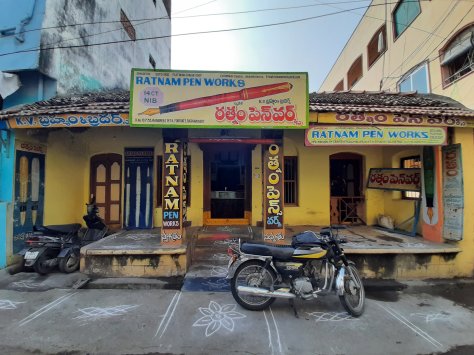
Rajahmundry is a big city in Andhra Pradesh. It is one of the largest exporters of textiles, rice and horticultural products in India. But ignoring all that, my need for exploring the congested bustling streets of the city was to find a fountain pen. With the help of Google maps, I walked through the narrow lanes of the busy shopping area to locate an old graceful house dating back to pre-independence era and surrounded by tall modern buildings. The house was an elegant traditional structure built and maintained in its original form with clay tiled roof and a large open central courtyard. That morning, I had come there to buy an art piece – ‘The Ratnam Pen’.

Ratnam Pens- Manufacturing and Sales Outlet

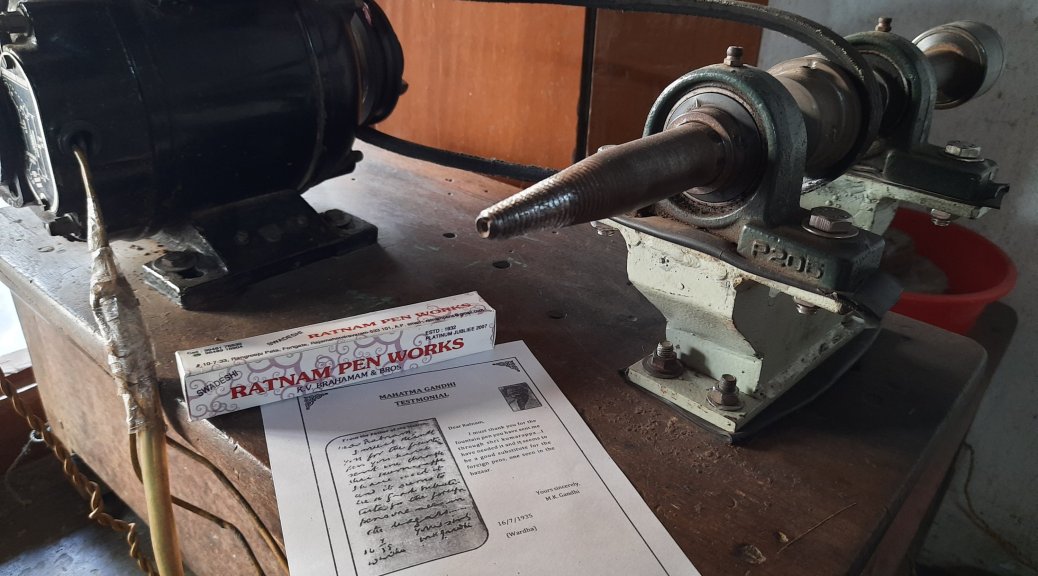
‘Ratnam pen works’ is a heritage fountain pen maker who has been one of the earliest in this business when Mahatma Gandhi largely promoted ‘Make in India’ concept through his ‘Swadeshi’ movement. These pens have been used by some of the famous personalities from across the country and the world. Ratnam pens are a delight for every pen collector. A framed paper on the wall is a prized possession of this craftsman. It is the original copy of a handwritten letter by Gandhiji to the owner of this place in appreciation of his contribution towards the swadeshi movement.

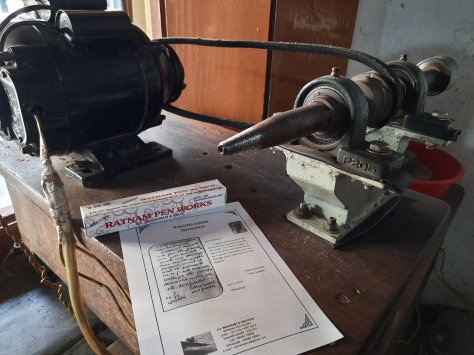
A copy of Gandhiji’s letter, a fountain pen case and the lathe machine at Ratnam pens workshop

Apart from being the shelter to the owner’s family, this house of ‘Ratnam pens’ is a workshop where the mightier pens take form. These famous fountain pens are made and sold only here to which people come down from across the globe. Although these pens are unavailable for online purchases, “Anyone interested to buy them or want spares and service for existing products can do so by calling me directly on my phone”, the owner says. I was more than excited to lay my hands on this new addition to my collection of pens. A happy me was then set on continuing my travel towards another noteworthy village nearby- Details on my next post 

This is my humble attempt at promoting domestic tourism and local artisans. I urge my readers to support small businesses by buying locally produced substitutes for imported goods.

What is that one favourite souvenir you have bought from your travels? What are your memories from school? Please do share your thoughts on this post with me. I would love to hear them.

A Tour of Indian Foundries- Investment Casting

In this post today, I like to discuss a technical subject by standing in the shoes of a traveler. During my student life, I have never been in a race to become a top-scorer. However, it was Professor Mukunda’s enthusiastic teaching method, that ‘Material science and Metallurgy’ has been one subject that I topped the department (I like to show-off a bit, with those dark glasses emoticon). With an in-hand admission letter to one of the top universities to pursue a post-graduation in the subject, the lostlander deviated along the way, only to become a professional ‘Metallurgical Failure Mode Analyst’ much later in her career. If not for Prof.Mukunda, a seed of interest in the subject would have never been sown and I wouldn’t be writing about such an unconventional travel post, it seems.

Metallurgy is a science in which India has mastered from even before the world could imagine. The Vedas have a devoted section to teach these techniques. Prof.Mukunda’s favorite topic was ‘Metal casting with the lost wax technique’. His face beamed in joy every time he mentioned the intricacies that were achieved in the metal art thus created. “No two pieces that are exact replicas of each other can ever be created”, he stressed. We had foundry visits as part of our curriculum but that’s where we could only see sand, centrifugal and other forms of metal casting. Without having easy access, investment casting, also called as the ‘lost wax technique’ of metal casting was only left to our imagination. Many years after my graduation, I have been fortunate that I have been able to visit some of the amazing and traditional foundries in my country that practice the lost wax technique. These places have got them their individual ‘GI’ tags. Here is a walk through my foundry visits which I believe I should share with my fellow readers.

Idols of Swamimalai:

Swamimalai translates to the ‘Hill of the Lord’ that is named after an important temple in Tamil culture dedicated to Lord Murugan. This little town is famous beyond just this holy abode. One doesn’t need explanation at the mention of the bronze idols of the Cholas era. Apart from several of these antiques being prized possessions at museums across the globe, these treasures are among the highly traded commodities in the black market. These are ALL brought to form in Swamimalai. It is believed that the artisans of Swamimalai are a group of skilled men called as the Stapathis who have passed on their heritage of metal idol making, since the 12th century. The precision of composition and the measurements of these metal idols, mostly bronze are followed as per the ‘Agama Shastras’. This holy land of the alchemists was a part of my weeklong backpacking with my brother, back in Year-2015.

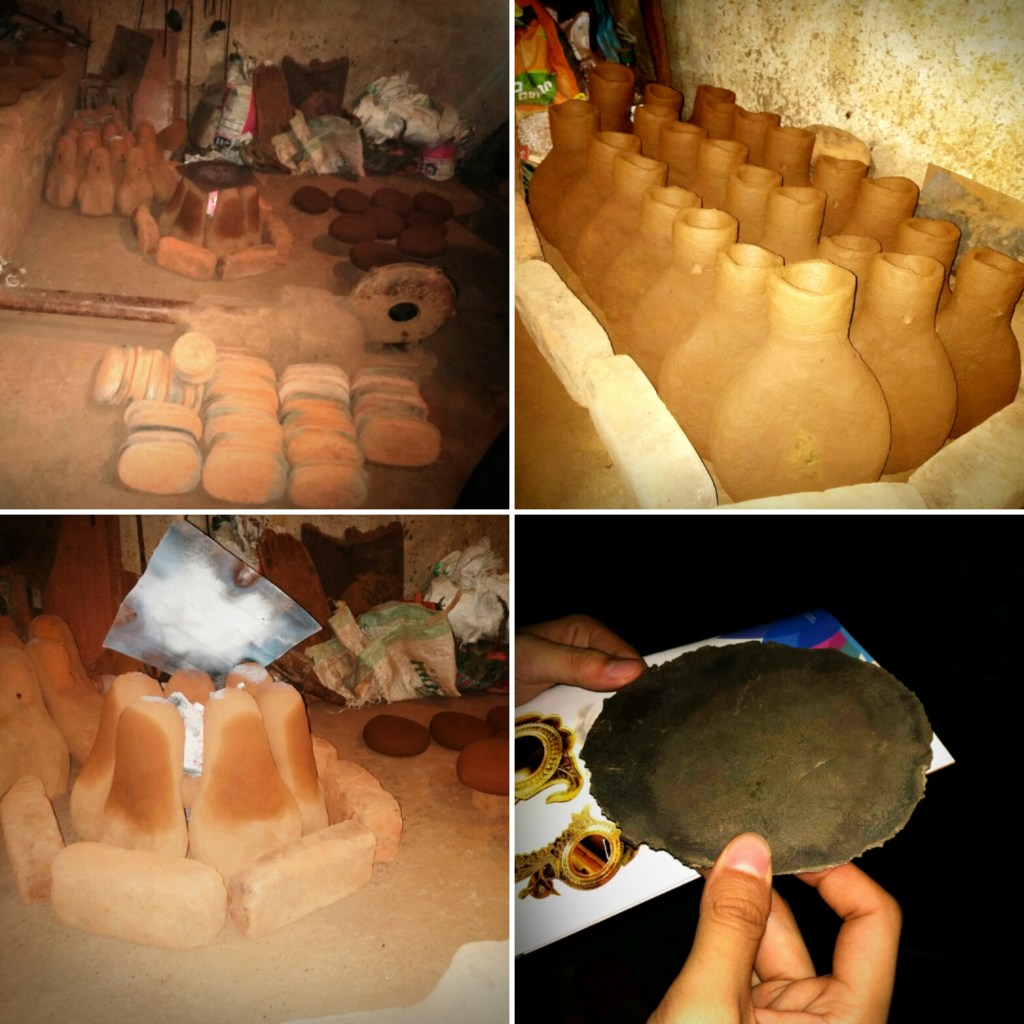
Work-in-progress at a foundry that makes Aranmula Kannadi
Clockwise from top left: 1. Raw material for mould making with the furnace and blower 2. The mould 3. Furnace 4. Metal sheet after moulding ready to be polished

Aranmula Kannadi:

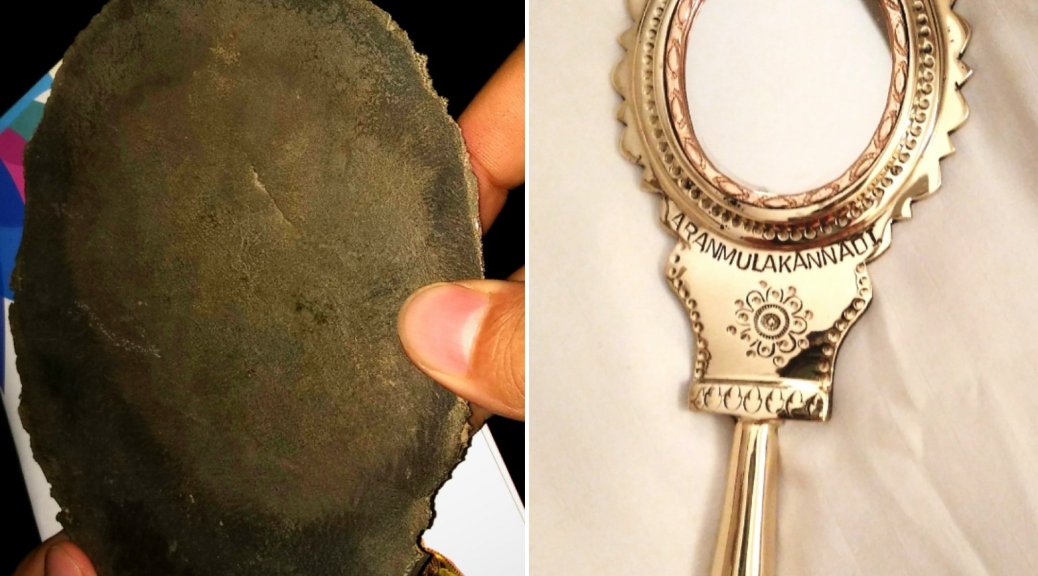
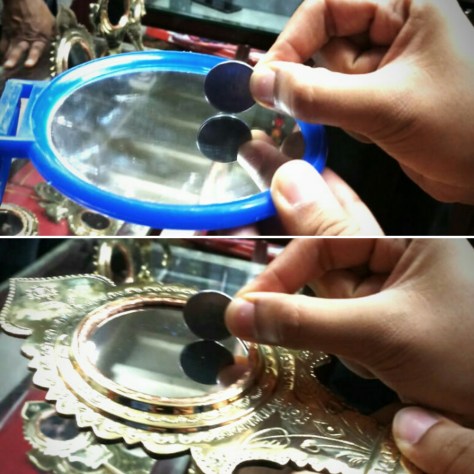
An extremely important part of malayalee culture, this handcrafted mirror is a quintessential part of Kerala. I was told that on the day of ‘Vishu’ festival, after waking up in the morning- he/she should first see themselves in an Aranmula Kannadi placed alongside the ‘Canacona flowers and a lit oil lamp’ before anything else. ‘What is it about a mirror?’ a person unknown to the traditions of this land might ask. ‘These mirrors are not glass!’ These mirrors are super-polished metal surfaces that are capable of reflecting real images. A glass always reflects a secondary image (you can notice that there is a distance from the reflecting surface to the image formed) whereas, the metal surface reflects primary images (There is no additional distance between the object and the image).

Two images that give the comparison of reflection in a glass and a metal mirror (Aranmula kannadi)
Top: The secondary reflection in a glass mirror; Below: The primary reflection in a metal ‘Aranmula Kannadi’ mirror

These manually polished mirrors are created through investment casting whose composition remains to be a secret that is passed down through generations of just 1 family. The small group of these master craftsmen who are protecting their secret recipe of the Malayalee culture all reside around the Aranmula Parthasarthy temple in the state of Pathanamthitta. I had the esteemed opportunity of visiting one of these foundries when I sneaked out after working hours on one of my business trips in Year-2019.

Video of my visit to the mirror making foundry at Aranmula

Dokra art of Bastar:

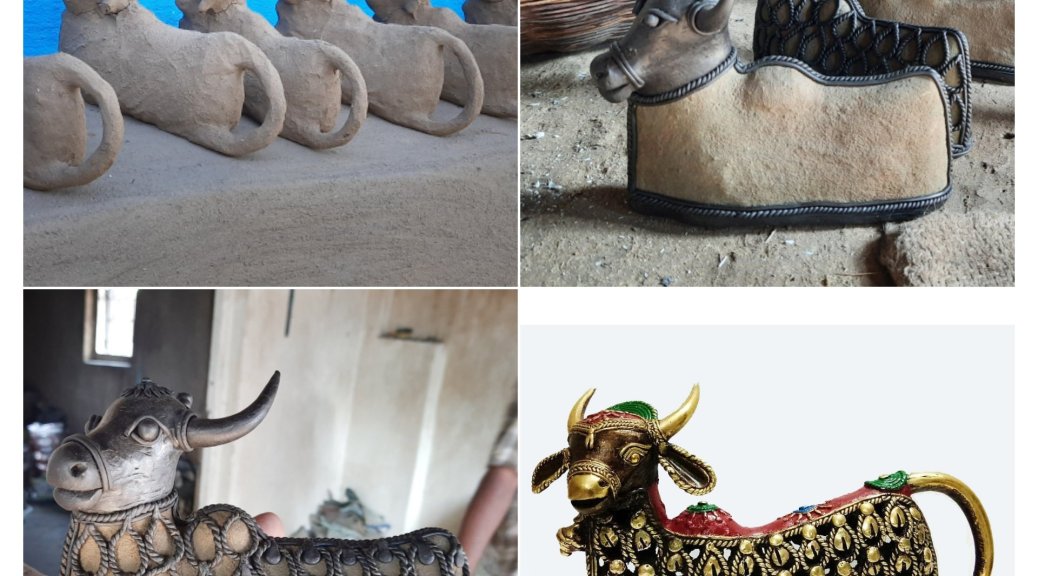
This non-ferrous metal art is created by the forest dwelling tribes of Chhattisgarh. Historians believe that this art has evolved from what was used by the primitive tribes to create figurines of their local deities for worship and for jewellery purposes. The metals used were earlier collected directly from earth in the mineral rich area of Bastar, then smelted to separate the desired elements and mixed in intended proportions to form the final material for casting. This is an undocumented tribal technique that has been passed down through several centuries. Today, it is widely used for commercial purposes of decoration and gifting. It is now revered as a part of the tribal culture that represents the state of Chhattisgarh. I had an opportunity to visit one of these foundries and observed keenly the lifeless metal take form into art during my family’s five states’ road trip in Year-2020.

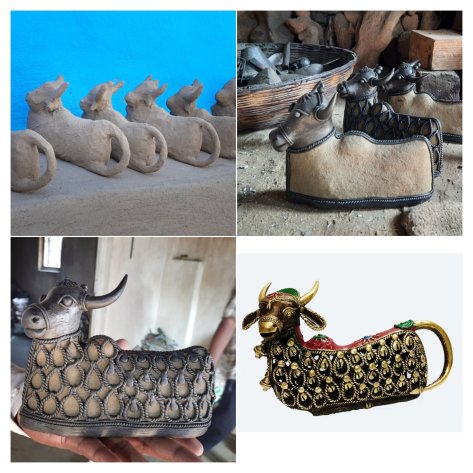
Work-in-progress at a foundry that makes Dokra art in Bastar
Dokra art at various stages of metal casting

Kola masks of Karkala:

Talking about all these foundries, I cannot be leaving my homestate behind. Although the folk art of metal mask making is slowly dying, these masks are an extremely important part of the culture of the Tulunad region. These bell metal masks are used in the spiritual performance of the ‘Bhoota Kola‘. Today, the art is used beyond mask making and can be seen in idols, lamps, bowls, utensils among other things used and sold extensively in Udupi district of Karnataka.

The lamps and idols of Nagamangala:

The contribution of the Hoysalas to the art and heritage of Karnataka cannot be justified with any number of words. Their intricacies and detailing in their work can be seen not only in the stone sculptures of their temples but also in their metal crafts. A few of the practitioners of the Hoysala style of metal casting have saved and passed on their knowledge to a few artisans who have made the town of Nagamangala their home. This thriving art can be seen in the traditional bronze lamps widely used across Karnataka and in the idols of various deities in this region. Although bronze is believed to be a godly material, other metals like tin, copper etc. too are cast into various articles using this technique.

This post is my small attempt towards promoting local art. I look forward to influence at least a few of my readers to learn more about the rich heritage of India and encourage local artisans in various ways possible. Do share your thoughts with me through the comments below.

A hidden gem of Wayanad- Aranamala waterfalls

I have discussed with you all why I volunteered to become a ‘Trek leader on weekends’ and how much I enjoy doing it with ‘Plan the Unplanned’ (PTU). With Covid19 lockdowns and safety precautions that followed, break from my weekends with PTU has been longer than I had thought. Although I have been travelling with a closed group of friends and family since few months now, the fear of socializing with a bunch of unknown people had kept me away from PTU. Finally, this January, I decided to get out and lead a group of trekkers. The destination assigned for this weekend was Sultan Bathery in Wayanad district of Kerala. And the task was to find a hidden gem in the Aranamala hills. We were going to hike along a stream to see a waterfall.

Itinerary:

Day 0: Leave Bangalore by night
Day 1: Day hike to Aranamala waterfall, Visit sunset-point and night camping at Ambukutti hills
Day 2: Watch sunrise, visit Edakkal caves and explore Wayanad. Return to Bangalore by night.

The Aranmala waterfall trek

The Details:

It is a very hazy memory from the cold dark January morning of sitting inside our bus at the Wayanad wildlife sanctuary’s Sultan Bathery check post. We had arrived much before 06.00.a.m., when the forest gates would open for public entry. Since we were not allowed to make any noise or get out of the bus in the forest area, we all decided to get some sleep until the gates opened. At first, I was woken up by the cries of peacocks that seemed to be somewhere very near to the bus and some distant elephant trumpet. But then, the darkness around and the exhaustion from the previous workday got me back to fall asleep. I was woken up again in a while, by a sound that was very contrasting and disturbing as compared to what I had heard before falling asleep the last time. This time, the loud deafening sounds were of honking buses and trucks that had congregated at the check post. I opened my eyes to see the dawn of the day with a red sun rising over a mist laden green paddy field from my window. The fresh dung just outside the bus gave me a momentary fright at the thought of having had an elephant walk right past us, in the dark. All said and done, the entry formalities at the inter-state border was sorted and we were at a hotel in a bit. We freshened up, had a nice Kerala breakfast and got ready for the long day ahead.

The start of the hike, Thollayiram kandi in the backdrop

After arriving at Meppadi town, we met our local guide and shifted from our minibus to 4WD Jeeps. The initial stretch deceived me in thinking why a 4WD was needed to drive on a properly laid concrete road. Just then, the roads disappeared, and the real ride started… Although I was sitting in the rear end of the vehicle, I preferred not to sit on the seat and chose to hang on to the roof lest have all my joints and bones displaced. The long drive through the thick canopied forest trail culminated at the start point of our hike. We descended through the path that deviated from the main road towards a river. That’s the ‘Thollayiram Kandi’, our guide pointed out at a peak topped by the rolling clouds. “Kandi is a local unit of measurement”, he elaborated as we continued to walk. We walked through cardamom plantations and jumped over a few fallen tree trunks and creeping roots until we reached a stream.

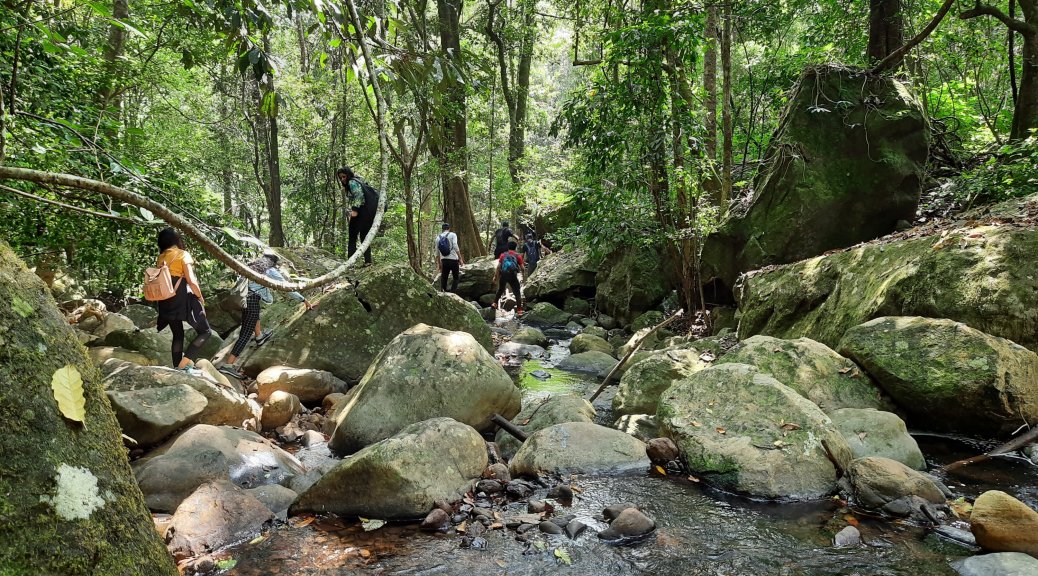
The stream and the hiking trail at Aranamala

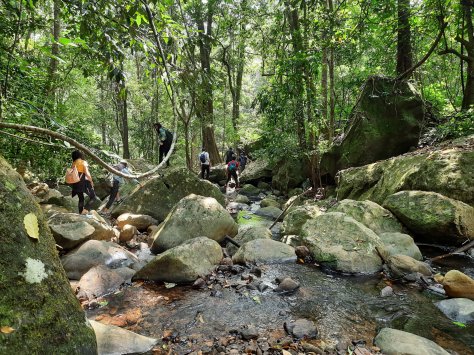
From there onwards, the hike was mainly upstream. While enjoying the absolute music of the gurgling waters of the stream, the croaking frogs and the shrilling cicadas, we slipped down a few large rocks and fell into the shallow waters a couple of times. In spite of trying hard not to get our shoes wet, we ended up soaking them up and picking out occasional leeches from our feet. We realized that given our pace of hiking up, we would not be able to return on time with sufficient daylight. Hence from there onwards, our guide made his own path, through the thick forest. He walked ahead by cutting the thick bushes that came across, all by keeping the stream in sight. We did slip and tumble down the steep a couple of times though. But the hanging vines and lianas came to our rescue. And suddenly, our first view of the waterfall emerged. It was beautiful and the water pool looked crystal clear, tempting to step inside. Apart from our group, there was no one else.

The first waterfall enroute

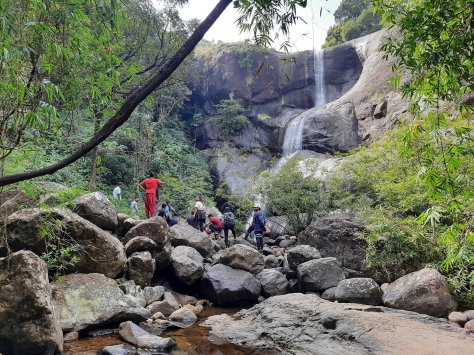
As we got ready to step into the pool, “This is not the main waterfall. We need to walk further ahead”, said our guide. If this waterfall was so calm and beautiful, we wondered how the main waterfall would be like. We were excited! But our excitement sought energy 😛 We had to climb up the same rock, on one end of which the water plunged down. Quite a tricky climb but worth every inch of it! A short walk further from there waaaaasssss the hidden gem that we had come in search of. Now, don’t ask me the name of the waterfall, it is completely off the map and mobile network. So, there is NO way you will find it on google. To make it simple, you can call it the Aranamala waterfall, the waterfall in the Aranamala hills.

The Aranamala waterfalls

That’s all folks, we’re off into the pool to enjoy our dip! But hey, it was not so easy…. The water was bloody cold, and I had cramps in my feet for the first few minutes. I meanwhile enjoyed my free fish-pedicure too, it sort of eased the cramps for me. And then with a dip, I was all set! A waterfall so secluded, a pool so clear and a feeling so divine, I couldn’t have asked for any better to make up for all the travels missed in nearly a year now. After spending some good time under the waterfall and with our soaking wet clothes on, we decided to return. It was already 03.30.p.m and hence decided to take an easy path instead of walking back through the same terrain of forest and the rocks. So, we were taken through a shorter but a beautiful path through cardamom plantation for our descent.

After a nice filling lunch at a campsite enroute, we boarded the jeeps back towards Meppadi. The original itinerary did include a short sunset ride, but the clouds didn’t seem to part for the entire day. From Meppadi, we reached the base of Ambukutti hills for the night. It took us yet another jeep ride to a homestay where we had our chai and conversations. And a fun time around the bonfire until dinner was served.

Post dinner, we carried our tents and sleeping bags up the hill and managed to pitch them atop. The winds were strong, and the rocky ground was tough. With the thick mist blinding all around and the instructions from our guide to not venture away from the tents, all that we could envisage was a deep valley below. The bonus of holding up in the cold until morning, u ask? ‘The view from the tent, of the sun rising above the clouds at 06.00a.m.’ But come morning, we had a surprise awaiting. There was so many clouds until 09.00.a.m that we got a glimpse of the sun for barely a few seconds. We walked up the hill a little further from our campsite, took in some clean air and good views of the range around. We then returned to pack our tents and freshen up for the day. Our breakfast and our ride back to Meppadi was awaiting us at the homestay.

Ambukutti hills as seen from our campsite

That was my story about offbeat Wayanad with ‘Plan the Unplanned’, of leading a group of weekenders and enjoying my weekend, both at the same time.

Other Travel recommendations:

  • Edakkal caves are located at a walkable distance from the campsite at Ambukutti hills
  • You can visit Tirunelli temple and Irupu waterfalls by driving through Wayanad Wildlife Sanctuary (Tholpetta) and Nagarhole National park.
  • Alternately, you can explore Sultan Bathery, visit the ancient Jain temple and Banasura sagar dam that offers a good view of the surrounding hills.

Offbeat Things to do in Vishakhapatnam

My interest in pursuing a career related to the oceans goes a long way back into history. I intended to study oceanography while in school. Then, in spite of studying at an elite college in Bengaluru that offered the army wing of NCC (National Cadet Corps), I wanted to move out to get a ‘B & C’ certification in the Naval wing. After completing my graduation in mechanical engineering, I thought I could do well with a career in a refinery or a shipping harbor or something. A career in ‘Merchant navy’ never had an approval from my family! I did try to get into the ‘Indian Navy’ through the SSB as well. Anyways, all have been futile attempts as life always had other plans for me. But all the above interests have a deep connection with the port city of Visakhapatnam.

Apart from its strategically important port, Vizag had intrigued me as this city is geographically located between a sprawling beachfront and the eastern Ghats. I have been wanting to tick off Vizag, also called as Vishakhapatnam from my ‘to visit list’ from a really long time. Finally, my stint with Vizag materialized in January’2021. This visit is a part of my family’s road trip through Bengaluru– Telangana – Chhattisgarh – Odisha – Andhra Pradesh – Bengaluru.

I had heard a lot of my acquaintances tell me how beautiful this city is. Also, blame it on me for being spoilt by what my home state has offered me in my upbringing. The beaches of karavali, the hills of western Ghats, the coffee plantations of my native district and the sumptuous spread of regional cuisines, similar things were spoken about at Vizag as well. But all the people who had suggested Vizag on my bucket list were the urban tourists who visited this place to either chill by the beachside or relax and rejuvenate at a resort. For those who know me well, I have always enjoyed the exploratory kind of travel. So, I did manage to find such places and things at Vizag to satiate the explorer in me. Here are my favorites:

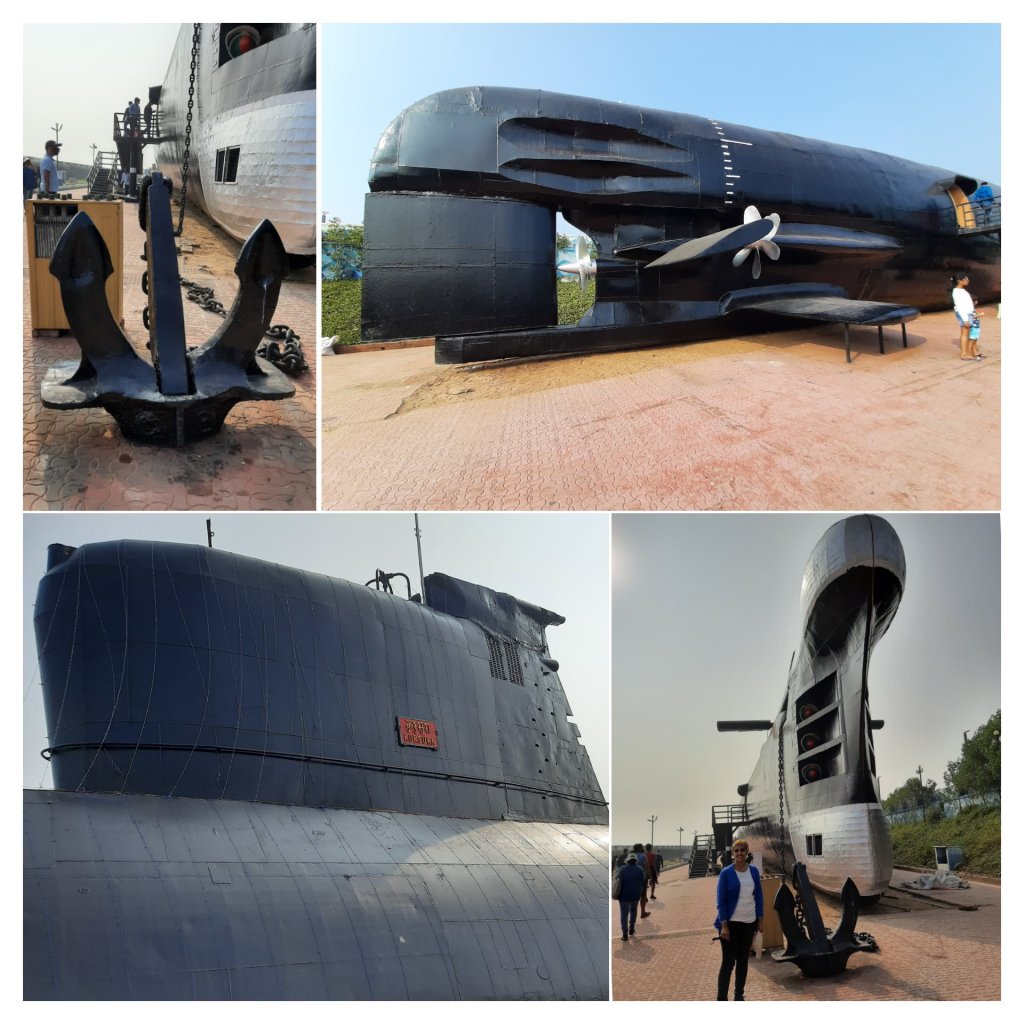
The INS Kursura submarine museum: This is like “THE” thing that brought me to Vizag at the first place. The experience of the guided tour inside of this de-commissioned submarine is something that is priceless and cannot be quantified with a price of an entry ticket.

INS Kursura- Submarine museum

The TupoLev142M aircraft museum: This is one of its kind of what I have been before. The experience of walking through a real aircraft that once served in the ‘Indian Navy’ is a million-dollar worth if you are someone who has deep interest in the uniforms, technology, and scientific history.

Tupolev 142m at the aircraft museum at Vizag

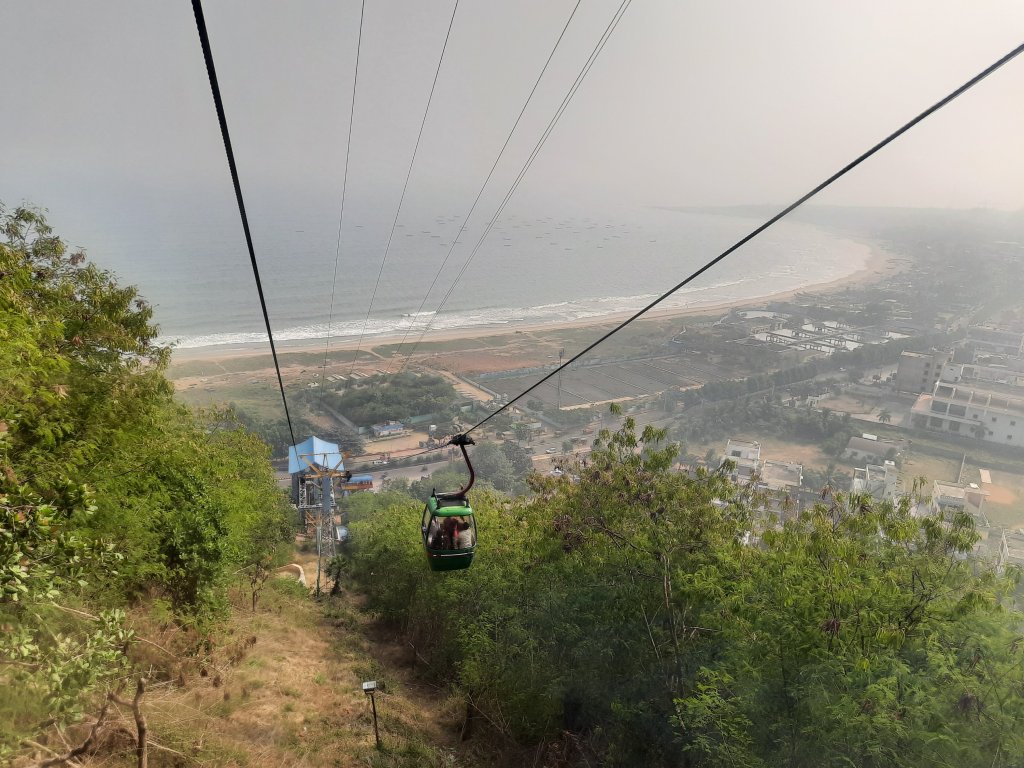
The cable car ride: Kailasagiri hill is a favorite hangout among the locals. They choose to drive up there, walk around the park and hangout at the eateries there. But for me, this was an interesting place because I reached the top of this hill through a cable-car. For all the people drooling over the Singapore tourism’s photos, Vizag is your nearest bet. Once you reach the peak, another recommendation from me is to take a ride on the toy train that goes around the hill. The 360deg view of the city and its enchanting coastline is indeed worth a visit, while you are in Vizag.

View of the coastline from the Cable car in Kailasagiri

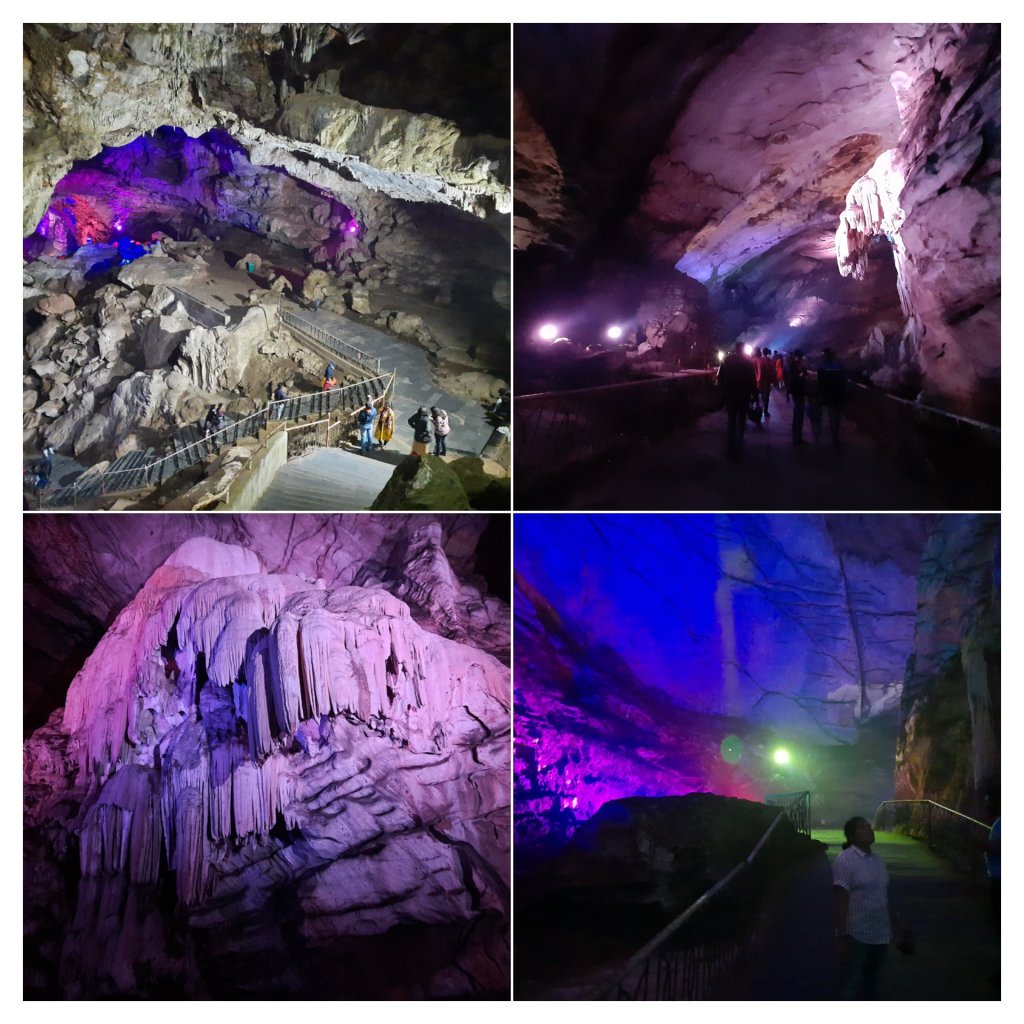
Borra caves: Situated amidst lush greenery, these caves are known to be the widest cave complex in the Indian sub-continent. If possible, time your visit into the caves when a train passes over the land above, you can experience the tremors inside. It is located on the outskirts of Vizag and can be combined as a day trip to Araku valley.

Glimpses of Borra caves

Araku valley: For someone hailing from a place that is called as the ‘Coffee land’ of India (Kodagu district in Karnataka), I found the small patches of the famed ‘Araku valley’ coffee estates overhyped. But still, a meal of ‘bamboo-chicken’ with the valley in the backdrop, a hundred small dotting waterfalls and the beautiful scenery all along the way that made me want to stop for a photo at every turn of the road, all score a definite recommendation from me for a day trip to this valley.

At Araku entrance (From Koraput side)

Sip some kallu by the beach: With its buzzing coastline and palm trees growing in abundance, it is highly likely that you will spot some toddy or Kallu tappers (palm sap collectors) walking past you near the beaches. You can buy the fresh Kallu and enjoy while you are chilling by the beach.

A toddy/ Kallu tapper selling Kallu at one of the shacks

Beach hopping & Ship spotting: Being a major port city on the east coast, it is very likely that you can see some mad-ass big ships that dock at the Tennessee park Beach from across the world. However, there’s ‘MV Maa’, a Bangladeshi cargo ship that’s abandoned after it got beached during the covid-19 lockdown. If you’ve never been so close to a ship before, this is your opportunity to literally walk over, touch and feel a ship. Bonus: News is that if everything goes well, the ship will be converted to a floating restaurant soon 😍

MV Maa- the beached cargo ship of Bangladesh

Have you been to Vishakhapatnam before? What did you like the most?

An offbeat drive from Bengaluru to Gulakamale lake

If you are someone who has been following my blogs for some time now, you would know that most of our family trips are on weekends and to random destinations located around the Bangalore outskirts. We leave home with random reasons to drive out and then pick up equally random roads and follow-it till the road reaches a dead-end. We have thus far explored several villages like this. This weekend too was a similar one. And the reason to drive out, you may be curious to know, right?

My dad had long heard of a pig farm located somewhere around Kanakapura road. We had first stopped for lunch at a hotel on Kanakapura road. There, my dad enquired with the hotelier if they knew of any pig-farm around. They informed us that the kitchen waste from their hotel too was collected by someone who runs a pig farm but was unsure of its location. He gave us the possible location of the place with rough directions. After lunch, we headed out in that direction, a deviation before Kaggalipura.

Our drive to Gulakamale lake

With just the deviation, there was a sudden and a contrasting change in the scenery to drive through as compared to the super congested Kanakapura highway. For a moment I felt as if I were driving through some remote lanes of Coastal Karnataka or the Malnad region. There were stretches of areca and banana plantations on either side creating abundant greenery and change in the ambience. Since there were barely any people on the road, we continued to drive till we found some village ahead. By this time, we had covered a good distance and passed through several types of fruit and vegetable farms.

After reaching the village, we stopped by to enquire a villager on the roadside about the farm, he guided us to a pig-farm located next to his farm. But after reaching there, we realized that it was a different one that my dad had heard of and we had no entry into the place where we had now reached. So, we continued our drive further and reached a junction where we had to pick a direction to turn, the left or the right. Instead, we chose to stop the car in a side and walk up a large wall in front of us that looked like a high-rise wall of a reservoir or something. Indeed, it was a lake up there and surrounded by farms and distant hills of Bannerghatta on the other side. A flock of migratory birds too seemed to be resting in a small islet in the middle of the lake. I checked the location on google maps and I learnt that the place was called as ‘Gulakamale lake’.

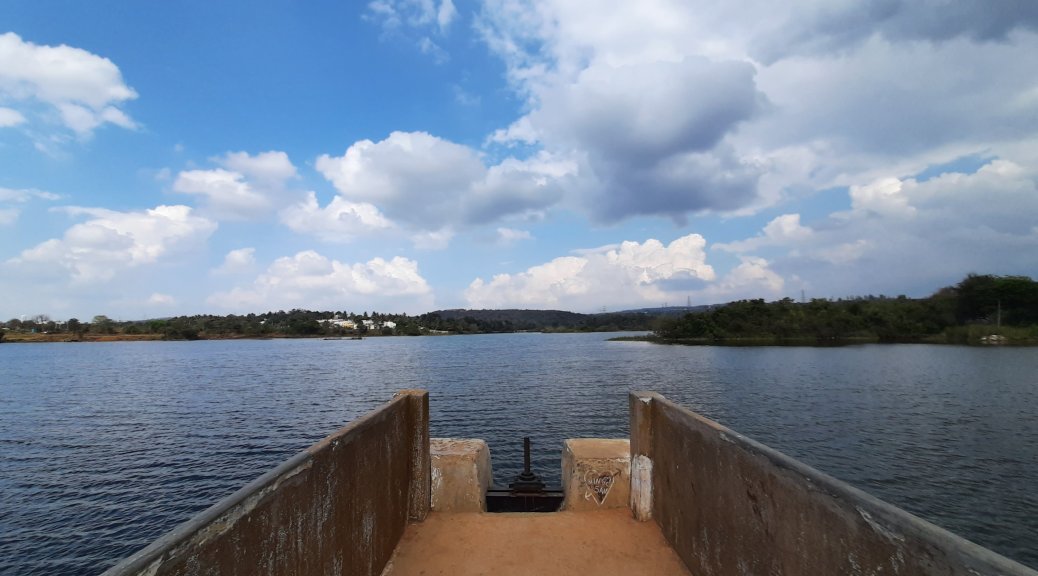
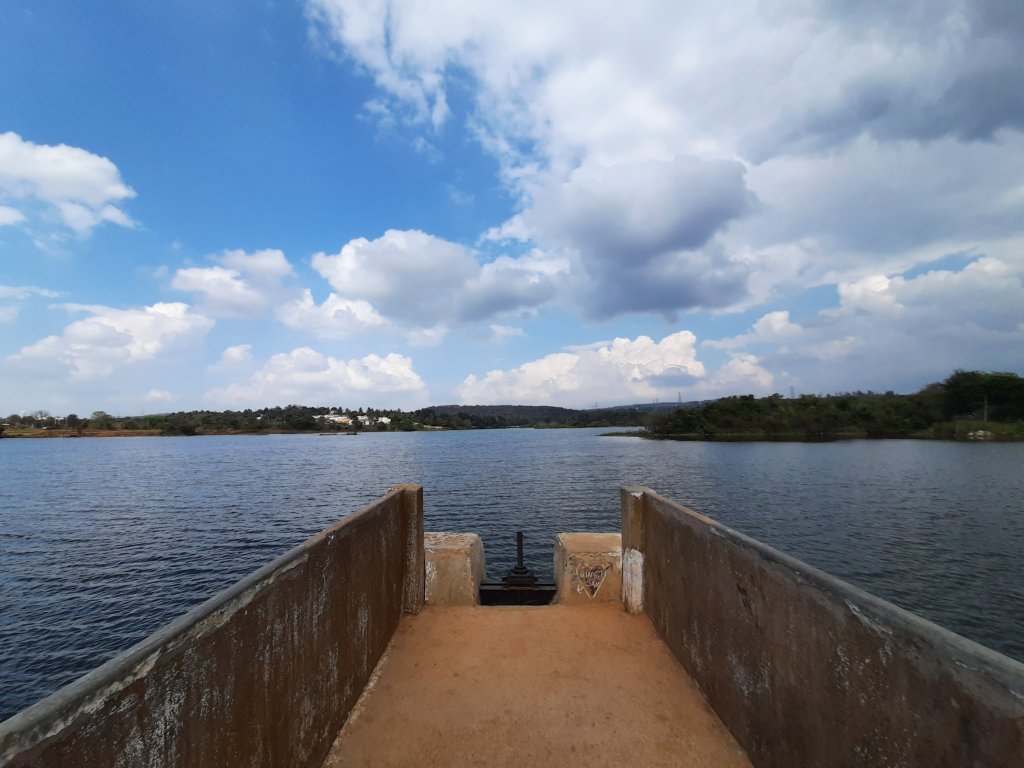
Gulakamale lake

The water looked so good and we sat there for some time, enjoying the cool breeze even on a hot and humid afternoon. It was just my family in the entire place until we noticed some local kids who arrived there. They removed their clothes and jumped into the lake one after the other, enjoying their fair share of fun time. They took all of us back to our childhood days and it was a pleasure to watch them enjoy it that way.

After a while, we decided to move further on the road. This time, we chose to take the road to our left and continued at it. We passed through millet farms, taking a round about of the same lake, papaya farms and other vegetable farms before arriving at a village called ‘Nallakkanadoddi’. It was a small settlement with nothing noteworthy to see or do. Hence, we went ahead as we saw that the road was newly laid and in good condition.

The road reached a dead-end and that was the parking lot of ‘Tottikallu falls’ commonly known as TK falls among the urban crowd of Bangalore. This was the second time for me that I had reached the entrance of TK falls, both times an unplanned drive had taken me there. Again, I decided not to go there on both occassions given the large crowd that had come down over the weekend. More so, given the Covid-19 situation and the crazy crowd this time, we didn’t even dare to step out of our car. So, TK falls has to wait until next time. From here, we decided to head back home and not stop anywhere on the way. Thanks to the weekend rush on Kanakapura road, we would need good number of hours to make our way back through the traffic.

Art and Crafts of Bastar

Bastar is an area soaked in rich culture. And art is an integral and unique part of this indigenous culture. It is safe to say that Kondagaon district is the art hub where there are entire villages dedicated to each of these handicrafts, with households registered with the ministry of culture & art. Several of these artisans are National award winners and visiting faculty at universities across the world. During my week long stay at Bastar, I managed to find time to visit some of these villages and interact with the artisans.

Blame it on me being an experienced professional in materials, manufacturing and heat-treatment processes, I have this weird fancy for everything that involves these aspects. One would not want to seize a travel opportunity from me when there is an element of art and engineering in it…. On similar lines, is the first part of this post.

The major and famous handicrafts of Bastar can be listed as below:

Wrought iron artefacts:

Chhattisgarh is a state blessed with a mineral rich geography. Until a few decades ago, the tribes inhabiting the region used to collect raw iron ore from the naturally available soil or portions of earth, heat it in a furnace and separate the molten iron to make wrought iron. Today, wrought iron is directly purchased from the market. This is then melted and beaten into sheets. The sheets are then formed into various patterns and welded into beautiful artefacts. Although the traditional designs are based on the local tribal culture and represent aspects of daily life in Bastar like animals, hunting, the tribal folk, tribal deities, etc., modern adaptations have been inspired by the Indian epics among many other things. But still, each piece is handmade and unique with no two pieces being exactly the same.

Demonstration of making wrought iron craft by an artisan

Dokra art:

Bell-metal is an alloy prepared locally and cast into various patterns through a technique called as ‘lost-wax technique’ of metal casting. Although this technique was primarily used by the indigenous tribes to mold their traditional jewelry back in the time, it has slowly evolved into making idols and other home décor items. These indigenous metal cast items are collectively called as Dokra art.

Dhokra art at various stages of metal casting

Terracotta pottery:

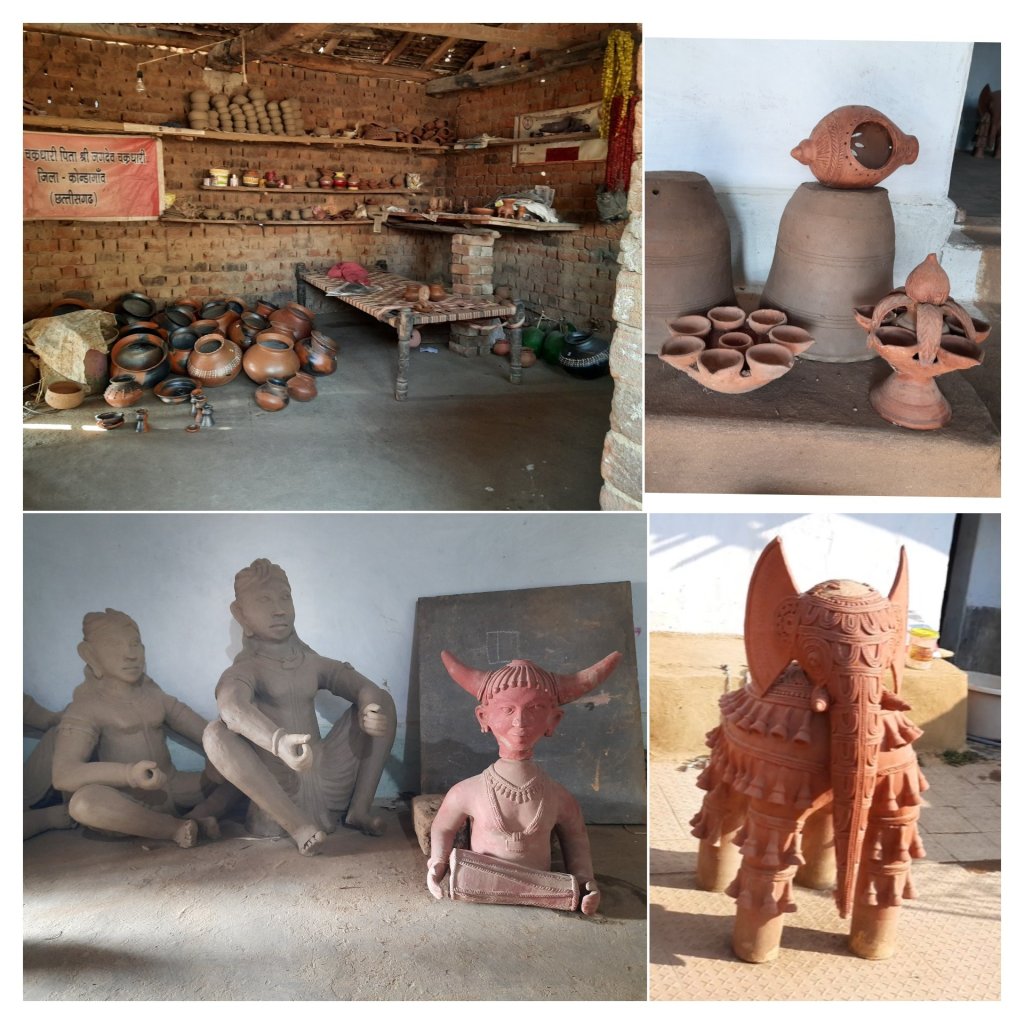
A special type of clay is dug from the vast paddy farms and is then crafted into various artefacts. The specialty of the art here in Bastar is that very large and real-life sized objects are crafted completely with clay. After the potter assembles the product piece by piece, he then burns it as a whole unit to give it the required strength and rigidity. Well, there’s an entire village of potters / Terracotta artisans in Kondagaon.

Terracotta art at Bastar’s pottery village

Wooden carvings & Carpentry:

With the abundance of forest cover and timber availability, wood craft is a major part of the handicraft culture here. Large tree trunks and roots are given the form of beautiful figurines, animals, etc. by very skilled artisans. This can also be seen in the rich carvings on doors and friezes of various old and traditional structures across the region.

Stone sculpture:

With the mineral rich earth of the region, various types of soil and stone are available. Several of these earthy materials are used to make beautiful sculptures.

Mural Paintings:

With a somewhat influence of the Patachitra art from the neighboring state of Odisha, the local Gondi artform and several other influences, the indigenous wall and fabric painting has evolved. Beautiful pictures of tribal deities, everyday life etc. can be seen being depicted through these paintings.

Handloom:

A small portion of the local tribes are involved in collection of the naturally available cotton and Kosa silk from the forests and weaving them into traditional textiles.

Jewelry:

Each of the tribes who inhabit the remote jungles of Chhattisgarh have their own unique pieces of jewelry. Anything that ranges from silver, fabric, plant fiber, shells or animal bones, the locally available materials from the wild are adapted into their culture in the form of traditional jewelry.