Category Archives: Statewise Travel

Journey away from Bangalore that includes night journey and an overnight stay… Especially ones planned on long weekends with Saturday and Sunday off :)

Story of making my wish come true- Watching a Rocket launch

You know, I know, we all know… That what we know is NO rocket science 😛

I don’t know about the millennials.. But as a 90’s kid, I sure know how everyone who grew up in the Doordarshan era have lived through the excitement of watching a rocket launch on TV. It would be far from anything but a dream come true to watch one in real! That’s why I decided to explore the journey of the evolution of rocket science in India… and thus score off one item on my bucket list- to witness a rocket launch! (Click here to see my wish list)

India’s space history had a humble beginning in a coastal village called Thumba in the 1960s. India’s first rocket, the Nike Apache was assembled exactly where once stood an active church of Lady Magdalene. Thumba Equatorial Rocket Launching Station (TERLS) is now called as the Vikram Sarabhai Space Centre (VSSC) where a sounding rocket is launched on the third Wednesday of every month to date. As India’s space research requirements expanded, the need for a larger area laid foundation to the present day Satish Dhawan Space Centre, SHAR at Sriharikota. This is where the present day larger SLVs are launched.

This year 2019 is particularly of my interest for 2 reasons. One- we commemorate the Golden jubilee year of the formation of ISRO; Two- It’s the centenary year of the father of Indian space science, Dr.Vikram Sarabhai. (Click here to read the complete story). How does the country celebrate it? By launching a rocket… India’s largest rocket, taking the payload to the moon!

<20-Mar-19>
On a random thought, I was reminded of someone distantly telling me about visitors being allowed to watch rocket launches at VSSC. I browsed through their website and immediately registered myself to witness the next launch.17-Apr-19 it was. My visit was confirmed by an e-mail on the following day. I was as excited as an electron. The next task was reaching there. Trivandrum seemed to be quite far as per google maps. It required a minimum of 4days for a return trip and working out any mode of transport to reach there was both expensive and time consuming. Trains tickets were sold out and flight charges were already sky high. I decided to wait for a tatkal train ticket or book a last minute ticket to travel by bus. I had planned to fall sick to office.

<28-Mar-19>
After many failed attempts at registering themselves for watching the rocket launch along with me, my friends got a rejection mail. Reason: ‘17-Apr-19 was a government holiday, VSSC will remain closed’, I was informed of what the mail read. Now, we were all in a fix. I had an acceptance and they were rejected with a reason. I called up the VSSC office immediately to get a clarification. I was told that the festival date was frozen after my registration and hence the April’s launch would be re-scheduled to a later date. So now, considering that 15-May-19 was the 3rd wednesday of the next month, the officer talking on the other end of the phone obliged to reschedule my visit to that day. My mother, brother and friends decided to join me on that day by registering themselves separately. All registrations were accepted and we were sorted. The next step was getting approval for my week long’s absence from office. It was fairly easy since it was still a month away and I wasn’t throwing a sudden surprise to my boss. Train tickets were available in abundance and we were all happy with confirmed AC berths for a return trip.

<11-May-19>
My cellphone had been blinking after an SMS was received. I reached out to read it, a SMS from VSSC it was. “The rocket launch scheduled on 15-May-19 has been cancelled due to technical reasons”, it read. We were supposed to travel to Thumba the next day. All our hearts sunk in for a bit. But then, yeah.. We were quick to accept the fact that “Launching a real rocket isn’t something like burning Diwali fireworks. There are a lot of scientific calculations that goes into it based on the fitness of the machine itself and geo-spatial positioning. These launches are scheduled monthly events and we can definitely plan to make it some other time. I’d rather surprise my boss by turning up for work even on a planned holiday”, I thought.

<15-May-19>
It was the day when I was supposed to be witnessing a rocket launch, in real. This day, I was pleasantly informed by a friend that ISRO had opened its gates for public viewing of satellite launches at Sriharikota. “Oh WOW!” was my first exclamation. As the World celebrates 50 years of man’s first steps on the moon this year, India was gearing up for one of its ambitious mission to the moon. The Chandrayaan2 was scheduled for a 2019 launch. “I shall wait for this one!” I had decided. I kept close watch on the launch date. As days passed by, the launch was declared to be on 15-July-19. The next task was to keep close watch on the registration link on the ISRO website. Eventually, newspaper headlines read that the registration lines for would go live on 04-July-19. Only 5000 people were going to be let in, on a first-come-first-serve basis. It being a milestone project, we had to be real quick to apply and lucky to get the entry passes.

<04-July-19>
I was up and waiting for the stroke of the clock at 12.00.a.m. But for my disappointment, the website had hung. Waiting until the server got better didn’t seem to be a good idea but I had my apprehensions about losing a chance. But the sleep gods had started to take over me. I set the alarm at 05.00.a.m. hoping to try my luck anyway. Surprisingly, when I woke up at 5.00.a.m., the website still gave the same regret message. I decided to try again after reaching my workplace. It was around 09.30.a.m. when the lines got better and I had navigated into the 2nd page of registration. With a surprisingly slow server of the ISRO, it was 10.00.a.m. by the time I had a confirmed entry pass for 3 people including my mother, brother and myself. My friends on the other end had failed to get the passes. As expected, the tickets were SOLD OUT in less than half an hour of opening the registration lines. I was LUCKY!

<14-July-19>
The trio comprising mom, bro and myself set out on this epic road-trip to see our wish come true.. We were driving to Sriharikota, to witness the launch of India’s largest rocket till date- GSLV MkIII, carrying onboard, the Chandrayaan2. The satellite was scheduled to launch at 2.51.a.m. that midnight / early morning of the following day. The last town before Sriharikota was Sullurpeta, 25kms away. All hotel rooms were sold out and we had decided to stay inside our car and make do with the available fuel station or restaurants when we had to answer a nature’s call. Although the entry to the launch view gallery was scheduled to be open at 10.00.p.m., we ensured that we reached there by 08.00.p.m. to avoid the traffic and the rush. When we reached there, the rocket garden at the entrance already seemed to be flooded with media-persons and the visitors alike. When this Bahubali rocket blasts off, the entire island lights up like day, the window glasses rattle in Sullurpeta, a visitor told us adding to our excitement. When the gates opened, we were among the earliest visitors who occupied the seats of our choice. We watched the crowd slowly pour in to the gallery and the excitement was only getting higher with passing time. We were still over 4 hours away from having our wish come true.

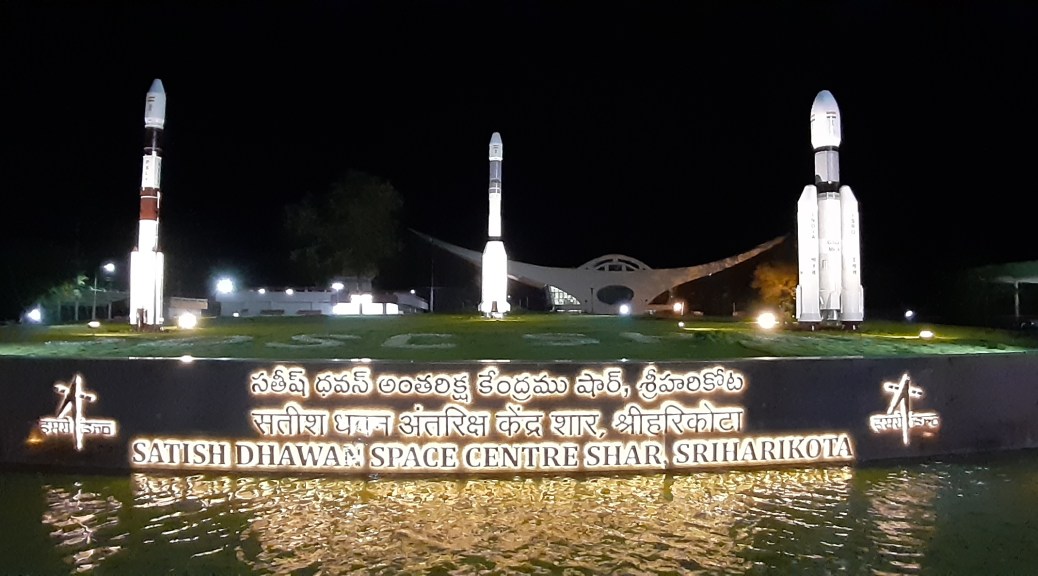
The Rocket Garden with the scale models of the SLVs

While the entire country was glued to their TV screens to watch a nail biting finale of cricket world cup in which India was out of the tournament long ago, I was part of a relatively smaller crowd that had gathered to cheer for India on one of its greatest mission to date.

At a distant sight of view, the red lights were blinking on the cranes and the umbilical tower at the launch pad. The emcee was building up the momentum for the final showdown. The cheer for India and ISRO reverberated in the gallery as the countdown and live videos of the satellite were displayed on the large LED screens.

At around 57 minutes ahead of the launch, the emcee’s voice dropped. With a pause she said, “The launch has been temporarily withheld due to some reasons. Anyway, we shall continue to do whatever we are doing right now, to cheer for this project.” Even before she could complete, another voice echoed in at the 56th minute. “This is the director talking from the control room. Due to a technical snag identified, this project remains called off for today”, he said. There was a sudden silence as the crowd sat in disbelief. The emcee too hadn’t seen that announcement coming and wasn’t really prepared to take that. She repeated the exact words of the director to the crowd. The audience continued to sit in silence. Clearly, disbelief loomed large. Every soul in the gallery hoped that it was a prank and Chandrayaan 2.0 was still going to take off in a few minutes. The emcee told them to disperse.I felt like my head was going blank and it felt like the emcee’s voice was fading out. I waited for the launch hoping it would take off after the crowd cleared out. “This project remains called off for TODAY”, I tried to understand what had just been said. “The mission was not CANCELLED, it was only POSTPONED to a later day..” I reassured myself. “I shall be back… to cheer for my country’s greatest scientists.. for propelling India’s ambitious mission..” I decided.

<18-July-19>

Amidst lot of speculations, the new launch date was set to be 22-July-19. ‘You can reconfirm your visit to the launch view gallery by clicking on the link provided.’ an email from ISRO read. I wasted no time in updating my entry pass as a constant smile of re-assurance prevailed over my face on getting to go again. Unlike my previous visit to Sriharikota, I decided to contain my enthusiasm this time. I didn’t care the delay, all I wanted was a successful mission.

<22-July-19>

Today, we are here at the gallery already at 10.00.a.m., we are the early birds who have come here to occupy the prime view seats, the drizzle of rain since morning hasn’t dampened our spirits. People are slowly trickling in, but they all seem to keep it a low key affair this time. The momentum was given a boost by Mr.K.Sivan, the Chairman, ISRO by coming down to the launch view gallery to meet and greet the enthusiastic crowd. We were all briefed about the unknown facts about #chandrayaan2 by Mr.Ranganathan, the project director for the stage 1 of GSLV mk III.

Top: Launch pad on 15-July-19; Below: launch pad on 22-July-19

The first visuals of the Bahubali rocket all set for its trip to the moon from the launch pad finally appeared on the LED screens and crowd had started to get eclectic as the countdown started. And well, Finally the emphatic countdown has begun and we see everyone more confident than ever… 10..9..8..7..6..5..4..3..2..1……

The flight off moment

It was SHEER sight of a lifetime… an impendingly roaring bright yellow mass of flame blasted off from amid the forest cover, separating itself from the umbilical tower.. A sonic boom travelled afar and within a few seconds, it disappeared into thick clouds. Although the launch vehicle lifted off at 2.43.p.m., the cheers from the control room came in 16 minutes later when the 3,850-kg spacecraft was successfully placed into the earth’s orbit and the first signal of separation was received from the satellite. CHANDRAYAAN2 on its trip to the moon, with a successful launch!

I’ve got Goosebumps all over me!

Happy Chandrayaan to ya’ll!

Here’s a quick summary of India’s mission of landing on other celestial bodies outside earth:

  • Circa 2008: Chandrayaan1, India’s first ever mission to the moon, put India on the world map for being the 4th country to land on the moon. Although it was functional for 312 days against the intended life of 2yrs, it was still able to achieve 95% of its expected tasks. That was HUGE for a first Indian- home made launch vehicle.
  • Circa 2013: Mangalyaan1 was a first for any country to have a successful landing on the Mars on a maiden attempt. What’s bonus? The orbitor that was designed with an intended life of 6 months is still orbiting around the Mars, well into its 5th year as on date.
  • Circa 2019: Chandrayaan2, India’s 2nd mission to the moon made it the first country to land on the southern pole of the moon. Why is this mission so important? This satellite will be launched in a GSLV MkIII, the largest launch vehicle ever built by India. The success of this mission will pave way with more thrust to India’s first manned mission to space- The Gaganyaan, which will also happen with the same launch vehicle.

Through these successful launches, India has created a niche for itself for producing successful space projects at lowest prices. These entirely indigenous projects which cost way lesser than several hollywood movies speak volumes of the capabilities of the scientists of my country.

As someone rightly said, so many countries have the moon on their flags, India is one of the only 4 countries to have their flag on the moon. There can’t be more reasons to applaud ISRO and be proud of India, my INCREDIBLE country!

From top right clockwise: 1: ISRO Chairman Mr.K.Sivan addressing the crowd, 2.Mr.Ranganathan, project director for Chandrayaan stage 1; 3: My brother and mom in the crowd; 4: Mom and myself after the launch

Land where Art is Divine- Pathanamthitta

Dense canopy of trees, swaying coconut palms, houseboats cruising through the pristine backwaters, wooden canoes of the locals fishing in narrow canals- Well, does this paint a picture of Gods own country? When opportunity struck, I decided to give the usual things a miss and explore a region that is least spoken about in a typical tourist circuit in Kerala. I wanted to explore the land where art is considered divine and celebrated in all its form. I was heading towards Pathanamthitta.

My Itinerary:

Day 1: Leave from Bangalore to Kochi (by Flight); Drive from Kochi to Pathanamthitta. Visit Aranmula Parthasarthy temple (take a local foundry tour); Visit Thiruvalla Srivallabha temple (Watch a Kathakali performance in the temple);
Day 2: Gavi or Konni elephant camp, Charalkunnu, Kakki reservoir, Perunthenaruvi waterfalls, Kalloppara church, Paliakkara church and Niranam church. Return to Bengaluru.

The details:

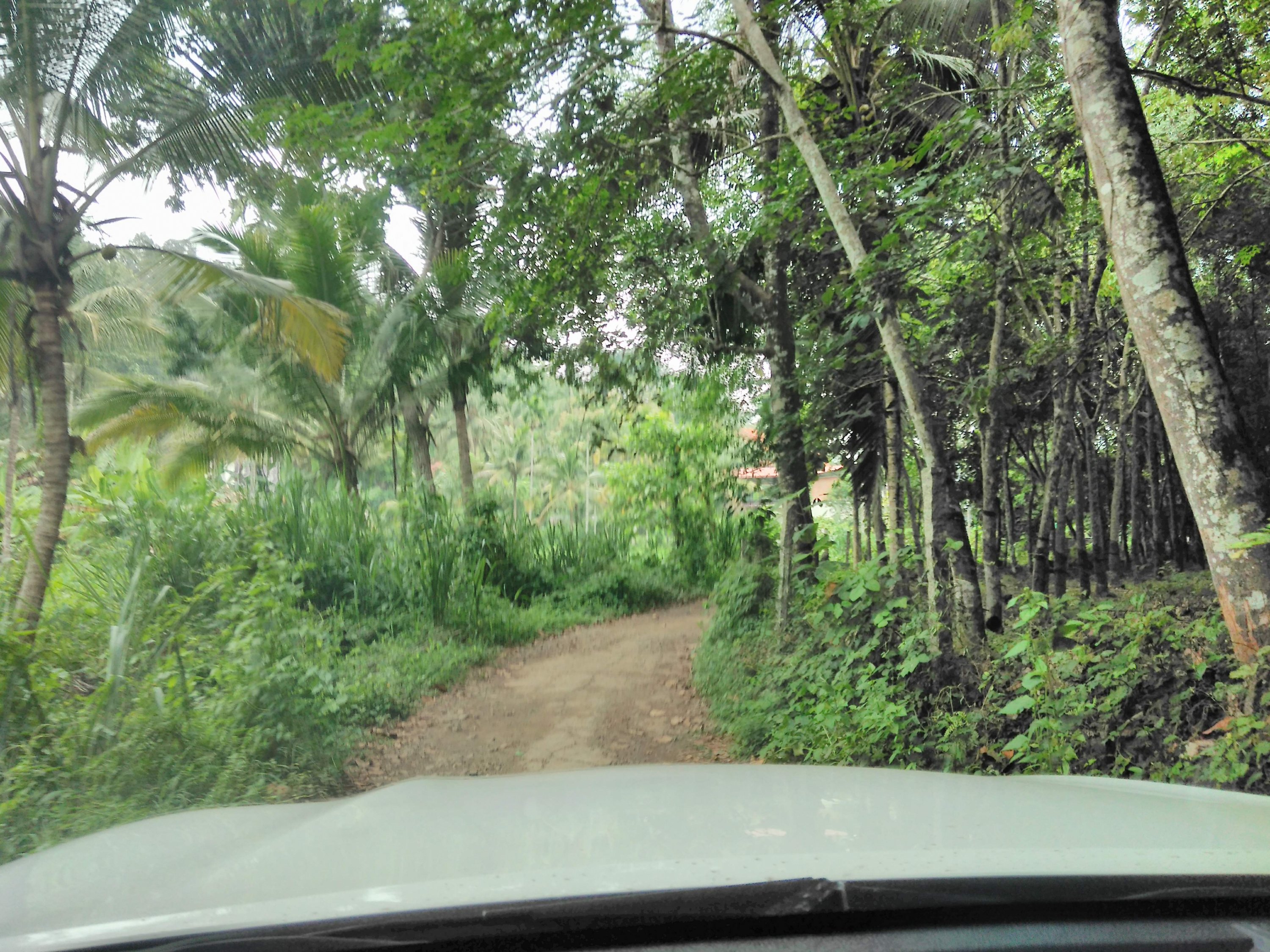
First thing I did while approaching Pathanamthitta was lowering all the windows of my car, to breathe in some clean air. With almost two third of the district comprising of forest cover, it is no wonder that Pathanamthitta is the least polluted city in India. The remaining one third is a combination of the city and plantations. We were heading to the homestay we had booked, not very far from the city centre. It was nestled in what the locals call as a residential area that was far from imagination of a city soul. The narrow roads were flanked by rubber, tapioca and banana plantations for most stretch and marsh lands for the rest. Bunches of jackfruits hung down from tall trees among several other tropical trees like litchi, rambutan etc. that had the fruit lover in me all drooling. My stay was at a traditional Kerala house nestled amidst a huge garden. Its wooden portico with clay tiled roof had me fancy struck.

img_20190531_1320012544330379495427061.jpg
Enroute to the homestay

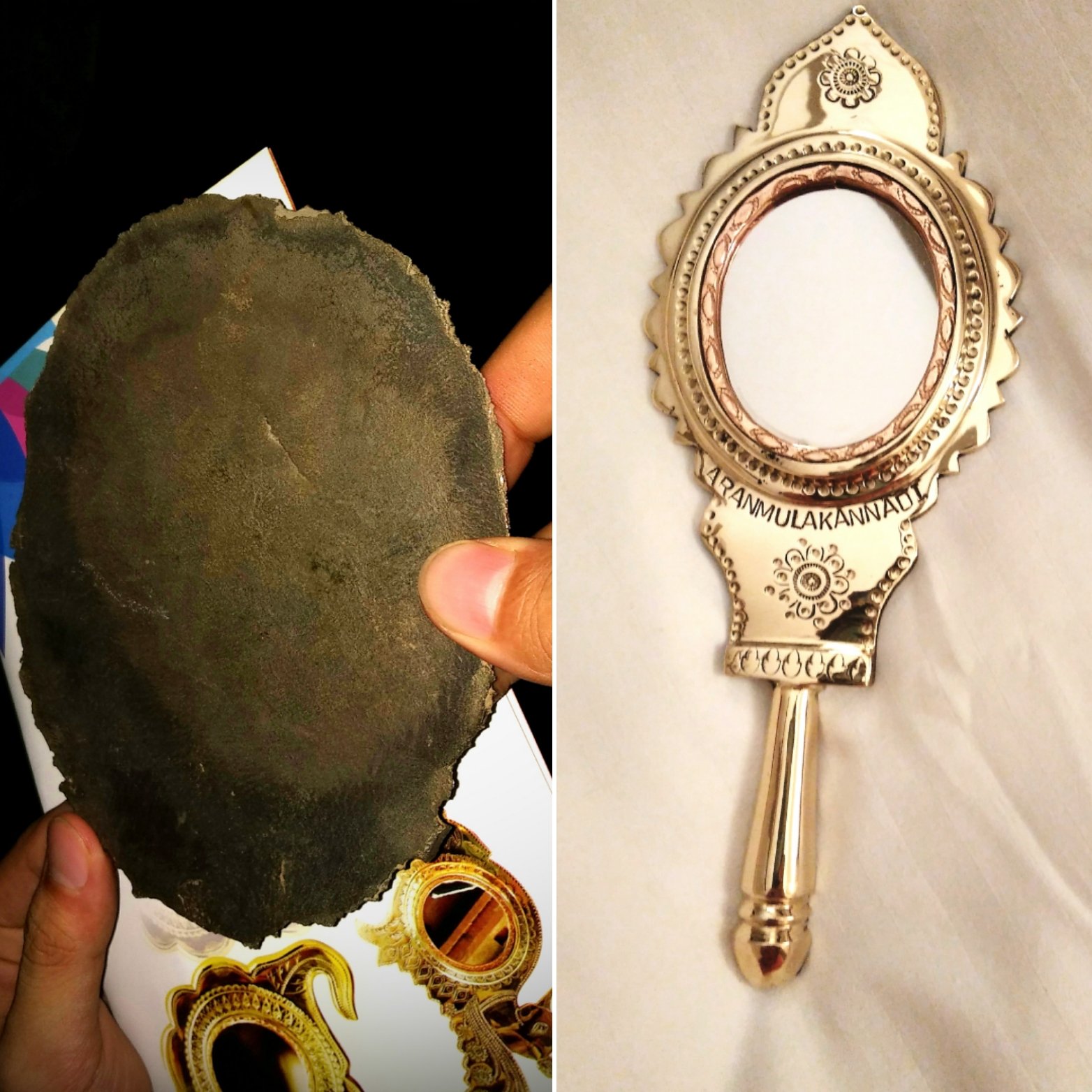
Surprisingly for me, Pathanamthitta hosts some of the largest annual religious congregations in the world. The Sabarimala yatra and Maramon convention are next only to the Haj. Giving a pass to the famous backwaters of Kerala, I had driven this far to explore its vibrant and divine culture and art. My plan for the first day was to visit two of the 108 Divyadesams, both located in Pathanamthitta. I had arrived at the Aranmula Parthasarthy temple, particularly for a tour of a foundry that makes the historical ‘Aranmula Kannadi’ (Click to watch the video).

This GI tagged handicraft is culturally important in the state of Kerala. The know-how of making it is endemic to Aranmula and limited to the descendants of only one family who now live around this temple. Unlike the familiar glass mirrors, these are finely polished metal sheets. Watching these men toiling in their workshop to bring an alloy to life, which is integral in all Malayali celebrations was like living a dream for me.

img_20190622_2343003929859773219572362.jpg

Left: moulded metal sheet before polishing; Right: Polished & finished mirror

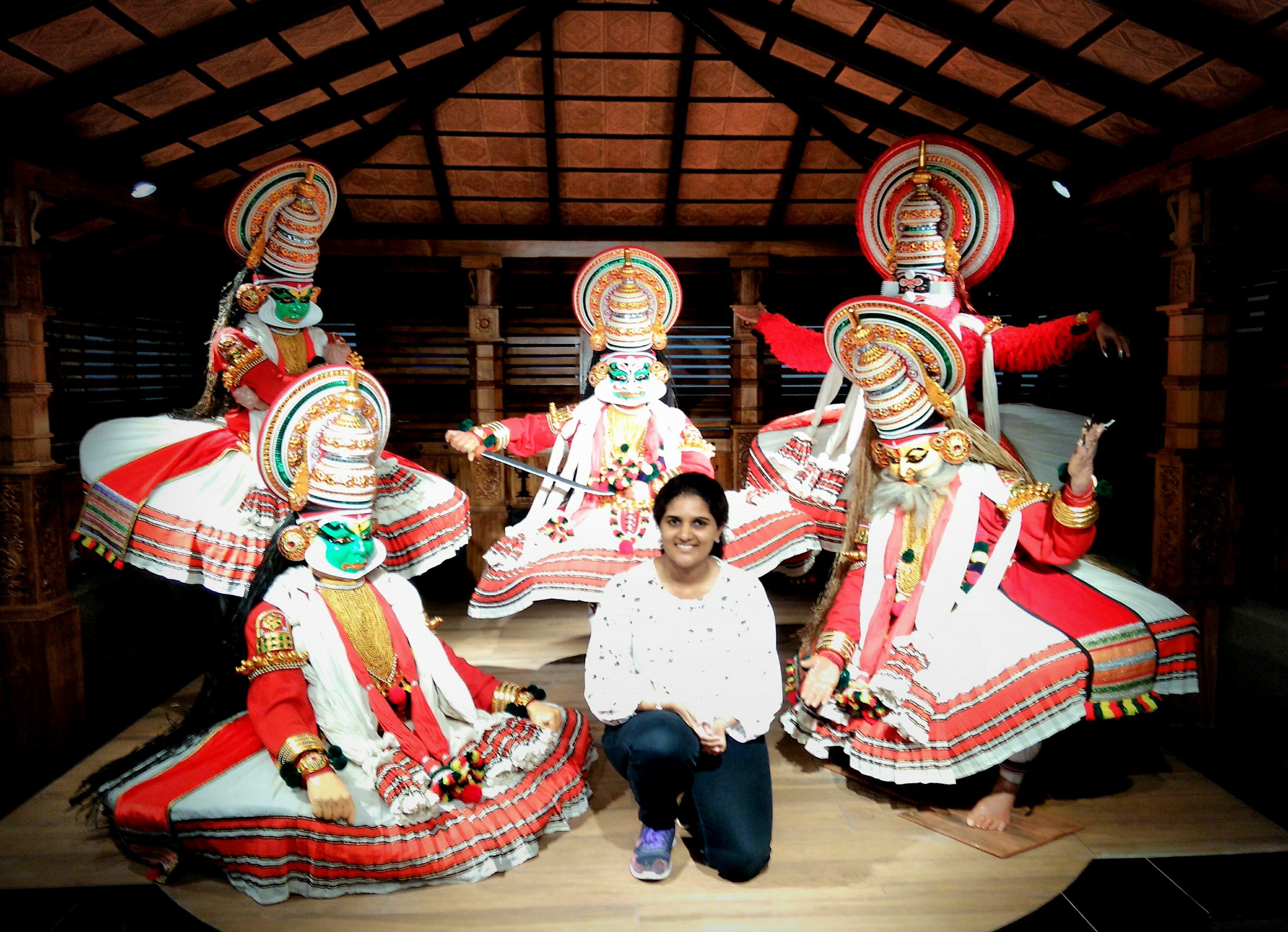
A short drive away from there was my next destination: Thiruvalla Srivallabha temple. With its ancient wooden architecture, this beautiful temple sprawls on a huge area. Here, the prayers are offered five times a day and the last prayer was specifically that interested me the most to visit here. Kathakali is performed inside the temple premises everyday as a form of prayer to put the deity to sleep. I was like a little child in wonderland who lost track of time watching this performance that went late into the night.

img_20190601_1301236968219467911473755.jpg
A traditional Kathakali setup at the Kochi international airport

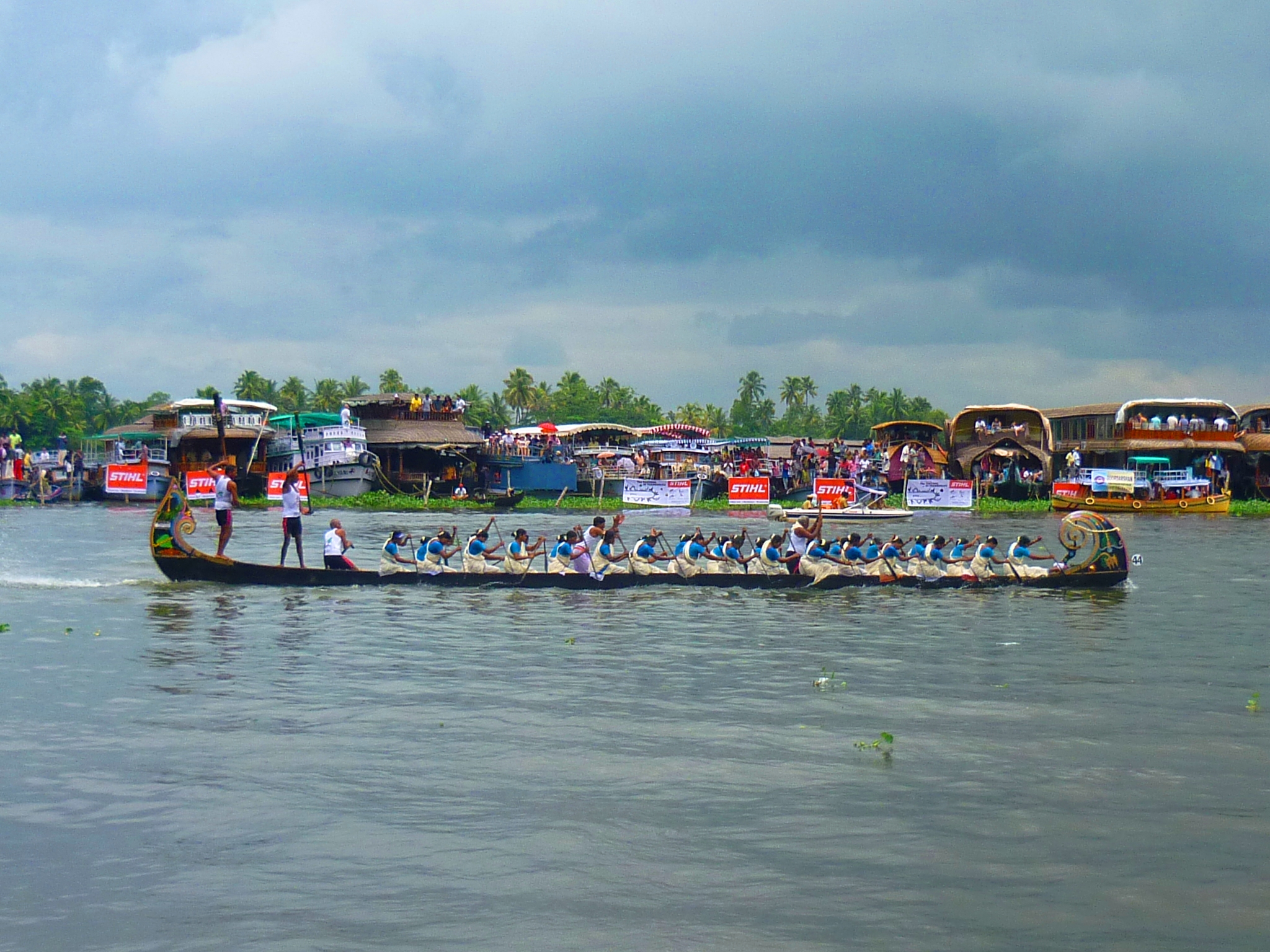
An early morning drive to Gavi or Konni elephant camp is what I was recommended for finding a piece of nature. Charalkunnu, Kakki reservoir, Perunthenaruvi waterfalls are few of the other nearby places that tourists usually visit. But I decided against it all and while away some time exploring the neighbourhood of my homestay before checkout. It was as calm and peaceful as anywhere else. While sipping a cup of Kattan chai, I was reminded of my previous trip to Alleppey. Hundreds of wooden canoes measuring over 100 feet, long enough to be called snake boats, gather from across Kerala to compete for the coveted title. Each boat carries at least hundred oarsmen, all singing the Vanchipattu in chorus. Breathing the heavy air filled with anxiety of the spectators, it was a lifetime experience. Like Alleppey, Aranmula too hosts one of the largest boat races in Kerala. The Aranmula race is held on the last day of Onam as a celebration of Lord Krishna crossing river Pampa.

Boat Race finals (22)
The oarsmen ‘”Women” from Alleppey

I had planned my return route to Kochi such that I could cover some of the interesting landmarks along the way. The first stop was at Kalloppara, where an ancient Hindu inscription exists inside a church. I had read about how two faiths co-exist under the same roof that houses a Bhagavati temple and a Mary’s church. But my drive through the streets of a residential area ended at a bridge that connected Kalloppara. It had collapsed during the floods that ravaged Kerala last year. Having three rivers flowing through it, Pathanamthitta was one of the worst affected.

I hit the main road again and headed to Thiruvalla. Since it was dark the previous night, I was there again to have a look at the famed mural paintings on the altar of the Paliakkara Church. The church at Paliakkara and Niranam (my next destination) both have their history dating back to the arrival of St.Thomas in India in 54.A.D. This trip was all about an amalgamation of art and tradition. Be it wildlife, religion, architecture, history, art or culture, I believe Pathanamthitta has something for everyone.

(P.S.: I’m against the idea of taking photos inside any place of worship, as a form of respect to its sanctity. Hence, I do not have any pictures from the interiors of any place of worship)

Fact File:

  • How to reach: The nearest airports are at Kochi and Trivandrum. Kottayam and Alleppey are the nearest Railway stations. KSRTC buses and taxis are available from these places to reach Pathanamthitta by road.
  • Get around: local buses are quite frequent; Taxis can be easily availed.
  • Best time to visit: September to May (Anytime apart from monsoon)
  • Stay: Luxury hotels are sparse. Cheap and Budget hotels are available in plenty considering the pilgrims who come here for Sabarimala yatra. Homestays are available to experience the true essence of Kerala.
  • Must do: Attend a Kathakali performance, visit a mirror foundry, Bathe elephants at Konni.

You are not a Bengalurean if you don’t know this

Do you google for offbeat things to do in Bengaluru or Offbeat places to visit in Bangalore? When friends visit you in Bengaluru, what do show them in the city?

With the city growing into being popularly called as the IT city, Silicon city and the Pub city of India, a pub-crawl to one of the hundreds of breweries and restaurants in the city is a must on every visitor’s list to do in Bangalore. But these are for the millennials of Bengaluru. If your visitor is someone from the 90s or perhaps older, the pubs might be of little interest to them. They have probably grown up hearing about the garden city’s rich green and red canopies of Gulmohars, filter coffees and pleasant weather. They perhaps had relatives from yester years either working or studying in Bangalore as it was reckoned with talented people, better job opportunities, some of the premier organizations of the country, rich cultural heritage, polite and soft-spoken folks etc. In either case, anybody who has lived in this city for a little over a couple of years likes to call him/herself as a ‘Bengalurean’. That’s like adding a price-tag, it kind of gives them a sense of pride!

Talking about the second category of visitors, often when friends and relatives visited Bangalore with 2-3 days in hand and asked me to take them around, I used to wonder as to what’s there to show them around for so many days. The hugely popular Vidhana Soudha and high court complexes, the Lalbagh and Glasshouse, Tippu’s summer palace and the Bangalore palace are landmarks and historical monuments that can all be done in a day. The old charm of Cubbon park and the famous Boulevard of MG Road that boasted of being the city’s lung-space and shopping hubs aren’t the same any longer.

So, this led me to exploring the city and what I found is something that EVERYONE who claims to be a Bengalurean must know! What’s the use of associating with a place or thing when you don’t have enough knowledge of what you proudly brag about in your social circle? Isn’t it?

Bangalore (as every someone from the Old Bengaluru likes to still call it) is a city that has witnessed its growth through harmony between technology and rich history. It is one of the earliest technical hubs and home to some of the premier institutions of the country. The museums in Bengaluru are proof of its association with science and the heritage buildings scattered across the city are testimony to it’s history. You are not a true-blooded Bengalurean if you haven’t been to these places in the city!

NOTE:

  • These places are picked from across categories and hence are listed in no specific order or choice. Rating them against each other would not mean any justice.
  • All these places have been personally visited, studied and documented by me. However, these are places of certain confidentiality and hence, photography is prohibited.

ƥ What if dinosaurs were replaced by aeroplanes in Jurassic park?
HAL (Hindustan Aeronautics Limited), Asia’s largest and India’s first aerospace establishment was founded and is headquartered in Bangalore. If you want to walk down this journey of how aviation industry has evolved in India, a visit to the HAL Aerospace Museum, India’s first aviation museum located at the HAL premises is highly recommended. Get yourself amused in another world by taking a walk between vintage planes, flight simulators, mock ATC and all the things associated in this subject of fantasy. Now, this place leads me to my next destination: The IISc (Indian Institute of Science).

>• How about a meal cooked in a Hydrogen plant?
Well, I didn’t even know this thing all the while as I feasted on the sumptuous plate of idlis for 5Rs. every morning for breakfast during my fellowship at the Indian Institute of Science. Interestingly, I used to be surrounded by the best scientists of India and abroad discussing new experiments over a plate of food cooked at the same place where a bunch of people discussed a war plot in history. What is now the top-of-the-notch science and technology institution in India, served as a hub for maintenance and repairs of US aircrafts during World-War II. And, the kitchen of this tiny vegetarian restaurant on campus made hydrogen gas to supply for the US fighters during their battle with the Japanese. Eventually, the need for skilled personnel in aeronautics by the HAL workforce at this facility to help the US forces, lead to the establishment of what is today known as the Aeronautical engineering department at IISc campus.

∆• Ever wondered how you could touch someone’s heart and tickle a human brain?
A visit to India’s first ‘Human Brain Museum’ located on the premises of NIMHANS (National Institute of Mental Health and Neuro Sciences) can help you do just that. NIMHANS is India’s premier and apex medical institution for mental health. The museum has a large collection of brain samples of several animals and human beings suffering from various forms of mental and neurological disorders. Not just that, the visitors taking a guided tour of the museum get to hold and feel various human body parts, ranging from brain, spinal cord, heart, lungs and the like. It was indeed an experience of a lifetime for me to hold it in my palms (without a degree in medicine :P). Another information centre on the same campus gave me a walk through the history of NIMHANS thus leading me to my next destination: The Mysore Bank building.

>• What if you were counting coins at a Lunatic Asylum?
Don’t be surprised! Mysore Bank is a popular landmark located at Bank circle in Gandhinagar and is one of those few places in the city where a vending machine dispenses coins of various denominations if you fed it with currency notes. While you were busy at it, you might not have taken note of the fact that the very building where the bank functions today used to be the first mental hospital in India, established in the 1800s by the Mysore Kings. Country’s first institution for Post-graduation in Psychiatry was started here eventually leading to the establishment of NIMHANS.

ƥ How does a ticking clock look if all characters from fairy tales danced around it?
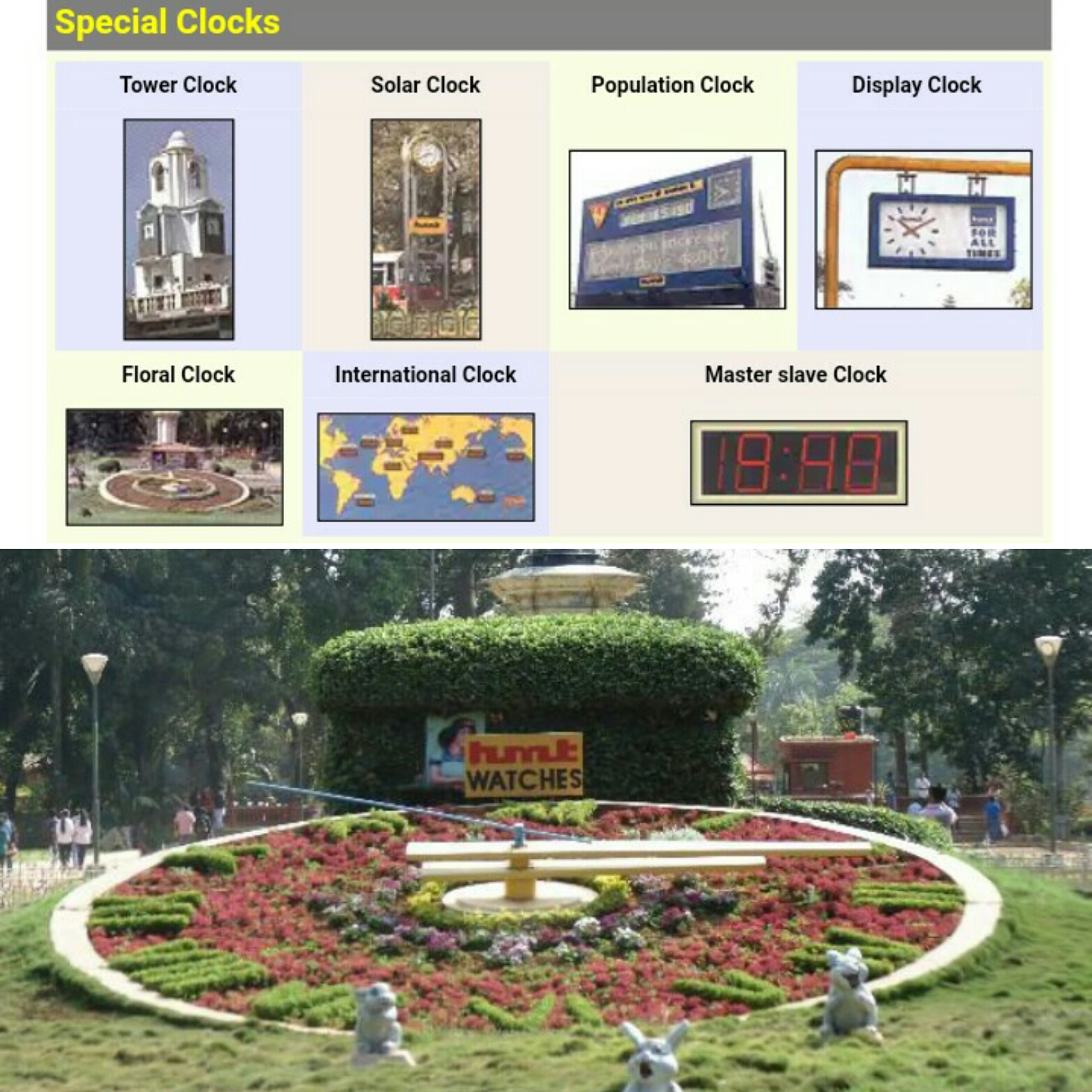
People from far and near flocked to Lalbagh as the word about ‘The Garden clock’ spread wide back in those days without YouTube and WhatsApp. That scientific marvel was a seven-meter-wide solar powered clock ticking on a dial made with flowering plants and popular characters from fairy tales like snow-white and the dwarfs dancing around it. This is a functional clock till date and speaks volume of our country’s strength in technological evolution. The creator of this unique time-machine pulls me down to my next destination: HMT watch factory.

>• Have you stacked up your ‘time-machine’ to go back in time?
While I spent a couple of years living in this locality surrounded by the HMT(Hindustan Machine Tools) properties like the HMT officers’ quarters, HMT sports club, HMT theatre etc., I also remember the time when I was brought back to time (read it- ‘Back to life’) by the doctors at the HMT hospital when I had once gone into coma or my blood pressure plummeted down or whatever that was! All the memories aside, HMT has opened their museum in the locality to showcase the journey of the company. HMT watches are those perfect souvenirs that truly represent Old-Bengaluru as they say it was the country’s timekeeper (Read complete article). Since the original manufacturing company of these watches has shut its functions at their facility at Jalahalli, the last few pieces are being assembled at their factory outlet/showroom itself. Go, grab your piece of old times from Bengaluru before stocks last.

ƥ How often do you come across a Military museum?
Well… Bangalore’s association with Indian Military system dates to centuries and what’s of my particular interest is that India’s oldest regiment of the Corps of army engineers is headquartered in Bangalore. The Madras Engineer Group (affectionately called as the ‘Thambis’ of the Indian Army) have their regiment’s history and achievements chronicled at the ‘Madras Sappers Museum’ located within the premises of MEG centre. However, it is not open to general public and special permission from the Army is required for entry. Once an opportunity had struck me to participate in a city walk tour to this area and the army blood inside me had this Bengalurean beaming high in pride. So, here is one thing from MEG centre walk tour that led me to my last but most important bits of Bengaluru’s history: The Kempegowda towers.

>• So, that brings me to my last question: How big is Bengaluru?
It is believed that Kempegowda, the founder of Bengaluru had got four watch towers installed to mark the four corners of the original Bengaluru. These towers were located at elevated places so that he could get a good view of the entire city from these points. One is installed within the MEG premises near Ulsoor, one at Mahakali temple near Hanumanthanagar, one atop the Gneiss rock inside the Lalbagh gardens and the last one inside the Ramana Maharshi ashram near Palace Orchards. Well, it is unimaginable how this city has grown beyond these corners today, but our pride of ‘Namma Bengaluru’ knows no boundaries…

Do you agree?

A timeless souvenir from Bangalore

Travelling to a new place? What do you carry back as souvenirs to friends and family? This is a common scenario that all of us are put into almost every time. While there are regional specific things that you can pick up, there are common dilemmas associated with each of them.

  • Traditional clothes– might not fit well or the design and the colour might not be liked by the receiver.
  • Local delicacies and sweets– It may not be a good idea if the receiver is dealing with some health conditions or certain diet restrictions. And then, food items also have a shelf life that would not stay fresh until you reach back.
  • Local handicrafts– Again, needs to suit the choice and budget of the giver and the receiver.

Well.. The reasons and dilemmas may be several but it is easy to find options when travelling anywhere regional. But, the metro cities have usually evolved as an amalgamation of several influences. Be it culture, traditions, craft, food, lifestyle etc., they represent variety. Hence, what you might pick up as a souvenir may actually be something that represents a larger region or something very generic.

If you are someone travelling to Bangalore, it is very likely that you will pickup a souvenir that is a part of a larger region (Karnataka). If you are someone looking to take back something that is an authentic piece of Old Bengaluru, then here is my pick. This souvenir is exclusive to Bangalore and does not have influence from any other regions of Karnataka. While several local products can be bought even at a crafts fair at your very own city/town of stay, this is something that can be bought ONLY in Bangalore. These are something which are sold only at authorized showrooms located in this city alone. Gift these souvenirs and you will be loved!

HMT watches: In 1969, it was a subsidiary started by the Government run ‘Hindustan Machine Tools’ with technical collaboration with ‘the Citizen watches co. Japan’. Soon, these watches created some kind of a time revolution (literally) with the HMT watches being mostly recognized as a possession of pride. HMT clocks adorned all major clock towers and railway stations across the country and can be seen ticking in good health even till date. HMT’s seven signature clocks like the tower clock, solar clock, population clock, master slave clock, display clock, the International clock and the floral clock that are symbols of innovation, are placed at different places across the nation. Although HMT watches’ connection with Bangalore is strong because its factory was located here, these timepieces are a representation of a bygone era of not just Bangalore but of an India of the yore. These are masterpieces of Indian craftsmanship and something that was fondly called as the ‘Timekeeper of India’. This iconic factory was shutdown in 2016 due to severe financial and political reasons.

Although the manufacture of the clocks has become obsolete, the last few pieces of their wrist watches are being assembled in a small room above their showroom in Jalahalli. These are valued as prized possessions by several watch collectors and can be bought from a range of handwound mechanical watches, quartz jeweled watches, skeletal watches, automatic and chronographs ranging in the price bracket of Rs.500 to Rs.15000. While these watches are on their way to go out of production (they will be produced only until the stocks of childparts last), they can be a truly meaningful souvenir to take back that could be handed over to the next generation who might never have an opportunity to live through the real era of HMT watches.

Do you agree this is a nice gifting idea? What other things do you think represent Bangalore aptly?

IMG_20190309_151201.jpg
Above: The seven signature clocks of HMT placed across different cities in India Below: Floral clock at Lal Bagh, Bangalore

A throwback to the growing up days at Madikeri

After having a travel-ful 2018 with atleast one long travel a month, I have decided to have a more relaxed new year. Hence, I have my theme for travel in 2019 tweaked a bit. I have no major long distance travel goals for the year and would like to settle down exploring the surrounding places at Bangalore and my hometown and spend little more time on writing, something that was overlooked in the past couple of years.

So, to start off the year, my January of 2019 had me traveling to my hometown almost every weekend due to several personal commitments. And, amidst all the mayhem that life had for me at Madikeri, I found time to sit back once in a while and travel down the memory lane. Having born and spending my childhood almost entirely in my hometown, there are scores of undocumented memories associated with almost every corner of this hill town. So, would be the case with thousands of those other kids from the 90’s who lived there at some point too… Don’t we all have memories from our growing up days associated with those small places and things? Often in the rat race, we tend to forget to cherish and be thankful for those golden memories from childhood. Here are five things that I re-lived during my last visit to Madikeri and I’m sure all who grew up in this quaint town will reminisce with me.

1. Government hospital– The year started with doing the dutiful rounds at this hospital with a family member who was sick. It was the exact place where this big grown up body came into existence; This hospital is the exact place where I was born. While a lot of things have changed about the hospital as it has been upgraded from being a district hospital to a specialty hospital & medical college, yet there are a few things that are still left unchanged. Like the labor ward where I was born for instance…! Two generations of my family members and the whole line-up of models (Brother & all my cousins summing up to a dozen of them😉) were born there and we all look forward to having our future generations born there as well 😛 There I was, traveling back in time to the earliest of memories…

2. Paris Hotel– The internet has spoken enough about the mutton cutlets of the ‘East end hotel’, masala dosas of the ‘Hill top hotel’ or even a meal with a view at the ‘Valley view hotel’. There is yet another hotel that is older than me which is located right in the heart of the town, the M.G.road of Madikeri. Ooops, read it college road! It is now called the ‘New Paris hotel’ after its renovation. I make sure to grab their signature dishes- Palam pori (Banana fritters) and Masala vada every time I’m in town. These popular snacks of kerala are so good that they run out of the shelves in less than a couple of hours of being stacked. Complimenting it with a nice cup of Malabar tea is a mandate for me and I try my luck to find some stock to pack for Bangalore.

3. Kuppu’s beauty parlour: With almost the third generation of professional barbers of this family that I know, I have very fond memories of getting my regular hair-cuts at this gent’s salon. Today when I go back there for a haircut, I feel like ‘Yeah… times have changed. I have graduated from the baby’s seat to a push-back adult’s seat. And the cost has gone up ten-fold, from Rs.10 to Rs.100 for a lady’s hair-style. The shop too has moved from the ground floor 10 seat something to a single seat salon on the first floor. But somethings never change! There is a bunch of loyal customers (Both Men & women) who travel down from other cities/towns to Kuppu’s just for their haircuts. Such is the popularity of his services. But, reducing the salon size was inevitable says Mr.Ganesh, the present owner and main-man at this popular salon. With age, managing such a big place was getting hard and he prefers the next generation to run nuclear business.

4. Basappa theatre and Kaveri Mahal: The lifeline to all the movie buffs of Madikeri, for not just the 90’s kids but several generations, how can we not give credits to these two single screen cinema halls? From playing the latest Kannada movies and English movies once in a while, these were (probably still are!) the favourite haunt for most native residents of Madikeri and the nearby villages who seek some kind of entertainment after the sun goes down in this silent hill-station. I remember standing in long queues to get the tickets when a movie in the local languages (Kodava Thakk or Are Bashe) are showed. Or do you recollect memories of being taken in batches from school to watch a mandatory documentary at these cinema halls? Weren’t those fond memories? When was the last time you watched a documentary in a big screen? When was the last time you watched a feature film in a single screen movie hall? Was it a Gandhi class or a balcony ticket?

5. Madikeri fort– We had days of marching in the Independence day parade at the fort courtyard and standing through the pouring rain until the chief guest was done with his address. What were we thinking while doing a peek-a-boo down, to the former district jail from above the parapet? Were we hoping to see the inmates..? or did we expect to get back some waves and ‘Hai’s from them? May be! Or even for some of those who would climb up the narrow ladder to get a view from the big bell near the court hall.. Does any of these ring a bell???

Which is your favourite memory of growing up in Madikeri? Share them with me…


Clockwise from top: 1.Madikeri government hospital; 2.Snacks at Paris hotel; 3.A nameplate outside Kuppu’s salon

Land of dinosaurs, ghost lights and human civilization- Dholavira

How does it feel to wake up one day and find yourself to be walking in the pages of history? Having studied all my life about how great a country we live in, where every grain of soil is soaked in rich history- To me, it seemed like I was driving out there in fantasy land. Among the many theories associated with ‘How my country got its name’, it is likely that the place I was heading too has its tales related distantly. India, the land in which the Indus river flows. This region is where the largest recorded human civilization took place in the face of the earth, over 5000 years ago- the Indus valley civilization. With over 1800 sites of Bronze age identified worldwide, I was going to Dholavira, the grandest of all the sites. As if it wasn’t reason enough for me to get excited, this region is an island formed by one of the largest salt marshes in the world, the Rann of Kutch! In the midst of it, exists a fossil site that dates back to the age of dinosaurs!

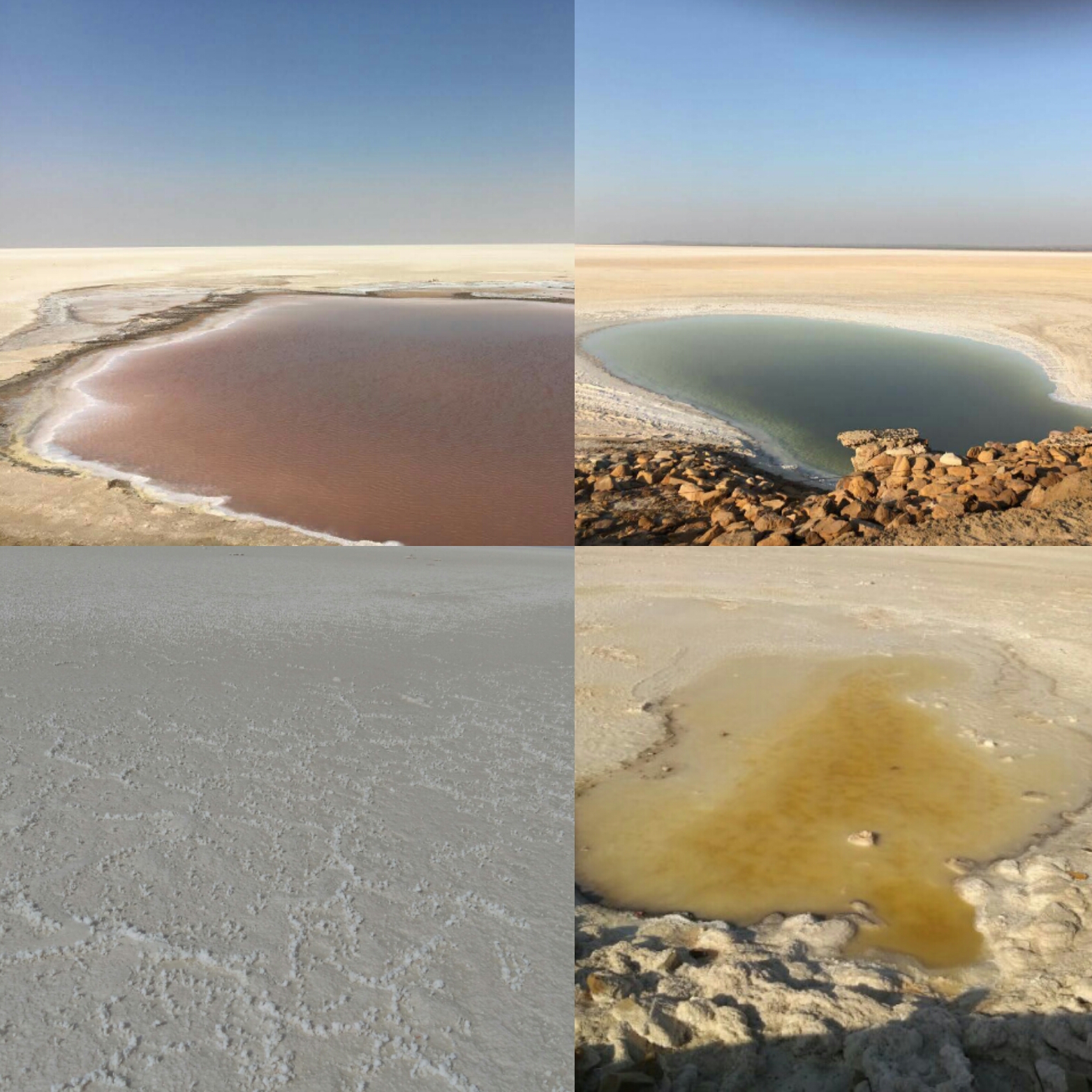
Just a whiz after Rapat village on the mainland, the ‘Khadir Bet’ island appears rather suddenly! I’m quite sure that anyone who is going there for the first time, cannot proceed without stopping here to just sync the coordination between their eyes and the brain! All you see will be a home straight black road, piercing right through the horizon, flanked by an endless stretch of white that confuses the mind to figure out how the blue sky and the brown land disappeared! As in our case, it was noon and the blazing sun was right atop making it difficult for us to open our eyes to see while the glistening white sand looked same as the colour of the sky. I’m not exaggerating when I say that my sight and thoughts had lost coordination for a few minutes before I spotted some puddles of coloured water here and there, in an otherwise clear white desert of salt. These puddles are nothing but salt water from this inland sea marsh that is yet to evaporate and the colouration is due to factors like the effect of temperature and the concentration of the mineral content in them. My friend and I sat there in thoughtlessness for a while until it struck us that we had a long day ahead!

IMG_20190120_135744.jpg
The colourful puddles of salt water

After stopping by for a Kutchi meal with ‘Bajra ki Rotla’ (Millet roti) with gud (Jaggery) and side dishes that were local delicacies, we passed through several small hamlets to reach our first destination. We were bereaved the luxury of time so that we could explore these individual hamlets. Each one of these settlements represent a different tribal group with their own identity of food, culture, costume, art and even the way their Bhungas (Huts) are designed. I would have loved to spend time walking through them all and learning some bits of techniques to sew the famed Kutchi embroidery too. Anyway, let us talk about the nicer things we did with whatever time we had. So, one-and-half-hour was indeed scarce, to walk through history when a guide took us around the site of Dholavira explaining us about the early, mature and the late Harappas. It can run into pages if I write about the details and hence, I cut a long post short at the end of my walk at the north gate. That’s where a 10-letter signboard is mysteriously laid. These are the only letters discovered from the inscriptions of that era and are still beyond the ability of modern man to be deciphered.

Above: One of the remains of a bronze age Bhunga at Dholavira; Bottom: an wooden board marked with the 10mystic letters at the North gate

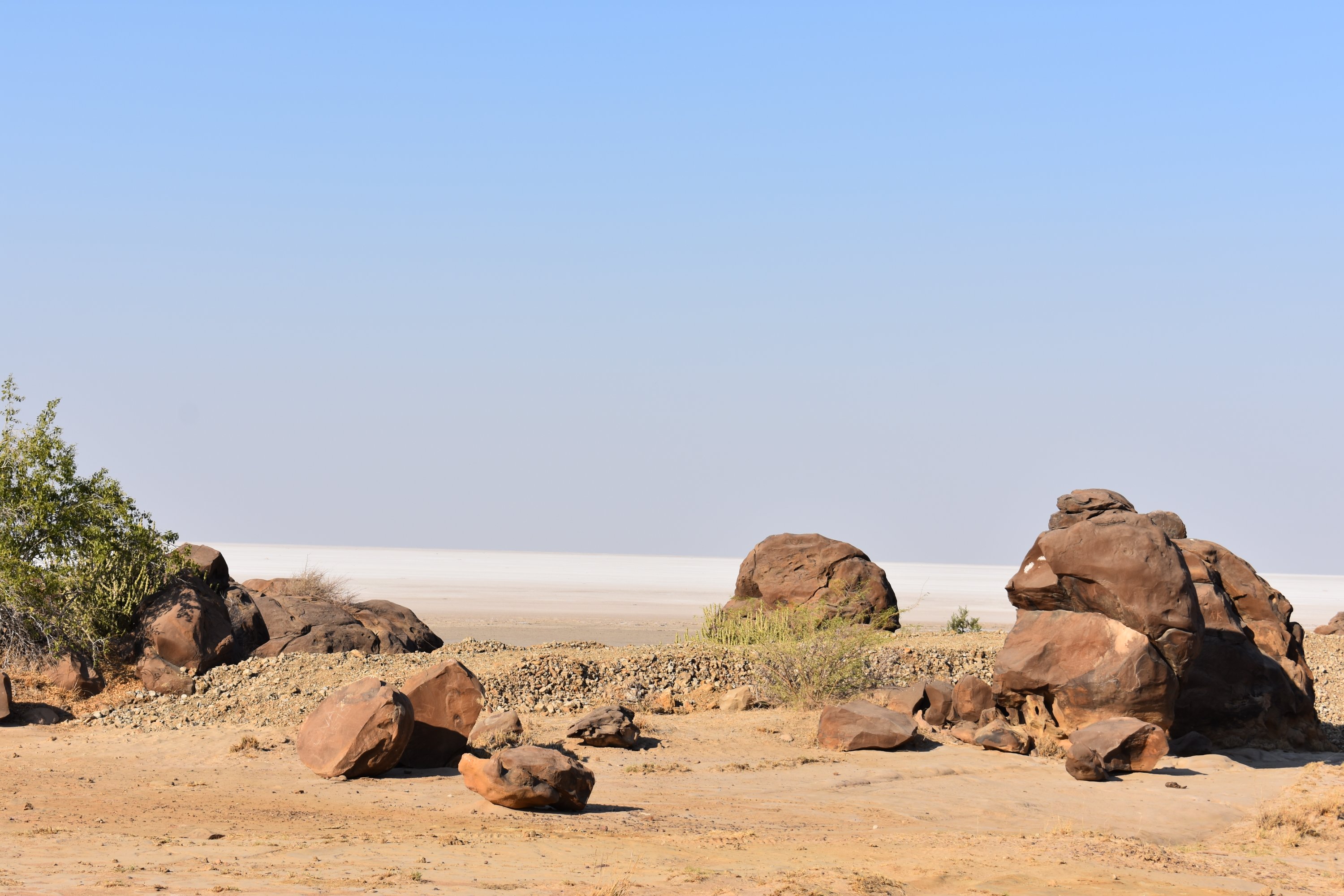
It was a 10kms drive further towards the Indo-Pak border area to walk in to yet another era. It was a jump back in time from the bronze age to the era when dinosaurs walked around on this planet. The trees of the time can be found here which resemble huge boulders now in their fossilized form. A short walk down from there lead us to the salt desert and that’s when a sense of massiveness of this earth hit me. A tiny dot on the planet that I am, I felt surrounded by an endless stretch of white. Only at a farther end appeared a small hill, ‘Kala Dungar’- the highest point in the Rann.

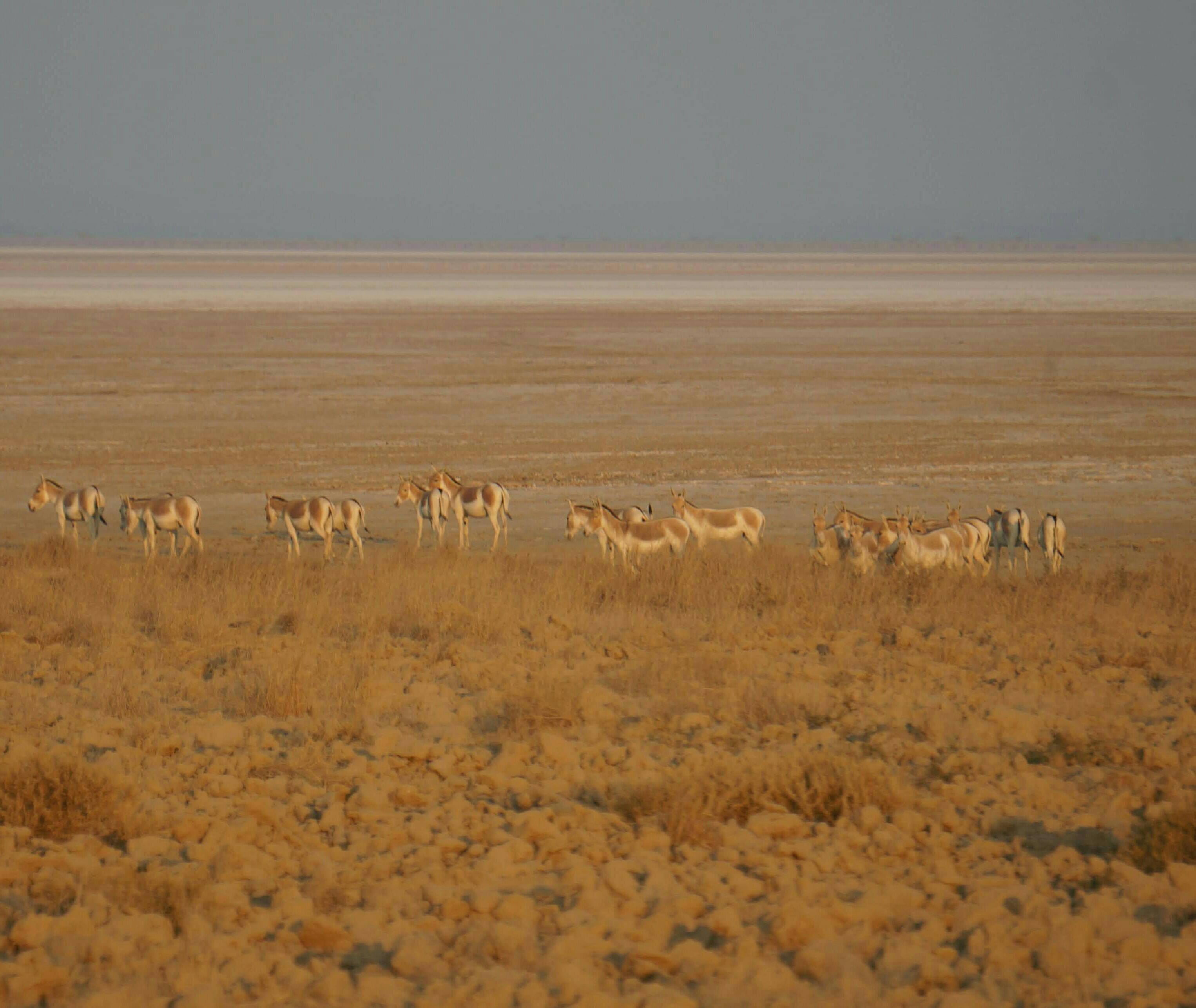
We had contacted a private resort in the region who had arranged for an off-road drive, into the Banni grasslands. A 45minutes bumpy drive on the dusty road cutting through the desert was an experience in itself, while being driven to a place that is known to be the only surviving habitat of the Cheetah in India. We were lucky to see a lot of native residents of this reserved forest including herds of Asiatic Wild Ass, Chinkara, blackbucks, Nilghais, wild boars and even a desert fox. Short grass and bushy trees were a different feature in a landscape that was surrounded by barrenness of the salt flats. These grasslands are also famed for the mysterious phenomenon of light called as the ‘Chir Batti’ or the ghost lights. These moving lights occur at night and are believed to misguide people into the vast marshland if they are followed. Although still a mystery, these lights could be components of methane in combination with other colouring elements, easily flammable in the presence of small amounts of heat and oxygen, if needs a scientific approach to answer.

_20190120_135910.jpg
A herd of Asiatic Wild Ass grazing at the Banni grassland

With the setting sun, came down the temperature as well. With ourselves being covered in white dry dust from head to toe and no thermals with us, the return was a chilling cold drive sitting in the open back of the four-wheeler. But that was the last thing that bothered us, as we watched the golden sun melt into molten red lava merging with white desert before being engulfed into the darkness of the night. Needless to say, watching the setting sun there was ethereal!

Staying back in Dholavira and watching the night pass over the desert and break into dawn is highly recommended. However, we were short of time and had to return to Bhuj the same night. The night’s drive back through the causeway was no less than amazing. We were just 2 days away from the full moon’s night and the moon was almost full (:P). While the rising moon reflected on the salt crystals infront of me, the clear dark sky away from the moon made way for the twinkling stars. So, that was an experience of a lifetime to watch the glittering salt below me on one side of the road and the glittering stars above me on the other side of the road. As our mouths began to chatter with the cold of the night, it was a silent good bye to this mysterious island of Khadir Bhet!

Summary: It is beyond my abilities to put together ‘one word’ to describe a place that has pieces of everything from all ages of evolution of not just humans, but this planet itself. It is a place that has the power to gives you a sense of emptiness of your existence and teach the magnitude of life. Go there, experience it!

Natural wonders of South India – My favourites

India has intrigued the world with its history, geography and culture- each individually dating back to several ages ago. I have been no different from the rest of the world. The LostLander has begun to embrace her landings after getting lost at random places in her incredible country. The more she is exploring her country, the more she has been discovering about its descendance and getting mind blown with new discoveries each time.

“The history of India’s physical geography is older than that of its civilization or even that of the human race. The subcontinent has been a distinct geological entity for millions of years. Therefore, to understand India, we must go back to the very beginning.”

-Sanjeev Sanyal

The fact that it is called as a subcontinent is associated to a larger theory of it being separated out of a supercontinent called ‘Rodinia’ and drifting apart from Africa, Antarctica and then Madagascar before it struck with the Asian continent. No, I’m not time traveling that far for now! It was just to put an exclamation to how amazing this country’s geography has evolved to be and what the natural bounty as we called it, has to offer in this beautiful country to an explorer… To take my article forward and with no biases, I divide the geography of this subcontinent into North and the South, just by drawing an imaginary line passing through its center, Seoni in Madhya Pradesh. Here is a humble attempt to take my readers through some of the beautiful destinations I have been to enjoy the natural marvels of Southern India. They are in random order and listed as and when I recollected them. For more details, you need to read my individual posts on them by clicking on their respective tags!

1. Kurusudai islands: Nestled off the coast of Rameswaram in the Gulf of Mannar, it is the only place in the world where the oldest and the last surviving living fossil is found in the world.

2. The table tops of Maharashtra: Be it the beautifully painted pink valleys of the Khas plateau, valleys of Matheran, Mahabaleshwar or any place thought of for a scenic drive for the Mumbaikars- have all formed out of large volcanic eruptions as the subcontinent merged with Asia. Not just that, these geographical features were strategically used by Shivaji to stop the invasion by the Mughals and hence called the Deccan traps.

3. Limestone caves of Andhra Pradesh: Belum caves, a part of a larger cave complex in the Erramalai region is the largest and longest cave system that is open to public. Similarly, the Borra caves is the deepest in the country. The speleothem formations are worth a visit which have formed due to continuous flowing of water over a thousand years, easily dating back to the Archaean age.

4. Gandikota: People call it as the ‘Grand Canyon of India. It is a beautiful gorge formed by the Pennar river as it squeezes from between the rock formation that has played witness to several kingdoms in history.

5. Eastern Ghats: Although I use a very generic term that specifies an entire region, they are older and mineral rich than their popular counterparts on the western side. All, again a resultant of several tectonic activities in the event of formation of the Indian mass.

6. Dhanushkodi: This abandoned town has more than just history of a cyclone. The revered ‘RamaSethu’ or the Adam’s bridge was formerly considered to be the largest Tombolo in the world and is believed to have formed due to the drifting of India and the Lankan land masses several thousand years ago..

Well… If all these have been the outcomes of several tectonic activities of the earth over a million years, there are yet several other amazing things that nature has to offer in the Southern peninsula.

7. Have you been to Wayanad in Northern Kerala? There is a heart shaped lake after a good climb up the Chembra peak in the western Ghats. It’s the nature’s way of telling ‘I Love You’!

8. Heard of the Barren island? It is the only active volcano in India, with the most recent eruption being in 2017. The sea area around it is considered to be one of the best dive sites in the world!

9. And then there is Baratang islands- It is the only mud volcano in India, situated in the Andaman group of islands.

10. Have you seen the Purple hills? Where do you think the Nilgiri hills in the western Ghats derive their name from? They’re so called because these green verdant hills are painted blue/purple (Neela in Hindi) by the Neelakurinji flowers, something that blooms only once in twelve years. The latest mass-blossoming being in 2018.

11. Cruised through the canals of Kuttanad? Mostly popular among the honeymooners and families alike for its backwaters and houseboats, what many don’t know about this region is that it is the only region in the world where paddy farming is done below sea level.

12. How about a boat ride in the Mangrove forests of the Bay of Bengal? The Sundarbans and Pichavaram forests are the first and the second largest mangrove marshlands in the world. A world heritage site that they are, an extremely important part of the ecology.

13. What happens when a meteor hits the earth? A massive crater is formed giving form to Lonar lake in Maharashtra. This Geo-heritage monument saline soda lake is the only high velocity impact crater lake on earth.

14. Seen the waterfalls of the Deccan plateau? Be it the Chitrakoot falls in Chhattisgarh, Gokak falls in Karnataka, Athirapally in Kerala or Hogeynakal in Tamil Nadu… They’re all so good they can give a good competition to the Niagara!

15. Heard of the Sentinelese tribesmen in the Andaman sea? They’ve long avoided contact with the outside world and their gene pool is believed to be one of the crucial links to early man and the evolution of mankind on the planet.

What India has to offer is abundant! And these are only a few places that I have been to in the southern India. Do you have any recommendations? Have I missed out on anything? I would LOVE to know… Please drop n your suggestions, recommendations, feedback in the comments section below 😊

The Mountains beckon in the Apple valley of India- Kinnaur

I wasn’t sure if solo-traveling would be safe in Chhattisgarh, the campsite wasn’t ready yet for a Gujarat trip, Rajasthan had the election around the corner albeit having the perfect weather, the public transportation system wasn’t convenient in Arunachal, Uttarakhand had unpredictable weather of late, Jammu was done just last year, Dharamshala stretch would be too mainstream, Lakshadweep was too short a trip for the time I had. Maybe I should just settle down with the Sahyadris in Maharashtra or sign up for a fortnight long yoga session at Rishikesh or a Yakshagana course at Mangalore perhaps! I had tele-travelled almost the whole of India to decide where I wanted to go. And then, this happened! Just 4 days before departure, the mountains beckoned and I had finally decided to visit the Kinnaur valley in Himachal Pradesh.

Click here to read the complete story, on Amazon

Nothing was clear to me apart from the to & fro flights to Delhi. People around me were busy and my vacations couldn’t wait, lest they be lapsed without pay or without use. Although not very keen on solo travelling, I think that’s how life threw itself upon me when I longed to go to the mountains! The mountains have always been kind to me and have had me meeting them regularly over the last 4 years. I don’t know the reason for this special bond I share with the mountains. May be because I come from a nature worshipping community, that my connection with them is so instant and strong. The mountains had me amidst them yet again. From being a shy kid at ice breaking in public gatherings to having done a complete solo backpacking in an off-season, to meeting and hanging out with strangers and making new friends from travels, my journeys have brought me a long way! The mountains have been kind and have protected me all the way…

Given that I would be alone and I get muscle cramps when the temperature drops, the one thing I had to make sure while planning my trip was to not push myself too hard to see too many places or do anything that could drain me out. Hence, I decided to do it one place at a time, plan my next destination only after reaching a place and move only when I felt like I had sunk in well in the current place. So that said and Kinnaur had me there! After I had reached Himachal, there was absolutely no fear of being a solo-women traveller and no worries over safety concerns at any point of time. The people were amazing who derive their strength from their deep values… From being stopped by random locals on the road and being offered the juiciest apples from the valley to eating local food and getting invited to houses for coffees, from befriending the locals and then to being invited to attend a traditional Kinnauri wedding, from waiting for the day’s only public bus or hitch a ride to having stuck in a place for 3 days without any electricity or transportation due to snowfall, from meditating in the millennium old monastery to confronting a mummified Llama in the mountains, from driving past a valley of green-rock-and-sand onward to having returned through the same valley painted white in snow, from being seen-off by a close friend at the trip start to I seeing-off a stranger at the end of the trip: Whoa! What a journey it was!

So, the route taken by me was: Delhi- Kalka- Shimla- Sangla- Rakcham- Chitkul- Sangla-  Reckong Peo- Kalpa- Nako- Geu- Tabo- Rampur- Sarahan- Shimla- Delhi. Some of the key destinations enroute and things I did were:

• The trip started with the ‘Himalayan queen’ train from Delhi and then I connected to the mountain railways from Kalka to Shimla, a part of the UNESCO World heritage. Stopping at several stations enroute, a ride in the loco thugging along the narrow-gauge through in-numerous tunnels and winding pathways in between the green pine laden cliffs and verdant hills was worth an experience.

• The hustle of the desi music blasting at full volume had filled the atmosphere as the HPSRTC bus I boarded at Shimla cruised through thickets of sweet smelling Juniper and deodar. A solo snow laden peak emerged from amidst the green mountains. Call it layers of dew laden and mist covered hills, they sparkled as the sun’s early rays found their way forming several vibrant spectrums as the morning ride gave me the first glimpse of a horizon that had a never-ending line of snow-capped mountains.

• When the bus alighted at Sangla after making its way through steep gradient, blind corners and breath-takingly scary heights of the snaking roads, the sun was calling it a day. It had cast a golden red glow to the entire range of Kinnaur Kailash mountains. I couldn’t have asked for more as I stood there to be welcomed by this magnificent view right in front of the bus stand. The hike up the Kamru fort to catch the golden peaks up close was a cherry on the icing.

• The next day was an exhilarating bus ride through the Sangla valley, overlooked by the Kailash mountains on one side and the beloved untamed Baspa river flowing below. The ride was adventurous with waterfall and river crossing, cliff-hangers, landslides and occasional sightings of mountain goats or yaks. Quick stop-over at Batseri village painted in shades of crimson, chrome to ochre with the trees of apples, apricots and walnuts was a feast to the eyes. A walk down to the river at Rackcham helped me to connect with the Kinnauris with very warm conversations. They offered me a ride through apple orchards and buck wheat farms before meeting the sole Indian tricolour waving at Chitkul, a village bordering China & Tibet.

• The following morning, I started early to Kalpa- a quaint tiny village with old traditional houses amid the Kinnaur apple farms. A solo hike through the suicidal roads to Roughi village turned out to be special when a random dog decided to accompany me all the way. Again, the setting crimson sun cast its magical spell over the manifestations of Shiva and Parvathi seated conveniently in the Kinnaur Kailash mountains overlooking the village. With the chants from the Buddhist monastery next door and swaying prayer flags as I looked out of my window the next morning, I couldn’t have asked for a better start for my day.

• That day, I did a bit of shopping and grooving to traditional Kinnauri music with the locals at Reckong Peo, the ‘Gateway to Kinnaur valley’. It was the annual fair where people from all over the state had congregated to buy and sell local Agri-products and handicrafts apart from sipping the local apple brew. Packets of pine-nuts, dried apples and apricots along with the traditional Kinnauri hats were perfect souvenirs to take back before boarding the bus to my next destination.

• This road is when the landscape starts to surprise you. The green canopies make way to steep rocky cliff-hangers. The on-going construction of the Karcham Wangtoo dam only warns you to be aware of shooting stones where landslides are as common as confronting vehicles from the opposite direction on the single-track road. And then, the Rocky mountains disappears suddenly making way for barren landscapes with sand and loose rock laden cliffs. The blue Sutlej river snaked between the valley and the view of the treacherous roads winding around the steep gradient hills was indeed a sight to behold! It was pitch dark and biting cold when I alighted at Nako, to check into a homestay under the clearest star-studded night’s sky.

• Although the weather had gotten more colder, it was one of the finest mornings so far. A walk around the village of Nako, with mud-smeared walls of houses built of wood and clay is one of the highlights of my entire trip. While strolling through those narrow walkways of the village, I felt as if I was exploring a maze. With the early morning vibes of a typical village with cattle roaming around, children walking down to schools, chants and incense from the ancient monastery rising in the dew laden air, it was an altogether different world there. The view of the distant snow-capped mountains and the barren winding landscape around had me spellbound for the rest of the day.

Next destination was Geu, a village that can be reached only if luck be by one’s side. Having no direct connectivity through public transportation, I waited on the highway hoping to hitch a ride to a place that is often cut-off due to landslides. It was wedding bells chiming in this tiny hamlet that day… I was fortunate, to say the least! A large family heading towards Geu not only obliged to offer me a ride in the trailer of their crowded goods carrier, they also invited me to be part of the celebrations. From being treated with the finest Kinnauri delicacies to dancing with the baraathies in a traditional mountain wedding, I could not ask for more. It was an all day and all night affair!

• I woke up in the biting cold next morning to hike up the hill and pay a visit to the mummy of a Buddhist monk, believed to be over a 500yrs old. Strangely, it has been there in open atmosphere without any chemicals and among the only few mummies available in India. Quick breakfast at the wedding house and I was good to head out by hitching another ride until Hurling.

• The weather had gotten worse that day with a forecast of precipitation by day end. As I waited at Hurling for my next ride, the guy making rotis at a hotel offered me a cup of free chai and got me a free drive with his customer to my next destination. With a loaded car and a person with a broken leg hanging out of the rear seat, the people who agreed to drop me were more than sweet to accommodate me in the front seat and they carry my backpack on their lap all the way in the rear seat.

• So then… Tabo happened! This was the place I had been looking forward to all the way. Considered to be one of the holiest places for the Tibetan Buddhists, I sunk into meditation mode for good few hours with the soothing fragrance of the Juniper interiors of this millennium old monastery constructed out of clay. It was BLISS and I can’t explain it further. The millennium old paintings all over its inner walls and roofs, the golden manuscripts were something incredible. Since artificial light sources are believed to damage the organic colours, I eagerly waited for specific time of the day for the sun to light up specific rooms to see this wonder. It is called the ‘Ajanta of the Himalayas’ for a reason, you see!

• The morning when I woke up, the mountains had moved closer to me with a heavy overnight snowfall. This was a sight to which the heart of a snow-deprived-south-Indian-city girl in me had skipped a beat. I had to extend my stay at this monastery due to heavy snowfall for next 2 days and with no electricity, phone connectivity and no plumbing that worked whatsoever, it was ‘THE” time! Amid all this, I had the rare opportunity to relish the Tabo apples (one of the best in the world) every day of what was being offered to the deity at the monastery.

• Finally, after getting my drive back to Shimla- I had plans to stop by at Rampur Bussahr to see the erstwhile palace and stay at Sarahan, one of the Shakthi peethas in the foothills of the Himalayas. But, the mountains had an altogether different itinerary for me for the last 3 days! So, thus was my sojourn in the Himalayas, the mighty incredible Himalayas!

Since Rohtang pass had closed by end of monsoon, I did only Kinnaur and half Spiti and returned the same way back (Although a little hectic with 3 days required only for travel, on the same route). If you are traveling in the summers, then you can start from Shimla and complete Spiti & Lahaul via Kaza and exit from Manali, thereby not repeating your route.

Summary: With the changing landscape throwing surprises at the wink of an eye, each mile was magic. The valleys were overwhelmingly beautiful! When the mountains beckon, just pack your junk and head out! The destination doesn’t count, the journey is worthwhile!

This article is featured in Deccan Herald’s Travel supplement: ‘DH Travel’ on 25-May-2019

Exploring Vidarbha on a Long Weekend

Vidarbha- the region consisting of Nagpur and Amravati derives its name from the epic city of Mahabharata. With several references made in Ramayana and Mahabharatha, it is not just historically important, but is also economically important as it is a mineral rich region in Central India. Vidarbha is a cultural melting pot with its strong influence in culture, history and geography of the country.

When opportunity knocks at your door, grab it! That’s what I did.. A friend was getting hitched at Amravati and the nearest airport for me to fly down was at Nagpur. So this time, it was an opportunity to explore the Vidarbha region. But that came with its set of challenges. It is one of the hottest places in India and the ceremonies were scheduled during the peak of the summer season. So, my colleagues and I decided to hire a self-drive car to ease the travel hassles of local transport. We wanted to visit the prominent landmarks around the region. There are a plenty of them. Hence, the itinerary was planned such that all major landmarks around Nagpur were covered on a single stretch before hitting the highway for the night’s stay at Amravati. Along with that, the region offers its own delectable cuisine. We wanted to include some of the popular dishes/snacks on our list as well.

So, I present my visit to Vidarbha in two parts. One, listing the landmarks visited and second, with a list of food to try in the region.

Part 1: Places to see in Nagpur and Amravati

  1. The geographical centre of India before partition: The ‘zero’ milestone is from where all distances were measured and highways originated in India, before Pakistan was formed. For all the hype around this place on social media, I was surmised to see that it was poorly maintained and is located in a corner of a busy main road. I had imagined it to be centrally located at some kind of a junction on a busy road.
IMG_20180324_190242
The zero milestone of undivided India

2. The DeekshaBhoomi meditation centre: This is where Dr.B.R.Ambedkar, the father of the Indian constitution is said to have given his first sermon after he converted to Buddhism.

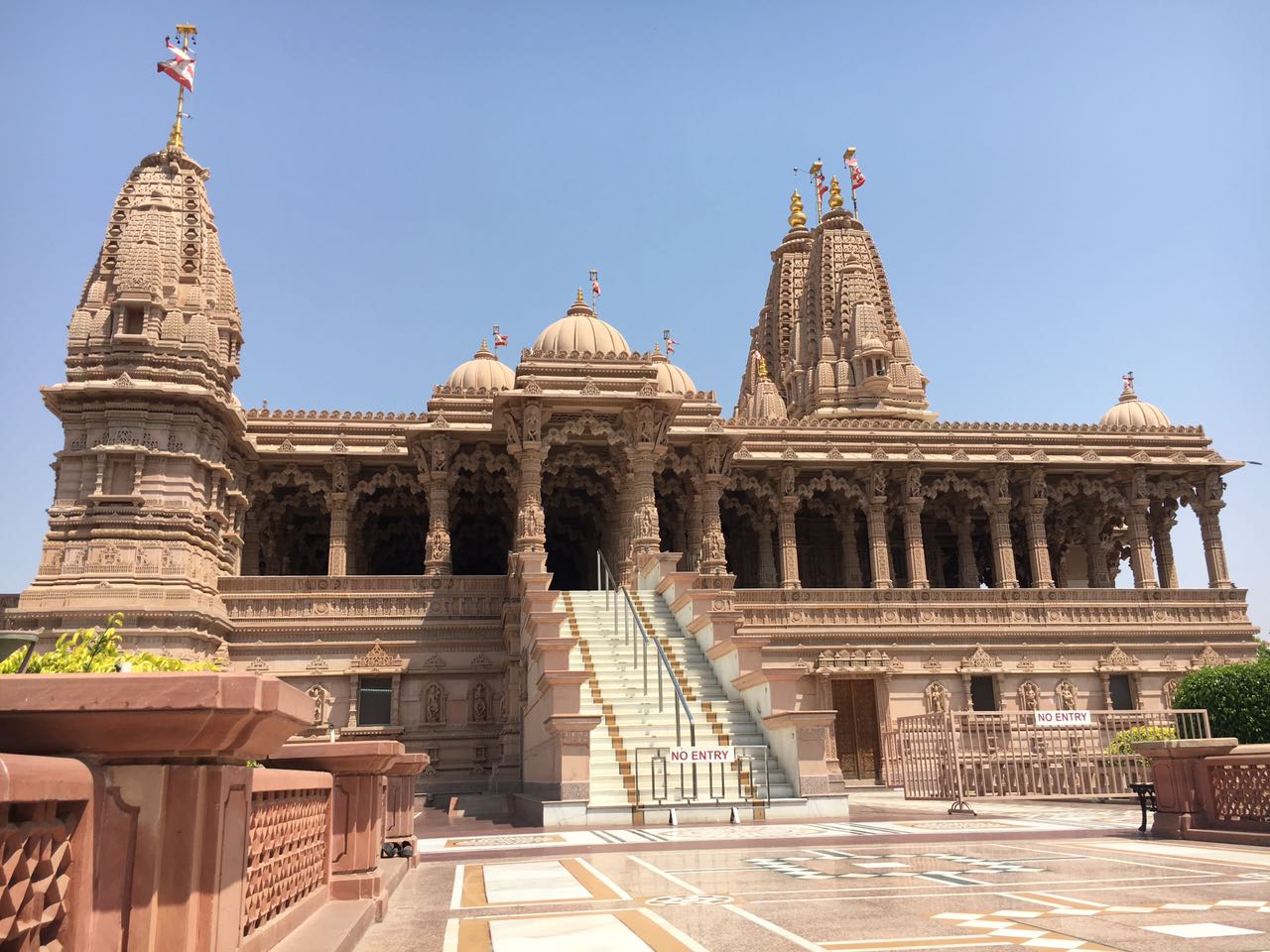
3. The Swaminarayan temple was a beautiful place located within Nagpur city. The Dragon palace temple and Ramdham Park are some other places located within the city if you have more time in leisure. The lakes in the city can easily be given a miss. However, some heritage structures like churches, schools and the railway station lend an old-world charm to the city.

IMG-20180324-WA0062
Swaminarayan Mandir

4. Adasa Ganesh temple: This visit can be done by taking a small deviation before hitting back the same highway.

5. Mansar: This is an archaeologically important site, believed to be of Pravarapura, an erstwhile capital of the Vakataka kingdom that ruled the Vidarbha region.

6. Ramtek: Located at about 5kms from Mansar, this is considered to be a holy hill to people of all faiths. ‘Gad Mandir’, an old beautiful temple dedicated to Lord Ram is situated atop a hillock. Solitude is available in abundance here with a great view of the entire area. The Ramtek hills is also believed to be a place where the mythological King, Kalidas wrote his epic poem- ‘Meghdoot’. There are several places that are significant among the Jains and Buddhists too that are located in the vicinity.

7. The Ambala Lake: The ghats of the lake located at the base of the Ramtek hills are lined with beautiful ancient structures and was my favourite place of the trip.

8. Khindsi Lake: Get yourself cooled with some water sports (recommended if you have leisure time at your disposal.)

9. Nagerdhan fort: Soak in history at the erstwhile capital town of the Vakataka dynasty. (Recommended only if you have some more time for leisure.) It is a further 10kms drive from Ramtek.

10. Pench National park: Don’t miss an opportunity to stay over and do some tiger sighting in the land of ‘The Jungle Book’. It is the same forest where the story of Mowgli and Bhageera is based at, that we have all grown up watching and listening to.

There are a lot of scenic places around Pench that I can help you with if you are planning to stay over at one of the jungle lodges. We did not have the luxury of time as we had to drive back all the way as our stay was booked at Amravati. The Amravati region is home to several wildlife sanctuaries and temples that can be accommodated if you’re traveling on a luxury of time and an own vehicle, which we had to give a miss.

11. Chikaldhara: The highest point of Vidarbha region and the only hill station is located in Amravati. For a person like me hailing from the coffee hills, it was quite exciting to know that Amravati is the only coffee growing region in Maharashtra state.

Part 2: Food and Sweets to try in Nagpur

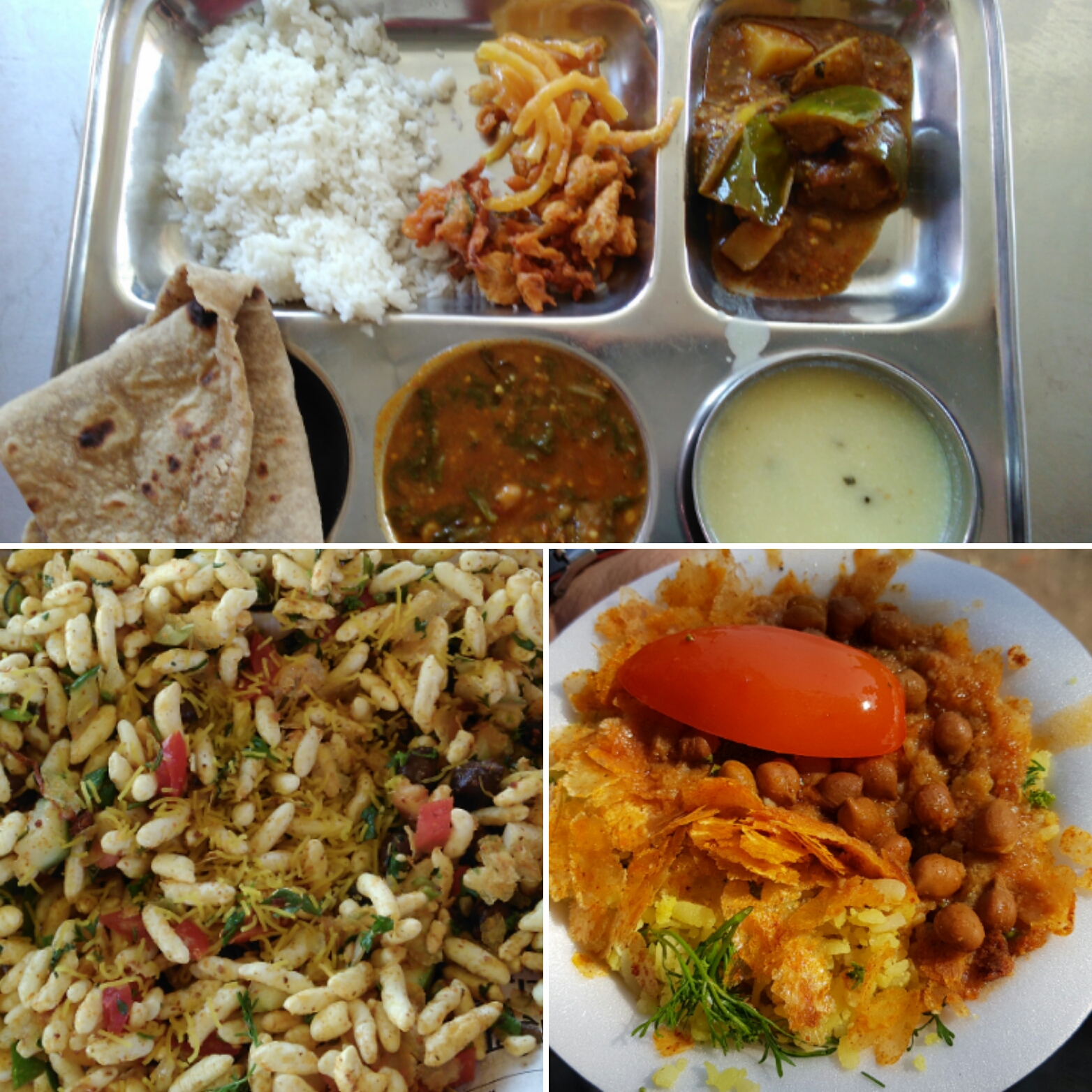
Talking about the highlight of this trip, it was definitely the FOOD!! The Varadi and Saoji are the two popular cuisines of the Vidarbha region. So, it was a culinary treat for our taste buds to experiment on something fiercely spicy and so rustic in taste. While our day started with delicious plates of ‘Poha with Tarri’ and ‘Samosa Tarri’ for breakfast at one of the several roadside tapris, lunch was a simple delectable Varadi thali at the ‘Gad Mandir Bhojanalay’. We managed to find space in our tummies for street food with several pit stops along the way that tasted heavenly and ended our day with a grand non-veg varadi menu for supper at a star hotel where we were put up for the night.

IMG_20180401_143553
The Varadi food that kept us going!

Nagpur is synonymous with oranges and the brand ‘Haldirams’. So, the visit would have been incomplete without trying the ‘Orange Burfi’ at one of the Haldirams outlets spread across the city. Do pick up a box of ‘Mango soan rolls’ from Heera sweets to please your sweet tooth along your return trip!

With the short time of a weekend that we had, this was the best we could accommodate in our schedule. Tell me what other things would you recommend to do, see and experience in Nagpur and Amravathi?

A Visit to the Mecca of India- Ajmer

This was the first time I was stepping into the state of Rajasthan. Time has been kind on me yet again bringing me to the right place when the time was right! And this time it was to Ajmer during the holy month of Ramadan. Ajmer-Marwar region was a separate state until it was merged with Rajasthan. At a distance of 130kms by road from Jaipur, it is believed to be the second holiest place in Islam after Mecca. Apart from exploring Ajmer town, if you are a traveler, you can also include Pushkar in your itinerary, which is located less than 25kms from Ajmer. Apart from being a holy place for the Hindus, Pushkar is a popular haunt for the hippies from world-over. You can use the below itinerary if you have a weekend in hand. However, I could only explore Ajmer on this trip.

A weekend Itinerary:

Day 1: Bangalore to Jaipur (Flight); Jaipur to Ajmer (Hired car); Visit Ajmer dargah, explore Taragarh hill, Adhai-Din-Ka-Jhonpra, Akbar Palace & museum, Soniji-ki-Nasiyan Jain temple, Mayo college campus. (Night’s stay at Taj- Ajmer gateway)
Day 2: Visit Pushkar lake for sunrise, explore Pushkar town (and the annual camel fair, if you time your visit right); return to Jaipur (by road), Jaipur to Bangalore (flight)

The Details:

I was visiting Ajmer on a business trip with three of my colleagues (Click here to read about my job as a car doctor). Hence, I somehow managed to squeeze in sufficient time into my trip so that I could venture out in this city and explore most of whatever it has to offer for the traveller in me. Needless to say, no visit to this holy city is complete without heading to the Ajmer Sharif Dargah dedicated to the Sufi Saint Khwaja Moinuddin Chishti.

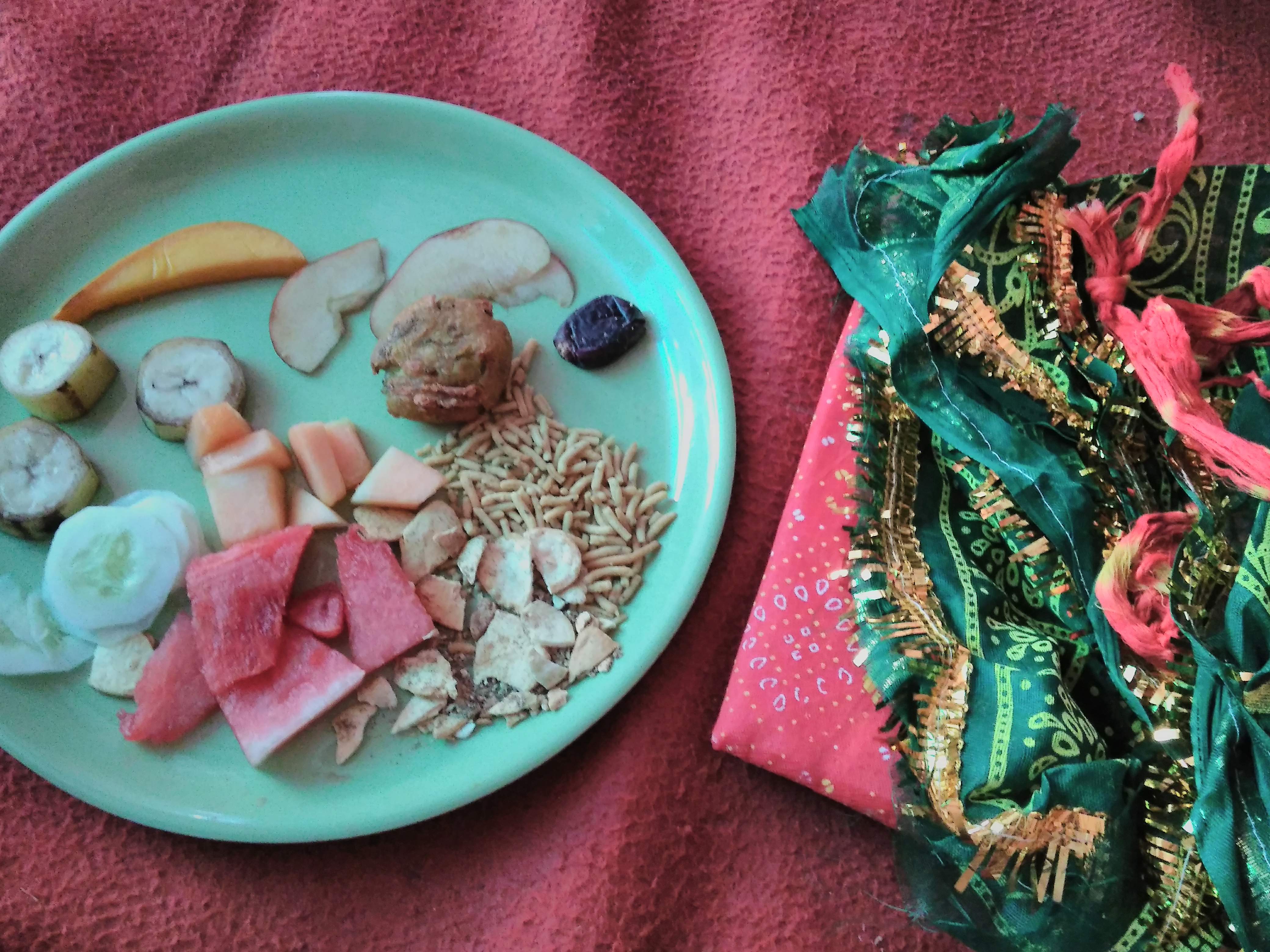
Apart from it being the holiest and the busiest of the times on the Dargah’s calendar, our visit also coincided with the 27th day of the holy month: revered as the ‘Night of Destiny’ in the Islam faith. This is a place where most people struggle to get past the crowds even on normal days. We were fortunate to have contacted one of the trustees of the Dargah who managed our entire visit and made it effortless. It was evening time and we had just finished offering our prayers by donating a Chadar to the diety. What we hadn’t realized was that we were there on the premises of this holy place at the time of breaking the day’s fast. We were offered some fruits, nuts and food by the trustees and other devotees who were distributing food there. I was overwhelmed with the thought of having had such an opportunity, at such a time!

IMG_20180612_183519
Breaking the fast at Ajmer dargah Sharif

The Dargah is located at the base of the Taragarh hill, atop of which a fort is situated. The view of the entire hill overlooking the Dargarh is so beautiful with a township constructed on the steep slopes of the hill. Since, photography is prohibited inside the Dargarh premises, I wasn’t able to capture most of the things. It’s a welcome move in some places like these and respect the sanctity of the place. Enough is said and written about this place on the internet. So, I wish to cover about the other things this historic town has to offer.

After our visit, we walked the by lanes around the Dargah to explore the best of Ajmer. Not in terms of places but in terms of its lip-smacking street food. With a lot of Mughalai and Nawabi influence and it being the Ramadan season, the best of the spread was available. Needless to say, Ajmer is a haven for food lovers. By the time the last ray of the day’s sun had vanished, we were stuffed until our glottis.

If you are a history buff and want to find something to feed your wanderlust, you can take a walk to Adhai-Din-Ka-Jhonpra and the Akbar Palace and museum that are located closer to the Dargah. Soniji-ki-Nasiyan is a nice two-storeyed wooden Jain temple that can be visited enroute to Dargah Sharif. If you are at the luxury of time, a quick ride to quick ride to the Mayo college campus can be ended with some peaceful sunset time spent by the banks of the Ana Sagar Lake. But, for me- something else was awaiting!

IMG_20180623_140401
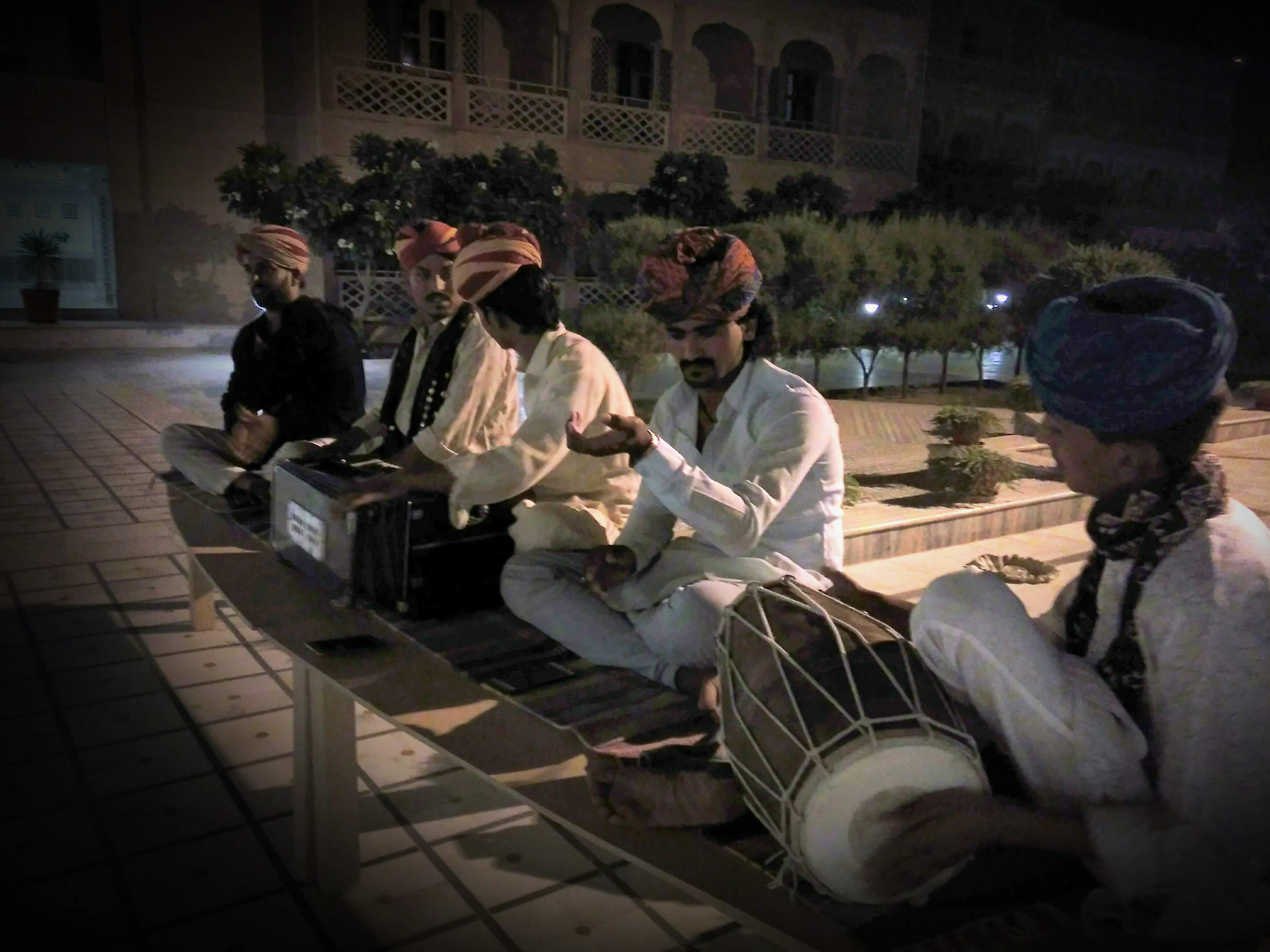
The folk singers performing live in the courtyard of the Taj

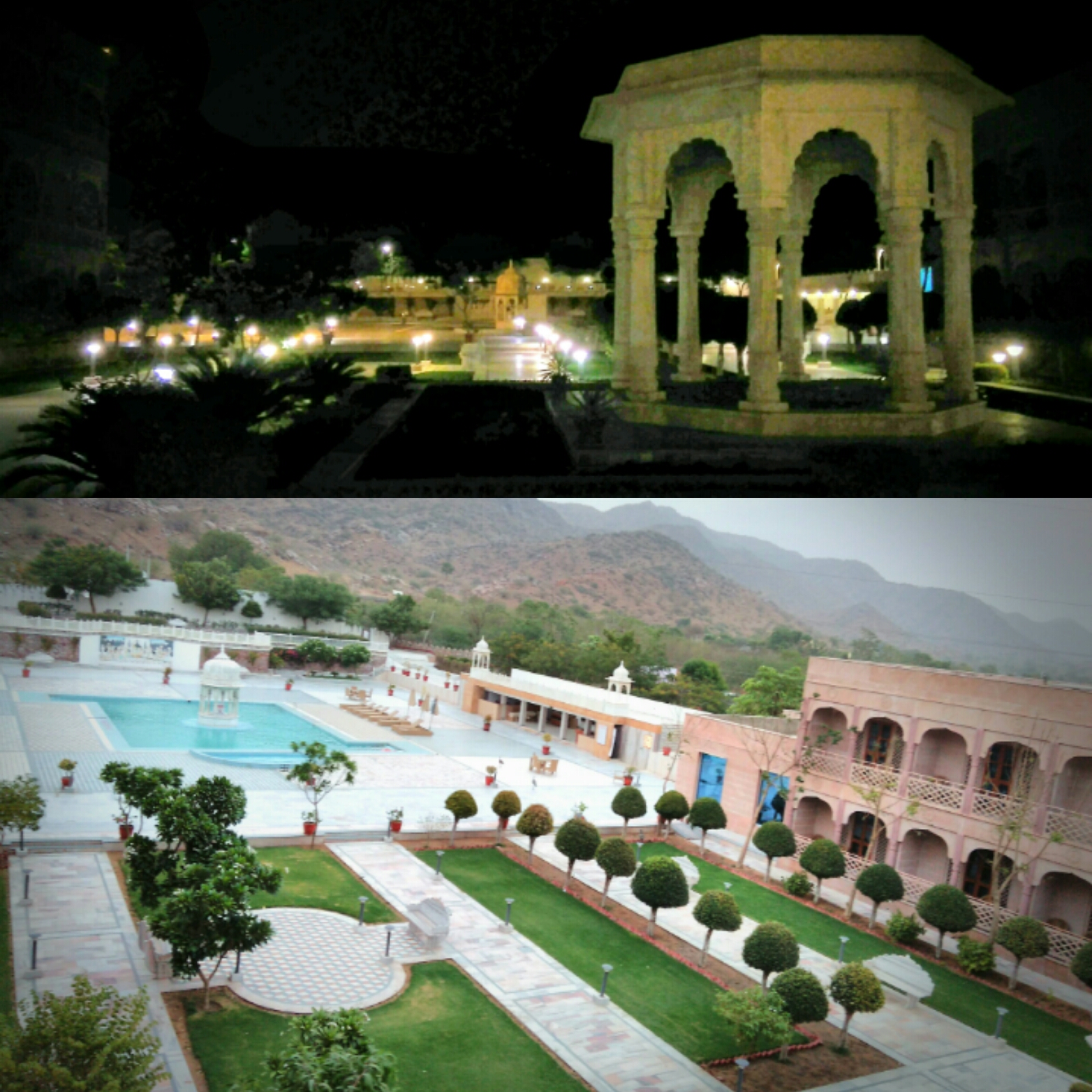
I had my stay booked at the Taj- Ajmer gateway for the night, a world in itself to visit and hang around. The drive from Ajmer city towards it outskirts on Pushkar road, through winding roads with the backdrop of the setting golden sun was a picturesque treat after a tiring day of work and toil. All this seemed like only a grand welcome to the beautiful Taj property that’s nestled in the midst of nowhere in the lap of the Aravalis. The sky was dark, when we arrived at this palatial hotel. The entire driveway was lit with dim sodium lamps from the gate through the lounge. A faint outline of the Aravalli hills standing calmly on the backdrop only enhanced its grandeur. It was a warm welcome as the live Rajasthani folk music with the timbre of the Morchang and Khartal resonated from the courtyard. The host personally lead me to the room while explaining the delicately chosen wall murals and paintings as we walked through the elegant corridor. Though my stomach was stuffed with Ajmer’s street food, I did manage to make some space for the delectable dinner that I was hosted at the restaurant. With all items seasoned and cooked to perfection, each dish seemed better than the other. With a refreshing dip in the pool, a day was called!

IMG_20180708_013657.jpg
Top: The courtyard at night Below: the morning view from my balcony

I looked forward for the morning as much as I did for the previous evening! I had set the alarm for sunrise but was woken up rather early by the calls of dozens of feral peacocks that had come from the forest/hills just behind the pool. I opened my balcony doors and voila! It was a magical morning with peacocks dancing in the courtyard and a modestly calm sun peeping out of shadowy grey clouds with the glorious green Aravalis forming a backdrop… I soaked in this special moment as much as I could from my balcony before I realised that it was time for me to pack-up. Finishing up the morning chores and ending my stay with the Taj with a wonderful breakfast spread, it was time for me to say good bye to this beautiful city of Ajmer and this beautiful Taj property- the Ajmer gateway!

Fact file:

Must-do: Make a wish by offering the Chadar or the decorated shawl to the deity/tomb at the Dargah Sharif.
Must eats: while the street food and the never-ending list of non-veg dishes are to die for in the month of Ramadan, Kadi Kachori and Soan-Halwa are an all-season recommendations.
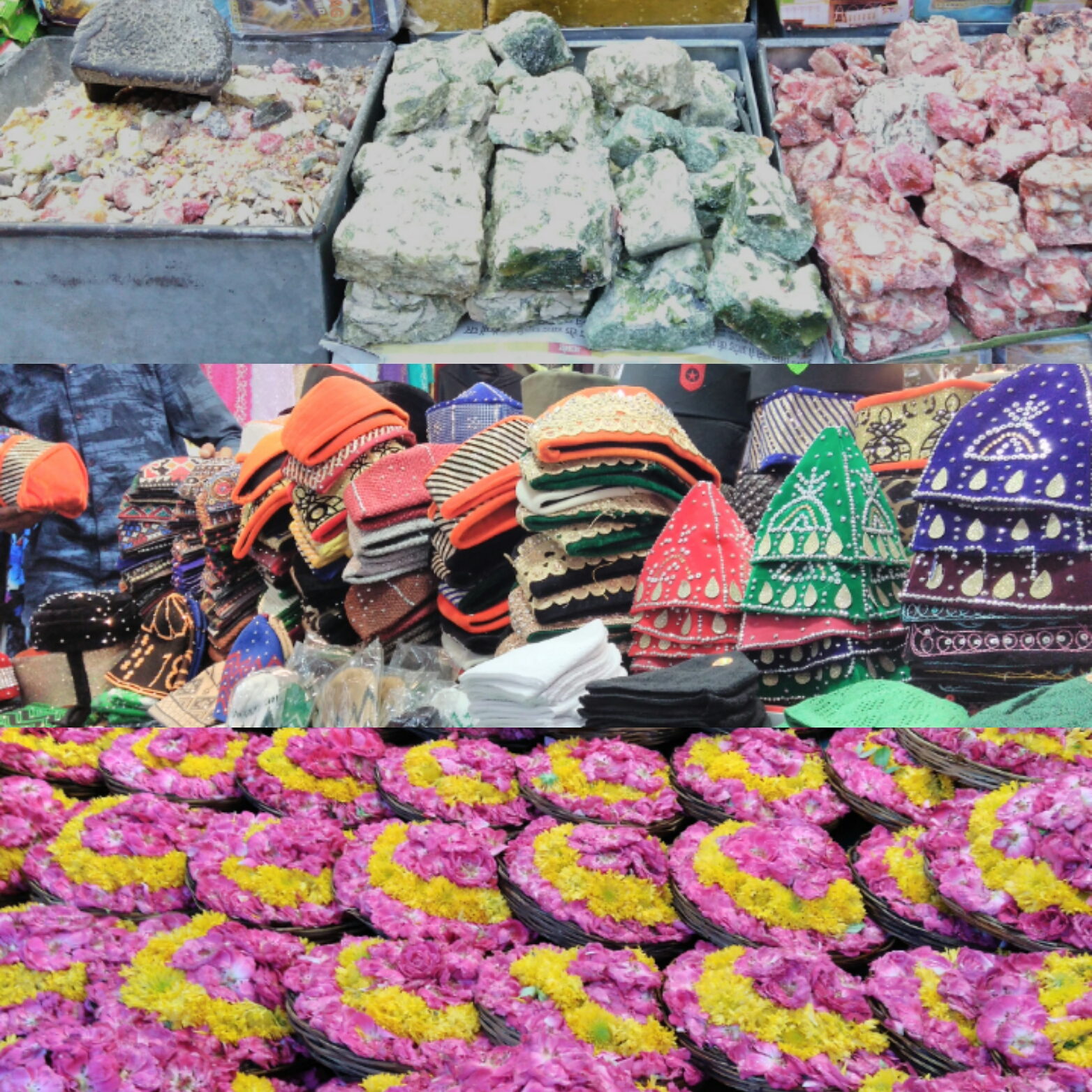
Must buys: variety of prayer caps and incense.

IMG_20180708_013329.jpg
The Street shopping at Ajmer