Lockdown 5.0. simply put, was just another normal day in Karnataka, except that the educational institutions were still under lockdown. So, unwinding on a weekend after a long work week was normal too. With friends, I chose to hike on a Sunday morning to Madhugiri betta, the second highest monolithic hill in Asia. We started from Bangalore at 04.30.am. hoping to start the hike as soon as the gates were opened. While KSTDC has been abundantly promoting post-Covid tourism in the state, we had a surprise awaiting us at the trek base. Since Madhugiri fort comes under ASI’s protected monuments (controlled by the central government), we were told that trekking wasn’t permitted by the Central government. Hence, we were left with two options. Either return home or find another hill nearby where we could hike.
We chose the latter. So instant suggestions that came from someone in the group was Devarayanadurga and Siddarabetta. Then, we decided to give Devarayanadurga a miss as we all favoured a hike over a flight of stairs. We arrived at the base of Siddarabetta where we noticed a board that said, ‘climbing the hill with footwear was a sin’. Since many people use this path to visit a temple situated halfway, we didn’t want to hurt the local sentiments by wearing our shoes. Thinking that ‘a barefoot hike was definitely going to be an experience’ in our heads, we left our shoes back in our car.
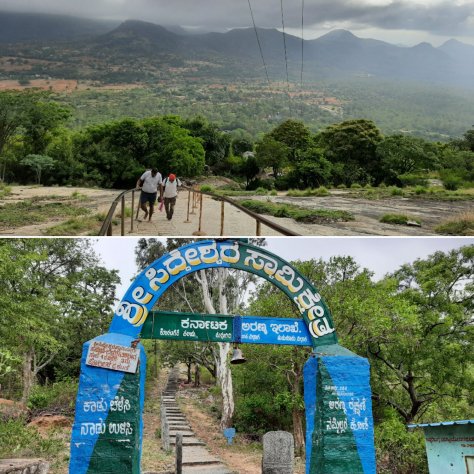
Below: The welcome arch at the base; Top: The initial climb
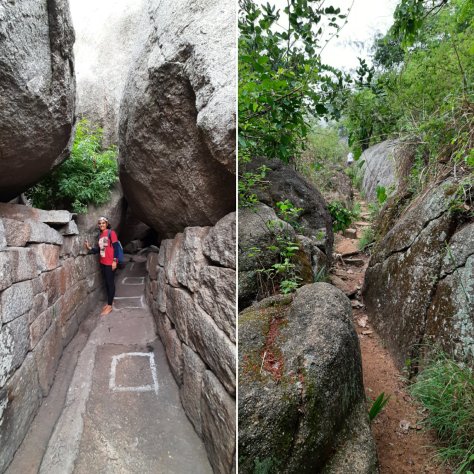
The initial part of the climb, until the Siddeshwara Swamy temple was steep but easy with well laid out steps and iron rods to hold onto. When we reached a small temple kind of a spot, the path split into two. The Siddeshwara Swamy temple was to the left, where too many people seemed to be as if there was no pandemic going on and there exists no concept called ‘Social distancing’. We decided to distance ourselves from the gathering and took the path to the right. With having to pass between too many boulders, it did seem a little confusing initially. The distant passing clouds now seemed as if they had come to meet and greet us. But after walking a little ahead, we reached an area that was a transition from dry rocky mountain to rain soaked green forests. The real challenge of walking barefoot started there, with unassumed ground with gravel and possible thorns from the shrubs.
Left: The rocky path to the temple; Right: The forest path to the view point
A little further, we reached an open rocky area where the view in front of us was playing hide and seek with each passing cloud. Apart from the drizzle and gusty winds that made it difficult for us to stand, we were mind-blown by the view we saw each time the clouds cleared out. There exists a small rain fed pond, a couple of meditating chambers that house Shiva Lingas (history unknown) and dilapidated remains of an old fortress. There was nobody else other than us in this entire stretch. We walked further and crossed two more hills before deciding to return, or else we would lose our way back.
Top: The dilapidated fortress wall; Bottom left: A large rock; Bottom right: One of the meditating chambers
It started to rain on our return, and we were quite drenched by the time we made it to the car that was parked just at the base point. The small eateries and stalls were slowly opening by that time which we chose not to visit, in order to avoid any social contacts with anyone else outside the group that we had gone in. We ate a few biscuits as a substitute for breakfast that we had carried from home and decided to stop the car next, only at home. It was a much-needed break and a pleasant little hike.
The view at from the peak
Summary:
It is an easy hike and very good for beginners.
Be careful to carry all snacks only in a closed backpack as there are too many monkeys on the way.
It has been nearly 3 months of staying at home due to the nationwide lockdown and the fear of the pandemic. With India’s unlock 1.0 in place, our family of four decided to take a short drive outside to breathe some new air. We planned to head to ‘Mango Mandi’ at a village called Somanahalli, off Kanakapura road for this weekend. As we reached there, we learnt from the locals that the government run fruit trading market has been shifted elsewhere for social distancing purposes. However, buying mangoes was just a reason for us to go out and the idea was to go “somewhere” outside home.
This reminds me of some old travel tales of my family. On weekends, my parents used to take us to Majestic bus stand from where we would board a random bus to a destination, that we had unheard of. Back then, BMTC buses plied with boards called red-board and black-board. Red-board for villages outside the city limits and Black-board for those very much within the city. We would sit in just any Red-board bus and buy a ticket to “the last stop”. Most people (Villagers travelling to and from the city) on these routes used to be familiar with the drivers and conductors. Hence, on issuing the ticket to the last stop to us, the conductor would enquire “Whose house we were visiting or where we wanted to go in the last stop”. We used to then get into a conversation with them and get details about the village we would reach at the end of our journey. We would then walk around these villages, appreciating the lung space, learning about new crops, new traditions in the countryside etc. We had thus explored “Remote” villages like Kumbalagodu (coffee plantations), Begur (the oldest Kannada inscription), Hesaraghatta (horticulture & animal husbandry farms), Gollahalli (so many varieties of Gollahallis in different directions of Bengaluru), Harohalli (so many varieties of Harohallis in different directions of Bengaluru), Haniyur (Madure Shani mahatma temple), Devanahalli (Tippu’s fort) etc. Come today, Bengaluru has grown to ‘Bruhat Bengaluru’. People would laugh at you if you called some of these places remote. Why that… even the house where we live now had once been our destination on one such Red-board bus journeys!
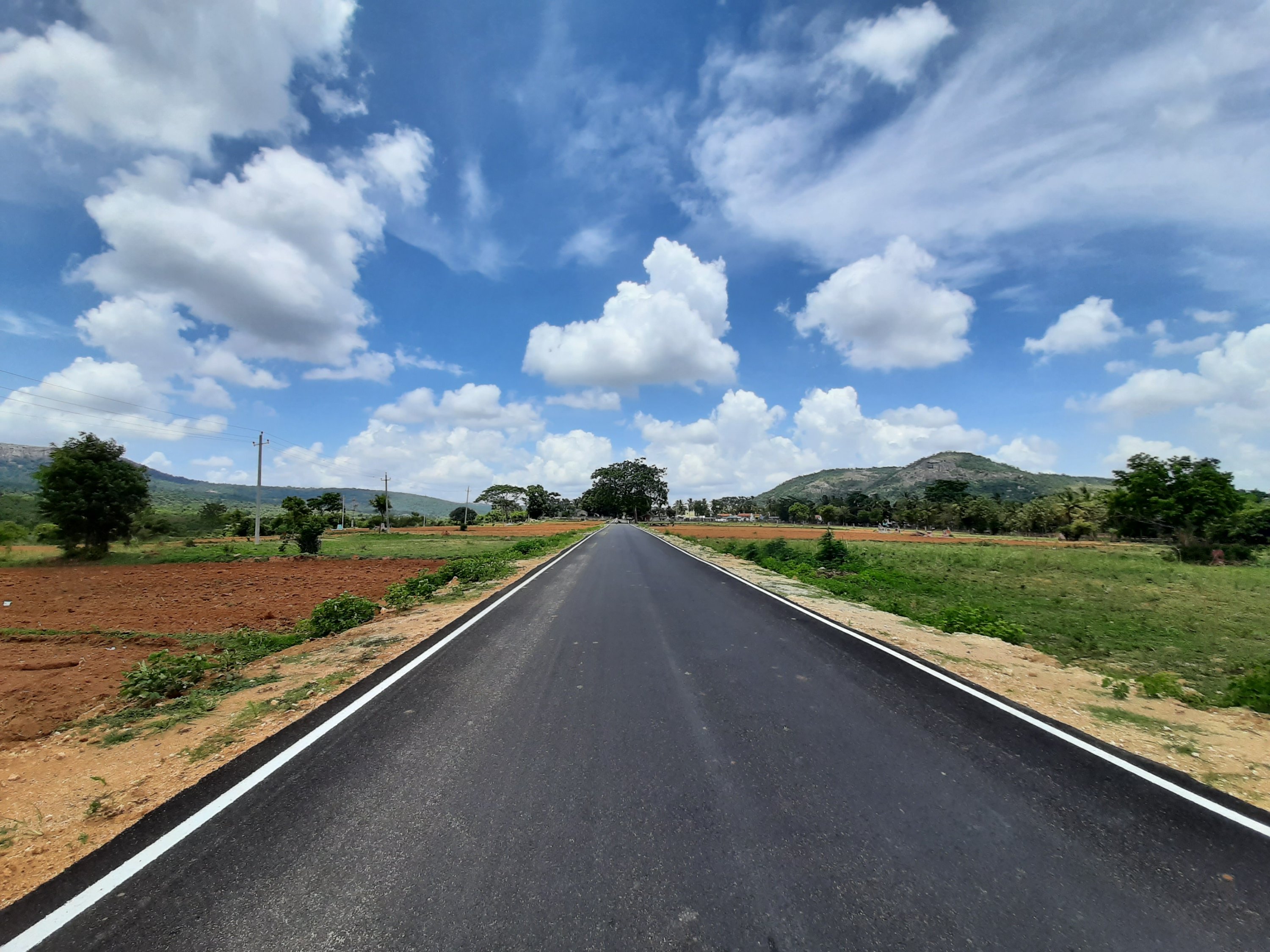
The road between Mukkodlu to Gullahatti kavalu
Back to this weekend of Unlock 1.0, we decided to continue on the road that we were driving until we reached the dead end. And that’s how we reached a village called ‘Mukkodlu’. The name of the village came as a surprise as there exists another village of the same name, back in my native district. The red soil of the farmland was being ploughed all along our route and readied for sowing Ragi millet during the monsoon. The clouds looked amazing with newly laid asphalt road. The green hills complimented the scene well, with ‘Munikallu betta’ to the right and ‘Ragi halli betta’ on the distant left. A little further from there exists the Muninagara reservoir. We thought we would stop by this place on our return.
The reservoir and beyond comes under the supervision of the forest department, a sub-division of the Bannerghatta National park. We proceeded further to know where the milestone indicated ‘1km’ – Gullahatti Kavalu. That also happened to be a ‘Dead end’ on Google maps, from where we would return. Also, the idea of our drive was to not meet any villagers or eat at any petty shops which we normally did on such trips. When we reached our destination, the end of the village was marked by a peepal tree and a government school. The ‘Arali katte’ are arenas buzzing with life and a hub of activities on a usual day in the Indian villages. This one here, was staring at us with all villagers confining themselves to their homes for social distancing. We sat there for some time, soaking in the fresh air on the fringes of Bannerghatta National park before returning.
The dead end point at Gullahatti kavalu
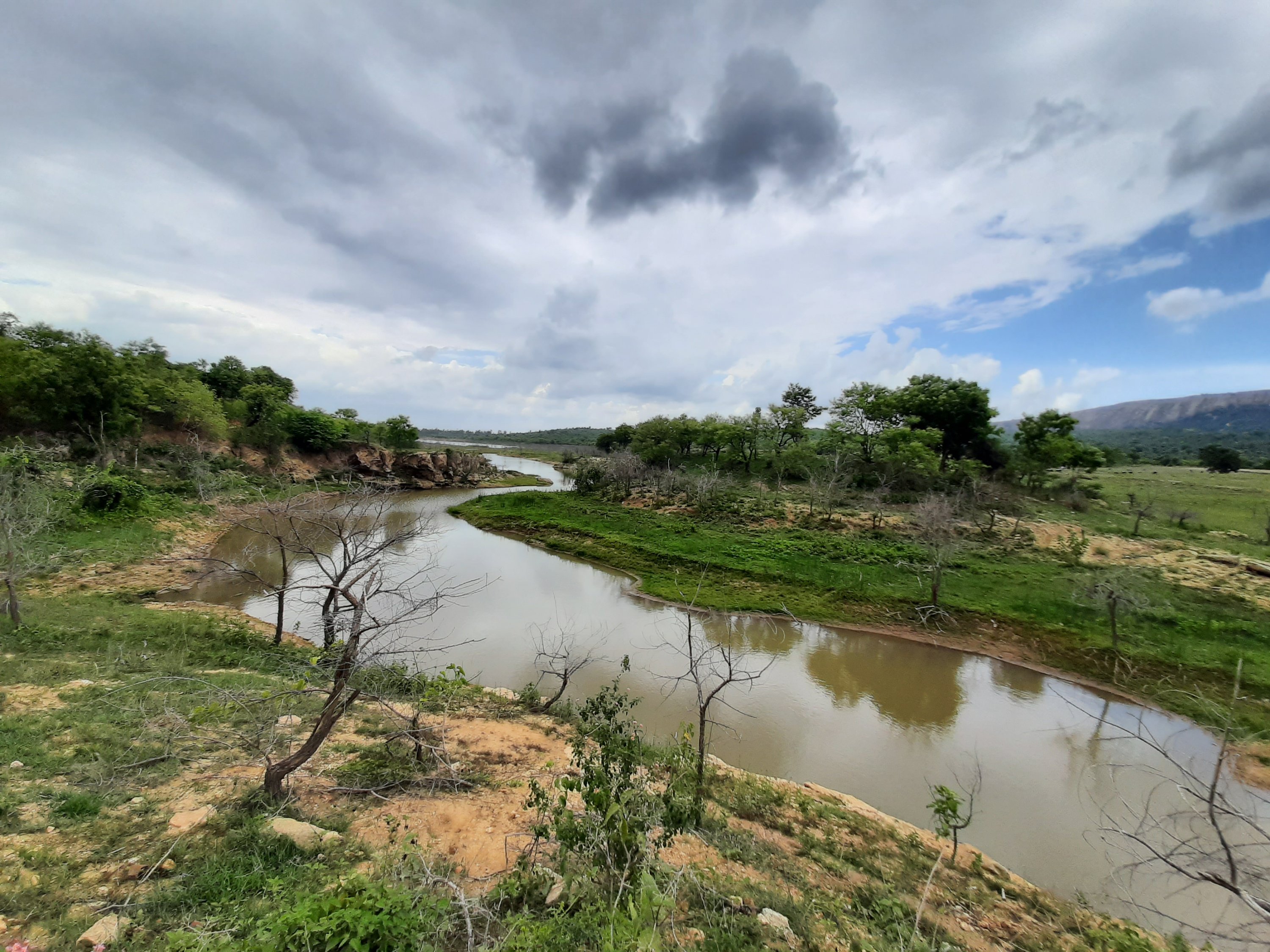
On our way back, we decided to stop at the sight of the reservoir. My itchy feet wanted to hike a bit and I dragged my folks along with me for a few meters away from the road. It was indeed a good decision. Considering we were in the fag end of summer, the reservoir still held a good amount of water. A localite who had come there to graze his cattle told us that wild animals like elephants, leopards, deer, peacocks, wild boars, porcupines etc. are spotted here in the mornings and on most other occasions. At the first sight, it seemed to me like the Kabini backwaters. Kabini is like a summer resort for all wild animals. When all water bodies within the forest run dry, this spot holds enough water and all animals come here to chill in the summers. The fact and the view of Muninagara reservoir too gave me a similar feeling. We sat there for some time until the rain gods showered blessings on us.
The Muninagara reservoir with Ragihalli hill in the backdrop
Thus, a day in India unlock 1.0 was well spent.
Note: For the adventurous ones, there exists a trekking trail called ‘Muni nagara trails’ on google maps starting from the reservoir to the Ragihalli betta. But ensure that you have all permits in place before venturing on a trek here. As afore mentioned, this area belongs to the Karnataka forest department.
You have probably read my earlier post on exploring the offbeat landmarks of Old Bengaluru. Here is another one. This time, it was a culinary trip of Old Bengaluru to a friend who had flown down to this southern metropolis, from the so-called Northern part of India. I had been asked to take him on a gastronomic tour of my city. For someone who has a penchant for everything old school, I thought Old Bengaluru would be perfect to call it a day. ‘From vintage automobiles, architecture, iconic restaurants serving traditional recipes to by lanes and alleys that narrate their own individual story of the city, this section of Bengaluru has everything that would tickle a bone or two of this mad man’, I thought.
Having largely spent my teenage in North Bengaluru and given my familiarity with the area, Malleswaram was my first choice. However, given the convenience of commutation from my current place of stay, I chose to show him around South Bengaluru. But when one says South Bengaluru, it is a world in itself and the geographical area is large to fit all in one day. Hence, I took time to mark a quick map of restaurants to cover, along with giving a peak into the cultural heart of the city. This part of the metro lays in stark contrast to the Bengaluru, that the millennials from Whitefield and Marathahalli know of.
The obvious choice was a walk tour of Basavanagudi and the Pete area. These are the two most important clusters of true Bengaluru that have held onto the roots, despite the rapid and traumatic transition this city has seen in the last decade in the name of urbanization and modernization. Under the canopy of massive native trees, the aroma of the by-two filter kaapis shared at the numerous Shanti Sagar and darshini food joints, the air here feels different from anywhere else. With almost every street dotted with Classical dance and music schools and happy nonagenarian couples whizzing in their Padminis and Ambassadors, it has a different vibe here. One can find some of the traditional old houses and landmark restaurants only in these localities to really experience old Bengaluru. Each of these iconic eateries have a near century old history and their old school ambience is still intact inside the heritage structures that house them. With a small appetite for food and a big quest for exploration, the portions of food were limited only to the signature dishes of each restaurant, to accommodate more places. So, here is my itinerary of a gastronomic tour of Bangalore of yore.
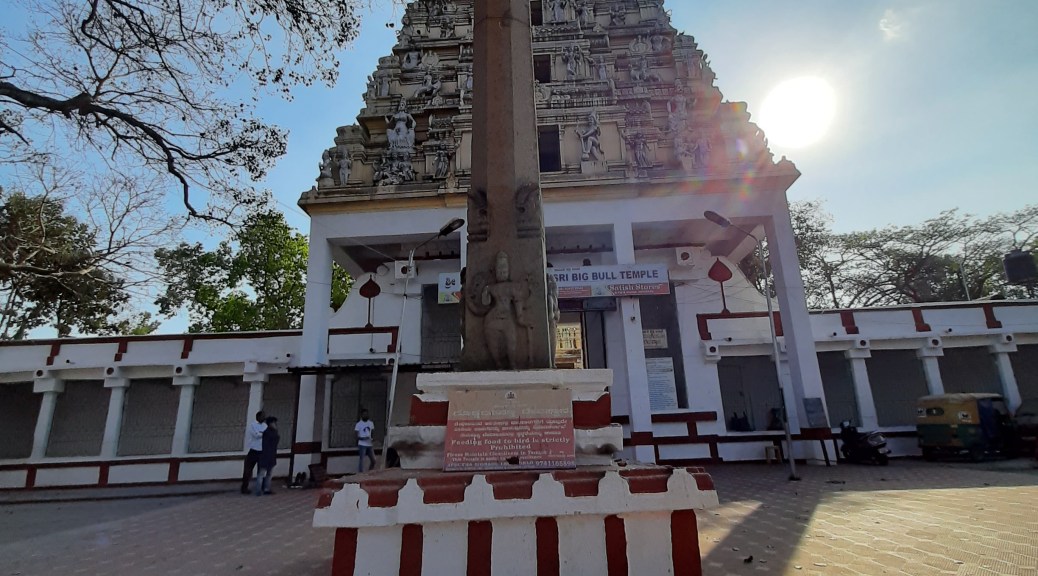
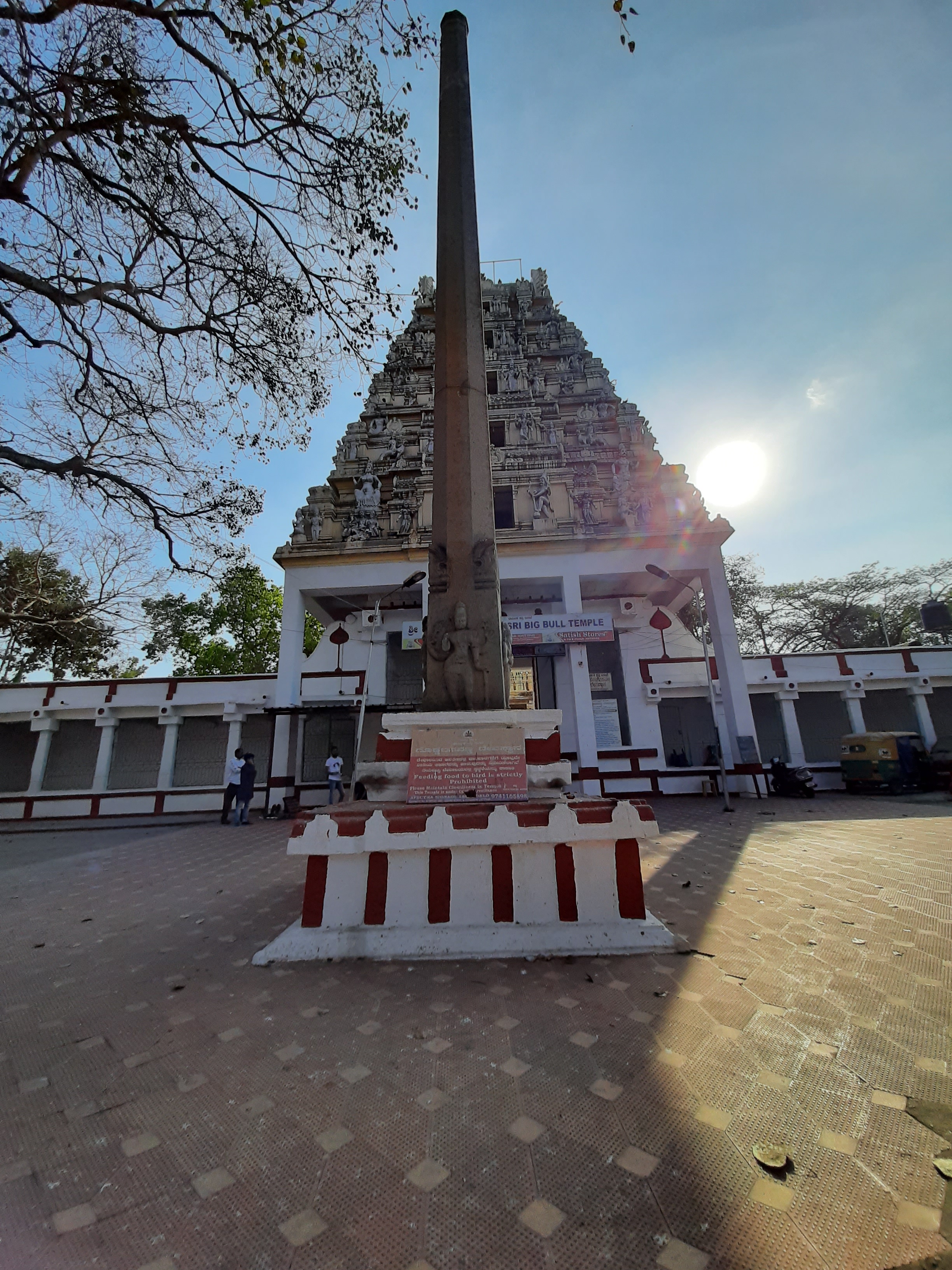
The Big bull temple, Basavanagudi
Meet-up point: Basavanagudi is the name of a temple (It translates to ‘Bull- Temple’). Basavanagudi is the name of a locality in South Bangalore, named after the temple. It is an extension of the Pete area, which was specifically created to accommodate the upper class, and more-specifically the Brahmin community. No trip to South Bengaluru is complete without a visit to this landmark temple built by Kempegowda, the founder of Bengaluru. Apart from the Big Bull temple, the Dodda Ganapathi and the Bugle rock (a small watch tower from the Kempegowda era) are a must visit on the same premises. If you time it up well, you can part-take in the annual groundnut fair in the locality. (Read here to know more about the history of the Kadlekai Parishe). After meeting my friend here, we started our gastronomic tour to our first food stop.
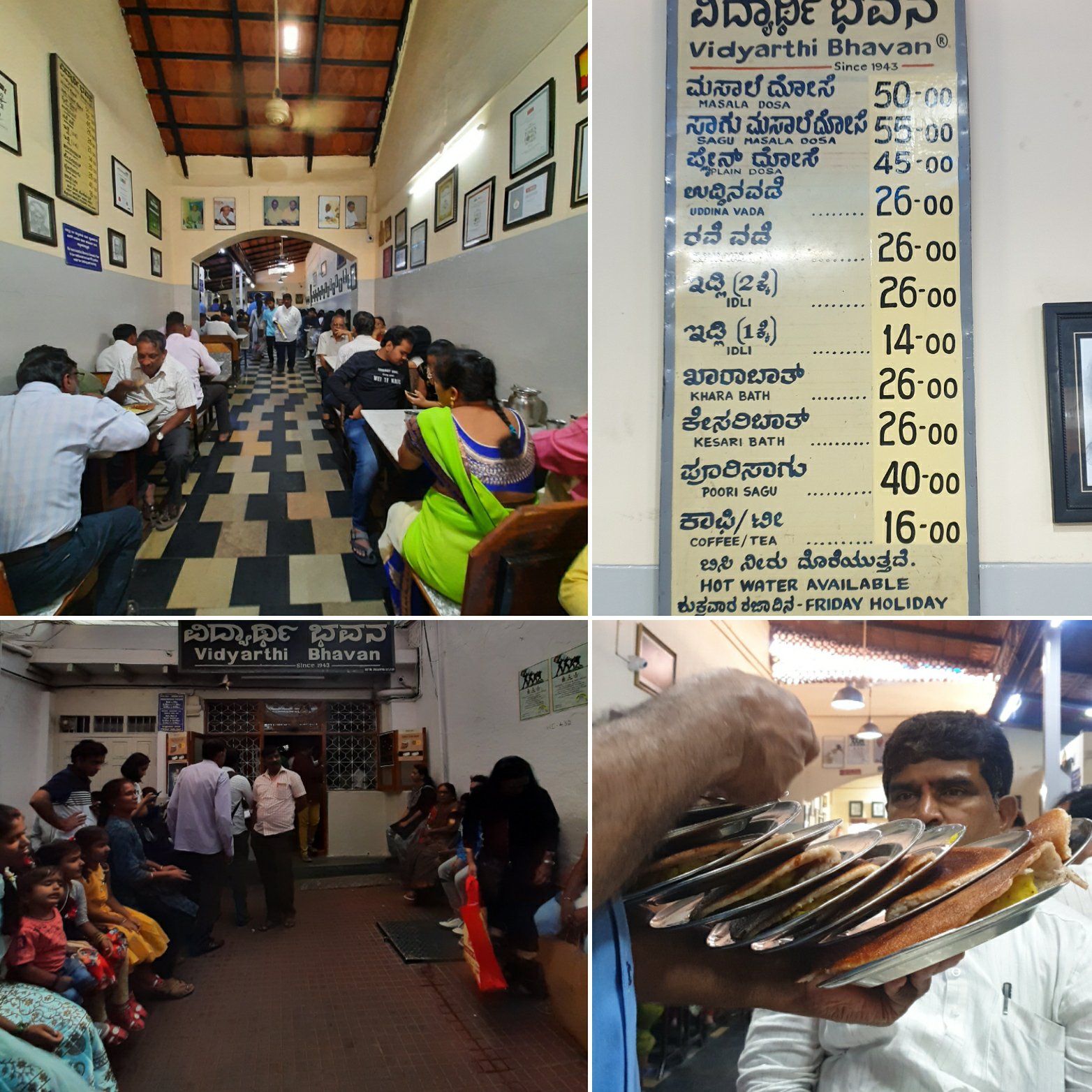
Food stop 1 (Breakfast): As synonymous as Dosa is with South India, Vidyarthi Bhavan is with South Bengaluru. Ask anyone for the best Dosa in the city and this place scores on top unanimously. It is a restaurant started initially to cater to the student community of the area which started a new culture of a hangout place for friends in those days. On most days, the queue can extend well up to a kilometer. My friend and I wiped off our plates of their signature Masala dosa for breakfast. (Click here to read further about the history of Vidyarthi Bhavan)
Vidyarthi bhavan, Basavanagudi
Food stop 2 (Light eats): No foodie who visits Bangalore is satisfied without taking an evening walk on the Eat street at VV-Puram. However, I decided to go here in the morning, in order to avoid the maddening rush. Honey cake and Congress bun at the iconic VB Bakery was what we needed. This is the first Iyengar bakery to be established in Karnataka which has paved a new culture in baking (Read here for more about V.B.Bakery). Avarebele (Val bean) is a favorite ingredient of the Bengalureans, who have a dedicated annual fair to celebrate this pulse (Click here to read further about Avarekai mela). Hence, picking up a packet of avarebele mixture for home from one of the stores there was an obvious choice.
Food stop 3 (11 o clock, coffee): It is an important break time for the employed section of the society. Brahmin’s Coffee bar is a household name for their filter coffee and the delectable chutney served with idly on their very limited menu. This tiny eatery is in a corner of Shankarapuram, which is also famed for the Shankaramatha, a learning center of the advaitha philosophy. We had a quick stopover for a hot cuppa this little place is known for, before heading to Pete. (Read further about Brahmin’s coffee bar here)
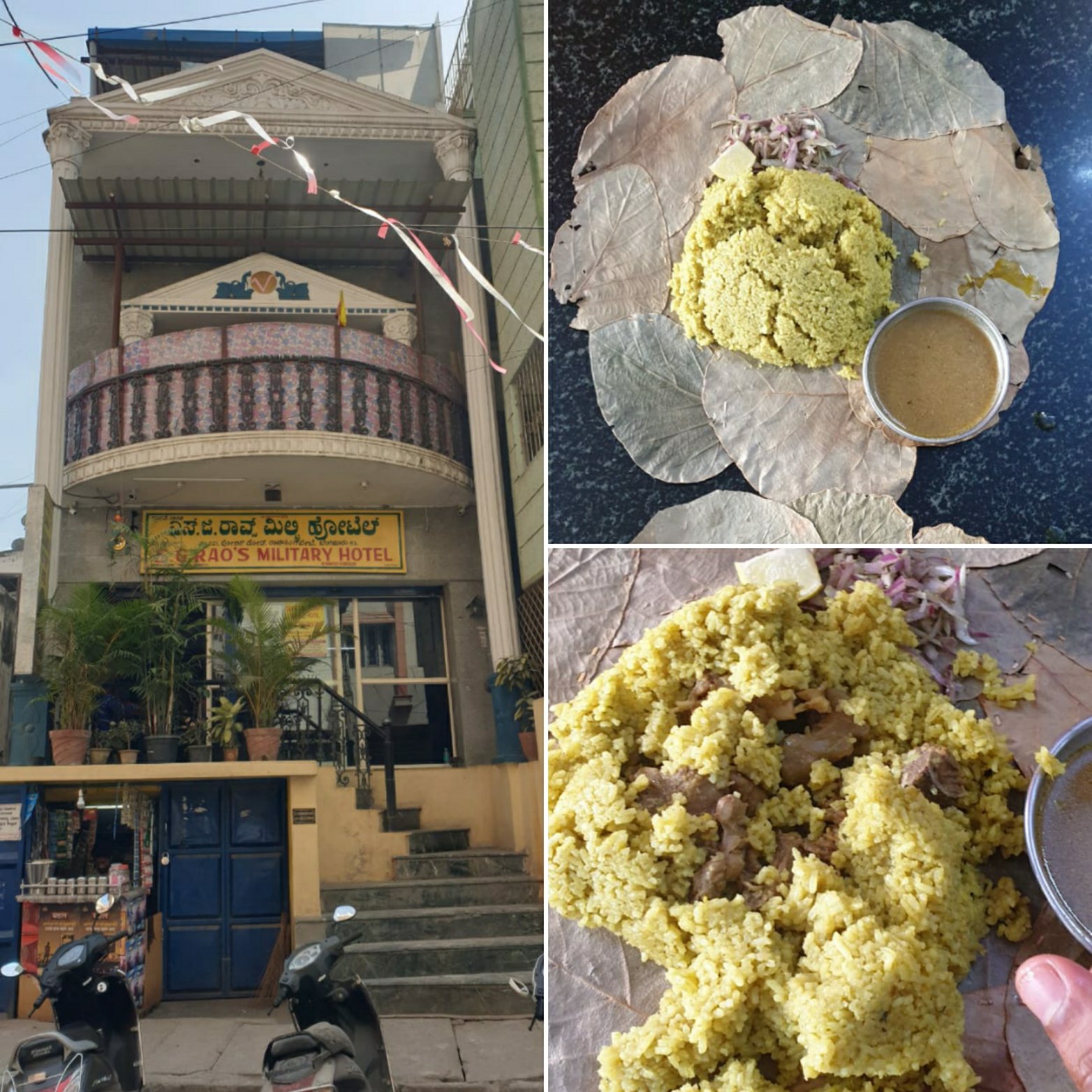
Food stop 4 (Lunch): To satiate the hunger pangs, I planned to treat my friend with an authentic Bangalorean affair. With multiple theories surrounding the origin of the military hotel culture, the history of these restaurants dotting across the southern part of Karnataka is unclear. Bangalore is home to some of the best in the state. I don’t think there would be any better meal than ‘Ragi Mudde oota’ savored at a military hotel to get a peek into the local flavor, including the ambience. Hence, we were lunching that afternoon at S.G. Rao’s military hotel, located in the cotton Pete area. A typical military hotel meal includes Kaal soup, Ragi Mudde and Mutton biriyani. (Click here to read further about S.G. Rao’s military hotel)
S.G.Rao’s military hotel, cottonpete
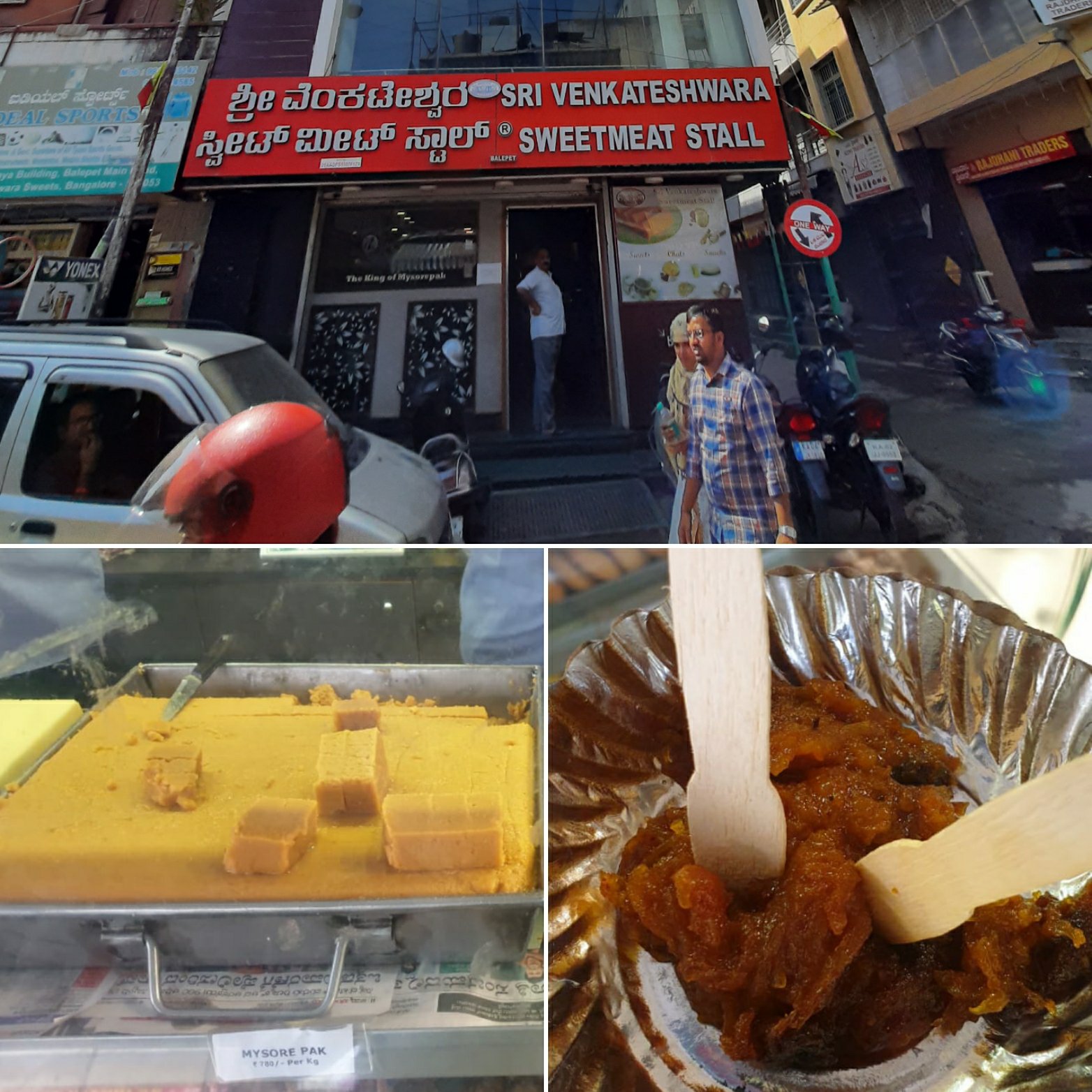
Food stop 5 (dessert): A meal is complete only with a nice dessert. If there is one sweet meat that is synonymous with Karnataka (Mysore state), it is Mysore pak. Since I couldn’t take my guest to Mysore for that, the closest I could get is at Sri Venkateshwara sweet meat stall located at Bale Pete, a short walk away from cotton Pete. Their Mysore pak and dumroot are the sweets my friend packed for his roommates back in his hometown. (Click here to read about Sri Venkateshwara sweet meat stall).
Sri Venkateshwara sweet meat stall, Balepete
The Pete walk: An old Bengaluru exploration is nothing without a walk along the narrow snaking lanes of the Pete area, the true business epicenter of both New and Old Bengaluru. This area is segmented into various sections and named according to the commodity sold and the communities that resided there in the yester years. From green groceries, handloom, steel, plastic to precious metal, everything is available in this locality. An early morning walk in the famed flower market is an experience in itself. We limited ourselves to just the mainstream sections while exploring some of the ancient temples, mosques and heritage houses of the Kempegowda era. In the meanwhile, we kept munching on numerous snacks from several popular stalls on our way. Although these eateries are old, the flavors are largely north Indian, owing to the Marwari and Baniya community that reside here in majority.
The heritage structures of the Victoria hospital, Bangalore fort and Tippu Sultan’s summer palace all lay on the side of the road for the history and architecture buffs who have a little more time in hand. But this is all we could fit in our day. Thus, ended a gastronomic tour of South Bengaluru.
I hope you enjoyed this virtual tour with me too… did you? Or did you not? Share your thoughts with me…
There are many other iconic restaurants in Basavanagudi if you have a larger appetite. These are a few other places that you must check out when you are here: The new modern hotel, Mahalakshmi Tiffin room, Janata Tiffin rooms are a few among many others.
Souvenirs to buy:
Coffee filter and freshly roasted coffee powder: The best filter coffee is available only in South Bengaluru, and hence my friend thought this was a more significant thing to buy from here.
Channapatna wooden toys: These are GI tagged handicrafts made with organic colors and largely popular in the western market, it comprises a large collection of traditional toys.
A trip that was pending since over two years, finally took wings last weekend. The places covered were an unusual combination of natural and contrived elements that created beauty. Had the both not been there, the existence of these places would have a lesser value than what it is today.
Our Itinerary: Friday night: Drive from Bangalore Saturday: Yaganti group of temples, Banaganapally Nawab’s bungalow, Owk reservoir, Belum caves, Sunset and night’s stay at Gandikota. Sunday: Explore Jammalamadugu fort & Gandikota, Lakshminarayanaswamy temple in Kadiri town, Lepakshi and reach Bangalore by late evening.
The details: An overnight drive was aimed at starting our trip from Bethamcherla- a town in the Kurnool district of Andhra Pradesh. A couple of articles on the internet had caught our interest to visit this place which is a treasure trove for archaeological studies. Invaluable Pleistocene remains have been excavated from several caves that are scattered around this region. We wanted to explore the Yerrajala & BillaSurgam caves in particular after being impressed by the photos online. However, even after talking to several localites, we failed miserably to get anywhere close to the places we were looking for. Language was a BIG concern there and for any small enquiries too, the curious people would throng in large numbers and stare at us while we were trying to communicate with our hand signs. Luckily, we had a Telugu-ite in our group who would do most of the talking throughout the trip. So without really finding the place, the day started somewhat on a low note.
As per the plan, the first day was a long one with target being to reach Gandikota for sunset. In quest of the place, we had already lost 3 hours doing nothing. So, we decided to skip Yerrajala and proceed to accomplish the rest of the itinerary. The winding roads of Tadipatri are carved out of the rocky hills. These hills are rich sources of the infamous Kadapa stones used in constructions. Its sedimentary rocks formed over years can be seen in layers, which make driving along this stretch a delight! We stopped at several spots to photograph the beautiful landscape as we drove through, to reach our next destination- Yaganti.
This is an ancient cave temple patronized by the rulers of the Sangam dynasty. ‘Keep left’ is the rule one needs to bear in mind in order to cover all the caves located around. Here, every cave has a special story to tell. Just keep taking the stairs whenever & wherever you spot them, so that you don’t miss out on any cave. At a point, a flight of steep stairs takes you to Agastya Cave where Lord Shiva is worshipped. And yet another chamber leads you to Lord Venkateshwara. Although, the lord is otherwise known for all the wealth, the minimal deco and the dimly lit chamber here, has some positive energy that emanates out of the place. We needed a little more time than what we had initially thought we would need to observe this place, where art, history & mythology co-exist.
The temple pond at Yaganti- amidst a backdrop of several caves
On our return, we halted at Banaganapally village, in front of a mansion that stands magnificently atop a small hillock, by the road side. An old rusted name board read- ‘Nawab’s bungalow’. Though the exteriors have stood the ravages of time, the interiors of this imposing structure built of wood and rock, is crumbling. In spite of being featured in several movies, nobody really knows who the Nawab who owns this bungalow is.
Further into the drive, we stopped by for a quick group photo at the Owk reservoir. We were ‘literally stopped’ while we were trying to capture a photo with the serene backdrop of the dam. The wind blew so hard that we were struggling to move against the strong currents and felt stationary most of the times. It was my first time experience, of ‘fighting’ the wind. I really wonder how strong a ‘storm’ could be..!!
Having found NO hotels for breakfast, it was a hungry drive down until Belum village. After wandering around, we settled down to have lunch at the only A/C- restaurant in the region (with no electricity for A/C service) on a recommendation by a localite. Not like we had an option either..!! After a quick lunch, we drove over to Belum caves.
As expected, the weekend crowd was insane. But, the weather was in our favor on that breezy afternoon! On a flat/potent fertile land that seemed fit for cultivation, there appears a deep well like opening in the land. A steep flight of stairs takes one by surprise, as he enters the infamous caves. The magnificent stalactites & stalagmites formations of limestone make Belum caves the longest and the 2nd largest complex in the country. Several ancient remnants of pre-historic human dwellings and relics of the Buddhist era have been discovered, marking the caves on the map of archaeologically and culturally important places. Due to the crowd, high humidity levels and low level of oxygen inside, most of us had a severe headache by the time we walked out of the place to sunlight. But whatever the hardship, it was totally worth every drop of sweat.
Inside the Belum caves
We were running behind schedule and we had to zip, zap, zoom… to reach the sunset point… After a 2-3 hrs drive, we were excited to spot the windmills dotting the distant horizon. The long wall of the Jammalamadagu fortress stood spread across, bordering the land’s end. It was an indication that we were approaching our destination- Gandikota.
But the sunset..??? Hell yeah! We did make it in time, but the clouds played spoilt sport! Never mind, we still had chores to accomplish before it was dark. We wanted to trust the roads and go where they took us. That’s why, we hadn’t booked our stay. In worst case of not finding a hotel, we had carried tents and sleeping bags as backup. The trip had been good so far and we hoped that all went fine till the end… As expected, the rooms were all occupied at Haritha- The only stay option around, for miles (A resort run by the AP tourism). We negotiated with the caretakers to let us use the washrooms and dining facility.
We struck a deal with a couple of villagers and then hiked down the steep gorge to pitch our tents for the night. It was really dark and well past 9.00.p.m. when we started our descent down to the river ridge. The descent seemed longer than expected, with the luggage and the total darkness of the night adding to our woes. A few loose stones rolled down our feet as we paved our way down carefully. Once we reached the bottom, it was immense silence that had engulfed the calm environment and our ‘cubicle bred minds’. The fresh cool air filled our souls. It had been a windy day throughout, and the night by the river side could’nt be any different. We managed to pitch one tent with great difficulty and the rest of us decided to just cuddle inside their sleeping bags. The weather wasn’t harsh and the cool temperature remained pleasant, right till dawn. The only thing we were hoping for was, that no dam gates were opened for that night and that we all don’t get washed away in the dark 😉
That’s the view from our tent- from the Pennar river bed
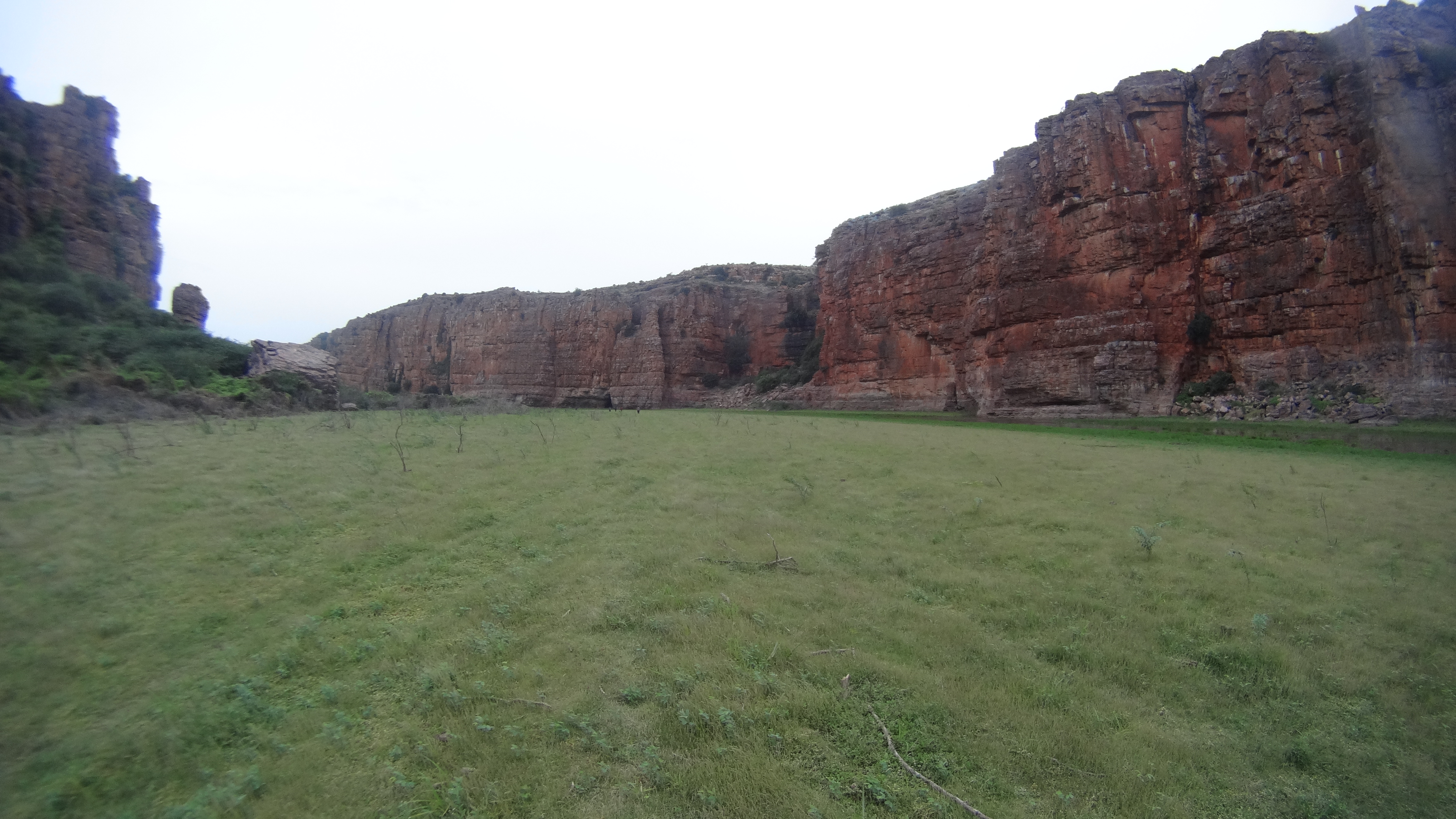
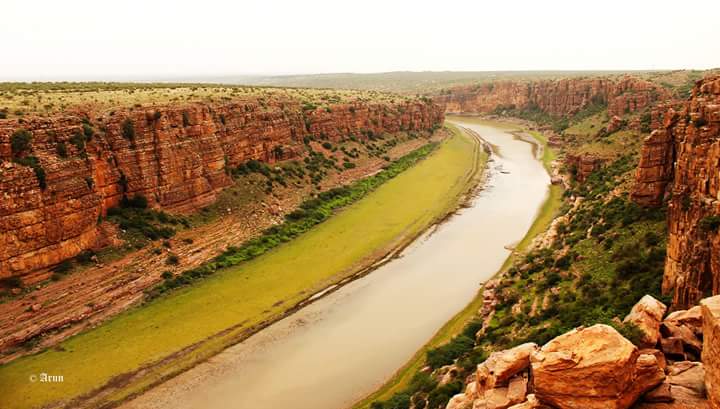
We all were awakened by the first rays of dawn and opened our eyes to a dream… We all knew we were camping on the ridge of river Pennar all night. But only with sunlight, we realized that we were actually sleeping on the ‘river bed’!! No wonder that, the soil felt moist and loose while we were struggling to pitch our tents last night!! With the mighty gorge standing all around us, our hearts skipped more than a few beats at the splendid view of the painterly beauty. We strolled across the river bed till both ends of the fort wall, taking in sufficient clean air into our lungs through the billowing winds and the burnt yellow-green grass. We returned to our tent, cooked maggi and ate bread-jam for breakfast. Soon, we had to undesiringly call it ‘Pack-up’, lest face the brunt of the burning sun while climbing back with the entire load.
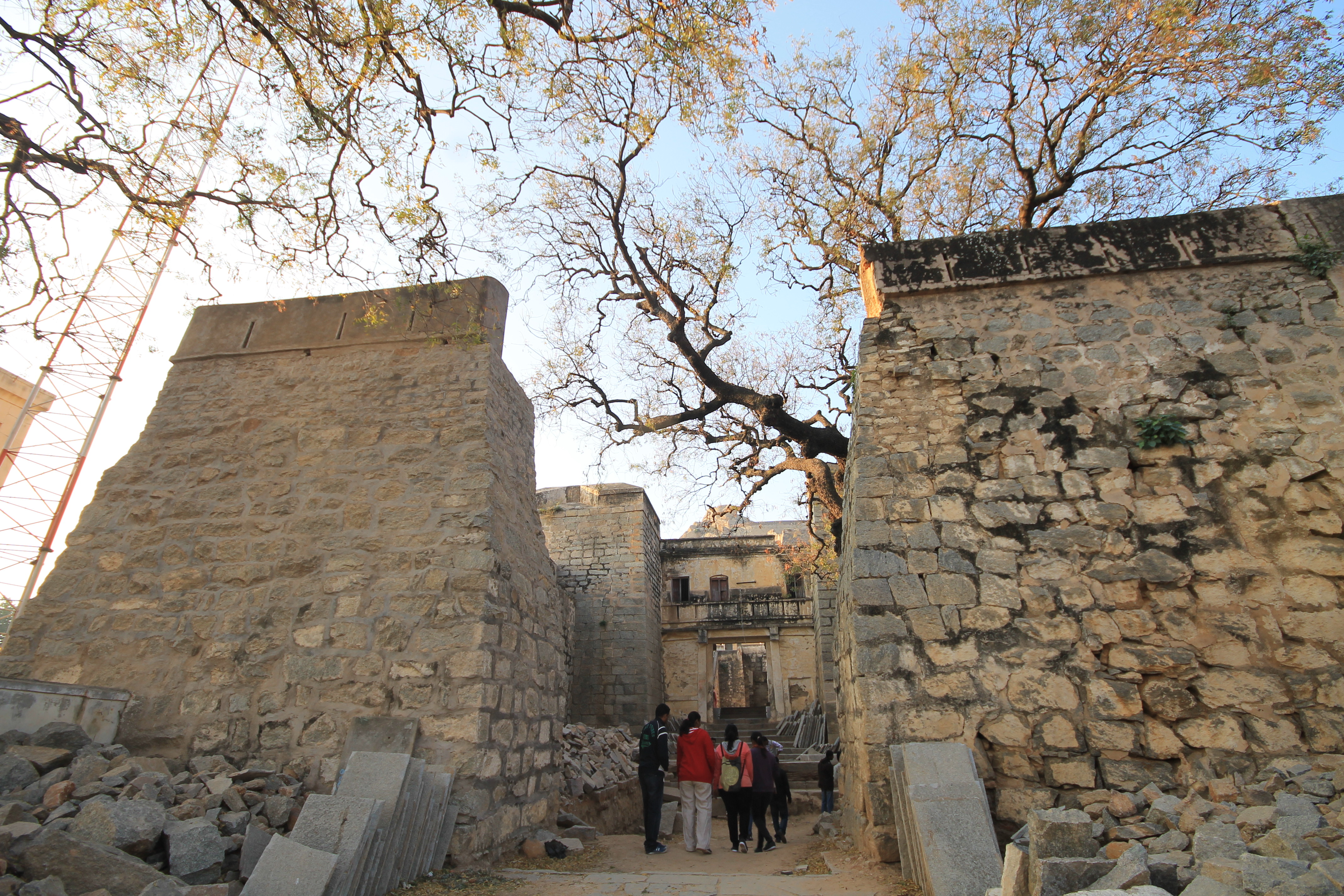
Once on top, we explored the view point, the old mosque, the fort remnants, the granary and the temples in the village. The entire village exists within the fort walls. It was a beautiful place to bid good bye!
The Pennar gorge at Gandikota Photo credits: Arun Kumar B.R.
For a pious traveler, a visit to the Lakshminarayanaswamy temple in Kadiri town and the Madhvarayaswamy temple at Gorantla is recommended. Both from the Vijayanagara era, would complete their religious trip. Half a day could be well spent at the Lepakshi complex too, if opted for on the way back to Bangalore. We opted out of these temple visits and drove back to Bangalore through the bypass road. In this route, we travelled mostly through protected forest reserve area which was another highlight of our journey. The Rollapadu bird sanctuary, the only habitat in Andhra for the largest flying bird in the world, the endangered – ‘Great Indian Bustard’, lays just a small deviation away. The mighty rocks balancing on each other and the greenery all along just made every bit of the trip so joyful.
We had to reach Bangalore to drop a friend at the airport for her late evening flight! Thus ended a quick weekend… like zip, zap zoom…!!!
One of our friends was moving out of India and we thought it was good idea to send him off on a happy note; with something that he likes doing and something that he will cherish. With that, my group of friends hosted him for a dinner and then planned a trek to Madhugiri. Madhugiri is Asia’s second highest monolithic hill and has the ruins of an old fort at the top.
After a dinner party on a Friday night, we started to drive towards NH-4 in 2 cars and 2 bikes at 1.00.a.m. With a smooth highway road and bumpy country sides, we reached the guest house at the foothill of Madhugiri by around 4.00.a.m. The initial plan was to reach the peak for sunrise. But, on reaching the guesthouse, we were advised by the caretaker to start the hike after sunrise. There were recent cases of hikers attacked by bears reported on the hills. We waited in anticipation until sunrise.
From the foothills of Madhugiri – A view from our guest house
It was 7.00.a.m by the time we started our ascent after a coffee break at a petty shop in front of the fort entrance. The start of the trek made me feel like it was going to be an easy climb. A well laid flight of concrete stairs took us to about 1/5 th of the total climb of the hill. However, the climb started to get tricky further from there. The hill seemed a little steep, the concrete stairs were replaced by steps carved out of the rock itself. With this stretch, we covered 2/5th of the total distance.
The Madhugiri fort entrance
The steps disappeared in the next stretch. There was only a rod fixed firmly to the monolith with some barbed wire and the hill had become a little steeper. This was covering 3/5th of the ascent.
A view of the Madhugiri town after climbing the flight of stairs
And then the steps disappeared. There was only a rod fixed firmly to the monolith with some barbed wire and the hill had become a little more steeper. This was covering 3/5th of the ascent.
Somewhere in between, an old and ruined wall emerged out. This added to the climbing woes which gave us only limited space to place our footsteps and less grip to place our hand. And then, we had to jump across a crack in the monolith to get to the other side was the steep valley. Once we reached the other side, every structure that was man made suddenly disappeared. It was just one super steep hill stretching into the sky. we had to literally use all four limbs to scale this 4/5th of the hill.
Fort Madhugiri
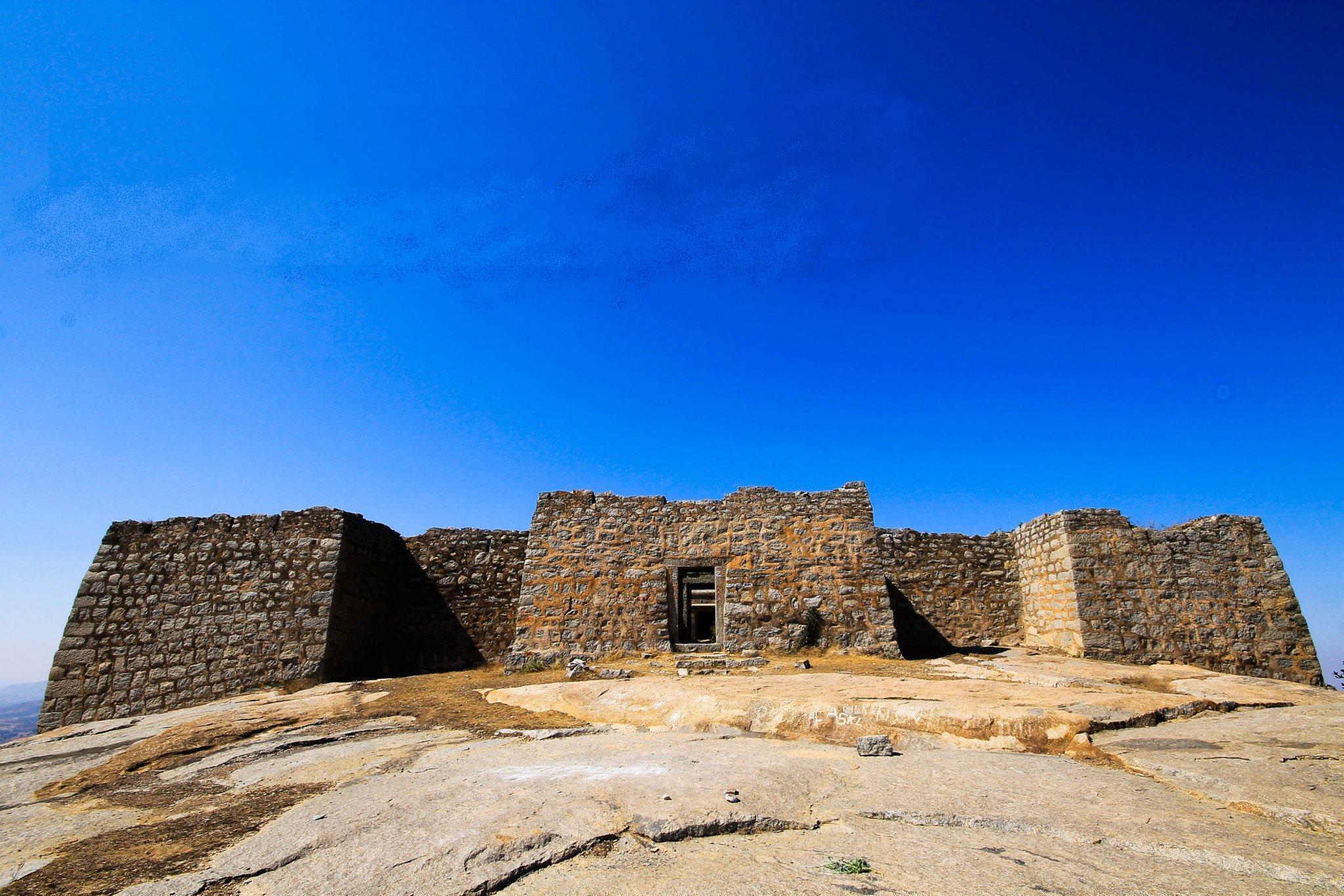
And finally, there emerged the first glimpse of the Madhugiri fort- gritty, yet seemingly elegant. This was built by Raja Heere Gowda who owed allegiance to the Vijayanagara kings, which was later reinforced by Hyder Ali. It is believed that this fort was a comfortable hideout for many freedom fighters during the Independence struggle. Beehives on the ramparts of the fort were the only means of sustenance for them and that is said to have given the place its name – Madhu(honey)- Giri(hill).
We walked across the structure in its dilapidated form, where the view on the other side was a treat to our eyes and feast for our tired souls. Our joy knew no bounds when we found a puddle of rainwater, which tasted no less than nectar from a beehive.
A puddle of water atop the hills
We spent some time atop and started our descent so that we could reach the base before the scorching sun made his way. The descent was a rather difficult, with me losing my grip every now and then and having nothing to hold onto. I had to sit and slide down inch by inch at most places. And finally, Bang at 12.00. noon, we had reached the base…
Overall, it was an awesome trek and the last one with our friend.
Cheers..!!
P.S.: photo credits to Sam (I’d left my camera in the safe confines of my home)
It was after a long-time that we cousins were catching up and so we planned to have an all cousins day out (no aunties, uncles, mammas and Pappas). We narrowed down to visit Mekedaatu for the weekend. At 10.00a.m on a Sunday morning, we were late to leave home to any tourist places around the city. And to add to our woes, it was Banashankari temple’s annual festival that day. This only means that we had to wade through hopeless traffic jam along with the Kanakapura road metro line construction also being underway…!!
List of places covered: Food stop at Vasu hotel, Kanakapura- This is popular for its crusty Masala Dosa Chunchi falls Sangama Mekedatu viewpoint
Details of the trip:
Six kms before Mekedaatu, a board pointing to the left indicated the way to Chunchi falls. We decided to take the deviation. The summertime visit to Chunchi falls was a disappointment for us after reaching there. There was hardly any water in the river and the rocks shined bright in the sun’s reflection. Just as we were about to turn our backs to return, a localite who was around us started a conversation with us. He eventually told us that he could take us to a better viewpoint. We blindly decided to follow him.
We crossed a small dam, a ridge and continued to walk. after a tiring walk in the scorching sun for about 1.5 kms, we slowly started to grow suspicious as to where this man was taking us as the place started to look more secluded. But, just then, he pointed at a watch tower and told us that we could get a good view from there. Before we could react, he intruded – “But, you need to walk down there. Behind that bush”. We were like, “OK… hmm huh…!!” and continued to walk further. He would certainly not be able to mug us as we outnumbered him, we thought. Once we reached that spot, it was a total sense of relief and a surprise. Had we returned earlier; we would have missed such a great spot. I’m sure this place would look more amazing in the monsoon season.
Chunchi falls
After spending a while at the falls, we thanked the old man with a goodwill amount and headed towards Sangama. ‘Sangama’ is a confluence of river Kaveri and Arkavathi and supposedly a very scenic spot post monsoon. But disappointment was waiting for us again after reaching there. Insufficient rains and the influx of tourist on a weekend, the place was crammed with very little place to even sit peacefully on the riverbank.
Legend has it, that a goat had jumped across a gorge to escape from a chasing tiger and hence our destination derived its name in Kannada. (Meke = goat; daatu = cross). Trekking the 3 kms distance from Sangama to Mekedatu was banned then and hence, we had to wait for the pick-up bus to come. After disappointments back to back, we were apprehensive of going forward till Mekedaatu wondering if it would be worth our visit. We lost our patience in waiting and walked across the shallow waters to reach back to our car. The security guard who had been observing us, walked up to us and suggested that we go to Mekedaatu since we had already come so far from the city. We were still half minded and tossed a coin. Heads said a ‘Go’.
The view around Sangama
After disappointments back to back, we were apprehensive of going to Mekedaatu wondering if that place would really be worth our visit. Trekking the 3 kms distance from Sangama to Mekedatu is banned now and hence, we had to wait for the pick up bus to come. We lost our patience, and crossed the shallow waters back to reach our car. The security guard who had been observing us, walked upto us and suggested that we go to Mekedaatu since we had already come so far from the city. We were still half minded, and tossed a coin. Heads said a ‘Go’.. So we again crossed the river, by then the bus had returned. We got the last seat for ourselves. The bus was a total-out-of-the-junk-yard-thing. The seats we were sitting on were infact tied to the roof rails with strings- more like a swing..!! And the fully crammed bus(packed to twice its capacity) started. It was an unpaved road, and a lot of dust was filled inside the bus which made us literally stand up from those swinging seats..
View enroute to Mekedaatu from Sangama
So, we again crossed the river and by then, the bus had returned. We got the last seat for ourselves. The bus was a total-out-of-the-junk-yard-thing. The seats we were sitting on were in fact tied to the roof rails with ropes. It felt less like a bus seat and more like a swing…!! And bus was fully crammed and packed to twice its capacity. The drive was through an unpaved road, and a lot of dust was filled inside the bus. We could barely breathe inside and all we stood up from those swinging seats. Once we reached Mekedaatu after a strenuous back seat ride, we felt that the security guard was right- It was a nice place. But again, insufficient rains did not give me the internet picture I wanted.
Since our onward ride was a bad experience, we chose to sit on the top of the bus for our return. Trust me when I say that the ride was the highlight of our entire day… The best bus ride we all ever had in our life. The bus went at high speed blowing the dust high up from the unpaved roads. There was just one thin steel rod around for us to hold onto, that too was tied to the windows below. At one point, another bus came in the opposite direction, and our bus went completely off road. It felt as if our bus was balancing on a few small stones on the slope of the valley so that the driver could make enough space for the other bus to pass through the narrow road. We could reach the treetops, see the best views of the river and the valley below. It was one AMAZING ride.
The bus, road and our shadow of sitting on the top of the bus- between Mekedatu and Sangama
We ended up feeling that the return trip was a very short one and wanted more… one adrenaline rush moment it was…!! It was the last ride for the day as the sun had already set and we returned to our homes high on energy and all charged up and motivated for another boring week ahead.
There are a lot of options around Kanakapura for a full day or half-day trip. I have covered these places on separate occasions. A few of them are: * Kabbala Durga trek * Bheemanakindi trek * Pyramid valley meditation center
The initial plan was to leave before sunrise so that we could see the birds at the Ranganathittu Bird sanctuary before they left their homes for the day’s chores. However, a flat tyre and multiple pit stops added up to late arrival at the Srirangapatna-Yelwala bypass. This led to a few additions and deletions in the original plan so that we could see the birds when they returned to their nests late in the evening.
List of places covered: Gaganachukki and Bharachukki waterfalls Talakadu Kaaranji kere in Mysore Ranganathittu Bird sanctuary
Details of the trip:
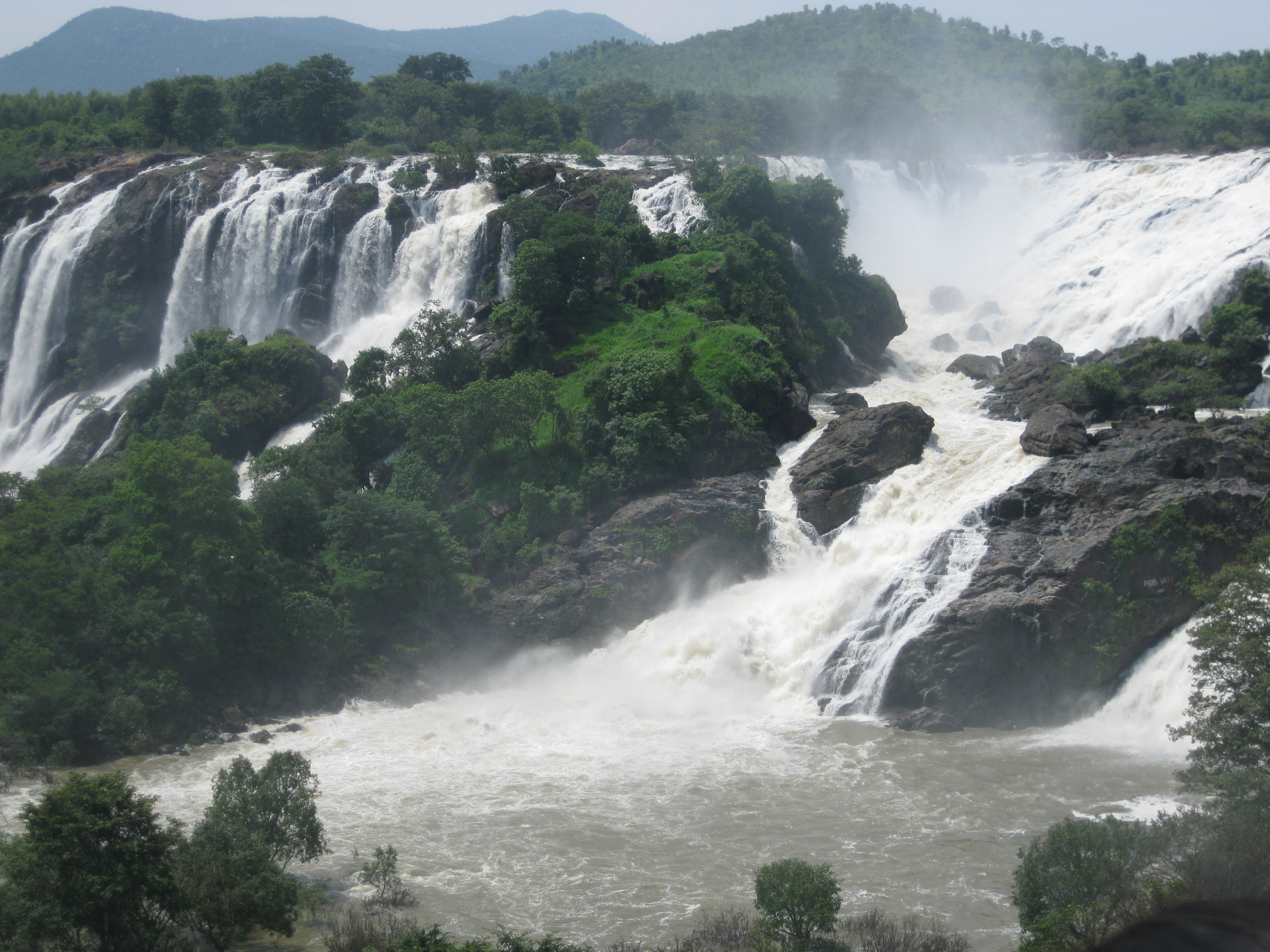
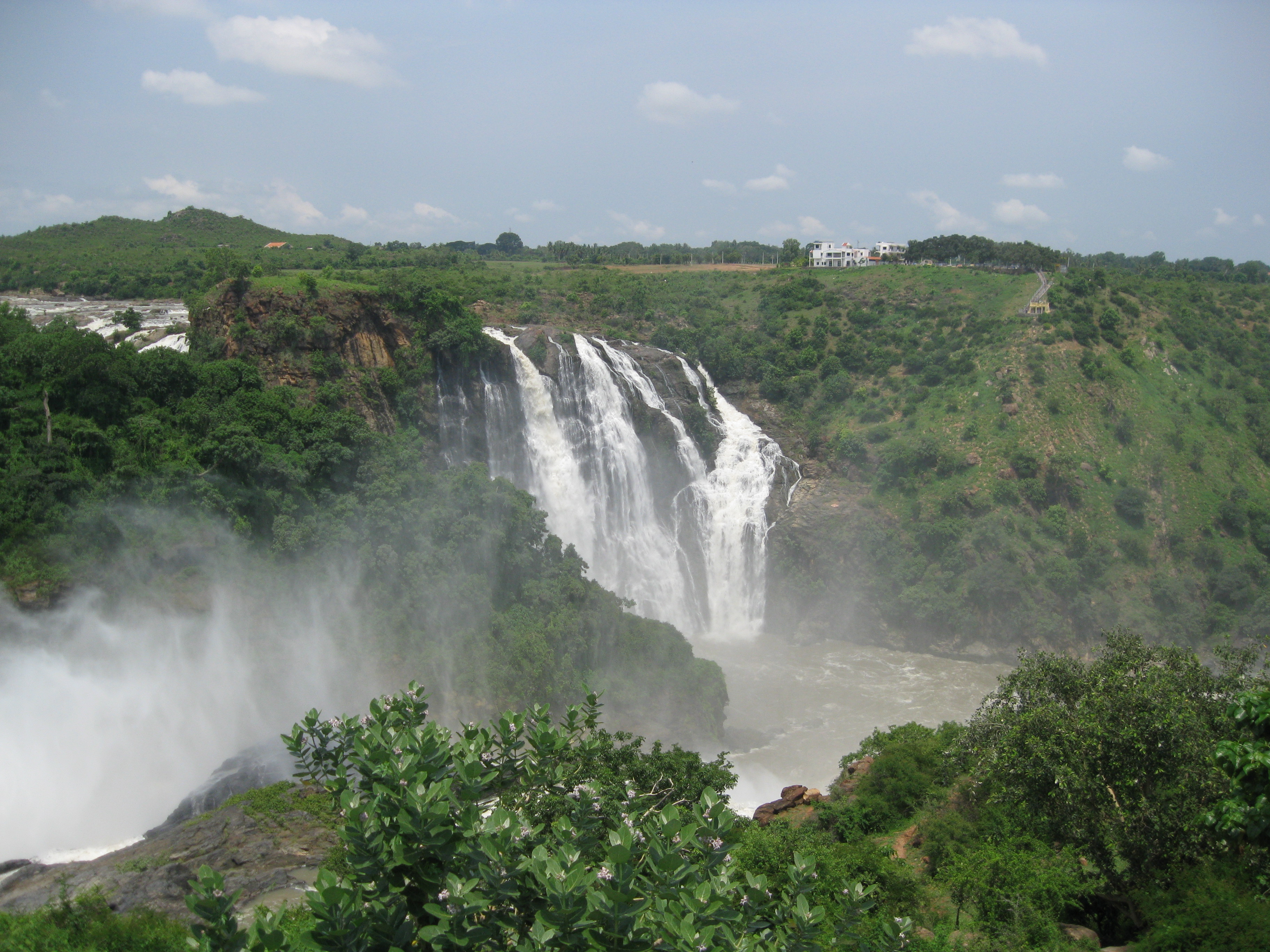
As per the new plan, we headed to Gaganachukki and Bharachukki waterfalls. After a nice long drive through the green paddy fields and rusty countryside, we reached Shivanasamudra. This is one of the island towns formed by river Kaveri through its course. This is where Asia’s first hydel-power project was set up, commissioned by the then Diwan of Mysore- K. Seshadri Iyer; in order to supply electricity for mining at Kolar Gold Fields. River Kaveri plummets down at two places, a couple of kilometers away from each other and then merging together again. The beauty of the twin waterfalls is truly mesmerizing. If you’re seeking for some thrill, coracle rides are available that takes you closer to the spot where the water drops. But we did not want to take the risk of venturing into the water without a life jacket. At least, not after we heard someone say that the water was 1000 feet deep at some point. We weren’t not sure of the exact depth of the river, but certainly did not want to take a chance!
Gaganachukki- The western branch of river Kaveri
The sun was approaching his highest point by this time, and hence we decided that we should be heading towards our next destination- Talakadu. Kannadigas have all grown up listening to the story of the curse of Alamelamma. It is believed that her spell turned this once prosperous town to a sand desert. As a student reading history in school, I had always been intrigued to visit this place and see the romance between the sand and the temples during different seasons. However, the excitement that we had when we started to this place soon died when we arrived there (in fact, it got buried deep under its sands). Given the poor rainfall, less waters and hordes of tourists over the weekend, the place was had gathered so much filth and poop everywhere. There was an unbearable stench that had spread around. The river was shallow and looked stagnant and unappealing. Yet, we did manage to go for a coracle ride which was definitely not worth the buck. The place was a total turn off…!! We lost our interest to explore the famed temples of Talakadu and left the place (I did visit the historically important temples on a later date though).
Bharachukki- The eastern branch of river Kaveri
We wanted to reach the highway back again but lost our way at some point. Without being able to connect to the highway, we just kept driving on some narrow road through the countryside. After the frayed trip to Talakadu, this drive through the rustic countryside was somewhat a deal breaker and a feast to our city bred souls. After a bit of driving around and just when we thought we had reached the highway, we realized that we had in fact reached Mysore…!! Mysore city was never on our itinerary when we left home that morning. We were extremely hungry and hence decided to feast at a nice restaurant in the city itself.
Some friend suggested us to visit Kaaranji kere in Mysore where we could do some birding. Around 3.00.p.m, we headed there- This was in fact the highlight of the trip- though unplanned, it came as a treat to us. We took a boat ride around the lake where we spotted several migratory birds. Not in large numbers, but many in varieties. It surely is a haven for the bird lovers. I pitied myself for not being able to identify what birds most of them were. I’m not an enthusiast of zoos as these places are where animals and birds are kept in enclosures. But, if you are around with kids, this place is good as there is an enclosure here as well that hosts many native birds, a few animals and reptiles.
The birds at Karanji kere
So, finally by 5.00.p.m, we headed out for what we had come all the way– Ranganathittu Bird sanctuary. It was the time when all the birds returned to their nests… We were there for sunset. We then took a boat ride around the small islets where thousands of birds have made their homes. The trees looked amazing with the birds and the water looked equally dangerous- with crocodiles swimming right past us… Again, we spotted a lot of different birds since it was the peak of the migratory season.
The winged hosts on the islet
With a pleasant sunset ride in the river, a long day tripping in the Mysore circuit came to an end. Although most part of the day was unplanned, it was a weekend well deserved.
I have been tad busy at work with less time to post a thought.. February being a month of love, inspite of my hectic schedule at work, I’ve managed to make the most of my weekends spending quality time with my 1st love- “Traveling”. Every weekend will be posted separately in the days to come.. But, before the ‘month of love’ ends.. I wanted to ensure that the chronicle for the month ends with a love note on my 2nd crush – ‘The Aeroplanes’ 🙂
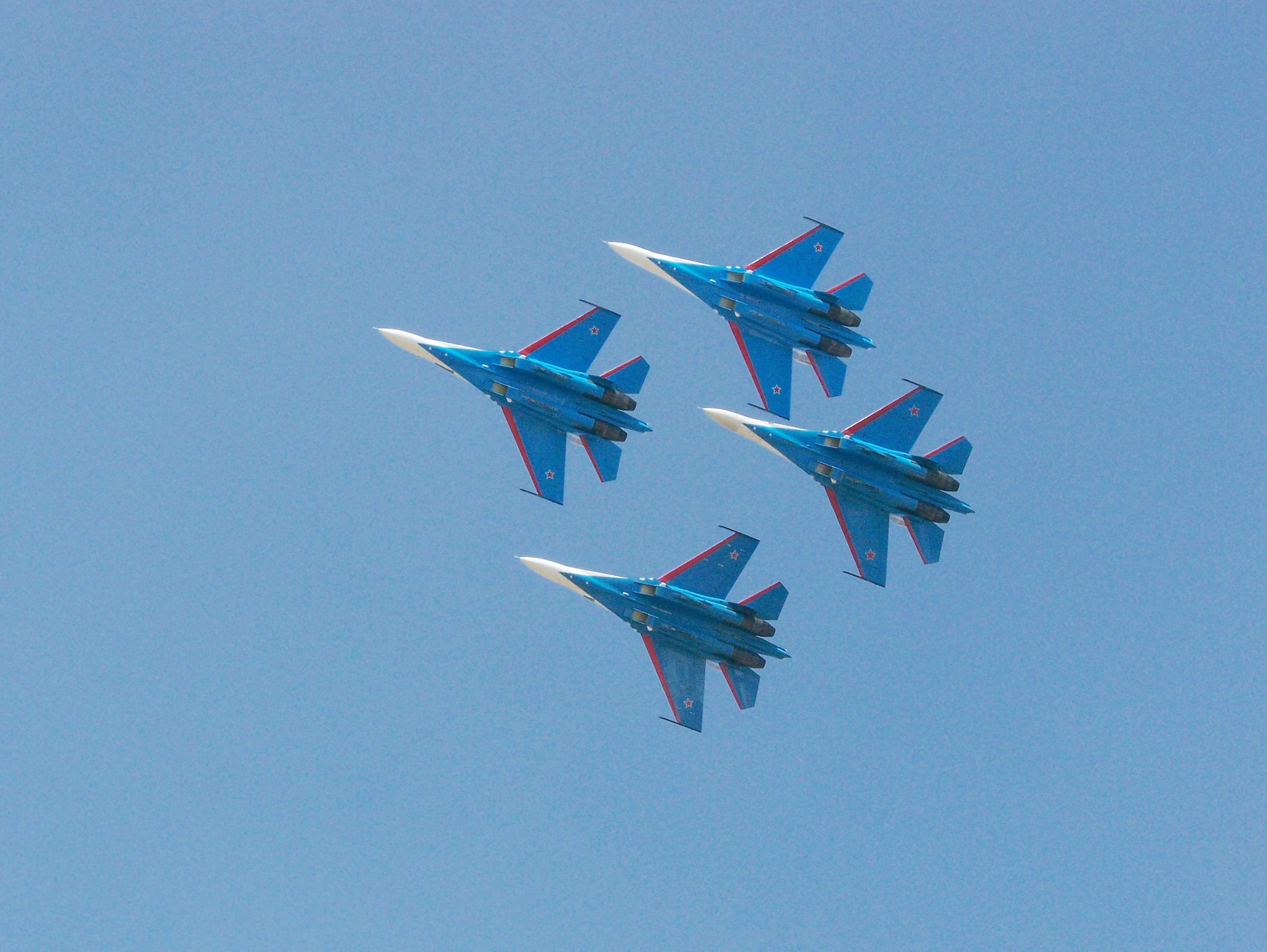
“Aero India” is a biennial event that happens only in Bangalore and is something that I have been religiously visiting since it’s inception.. I was there this year too.. But, compared to the previous years, it wasn’t a great show.. Unfortunately, the expectations set for the aero-enthusiasts by ‘The Russian Knights’ were too high to be met.!!
The ‘Mirror Image’ formation by the Flying Bulls
The Suryakirans were missed greatly, due to the passing away of 2 pilots in mid-air crashes 😥 The ‘Flying bulls’ and the Desi-team ‘Sarang’ were clearly the show stoppers.
The Russian Knights
<14-Feb-2009>
This takes me back to the show of 2009 – When there were too many participants with almost all the biggies in this business from around the world who had set up stalls. India was on a look out for 126 fighters for its mighty air-force. The F-16, F-18, Eurofighters, Rafael, Sukhoi etc etc. India’s LCA- Tejas made her 1st debut. There were many other contenders among the LCH-Choppers like Dhruv, Cheetah, Cobra; Cargo carriers like the C-130: Super Hercules, Omega tankers; Missiles and UAVs.
It was a day of dreams to several other aero-enthusiasts like me. Hopping from one stall to another understanding the latest technological developments in the industry, defence and warfare from across the world can happen only at one-stop-shows like these and not everytime or everyone gets such opportunities to learn.
Here, knowledge is accompanied with entertainment. Aerobatics by various teams from India and abroad, individual competitions that are related to flying or making scaled-down models, display of some vintage aircrafts, flight simulators, interactions with the personnel from major aviation companies are opportunities that every enthusiast looks forward for show after show. Aero-India 2009, being its biggest show ever, it was an amazing day… especially when it falls on 14-Feb..!!!
The ‘Tango’ formation by the Suryakirans
A great show put up by the SuryaKirans and the Sarang team..!!
The Sarang team
It is a feeling of contentment that fills my heart when I come here for each show and a sense of sadness to think about waiting for 2 years for the next show.. It gives us a sense of pride when we say we are Bangaloreans and the Air show happens only here..
If you want me to write further, I can go on.. About every show and every machine there.. But i’d like to save some for the coming shows too.. So, I end it here with a ‘Love Note’ in the month of love and let the love spread in the world 😛
Even then, the second visit to Makalidurga happened. I was forcibly dragged out of bed on a cozy Sunday morning. I was supposed to be the guide to the first timers so that they could hike up the hill.
I knew the way to reach Makalidurga- but could not guide them any further to the exact spot from where they could get the photo of the train crossing which they wanted.. Considering it was around 11.00.a.m, the sun had already reached a good position to suck the fluid in us..
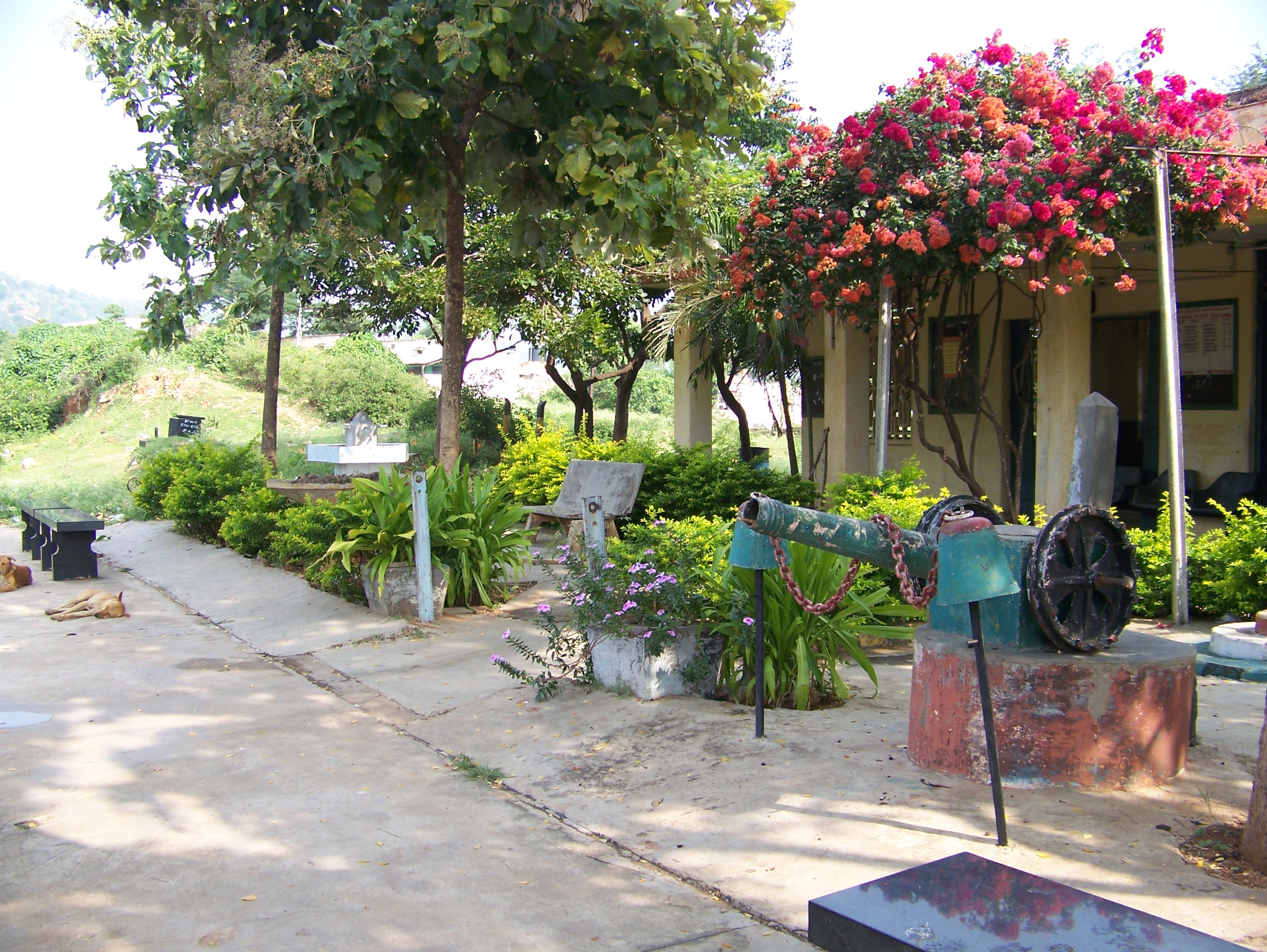
Alighting @ the Happy valley : Makalidurga railway station
We had left home without breakfast hoping that we could have something on our way and pick up some water bottles.. Hard luck..!! We could find neither!!
The Makalidurga railway crossing
All of us reached a railway track finally.. And randomly climbed a hillock, climbed further up.. We continued to climb hoping to find some shade to sit and wait till our catch of the day appeared… But again, no luck- no water, no food, no shade. We randomly stopped on a considerably flat area without being able to proceed further under the ruthlessly shining sun and waited for the train..
After about half an hour, the smoke from the engine chimney appeared near the horizon.. We all got excited.. As it neared, the engine emerged from behind a bush, then a bogie.. Before our cameras reached their position, we saw the end of the train 😥 It was a small train with just 1 engine and 4 bogies…
So, we continued our wait.. After a while again we found some smoke at the horizon. So, this time we hoped that our tiring wait would end soon and we could get that perfect internet photo of a blue passenger train passing across the frame… Hard luck once again- It was indeed a super long train with over 55 bogies: But, it was a goods loco and not the one that we had waited for and moreover its colour did not match the background 😥
This meant that we still had to wait. We were restless… We decided to walk further up hoping to find some shade atleast..!! And we did find a small tree (or rather a bush). Something that was better than nothing, we thought. All the five of us squeezed into that small patch of shade and continued to wait….
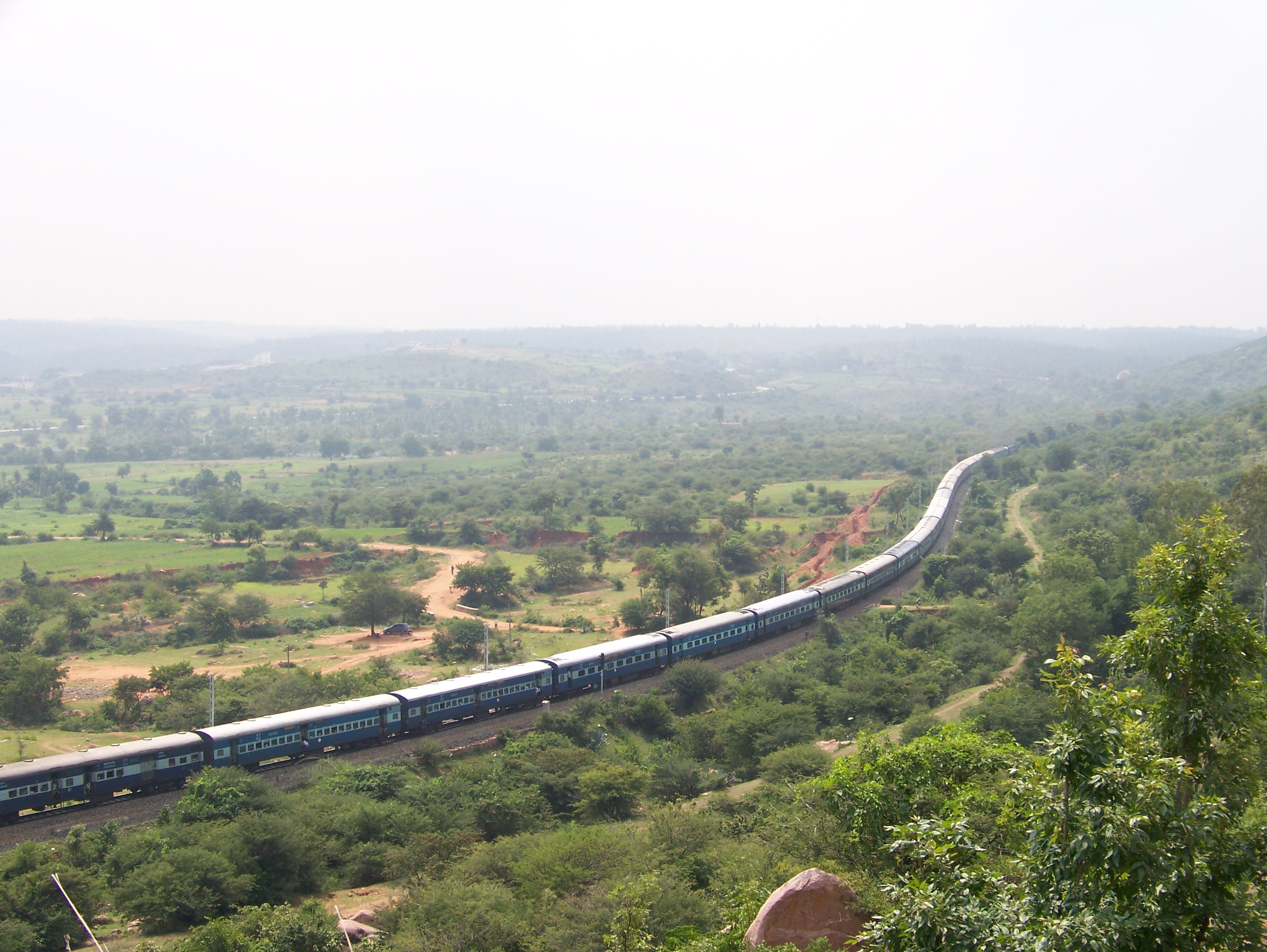
After a while, we heard the hooting of a train at a distance… This time, we couldn’t see any smoke rising up… The sound became louder and louder but still- there were no signs of the train. But, we knew for sure that the source was somewhere closeby. And suddenly, a Nizamuddin-Yeswantpur bound passenger train came buzzing into our visibility. We all took our cameras out and started clicking… The train was really long and it stretched beyond the 2 ends of the frame. Yet, this was not the photo we wanted. The train was actually in the opposite direction. So, even if the engine is very much in the frame, it appears like it is gone beyond 😥 But, anyway it seemed like we could not hope for anything further because we were all dehydrated.. So, we had to be contended with what we got and return back to pavilion 😦
Our prized catch- The Nizammuddin-Yeswantpur passenger
My family decided to visit the Ghati Subramanya temple on Ganesh Chaturthi day considering that there would be less crowd in a Subramanya temple. A short drive into the Bangalore outskirts, Ghati welcomed us with a mesmerizing view of the hills, ponds scattered in the meadow and a lot of greenery around… The boundary of the meadow was lined by a railway track- It looked beautiful.!!
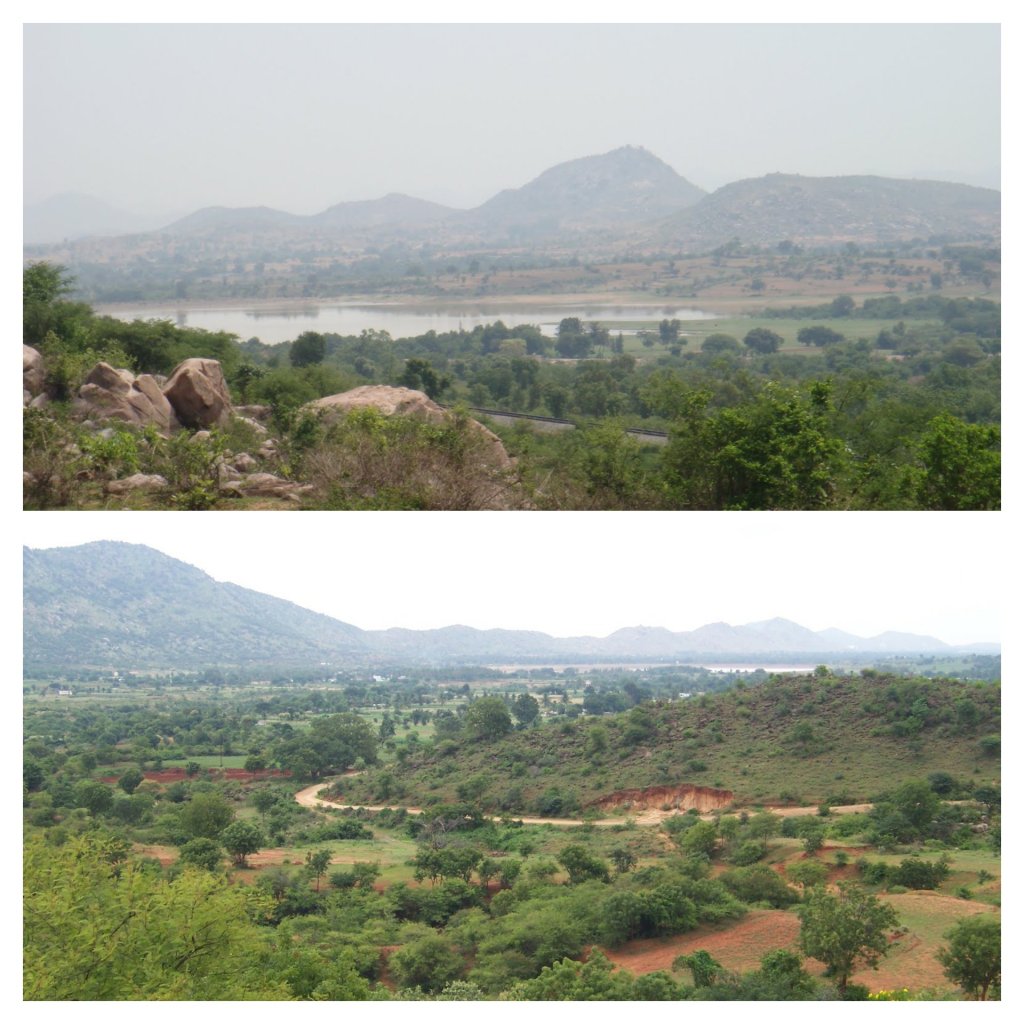
Some views of the Makalidurga valley
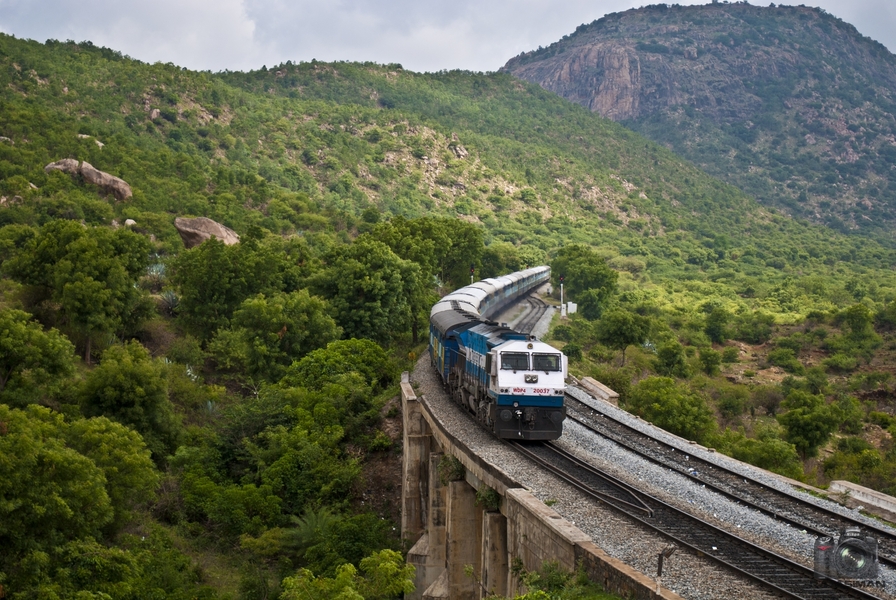
And just as we slowed down to appreciate the view, a freight loco came zipping along the line- and now it looked picture perfect…!! And just as I thought that this scene was familiar- my mind wandered to recollect where I had seen it. Soon I knew the answer: it was the “Makalidurga Ghats” that I had seen in an IRCTC hoarding of the South Western railways at Cantonment station. Back then, I remember that I had gone back home and googled about Makalidurga but had soon forgotten. So, this felt great today!!
We then proceeded to the temple and finished the darshan early (considering less crowd). And we then straight away followed the milestones to Makalidurga. I was back from a railway trek to Dudhsagar just two days ago and here, I was with a view that inspired for another railway trek. We stopped our car close to the railway station and walked 3-4kms along the railway track to reach the bridge that I had seen in the hoarding. But sadly, there was no train that would pass at that time…
Top: The Subramanya temple at Ghati; Below: The naga pratishtapana installations outside the temple
We then explored the place around by foot. One of the hills offered an amazing view of the surrounding villages. There are ruins of an old fort atop the hill which makes it a great place for some exploration. I later learnt that the place is crowded with trekkers on weekends who usually come here for adventure sports and camping. It is a nice place if you are looking for a quick and a random drive just around the city.
We had guest dropping by at home and hence, headed back home early.
The IRCTC photo that I couldnt capture 😥 Picture courtesy: IRCTC hoarding at Cantonment station
I visited this place again with friends on a later date. That time, exclusively to do train spotting. Click here to read further.





















 The Lost Lander