A detailed guide to the Rann of Kutch

With winter, comes in the dry cold winds over the great Indian Thar desert region. The great Rann of Kutch is a part of the Thar desert and is shared between India and Pakistan. The cold winds carry the surface water along with it and dry up the salt marsh. Thus, the entire marshland looks like this phenomenal never-ending stretch of white salt flatland. Rann of Kutch is one of the largest salt marshes in the world and the amazing sunsets over the white salt flats has made it to the bucket list of every traveler and rider.

With all my backpacking experience in other places of India, I wanted to explore ROK too… But when I landed there with a rough idea about the places to visit, I was in for a surprise. Backpacking in Kutch was not as easy as it seemed to me. Firstly, the connectivity through public transportation wasn’t reliable and accommodation options were very few and expensive. It is close to a year since I did this trip and I think I should post this before the ROK travel season starts for this year.

So to begin with, let me tell you the transportation options for getting around Kutch.
1. Pre-book a taxi for your entire trip if you are flying down to Bhuj (The option which I chose).
2. Get a self-drive car or bike from Ahmedabad if that is where you are starting your trip from.
3. There are government buses connecting each place. However, as on date there is only one bus plying each day with long to very long traveling time.

For the stay, I would recommend making Bhuj your central location as it is easy to travel to each place if you choose to follow my itinerary and the stay would be relatively cheaper. The Tent city is extremely expensive and overly commercialized. If you want to experience the tent stay in the salt flats like the way it is portrayed everywhere on the internet, I would advise you to spend your last night at Dholavira.

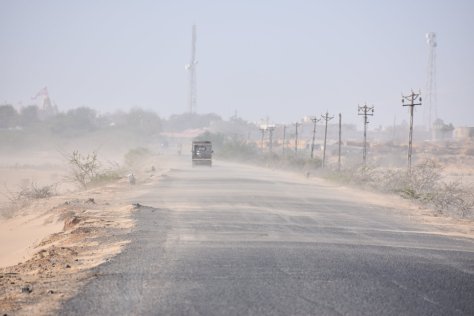
The roads in Kutch I must tell you are something that will amaze you with. They rip right into the horizon, they are super straight, and one would want to just stop by every other time and get the photos of the road with their car/ bike parked by the side.

IMG-20181217-WA0010
The Tropic of cancer passes across the road

Then comes the itinerary. This is what a typical itinerary for anyone traveling to Kutch looks like if the start and end point of your trip is Bhuj.

Day 1: Koteshwar + Lakhpat + Mata no Madh

  • You will be traveling to the western-most tip of Indian Sub-continent, Koteshwar. The Koteshwar Mahadev temple is of religious importance. Right after it is located the Narayan Sarovar which is popular for spotting Flamingoes if you are going there in the right season. You can have free lunch at the Narayan ashram located nearby.
  • You can then drive to Lakhpat. You will be welcomed by the large walls of an erstwhile fortress as you enter this town which is now a religiously important place for the Sikh community which maintains the Gurudwara Sahib that houses some of the relics of Sri.Guru Nanak.
  • Lakhpat, once used to be a buzzing port town and the economic center of the state until it was hit by a major famine. The entire town was abandoned for what it is today popularly known to be a haunted village. Anyway, it is guarded by the navy and the coast guards and with their permission, I enjoyed my walk there with some nice photos of the abandoned village, its houses and temples.
  • The deity at the Ashapura Devi temple located at Mata no Madh is believed to be a powerful goddess and hence visited by everyone traveling here. There really wasn’t much for me to do there and I preferred my 2kms drive up to the hill temple over this. We had reached there at sunset time and I decided to spend the remaining time watching the golden skies from there before heading back to Bhuj for the night.
dsc_03405687244969962579440.jpg
Enroute the Narayan Sarovar

Day 2: Dhordo + Kala Dhungar + Hodka + Dhorbana + Banni

  • Dhordo: For me, the photos of this exact place was what brought me here even before I knew what Rann of Kutch was. Popularly known as the tent city, it is a commercialized patch developed by the Gujarat government to promote tourism. You can spend some time enjoying the various folk dances, camel rides etc. along with various stalls put-up there.
  • Drive up to Kala Dungar. This is the highest point in the entire Kutch region and the view of 360deg salt flat is something you will not forget. There is a small temple on the top associated with a folklore.
  • Hodka, Dhrobana, Bhirandiyara, Ludiya, Kavda and Banni are some of the several villages along the edge of the Great Rann of Kutch where there are settlements of specific artisans and you can interact with these communities. Although the famous Kutchi embroidery is a generalized term, the patterns used in their stitching, their apparel and jewellery are unique to each community and thus is a representation of individual village. Each of their Bhungas (as the huts are called in Kutch) are uniquely painted and walking in these villages are experiences in themselves. This day trip is highly promoted by the Gujarat government as part of rural tourism.
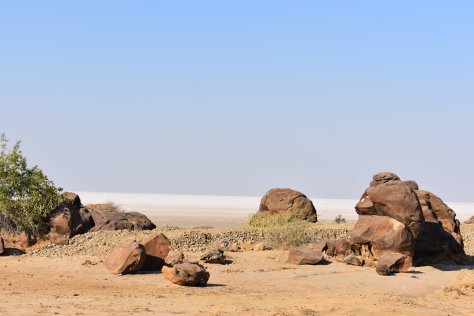
dsc_05003075130792799605051.jpg
The fossils scattered around the fossil park and the great Rann in the backdrop

Day 3: Mandvi and Vijay Vilas palace

  • You can take the route via Nalia to reach Mandvi. This route offers amazing views and a stretch with windmills might even blow your mind 😛
  • Stop by at the Vijay Vilas palace
  • Spend some time chilling by the Mandvi beach

Day 4: Bhuj Local sightseeing (Every place has an entry fee and specific open days and timings)

  • Aina Mahal and Parag Mahal are both old palaces of the erstwhile royalty located within the same premises. A visit here is worth your time because it offers a lot of insights into history and photo spots to the shutterbugs.
  • The biggest Swaminarayan temple in India is located in Bhuj. For those of you who don’t know, it is the same organization that manages the Akshardham temple in Delhi.
  • This is a dedicated day for shopping all your Kutchi embroidered souvenirs. You can buy all the handicrafts directly from the artisans and get good deals either at Bhujodi handloom village or Bhuj Haat.
  • Take a walk around the Bhuj Haat premises. A replica of the Parliament building is made here and houses stories from the lives of several leaders who lead India to freedom.
  • A small hike up the Bhujio Dungar fort offers you a panoramic view of the entire Bhuj town, an early morning or evening visit is advised to avoid the harsh sun.
  • Befriend a local and there are some offbeat spots in the town that you would not find on the internet. The Kutchi museum, the Khari Nadi canyon, Paddhargadh ruins, Chattardi ruins, Tapkeshwari caves, Ramakund caves are among a few of those unexplored gems.
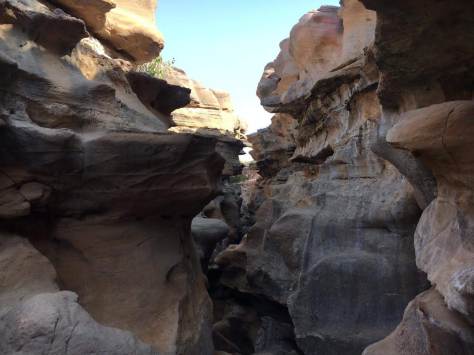
IMG-20181226-WA0070
The Kari nadi canyon, Bhuj

Day 5: Dholavira
For me, this was the highlight of my trip. (Click here to read the detailed itinerary and my story in a separate post). An archaeological site from the Indus Valley civilization era, a fossil park from the dinosaur era, tribal settlements and the enormous stretch of salt flats- You need to time your stay here on a full moon night to get the best experience of the great Rann of Kutch.

Day 6: Head back to Bhuj for your return flight or proceed towards your next destination.

I assume this article was of some use if you were planning your trip to the Rann. Was it helpful? Is there something that I missed out? Tell me in the comments below…

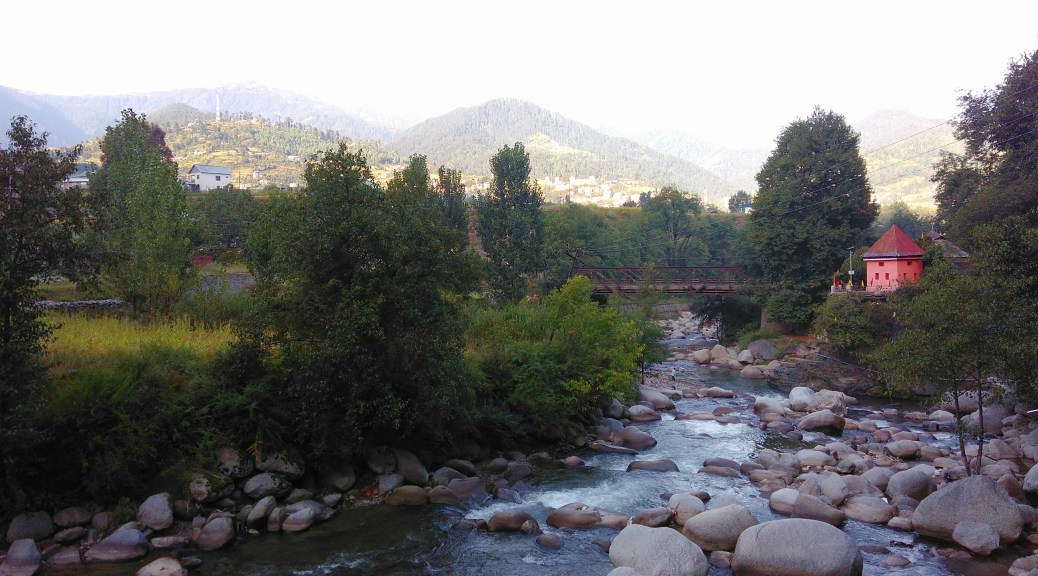
Bhaderwah- the Mini Kashmir of Jammu

Snow-capped mountains, lush green meadows, pine trees, tulip gardens, skis and snow boards… Do these things paint a perfect picture of a state known for its valleys? If you guessed it to be J&K, Yeah, you’re right! To be more precise, did you guess it to be Kashmir valley? If you did, then you can’t be more wrong. I’m talking about the least talked region of the state: Jammu.

For those who have heard little about Jammu, the mention of scenic or adventure hotspots comes as a surprise for all they know is only its religious places, the most popular being the Vaishno Devi shrine. For tourists visiting this region, there are several lesser-known destinations around Jammu city that are as beautiful as its popular counterpart in the Kashmir region. But, continue to remain unexplored and Bhaderwah being one among them. Bhaderwah is a town located in the Doda district and is called as ‘Mini Kashmir’ by the locals. This nickname itself gives a fair picture of the beauty of this place.

Places to visit in Bhaderwah:

• Day trip to Bhaderwah town covering Vasuki Nag temple, Gupt Ganga temple, Bhaderwah fort, Tilligarh rose garden and Gatha lake resort
• Jai Valley trek
• Sonbain glacier trek
• Kailash Kund terk
• Peer ki pindi (camps of Akbar) trek
• Seoj Dhar Meadow trek
• Day trip to Chattargala Pass
• Day trip to Sarthal valley
• Day trip to Basohli

The Details:

There are several attractions in Bhaderwah to mesmerise all genre of travellers who visit here during any time of the year. Bhaderwah is also called as ‘Nagon ki bhoomi’ (land of snakes) giving one a sense of its connection with mythology. Vasuki Nag is believed to be the keeper of Bhaderwah and hence the temple dedicated to this snake lord holds significance in the local culture. Thousands of pilgrims participate in the annual ‘Kailash Kund’ yatra that starts from the Vasuki Nag temple. The highlight of the temple is the idol of the presiding deity that is carved out of a black stone and is standing at an inclination. The temple is nestled within the narrow lanes of the town that snakes through ancient and traditional wooden houses from the time when the valley was ruled by the kings of Bhaderwah and Chamba. The town’s association with Mahabharata too can be felt at the ‘Gupt Ganga’ temple, on the banks of river Neru. The Pandavas are believed to have lived here during their exile. The Bhaderwah fort situated atop the town gives a good view of the entire region.

The Gupt Ganga river bank

The annual Tulip festival, Tilligarh rose garden and Gatha lake resort are some nice places for a day’s outing. Trekkers seeking to explore some breath-taking vistas can hike up the Jai Valley, Sonbain glacier, Kailash Kund, Peer ki pindi (camps of Akbar) or Seoj Dhar Meadow and connect with nature. If you are an adventure buff, the Jammu tourism has put in great efforts to cater to this segment with various outdoor activities like rafting in the Chenab river, rappelling, rock climbing, parasailing etc. Since Bhaderwah witnesses high snowfall, its high valleys are a great place for winter sports like skiing and snow-boarding too. It is slowly catching up as an alternate to Gulmarg in the state.

The Bhaderwah fort

Dirt roads and numerous water crossings in the region don’t fail to keep the adrenaline rushing for bikers who choose to ride here. The biking enthusiasts can opt the road through Padri, the highest motorable road in this region. Chattargala Pass is the highest motorable road and the most untouched point in Bhaderwah and offers a 360-degree spellbinding view of the entire region. It connects Bhaderwah with Basohli, another town of historical importance. One might be lucky to spot the endangered white vultures at this point or even some musk deer or Asian bears after a short hike up the hills.

One of the river and waterfall crossing on the way to Baderwah

The road to Basohli is picturesque with meadows, streams and typical pine trees all along the way. Sarthal valley is one of my favourite pit-stops along the way. With nothing much to do, it is beautiful with its laid-back scenery with Bakarwals (Shepherds) settlements amid green meadows and gushing streams from the glaciers. The seven-tiered waterfall located here is worth a short trek before riding up the treacherous road towards Basohli town. Basohli town itself is beautifully located on the backwaters of the Ranjit Sagar dam flanking it.

With political unrest being rampant in Kashmir, the main source of income through tourism has taken a huge toll in the state in the last couple of years. Jammu is very safe for all kinds of travellers and the tourism department is putting their best efforts to familiarize tourists with the other unexplored areas of the state. If visiting this state has long been on your bucket list and the unrest at the borders has kept you away, I think it is time you relook into your plan to visit the Mini Kashmir instead!

Fact file:

  • Getting there: Jammu is well connected by airport, rail and road. You can hire a self-drive car or a taxi from the city to visit the other sightseeing places. Bhaderwah is 280kms(about 5hrs) by road from Jammu city.
  • Stay: TRC (Tourist Reception Centre) guesthouses run by the J&K tourism dept., several homestays and budget hotels are available. Tilligarh tourist complex is a great place for one seeking luxury in nature.
  • Must try: Sip a cup of ‘Desi Chai’, a pink coloured tea that can be consumed either with salt or sugar.
  • Must buy: Basohli miniature paintings.

This visit to Bhaderwah was a part of our ‘Peace ride’, sponsored by Jammu tourism as a part of the Himalayan expedition to promote tourism in the lesser explored places of Jammu. The route we covered over the week was Jammu-Mansar-Basholi–Sarthal–Baderwah-Kishtwar-Gulabgarh-Sansari-Gulabgarh-Patnitop-Udhampur-Jammu. It has been over a year since this trip has been past and yet remains one of the best so far.

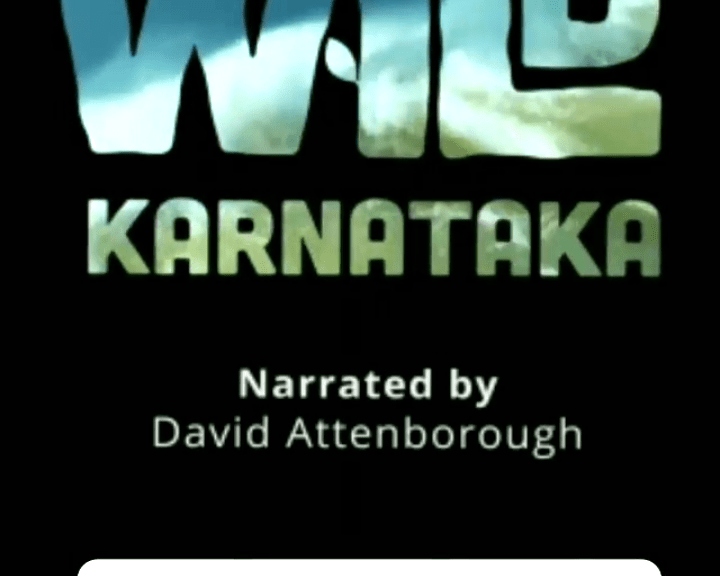
365 days around the state- Wild Karnataka

03-Mar-19: I was extremely sad that I had missed the premiere screening of this much anticipated documentary. All I knew was that it was a project based on wildlife and had not much idea about what to expect apart from the Tigers which grab the limelight in almost every other content made on wildlife conservation. ‘Even then, it was the first time a government organization had come forward with an ambitious project as this, that too pioneered by my home state‘ I thought. I was excited! Luck came knocking at my door again when British council, Bengaluru center decided to screen it in their premises on 08-Jun-19. It was a Saturday, a workday for me. I registered, took leave and finally, there I was… I was going to watch a movie, solo 😀

Buckle up my dear readers, I’m taking you on a new journey through my ‘TRAVEL’ article. You can call it a movie review if you wish to. But for me, it is a journey across my home state, through the eyes of a wildlife enthusiast. Yeah, I thanked my previous travels for I was able to travel with the ‘team Wild Karnataka’ exactly the way they wanted its audience to travel along the storyline of its documentary. It is the story of the monsoons… It is the story of one year… It is the story of traveling from South to the north and then coming back along the coastline to where it all begins, in my home state- Wild Karnataka: It is a Travel movie!

The movie opened with aerial shots of the western Ghats, the breathtaking greenery and the mighty waterfalls these hills hold in them. And then, the story pierced right through these dense evergreen forests of the western Ghats. Welcome to South Karnataka! Location undisclosed, I assumed it was my hometown at the southern tip of the state. Somewhere, his majesty wandered with his family on their familiar trail in search of a watering hole. His familiar face with probably the longest tusks in India reminded me that he is an Instagram celebrity from the woods of Kabini. Not before the first drops of the monsoon reached his skin, his highness, the Royal Bengal tiger roared in a distant deciduous forest probably at Bandipur or Nagarhole. Karnataka has the largest population of the Asiatic elephants and the Royal Bengal tigers in the world! No, they didn’t grab the limelight and they silently disappeared into the mysterious jungle making way for the newer celebrities to grab their screen space.

The camera then traveled slightly north, with the langurs who were joyfully jumping across the rocky outcrops of the deccan plateau. A hundred times that I have travelled through this rocky terrain, I had never given it a thought that these scattered lifeless rocks could hold up so much life in them. Be it the peacocks who fought each other to woo their potential mate or the playful sloth bear cubs that were piggy backing on their mother at the Daroji sanctuary, they stole my heartbeats. As if these thieves weren’t enough, there was more awaiting in the grasslands of Koppala. The jungle cat mother was teaching her kittens to hone up their life skills in confronting a venomous spectacled cobra- and my heart was taken!

Giving due credits to the wolves and the blackbucks along the way, the familiar voice of the narrator visually transported me further north over to the western Ghats again, this time in Uttara Kannada. It was the season of love making and the great Indian hornbills had gathered for their mud bathing ritual with each one trying to win their mate. These high canopy forests are perhaps the only place where all 4 main species of the hornbills are found. Meanwhile in a nearby farm, there was another superhero marking his territory by gliding across tree trunks. Draco or the gliding lizards are like feathers on the crown of the wild heritage of Karnataka.

While the winter was over and the forests had bloomed in spring, the voice guided the audience under the water. The corals spawned and schools of fishes swam around freely along the 320kms long coastline of the state. Not many know that the Netrani island is one of the best dive spots in the country. By swimming through the Karavali, I didn’t realize that I had reached back safely to where I had begun. The elephant family joyfully welcomed the first rain of the next cycle!

As the evergreen watering hole of the Kabini began to revive with the monsoon showers, the plot went around the western ghats again, giving the Dholes their share of the screen space along the way. A yawning baby King Cobra emerging from its nest and the frog stretching its limbs to grab the attention of its mate were clearly the stars ruling the rainforests of the second wettest place in the country, Agumbe. A family of the smooth-coated otters somewhere along the riverbanks didn’t fail me to wonder where they had been hiding until then. The river terns from the Bhadra backwaters came in with a fresh breeze of air from across the borders.

After the unspoken celebrities of wildlife ruled the screen for the 52 minutes, it was as if God himself appeared before the audience in the end. Sir David Attenborough greeted the audience in Kannada. None of us present there could have asked for a better finish! A first for any Indian film, he has lent his voice for this movie accompanied with a heart thumping music score by Grammy award winning composer, Ricky Kej.

While justice is done with the team attempting to throw light to as many permanent residents of the state as possible, hopefully the dwindling numbers of Vultures at Ramnagara and Great Indian Bustard of Siruguppa along with the innumerable visitors who cross borders like flamingoes of Raichur, the pelicans and the spoonbills from Srirangapatna and so many others from the woods too find their screen space someday!

A wildlife documentary, as the team may wish to call it, it is perhaps one of the best travel movies I have ever watched. It is that one which got closer to my heart because it took me time travelling around my home state with a new perspective and is all documented with a talented bunch of home bred filmmakers.

Smitten by the Ajanta of the Himalayas- Tabo

So, have you read the story from my previous stop? (Click here to read) If yes, then this post is starting from Hurling, where I had alighted last. It was cold and I was the only non-localite at a small dhaba from where I was hoping to get a ride uphill to Tabo. The person making parathas at the dhaba instantly recognized me telling he had seen me at the wedding last evening. Although I found it very sweet of him, I felt embarrassed about not recognizing him and apologized to him telling that everyone looked same to me with their caps and mufflers. Not only did he refuse to take money from me for the cup of chai I had there, he ensured he got me a ride in the car of a fellow customer at his dhaba. This drive is indeed close to my heart, even today… So, what made it special?

This entire journey has been compiled into a book. You can avail it on Amazon or read it for free using your Kindle. Use the link below:

Of course, the road beyond and the views as we drove further up was INCREDIBLE! And hey, there were unicorn farms enroute and we saw a few of them straying on the highway. But let me not deviate from my story… There were 3 occupants including the driver in this Alto car. The rear seat was reserved entirely for one of them. He had a plaster of Paris on his right leg which he rested on the seat. They were on the way back from Peo to their home in Kaza. The nearest hospital to get the guy’s broken leg fixed was at Peo. It took them a one-way travel of nearly 3 days, given the roadblocks on their way down the valley. Peo being THE one stop trading destination for the whole of Lahaul and Spiti region, all you can expect from anyone traveling there, is to have their vehicles stuffed with as many goods as possible. It was the same case with this car which spared no space other than the seats. So how did I manage my drive? The person driving shotgun made place for himself in the rear seat asking the patient to manage with his leg for a while. Not just that, he forcibly grabbed my big backpack so that I was comfortable in the front seat. He carried my bag on his lap all the way. I must tell you, it was a super cramped car already and they pushed themselves into great lengths just to ensure that I had a comfortable drive! I was an absolute stranger to them until that moment and I would have considered myself fortunate if I had just got myself dropped. But, just based on a localite’s (Dhabawala) recommendation, they ensured my safety and comfort till I had reached my destination. Before taking my leave, they also handed me their phone number to call them if I had any trouble finding a place to stay at Tabo. No, these are NOT the people one gets to see in the urban place where I call home.

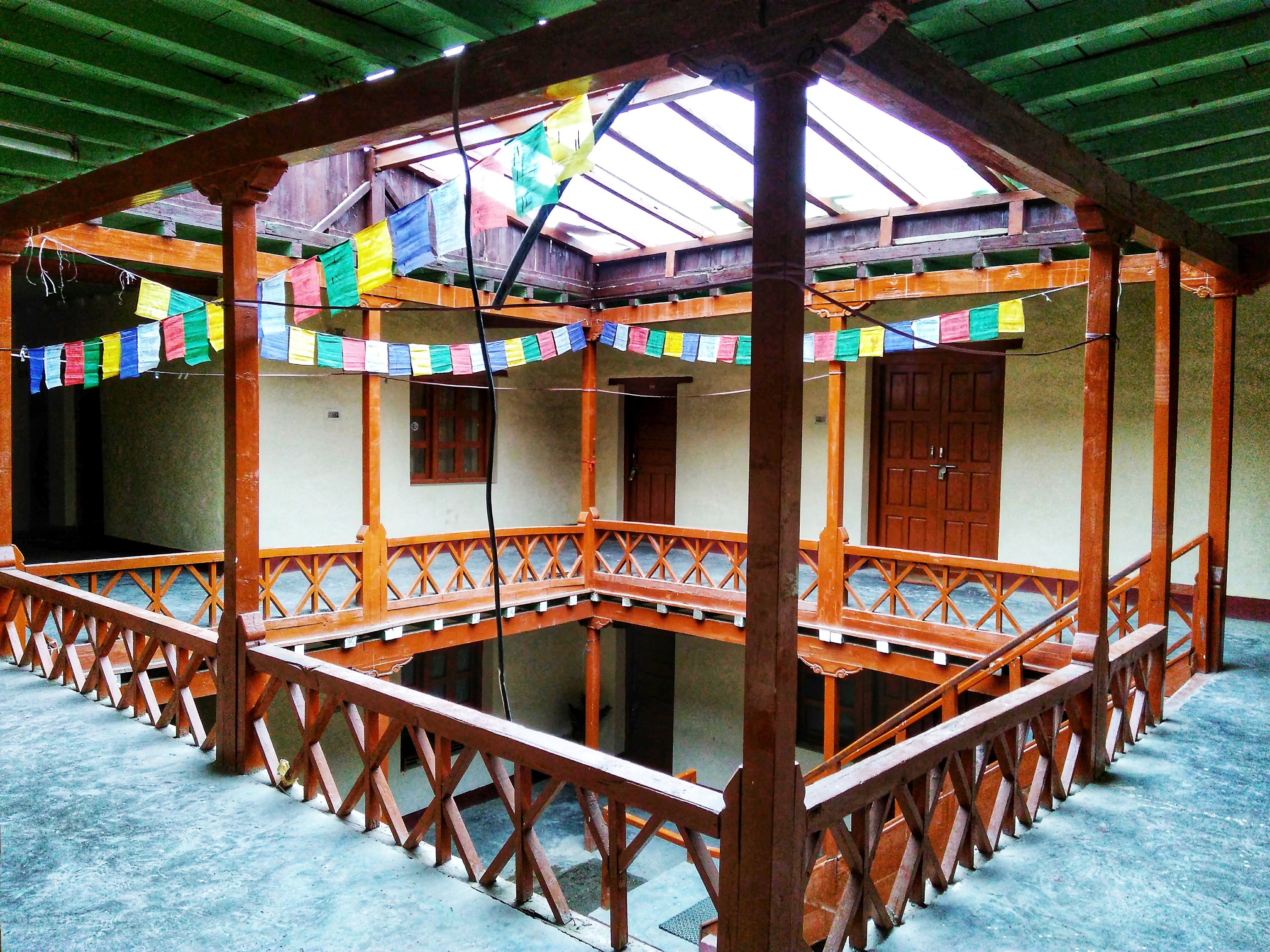
Bidding a warm bye to them, I walked down the road to the Tabo monastery. It was not too far as I reached the monastery and the old guest house run by the monastery. This is where I wanted to stay for all that I had heard about it. As I opened the main door leading to the staircase, I felt like I was climbing up a dreamland. The entire guesthouse is built in a traditional style with only mud and wood that is unique to Tabo. The staircase, walkways, balconies and the roof bars are all wood. And it is all naturally lit with glass sheets placed between the wooden beams through which I could see the mountains and the blue skies. The place had so much positivity. Since it was off season, I was the only traveler living in the guesthouse where it is usually very hard to get a room during the peak tourist season.

The corridor inside the Tabo monastery run guesthouse

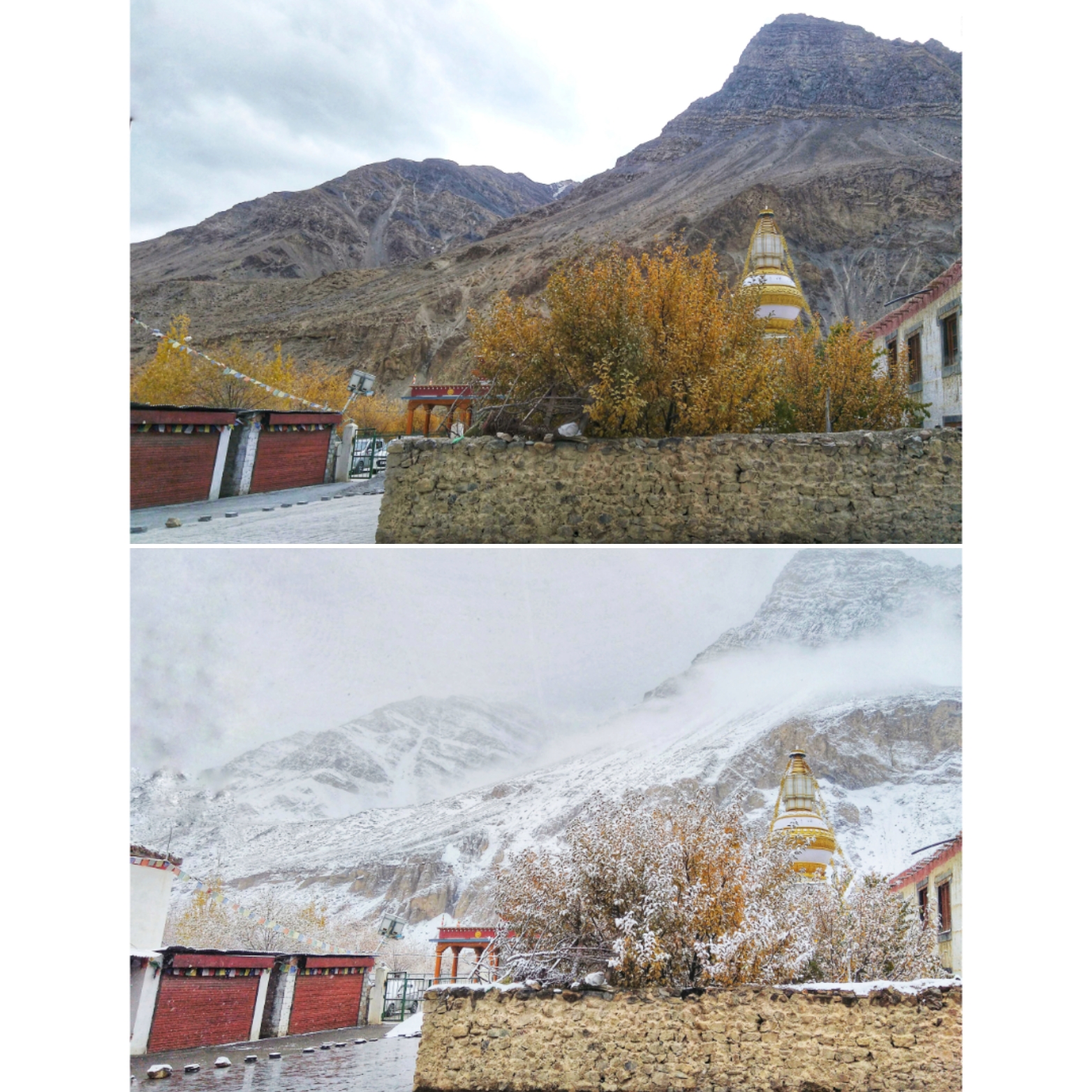
After freshening up in my room, I was supposed to head out to the monastery’s lunch hall. Talk about a matter of few minutes… by the time I came out of the guesthouse, it was snowing outside. At first, I couldn’t understand what it was. within seconds, I started to scream with joy… It was least expected and right there, I was experiencing my first ever snowfall in ages. The last and the only other time I felt snow was at the top of Kardungla, way back in 2014. The muddy walls and the red apples I saw in the orchard right in front of my door, just minutes ago were all disappearing behind a blanket of snow. I clapped hands, I didn’t know whom to share it with. Damn the network, damn me travelling solo, I felt. That was one moment I missed home, deeply. The kid in me was dancing like no one was watching…

The view in front of the guesthouse- Before and during snowfall

I watched the snowfall for a while before heading to the lunch hall. Believe me when I say, that was a simple meal, yet the most sumptuous ever! I spent the rest of the afternoon inside the old monastery. I was finally at where my entire backpack was set for, since the time I left home, almost 10 days ago. The oldest running Buddhist monastery in the world- ‘The Ajanta of the Himalayas!’ The old monastery has nine temples, each lit up naturally, depending on the sun’s position at different time of the day. The head priest took me around the central prayer hall and explained the story behind each of the painting that adorned the wall. As there was no one else dropping in, we both had a long conversation that involved everything ranging from religion, politics, art restoration, environmental conservation, sustainable travel et all. He asked me to return the next morning when the sun lit up a different portion of the hall. It was time for the last prayer of the day and I sat down there, sinking in the aura of another level. The Buddhist chants have always transported me to a different world (since the time I was a child who first visited the monastery that is closer back home in South Karnataka). In here, that infinite silence and soothing ambience that smelled of juniper within an enclosure of mud walls, the holy chants in a dimly lit room, I was clearly experiencing the vastness of outer space. After the priest got ready to close the doors, I headed towards the guesthouse to find my resting place, quite literally! Post dinner, I only remember sneaking inside and snuggling inside the warm quilts provided in my room until I woke up the next morning.

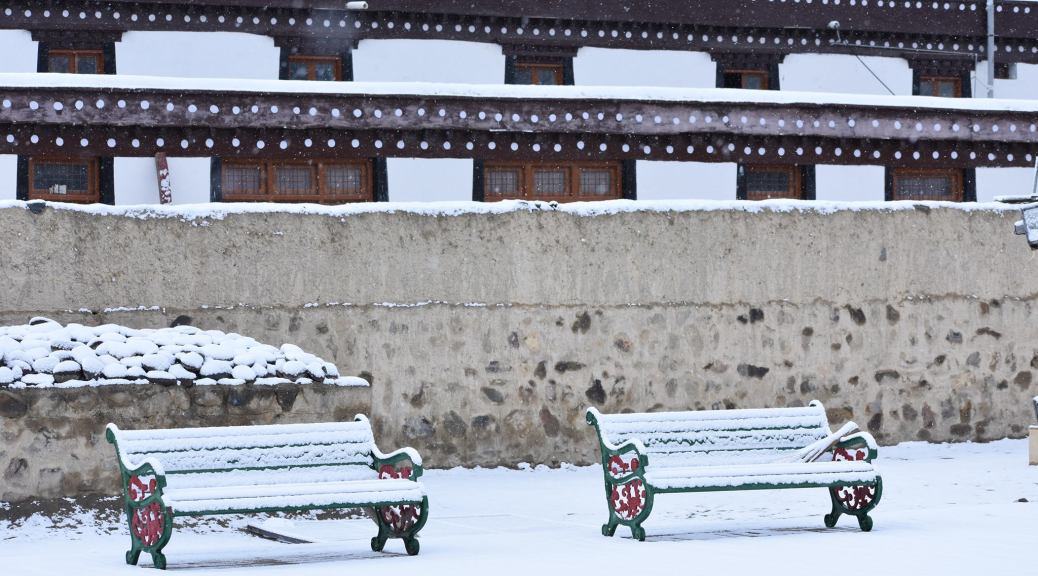
Next morning, late by the mountain standards, I came out of my room and looked out of the glass ceiling in the corridor. I felt like the mountains had suddenly moved closer to my room. It took me a few seconds to realize that it had snowed all night and the entire village was now painted white. When I stepped out, it was still snowing. I was silently enjoying my snow affair as I walked up the distance to the kitchen. After breakfast, I headed out for a walk to explore the snow laden streets of Tabo. The backyard of the monastery, the helipad and the famous apple trees of Tabo looked so alien and picturesque with snow all over them. I strolled across the by lanes, the apple mandi, through the farms and finally settled down by the bank of river Spiti.

After sometime, I hiked up the hill to see the meditating caves and grab a view of the entire village from the top. As I walked through the village, every random person whom I came across greeted me with an apple. Some wouldn’t know how to make a conversation with me and would simply handover an apple with a huge smile. Oh my god! Those apples were the juiciest in the entire universe and all the love from the mountain people added to its sweetness. By the time I reached back to my room, I had removed my jacket just so that I could hold all the collected apples in it. They would feel bad if I rejected what they gave me and my intention was never that. But yeah, I had no idea as to what to do with so many apples.

That said, I had lunch and went towards the monastery. A couple had lit up a bonfire on the monastery’s portico to warm themselves from the snow and I joined them for a warm conversation. The couple went home after a while and I walked into the monastery to have a look at the paintings which I couldn’t see the previous day. The priest then walked me through explaining more details on the history and art of this beautiful place. The monastery is home to probably the only manuscript that is written on gold. This monastery is a treasure vault!

Watch the video of the monastery: Before and After snowfall

It is a daily custom to light a lamp in all the nine temples of the monastery and I got a rare opportunity to seem them all, which is otherwise closed for visitors. There is a statue of Buddha inside each temple, from small to large that I hadn’t expected in a small looking monastery like that. All the walls and roofs are adorned with various frescoes, Thangpa paintings, murals etc. depicting various events in the life of the Buddha. An earthquake in the late 90s has caused immense damage to the monastery and its clay walls making them lean on support. He handed me the prasad (read apples) from the main sanctum before he shut the final doors of the old monastery. He then walked me into the new monastery where he lit the last lamp of the day. I know my article doesn’t talk much about my day in the monastery today, but let me summarize it in one sentence. “I consider myself to be the most fortunate tourist ever to get a peek into so much art, so much tradition and history of Tabo.” I’m in no wonder when the 14th Dalai Llama declared that if only there was an option for him to retire from service, he would choose this UNESCO world heritage site!

I had started to fall in love with this place and wanted to stay here for the rest of my holidays that I had in hand. But It had been snowing without a break since last night and I had to ensure that I was heading out of this valley before I got stuck there for many more days. Yeah, my story does not end here though… If you want to read further, you will have to wait for my book 😉 I’m working on it….

Summary:

Must eat/drink:
• The sea buckthorn juice also is a must try (locally known as Drilbu or Chharma juice).
• The Tsirku tea made from the dried peels of sea buckthorn berries
• Don’t forget- A box full of handpicked Tabo apples for home!!

Must buy:
• A prayer Mandala can be bought from the souvenir shop at the monastery. This is to be hung at the entrance of your house that wards off evil
• Thangpa paintings and few other knick-knacks also can be bought from the monasteries for a more authentic gift.

Other things you should know:

  • Photography, torches and any other form of artificial lights are strictly prohibited inside d monastery. You need to deposit it before entering.
  • There is a library inside the guesthouse if you wish to stay and Tabo lake is nearby for a short trek or a drive.

Five travel essentials nobody tells you about

These are my top 5 tips I want to talk about which probably you wouldn’t have given a thought about. You don’t have to be a “Traveller” to use these tips and these are applicable to pretty much anyone who leaves home for a short time or on a vacation.

  1. NEVER flash your boarding passes on social media: I know it seems cool to flash your boarding pass and tell your followers/friends that you are heading to your next destination. But what most of us are unaware is that the QR code printed on our boarding passes contained very confidential information about that individual encrypted to it. It contains details of the transaction you have carried out in the process of buying that ticket. This in turn will be linked to your bank accounts, Aadhar, number of times you have travelled, places etc. It is an easy way to get to all your personal data which is otherwise supposed to remain confidential. So next time remember not to post it on social media and ensure you shred it or store it securely once your trip is completed.
  2. ALWAYS carry a candy or a sachet of sugar with you: Low sugar levels can happen to anyone anytime. I have experienced this twice during my travel. Once, I screamed out of panic when a bus conductor fell unconscious holding my hand while he was issuing my tickets. Some passengers travelling in the same bus came to his first aid by feeding him some chocolates. That’s the day I started to keep a sugar sachet in my wallet. It is probably the FIRST aid that should run through your head if someone is fallen unconscious. So, I make sure it is kept in the most easily accessible spot of my luggage or my wallet.
  3. ALWAYS sanitise your washroom faucets before use: I have always been haunted by the fear of getting a urinary tract infection by using washrooms outside my home. While on the road, there are times when I haven’t consumed a drop of liquid for many days just to avoid going to a washroom. These days, there are several toilet seat sanitizing products in the market to help me in this area. I keep a ‘Toilet Seat Sanitizer’ handy, that I comfortably spray on doorknobs, faucets and toilet seats before using them and relieve myself of my fears… quite literally!
  4. ALWAYS carry your own cutlery set: There is enough said and done about reducing one-time usage plastic cutlery everywhere. Carrying my own set of re-usable cutlery set is my way of doing my bit. Carrying a Swiss knife set or a kit with individual metal spoon, fork and knife would be ideal, but these are not allowed in check-in luggage if you’re taking a flight. So, you can use wooden substitutes for these which can be carried in your handbag/ backpack irrespective of the type of travel you are choosing.
  5. NEVER compromise on comfortable footwear: Shoes, shoes, shoes… is something I swear by! Since I’m a slow traveller who does a LOT of walking and running around, I always wear a comfortable pair of SHOES- trainers, joggers, sneakers whatever you call it, I mean SHOES that are flat, light and breathable. This is one thing I don’t compromise for low cost because the effects of poor shoes are long lasting. Along with this, I carry a waterproof sandals or floaters to let my feet breathe if I’m staying somewhere. Also, I have major issues of getting cramps if I walk with wet shoes, so that’s why these waterproof chappals come in handy!

Were these hacks useful?


How travel can help your country’s economy?

Indian economy is in a downturn. Everyone is complaining..

The automobile sector is seeing its worst crisis in 2 decades. If automobiles don’t sell, it not only puts my job at a car manufacturing OEM at risk, but has a cascading effect to hundreds of related industries. The steel, the large chain of vendors and sub-suppliers, sales, marketing, advertising agents, dealers to local garages, accessories, insurances, the indirectly dependant canteen, cleaners, gardeners, drivers, IT, so much so that even fuel station workers will lose their jobs. Why am I telling you this? I am no economist, I am no business man, I am no social activist…. I am a Travel blogger and influencer. So why this rant???, one may ask! It is because I want all of you to travel! Explore! Contribute your tiny bit to help our country’s economy.. by TRAVELLING!

It was a casual conversation with a colleague when we discussed about a meeting of his, with one of the top management members of a vendor company, a septuagenerian with over 40 years of experience in the automobile industry.. 4 decades..!! From the day of tariff commissioning to, date where it is more about survival than competition in the industry, he’s probably seen the entire cycle of the “Auto revolution” in India.. His experience and insights were commendable! Most of his qualms with the strategies to boost the sector was to do with the Indian mindset in general. Here is a brief of his insights into what can be done and further elaboration with my own thoughts based on my experience of Thai culture during my maiden trip outside of India!

We Indians have been raised with a mindset to save money. Stash up either in cash or in gold. By doing so, we are pausing the currency from circulation. A country needs monetary circulation for the economy to sustain. There should be buying and selling, both. One way to do that is, to travel.

Ofcourse, there is an endless list of intangible benefits of travelling. From strengthening existing relationships to creating newer contacts, from exposing newer cultures and landscapes to trying new food and meeting new people, travel teaches newer lessons everytime you step out. But the tangible benefit it reflects is that by helping the economy.

Let us start from planning your trip. You browse! So many people out there make up the content on the internet, develop softwares, manage them.. Agents for all your booking needs.. There is a whole lot of people working behind the scenes.

Okay, now you have a plan sorted and are stepping outside your house. You either drive your own car or use public transport. You are in the process, using your automobile.
1. This automobile would need to run. So, you go to a fuel station.
2. Either before, during or after the travel, this mode of transport would need a checkup- you visit a service station.
3. You get some funky accessories for your car/bike if you are using your own mode of transport, or the owner/driver does this incase of a public transport.

Now, you decide to take a pitstop on your journey. You have a cup of chai and some biscuits or let us say hot pakoras by the roadside. You just helped a small business flourish! Oh wait, not one business. He in turn buys the biscuits, milk and the ingredients for the pakoras from several other vendors!

Then, assume you have reached destination ‘X’. You dine at a local restaurant. You stay in a hotel or a homestay. You buy souvenirs. You pay entry fees to so many places of visits. Voila! You helped so businesses  survive during your trip. Do you see how many others depend on him for indirect employment?

Now, you tell me, you are not in a mood to travel to a different place. It’s okay! Take your family out for a dinner. Or even better, go shopping. Go to a spa. Go for a walk and eat Pani-puri. Sign up for a course, buy a book, watch a movie. Don’t stash up the money by staying indoors. Go out and do something! Your contribution to the economy is pretty much explained already.

The Thai people are probably the only ones in the world, who spend so much time with family or friends outside their houses. For most of the household don’t even have a functional kitchen. They mostly have food outside,  because not only does that allow them to explore newer restaurants, it also saves them the time spent on cooking and money on setting up and managing a kitchen. Their personal life is healthier than we Indians. Even a country as small as Bhutan, measures not the GDP(Gross Domestic Product) but the GNH (Gross National Happiness) index for the country’s progress.

When there is consumption, there is demand and supply! With that, the currency flows, in and out. Businesses start, grow, flourish and sustain. This empowers them with money. Money allows them to buy an automobile of their own. They start travelling. And one fine day, the poor vehicle grows old. What do you do? You buy a new one. The cycle continues… In the process helping the sustenance of hundreds of jobs and stabilizing the country’s economy at large.

By stepping outside your four walls, you only grow, you learn, you evolve. I make it a point to spend atleast 30% of my earnings on my travel needs. I feel rejuvenated, more confident and mentally sound every time I get NEW air away from home.

What is your take on this view point?


A Mountain Wedding at Geu

This story is part of my solo backpacking trip from Bengaluru to Spiti valley, covering Bengaluru- Delhi- Shimla – Sangla- Chitkul – Reckong Peo – Kalpa – Nako – Geu – Tabo and return. Each of these places visited have been written about in separate posts. This entire journey has been compiled into a book. You can avail it on Amazon or read it for free using your Kindle. Use the link below:

The weather had gotten colder and windier when I woke up that morning at the Nako homestay. The met department had issued an alert for a possible snowfall in the next 48hours. After finishing my breakfast, I decided to head further up the highway. My intention was to drop by a village named Geu, enroute and reach Tabo for the night’s stay. Geu is a small deviation from the highway with no direct connectivity of public transportation. I enquired with a couple of people at Nako for a taxi and I was offered a round trip for Rs.4000. I didn’t want to return and having to pay that amount even for a drop seemed more since I was on a budget trip. I decided to take a chance and go there by myself. I boarded the next public bus until Geu cross and hoped to hitch a ride to Geu or hike up the 8kms road leading to the village. ‘Why so much adventure?’, one may ask curiously. “I wanted to see a mummy in India, the unknown, for which Indians travel to afar countries.” Not many people know that there are about five mummies in India itself, out of which the one I was going to see is of a Buddhist Llama. It is believed to be over 500 years old and has been there in the open without any preservatives.

After alighting at the Geu Cross, I waited at the small bridge for about half an hour, hoping for a ride. As the cold winds were getting harder to stand, I decided to start walking up the trodden road with my backpack. Just then, a pick-up truck came in honking behind me. I put my hand forward signalling them to stop. The driver told me that he was sorry as the seats were filled with more people than what it could accommodate. It seemed to me like they were a large family, all dressed up in their ethnic Kinnauri attire. I told them it was Ok for me if they let me sit in the trailer. “The weather isn’t good outside. You will feel cold.” He politely said out of concern. I told them I’d be fine and hopped on after he nodded an approval.

_20190313_214426.jpg
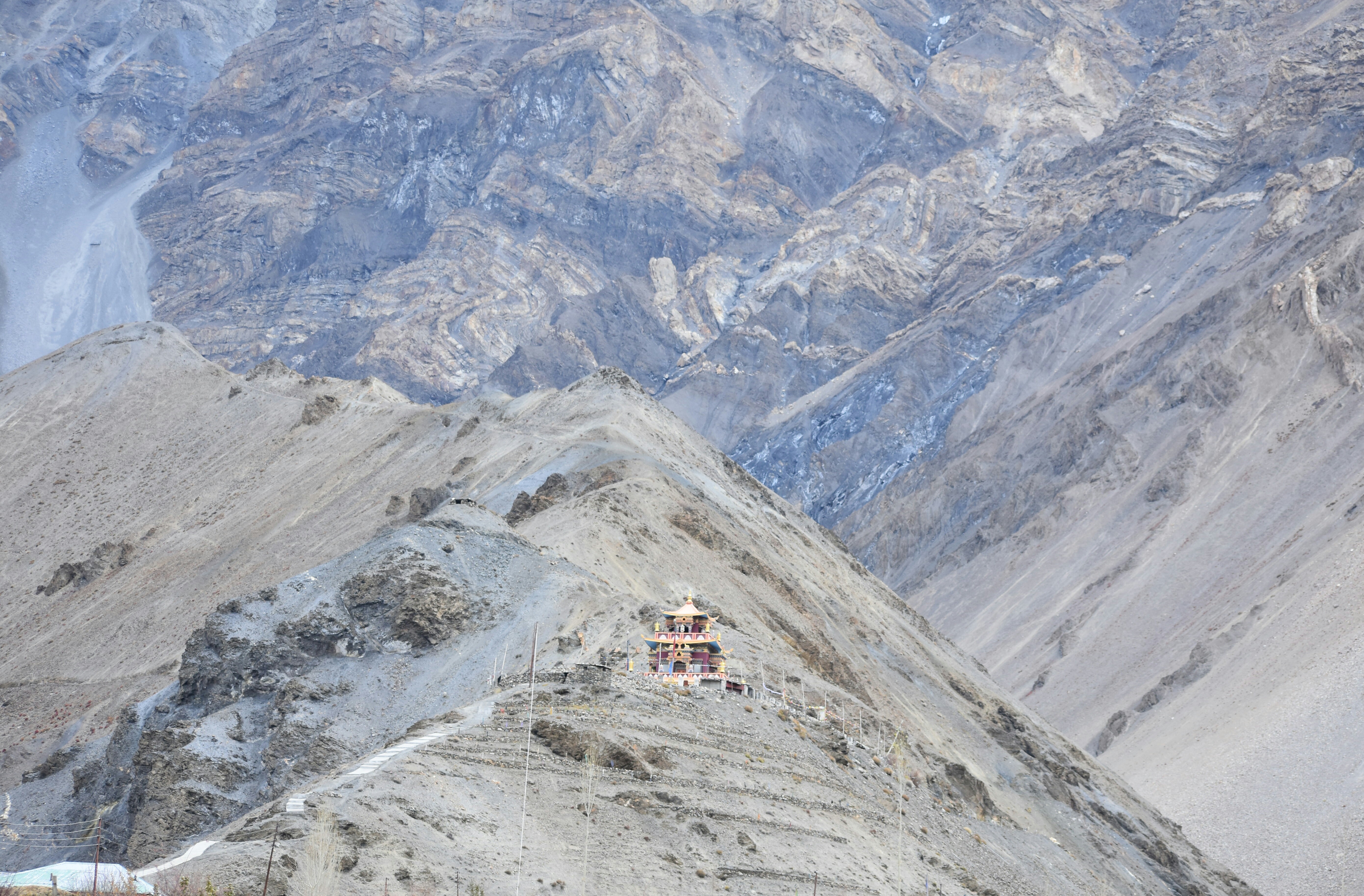
The Buddhist shrine atop the hill at Geu

The drive along the next 7kms to Geu was as insane as it could get. The super bumpy road runs parallel to a river in a scenic yet landslide prone barren land. Hence, there is no tarmac and is filled with rocks and gravel all the way. If not the thick layer of thermals and my balaclava, I would look like a zombie doused in south-Indian sambar. I mean, there was a thick layer of dust all over me from head to toe, all thanks to the open trailer and dry winds. It was already noon when I reached Geu. The family with whom I had got a lift until there, invited me to join them for lunch. They had come there to attend the wedding of a family member, they said. It was a small hamlet with about 15 households and no hotels or restaurants. When I turned down their invitation telling I had to head back asap after seeing the mummy, they insisted me to join them in the celebrations and that something can be managed for the night’s stay. I nodded an unsure okay!

Next thing I saw myself doing was being guided into the dining hall with a grand welcome alongside a traditional Kinnauri Band baaja. The meal served mainly comprising of wheat bread, dry fruits and nuts was healthy and simple as per the norms of rest of India where a wedding food is usually heavy on ghee, oil and sweets. The welcome drink too was a subtle namak wali chai, being served from a centrally placed firewood oven in the dining hall. I was force-fed and taken care of as if I were a part of their family (and the village itself). There is always this special thing about the people in the hills, their hospitality would have no match. After the meal, the Bride’s village got ready to welcome the groom to Geu. He belonged to Hurling village. It was an evening of colour, music, dance and fun. I got to experience a tradition which I had never heard of until that evening… Just a couple of hours ago, it was not even in my faintest thoughts that I’d be dancing in the mountains along with the baraatis (the wedding convoy, as it is called in India). What an unbelievable experience!

DSC_0870.JPG
The Kinnauri women in their traditional ceremonial costume

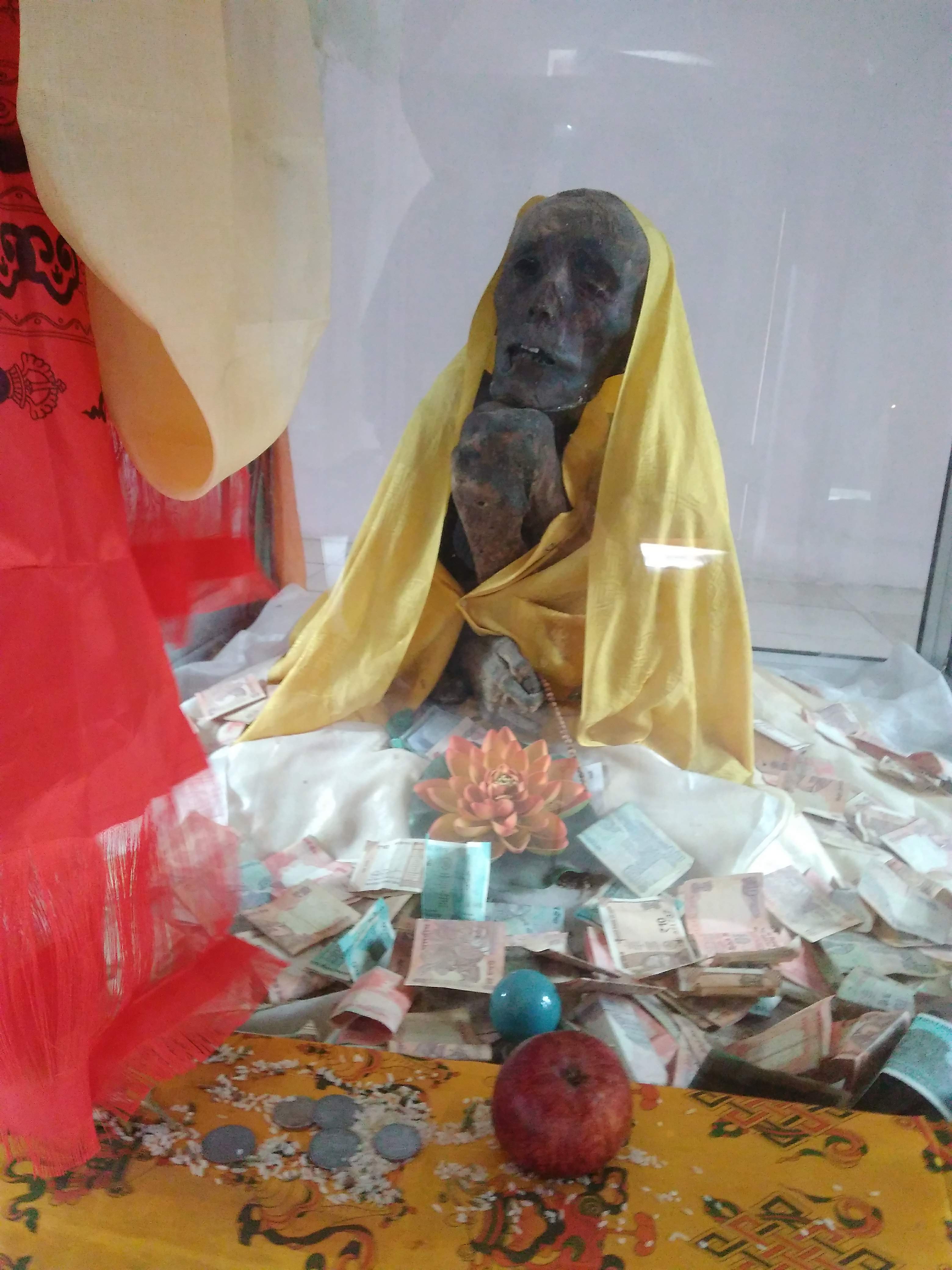
After the baraatis were taken inside the house, A few villagers and I walked up the small hill where exists a Buddhist shrine. The mummy is housed in a small room alongside the shrine whose key was taken from one of the caretakers at Geu. When I got there, I was rather surprised to see this mummy comfortably sitting in the open room…. With no preservatives, no wrapped fabric and just a small glass case to keep it away from direct human touch of the visitors, it is still very much intact. Its hair and nails are believed to be still growing. While the locals with me offered their prayers to this mummy Llama, I was watching this INCREDIBLE piece of science and faith!

IMG_20181101_160258.jpg
The mummy Llama

With the setting sun and dropping temperature, the winds were getting stronger and we all headed back to the house. Each house was filled with so much chit-chatting and laughter going on, around the central fireplace where the guests were munching on the local snacks and hot brews. I was accommodated in a large warm room at the village’s only guesthouse. My stay was sorted for the day and I heaved a sigh of relief for the faint doubt I had until I had a confirmed place to stay.

Very unusual to a regular day in the mountains where all villages sleep early, the celebrations had only begun at 07.00.p.m. to say the least. The evening faded into night and the night became morning… The wedding was an all-night affair. There was food, drinks, dance, songs and so much fun as in any wedding. Everyone had lost sense of the freezing temperatures outside the hall. What was surprising? While there was so much fun and frolic inside the wedding hall, the men in uniform from the Border Security Force continued to perform their duties outside, walking around the village keeping vigil on infiltrators. “The Chinese territory lies just behind this hill”, a localite explained. “We have our kith and kin who are married off there. They are all Kinnauri and share exactly same culture as us. Sadly, they can’t come here to join the festivities because they are Chinese. It is not that we don’t meet, Chup-Chup-ke koi climbs the hill and comes here and goes off there occasionally. That’s why the BSF is here”, he said. It was 02.00.a.m. when I returned to the guest house with a few others to get some sleep before a long day that followed.

DSC_0891.JPG
The Kinnauri men in their traditional ceremonial costume

I woke up at sunrise the next morning and got myself ready with my backpack. I had to find transportation and hence wait until someone was heading out of the village. From 07.00.a.m., I was walking up and down the village street because I had to keep burning calories to keep myself warm. The villagers noticed me and insisted me to have breakfast with them. Just as I was washing my plate, I heard a car. The Maruti 800 was already carrying more than its capacity. As I continued to wait, another pickup truck ignited its engine. It too was full. Yet, I found another pickup. The driver said he would go only after all the members came. I said I will wait with him for them to come. A good half an hour and three cups of tea later, the members finally arrived. I was again seated in the trailer with a couple of others on our way out. This time, the cold windy, dusty and bumpy drive was accompanied with some nice warm conversations with the mountain people. We arrived at Hurling; the groom’s house was a short hike up the hill from the main road. The family insisted me to tag along with them for the second day too. “You have seen only half of the ceremonies at the Bride’s village. Now, the convoy with the couple will arrive here to continue the celebrations at the groom’s house. We came early to see that all arrangements are in place before the rest arrive. Please join us.” They insisted. Hurling was halfway to my next destination- Tabo. As tempting as the invitation sounded to experience a complete mountain wedding, the fear of getting stranded in a snowfall made me decide to find a way to reach Tabo asap!

Thus, ended an experience of a lifetime- A wedding in the mountains! There is always magic in these mountains and its people that will keep calling me back again and again!

Story of making my wish come true- Watching a Rocket launch

You know, I know, we all know… That what we know is NO rocket science 😛

I don’t know about the millennials.. But as a 90’s kid, I sure know how everyone who grew up in the Doordarshan era have lived through the excitement of watching a rocket launch on TV. It would be far from anything but a dream come true to watch one in real! That’s why I decided to explore the journey of the evolution of rocket science in India… and thus score off one item on my bucket list- to witness a rocket launch! (Click here to see my wish list)

India’s space history had a humble beginning in a coastal village called Thumba in the 1960s. India’s first rocket, the Nike Apache was assembled exactly where once stood an active church of Lady Magdalene. Thumba Equatorial Rocket Launching Station (TERLS) is now called as the Vikram Sarabhai Space Centre (VSSC) where a sounding rocket is launched on the third Wednesday of every month to date. As India’s space research requirements expanded, the need for a larger area laid foundation to the present day Satish Dhawan Space Centre, SHAR at Sriharikota. This is where the present day larger SLVs are launched.

This year 2019 is particularly of my interest for 2 reasons. One- we commemorate the Golden jubilee year of the formation of ISRO; Two- It’s the centenary year of the father of Indian space science, Dr.Vikram Sarabhai. (Click here to read the complete story). How does the country celebrate it? By launching a rocket… India’s largest rocket, taking the payload to the moon!

<20-Mar-19>
On a random thought, I was reminded of someone distantly telling me about visitors being allowed to watch rocket launches at VSSC. I browsed through their website and immediately registered myself to witness the next launch.17-Apr-19 it was. My visit was confirmed by an e-mail on the following day. I was as excited as an electron. The next task was reaching there. Trivandrum seemed to be quite far as per google maps. It required a minimum of 4days for a return trip and working out any mode of transport to reach there was both expensive and time consuming. Trains tickets were sold out and flight charges were already sky high. I decided to wait for a tatkal train ticket or book a last minute ticket to travel by bus. I had planned to fall sick to office.

<28-Mar-19>
After many failed attempts at registering themselves for watching the rocket launch along with me, my friends got a rejection mail. Reason: ‘17-Apr-19 was a government holiday, VSSC will remain closed’, I was informed of what the mail read. Now, we were all in a fix. I had an acceptance and they were rejected with a reason. I called up the VSSC office immediately to get a clarification. I was told that the festival date was frozen after my registration and hence the April’s launch would be re-scheduled to a later date. So now, considering that 15-May-19 was the 3rd wednesday of the next month, the officer talking on the other end of the phone obliged to reschedule my visit to that day. My mother, brother and friends decided to join me on that day by registering themselves separately. All registrations were accepted and we were sorted. The next step was getting approval for my week long’s absence from office. It was fairly easy since it was still a month away and I wasn’t throwing a sudden surprise to my boss. Train tickets were available in abundance and we were all happy with confirmed AC berths for a return trip.

<11-May-19>
My cellphone had been blinking after an SMS was received. I reached out to read it, a SMS from VSSC it was. “The rocket launch scheduled on 15-May-19 has been cancelled due to technical reasons”, it read. We were supposed to travel to Thumba the next day. All our hearts sunk in for a bit. But then, yeah.. We were quick to accept the fact that “Launching a real rocket isn’t something like burning Diwali fireworks. There are a lot of scientific calculations that goes into it based on the fitness of the machine itself and geo-spatial positioning. These launches are scheduled monthly events and we can definitely plan to make it some other time. I’d rather surprise my boss by turning up for work even on a planned holiday”, I thought.

<15-May-19>
It was the day when I was supposed to be witnessing a rocket launch, in real. This day, I was pleasantly informed by a friend that ISRO had opened its gates for public viewing of satellite launches at Sriharikota. “Oh WOW!” was my first exclamation. As the World celebrates 50 years of man’s first steps on the moon this year, India was gearing up for one of its ambitious mission to the moon. The Chandrayaan2 was scheduled for a 2019 launch. “I shall wait for this one!” I had decided. I kept close watch on the launch date. As days passed by, the launch was declared to be on 15-July-19. The next task was to keep close watch on the registration link on the ISRO website. Eventually, newspaper headlines read that the registration lines for would go live on 04-July-19. Only 5000 people were going to be let in, on a first-come-first-serve basis. It being a milestone project, we had to be real quick to apply and lucky to get the entry passes.

<04-July-19>
I was up and waiting for the stroke of the clock at 12.00.a.m. But for my disappointment, the website had hung. Waiting until the server got better didn’t seem to be a good idea but I had my apprehensions about losing a chance. But the sleep gods had started to take over me. I set the alarm at 05.00.a.m. hoping to try my luck anyway. Surprisingly, when I woke up at 5.00.a.m., the website still gave the same regret message. I decided to try again after reaching my workplace. It was around 09.30.a.m. when the lines got better and I had navigated into the 2nd page of registration. With a surprisingly slow server of the ISRO, it was 10.00.a.m. by the time I had a confirmed entry pass for 3 people including my mother, brother and myself. My friends on the other end had failed to get the passes. As expected, the tickets were SOLD OUT in less than half an hour of opening the registration lines. I was LUCKY!

<14-July-19>
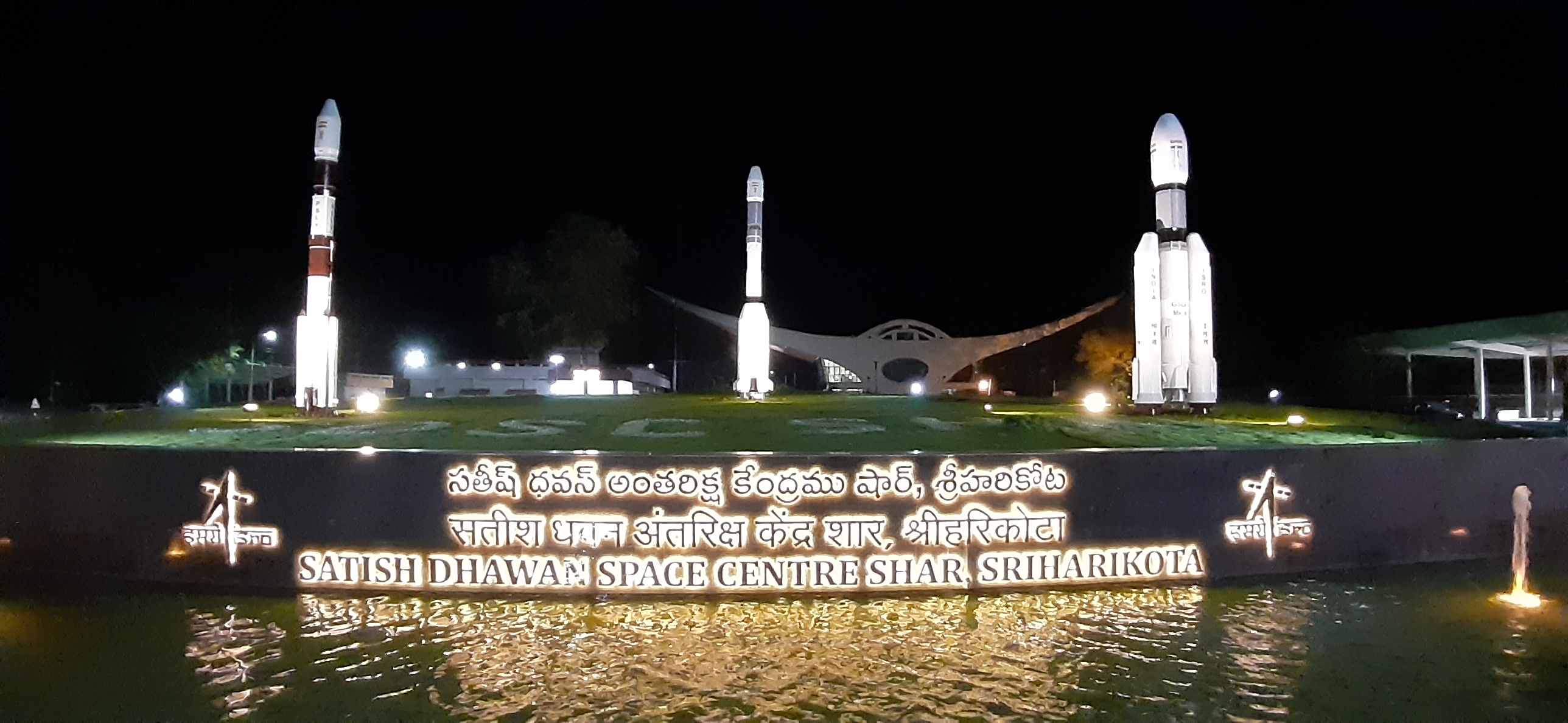
The trio comprising mom, bro and myself set out on this epic road-trip to see our wish come true.. We were driving to Sriharikota, to witness the launch of India’s largest rocket till date- GSLV MkIII, carrying onboard, the Chandrayaan2. The satellite was scheduled to launch at 2.51.a.m. that midnight / early morning of the following day. The last town before Sriharikota was Sullurpeta, 25kms away. All hotel rooms were sold out and we had decided to stay inside our car and make do with the available fuel station or restaurants when we had to answer a nature’s call. Although the entry to the launch view gallery was scheduled to be open at 10.00.p.m., we ensured that we reached there by 08.00.p.m. to avoid the traffic and the rush. When we reached there, the rocket garden at the entrance already seemed to be flooded with media-persons and the visitors alike. When this Bahubali rocket blasts off, the entire island lights up like day, the window glasses rattle in Sullurpeta, a visitor told us adding to our excitement. When the gates opened, we were among the earliest visitors who occupied the seats of our choice. We watched the crowd slowly pour in to the gallery and the excitement was only getting higher with passing time. We were still over 4 hours away from having our wish come true.

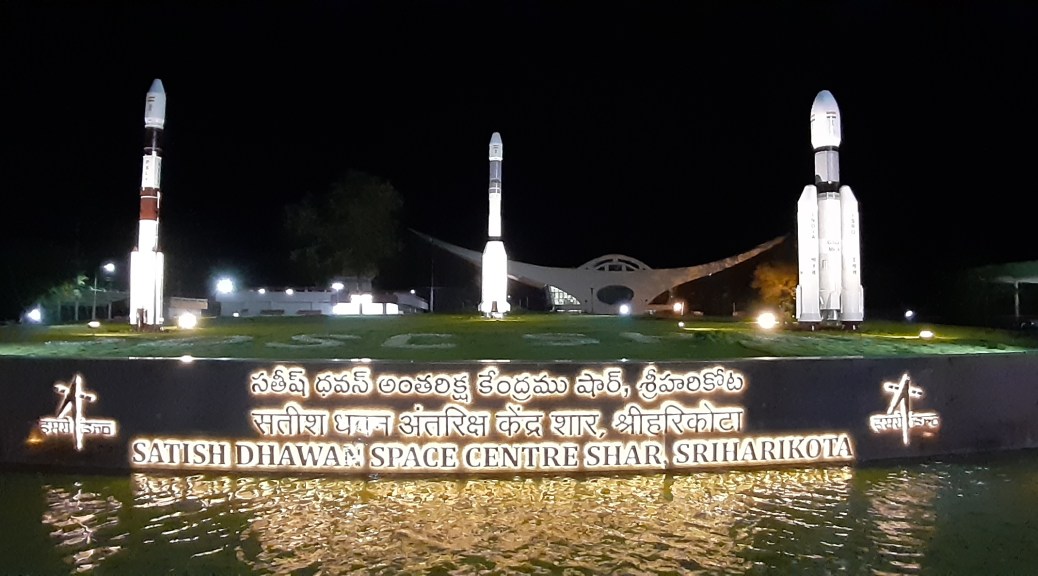
The Rocket Garden with the scale models of the SLVs

While the entire country was glued to their TV screens to watch a nail biting finale of cricket world cup in which India was out of the tournament long ago, I was part of a relatively smaller crowd that had gathered to cheer for India on one of its greatest mission to date.

At a distant sight of view, the red lights were blinking on the cranes and the umbilical tower at the launch pad. The emcee was building up the momentum for the final showdown. The cheer for India and ISRO reverberated in the gallery as the countdown and live videos of the satellite were displayed on the large LED screens.

At around 57 minutes ahead of the launch, the emcee’s voice dropped. With a pause she said, “The launch has been temporarily withheld due to some reasons. Anyway, we shall continue to do whatever we are doing right now, to cheer for this project.” Even before she could complete, another voice echoed in at the 56th minute. “This is the director talking from the control room. Due to a technical snag identified, this project remains called off for today”, he said. There was a sudden silence as the crowd sat in disbelief. The emcee too hadn’t seen that announcement coming and wasn’t really prepared to take that. She repeated the exact words of the director to the crowd. The audience continued to sit in silence. Clearly, disbelief loomed large. Every soul in the gallery hoped that it was a prank and Chandrayaan 2.0 was still going to take off in a few minutes. The emcee told them to disperse.I felt like my head was going blank and it felt like the emcee’s voice was fading out. I waited for the launch hoping it would take off after the crowd cleared out. “This project remains called off for TODAY”, I tried to understand what had just been said. “The mission was not CANCELLED, it was only POSTPONED to a later day..” I reassured myself. “I shall be back… to cheer for my country’s greatest scientists.. for propelling India’s ambitious mission..” I decided.

<18-July-19>

Amidst lot of speculations, the new launch date was set to be 22-July-19. ‘You can reconfirm your visit to the launch view gallery by clicking on the link provided.’ an email from ISRO read. I wasted no time in updating my entry pass as a constant smile of re-assurance prevailed over my face on getting to go again. Unlike my previous visit to Sriharikota, I decided to contain my enthusiasm this time. I didn’t care the delay, all I wanted was a successful mission.

<22-July-19>

Today, we are here at the gallery already at 10.00.a.m., we are the early birds who have come here to occupy the prime view seats, the drizzle of rain since morning hasn’t dampened our spirits. People are slowly trickling in, but they all seem to keep it a low key affair this time. The momentum was given a boost by Mr.K.Sivan, the Chairman, ISRO by coming down to the launch view gallery to meet and greet the enthusiastic crowd. We were all briefed about the unknown facts about #chandrayaan2 by Mr.Ranganathan, the project director for the stage 1 of GSLV mk III.

Top: Launch pad on 15-July-19; Below: launch pad on 22-July-19

The first visuals of the Bahubali rocket all set for its trip to the moon from the launch pad finally appeared on the LED screens and crowd had started to get eclectic as the countdown started. And well, Finally the emphatic countdown has begun and we see everyone more confident than ever… 10..9..8..7..6..5..4..3..2..1……

The flight off moment

It was SHEER sight of a lifetime… an impendingly roaring bright yellow mass of flame blasted off from amid the forest cover, separating itself from the umbilical tower.. A sonic boom travelled afar and within a few seconds, it disappeared into thick clouds. Although the launch vehicle lifted off at 2.43.p.m., the cheers from the control room came in 16 minutes later when the 3,850-kg spacecraft was successfully placed into the earth’s orbit and the first signal of separation was received from the satellite. CHANDRAYAAN2 on its trip to the moon, with a successful launch!

I’ve got Goosebumps all over me!

Happy Chandrayaan to ya’ll!

Here’s a quick summary of India’s mission of landing on other celestial bodies outside earth:

  • Circa 2008: Chandrayaan1, India’s first ever mission to the moon, put India on the world map for being the 4th country to land on the moon. Although it was functional for 312 days against the intended life of 2yrs, it was still able to achieve 95% of its expected tasks. That was HUGE for a first Indian- home made launch vehicle.
  • Circa 2013: Mangalyaan1 was a first for any country to have a successful landing on the Mars on a maiden attempt. What’s bonus? The orbitor that was designed with an intended life of 6 months is still orbiting around the Mars, well into its 5th year as on date.
  • Circa 2019: Chandrayaan2, India’s 2nd mission to the moon made it the first country to land on the southern pole of the moon. Why is this mission so important? This satellite will be launched in a GSLV MkIII, the largest launch vehicle ever built by India. The success of this mission will pave way with more thrust to India’s first manned mission to space- The Gaganyaan, which will also happen with the same launch vehicle.

Through these successful launches, India has created a niche for itself for producing successful space projects at lowest prices. These entirely indigenous projects which cost way lesser than several hollywood movies speak volumes of the capabilities of the scientists of my country.

As someone rightly said, so many countries have the moon on their flags, India is one of the only 4 countries to have their flag on the moon. There can’t be more reasons to applaud ISRO and be proud of India, my INCREDIBLE country!

From top right clockwise: 1: ISRO Chairman Mr.K.Sivan addressing the crowd, 2.Mr.Ranganathan, project director for Chandrayaan stage 1; 3: My brother and mom in the crowd; 4: Mom and myself after the launch

Land where Art is Divine- Pathanamthitta

Dense canopy of trees, swaying coconut palms, houseboats cruising through the pristine backwaters, wooden canoes of the locals fishing in narrow canals- Well, does this paint a picture of Gods own country? When opportunity struck, I decided to give the usual things a miss and explore a region that is least spoken about in a typical tourist circuit in Kerala. I wanted to explore the land where art is considered divine and celebrated in all its form. I was heading towards Pathanamthitta.

My Itinerary:

Day 1: Leave from Bangalore to Kochi (by Flight); Drive from Kochi to Pathanamthitta. Visit Aranmula Parthasarthy temple (take a local foundry tour); Visit Thiruvalla Srivallabha temple (Watch a Kathakali performance in the temple);
Day 2: Gavi or Konni elephant camp, Charalkunnu, Kakki reservoir, Perunthenaruvi waterfalls, Kalloppara church, Paliakkara church and Niranam church. Return to Bengaluru.

The details:

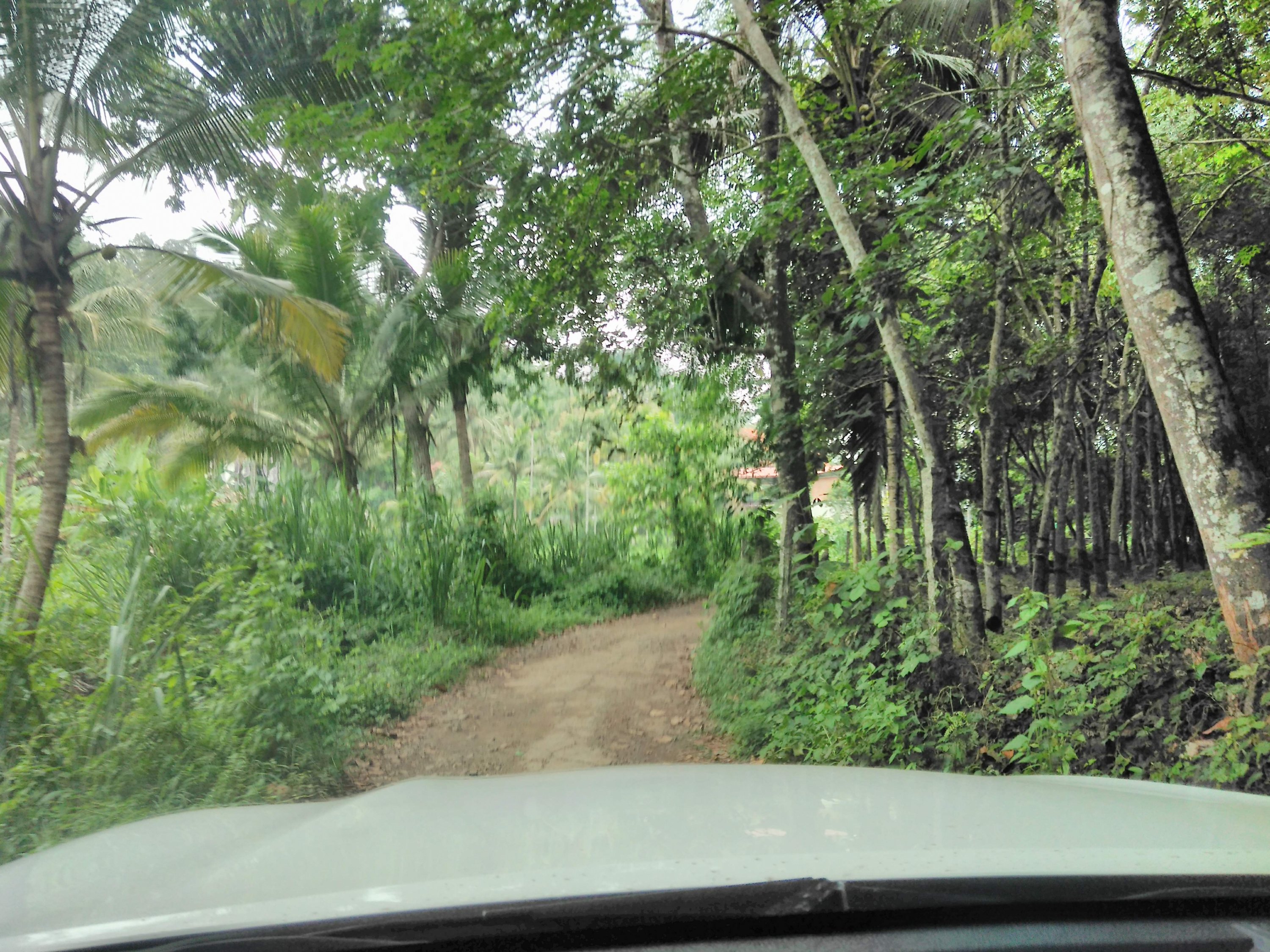
First thing I did while approaching Pathanamthitta was lowering all the windows of my car, to breathe in some clean air. With almost two third of the district comprising of forest cover, it is no wonder that Pathanamthitta is the least polluted city in India. The remaining one third is a combination of the city and plantations. We were heading to the homestay we had booked, not very far from the city centre. It was nestled in what the locals call as a residential area that was far from imagination of a city soul. The narrow roads were flanked by rubber, tapioca and banana plantations for most stretch and marsh lands for the rest. Bunches of jackfruits hung down from tall trees among several other tropical trees like litchi, rambutan etc. that had the fruit lover in me all drooling. My stay was at a traditional Kerala house nestled amidst a huge garden. Its wooden portico with clay tiled roof had me fancy struck.

img_20190531_1320012544330379495427061.jpg
Enroute to the homestay

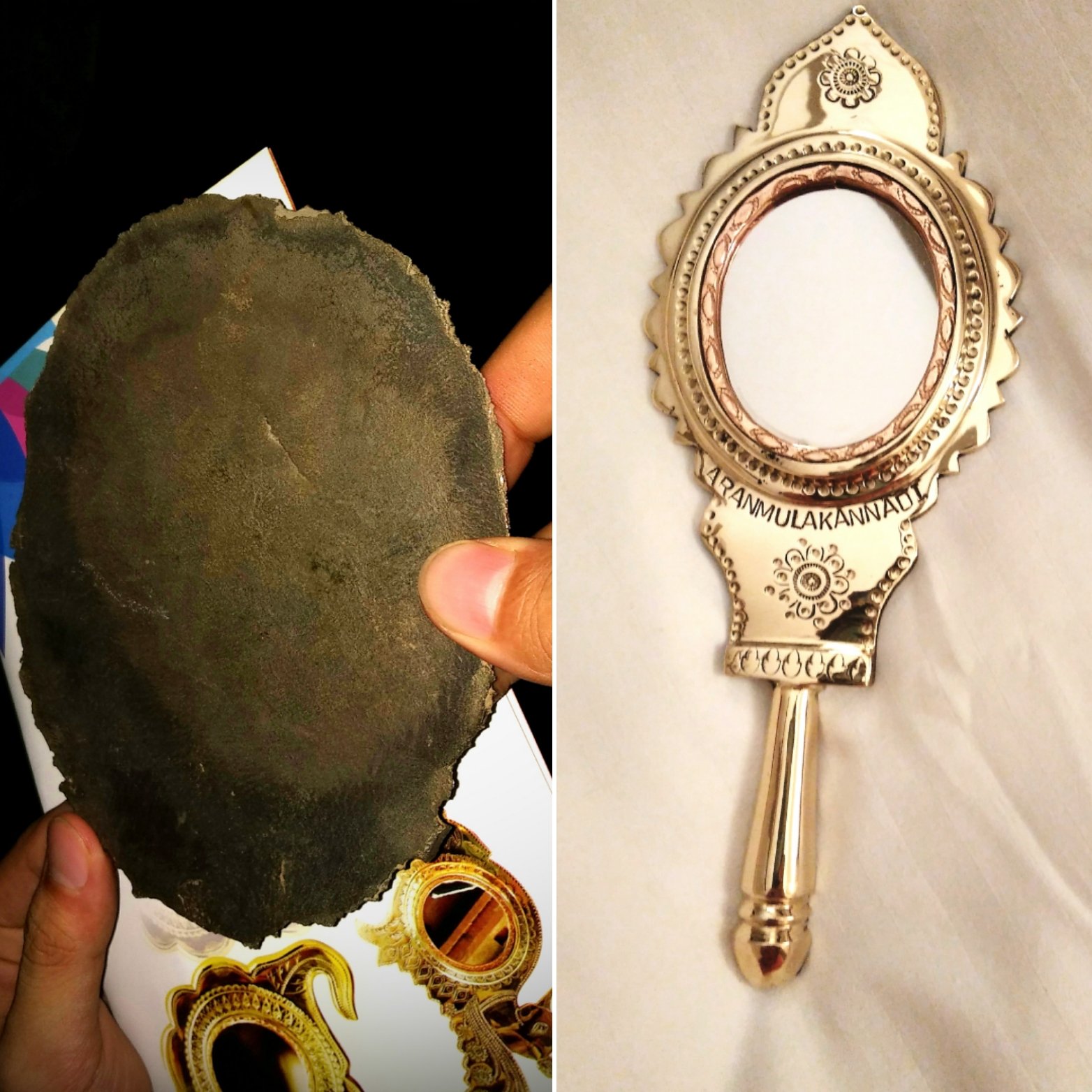
Surprisingly for me, Pathanamthitta hosts some of the largest annual religious congregations in the world. The Sabarimala yatra and Maramon convention are next only to the Haj. Giving a pass to the famous backwaters of Kerala, I had driven this far to explore its vibrant and divine culture and art. My plan for the first day was to visit two of the 108 Divyadesams, both located in Pathanamthitta. I had arrived at the Aranmula Parthasarthy temple, particularly for a tour of a foundry that makes the historical ‘Aranmula Kannadi’ (Click to watch the video).

This GI tagged handicraft is culturally important in the state of Kerala. The know-how of making it is endemic to Aranmula and limited to the descendants of only one family who now live around this temple. Unlike the familiar glass mirrors, these are finely polished metal sheets. Watching these men toiling in their workshop to bring an alloy to life, which is integral in all Malayali celebrations was like living a dream for me.

img_20190622_2343003929859773219572362.jpg

Left: moulded metal sheet before polishing; Right: Polished & finished mirror

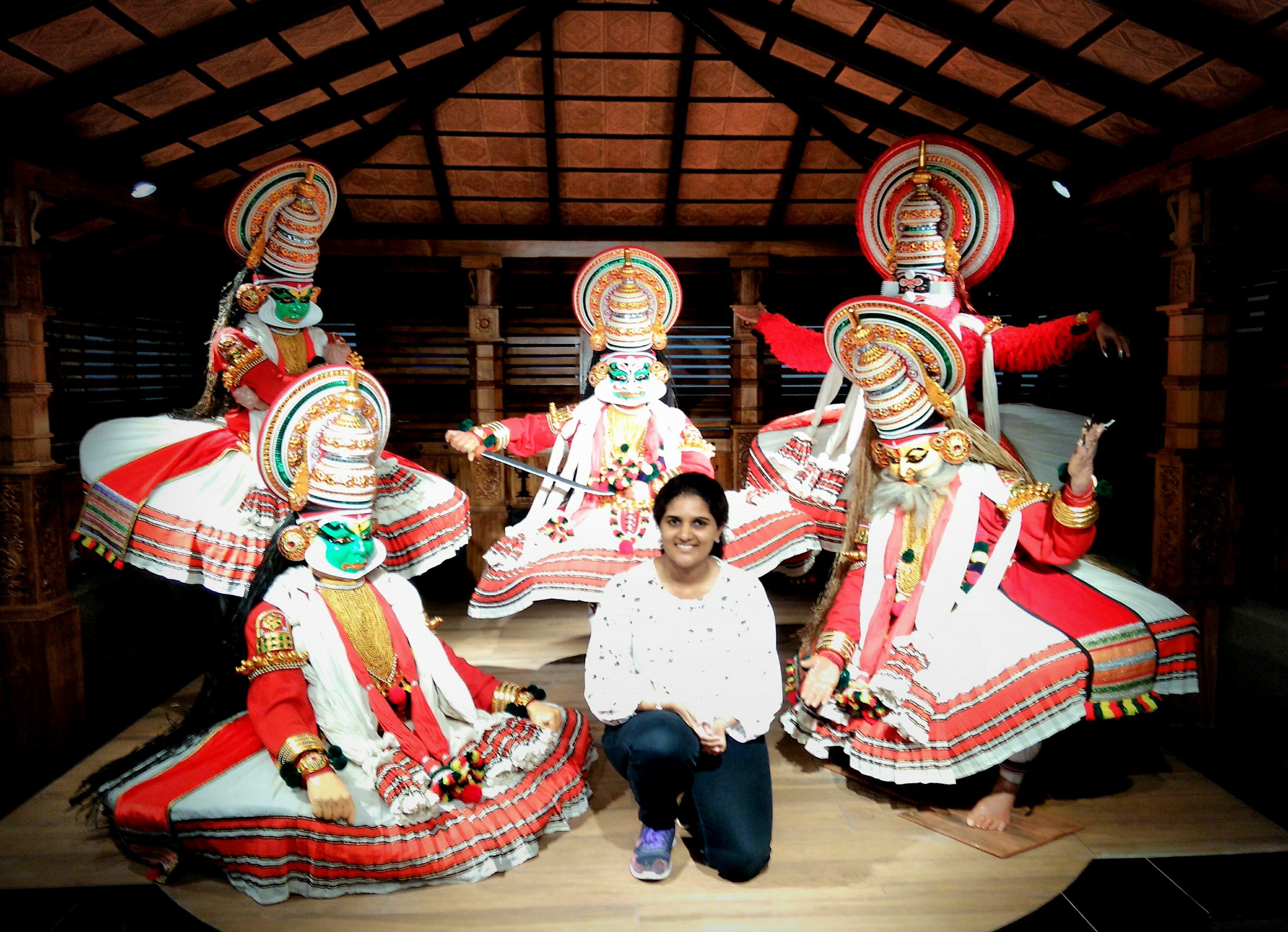
A short drive away from there was my next destination: Thiruvalla Srivallabha temple. With its ancient wooden architecture, this beautiful temple sprawls on a huge area. Here, the prayers are offered five times a day and the last prayer was specifically that interested me the most to visit here. Kathakali is performed inside the temple premises everyday as a form of prayer to put the deity to sleep. I was like a little child in wonderland who lost track of time watching this performance that went late into the night.

img_20190601_1301236968219467911473755.jpg
A traditional Kathakali setup at the Kochi international airport

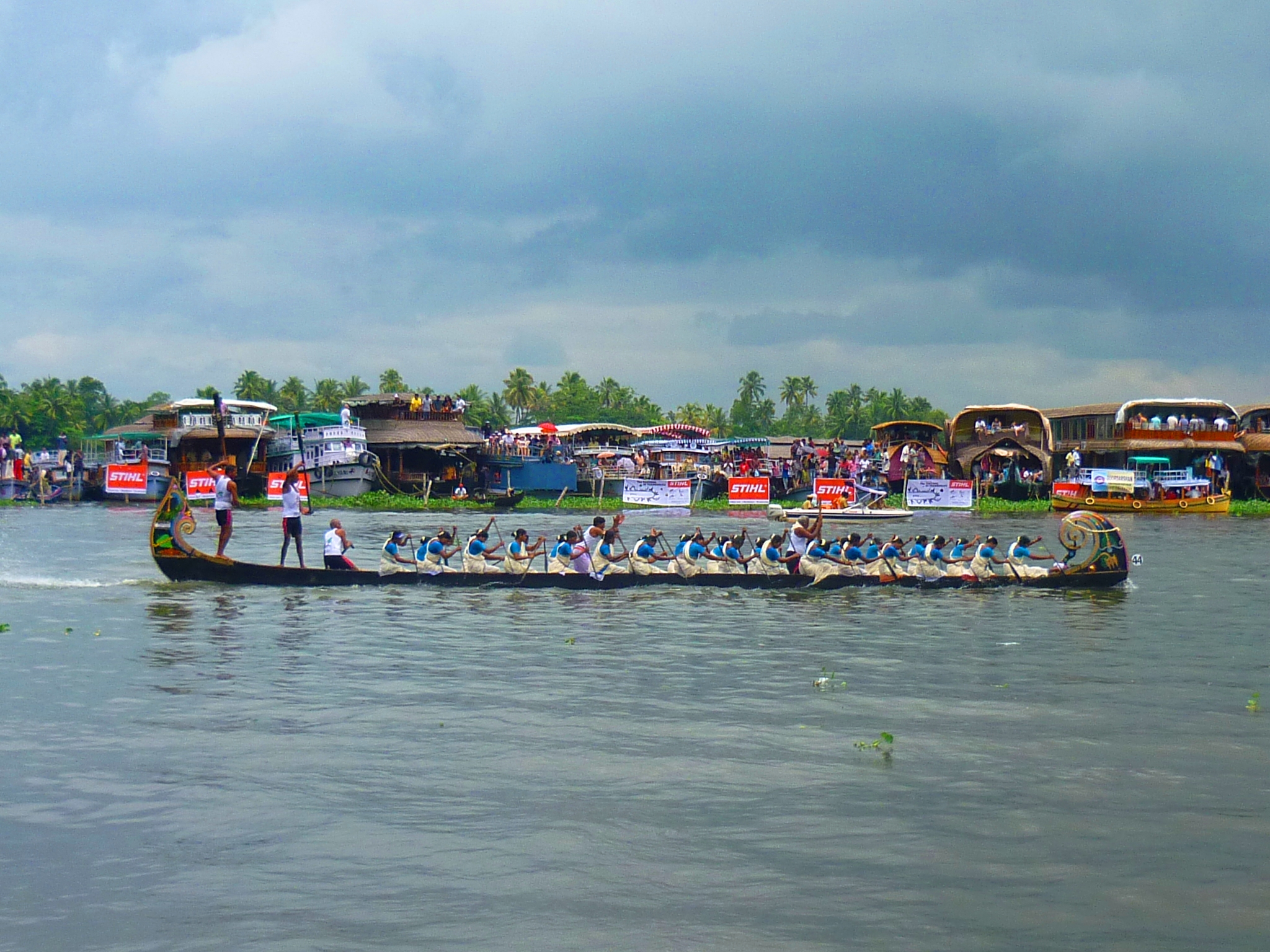
An early morning drive to Gavi or Konni elephant camp is what I was recommended for finding a piece of nature. Charalkunnu, Kakki reservoir, Perunthenaruvi waterfalls are few of the other nearby places that tourists usually visit. But I decided against it all and while away some time exploring the neighbourhood of my homestay before checkout. It was as calm and peaceful as anywhere else. While sipping a cup of Kattan chai, I was reminded of my previous trip to Alleppey. Hundreds of wooden canoes measuring over 100 feet, long enough to be called snake boats, gather from across Kerala to compete for the coveted title. Each boat carries at least hundred oarsmen, all singing the Vanchipattu in chorus. Breathing the heavy air filled with anxiety of the spectators, it was a lifetime experience. Like Alleppey, Aranmula too hosts one of the largest boat races in Kerala. The Aranmula race is held on the last day of Onam as a celebration of Lord Krishna crossing river Pampa.

Boat Race finals (22)
The oarsmen ‘”Women” from Alleppey

I had planned my return route to Kochi such that I could cover some of the interesting landmarks along the way. The first stop was at Kalloppara, where an ancient Hindu inscription exists inside a church. I had read about how two faiths co-exist under the same roof that houses a Bhagavati temple and a Mary’s church. But my drive through the streets of a residential area ended at a bridge that connected Kalloppara. It had collapsed during the floods that ravaged Kerala last year. Having three rivers flowing through it, Pathanamthitta was one of the worst affected.

I hit the main road again and headed to Thiruvalla. Since it was dark the previous night, I was there again to have a look at the famed mural paintings on the altar of the Paliakkara Church. The church at Paliakkara and Niranam (my next destination) both have their history dating back to the arrival of St.Thomas in India in 54.A.D. This trip was all about an amalgamation of art and tradition. Be it wildlife, religion, architecture, history, art or culture, I believe Pathanamthitta has something for everyone.

(P.S.: I’m against the idea of taking photos inside any place of worship, as a form of respect to its sanctity. Hence, I do not have any pictures from the interiors of any place of worship)

Fact File:

  • How to reach: The nearest airports are at Kochi and Trivandrum. Kottayam and Alleppey are the nearest Railway stations. KSRTC buses and taxis are available from these places to reach Pathanamthitta by road.
  • Get around: local buses are quite frequent; Taxis can be easily availed.
  • Best time to visit: September to May (Anytime apart from monsoon)
  • Stay: Luxury hotels are sparse. Cheap and Budget hotels are available in plenty considering the pilgrims who come here for Sabarimala yatra. Homestays are available to experience the true essence of Kerala.
  • Must do: Attend a Kathakali performance, visit a mirror foundry, Bathe elephants at Konni.

Taking travel inspiration from busy bees

Aren’t honeybees good inspirers to travel? In a lifespan that’s as short as just a few days, they find a new place every day, explore a new flower every minute and taste new nectars on every flight! All this while still performing their assigned duties without having any complaints. Living a sweet life while being as busy as a bee!

It was curiosity that led me to learning about bee-keeping. This curiosity was a summation of multiple experiences accumulated through the years of childhood. I have been raised by my grandparents where honey has been an essential part of my life. We used it as a dip for breakfast and as a rice-mix for lunch, as an energy drink with hot water or even as a medicine with brandy or pepper corn. And yeah, stashes of several bottles went packed as souvenirs to guests who visited home and to friends who lived far away. You can call this honey with adjectives like pure, organic, handpicked, homemade, etc. ‘Coorg honey’ it was, after all!

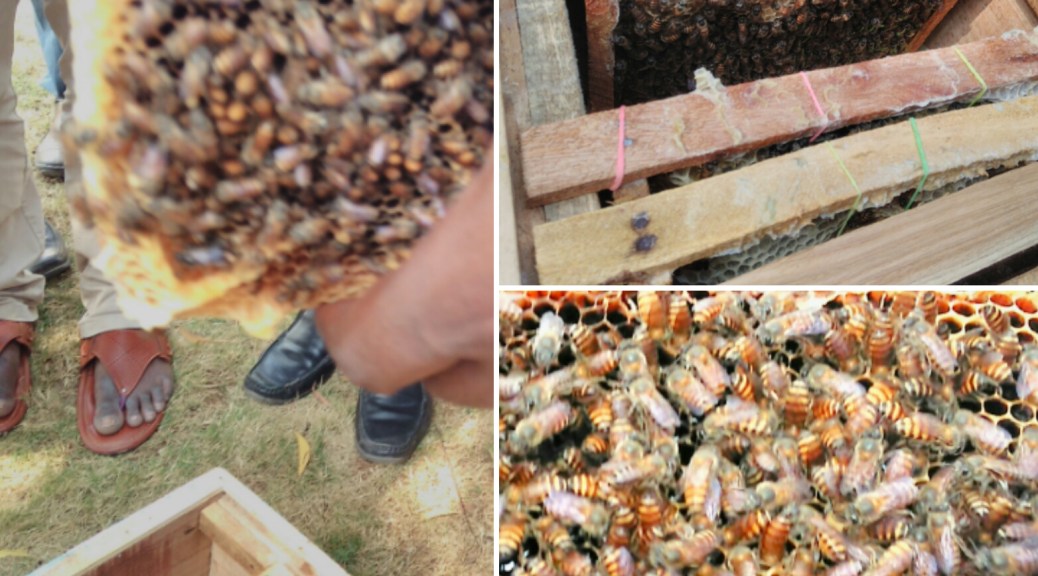
Grandpa was personally enthusiastic about this particular hobby of his. I was often smitten with curiosity when he returned home with either a swollen face or with swollen hands. When I went nearer to him to check for his condition, he would only greet me with a warm smile and a piece of honeycomb dripping with fresh nectar. While at home, he would be busy with his bees in 75+ boxes that were kept around the house. It used to be a festival day for the family when drums of honey used to be extracted from his boxes all by himself. While at his favourite place- the Abbi estate, it was customary for him to have a daily look at this massive ‘Honey Tree’ as we called it, the single large tree where bee hives were formed annually. It was the family night out, an annual event that we all looked forward for. Honey tappers from a specific tribe called ‘Jenu Kurubas’ used to be called in, to climb the tree in pitch darkness on a no-moon night. The family camped in the darkness at midnight on the damp ground of the coffee estate with the rustling sound of the waterfalls in the background. While as a kid, I was amused with the spectacle of blue lights falling down from that tree, only as a grown up adult I realize the lights were indeed bees that were falling down after being smoked up in the process of honey tapping. And not to forget some odd days when he would pick out snakes from mud crevices that he had put his hands to collect honey from. And then there were days, when we made friends over a bottle of honey. These were customers who came to grandpa’s makeshift shop at Abbi falls with their unique ways of testing the quality of the honey sold there! Each customer, a unique character and every conversation, a story in itself.

For me, adding this new dimension to my travel stories was more of an emotional journey.. With the passing away of Granpa, the charm and life that his favourite place held too passed. The ‘Honey Tree’ eventually saw the ground leaving our family to buy honey from the market. Having relished the finest nectars from high tree trunks, deep mud crevices and those handpicked from the several bee boxes kept around the house, our family like all others are really not sure of the quality of those available in the market. That’s when this thought of setting up my own bee box struck me along with traveling in pursuit of knowledge sharing. These things led to me developing an interest about learning about honey bees and eventually respecting these tiny creatures more and more. I think being born in a community of nature worshippers gives me an instant connect with things that are natural and essential for our existence. Home is where primary and the most essential education starts and for me, Grandpa has been the main reason for one of the finest childhood lessons and home education I have picked up.

Albert Einstein said, “The Earth will come to an end in just 4 days if there be NO honeybees on this planet.” Honeybees are such an important part of our very own existence on this planet, Save them! Get in touch with an expert before you get that beehive removed from your concrete dwelling. Alternatively, get in touch with me for I would be more than willing to give a talk for awareness in your community. I signed up for a workshop to learn this art of bee-farming, and a certification came as a bonus. I did my course with ‘HoneyDay Bee farms’ who are thorough professionals and extremely knowledgeable in the field. They work with farmers right from the installation to extraction to marketing thus assuring you a 100% purity in their products. Go try them out!

getting lost in traveling through places and time…