Tag Archives: Offbeat things to do in India

Weekend Hike- Bala Kodandaraya Swamy Temple

Although this destination is a recommendation for weekend and day hikers of Bengaluru, it is in Krishnagiri, a district bordering the two states of Karnataka and Tamil Nadu.

The views from an ancient temple had caught the attention of my friend and me, who are always in the look out for less crowded and less explored landscapes and places with cultural and historical importance. One such place was the ‘BalaKodandaraya Swamy temple’ whose history dates to the Vijayanagara era. Based on our online research, we found out that getting to the temple involved a short hike.

We started early on a Saturday morning by car. We had our breakfast along the way, in one of the several restaurants on the Hosur highway. From there, we followed the route on Google maps to reach our destination. A steep deviation to the left of the highway led us through villages. There were asphalted roads and good views of the surrounding hillocks for as long as the road passed through villages. The last couple of kilometers were through unpaved muddy roads passing through a slight forest stretch. We finally arrived at a small open space where we parked our car, at the base of the temple hill.
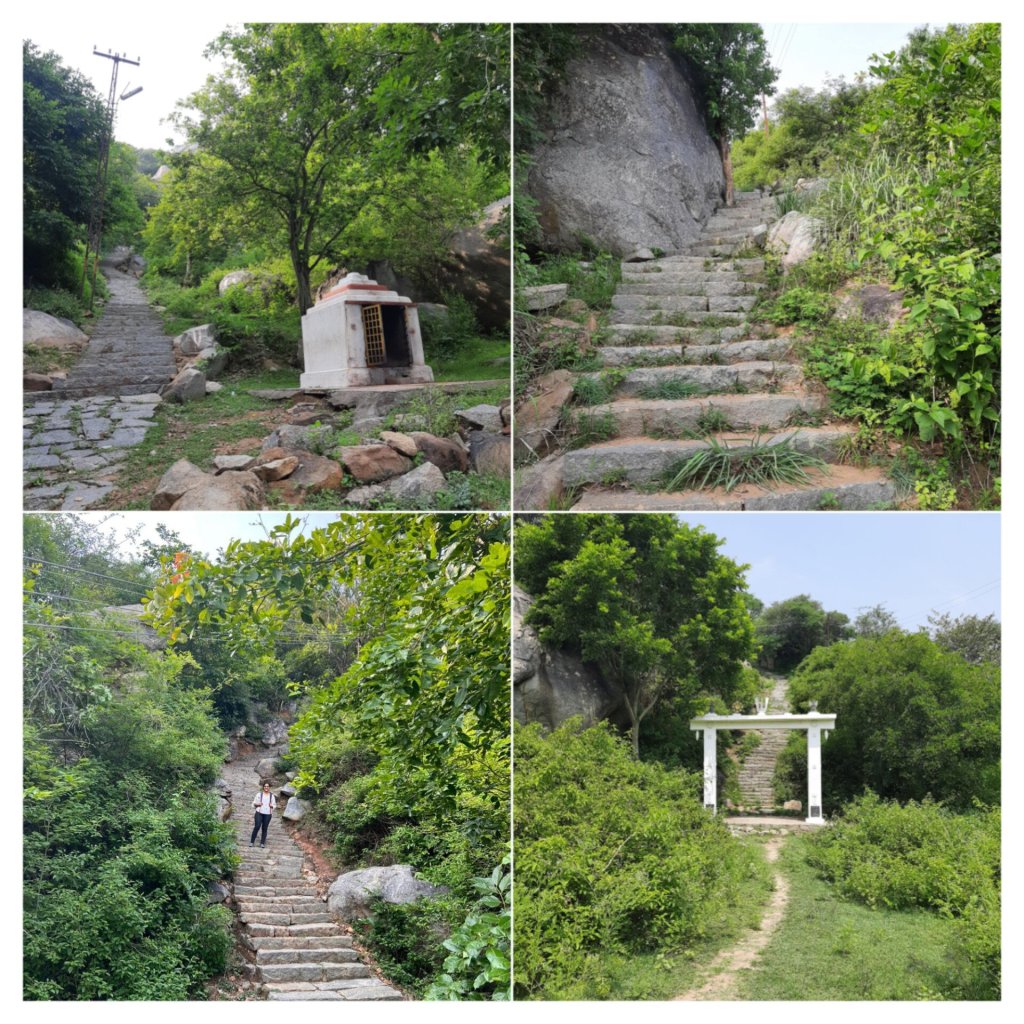
The forest trail
The trail through the forest cover, starting from the base to the temple arch

There was a small structure of brick and mortar (gudi) at the base, from where a flight of stairs led to the hilltop. People lit lamps, agarbattis and camphor here before starting their ascent. It took us about half an hour’s climb along properly laid stone steps leading to the top. These stone slabs bear the names of the devotees who have donated them and the count of their donations on each step. The ascent curved around at multiple places and offered amazing views of the valley below at every turn. The first half of the climb had a forest cover and large boulders on both sides, until we arrived at the welcome arch of the temple.
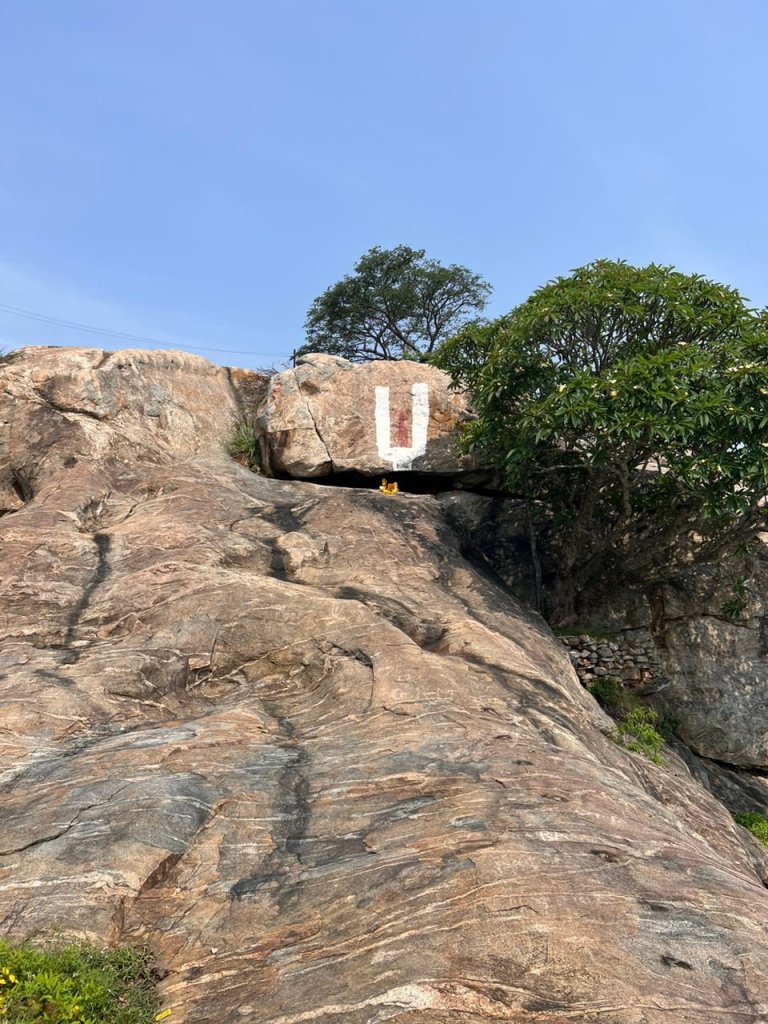
The path towards the left of the trail, towards the temple

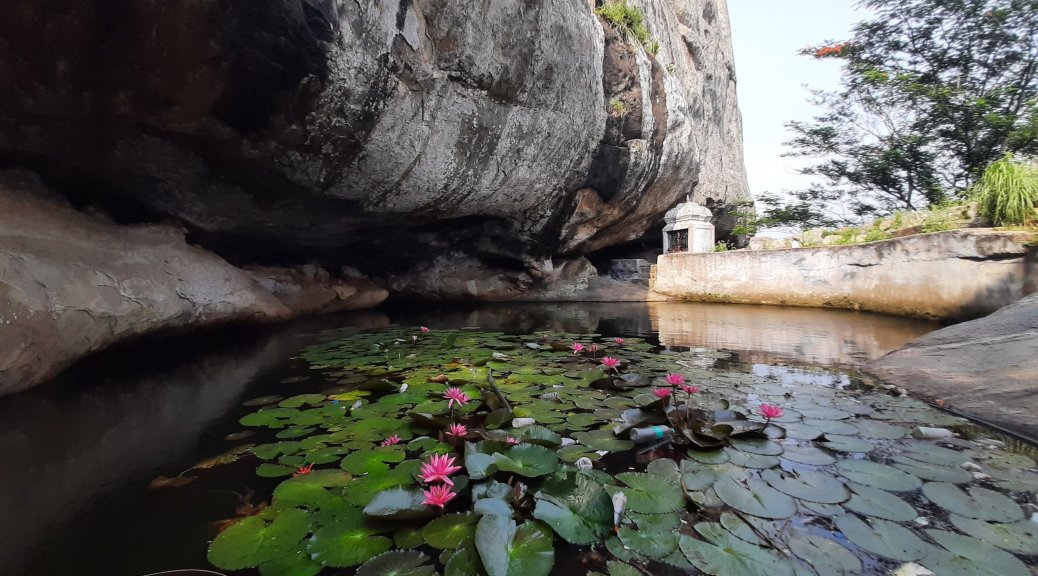
The forest cover ended after a few steps further from there and opened to a panoramic view of the valley of the villages and farms below. As one stands on a large rocky outgrowth, you will find the trail split into two paths. One, straight down through some Gulmohur trees. Second, up towards the temple. We decided to first walk the trail going straight. A few yards from there, the trees made way to a beautiful pond of pink lilies, dug right beneath a large rocky monolith. We later realized that devotees take a dip in this pond before proceeding towards the temple.
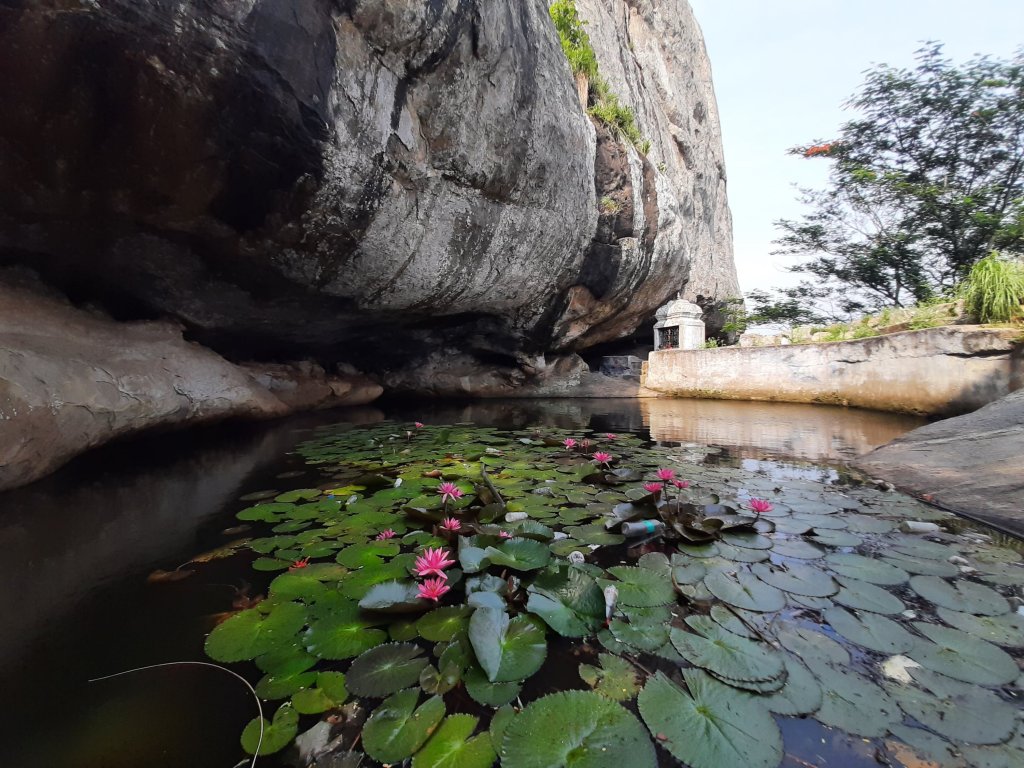
The path towards the right of the trail, leading to the temple pond

The view of the valley from there and the magical vibe of sitting by this pond of lilies could not let us go easily from there. My friend settled on the banks, with a book to read. Although the water was heavily littered with plastics, it was still a super calm spot to soak in some good energy. After spending a while, we then headed towards the temple, located on the peak of the hill, a short walk away. There was a panoramic 360 degrees view of Hosur and Krishnagiri from the temple, the green cover around, Krishnagiri dam and the Then Pennai river. The temple priest arrived much later at around 10.00.a.m. for the daily prayers.
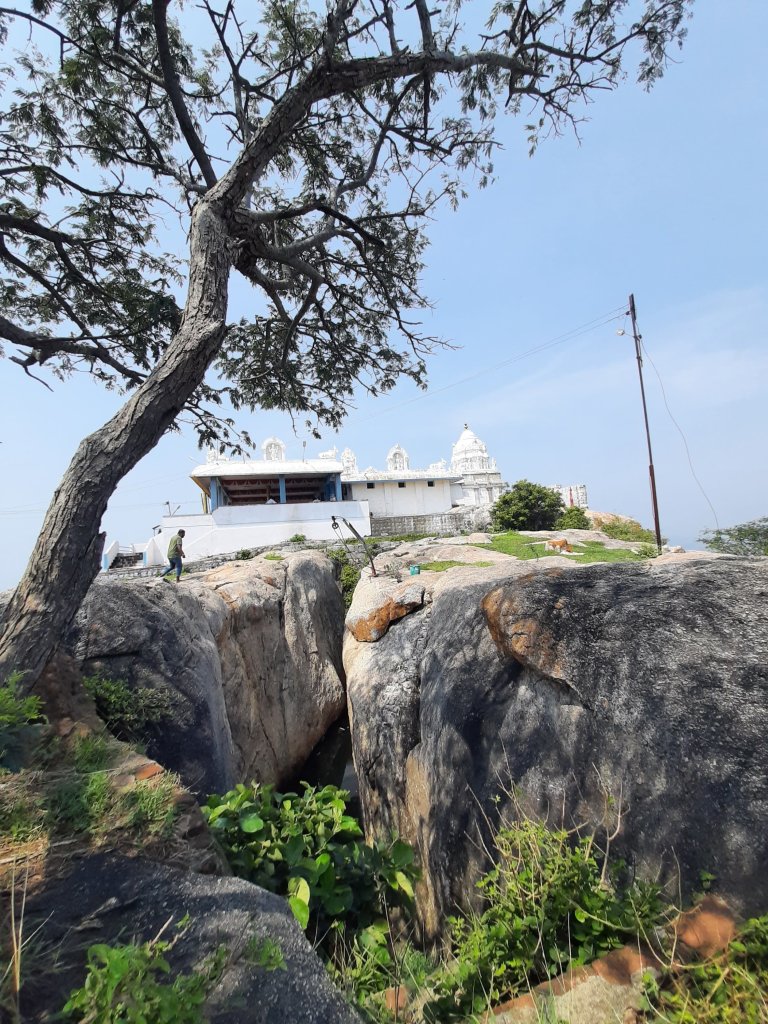
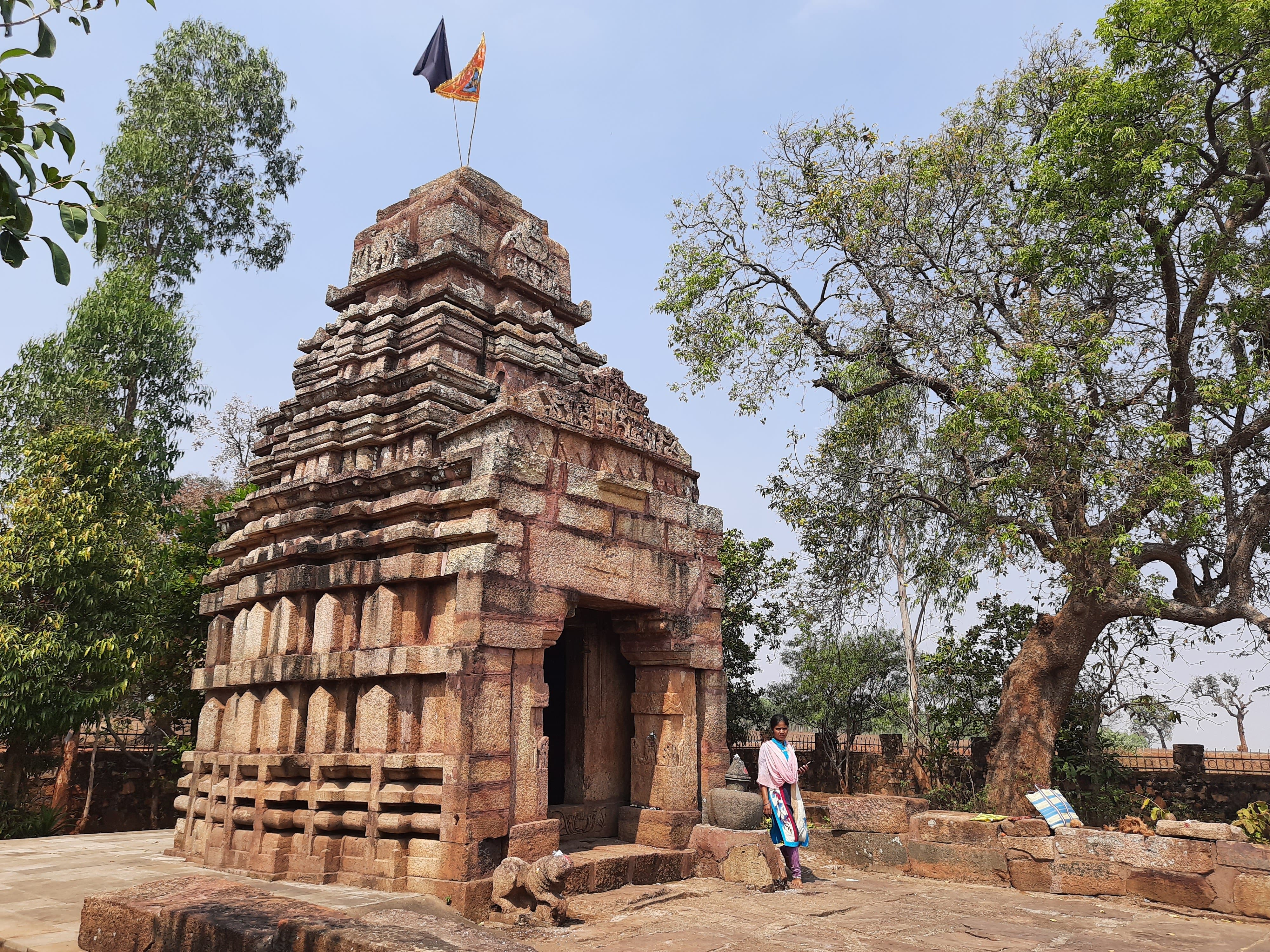
Balakodandaraya swamy temple, Krishnagiri
Balakodandaraya swamy temple and the cleft for drawing water

Surprisingly, a small cleft in the rocky hill serves as a perennial source of potable water for temple use. The people who had gathered there by then, helped the priest in drawing water from this cleft and clean the temple premises before offering the day’s prayers. We sat there for a while and decided to head back to the base before the sun took over the skies and heated the rocks around. Overall, it was an incredibly beautiful place for a short trip from the city.

Other nearby places:

If you are looking at making it a full day trip, then you can explore the nearby places that include:

A summer weekend in the placid coast of Karnataka

Heard of the potential of Aqua-tourism in Karnataka? We did just that. Read Further.

Water activities like kayaking, surfing, and diving are slowly catching up with enthusiasts, both for recreation and as a sport. Thanks to favorable winds, some of the most serene estuaries with mangrove ecosystems and untouched diving spots, Karnataka’s coastal region has been attracting enthusiasts and vacationers from all over. It was a family road trip driving down from the hills of Kodagu to the coast of Karnataka.

Just like the gad-bad ice-cream that originated in this region, our itinerary was packed with experiences. We wanted to see the bioluminescent waters. Bioluminescence is a naturally occurring phenomenon in which the microorganisms present in the water emit light when disturbed thus making the water glow. The darker the surroundings, the better the visibility of this phenomenon. Hence, we had signed up for a night kayaking session on a no-moon night in the backwaters of river Shambavi at Mulki. We chose to camp by the riverbank to have a closer connection to the waters.

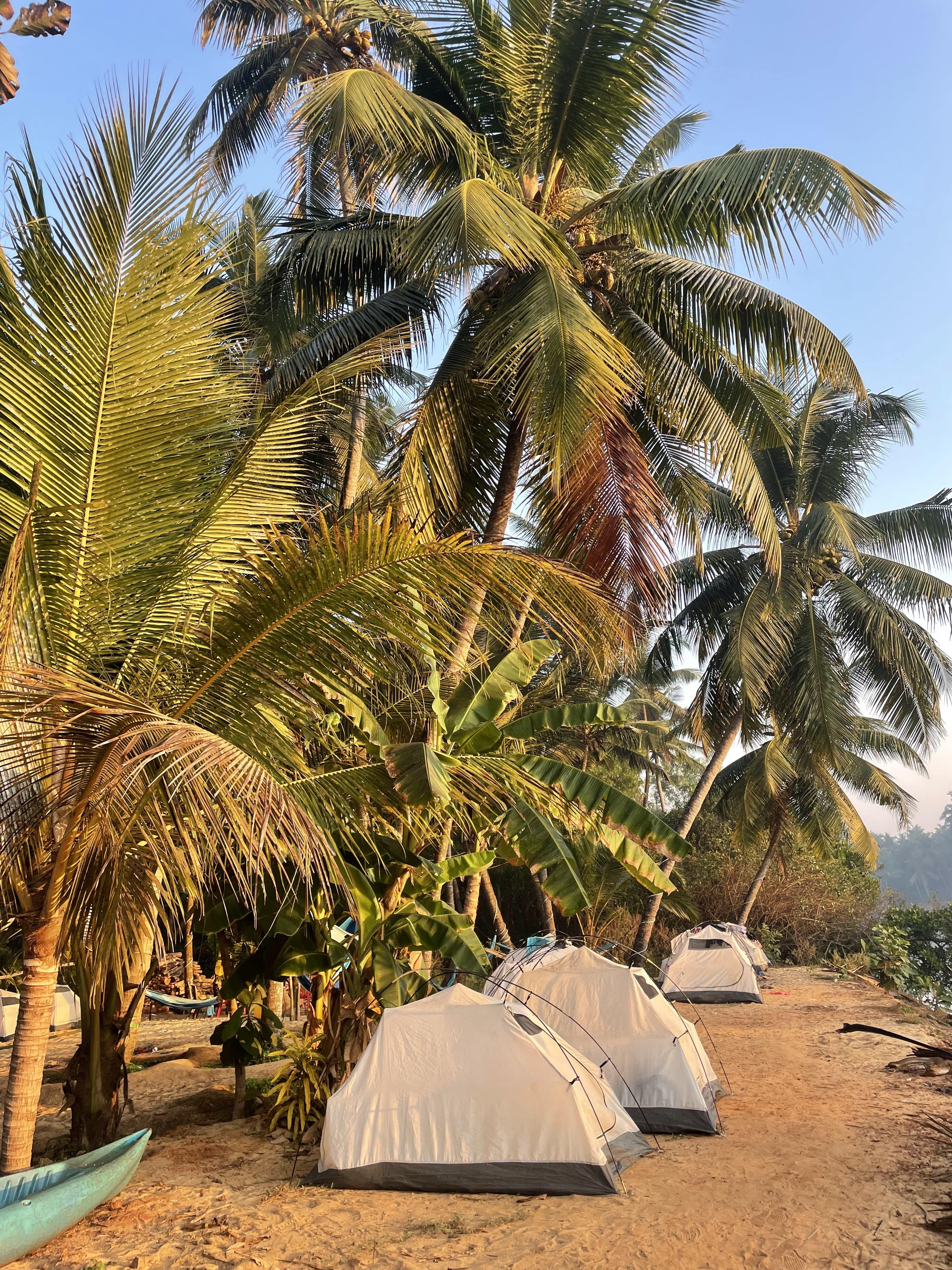
Campsite at Shambavi river bank, Mulki
Our Campsite at Shambavi river bank, Mulki

After arriving at the campsite and while my parents enjoyed their time strolling around the place, my brother and I took our lessons on taming the waves with the surfboards. Although my brother was quick to get the knack of balancing himself on the surfboard, I fell into the water several times before finally getting it right. It was a fun session under the harsh sun until we returned to the campsite. We then tried some wakeboarding in the backwaters and then headed towards the beach again, to see the sunset.

Padubidri beach is among the only twelve beaches in India and two in Karnataka to have the blue flag certification. The drive to the beach itself was a beautiful experience with coconut trees towering over the narrow road running parallel to the sea. With all facilities including clean washrooms and good restaurants, the swim, and the sunset at Padubidri was one for the books. After grabbing some refreshments at the stalls there, we headed back to our campsite to relax a bit before the beautiful night that had to follow.

Since it was a no-moon night, the tides had caused the water levels to rise. It was pitch dark as we set our individual kayaks out into the water and began to paddle along the river. Geared with life jackets and our oars, we were ready to set the water ablaze, quite literally! We had no sense of where we were going but to follow a faint beam of torch light on the first kayak that guided us in the correct direction. The magic slowly started to unfold in the water after we had covered a certain distance. The glowing waters peaked while we all had gathered at the river mouth on our kayaks. Although, it is said that bioluminescent waters are a sign of unhealthy water, I convince myself of not being guilty of enjoying this experience. We all screamed with joy as we splashed the blue waters on each other with our hands and our paddles. With each dip of our hand in the river, our arms would glow in neon blue, which seemed nothing but a fairytale.

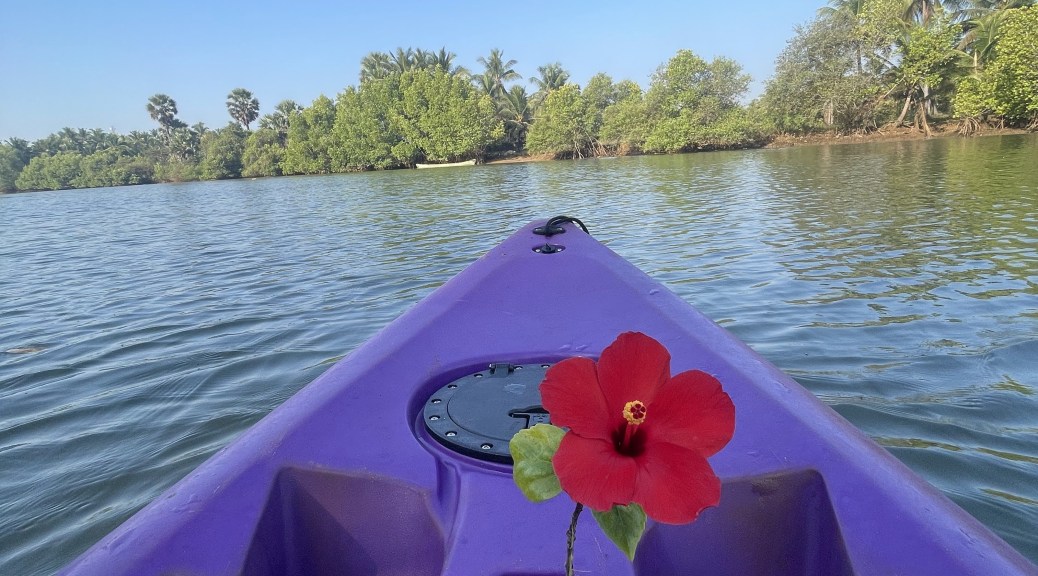
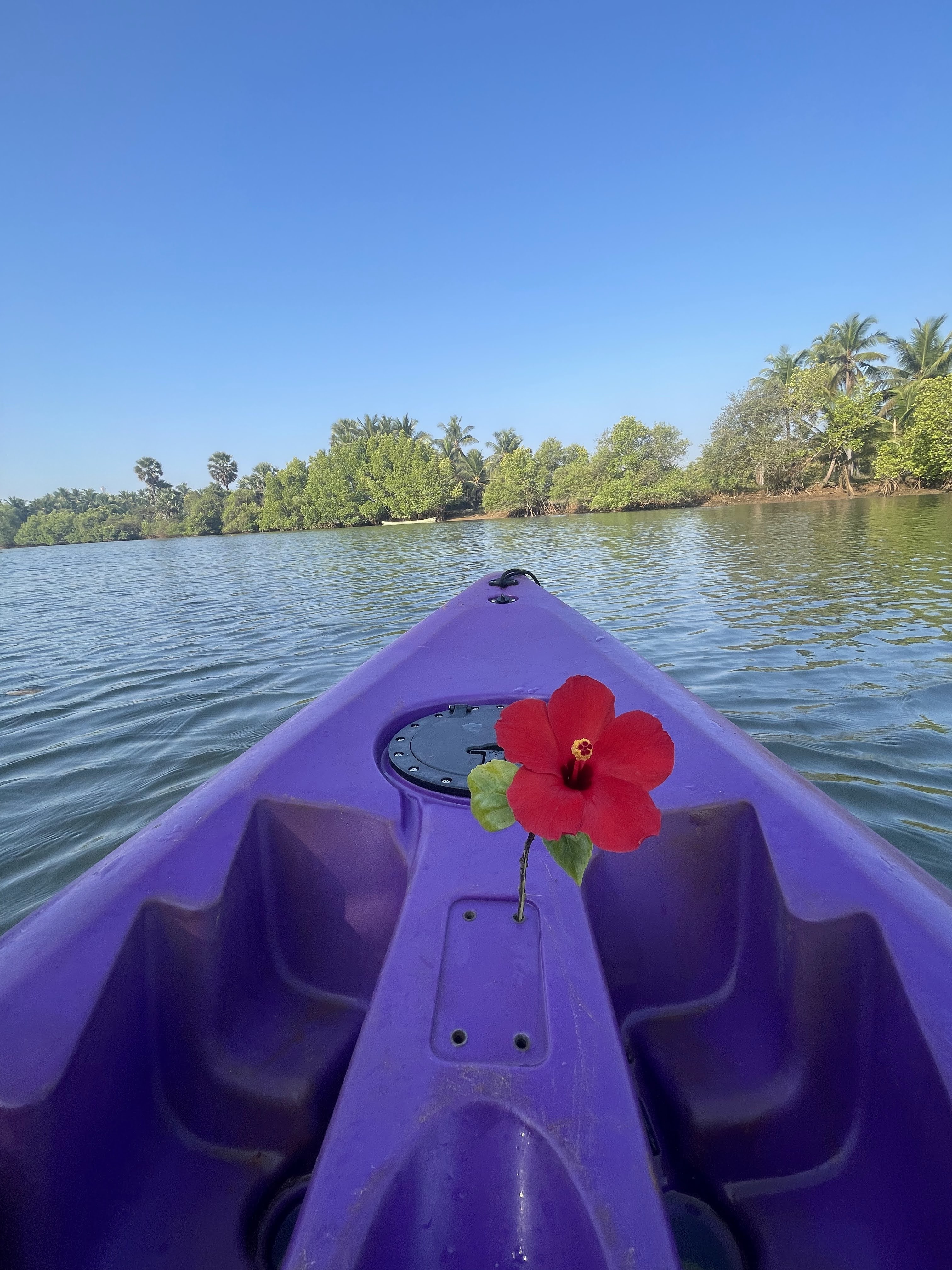
Kayaking in Shambavi backwaters

The following morning, we drove up to the temple town of Murudeshwara to score off yet another item on my bucket list. At about 20 kilometers off the coast of this temple town is Netrani island, a strategic patch of land controlled by the Indian Navy. Although entry to the island itself is restricted, the surrounding waters are open for public access during the spring months each year. This area is one of the best dive-sites in mainland India and that’s why I had been contemplating a visit here. We had pre-booked our slot for scuba diving with one of the several diving agencies around there.

Soon after filling out forms, a boat arrived at the beach to take us on a ride of approximately one hour to reach the dive spot. Our family was accompanied by a few other travelers, who like us were enthusiastic about their dive. Enroute, the instructions were given to everyone on the boat, both first timers and experienced. After reaching the site, without wasting time sitting inside the boat and waiting for our turn to scuba dive, we grabbed the snorkel gears and jumped into the water. The view inside had already set a good momentum for the expectations we had for the deep dive. Soon, each of us took turns to go underwater, touch the seabed and live our moments in a new world under the water. Especially for my sexagenarian parents, it was something that they hadn’t done before, and they felt a sense of accomplishment. It was evening by the time we returned to the shore with our boat tossing hard in the unusually rough sea.

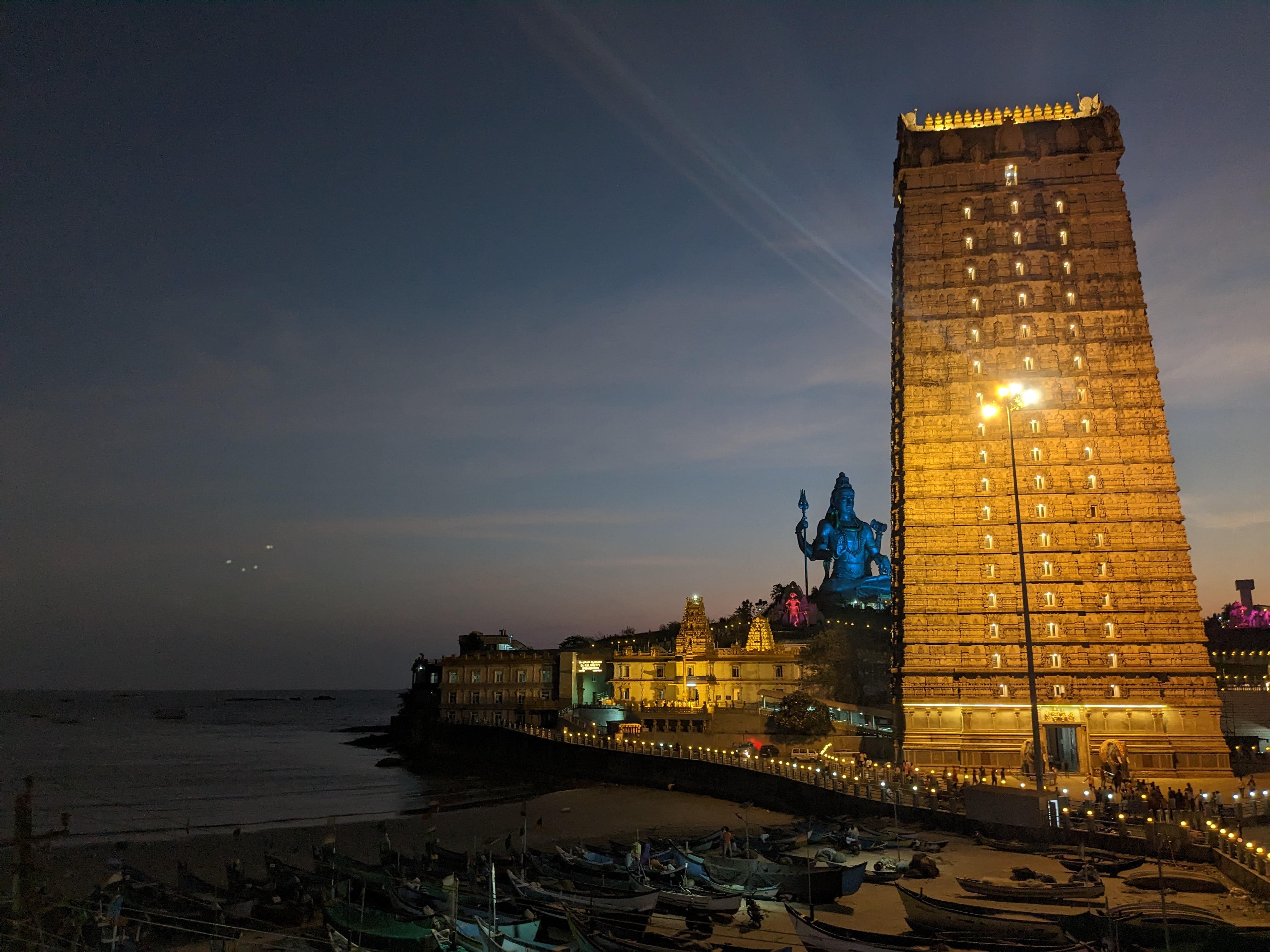
Murudeshwar temple during Sunset

We freshened up at a nearby lodge before visiting the Murudeshwara temple. We called it a day while watching the sun go down from atop the temple tower. It is highly recommended that this spring-summer trip to the coast of Karnataka should go onto everyone’s bucket list!

A Trip to Kanger Valley National Park

My first thoughts about visiting a national park used to be safaris, birdwatching and game sighting. But my trip to Kanger valley national park in Chhattisgarh helped me change that perspective by letting me understand that a trip to a forest can be beyond wildlife. Even without having any major landmarks to visit, a trip can be complete by simply traveling slow, being present and immersive in the energies of the moment.

A walk tour around Jagadalpur set a good preamble by introducing me to the culture and history of the tribal communities and the royal family of Bastar. Jagadalpur is where most rituals of the Bastar Dussehra center around. Bastar Dussehra, the longest festival in the world is celebrated for seventy-five days thereby attracting tourists from across the globe to witness the congregation and unique rituals of Adivasis inhabiting the region.

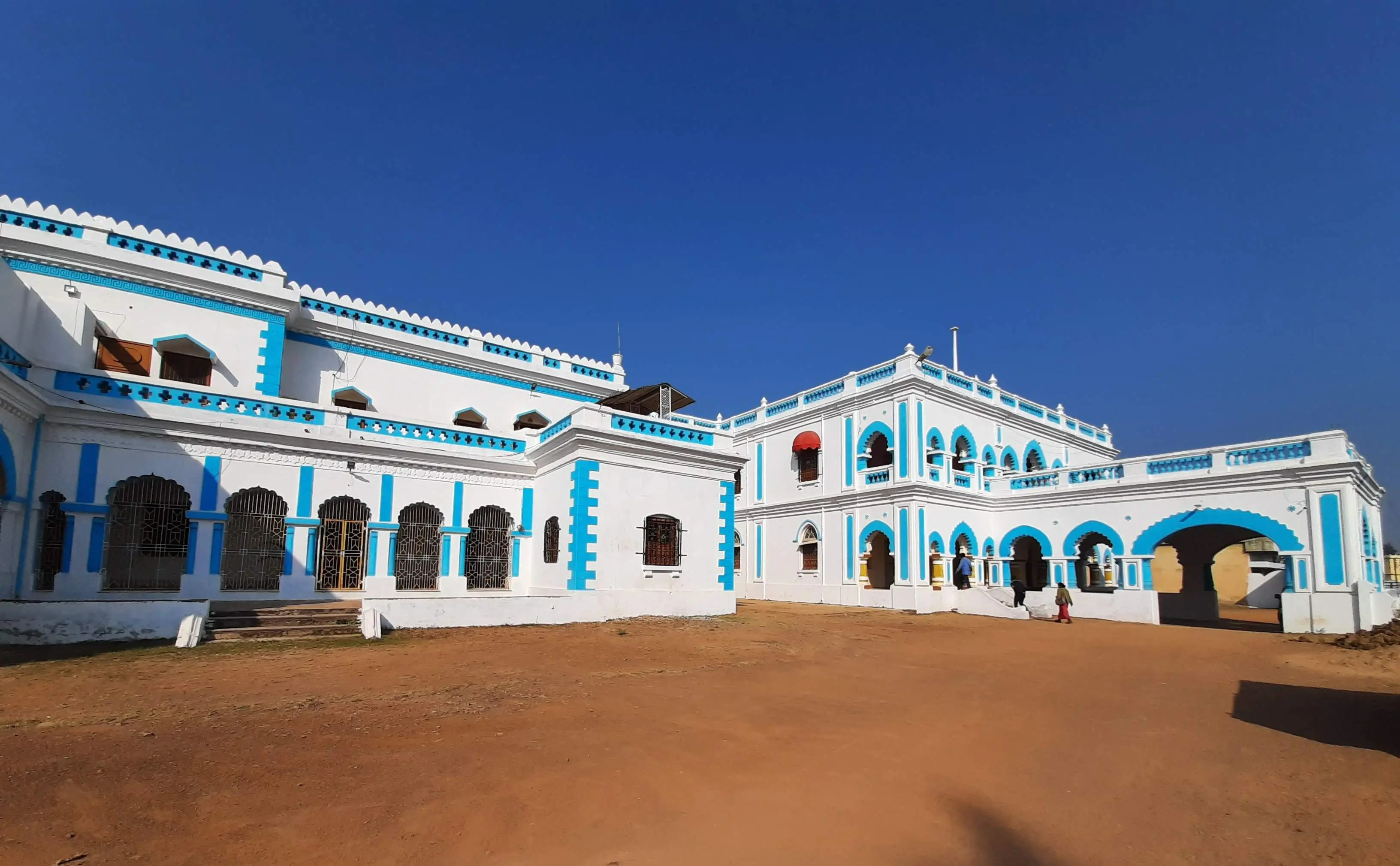
The Royal Palace at Jagdalpur

We then drove towards Kanger valley National Park, the only national park in India where human settlements is allowed within the heart of the forest that is thriving around the Kanger River. A sumptuous lunch served on patravalis was followed by a walk to see the beautiful Thirathgarh waterfalls and the serene Sita Kund, important sites of pilgrimage in the local culture. After spending some time there, I went on a guided trek to Shivaganga, an untouched gem. ‘The seclusion of the waterfall, reachable by a flight of bamboo stairs laid out through the thickets would be best complimented by an overnight camping and the dance of the fireflies’ as described by the guide.

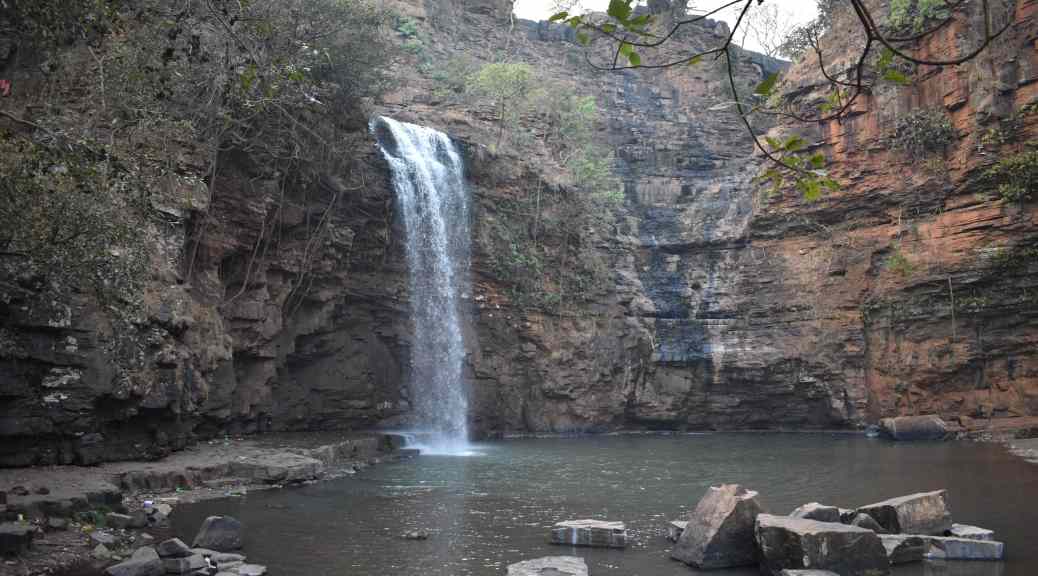
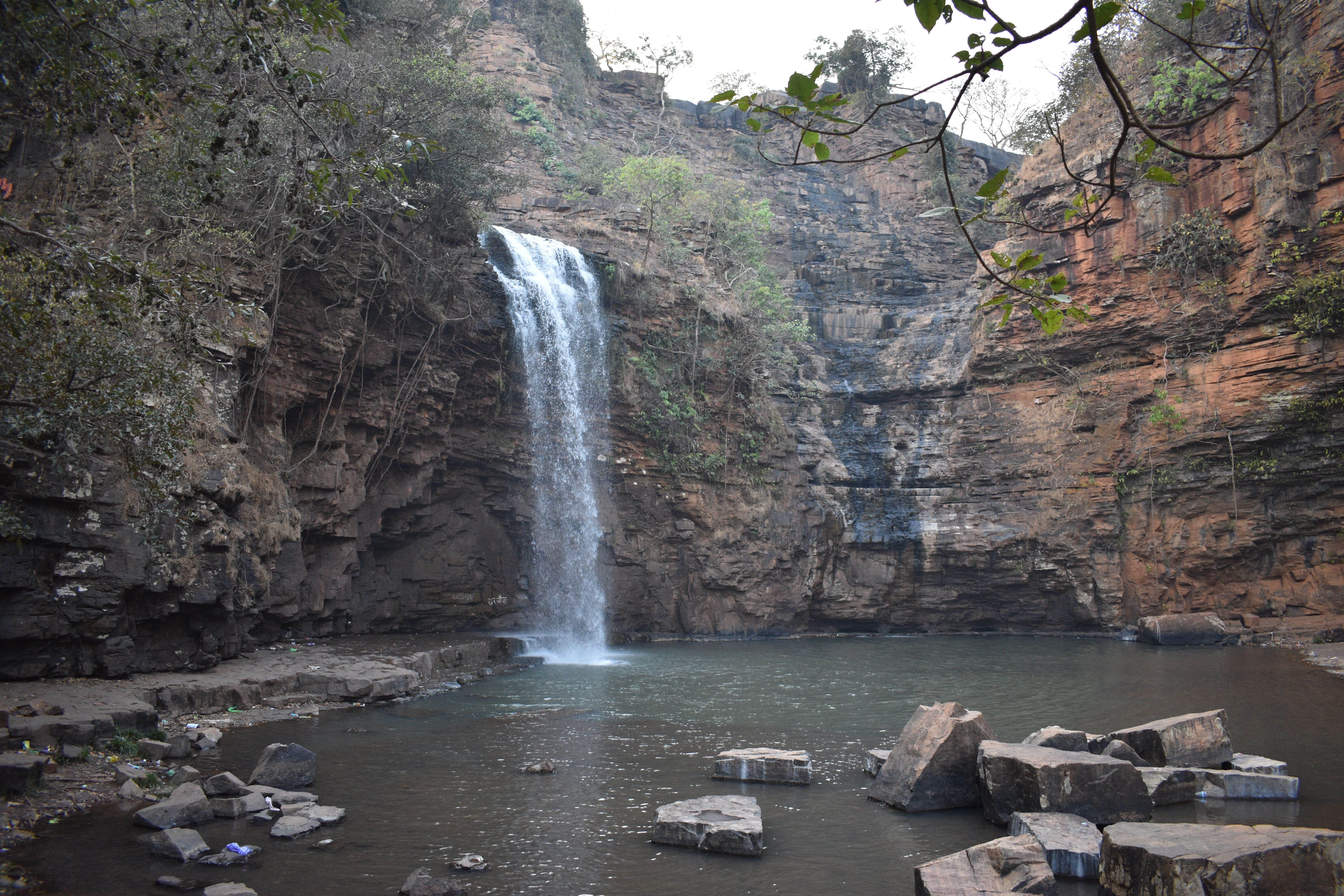
Sita Kund, Thirathgarh waterfalls, Kanger valley National Park
Sita Kund at Thirathgarh waterfalls

That night’s accommodation was at an Adivasi homestay. A traditional greeting was followed by warm conversation with the host family, accompanied by homebrewed Mahua liquor and red-ant chutney around a bon-fire, in the courtyard overlooked by a huge Mahua tree. The night’s sky there is certainly a delight for astrophotography enthusiasts. I woke up for sunrise and joined my host on his walk along the riverbank to collect ferns for a perfectly organic meal to start our day. With the mud and bamboo houses, wooden fences, dining on cow-dung smeared floors, slow-cooked food in claypot and on firewood with locally available ingredients, my stay was an incomprehensible experience of sustainable living.

Among three magnificent limestone caves located within the national park, we explored the stalactites and stalagmites of Dandak caves. A fifteen-minute session of meditation inside the dark and silent chamber of the cave was transcending. A Gypsy ride to Kanger Dhara waterfall was followed by bamboo rafting on the pristine and calm waters at Kailash Jheel. Since, our campsite was at a walkable distance from a tribal hamlet, I sneaked out and spent time at the local fair there. Tribal folk had congregated from all neighboring hamlets to watch the ‘Naat’, a theater form where excerpts from epics are adapted into local stories and performed all night.

The next morning started early with an inspiring birding session along the river trail as I was accompanied by a ‘Myna Mitra’, the friend of the Myna birds. This is an initiative by the forest department toward conservation of the Hill-myna, the state bird of Chhattisgarh by getting the local forest dwelling tribal youth involved to track the daily activities of these birds. We got lucky to spot a pair of these birds, the highlight for a typical wildlife trip.

Gumadpal temple, Bastar

After a quick meal, we headed towards Gumadpal to see a 14th century Shiva temple. Historians haven’t yet found the reason for its unique three-tiered Linga. That day happened to be the weekly market or haat, as locally called. A walk around the haat was another opportunity to get a closer understanding of the local way of life. Haats do not just provide for trade but also for worshipping local deities, entertainment, socialization and even matchmaking. A few women were singing and dancing to the local songs and asked us to join in as well. It was surprising to know that barter still exists here. I tasted local food like tubers, mahua, tendu, and a variety of local brews and wines. Jewelry and home-décor items in dhokra, a GI tagged craft made by a method believed to be practiced since over 4000 years were being sold among several other unique crafts of the region. I witnessed an energy packed session of cockfighting as well.

Dokra art at various stages of metal casting

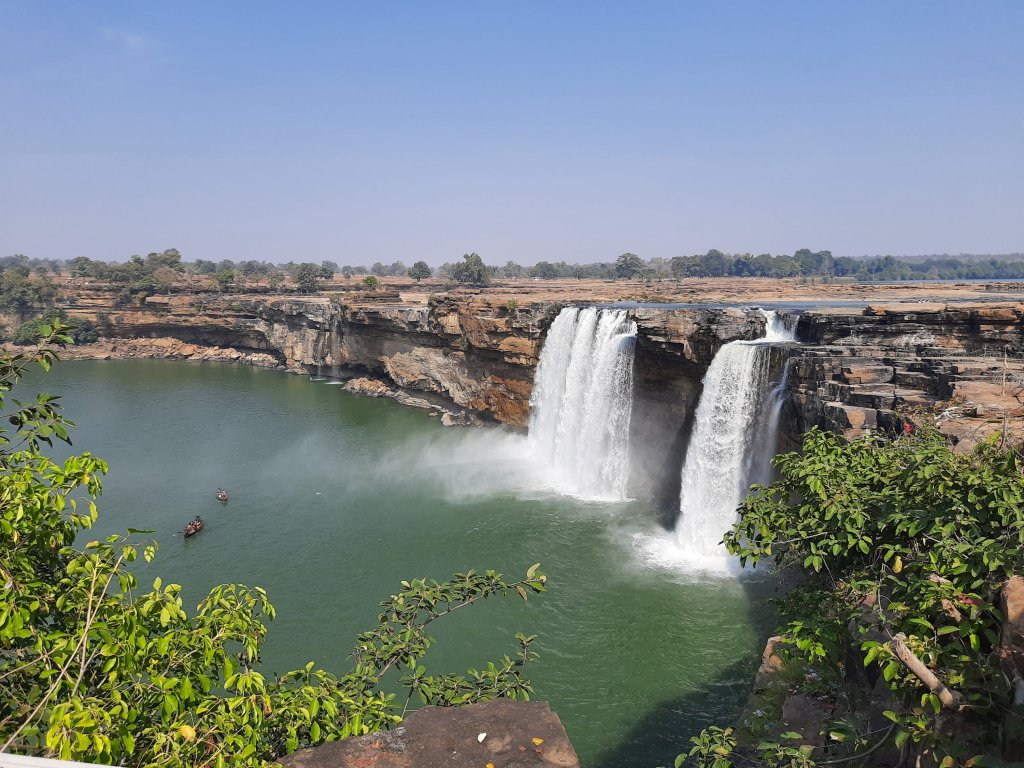
Having travelled to Chhattisgarh and not seeing the poster boy of its tourism advertisements, did not seem fair. River Indravati plummets down with all her might in a horseshoe shape, making Chitrakote waterfalls the widest in India. I checked into the government run luxury resort to spend my last evening, where every cottage offered a view of the setting sun over the waterfall. A ride in a country boat right into India’s Niagara waterfalls was just the prefect way to say good bye.

Chitrakote waterfalls during summer season

From waterfalls and caves to tribal hamlets and local markets, from history and folklore to art and craft, from food and wine to mud-houses and palaces, from dance and music to culture and architecture, my experience at Kanger valley national park was replete, wholesome and truly full of surprises!

Fact file:

  • Transport: Jagadalpur is connected by daily flights, rail route and by buses. Self-drive cars or taxis can be availed for travelling within Bastar.
  • Stay: Several tribal homestays are available within the national park. Nature camps and resorts run by Chhattisgarh tourism board and heritage stays in palaces are managed by the erstwhile royal family of Bastar. Good hotels of all budgets are available at Jagadalpur.
  • Food: Bastar cuisine mostly comprises of locally grown rice and vegetables.

This travel was part of the ‘Dekho Bastar- Season 1’ event organised by India Tourism Board and Bastar District administration in collaboration with Kanger Valley National Park. The article appeared in ‘Apr~May’23’ edition of ‘Bastar Bhoomi’ magazine.

A compilation of art and science from the by-lanes of India

I am an art enthusiast by passion and an engineer by qualification. I seek to be an art aficionado and a curious kid within me is always on the lookout to learn how things are made and work. In fact, I believe the best art is created by the culmination of science and creativity. As a traveler, I do not miss a chance to visit and interact with artisans and understand how they make things what they are good at.

When I travel to a new place, I try to accommodate time to explore the lesser touristy streets of any place because according to me, the real soul of any place lives in its by-lanes. I try to meet enthusiasts (across genres) and visit their creative abodes or workshops to see things take form.

Here is a compilation of such posts describing the souvenirs that combine two worlds of art and science which one can buy when visiting these destinations.

  1. Bangalore : HMT Watches
  2. Rajahmundry: Ratnam fountain pens
  3. Aranmula: Metallic mirrors
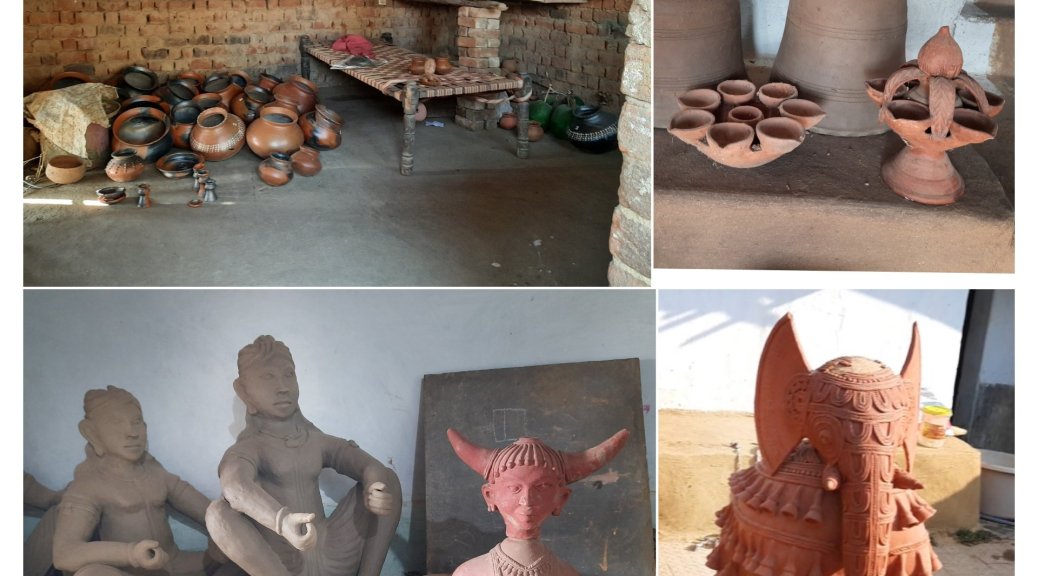
  4. Bastar: Metal crafts (wrought iron and bell-metal crafts)
  5. South India: Bronze icons

How many of these souvenirs have you collected, yet?

The four-wheeled connection between the south-western and north-eastern hills of India

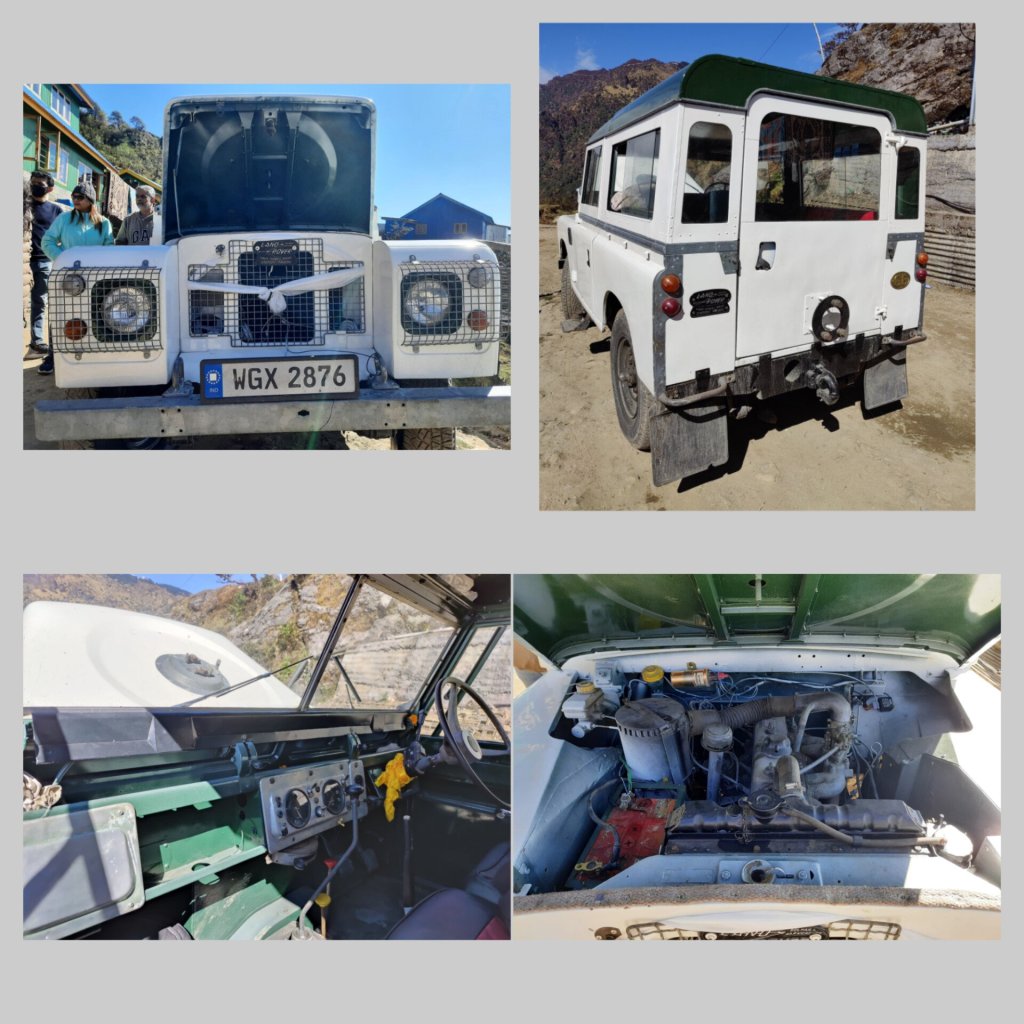
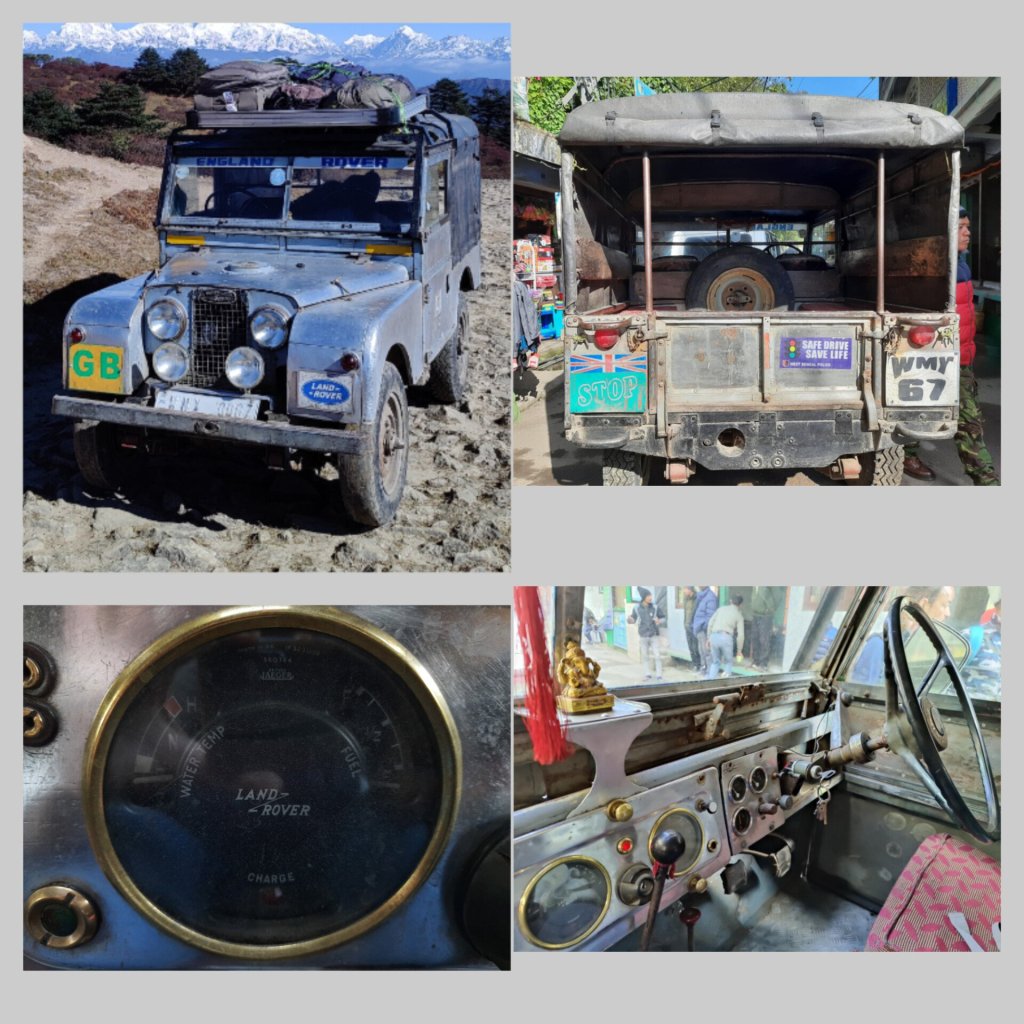
Britishers chose beautiful and yet strategic places across India to create their summer and recreational destinations, mostly hill-stations. Needless to mention that despite the colonial rule ending seventy-five years ago, their influence in our culture has been inseparable. One aspect of these cultural influences is the slow lifestyle of the people in these hill stations and bungalows nestled amid large plantations. When the British vacated the Indian hill stations, they also left behind all the automobiles, machinery and equipment used in their plantations and factories. With that, a legacy of four-wheel drive vehicles as well.

The Date:

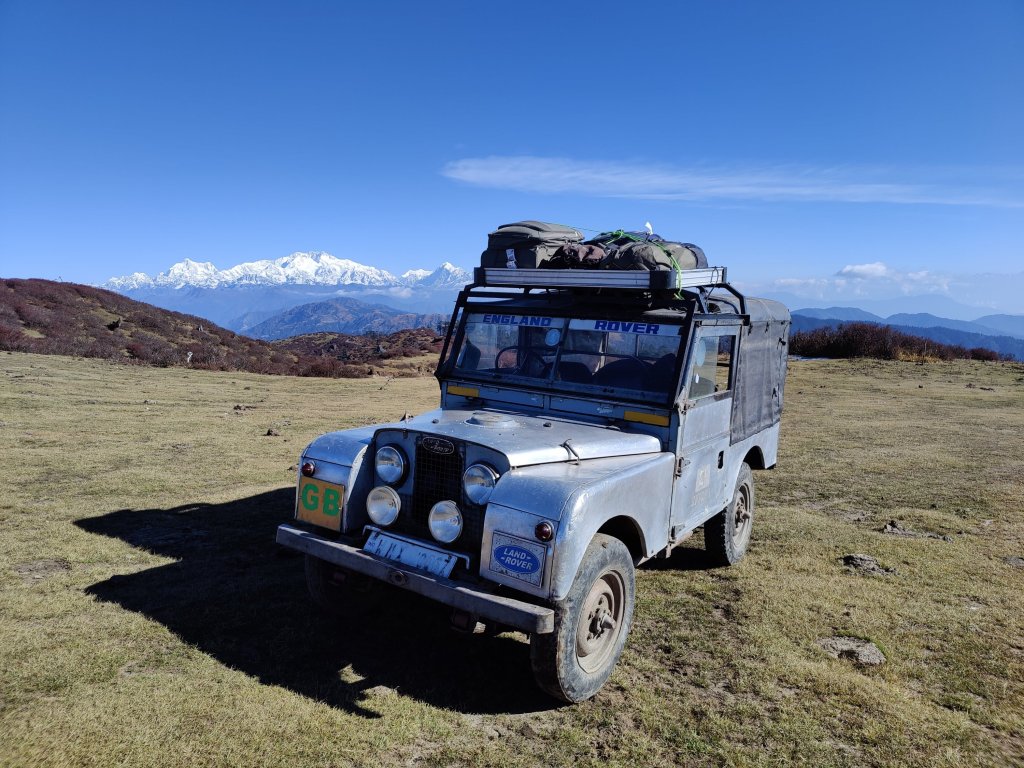
When I planned a trip around North-east India in 2021, I had included an ascent to Sandakphu-Phalut, a small settlement in northern-most part of West-Bengal on the Indo-Nepal border. I wanted to see the ‘Sleeping Buddha’ at sunrise. The sleeping Buddha is a series of mountain peaks in the Himalayas including Kanchenjunga, Kumbakarna and others collectively appearing like the Lord Buddha resting in the horizon, over whom a golden shade is cast during sunrise. Trekking enthusiasts opt to walk through the Singalila National Park, a week-long trek to reach Sandakphu and Phalut.

But I (along with my brother and friends) planned to summit the trail by road. Not that I was less adventurous or lazy to walk, but I felt that my adrenaline rushed a little more at the thought of being driven on a four-wheel drive vehicle. ‘Why so?’, you may ask.

I am a kid who was born and raised in the south-western hills of Madikeri. ‘So, what?’, one might think. Madikeri, in Kodagu is where the Britishers have played an influential role in raising a culture of using and loving our four-wheeled drive vehicles. The jeeps from the Mahindra stables are like family for the people of the coffee hills. Be it the Willys, left-hand-drives, petrol engines and all that followed, you will find them all in shining spec and ruling the roads of Kodagu. This natural affinity for automobiles in my genes and the nature of my profession that lets me earn my daily bread (I’m an automobile engineer by profession), I don’t think my choice of transport needs further elaboration. So, for me the thought of a drive in the north-eastern hills exuded more thrill than trekking through the woods.

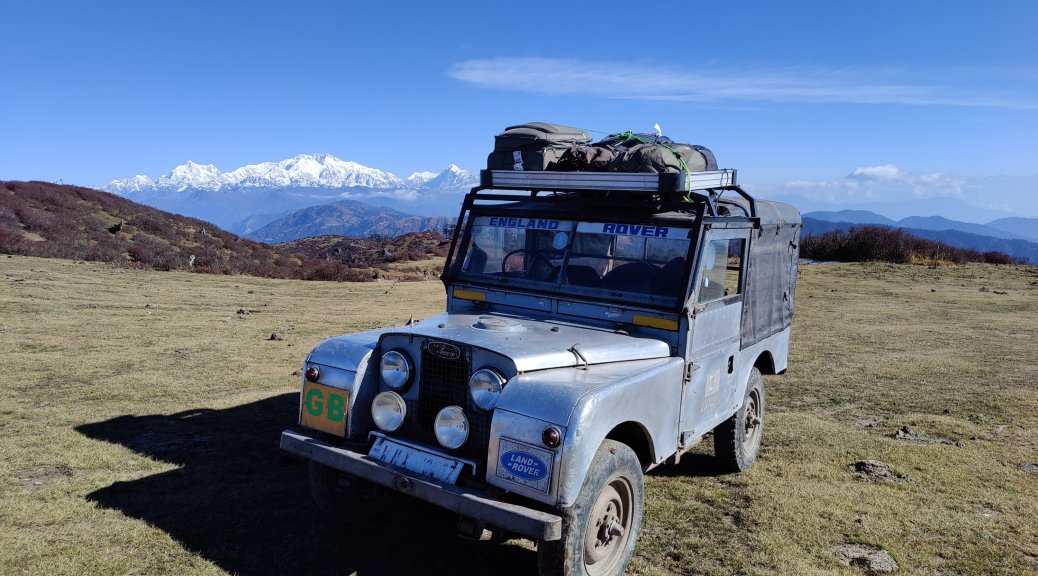
The vehicle here in discussion is a vintage ‘Land rover Defender’ that is at the least, as old as the Indian Independence! Maneybanjang is a small town that serves as a base for the Sandakphu trek. But it has gained the moniker ‘the Land of Land rovers’ for it is home to over 40 vintage Land-rover Defenders. These vehicles were used by the British to tame the unpaved terrain of the tea plantations at nearby Darjeeling and surrounding hills and were left behind when they left India for good. These vehicles are now the proud possessions of individuals living in this village who have now formed a ‘Land-rover owners’ association’ from whom rides can be hired by travelers who want to see the sleeping Buddha.

A vintage Land rover Defender petrol vehicle at Maneybanjang

For someone from Madikeri who found an instant connection with Maneybanjang, it was like a love-story between coffee and tea. It was a meeting of the grasslands of Western Ghats with the snow-clad peaks of the Himalayas. As it was the last day of Deepawali on the day of our arrival at Maneybanjang, we also witnessed the local culture of how Deepawali was celebrated in that part of the world. With a mixed influence of Hinduism and Buddhism, the Indian and Nepali, the Gorkha and the Bengali cultures, it was indeed a unique experience. The localites form groups and go from house to house all night singing, dancing, and spreading joy, much like carol singing. That night, we too joined them during our stay and immersed ourselves in the local culture.

The Journey:

On the following morning, we started our journey from Maneybanjang around 08.00.a.m. in the morning and stopped at several villages, check posts, viewpoints until we reached the homestay at Sandakphu by evening. We tried local cuisine, yak cheese, fresh brews, and aged fruit wines along our way. We hiked around to get to the nearest sunset-point, even though the fog had engulfed the entire atmosphere. We cooked noodles with the locals in their kitchens and grooved to their native music before calling it a day.

The vintage Land rover Defender diesel vehicle, in which we traveled to Sandakphu and Phalut

On the following morning, we woke up as early as 04.00a.m. to climb up a small, elevated point from where we would get a wholesome 360degree view of the rising sun and the sleeping Buddha. We were chattering and shivering in the freezing cold as thin sheets of ice were crackling under our feet. But when the sun started to come out, the few minutes of spectacle was simple breathtaking.

Post breakfast, we drove up to Phalut, walked around the place and planned our descent. Not without taking a lot of photos with the machine we have travelled on thus far. It was early evening when we finally made it back to Maneybanjang, thus ending our date with the ‘Defenders’. It was a bittersweet moment as we had to leave each other’s company. Sweet for the drive, the vistas, and the thrill; Bitter for having to depart without knowing when we would be back again.

Land rover Defender and 'Sleeping Buddha' at Sandakphu
Our Land rover Defender with the ‘Sleeping Buddha’ in the Background at Sandakphu

We hired a local taxi to proceed towards our next destination- Gangtok, for the night.

List of the Widest Waterfalls of India

We all know that the widest waterfall in the world is the Niagara, and it is in America! So, we take it for convenience to use Niagara as a synonym to refer to every other wide waterfall in our region. But how many of us have really seen the widest waterfall in India? Or for that matter, how many of us have seen the widest waterfall of our own states within India? Irony is we surely know Niagara, but we might have not even heard of the one in our own backyard.

So, here’s my attempt at listing some of the widest waterfalls in the Indian states that we love to call the Niagara of our country! (Note: These are by width of the waterfalls and not by their height)

1. Chitrakote waterfalls, Chhattisgarh:

The WIDEST waterfall in India is this, where river Indravati plummets down a horse-shoe shaped gorge. A beauty to behold in all true senses, a ride in a country boat to right under the waterfall is a spell-binding experience.

Chitrakote waterfalls during summer season

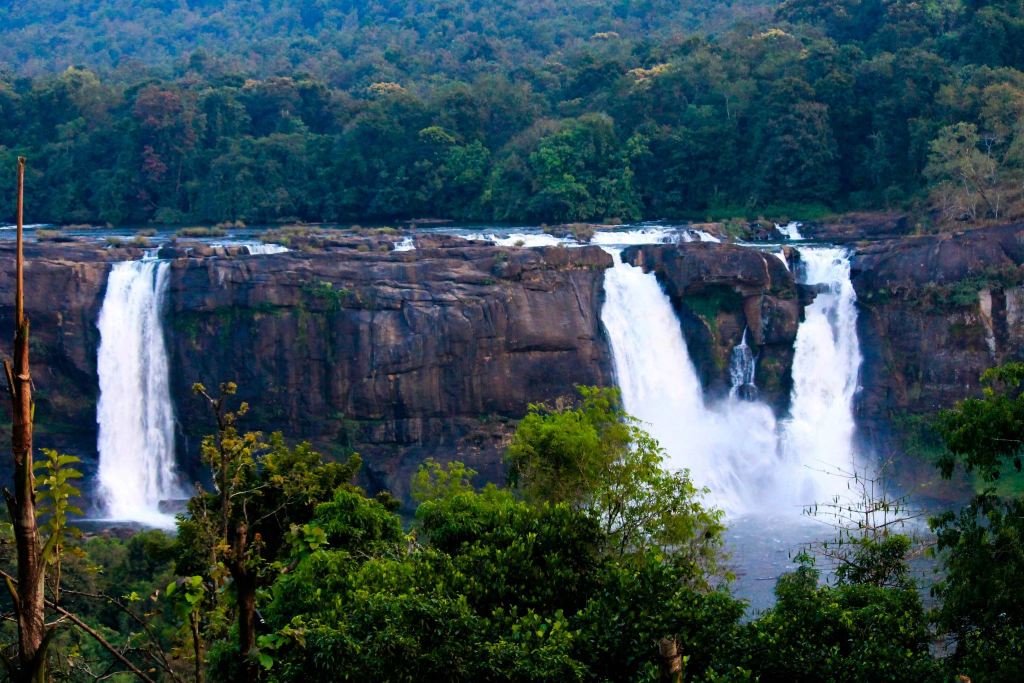
2. Athirappilly waterfalls, Kerala:

Chalakudy river cascades down a rocky gorge forming this spectacular waterfall is something that one would not want to miss on their next haunt to Kerala to explore its backwaters and canals.

Athirapilly waterfalls, Thrissur district Kerala

3. Gokak waterfalls, Karnataka:

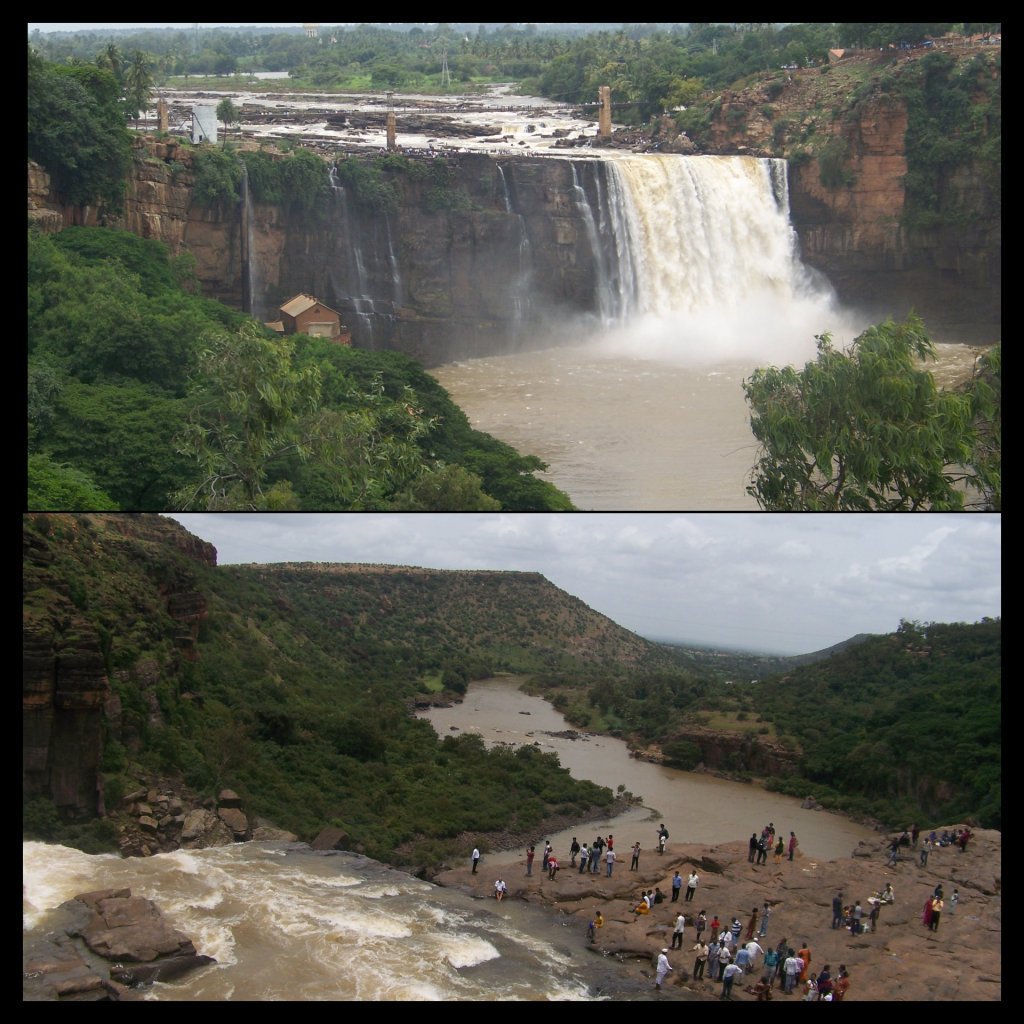
Formed by the Ghataprabha river, Gokak falls is Karnataka’s best kept secret. A walk on the hanging-bridge laid right across the waterfall when it is flowing full, is an experience worth considering.

Gokak waterfalls
Above: The front view of Gokak falls from the Volkart rock view point; Below: A view from the Hanging bridge.

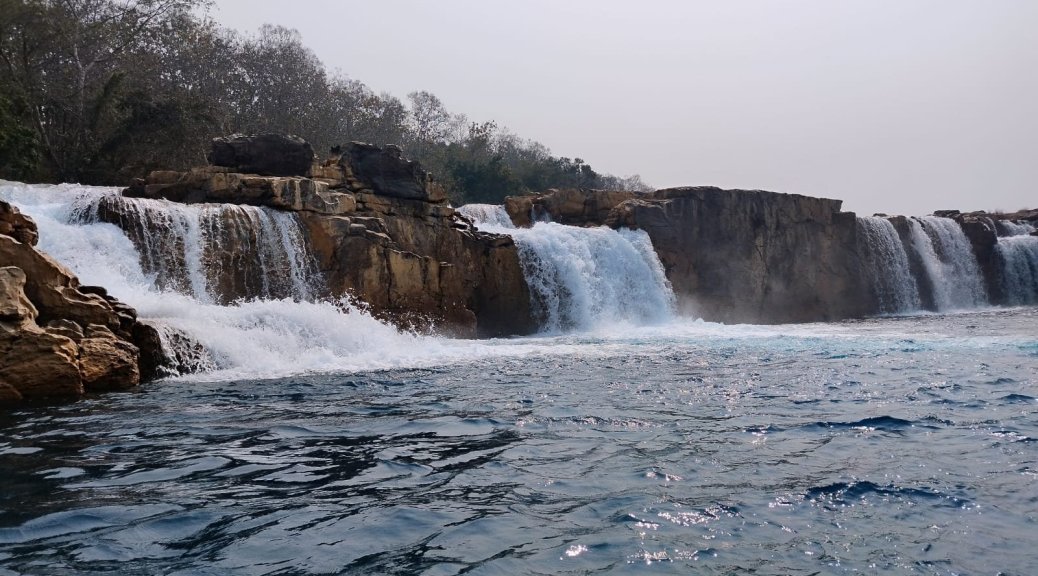
4. Hogeynakal waterfalls, Tamil Nadu:

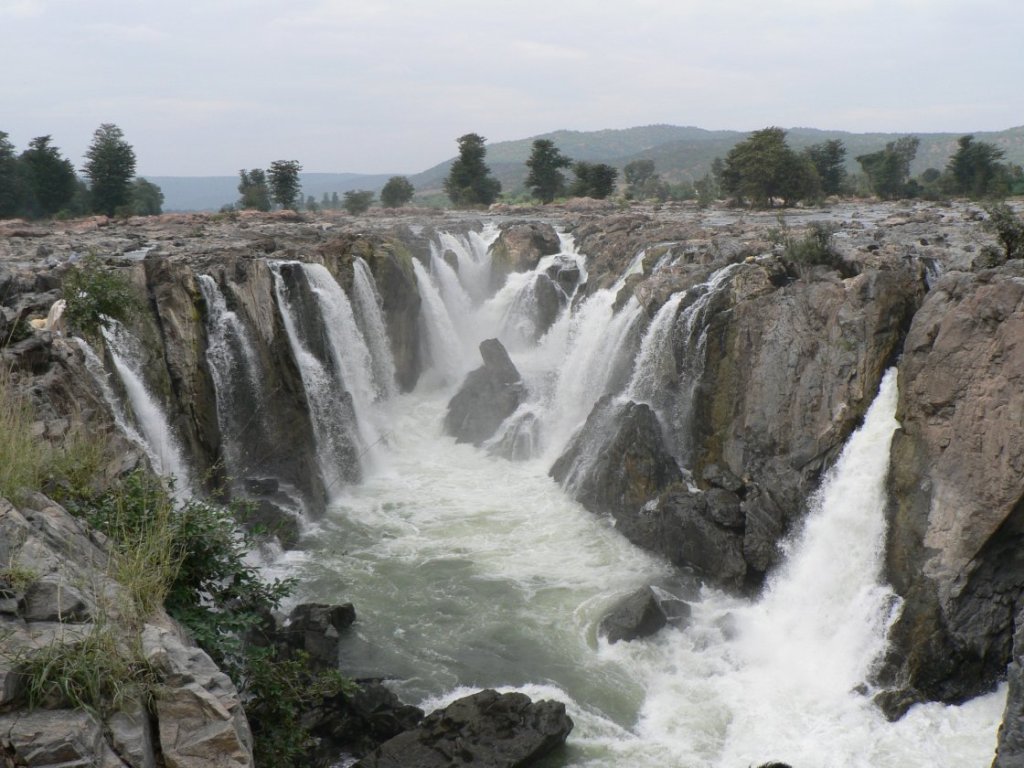
As river Kaveri enters Tamil-Nadu, she plummets down forming this beautiful waterfall where a coracle ride is highly recommended.

Hogeynakal waterfalls
The breathtaking view of the Hogeynakal waterfalls from the watch tower

5. Bogatha waterfalls, Telangana:

An unexplored beauty, the Cheekupally stream cascades down forming this waterfall that has still been off the radar of mass-tourism.

6. Panimur waterfalls, Assam:

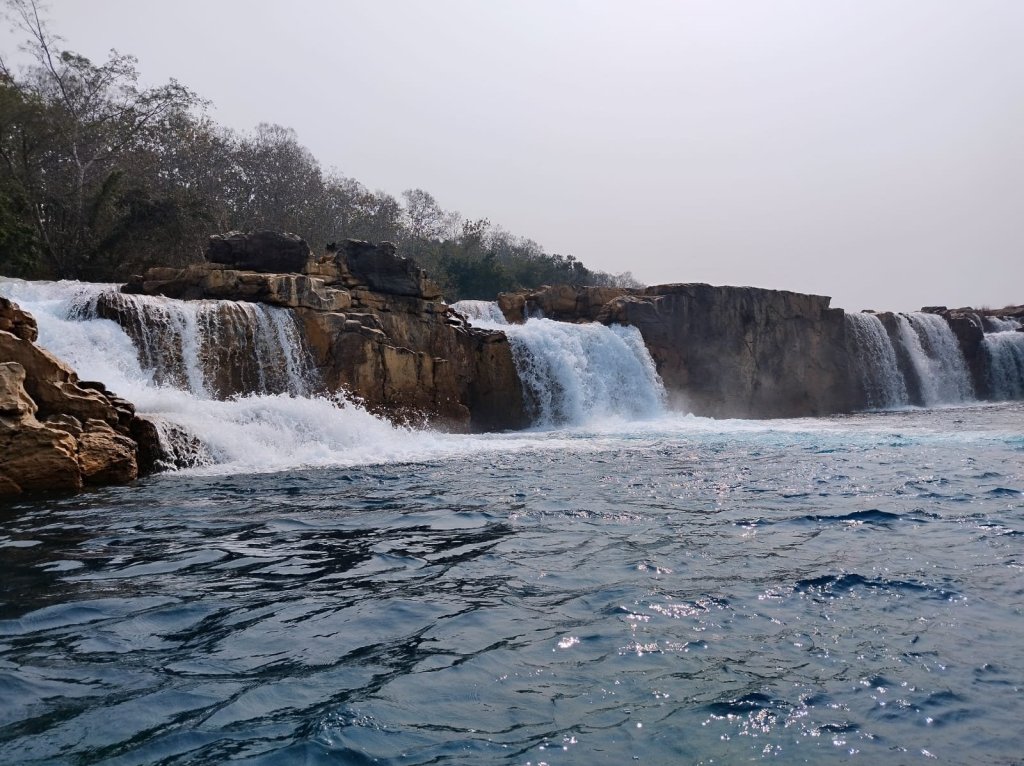
Assam is mainly a low-land / plain area with Dima Hasao district being its only hill-station. The high altitude of the region holds some of the best waterfalls of the state as well, among which Panimur waterfalls formed by the Kopili river is its best-kept secret.

Panimur waterfalls at Dima Hasao district, Assam

7. Bahuti waterfalls, Madhya Pradesh:

Some may revere it to be the highest in Madhya Pradesh state, but I couldn’t find an equivalent in width to match this place of natural beauty which is formed by Sellar river in Rewa district.

8. Seven sister waterfalls, Meghalaya:

Thanks to its year-round rainfall, Meghalaya is a land of waterfalls, each being spectacular on its own. Talking about wide waterfalls, this set of seven-segmented waterfalls drops down a limestone cliff at Cherrapunjee which looks spectacularly wide when it is full during the monsoon-season.

9. Gira waterfalls, Gujarat:

Formed by the river Ambika, a jeep ride through a nice green landscape to reach this waterfall is what the locals recommend to enjoy this visit better.

This is my humble attempt to enlist some of the widest waterfalls, picking one from each state in India. Let me know what is the widest waterfall at where you are?

Boat ride at Chitrakote waterfalls, Chhattisgarh

Five Amazing Places to Explore Caves in India

As a high school student, I was intrigued by the terminologies called ‘Stalactites’ and ‘Stalagmites’ in my Geography curriculum. ‘These were formations of calcium deposits formed by continuous flowing of water over several years, below the Earth’s crust’, it read.

“These structures are beautiful to see. I had the opportunity to visit one of these underground caverns during my visit to France. We walked down a flight of stairs and then were taken on a boat, to see stalactites and stalagmites, underground”, my geography teacher said. Her voice echoes in my ears even today, because back then my jaws had dropped in awe wondering how beautiful the landscape and topography of the countries outside India were. I wished to see the stalactites and stalagmites someday.

Cut to today, I am so glad that time has been kind on me with so many opportunities to explore my own country, India. These opportunities have opened my senses to realize that “India is a world”. From snow to deserts, mountains to beaches, plains to rainforests, the landscape comprises of EVERY type from across the world! Based on my travels, I have seen some amazing cave systems in India. Without including the caves that have been part of India’s ‘art and architectural heritage’, here are five best places in India where you can explore caves in their natural form.

1. Meghalaya:

Top on the list, there are hundreds of caves that are open to explorers, hundreds being discovered every day and maybe thousands that are still unknown to people yet. ‘Krem Liat Prah’, India’s longest cave system is in Meghalaya.

2. Andhra Pradesh:

Borra caves’ in Andhra is the largest cave in India. A heritage railway line passes just above this limestone cave. Having such a big cave system is proof and motivation enough to know that several other caves are available in this region waiting to be explored by adventurers and tourists alike.

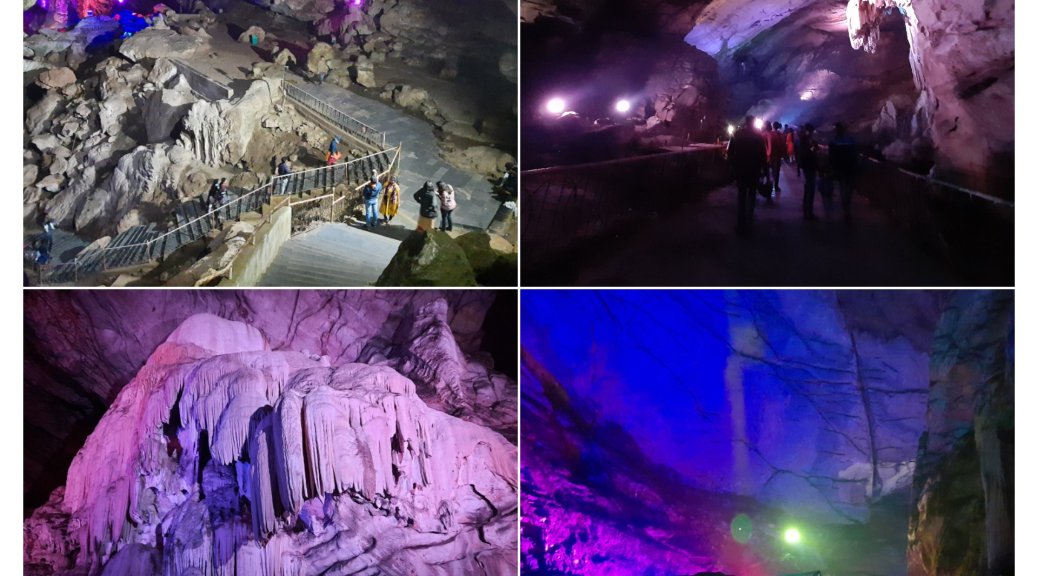
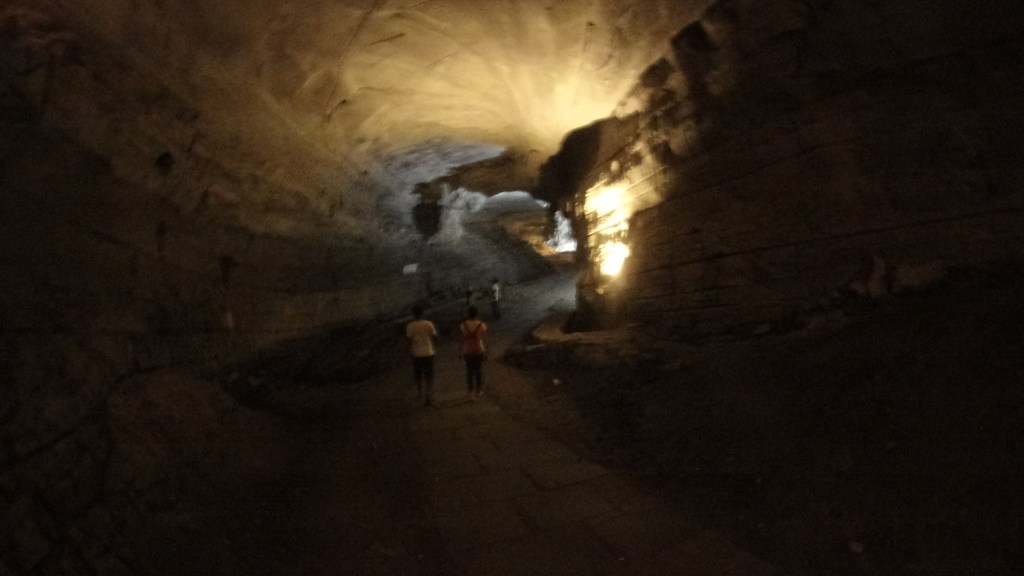
Inside the Belum caves

3. Chhattisgarh:

The state sitting within the mythologically important forests called ‘Dandakaranya,’ these forests are home to several limestone cave systems that are yet untouched by mass-tourism. Only about 57 caves are known to people as of now, and there is immense scope for exploring new caves. The remoteness of the places adds to the joy of the explorer while caving in Chhattisgarh. The video of exploring a cave at Bastar, Chhattisgarh is shared below.

Cave exploration at Madarkonta caves

4. Andaman & Nicobar Islands:

This archipelago and Union territory of India is one of the best kept secrets of nature enthusiasts who want to go caving. In fact, this is where I saw a stalactite and stalagmite for the first time in my life. The connectivity of these remote caves located on different islands through a channel of interconnected mangrove forests passing through pristine blue sea water makes it a memorable experience.

5. Karnataka:

While all the above cave systems I have enlisted above are limestone caves, Karnataka is home to some of the beautiful sandstone caves which are scattered across the middle and northern region of the state. Unlike underground, the caves in Karnataka are formed above the earth’s surface and give a completely distinct perspective of exploring this state, which is my home-state as well!

Rocky hills at Badami

Stories Through Souvenirs- An e-book

A compilation of 18 short stories based on my experiences of traveling on the roads of India, I’m happy to share that my second e-book is now available for my readers.

My book- ‘Stories Through Souvenirs‘ is a compilation of my stories of meeting people, hearing their stories and the learnings from my experiences. These are the stories of how these stories influenced me to become who I am.

Do give it a read and I am sure you will like it 😊

Pondicherry- 10 Places to Visit and Things to Do While on A Tour

Do you want to visit the tranquil beaches of the south? Journey to Pondicherry. The city was previously a French colony and is now a small union territory on the eastern coast of the Indian subcontinent. In both the monuments and the city’s alleyways, you can still see examples of that era’s architecture. The city is well-known for its beautiful beaches and historical sites to visit. There are also some fantastic cafés and restaurants to visit while on tour. To learn more about the location, try the local food.

Pondicherry is appropriate for individuals of all ages and walks of life. It is ideal for seniors, couples, friends, family, children, and business travellers. While in the city, there are several sites to see, some of which are listed here. Stay at Treebo Hotels in Pondicherry to make your journey unforgettable. These resorts are spread around the city and provide some of the greatest features.

Places to Visit in Pondicherry for an amazing trip:

1. Paradise Beach

Lovers may visit Paradise Beach, which is ideal for relaxing. Tourists are drawn to the area because of its natural beauty. The sun’s rays reflecting on the golden sands of the coast create a captivating view of the entire region. To go to the beach, take a ferry from Chunnambar. The Bay of Bengal’s stunning beauty is worth seeing. It is a photographer’s dream since exotic birds may be found here. So, take a stroll along the beach or spend some quality time with your special someone. There are also food vendors here for some snacking.

2. Sri Aurobindo Ashram

Aurobindo Ashram is a spiritual destination for those who are on a trip. To discover more about the place, visit the Ashram library. The location has expanded from a tiny congregation that worshipped Sri Aurobindo. The site is worth viewing while sightseeing in the city. The Ashram also has a hall where guests may view a short film about Sri Aurobindo’s life and work.

3. The Basilica of Sacred Heart of Jesus

How can one miss the city’s most famous church? This church is a masterpiece of Gothic Medieval Architecture and is well worth seeing. Stained glass and paintings depicting the life of Jesus Christ may be seen inside the church. The church is adorned for Christmas and Easter, and people travel long distances to attend the festivities. The magnificence of the building, on the other hand, draws the majority of tourists to this location. It was built in the early 20th century and has been rebuilt multiple times to keep the entire structure in good condition.

4. Rock Beach

Another beach to visit in Pondicherry is Rock Beach, also known as Promenade Beach. The location is ideal for seeing the sunrise and sunset. During these hours, the waters become golden, creating a beautiful scene. People come here for peace and quiet or to take a stroll with their companions. The palm trees that line the shore are also considered to be the most photographed spot in the city.

5. Varadaraja Perumal Temple

This lovely Dravidian-styled temple is well worth a visit when in the White Town of Pondicherry. During festivals, the temple is inundated with people worshipping Lord Vishnu in and around the shrine. Seek heavenly blessings here and marvel at the temple’s architecture. Lord Vishnu, also known as Lord Varadaraja, is claimed to bless everyone who comes to the temple. The temple was established in the 11th century, and several legends have been told about how the temple came to be. One of the most popular is that the Lord’s idol was discovered in the sea, which is how the temple was established here.

6. French War Memorial

The War Memorial, located in the seaside region of Pondicherry, is recognised to be very important to the French Indians who live here. The war memorial was created to honour the troops who died during World War I. The Memorial was created in the first half of the 20th century and is visited by people from all over the world. Because it is positioned on a beach, the view of the entire region is breathtaking. The 14th of July is marked as a day to remember the martyred warriors. The entire region is illuminated, and people gather to remember the people’s sacrifices.

7. Auroville

This Ashram, which is also a piece of art by the Sri Aurobindo Society, is located about 15 kilometres from Pondicherry’s main city. This location is a must-visit because of the tranquilly and tranquillity it exudes. It is being created as a township and has recently become one of the most popular tourist destinations in the country. Visitors to the city come to view the Matrimandir. The architecture of the Gold Dome is what draws the majority of tourists.

8. Arikamedu

History aficionados might visit the Indo-Pacific bead-making site at Arikamedu. It is an archaeological site located within a few kilometres from Pondicherry’s main city. The site is claimed to have been a trading centre during the 1st century BCE. In addition, the French Jesuit Mission’s ruins may be found here. The traces of a bygone age are a must-see, located in a remote place. The surrounding natural beauty is still undisturbed because not many people visit the location.

9. Chunnambar Boat House

The magnificent seas of the Bay of Bengal are very captivating in this location. The little hamlet outside of Pondicherry’s main city is a popular tourist destination. Visitors may also participate in a variety of water activities in the area. Dolphins may also be seen here. Sit on the beach and soak up the rays, or watch others participate in various sports. For some adventure, one may even take a boat trip in the backwaters here.

10. Shopping in Pondicherry

Last but not least, shopping in Pondicherry’s streets is one of the nicest things to do. Souvenirs for loved ones can be purchased here. Serenity Beach Bazar, Nehru Street Market, Saram China Market, and many more are places to visit while in the city for some shopping. To shop from the city, look for things such as handicrafts, clothing, food, home décor, handbags, and so on.

The streets of Pondicherry are also known for photographic sessions as they are painted in either vibrant colours or plain white. Visit the place to experience all of this.

To check out all these beautiful places in Pondicherry, book your stay at Treebo Pondicherry. These hotels in the city are available at budget-friendly rates and provide some of the best amenities. Some of these services at Hotels in Pondicherry include-

  • Complimentary Breakfast
  • Free internet access
  • Hassle-free check-in
  • Branded Treebo toiletries.

These hotels in Pondicherry by Treebo are:

  1. Itsy by Treebo- Coastal Grand De Heritage
  2. Treebo Trend B Coral
  3. Treebo Trend Yagna Residency
  4. Itsy by Treebo- Red Lotus Heritage
  5. Treebo Trend Raffis’ Andalusia
  6. Treebo Trend South Avenue

Bangalore Day Trips

If you are visiting Bangalore just for a day or are a resident of the city figuring out how to spend your day, here is a curation for those who are short on time and high on interest to explore. Depending on your choice, you can choose from what I have put-in together under three different categories.

Short drives:

The soil of Bengaluru is believed to be extremely fertile. One can visit a new farm and learn about agriculture in every direction. Also, several reserved forests dot the city boundaries. But the rapidly expanding boundary of the city has been soon taking over these green spaces and the limits of the city outskirts has been constantly changing.

My family and I have always loved to drive or ride out of the city in search of green spaces and spend some time in random destinations that are as random as just a lonely tree, a lake or a large boulder that gives a good view of the surroundings. Here is a list of such routes, trips and stories to help you plan yours.

  1. Day trip of villages around Channapatna
  2. Drive to Gulakamale lake
  3. Drive to Ragihalli Betta
  4. Drive to Koratagere Doddi
  5. Drive to Gullahatti Kaval
  6. Drive and local trip to Mekedaatu
  7. Drive to Ghati Subramanya and Makalidurga
  8. Drive to Kaiwara
  9. Driving around Devanahalli town
  10. Visiting GKVK university campus
  11. Driving around Haniyur village
  12. Visiting Railway Gollahalli
  13. Exploring Bannerghatta zoo and National park
  14. Driving around Hesaraghatta
  15. Drive to Biligundlu Ranganatha Swamy temple
  16. Drive to Bilikal Ranganatha Swamy temple

Treks & hikes:

Bangalore is blessed with abundant hills surrounding its periphery on all sides. There is an endless opportunity to explore a new hiking trail almost every day of the year. There are only a few that have been caught by the explorers and thanks to social media, have become popular. Here is a list of few such trails that I have hiked up and found time to document my experience.

  1. A natural arch – Bheemanakindi
  2. Night hike to see sunrise – Kunti Betta
  3. Hike to Siddarabetta
  4. Trek to Madhugiri fort
  5. Hike to Kunagalu Betta
  6. Hike to Acchalu Betta
  7. Hike to Balakodandaraya Swamy temple
  8. Hike to Suvarnamukhi Betta and temple

Explore city:

Once popular as the garden city, no one really saw Bengaluru to be expanding as much as it has and has been. Albeit being so modern, it is old and conservative. Despite being advanced with IT and tech, it is still laid back with its art and history. If you are someone with an interest to explore all sides of this metropolitan city, then I’ve tried my best to share some of my knowledge here.

  1. A Gastronomic walk-tour of South Bengaluru
  2. History of IISc and HAL, the two Premier institutes of India
  3. A list of premier museums in Bengaluru and their history
  4. Visiting a HMT watch store

Long drives:

These are places that you can visit in one day by road from Bangalore. if you are in a mood for a lonng drive, beyond Bangalore, here are itineraries for one-full day.

  1. Hogeynakal waterfalls
  2. Exploring nature around Mysore circuit
  3. Historical temples of Lepakshi
  4. Unesco Heritage (tentative) site- Temples of Belur & Halebeedu
  5. Exploring KGF (Kolar Gold Field)
  6. Pilgrimage to Adichunchanagiri betta