A compilation of 18 short stories based on my experiences of traveling on the roads of India, I’m happy to share that my second e-book is now available for my readers.
My book- ‘Stories Through Souvenirs‘ is a compilation of my stories of meeting people, hearing their stories and the learnings from my experiences. These are the stories of how these stories influenced me to become who I am.
Do give it a read and I am sure you will like it 😊
It was long travelling distances leading to high altitude destinations, where cold winds were abundant and oxygen levels lower. For those of us travelling across North and East Sikkim, it had been a long and a tiring trip thus far. Each day of our weeklong travel through this little but important Indian state had been a different experience.
This post is part of our weeklong stay in Sikkim covering Gangtok – Mangan – Lachen – Gurudongmar- Lachung- Zero point – Rumtek – Gangtok – Nathula – Zuluk – Siliguri
Long ago, I had seen a jaw dropping photograph of the old silk-route winding and passing through Sikkim. It had since been my wish to see that view in real. The old silk-route had once served as a major trade route connecting China with the rest of Asia and Middle east. During this trip in Sikkim, we decided to drive along that scenic route during our exit from this tiny state. Hence, the route chosen by us was: Gangtok > Tsongmo/Changu lake > Nathula Pass > Nathang valley > Lungthung village > Thambi viewpoint > Zuluk >Rangpo > Siliguri
The Details:
Only Indian nationals are permitted on this stretch of East Sikkim and an inner line permit was obtained from Gangtok on the morning of our departure.
It had been a cloudy day since dawn break and the drive for the initial stretch felt pleasant as we passed through the wavering peace flags all along the highway. We learnt about the significance of these peace posts in Buddhist culture while conversing with our taxi driver. The white flags are installed in memory of a deceased person by their kith. Similarly, the multicolored flags are believed to bring good luck. Ideally, these flags are supposed to be installed high up in the mountains where the winds are stronger. The wind is believed to free-up the soul of the deceased or bring good energy, depending on the flag’s colour. With reducing space for hoisting more flags and the ease of finding a hoisting place by the roadside, it is now common to find them all along the highways of this Buddhist majority state.
Sooner, the clouds cleared up making way for a gleaming sun in the blue sky. We arrived at the Tsomgo lake in a while. It is a serene lake that is popular among the tourists. We clicked a few photos with the yaks grazing around its periphery before proceeding towards the Indo-China border at Nathula pass.
Nathula was crowded. People were amok and erratic. They had no idea what to expect at an international border. Some were standing in attention with a salute to the Indian tricolor, some were touching and praying the fence that marked the border. Some were putting their feet across the barbed wire to get a feel of going to China and a few more were busy chasing the men in uniform of the Indian army for selfies. And for us, it was a urge to run back to the warmth of the heater of our vehicle 😛 It was biting cold even during the peak of the day. We walked up to the point, saw the border gates of both India and China, the respective embassy buildings, the Chinese and the Indian army camps posted high up and also got a distant view of the mountains that marked Bhutan. We did a quick walk through, taking in all the good views and returned to our vehicle as quickly as we could.
The view enroute Nathula pass Photo credit: Varsha J.
After squeezing out of the maddening crowd at Nathula, we continued our journey towards Nathang valley, only to be stuck in one of the worst traffic jams we had experienced in Sikkim. The last and the major destination on a typical touristy circuit is the temple of Baba Harbhajan Singh. Baba Harbhajan Singh is a folklore hero and an ex-army soldier whose spirit is believed to be roaming around the place, protecting the soldiers posted at this extreme terrain. There are old and the new temples dedicated to him, both maintained by the Indian army. We managed to find our way out of the choco block and continued towards Nathang valley.
Beyond the army temple, I can conveniently say that it was just us all the way. The roads were deserted, except for some BRO trucks and excavators clearing up the landslide prone path and laying new roads. We passed through what the army claims to be world’s highest altitude golf course, several army camps and tiny discrete civilian settlements along our way. Our drive through Nathang valley, thereafter, was something beyond comprehension for our senses, it was so beautiful!
All that we had envisaged of this journey at the time of commencing this drive was passing through a viewpoint and reaching Siliguri for the night’s stay. But as the journey unfolded, we were in for surprises. That day, the clouds had embraced the valley like never before. The road that we were driving on, seemed as if it was curving around the edge of the land. It was clear blue sky with the sun beaming bright and the thick clouds engulfing the horizon. The rhododendron plants had blanketed the entire valley, which I’m sure must be a visual delight during their blooming season. We stopped, like at every half a mile to capture the landscape in our cameras, alas justice be done to what the human eyes saw.
Driving through the edge, above the clouds at Nathang valley
But by late afternoon, the sun had started to descend to the horizon and the fog had taken over again. Our visibility of the road ahead and the possibility to see the view that we wanted, had both now become zero. Our driver soon pulled off our vehicle at a tiny settlement enroute to enquire for availability of a place for us to stay for the night. Lungthung is a tiny village on the valley, with barely 3-4 houses, that too made with metal sheets. By staying in a homestay there, we were going to be the only outsiders for that night at Lungthung!
The mercury level was already below zero. But as the night rolled in, the winds too got stronger. The clouds cleared up and the stars and the planets shone brighter than ever. It was our last night at Sikkim and the coldest too! Even as we sat inside the host’s dining room, relishing the handmade thenthuk, we felt like our roof was going to be taken away by the winds. No amount of firewood could keep us warm. Even if we simply stood up for a moment to adjust our seats, they would freeze again. But as I said earlier, it was our last evening at Sikkim before we got back to the grind. There was no way we would hit the bed early. We sat outside, counting stars quite literally… The sky was clear, the moon lit up the road below and a lone filament bulb illuminated a roof at a little distance. Apart from an occasional goods carrying army truck that toughed it out on the slope, there was no civilization around us for miles together… It was an experience so wonderful that we hadn’t imagined about remotely, even a few hours ago… Not in my wildest dreams, had I imagined that I would live a day of my life ON the silk-route!!
The moonlit view of the silk route and the clouds as seen from Lungthung homestay
Anyway, not really being able to sleep due to cold temperature and the noisy sheets fluttering outside our room, we still rolled into our blankets and set an alarm to wake up early. Our host at the homestay had recommended to walk down the road for sunrise…
The following morning, it was almost impossible for me to even think of coming out of the blanket. I snoozed the alarm a couple of times. But then something happened. My eyes had one glance at the window glass, and it was enough motivation for me to get my butt off the bed. It was a breaking dawn…. The sky had a streak of deep red, visible right at my window, seen from my bed…. It was for sure, unusual from any normal day. The view made me forget the cold and barge outside to not miss the complete visuals of an unfolding day… I woke my brother up and my friends and we all raced towards the viewpoint that we were told about. We didn’t mind slipping down a couple of times on the frozen roads.
The sun rising over Kanchenjunga at Thambi view point
At such high altitude and low temperature, the running didn’t help to warm us up. As we reached the viewpoint, we were panting for breath and had our jaws dropping. We were gasping, awestruck in amazement at the sight around us, chattering due to the freezing temperature and everything else happened to us at the same time. The moment is inexplainable!
The old silk route at Zuluk valley, as seen from Thambi view point during sunrise
We were standing at Thambi viewpoint and had lost the sense of place for that moment. The Kanchenjunga had lit up in crimson in just a few minutes and the winding roads through Zuluk valley appeared deep down in a while. It was a day and an experience like never before! It was our last day at Sikkim and I could only say that the best was indeed saved for the end!
My visit to the arid land of Spiti was my first solo trip in all sense. I have previously spoken about its beautiful landscape and the wonderful people through my blog posts. But, on a personal note this travel has been one of the most impactful trips of my lifetime. So, here is the entire story in the form of an e-book.
Through this book, I seek your company while I backpack alone on a trip to the mountains. I want you to join me when I gate crash a mountain wedding and dance to the first snow. I want company when I confront a mummy and when I visit a vault full of millennium old paintings. Stay with me as I return home with an unsettling chaos running in my tummy. As you read through the pages of this book, you can bite into the juicy apples of Kinnaur all along, walk with me meeting people and go on a virtual trip to the Spiti valley and back.
You can get your copy of the e-book on Amazon by clicking on the image or the link below:
Click on image to buy the copy of ‘My Spiti Sojourn’
Yes, I know the language could have been tuned a little more and the English, could sound a little more polished. But, due to reading the same story over and over again, a few mistakes have outflown, my humble apologies! This book had been compiled in the first covid lockdown (Apr 20) and I have been procrastinating to publish it for over a year now, even post 2nd lockdown I (Apr 21). So, finally it had to be done….. But, I promise that my intention of sharing my story and experiences from the road has been compiled to the best of my abilities. I wish you all read, enjoy your virtual trip to Spiti and share your honest thoughts about it…
HAL (Hindustan Aeronautics Limited), Asia’s largest and India’s first aerospace establishment was founded and is headquartered in Bangalore. If you want to walk down this journey of how aviation industry has evolved in India, a visit to the HAL Aerospace Museum, India’s first aviation museum located at the HAL premises is highly recommended. From the first aircraft, Harlow PC to be assembled at its stables to manufacturing the most modern helicopters, planes and equipment for present day requirements of the Indian airfare, navy, railways and space research, HAL’s journey has been a long one. One is bound to get amused in another world by taking a walk between vintage planes, flight simulators, mock ATC and all things associated in this subject of fantasy at the museum hall. Now, this place leads me to my next destination: The IISc (Indian Institute of Science).
An exhibit of the Pushpak aircraft at HAL
That morning, I had ordered a plate of idlis at this little restaurant on the IISc campus. Just like any other day at that restaurant, the environment was abuzz with the chitter chatter of the people I was surrounded by. A typical scene on any given day includes the best scientists of India and abroad discussing new experiments over a plate of food in what is one of the premier research institutes in the country! Irony has it that similar discussions happened under the same roof, sometime in history. But back then, the discussions were about something more strategic and destructive. It was right here that a bunch of people discussed a war plot. What is now the top-of-the-notch science and technology institution in India, served as a hub for maintenance and repairs of the aircrafts during World-War II.
In the late 1930s, a factory meant for automobile maintenance was setup by an industrialist named Walchand Hirachand in the present day IISc campus. History has it that on his way to China, Hirachand chanced upon a meeting with William D. Pawley who was attached to the Intercontinental Aircraft Corporation of New York, an American aircraft exporter. This connection lead to the procurement of the necessary tools and equipment from the US to setup an aircraft production line in India. It was in December 1940, with funds from the Mysore state, the Hindustan Aircraft Private Limited came into being. The plan was to manufacture the Harlow trainer, Hawk fighter and the Vultee attack bombers at this factory. However, this required huge manpower that was trained in Aeronautics which lead to the establishment of the department of Aeronautical engineering.
A 1942 file photo of the HAL main gate.
Photo courtesy: HAL museum gallery
The structure that housed the aeronautical engineering department was designed by German architect Otto Koenigsberger. Otto Koenigsberger was a young Jew who had fled his country during the Nazi regime and was later in time, employed as the government architect of the erstwhile Mysore state. His architectural design is an amalgamation of European and traditional Indian styles and can also be seen in the present-day metallurgical department and the hostel office on the IISc campus along with many structures across India. Talking about the aeronautical engineering building- it is an oblong structure with high ceilings and narrow corridors that integrated natural climate control. He has also designed the closed-circuit wind Tunnel, the first of its kind in India and hydrogen plant among other things that are associated with aircrafts. With all the technical back up from IISc, it was in 1941 that Hindustan Aircraft Limited (HAL) assembled the first aircraft in India: A Harlow PC-5.
Meanwhile, the threat posed by Imperial Japan loomed large in the on-going World War II because of which there was a need by the British Royal Air Force to boost its military hardware supplies in Asia. With all likelihood, HAL was most suitable as a base for the South East Asia Command of the allied forces for servicing their aircrafts. Hence, all the aircraft manufacturing plans in India were abandoned to support the repair and overhaul services of the American aircrafts and the factory was eventually taken over by the US Army Air Forces in 1943. This led to rapid expansion in the facilities and became the 84th Air depot for overhaul and repair of American aircrafts during WWII. The very same hydrogen plant on the IISc premises was used as a loading dock to supply hydrogen for the American aircrafts. Later in 1964, the factory was taken over by the Government of India and has morphed into the modern-day Hindustan Aeronautics Limited (HAL) in its present-day location. However, the original Aeronautical engineering department continues to contribute enormously towards research and has its own little airstrip on the present day IISc campus.
As I finished my plate of idlis, I wondered how unassuming I was. This deceptively functional place had just served my meal that had just been cooked inside a hydrogen plant that powered the military aircrafts during WWII.
As kids, we always imagined fairies with wings flying amidst colourful gardens, rope like creepers hanging across the forest thickets, rainbows emerging on the tranquil sky. Do you agree when I say this is how most of the animated movies depict fairy tales ? Nestled deep in the rich forests of Meghalaya; with NO exaggeration, that’s how I would describe this village called Nongriat!
This post is part of my fortnight long road trip across North-east India, specifically covering parts of Meghalaya – Assam – Arunachal Pradesh I had tagged along with two other travelers and drove around the state of Meghalaya visiting Shillong – Smit – Cherrapunjee – Mawlynnong – Dawki – Ribhoi- Shillong.
A pleasant drive through the breathtakingly beautiful valleys and naturally formed creepy high limestone walls brought us to a village called Tyrna in Cherrapunjee. That’s where the tarmac ends and our car had to be parked. Further, we trekked down to the Nongriat village: where the ‘Umshiang bridge’ or popularly called ‘the double decker root bridge’ exists. One needs to climb over 2500 steps each way, so that this piece of marvel can be seen at close quarters. Root bridges are created by inter-weaving the roots of the rubber tree by the tribal folks who live in the deep forests of Meghalaya for their local commute across the bloated rivers during monsoon. A bridge fit for usage can take a minimum of a couple of decades and it only gets stronger with age. There are several such living root bridges across Meghalaya and most of them continue to be untouched by the tourists due to their remoteness. We were here, to tread on some of the most popular living root-bridges of Meghalaya.
The route to Tyrna village
Although, there is a well laid out path of stairs all the way, we thought it was wiser to have a localite who would enrich us with the facts and figures that we wouldn’t get to learn otherwise. At Tyrna, we met a Khasi villager from Nongriat who agreed upon to guide us through our trek. We passed through several sacred groves and areca farms belonging to the villagers. After decending about 1000 steps, a small deviation to the right indicated the way to Nongthymmai village. We took this deviation to reach the ‘Ritymmen root bridge’ a single bridge and another old one next to it which has taken its toll due to the negligence by the localites. Our hearts were jumping with joy at the first experience of treading on a living root bridge, that we had only read about until then… I decided to throw my shoes away for a while and enjoy the feeling of walking barefoot on the bridge.
The Rythimmen bridge at Nongthymmai village
After spending some time, we decided to continue the trek and our new friend cum guide, continued to enlighten us about the rich traditions and culture of the Khasis. We stopped by for a quick breakfast at a straw hut selling 2-minute noodles and lemon tea. Further, a short climb of stairs continued only to be awestruck by the marvel of indigenous engineering: The double decker root bridge, the main motivation for us to trek this far. It was like fantasy out of a fairytale: creepers hanging across a little waterfall, fed by a pristine river in the middle of nowhere! It was tempting to get our feet wet as we watched a few tourists who had stayed in the Khasi homes around the root-bridge over the previous night and enjoying their swim in the cold waters. However, spending some time admiring this piece of absolute marvel, we decided to move ahead, towards our next mission: Rainbow falls!
Entry bridge to Nongriat village
Nature’s best kept secrets are those which are untouched due to their remoteness. Rainbow waterfalls being one of those. The small number of tourists who make it till the double decker bridge seemed to have had disappeared there onwards. The tiring path ahead was going to be tiring, we were told. But, nothing comes easy.
I was doing this trip post monsoon (October to be precise) and that’s when the caterpillar larvae take wings! Like winged fairies, we were greeted and accompanied by butterflies of all colours, shapes and sizes all along the stretch from Umshiang bridge (the local name for the double-decker bridge) till the rainbow falls. We had to be extremely cautious while walking, clear the way for ourselves with a stick, lest accidentally step on these little winged beauties. The path was so full of butterflies, that it cannot be expressed with words and the joy can only be experienced. Truly, in every sense: I was Alice, walking in wonderland!
Another root bridge enroute to Rainbow falls
It was a walk of nearly 2hours through the thickets of the sacred forests and crossing at least 5 other root bridges and a couple of metal rope bridges that were laid across the deep river that flowed down with its seductive clear blue waters. After the brisk climb, we had finally arrived at the place where a hidden jewel of nature unfolded itself, from amid the greens…
We stood there in AWE….. the green trees and bushes had opened up to display a canvas with milky white waters gracefully tumbling down into a pool of turquoise blue and a hundred fairies flying around us. A dozen spectrums added to this heavenly scenery! On a clear sunny day, there could be 50-100 spectrums around the waterfall, giving the place its name: Rainbow falls! We enjoyed a couple of hours in calm just by sitting beside the naturally formed swimming pool as we were the only people in this fairyland and restoring our lost bond with nature that was shared long ago.
The Rainbow falls
As described by our guide, camping at the Mawsmai caves (2hours trek further) and climbing up the hill to be greeted by the Nohkalikai waterfalls, the highest waterfall in India would have been a complete story! Unfortunately, we hadn’t known much about the enchanting beauty of this trek before embarking on it and had no preparations now, to have it extended further. So now, it was well past afternoon and distance that required to be walked back was long. The sun sets early in this part of India and that meant that we had very less time of daylight left. During our return, we stopped by at another hut near the Umshiang bridge for a late lunch where we relished a simple Khasi meal of rice and bitter lime curry.
A metal rope bridge near Rainbow falls
The walk back from there onwards was taxing and it is a very steep climb up the 2500 odd stairs.. I stopped several times at the little homes and stalls put up by the villagers on the way to keep myself hydrated with the local energy drinks and fruit juices. I cannot forget the way our guide cum friend Denzil kept motivating me to complete the stretch. He kept reducing the count of steps by hundreds so that I would climb faster with the intention of reaching the top ASAP. Finally, I was back at Tyrna, even while there was sufficient sunlight for us to drive back to Cherrapunjee.
A small deviation from Tyrna will lead one to ‘Ummunoi root bridge’ in the Laitkynsew village, one of the oldest bridges in the viscinity. It has been truly a very refreshing way to explore ‘the abode of the clouds- Meghalaya’.
Conclusion remarks:
For all trekking enthusiasts, a two day trek covering Laitkynsew, Nongriat, Mawsmai and Nohkalikai is highly recommended.
If you are new on my website, WELCOME! If you have been following me for sometime, you may be already aware that I graduated with a degree in Mechanical Engineering and soon after graduation, I was recruited by one of the LARGEST automobile manufacturers in the world! It is every mechanical engineer’s dream to be able to pursue a job in the same field that we studied. I was lucky to have JUST that.. My first job gave me an opportunity to work closely with cars with a sort of freedom that I had seen only in documentaries or on episodes of Top-Gear on BBC.
But, Since there are SO many things I involved in my roles and responsbilities in this position, that I often find it difficult to explain it in a ‘ley man’s’ language. The simplest I can call myself is a ‘Car Doctor’. In this post, I would like to share what I do (apart from writing travel articles) on a daily basis, in my first job at the car hospital.
<14-Sept-11> I’m on the mezanine floor….
A cap whose colour is forgotten behind the thick layer of oil & grease, a pair of knitted white gloves which now look like dark leather ones with the dirt, black heavy leather shoes with metal cover for the toes, newly introduced punk looking helmets which make me look like a cyclist, arm covers, wrist guards, goggles- the deep sea diving types…. These are my safety gears at work… and I’m all set for some action..!!!
I’m told that there’s some problem with the shoulder joints(the front door hinges) and he needs a physio- so I ripped both the hands(the front doors) apart.. His eyes (headlamps) were flickering.. And I checked for some electric signals that the brain sent across.. The MIL(Malfunction Indication Lamp) was glowing.. So I removed the eyes out of the skull. Even then, the MIL was on. Now, it was time to pull out the nose and dig deep into the nostrils (the hood and everything under). Then, the spine (the steering column) came out. It was then time to shave the head off (the dashboard/ Instrument panel covers) and I directly pulled out all the nerves (wiring harness) that I could catch in a grab. The signals continued… I removed the medulla (immobilizer ECU), cerebrum (theft warning ECU), cerebellum (injector drivers) and the current flow still continued.. I have removed out every possible source of these signals and now I know the source is “the Master Control- The engine ECU”. It is in my hand right now. Yes, the blinking has stopped!
My job doesn’t end there. In fact, it starts only now.. So, there I am.. Investigating which Neuron (circuit on the PCB) lead to this current outburst.. I broke open a few capacitors and relays. The resistors were already ripped apart.. and finally found the culprit… Unbelievable but true- a tiny ant had pee-d on one of the soldered circuits which lead to corrosion which in turn caused the malfunction of the brain. Hmm…
But my work continues… I will now send the part to the supplier(literally..!!) and follow up with him to identify the root cause and take countermeasure on priority..!!!
OKAY…!!! So, I’m Dr.Neurologist cum dermatologist here… I work with the brain(ECU) and nerves(all electrical and body parts)
But there is a cardiologist too.. My colleague-friend: He treats all heart related ailments (Engines).
And there’s an orthopaedician too- he treats the limbs (the chassis, suspension systems etc.)
We are the soldiers guarding the Siachen border- We have complete freedom to rip a person apart- part by part and win accolades for it.. Destruction gives us all a complete sense of accomplishment.
We are rarely idle. But, when we think we are, we put back everything and go for a long drive.
And then, we are back for yet another postmortem..!!
One of my patients- during the regular check up on the test track
Ofcourse, I have MUCH better pictures of my patients going through even worse treatments.. But, I had to rely on this internet photo for confidential policies 🙂
Picture courtesy: Google images
Click here to read about out my next job assignments.
I chose Yercaud primarily because it is a hill station and ideal for a quick summer getaway from Bangalore. I was lured into it more because it is a coffee growing destination at the closest proximity to Bangalore (apart from my own hometown, Kodagu) Interestingly, Yercaud is a 100% Arabica coffee growing region, while it a Robusta major in Kodagu.
We were a bunch of friends who travelled from Bangalore to Salem by train and hired two-wheelers from Salem to Yercaud which we thought was the most convenient and fun way to explore a hill station for a good chilling scene in the peak of the summer season. Since it was sunset time by the time we started our ride from Salem towards Yercaud, darkness engulfed quickly. And even as we rode up the coffee hills via the 32 kms adventurous loop road, we were accompanied by strong winds, uprooted trees across the road, falling branches, a surprisingly heavy downpour and fearful thunderstorms. Despite being drenched to our bones and having a scary ride, we were still thankful that we could navigate the two-wheelers and not be stranded on a 4-wheeler for the rest of the night after being blocked by a fallen tree. The return ride during daylight was equally beautiful because our vacation coincided had with the Coffee blossom season and the entire valley looked and smelled amazing!
If you’re planning to make Yercaud your destination next weekend, here is a list of places you can visit. It is a small hill town, hence I highly recommend having your vehicle to explore as all places are quite a ride away from each other.
Yercaud Lake: For a very laid-back day, you can spend it at the lake located in the heart of the town Boating and other water activities can be opted along with some coffee and local snacks by the lakeside.
Lady’s seat, Gent’s seat, Children’s seat, Botanical Garden: Don’t go by the names of these spots like I did to find what the seats were about, they are just names for viewing towers that are built there. You can cover all these spots along a single stretch of a walking trail which offers good views of the surrounding hill ranges.
Kiliyur waterfalls: You can have a rejuvenating day here by taking a dip in the waterfall here. However, keep the waterflow in check before deciding to venture into the waters depending on the season you visit there.
Shevarayan hills: The hill gets its name from Shevarayan, the local deity who is worshipped inside a small cave at the top of the hill. The hilltop offers a flat area at the peak with great view of the surrounding hills and a favorite among the locals for short drives from the town. At then time of our visit, there was a small fair going on here with giant wheels, merry-go rounds etc, and a lot of small shacks selling snacks, chai and smoke.
Karadiyur viewpoint: Thanks to the downpour from the previous night, our ride was hard, tricky and slippery through the muddy last stretch to get to the entrance of this place. But it was completely worth it, and it gets my highest recommendation to visit here for a sunset view. It was beautiful. Among all the viewpoints we had thus far explored in Yercaud, the entry here was ticketed but the view made complete justice to it. A short ride from here is the Sri Chakra Maha Meru temple. But we decided to skip this since we spent more time at the viewpoint rather that rushing to a more recently constructed temple before it got dark.
Annamalaiyar temple: This place gets my second highest recommendation if I were allowed to rate places. We visited here in the afternoon and yet the 360 degrees view from here was just amazing. The temple itself was a small structure whose top can be accessed by a small ladder which serves as a watch tower also. Even at peak noon, the winds were so strong, the temperatures so cool and the vibe so peaceful.
Pagoda viewpoint: A landmark usually marked on a touristy map of Yercaud, there is a watch tower which provides a good view but not as best as what I have seen at the above-mentioned less-frequented spots. There is also a telescope installed by the government for education purposes which can be accessed by any interested public. The access is free of charge, but it would be generous on your part to tip the person guiding you through when you handle the instrument by yourself.
Annamalaiyar temple
We stayed at a luxury resort built within a 100+ acres coffee and spice plantation in Yercaud. We spent our vacation without packing too many things as the hills themselves are very laid back. Apart from spending time doing activities like plantation walks, birdwatching etc. at the resort, we explored the places listed above and feel that our time was aptly occupied. Depending on whether you want to extend your stay for another leisurely day or pack your day with few more spots, you can visit the places below.
Karadiyur viewpoint- Yercaud
Montfort School: Located in the heart of the town, it came as a recommendation on google for places to visit. However, when we arrived at the school gates, we were denied entry into the premises. Not sure of the reason, maybe because it was still school time.
Sangalathudi viewpoint: We skipped this since we had done few viewpoints already.
Manjakuttai viewpoint: This was a high recommendation on google for a sunrise view. We decided to give this a miss considering the distance from our accommodation and the laziness to wake up so early on a leisurely weekend trip.
Tippery viewpoint: Located on the southernmost point of Yercaud, it is another good place to see the hills.
Norton bungalow: This used to be a British bungalow, now owned by a private entity on the way to Shevarayan temple. So, it requires prior permission to enter the premises. We tried to locate it on google, but could not get the right directions and leads for the required permits.
Bear’s cave: This is a google landmark located inside a private estate near the Norton bungalow. But we had to skip it since we couldn’t locate it.
Nallur waterfalls: We skipped this since we had already added Kiliyur waterfalls to our visit and Nallur was quite far away from our accommodation.
Food:
We mostly ate our breakfast and dinner at the resort itself since they had good buffet and ala-carte menu. Apart from that, they also made good woodfired pizza served in an outdoor seating adding to the ambience. But we tried lunch at Sweet Rascal restaurant based on high user ratings. They serve Sri Lankan cuisine with a limited menu to choose from that menu changes every day. Since all the ingredients are freshly bought in limited quantities daily, it is highly recommended you make a prior reservation of a table. The food was good and the ambience even better. They have indoor and outdoor seating with lot of greenery and various kinds of pet animals around. But what makes your visit even more exciting is the collection of hearty anecdotes and funny quotes pasted and painted all around the property.
I hope this post is useful to plan your next weekend getaway from Bangalore. Let me know in comments if you have any questions or feedback.
Collecting amazing information about the largest railway station in India that can blow your mind with its operations. Indian Railways operates many railway stations, but certain stations made their place on the list of the top 10 largest railway stations within India.
Railway stations are considered the largest in different terms, such as the area covered by the railway station, the number of available platforms, the number of trains that halt daily, the number of tracks, and passenger traffic and the availability of services like food in train, including station food courts, onboard catering, and online meal delivery options for passengers during their journey.
This post will explore railway stations that are considered the largest, based on the number of platforms or tracks, including platform length, which contribute to their ranking as top railway stations within India.
List of the Top 10 Largest Railway Stations in India
Check the list of the top 10 largest railway stations operated under the Indian Railways.
Largest Railway Stations in India
Key Details and Facts About the Largest Railway Station in India
1. Howrah Junction (HWH)
Howrah Junction comes in the top list automatically when you talk about the largest station in India due to the following.
Located in Howrah (West Bengal)
One of the oldest railway stations in India.
Operated under the Eastern Railway zone
Connect major cities like Mumbai, Delhi, Guwahati, and Chennai.
More than 23 platforms handle 1000K passengers daily.
2. Sealdah Railway Station (SDAH)
It is the 2nd largest railway station in India, located in West Bengal (Kolkata), due to the following reasons.
21 Operational Platforms.
Handles about 1000K passengers daily.
One of the busiest suburban railway networks.
Major hub for local or non-local railway stations.
This station is popular as CSMT due to its iconic landmark. Therefore, check the PNR status before reaching the boarding station via the RailRestro app. So, check the following reasons behind it.
It counts as a UNESCO World Heritage Site.
It operates around 18 platforms with 40 tracks to manage a large number of trains.
This railway station is located in Mumbai (Maharashtra) as headquarter of central railway.
One of the busiest railway stations in India, managing around 700K passengers daily.
4. Chennai Central Railway Station (MAS)
Chennai Central is the primary railway terminus in Chennai, Tamil Nadu, and is considered the busiest railway station in South India. Reasons are as follows.
It operates 17 platforms with 30 tracks for a large number of trains.
It connects Tamil Nadu to other states and is considered a major terminal in South India.
MAS handles more than 500K traffic daily.
Online food on train service is available with the RailRestro train app.
5. New Delhi Railway Station (NDLS)
New Delhi railway station is one of the busiest and largest railway stations in India in terms of handling daily passengers.
It operates around 16 platforms that connect all the major cities.
Top revenue generating railway station in India.
Handles 400+ trains on a daily basis.
Located in the capital of India, which connects East, West, North, and South India.
6. Ahmedabad Junction (ADI)
It is another largest railway station that operates under indian Railways. The following points pull it into the list of the largest stations in India.
It operates 12 platforms to serve around 200K passengers daily.
It is a major Junction in the Western Railway zone.
A massive redevelopment project that can offer better connectivity to passengers.
Offering modern amenities such as 31 passenger lifts, 50 escalators, and others.
7. Kharagpur Junction (KGP)
Kharagpur Junction is not considered for its number of platforms or number of tracks. But it comes in the list of the largest railway station because of the following.
Longest railway platform in India and also one of the longest across the world.
It has a 1072-meter-long platform that grabs the attention of travel enthusiasts.
It handles 200K passengers daily.
Majorly connected with cities like Delhi, Mumbai, Kolkata, Chennai, and others.
8. Praygraj Junction (PRYJ)
Prayagraj Junction, formerly known as Allahabad Junction, is an important station in Uttar Pradesh. This railway station comes in the longest railway station due to the following reasons.
It has 10 platforms with 20 tracks to deal with hundreds of trains in a single day.
It deals with more than 300K footfalls daily.
This North Central Railway station has major connections with Kanpur, Varanasi, Delhi, Mumbai, and Kolkata.
Multiple tracks for local and long-distance trains.
9. Vijayawada Junction (BZA)
Vijayawada Junction is the most strategic railway station in Andhra Pradesh including southern India. Certain reasons make it count as the Indian largest railway station are as follows and passengers can easily check the Train Time Table for all arriving and departing trains.
This railway station operates 10 platforms and 24 tracks to manage hundreds of trains every day.
It handles over 200K passengers daily.
The station has major connections with Bengaluru, Chennai, Kolkata, Hyderabad, Howrah, and Delhi.
10. Patna Junction (PNBE)
Patna Junction is one of the largest railway stations in India due to the following reasons.
The important and busiest railway station in Bihar.
It connects eastern and northern India with other major cities.
It also facilitates the passengers and freight traffic.
PNBE operates 10 platforms and 20 tracks.
Offers facilities like modern waiting halls, food courts, digital information systems, including ticket counters.
Q. Why is Howrah Junction considered the largest railway station in India? Ans. Howrah Junction is considered as the largest in terms of number of platforms (23) in India, with more than 6000 train movements and daily traffic of about 10 lakh per day.
Q. How many platforms are there at Howrah Junction? Ans. Howrah Junction operates 23 platforms, which makes it an Indian largest railway station. It helps to deal with large traffic and manage 600+ trains on a daily basis.
Q. What facilities are available at Howrah Junction railway station? Ans. There are various facilities available at the HWH (Howrah Junction) that are listed below.
Escalators & Lifts
Free Wi-Fi
Retiring Room and Dormitories
Waiting Room (AC or Non-AC)
Clock Room
Parking Facilities
Food Courts
Road Connectivity
Q. Which is the second largest railway station in India? Ans. Sealdah Railway Station is considered the 2nd largest railway station in India because of passenger traffic and numbers of platforms available. It operates with 21 numbers of platforms to deal with 800K to 1000K traffic daily.
We had taken help from a local person, Sunny, to make a last-minute hotel booking at Banaras. Sunny was a young lad who freelanced as a local guide, and was referred to us by one of my friends who had availed his services earlier. My friend and I checked into the hotel booked on the main road of Banaras, slept without dinner as were tired.
Meeting the Nagas
It was around 02:00 a.m. when I was woken up. “Wake up, Hitha. There is something happening on the road, I can hear people shouting slogans.”, my friend sounded very anxious.
“It is Shivaratri. People maybe chanting Har Har Mahadev, as many were doing so when we arrived here.” I said.
“No, wake up! I have been hearing this from quite some time, and it is getting louder now.” She barged outside the room to check what was going on.
“Hitha, hurry up and come outside! All the Naga Sadhus are right here!” she shouted, while running towards my bed, huffing and puffing in the next couple of minutes. Then, we both ran out to the reception area.
We were spellbound with what we saw there. With ash smeared bare bodies, matted locks, strings of Rudrakshas around their necks, trident and damrgo in hands, there were hundreds, or perhaps thousands of Naga Sadhus and Sadhwis representing every known Akhada with their respective Tableaux, had all assembled right in front of us. Calls of ‘Har Har Mahadev’ reverberated not just on this road but across the city as their convoy began with all the Nagas throwing ashes up in the air. Tight security with the CRPF barricading the streets on both sides ensured the convoy reached the ‘Kashi Vishweshwar Mandir’ thereby the Nagas got the first glimpse of their Adi Guru on the day of Maha Shivaratri before the rest of the public were allowed. A sight that seemed like a dream that I had just woken up from, one that I will cherish as one of the TOP memories of my life which I would have missed in a matter of seconds hadn’t my friend woken me up at the right time. The crowd then dispersed and we returned to our room to freshen up before starting our day.
In a couple of hours, Sunny updated us to stay at the entrance of the hotel for the procession was to return along the same path, with the Akhadas returning from the temple, back to their camps set along the Ghats from where they would all packup to head towards their respective abodes scattered across parts of India. When they all did arrive, I stood on the side of the road to capture a few shots for memory of this amazing day. Despite the security, my friend and I had unknowingly become a part of the parade. The parade of the Nagas. We were walking beside and amid the Nagas from Godowlia street, right until the Juna Akhada office before someone realized that we were outsiders and politely asked us to step aside. WOW! It was indeed an experience that gives us goosebumps just by imagining even today.
Naga Sadhus returning to their akhadas
Shiv-ji ka Baraat
Meanwhile, Sunny had us racing towards, yet another ceremony scheduled to happen on the parallel streets. The grand Shiv Baraat procession was on its way from Shri Tilbhandeshwar Mahadev temple towards the Gauri Kedareshwar temple, where the idols of Shiv and Parvati are set up the day before the main event. Sunny placed us both on strategic spots on the street from where we could watch the arrival of the Baraat clearly.
First, the camels arrived. Then the elephants. Then, all the Baraatis from the groom’s side accompanied by various orchestra/Band sets and tableaux from across the city arrived on different vehicles, chariots etc. (Children and young adults dressed in masks and costumes depicting various gods and Goddesses from Hindu Mythology) and Finally the groom made his appearance on horseback (yet, another young boy dressed like Lord Shiva), travelling across various lanes, streets and main roads of Banaras and finally reaching Gauri kund located at Kedar Ghat where the divine union of Lord Shiva and Goddess Parvati was to take place later that night.
Gauri kund before the wedding prep
We found a strategic spot on the stairs of the Kedar Ghat to witness the grandest wedding that was supposed to take place all night with all the devotees staying up on night vigil as witnesses to the wedding on the banks of River Ganga. Ofcourse, any Indian wedding is incomplete without a grand feast for its attendees. How could it not be so when it is the wedding of their dear Lord himself? There was free and unlimited supply of potato sabzi and Thandai throughout the night to all devotees (guests) in attendance at Kedar Ghat, witnessing the wedding by participating in rituals and discourse of vedic chants.
Feast being prepared for the wedding
The common man seated hundreds in numbers occupying the riverfront stairs played witness to the divine marriage ceremony conducted in a style typical to the Uttar Pradesh region. My friend was on top of the world when she was randomly picked from the gallery of people to make her offerings to the newlyweds (perform abhisheka with milk on small lingas moulded out of fine soft sand from the Ganges on a decorated silver plate). The contents in each plate was offered back to the river as a part of the culmination of the marriage rituals. The chants and offerings went on until the break of dawn post which the audiences and witnesses dispersed.
The celestial wedding in progress at Gauri kund
Date with the Lord and his consort
If this was about witnessing the celestial wedding, wait. Our visit to Banaras was incomplete without this: Greetings to Lord Kashi Vishweshwara. We had decided to skip the temple visit on the day of Shivaratri to avoid the crowd and try our luck on the following day. So that day was about resting and catching up on the sleep deprived from the last night.
Come the following day, there were no signs of any less crowd. Rather it looked like the entire crowd from Prayag had alighted at Banaras after closing the Kumbha Mela. The queue to enter the temple extended several kilometers. But we are Indians with local contacts. Be it getting access to a no-entry spot or to wave a quick ‘Hai’ to our favourite god, why wouldn’t we utilize our privileges to bypass rules? We will! We found a legal way (Oh, that’s a secret!) to cut the longer queue and reduce our wait time to just an hour. Amid chants of ‘Har Har Mahadev’ we had finally arrived at the Lord’s doorstep, a window from where we were blessed with a view of a beautiful Pushpa alankar or the floral decoration. Despite wanting to stay there for a little longer, we had to move away making way for the lakhs of devotees waiting behind us.
A visit to any Shiva temple is incomplete without taking the blessings from his consort, Shakthi. In Kashi, Lord Vishweshwara’s consort is Goddess Vishalakshi. We expected another long line but as surprising as we were, we had just another 10 to 15 people along with us, all standing and praying inside the temple without any pressure to move out. It was such divine energy felt in peace. So, after coming out of there, the next important thing to do on our list was to eat food, food at the Annapurna temple, the home of the goddess of food and abundance. Let me not add more paragraphs into my story describing how symbolic this temple is from a religious and mythological context; Google Mata is just a click away with all the details. So, we had to satiate our fasting stomachs by finding our way to the temple of Annapurna (actually, to the dining hall!).
Upon enquiry of the route, we understood that we had to navigate through the same long queue of the Vishwanath temple before arriving at a small deviation that led to the temple that we were looking for. The same local contact who had helped us to jump the previous line provided us with some tips to skip the queue all together because we were not going to Vishwanath temple this time. We followed his hacks, paid a deaf ear to dozens of abuses that were being hurled at us by frustrated people who had been standing for hours in the long queue before joining a crowd that seemed unusual to an Annapurna temple (since we had not encountered it on our way to the Vishalakshi temple) or rather familiar (with the structure and chants around us were similar to that of Vishwanatha temple). It didn’t take us too long to realize that we had indeed arrived at the window of Lord Vishwanatha again, by entering from a different gate. This time, his darshana was without any of his adornments, a blessed moment briefly happening before he is completely covered up by his next alankaara and the offerings made by the devotees. It felt surreal. How lucky could one get to have a second chance on such a cringe day?
Anyway, moving on from there, we had to talk to few security personnel to help us find our way to the Annapurna temple. It was a short walk away with a maddening density of people pulling and pushing their way through a small temple verandah to enter the dining hall. Once there, we both had goosebumps thanking our fortunes for having us the opportunity to devour that meal! It was simple and comforting yet felt luxurious!
The reception of Lord Shiva and Goddess Parvathi
Lighting the Diyas at the Ganga Aarti
The famous Ganga Aarti performed twice daily on the ghats of the Ganga had been halted over the last couple of weeks, ever since the stampede had happened at Prayag. It was while having our lunch at the Annapurna temple, Sunny had dropped us as SMS informing us to arrive early at the Dashashwamedh Ghat as the evening aarti would be restarted from that evening. Even as we arrived at the ghat at 04:00 p.m., let alone sitting, it seemed impossible to find space to even keep our feet firmly on ground. The crowd had assembled on the ghats, on boats, atop all surrounding buildings, poles and structures to witness the Ganga Aarti that was scheduled to begin post-sunset. We both barely managed to find space just enough to cling on a supporting wall in front of the anchored boats.
It was finally time for the aarti and the all the priests who had to perform the Ganga aarti had assembled on the podiums. Call it our luck or divine intervention, the head priest who overlooked the preparedness of the dais before commencing the sacred ceremony pointed at the two of us from the massive crowd that had gathered. He asked us to come over and light up all the clay lamps arranged around the podiums. After that, he offered us to sit on a red-carpeted arena, right behind the performing priests that provided us the best possible comfort and view that evening! We couldn’t help but pinch each other to convince ourselves that the way our day had unfolded was indeed real.
Parvati ki Bidaai
On the third day, we stayed back to play witness to the Bidaai ceremony of the daughter, Goddess Parvathi with her husband: Shiva. With the entire Banaras gathering on the streets, the pomp and grandeur of the send-off was even larger than the Baraat which finally culminated on the outskirts of Banaras. With that, it was also time for us to return to our hotel and pack our bags to head back to Bangalore.
Are you in search of a place to stay in Leh? Skip the overpriced hotels. A homestay in Leh provides you with warm hospitality, local vibes, home-cooked meals, and an authentic Ladakh experience, all without breaking your budget. These are just regular families who open their homes to travelers. You’ll eat with them, hang out in their kitchen, and probably end up helping them around the house. The food is incredible; it’s way better than restaurant food because it’s made by someone’s mom or grandma who’s been cooking the same recipes for decades.
Don’t expect fancy rooms or room service. You get a basic bed and shared bathrooms, and that’s about it. But you also get to see what life is actually like there. There are real-life experiences such as kids running around, neighbors dropping by for tea, and arguments about cricket matches.
Want to experience this? There are many amazing and customized Leh Ladakh Tour Packages that hook you up with good homestay families.
View of Leh town from a monastary
Best Homestays in Leh for an Authentic Ladakhi Stay
1. Gangba Homestay, Leh
Gangba Homestay is said to be one of the best homestays in Leh Ladakh. The rooms are clean and comfortable, and they have excellent views of the mountains. The host family makes you feel welcome and at home.
This is the best home stay in Leh for couples or families who want a quiet place to stay that is still close to the main town.
Location: Upper Tukcha Road, about a 10-minute walk from the Leh market.
Rating: 4.9 /5
2. Siala Guest House, Leh
Another nice homestay in Leh is Siala Guest House, which is close to the busy Leh market. It’s great for people who want to see new places and be comfortable at the same time. The hosts are always willing to help, the rooms are clean, and the food is good.
People often say that this guest house is the best place to stay in Leh because of how friendly the staff is and how well it is located.
Location: Fort Road, central Leh, close to the main bazaar and attractions.
Rating: 8.9/10
3. Zaltak Guest House, Leh
Zaltak Guest House is a peaceful homestay in Leh Ladakh that is perfect for travelers who love quiet places. It has a garden, mountain views, and clean rooms. The hosts cook fresh meals using vegetables from their garden.
If you are on a Leh Ladakh family trip, this homestay is a wonderful pick. Kids can enjoy the outdoor space while adults relax and soak in the views.
Location: Upper Tukcha Road, within walking distance of Leh Bazaar, with garden and orchard surroundings.
Rating: Excellent (4.5/5)
4. Reeyork Homestay, Leh
Reeyork Homestay is close to Shanti Stupa and has views of the town of Leh and the mountains. The rooms are big, and the staff is friendly and helpful. They help you plan your sightseeing and make sure everything goes smoothly on your trip.
Location: Chubi/Sankar Road, close to Shanti Stupa and Leh Bazaar.
Tariff: Not listed
Rating: Very good
5. Stok Palace Heritage Homestay
For a royal experience, try Stok Palace Homestay in Stok village. The palace has been converted into a heritage homestay. The rooms are large and decorated in traditional Ladakhi style.
Though it’s on the higher end of the budget, the experience is unforgettable. You’ll get to see royal art, enjoy quiet walks, and explore local life in the village. It’s one of the most unique homestays in Ladakh.
Location: Stok village, 16 km south of Leh, offering views over the Indus valley and palace grounds.
Rating: 4.5+/5
6. Lhachik Guest House, Leh
This guest house is in a quiet part of Leh, so it’s a good place to stay. The rooms are clean and great for digital nomads or people who are biking through Leh Ladakh. The Wi-Fi is great, and the family that runs the place makes you feel at home.
They also offer cooking lessons, local tours, and suggestions for trekking. It’s a homestay that mixes modern needs with Ladakhi customs.
Location: Upper Changspa area, 900 m from Shanti Stupa and within a short walk of Soma Gompa.
Rating: 9.3/10
7. Arctic Villa Homestay—Warm Comfort with a View
Travelers seeking a quiet place to stay with beautiful mountain views will love Arctic Villa Homestay in Leh. The rooms are clean and well-kept, and they have basic but comfortable amenities. The hosts are known for being friendly and helpful, and they are always happy to help with travel plans or give you tips on things to do in the area.
You can have a cup of tea on the terrace while you watch the sun rise. This home stay in Leh is also a great place for bikers to park their bikes safely and get a good night’s sleep after a long ride in the mountains.
Location: Lower Tukcha Road, near Napishu Guest House, 1.1 km from Leh center, 1.9 km from the airport.
Rating: Around 9.2/10
8. Norbooling Homestay, Leh Ladakh – Traditional Charm & Hospitality
Norbooling Homestay is one of the most-loved homestays in Ladakh. It’s a traditional Ladakhi house with big rooms and beautiful interiors. The family that runs this homestay is very friendly and serves guests home-cooked Ladakhi food that you will remember long after your trip is over.
If you’re going to Leh Ladakh with your family, this is the place to stay. Children can play in the garden, and adults can relax and look at the mountains.
Location: Kartsey Road area, a short distance from Leh market and landmarks.
Rating: Approximately 4.6/5
9. Nakpo Homestay—Simple, Clean, and Peaceful
In Leh, Nakpo Homestay is a clean and simple place to stay that is quiet and has views of the mountains. The rooms are simple, but they have everything you need, like hot water, Wi-Fi, and comfortable beds.
This homestay is a great place to stop and rest if you’re on a trip via Ladakh bike tour packages. The family that hosts you can also give you travel tips and help you get taxis or rental bikes if you need them.
Location: Sheynam New Road, 1 km from Leh Bazaar, 2 km from the airport, with a view of the Shanti Stupa from the roof.
Rating: 9.6/10
10. Tsabgyat Homestay—Feel at Home in the Mountains
The Tsabgyat Homestay is a small but beautiful place to stay in Leh Ladakh. It is run by a kind and welcoming Ladakhi family. It only has a few rooms, so you’ll get personal attention and a quiet stay. The rooms are clean and have traditional decorations.
If you’re travelling with your family, this homestay in Leh Ladakh is also a good choice. It feels just like home because it has home-cooked meals, a cozy space, and a safe place to stay.
Location: In Choglamsar, 10 km from Shanti Stupa, garden and terrace setting with mountain views.
Tariff: From INR 800-900 per night as per budget listings.
Rating: 9.3/10
Final Thoughts
Whether you are travelling with your family or riding through the hills on a bike, staying at a Best homestay in Leh Ladakh makes your trip more personal. It allows you to slow down, meet locals, and experience Ladakh in a true sense.
From cozy homes in Leh to remote places like Hanle Homestay, there are options for everyone. Some places are great for families; others are perfect for bikers or solo travelers. The variety of homestays in Ladakh means you can enjoy the mountains your way—with warmth, good food, and beautiful views.
The families know everyone in town and can even tell you where to go, what to avoid, and how much things should cost. They’ll also probably invite you to some family event or festival if you’re lucky with timing.
So instead of booking a hotel, try one of these homestays. You’ll carry back stories, not just photos—and that’s what travel is really about.
Chain pulling in trains is an emergency action mechanism that has been introduced for passenger protection, thus it also ranks among the most misused amenities in the Indian Railways system. A sizable portion of passengers, however, do not know the precise train chain pulling regulations, the valid reason for chain pulling in trains, and the fines imposed when the act is done wrongly. It is imperative to know these details not only to avoid unwarranted fines but also to confirm the efficiency of the emergency feature during real scenarios. Whenever you are planning a train journey, ensure that you check your Live PNR status before departure.
Chain pulling, known as Alarm Chain Pulling (ACP) system, is fitted in coaches so that passengers can stop the train in emergencies at their request. However, since trains are shared public transport, misuse can lead to a hundred passengers being inconvenienced, train schedules being disrupted, and even safety risks occurring as a result. Hence, the Indian Railways has strict rules and a well-defined train chain pulling fine systems in place.
What Is Chain Pulling in Train and Why Does It Exist?
Chain pulling in trains is viewed as a protective measure designed to fill the gap where there are no quick fixes. The pulling of the chain leads to a drop in the brake system’s air pressure, thereby bringing about the stopping or slowing down of the train. This particular feature is set up to assist passengers with emergencies that cannot wait until the next station. For instance, medical emergencies, accidental boarding, and safety threats are some of the situations where stopping the train becomes a must.
Nonetheless, an emergency bearing importance akin to the one mentioned above is still often misconstrued as a convenience tool. Some passengers miss their stops and claim it as a reason to pull the chain, while others just want the train to halt at a non-scheduled station and use the chain as their instrument. Such actions are considered misuse and fall under punishable offences according to the train chain pulling rules.
Train Chain Pulling Rules You Must Know
The Indian Railways has defined the alarm chain regulations explicitly and in detail under the Railways Act. The chain should be pulled only in case of a real and unavoidable emergency. Pulling the chain, the railway personnel will first check the reason and then let the train go. If the reason is found to be invalid, the passenger responsible can be prosecuted.
To avoid unnecessary panic or misuse of the alarm chain, passengers are advised to check the Indian Railway Live Train Status in advance. Knowing the real-time train status helps travellers stay informed about delays, stoppages, or rescheduling, reducing the chances of confusion or unwarranted emergency actions during the journey.
As per the provisions, the chain-puller has to inform the guard or the railway personnel about the reason. In case the explanation is not accepted as a valid reason for the chain pulling, fines are imposed. These regulations have been introduced to keep order, maintain time, and provide safety on the railways, particularly on long-distance routes where a delay can affect several trains.
Valid Reason for Chain Pulling in Train
A valid reason for chain pulling in trains has to do with passenger safety or health being at an immediate risk. Medical emergencies, such as a heart attack, severe injury, or sudden illness, are regarded as valid. If an elderly person, child, or disabled person accidentally boards the wrong train, this can also be treated as a valid reason in certain cases.
The other accepted reasons include fire in the coach, serious security threats, or a passenger falling out of the train or being caught between the cars. In these situations, pulling the chain is a good way to prevent the spread of harm. It should be mentioned that reasons like being hungry, wanting to order food on train.
Chain Pulling Fine and Legal Consequences
The fine for chain pulling can be very tough to deter misuse. Pulling a chain without authorisation, as mentioned in Section 141 of the Railways Act, can be punishable with a fine of ₹1,000, imprisonment for a period not exceeding one year, or both. In most cases, passengers are instructed to pay the fine at the time of the incident before they can continue their journey. Misuse of this facility could result in not only monetary fines, but also questioning by the railway officials and, in serious cases, court action.
Consequences of chain pulling misuse on other passengers.
Misuse of chain pulling in trains is not only a matter of paying fines. Just one unauthorized stop can cause a chain of events leading to a train delay so considerable that it will affect other trains and a large number of passengers. The domino effect of having connection problems because of delays around the train stopping unauthorised is one of the reasons why Indian Railway considers chain pulling misuse as a serious offence.
How to Avoid Chain Pulling Situations
Timely execution could outdo the majority of unnecessary chain-pulling cases. Concerns about the food onboard are manageable by booking meals online through authorised providers. This will prevent you from being tempted to pull the chain for food-related reasons. If you have any non-emergency matters, it is always wiser to approach the train guard, TTE, or railway helpline rather than chain pulling.
Conclusion
Train chain pulling is an essential safety measure, not a luxury. Knowing train chain pulling laws, understanding the situations that justify chain pulling, and realising the chain pulling fine can prevent passengers from getting into legal problems and contribute to the maintenance of railway operations’ smoothness. By being more knowledgeable about tools such as PNR status, Train Running Status, and food availability on the train, passengers will be able to have a safer and more comfortable trip without making any misuse of emergency systems. Responsible travel is the only way to keep emergency mechanisms open for the people who need them.
1. When is chain pulling allowed in Indian Railways?
Indian Railways permits chain pulling only in real emergencies where immediate action is needed to safeguard life, health, or safety. Major medical emergencies, fire outbreaks in the coach, security threats, or a passenger accidentally boarding the wrong train due to force majeure are some of the cases that are recognised as valid. The mechanism is for emergencies only and not for convenience or avoidable problems.
2. Can we pull chain in train if someone is late?
No, chain pulling is not allowed if a passenger is late or misses the train. Being late, missing a stop, or asking the train to halt for personal reasons does not qualify as an excuse. Pulling the chain under such circumstances is considered an abuse of power and can attract a train chain pulling fine or legal action under Indian Railways rules.
3. Who should be informed after chain pulling?
The passenger who has pulled the chain is to inform the train guard, ticket examiner (TTE), or any railway staff in the coach immediately after the chain is pulled. It has to be explained clearly why the chain was pulled. Railway officials will decide if the situation is a valid emergency or not before the train proceeds.
4. Can chain pulling be done for medical emergencies?
Yes, medical emergencies are among the most acceptable and legitimate reasons to pull the chain on the train. Instances like sudden sickness, severe injury, or a life-threatening condition give the passengers the right to pull the emergency chain so that medical help can be dispatched at the next station.
5. Are all coaches equipped with an emergency chain?
Most railway passenger coaches in India are fitted with an emergency alarm chain or an equivalent system of emergency brakes. Nonetheless, modern coaches might differ in their design to a certain extent, where alarm buttons or handles could be used instead of the orthodox chains, but still serve the same purpose in case of an emergency.
During my tenure as a freelance outdoor leader, the organization that I was working for had arranged an adventure outing for all the leaders to catch up for one weekend. The itinerary seemed interesting but I could not join the team due to personal reasons. When the pictures from the tour were shared in the common group, I had myself filled with regret and envy for not joining them. One photo was of a participant hanging down from a massive rocky hill which triggered me to plan my own trip to finish the undone.
When I did a bit of research on other destinations to learn rock-climbing, several options appeared from locations nearby to Bangalore. But nothing could match the one at Badami in Karnataka. Apart from Badami being a UNESCO site of heritage, its rocky mountainous terrain is popular among climbing enthusiasts. Technical courses in various difficult levels of climbing, from entry to professional are offered by a couple of well-known trainers in Badami. Well, I combined my trip to Badani with a visit to Hampi, but that is for another story. I contacted one of these trainers, booked myself a weekend slot for a beginners’ course and arrived at Badami one morning.
As told, I arrived at Ranganathana Gudda, on the hillocks where my course was supposed to be conducted. Since the weather can get very hot by mid-day in this region, all climbing activities are usually conducted during early morning and late afternoon hours. The surrounding rocky hills cast a shadow at these hours, and this shade provides a cool environment for climbers in an otherwise arid climate of Badami. With safety harness around my waist, climbing shoes, helmets, and chalk powder on my hands, I felt like a warrior ready to enter a war field. I attended four sessions spanning 2 days and completely loved it. Under good guidance, I was able to quickly leam the knack of rock climbing with ease even as a beginner. The overall experience was utterly amazing and worth all the hype and urge I had created within myself to try my hands at it.
Sunset from Ranganathana Gudda- Badami
For first timers in Badami, the gap hours between climbing sessions can be utilized to explore Badami’s historical and cultural heritage. It is amazing and impressive. However, I decided to skip all of it this time because I had been to Badami before exclusively for cultural exploration. This time I decided to just relax in the comfort of our hotel (Mayura, Badami) rather than drain our in the scorching heat of the March Sun after the morning climbing session and just soak up the tranquility of the setting sun from the Ranganathana Gudda post the evening sessions.
Along with all the above wonders to be experienced again, what will bring me again to Badami is to experience the full moon night’s camping and hiking over these rocky hills. This was a discovery I made only during this visit and hence could not prepare for it. A full moon night’s view with bonfire to keep us warm with our tents pitched up above there is only a vacation I manifest to happen soon.
The Kumbh Mela is the largest human gathering in the world, at least according to my school lessons. Since then, I’ve been curious to see what this massive congregation looks like. I happened to redo most of this route again in the company of another friend when I decided to witness the Maha Kumbh Mela in 2025.
By 2025, with the ability to fund my own travel and enough mental maturity to understand the world, I planned to attend the ‘Maha Kumbh Mela,’ scheduled for 45 days starting from the day of Makar Sankranti in January 2025 and ending on Maha Shivaratri in February 2025. Initially, I planned everything for a solo trip. Considering my leave, expected crowds, and other factors, I intended to take a holy dip at the Triveni Sangam in Prayag on Shivaratri. I had booked flights and accommodation well in advance. However, as the Kumbh Mela approached, news spread rapidly about this rare celestial event happening once every 144 years, attracting people worldwide eager to dip in the river. Many flocked to the site, driven more by FOMO, less by spirituality. Due to this unprecedented rush, transportation and public infrastructure were eventually overwhelmed. One of my friends decided to join me in my quest to wash away all my sins in the river confluence.
My plan was finalised well before the global frenzy began. I had a clear list of places I wanted to visit, the order of my travels, and the experiences I sought. This was the condition I set for my friend before accepting her request to join me. We flew from Bangalore to Ayodhya, where I finally got to see the Ram temple after his return from Vanavas. (My previous visit to Ayodhya has been detailed in a separate post). From there, the plan was to take the train to Prayag to experience the energy of the Kumbh Mela during its last two days. Afterwards, we would travel by train to Banaras, stay for a few days without a fixed itinerary, and then fly back to Bangalore.
When we reached Ayodhya, the small pilgrimage town was packed with crowds. Luckily, we had secured a slot to visit the Ram temple through online booking after staying awake until midnight, two weeks earlier. That sleepless night made our Shri Ram darshan quick and smooth. Without staying on the crowded streets, we slept through the night to catch the morning train to Prayag. Media reports emphasized the massive crowds at all railway stations around Prayag, raising our concerns before we arrived. We heard that daily visitors could reach 1-2 crores, excluding the main ‘Snan / Royal Bath’ days during the mela.
The Crowd at Hanuman Garhi temple, Ayodhya
We had a small list of things to do and experience, that were exclusive to the Kumbh Mela. Upon alighting at Prayag, two things happened. First, apart from the holy dip in the confluence, another priority was to see and interact with the Naga Sadhus. We believed this was a golden opportunity to experience the energy of so many ascetics in the same place who otherwise live in solitary dwellings in remote natural areas like mountains, forests or caves. However, we learnt that most Nagas had left the mela after the royal bath on the day of Basanth Panchami.
Second, I received an SMS notification on my phone that the scheduled train from Prayag to Banaras on the MahaShivaratri day had been cancelled, as a precautionary to avoid a stampede like situation that had happened on the day of the holy bath on Mauni Amavasya. This was the same train in which he had a confirmed ticket to Banaras. This cancellation then put us in even more distress wondering how we are going to navigate our travel through the crammed-up transportation system that had garnered widespread coverage on media.
After arriving at Prayag railway station, there was still hope. Things didn’t seem as bad as we had imagined, and it was rather easy to navigate from the station to the hotel we had booked earlier. Also, during other occasions, the Nagas belonging to the major thirteen Akhadas leave for their abodes after the Kumbh mela. But this time was special, the last day of the Kumbh coincided with the Maha Shivaratri. They had all headed to Banaras, for the Lord’s darshan on the most important night of their Adi Guru, Lord Shiva. We still had a probability to see them all if we reached Banaras for Shivaratri. But, we had planned to take our holy dip on that same day as it was one of the most important bathing days.
On the other hand, some good Samaritans recommended us to leave Prayag before the last day of the mela as a large crowd was expected to flock to not miss out the once in 144 years opportunity to wash off their sins. All holy sites and landmarks within the proximity of the confluence were closed for the next couple of days to avoid overcrowding. Roads would be blocked for vehicular movement and reaching either the airport, railway stations or bus stations would be far off to be accessible by foot. Finding some wisdom in the words of so many people, my friend and I both decided to reschedule our plan for Prayag.
Bird’s eye view of Triveni Sangam, Prayag
Accordingly, after freshening up in our tented accommodation by late noon, we set out on a triple riding bike taxi to complete few of the things from our to-do list. Firstly, we tried para-motoring. Getting a bird’s eye view of the massive wall of the Allahabad fort setting a backdrop for the holy confluence and the tent city was a beautiful experience we had waited for. From there, we went visiting the temporary sets of the twelve jyotirlingas and finally reaching for the Ganga aarti at the ghat. We participated in the bhajans, did the aarti and slid into the warmth of the blankets in our tent.
Early morning boat ride to the Sangam, Prayagraj
We woke up the following morning to board the boat that we had booked on the previous evening. The biting cold temperature made us a little hesitant to take the dip, but when we finally reached the confluence- the energy felt different. We both thanked the waters, greeted the rising sun and dipped ourselves in the Triveni Sangam, praying for good of us, our families and the world. It was a moment that I had looked forward to all my life, that twinkle in the eyes of the younger me was beaming with joy.
The Sangam dip during MahaKumbha 2025
After changing into dry clothes, we packed up and decided to move out of Prayag at the earliest. We hired bike taxis to reach a bus-station located on the outskirts of Prayag. To our surprise upon reaching, none of the buses were as crowded as we had expected them to be. Each bus left the stands as soon as the seats were occupied. The frequency was such that no passengers needed to stand on the aisle for their journey to Banaras from Prayag. The journey was smooth and rather on time, thanks to dedicated lanes marked for local and outside registered vehicles each and for public buses.
Continued as Part 2: The Story of The Maha Shivaratri and the Naga Sadhus
Indian railways have one of the largest networks in the world and forms the lifeline of domestic transportation and logistics in the country. For me as a millennial, the thought of a train journey brings back nostalgia. Over the years, I have experienced the crowd of a general bogey, the liveliness of second-class travel as well as the comfort of the air-conditioning through journeys in the upper-class cabins. Through this article, I would like to share five of my unique experiences of travelling in special trains operated by the Indian railways.
1. Vista Dome trains:
The best experience in these trains is by opting for a day journey to truly observe the beautiful landscape through the glass dome roof. The one that I have done is the vista dome ride from Bangalore to Mangalore. The view of the green forest of the western ghats, dark tunnels and deep gorges is an experience to add to your bucket list.
Vande Bharat express
2. Double-decker trains:
I realized that my ticket from Bangalore to Salem was on a double-decker train only after arriving at the platform. My seat was located on an air-conditioned cabin on the top deck, offering a completely different experience for my journey.
Inside Double decker train
3. Mountain trains:
Listed as one of the UNESCO heritages, the Kalka-Shimla train, Darjeeling-Siliguri and the Nilgiris mountain railways collectively offer a travel back in time. All these trains ply on the OG narrow gauge railway lines and the interiors too are still kept the same way that they used to be.
The Himalayan Queen Trains. Top: The narrow gauge train between Kalka & Shimla; Bottom: The broad gauge train between Delhi & Kalka
4. Luxury trains:
These trains offer opulent experiential tours covering iconic landmarks across the states that they operate in. The Maharajas’ Express, the Golden Chariot, the Deccan Odyssey, Palace on Wheels are some of these luxurious trains one must experience.
5. Rail buses:
These are actually single bogie trains that comprise the engine and the cabin in the same segment which is why they are called buses. The one which I had travelled in was the Bangarpet-Kolar railbus, now decommissioned from service. You can also experience the railbus which are run by the mountain railways.
The RailBus
What is your favorite memory of travelling in train? I would be glad to hear from you in my comments below.
There are five temples located across Southern Indian states representing the five elements of life or the Panchabhutas. They are built in such a way that the are all aligned in a single latitude and longitude with respect to each other. Through this article, I would like to share a summary of my stories of visiting each of these temples.
1. Jambukeshwara Temple, Tiruvannaikaval representing Water
It all started with a family trip, way back in 2014 to Trichy. I had made a long list of places to visit in and around the temple town, and we happened to visit this temple by chance. It was a beautiful temple where the main Linga is believed to have been created by Goddess Parvathi with water from the nearby river. Today, the Linga is surrounded by a perennial stream of water. (Click here to read about my trip to Trichy)
On a casual day trip with my mother to buy some sarees at Kanchipuram, I also made a list of temples to visit in this town which is also known as a ‘City of 100 temples’. Among the long list of sacred places we visited in Kanchipuram, the Ekambareshwara temple was also one. Here, the main Linga is made out of sand and is believed to have been installed by Goddess Parvati. Shiva is a lover of Abhisheka, however due to the nature of the porous & loose sand of the Linga, there is no abhishekam offered here. Instead, offered to another small bronze idol kept beneath it. (Click here to read about my trip to Kanchipuram)
The Sthala Vrushka inside the Ekambareshwara temple
My brother and I happened to explore Chidambaram town during a backpacking trip along the East-coast of Tamil Nadu. We arrived at the temple on time for the first aarti when the doors opened in the evening. We were in the front line when the curtains were raised, and we had a stunning view of the main idol. I instantly felt a compelling energy from the idol in which Lord Shiva is depicted to be performing the Ananda Tandava dance. (Click here to read about my trip to Chidambaram)
One of the temple gopurams and the holy Sivaganga tank at Thillai Natarajar temple
4. Kalahasteeshwara temple, Srikalahasthi representing Air
We halted in this temple town on our way to Sriharikota to watch a rocket launch in 2019. We stood in a long queue to finally get a magical darshana of the Linga here which is made of a massive sized Camphor. Since the camphor is susceptible to fire, there is no direct aarti performed to this Linga. However, an eternal lamp / light is lit behind forming the silhouette of the Linga which indicates that there is continuous flow of air allowing the fire to burn. (Click here to read about my trip to Srikalahasthi)
5. Arunachaleshwara temple, Tiruvannamalai representing Fire
It was indeed a long wait until 2025 when my wish to visit this temple manifested. I got extremely lucky as my visit also coincided with the auspicious Karthika Deepam. I performed the Girivalam before I got the darshan of the Linga, illuminated by oil lamps around inside the sanctorum. The hill itself is believed to be a manifestation of Lord Shiva and the Karthika Deepam, a representation of cosmic fire (Click here to know more about my Girivalam trip)
The Tiru-Annamalai hill in the background of the Arunachaleshwara temple pond
Mythology has it that Brahma and Vishnu got into an argument over their supremacies and finally sought Shiva’s help to resolve the issue. Shiva then created a cosmic column of fire and asked Brahma and Vishnu to find the end of the fire. Whoever found its end would be declared as the supreme god. Bramha went towards Akaasha and Vishnu went towards Pathaala to find the top and bottom ends respectively. However, both returned unsuccessful, thus renouncing Shiva to be supreme. This place came to be called Arunachala hill or Tiruvannamalai. The name of the hill is derived by combining three Tamil words, Thiru- meaning sacred, Vann meaning fire, and Malai meaning mountain, thus meaning “the holy fire mountain”.
Girivalam, also called as Giri Pradakshina is a combination of two words, ‘Giri’ meaning mountain and ‘Valam’ meaning circumambulation. It is a sacred walk covering an approximate distance of 14-kilometer in the clockwise direction around the Arunachala Hill in Tiruvannamalai town of Tamil Nadu. Since the hill is considered a physical manifestation of Lord Shiva, conducting the Giri Pradakshina is believed to offer spiritual purification and liberation.
To commemorate the day of establishing Shiva’s supremacy, a large bonfire is lit atop the hill during the Karthika month of the Tamil calendar. This Karthigai Deepam lit on the previous night of the full moon symbolizes Shiva’s cosmic fire and burns continuously for the next eleven days attracting millions of devotees from all over for this annual festival.
The Rajagopuram on a full moon night of Karthika month
How to do Girivalam?
The Pradakshina must start and end at the same spot, usually at the east entrance tower of the Arunachaleshwara temple located at the foothills.
Start the Pradakshina by visiting the Kalabhairava and Ganesha shrines, followed by breaking a coconut in front of the east Gopuram of the Arunachaleshwara temple.
Traditionally done barefoot, it is not wrong if one opts to wear just socks or footwear during the walk and removed before entering the temples passing along the path.
A visit to the Ashta Lingam shrines and other significant temples along the way is believed to enhance the benefits.
Girivalam can be conducted on any day and time of the year. However, offering it on full-moon days is considered more auspicious.
The Girivalam route map
When did I go?
Since my friend and I had been contemplating doing Girivalam for a very long time, it was a spontaneous decision to perform it as the last full-moon day of the 2025 calendar year, and a weekend had arrived together. Coincidentally, it also happened to be the Karthika Month and hence, the Karthika deepam would be lit over the eleven-day period.
We chose to go there on a Friday, which was a day after the full moon, assuming that the crowd of the full moon day would have subsided and the weekend crowd wouldn’t have poured in yet. It turned out to be a smart decision.
We also got lucky that we saw the flames deepam atop the Arunachalar hill, all the décor of the town and all the decoration inside the temple that had been done for the annual festival.
How did I go?
There are plenty and frequent public buses run by Karnataka and Tamil-Nadu Road transportation services. We boarded a TNSRTC bus onwards to Tiruvannamalai and KSRTC bus for our return to Bangalore, both without prior bookings.
We arrived at Tiruvannamalai at around 07.00.p.m. had a filling dinner and retired early at a hotel we had pre-booked close to the east tower of the temple.
We started our pradakshina by around 03.45.a.m. and finished it by 08.00.am.
We stood in the ticketed queue for Darshana and were done by noon we ate temple prasada (more like brunch).
We then checked out of our hotel and reached Bangalore by night.
The flower decoration on the inside of the Arunachaleshwara temple on occasion of Karthika deepam
Some tips from my first Girivalam experience
The temple closes at night and opens by 06:00. a.m. and there will be a long queue for the Darshan. Hence, it is best advised to reach the temple gate as early as possible to get the earliest darshan with the shortest queue.
It is best to do the Pradakshina after sunset and finish it before sunrise to avoid the blazing sun- but also time it well to be able to visit the Ashta Lingams while they too are open.
I highly recommend buying the 50Rs. special entry ticket to reduce the walking distance in the queue and thus a faster Darshana.
Book a stay as closer to the East Gopuram as possible. This will help to reduce the overall walking distance and ease the accessibility to the Girivalam path.
I chose to skip going through the Moksha dwara, a small structure along the path. The queue was extremely long.
If possible, offer small donations to as many sanyasis and beggars sitting along the path. It will enhance the benefits of your prayers.
There are ample food stalls, water stations and clean public toilets all along the way to keep you going. However, we chose to break our fast only with the temple Prasada after the Darshana was completed.
The entire walk will be on an asphalted road / paved footpath. So, expect littering to be normal.
Other noteworthy things to do and places to see during Girivalam
Do not miss eating the Pongal and Puliyogare (Tamarind rice) at the paid prasada counter at the exit of the temple. It tastes delicious.
Check the timings of the free meals served at the Ramanashram, or simply pay a visit there to experience calmness.
You can walk a small distance from the Skandashram to reach a viewpoint where you can see the entire temple premise and Gopurams from.
Do not miss the Rudraksha beads distributed for free by volunteers anywhere along the Girivalam path.
The deity and the structure of the Ardhanareeshwara temple were unique.
Observe how the direction of the Nandi changes in each temple depending on the direction of the holy hill with respect to the location of the Nandi, it always faces the mountain: The Arunachalar.
If you’re visiting Tiruvannamalai anytime after ‘Arudra Darshana’ (next full moon after Karthika Deepam, Do not miss collecting the holy Arudra Kajal / Kohl from the temple. It is made from the soot formed by the ‘Karthika deepam’ itself and will be distributed until stocks are available each year.
The front and back view of the Ardhanareeshwara temple
Do you have anything to share or ask about Girivalam? Comment below.

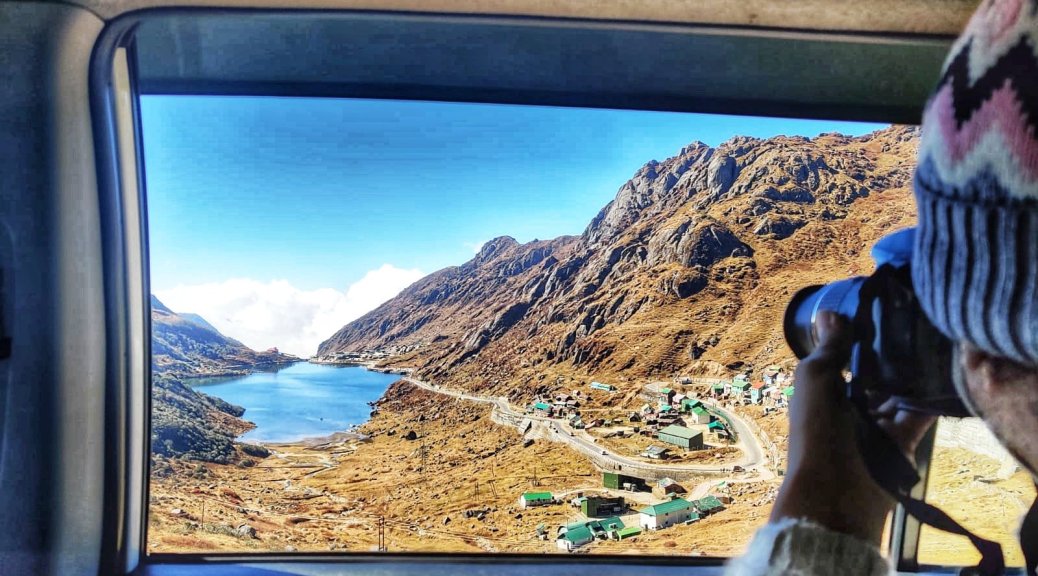
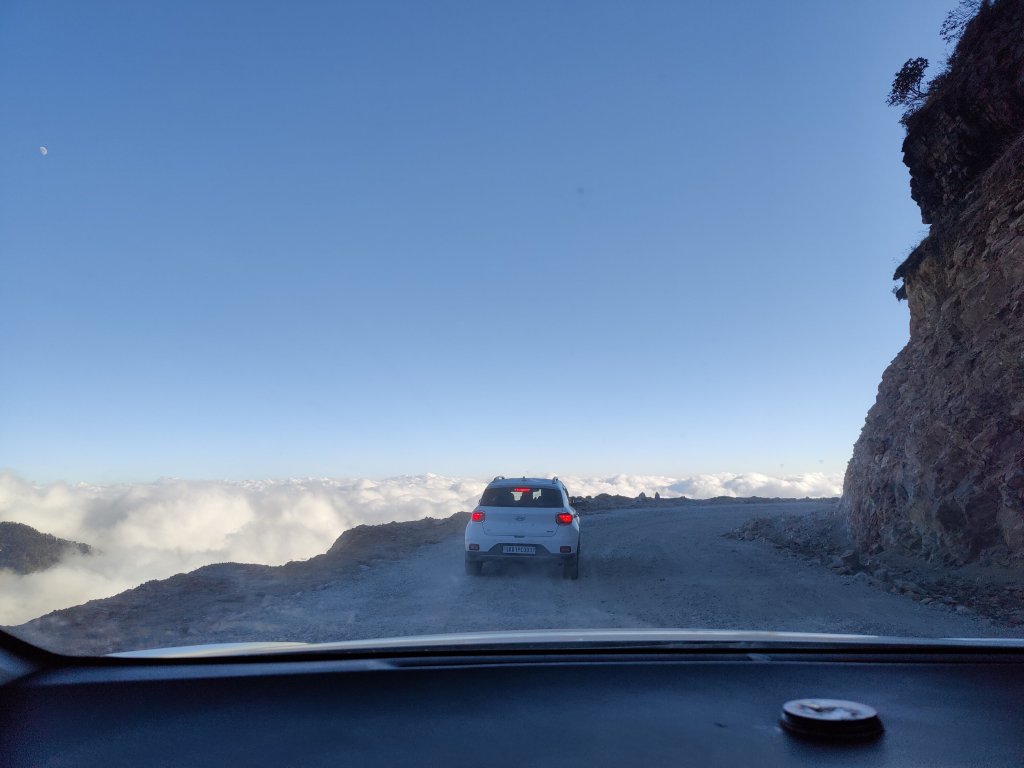
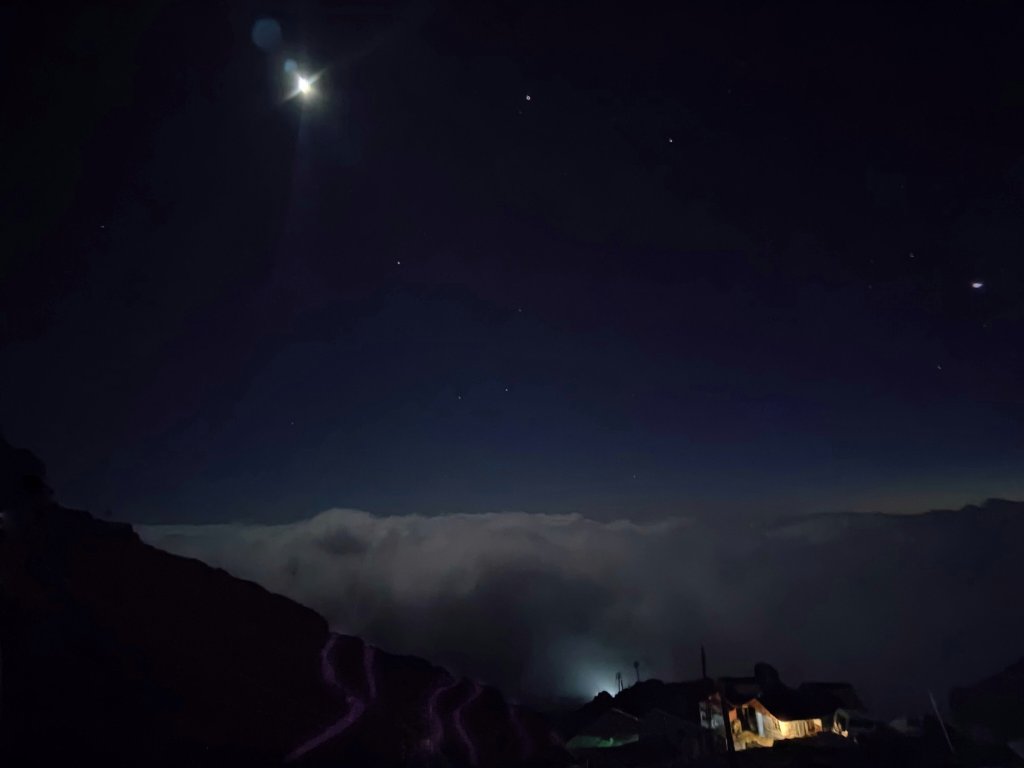
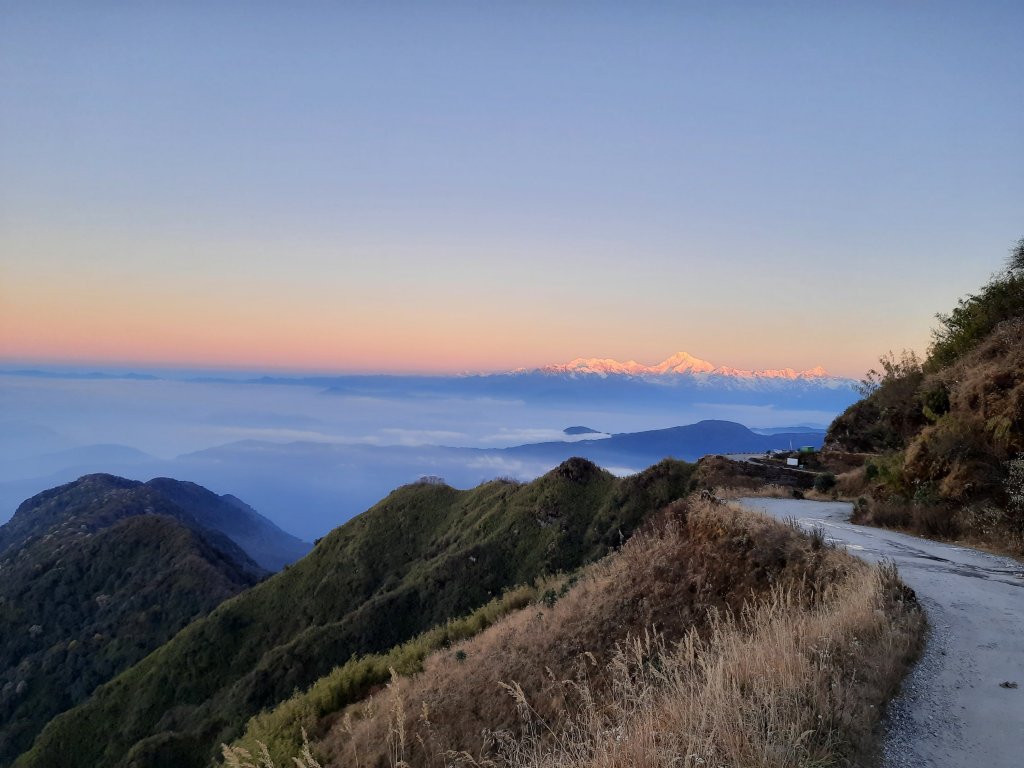
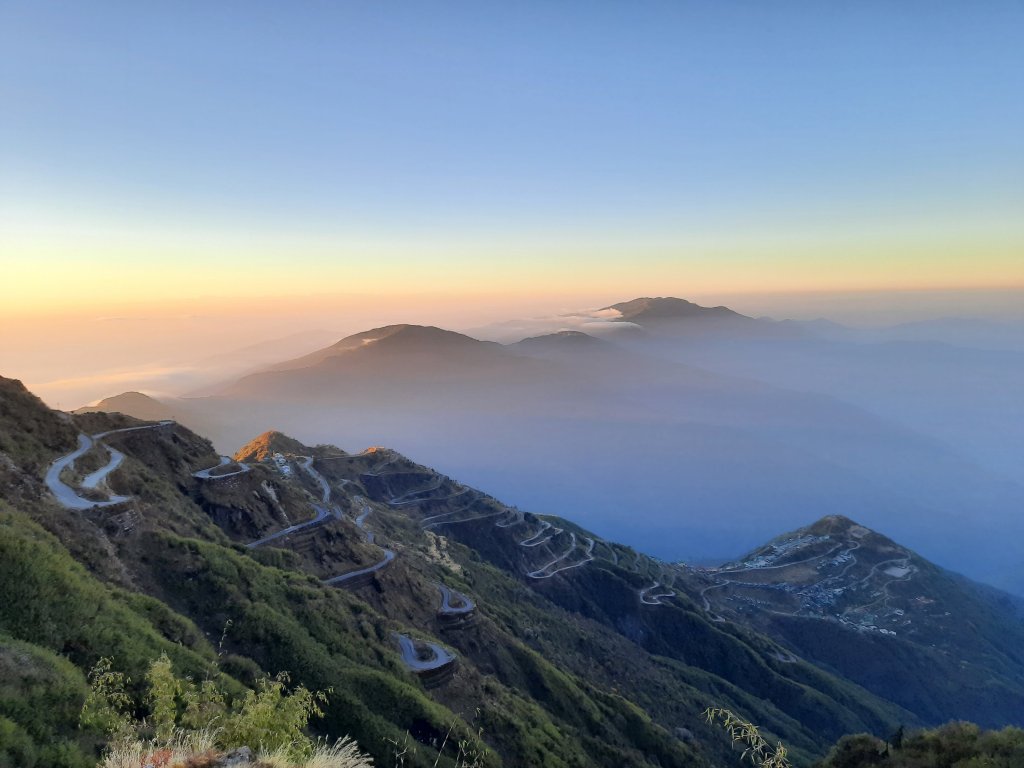



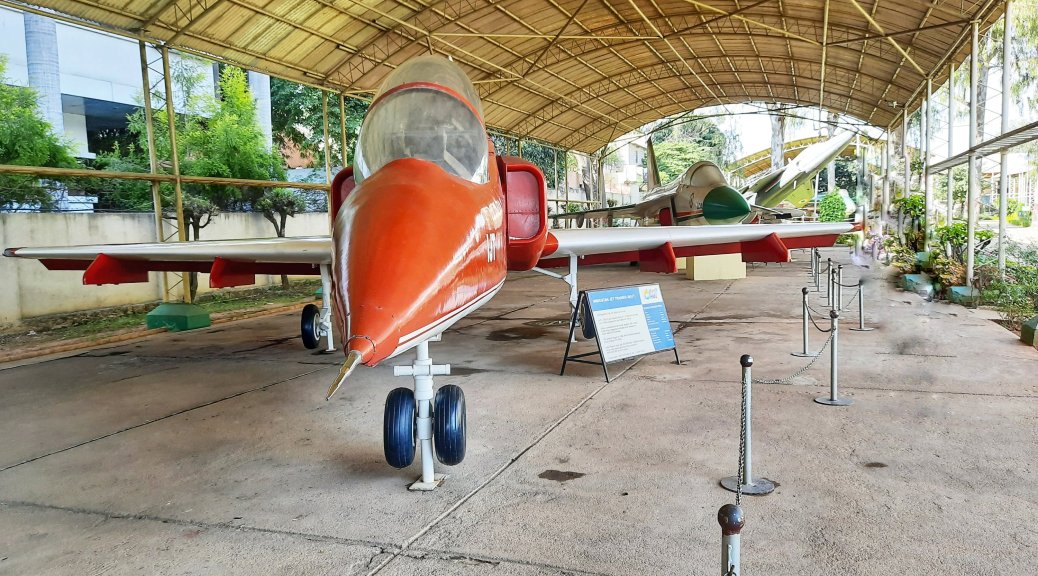
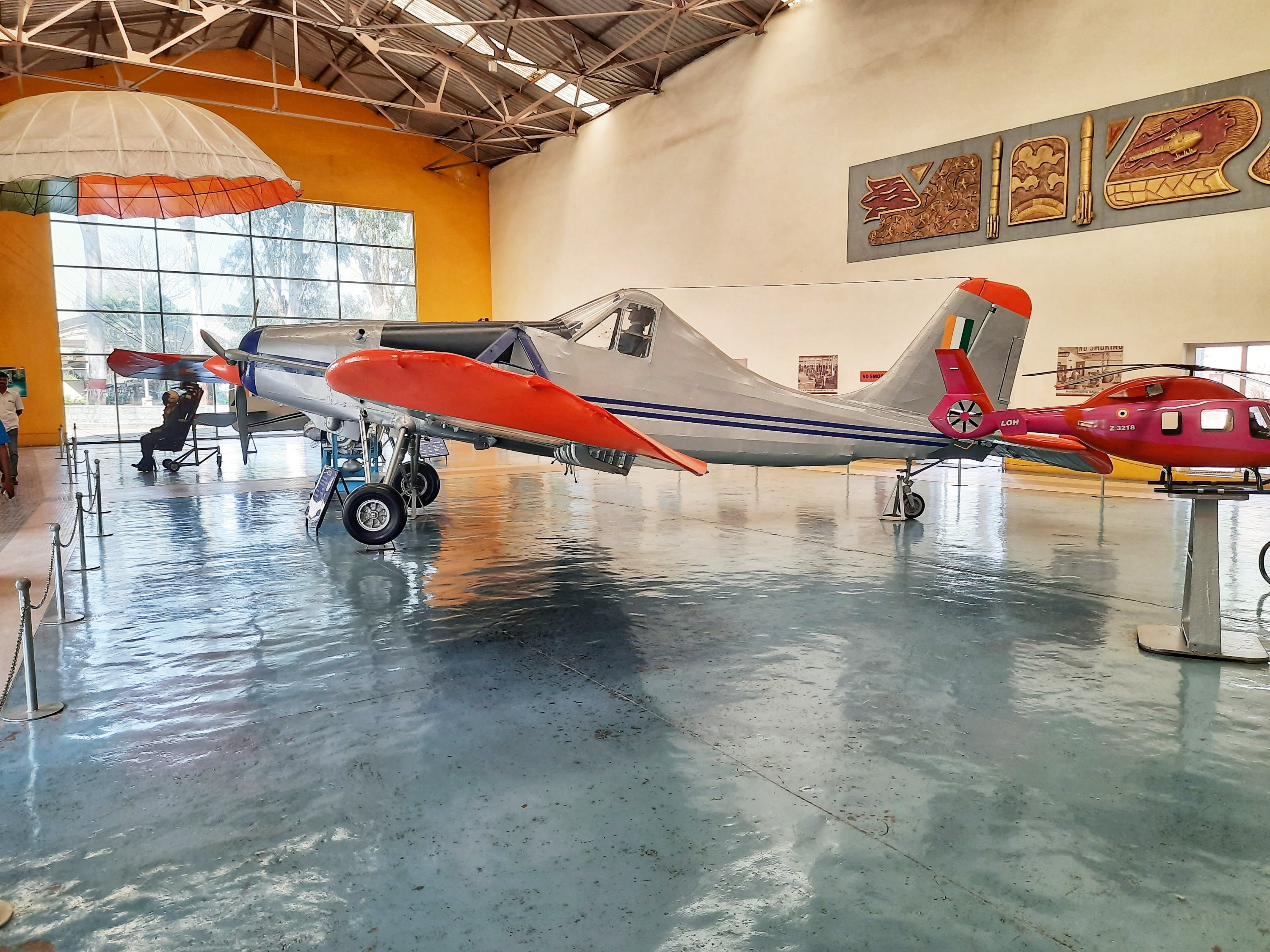
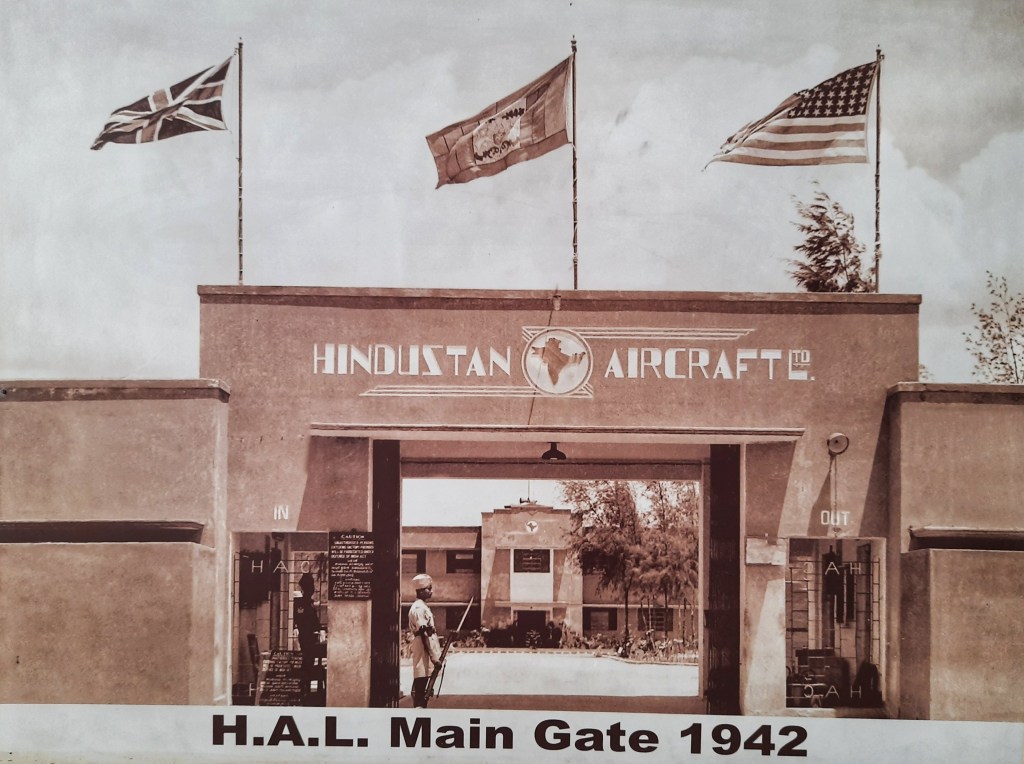
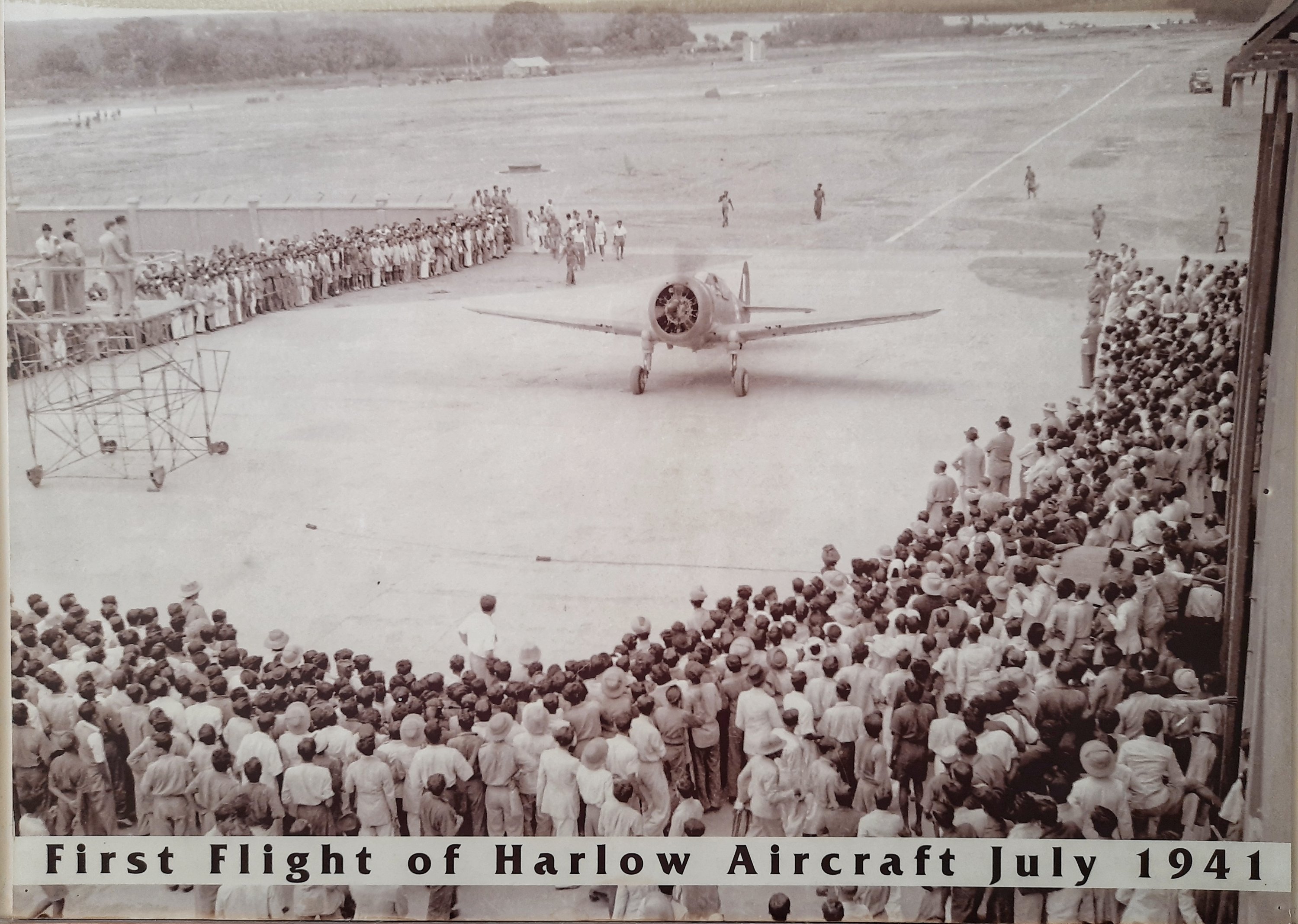

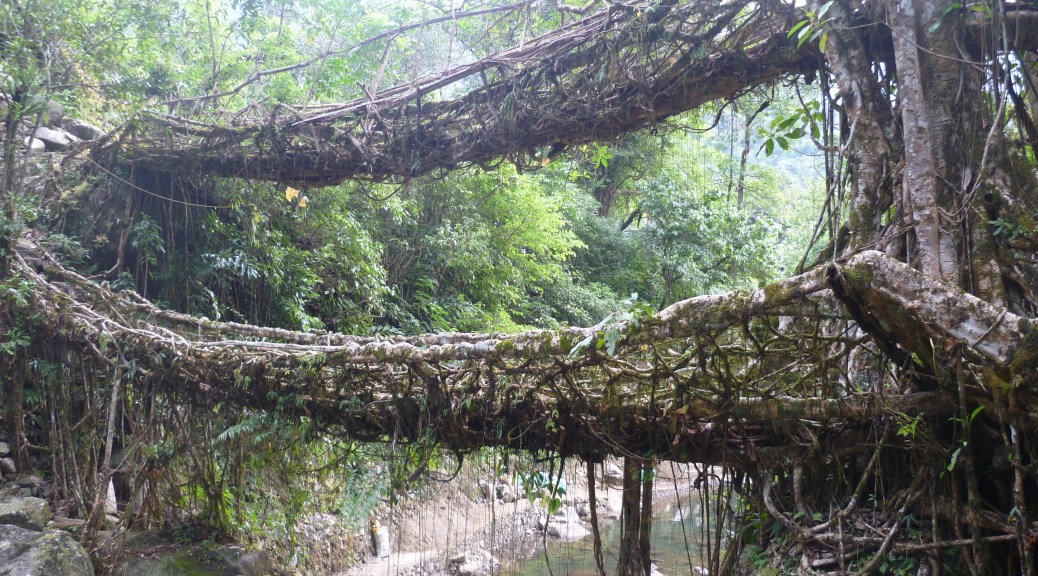
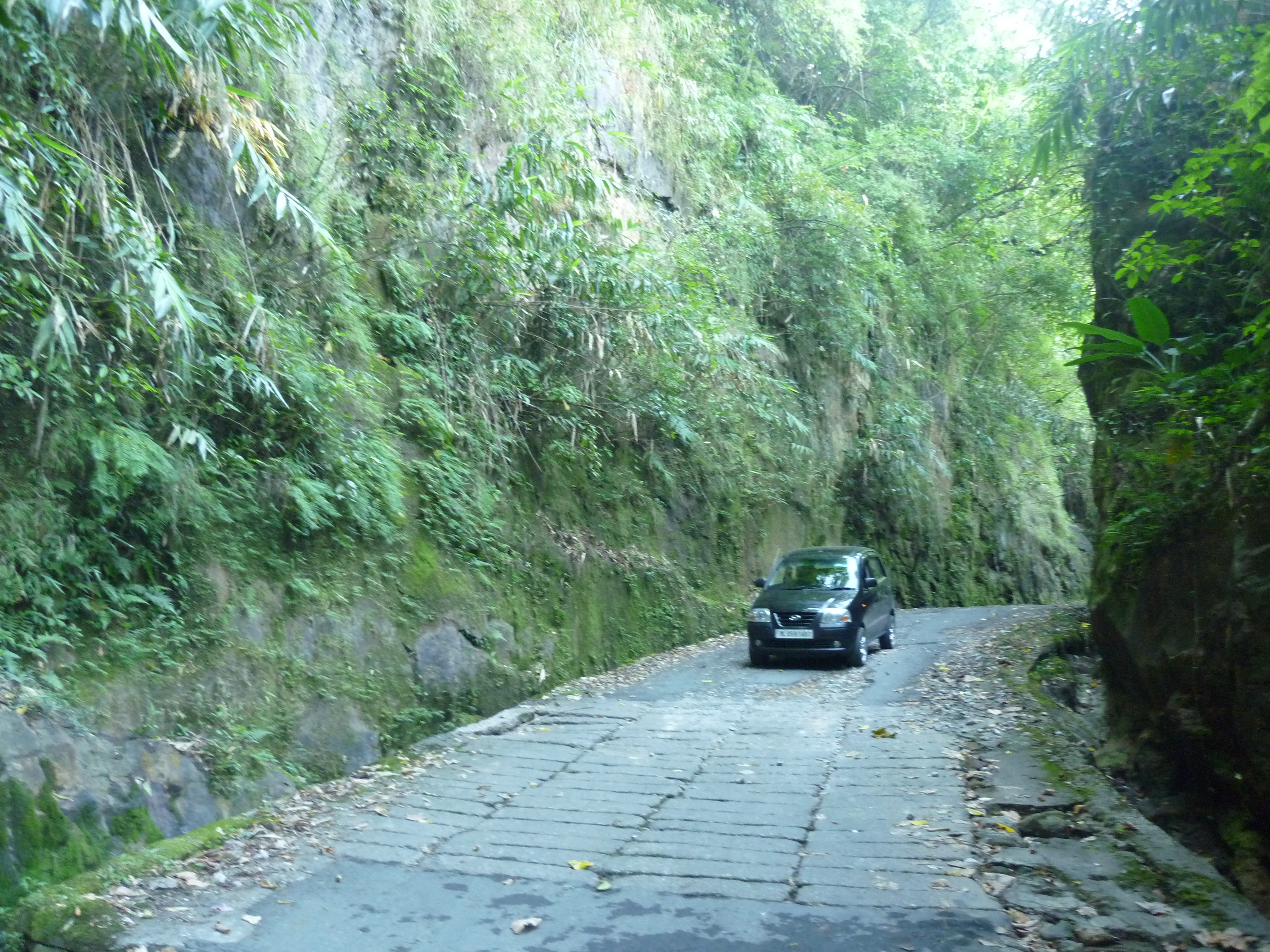
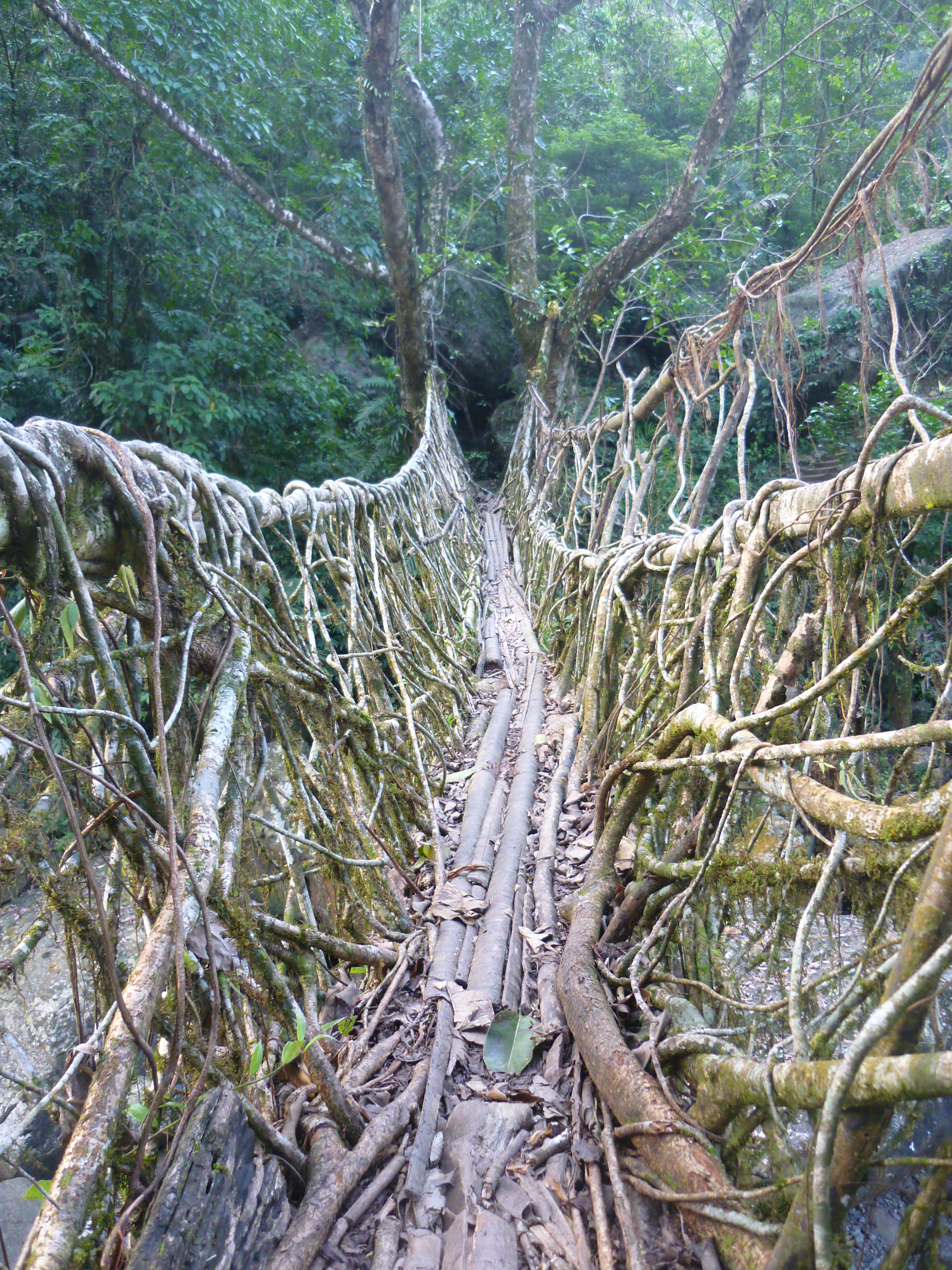
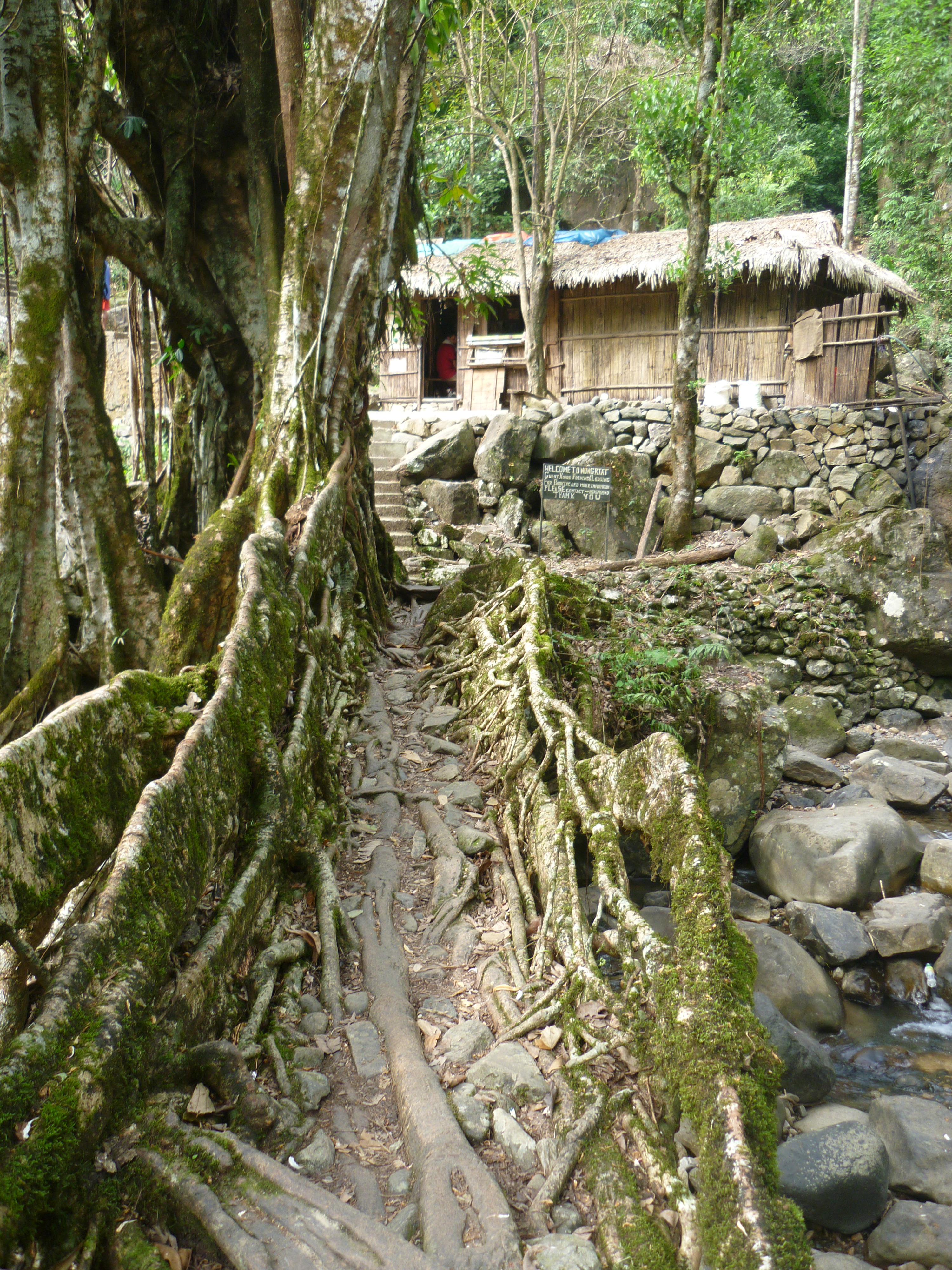
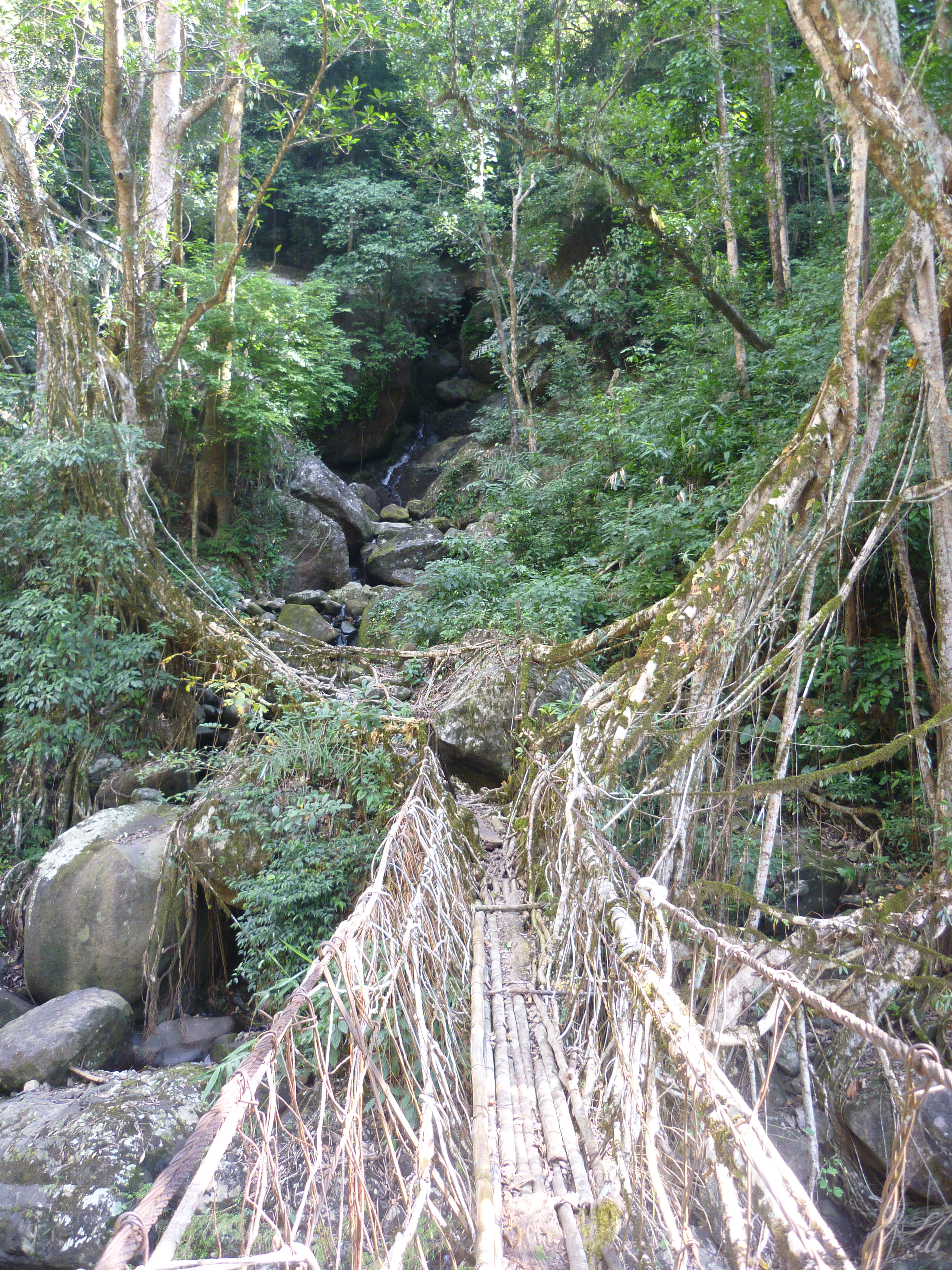
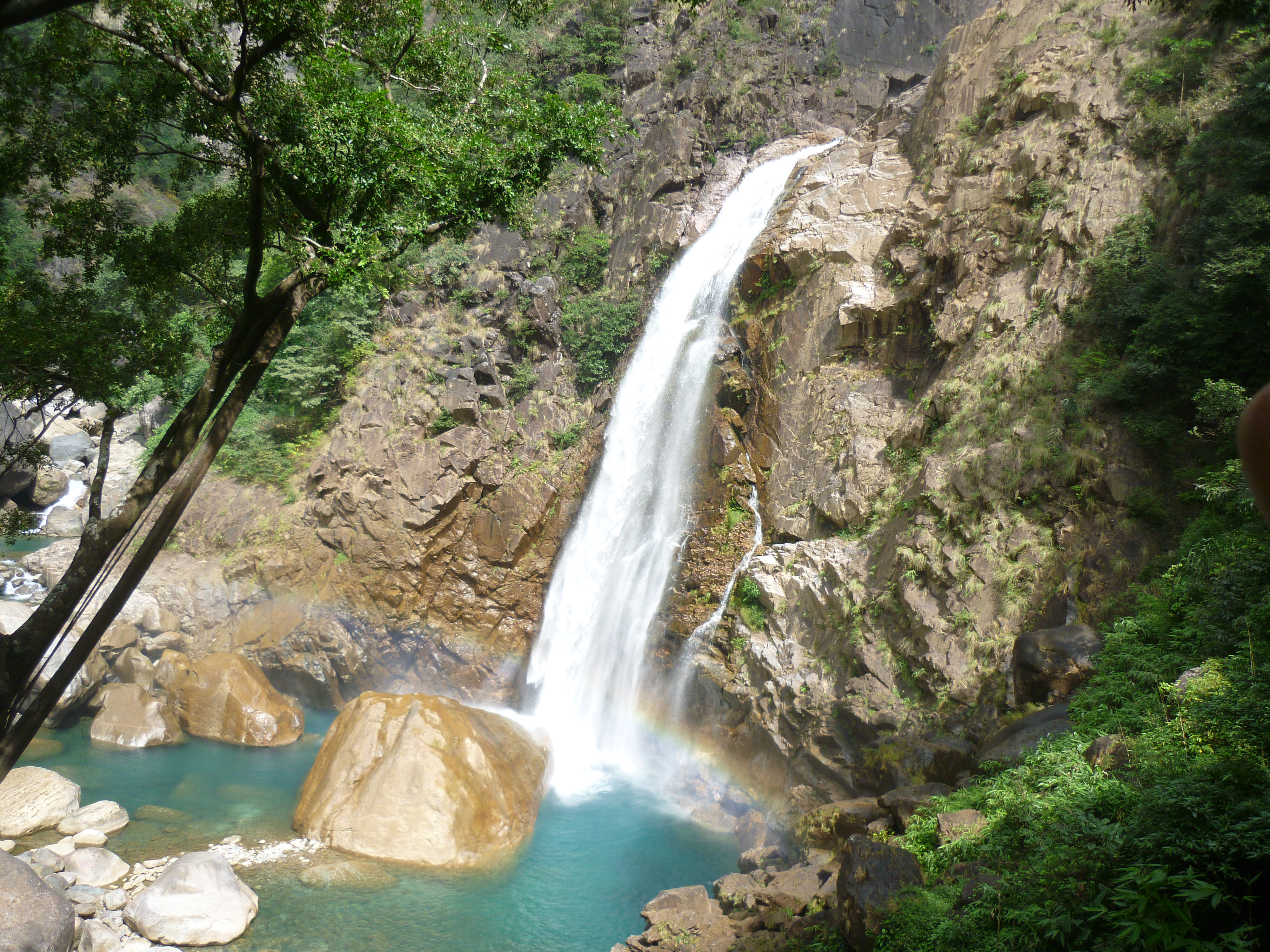
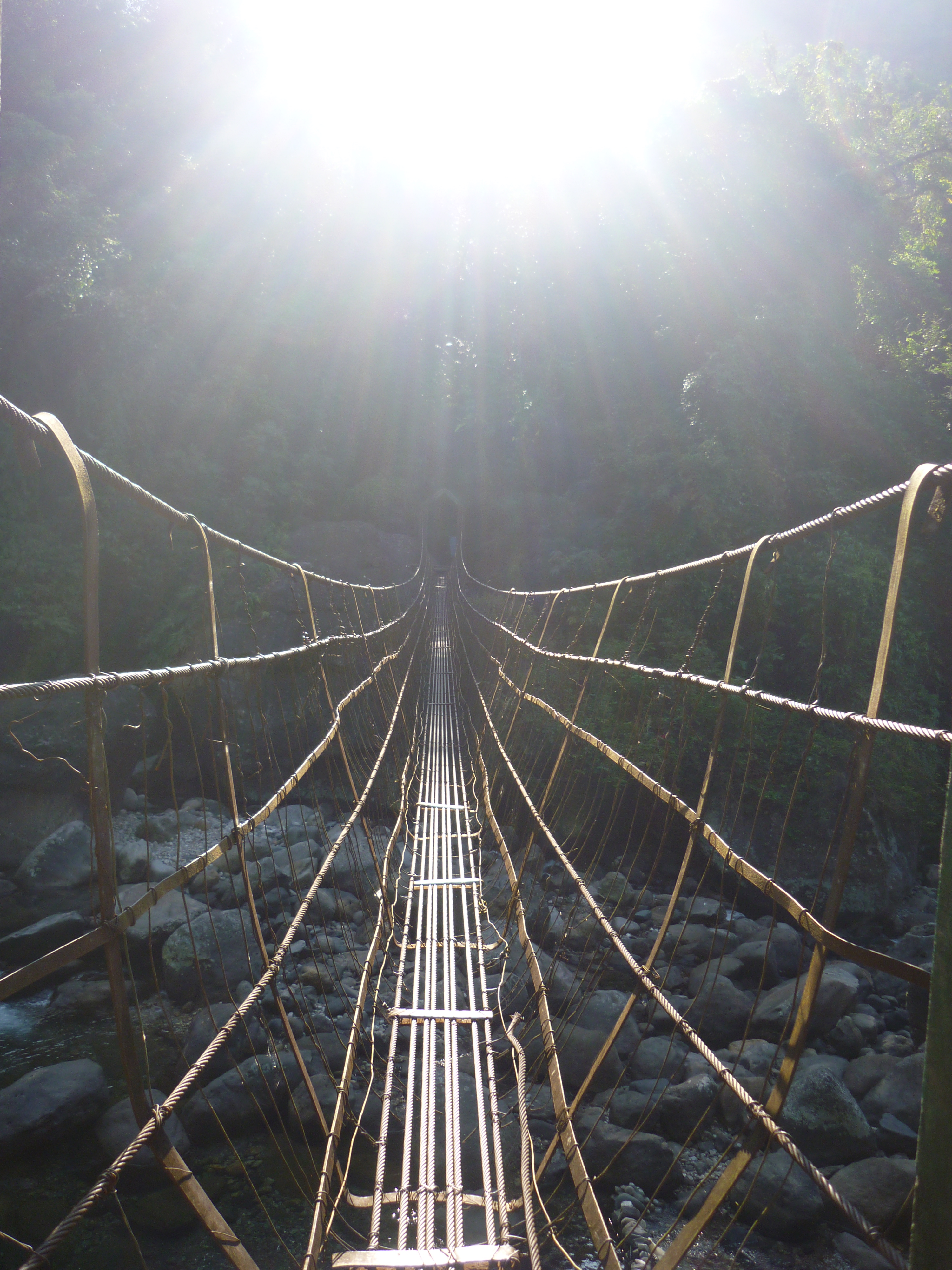


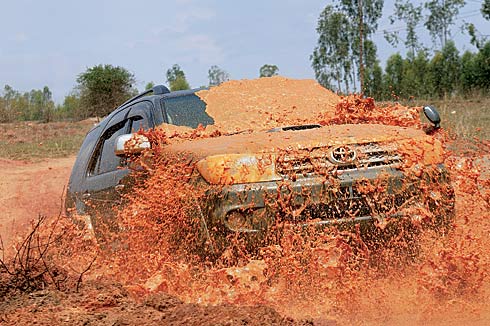

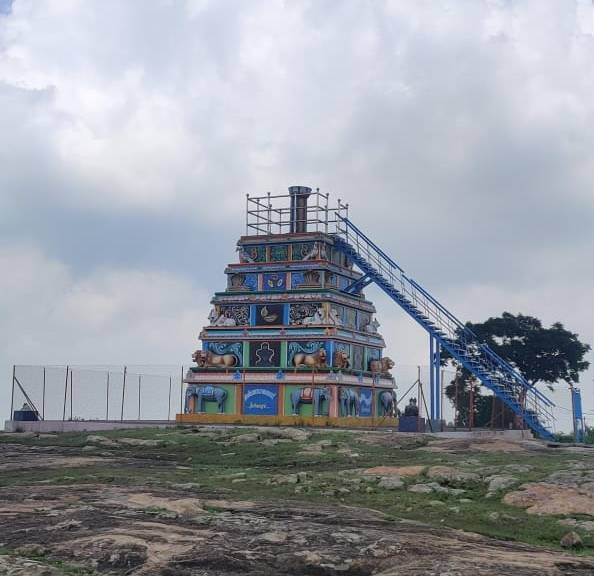
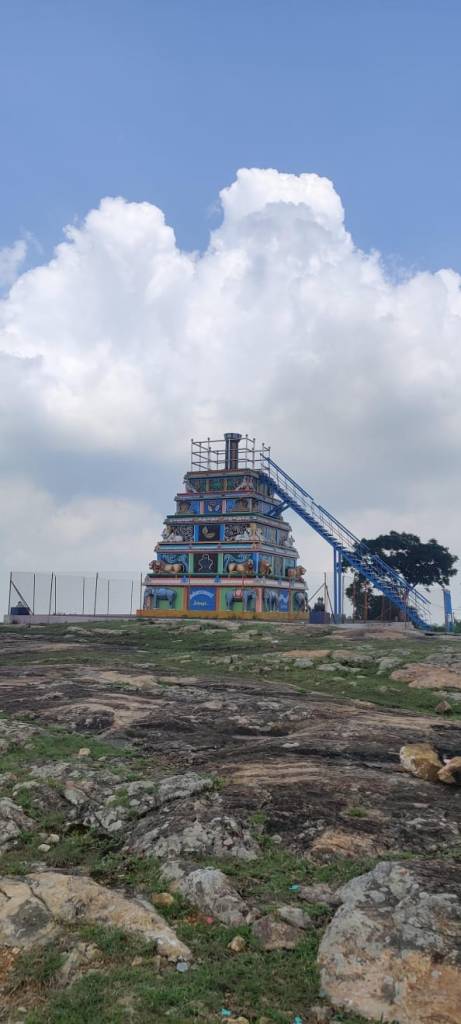
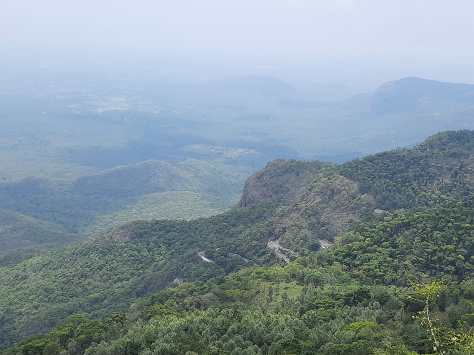
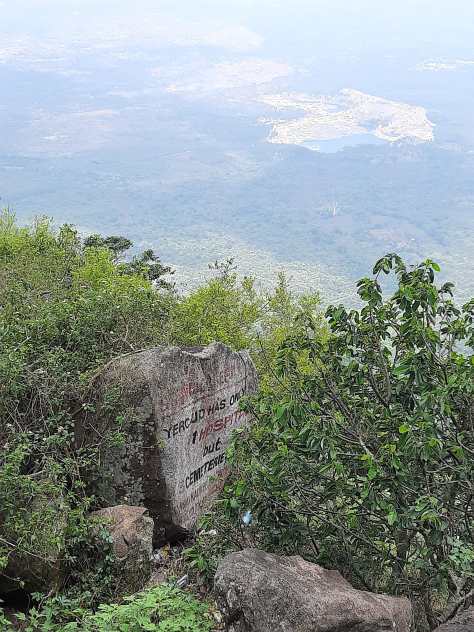


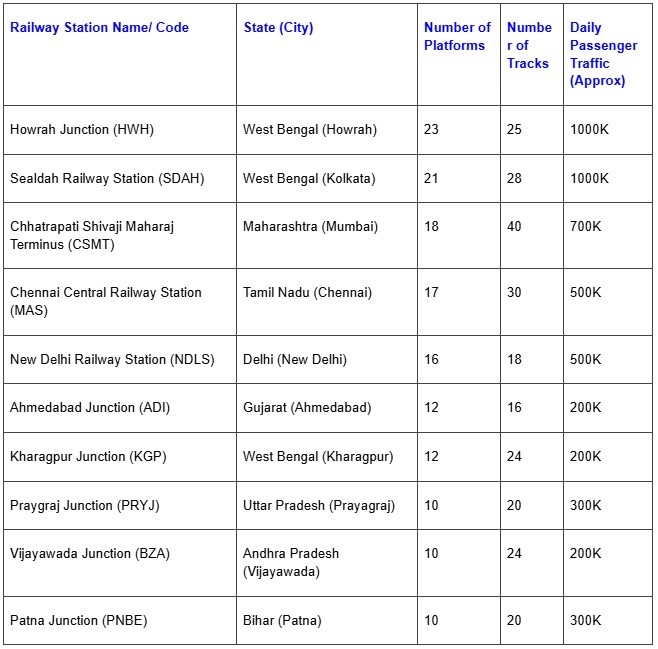

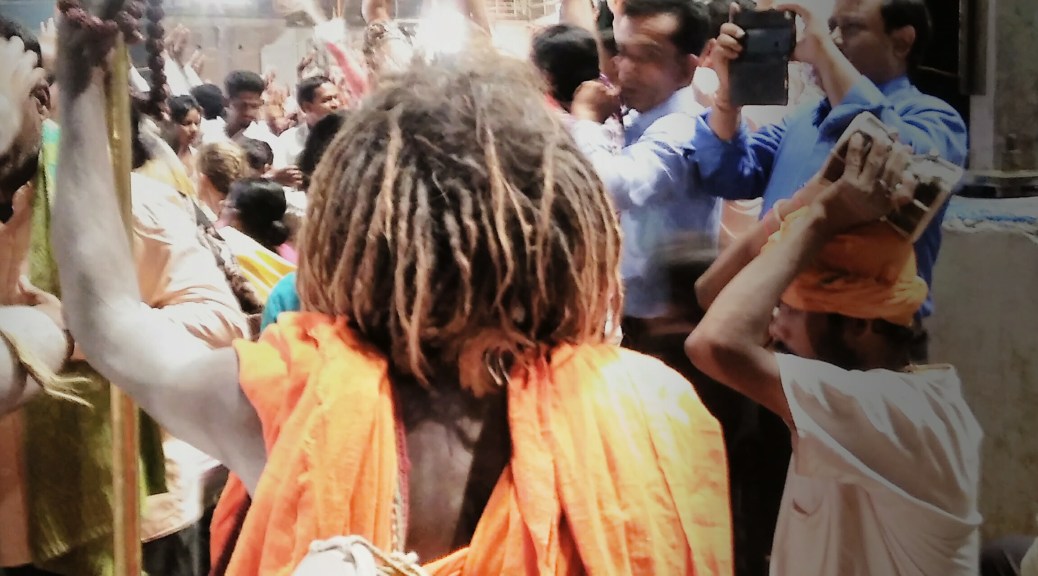
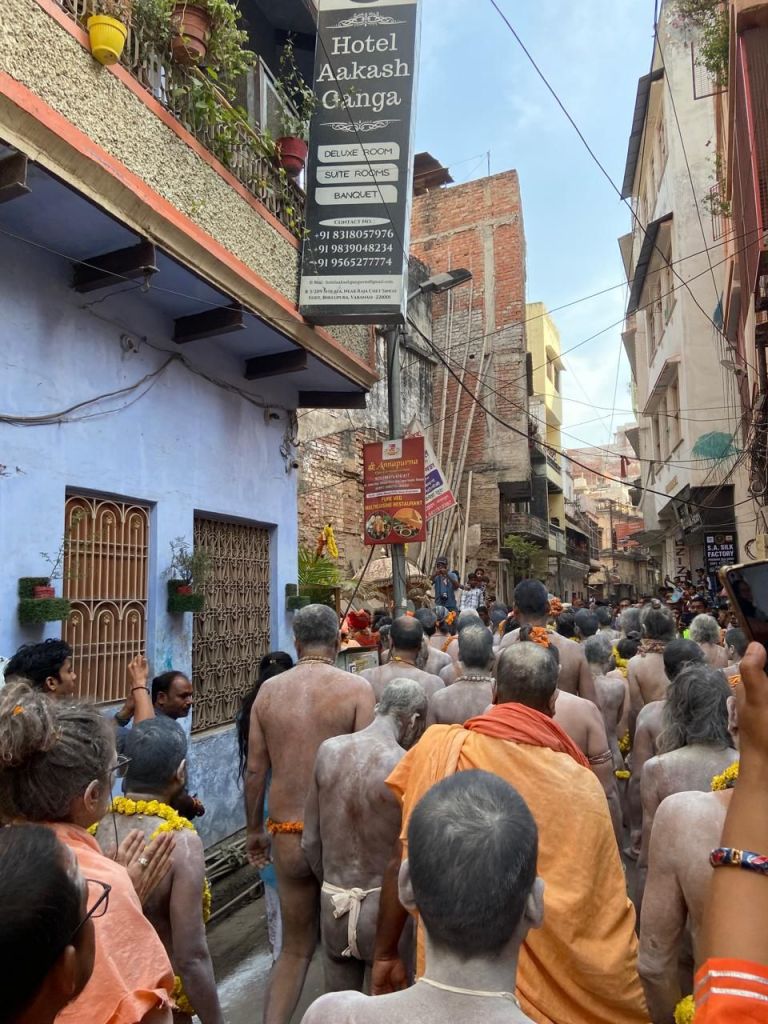
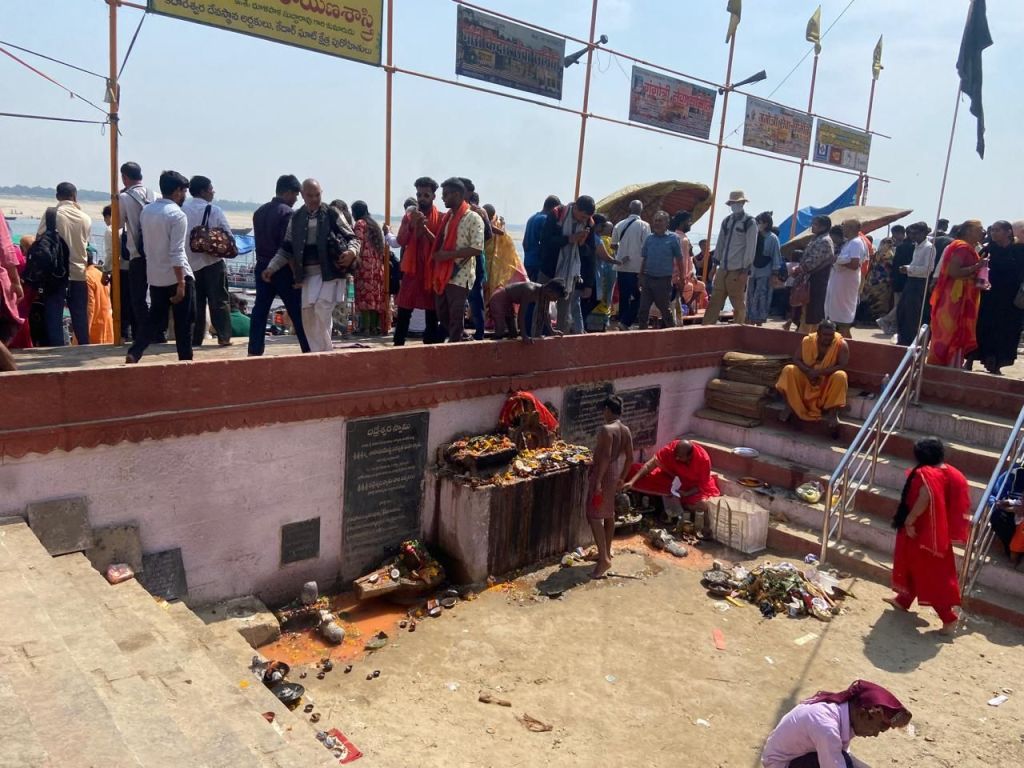
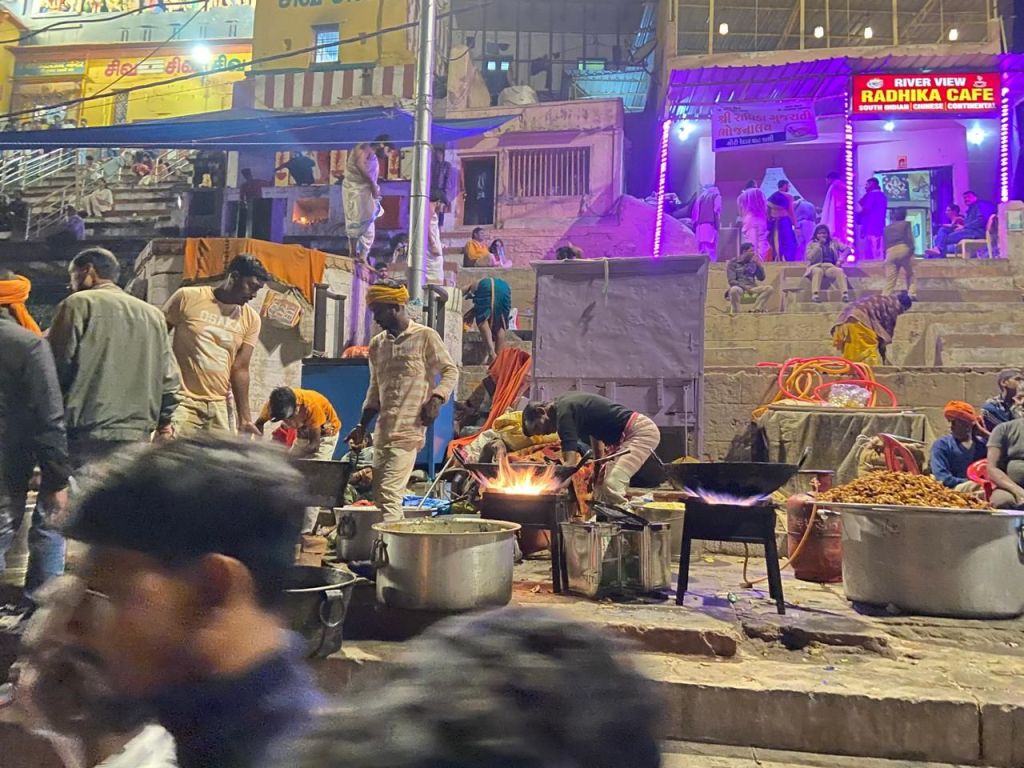
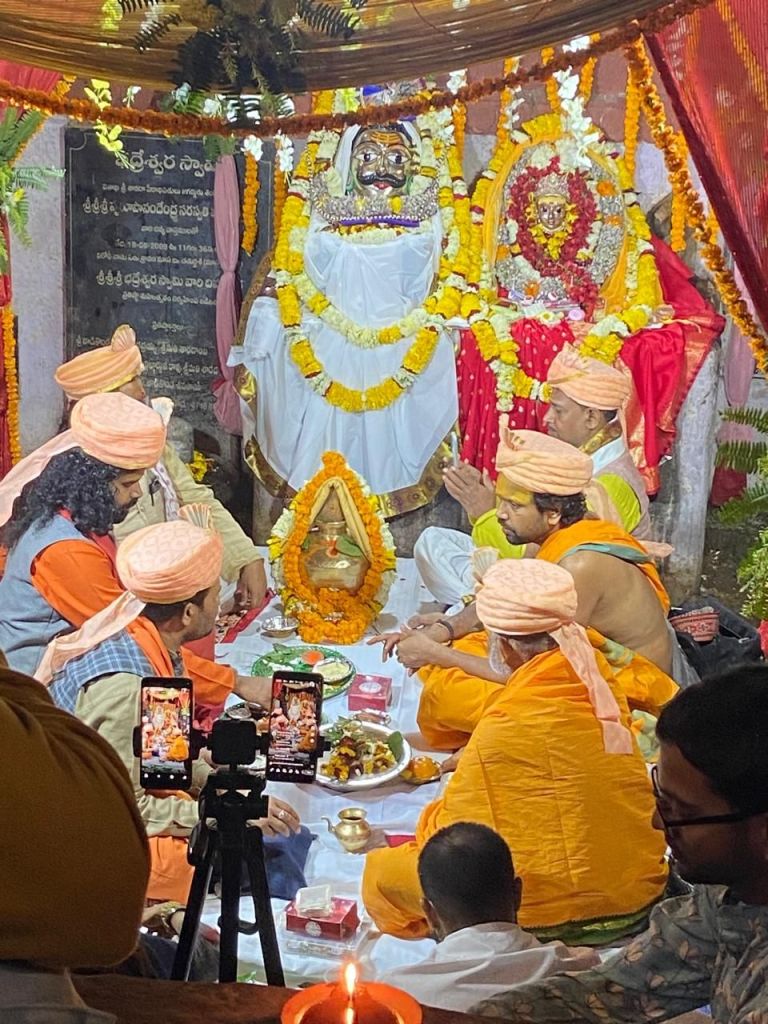
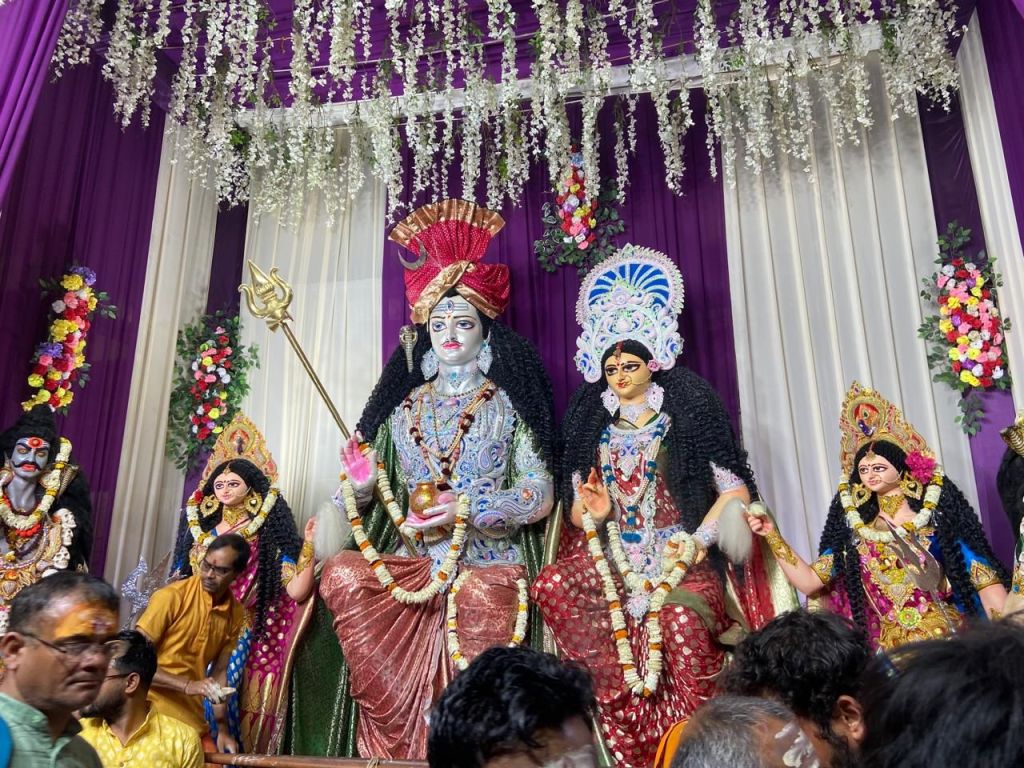
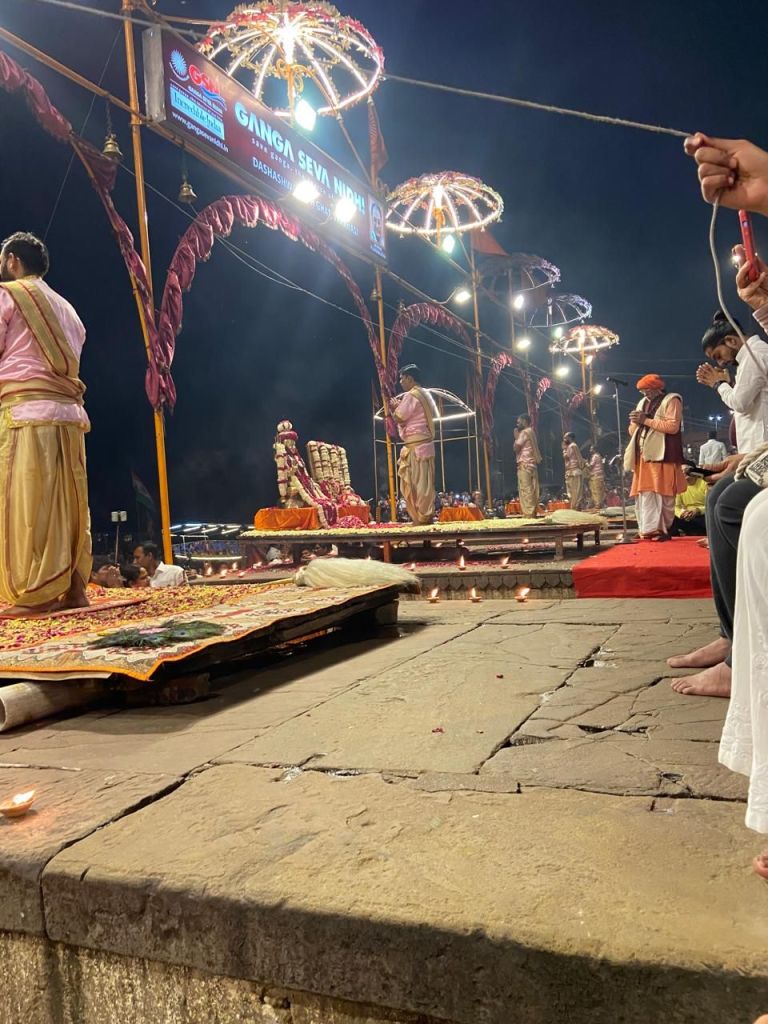

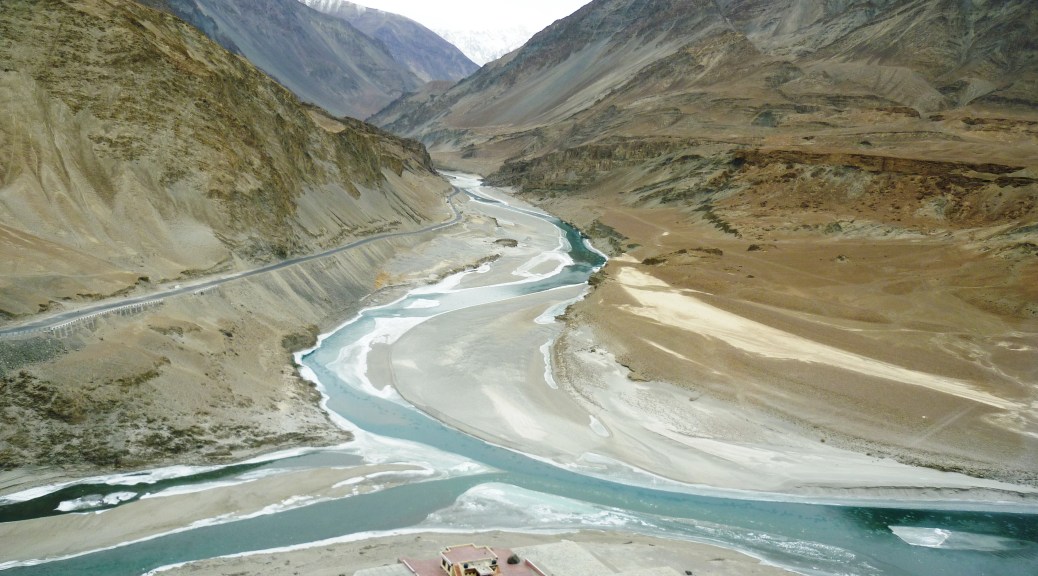
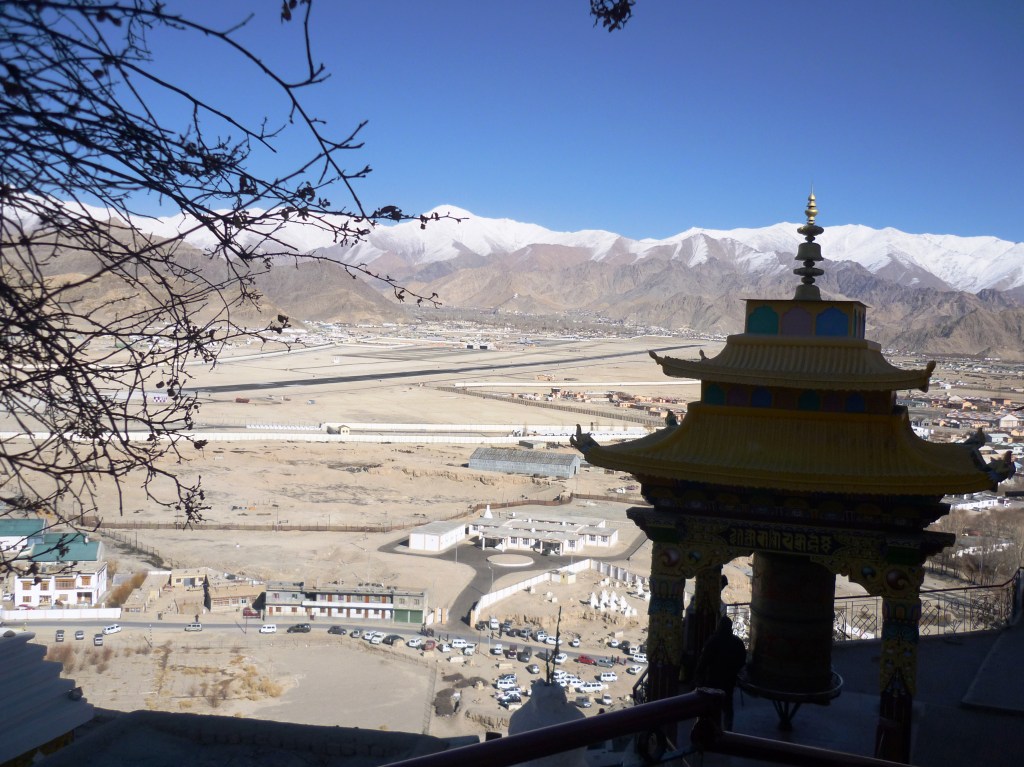
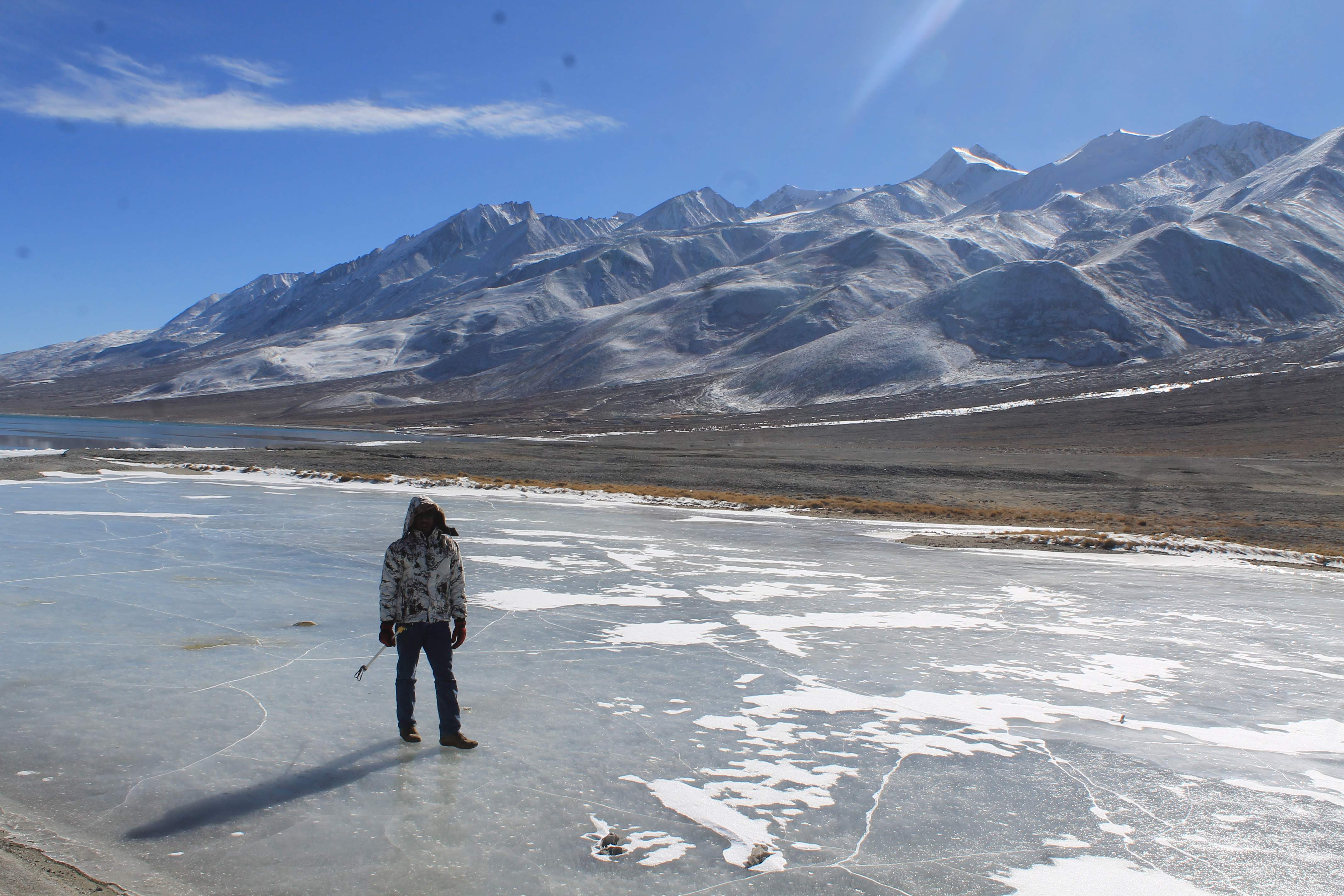


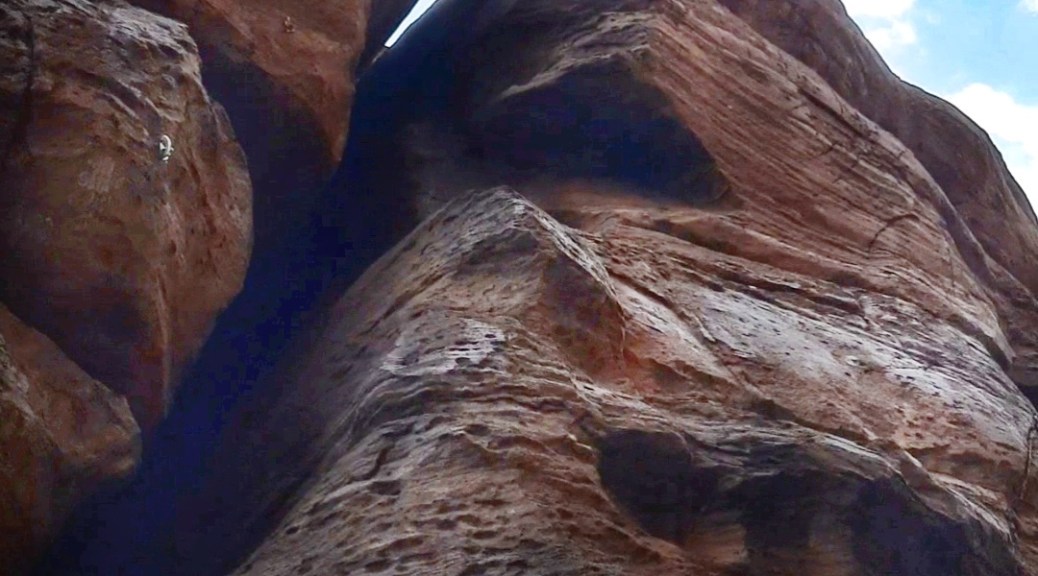
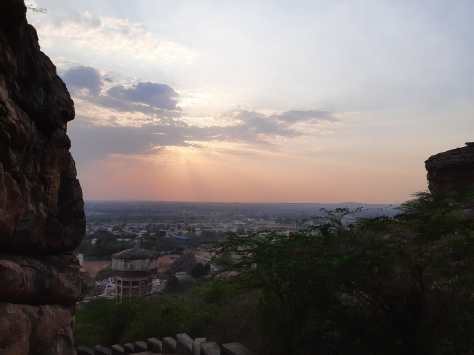

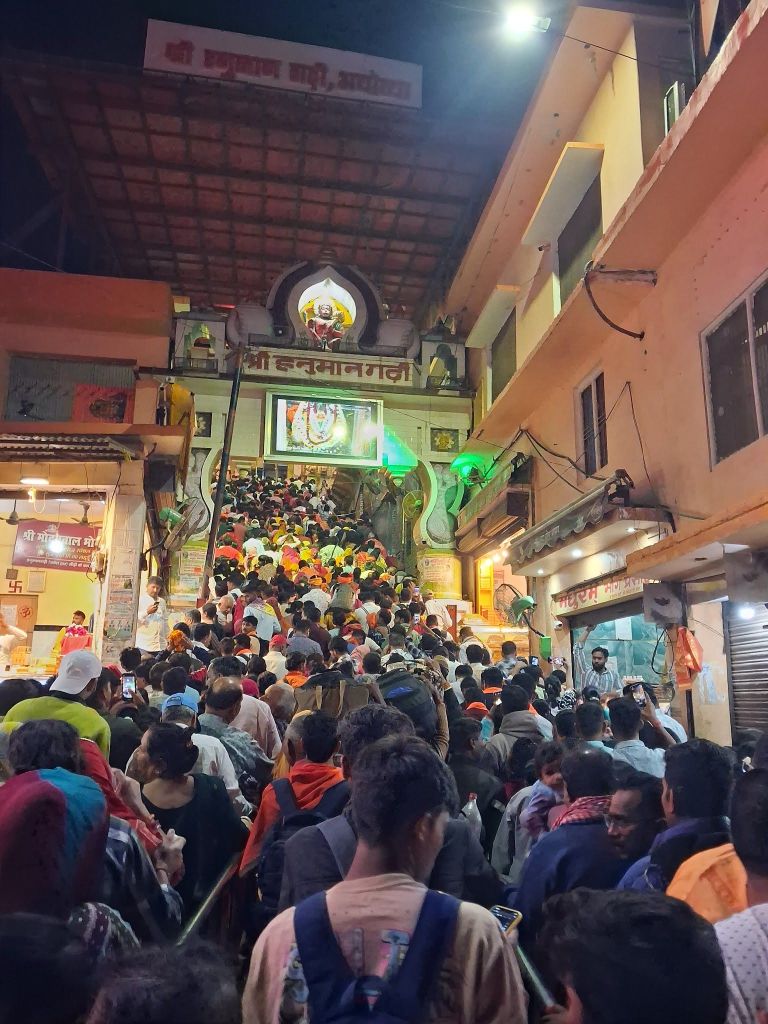
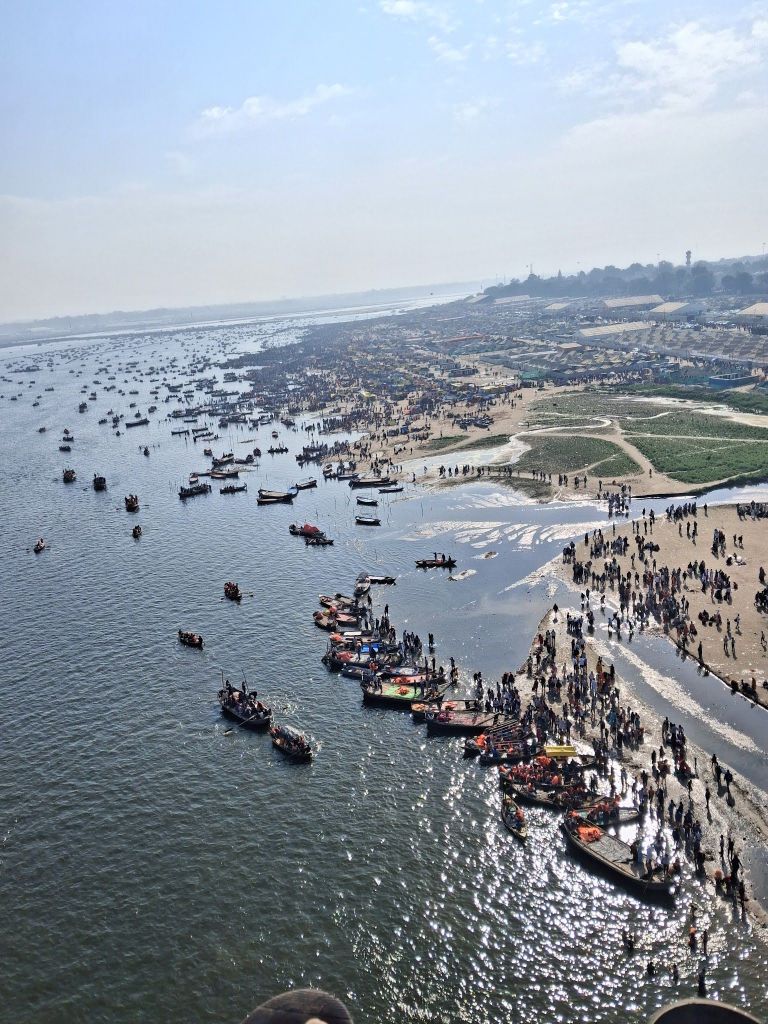
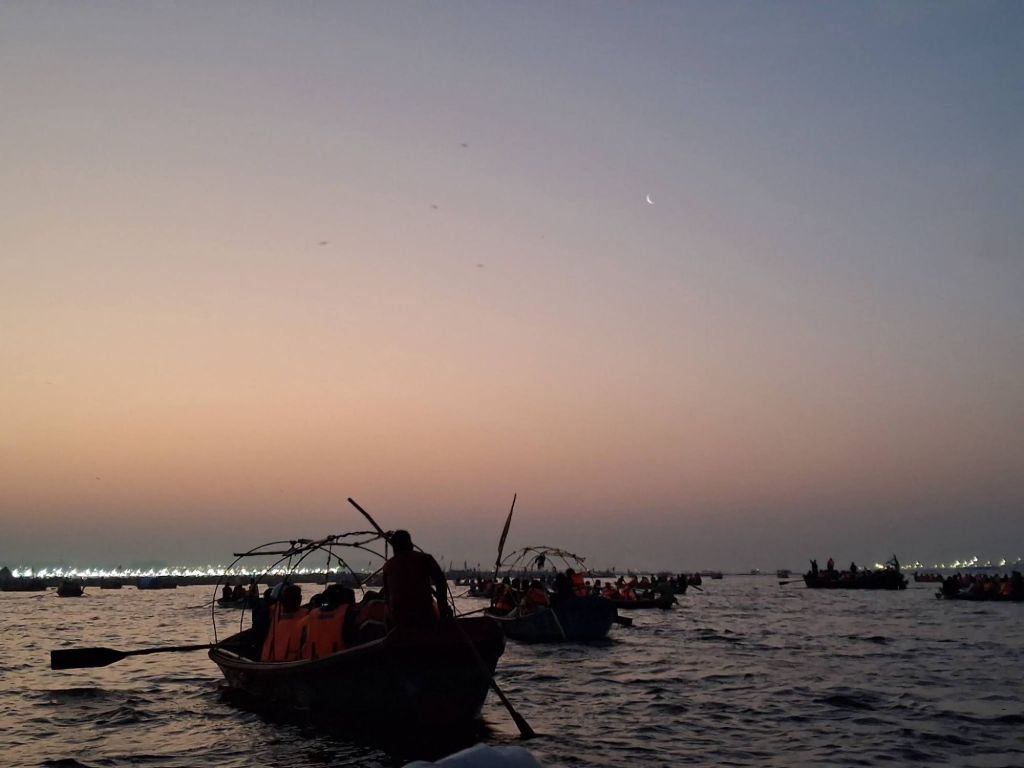
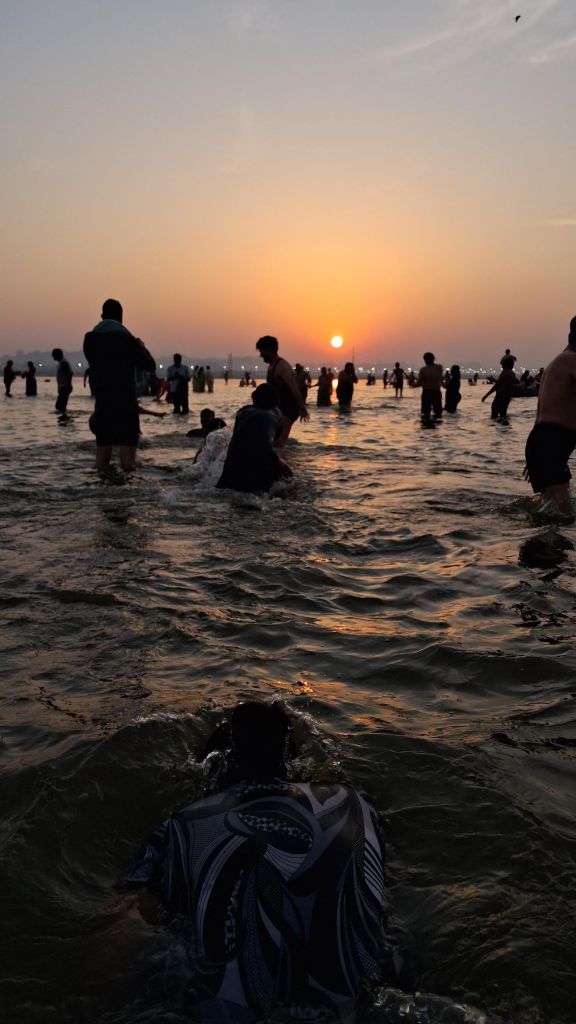

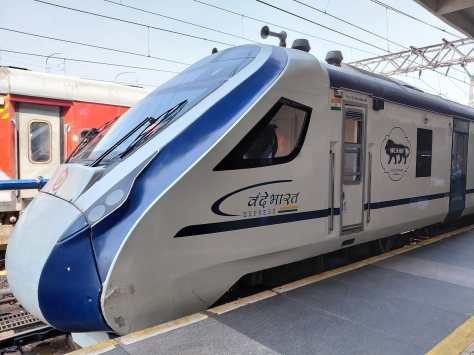
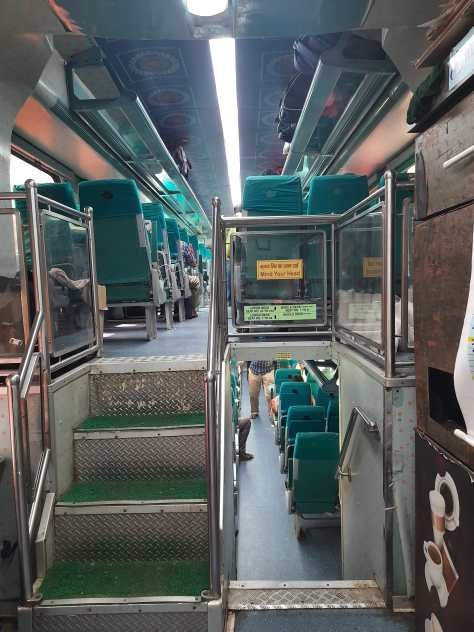
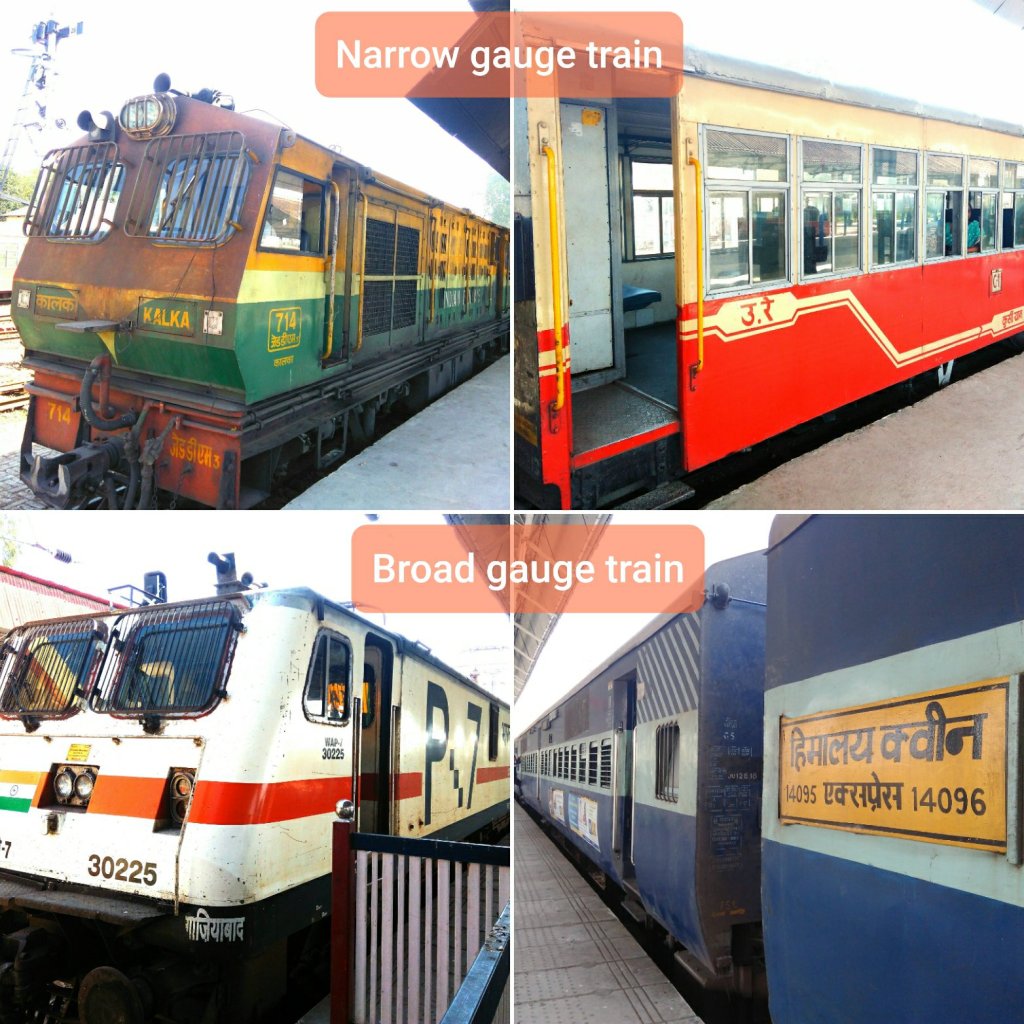
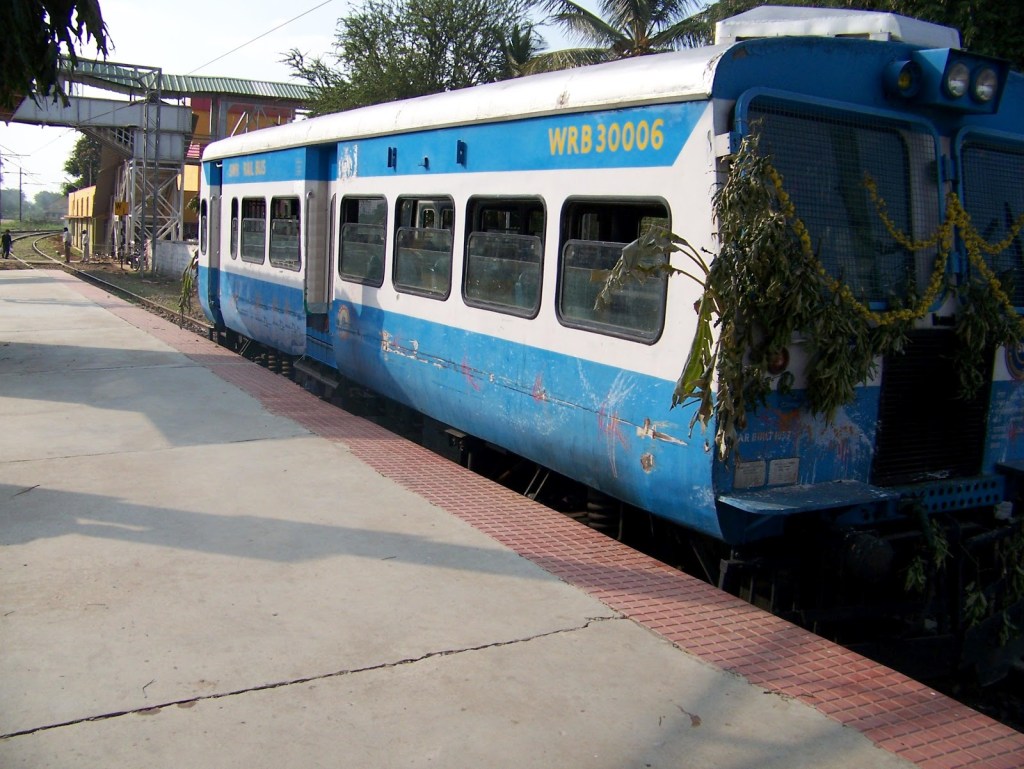

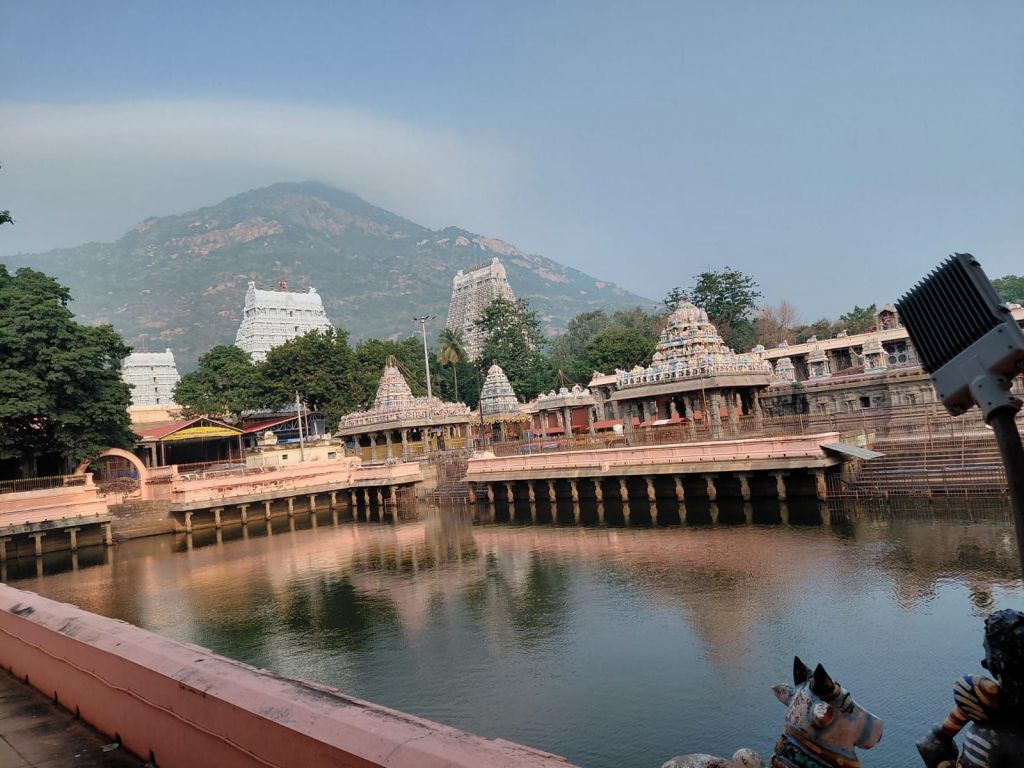

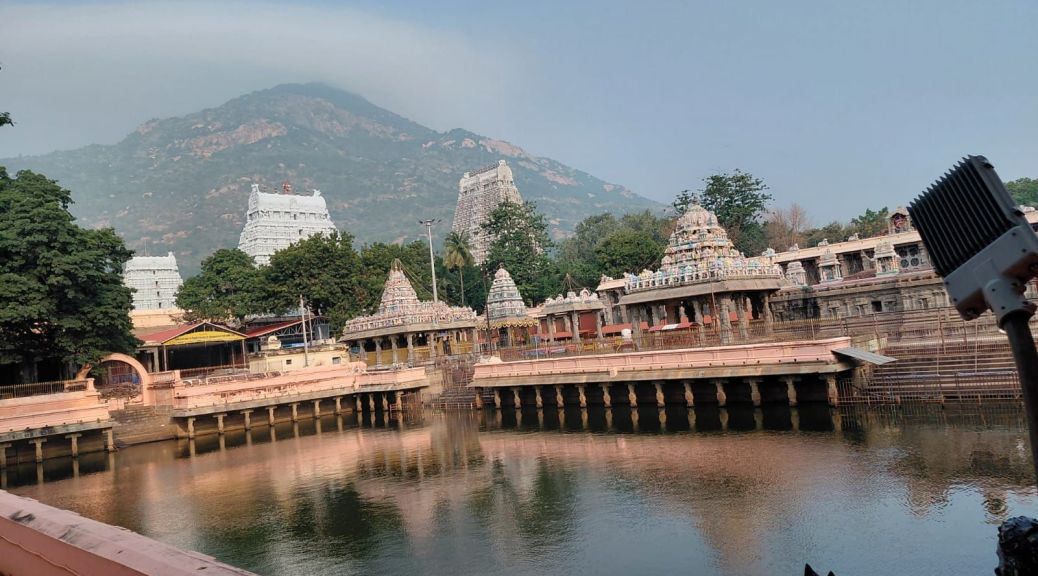
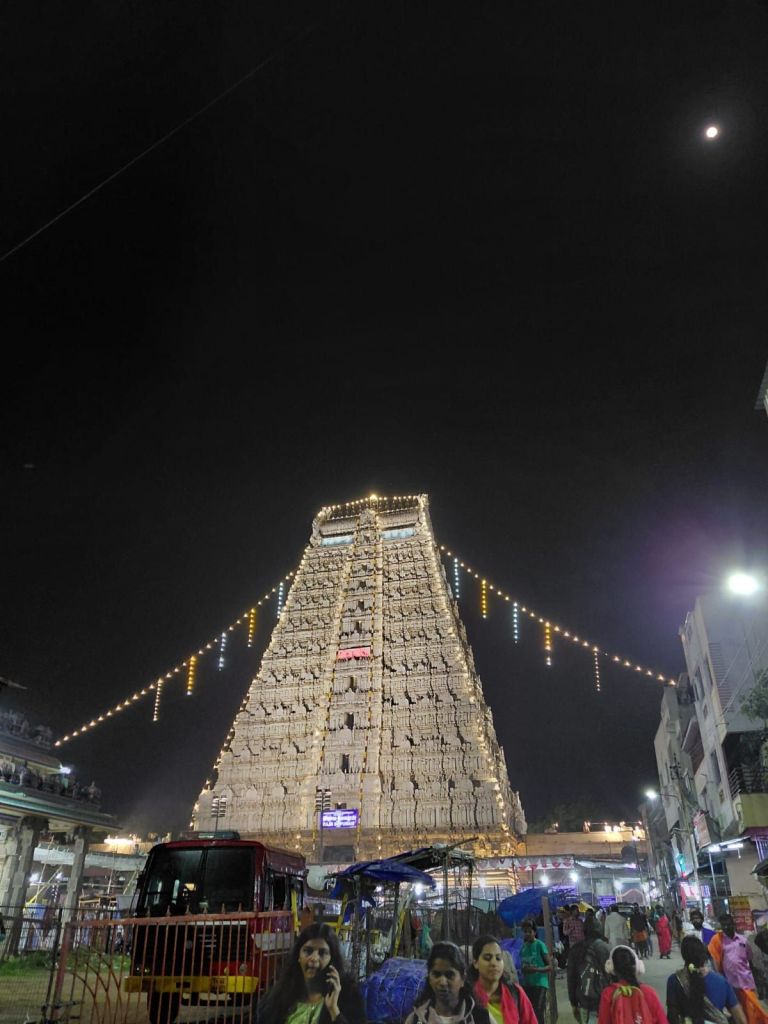
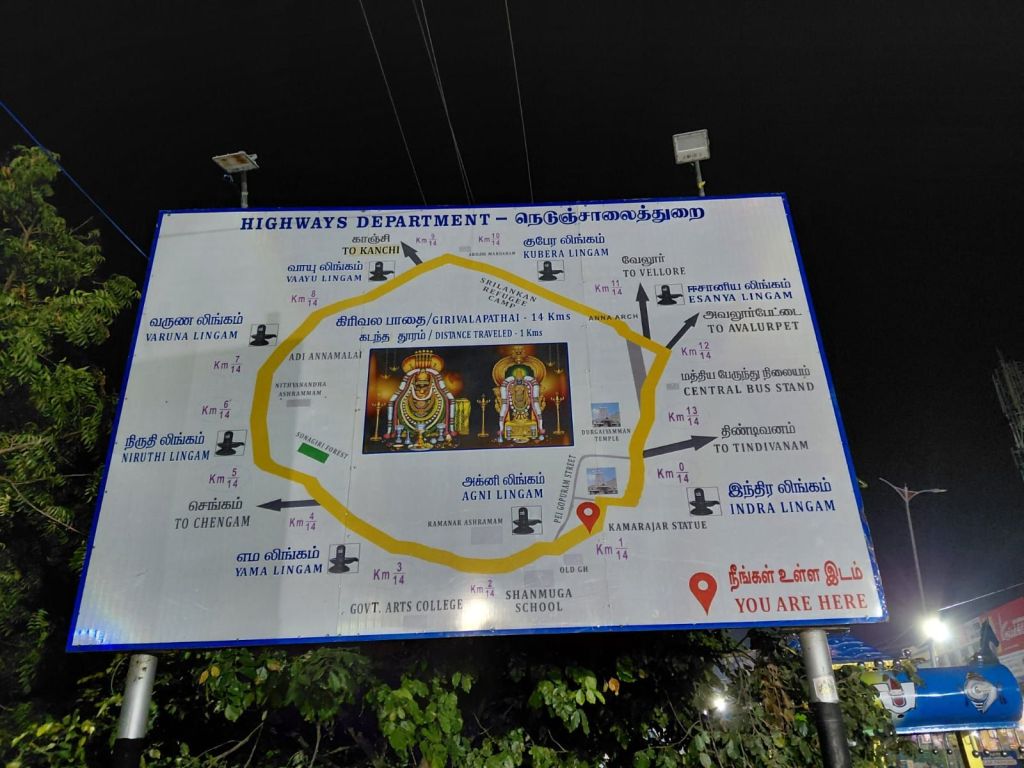
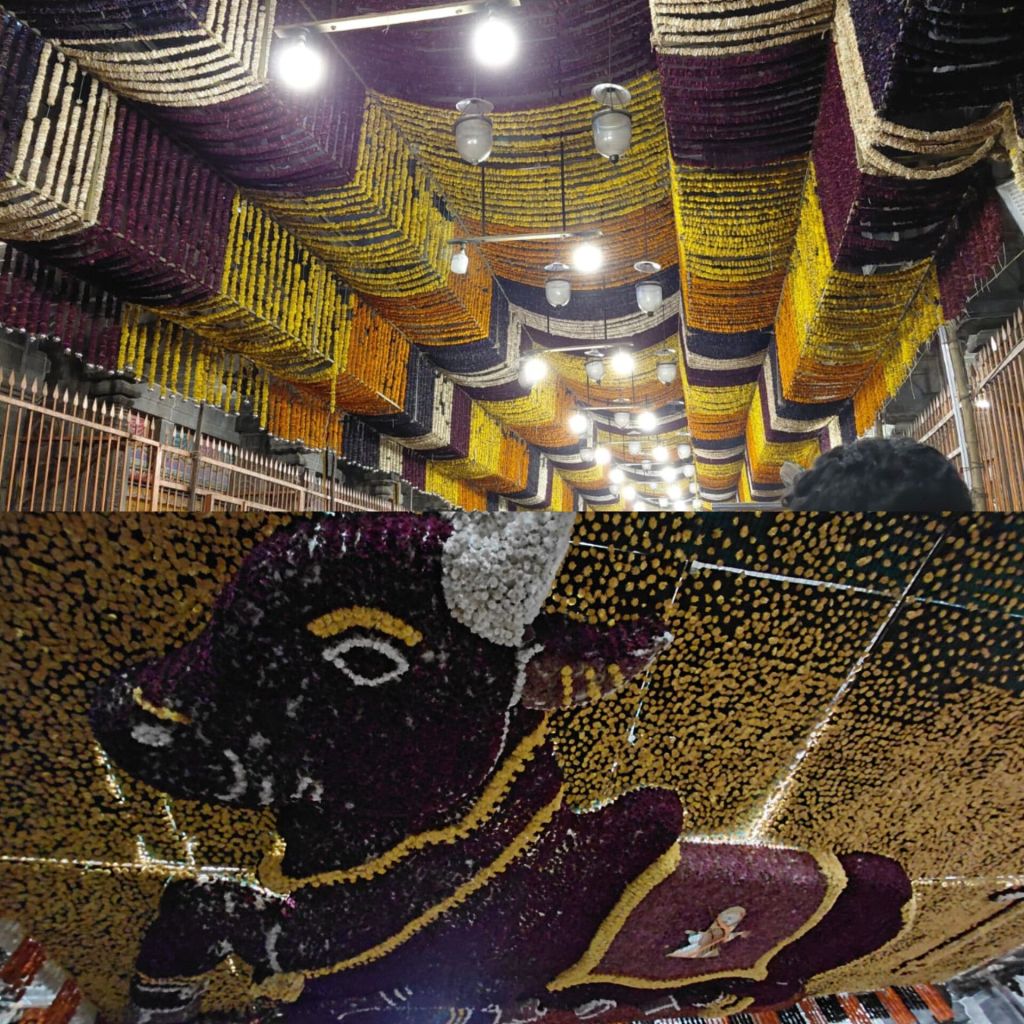
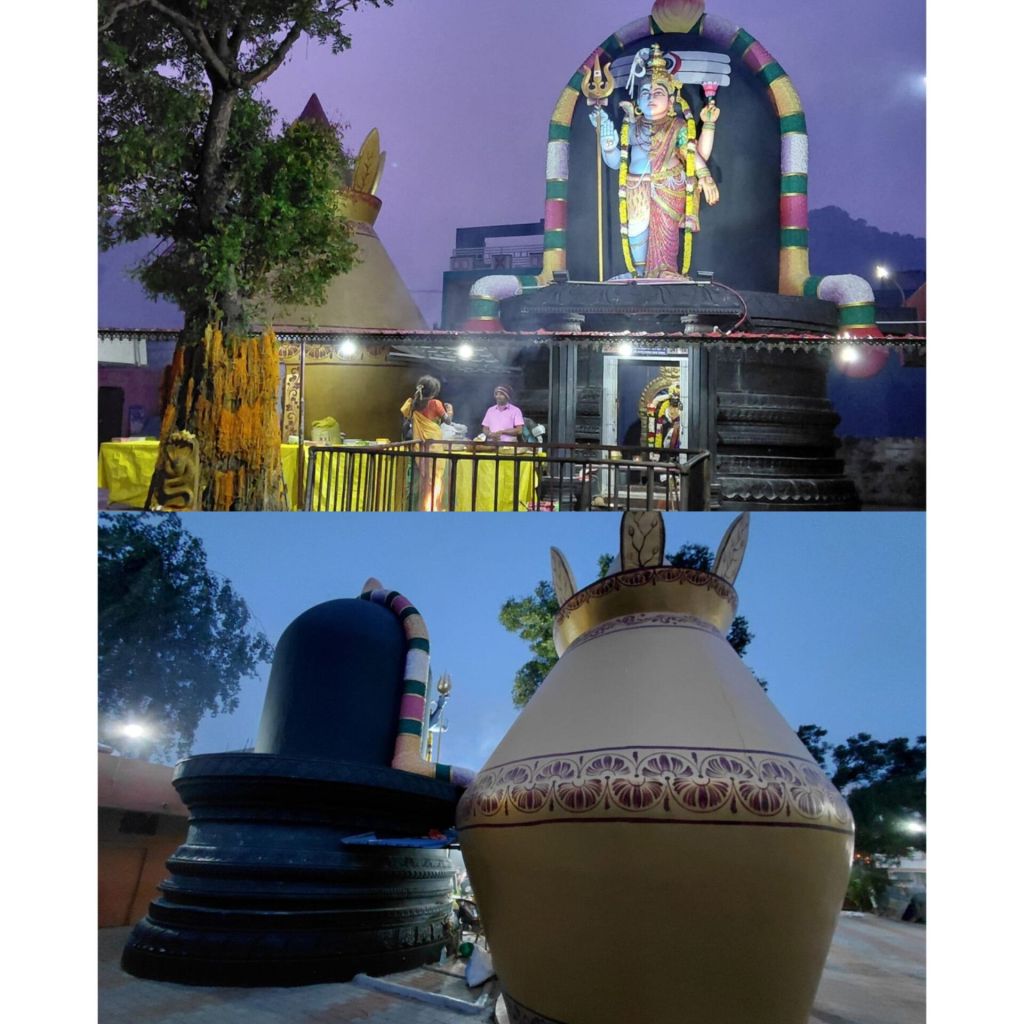

 The Lost Lander