River Godavari is the longest river in South India that travels over 1000 kilometers. My first glimpse of this beauty was at Rajahmundry, where the ritualistic ‘Godavari Arati’ is offered to this mighty river every evening. The sunset and a boat ride from the Godavari ghat are experiences in themselves. Among the umpteen dams, reservoirs, bridges that are a built across her, the most noteworthy bridges are located in Rajahmundry. Here is a quick look at these heritage structures.
The heritage bridges in Rajahmundry
Old Godavari bridge – This is the oldest of the three major bridges built across Godavari here. It was originally called as ‘Havelock bridge’ since it was named after Sir Arthur Elibank Havelock, the then governor of Madras. This is a Stone masonry & Steel girder bridge whose construction started in 1897 and commissioned in 1900. After completing 100 years, this railway bridge was decommissioned in 1997.
Godavari bridge – Also called as the ‘Kovvur-Rajahmundry bridge’, was commissioned in 1974. This truss bridge has a two-way road deck over a single-track rail deck making it Asia’s second longest railroad bridge with a length of 4.1kms.
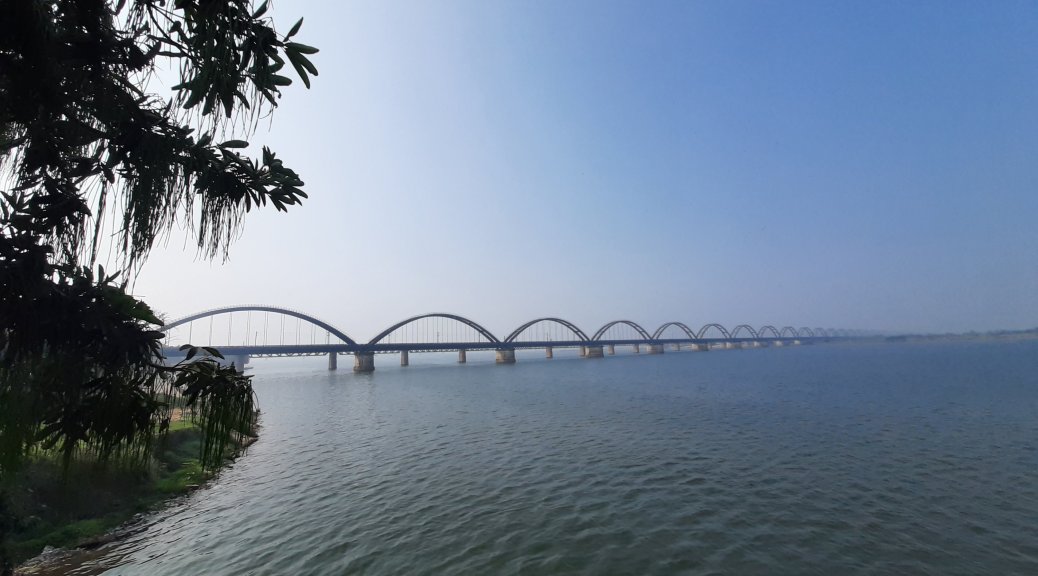
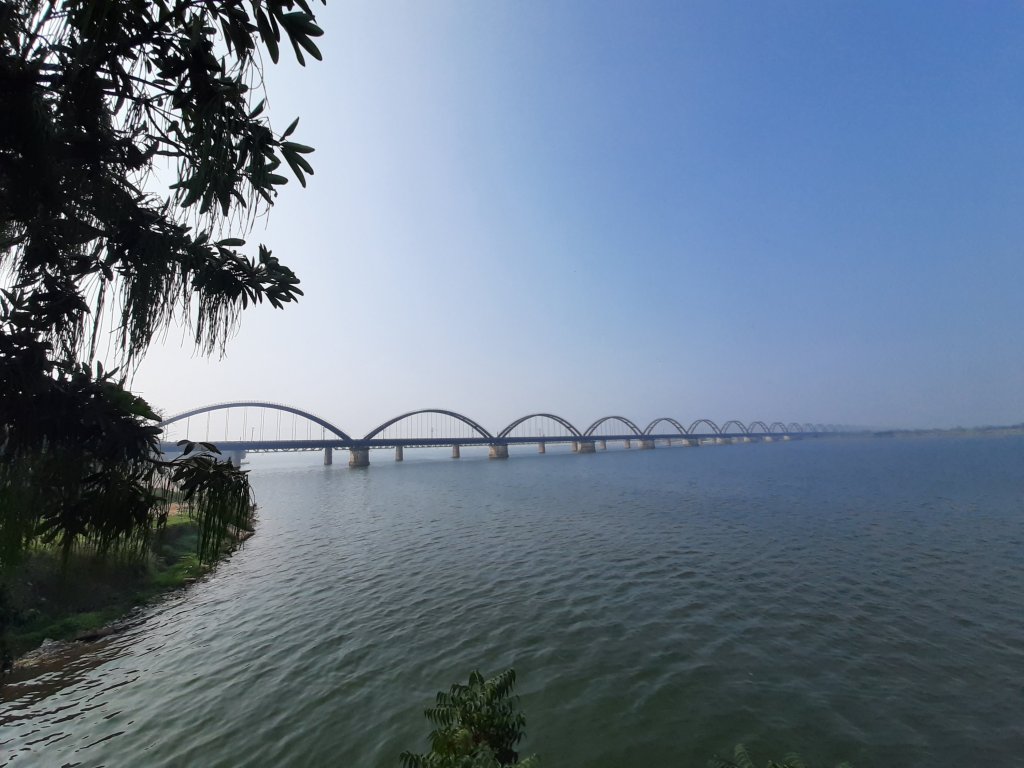
Godavari Arch bridge – Commissioned in 1997, this single line railway bridge is the latest of the three major bridges in Rajahmundry and was constructed as a replacement for the Havelock bridge. This concrete- Bowstring-girder bridge is built parallel to the Havelock bridge with a distance of 200mts.
The arch Bridge at Rajamundry
Apart from the above bridges, there is another road bridge that connects Rajahmundry city with the islands of Konaseema. But what makes this bridge special is that it runs parallel to another heritage structure built across the mighty river. Dowleshwaran Barrage is an irrigation structure built in 1850 by a British engineer, Sir Arthur Thomas Cotton. Earlier to the construction of the barrage, the place used to be constantly flooded and unworthy of anything. This 3.5kms long barrage then allowed the floods to pass through and enriched the place making the unused land worthy of cultivation. It was rebuilt in 1970 and renamed as Sir Arthur Cotton Barrage or Godavari Barrage.
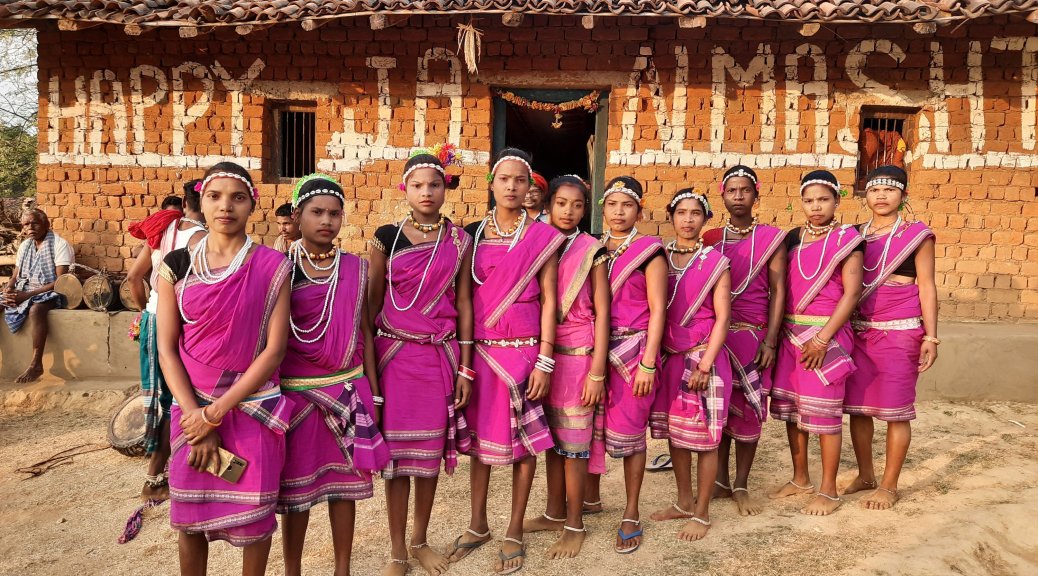
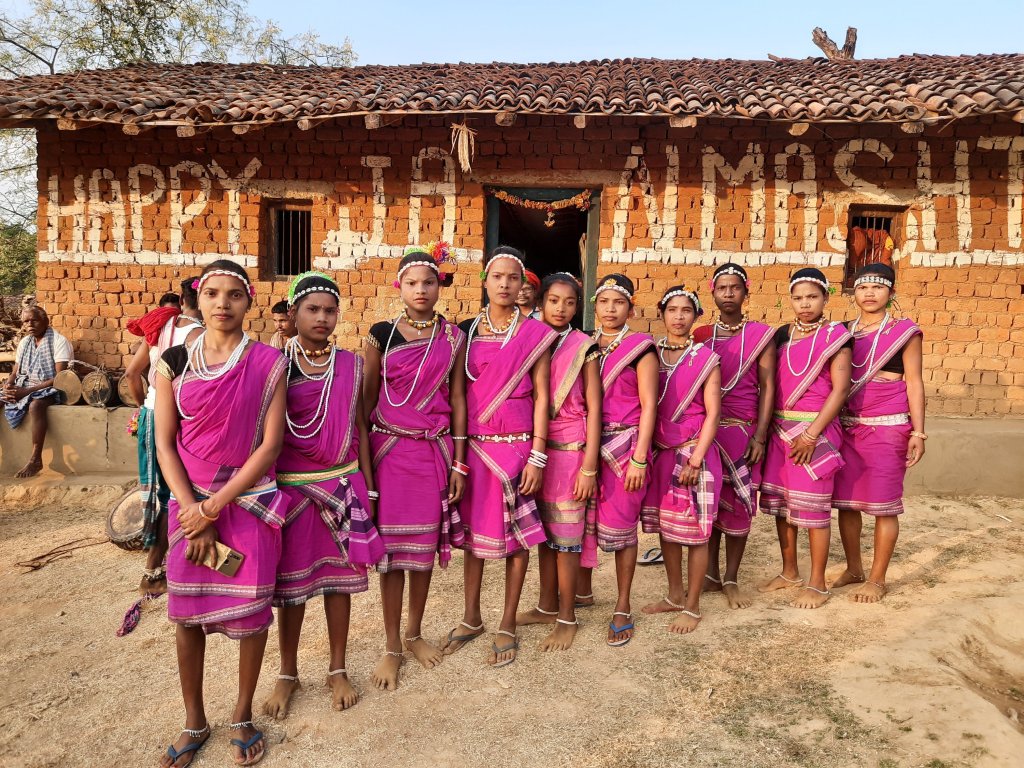
For someone visiting Chhattisgarh, experiencing the tribal culture and enjoying the rawness of the natural landscape in Bastar would undeniably be the priority. If you are lucky, then you might get the opportunity to visit a tribal Ghotul. A Ghotul is a structure that accommodates people. It is either an open arena with earthen floors, without walls and with roofs laid with wood and hay or it is a completely closed structure built with earthen walls decorated with various murals. ‘But what is so ho about it?’, one may ask.
The Muriya girls with a Ghotul in the backdrop
The primary purpose of a Ghotul is what makes it important in the regional culture of Bastar in Chhattisgarh. It is a socializing club for the unmarried youth of the Muriya and the Gond tribes which also in some parts, serve as a dormitory for the registered members. Young boys and girls register themselves with a Ghotul of a particular village or area when they hit adolescence and the functioning of this traditional club is presided over by a head boy and a head girl from the respective tribe. Here, every evening, the members gather and learn the essentials of taking up a new life ahead of them. Reaching adolescence means that they have become eligible to get married and take upon the responsibilities of running a family. So, they are taught all the required life skills like managing a house and a family, folk traditions, music, cooking, religion, cleanliness, discipline, sympathy and everything else. The whole idea is to pass on and contain the traditions within the tribe.
The celebration dance by the Muriya tribes for hunting a game
This also promotes inter-tribe or inter-Ghotul weddings so that a member of a particular tribe doesn’t leave the community and the strength of the community is sustained. While pre-marital sex is considered as a taboo elsewhere in India, this culture encourages the youth to indulge in sexual activities to find the most compatible life partner. It is said that if a member of a Ghotul gets pregnant and doesn’t know who the father of the baby is, the village will adopt the baby and nurtures it as everyone’s own child.
Due to the rich ideology of conservation of the culture, people from across the globe come to study and understand the functioning of these Ghotuls. The Muriyas indulge in celebration of the little things from their daily lives. For example, after a successful hunt in the wild, a birth in the community, a betrothal, etc. They have about 12-15 different types of dances that they perform to celebrate these everyday joys. There are rituals and a sequential procedure on how the members need to conduct themselves in the course of visiting a Ghotul like getting ready, dressing up, assembly and starting the evening at the Ghotul.
I got an opportunity to visit one such Ghotul and here is a video of a dance they performed for us.
the Muriyas celebrating a game hunt at a Ghotul
As a small introduction to the video above: In this dance, you can see two hunters dancing around and in between the other members, while musicians are standing in the middle and playing the traditional instruments. There are also a couple of men wearing head gears that look like chital / spotted-deer which indicates that this celebration is after a game was shot-down by the hunters and brought to the Ghotul for a feast.
What are your thoughts and views about the Ghotul system? Share them with me through the comments below.
The list starts from 2015, a religious celebration of the festival of love and lights- Deepawali. Well, I’m not a religious person who would indulge in ritualistic prayers and pooja on any festival. But what started as travelling during this season to utilise my unused leaves combined with maintenance shutdown period at my workplace, has somehow religiously stuck on as a ritual of travelling to a new place, every year.
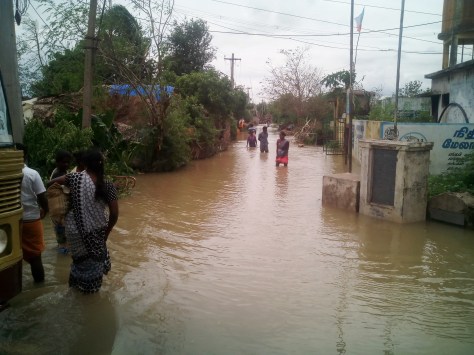
Circa 2015- Tamil Nadu: My brother and I ventured out on our backpacking roadtrip to Tamil Nadu, Kumbakonam to Pondicherry. Well, this was an adventurous start I guess, we had to cut short our trip due to a cyclone that had battered the east coast. Result: Crazy floods and crazy drive through the flooded areas. On the main festival day, we had reached Chidambaram- a must read post about our experience. A bad one then, a memorable one now.
The flooded villages enroute to Chidambaram
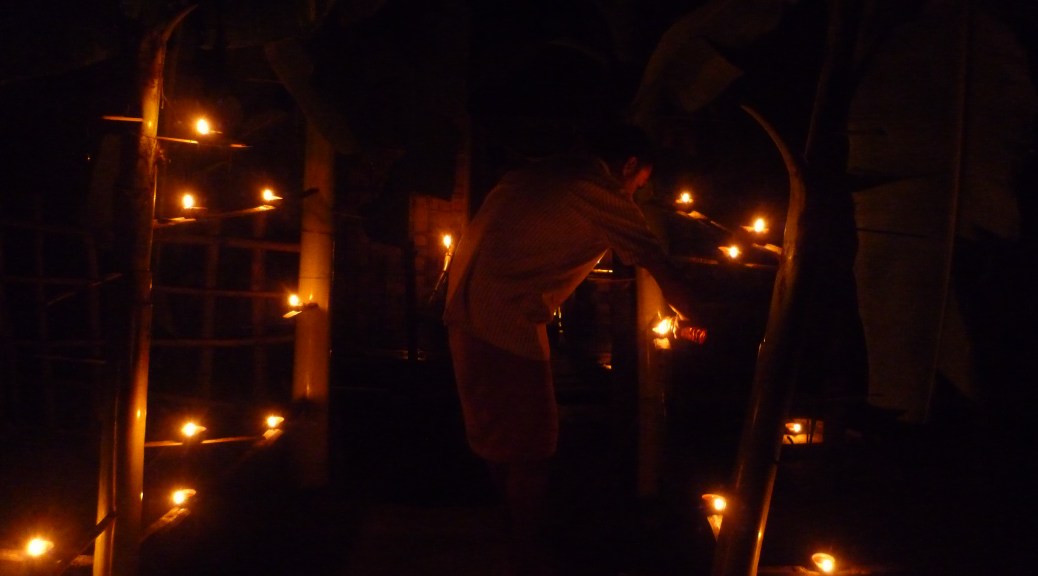
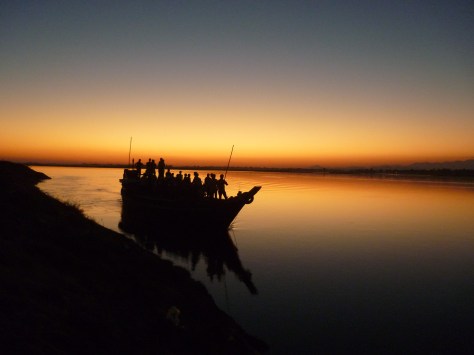
Circa 2016- Assam: This was my first solo trip ever and the first time in the north-eastern part of India. After exploring Meghalaya, I had tagged along with a couple of other fellow travellers. We happened to experience one of the most beautiful Deepawali sights. First, the drive through the lamp lit national highway, then watching the best sunset over river Brahmaputra onboard a ferry to Majuli and the crazy ass lamp lit welcome on the Majuli island.
Sunset at Majuli
Circa 2017- Karnataka: After a crazy long year of travelling across India, my friends and I decided to have a simple deepawali roadtrip, closer home in the western ghats. We drove to the famous Agumbe ghats and the places around.
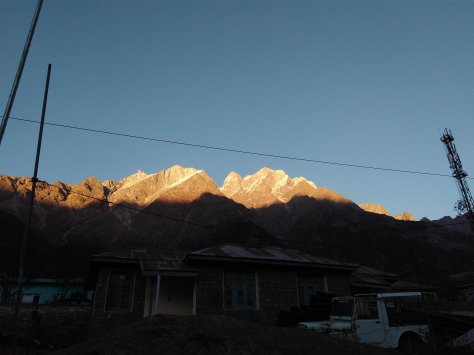
Circa 2018- Himachal Pradesh: One of THE best solo trips of my life, where I couldn’t find a single traveller to tag along through the entire trip. This thus, became a thorough personal and local experience in the Spiti valley. On the day of Deepawali, I was on my way back with a brief stopover at Shimla. A trip that made an impact on me, perhaps forever.
Sunset view from Sangla bus stand
Circa 2019- Kerala: A solo weekend exploring Varkala, it was a short one but yet overwhelming. It was a happy-hippy trip, in a true sense.
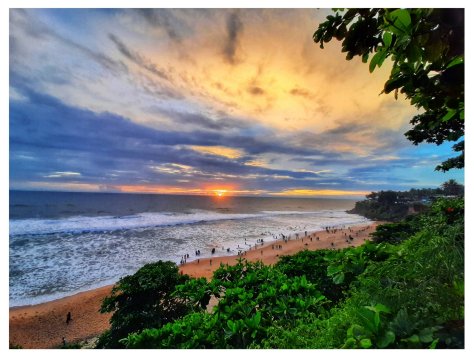
The sunset from Varkala cliff on Deepavali 2019
Circa 2020- Karnataka: Fears of travelling afar due to Covid-19, personal commitments and taking advantage of working from home, this was the longest duration I spent in my hometown in the last 15 years. Quite unlikely to mention the highlights, but the Deepawali of 2020 indeed tops all the above from the list.
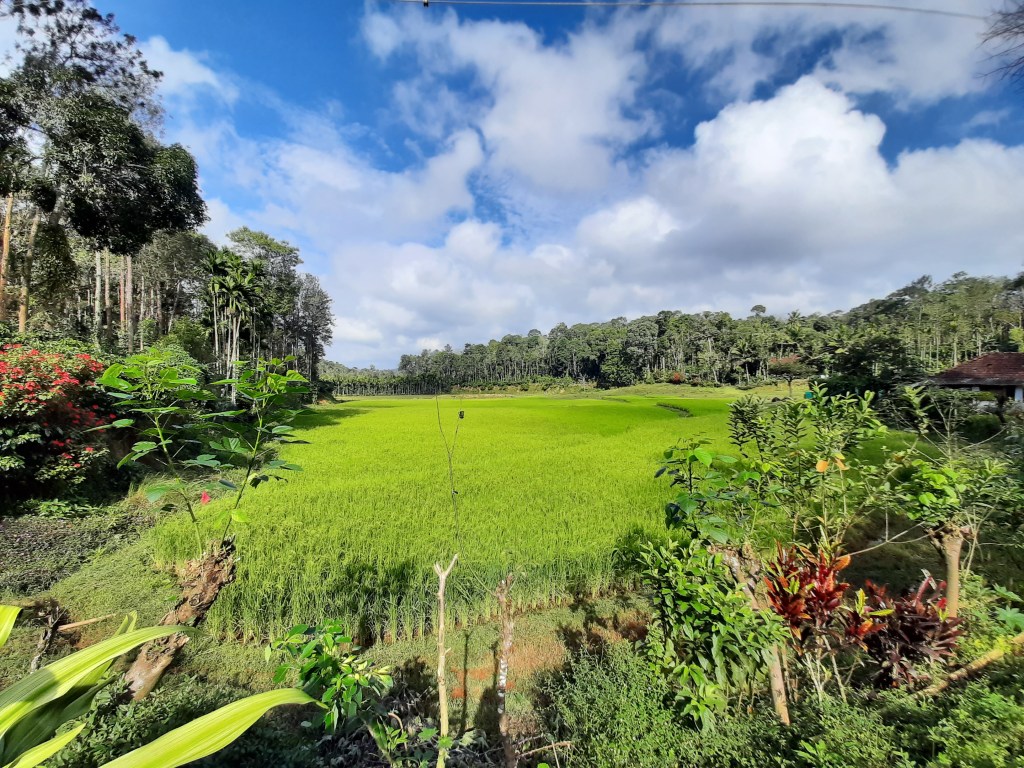
The view of the farm, from our ancestral home in Kodagu
Circa 2021 – West Bengal: This was a trip that was planned on a whim by 2 of my friends and me, where my brother joined in at the last minute. It was a completely new kind of Deepawali celebration which we experienced during trip. Large pandals setup at every 100meters to celebrate Kali Pooja was something unknown to us about Siliguri in the state of West Bengal. That night, we reached ‘Manebhanjang’ a small town located at the entrance of the Sandakphu trek to the Singalila ridge, the highest point of West Bengal. It was yet another experience to witness an amalgamation of Gurkha, Buddhist, and Hindu culture in the way this town celebrates its festival of lights. Much like the carol singers during Christmas, people form into small teams and go from door to door singing, dancing, and spreading joy and blessings.
Circa 2022- Saudi Arabia: It’s a first time for me to spend Deepawali out of my home country but still in accordance to my tradition of visiting a new place during the festival. This time, work brought me here. Although there wasn’t much we could do like in India, some shopping for sweets at Indian sweet meat shops was a little bit of home we brought for ourselves while staying away from homeland. But, I feel grateful for this opportunity and experience life has brought to me during this Deepawali that has helped me to grow into a little stronger person I was when left India.
What are your stories about celebrating Deepawali / Diwali? What do you do normally?
If you have not yet read my story of chasing a tiger trail, Please do! Because this story is the continuation of it. To give you a jist of Part 1: I was on a search mission to find tigers as part of a nationwide ‘Tiger Census’ activity. Another two of my friends too, had been allotted the same National park as me and hence, they were with me for company after the daily beat rounds and at the campsite. While at it, I was chased by wild elephants on three consecutive days, I climbed a tree, I got entangled between creepers and escaped a near miss casualty as I ran for life in the unknown territories of the elusive jungle. But even as a single tiger wasn’t spotted at the end of all the adventure, I was leaving the forest with a sense of accomplishment. But well.. the forest didn’t want to leave me, I guess! It followed me, home.. All the way to Bangalore.
Coming to the point, the forests had started to stick to me since one day before our departure from the forest. That evening, we were sitting at the portico of the guard’s kitchen and looking at the hundred lights glowing at a distance. They were the eyes of a hundred spotted deers glowing in moonlight, that congregate around the forest guest house every evening. We had gotten used to them during our stay, by now. It was nearing a week since we were living and walking in their habitat and we hadn’t been lucky to catch a glimpse of the Big-cat yet. Hence at times, my friends and I hoped that those eyes were of the tiger. While engrossed in our conversation, I had not realised that I had been subconsciously scratching various parts of my body. On noticing this, my friend asked me why I looked so uncomfortable.
Only after that, I realized that I had scratches and marks of my nails on almost every inch of my hands and legs. The irritation had gotten to the extent that my hands had to now reach into my shirt and trousers. I wondered if there was an allergic reaction due to some caterpillar or some plants that I had unknowingly touched. I borrowed a small bowl of oil from the kitchen and went inside our shelter to smear it all over (That’s the first self-medication / home remedy I use whenever I have an allergic reaction in my skin). But this time, it seemed to be getting worse. I had large rashes popping up on almost every inch of my skin. My body had turned red. Apart from a tribal family of Chikkanna who lived across the kitchen door and the cook himself, there was really no one else in the forest for my aid anyway. I assumed that I would be alright by morning and went to sleep that night.
The next morning was our last possible opportunity in the forest, to catch a glimpse of the striped beast. With all anxiety and excitement, I had woken up forgetting about the allergy. Anyway, even that day ended with a fruitless search for the big cat with no sighting. By late afternoon, my friends and I started our drive back, towards Bangalore. Half way through, I came to my real senses. My body was itching bad and it was itching everywhere. I was scratching my body uncontrollably. Initially, my friends found it weird and cracked crazy jokes at me. I too enjoyed their sense of humour and laughed along with them. There was a point when I was literally crying. Crying for two reasons: One, because the jokes were SO funny and I was laughing; two, because I couldn’t stop scratching myself so hard. It was insane. Only I knew what I was going through!
But why only Me..? God must have taken pity at my plight. The other friend in the car too slowly started to scratch herself. By the time we crossed Mysore, both of us were scratching ourselves. It was unbearably itchy! That’s when my friends realised the seriousness of the situation. For most of the road, we prayed that we reached home asap and got a good shower, hoping that would help us to get fresh and feel alright. But as we entered Bangalore borders, we saw the first clinic in our entire drive. we got desperate to do something about our situation and went inside this clinic at Kengeri Upanagara. The doctor took note of the backstory and injected both of us with anti-allergen shots. He assured us that we would be alright by next morning.
We reached our respective homes, took the best shower we had seen in the last 1 week, freshened up, applied some known home remedies and went to bed. The next day, the day after that, the week after that passed. Although the redness in the body had gone, the itching hadn’t stopped. At times, I felt like the itching had subsided. But yet again, I felt that it didn’t subside and I was getting used to it. I had scars all over my body due to the incessant scratching. Fifteen days later, my dad felt irritated at what I was going through and took me to a physician. He gave me a prescription with 4 different types of tablets and assured us that I would be alright within the next three days.
Three days exceeded a fortnight since the that visit to the doctor. It had been more than a month in total since I returned from the Tiger census and I was still scratching my body. That’s when my mom suggested me to go to a dermatology specialist at the KIMS hospital (Kempegowda Institute of Medical Sciences). I was ready to do ANYTHING, to get myself DONE with this. It had started to get embarrassing to go to office and public places by now. I had started to feel like people around me were distancing themselves because this seemed like a dirty habit to them!
I went inside the doctor’s cabin. He asked me what the problem was. No backstory, I only showed my hand and said that I had similar rashes all over my body. Straight to the point, he asked me: “Did you go to any beach?”. “No, I had been to a forest for a trek.”, I replied. He nodded (god knows what and why!) He handed over a prescription with tablets for two days and an ointment. Without really any hope if it would work this time around atleast, I walked out with yet another list of medicine in my hand.
I went home and popped the first pill from the latest prescription. It took me half an hour, THAT’S ALL….. I was relieved of all the mind-blowing (like LITERALLY!) struggle I was going through, since over a month. The itching STOPPED… like to ZERO! Like CRAZY…… Why hadn’t I gone to this doctor earlier!!! Why oh, WHY?? Anyway, I completed my medicine course and the ointment helped me to lighten the scars on my skin over the next 1 month. I suggested the same medicine to my friend as well and she too recovered.
Well apparently, My friend and I were bitten by tiny mites that live in the forests. These mites enter the blood stream through the skin and lay eggs inside the dermis. The doctor at KIMS got this absolutely right and hence, we were cured of our embarrassing situation.
Lesson: Always go to a doctor who is specialized in the related subject unless and until you are unaware of what is the source of the problem.
I remember how Indians went frenzy to watch the movie- ‘Bahubali 2: The conclusion’, a story that is something purely fictitious. But, ever bothered to know what the ending of the two greatest stories of Indian mythology is like? What happens to the protagonists in Ramayana and Mahabharata? No, they don’t end at wars. There’s more to it and I’m pretty sure most of you wouldn’t know.
I was lucky that my travels took me to these places that are often spoken less about. Tucked away from the mainstream tourist circuit, these places were a sort of discoveries for me that happened only because I travelled. Read further to know more.
1. Ramayana- The conclusion Ayodhya and SriLanka are two places that comes to our mind instantly when we think of the epic Ramayana. The climax of the story has Lord Rama bringing back his wife Sita safely, after waging a war against the demon King Ravana. They then return to Ayodhya where preparations are on for Lord Rama’s coronation as the King. But sooner, he realizes that the purpose of his incarnation on earth was completed and he had to return to his abode- Vaikuntha. The story concludes in Lord Rama undertaking his Jal-Samadhi by walking and drowning in river Sarayu. This place is marked by the modern day ‘Guptar Ghat’ at Ayodhya.
Our “The AYODHYA view”
2. Mahabharata- The conclusion Kurukshetra, in the modern state of Haryana is one place that we immediately associate with epic of Mahabharata. Of course, the climax has the war between the Kauravas and the Pandavas at this place. But the primary protagonist of the epic- Lord Krishna sees his end in the modern state of Gujarat. He finds his way back to vaikunta after serving the purpose of his avatar on earth. As he readies himself to leave earth, he sits under a tree in meditation at Bhalka theerth also known as Golok Dham. Krishna’s feet are shot at by a hunter named Jara, mistaking it to be that of a wild animal. Krishna who is fatally wounded then walks into the river Hiran, where he drowns for life. This spot is marked by a marble replica of a pair of feet on the banks of the river, near Somnath.
So… I headed straight from office to Bengaluru Airport to catch a late-night flight. Just so that I could make it to the railway station to catch the early morning ‘Himalayan Queen’ on time. Just so that I could reach Kalka on time. My friend in Delhi helped me in my commutation juggle between the airport and the railway station. Then, the Himalayan Queen chugged off from Delhi. Apart from seeing a hazy sunrise through the windows, I slept through most of the journey until I reached my first destination in my 10-day long tour, that afternoon. I ran to the special platform in the other end of the station at Kalka to board the ‘Himalayan Queen’ that ran on a narrow-gauge thereafter. Only to realise that it was delayed by an hour.
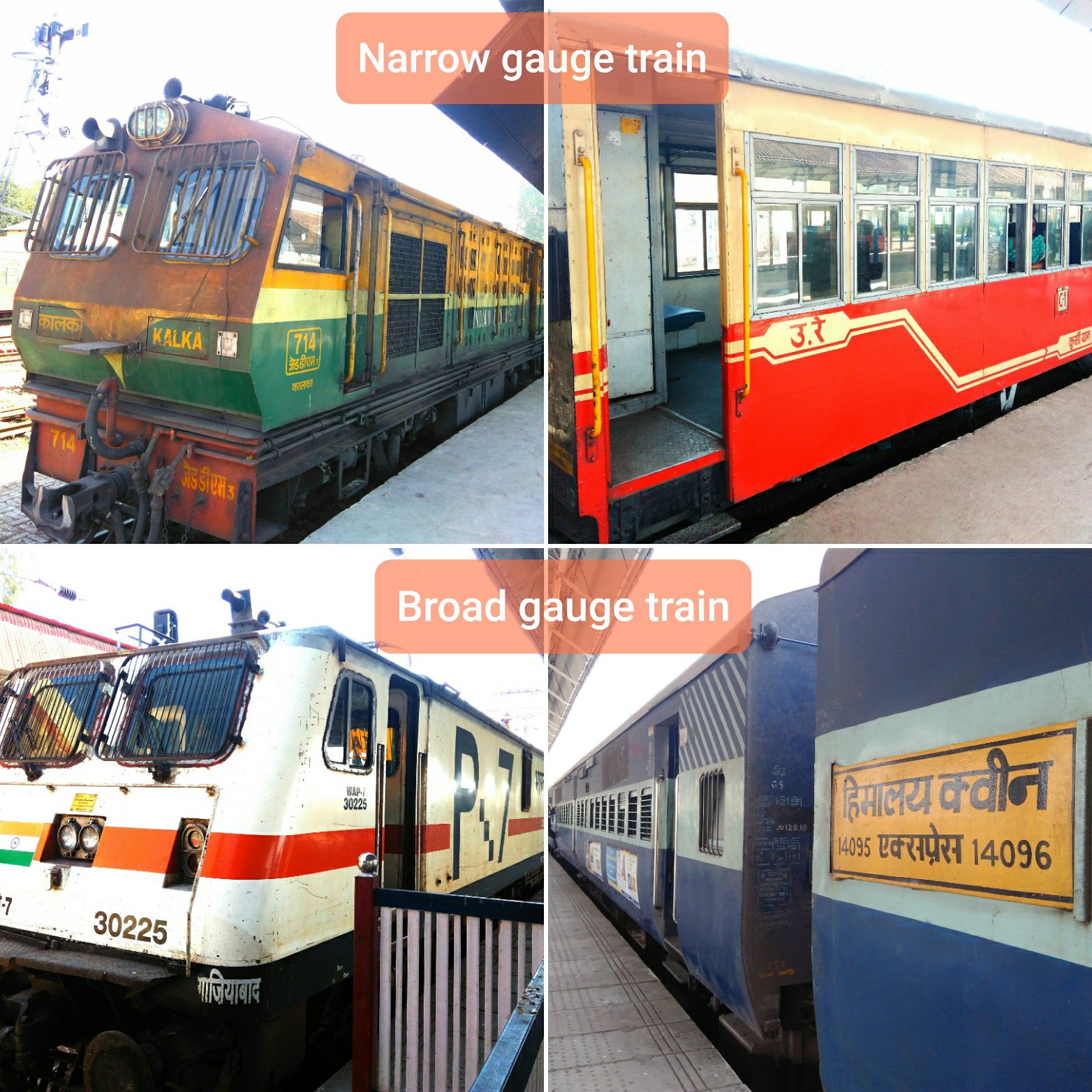
The Himalayan Queen Trains. Top: The narrow gauge train between Kalka & Shimla; Bottom: The broad gauge train between Delhi & Kalka
Anyway, the ride in this train which is a part of UNESCO Heritage was a different experience. The 1st class bogie had old cushioned wooden adjustable chairs like you would have at old single screen cinemas, an unfamiliar thing for those familiar with the regular compartments of Indian Railways. The route was scenic as the train passed through hills, forests, tunnels and cliffs. It stops at several stations that allows ample time for photography and for exploration for passengers who are mostly foreigners. One such stop was the halt at the Railway museum at Barog. But yeah, the initial excitement of experiencing a narrow-gauge waned down soon as the journey got monotonous and long having none of the co-passengers to talk to. It was dark and cold by the time I alighted at Shimla. That’s where my real trip began…
The Barog railway station and museum
After searching multiple online sites and walking around in the unknown city in search of a suitable place to stay, I was still clueless of where to go. I finally settled down at a rather shady looking place when I realized that the backpack was quite heavy, and the cold was becoming unbearable for me. The guest house was old and the things in the room were unkempt too… Anyway, I had settled there as the caretaker seemed okay to believe in. I locked myself up in the room, used my sleeping bag inside the warm blankets that were provided and tried to sleep (although I didn’t!).
I checked out of the place at 05.00.a.m. on the following morning and started to walk towards the HSRTC bus-stand based on directions given by the caretaker. I took the wrong deviation and lost my way. I saw that I was reaching the city central area and continued to walk as I hoped to find someone. I heaved a sigh when I saw the army command building. I stopped by to enquire the guard outside for directions. Since I was carrying a large backpack, walking with a face covered with a balaclava, all alone on the empty dark roads, he began to question me suspiciously. Once he heard the girl’s voice and I told him that I was traveling from South India, he introduced himself as a Tamilian who had been posted there just a couple of days ago. He was of little help and I proceeded. Google maps didn’t seem to be of any help either, as the distance only increased every time I walked ahead. I then came across a man on his morning walk who guided me through what he called was the shortest walk path. It was long, dark and scary initially. Although there didn’t exist an official road, the distance (may be aerial) on google map kept shortening. It was a descent downhill and I did back and forth when I had my doubts. Finally, it had dawned when I reached the bus stand and relieved when I saw a few newspaper distributors sorting their dispatches. I had missed the first bus that was heading towards Sangla. They introduced me to a man in a tea stall, whom they said was the driver of the next bus which was scheduled an hour later. The driver offered me chai and asked me to stay around.
Finally, the bus started. It would drop me until Karccham from where I had to board another one. The journey to my destination was going to be a long one. Amidst the early morning rays, the verdant hills looked amazing and I was excited about the road. The bus conductor and the driver were both nice people who kept checking on me every now and then as I was alone and new. They even bought me peanuts to munch along for my journey. An hour on the road, our bus halted. There was a massive traffic jam due to an accident on the highway. A car had gone almost completely under a lorry that came from the opposite side. It was over an hour by the time the police arrived and cleared the spot after inspection. Meanwhile, the hospitable people in the hills obliged to allow me inside their house when I wanted to use a washroom. Would you allow a random person on the road enter your house? I’m certainly not sure if I’d do that myself.
By around noon, the bus that I was travelling in broke down. Given that Rampur Bushar was the nearest town where he could find a mechanic, our driver somehow managed to negotiate the ride till there. Also, the passengers could board another bus from the large terminus in the town. He ensured that I sat in a spot, informed the bus station master to keep an eye on my safety and to guide me to the right bus when it arrived. These are the kind of interactions that make you feel confident about having a safe journey ahead. isn’t it?
That said, I sat in the next bus a good 2 hours later. It was a direct bus to my destination: Sangla. But I had a carry-over ticket from the previous bus only until Karccham. The conductor of that bus was fussy about considering the carry-over ticket until Karccham. But I stuck to what I was instructed by the previous driver. A good argument later, I got my ticket extended by paying only for the journey between Karccham to Sangla. The sun was slowly coming down as I approached my destination.
Sunset view from Sangla bus stand
Finally, when I alighted at the Sangla bus stand, it was by far the most magical sunset I had witnessed all my life until that day. Right in front of me lied the snow-capped Kinnaur Kailash mountains and the peaks had turned golden. The rest is for another story!
This trip has been compiled into a book. If you like to read about the complete journey, you can avail it on Amazon or read it for free with your kindle. Use the link below.
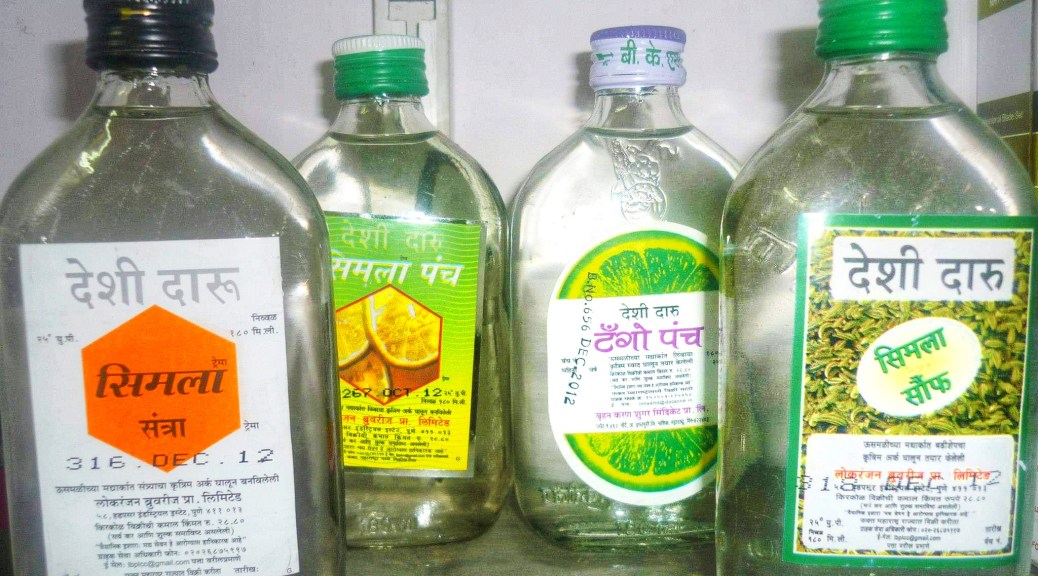
Micro-brewing has been a known recipe back in the Vedic era, where Sautramani was sacrificed to the gods. Known evidences have been excavated from the Indus valley civilization sites of fermentation and Distillation. The Indo-Aryans are known to have Madira or Madu, an alcoholic beverage made from fermented honey. Good poetry flowed down as same as liquor, an essential part of the courtly culture of ancient India. Spirit or liquor is a substance that needs no introduction and unarguably is a part of our lives. While the infamous modern ‘Desi daru’ manifests with various names, yet a lot them remain unknown to the outside world and largely endemic to specific regions.
Here is my attempt to enlist the traditional brews from all the states of India that can help you as a ready reckoner while you are out travelling in this beautiful land. I would like to crowdsource the few missing details, please drop in the comments if you have anything to share.
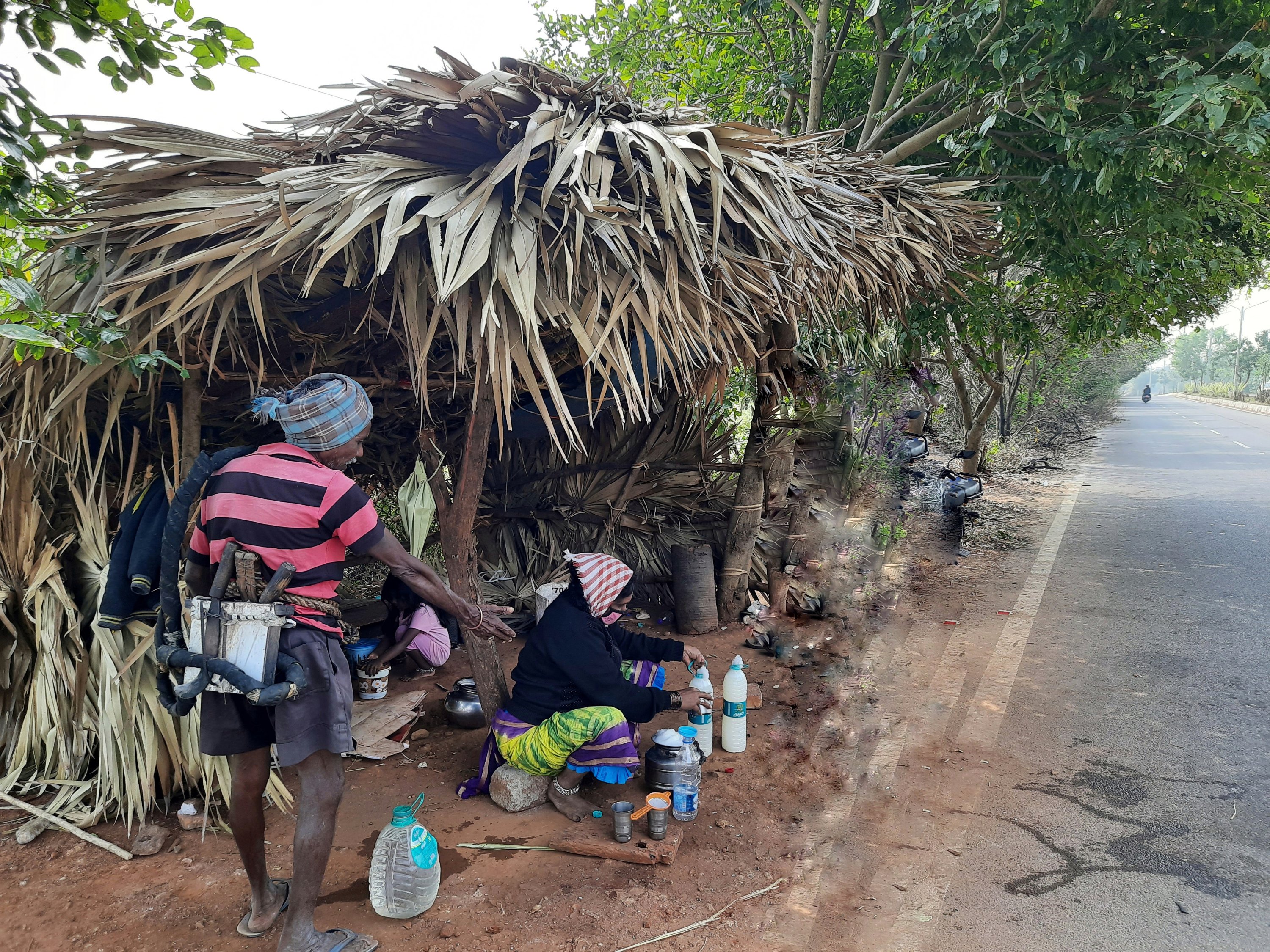
A traditional Toddy/ Kallu tapper selling Kallu at one of the shacks
Andhra Pradesh: Kallu- This is fermented palm sap that is consumed as a beverage in most places in Asia. In Andhra, there are mainly two types. Thatti kallu, a fermented beverage made from palmyra tree and Eethe kallu, a fermented version of the silver date palms sap.
Arunachal: Apong- This is a local version of rice beer.
Assam: a. Judima- This is a rice beer that is brewed to a mild yellow colour and a famous drink among the Dimasa tribe. b. Xaj- This version of the rice beer that the fables narrate that it was used by the Ahoms to dip their new-borns to bring good luck.
Bihar: **Need Help**
Chhattisgarh: a. Mahua wine- This is a wine made with a native flower called Mahua. The potent and 1st extract liquor is called Fully. After the Fully is extracted, the sediment is resused and heated with water. This 2nd extract is called Raasi and is considered 2nd quality. b. Landa- Madiya page is a common welcome drink across the state. In it, ragi, tomatoes and onions are boiled together overnight in rice kanji. The fermented form madiya page is called Landa. c. Laungi & Saunfi- These are potent whiskeys consumed together in combination. These are one of the most expensive brews in the Bastar region. It is made with cloves & Saunf respectively and are consumed only for medicinal purposes. It is primarily believed to treat gall stones and will lead to side effects like blisters all over the body if consumed in excess quantity.
Goa: Feni- The party capital of India cannot be without its own potion. Feni is an alcoholic beverage brewed either with coconut palm or cashew apples.
Gujarat: **Need Help**
Haryana: Kanji- This is a speciality consumed during Holi festival. It is a naturally fermented drink made with water, carrot, beetroot, mustard seeds and asafoetida.
Himachal Pradesh: Ghanti- Also called as the Kinnaur Chulli, this local beverage is an apple and apricot based liquor.
Jammu & Kashmir: Lugdi- This beverage is prepared by fermenting cooked cereals.
Jharkhand: Handia- This is a rice beer, popular not only in Jharkhand, but also in Bihar, Madhya Pradesh, Chhattisgarh and Odisha.
Karnataka: a. Fruit wines- The quaint hill station of Kodagu is popular for its homemade wines. You name a fruit and you will get the wine here. Even ginger, betel leaf or bird’s eye chilli wine are available, flavors that will linger in your tastebuds for a while. b. Sendi- This is fermented tree sap from the areca palm. It is largely popular around the coastal and Malnad region.
Kerala: Toddy- This is coconut tree sap which is left to ferment overnight. It is sold in government approved toddy shops across the state.
Madhya Pradesh: a. Hariya- This is a rice beer fermented along with herbs, a speciality of the Santhalias & Mundas tribe. It is offered as a gift to god, dowry during marriages and gifted to relatives on special occasions. b. Sulphi- Pronounced very similar to a selfie, this is a fermented drink made from the sap of a local palm called as a sulphi tree. It is of two types, one white and the other is honey coloured.
Maharashtra: a. Strawberry wine- Satara is the strawberry heartland of India and it is that they have their own version of fruit wine too. b. Orange wine- Nagpur famous for its orange orchards has its own recipe of the love potion too.
Manipur: Sekmai Yu- This local rice beer is potent like the Vodka and is often called as the Indian Sake.
Meghalaya: Kyat- This is a rice beer which was originally introduced as a medicinal remedy to the Pnar people.
Mizoram: Zawlaidi- The name means ‘love potion’ in the local language. It is a local version of grape wine.
Nagaland: Zutho- This is a generic name for rice beer across Nagaland. However, the flavours, ingredients and brewing method varies for each tribe. Some are even millet based. Hence, it is a great idea to taste all of them while you are there!
Odisha: Kosna- This rice beer is like handia and has similar origins. Hence, it is also popular in the states of Bihar, Madhya Pradesh, Chhattisgarh and Jharkhand.
Punjab: Tharra- Also called as Punjabi desi, this is a rum brewed and distilled from sugarcane molasses.
Rajasthan: Kesar Kasturi- Often referred as the ‘Royal brew’, this potion is a blend of saffron, dry fruits, herbs, nuts, roots, spices with milk & sugar which is distilled into alcohol.
Sikkim: a. Chaang- This is a fermented millet drink and is generally served hot. b. Kodo & Tongba- These too are finger millet drinks, like Chaang and are served hot. c. Raksi- This is a local brew that is consumed during local ceremonies, especially before participating in possession of evils.
Tamil Nadu: Kallu kadai- Pathaneer or Neera is the unfermented palm sap which is very sweet and considered very healthy. When this neera is allowed for a few hours, it ferments naturally and then kicks you like any other alcoholic beverage.
Telangana: Gudamba- This is a local liquor made with sugarcane.
Tripura: Chuak / Chuwarak- This is prepared through an elaborate process to intoxicate rice and pineapple or jackfruit.
Uttar Pradesh: Bhang Thandai- This is a milk-based drink that is a concoction of natural herbs, dry fruits & nuts and spiked up with cannabis. It is available in government run Thandai shops across the state and a speciality consumed during the Holi festival.
Uttarakhand: Buransh wine- Buransa is a native rhododendron flower. It is believed to be very juicy and used in local squashes and jams. This is fermented and the rare wine is thus made.
West Bengal: Bangla- This is fermented starch prepared as an offering to Goddess Kali. Often, it is believed to have spurious concoction and usually not advised for consumption.
Aren’t alcoholics the true economic warriors of India? Do you agree or not?
Art is an integral part of human life. Paintings are yet another form of expressing imaginations. The history of paintings in India dates to pre-historic times where there are several rock and cave paintings scattered across the sub-continent. Painted pottery on terracotta and ceramic too have been excavated at several sites. Eventually, it became an attempt to bring the storytelling of the Indian epics to a visual form, each one using the material available locally for colour and canvas. Some forms were patronized by the kingdoms that ruled India and yet a few, used by the local tribes to decorate their dwellings. The use of natural colours on naturally available surfaces has evolved with the generations, picking up influences from various events, people along the way.
This is the land of great artists like Nainsukh, Raja Ravi Varma. Bright and rich colours are now an inseparable part of vibrant culture and lifestyle of being Indian. Here is my attempt to enlist the traditional and folk paintings from all the states of India that can help you as a ready reckoner while you are out travelling in this beautiful land. A few, I would like to crowdsource the details wherever I failed.
These paintings can be strategically used in our daily life that will help revive, sustain and promote these ancient art and rural economy.
Andhra Pradesh:
Deccani paintings– are miniatures which predominantly feature palm trees, men & women. The art has a significant influence by the Deccan sultanates who ruled around this area.
Nirmal art– is where the artisans have developed their own canvas using cardboard and luppam. The striking designs in the form of creepers, flowers etc. have evolved on furniture today.
Savara paintings– This wall art is practiced by the Savaras tribe around Vishakhapatnam. The wall is readied with a mixture of red soil and paper. The painting is done with brush prepared by chewing tender bamboo into various thickness. White colour is derived from rice powder and black colour is derived with a mixture of coconut ash & castor oil.
Kalamkari– This is a fabric painting form popular in the rural parts around Machilipatnam. Primarily human faces are block printed using vegetable colours.
Tholu Bommalaata– This is an art of making leather puppets that are hand painted using vegetable colours, mainly found in the region around Adilabad.
Arunachal Pradesh:
Kuthang strolls– These are intricate religious paintings of the Buddhists. These are derived from the Tangkha paintings that are auspicious symbols hung in every monastery and houses.
Assam:
Khanikar art– These are religious paintings that adorn the monasteries & Satras around the state.
Assamese silk scrolls– Traditional colours of Hangool & Haital are used to draw representations from Ramayana and Mahabharata on silk strolls. This is practiced in the upper Assam region.
Bihar:
Mithila or Madhubani– These are originally intricate wall paintings that depict Ramayana & Mahabharata adorning walls across the rural parts of Mithila region and have now become synonymous with the state.
Patna Kalam– this is also another art form largely patronised during the Gupta era. Several paintings have been found in the Nalanda excavations.
Chhattisgarh:
Godna– This is a primitive art form that has been largely in practice as body tattoos by the women folk in the Jamgula and Bastar region. It has found acceptance in the form of motifs on textile with natural colours mixed with acrylic paints.
Goa:
Kaavi mural paintings– is largely popular in the Konkan region. As the colour says, Kaavi is a single colour- red pigment derived from laterite soil. Several structures, churches and temples are coloured with red paint on a white background.
Gujarat:
This state is sort of a mélange with vibrant colours used across a range of art forms.
Pithora– These are wall paintings practiced by the Rathwa & Bhilala tribes
Miniature paintings– This art has been used to depict epics and large stories under the Jain patronage in 11th century.
Glass painting– It is believed that the earliest form of painting on glass (Belgium glass) originated in Gujarat.
Kalampari art– This is a fabric painting technique practiced by the Chitara community.
With many tribal communities living around the Kutch area, each tribe have their own unique art, patterns and colourations used in their daily life like walls, huts, attire, jewellery, pottery etc. It is an endless list but here are some of them from the Rann of Kutch.
Rogan painting
Terracotta paintings like Kavda pottery is believed to have techniques dating back to the Indus Valley civilization.
Haryana:
This is probably the only Indian state that doesn’t have a native art form. With several dynasties and rulers who came and went in this region, there has never been any specific art style that found patrons among who were always busy in fighting battles.
Himachal Pradesh:
Kangra & Chamba miniature painting– Although largely spread across all the Himalayan states and largely coming under the Pahari paintings umbrella, the region of Kangra gave its name to the paintings that was largely promoted and patronised by the Rajputs. However, each ruler gave the art form its own twist and called it a different name.
Jammu & Kashmir:
Basohli miniatures– Again a part of the Pahari painting, the famous artist Nainsukh is believed to have moved from Chamba and have settled in this region during his last days. Thus, giving its name to the bold and intense form of painting the Ramayana and Mahabharata. Hence, Basohli is the first school of Pahari paintings.
Jharkhand:
Paitkar scrolls– Ramayana & Mahabharata stories are depicted on paper with colour made from vermillion. Fine brush is made using goat hair.
Jadopatia scrolls– This form of paintings is used for story telling which are believed to have healing effects on people.
Sohrai, Kohver, Ganju, Rana, Teli, Prajapati, Kurmi, Mundas, Turi, Birhor & Bhuiya, Ghatwal- these are mural paintings used to decorate the walls of the tribal houses. Each, representing a tribe and have their own style. The common factor between all these styles are that the designs comprise of animals & plants depictions thus indicating the connection of nature and the tribe.
Karnataka:
Mysore Royal painting– influenced by the Vijayanagar school of painting, this art flourished under the Mysore Wodeyars. Bright natural colours obtained from vegetables, organic, minerals were painted using natural brushes. Squirrel hair was used for finer strokes and brushes made with a specific grass was used for various thickness and strokes.
Kerala:
Kalam– This is a short name for Kalamezhuthu, a rural art of painting.
Face painting– with various traditional dance forms and ritualistic prayers, face painting is an essential part of art in Kerala. Largely seen in its vibrant designs and patterns during Theyyams, Kathakali etc.
Oil paintings– These murals are very elaborate piece of portraits largely practiced in the Northern part of Kerala.
Madhya Pradesh:
Gond art– A painting style that is used by the Gond tribes. This largely comprises of finely drawn lines in a picture that encompasses animals and plants.
Pithora wall paintings– this form of art is inspired by various myths and is used by the Bhilala tribe to keep away evils. You can often see walls and both sides of the doors painted with patterns that are believed to protect them.
Malwa painting– This folk art can be found on floors and walls and practiced by the Chitera community. Chalk powder blended with turmeric & saffron for suitable shades of the colour is used in doing these paintings.
Mandana paintings– This art is used to depict special occasions and festivals and used only during specific events.
Maharashtra:
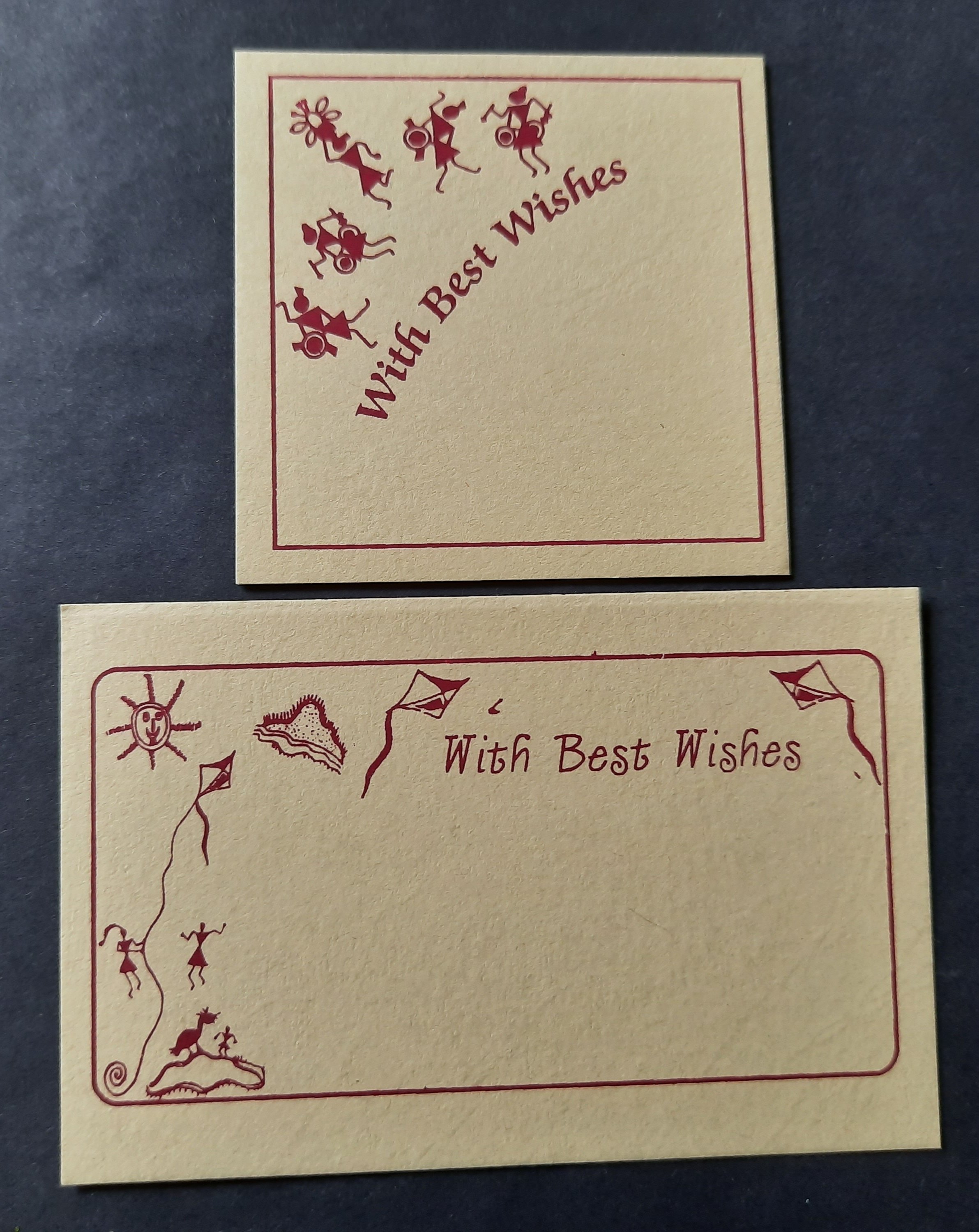
Warli– Used to adorn walls by the tribe, this painting uses patterns like triangles and circles to represent community living, human being, trees, animals and everything in general.
Chitrakathi paper paintings– as the name suggests, Chitra (picture) + Katha (story)- These are single sheet paintings used by a specific migrating community of Thakkar tribe for storytelling. Local version of Ramayana & Mahabharata and other myths are painted using colours made from stones. These are also called as Paithani paintings.
Compliments cards for gifts with Warli art
Manipur:
**Need help**
Meghalaya:
**Need help**
Mizoram:
**Need help**
Nagaland:
Naga cloth painting– Several Naga tribes reside in Nagaland and each have their own designs in their houses, dresses and morungs. However, the Lotha, Ao and Rengma tribes have their traditional designs painted on fabric. Fine bamboo brushes are used to transfer colours that are made by mixing tree sap, leaf ash and local beer.
Odisha:
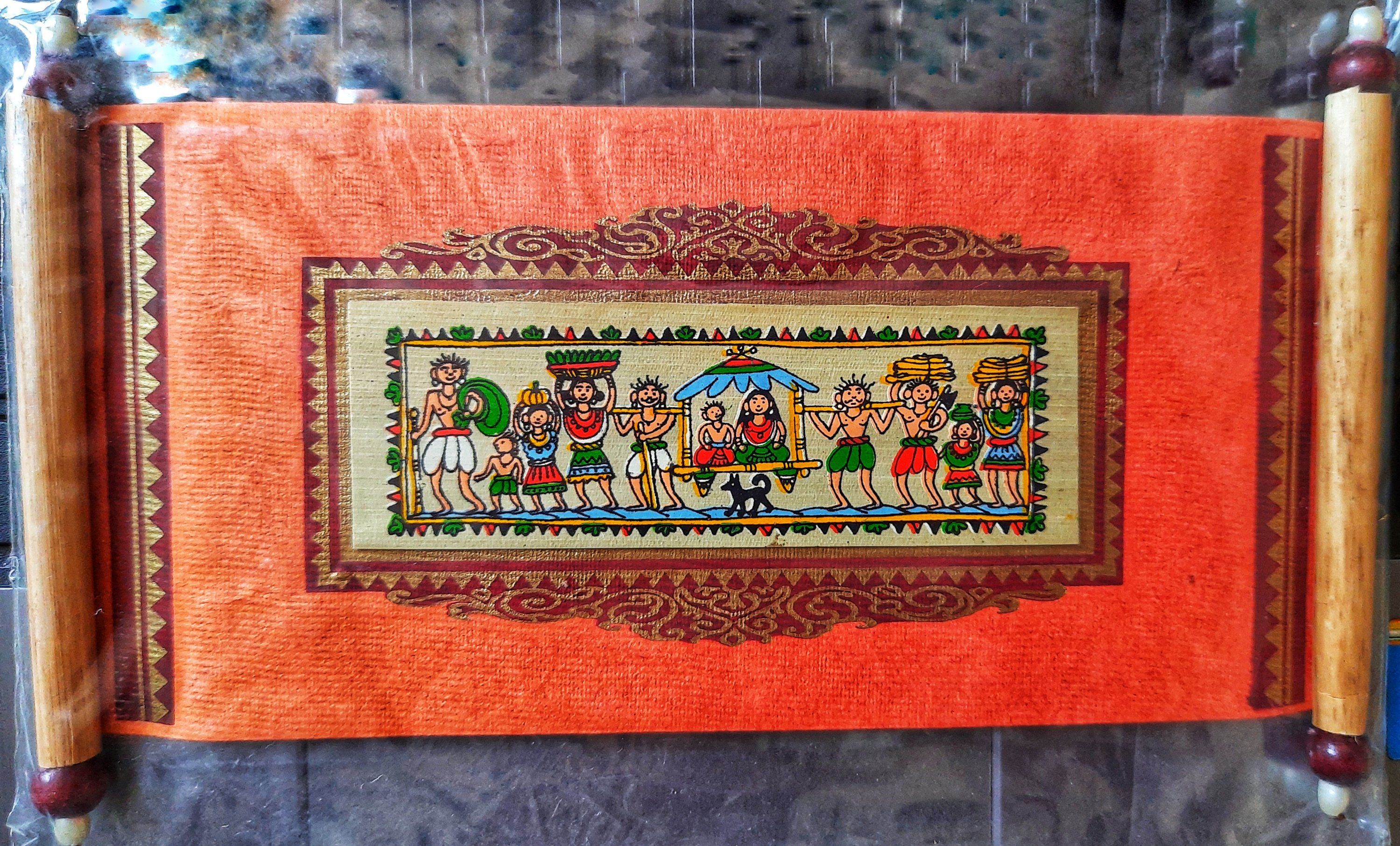
Patachitra– These are traditional cloth-based scroll painting from rural parts of eastern Odisha. It is inspired by Mythic elements like Lord Jagannath and is derived from ancient Bengali art which is used for narration in the visual form when a song is performed.
A Patachitra scroll based envelope- for giving wedding compliments
Punjab:
Sikh miniature painting– This an influence of the Kangra paintings and is used as a narrative of various stories from the life of Guru Nanak. Hence, has a vital role in Sikhism.
Rajasthan:
The list of painting related art forms from this state is endless. Here is a small compilation of the same.
Phad cloth scrolls– These paintings are based on stories from Ramayana & Mahabharata. They have influences of both religious and folk performances by the local priests.
Rajasthani miniature paintings– When the Mughal artisans dispersed from the Northern India, they were sheltered and patronised by various Rajput kings. Individual ruler had his influence on the style, and it evolved into individual styles, largely coming under a common umbrella called as Rajasthani school of paintings.
Wall & ground paintings– Various styles like Devra, Pathwari, Sanjhi, Mandav etc. can be seen based on the individual communities.
Cloth paintings– like Pat, Picchwai, Phad scrolls etc.
Paane paper paintings.
Kavad wooden paintings.
Body paintings– various designs are drawn on human skin using natural colours like Mehendi & Godana
Thape paintings– This is a wall & door painting style that is used to invoke deities. Natural colours like turmeric, henna, vermillion is used.
Badaley paintings– These are either cloth or leather paintings that are used to cover metal utensils. It is prominent around Jodhpur.
Thewa art– This is a form of painting small pieces of glass with gold. It is a famous art around Pratapgarh in Bhilwara region.
Sikkim:
Thangka painting– These are religious strolls that depict important lessons from Buddhism. This uses organic colours and even gold dust and adorns walls, roof and mural in Buddhist houses and monasteries.
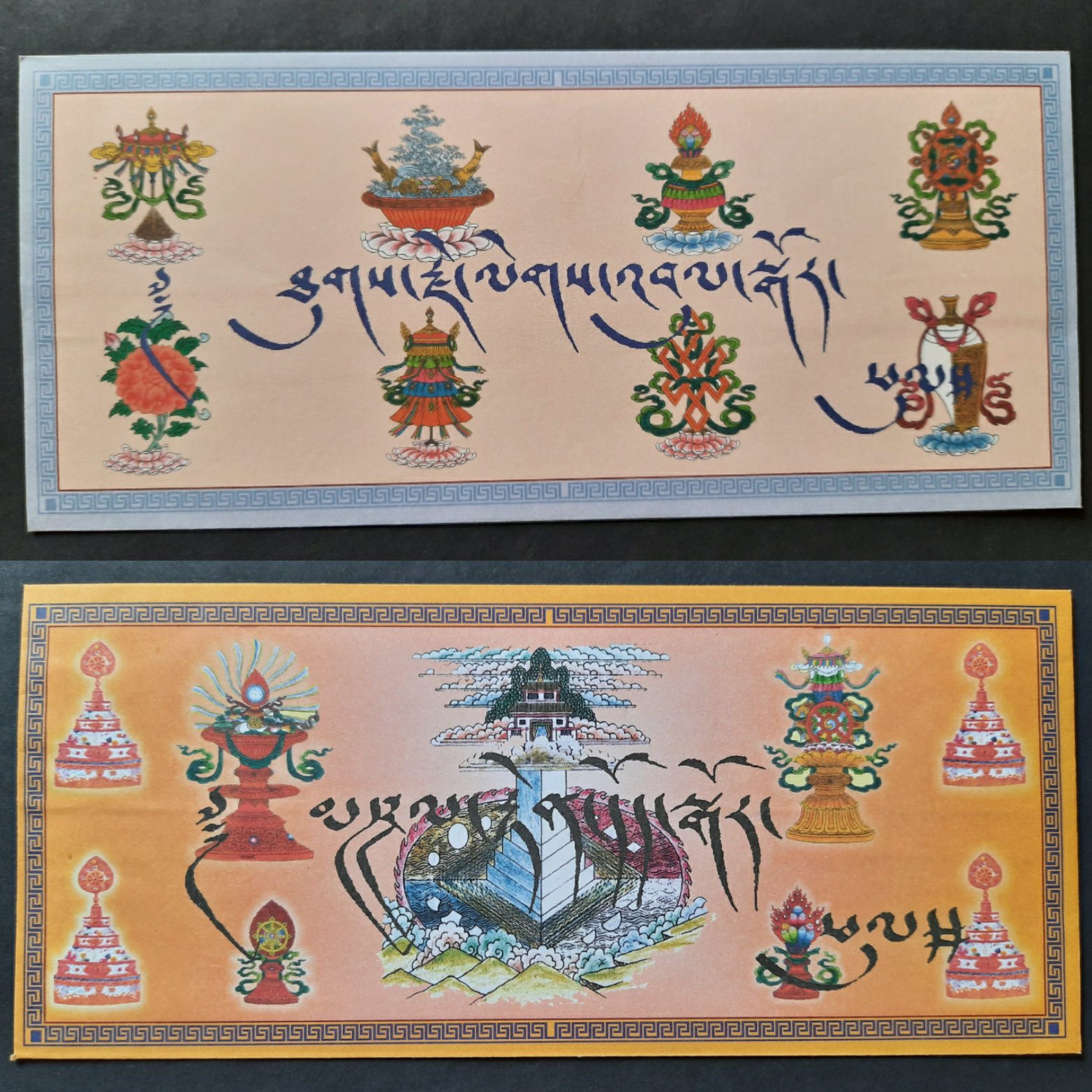
Envelopes with compliments & paintings from Buddhism
Tamil Nadu:
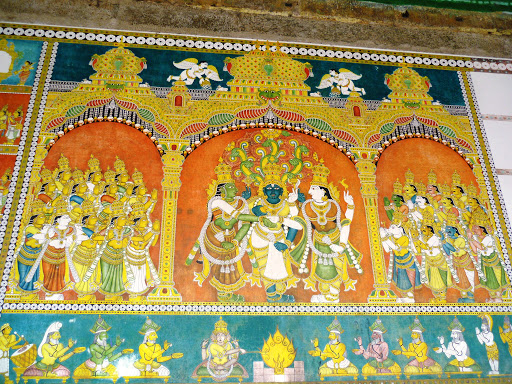
Tanjavur paintings– This is a classical art form that has a 3-D effect with embellished with precious stones, glass pieces & pearls. It has been largely patronized by the Cholas and then have influences from the Marathas and others who ruled the region.
Telangana:
Cherial scroll painting– This is a folk art on very long cloths used for story telling that can sometimes run into several meters. It is painted specifically by the Kako Padagollu community.
Tripura:
**Need help**
Uttar Pradesh:
Mughal/ Persian painting style– The Mughals got artisans from Persia and used their designs and patterns in all their structures across. Art flourished especially during the reign of Jehangir.
Uttarakhand:
Garhwal painting– Again, something that has been a part of the Pahari school, this form largely uses characters that depict romance.
West Bengal:
Patua art– This is a traditional narrative cloth scroll painting style done by a community called the Patuas. An entire story is depicted on a single scroll with several panels for each chapter. The speciality of the art is its people who are mainly Muslim and paint Hindu religious figures in their artwork. These are same as Odisha Pata paintings in theme selection but entirely different in their style and composition.
Kalighat painting– This started as paintings in items that were taken as offerings to Kali temple at Kalighat and has now become a specific form of painting. This is also a form of scroll painting but main difference is that this is done on paper.
Tribal paintings– This is primarily popular among the ‘Santhal tribes’ around the areas of Purulia, Birbung and Barbura.
I missed the morning bus from Reckong Peo and that gave me some time to take part in the annual mela in the district headquarters. I boarded the next bus at noon, from Peo towards my destination for the day- Nako, a small township in the Hangrang Valley, a part of the Spiti valley. The place gets it’s name from a Tibetan word ‘Nego’ which translates to ‘The Door to a holy place’.
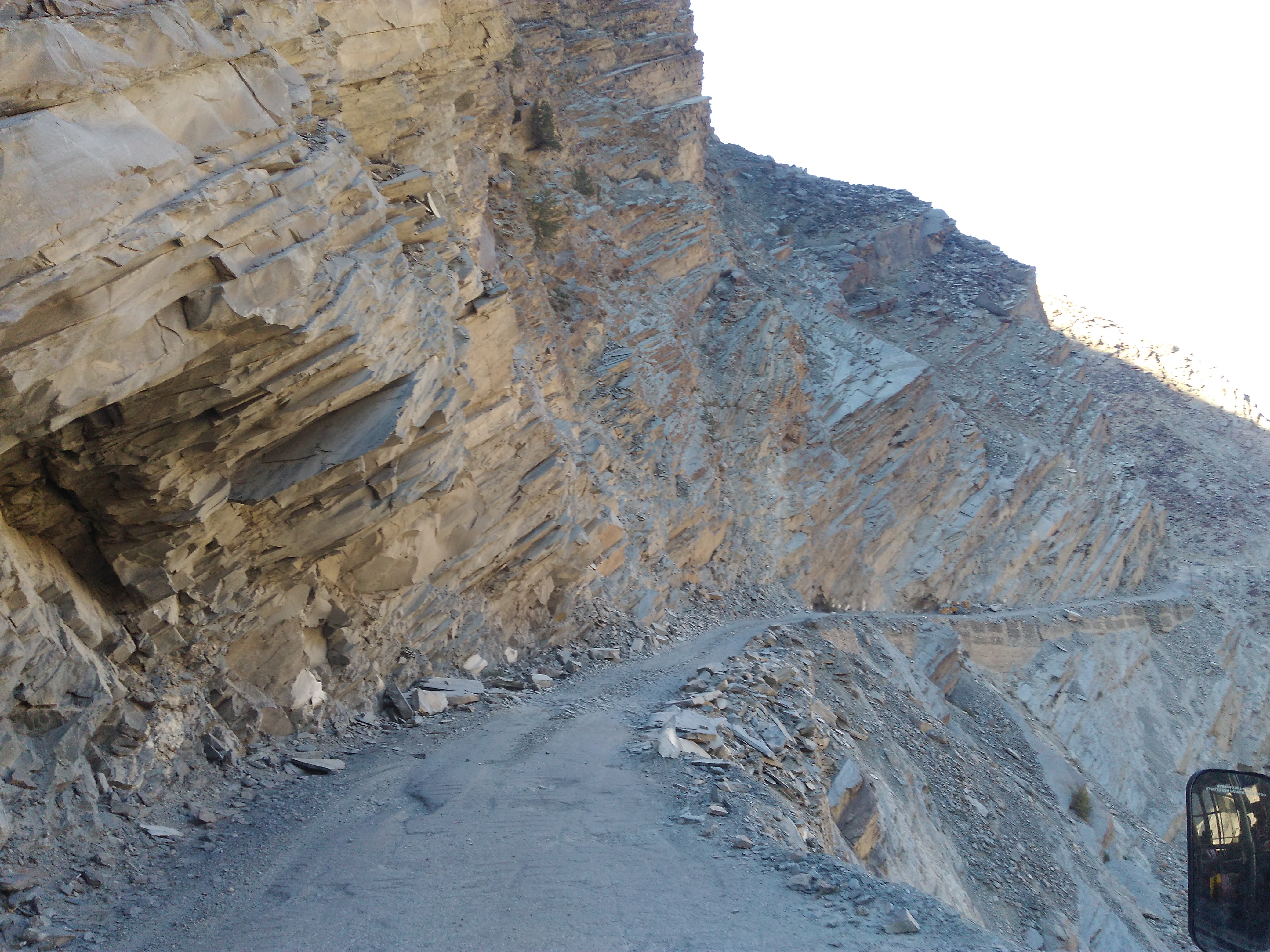
The road from Kinnaur valley, leading to Spiti valley
The transition from Kinnaur valley to Spiti valley was evident in its landscape. The road changed from green to rocky to barren along the way, each being spectacular. The snaking road was accompanied by the crisscrossing Spiti river amid a mind-blowing scenery all along the way. Although I was travelling solo, I felt accompanied through warm conversations with the driver and the conductor of the HRTC bus. They were quite surprised and amused to hear that I was from South India, spoke fluent Hindi, was travelling alone and without a fixed itinerary. The bus was stuck in a couple of roadblocks caused by landslides for almost 3 hours in total and that meant- I arrived late at my destination. From all the online research I had done about the place, I knew that Nako was decently popular on the tourist radar and finding a place to stay wouldn’t be difficult. When finally the bus stopped at the Nako bus-stop at 07.00.p.m., I was in for the BIGGEST surprise of my life!
The bus stop was on the highway. That was the LAST public transport of the day. It was pitch-dark already. All the civilization I had read about, did not seem to exist there. Apart from the bright stars twinkling in the clear sky, the only light I could see was that of a dimly lit lantern hanging in a tiny shop. The conductor looked at me blankly and said- this is Nako. “Talk to the shopkeeper and he might help you to find a place to stay”, he said and signaled the driver to proceed their ride.
“Where am I going to stay tonight? Can I trust the shopkeeper? Do I have any other option apart from approaching the shopkeeper?” A million things were running in my head. I stood there for a moment to let my thoughts settle down first. But before that, the biting cold and the rough winds rushed me to the shop for some warmth. In the dim light, I saw hope. The shop was run by an old man and the wrinkles on his surprised face multiplied when I asked him if I could get a place to stay. He nodded a yes and asked me to wait until he attended his last customer and lowered the shutters of his little grocery store.
He walked me through steel shutters behind his shop, got a bunch of keys from his house and asked me to follow him to the floor above his house. He said he runs a homestay (Somang dhaba, hotel and homestay) during summer. Since I was there during offseason, the room wasn’t used for a long time. The room had a low voltage bulb and had no running hot water. I could stay there for the night if I could manage with whatever was available. He was not going to charge me for it. The room had a decent washroom, carpeted floor, enough blankets and a comfortable looking bed. The thought of saying no to the old man and getting adventurous in pursuit of a better homestay in the cold night did not even pass through my head. This place was more than what I had expected to get. I agreed to stay there and grabbed the room keys from him.
As I unpacked my bag to pull out my thermals, Mr.Somang knocked at my door with a bucket of hot water for me to freshen up and told me that he had informed the small dhaba next door to stay up for me so that I can go have my supper. If there was any other problem, I could knock at his door, Mr.Somang lived with his wife in the ground floor. The dhaba was a tiny shed put-up with sheets, was run by a Nepali family and fed the occasional truck drivers who stopped by for chai and Paratha. I had the same for my supper too. As I answered the family’s curious questions, I sat warming myself around the fireplace in their kitchen for some time before heading back to my room.
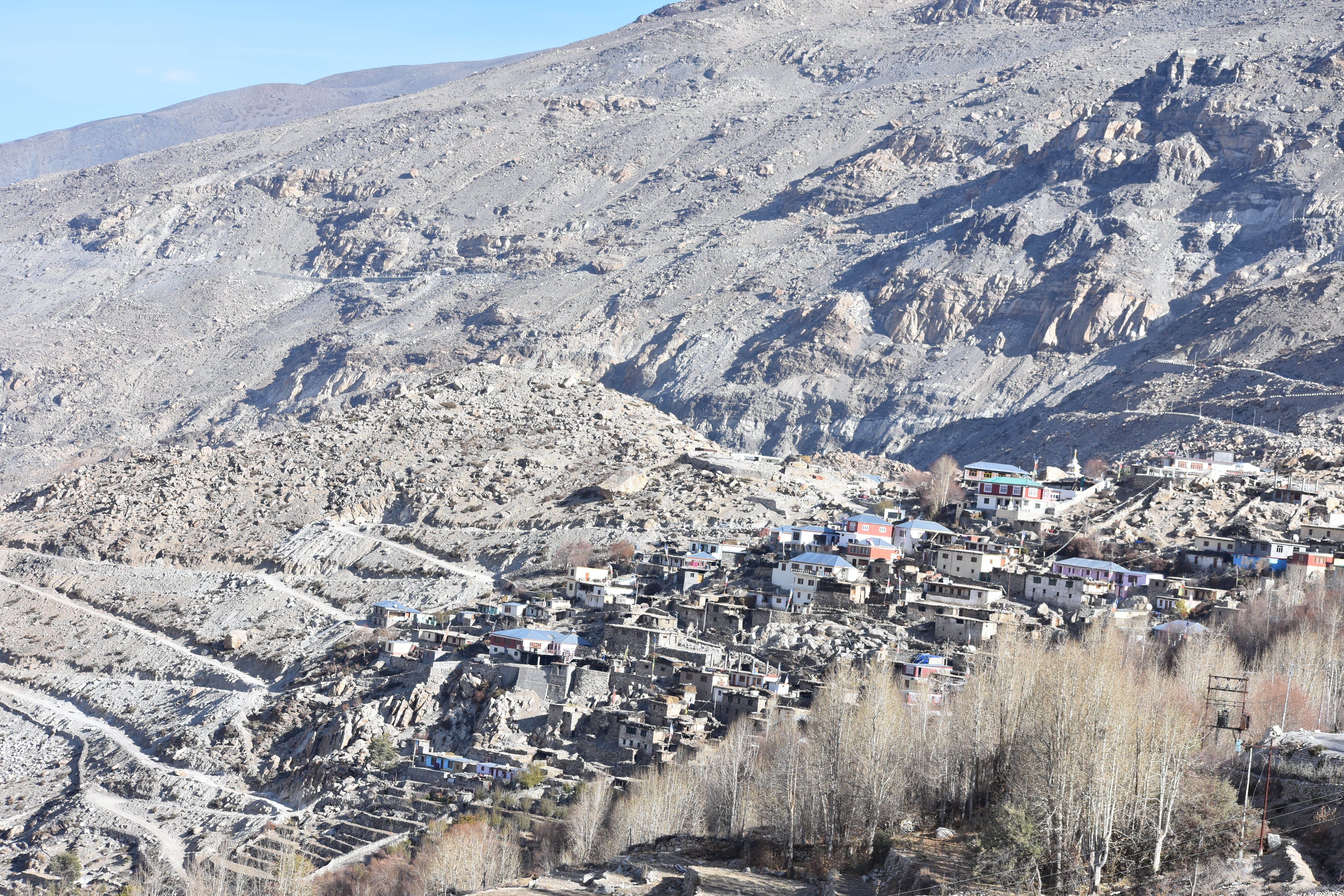
The township as viewed from the Nako helipad
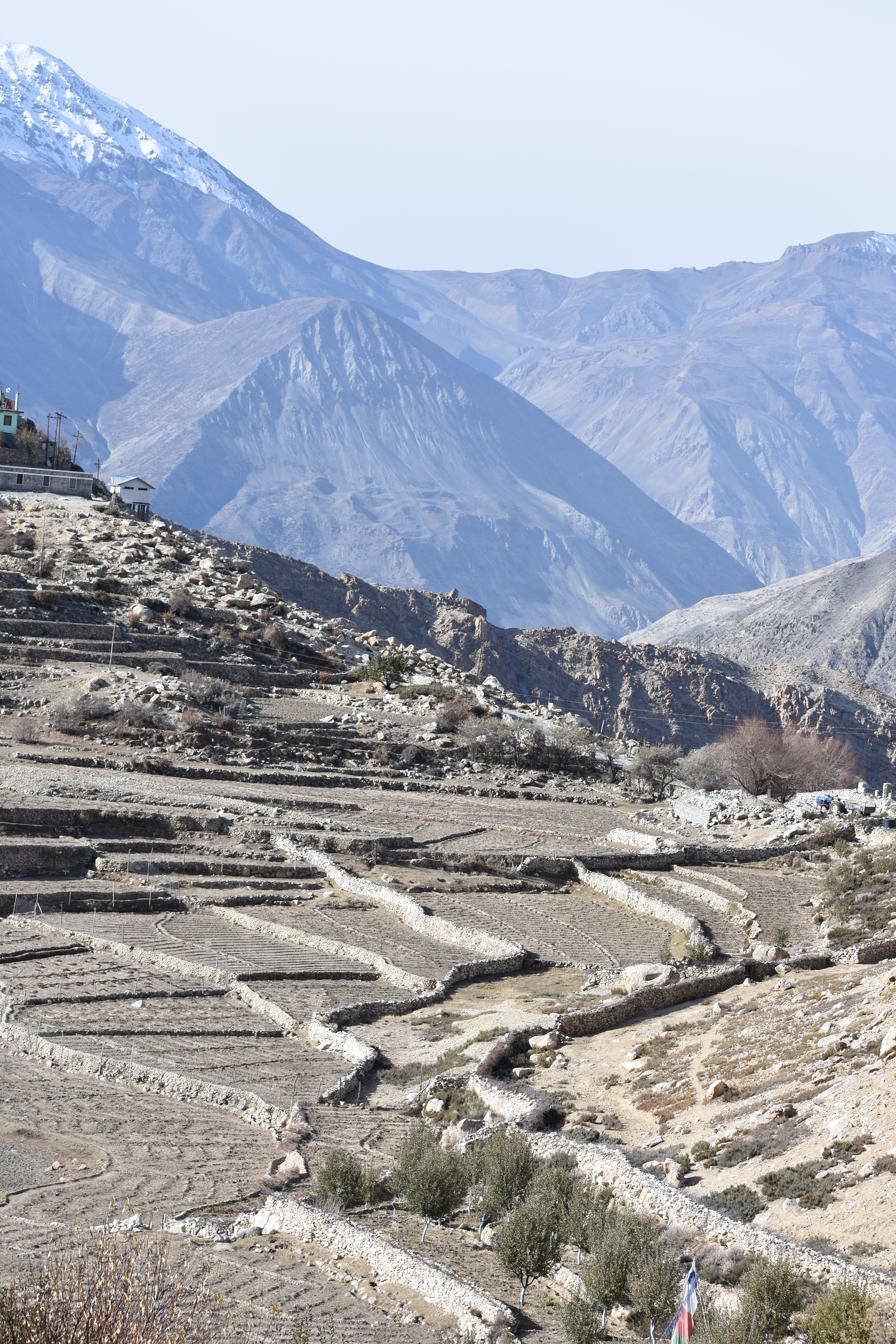
I was in for a surprise when I woke up in the morning. The view from the window transcended me to another world that I had imagined only on Microsoft Window’s wallpaper. Barren, dry arid landscape and distant snowcapped mountains. A lonely road ran uphill, and I had slept in a roadside house that had this magnificent view. I immediately jumped out of my bed, fetched a bucket of hot water from the host’s house, freshened up and got out quickly, to sink in the morning vibes of the place. I took a walk to the nearby helipad from where I could get a 360deg view of the surrounding mountains. That was the first time I was seeing a landscape so arid, so dry, so different and so beautiful.
The view from Nako helipad
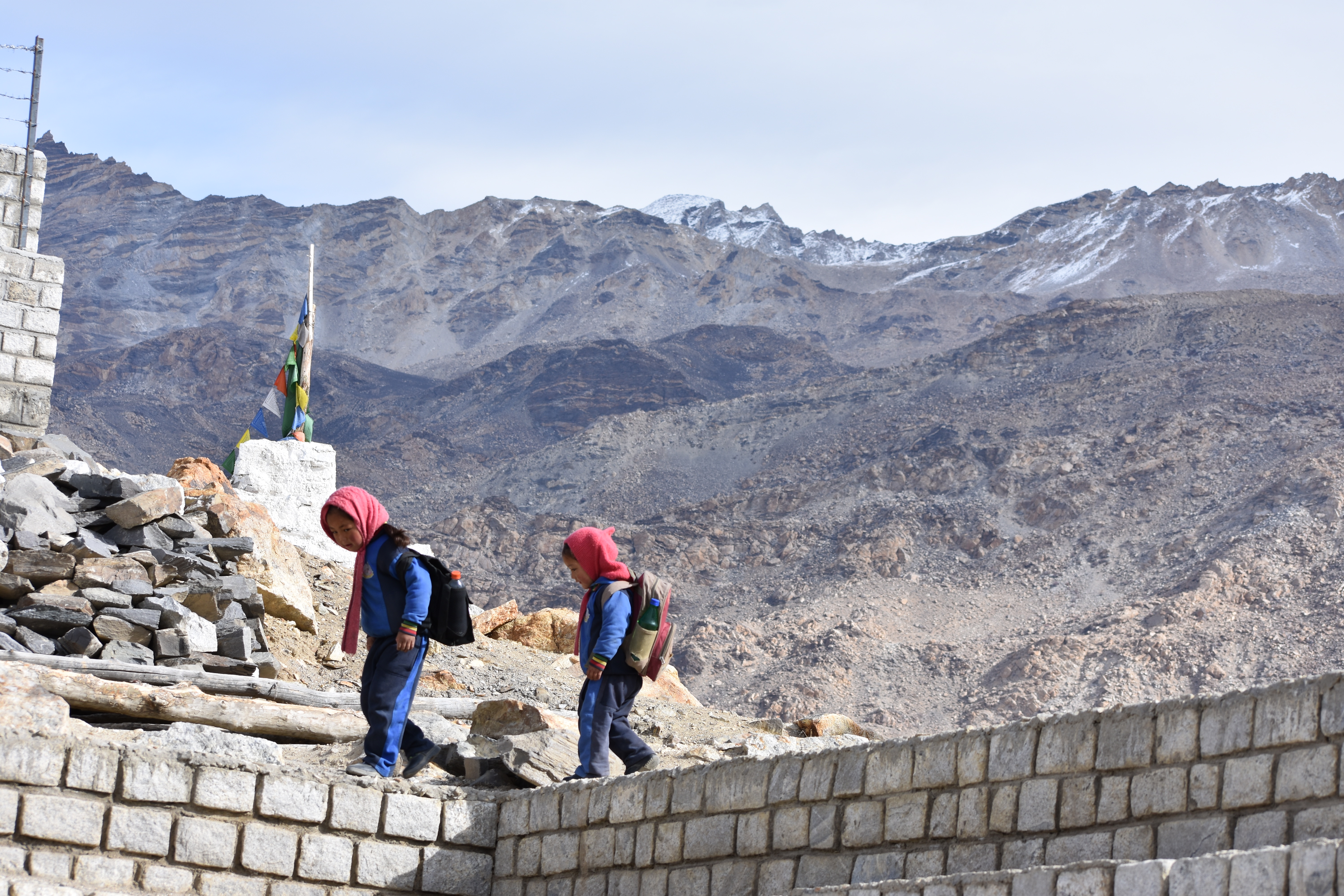
As I walked further, is when I realized that the real civilization of Nako village existed only if I walked further away from the main road. Doing this on a moonless night, in order to find a place to stay would have been next to madness. I was greeted by tiny tots with their heavy backpacks and playfully jumping on their way to school. The sounds of mooing cattle and crowing roosters echoed in the silent streets.
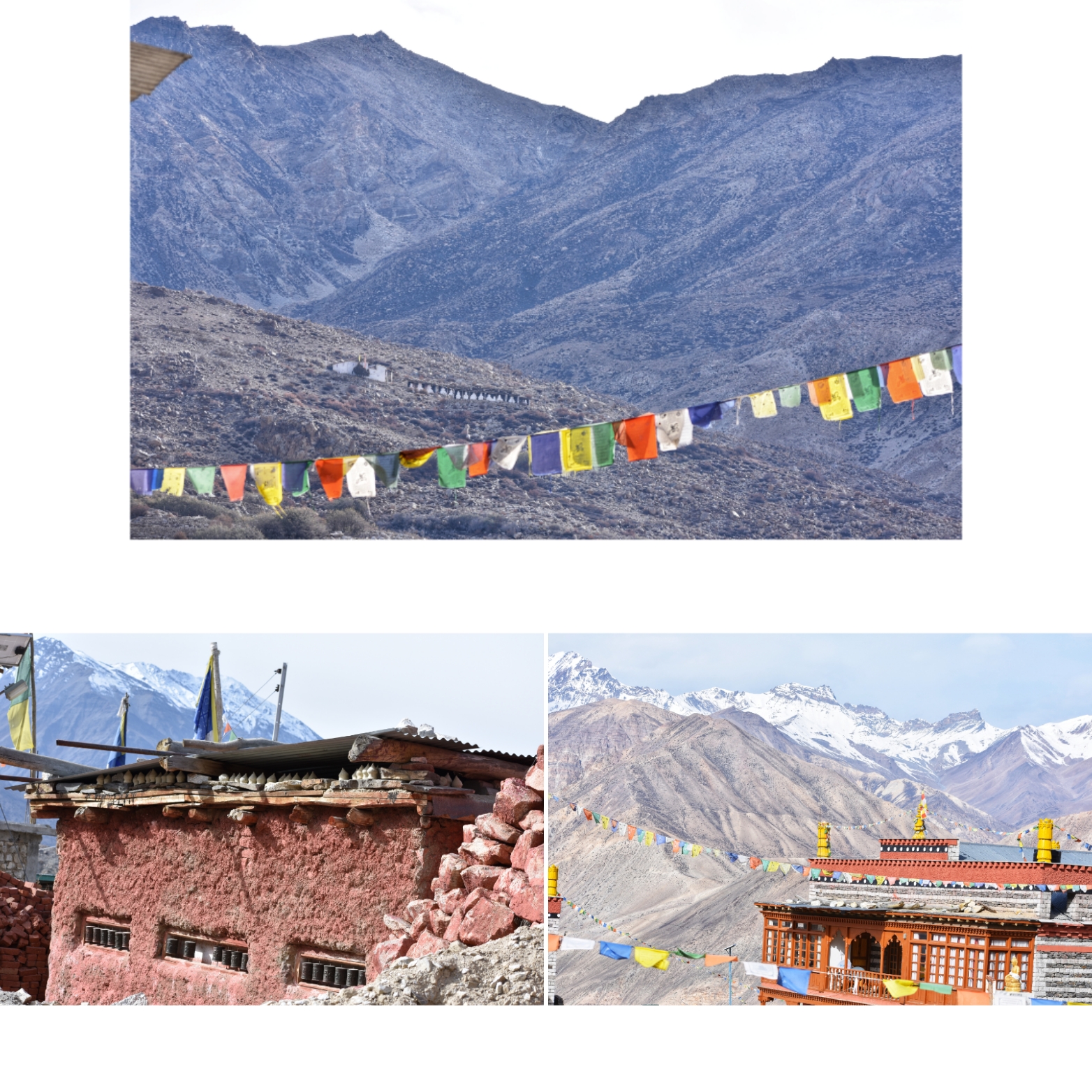
The sweet smell of incense arising from the monastery had engulfed the ambience as I walked towards a small red structure made of clay and red oxide. Prayer drums on its outside indicated that it was the ancient Buddhist monastery where people seemed to be coming to offer their morning prayers. An interesting structure caught my attention to up in the hills. “That’s the old and the main monastery from the 11th century ”, a passerby answered to my question. But it seemed quite far for a lonely walk, so I decided to keep it for some other day. When I have company, perhaps!
The Old and the new monasteries at Nako
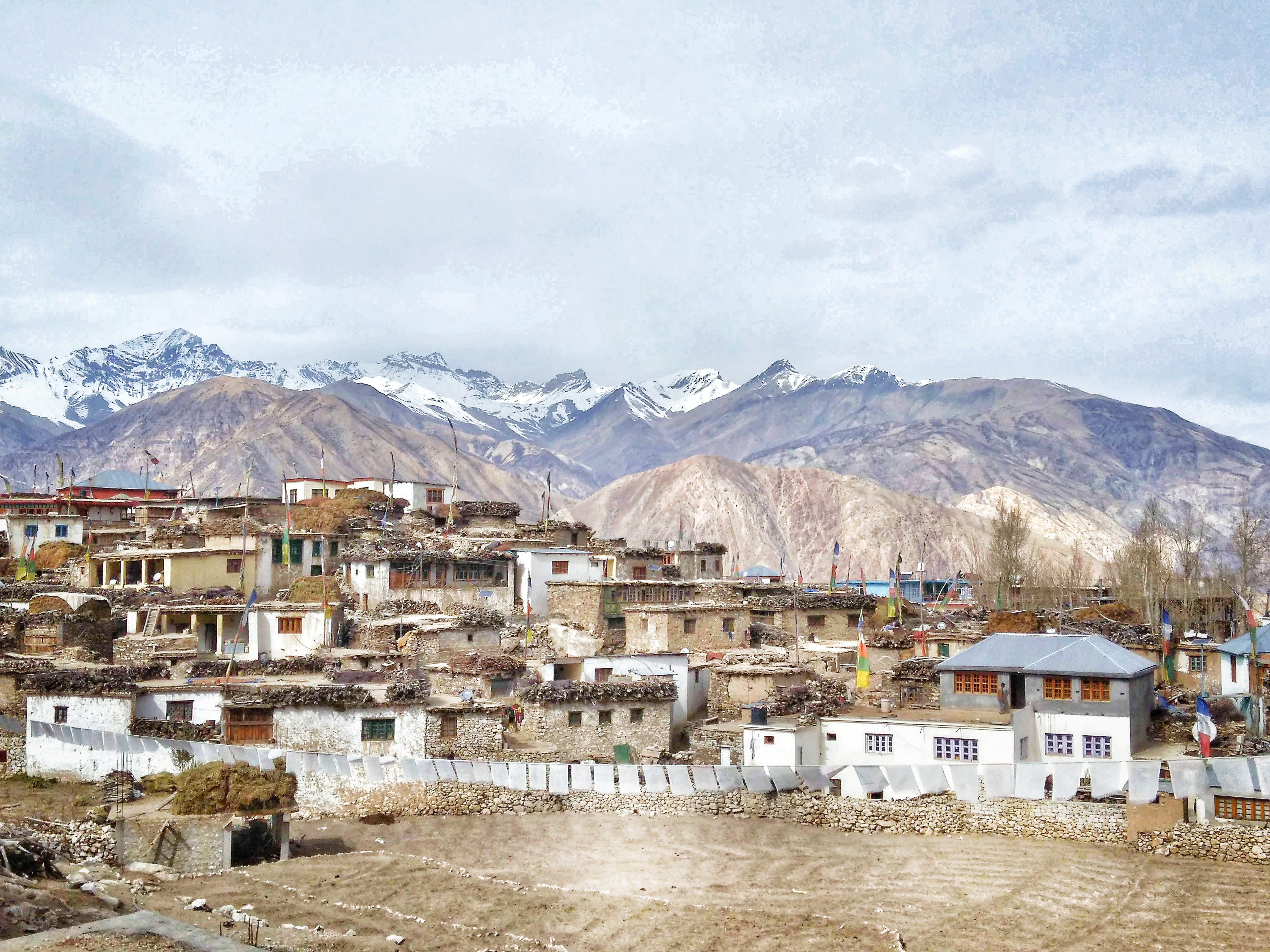
The further I walked into the village, the more magical it started to seem. The structure of the houses was unique to Nako, from what I had seen all this while. The houses are built at an elevation from the ground with wooden beams holding the dry stones, slate roofs covered with hay and all houses painted with white lime. While I was finding my way to the Nako lake through the muddy lanes, reaching random dead ends and taking blind turns, I felt lost in the maze. Just then, a man appeared in front of me and greeted me with a warm smile. He saw me taking photos on my cellphone and asked me if I minded a selfie with him. Although bad at taking selfies, I did not mind getting myself pictured in that unique looking place.
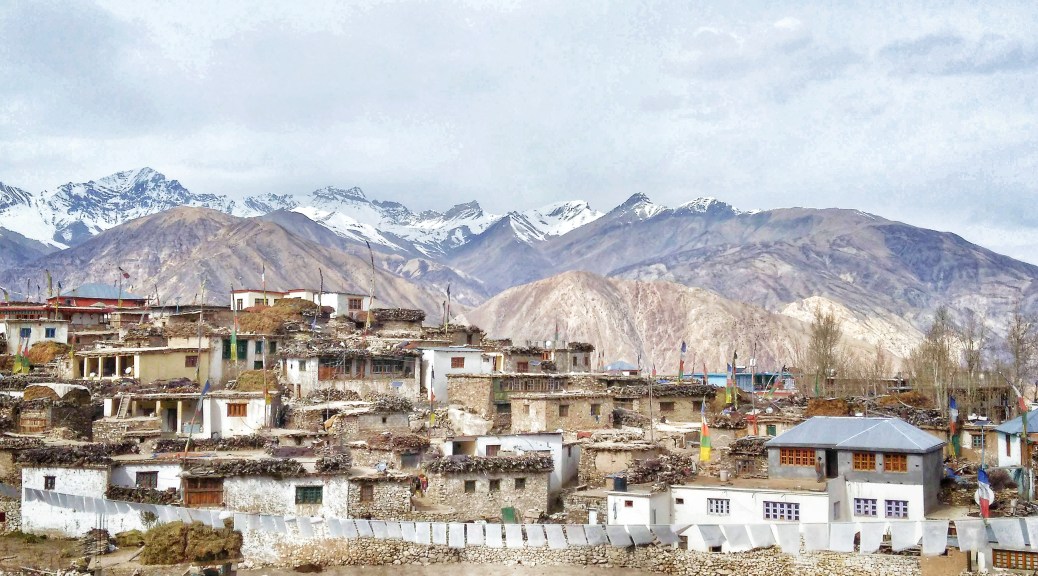
The Nako village
He invited me to his house for a cup of chai and not for a second did I think again. I nodded a yes with joy and followed him to his pretty haven whose courtyard overlooked the Nako lake. His wife got excited at the alien visitor in their little abode and got me chai and biscuits along with some hearty conversations. She took me around her home, and I was quite amused at the style in which it was built (almost entirely of clay, stones and hay), a first time for me. Apart from a heartfelt thank you, I did not have anything to give them back for their wonderful hospitality. And neither did they expect anything in return. I bid goodbye and walked down the lane to the lake, a holy place for the villagers.
The Nako lake / The sacred pond of Nako
Apart from a few grazing horses, I was the only human there that morning. It was the first time I felt like meditating and decided to sit by the waters for some peaceful moments. The Nako lake is considered holy among the Tibetan Buddhists as Lord Padmasambhava is believed to have meditated here. It is no surprise why I was feeling the unusual calmness and serenity at that place.
A few running kids got me back to reality that I had been sitting there for a while by then. I woke up and got back to the homestay to figure out a way to get to my next destination. But that’s going to be another interesting story (Click her to continue reading)….
This entire journey has been compiled into a book. You can avail it on Amazon or read it for free using your Kindle. Use the link below:
The unfortunate lockdown that the pandemic has brought has sure got the netizens busy. I’m not a TV person but sitting in a spot for video conferences all day (for work) gets me worked up sometimes. My terrace is too hot to go out in this hot summer month. This has given me some time to indulge in watching some series online. Not to fall into the fancy of the latest trending series on OTT platforms, I preferred to catch up on some old classics that were a hit on Doordarshan, back in the days of my childhood. That’s why I chose to start with Malgudi days.
While some claim that Agumbe was the ‘Malgudi town’ and there exists a ‘Malgudi house’, nobody really knows where the entire ‘Malgudi days’ serial was shot. However, since most of the episodes were predominantly shot in and around Shimoga, the present-day railway station at Arasalu (near Shimoga) is named as the ‘Malgudi station’ in honour of the famous serial. One of the trains too is named as the ‘Malgudi Express’ by the Southern railways. The popular serial telecast in the late 1980s comprised of 39 episodes shot and directed by Late.Shankarnag. Banking in on its popularity, the other 15 episodes were later directed by Kavita Lankesh in 2016. From what established a cult in Indian cinema, I am keen on taking a trip down the streets of Shankar Nag’s Malgudi because that is what I grew up watching.
Based entirely out of Karnataka, the rural setting, the culture and top-of-the-notch actors were totally relatable for me as I watched it. As I continued to watch the episodes, what started to intrigue me were the familiarity with several places featured in the episodes. I also started to take note that all were not in Shimoga. ‘Armchair travelling’ is a fancy outcome of being locked down by the pandemic and that got me to travel through my home-state Karnataka and map some of the heritage structures that have been featured in the classic ‘Malgudi days’. So, here are my relative screenshots from the serial and photos of the landmarks, as they stand today. You too can contribute your findings and let us unravel the mysterious locations of the old-timer 😊
1. Episode name: Oldman of the temple- Mandir ka budda
The episode opens with the author R.K.Narayanan himself telling that Malgudi is a fictitious town. It being located in Southern India is only half truth. The truth is, it is applicable to anyone anywhere across the world. Here, starts my quest to map the locations of Malgudi, spread across the state of Karnataka.
a. Ofcourse, Sheshadri and his friends are seen sitting on a platform of a tree that is present even today, at the town centre of Agumbe.
b. The old dilapidated temple that the Old man- Krishna Bhattar’s spirit lived in the episode is the ‘Thimmarayaswamy temple at Bettadadasanapura’ on the outskirts of Bangalore.
2. Episode (serial) name: Swami and his friends.
a. This is an 8-episode long story and is one of the most iconic part of the series. The ‘Doddamane’ in Agumbe perhaps is what was Swami’s house. We still need to look at several other structures that have been featured in the serial.
b. Although I am unable to locate the structure that housed ‘Albert Mission School’ in the series, I sure know where the School logo ‘Fide Et Labore’ featured in it came from. It was easy for me to point it out as my brother happens to be an alumnus of the 150+ years old ‘St. Joseph’s European High school’. Given the setting of pre-independence days in the serial, it was obvious for a Bangalore based director to be inspired to borrow the school logo from here.
c. Swami’s Friend- Rajam lived in a huge bungalow. This is the Thippagondanahalli IB (Inspection Bungalow)
d. Yes, most part of the series was shot at Agumbe. But when the team had packed up and Director Shankar Nag felt that a few scenes needed a re-take, the entire street of Malgudi was setup at a street adjacent to Yediyur lake in Bangalore.
Top- The map of Malgudi as conceptualized by Shri.R.K.Narayanan; Below- The present day Arasalu railway station
3. Episode name: A Hero
With some actors replacing the characters of ‘Swami and his friends’, it somewhat is a continuation of the 8-episode series. Though the house indicated as Swami’s house in this episode may not be wholly same as the 8-episode series, it is true that a large part of this episode (The attic of Swami’s house and the riverbank) are common.
4. Episode name: The hoard- Maha Kanjus
This too has been shot in the ‘Doddamane’. The main road facing entrance, the sit-out on either side at the entrance with wooden pillars and doors and the central courtyard indeed are from the ‘Doddamane’ of Agumbe.
Episode: The Hoard; Location: Doddamane, Agumbe
5. Episode (serial) name: Mithai Wala- The vendor of sweets.
All I have heard is that ‘Malgudi’ itself is a fictional town created for the serial. The name was derived as a combination of two prominent townships of Old Bengaluru: Malleswaram and Basavanagudi. The story of its origin can’t go away from its offspring, right? What has always been popular as the ‘Shooting house in Basavanagudi’ is in fact the house where the Mithai Wala lives in this 8-episode long series.
Series: The vendor of sweets; Location: The shooting house of Basavanagudi
6. Episode name: Nitya
Nitya, the protagonist is taken to a distant hill-temple where his parents had a prayer to be offered. The entire setting of the hill-temple is the present-day popular trekking destination- Devarayanadurga’ in Tumkur district, on the outskirts of Bangalore.
Episode: Nitya; Location: Devarayandurga
7. Episode name: The seventh house- Saathvan ghar
This episode has been shot across multiple locations. However, there were a couple of them I could identify.
The scene where the couple and their families go to offer pooja in a temple is Devarayanadurga, same as the one in the episode Nitya.
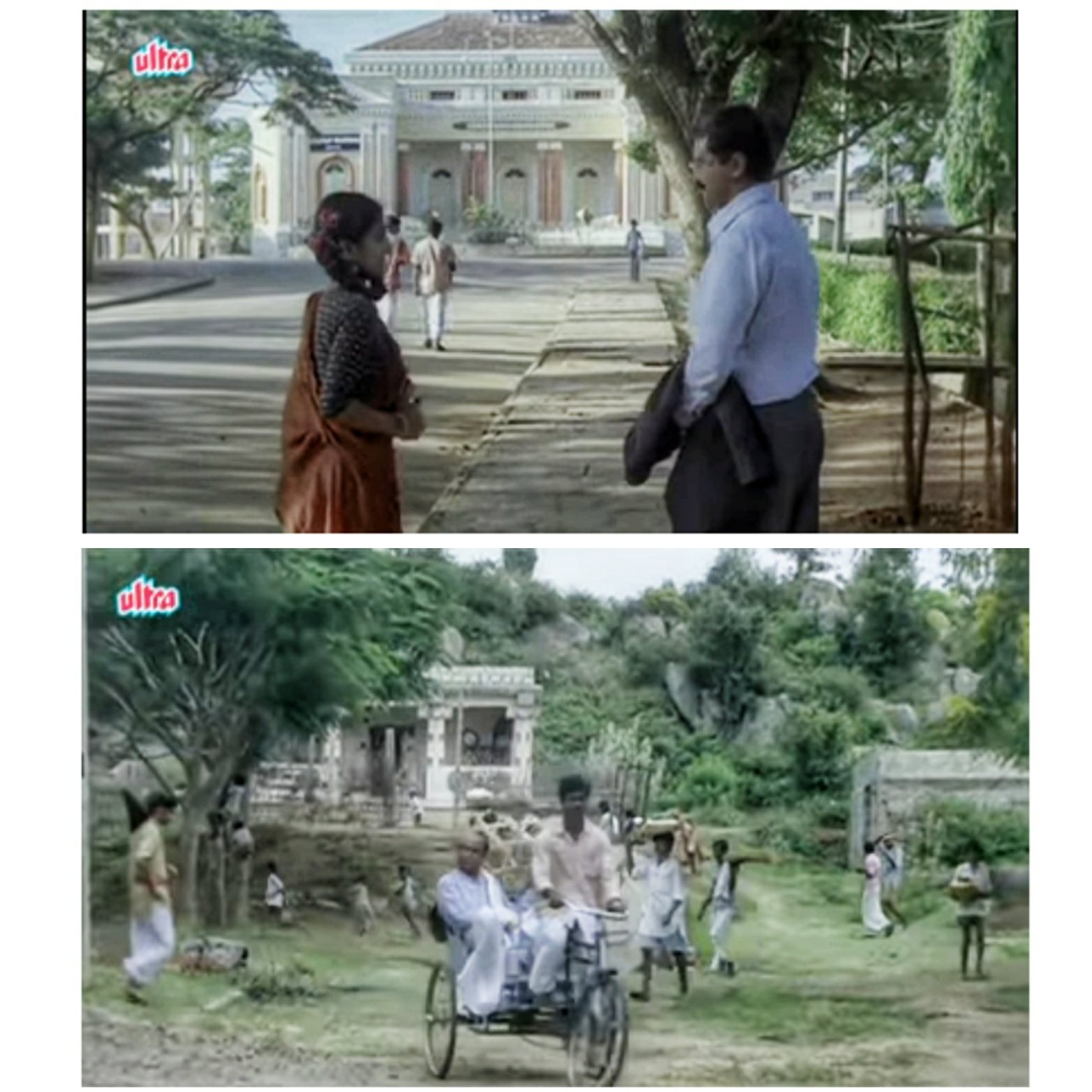
a. The scene where the couple meet after college has the Town hall building of Mysore in the backdrop.
b. The scene where the protagonist rides to see an astrologer is the temple at Kaiwara. It has largely been renovated as on today. But the Narayanappa temple in the background, the rocky hillock on one side and a motorable road seen in a glimpse indicate it is indeed Kaiwara.
Episode: The seventh house; Location: Top- , Below- Kaiwara
8. Episode name: Iswaran
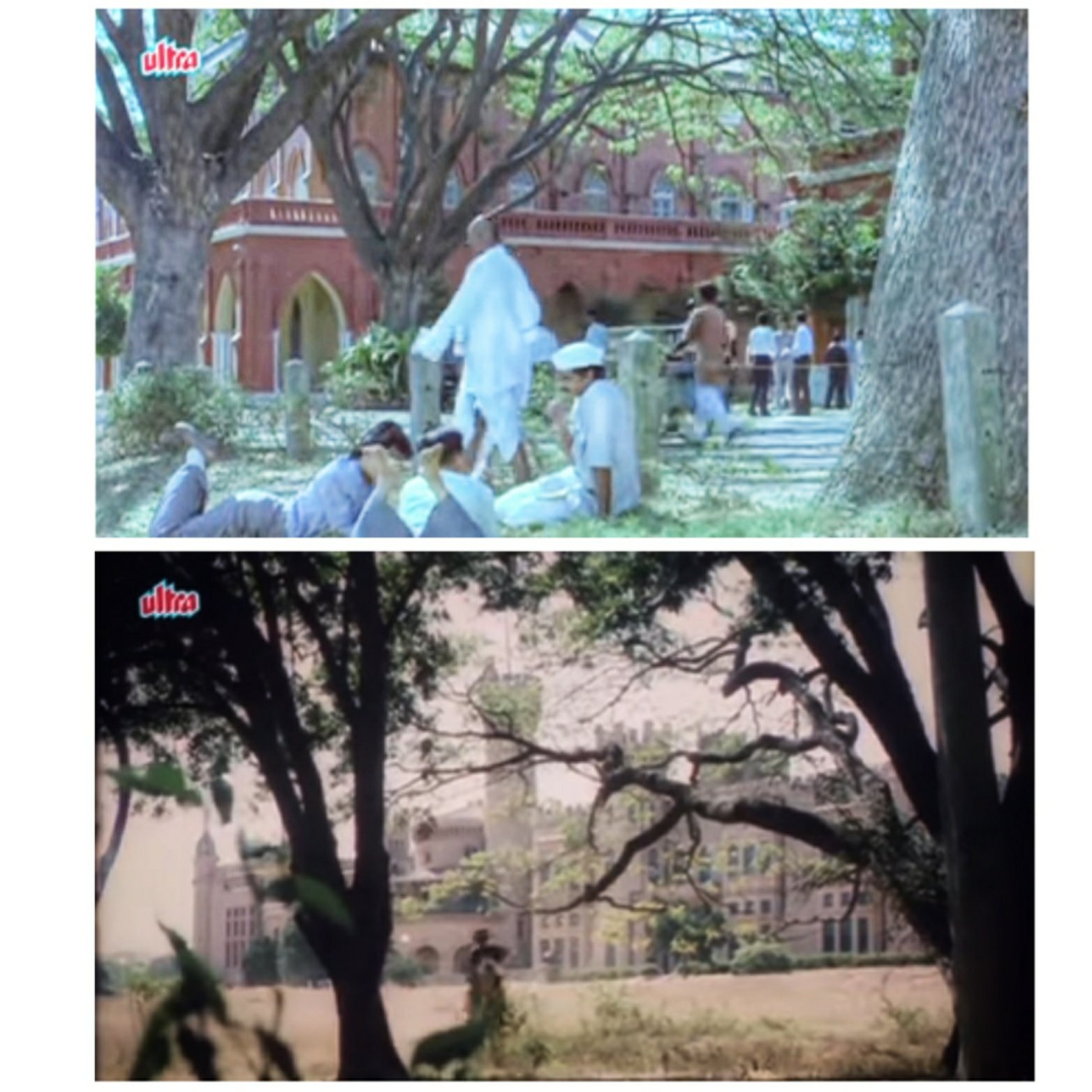
a. The college or the senate hall with its Gothic style of architecture featured in the episode is the ‘Central College of Bangalore University’ located in the heart of Bangalore.
b. The Protagonist, Iswaran watches a movie at a cinema. The palace featured in the movie is the ‘Bangalore Palace’.
c. Time and again, Sarayu river has been mentioned in the episode. Given the typical setting of Karnataka and the writer’s hometown of Mysore, the lifeline of this region is river Kaveri. I believe that the river where the protagonist drowns in at Sangama, near Srirangapatna.
Episode: Iswaran; Location: Top- Central college, Below- Bangalore palace
9. Episode name: The performing child- Abhinetri
Given the fact that it is still one of the iconic lung space of Bengaluru and there runs a toy-train amid a lot of greenery, the train journey featured in the child’s dream is in Cubbon park.
10. Episode name: Roman image- Rome ka Murthi
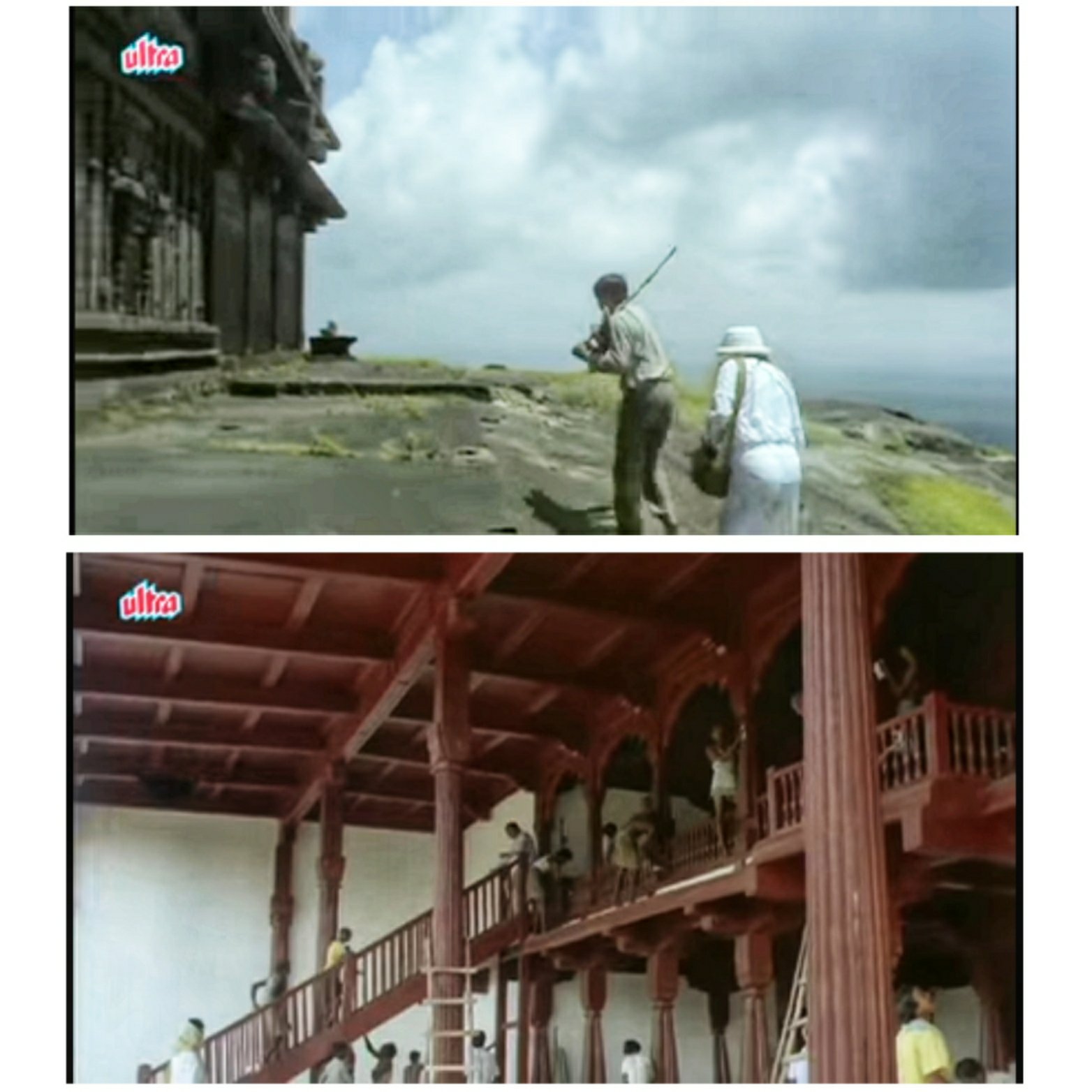
a. The stone temple that Sheshadri and Professor walk around after climbing up a rocky hillock that overlooks green meadows is the ‘Mantapa’ located at the peak point of Kodachadri.
b. The red structure where professor Bandopadhyay is indicated to be working on a renovation of a Jaipuri palace- is the Shivappa Nayaka’s Palace located near Shimoga.
Episode: The Roman idol; Location: Top- Kodachadri, Below: Shivappa Nayaka’s palace, Shimoga
11. Episode name: The watchman- Chowkidar
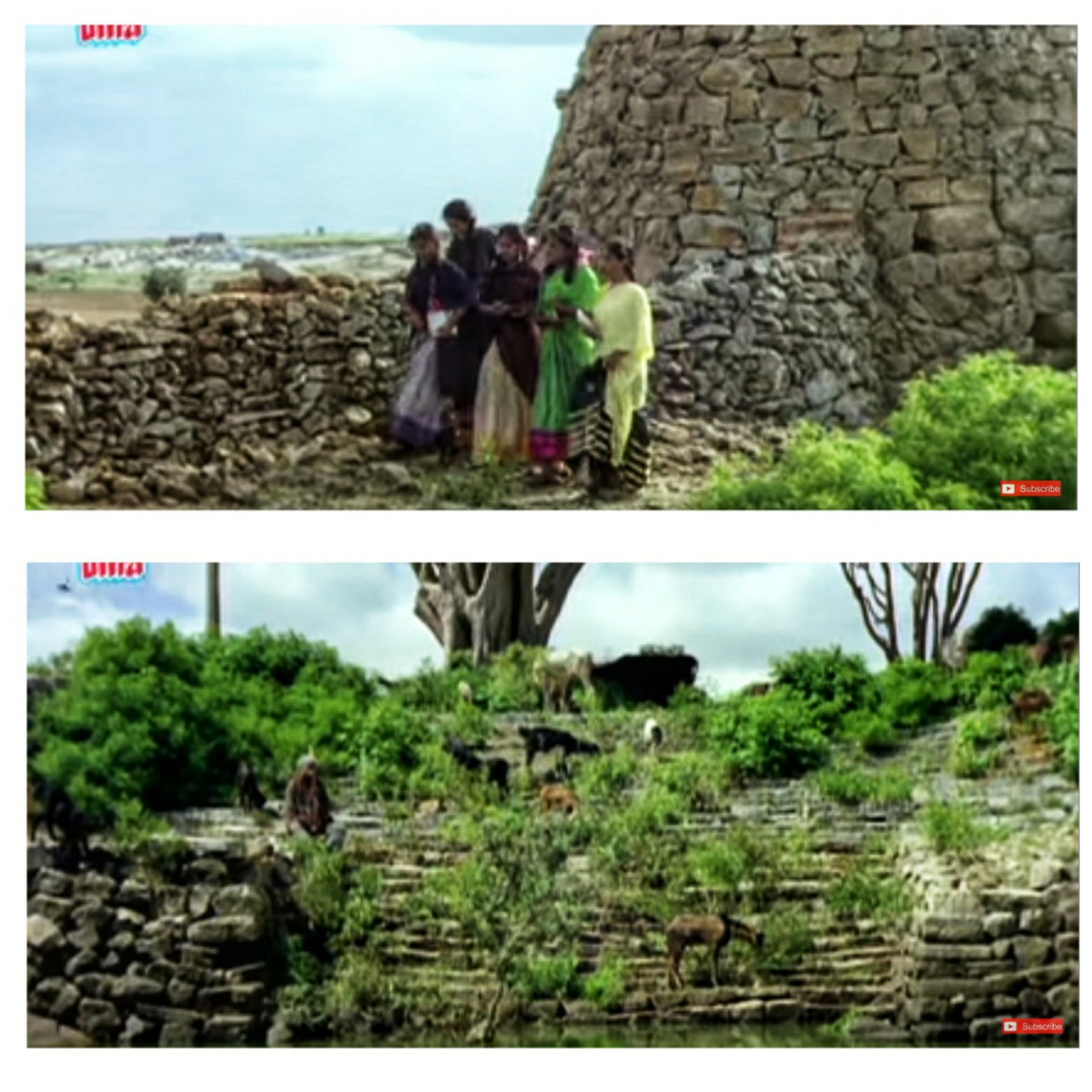
Although the structure and the surroundings seems to be in a dilapidated condition in this episode, it has been largely renovated and restored as on date. The entire episode has been shot in the ‘Thimmaraya swamy temple complex at Bettadadasanapura’ in Bangalore. The large trees in the premises, the temple pond, the entrance stone pillars and the fortress like wall encompassing the temple premises on a rocky hillock are the things that stand testimony to the famous episode.
Episode: The watchman; Location: Bettadasanapura temple
12. Episode name: A horse and two goats- Muni
Given the rural setting of the protagonist’s house and the fact that he eats Ragi mudde, it is a story from the Mysore region. The place where he goes to graze his goats daily in a eucalyptus grove and the slopy terrain of the hills where the road passes, could it be the road that leads to Chamundi betta? Or could it be Nandi hills? (as guessed by ‘The light baggage)
13. Episode name: Trail of the green blazer – Pocket maar
The temple where the protagonist offers his prayers with a coconut before heading for stealing is the Panchalingeshwara temple at Begur, located in the outskirts of Bangalore. (Information contributed by ‘The Light Baggage‘)
The Panchalingeshwara temple at Begur
Are there any familiar locations that you could identify in the serial? Let me know..
Here are the remaining episodes 🙂
14. Episode name: Leela’s friend- Siddha
15. Episode name: The missing mail- Dhakia
16. Episode name: Engine trouble- Engine Ki kahani
17. Episode name: Forty-five a month- 45 rupiya
18. Episode name: The career- Ramji Ki Leela
19. Episode (series name)- Naga
20. Episode name: Sweets for angels- Kaali
21. Episode name: A willing slave- Aaya
22. Episode name: Cat within- Paap ka gada
23. Episode name: The gateman’s gift- Govind Singh Ki Bhent













 The Lost Lander