As a high school student, I was intrigued by the terminologies called ‘Stalactites’ and ‘Stalagmites’ in my Geography curriculum. ‘These were formations of calcium deposits formed by continuous flowing of water over several years, below the Earth’s crust’, it read.
“These structures are beautiful to see. I had the opportunity to visit one of these underground caverns during my visit to France. We walked down a flight of stairs and then were taken on a boat, to see stalactites and stalagmites, underground”, my geography teacher said. Her voice echoes in my ears even today, because back then my jaws had dropped in awe wondering how beautiful the landscape and topography of the countries outside India were. I wished to see the stalactites and stalagmites someday.
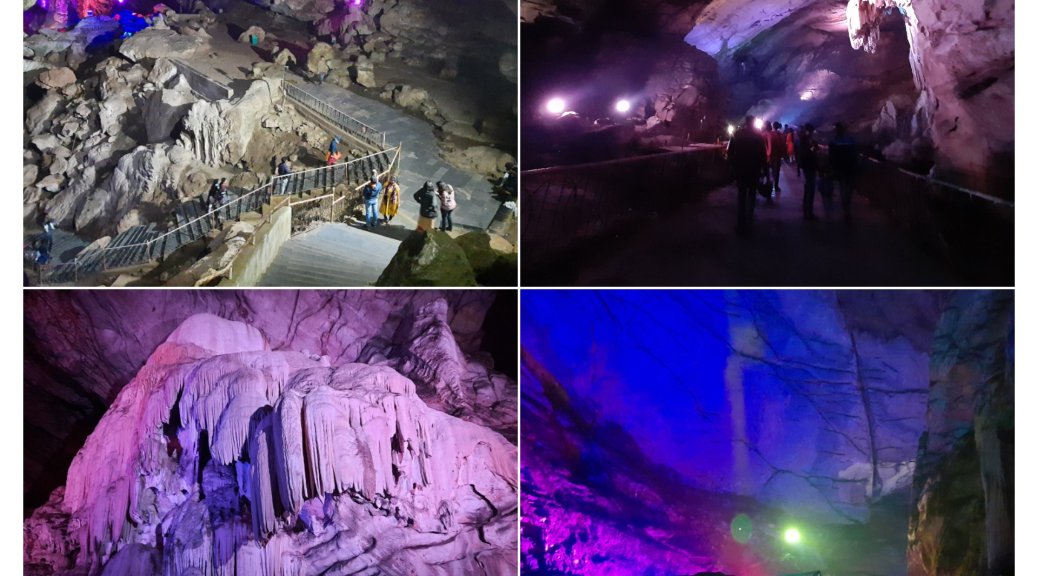
Cut to today, I am so glad that time has been kind on me with so many opportunities to explore my own country, India. These opportunities have opened my senses to realize that “India is a world”. From snow to deserts, mountains to beaches, plains to rainforests, the landscape comprises of EVERY type from across the world! Based on my travels, I have seen some amazing cave systems in India. Without including the caves that have been part of India’s ‘art and architectural heritage’, here are five best places in India where you can explore caves in their natural form.
1. Meghalaya:
Top on the list, there are hundreds of caves that are open to explorers, hundreds being discovered every day and maybe thousands that are still unknown to people yet. ‘Krem Liat Prah’, India’s longest cave system is in Meghalaya.
2. Andhra Pradesh:
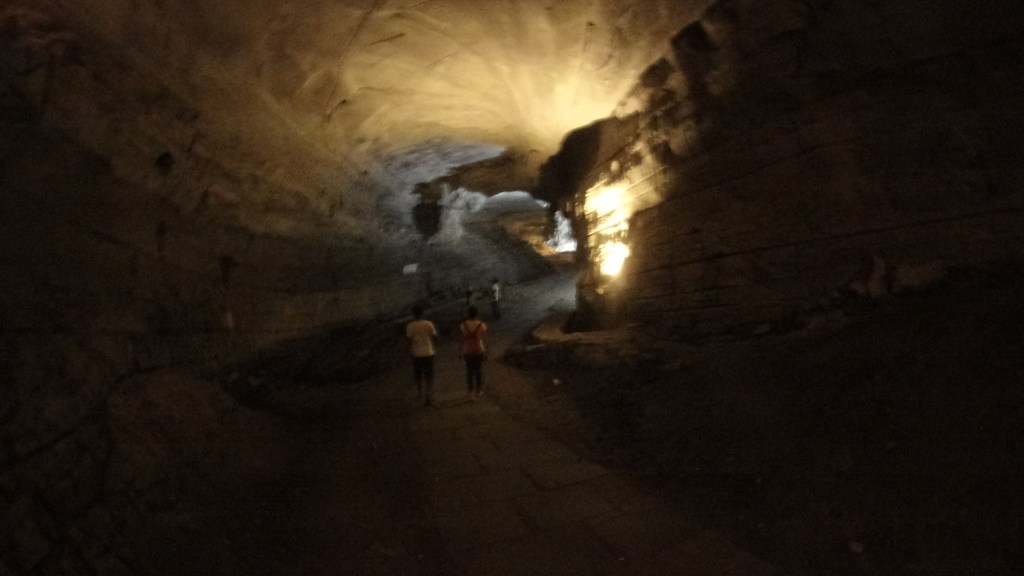
‘Borra caves’ in Andhra is the largest cave in India. A heritage railway line passes just above this limestone cave. Having such a big cave system is proof and motivation enough to know that several other caves are available in this region waiting to be explored by adventurers and tourists alike.
Inside the Belum caves
3. Chhattisgarh:
The state sitting within the mythologically important forests called ‘Dandakaranya,’ these forests are home to several limestone cave systems that are yet untouched by mass-tourism. Only about 57 caves are known to people as of now, and there is immense scope for exploring new caves. The remoteness of the places adds to the joy of the explorer while caving in Chhattisgarh. The video of exploring a cave at Bastar, Chhattisgarh is shared below.
Cave exploration at Madarkonta caves
4. Andaman & Nicobar Islands:
This archipelago and Union territory of India is one of the best kept secrets of nature enthusiasts who want to go caving. In fact, this is where I saw a stalactite and stalagmite for the first time in my life. The connectivity of these remote caves located on different islands through a channel of interconnected mangrove forests passing through pristine blue sea water makes it a memorable experience.
5. Karnataka:
While all the above cave systems I have enlisted above are limestone caves, Karnataka is home to some of the beautiful sandstone caves which are scattered across the middle and northern region of the state. Unlike underground, the caves in Karnataka are formed above the earth’s surface and give a completely distinct perspective of exploring this state, which is my home-state as well!
A compilation of 18 short stories based on my experiences of traveling on the roads of India, I’m happy to share that my second e-book is now available for my readers.
My book- ‘Stories Through Souvenirs‘ is a compilation of my stories of meeting people, hearing their stories and the learnings from my experiences. These are the stories of how these stories influenced me to become who I am.
Do give it a read and I am sure you will like it 😊
Do you want to visit the tranquil beaches of the south? Journey to Pondicherry. The city was previously a French colony and is now a small union territory on the eastern coast of the Indian subcontinent. In both the monuments and the city’s alleyways, you can still see examples of that era’s architecture. The city is well-known for its beautiful beaches and historical sites to visit. There are also some fantastic cafés and restaurants to visit while on tour. To learn more about the location, try the local food.
Pondicherry is appropriate for individuals of all ages and walks of life. It is ideal for seniors, couples, friends, family, children, and business travellers. While in the city, there are several sites to see, some of which are listed here. Stay at Treebo Hotels in Pondicherry to make your journey unforgettable. These resorts are spread around the city and provide some of the greatest features.
Places to Visit in Pondicherry for an amazing trip:
1. Paradise Beach
Lovers may visit Paradise Beach, which is ideal for relaxing. Tourists are drawn to the area because of its natural beauty. The sun’s rays reflecting on the golden sands of the coast create a captivating view of the entire region. To go to the beach, take a ferry from Chunnambar. The Bay of Bengal’s stunning beauty is worth seeing. It is a photographer’s dream since exotic birds may be found here. So, take a stroll along the beach or spend some quality time with your special someone. There are also food vendors here for some snacking.
2. Sri Aurobindo Ashram
Aurobindo Ashram is a spiritual destination for those who are on a trip. To discover more about the place, visit the Ashram library. The location has expanded from a tiny congregation that worshipped Sri Aurobindo. The site is worth viewing while sightseeing in the city. The Ashram also has a hall where guests may view a short film about Sri Aurobindo’s life and work.
3. The Basilica of Sacred Heart of Jesus
How can one miss the city’s most famous church? This church is a masterpiece of Gothic Medieval Architecture and is well worth seeing. Stained glass and paintings depicting the life of Jesus Christ may be seen inside the church. The church is adorned for Christmas and Easter, and people travel long distances to attend the festivities. The magnificence of the building, on the other hand, draws the majority of tourists to this location. It was built in the early 20th century and has been rebuilt multiple times to keep the entire structure in good condition.
4. Rock Beach
Another beach to visit in Pondicherry is Rock Beach, also known as Promenade Beach. The location is ideal for seeing the sunrise and sunset. During these hours, the waters become golden, creating a beautiful scene. People come here for peace and quiet or to take a stroll with their companions. The palm trees that line the shore are also considered to be the most photographed spot in the city.
5. Varadaraja Perumal Temple
This lovely Dravidian-styled temple is well worth a visit when in the White Town of Pondicherry. During festivals, the temple is inundated with people worshipping Lord Vishnu in and around the shrine. Seek heavenly blessings here and marvel at the temple’s architecture. Lord Vishnu, also known as Lord Varadaraja, is claimed to bless everyone who comes to the temple. The temple was established in the 11th century, and several legends have been told about how the temple came to be. One of the most popular is that the Lord’s idol was discovered in the sea, which is how the temple was established here.
6. French War Memorial
The War Memorial, located in the seaside region of Pondicherry, is recognised to be very important to the French Indians who live here. The war memorial was created to honour the troops who died during World War I. The Memorial was created in the first half of the 20th century and is visited by people from all over the world. Because it is positioned on a beach, the view of the entire region is breathtaking. The 14th of July is marked as a day to remember the martyred warriors. The entire region is illuminated, and people gather to remember the people’s sacrifices.
7. Auroville
This Ashram, which is also a piece of art by the Sri Aurobindo Society, is located about 15 kilometres from Pondicherry’s main city. This location is a must-visit because of the tranquilly and tranquillity it exudes. It is being created as a township and has recently become one of the most popular tourist destinations in the country. Visitors to the city come to view the Matrimandir. The architecture of the Gold Dome is what draws the majority of tourists.
8. Arikamedu
History aficionados might visit the Indo-Pacific bead-making site at Arikamedu. It is an archaeological site located within a few kilometres from Pondicherry’s main city. The site is claimed to have been a trading centre during the 1st century BCE. In addition, the French Jesuit Mission’s ruins may be found here. The traces of a bygone age are a must-see, located in a remote place. The surrounding natural beauty is still undisturbed because not many people visit the location.
9. Chunnambar Boat House
The magnificent seas of the Bay of Bengal are very captivating in this location. The little hamlet outside of Pondicherry’s main city is a popular tourist destination. Visitors may also participate in a variety of water activities in the area. Dolphins may also be seen here. Sit on the beach and soak up the rays, or watch others participate in various sports. For some adventure, one may even take a boat trip in the backwaters here.
10. Shopping in Pondicherry
Last but not least, shopping in Pondicherry’s streets is one of the nicest things to do. Souvenirs for loved ones can be purchased here. Serenity Beach Bazar, Nehru Street Market, Saram China Market, and many more are places to visit while in the city for some shopping. To shop from the city, look for things such as handicrafts, clothing, food, home décor, handbags, and so on.
The streets of Pondicherry are also known for photographic sessions as they are painted in either vibrant colours or plain white. Visit the place to experience all of this.
To check out all these beautiful places in Pondicherry, book your stay at Treebo Pondicherry. These hotels in the city are available at budget-friendly rates and provide some of the best amenities. Some of these services at Hotels in Pondicherry include-
Sitting atop the Hemkuta hill and watching the sun casting a golden touch on the Vithala temple at Hampi, India.
Feeling all my stress getting washed down by the waves of the blue flag beach by walking deep into the sea at Padubidri beach, India.
Feeling the vastness and emptiness of the world while staring at the setting sun from the ‘End Of The World’ viewpoint, Saudi Arabia.
Favorite Sunrises:
Clapping my hands with joy at seeing the sun rising over the ruins of Hampi at Matanga hill, India.
Waking up in a tent pitched by the backwaters and kayaking out to watch the rising sun on river Shambhavi, India.
Hiking across an extinct volcano to watch the sun rise over the Arabian desert at Wahaba crater, Saudi Arabia.
Favorite Outdoor Activities:
Accomplishing the below outdoor activities in Karnataka that I had been contemplating for many years:
Cliff jumping at Sanapur lake, Koppala district
Rock climbing at Badami, Bagalkot district
Kayaking to watch the Bioluminescent waters at Mulki, Dakshina Kannada district.
Favorite Hikes:
Hiked new trails, explored new waterfalls, and feasted delicious cuisines in the Western Ghats.
Relished a variety of wild berries, took a dip at the Catherine waterfalls, and tasted Badaga cuisine while meandering through trails in the tea gardens at Kotagiri.
Walked through the misty grasslands to see a dilapidated fortress, stood atop the snout of a waterfall at Bandaje, took a dip in Kodige waterfalls, and tasted Malnad cuisine at Chickmagalur.
Discovered untapped hiking trails, visited lesser known view points and tried natural foods from the local tribal community and saw hills full of Arabica coffee blossoms at Yercaud.
Favorite Movies:
Albeit not a movie person, 2022 was a year in which I watched the maximum number of movies at a cinema, and that too solo. Apart from catching up on some highly recommended movies on OTT platforms, I watched four movies on the big screen. These four were the regional movies whose release I had eagerly waited for and was particular about a theatrical watch only. Apart from ‘777 Charlie’ which I watched with my family; I watched three other movies in the company of just myself: Rocketry, Kantara, and Gandhadha Gudi.
Apart from these, some remarkable events made 2022 special for me.
A trek to Kodachadri hill on New Year’s Day was truly memorable that found me socializing with more people and making newer friends.
‘Glen’, my pet dog who was one month old at the time of entering our home and warmed up our hearts in the first week of the new year.
I said goodbye to my first job after serving the company for over a decade, a change that I had been long contemplating.
Experienced a moment of realization that I was all by myself. A realization that the contacts, the people, the respect, and the inspiration I thought I had accumulated and given to people around me could all mean just ‘Zero’. A moment of realization that trusting even the people you have known for a long could be wrong. A moment of realization that the closest people could have no emotions of empathy at all.
On a recent trip to Saudi Arabia, I had come across people of several nationalities, all living in harmony and brotherhood in the country. I noticed that the people from the larger Indian sub-continent are greatly respected by the locals irrespective of their nationality. By the Indian subcontinent I mean, India, Pakistan, Bangladesh and to somewhat an extent, Sri Lanka. Everybody shares a common language, ethnicity, and identity of being an “Indian”. During my stay there, I witnessed National festival celebrations of three countries including Pakistan’s Independence Day, Indian Independence Day, and Saudi National day (Independence Day).
Celebrating Pakistan’s National festival:
I arrived in Saudi on 13th August’22. It was the first day of my presence in a new country, I was all excited to get acquainted with my neighborhood. But, I was suffering from a headache due to lack of sleep. Hence, I just identified a mall, some Indian restaurants, and a few grocery stores nearby for availing emergency items and called it a day.
On the 14th morning, I noticed that a big Pakistani flag was hung in a shop located right in front of the hotel where I was staying. It indicated that the store was owned/run by a Pakistani citizen, and they were celebrating Pakistan’s 75th Independence Day. For me, it came as a surprise that another country’s flag was allowed to be displayed publicly. But what piqued my interest more was meeting a Pakistani national for the first time. It needs no explanation that any form of free communication between the people of India and Pakistan isn’t accepted in both nations when we are residing in our respective countries. I decided to buy a small flag as a souvenir to mark my first meeting with any Pakistani person in my lifetime. Hence, I crossed the road and entered the large textile store.
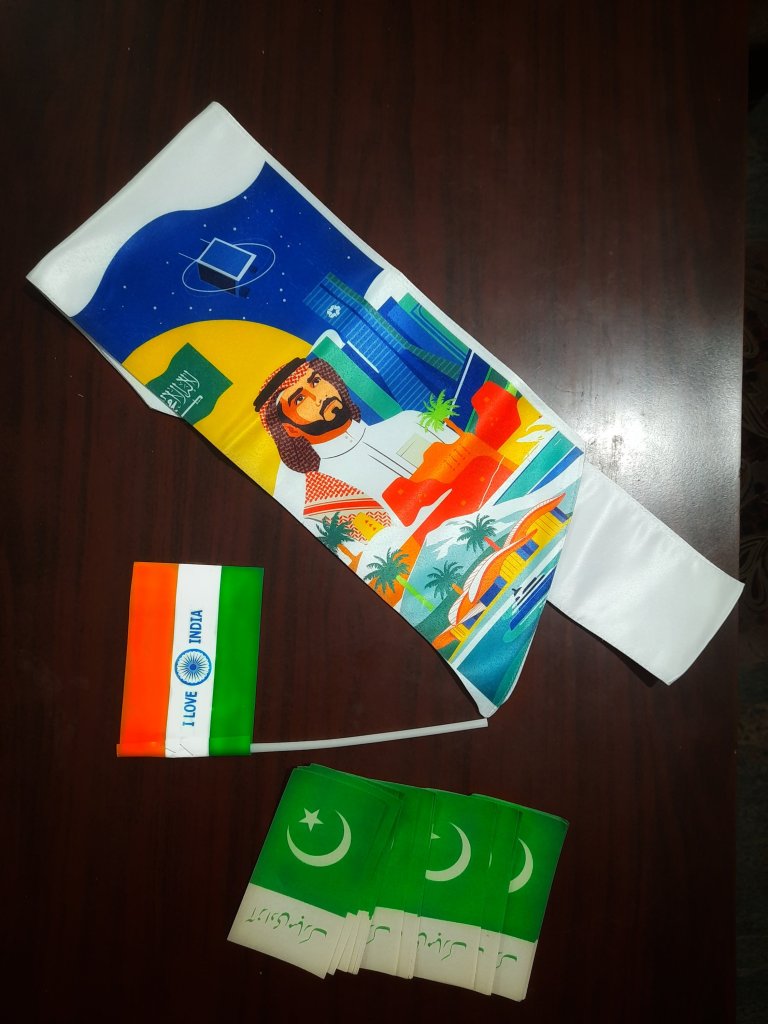
Ranging from bangles, frocks, cufflinks, brooches, keychains, and flags, there were several Pakistani National day themed knickknacks available for purchase. The shopkeeper asked me what I was looking for. I asked him to give me the smallest available replica of the Pakistani national flag in the thought that I could paste it in my personal journal/ scrapbook. But, there was none in the size that could fit into my book. He showed me some of the other accessories available, and I informed him that none could be used in my country. A little surprised, he asked me where I was from. I told him that I was from India. Learning of my interest in buying a Pakistani flag as a souvenir excited him. He happily handed over a small stack of miniature flag stickers into my hands and asked me to keep them all, for which he refused to accept any money. He wished me in advance for India’s Independence Day and I returned the greetings for his country’s special day before leaving his shop.
Celebrating India’s National festival:
It was 15th August on the following morning, a day that India was celebrating as ‘Azadi ka Amrit Mahotsav’ back home on her 75th Independence Day. That day, there was no sight of any Indian flag hanging anywhere outside on the streets. I decided to seize the opportunity to explore the neighborhood a little more in the name of adding an Indian national flag to my journal in memory of my first Indian national festival celebration, outside of India. I walked into a few Indian textiles stores asking them if they had any Indian flags to which they responded with a negative. I walked into a few Indian restaurants to check if they had anything on display or if they could give me any leads to where I could find one. A few of them asked me the purpose of why I was searching for an Indian flag. When I told them that I wanted to use it as a souvenir, they either smiled or had a smirk on their faces. They must have wondered that I was some crazy woman walking freely on the streets of Saudi in search of my country’s independence.
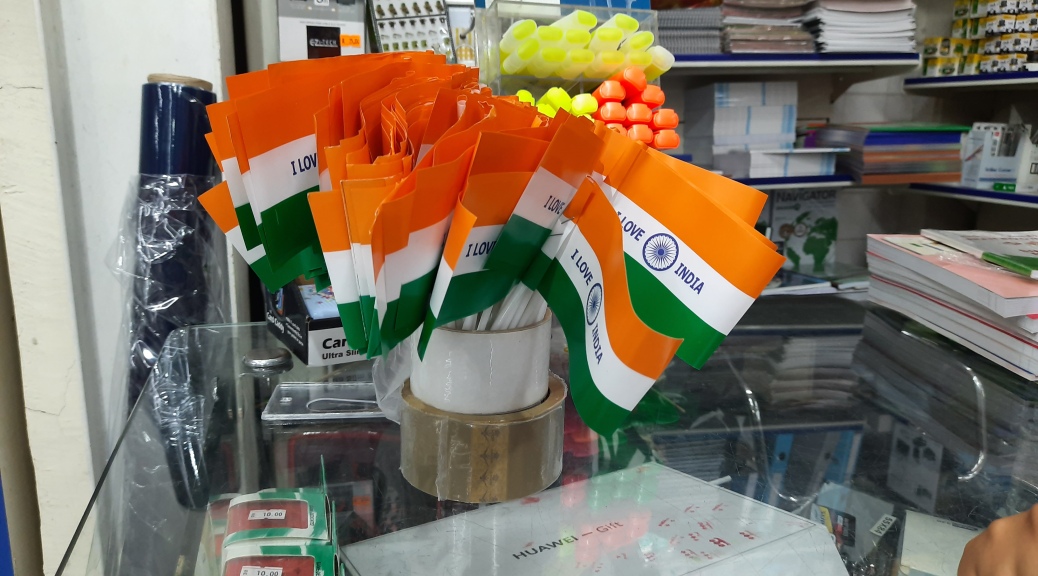
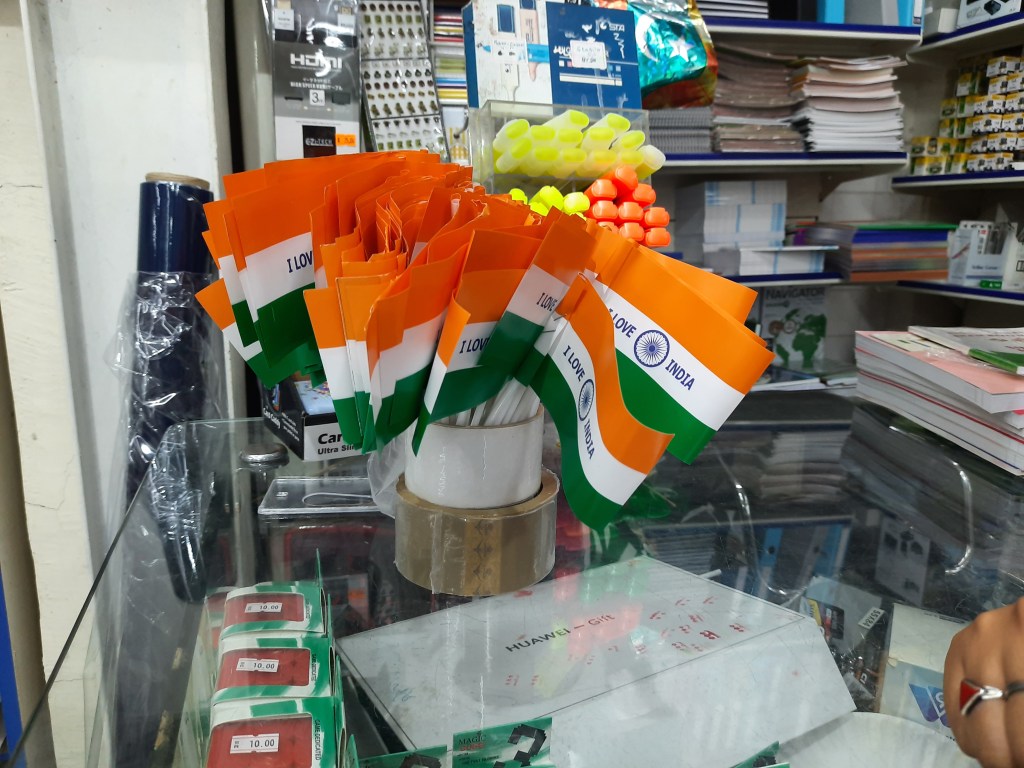
None of them had any clue where I could find one. In the pursuit of an Indian National flag in Saudi Arabia, I wandered across a few streets walking over 9800 steps as indicated in the activity tracker on my smartphone. After concluding it to be a futile attempt to find an Indian tricolor, I decided to head back to my hotel. During my return, my eyes fell on a stationary shop and I decided to give it a last try. There was an Indian storekeeper who smiled upon hearing my inquiry. He took me to the section where a bundle of small plastic flags was kept. I asked for one flag for which he charged me 2 SAR without a bill. I came out of the shop all happy after a successful hunt at exactly the 10,000th step in the activity tracker, only to realize that I was standing just a few yards away from my hotel and that I had searched all over to find a little flag.
Indian National flags at the stationary store
Celebrating Saudi Arabia’s National festival:
It was a long weekend due to the Saudi National day celebration on the 23rd of September. I was in Riyadh, the country’s administrative capital where several ceremonies were scheduled for the observance of the National day. The entire city was lit up and decorated with the theme of the Saudi national flag, which I was told was the case throughout the country. The level of public involvement and the fervor with which a national day is celebrated in Saudi was something that I felt missing back in my country on a national festival.
At the end of the National day celebrations, I and a few others who had accompanied me for the weekend were at the airport terminal in Riyadh, waiting for our return flight. We noticed that all staff working at the airport and the shops were wearing representative brooches or sashes. By then, I had realized that I had the national flags of two countries as souvenirs with a backstory of how I got them. I didn’t want to miss out on adding one from Saudi to the collection because that’s where I was to celebrate the national days of all three countries in 2022. I asked one of the staff about where I could get one for myself and that’s it. She got a sash not just for me, but one for each person who had accompanied me. Her colleagues and she were extremely excited to give us the sashes and click selfies with us wearing them. And any money offered in exchange was refused to be taken, as they called it a gift for us from them.
Souvenirs to celebrate National festivals of India, Pakistan and Saudi Arabia
Conclusion remarks:
Sitting back on my flight, I was trying to recollect my experience of how a national festival was perceived by three different countries. As a foreigner, I was given a gift (free of cost) by Saudi Arabia and Pakistan with excessive excitement. Whereas, being an Indian, I expected myself to be warmly greeted by a fellow Indian on foreign soil and share the same enthusiasm to wish each other on India’s national festival. Instead, I bought an Indian flag from an Indian (it was a small cost by any reference, that could be waived off). It was not the free item I was seeking, but at least an Indian to be able to guide me to a place where I could get Indian products. The expectation was to meet another Indian who shared the same excitement to celebrate India’s festival as that of a Saudi or a Pakistani.
Are we Indians less patriotic? What are your thoughts?
Karnataka is “One State Many Worlds, without a doubt! To explore a different aspect of travelling through this beautiful state, I take you on a path that is en-Lightening, in literal sense- ‘Bioluminescence’. Bioluminescence is a naturally occurring phenomenon of production and emission of light in living organisms. Apart from the visual treat to senses that they offer, the presence of these organisms can tell a lot about our environment as well.
With the Arabian Sea forming the entire coastal belt and the Western Ghats forming most of the green-cover of Karnataka, it is easy to witness bioluminescence anywhere in the state. Traversing a path from the southern rainforests of the state to the northern plainlands through the coastal beaches across all the seasons, here is a list of the different kinds of bioluminescence that one can experience in Karnataka.
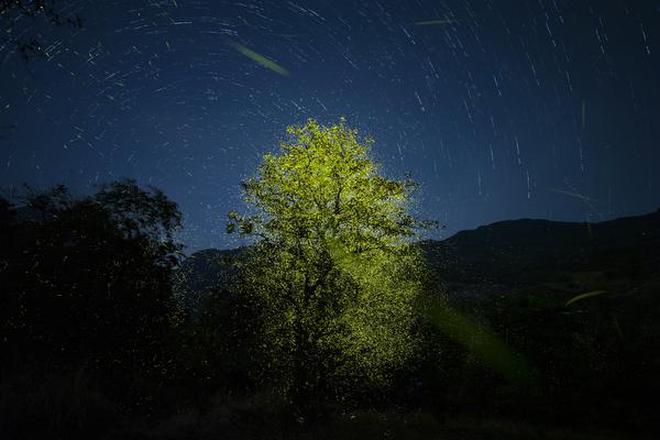
Fireflies: An aerial illumination for spectators, these insects produce light to attract a potential mate. Abundant during the months of pre-monsoon showers and summers, the untouched sacred groves and the organic farms of Kodagu and Malenadu offer a post sunset visual delight. A good number of fireflies indicates the good soil and air quality.
Bioluminescent planktons: These light emitting micro-organisms are present in the sea water. They produce a greenish-blue light when disturbed. This means, they produce light irrespective of day or night but can be seen with normal eyes after dark. These glowing waters can be viewed at their brightest best on a no-moon night between two consecutive monsoon months. But what is not the brighter about it is the fact that the brighter the sea glows due to these planktons, the poorer is the health of the sea water.
Bioluminescent fungi: This can be the hardest find of them all. Enter the core of the rainforest during the peak of the monsoon season, with a slow and careful walk and without use of any torch or flashlights. Only if you are lucky, you can spot these glowing sticks or the fallen barks covered by the glowing fungi. Documented sightings have been found in Karnataka, but I’m sure the Western Ghats are home to more species of luminant mushrooms.
Glow worms: These are larvae of some insects that can be largely found along the banks of streams, rivers and under the foliage on moist ground. An indication of healthy soil, these worms emit light to ward off predators and visually offering a delight to the human eyes.
Have you witnessed any other bioluminescent experiences? Are there any specific place that you wish to share your stories about? Do let me know in comments below!
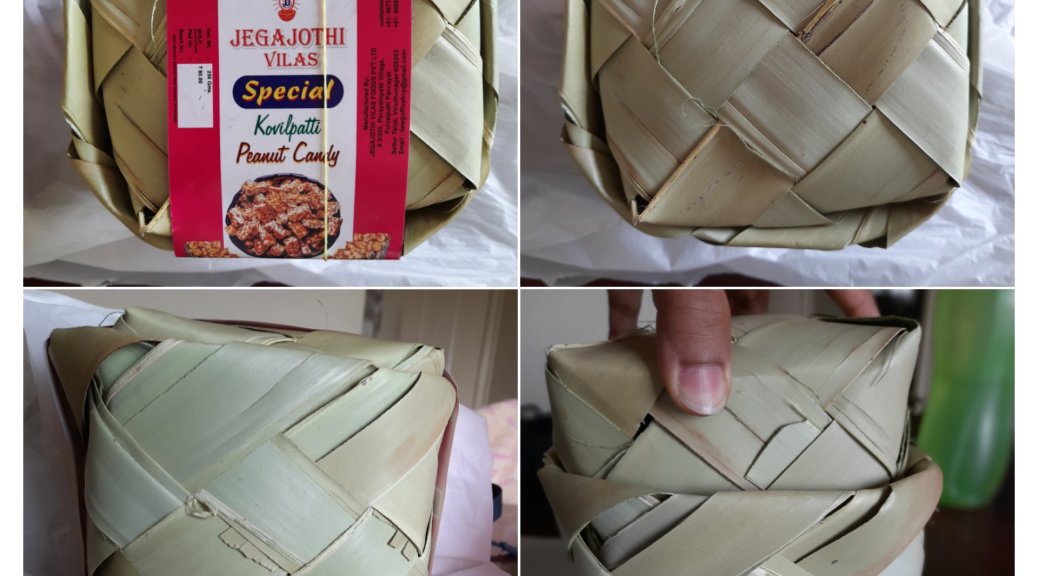
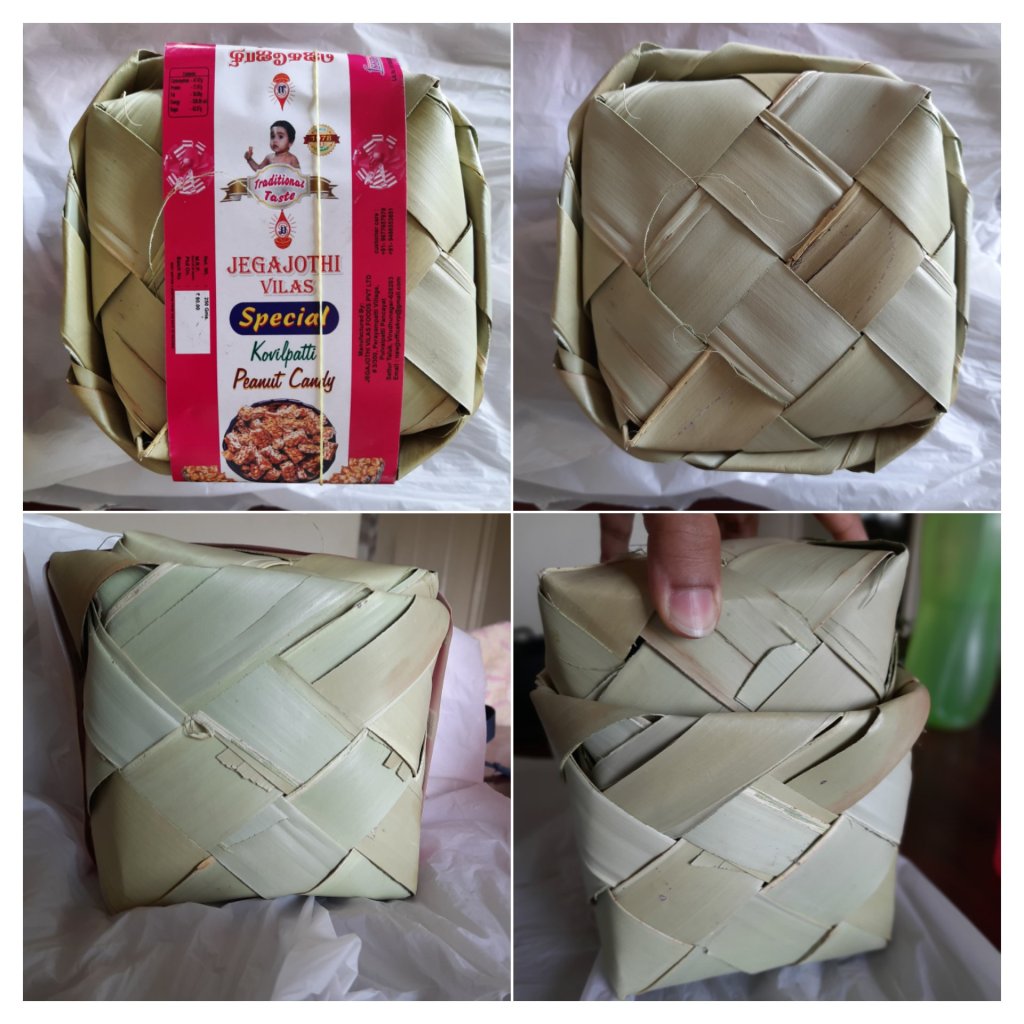
I have been fortunate to meet many like-minded people online, through travel blogging. Recently, I happened to meet one of such friends offline, during his visit to Bangalore. He greeted me with a souvenir, a nice palm leaf box containing chikkis. He explained that it was the ‘panai olai petti’ containing the famous candies from his hometown. After I returned home, a little bit of online browsing about this souvenir unfolded some interesting facts for me.
The palm leaf box containing the Kovilpatti chikki
Talking about the southern states of India, two neighbours have a lot in common. What triggered this thought were the names of places starting with the letter ‘K’, one from each state. Kodagu and Kovilpatti from Karnataka and Tamil Nadu respectively. Meanwhile, the ‘C’ is what makes these two ‘K’ places famous. ‘Cauvery’, the holy river originates in Kodagu and ‘Chikkis’, the peanut candies of Kovilpatti has earned a GI tag for itself. Enough is written and done on the internet about either of the places.
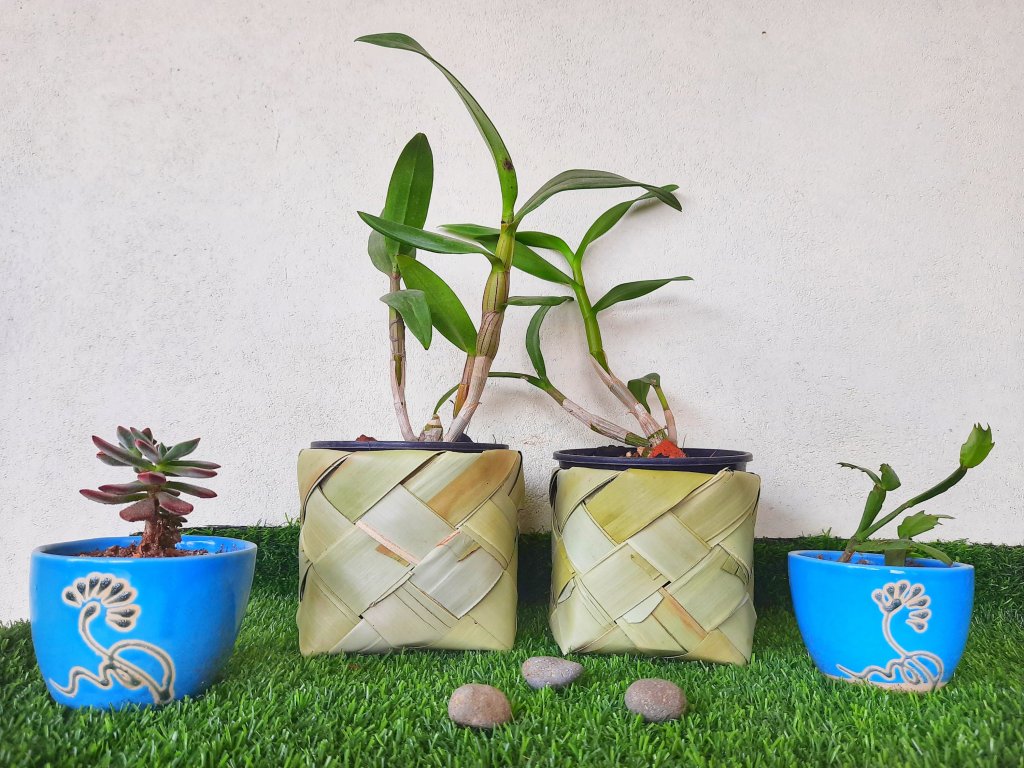
Palm leaf boxes of Kovilpatti mithai being Repurposed as planters
What I do know is, that there are several other lesser-known places in India where people celebrate sports other than cricket. Only initiatives by governments, support from sponsors and adequate media publicity can encourage and motivate more people to nurture a sporting culture in our country, anything other than cricket.
This is a small village in South Kodagu that is closer to Kerala borders than it is to Madikeri. This is where my maternal cousins originally hail from, and they went to school with me at some point while staying together at our maternal grandparents’ house. So, it was natural that I too would accompany them to their native village on several occasions when they went to their parent’s house at Theralu.
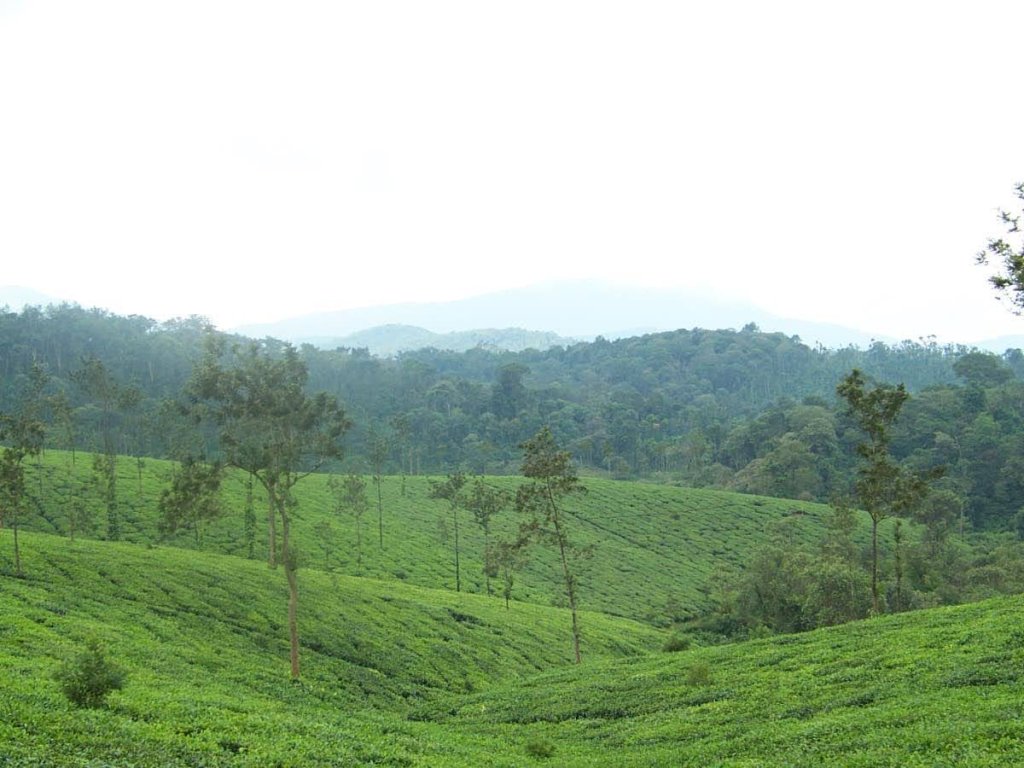
Apart from the expansive Tata tea estates and the Kerala borders some of the other popular landmarks that I enjoyed day tripping here were Irupu waterfalls, Mrithyunjaya temple and the Nagarhole National Park.
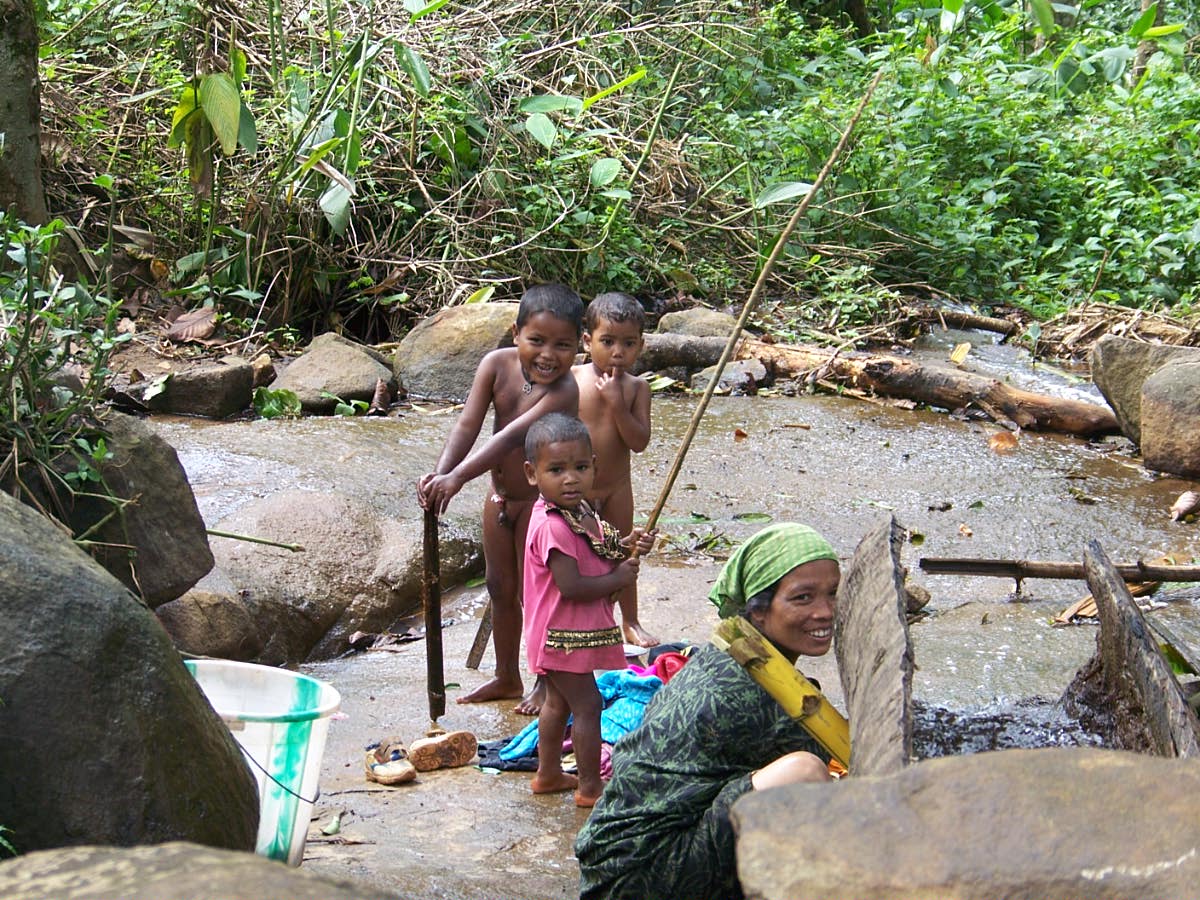
For all that I can remember from those visits were that there were people speaking and following different culture than I was familiar with. All the workers that worked in both my maternal and paternal hometowns were from the local tribal communities who spoke and ate quite same as what I did at home. But those working at my Uncle’s estate in Theralu spoke so many different languages. The larger group had almost created a mini-Assam in the site of their labourers quarters. They had built so many structures, equipment, tools out of bamboo (the most common site in all over Assam) and ate food that was made with ingredients that we in Kodagu didn’t know were edible until we saw them.
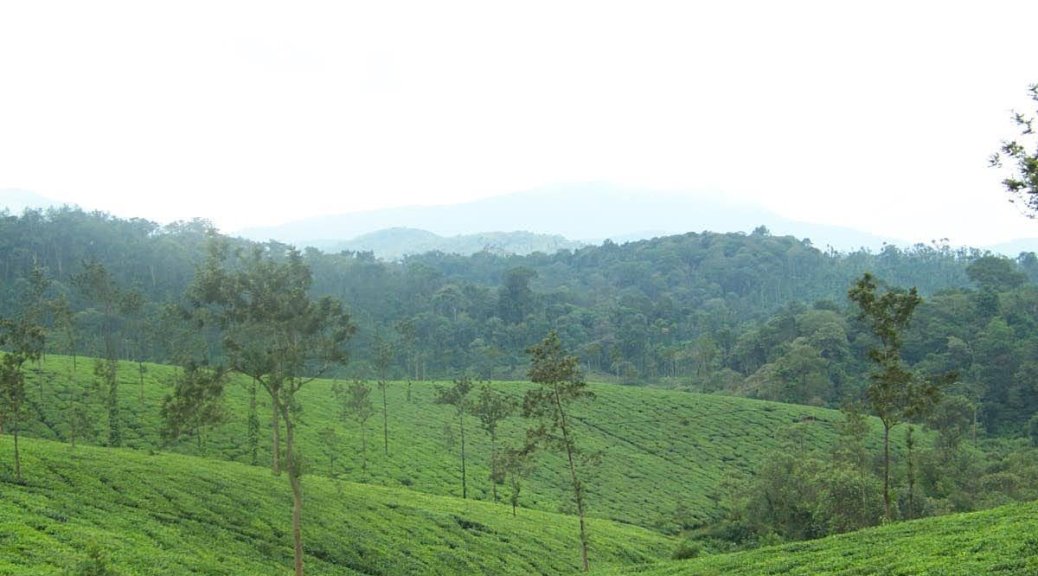
The Glenlorna tea estate Coorg
This is also where I was introduced to Tamil language and their movies. A large group of workers came to work in the farm at Theralu during the peak coffee harvest season and returned back to Tamil Nadu after the season ended. During evenings or on weekends, these workers often came to my cousins house to watch TV. Although I didn’t know their language and didn’t comprehend with most things they communicated, I picked up names of the stars whom they clapped hands in enjoyment or sounded a “Shhhhhh” to express disappointment while watching their favorite stars on the screen. In spite of not understanding a word of what the movie or tele-serial was about, it was an inevitable situation for me to sit and watch through whatever was being played 😀 Looking back at the days, those stars from the early 2000s are the only few whom I can associate with while talking about movies with a Tamilian!
Assamese kids enjoying their shower in a small stream in the estate
With limited means of communication, the major exposure we had in this small hill-district was just limited to living in estates or serving the army. Here, I saw migrant workers coming from faraway places in search of ANY doable jobs, saved a portion of their limited income and sent it to their families back in their hometowns and still lived a life of modesty. I learnt that life was not all easy for people living in other parts of the earth. It always made me think and reflect how unequal and different life was for everyone. Theralu taught me lessons of gratitude for the life I am living!
It was long travelling distances leading to high altitude destinations, where cold winds were abundant and oxygen levels lower. For those of us travelling across North and East Sikkim, it had been a long and a tiring trip thus far. Each day of our weeklong travel through this little but important Indian state had been a different experience.
This post is part of our weeklong stay in Sikkim covering Gangtok – Mangan – Lachen – Gurudongmar- Lachung- Zero point – Rumtek – Gangtok – Nathula – Zuluk – Siliguri
Long ago, I had seen a jaw dropping photograph of the old silk-route winding and passing through Sikkim. It had since been my wish to see that view in real. The old silk-route had once served as a major trade route connecting China with the rest of Asia and Middle east. During this trip in Sikkim, we decided to drive along that scenic route during our exit from this tiny state. Hence, the route chosen by us was: Gangtok > Tsongmo/Changu lake > Nathula Pass > Nathang valley > Lungthung village > Thambi viewpoint > Zuluk >Rangpo > Siliguri
The Details:
Only Indian nationals are permitted on this stretch of East Sikkim and an inner line permit was obtained from Gangtok on the morning of our departure.
It had been a cloudy day since dawn break and the drive for the initial stretch felt pleasant as we passed through the wavering peace flags all along the highway. We learnt about the significance of these peace posts in Buddhist culture while conversing with our taxi driver. The white flags are installed in memory of a deceased person by their kith. Similarly, the multicolored flags are believed to bring good luck. Ideally, these flags are supposed to be installed high up in the mountains where the winds are stronger. The wind is believed to free-up the soul of the deceased or bring good energy, depending on the flag’s colour. With reducing space for hoisting more flags and the ease of finding a hoisting place by the roadside, it is now common to find them all along the highways of this Buddhist majority state.
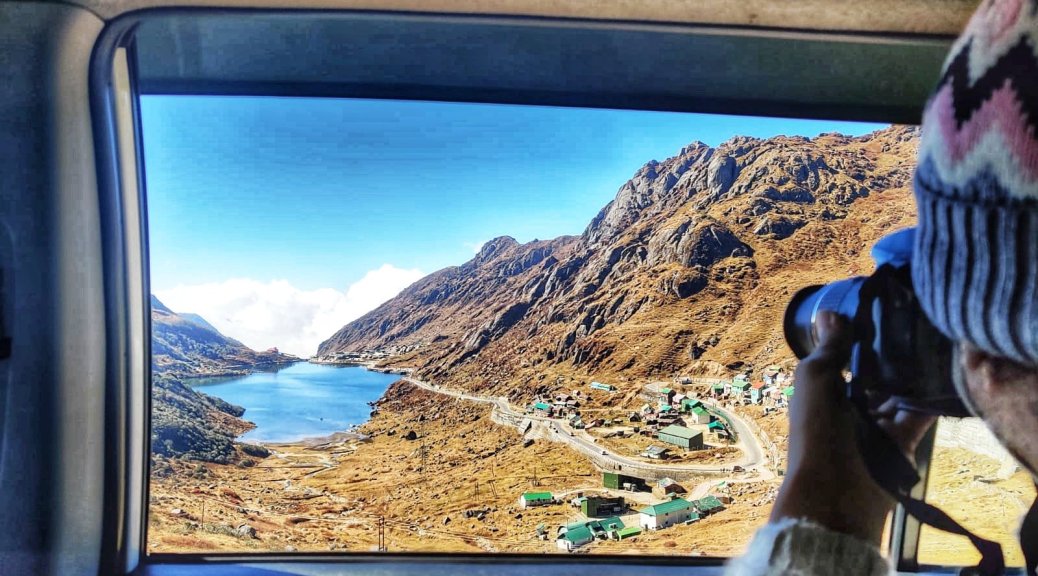
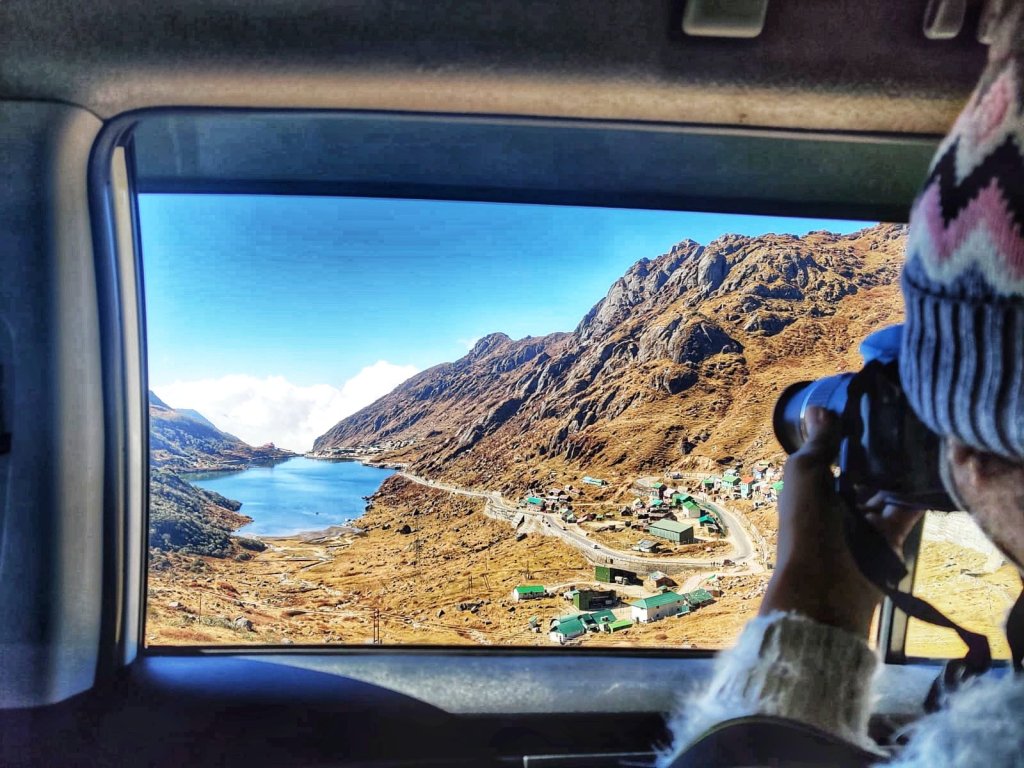
Sooner, the clouds cleared up making way for a gleaming sun in the blue sky. We arrived at the Tsomgo lake in a while. It is a serene lake that is popular among the tourists. We clicked a few photos with the yaks grazing around its periphery before proceeding towards the Indo-China border at Nathula pass.
Nathula was crowded. People were amok and erratic. They had no idea what to expect at an international border. Some were standing in attention with a salute to the Indian tricolor, some were touching and praying the fence that marked the border. Some were putting their feet across the barbed wire to get a feel of going to China and a few more were busy chasing the men in uniform of the Indian army for selfies. And for us, it was a urge to run back to the warmth of the heater of our vehicle 😛 It was biting cold even during the peak of the day. We walked up to the point, saw the border gates of both India and China, the respective embassy buildings, the Chinese and the Indian army camps posted high up and also got a distant view of the mountains that marked Bhutan. We did a quick walk through, taking in all the good views and returned to our vehicle as quickly as we could.
The view enroute Nathula pass Photo credit: Varsha J.
After squeezing out of the maddening crowd at Nathula, we continued our journey towards Nathang valley, only to be stuck in one of the worst traffic jams we had experienced in Sikkim. The last and the major destination on a typical touristy circuit is the temple of Baba Harbhajan Singh. Baba Harbhajan Singh is a folklore hero and an ex-army soldier whose spirit is believed to be roaming around the place, protecting the soldiers posted at this extreme terrain. There are old and the new temples dedicated to him, both maintained by the Indian army. We managed to find our way out of the choco block and continued towards Nathang valley.
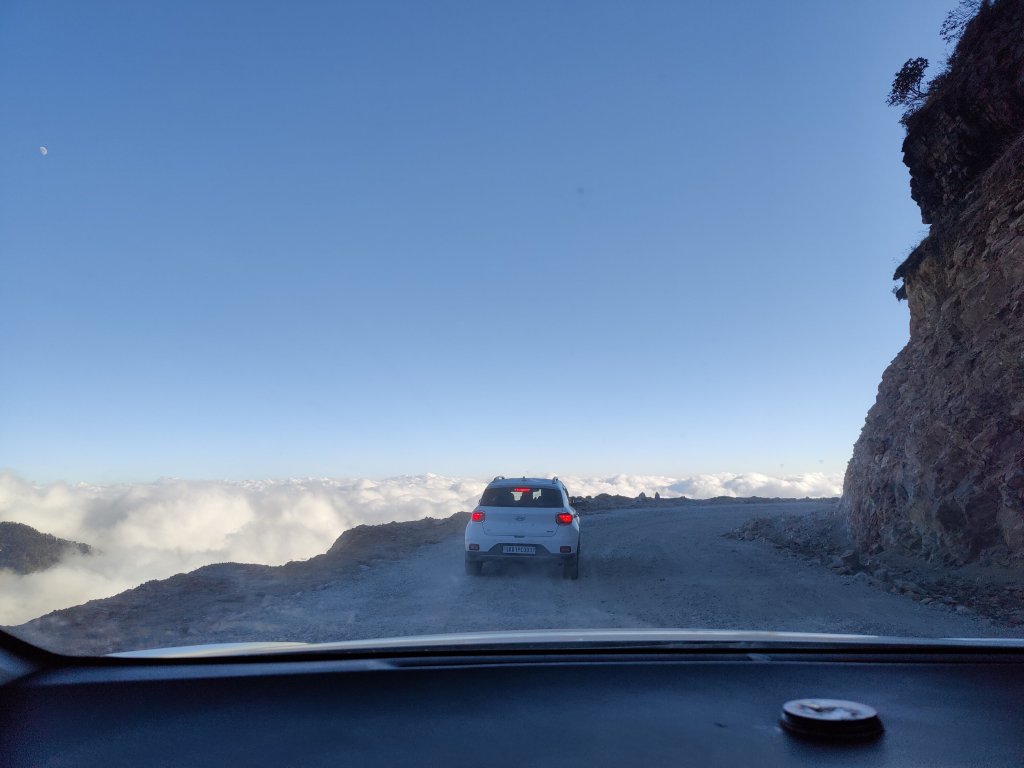
Beyond the army temple, I can conveniently say that it was just us all the way. The roads were deserted, except for some BRO trucks and excavators clearing up the landslide prone path and laying new roads. We passed through what the army claims to be world’s highest altitude golf course, several army camps and tiny discrete civilian settlements along our way. Our drive through Nathang valley, thereafter, was something beyond comprehension for our senses, it was so beautiful!
All that we had envisaged of this journey at the time of commencing this drive was passing through a viewpoint and reaching Siliguri for the night’s stay. But as the journey unfolded, we were in for surprises. That day, the clouds had embraced the valley like never before. The road that we were driving on, seemed as if it was curving around the edge of the land. It was clear blue sky with the sun beaming bright and the thick clouds engulfing the horizon. The rhododendron plants had blanketed the entire valley, which I’m sure must be a visual delight during their blooming season. We stopped, like at every half a mile to capture the landscape in our cameras, alas justice be done to what the human eyes saw.
Driving through the edge, above the clouds at Nathang valley
But by late afternoon, the sun had started to descend to the horizon and the fog had taken over again. Our visibility of the road ahead and the possibility to see the view that we wanted, had both now become zero. Our driver soon pulled off our vehicle at a tiny settlement enroute to enquire for availability of a place for us to stay for the night. Lungthung is a tiny village on the valley, with barely 3-4 houses, that too made with metal sheets. By staying in a homestay there, we were going to be the only outsiders for that night at Lungthung!
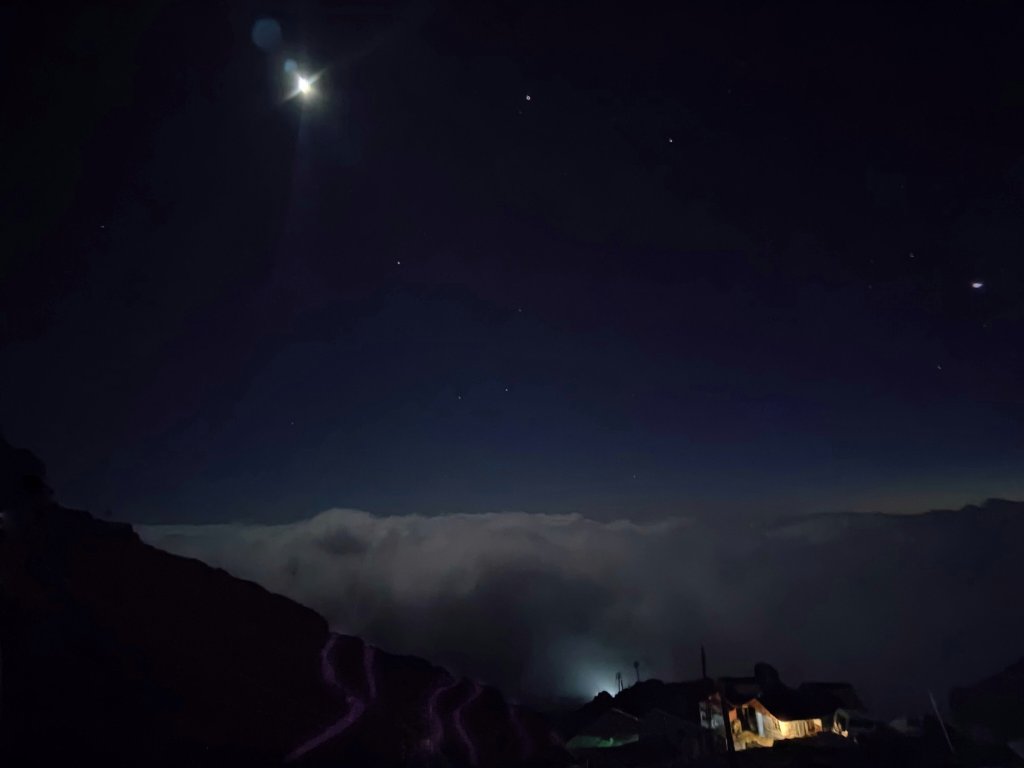
The mercury level was already below zero. But as the night rolled in, the winds too got stronger. The clouds cleared up and the stars and the planets shone brighter than ever. It was our last night at Sikkim and the coldest too! Even as we sat inside the host’s dining room, relishing the handmade thenthuk, we felt like our roof was going to be taken away by the winds. No amount of firewood could keep us warm. Even if we simply stood up for a moment to adjust our seats, they would freeze again. But as I said earlier, it was our last evening at Sikkim before we got back to the grind. There was no way we would hit the bed early. We sat outside, counting stars quite literally… The sky was clear, the moon lit up the road below and a lone filament bulb illuminated a roof at a little distance. Apart from an occasional goods carrying army truck that toughed it out on the slope, there was no civilization around us for miles together… It was an experience so wonderful that we hadn’t imagined about remotely, even a few hours ago… Not in my wildest dreams, had I imagined that I would live a day of my life ON the silk-route!!
The moonlit view of the silk route and the clouds as seen from Lungthung homestay
Anyway, not really being able to sleep due to cold temperature and the noisy sheets fluttering outside our room, we still rolled into our blankets and set an alarm to wake up early. Our host at the homestay had recommended to walk down the road for sunrise…
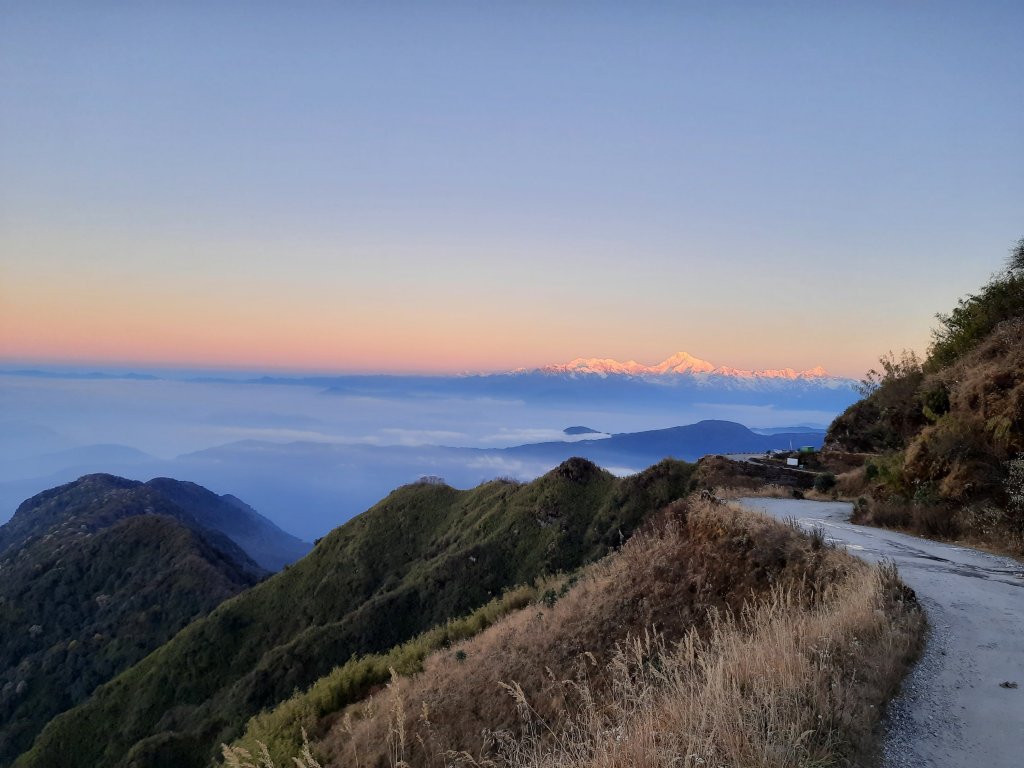
The following morning, it was almost impossible for me to even think of coming out of the blanket. I snoozed the alarm a couple of times. But then something happened. My eyes had one glance at the window glass, and it was enough motivation for me to get my butt off the bed. It was a breaking dawn…. The sky had a streak of deep red, visible right at my window, seen from my bed…. It was for sure, unusual from any normal day. The view made me forget the cold and barge outside to not miss the complete visuals of an unfolding day… I woke my brother up and my friends and we all raced towards the viewpoint that we were told about. We didn’t mind slipping down a couple of times on the frozen roads.
The sun rising over Kanchenjunga at Thambi view point
At such high altitude and low temperature, the running didn’t help to warm us up. As we reached the viewpoint, we were panting for breath and had our jaws dropping. We were gasping, awestruck in amazement at the sight around us, chattering due to the freezing temperature and everything else happened to us at the same time. The moment is inexplainable!
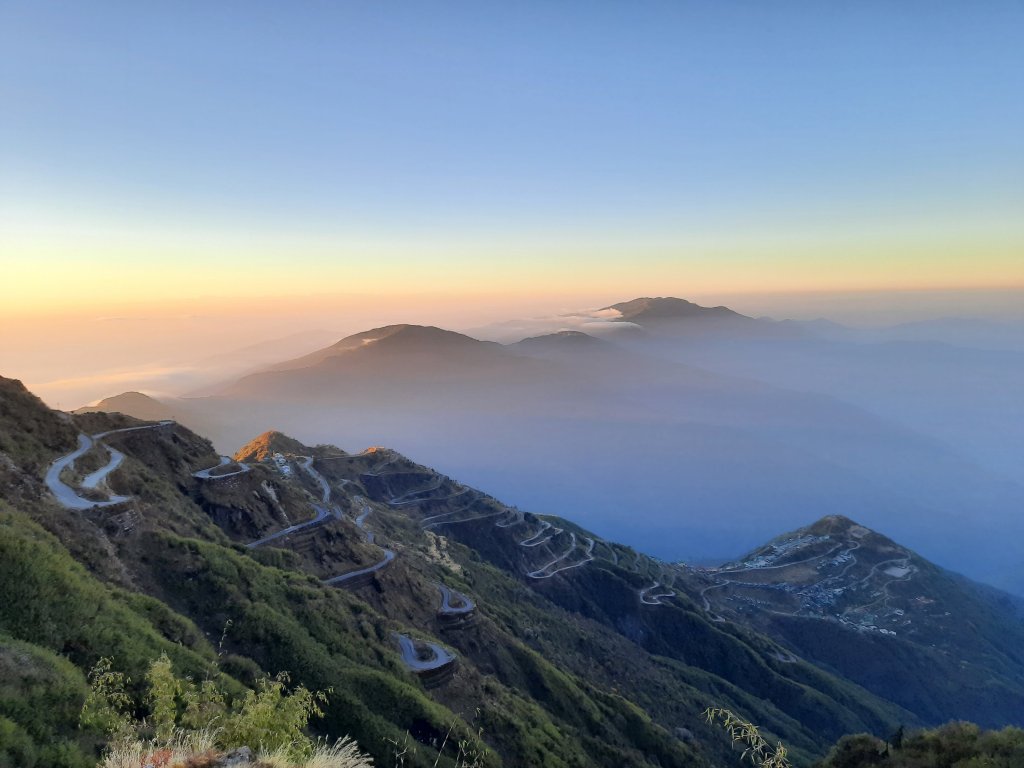
The old silk route at Zuluk valley, as seen from Thambi view point during sunrise
We were standing at Thambi viewpoint and had lost the sense of place for that moment. The Kanchenjunga had lit up in crimson in just a few minutes and the winding roads through Zuluk valley appeared deep down in a while. It was a day and an experience like never before! It was our last day at Sikkim and I could only say that the best was indeed saved for the end!
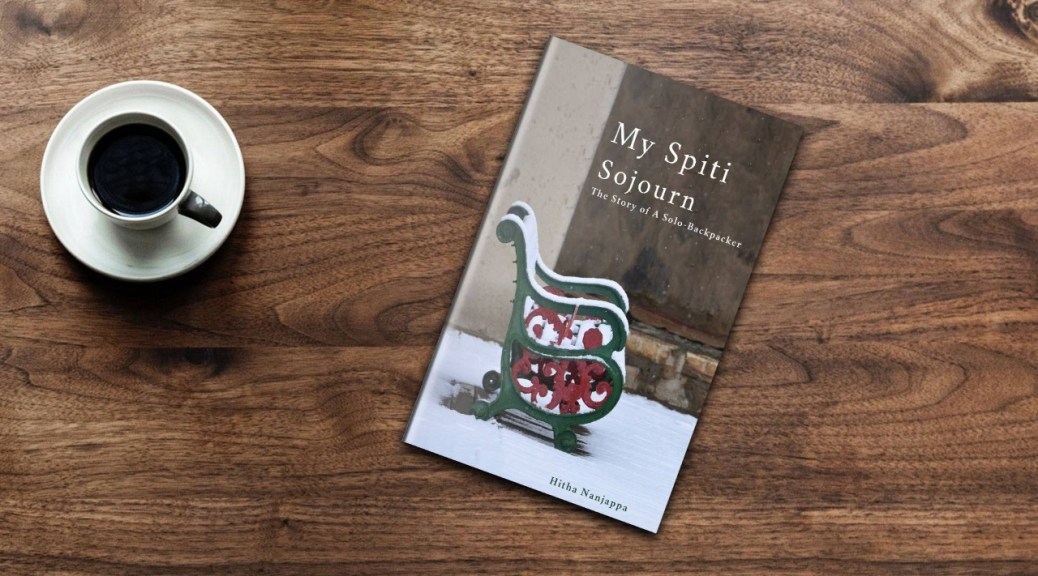
My visit to the arid land of Spiti was my first solo trip in all sense. I have previously spoken about its beautiful landscape and the wonderful people through my blog posts. But, on a personal note this travel has been one of the most impactful trips of my lifetime. So, here is the entire story in the form of an e-book.
Through this book, I seek your company while I backpack alone on a trip to the mountains. I want you to join me when I gate crash a mountain wedding and dance to the first snow. I want company when I confront a mummy and when I visit a vault full of millennium old paintings. Stay with me as I return home with an unsettling chaos running in my tummy. As you read through the pages of this book, you can bite into the juicy apples of Kinnaur all along, walk with me meeting people and go on a virtual trip to the Spiti valley and back.
You can get your copy of the e-book on Amazon by clicking on the image or the link below:
Click on image to buy the copy of ‘My Spiti Sojourn’
Yes, I know the language could have been tuned a little more and the English, could sound a little more polished. But, due to reading the same story over and over again, a few mistakes have outflown, my humble apologies! This book had been compiled in the first covid lockdown (Apr 20) and I have been procrastinating to publish it for over a year now, even post 2nd lockdown I (Apr 21). So, finally it had to be done….. But, I promise that my intention of sharing my story and experiences from the road has been compiled to the best of my abilities. I wish you all read, enjoy your virtual trip to Spiti and share your honest thoughts about it…










 The Lost Lander