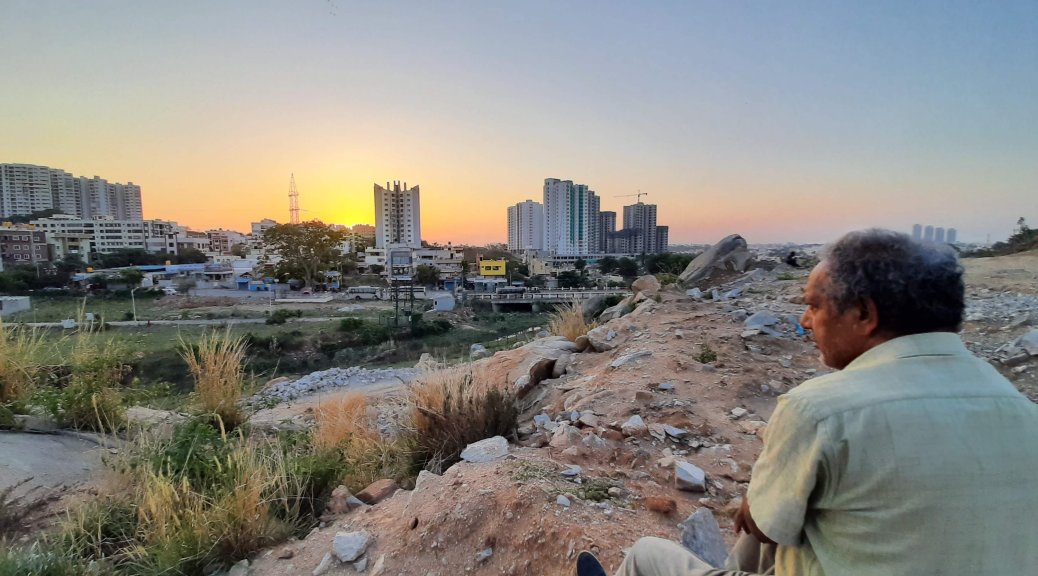
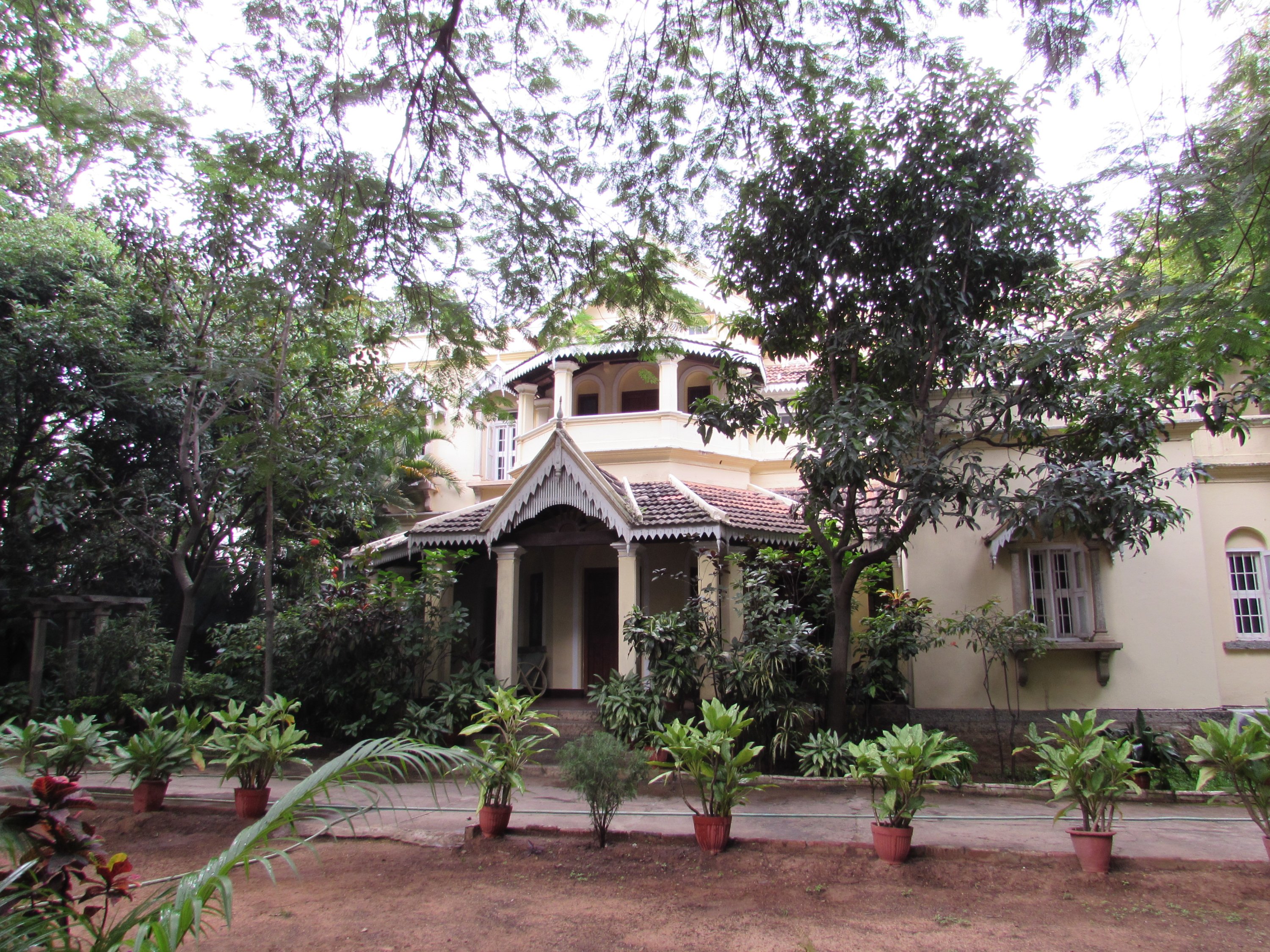
‘Uttarahalli’ translates to ‘Northern Village’ in Kannada. The irony is, it is located in the southern-most part of Bangalore. This is the current place of residence of my family and is also the last post in this series. This home seems like a perfect retirement plan for a family that seeks a little bit of nature in the midst of a bustling metropolitan city.
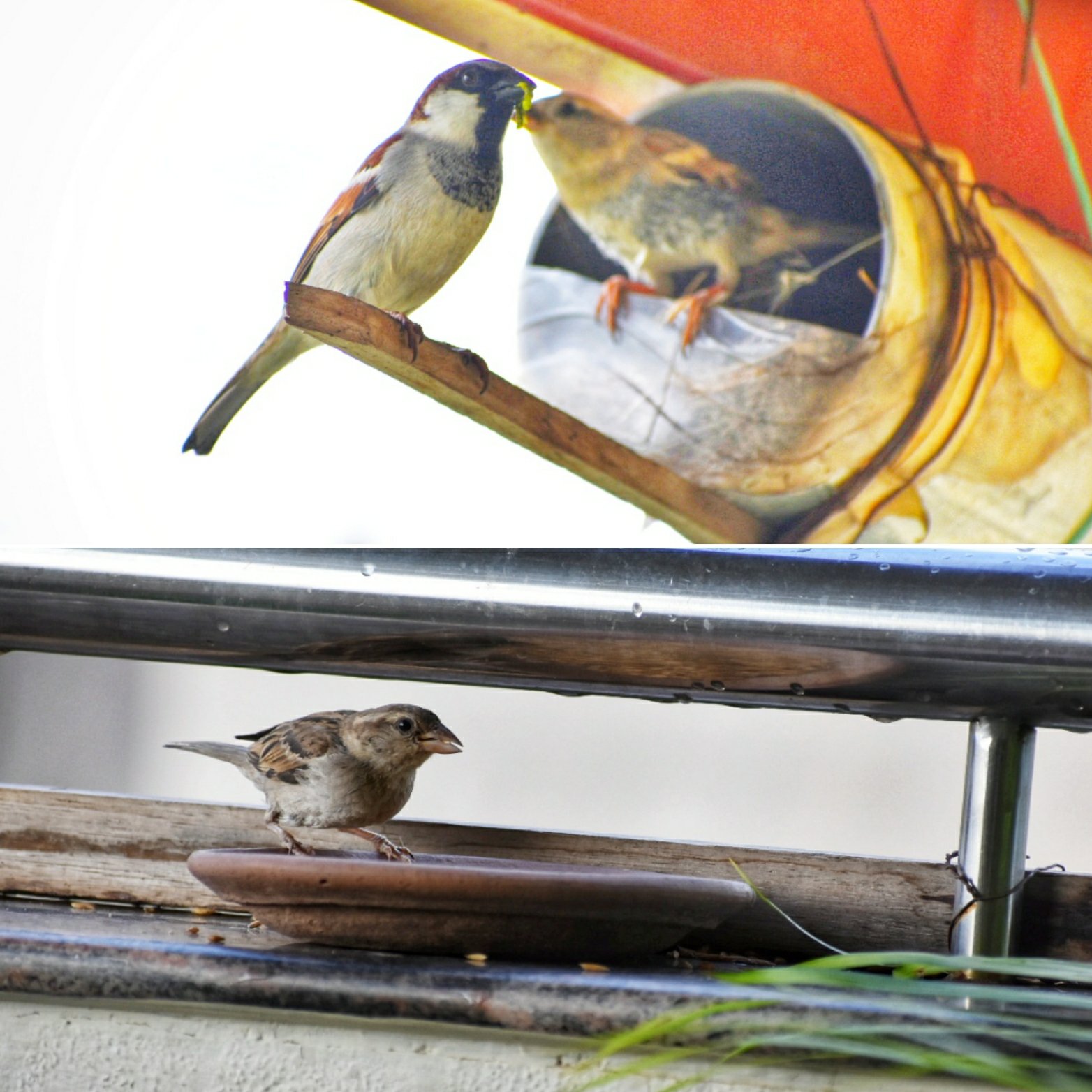
With very little vacant space available, my parents try to grow their own vegetables and fruits, welcome birds and squirrels to have meals with them and sip their ‘kaapi’ while watching the sun go down. These are some among many other things they do to keep themselves running through the day.
The sparrows in my portico
The area is soaked in rich history as well.. While the ‘Vasantha Vallabharaya swamy temple’ dates back to the Chola era, an adjacent cave is believed to be the place where Rishi Mandavya had meditated.
The Turahalli forest is a small patch of lung space nearby, that joggers, cyclists, conservationists and the realtors all seem to have an eye on!
The latest addition to the landmarks is ISKCON’s ‘Krishna Leela theme park’ located on the Vaikunta hill. The sunrises and rainbows on cloudy days are mesmerizing, adding a backdrop to the view of this temple from my doorstep.
Annual fair of Vasanthavallabha temple, Vasanthapura, Bangalore
This is the last post of this series: “I Belong to Everywhere“. I hope you all have enjoyed time travelling with me hopping on- and off from Bangalore to Kodagu. Which place did you like the most? What place would you want to go after reading my posts? What more do you want to know about, from these places?
Napoklu is a small town located in Madikeri Taluk, in the northern part of Kodagu district. I have spent several memorable holidays here, living a high energy childhood. There are several places of interests for tourists and local pilgrimage that are centered around Napoklu. Some of them are ‘Sri Makki Sastavų temple’, ‘Chelavara waterfalls’ etc. The ‘puttari festival’ is one of the best and the most elaborate one celebrated by the Kodava clan native to Napoklu.
Puttari festival at Kolu Mand
If any of you find a tinge of madness in me, it is likely that it has been due to the influence of my cousin who hails from this town. He has been my closest friend as we both grew up together, roaming farms, fields and streams. On weekends when he didn’t come to our grandparents’ house in Madikeri, we would be roaming together, around the other places that are mentioned in this series of posts.
Although I have spoken about how I developed the awareness for conservation of wildlife in one of my earlier posts, but it is in Napoklu, that I originally imbibed the qualities of empathy for animals. Apart from the cattle, dogs and cats that I was surrounded with in Madikeri, my cousin had birds, fishes, tortoises, rabbits and poultry in his house. They shared a unique bond with him. While during the days, we caught dragonflies with aquarium nets, we chased fireflies at night and trapped them all together in empty glass jars to create a mini ecosystem of our own.
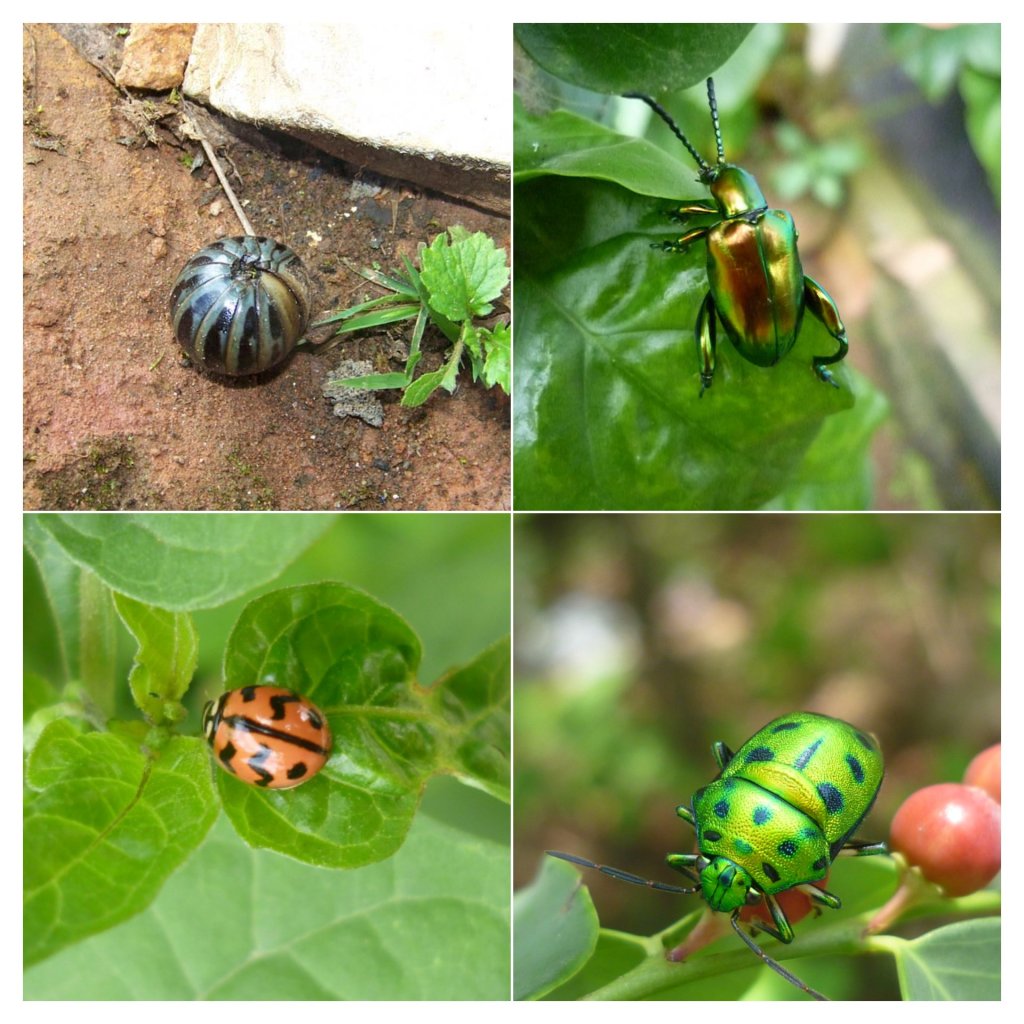
Beetles and ladybugs
If you wonder how I know some names of celebrities from across the globe, it is because we followed them. I watched Formula-One, WWF, Tennis and Cricket without missing a single match or a tournament, because the TV remote would always be with this guy and I had no option. The craziest automobile geek I had ever known, much until I became an automobile engineer and met a few other geeks along the way, was this cousin alone. We traded ‘trump cards’ and fought each other over the ownership rights of the rarest WWF and Cricket cards. We still hold back some of these treasured collections and often reminisce those good days of innocent fun. These are the same things that trigger little momentous joy to me even today and that which helps me spread positive energy.
In the rapidly expanding Bengaluru city, Malleswaram and Chamarajpet are like two lungs that breathe out air of cultural relevance and nostalgia of Old Bengaluru. Malleswaram in the North and Chamarajpet in the South have always stood equal in their heritage of what the real Bangalore once represented. Although one might disagree with my personal viewpoint, Malleswaram represents the face of Bengaluru that boasts of intellects in the science and academics fields whereas Chamarajpet represents a city that is filled with scholars from the creatives like literature, art and commerce. In the proximity to premium research institutes like IISC, ISRO, C.V. Raman institute, the Wood institute and organizations like BEL, HMT, Mysore lamps, Sandal Soap factory etc. Malleswaram was the closest residential area. Meanwhile, Chamarajpet was an extension of the Pete area and is also the home to the Karnataka Sahitya Parishad. So, those in trade, literary luminaries and Pandits naturally moved in here. Anyway, my intention is not to explain those details and get into a debate, but to come to the point on how and why I believe that I belong to Malleswaram. (More on Chamarajpet in the next post)
Kaadu Malleshwara temple at Malleswaram
Talking about Malleswaram, where do I start from? 18th cross, maybe? I often entered into the premises of Sankey tank from Sadashivanagar and I exited from the other end to Malleswaram. For the first two years of living in Sadashivanagar, I played Basketball. I was trained at the ‘Beagles Basketball Club’ and envisioned to make it big in this sport over the coming years (Destiny had different plans and that’s for another story). Mind you, I had been an ardent follower of Kobe Bryant and the Lakers since school!
Finishing the day’s training usually meant savoring a honey cake for Rs.7 and a biscuit sandwich ice-cream for Rs.5 at the lyengar’s bakery at 16th cross. The aroma of filter coffee in the darshini hotels and a walk in the old Malleswaram market are sensory experiences that cannot be taken away from me. The CTR dosey is an inseparable part for my taste buds (I take the metro train from my current residence in South Bengaluru to Malleswaram even to date, just to eat CTR dosa).
Villa Pottipatti- a heritage hotel in Malleswaram, Bangalore
The atmosphere of festivities brought in by scores of vendors on the 8th cross road were the days that were much awaited by me to see what each festival was about and what the key items associated with a specific festival were (decorations, food and other knick-knacks). I had even made up an entire itinerary on my own and applied for a part time job of a tour guide who wanted to walk the interested people through the lanes of this heritage area.
Malleswaram market
Since I had only then moved into Bangalore after finishing my schooling in Madikeri, for me Malleswaram served as an open school to open my mind to cultures that I was totally unaware until then. The cuisine, the festivals, the spoken Kannada, the traditions and the mindset of people in general, everything seemed new to me in Bangalore from what I had been exposed to until then. I was quick to adopt and adapt and this is where I became a true blue Bangalorean.
With the premium research institutes of India being around, Malleswaram sort of sparked my urge to keep learning/exploring something constantly and inclined me towards pursuing research in general.
The original plan for this short family outing was to make an early morning visit to Sanjeevaraya Swamy temple in Channapatna Taluk of Ramanagara district and return. But, since my workplace is located along the same route, I expressed my disinterest in traveling that way. I pitched in the idea to have a change of route at least for one-way. Hence, I added a couple of other landmarks, picked up an offbeat village road and created a circuit with aid from google maps.
For those of you who are not familiar with the geography of Karnataka, Ramanagara is popularly known for its Sholay hills that was featured as the village- ‘Ramgarh’ in the Bollywood movie Sholay. Channapatna is popular for its cottage industries of wooden toys. I am not going to write about any of these places, the search engines are already flooded enough! I am going to take you around some lesser known places in Channapatna, for a half a day’s trip from Bengaluru.
We set out on a Saturday morning and decided to have our breakfast on the way. Sri.Renukamba tatte idly (translates to ‘Plate idli’ in Kannada) needs no introduction for the Bengalureans. So, after a filling plate of tatte idly at Bidadi, we proceeded towards our intended destination for the day. To reach there, we had to pass through Kengal, a village popular for yet another Hanuman temple. Moving ahead from there along a small deviation, we arrived at our first major destination: Sanjeevaraya Swamy temple at Devarahosahalli village. This is a small stone structure dedicated to Lord Hanuman and dates back to the Vijayanagar era. The deity is believed to be powerful and hence, we were there to offer or prayers following the recommendations of some well-wishers.
After spending some time there, we continued onward to our next destination, a little cave temple located atop of a hill. The drive, the scenery, the canopy of the majestic trees along the highway was a pleasant one. We stopped by to do some bird watching at the Neelasandra lake as well. We could see Pelicans flocking in large numbers.
Our next major stop came as a rather surprise to us. Gavi Ranganatha Swamy temple was a random destination included in our day based on an internet search result. The drive, the location of the temple, the valley, the village view from the temple porch and the overall scenery was just so stunning and unexpected. There was just no one else in the temple apart from our family and a few local kids playing in the hill, atop which this temple is located. You can watch the video of our visit to Gavi Ranganatha Swamy temple below:
Drive to Gavirangana betta
By this time, the sun was already up and beaming bright. So, we decided to drive back, of course through a different route. We descended the Gavi Ranganatha Swamy hill and took the route that connected to Kanakapura. On the way, we stopped at this beautiful location where the highway passes through green farms on one side, a large lake on the other side and the entire scenery was being overlooked by the temple hill.
Vittalenahalli highway and lake
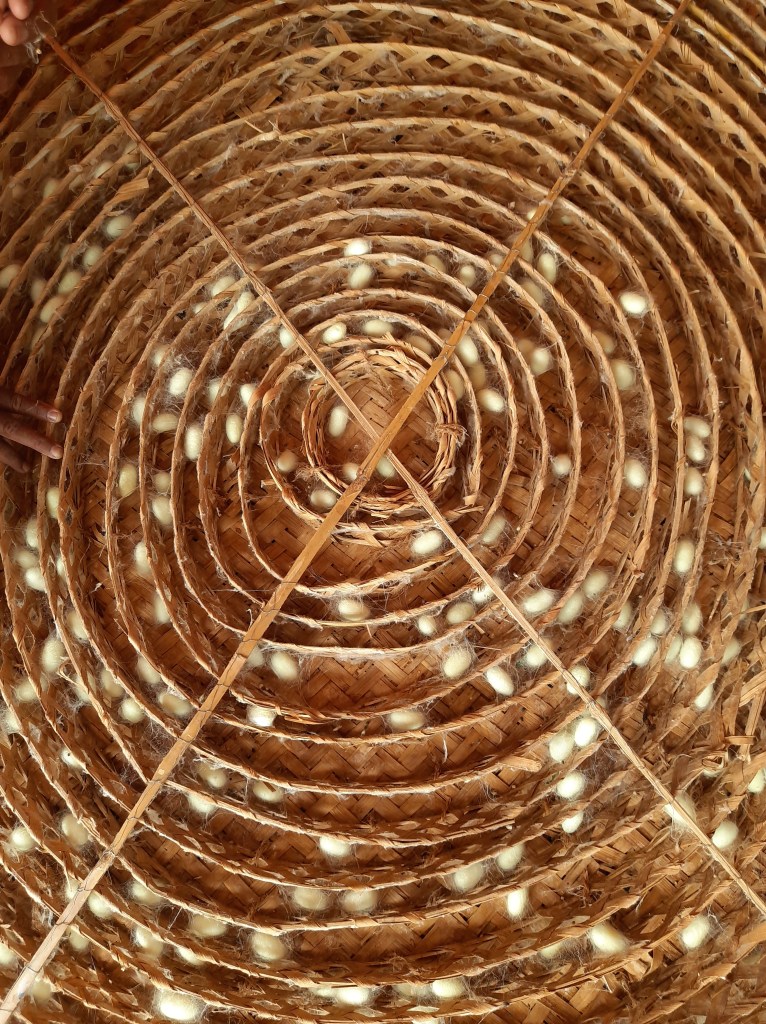
Our drive from there continued through large stretches of rocky hillocks, mango orchards, paddy fields, coconut groves and mulberry farms. Ramanagara is also known for sericulture. Several households in the villages here are involved in silkworm rearing. As we passed through, we noticed that families were sitting out in the verandahs of their traditional houses and collecting the fully grown cocoons from the bamboo trays. We stopped by and walked over to one of the houses on our way and learnt a thing or two about sericulture from them.
Silk Cocoon trays
In a short while, we reached the Kanakapura main road where we had our lunch. Well, it was a late evening lunch before continuing towards home and thus ending a quick trip to the Bengaluru outskirts.
This was a post monsoon, weekend trip I had planned with two other friends who had joined me from Bangalore to Mahabaleshwar. The main agenda of this trip was to visit the ‘Khas plateau’ in its bloom season, but it was just for a day (Click here to read more about my visit). Since we were travelling all the way, we decided to extend the weekend for a little longer by adding a few other places and make it a backpacking trip around Satara district.
Our Itinerary:
Day 0: Leave from Bengaluru to Satara (overnight private bus) Day 1: Satara to Wai (MSRTC bus), Visit to Menavali village & Dhom Dam; Wai to Panchgani (Local bus), Local sightseeing and night’s stay at Panchgani (Walk and shared taxi for local transportation) Day 2: Panchgani to Mahabaleshwar & local sightseeing at Mahabaleshwar (hired taxi for full day); Mahabaleshwar to Satara (MSRTC bus) and night’s stay at Satara. Day 3: Visit to Khas plateau & local sightseeing at Satara town (hired taxi); Return from Satara to Bengaluru (overnight KSRTC bus)
The details:
Day 1: Wai and Panchgani.
Since we required to start our Khas plateau visit from Satara, we decided to visit the places around the town later (on day 3). So, we moved ahead on the day of our arrival at Satara.
After alighting at Satara bypass on NH4 that morning, we hired an autorickshaw to reach the bus stand located in the town. From there, we boarded a MSRTC bus to our first major destination of the day: Wai.
Part 1: Places to see in Wai
I had come across the name of this place in a newspaper supplement. I had read that a large part of Shahrukh Khan’s “Swades’ movie was shot in and around Wai. Since we had to anyway pass through this place to reach our intended destination of the trip, I thought it was a good idea to add Wai it our itinerary. However, we had no idea of what to see and things to expect in Wai. We decided to just go there and explore the place by ourselves. Upon our arrival at Wai, we enquired with a few locals who guided us to the banks of the Krishna river.
A. Menavali village: A walk of good couple of miles from the Wai bus stand, we arrived at this village located on the banks of river Krishna. The locals call this as the Wai ghat as well. Apart from being a prominent setting for several Bollywood movies, the Wai ghat is also an important destination for history and archeological buffs. It holds great treasures from the times of the Marathas and the Peshwas. It is especially known for the contributions by the 18th century Maratha stateman- Nana Phadnavis.
Phadnavis Wada: Wada is a local name for a residential mansion with an inner courtyard. Residential complexes leading to river banks on one end and housing temples is a signature architectural style of the Peshwa era. The Phadnavis Wada located on the Wai ghat is one of the handful of such structures that still remains intact.
We did a quick visit to the Dholya Ganapathi mandir & Sri Kashi Vishweshwar Mandir (This temple is called as the Kashi of Maharashtra), both situated on the river bank.
Wai ghat on the banks of river Krishna at Menavali village
As we took a stroll along the ghat, I realized that reality was far from the destination on reel. The real Wai looked very laid back and rustic. However, we decided to sit by the riverside and spend some time by photographing the local kids enjoying their time by diving and swimming in the polluted waters of the ghat.
B. Dhom dam: This waterbody is a good place for water sports with a nice view of the surrounding mountains. Located at about 10kms from Wai and connected by frequenting local shared jeeps, it is a nice place for catching a sunset. But, we gave this is a miss since we hadn’t booked our accommodation and has to reach our next destination ASAP. The bus left Wai and travelled around the curvy road of the mountain. The entire journey was beautiful with great views of the Dhom dam whose waters reflected the clear blue sky.
Part 2: Places to see in Panchgani
We had alighted at our next major destination: Panchgani. Although Panchgani is a small hill town that doesn’t extend beyond a stretch of 2 kilometers, surprisingly, it is an educational hub of Maharashtra. Around 42 international schools are located here. Given its small area, all the popular tourist places in Panchgani are located close by. So, we decided to get off with our backpacks at the entrance of the hill station, explore the landmarks and then find a place for our stay. The details of our time in Panchgani is as given below:
a. Harrison’s Foley view point: This is the first major landmark you come across, even before you actually enter the town. However, we thought of giving it a miss because our next stop was going to give us a view of this Foley as well.
b. Sydney point: We got breathtaking view of the Dhom dam from here. After a long day travelling and walking with our backpacks, we thought this was just a perfect place for us sit down and soak in some relaxing views. We sat down right there on the footpath, facing the dam and spent some peaceful time amid nature. After spending some good time and having all our limbs relaxed, we walked back towards the main road.
c. Table land: Our actual plan was to check-in to a hotel and sleep early that evening. However, we changed our minds and decided to visit the table land to use up our time in the remaining daylight. Sometimes, even with no plans, god really wants you to be at the right place at the right time. That’s how this evening turned out to be. As we went up the road leading to this place, it looked like quite a mela up there. There were so many makeshift shops set up and the place had been littered all around with plastic bottles and wrappers. But, as we walked past the maddening crowds, we saw that the table land was a vast stretch than expected. We decided to walk the entire land before dark. The grassland was naturally gifted with vast stretches of native flowers: all white, purple and yellow. It was a magical place that got us busy photographing the silhouettes of the grazing cattle, the horse riders etc. against a beautiful backdrop of the setting sun. An artificial lake amid the grassland added romance to this place. The sky was painted in all hues with a beaming full moon reflecting in the lake’s water, adding to the spectacle. It felt like as if the sun had gone down sooner that day. With that, we had to scoot out of the place as area suddenly started to feel deserted and had no guiding lamps to the main road.
d. Rajapuri caves: This place falls on the way up to the table land. We were told that the cave has a temple dedicated to lord Ayyappan and hence, women of menstruating age are not allowed inside. With that, we headed back to the town and checked-in to a hotel.
We wanted to have some food that are a must try in Panchgani. So, we dumped all our luggage in the hotel room and set-out to walk around the town, yet again.
Panchgani is famous for channa, chikki and fudge: the shops say this all over the place. So. we picked up some of these to carry back home.
What caught our attention was a bottle of strawberry wine at a wine store.
The day’s events concluded with a sumptuous spicy hot ‘veg Kolhapuri with roti‘ for dinner.
On the following morning, the idea was to be at the table-top for sunrise. However, we snoozed the alarm for a little longer and we woke up only when the hotel staff rang the doorbell. We then started our day with a yummy plate of Poha for breakfast and hired a taxi to our next destination: Mahabaleshwar.
Day 2: One day at Mahabaleshwar
The hill station is a favorite haunt of tourists from the nearby metropolis and afar. Mahabaleshwar can be broadly classified into two parts, the New and the Old. Both have been explained in detail in a separate post as the list of things to see and do in Mahabaleshwar is going to be long.
Kate’s point and the elephant head view point at Mahabaleshwar
Day 3: Satara and Khas Plateau
This day was the sole reason that had got us to plan this entire trip. We woke up early to reach Khas plateau for sunrise and get some wonderful photographs. Being early gave us the benefit of avoiding the scorching sun and also to escape the crowds that would normally pour in at a later time.
Apart from my visit to Khas plateau that requires a separate post, I am listing the places of interest around Satara town for those wishing to explore this region:
a. Around Khas plateau: If you have sometime in hand, you can drive further from the Khas lake to reach the boating village of Bamnoli and take a boat tour to Vasota fort or Tapola. b. Vajrai and Thoseghar waterfalls: These picturesque places were a disappointment when we arrived there as these are mainly rainfed cascades. c. Chalkewadi windmill station: Considering that we had visited a windmill station earlier, back in our home state and to save time, we gave this place a miss. d. Forts for the history buffs: Sajjangad, Ajinkyatara, Pratapgad, Kalyangad are places that can all be covered, but only with the convenience of having own transport. We skipped our visits since we were largely dependent on public transportation and taxi service that was expensive. e. Natraj temple: This ancient structure located in the center of Satara town, is worth visiting
The Pink balsam carpet at Khas valley
Food to try in Satara:
Kandi peda: This is a specialty sweet of this region
Zunka baakri: This is roti made of a locally available variety of maize, we had it for a late lunch that kept us filled throughout our return journey.
Fresh strawberry with cream in Mahabaleshwar.
We boarded a bus back to Bengaluru and thus, ending a long weekend in Satara.
River Godavari is the longest river in South India that travels over 1000 kilometers. My first glimpse of this beauty was at Rajahmundry, where the ritualistic ‘Godavari Arati’ is offered to this mighty river every evening. The sunset and a boat ride from the Godavari ghat are experiences in themselves. Among the umpteen dams, reservoirs, bridges that are a built across her, the most noteworthy bridges are located in Rajahmundry. Here is a quick look at these heritage structures.
The heritage bridges in Rajahmundry
Old Godavari bridge – This is the oldest of the three major bridges built across Godavari here. It was originally called as ‘Havelock bridge’ since it was named after Sir Arthur Elibank Havelock, the then governor of Madras. This is a Stone masonry & Steel girder bridge whose construction started in 1897 and commissioned in 1900. After completing 100 years, this railway bridge was decommissioned in 1997.
Godavari bridge – Also called as the ‘Kovvur-Rajahmundry bridge’, was commissioned in 1974. This truss bridge has a two-way road deck over a single-track rail deck making it Asia’s second longest railroad bridge with a length of 4.1kms.
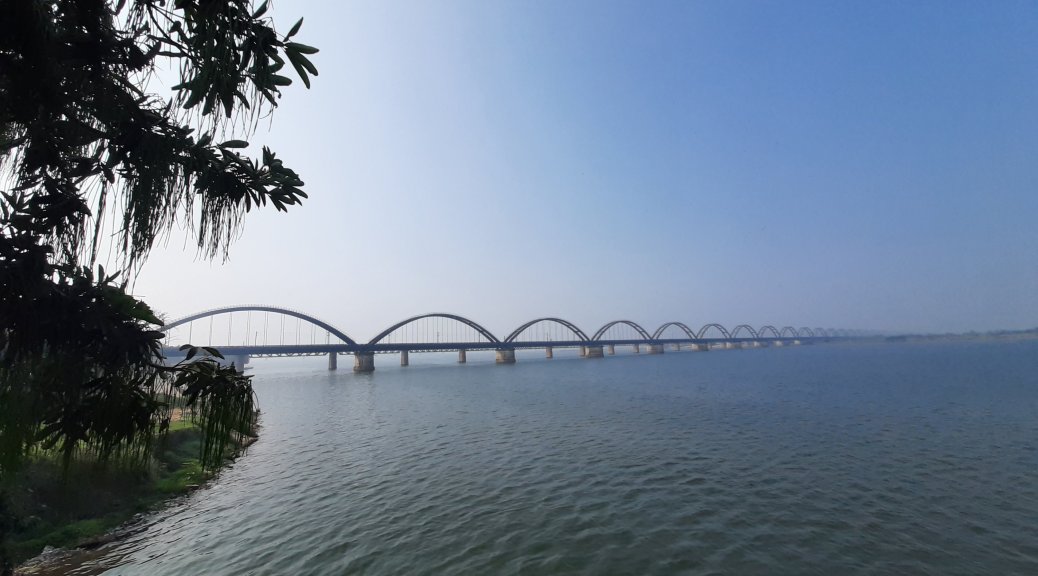
Godavari Arch bridge – Commissioned in 1997, this single line railway bridge is the latest of the three major bridges in Rajahmundry and was constructed as a replacement for the Havelock bridge. This concrete- Bowstring-girder bridge is built parallel to the Havelock bridge with a distance of 200mts.
The arch Bridge at Rajamundry
Apart from the above bridges, there is another road bridge that connects Rajahmundry city with the islands of Konaseema. But what makes this bridge special is that it runs parallel to another heritage structure built across the mighty river. Dowleshwaran Barrage is an irrigation structure built in 1850 by a British engineer, Sir Arthur Thomas Cotton. Earlier to the construction of the barrage, the place used to be constantly flooded and unworthy of anything. This 3.5kms long barrage then allowed the floods to pass through and enriched the place making the unused land worthy of cultivation. It was rebuilt in 1970 and renamed as Sir Arthur Cotton Barrage or Godavari Barrage.
If you have your own vehicle and planning to do a bit of rural and tribal tourism in Bastar, then you might come across several structures that are endemic to the region. Some are integral to the local culture and a few are modern additions but unique to Bastar. Here are a few such structures that may spike the curiosity of any new person noticing them around.
Mata Mandir: One might be surprised to see random wooden structures lying around by the roadsides or in the middle of some farmlands. No two are similar in appearance. Some maybe fixed structures and some may have wheels like pushcarts. These are temples or places of worship are usually dedicated to Bheema Dev & Godandi Dev, deities of the Muriya Tribes. A godman from the tribe is believed to possess the spirits of the deities and walks with these wooden tools or push carts. If you have a closer look at one of these structures, you will notice that it has been designed to place his legs and walk with it. You will however, come across concrete structures that are influenced by modern construction materials.
Various Mata-Mandirs in Bastar
Gudi: These are the lesser known wonders of India, also called as the ‘deceased pillars or column of the dead’ in modern terminologies. The dead persons from the Maria and Muriya tribes believe on sending a person happily after his death. Hence, the tradition is that they bury the body in a vertical/ standing position and erect a flat stone slab or a wide pillar at the grave site. These stones are then painted with artistic patterns and nice verses are written about the deceased on these slabs (This is something similar to the of placing a headstone in the burial of some mainstream religious culture).
Muriya Gudi enroute Barsoor
Gotul: These are traditional centers of socializing and learning for the youth of the Madiya and Muriya tribes. These are spaces either with mud walls or open wooden floored spaces with wood and hay roofs. Unmarried girls and boys congregate every evening at a Gotul where they socialize, indulge in various celebrations and merry making, learn the basic skills of leading a life and managing a family. This is also where they indulge in choosing their own life partners. The basic ideology of a Gotul system is teaching the youth of life and cultural lessons and building and containing the traditions within the community.
Termite hill: If you ever take a drive around the villages of Bastar, you will notice that their houses are unique. They have mud walls, hay roofs and floor and a large front yard neatly smeared with cow dung. I got an opportunity to go inside and take a look at the interiors. That’s when I realized that these tribal houses may even have large termite-hills inside their houses or perhaps in their bedrooms. These tribes are nature worshippers and believe that these termites are gods that have chosen their homes to take shelter. Hence, termite hills are auspicious and cannot be destroyed. Further, after worshipping this anthill all year, there is a specific day in a year when the family prays the almighty, seeks his permission and then removes these dwellings and releases the mud/ clay into a nearby water source. Same is the case before any tree is cut in a Bastar village. The tribes invoke their deities to get permission before axing them.
Gau-Mata chowk: This is a modern addition with a cultural significance that can be found at the entrance of every village in Bastar. ‘Kamdhenu’ the holy cow feeding a calf is a popular representation in Indian culture. Similarly, this image has been a large part of the Bastar culture. You can see it even in their art and crafts. Coming to the Gau-Mata chowk, these are concrete structures around which the cattle of the entire village is assembled together, twice a day. From here, one person or one household from the village takes the responsibility each day to take the assembly of cattle out for grazing and return to the Gau-Mata chowk. From here, the cattle assembly disperses every evening and are then taken back to their respective sheds.
Atal chowk: This is another modern structure named after the former prime-Minister of India, Sri.Atal Bihari Vajpayee. This is just a concrete pillar erected at the entrance of every village in the Kondagaon / Bastar region.
Do you know any other unique structures from Bastar that you think that I have missed out? Do drop in your comments and share the information with me.
As the lockdown is easing out and the Covid positive cases in India are on a rise, many people are opting DIY (Do it Yourself) day trips and hikes over organized group trips. Either with just family members or a closed knit of friends is what seems to be an option for some time more to come. Quite a few of them have been asking me to give them suggestions of where they can go for short drives or hikes. One such suggestion is ‘Kunti Betta’. Although I had done this hike with an organized itinerary by ‘Plan the Unplanned’, one can try this by themselves. However, a hike in daylight is suggested over our pre-dawn adventure.
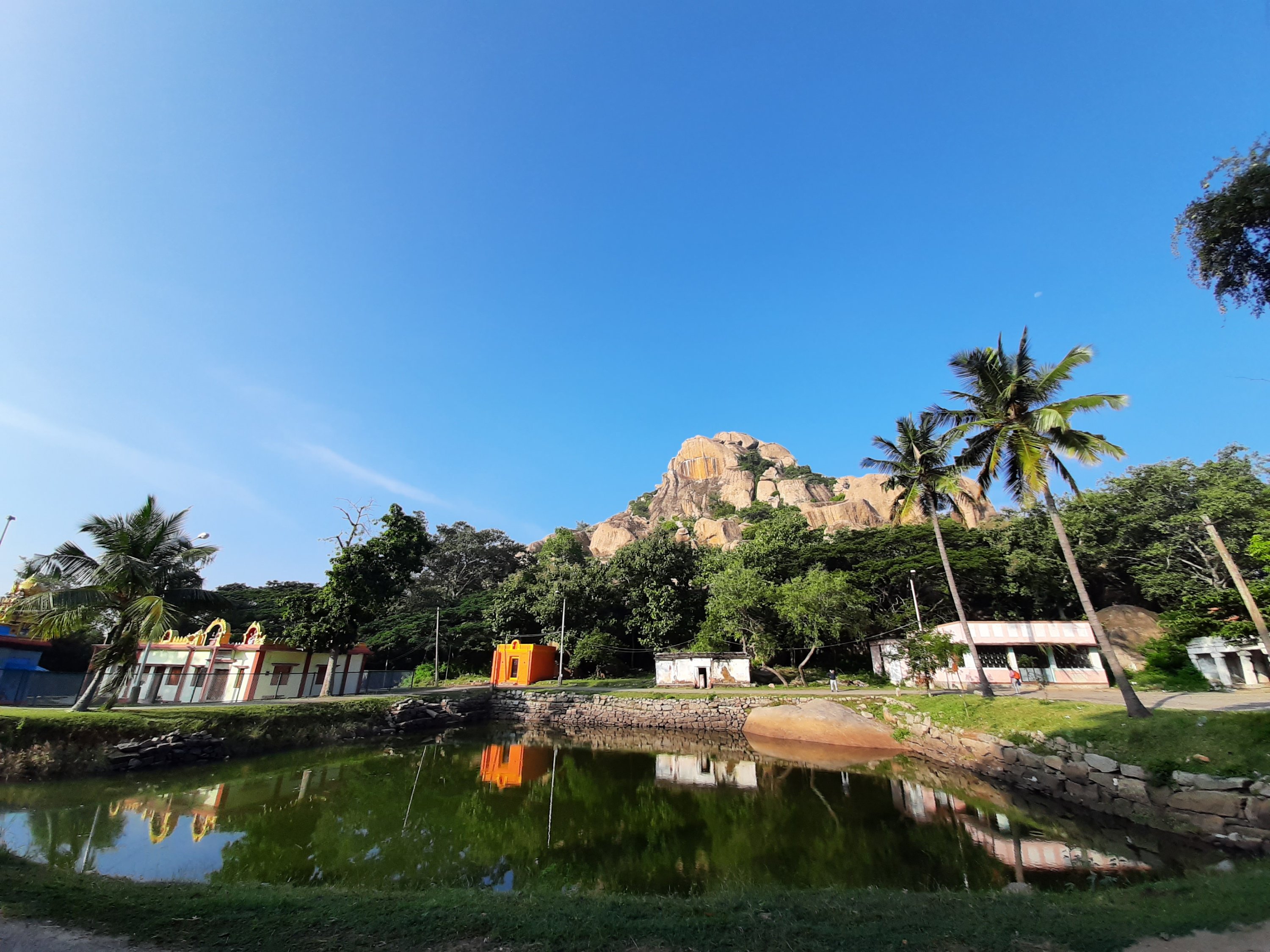
We started from Bangalore at midnight as we wanted to reach the peak before sunrise. It was still dark, cold and windy when our minibus reached the parking lot of ‘Sri Shankarananda Bharati Vidyapeeth’ school at Kachenahalli village in Mandya district. We climbed a small flight of stairs, walked past a temple pond (we couldn’t see but only were told by our guide) and continued to walk in a single line following each other’s torchlights. While a couple of them tripped over small stones on their path, a few others got their shoes wet by stepping into water puddles in the dark. With torchlight, our guide navigated the path through thick shrubs, tall grasses and large boulders enroute. We reached the peak in a couple of hours.
The view from the Kunti Betta peak: Before dawn, at dawn break and after sunrise
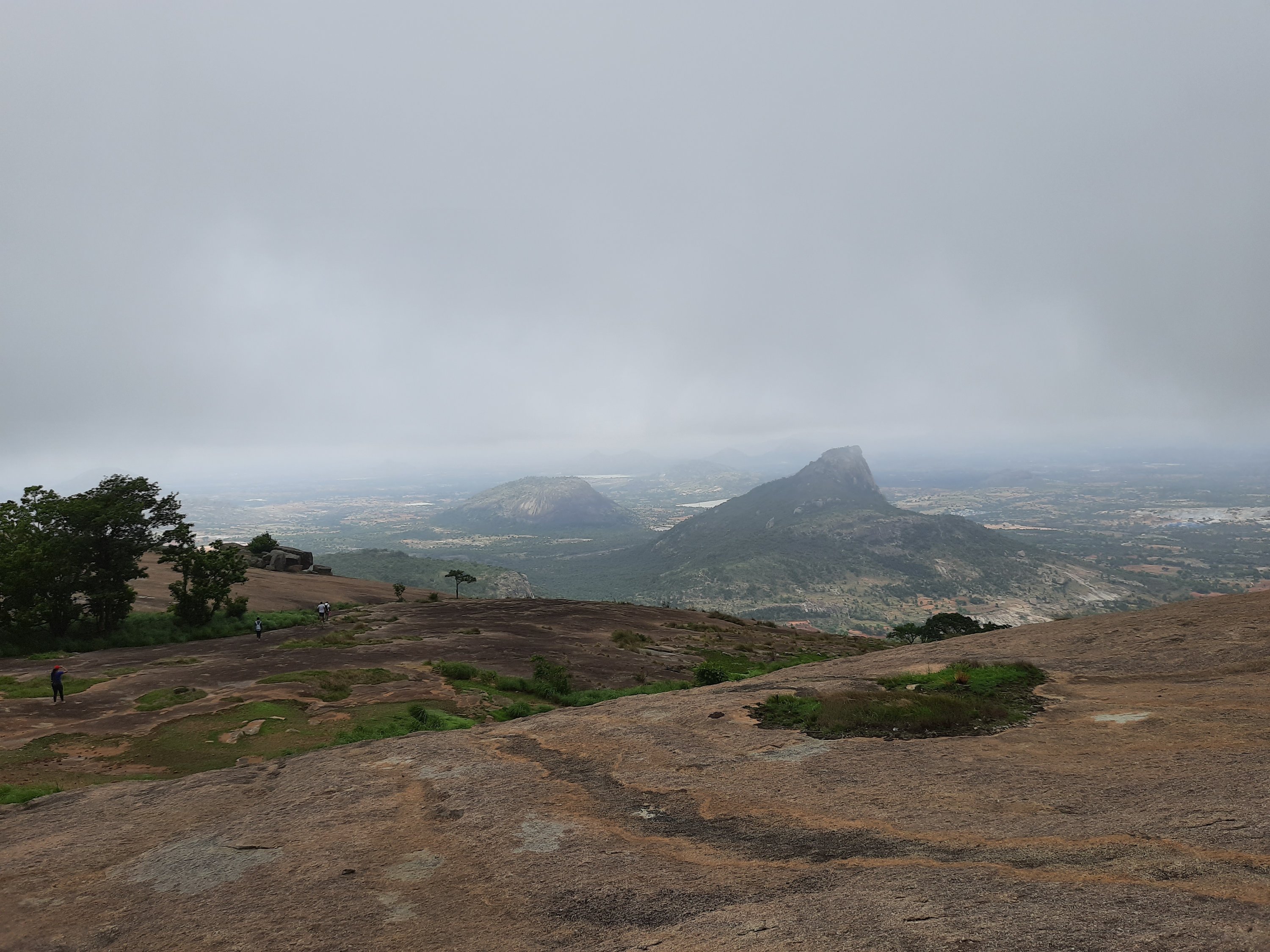
It was dark when we reached the top and it was unexpectedly cold. I hadn’t gone with enough warmers but that didn’t stop me from sleeping on the cold rock until dawn. I watched the stars in the clear sky and didn’t realise that I had surrendered to the sleep gods. I was awakened by a fellow hiker at dawn. The view of the distant lake and sugarcane farms looked nice from the top. Also, several other rocky hillocks dotted our view. The one we were standing at was named after Kunti, the mother of the Pandavas. History has it that the hill was earlier called as the ‘French Rocks’, named by the French army in the pre-independence era. Although it was partially cloudy by the time the dawn broke, we still got lucky to get a glimpse of the sun that morning. After taking enough photos, we started our descent.
The Kunti Betta hike route
Since there are lot of loose rocks, there were possibilities of slip. Only during descent, we got a sense of the terrain and the view which we had missed while climbing up. We soon reached the temple pond at the base beside which there is a large monolithic rock. The localites use this as a giant slide. I too climbed up this rock and the kid in me had fun sliding down from this version of the desi slide.
The temple pond at the base of Kunti betta
Our stomachs were grumbling by that time and there was no food around. With permission, we could use the washroom at the school. We then commenced our return to Bangalore with a breakfast stop at ‘Maddur Tiffanys’ for their signature dish- Maddur vadas with Masala dosa and filter coffee. The landscape was beautiful with green sugarcane farms extending on both sides of the countryside roads before we hit the highway.
A word of advice though:
Since there are too many hillocks in a cluster, having a guide would be better to find the right peak.
Since we hiked before dawn, there was also the fear of confronting wild animals like bears and leopards. Although, we didn’t see any, this was told by someone in the group.
Although we did only the early morning hike, you can make it a full day activity. These are a few things you can include in your itinerary:
Since Mandya is the ‘Sugar Bowl’ of Karnataka, you can visit any of the small sugar/jaggery making setups on the farms enroute and savor freshly made jaggery.
A lot of people visit the Tonnur lake (about 10kms away) from Kunti Betta and take a dip there. Alternatively, you can visit Manchinabele dam or Kanva reservoir. We skipped it as we were told that the soil on the banks was marshy at the time we visited.
You can visit Ranganathittu Birds sanctuary and take a ferry ride in the river.
You can also visit ‘Janapada Loka’ to get an overview of the folk-culture from across Karnataka.
Lockdown 5.0. simply put, was just another normal day in Karnataka, except that the educational institutions were still under lockdown. So, unwinding on a weekend after a long work week was normal too. With friends, I chose to hike on a Sunday morning to Madhugiri betta, the second highest monolithic hill in Asia. We started from Bangalore at 04.30.am. hoping to start the hike as soon as the gates were opened. While KSTDC has been abundantly promoting post-Covid tourism in the state, we had a surprise awaiting us at the trek base. Since Madhugiri fort comes under ASI’s protected monuments (controlled by the central government), we were told that trekking wasn’t permitted by the Central government. Hence, we were left with two options. Either return home or find another hill nearby where we could hike.
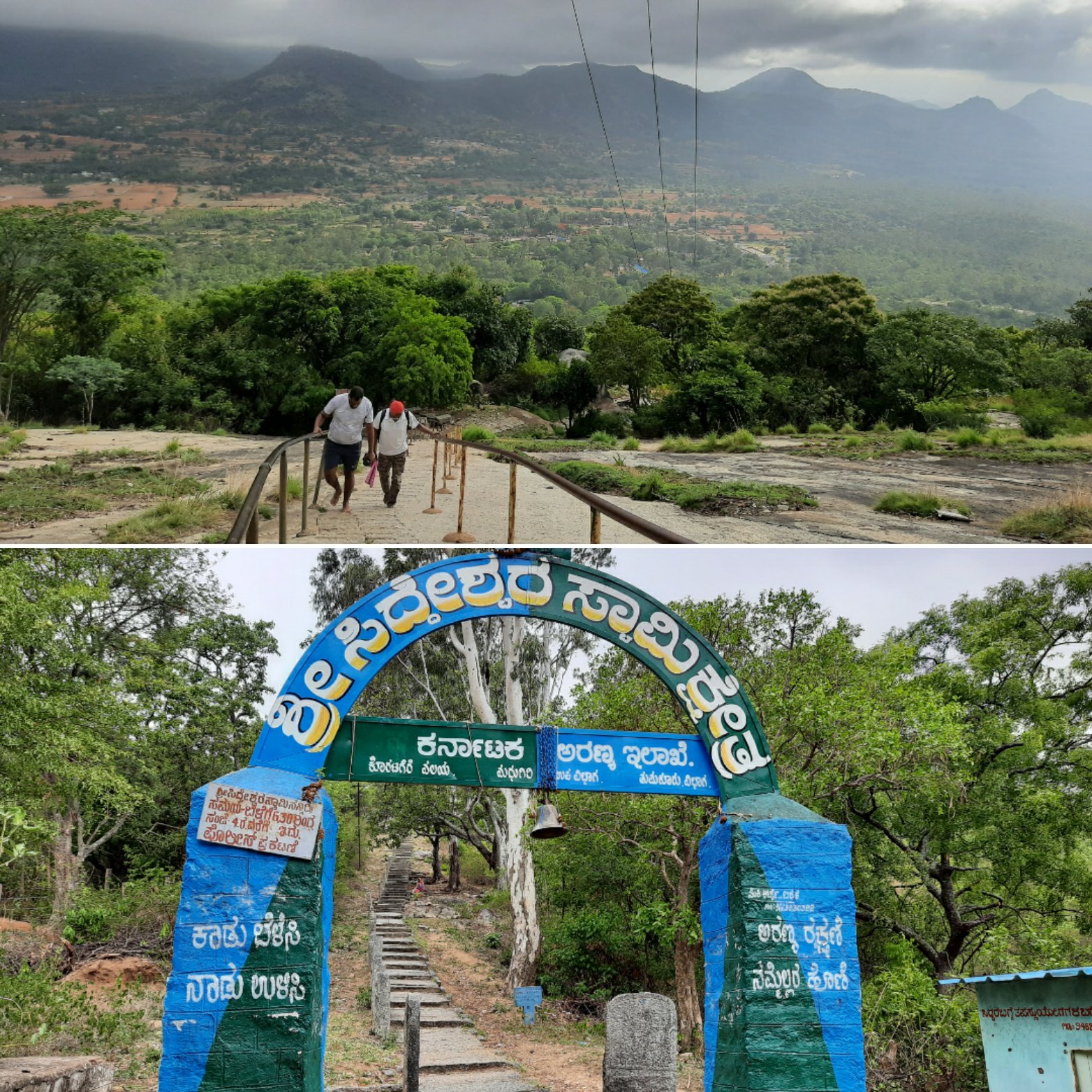
We chose the latter. So instant suggestions that came from someone in the group was Devarayanadurga and Siddarabetta. Then, we decided to give Devarayanadurga a miss as we all favoured a hike over a flight of stairs. We arrived at the base of Siddarabetta where we noticed a board that said, ‘climbing the hill with footwear was a sin’. Since many people use this path to visit a temple situated halfway, we didn’t want to hurt the local sentiments by wearing our shoes. Thinking that ‘a barefoot hike was definitely going to be an experience’ in our heads, we left our shoes back in our car.
Below: The welcome arch at the base; Top: The initial climb
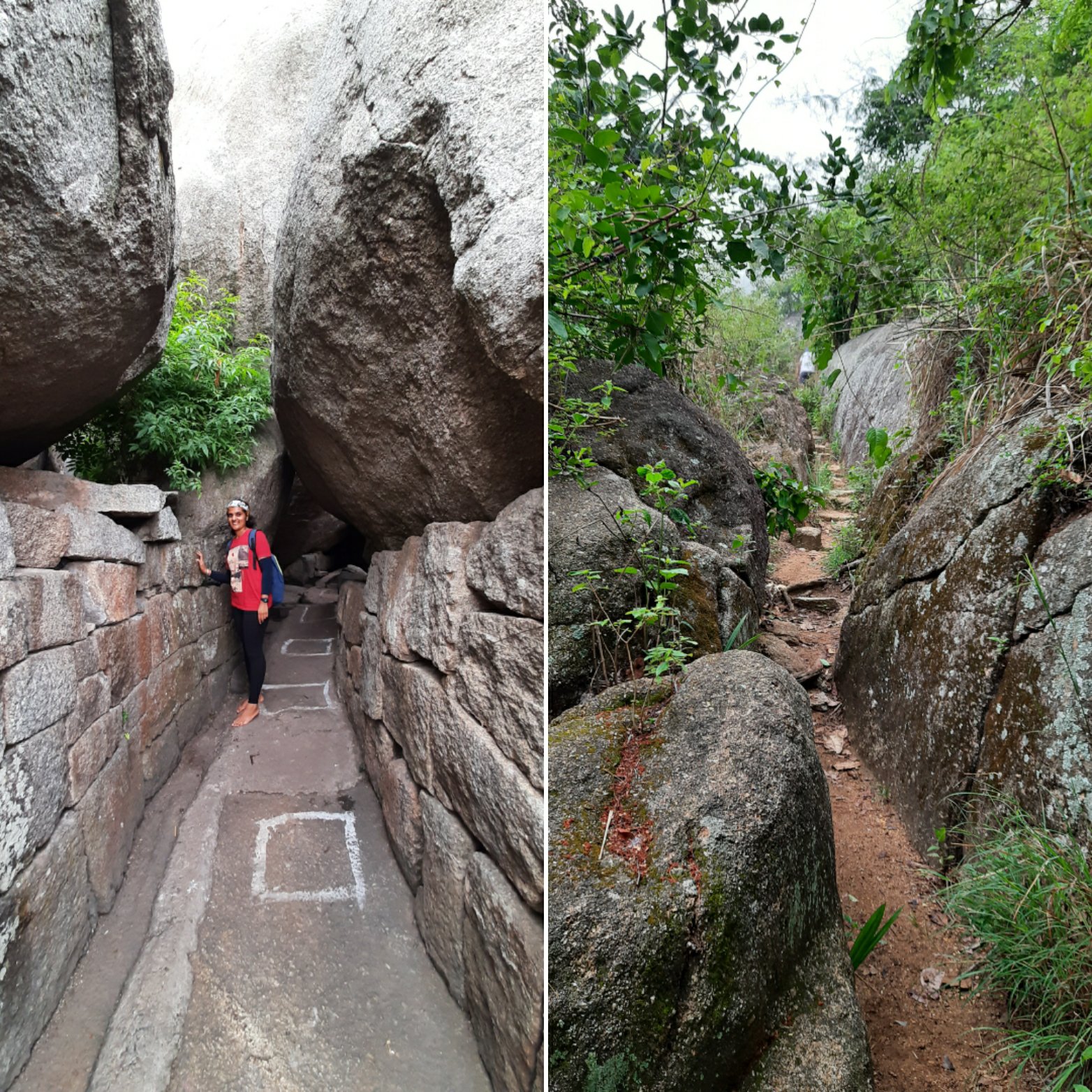
The initial part of the climb, until the Siddeshwara Swamy temple was steep but easy with well laid out steps and iron rods to hold onto. When we reached a small temple kind of a spot, the path split into two. The Siddeshwara Swamy temple was to the left, where too many people seemed to be as if there was no pandemic going on and there exists no concept called ‘Social distancing’. We decided to distance ourselves from the gathering and took the path to the right. With having to pass between too many boulders, it did seem a little confusing initially. The distant passing clouds now seemed as if they had come to meet and greet us. But after walking a little ahead, we reached an area that was a transition from dry rocky mountain to rain soaked green forests. The real challenge of walking barefoot started there, with unassumed ground with gravel and possible thorns from the shrubs.
Left: The rocky path to the temple; Right: The forest path to the view point
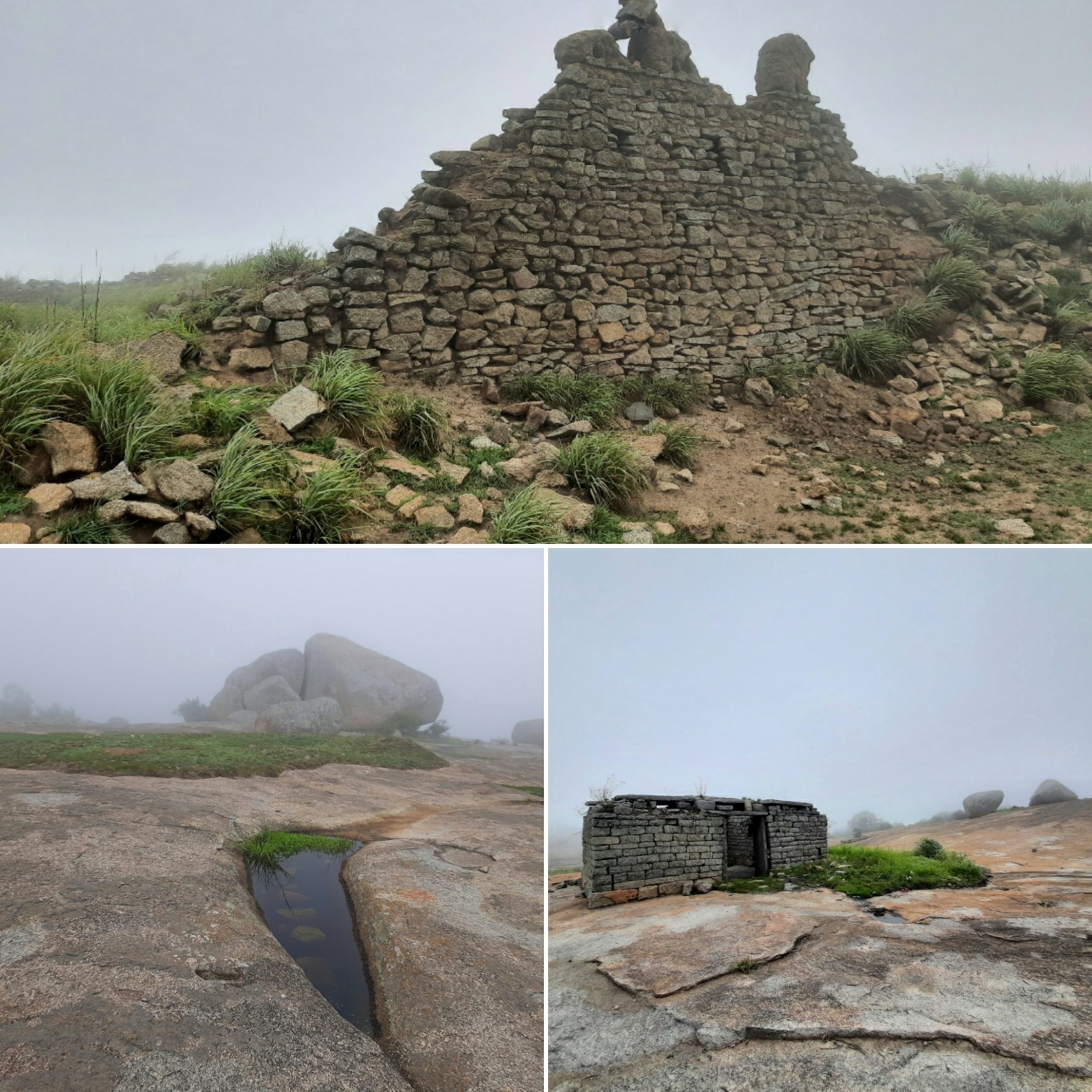
A little further, we reached an open rocky area where the view in front of us was playing hide and seek with each passing cloud. Apart from the drizzle and gusty winds that made it difficult for us to stand, we were mind-blown by the view we saw each time the clouds cleared out. There exists a small rain fed pond, a couple of meditating chambers that house Shiva Lingas (history unknown) and dilapidated remains of an old fortress. There was nobody else other than us in this entire stretch. We walked further and crossed two more hills before deciding to return, or else we would lose our way back.
Top: The dilapidated fortress wall; Bottom left: A large rock; Bottom right: One of the meditating chambers
It started to rain on our return, and we were quite drenched by the time we made it to the car that was parked just at the base point. The small eateries and stalls were slowly opening by that time which we chose not to visit, in order to avoid any social contacts with anyone else outside the group that we had gone in. We ate a few biscuits as a substitute for breakfast that we had carried from home and decided to stop the car next, only at home. It was a much-needed break and a pleasant little hike.
The view at from the peak
Summary:
It is an easy hike and very good for beginners.
Be careful to carry all snacks only in a closed backpack as there are too many monkeys on the way.
You have probably read my earlier post on exploring the offbeat landmarks of Old Bengaluru. Here is another one. This time, it was a culinary trip of Old Bengaluru to a friend who had flown down to this southern metropolis, from the so-called Northern part of India. I had been asked to take him on a gastronomic tour of my city. For someone who has a penchant for everything old school, I thought Old Bengaluru would be perfect to call it a day. ‘From vintage automobiles, architecture, iconic restaurants serving traditional recipes to by lanes and alleys that narrate their own individual story of the city, this section of Bengaluru has everything that would tickle a bone or two of this mad man’, I thought.
Having largely spent my teenage in North Bengaluru and given my familiarity with the area, Malleswaram was my first choice. However, given the convenience of commutation from my current place of stay, I chose to show him around South Bengaluru. But when one says South Bengaluru, it is a world in itself and the geographical area is large to fit all in one day. Hence, I took time to mark a quick map of restaurants to cover, along with giving a peak into the cultural heart of the city. This part of the metro lays in stark contrast to the Bengaluru, that the millennials from Whitefield and Marathahalli know of.
The obvious choice was a walk tour of Basavanagudi and the Pete area. These are the two most important clusters of true Bengaluru that have held onto the roots, despite the rapid and traumatic transition this city has seen in the last decade in the name of urbanization and modernization. Under the canopy of massive native trees, the aroma of the by-two filter kaapis shared at the numerous Shanti Sagar and darshini food joints, the air here feels different from anywhere else. With almost every street dotted with Classical dance and music schools and happy nonagenarian couples whizzing in their Padminis and Ambassadors, it has a different vibe here. One can find some of the traditional old houses and landmark restaurants only in these localities to really experience old Bengaluru. Each of these iconic eateries have a near century old history and their old school ambience is still intact inside the heritage structures that house them. With a small appetite for food and a big quest for exploration, the portions of food were limited only to the signature dishes of each restaurant, to accommodate more places. So, here is my itinerary of a gastronomic tour of Bangalore of yore.
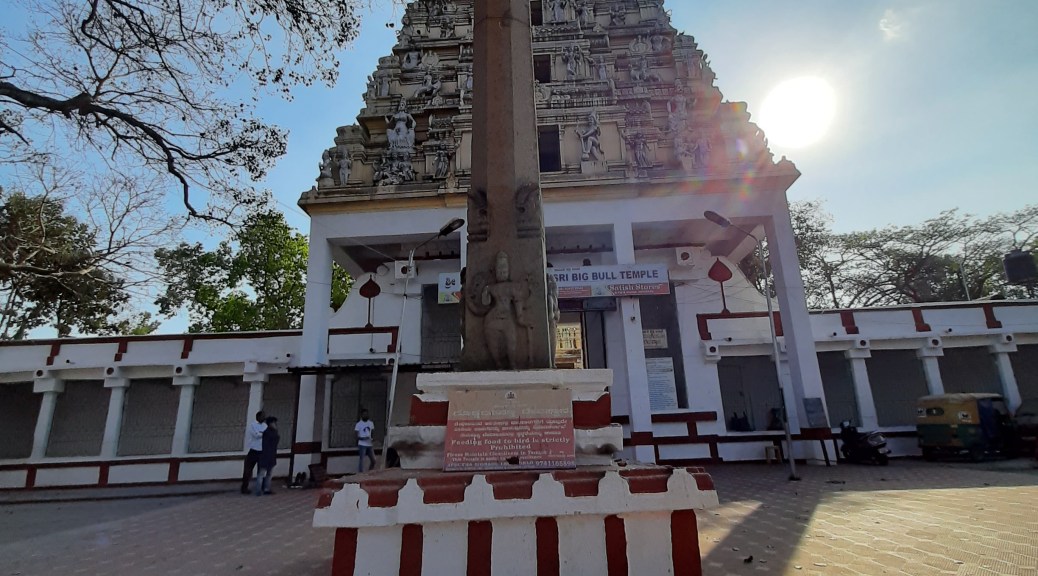
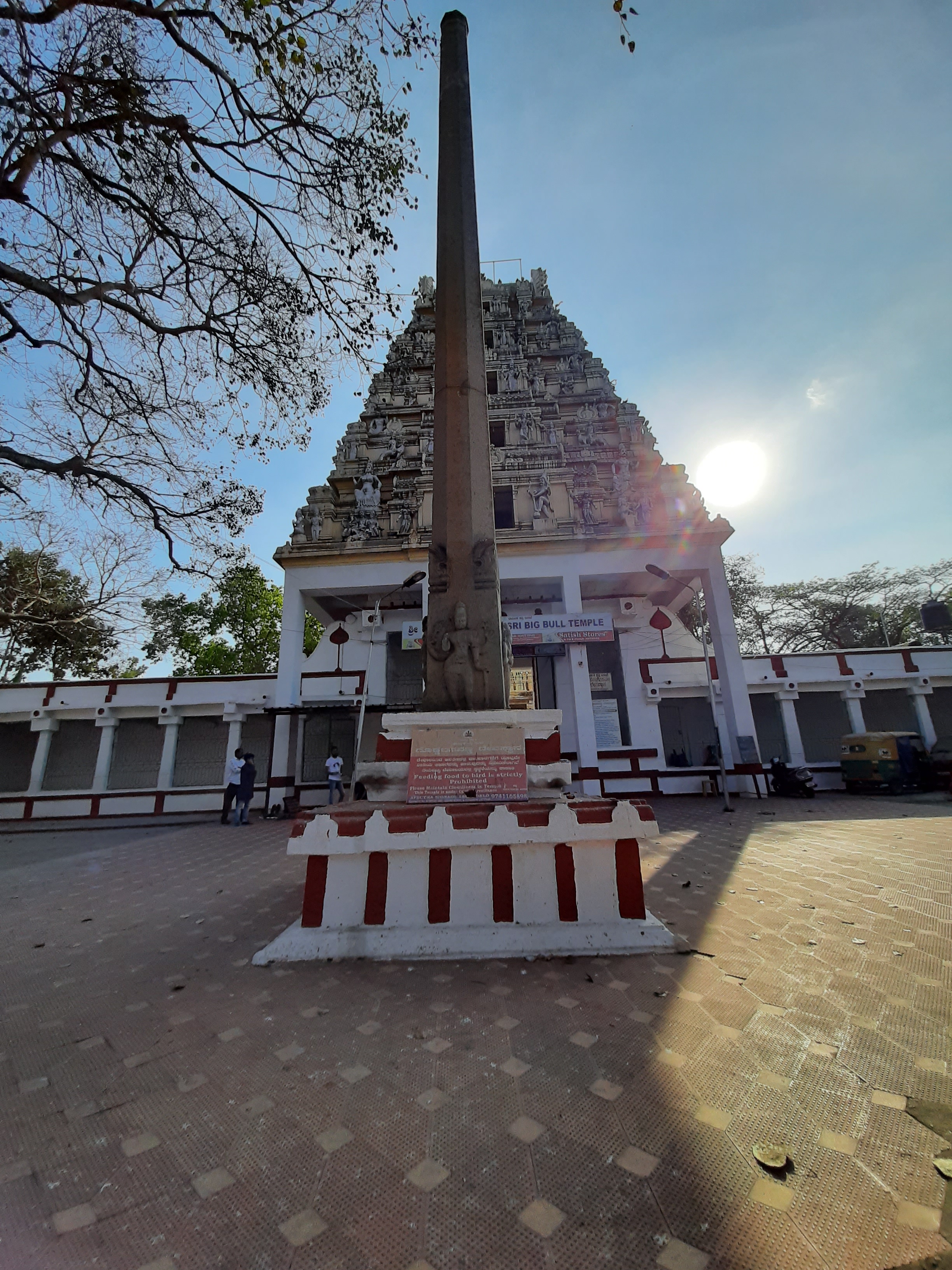
The Big bull temple, Basavanagudi
Meet-up point: Basavanagudi is the name of a temple (It translates to ‘Bull- Temple’). Basavanagudi is the name of a locality in South Bangalore, named after the temple. It is an extension of the Pete area, which was specifically created to accommodate the upper class, and more-specifically the Brahmin community. No trip to South Bengaluru is complete without a visit to this landmark temple built by Kempegowda, the founder of Bengaluru. Apart from the Big Bull temple, the Dodda Ganapathi and the Bugle rock (a small watch tower from the Kempegowda era) are a must visit on the same premises. If you time it up well, you can part-take in the annual groundnut fair in the locality. (Read here to know more about the history of the Kadlekai Parishe). After meeting my friend here, we started our gastronomic tour to our first food stop.
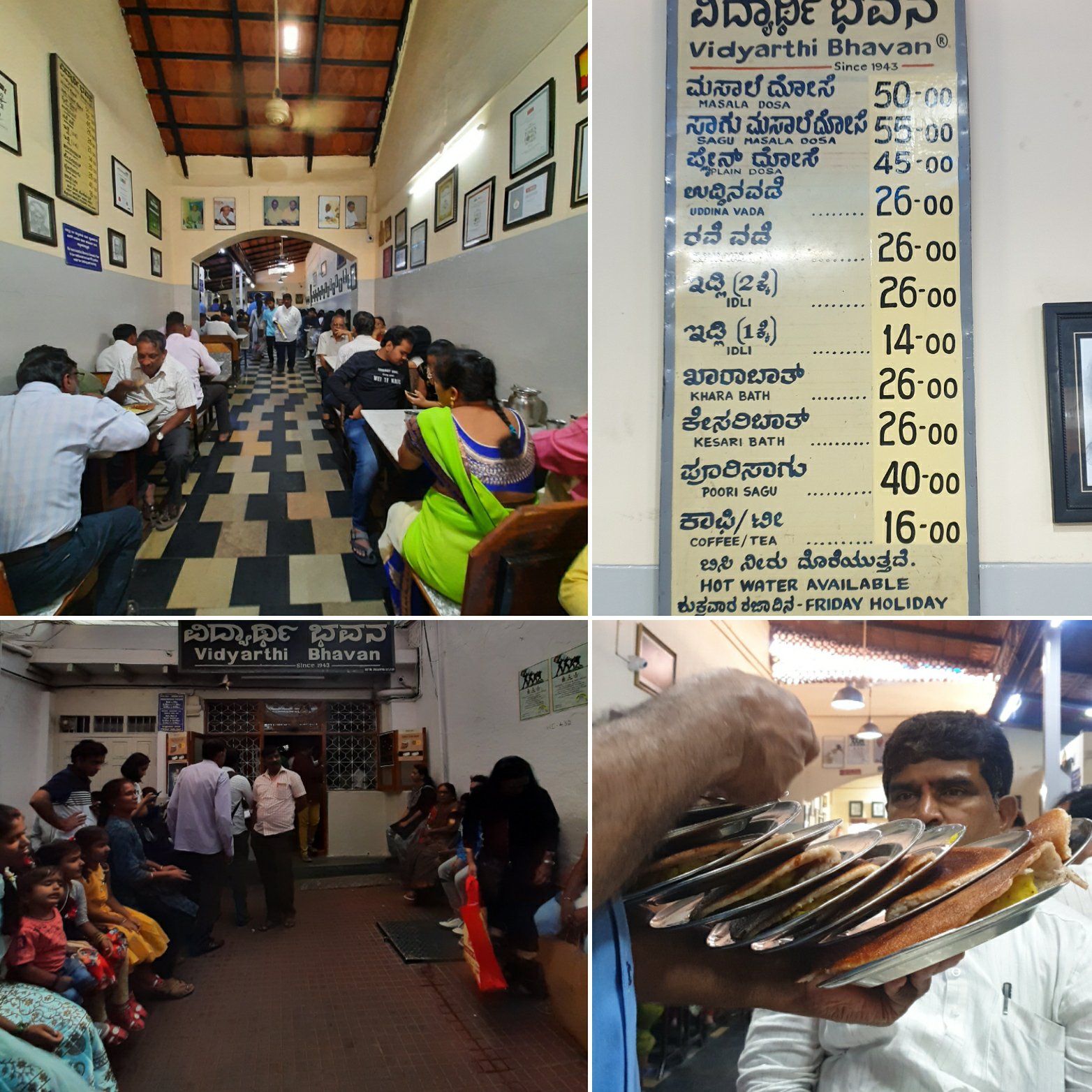
Food stop 1 (Breakfast): As synonymous as Dosa is with South India, Vidyarthi Bhavan is with South Bengaluru. Ask anyone for the best Dosa in the city and this place scores on top unanimously. It is a restaurant started initially to cater to the student community of the area which started a new culture of a hangout place for friends in those days. On most days, the queue can extend well up to a kilometer. My friend and I wiped off our plates of their signature Masala dosa for breakfast. (Click here to read further about the history of Vidyarthi Bhavan)
Vidyarthi bhavan, Basavanagudi
Food stop 2 (Light eats): No foodie who visits Bangalore is satisfied without taking an evening walk on the Eat street at VV-Puram. However, I decided to go here in the morning, in order to avoid the maddening rush. Honey cake and Congress bun at the iconic VB Bakery was what we needed. This is the first Iyengar bakery to be established in Karnataka which has paved a new culture in baking (Read here for more about V.B.Bakery). Avarebele (Val bean) is a favorite ingredient of the Bengalureans, who have a dedicated annual fair to celebrate this pulse (Click here to read further about Avarekai mela). Hence, picking up a packet of avarebele mixture for home from one of the stores there was an obvious choice.
Food stop 3 (11 o clock, coffee): It is an important break time for the employed section of the society. Brahmin’s Coffee bar is a household name for their filter coffee and the delectable chutney served with idly on their very limited menu. This tiny eatery is in a corner of Shankarapuram, which is also famed for the Shankaramatha, a learning center of the advaitha philosophy. We had a quick stopover for a hot cuppa this little place is known for, before heading to Pete. (Read further about Brahmin’s coffee bar here)
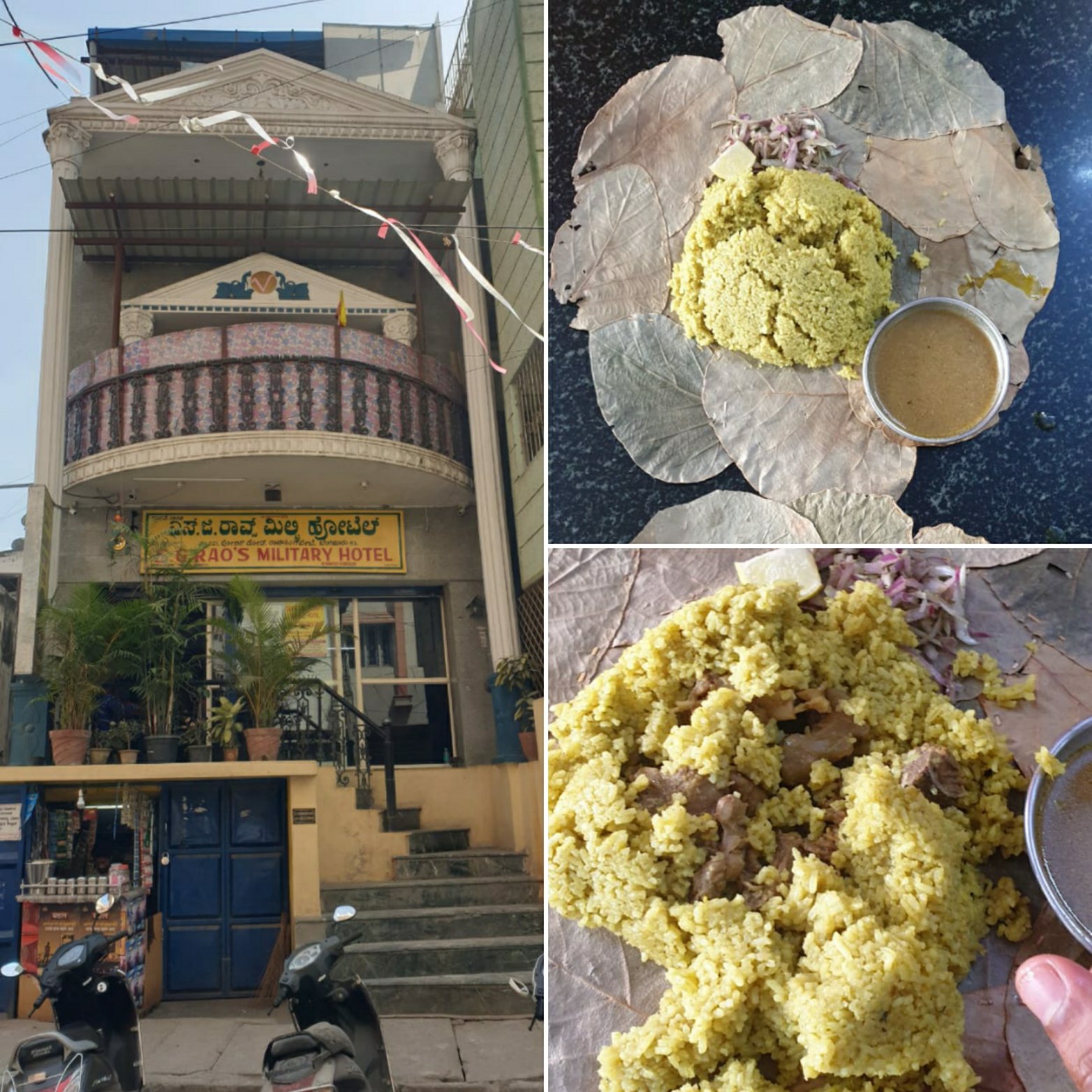
Food stop 4 (Lunch): To satiate the hunger pangs, I planned to treat my friend with an authentic Bangalorean affair. With multiple theories surrounding the origin of the military hotel culture, the history of these restaurants dotting across the southern part of Karnataka is unclear. Bangalore is home to some of the best in the state. I don’t think there would be any better meal than ‘Ragi Mudde oota’ savored at a military hotel to get a peek into the local flavor, including the ambience. Hence, we were lunching that afternoon at S.G. Rao’s military hotel, located in the cotton Pete area. A typical military hotel meal includes Kaal soup, Ragi Mudde and Mutton biriyani. (Click here to read further about S.G. Rao’s military hotel)
S.G.Rao’s military hotel, cottonpete
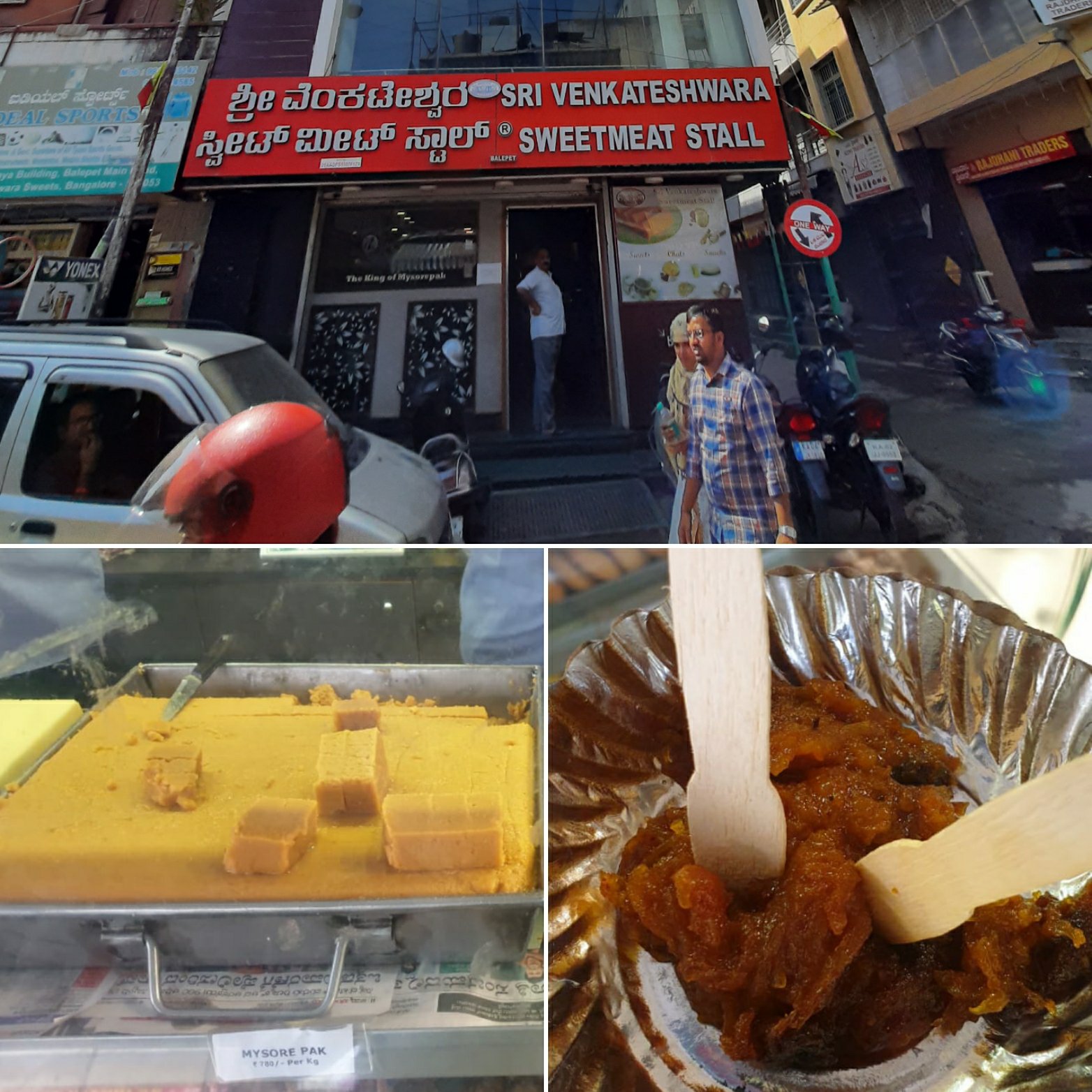
Food stop 5 (dessert): A meal is complete only with a nice dessert. If there is one sweet meat that is synonymous with Karnataka (Mysore state), it is Mysore pak. Since I couldn’t take my guest to Mysore for that, the closest I could get is at Sri Venkateshwara sweet meat stall located at Bale Pete, a short walk away from cotton Pete. Their Mysore pak and dumroot are the sweets my friend packed for his roommates back in his hometown. (Click here to read about Sri Venkateshwara sweet meat stall).
Sri Venkateshwara sweet meat stall, Balepete
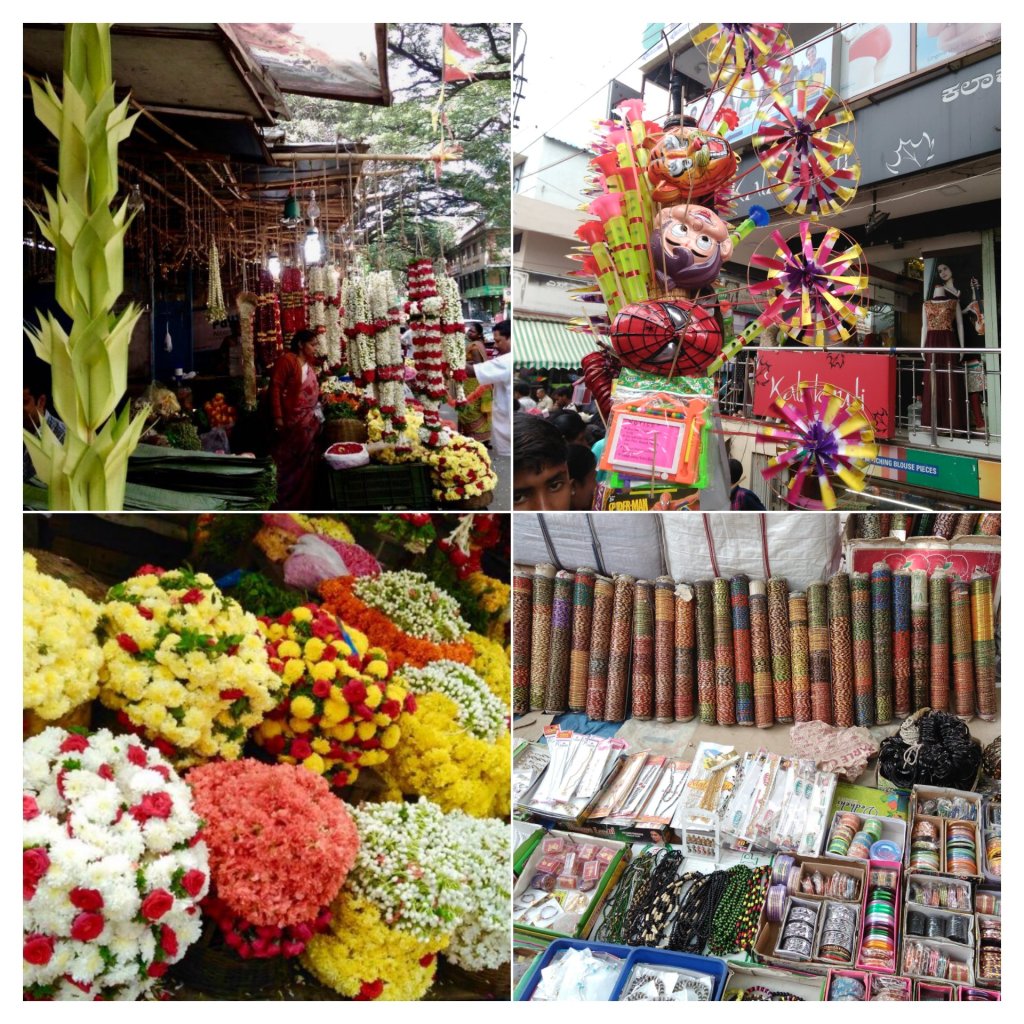
The Pete walk: An old Bengaluru exploration is nothing without a walk along the narrow snaking lanes of the Pete area, the true business epicenter of both New and Old Bengaluru. This area is segmented into various sections and named according to the commodity sold and the communities that resided there in the yester years. From green groceries, handloom, steel, plastic to precious metal, everything is available in this locality. An early morning walk in the famed flower market is an experience in itself. We limited ourselves to just the mainstream sections while exploring some of the ancient temples, mosques and heritage houses of the Kempegowda era. In the meanwhile, we kept munching on numerous snacks from several popular stalls on our way. Although these eateries are old, the flavors are largely north Indian, owing to the Marwari and Baniya community that reside here in majority.
The heritage structures of the Victoria hospital, Bangalore fort and Tippu Sultan’s summer palace all lay on the side of the road for the history and architecture buffs who have a little more time in hand. But this is all we could fit in our day. Thus, ended a gastronomic tour of South Bengaluru.
I hope you enjoyed this virtual tour with me too… did you? Or did you not? Share your thoughts with me…
There are many other iconic restaurants in Basavanagudi if you have a larger appetite. These are a few other places that you must check out when you are here: The new modern hotel, Mahalakshmi Tiffin room, Janata Tiffin rooms are a few among many others.
Souvenirs to buy:
Coffee filter and freshly roasted coffee powder: The best filter coffee is available only in South Bengaluru, and hence my friend thought this was a more significant thing to buy from here.
Channapatna wooden toys: These are GI tagged handicrafts made with organic colors and largely popular in the western market, it comprises a large collection of traditional toys.













 The Lost Lander