Tag Archives: Famous Indian temples

A gastronomic walk tour of South Bengaluru

You have probably read my earlier post on exploring the offbeat landmarks of Old Bengaluru. Here is another one. This time, it was a culinary trip of Old Bengaluru to a friend who had flown down to this southern metropolis, from the so-called Northern part of India. I had been asked to take him on a gastronomic tour of my city. For someone who has a penchant for everything old school, I thought Old Bengaluru would be perfect to call it a day. ‘From vintage automobiles, architecture, iconic restaurants serving traditional recipes to by lanes and alleys that narrate their own individual story of the city, this section of Bengaluru has everything that would tickle a bone or two of this mad man’, I thought.

Having largely spent my teenage in North Bengaluru and given my familiarity with the area, Malleswaram was my first choice. However, given the convenience of commutation from my current place of stay, I chose to show him around South Bengaluru. But when one says South Bengaluru, it is a world in itself and the geographical area is large to fit all in one day. Hence, I took time to mark a quick map of restaurants to cover, along with giving a peak into the cultural heart of the city. This part of the metro lays in stark contrast to the Bengaluru, that the millennials from Whitefield and Marathahalli know of.

The obvious choice was a walk tour of Basavanagudi and the Pete area. These are the two most important clusters of true Bengaluru that have held onto the roots, despite the rapid and traumatic transition this city has seen in the last decade in the name of urbanization and modernization. Under the canopy of massive native trees, the aroma of the by-two filter kaapis shared at the numerous Shanti Sagar and darshini food joints, the air here feels different from anywhere else. With almost every street dotted with Classical dance and music schools and happy nonagenarian couples whizzing in their Padminis and Ambassadors, it has a different vibe here. One can find some of the traditional old houses and landmark restaurants only in these localities to really experience old Bengaluru. Each of these iconic eateries have a near century old history and their old school ambience is still intact inside the heritage structures that house them. With a small appetite for food and a big quest for exploration, the portions of food were limited only to the signature dishes of each restaurant, to accommodate more places. So, here is my itinerary of a gastronomic tour of Bangalore of yore.

20200223_162027
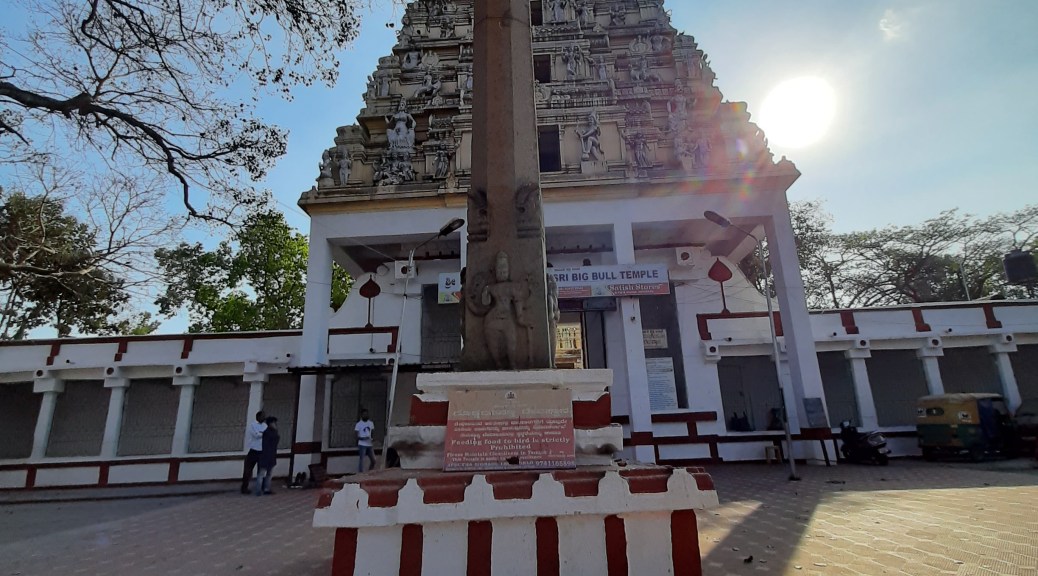
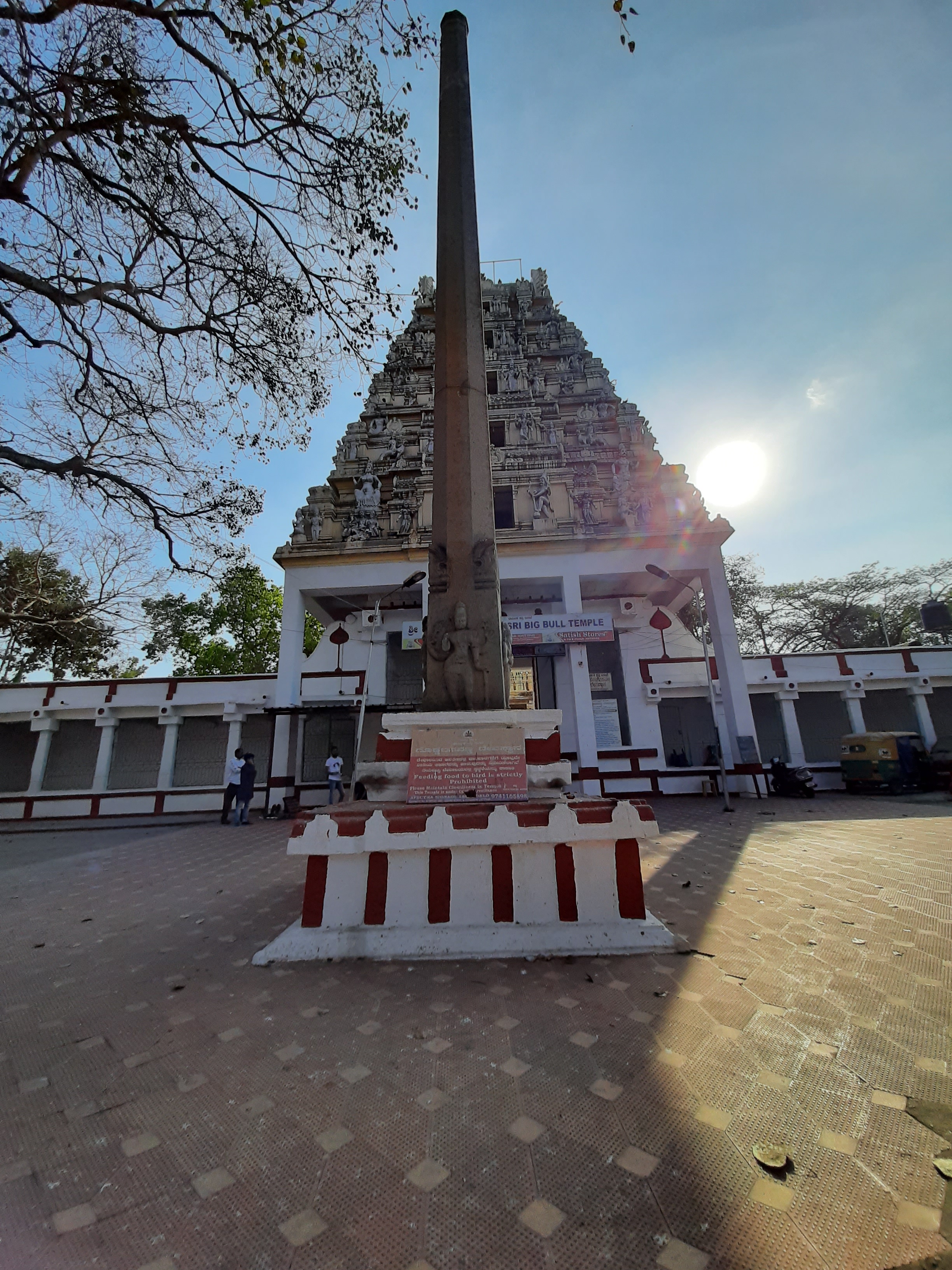
The Big bull temple, Basavanagudi

Meet-up point: Basavanagudi is the name of a temple (It translates to ‘Bull- Temple’). Basavanagudi is the name of a locality in South Bangalore, named after the temple. It is an extension of the Pete area, which was specifically created to accommodate the upper class, and more-specifically the Brahmin community. No trip to South Bengaluru is complete without a visit to this landmark temple built by Kempegowda, the founder of Bengaluru. Apart from the Big Bull temple, the Dodda Ganapathi and the Bugle rock (a small watch tower from the Kempegowda era) are a must visit on the same premises. If you time it up well, you can part-take in the annual groundnut fair in the locality. (Read here to know more about the history of the Kadlekai Parishe). After meeting my friend here, we started our gastronomic tour to our first food stop.

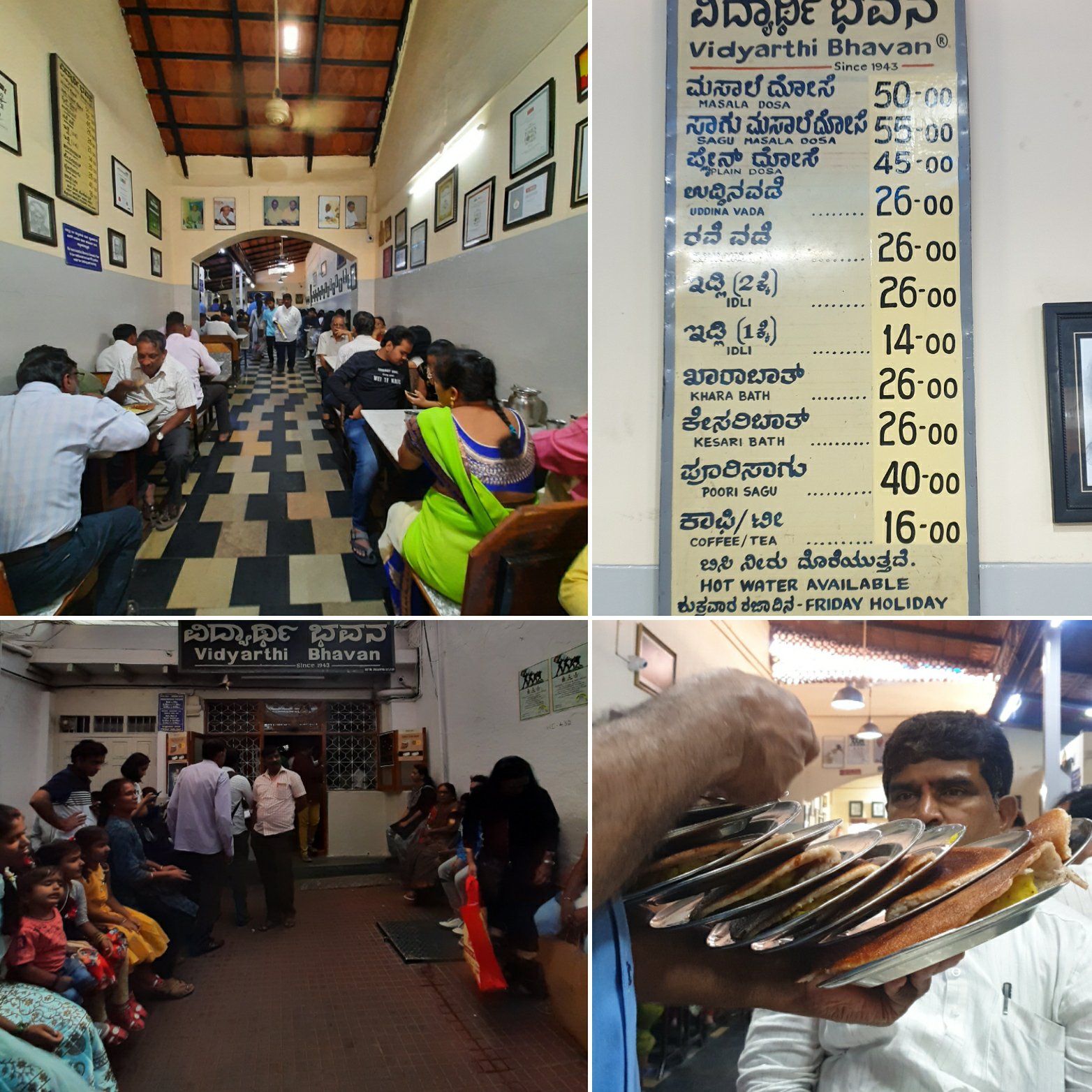
Food stop 1 (Breakfast): As synonymous as Dosa is with South India, Vidyarthi Bhavan is with South Bengaluru. Ask anyone for the best Dosa in the city and this place scores on top unanimously. It is a restaurant started initially to cater to the student community of the area which started a new culture of a hangout place for friends in those days. On most days, the queue can extend well up to a kilometer. My friend and I wiped off our plates of their signature Masala dosa for breakfast. (Click here to read further about the history of Vidyarthi Bhavan)

img_20200224_1412454363645349424467729.jpg
Vidyarthi bhavan, Basavanagudi

Food stop 2 (Light eats): No foodie who visits Bangalore is satisfied without taking an evening walk on the Eat street at VV-Puram. However, I decided to go here in the morning, in order to avoid the maddening rush. Honey cake and Congress bun at the iconic VB Bakery was what we needed. This is the first Iyengar bakery to be established in Karnataka which has paved a new culture in baking (Read here for more about V.B.Bakery). Avarebele (Val bean) is a favorite ingredient of the Bengalureans, who have a dedicated annual fair to celebrate this pulse (Click here to read further about Avarekai mela). Hence, picking up a packet of avarebele mixture for home from one of the stores there was an obvious choice.

Food stop 3 (11 o clock, coffee): It is an important break time for the employed section of the society. Brahmin’s Coffee bar is a household name for their filter coffee and the delectable chutney served with idly on their very limited menu. This tiny eatery is in a corner of Shankarapuram, which is also famed for the Shankaramatha, a learning center of the advaitha philosophy. We had a quick stopover for a hot cuppa this little place is known for, before heading to Pete. (Read further about Brahmin’s coffee bar here)

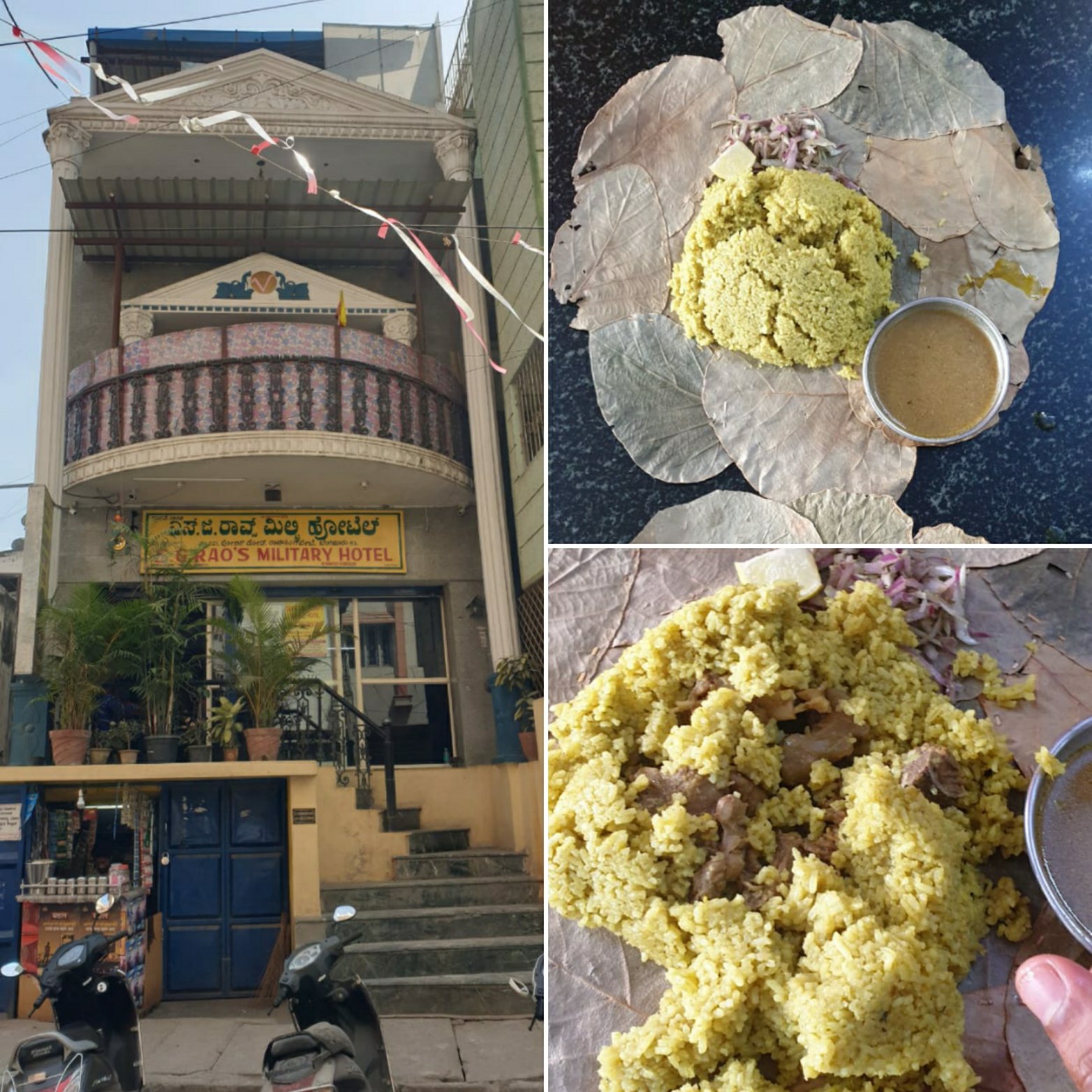
Food stop 4 (Lunch): To satiate the hunger pangs, I planned to treat my friend with an authentic Bangalorean affair. With multiple theories surrounding the origin of the military hotel culture, the history of these restaurants dotting across the southern part of Karnataka is unclear. Bangalore is home to some of the best in the state. I don’t think there would be any better meal than ‘Ragi Mudde oota’ savored at a military hotel to get a peek into the local flavor, including the ambience. Hence, we were lunching that afternoon at S.G. Rao’s military hotel, located in the cotton Pete area. A typical military hotel meal includes Kaal soup, Ragi Mudde and Mutton biriyani. (Click here to read further about S.G. Rao’s military hotel)

img_20200224_1409468968974703455226303.jpg
S.G.Rao’s military hotel, cottonpete

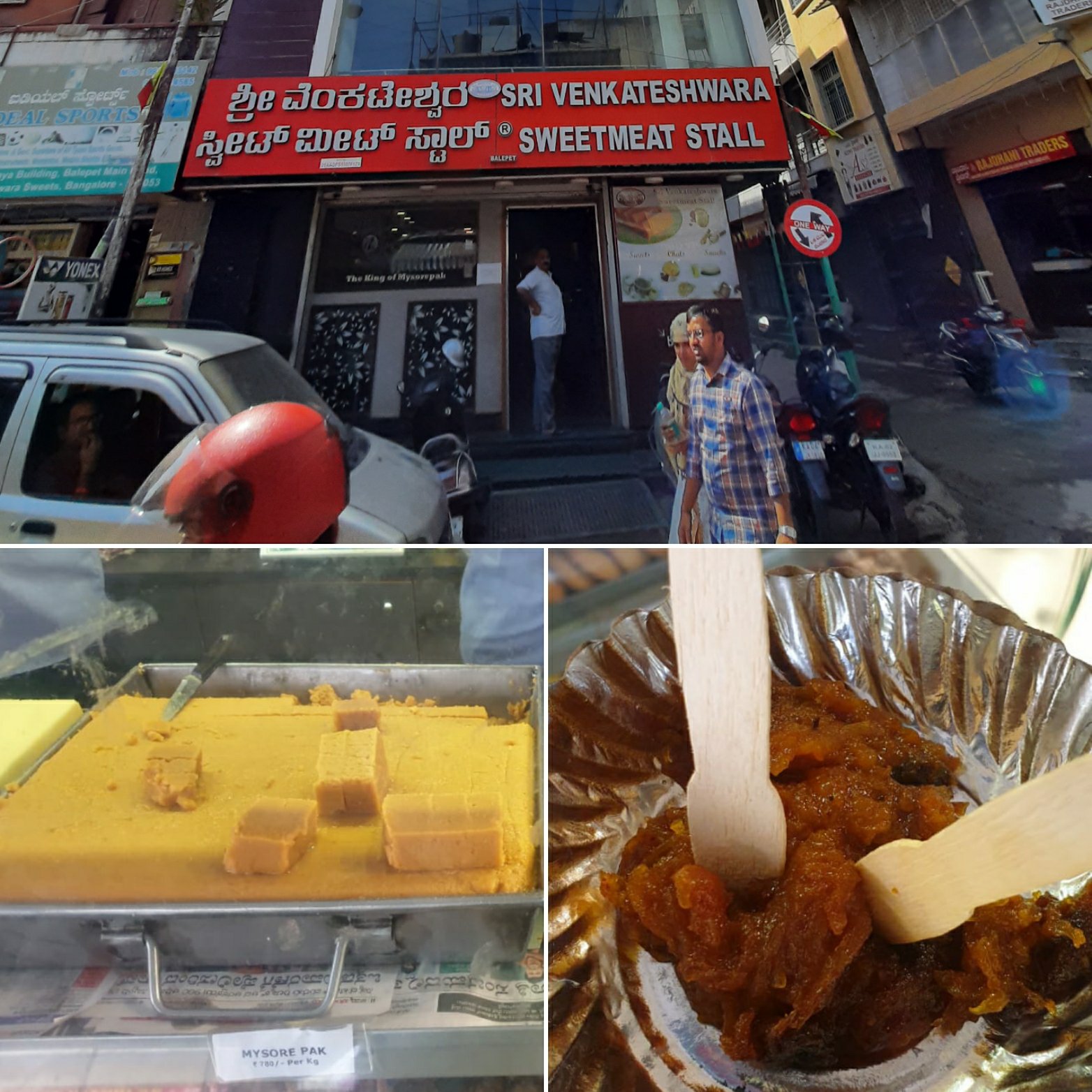
Food stop 5 (dessert): A meal is complete only with a nice dessert. If there is one sweet meat that is synonymous with Karnataka (Mysore state), it is Mysore pak. Since I couldn’t take my guest to Mysore for that, the closest I could get is at Sri Venkateshwara sweet meat stall located at Bale Pete, a short walk away from cotton Pete. Their Mysore pak and dumroot are the sweets my friend packed for his roommates back in his hometown. (Click here to read about Sri Venkateshwara sweet meat stall).

img_20200224_1408538818613838394713036.jpg
Sri Venkateshwara sweet meat stall, Balepete

The Pete walk: An old Bengaluru exploration is nothing without a walk along the narrow snaking lanes of the Pete area, the true business epicenter of both New and Old Bengaluru. This area is segmented into various sections and named according to the commodity sold and the communities that resided there in the yester years. From green groceries, handloom, steel, plastic to precious metal, everything is available in this locality. An early morning walk in the famed flower market is an experience in itself. We limited ourselves to just the mainstream sections while exploring some of the ancient temples, mosques and heritage houses of the Kempegowda era. In the meanwhile, we kept munching on numerous snacks from several popular stalls on our way. Although these eateries are old, the flavors are largely north Indian, owing to the Marwari and Baniya community that reside here in majority.

The heritage structures of the Victoria hospital, Bangalore fort and Tippu Sultan’s summer palace all lay on the side of the road for the history and architecture buffs who have a little more time in hand. But this is all we could fit in our day. Thus, ended a gastronomic tour of South Bengaluru.

I hope you enjoyed this virtual tour with me too… did you? Or did you not? Share your thoughts with me…

There are many other iconic restaurants in Basavanagudi if you have a larger appetite. These are a few other places that you must check out when you are here: The new modern hotel, Mahalakshmi Tiffin room, Janata Tiffin rooms  are a few among many others.

Souvenirs to buy:

  • Coffee filter and freshly roasted coffee powder: The best filter coffee is available only in South Bengaluru, and hence my friend thought this was a more significant thing to buy from here.
  • Channapatna wooden toys: These are GI tagged handicrafts made with organic colors and largely popular in the western market, it comprises a large collection of traditional toys.

Bhaderwah- the Mini Kashmir of Jammu

Snow-capped mountains, lush green meadows, pine trees, tulip gardens, skis and snow boards… Do these things paint a perfect picture of a state known for its valleys? If you guessed it to be J&K, Yeah, you’re right! To be more precise, did you guess it to be Kashmir valley? If you did, then you can’t be more wrong. I’m talking about the least talked region of the state: Jammu.

For those who have heard little about Jammu, the mention of scenic or adventure hotspots comes as a surprise for all they know is only its religious places, the most popular being the Vaishno Devi shrine. For tourists visiting this region, there are several lesser-known destinations around Jammu city that are as beautiful as its popular counterpart in the Kashmir region. But, continue to remain unexplored and Bhaderwah being one among them. Bhaderwah is a town located in the Doda district and is called as ‘Mini Kashmir’ by the locals. This nickname itself gives a fair picture of the beauty of this place.

Places to visit in Bhaderwah:

• Day trip to Bhaderwah town covering Vasuki Nag temple, Gupt Ganga temple, Bhaderwah fort, Tilligarh rose garden and Gatha lake resort
• Jai Valley trek
• Sonbain glacier trek
• Kailash Kund terk
• Peer ki pindi (camps of Akbar) trek
• Seoj Dhar Meadow trek
• Day trip to Chattargala Pass
• Day trip to Sarthal valley
• Day trip to Basohli

The Details:

There are several attractions in Bhaderwah to mesmerise all genre of travellers who visit here during any time of the year. Bhaderwah is also called as ‘Nagon ki bhoomi’ (land of snakes) giving one a sense of its connection with mythology. Vasuki Nag is believed to be the keeper of Bhaderwah and hence the temple dedicated to this snake lord holds significance in the local culture. Thousands of pilgrims participate in the annual ‘Kailash Kund’ yatra that starts from the Vasuki Nag temple. The highlight of the temple is the idol of the presiding deity that is carved out of a black stone and is standing at an inclination. The temple is nestled within the narrow lanes of the town that snakes through ancient and traditional wooden houses from the time when the valley was ruled by the kings of Bhaderwah and Chamba. The town’s association with Mahabharata too can be felt at the ‘Gupt Ganga’ temple, on the banks of river Neru. The Pandavas are believed to have lived here during their exile. The Bhaderwah fort situated atop the town gives a good view of the entire region.

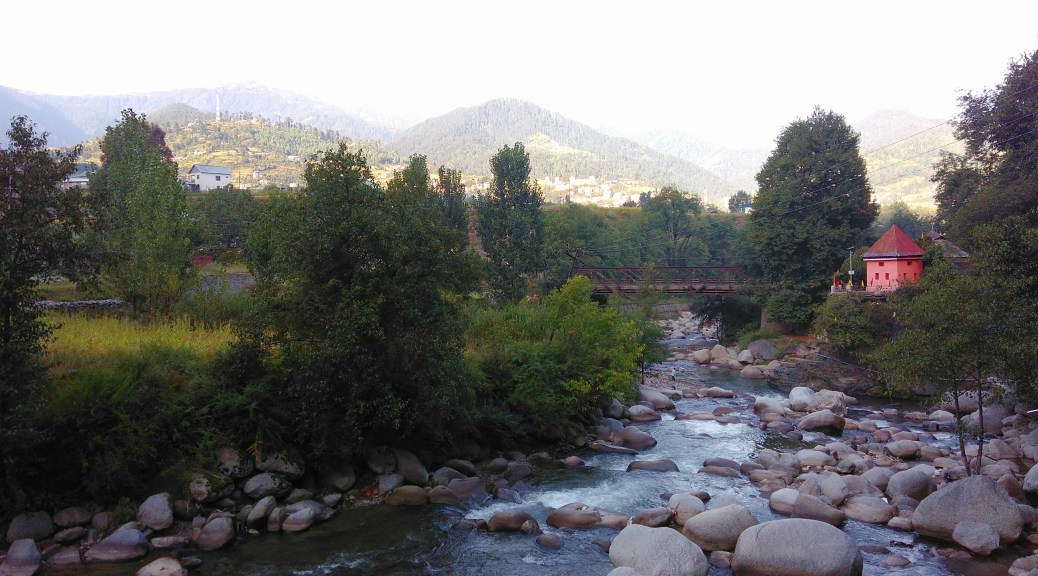
The Gupt Ganga river bank

The annual Tulip festival, Tilligarh rose garden and Gatha lake resort are some nice places for a day’s outing. Trekkers seeking to explore some breath-taking vistas can hike up the Jai Valley, Sonbain glacier, Kailash Kund, Peer ki pindi (camps of Akbar) or Seoj Dhar Meadow and connect with nature. If you are an adventure buff, the Jammu tourism has put in great efforts to cater to this segment with various outdoor activities like rafting in the Chenab river, rappelling, rock climbing, parasailing etc. Since Bhaderwah witnesses high snowfall, its high valleys are a great place for winter sports like skiing and snow-boarding too. It is slowly catching up as an alternate to Gulmarg in the state.

The Bhaderwah fort

Dirt roads and numerous water crossings in the region don’t fail to keep the adrenaline rushing for bikers who choose to ride here. The biking enthusiasts can opt the road through Padri, the highest motorable road in this region. Chattargala Pass is the highest motorable road and the most untouched point in Bhaderwah and offers a 360-degree spellbinding view of the entire region. It connects Bhaderwah with Basohli, another town of historical importance. One might be lucky to spot the endangered white vultures at this point or even some musk deer or Asian bears after a short hike up the hills.

One of the river and waterfall crossing on the way to Baderwah

The road to Basohli is picturesque with meadows, streams and typical pine trees all along the way. Sarthal valley is one of my favourite pit-stops along the way. With nothing much to do, it is beautiful with its laid-back scenery with Bakarwals (Shepherds) settlements amid green meadows and gushing streams from the glaciers. The seven-tiered waterfall located here is worth a short trek before riding up the treacherous road towards Basohli town. Basohli town itself is beautifully located on the backwaters of the Ranjit Sagar dam flanking it.

With political unrest being rampant in Kashmir, the main source of income through tourism has taken a huge toll in the state in the last couple of years. Jammu is very safe for all kinds of travellers and the tourism department is putting their best efforts to familiarize tourists with the other unexplored areas of the state. If visiting this state has long been on your bucket list and the unrest at the borders has kept you away, I think it is time you relook into your plan to visit the Mini Kashmir instead!

Fact file:

  • Getting there: Jammu is well connected by airport, rail and road. You can hire a self-drive car or a taxi from the city to visit the other sightseeing places. Bhaderwah is 280kms(about 5hrs) by road from Jammu city.
  • Stay: TRC (Tourist Reception Centre) guesthouses run by the J&K tourism dept., several homestays and budget hotels are available. Tilligarh tourist complex is a great place for one seeking luxury in nature.
  • Must try: Sip a cup of ‘Desi Chai’, a pink coloured tea that can be consumed either with salt or sugar.
  • Must buy: Basohli miniature paintings.

This visit to Bhaderwah was a part of our ‘Peace ride’, sponsored by Jammu tourism as a part of the Himalayan expedition to promote tourism in the lesser explored places of Jammu. The route we covered over the week was Jammu-Mansar-Basholi–Sarthal–Baderwah-Kishtwar-Gulabgarh-Sansari-Gulabgarh-Patnitop-Udhampur-Jammu. It has been over a year since this trip has been past and yet remains one of the best so far.

A Mountain Wedding at Geu

This story is part of my solo backpacking trip from Bengaluru to Spiti valley, covering Bengaluru- Delhi- Shimla – Sangla- Chitkul – Reckong Peo – Kalpa – Nako – Geu – Tabo and return. Each of these places visited have been written about in separate posts. This entire journey has been compiled into a book. You can avail it on Amazon or read it for free using your Kindle. Use the link below:

The weather had gotten colder and windier when I woke up that morning at the Nako homestay. The met department had issued an alert for a possible snowfall in the next 48hours. After finishing my breakfast, I decided to head further up the highway. My intention was to drop by a village named Geu, enroute and reach Tabo for the night’s stay. Geu is a small deviation from the highway with no direct connectivity of public transportation. I enquired with a couple of people at Nako for a taxi and I was offered a round trip for Rs.4000. I didn’t want to return and having to pay that amount even for a drop seemed more since I was on a budget trip. I decided to take a chance and go there by myself. I boarded the next public bus until Geu cross and hoped to hitch a ride to Geu or hike up the 8kms road leading to the village. ‘Why so much adventure?’, one may ask curiously. “I wanted to see a mummy in India, the unknown, for which Indians travel to afar countries.” Not many people know that there are about five mummies in India itself, out of which the one I was going to see is of a Buddhist Llama. It is believed to be over 500 years old and has been there in the open without any preservatives.

After alighting at the Geu Cross, I waited at the small bridge for about half an hour, hoping for a ride. As the cold winds were getting harder to stand, I decided to start walking up the trodden road with my backpack. Just then, a pick-up truck came in honking behind me. I put my hand forward signalling them to stop. The driver told me that he was sorry as the seats were filled with more people than what it could accommodate. It seemed to me like they were a large family, all dressed up in their ethnic Kinnauri attire. I told them it was Ok for me if they let me sit in the trailer. “The weather isn’t good outside. You will feel cold.” He politely said out of concern. I told them I’d be fine and hopped on after he nodded an approval.

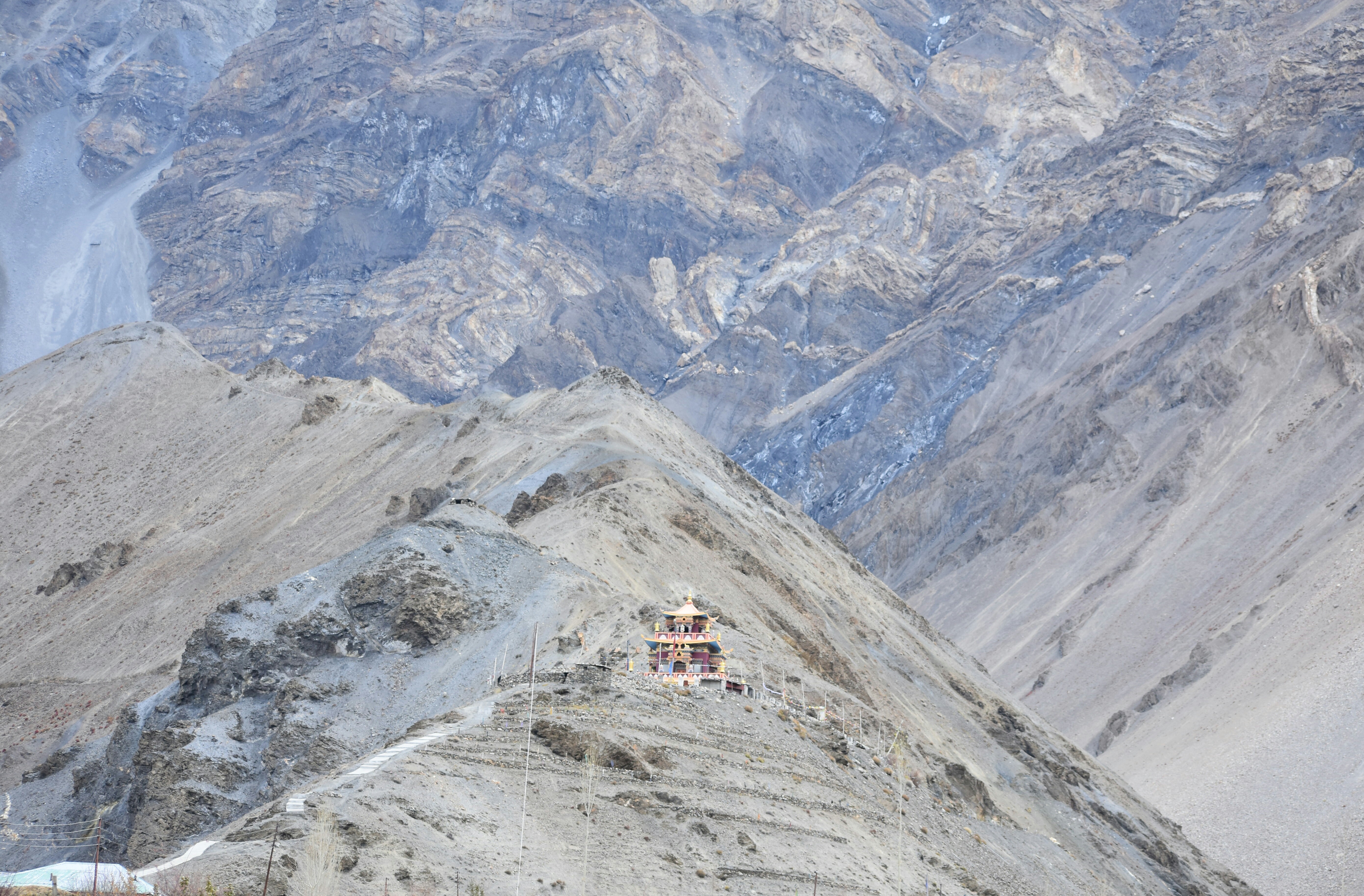
_20190313_214426.jpg
The Buddhist shrine atop the hill at Geu

The drive along the next 7kms to Geu was as insane as it could get. The super bumpy road runs parallel to a river in a scenic yet landslide prone barren land. Hence, there is no tarmac and is filled with rocks and gravel all the way. If not the thick layer of thermals and my balaclava, I would look like a zombie doused in south-Indian sambar. I mean, there was a thick layer of dust all over me from head to toe, all thanks to the open trailer and dry winds. It was already noon when I reached Geu. The family with whom I had got a lift until there, invited me to join them for lunch. They had come there to attend the wedding of a family member, they said. It was a small hamlet with about 15 households and no hotels or restaurants. When I turned down their invitation telling I had to head back asap after seeing the mummy, they insisted me to join them in the celebrations and that something can be managed for the night’s stay. I nodded an unsure okay!

Next thing I saw myself doing was being guided into the dining hall with a grand welcome alongside a traditional Kinnauri Band baaja. The meal served mainly comprising of wheat bread, dry fruits and nuts was healthy and simple as per the norms of rest of India where a wedding food is usually heavy on ghee, oil and sweets. The welcome drink too was a subtle namak wali chai, being served from a centrally placed firewood oven in the dining hall. I was force-fed and taken care of as if I were a part of their family (and the village itself). There is always this special thing about the people in the hills, their hospitality would have no match. After the meal, the Bride’s village got ready to welcome the groom to Geu. He belonged to Hurling village. It was an evening of colour, music, dance and fun. I got to experience a tradition which I had never heard of until that evening… Just a couple of hours ago, it was not even in my faintest thoughts that I’d be dancing in the mountains along with the baraatis (the wedding convoy, as it is called in India). What an unbelievable experience!

DSC_0870.JPG
The Kinnauri women in their traditional ceremonial costume

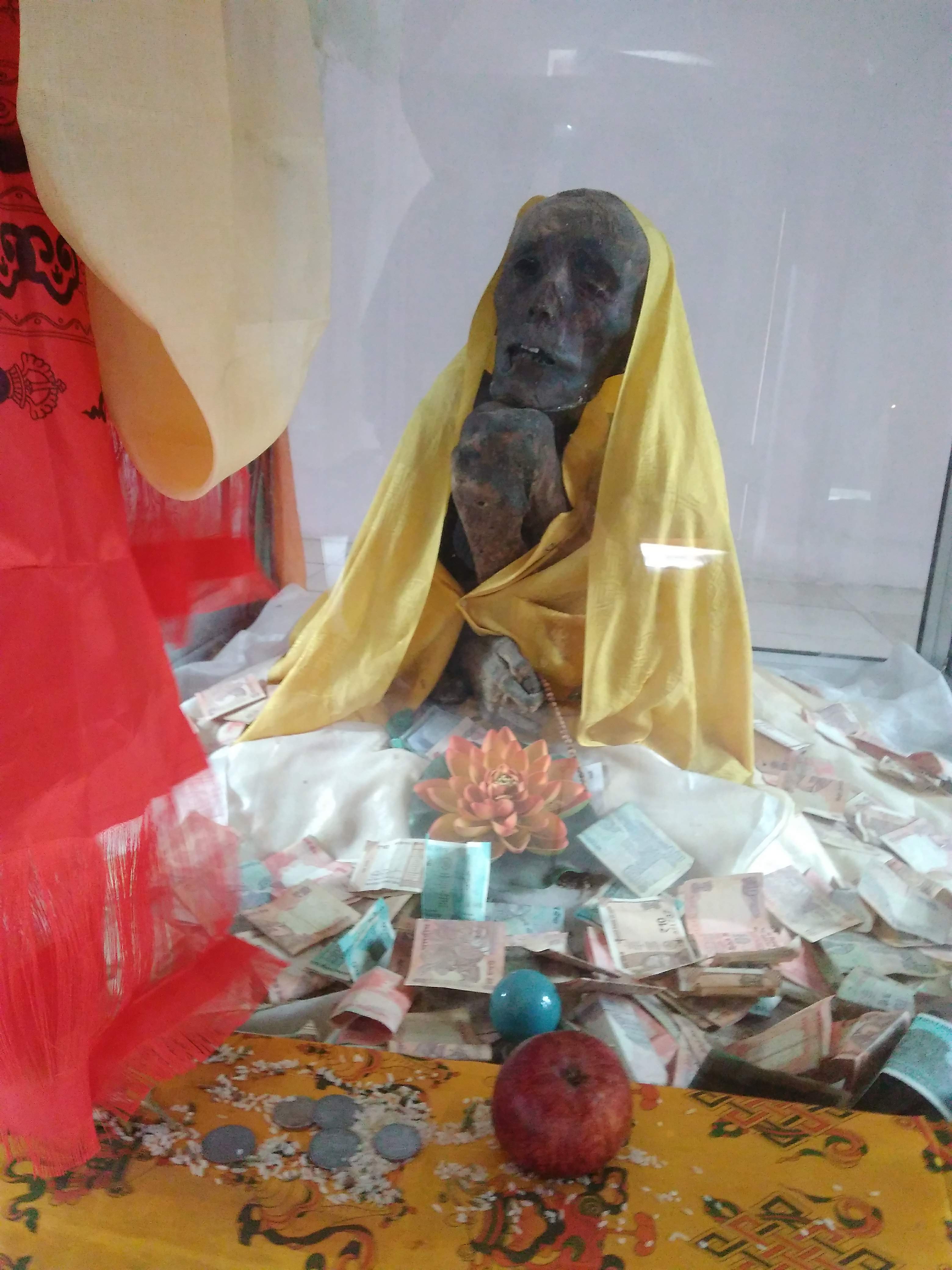
After the baraatis were taken inside the house, A few villagers and I walked up the small hill where exists a Buddhist shrine. The mummy is housed in a small room alongside the shrine whose key was taken from one of the caretakers at Geu. When I got there, I was rather surprised to see this mummy comfortably sitting in the open room…. With no preservatives, no wrapped fabric and just a small glass case to keep it away from direct human touch of the visitors, it is still very much intact. Its hair and nails are believed to be still growing. While the locals with me offered their prayers to this mummy Llama, I was watching this INCREDIBLE piece of science and faith!

IMG_20181101_160258.jpg
The mummy Llama

With the setting sun and dropping temperature, the winds were getting stronger and we all headed back to the house. Each house was filled with so much chit-chatting and laughter going on, around the central fireplace where the guests were munching on the local snacks and hot brews. I was accommodated in a large warm room at the village’s only guesthouse. My stay was sorted for the day and I heaved a sigh of relief for the faint doubt I had until I had a confirmed place to stay.

Very unusual to a regular day in the mountains where all villages sleep early, the celebrations had only begun at 07.00.p.m. to say the least. The evening faded into night and the night became morning… The wedding was an all-night affair. There was food, drinks, dance, songs and so much fun as in any wedding. Everyone had lost sense of the freezing temperatures outside the hall. What was surprising? While there was so much fun and frolic inside the wedding hall, the men in uniform from the Border Security Force continued to perform their duties outside, walking around the village keeping vigil on infiltrators. “The Chinese territory lies just behind this hill”, a localite explained. “We have our kith and kin who are married off there. They are all Kinnauri and share exactly same culture as us. Sadly, they can’t come here to join the festivities because they are Chinese. It is not that we don’t meet, Chup-Chup-ke koi climbs the hill and comes here and goes off there occasionally. That’s why the BSF is here”, he said. It was 02.00.a.m. when I returned to the guest house with a few others to get some sleep before a long day that followed.

DSC_0891.JPG
The Kinnauri men in their traditional ceremonial costume

I woke up at sunrise the next morning and got myself ready with my backpack. I had to find transportation and hence wait until someone was heading out of the village. From 07.00.a.m., I was walking up and down the village street because I had to keep burning calories to keep myself warm. The villagers noticed me and insisted me to have breakfast with them. Just as I was washing my plate, I heard a car. The Maruti 800 was already carrying more than its capacity. As I continued to wait, another pickup truck ignited its engine. It too was full. Yet, I found another pickup. The driver said he would go only after all the members came. I said I will wait with him for them to come. A good half an hour and three cups of tea later, the members finally arrived. I was again seated in the trailer with a couple of others on our way out. This time, the cold windy, dusty and bumpy drive was accompanied with some nice warm conversations with the mountain people. We arrived at Hurling; the groom’s house was a short hike up the hill from the main road. The family insisted me to tag along with them for the second day too. “You have seen only half of the ceremonies at the Bride’s village. Now, the convoy with the couple will arrive here to continue the celebrations at the groom’s house. We came early to see that all arrangements are in place before the rest arrive. Please join us.” They insisted. Hurling was halfway to my next destination- Tabo. As tempting as the invitation sounded to experience a complete mountain wedding, the fear of getting stranded in a snowfall made me decide to find a way to reach Tabo asap!

Thus, ended an experience of a lifetime- A wedding in the mountains! There is always magic in these mountains and its people that will keep calling me back again and again!

Land where Art is Divine- Pathanamthitta

Dense canopy of trees, swaying coconut palms, houseboats cruising through the pristine backwaters, wooden canoes of the locals fishing in narrow canals- Well, does this paint a picture of Gods own country? When opportunity struck, I decided to give the usual things a miss and explore a region that is least spoken about in a typical tourist circuit in Kerala. I wanted to explore the land where art is considered divine and celebrated in all its form. I was heading towards Pathanamthitta.

My Itinerary:

Day 1: Leave from Bangalore to Kochi (by Flight); Drive from Kochi to Pathanamthitta. Visit Aranmula Parthasarthy temple (take a local foundry tour); Visit Thiruvalla Srivallabha temple (Watch a Kathakali performance in the temple);
Day 2: Gavi or Konni elephant camp, Charalkunnu, Kakki reservoir, Perunthenaruvi waterfalls, Kalloppara church, Paliakkara church and Niranam church. Return to Bengaluru.

The details:

First thing I did while approaching Pathanamthitta was lowering all the windows of my car, to breathe in some clean air. With almost two third of the district comprising of forest cover, it is no wonder that Pathanamthitta is the least polluted city in India. The remaining one third is a combination of the city and plantations. We were heading to the homestay we had booked, not very far from the city centre. It was nestled in what the locals call as a residential area that was far from imagination of a city soul. The narrow roads were flanked by rubber, tapioca and banana plantations for most stretch and marsh lands for the rest. Bunches of jackfruits hung down from tall trees among several other tropical trees like litchi, rambutan etc. that had the fruit lover in me all drooling. My stay was at a traditional Kerala house nestled amidst a huge garden. Its wooden portico with clay tiled roof had me fancy struck.

img_20190531_1320012544330379495427061.jpg
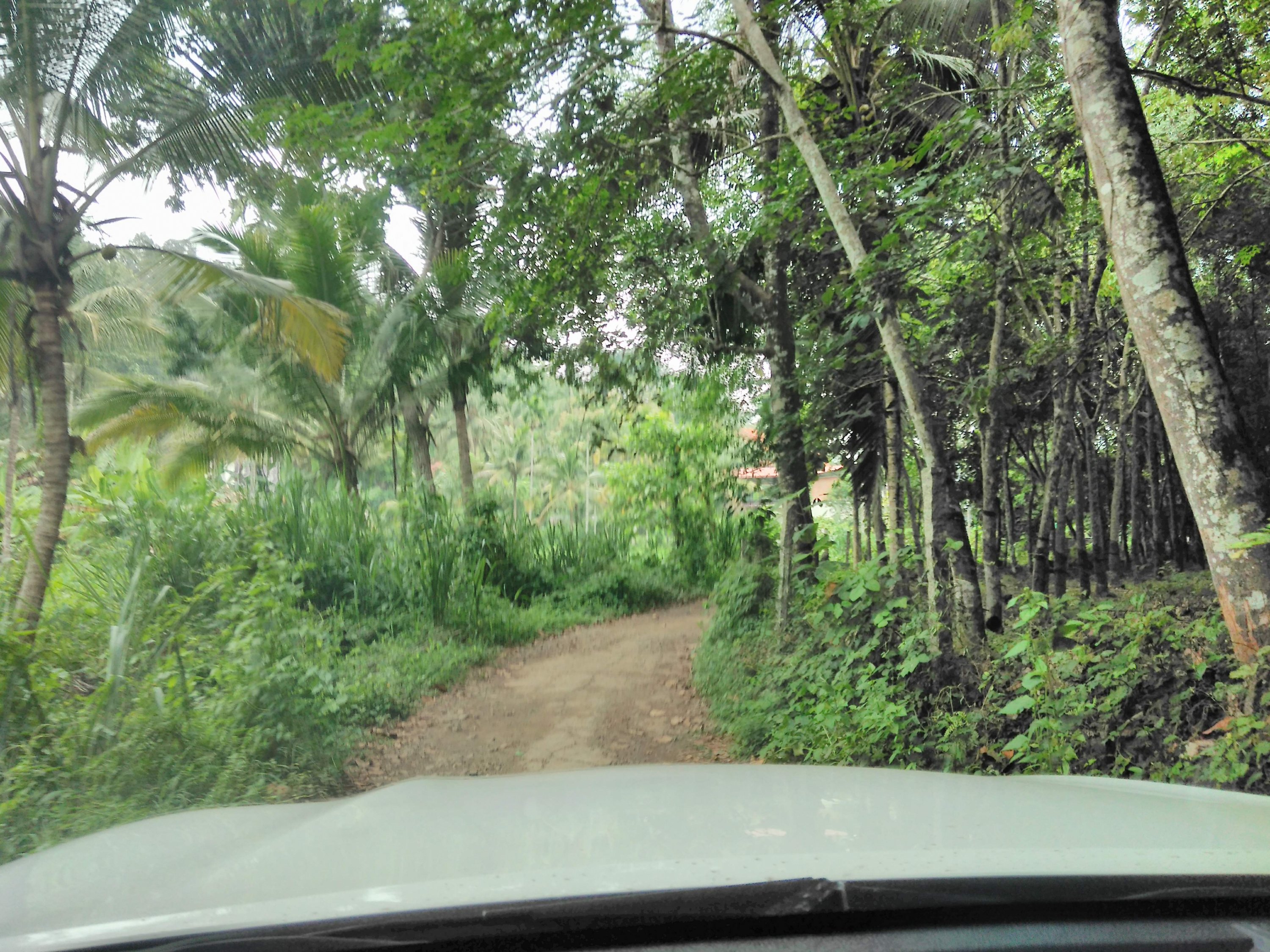
Enroute to the homestay

Surprisingly for me, Pathanamthitta hosts some of the largest annual religious congregations in the world. The Sabarimala yatra and Maramon convention are next only to the Haj. Giving a pass to the famous backwaters of Kerala, I had driven this far to explore its vibrant and divine culture and art. My plan for the first day was to visit two of the 108 Divyadesams, both located in Pathanamthitta. I had arrived at the Aranmula Parthasarthy temple, particularly for a tour of a foundry that makes the historical ‘Aranmula Kannadi’ (Click to watch the video).

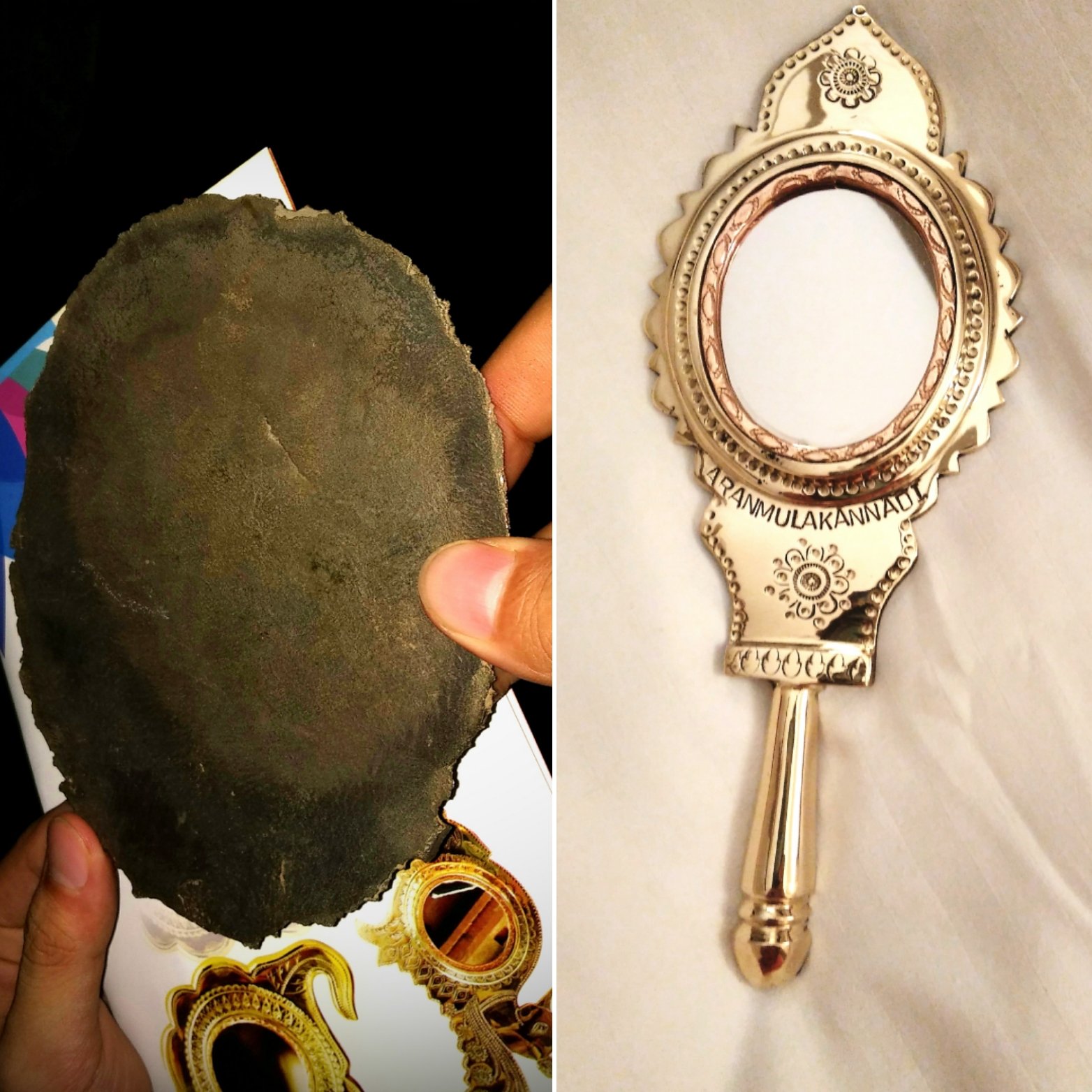
This GI tagged handicraft is culturally important in the state of Kerala. The know-how of making it is endemic to Aranmula and limited to the descendants of only one family who now live around this temple. Unlike the familiar glass mirrors, these are finely polished metal sheets. Watching these men toiling in their workshop to bring an alloy to life, which is integral in all Malayali celebrations was like living a dream for me.

img_20190622_2343003929859773219572362.jpg

Left: moulded metal sheet before polishing; Right: Polished & finished mirror

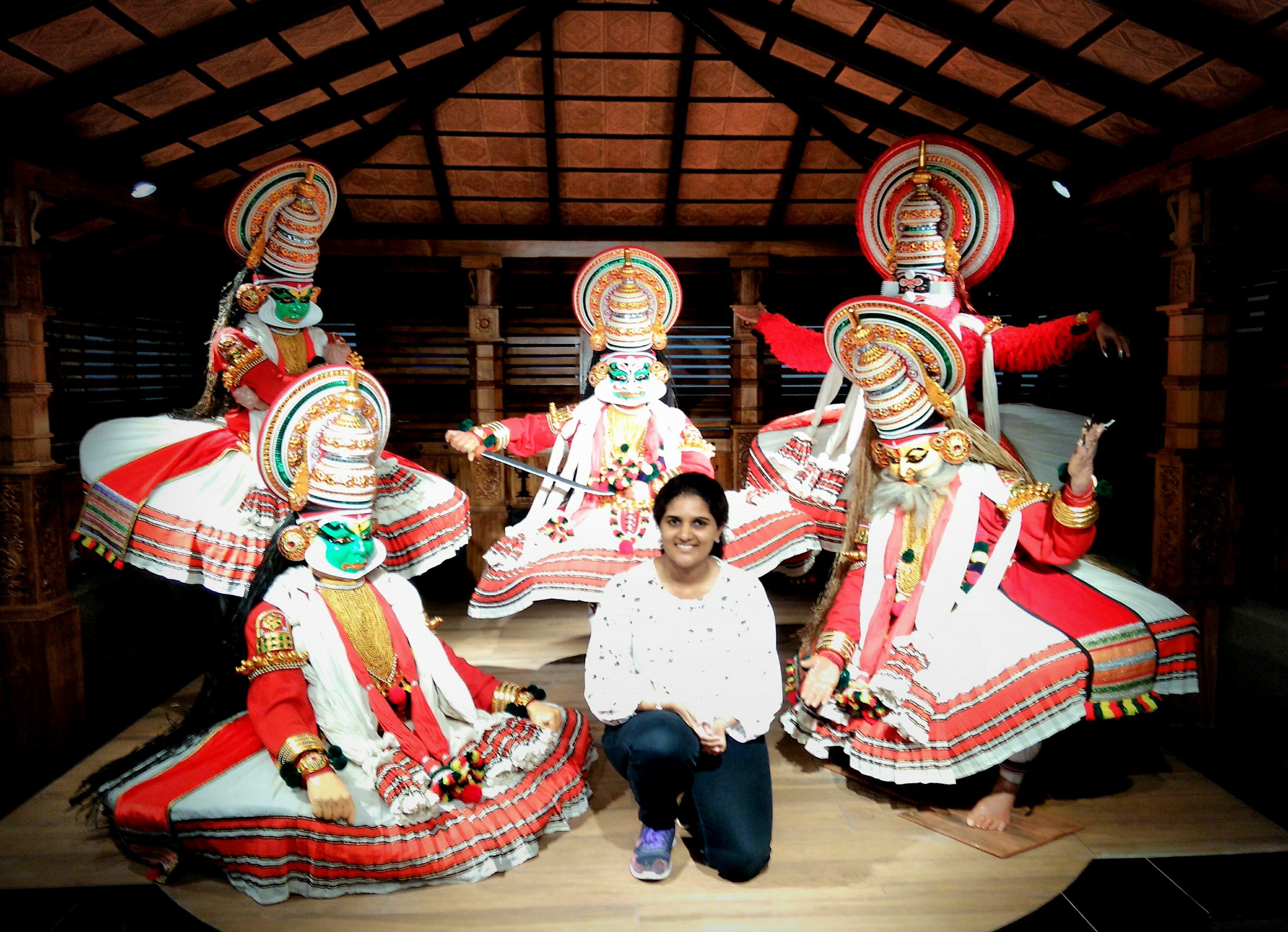
A short drive away from there was my next destination: Thiruvalla Srivallabha temple. With its ancient wooden architecture, this beautiful temple sprawls on a huge area. Here, the prayers are offered five times a day and the last prayer was specifically that interested me the most to visit here. Kathakali is performed inside the temple premises everyday as a form of prayer to put the deity to sleep. I was like a little child in wonderland who lost track of time watching this performance that went late into the night.

img_20190601_1301236968219467911473755.jpg
A traditional Kathakali setup at the Kochi international airport

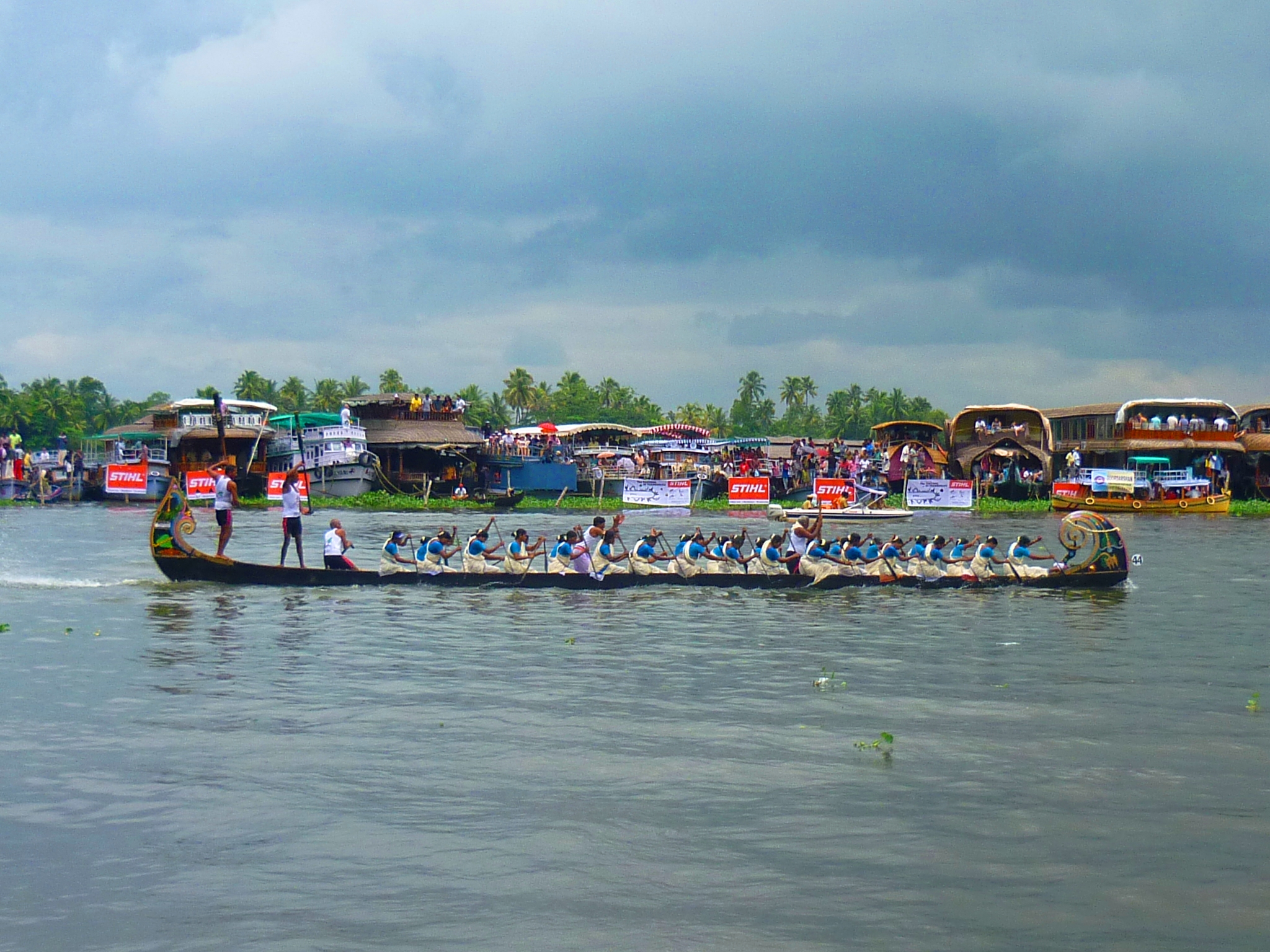
An early morning drive to Gavi or Konni elephant camp is what I was recommended for finding a piece of nature. Charalkunnu, Kakki reservoir, Perunthenaruvi waterfalls are few of the other nearby places that tourists usually visit. But I decided against it all and while away some time exploring the neighbourhood of my homestay before checkout. It was as calm and peaceful as anywhere else. While sipping a cup of Kattan chai, I was reminded of my previous trip to Alleppey. Hundreds of wooden canoes measuring over 100 feet, long enough to be called snake boats, gather from across Kerala to compete for the coveted title. Each boat carries at least hundred oarsmen, all singing the Vanchipattu in chorus. Breathing the heavy air filled with anxiety of the spectators, it was a lifetime experience. Like Alleppey, Aranmula too hosts one of the largest boat races in Kerala. The Aranmula race is held on the last day of Onam as a celebration of Lord Krishna crossing river Pampa.

Boat Race finals (22)
The oarsmen ‘”Women” from Alleppey

I had planned my return route to Kochi such that I could cover some of the interesting landmarks along the way. The first stop was at Kalloppara, where an ancient Hindu inscription exists inside a church. I had read about how two faiths co-exist under the same roof that houses a Bhagavati temple and a Mary’s church. But my drive through the streets of a residential area ended at a bridge that connected Kalloppara. It had collapsed during the floods that ravaged Kerala last year. Having three rivers flowing through it, Pathanamthitta was one of the worst affected.

I hit the main road again and headed to Thiruvalla. Since it was dark the previous night, I was there again to have a look at the famed mural paintings on the altar of the Paliakkara Church. The church at Paliakkara and Niranam (my next destination) both have their history dating back to the arrival of St.Thomas in India in 54.A.D. This trip was all about an amalgamation of art and tradition. Be it wildlife, religion, architecture, history, art or culture, I believe Pathanamthitta has something for everyone.

(P.S.: I’m against the idea of taking photos inside any place of worship, as a form of respect to its sanctity. Hence, I do not have any pictures from the interiors of any place of worship)

Fact File:

  • How to reach: The nearest airports are at Kochi and Trivandrum. Kottayam and Alleppey are the nearest Railway stations. KSRTC buses and taxis are available from these places to reach Pathanamthitta by road.
  • Get around: local buses are quite frequent; Taxis can be easily availed.
  • Best time to visit: September to May (Anytime apart from monsoon)
  • Stay: Luxury hotels are sparse. Cheap and Budget hotels are available in plenty considering the pilgrims who come here for Sabarimala yatra. Homestays are available to experience the true essence of Kerala.
  • Must do: Attend a Kathakali performance, visit a mirror foundry, Bathe elephants at Konni.
The Mountains beckon in the Apple valley of India- Kinnaur

I wasn’t sure if solo-traveling would be safe in Chhattisgarh, the campsite wasn’t ready yet for a Gujarat trip, Rajasthan had the election around the corner albeit having the perfect weather, the public transportation system wasn’t convenient in Arunachal, Uttarakhand had unpredictable weather of late, Jammu was done just last year, Dharamshala stretch would be too mainstream, Lakshadweep was too short a trip for the time I had. Maybe I should just settle down with the Sahyadris in Maharashtra or sign up for a fortnight long yoga session at Rishikesh or a Yakshagana course at Mangalore perhaps! I had tele-travelled almost the whole of India to decide where I wanted to go. And then, this happened! Just 4 days before departure, the mountains beckoned and I had finally decided to visit the Kinnaur valley in Himachal Pradesh.

Click here to read the complete story, on Amazon

Nothing was clear to me apart from the to & fro flights to Delhi. People around me were busy and my vacations couldn’t wait, lest they be lapsed without pay or without use. Although not very keen on solo travelling, I think that’s how life threw itself upon me when I longed to go to the mountains! The mountains have always been kind to me and have had me meeting them regularly over the last 4 years. I don’t know the reason for this special bond I share with the mountains. May be because I come from a nature worshipping community, that my connection with them is so instant and strong. The mountains had me amidst them yet again. From being a shy kid at ice breaking in public gatherings to having done a complete solo backpacking in an off-season, to meeting and hanging out with strangers and making new friends from travels, my journeys have brought me a long way! The mountains have been kind and have protected me all the way…

Given that I would be alone and I get muscle cramps when the temperature drops, the one thing I had to make sure while planning my trip was to not push myself too hard to see too many places or do anything that could drain me out. Hence, I decided to do it one place at a time, plan my next destination only after reaching a place and move only when I felt like I had sunk in well in the current place. So that said and Kinnaur had me there! After I had reached Himachal, there was absolutely no fear of being a solo-women traveller and no worries over safety concerns at any point of time. The people were amazing who derive their strength from their deep values… From being stopped by random locals on the road and being offered the juiciest apples from the valley to eating local food and getting invited to houses for coffees, from befriending the locals and then to being invited to attend a traditional Kinnauri wedding, from waiting for the day’s only public bus or hitch a ride to having stuck in a place for 3 days without any electricity or transportation due to snowfall, from meditating in the millennium old monastery to confronting a mummified Llama in the mountains, from driving past a valley of green-rock-and-sand onward to having returned through the same valley painted white in snow, from being seen-off by a close friend at the trip start to I seeing-off a stranger at the end of the trip: Whoa! What a journey it was!

So, the route taken by me was: Delhi- Kalka- Shimla- Sangla- Rakcham- Chitkul- Sangla-  Reckong Peo- Kalpa- Nako- Geu- Tabo- Rampur- Sarahan- Shimla- Delhi. Some of the key destinations enroute and things I did were:

• The trip started with the ‘Himalayan queen’ train from Delhi and then I connected to the mountain railways from Kalka to Shimla, a part of the UNESCO World heritage. Stopping at several stations enroute, a ride in the loco thugging along the narrow-gauge through in-numerous tunnels and winding pathways in between the green pine laden cliffs and verdant hills was worth an experience.

• The hustle of the desi music blasting at full volume had filled the atmosphere as the HPSRTC bus I boarded at Shimla cruised through thickets of sweet smelling Juniper and deodar. A solo snow laden peak emerged from amidst the green mountains. Call it layers of dew laden and mist covered hills, they sparkled as the sun’s early rays found their way forming several vibrant spectrums as the morning ride gave me the first glimpse of a horizon that had a never-ending line of snow-capped mountains.

• When the bus alighted at Sangla after making its way through steep gradient, blind corners and breath-takingly scary heights of the snaking roads, the sun was calling it a day. It had cast a golden red glow to the entire range of Kinnaur Kailash mountains. I couldn’t have asked for more as I stood there to be welcomed by this magnificent view right in front of the bus stand. The hike up the Kamru fort to catch the golden peaks up close was a cherry on the icing.

• The next day was an exhilarating bus ride through the Sangla valley, overlooked by the Kailash mountains on one side and the beloved untamed Baspa river flowing below. The ride was adventurous with waterfall and river crossing, cliff-hangers, landslides and occasional sightings of mountain goats or yaks. Quick stop-over at Batseri village painted in shades of crimson, chrome to ochre with the trees of apples, apricots and walnuts was a feast to the eyes. A walk down to the river at Rackcham helped me to connect with the Kinnauris with very warm conversations. They offered me a ride through apple orchards and buck wheat farms before meeting the sole Indian tricolour waving at Chitkul, a village bordering China & Tibet.

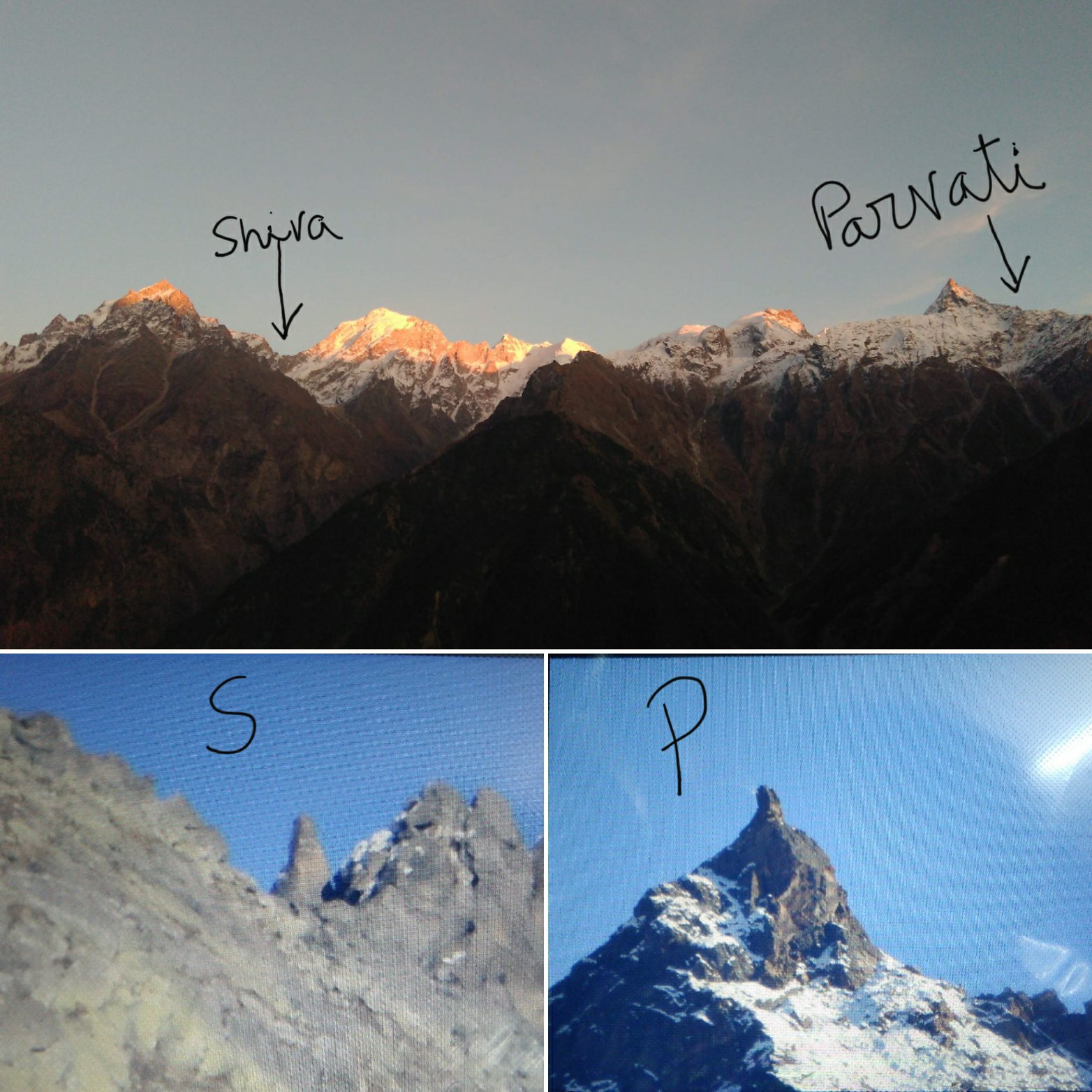
• The following morning, I started early to Kalpa- a quaint tiny village with old traditional houses amid the Kinnaur apple farms. A solo hike through the suicidal roads to Roughi village turned out to be special when a random dog decided to accompany me all the way. Again, the setting crimson sun cast its magical spell over the manifestations of Shiva and Parvathi seated conveniently in the Kinnaur Kailash mountains overlooking the village. With the chants from the Buddhist monastery next door and swaying prayer flags as I looked out of my window the next morning, I couldn’t have asked for a better start for my day.

• That day, I did a bit of shopping and grooving to traditional Kinnauri music with the locals at Reckong Peo, the ‘Gateway to Kinnaur valley’. It was the annual fair where people from all over the state had congregated to buy and sell local Agri-products and handicrafts apart from sipping the local apple brew. Packets of pine-nuts, dried apples and apricots along with the traditional Kinnauri hats were perfect souvenirs to take back before boarding the bus to my next destination.

• This road is when the landscape starts to surprise you. The green canopies make way to steep rocky cliff-hangers. The on-going construction of the Karcham Wangtoo dam only warns you to be aware of shooting stones where landslides are as common as confronting vehicles from the opposite direction on the single-track road. And then, the Rocky mountains disappears suddenly making way for barren landscapes with sand and loose rock laden cliffs. The blue Sutlej river snaked between the valley and the view of the treacherous roads winding around the steep gradient hills was indeed a sight to behold! It was pitch dark and biting cold when I alighted at Nako, to check into a homestay under the clearest star-studded night’s sky.

• Although the weather had gotten more colder, it was one of the finest mornings so far. A walk around the village of Nako, with mud-smeared walls of houses built of wood and clay is one of the highlights of my entire trip. While strolling through those narrow walkways of the village, I felt as if I was exploring a maze. With the early morning vibes of a typical village with cattle roaming around, children walking down to schools, chants and incense from the ancient monastery rising in the dew laden air, it was an altogether different world there. The view of the distant snow-capped mountains and the barren winding landscape around had me spellbound for the rest of the day.

Next destination was Geu, a village that can be reached only if luck be by one’s side. Having no direct connectivity through public transportation, I waited on the highway hoping to hitch a ride to a place that is often cut-off due to landslides. It was wedding bells chiming in this tiny hamlet that day… I was fortunate, to say the least! A large family heading towards Geu not only obliged to offer me a ride in the trailer of their crowded goods carrier, they also invited me to be part of the celebrations. From being treated with the finest Kinnauri delicacies to dancing with the baraathies in a traditional mountain wedding, I could not ask for more. It was an all day and all night affair!

• I woke up in the biting cold next morning to hike up the hill and pay a visit to the mummy of a Buddhist monk, believed to be over a 500yrs old. Strangely, it has been there in open atmosphere without any chemicals and among the only few mummies available in India. Quick breakfast at the wedding house and I was good to head out by hitching another ride until Hurling.

• The weather had gotten worse that day with a forecast of precipitation by day end. As I waited at Hurling for my next ride, the guy making rotis at a hotel offered me a cup of free chai and got me a free drive with his customer to my next destination. With a loaded car and a person with a broken leg hanging out of the rear seat, the people who agreed to drop me were more than sweet to accommodate me in the front seat and they carry my backpack on their lap all the way in the rear seat.

• So then… Tabo happened! This was the place I had been looking forward to all the way. Considered to be one of the holiest places for the Tibetan Buddhists, I sunk into meditation mode for good few hours with the soothing fragrance of the Juniper interiors of this millennium old monastery constructed out of clay. It was BLISS and I can’t explain it further. The millennium old paintings all over its inner walls and roofs, the golden manuscripts were something incredible. Since artificial light sources are believed to damage the organic colours, I eagerly waited for specific time of the day for the sun to light up specific rooms to see this wonder. It is called the ‘Ajanta of the Himalayas’ for a reason, you see!

• The morning when I woke up, the mountains had moved closer to me with a heavy overnight snowfall. This was a sight to which the heart of a snow-deprived-south-Indian-city girl in me had skipped a beat. I had to extend my stay at this monastery due to heavy snowfall for next 2 days and with no electricity, phone connectivity and no plumbing that worked whatsoever, it was ‘THE” time! Amid all this, I had the rare opportunity to relish the Tabo apples (one of the best in the world) every day of what was being offered to the deity at the monastery.

• Finally, after getting my drive back to Shimla- I had plans to stop by at Rampur Bussahr to see the erstwhile palace and stay at Sarahan, one of the Shakthi peethas in the foothills of the Himalayas. But, the mountains had an altogether different itinerary for me for the last 3 days! So, thus was my sojourn in the Himalayas, the mighty incredible Himalayas!

Since Rohtang pass had closed by end of monsoon, I did only Kinnaur and half Spiti and returned the same way back (Although a little hectic with 3 days required only for travel, on the same route). If you are traveling in the summers, then you can start from Shimla and complete Spiti & Lahaul via Kaza and exit from Manali, thereby not repeating your route.

Summary: With the changing landscape throwing surprises at the wink of an eye, each mile was magic. The valleys were overwhelmingly beautiful! When the mountains beckon, just pack your junk and head out! The destination doesn’t count, the journey is worthwhile!

This article is featured in Deccan Herald’s Travel supplement: ‘DH Travel’ on 25-May-2019

Exploring the backwaters of Karnataka- Thonse

Although the places that I choose to write about may not stand a chance to be compared with the Sundarbans or the Pichavaram forests… None the less- The Arabian seacoast has its own share of beautiful places in terms of its mangrove creeks. And while Kerala is synonymous with its enchanting backwaters, Karnataka too has its fair share of backwater system which is still untouched and yet to be explored… Through my innumerous journeys in this coastal stretch, I don’t remember a time when I did not put my neck out to be tantalized by the view of the backwaters as I passed on those bridges that fall in between Mangalore and Udupi. So, this time I had set aside one weekend exclusively to explore these lesser known places of the west coast and mark myself in those remote places on the map-of-India.

My itinerary:
Friday: Start from Bangalore – Overnight bus journey to Udupi
Saturday: Kemmannu (Explore the backwaters in a traditional boat ride), Kodi bengre (explore the village and an estuary), Malpe beach (water sports), Krishna temple and the seven Mathas,
Sunday: Chill at Sasihitlu beach and estuary, Kapu beach & lighthouse, return to Bangalore by bus (You can alternate this with a day visit to St. Mary’s island)

The details:

First things first- Having good connectivity, taking the public transport to reach these places has its own experience, the way I enjoyed my trip. But I strongly recommend having your own vehicle to these places. Given the hassle of waiting for a ride, the remoteness of the place and the joy of riding through such a beautiful stretch of road be best enjoyed on a two-wheeler only. That said, my mother and I had reached Udupi by an overnight bus and stayed at a hotel close to the Krishna temple. We freshened up and headed to the service bus stand located at a walkable distance to the hotel.

IMG_20171209_130602.jpg
street leading to Kemmannu

The entire district of Udupi is dotted by innumerous temples and churches and hence, I prefer not to make a mention of them in this post. There is no dearth of local buses to any place within the coastal belt of Karnataka and hence, I relied totally on public transportation for my commutation. All set to explore Thonse, we boarded a bus that passed through Kallianpur village (This was once, a part of the Vijayanagara empire). The ruins of an old laterite fort stand testimony to that era.

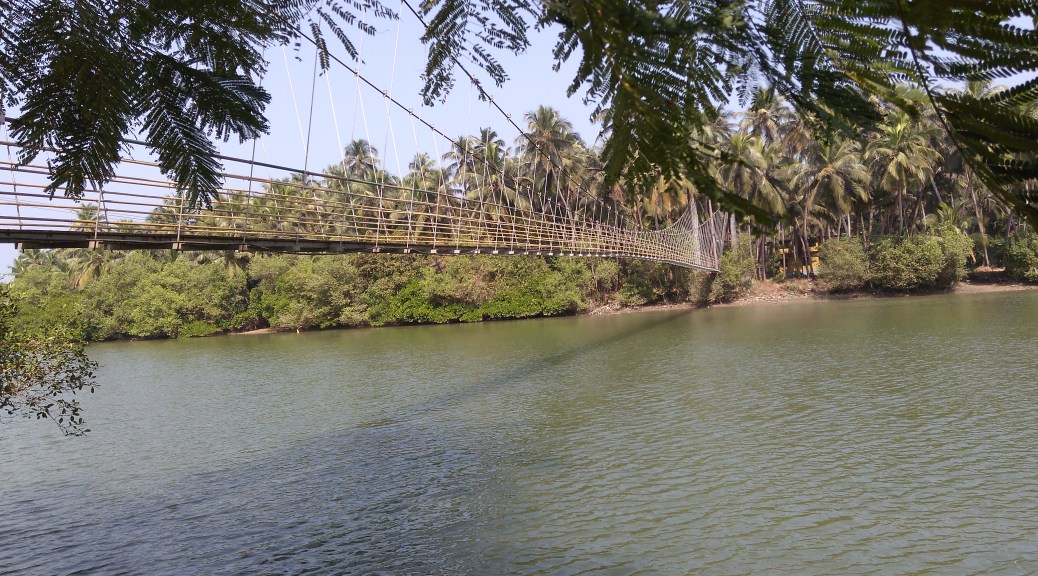
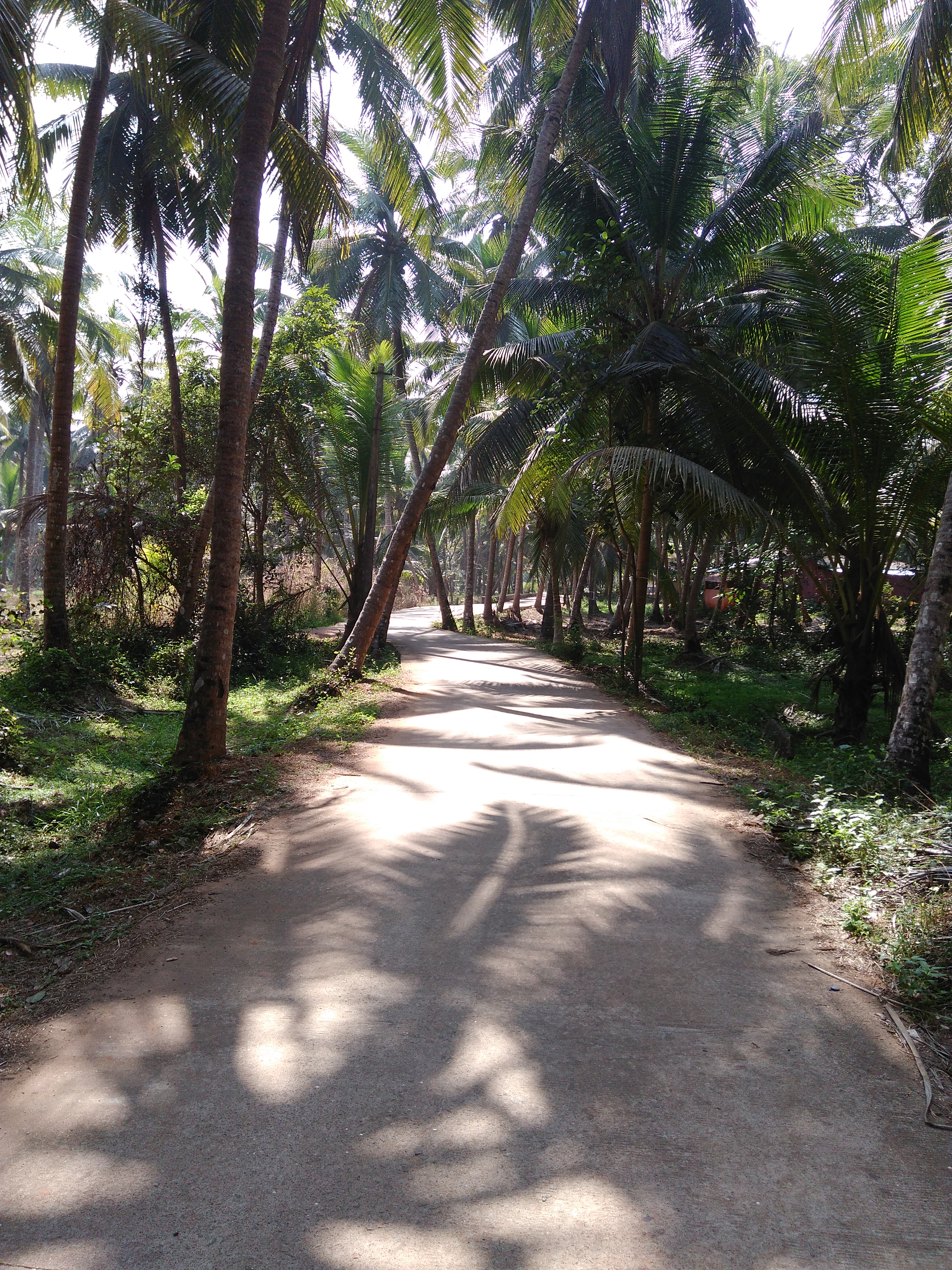
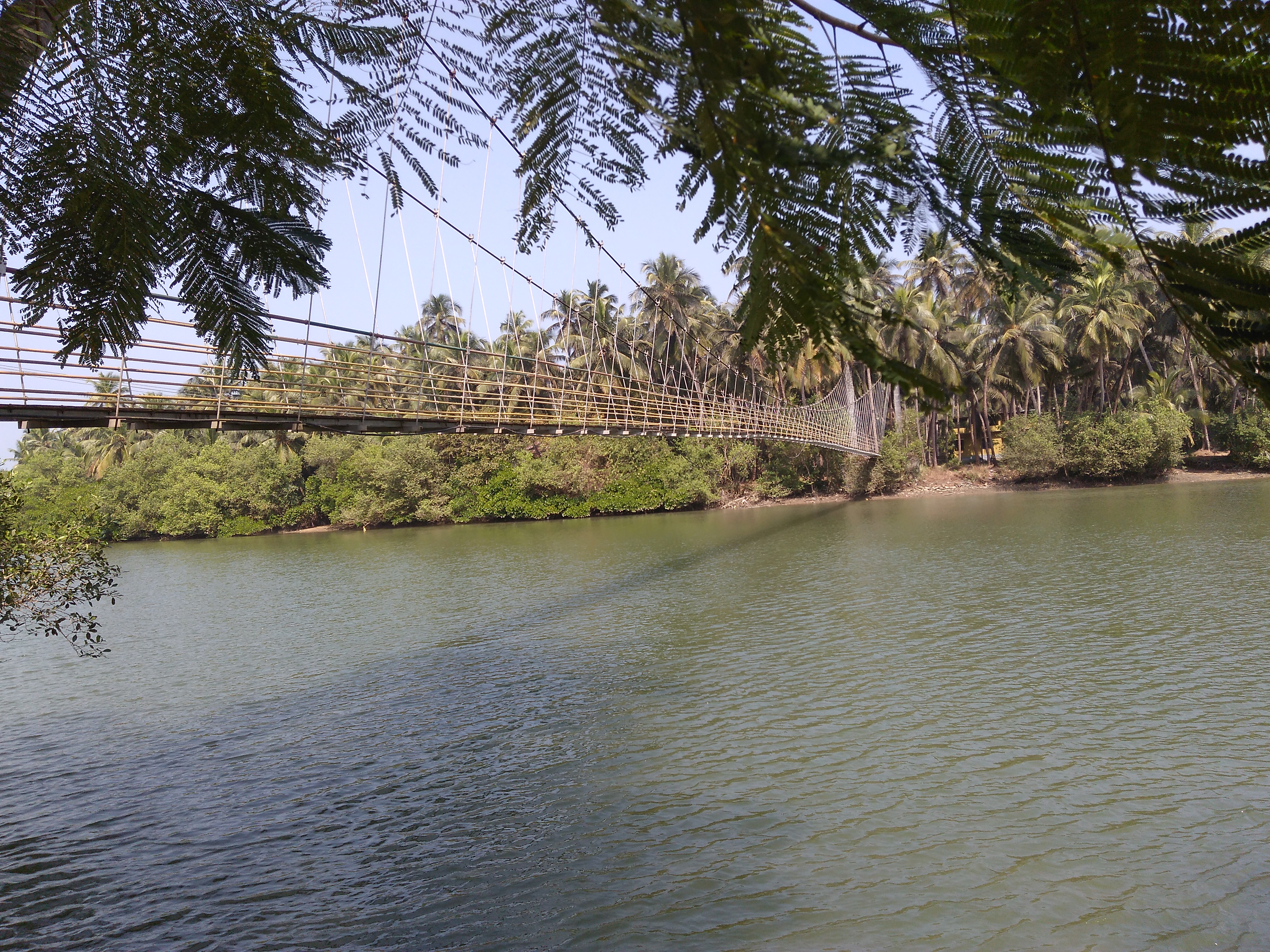
My first stop was at Kemmannu. A short walk on a meandering road through coconut plantations took me to a serene system of backwater canals connected to river Swarna. A suspension bridge has been laid across the river and set in an idyllic location of mangrove creeks. There was a boatman and his family living in a small house on the riverbank. When we enquired with the, they agreed to take us on a ride into the river for a fee. As our country boat set sail in the river, the oarsman suggested us to take a boat ride in the high tides either for sunrise or sunset. According to him, the delta beach would look brilliant at that time. He took us around several islets in the backwaters of river Swarna that gave us good sighting of rare birds. It was a very pleasant experience of sailing in the lap of nature, after having landed from the madness of the metropolis.

IMG_20171209_121635
The suspension bridge at Kemmannu

From there, we walked back to the main road to get a vehicle to our next destination. While we walked beside a broken bridge, something caught my attention near the harbored boats. There was something amusing happening down there at the canals. I felt as if I was witnessing a bioluminescent spectacle in daylight. The sight was something I had never seen before. On a closer look, I realized that the canal was filled endlessly with jelly fishes of various colors and sizes. After spending some time there video graphing the sight, we boarded the bus to our next destination- Kodi bengre.

This small fishing hamlet is located on a narrow strip of land mass, placed geographically between river Swarna and the Arabian sea. While your heart will surely skip a beat at the first sight of the vastness of the sea at Hoodi beach, a deviation to the right is what we took. This road narrows into the village and gave us an experiential ride, right until the estuary at Bengre beach. The ‘tip of land’ is a great place for sunset viewing and enjoying the silence with the waves. The several shacks in the hamlet serves freshly caught sea food served spicy hot which is something not to be missed while you’re there!

IMG_20171209_143447.jpg
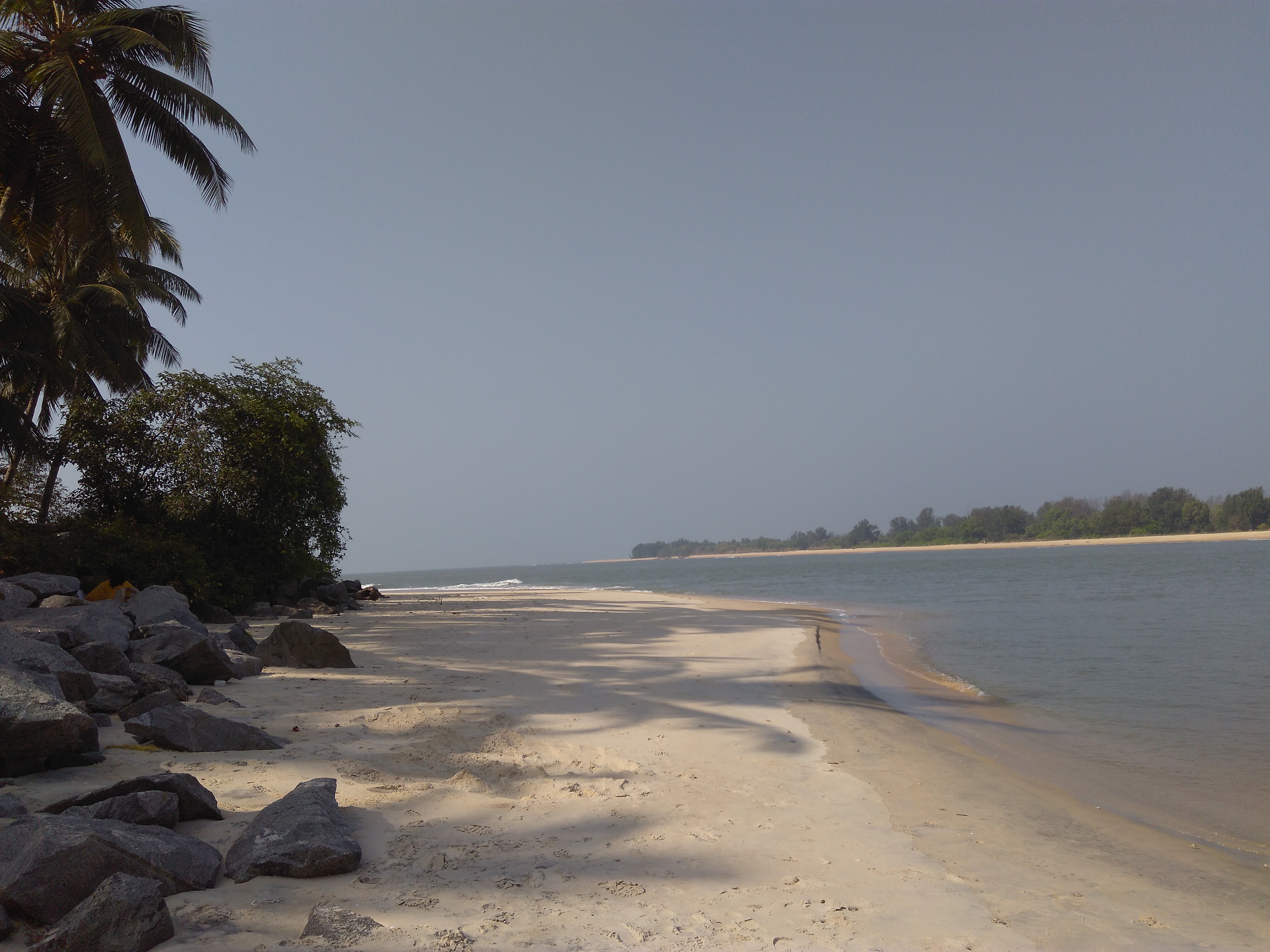
The Kodi Bengre beach

From there, we took a bus to the coast, on the other side of the junction (Hoodi beach) where we had taken a right deviation from. With a quick ride through country roads flanked with traditional sea facing mansions, we reached Malpe beach. This being a popular tourist place, it was bustling with activities including various water sports. We walked down to the fish market / port area, away from the crowd- and got a good sight of the setting sun.
There is a dedicated ferry service from the jetty to the Saint Mary’s Island for those seeking for a day trip which I personally recommend for anyone who is visiting this coastal town. It’s a great place and there is enough information available all over the net to get there… If you are driving your own vehicle, then I recommend you take the Pithrody route to reach back the Udupi town. This will complete your coastal stretch of Udupi giving you an experience of driving through yet another estuary and delta- that’s formed by river Udyavara and the Arabian sea.

You can complement your beach trip with a visit to the Krishna temple and the seven Mathas that are associated with the temple administration. Top it up with delectable Udupi chaats and the famous Gadbad ice-cream that saw its origin in this coastal town.

Riding in the land of miniature paintings- Basohli

If you thought Jammu was all about shrines and temples, wait a minute. You are not alone. Even I did not know about all the beautiful places that exist within a driveable distance from the city. This trip to Basohli was a part of our ‘Peace ride’, sponsored by Jammu tourism as a part of the Himalayan expedition to promote tourism in the lesser explored places of Jammu. The route we covered over the week was Jammu-Mansar-Basholi–Sarthal–Baderwah-Kishtwar-Gulabgarh-Sansari-Gulabgarh-Patnitop-Udhampur-Jammu.This trip was an opportunity for us to see so many beautiful places that are off the tourist map, totally untouched and waiting to be explored.

Places to visit in Basohli:

• Surinsar-Mansar wildlife sanctuary
• Surinsar lake
• Mansar lake
• Atal bridge
• Sunset at Ranjit Sagar Dam & RSD backwaters
• Sunrise from Chanchala mata mandir

The Details:

On a warm Saturday morning, we started from Jammu on a well asphalted highway cutting through the Surinsar-Mansar wildlife sanctuary towards Basohli. Needless to say, the route is blessed with natural bounty with the road flanked by wooded hills all the way. We did a quick stopover at the twin lakes from where the sanctuary gets it same. The Surinsar lake and Mansar lake are serene patches of nature which play an important role among the Hindu pilgrims as it is associated with mythology. It is believed that the arrow shot by Arjuna pierced the earth at Surinsar and came out at Mansar spouting water, what are now the two bunyanesque lakes. If you have nothing to do, then you can forget your watches by just sitting on the banks and feeding the squillion fishes there. These lakes are also known for the Indian flapshell turtles that are found in abundance.

At Mansar lake

After freshening up at the TRC guest house, we headed to the Atal bridge built across river Ravi. This happens to be the first cable suspension bridge in the state of Jammu & Kashmir. We got an eyefull of the setting sun from there and got some good silhoute photos of the fishermen busy with their last catch on their vessels drifting past us from under the bridge. The view of the surrounding lush green hills and several islets in the backwaters of the Ranjit Sagar Dam was a feast for the eyes with a golden backdrop. On a summer evening, it is highly recommended that you spend some time at the dam backwaters, what is fondly refered as the RSD beach by the localites. With swaying palm trees along the sandbars of the river bed, it is a very picturesque place surrounded by the lashing waves of the dam’s backwaters.

Our bike at the Atal bridge

Although we had plans of reaching the Chanchala mata mandir to catch the sunrise next morning, we were woken up rather early by the roaring thunder and the rattle of our window glasses. It was pouring cats and dogs and we watched the dawn break into a bright day while sitting by the window side. There seemed no signs of the rain gods taking a break and hence, we decided to head out in the rains…

While we sought directions from the public, we realised that this town was home to over a dozen temples dedicated to Durga Mata. With a wild guess, we hit the accelerator towards one that was located atop a hillock. Oh Man! The view from up there was stunning… The temple had a 360degree view of the dam water and the hills. We could see the bridge along with several ruins of the old town dotting the view here and there. With the rocky valley at a distance, the entire Basohli town was visible from up there treating our eyes on a perfect morning!! With such a view around, the silver lightning in the dark grey sky, we couldn’t ask for a better start for the day…We were drenched to the bone but coudn’t get enough of the view. We somehow dragged ourselves back to our bikes, lest be a reason for the delay of all other fellow travellers back in the guest house.

view of Ranjit Sagar dam from Chanchala mata mandir

Basohli is known for the traditional miniature paintings that carry a heritage tag with it. Basohli is believed to be a cradle of a new school of mythological paintings. But sadly, only a handful of practicing artists exist today in this hill town. How much ever I intended to meet these artists and buy a couple of paintings as souvenirs from this land, I couldn’t. A countable number of shops selling these artworks would open only later during the day, a few kilometers away from the place where we were staying at. We decided to return to the guest house.

We were already running late and had nothing left for breakfast, we satiated our stomachs with fruit juices and coffee. When the rain gods seemed to calm down a bit, we called it a wrap for the wonderful time spent in this historical town of Basohli. The journey continued, to yet another beautiful place waiting to be explored, waiting to be talked about to the world outside. A place that I call as my “FAVOURITE” destination in India- Sarthal.

Fact file:

  • Getting there: Jammu is well connected by airport, rail and road. You can hire a self-drive car or a taxi from the city to visit the other sightseeing places. Basohli is 147kms(about 3hrs) by road from Jammu city.
  • Stay: TRC (Tourist Reception Centre) guesthouse is run by the J&K tourism dept. on the banks of Ranjit Sagar dam and offers great views.
  • Must buy: Basohli miniature paintings.

A Not so Blissful Trip to the City of Eternal Bliss- Chidambaram

This trip was part of a backpacking by my brother and me with an original itinerary to cover Bangalore- Kumbakonam – Gangaikondacholapuram – Chidambaram – Pichavaram – Pondicherry – Tiruvannamalai – Bangalore

As per this, we left Bangalore on a Sunday night in a bus and decided to explore further at our own pace, using public transport and staying at places with bookings made on the go. Plan was all set. But well, with a small glitch. We assumed that the monsoon season was the same in the entire southern India. But what we hadn’t taken into consideration was the fact that Tamil Nadu doesn’t come under the south-western monsoon. Hence, the monsoon peaks (with north-east winds) after the season ends in its neighboring states. So, we were now on an exploration of Tamil Nadu in October, during the peak of its monsoon season! Anyway, with its share of travel miseries, poor planning gave us the benefit of experiencing a different kind of backpacking.

Firstly, we explored Kumbakonam, a place which is often spoken less about on a typical tourist’s circuit. It was a wonderful experience to explore a place that is soaked in history and RICH architectural heritage, mostly from the Chola era. (This is elaborated in a separate post, click here to read). From Kumbakonam, our next planned destination for a major halt was the place that’s is often referred as ‘a city of eternal bliss’. But our experience was as unblissful as it could get, even as we wished to get a glimpse of the deity of a temple whose manifestation is revered to be as one of the five elements of life- ‘Space’. I would like to elaborate this trip for my readers to get a wholesome idea of our visit to this city was like for us!

With incessant rains, our mobile-phone network had been patchy. On day 2 at Kumbakonam, we received a call from our parents who had been trying to get in touch with us since the previous night. They informed us about the alert issued by the Met. Department. We checked online and confirmed the news about the weather forecast of cyclone- Roanu and a deep depression in the Bay of Bengal. We were asked not to venture near the seacoast. Our intended trip itself was supposed to be along the Coromandel coast- including Cuddalore and Pondicherry. Since the day was bright, we did not take our Met.dept. seriously and decided to take a chance by continuing with the plan from Kumbakonam.

With a visit to the Brihadeeshwara temple at Gangaikondacholapuram (another of the three living Chola temples), we boarded a bus to Mannarkudi. From Mannarkudi, we were supposed to take another bus towards our next planned destination: Chidambaram. However, the conductor informed us that the road beyond Mannarkudi was blocked since the previous night due to an uprooted tree. Although the tree was cleared, he wasn’t sure if the route was worthy for us to go. Without really understanding the seriousness of his advice, we boarded an overly priced private bus which ferried us to Chidambaram. Our road was flanked by the Kollidam until most stretch. Last time we had seen this part of the state was with our family, during our quest to see the end of river Kaveri. The dam was empty and dry back then. Today, she was flowing in full spate and the Grand Anicut was filled till its maximum limit. Kaveri looked beautiful with her brown waters reflecting back the sun rays that sneaked from amid the thick grey clouds. That was the point from where, the real saga of our road trip started.

As we covered a little distance ahead of the dam, the river began to touch the road around the corners at most turns. Gradually, the river started to spill over the road at some stretches. Instead of plying on the road, it seemed like our bus was driving over the river at these junctions. Further into the journey, the water level increased. Several stretches (in kilometers) of the road was submerged by the river. Our driver was a real super star- who could figure out exactly where the road laid in the ground in spite of the water being above the tire height. Even a slight slip in the road only meant death and nothing less. The entire bus with about 25-30 passengers could have been washed away by the currents of the spiteful river. I had only seen such things in the news. Now I was right there, experiencing a flood scene, firsthand.

The flooded villages enroute to Chidambaram

Stretches of villages laid submerged ahead. At some places, the thatched roofs and the hay huts had given away. We could see utensils floating around on the road, helpless villagers wading across the (once existent) streets, even as the flood water stayed above their waist level. Their plight was heart rendering to see, even as the rest of us inside the bus continued to wonder if we were going to see a safe arrival at our destination at all. The rain of just one night had wreaked so much havoc across the state of Tamil Nadu. However, our driver remained focused and drove us across to reach the safe harbor at Chidambaram by around 03.00.p.m.

My brother and I decided to drop the luggage at the hotel which we had booked online and find some food for ourselves. We hadn’t eaten anything since that morning. On arrival at the hotel, we were a little perplexed to see our room. The bedsheets looked extremely old, torn and dirty. The bathroom was a disaster. The toilet floor was covered with a thick layer of algae, slush and mud, all that had accumulated over years without washing it. The flush lever was broken, the taps rusted and a crazy layer of deposits on the bucket and the mug. The nasty smell of alcohol hit our noses from outside through the opened door even as we continued to feel suffocated inside that room. My brother and I looked at each other’s face- and both of us knew what was running in each other’s mind. In spite of being exhausted and hungry, we decided to leave the place and find some other place to stay. Just when we started to descend the stairs and as if the injury (of finding a bad room online) wasn’t enough, I happened to step on a large mess of barf, thrown up by some drunkard on the stairs and slip down a couple of steps.

Until this moment of our day, I had managed to keep my calm, but my brother gave up. He wanted to end the trip right there and return to Bangalore. While he found no buses that would leave Chidambaram immediately to Bangalore, I managed to convince him to stay calm until we boarded a night bus at least. I found a place near the ‘Nataraja temple’ where I could clean myself and headed to get the darshan of the lord. The visit was peaceful, maybe I will write about in another post someday.

The Bharatanatyam postures sculpted on the walls of the west-tower of the temple

After finishing the evening prayers, my brother booked our tickets to Bangalore for the same night. Since my holidays were still not over, somewhere deep in my mind, I still wanted to complete my trip. I didn’t want one bad experience of the day ruin the entire holiday for us. But, given the weather condition further ahead in our planned route, I couldn’t rule out my apprehensions of getting stranded in the cyclone at Pondicherry as well.

But right now, our priority was different. We had been starving since morning and had to find something to fill our stomach. In spite of walking the WHOLE of Chidambaram town, we couldn’t locate a single place where we could find food. Thanks to the day of Deepawali festival- there were absolutely NO eateries open! Also, the entire town was SOO DIRTY with garbage littered everywhere. After a long search, we finally found ONE supermarket in the entire town. And what did we get to eat there? Just a cup of sweet corn to sate our hungry bodies.

Our city woes did not end after eating the steamed corn. It was still 07.00.p.m and we had three hours more to kill. On enquiring with a few locals, we were told that we would find a decent restaurant near the bus stand. And so as per the recommendations of the local people, we found this AC luxury restaurant called ‘Vandayar- Southern Spice’.

When we arrived there, the waiter informed us that they served only fried rice for the day. The waiter came to our table thrice to take our order (for the only dish available) and after two hours of waiting for food, there arrived a convoy of VIP customers at the restaurant. Bonus for waiting: A feast was set for this VIP family that comprised of all dishes from the menu. Even while all the tables were occupied with middle-class customers including my brother and me, there was no one from the restaurant that cared for our existence that day. Wondering if we were waiting for any free food to be served at 09.00.p.m. several customers grew furious and started to walk out of the restaurant. It was also time for us to board our bus. As we too walked out of this VIP restaurant, there was power cut in the town.

In a dark and dingy bus-stand, we spotted the only stall that served tea and some biscuits. The little candlelight was just enough for the tea-stall guy to reach out to things in his kiosk. We were essentially scared of stamping some more muck that could’ve been laid in the littered path. As we dunked the last biscuit into our chai, we had yet another surprise for us. Our bus to Bangalore was delayed by 2 hrs.!!! As we waited there in the dark platform of the bus stand, some drunk men started to throw glass bottles at the crowd there. Luckily no one was injured, but the downpour of bottles and splatter of glass pieces continued for a while. Our bus arrived after a while and we boarded at 10.00.p.m.

With all the crazy stuff that happened that day, we fell asleep quickly… Only to be woken up at sunrise. That’s when the rain was battering outside, and our bus had broken down on the highway. Although we were given an alternate bus in a while, our anxiety continued until we reached home.

The temple Gopuram at Chidambaram Nataraja temple

Conclusion Remarks: The people on the east coast are god’s chosen ones to have a grand celebration of festivals. Tsunami for Christmas. Cyclones for Diwali…!! One cannot sit in a place, hear stories and imagine of places and people. You need to move yourself to places to experience and explore. This trip was one such experiences where I got a first had experience of braving a flood and starvation of food. Also, this is a trip where I managed to find a place in India that I wouldn’t want to return.

Backwaters and boat races at Alleppey

It was the 2nd Friday of August 2012, a day before the Biiigg sporting event of South India: “The Nehru trophy boat race”. After a long haul of planning, two of my friends and I had alighted at our destination- Allapuzha, a popular little town on a tourist circuit in Kerala. Fondly known as Alleppey, we were there to experience the festivities of ‘The Olympics of Kuttanad’- Vallamkali or the boat race. The Nehru trophy boat race is an annual event held in the Vembanad lake, in the Kuttanad region of Kerala. Vembanad lake is the longest lake in India and spans across several districts of Kerala. Depending on the region, the lake is known by different names. It is called as the Punnamada Lake here in Kuttana, of which Alleppey is a part. Along with the boat race, we wanted to explore the backwaters that’s a popular haunt of the tourists in this region.

My Itinerary:

Day 0: Leave from Bangalore to Kochi (Overnight train);
Day 1: Kochi to Alleppey (local train), Shikara ride in the Vembanad lake, Sunset at Alleppey beach.
Day 2: Nehru trophy boat race, Champakulam St. Mary Forane Church, Kalloorkkadu Angadi (local & oldest market in the region), Latin church. Return from Alleyppey to Bengaluru (Overnight Train)

Other Places of Interest:
• Karumadi Thodu- famous for the black granite idol of lord Buddha
• Ambalapuzha Sree Krishna temple- known for the ‘Palpayasam’ or the milk porridge offered as prasad to the deity.
• Kokkothamangalam church- This is one of the seven churches founded by St.Thomas, one of the twelve disciples of Jesus Christ.
• Ayyappan temple in Mukkal vattam (near Muhamma)- known for the Kalari from which Lord Ayyappa is believed to have learnt his skills in martial arts. The hermitage where Ayyappan lived during the training period has been preserved in its original form by successive generations of the Cheerappanchira family.

The Details:

Day 1:

It was noon by the time we checked into our hotel room. We freshened up quickly and set out to explore Alleppey. We walked around a little bit and reached at a small boat jetty. We hired a ‘Shikhara’, a local motorboat to cruise around the narrow canals, passing through several fishing hamlets. While the womenfolk were washing clothes, the men were spiralling their fishing nets into the water and a few kids were diving into the waters for a refreshing swim. It was a nice experience of seeing local lifestyle of the people for whom, the backwaters are a lifeline. Along our ride, we picked up some fresh lobsters and pomfret at a local market and got them cooked in the local style at a fisherman’s house.

The Shikara cruise in the narrow canals of Alleppey

Further, we were oared across to the end of the canal which opened into the wide Vembanad lake where all the teams were practising for the boat race and the venue was getting set for the ‘Big’ event. The energy and enthusiasm in the atmosphere was no less than that of the main event itself. Though we wanted to stay there till sunset, the government deadline for all activities in the waters forced us to return to the jetty before 06.00.p.m.

On returning to the mainland, we meandered through the lanes of Alleppey town searching for a dose of Kerala chai and palam-pori (Banana fritters). We then decided to settle down by the beach until dark. While finding our way to the beach, we walked past the coir industries that Alleppey was once known for, and now remained shut and non-functional.

A stationed shikara enroute to the Alleppey beach

While walking back to the town area from the beach, we happened to see a hoarding of a concert happening at a nearby stadium. Post sunset on normal days, most towns in Kerala sleep to silence after 7.00.p.m. and there will be not many options to see or do after that. Since we did not want to waste the remaining evening by sitting inside our hotel room, we decided to head to the stadium to kill the rest of our evening. ‘Music never disappoints’, all the three of us had the same thought. Upon arrival at the stadium, we enjoyed the on-going performance of ‘Theyyam’, one of the colourful, traditional & spiritual dances of the state. But after some time in the audience gallery, is when we experienced a surprise on the stage. A MIND-BLOWING show by the violin maestro- Balabaskaran and team.. It was there that we were LOST in dreamland..!!

Day 2:

The next morning, we had to reach the racing venue as early as 08.00.a.m. to ensure that we had a place to sit. (Read about the madness of the event). The snake boats are the world’s biggest water vessel used for sports. One by one, they arrived for assembly. Locally called as the Chundan Vallam (Beaked boats), these 100~120 feet long wooden canoes carry 90- 110 rowers and move like snakes through the channels. And soon, the races started under different categories. Every single soul in the arena was singing songs of cheer. All through the event, only one thing echoed in the atmosphere: Vanchipattu or the Boat song. It was a once in a lifetime experience to be a part of that enthusiastic crowd.

The oarsmen '"Women"
The oarsmen ‘”Women”

Post the event, we still had time to explore the town and hence boarded a bus to Champakulam. As we passed through the waterlogged villages of Kuttanad, we were reminded that the region we were passing through was the ‘granary of Kerala’ or the rice bowl of Kerala. It is one of the few places in the world where farming is done below sea level.

Soon, we reached the St. Mary Forane Church. Since it was a Sunday, we were lucky to take part in the mass. Built in 427A.D., this riverside church is a testimony of time with its finely maintained beautiful mural paintings. From there, we took a boat to reach the other end of the river: the oldest market in the region known as Kalloorkkadu angadi.

Champakulam St. Marys church

With a local bus ride from there, back to the town, we then took a walk to the Latin church in the town. The entire town of Alleppey can be viewed from the terrace of this church (permitted only during visiting hours). What particularly caught our interest was the cemetery where all members of a family were buried in the same pit. Hundreds of such graves laid within the church premises.

The premises of the Latin Church

We then checked out our lodge and headed to the railway station for our return, scheduled for the night. It was time for us to depart with a mind filled with beautiful memories of sailing afloat on a boat in the backwaters of land that is called ‘God’s own country’ and hope to return soon.

Must dos: Experience the madness of the Snake boat race
Must eat: Freshly caught and cooked seafood while on a backwater cruise tour

Offbeat Places to Visit in Rameshwaram on a Weekend

This was a destination that my friend and I had been contemplating to travel for some time. The trip turned into certainty only when my friend had the confirmed tatkal tickets in her hands after a wait of over an hour in the queue at the railway station. Then on the following evening, the two of us commenced our weekend journey towards Rameswaram by boarding our train from Bengaluru cantonment station to Madurai. We had a few important things to check-off on our small list for places to see and things to do at Rameswaram. Since the travel tickets were confirmed in the last moment, we had barely any time to make hotel reservations. We decided to go there and find something for ourselves.

Our Itinerary:

Day 0: Evening train to Madurai from Bengaluru Cantonment railway station.
Day 1: Arrival at Rameswaram and visit to Ramanathaswamy temple (TNSRTC bus from Madurai to Rameswaram)
Day 2: Visit to Dhanushkodi (Local bus from Rameswaram to Dhanushkodi), Rameswaram local sightseeing (hire an autorickshaw for half day), Sunset & Beach walk near Pamban bridge.
Day 3: Visit to Kurusudai islands (Local bus to Vivekananda Mandapam & hire a local boat from there to reach Kurusudai islands), Return to Pamban boat jetty; Return to Bangalore (Train to Madurai & change train from Madurai to Bangalore).

The details:

Day 1– Arrival at Rameswaram and visit to Ramanathaswamy temple

The train reached Madurai by 7.20.a.m. After freshening up at the station itself, we left for our main destination. The TNSRTC buses are quite frequent and it took us a journey of 3.5 hours to reach Rameswaram. Enroute, we passed through Ramanathapuram- the last stretch of mainland India. Once we reached Mandapam, the entry point to the island town of Rameswaram, we had our excitement running at its peak. For the next 15minutes, our bus was cruising over the bow shaped road bridge that oversaw the famous Pamban rail bridge. Pamban bridge is an edifice of engineering that is still standing strong on its 100th year in commissioning. This is a bridge that would connect us to the other side of the land, to a town that would host hundreds of stories from the Ramayana during our stay there, over the next couple of days.

After arriving at the Rameswaram bus stand, we noticed the tourist office that stood right opposite. We wanted to try our chance to get permission to the Kurusudai island and hence, registered our names as tourists in their logbook. This island is a protected area and we had tried hard to get permission for our visit even before starting our trip. Though indirectly, our random chance visit to the tourist office in fact helped us BIG time (Click here to read the story in detail).

Lord Rama is believed to be an incarnation of Lord Vishnu. Then, why is the city named after Eshwar? It is important to know at least this while you are there in Rameswaram. Here goes the story… Ravana, (a Brahmin) was a devotee of Lord Shiva (aka Eswaran). On performing penance, Ravana was blessed with a boon by Shiva such that- anyone who tried to harm Ravana would face Brahma dosha. Further, during the war between Rama & Ravana, Rama (a Kshatriya) killed Ravana who then happened to face the wrath of the dosha. Rama then, had to perform pooja to Shiva, the only one who could help him out of the dosha. Here, Eswaran helped Rama. Thus, the name to the town- Rameshwar. I was told that there is a similar story for a town called Ravaneshwar in Lanka.

We walked towards the temple road, roamed around a bit and finally checked into a decent looking hotel close to the main temple. After freshening up, we headed to the main landmark of this pilgrim town, Sri Ramanathaswamy temple. The world’s fifth largest monolithic Nandi statue guards the entrance of this temple. We were overwhelmed to walk across the longest temple corridor in the world and felt blessed after bathing in the water from the 22 sacred wells on the temple. Since it was quite a tiring day due to all the traveling, we decided to sleep early as we had a long day of exploration on the itinerary, next.

Day 2: Exploring Dhanushkodi and local sightseeing at Rameswaram

On the following day, it was Holi: The festival of colors. We were sitting at the Agnitheertham beach at 4.30.a.m watching hundreds of devotees taking a holy dip in the sea. But we were waiting for something else. We were waiting to welcome a day that would unfold with a palette of the best colors that nature could show. Although the wait was long, it was only by 07.00.a.m. when we witnessed what is by far, one of the best sunrises we had seen till date.

Sunrise viewed from Agnitheertham beach

We boarded a bus from there to Dhanushkodi- The ghost city. Although a visit to Dhanushkodi was one of the most awaited part of the trip, it was not our best. From all the stories and experiences, we had imagined of Dhanushkodi, we had expected to need at least one full day there. It is a place that we wanted to explore and not run through which can be best done only if one had a vehicle at his / her own disposal. However, we were at the mercy of public transportation on this budget trip. Like all visitors or “tourists” who had come down there, we too had to settle for a tour of this deserted city in one of the local tourist buses. A round trip was completed in about 3hours with a cost of 100Rs per head not satiating our need to see more of this abandoned town.

  • Apart from the few main structures and temples (old railway station, church, temple of the floating stone, etc.) that you would see during your tour package(local bus), a few other things that you can do during your trip to Dhanushkodi are:
    • A walk through the waters of the Bay of Bengal till the Kodandaramasamy temple is a must do. The water level never goes above your knees.
    • The Ramasetu or the Sethusamudram is something that can be visualized if you have a proper guide with you.
    • A drive on the asphalt road that stretches up to Dhanushkodi is something to die for. With the calm Bay of Bengal on one side and the rough Arabian sea on the other, the drive is every traveler’s delight.
    • On your return, you can cover Jada Teertha & Nambu Nayagiamman temple (both located at just a couple of kms before Dhanushkodi.
Ruins of the old church

One hour up on our watches and we were back in the main town. We settled a deal for Rs.250 with an autorickshaw guy who would take us on a quick visit of the major places around the town. Some of the places thus covered include:

• Gandaparvatham / Rama paadam- the highest point in the island town from where one can catch a good view of the scenery around.
• Sugriva Teertha (a small pond)
• Saatchi Hanuman temple
• Bhadrakali Amman temple
• Rama Teertha
• Krishna temple
• Lakshmana Teertha
• Five-faced Hanuman temple- The floating stones used for the construction of Rama Sethu can be seen here as well.
• The house of former President of India, his honor: A.P.J. Abdul Kalam- It is now converted into a museum.

Sri Rama theertham
Sri Rama theertham

An interesting thing we noticed in the architectural style of all the structures in Rameswaram was that with the Ramanathaswamy temple being an exception, all the other temples that I have mentioned above are typically built in the Nagara style of architecture. Having covered Rama, Sugriva and Lakshmana teertha, we were curious to enquire if there was a ‘Sita Teertha’ too. Our guide cum autorickshaw driver nodded and brought us to a place on the highway. And to our dismay, he pointed to a small tank by the roadside. It was filled with green stagnant water and a good mosquito breeding ground. “Damn…!! this patriarchal Indian society…!!” I exclaimed.

We were done with local sightseeing by early evening, and still had a LOT of time left until sunset. Standing on the road bridge and peeking down at the train tug over the century old engineering marvel- Pamban was a sight not to be missed. So, we decided to head towards Pamban bridge.

Once we saw a train pass over it, we decided to stroll around a small fishing hamlet that we just across the street. We got some good clicks of the Pamban from the boat jetty in this fishing hamlet. While straying around there, my eyes fell on the light house that was located a few meters across the village. We asked for directions and reached there in less than half and hours’ time. While we waited for the gates to the lighthouse to open, we tagged along with a few kids, our new friends at the fishermen’s cove. With the kids excited to converse in English with us, we did so while taking a walk further down to the seashore. With a magnificent view of the sun setting in the backdrop of the Pamban in the distant end, we settled down under the shade of a mangrove tree until the sun went down completely.

The sunset from the fishermen's cove
The sunset from the fishermen’s cove

It was soon dark, and we had to head back to the temple road for a safer crowd. We bought some peanuts masala from the vendor on the seashore and found a comfortable seat for ourselves to catch some peaceful time. It was a full moon night.

On that wonderful day: We had seen the faint horizon emerge out from the pitch darkness of the sky that brightened into broad daylight with a series of color change and then the white sky of the day fade into the black of the night … And again, the night’s sky was lit up by the beautiful full moon… Yes… We had witnessed one COMPLETE day…

Full moon lit night sky as seen from the Agnitheertham boat jetty

Day 3: Visit to Kurusudai island and return to Bengaluru

Based on some local contacts, we had got a last-minute permit to visit the Kurusudai island. As per the directions given, we had to check out early and catch the 8.00.a.m bus from Akka-Madang to Vivekananda memorial hall. Our boat was waiting for us with the guide to take us to another world- A world of exotic marine animals- ‘the Kurusudai island ‘. (A more elaborate article on this visit can be read by clicking here). To sum up- “We were lucky to get there”.

From Kurusudai island, we got dropped at the Pamban boat jetty. Our boat was anchored somewhere amid hundred other boats and hence, we had to walk across through knee deep sea water to get to the shore. This walking experience was unique in its own way as one doesn’t get such a sight in any other boat jetty. We had to place every step of ours’ so carefully that we did not want to accidentally step on and kill the in-numerous star fishes or sea cucumbers that were lying on the shore bed.

We walked further up to the Pamban railway station and bought our tickets for the 12.00. O’clock train to Madurai. And soon the train arrived. We boarded and our hearts were pounding hard with excitement. We had bought tickets for a train…. A train to Madurai which would actually ply over the Pamban bridge, an experience that we were waiting to live through. It was an even special ride since it was a journey over the historical Pamban bridge on its 100th year of existence. We couldn’t ask for more…!!!

View of the bow shaped road bridge from the Pamban bridge

In 4 hours, we alighted at the Madurai junction… But yeah, even as I was wondering how everything went so fine through this entire trip, the surprise was waiting for us at the station- our train to Bengaluru would arrive 3hours late. And what followed is… history.

Have you visited Rameswaram? What was the purpose of your visit, Pilgrimage, family vacation or backpacking? What is your story from your visit? I would be excited to hear from you!